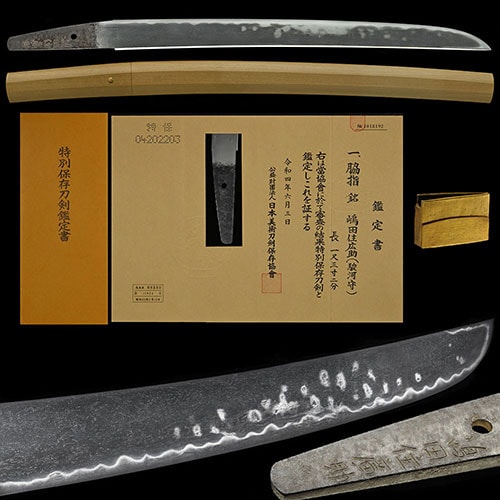
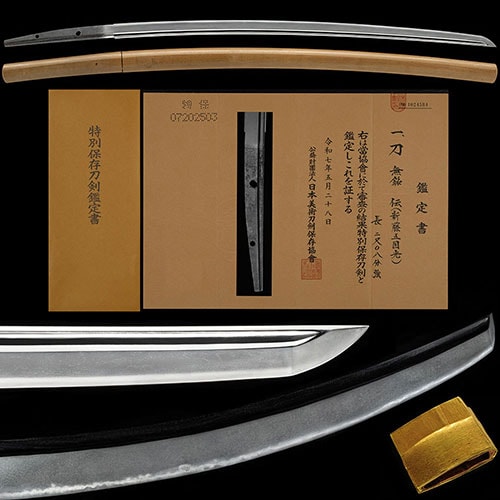
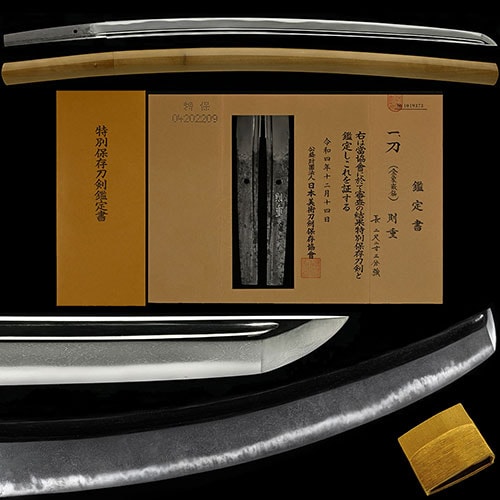
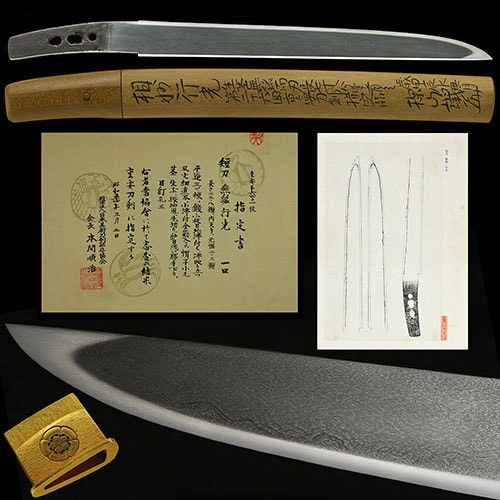
Hirosuke was a leading smith of the Shimada school in Suruga Province, a lineage that flourished from the mid- period beginning with Yoshisuke and continuing into the era. Sword reference works record Hirosuke as the son of the second-generation Yoshisuke, active around the Eisho era (1504-1521), with several later generations bearing the name extending into the Tensho period and beyond. Within the Shimada group, three smiths -- Yoshisuke, Sukemune, and Hirosuke -- are regarded as the most accomplished masters, and among them Hirosuke displays the most robust style, conveying a sense of forceful spirit. The school's workmanship is thought to have been strongly influenced by , , and traditions.
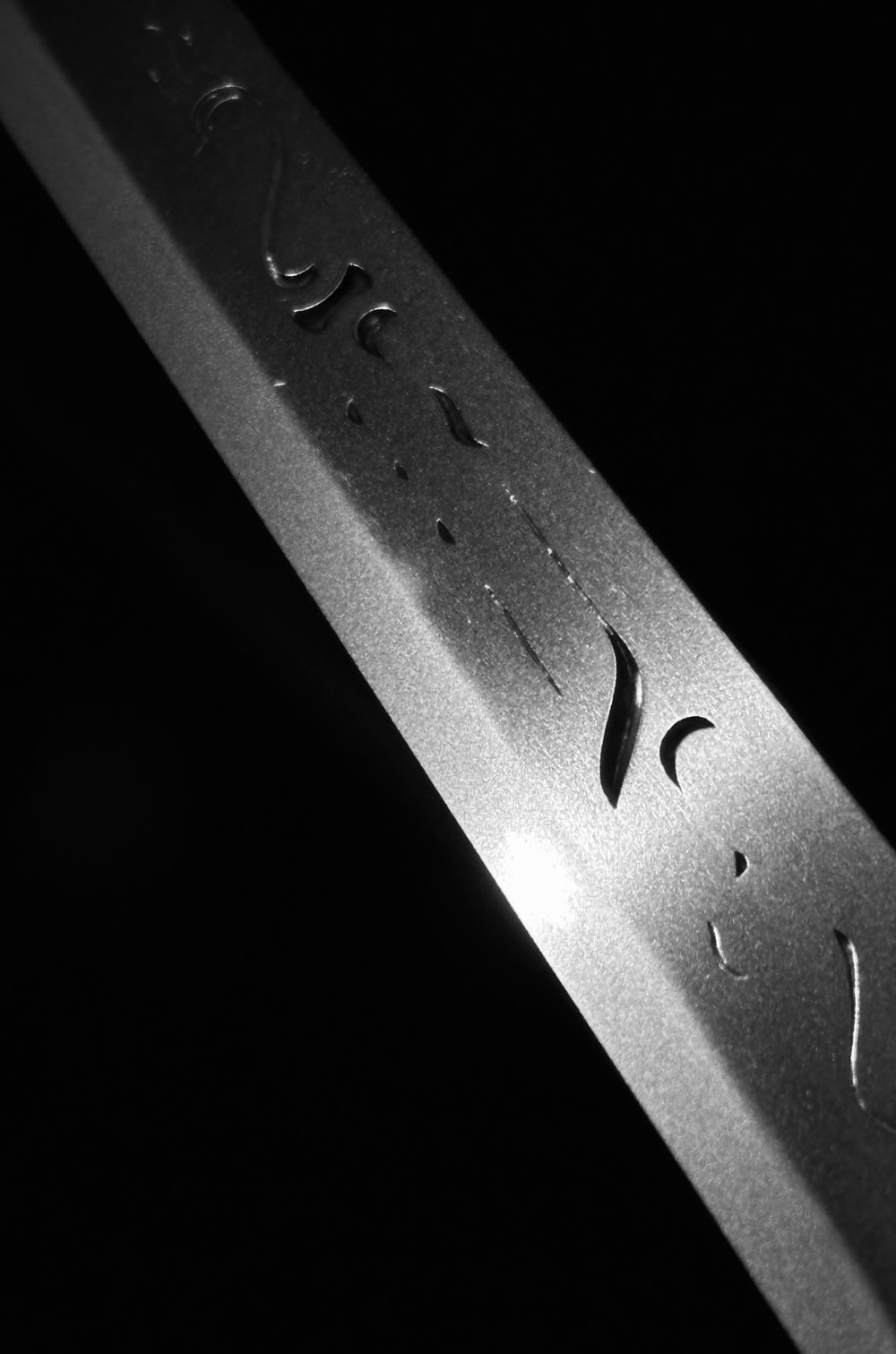
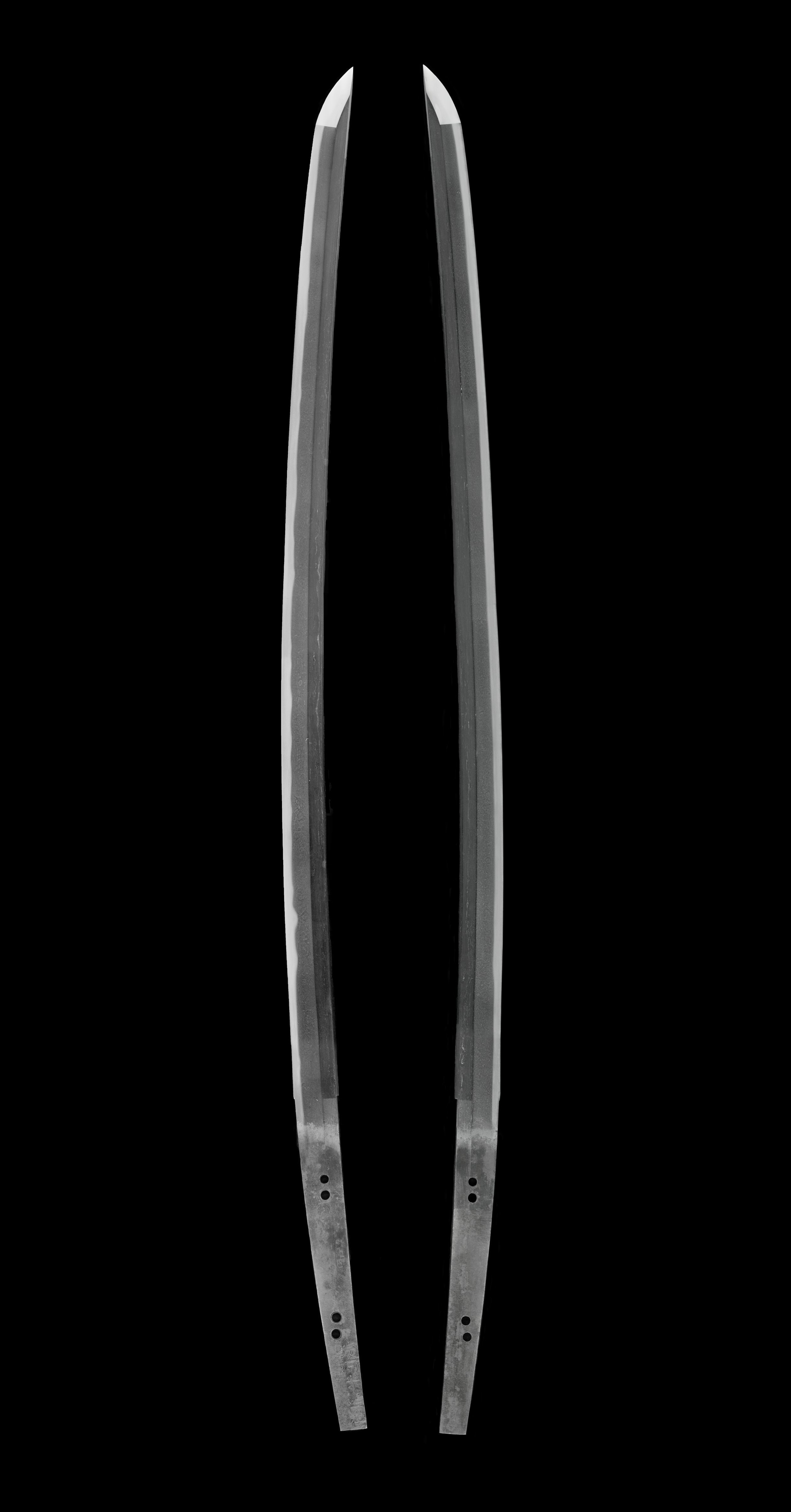
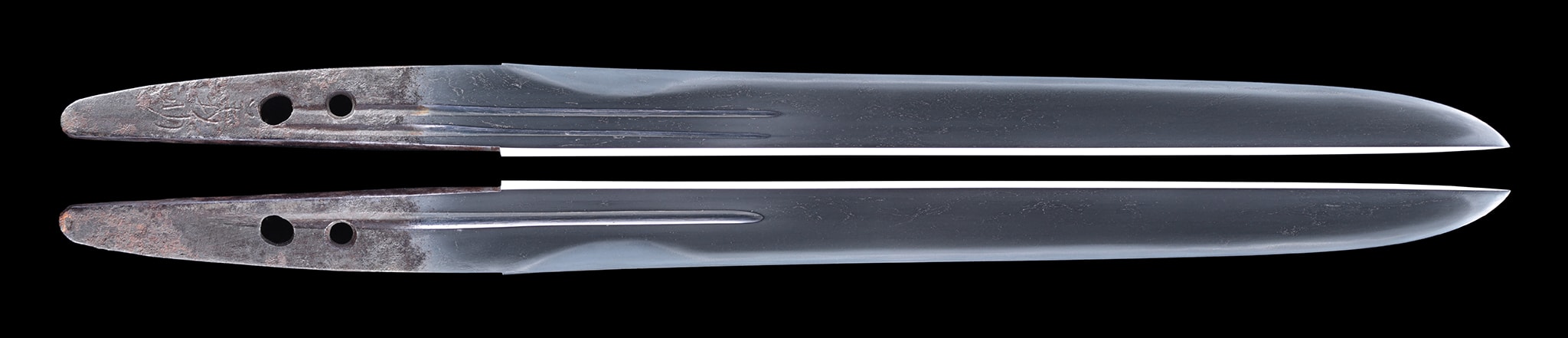
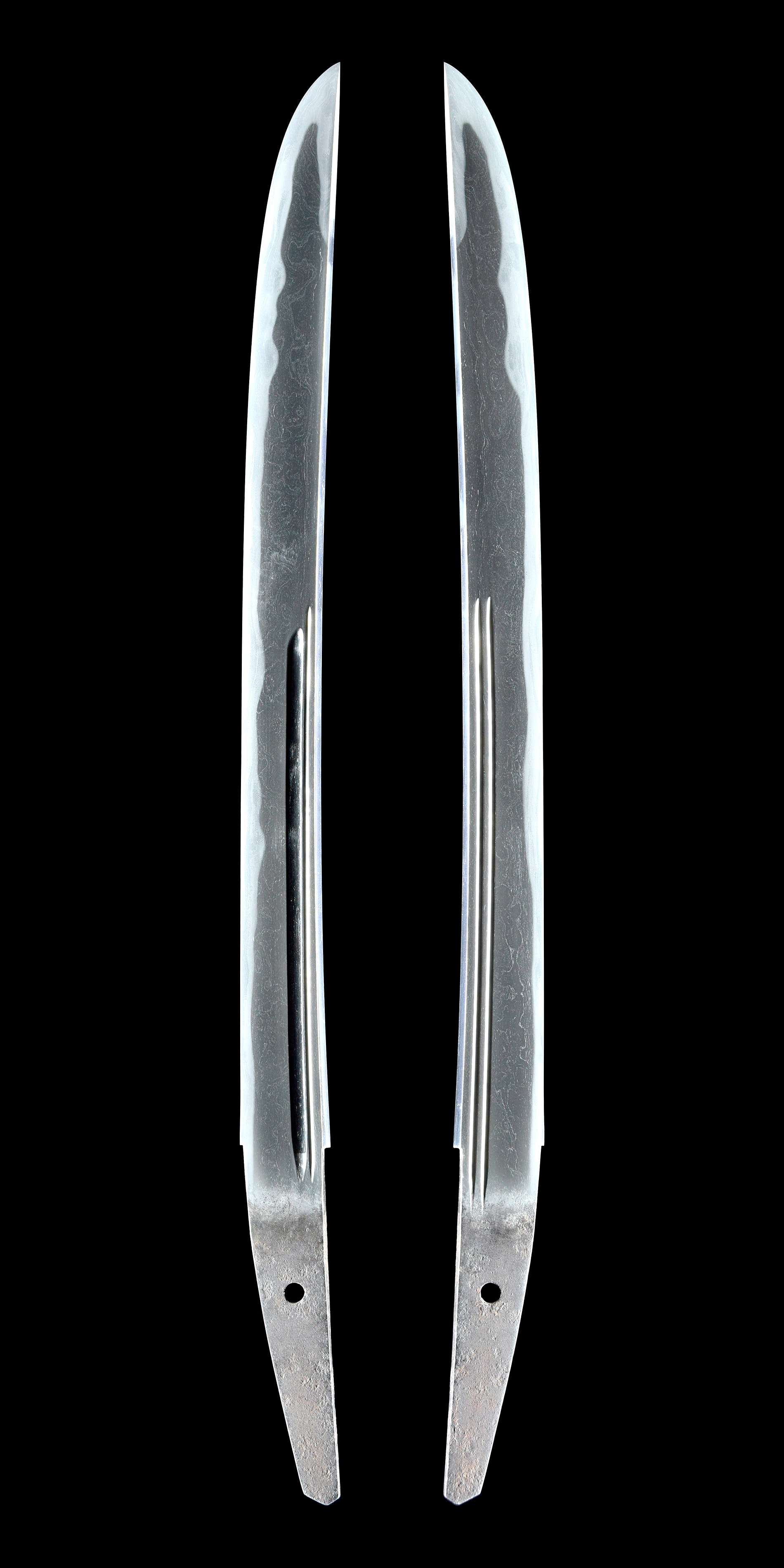
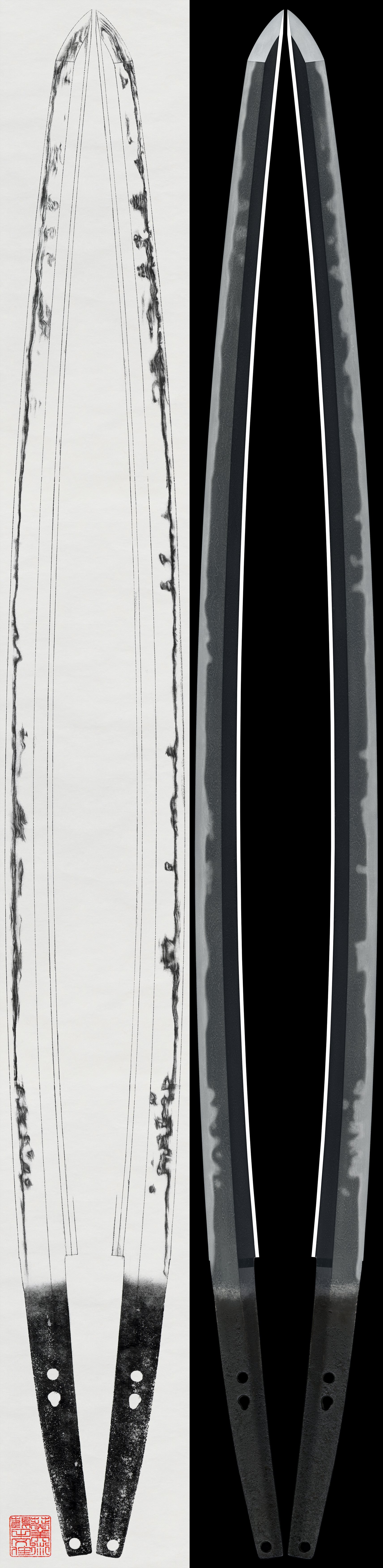
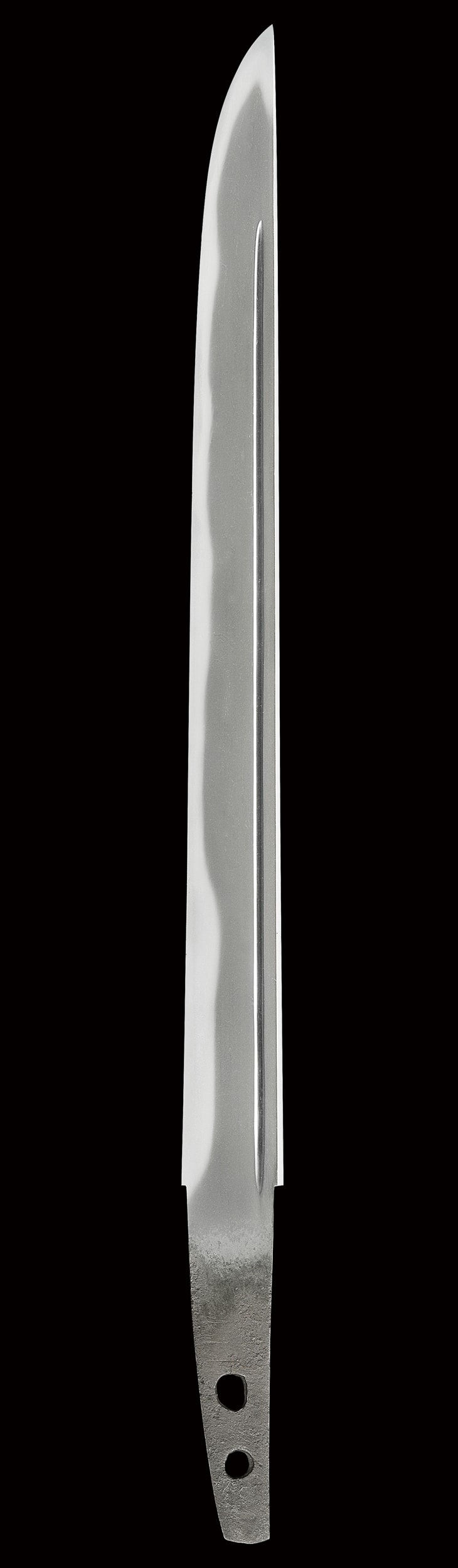
Hirosuke is known for favoring bold, powerful constructions with a wide . His characteristically display with extended or , producing a vigorous and imposing impression. The forging is typically with slightly standing grain, sometimes flowing into and mixed with o-, with adhering and a somewhat whitish tendency in the . His is most often a base mixed with and -like elements, with well-entered , , and adhering in a deep ; frequently enter, and and slight appear in some works. The tends toward turning back in , sometimes with . Among his finer pieces, the is bright, and the interior activities within the tempering are described as superb. The found on certain examples -- including , , and -- are particularly uncommon for this smith.
Hirosuke's best works number among the finest productions of the entire Shimada lineage. One is described as a standout -- , "the best among its kind" -- with a suggestion that the maker privately emulated the style of such masters as Chogi. A rare collaborative work with Gensuke demonstrates the collegial relationships within the Shimada group. His dated works and those bearing the full signature "Shimada Hirosuke" are especially prized, including a inscribed as a Koshu-uchi work dated Eiroku 2 (1559) that was once the possession of Hara Nyudo Toratane, one of the celebrated Twenty-Four Generals of the Takeda. An example held in the Imperial Collection further attests to the esteem in which his work was held.