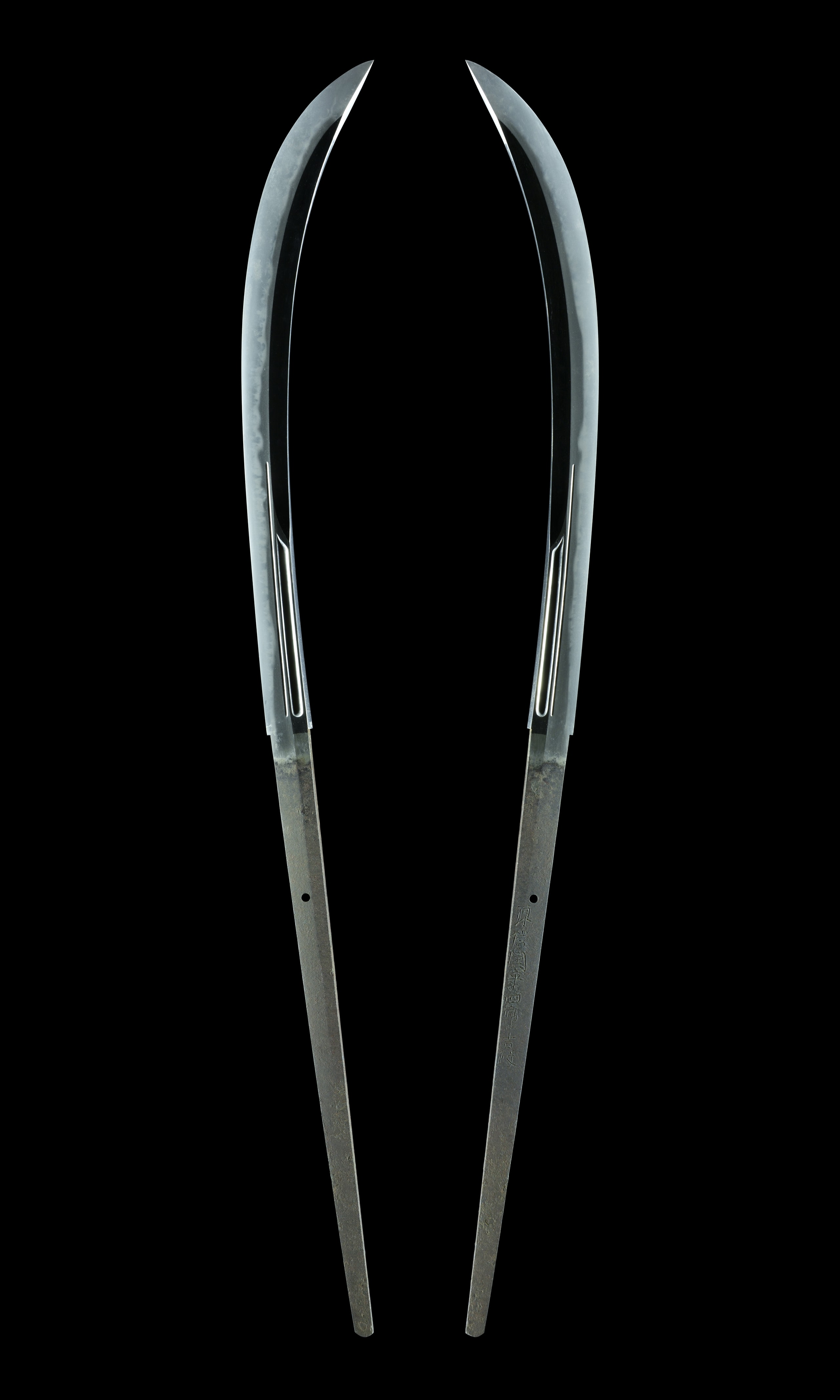
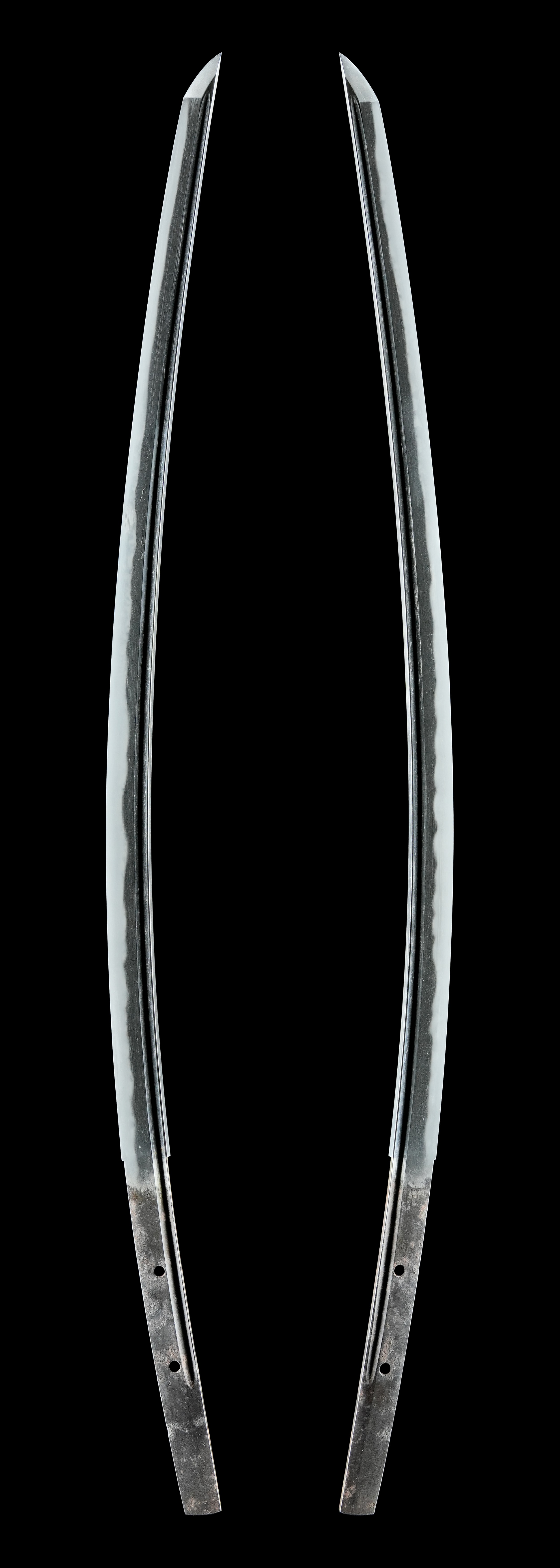
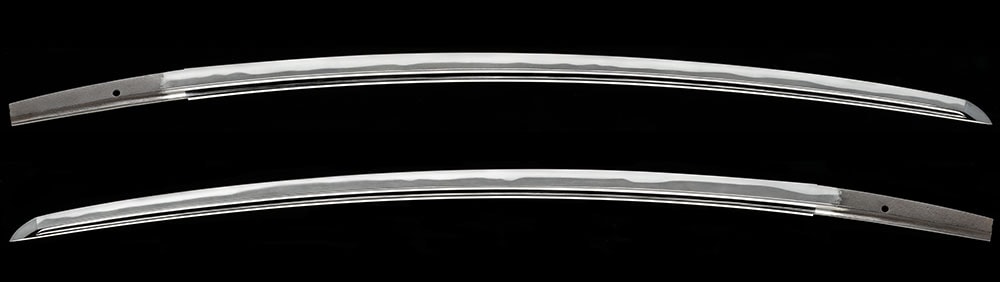
徳川の泰平のもと、大小は法度の定める身分の制服となり、需要は城下町、とりわけ江戸に集まった。工芸は二つに分かれる。目利きのための華やかな鑑賞の作と、截断の結果を金象嵌に刻む実証の刀である。
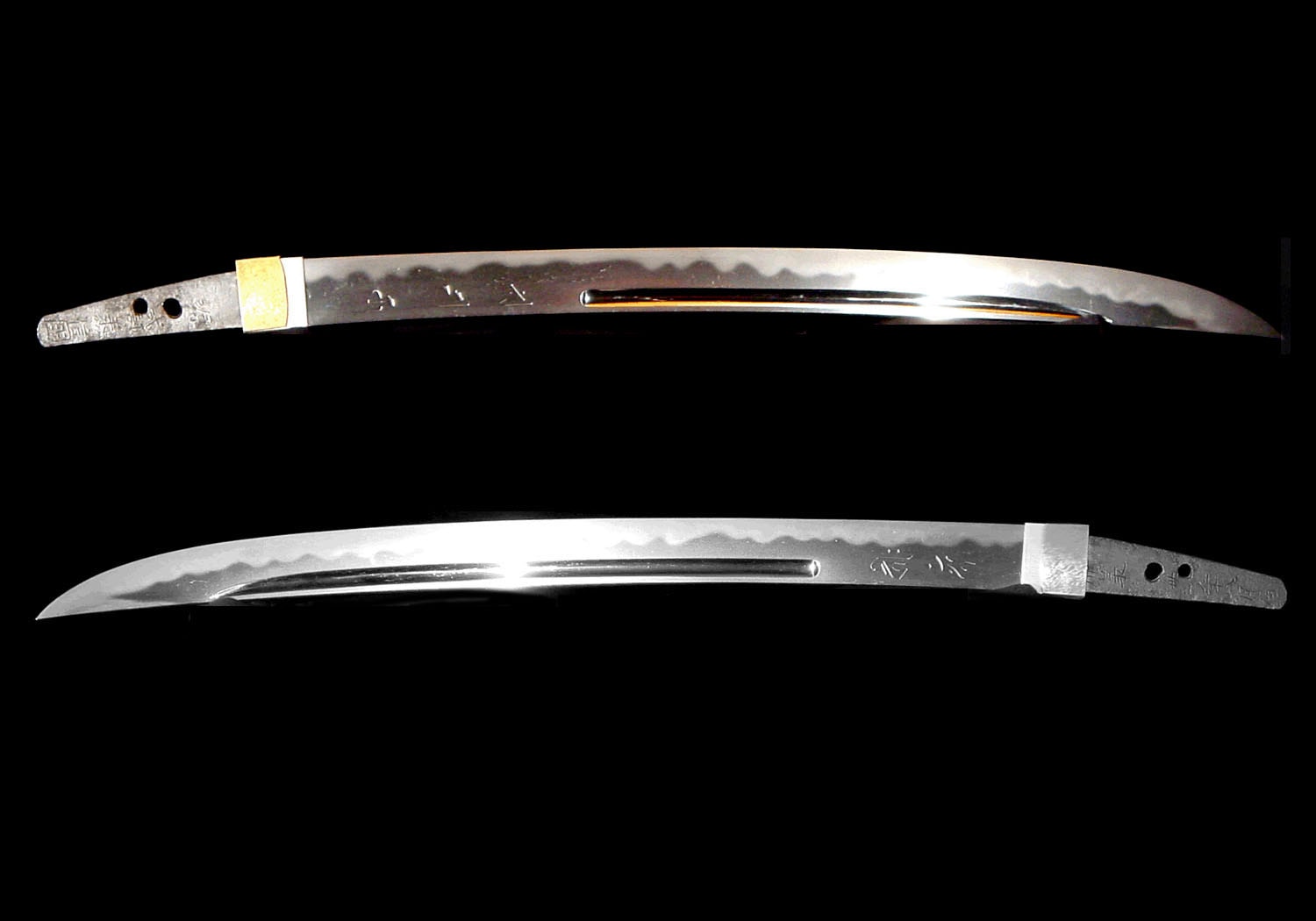
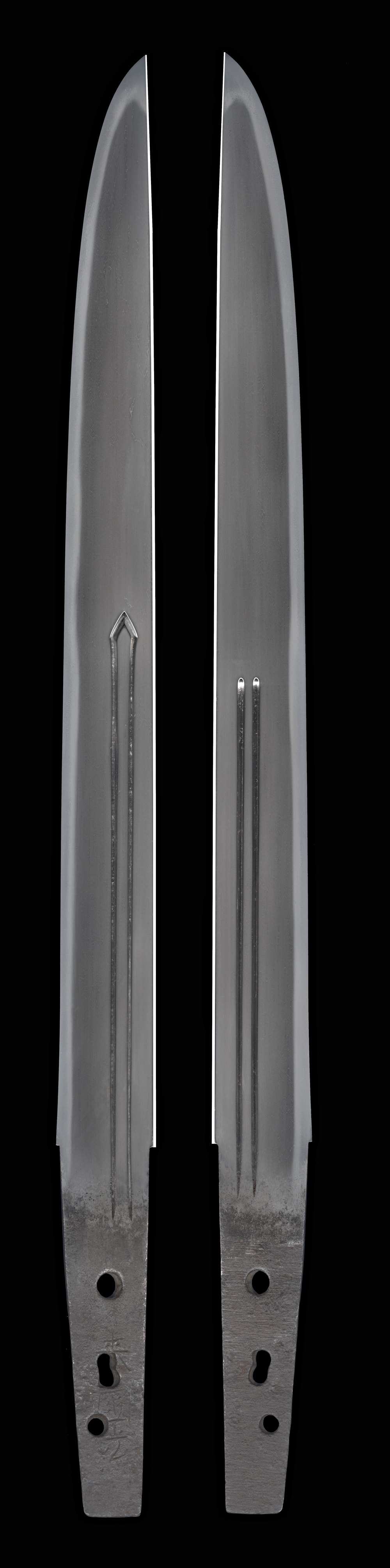
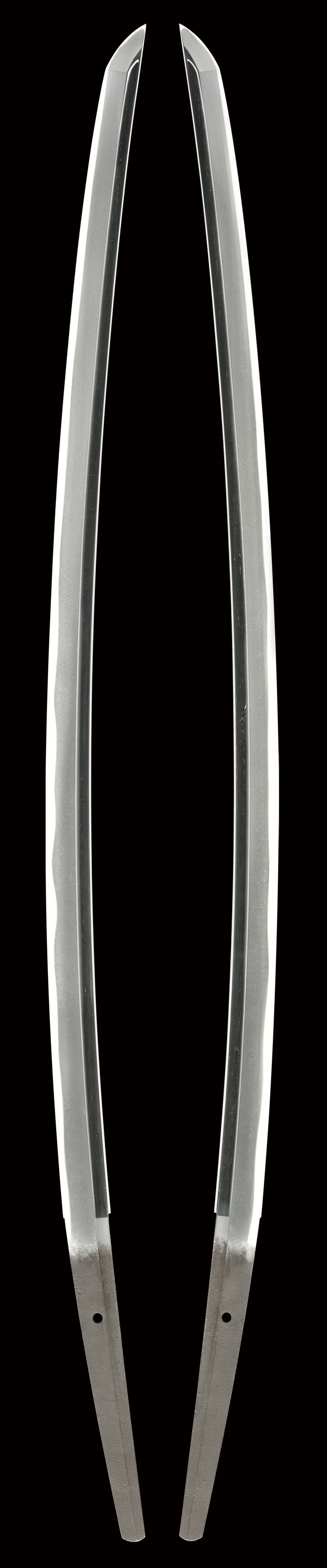
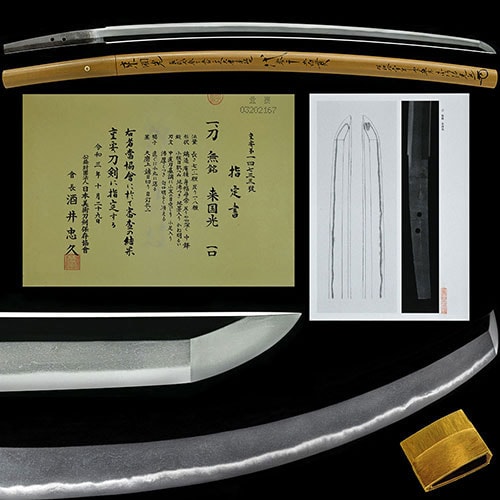
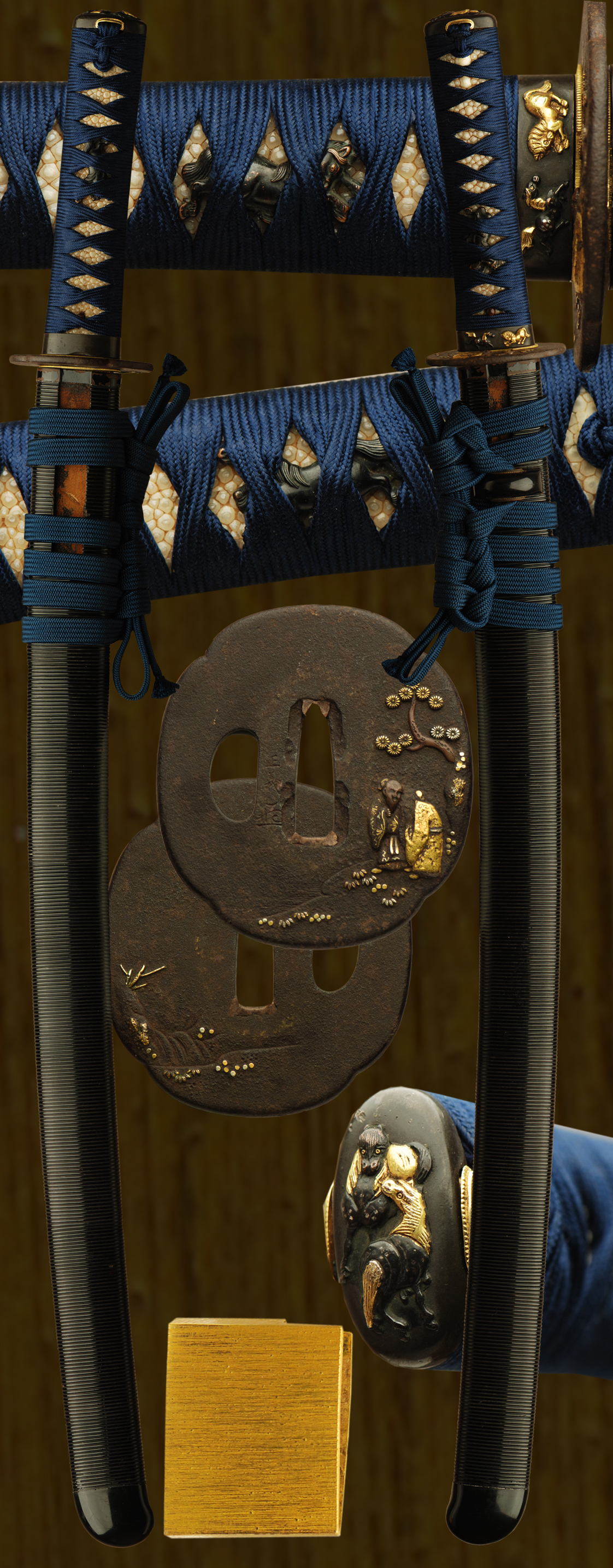
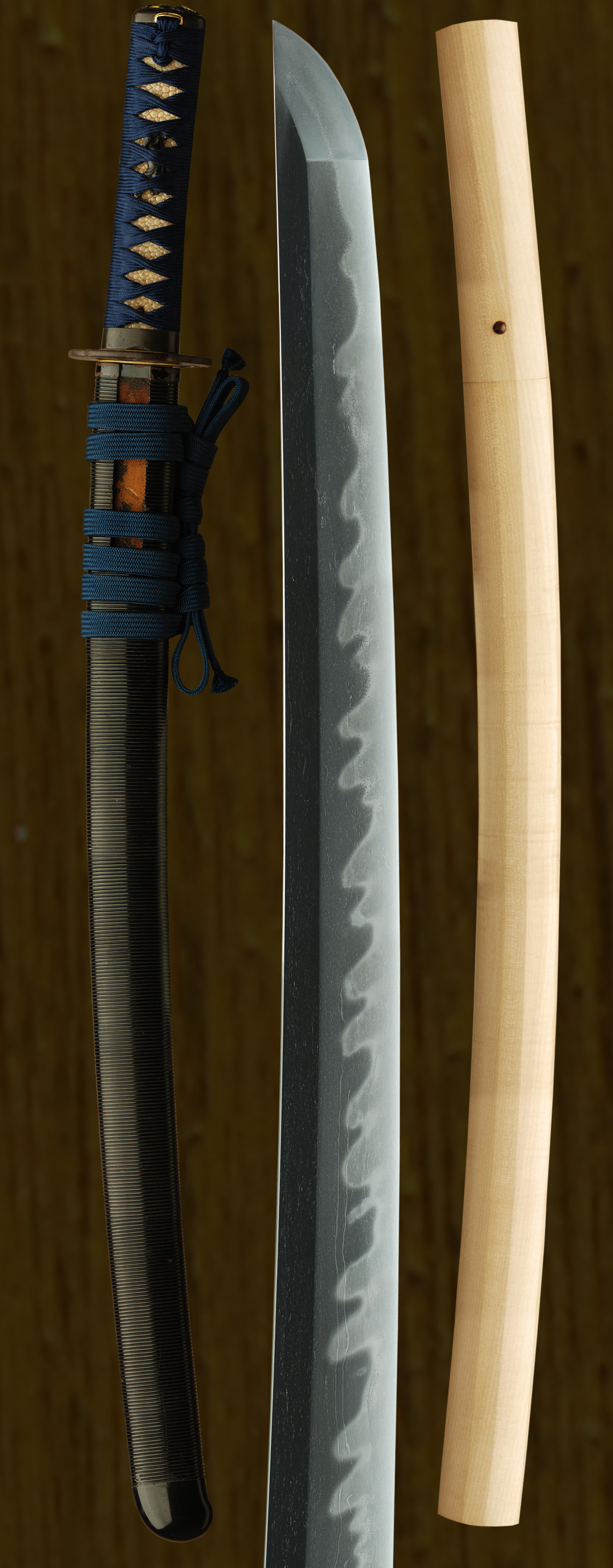
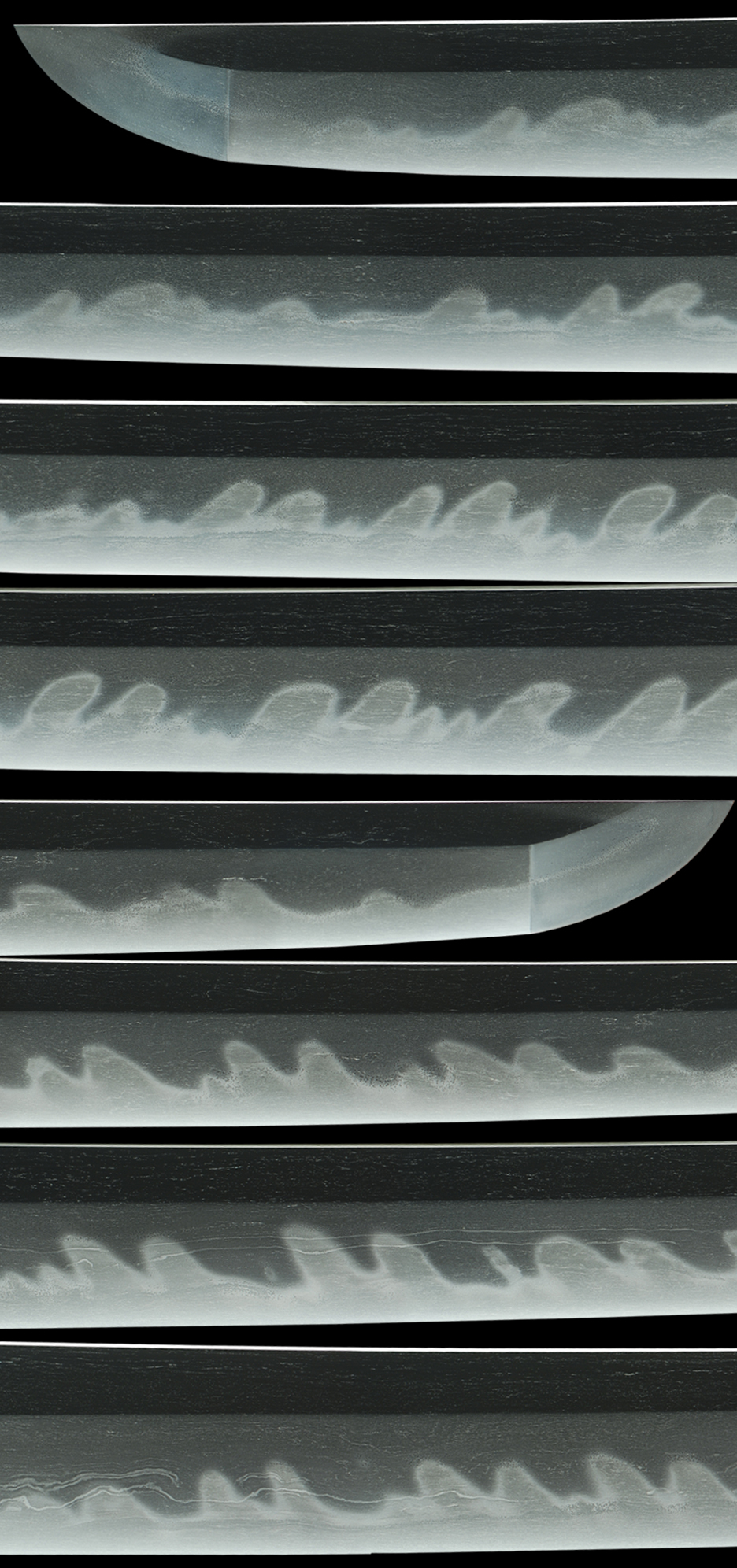
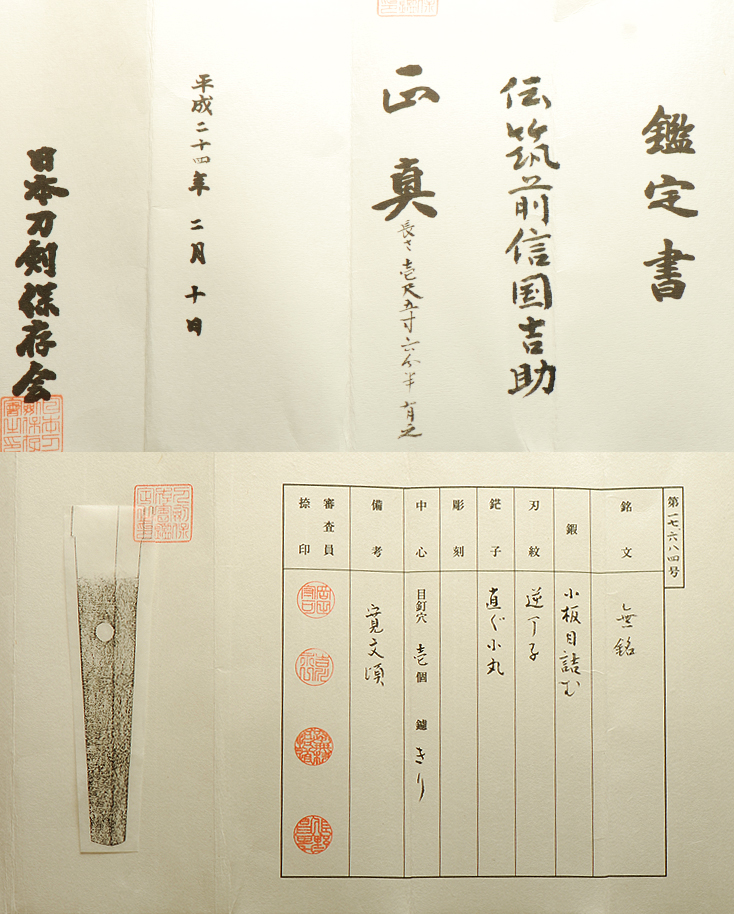
The Chikuzen Nobukuni at the Edo period during the Kanbun era is continuation of the Muromachi period.Chikuzen-ju Yoshisada, Nobukuni Yoshisuke of which this sword is attributed to and Nobukuni-zaemon Yoshikane were active at same time.An affordable exquisite package for the connoisseur’s of collecting. This blade is fully polished and mounted with papers attributing it to CHIKUZEN NOBUKUNI YOSHISUKE. The sword is a beautiful saka gunome-midare just loaded with hataraki. There is ashi, sunagashi. a thick nioi-guchi, kinsuji. The hada is layed in ji-nie with much ara-nie peppering the hamon especially found in the valleys of the GUNOME. The hada is a true itame and mokume blend with masame. There is chikei and the boshi is finished in O-maru.The koshirae is a dazzling horse theme with fuchi, kashira and menuki of horses finished in shakudo and gold. The tsuba is a Mokko shape in iron with a picturesque setting of scholars under a tree signed and finished in gold and silver. The sageo and tsuka ito are a matching cobalt blue with a large nodule same(rayskin). The saya is beautiful and narrowly ribbed finished in black lacquer.Chikuzen Nobukuni History:Chikuzen Nobukuni is a long line extending from Koto times. The Sengoku labored all sword schools until the Momoyama of robust unification breathed new life into the arts and styles of all of Japan. The young masters coming from Ten-sho, such as Horikawa Kunihiro, traveling to Kyoto, would create a new world of strong new Momoyama styles. The “Shinto” sword-period grew directly from Hideyoshi’s Momoyama Unification. By order of Emperor GoDai-Go, Kusunoki Masashige restored the throne. The Hojo capitol, at Kamakura burned in 1333.Seizing the moment, however, his general, Ashikaga Takauji rebelled and was beaten back to the Southern Island of Kyushu where the Hosokawa, Shiba and Otomo joined his cause. The Otomo fought the Imperial support of southern landholders, the Kikuchi and took control of five Kyushu provinces.Takauji and his allies won Kyoto and resided there, holding governmental power for the new Ashikaga Shogunate.Kyoto has the conservative Rai sword school and the Otomo invited Rai and the Nobukuni school stylists to their home territories.YOSHISADA brings RYOKAI School, and the NOBUKUNI school master, SADAMITSU brings NOBUKUNI / RAI styles to KYUSHU Mei:Mumei/unsigned NTHK attribution to “Chikuzen Nobukuni Yoshisuke”Date:Kanbun (1661)Nagasa:18-5/8 inchesSori:7.5 mmWidth at the ha-machi:29.5 mmWidth at the yokote:19.6 mmThickness at the mune-machi:6.1 mmConstruction:Shinogi zukuriMune:IoriNakago:UbuKitae:Itame/mokumeHamon:Midare GunomeBoshi:MaruCondition:excellent polish kantei-sho(鑑定書) – AppraisalDen Chikuzen Nobukuni Yoshisuke (伝筑前信国吉助)shōshin(正真) – Authenticnagasa1shaku5sun6bu han kore ari(長さ壱尺五寸六分半有之) – Blade length 47.4 cmHeisei24nen2gatsu10nichi(平成二十四年二月十日) – February 10, 2018Nihon Tōken Hozon Kai(日本刀剣保存会) – NTHKNo 17,684meibun(銘文) – Signature:mumeikitae(鍛) – Forging:denseko-itamehamon(刃紋) – Hardening:saka-chōjibōshi(鋩子) – Hardening in tip:suguwith ako-maru-kaerichōkoku(彫刻) – Engravings:nakago(中心) – Tang:mekugi-ana(目釘穴) 1,yasurime(鑢):kiribikō(備考) – Remarks:around Kanbun (寛文, 1661-1673)shinsa’in natsu’in(審査員捺印) – Seals of Judges: 4 seals Subscribe for the Latest Updates!Join our mailing list to receive the latest News & Updates fromNihonto Antiques.SUBSCRIBEYou have Successfully Subscribed!Your email address will be kept private & will only be used to send updates from this site!
 NihontoWatch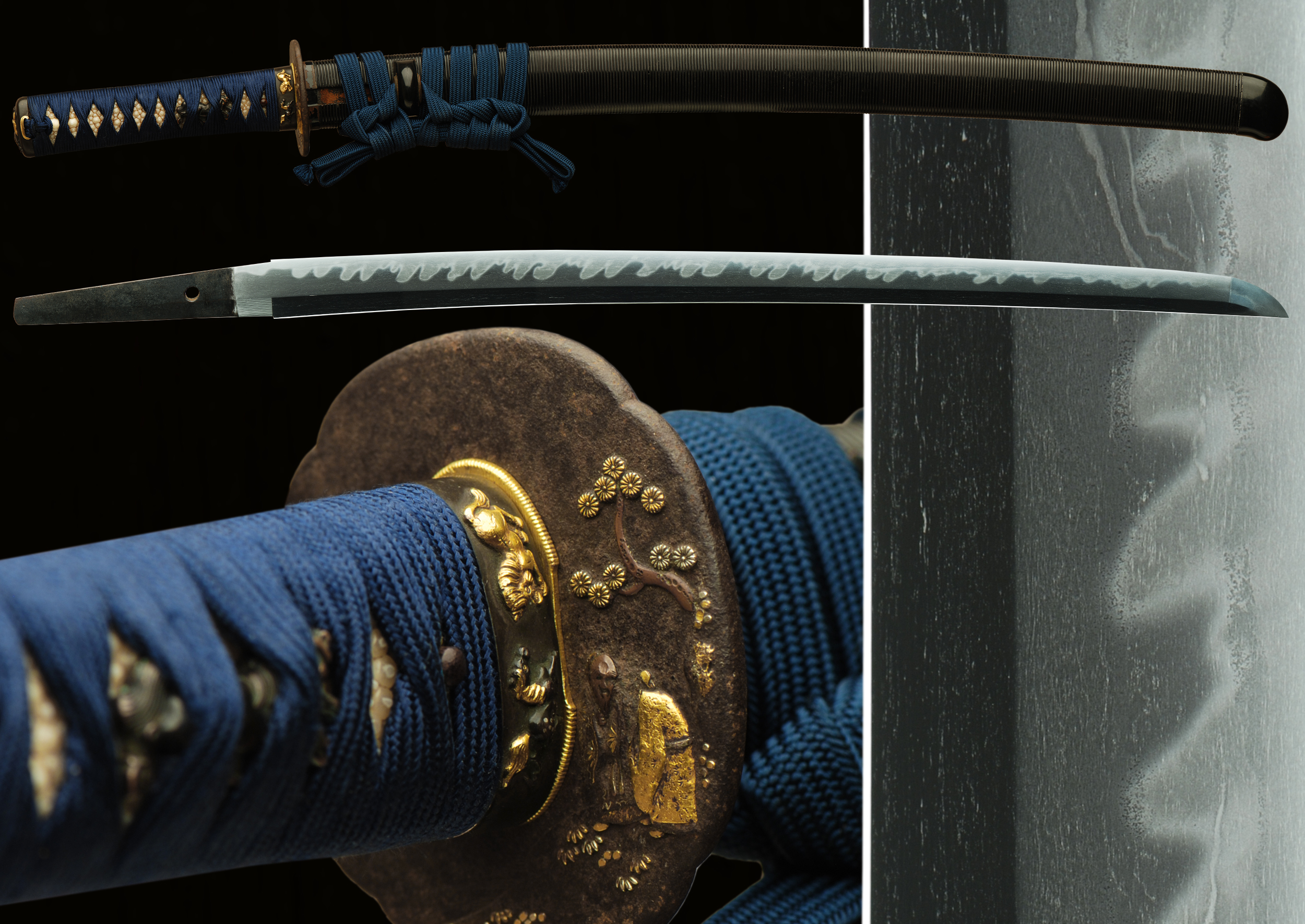

山城伝 · 筑前 · 1648-1652頃
刀剣大鑑 上位76%
現在1点販売中
山城伝 · 山城
現在33点販売中
信国派は山城国京都に興った名門で、その流れは南北朝時代に遡る。一派の祖と仰がれる信国は了戒系の京鍛冶で、血脈の上では来の伝統を承けながら、修業の上では相州貞宗の門に入って貞宗三哲の一人に数えられた。来の系譜と相州伝という二つの根がこの一門の作のすべてを導く。銘鑑は祖を建武に置くが、説明書はこれを繰り返し退ける。建武年間の作は残らず、現存最古の延文・貞治の年紀作が貞宗に直結することから、本会は延文・貞治の工をもって初代と見做す。南北朝の末期には永徳・至徳・明徳の代替りの信国が続き、同銘数工があったと見られる。室町初期には左衛門尉・式部丞を冠する応永信国が栄え、これを通常三代と数える。一派は後に豊前へ、さらに筑前へ移り、慶長の頃より明治初年まで福岡藩黒田家の抱え鍛冶として吉貞・吉政・吉次・吉包・重包の代々を出し、新々刀期まで栄えた。 一派に通う語法は、まず地鉄に現れる。鍛えは杢を交えた板目で、刃寄りに流れて柾となりやや肌立ち、地沸を厚くとり地景が頻りに入り、よくつんだ作には淡い沸映りが立つ。刃寄りに流れる鍛えは了戒系の所伝を首肯せしめる証とされ、厚い地沸と頻りの地景は貞宗に学んだ相州伝の痕跡として読まれる。刃文は文様の如何を問わず沸で焼かれ、砂流し・金筋が絶えず働き、匂口は明るい。その作域は二様を基とする。一つは来派の伝統を示した直刃で、中直刃・細直刃に小沸つき、細かにほつれ喰違刃・二重刃ごころを交えて京物の格調を伝える。いま一つは貞宗風ののたれ乱れで、小のたれに互の目・小互の目を交え、足・葉入り、沸厚く明るく、刃縁にほつれ湯走りがかかり、最も多く出会う作域をなす。帽子はのたれ込みまたは乱れ込んで小丸となり掃きかける。御家芸とも言うべき濃密な彫物も貞宗譲りで、梵字・素剣・護摩箸・三鈷剣・倶利迦羅を重ね彫りにし、刀身に八幡大菩薩の神号を切る作もあって、彫物によって一門を見分けうる。代を下ると差異が明瞭となる。南北朝末期の後代は一派に初めて太刀を生み、二様に加えて互の目主調の乱れ刃を新たに見せ、互の目が二つ宛連れたものを腰の低い小のたれで繋ぐ矢筈状の刃を見どころとする。応永信国は左衛門尉が「国」の字のクニ構えの中を左字に作る点を大きな鑑別点とし、直刃と互の目乱れの双方に冴えた沸を宿す。筑前に移った吉包・重包は相州伝の志向と、流れ肌の乱れ映りを伴う一派の丁子乱れとを高い技倆で並べ持ち、重包は名物写しの名手として石堂風に紛う華やかな丁子を、地沸・地景・刃中の沸の顕著さによって石堂と分かった。 鑑定の勘所は明快である。刃寄りに流れる柾がかった肌、厚い地沸と頻りの地景、沸で焼いた直刃と貞宗風ののたれ乱れ、重ね彫りの宗教彫物が一門を束ね、相州の同門とも後世の備前丁子とも分かつ拠りどころとなる。無銘極めも代の弁別も延文三年紀の作との照合によって決せられ、後代は連れ互の目と矢筈刃で、応永信国は逆字の銘で、筑前の工は流れ肌の乱れ映りで読み分けられる。藤代の極めは初代信国を上々作とし、後代から応永信国まで京古刀の上位に列し、筑前の吉包・重包は地方新刀の堅実な工として上作の評を得る。在銘作は祖において短刀・小脇指に限られて稀であり、それゆえ年紀のある後代の太刀・薙刀は何よりの好資料として貴ばれる。伝来は大名家と社寺に厚く、黒田家・浅野家・山内家・佐竹家らの蔵刀に加え、本願寺名物や富士山本宮浅間大社に奉納された式部丞の脇指がある。上位指定の多くは公私の蔵に秘められて市に現れず、在銘の信国が世に出ること自体が稀であって、現れた時は南北朝以来の山城物の蒐集で特筆すべき機会となる。 詳しく見る →
江戸時代
徳川の泰平のもと、大小は法度の定める身分の制服となり、需要は城下町、とりわけ江戸に集まった。工芸は二つに分かれる。目利きのための華やかな鑑賞の作と、截断の結果を金象嵌に刻む実証の刀である。
NTHKの中心的な鑑定書で、相応の出来を備えた作に発行されます。在銘作は銘の正真を、無銘作は審査員による刀工・流派の極めを示します。点数を記す詳細な審査表が付されます。
NTHK(日本刀剣保存会)は、NBTHK(1948年設立)に先立つ1910年に創立された、日本で最も古い刀剣鑑定団体です。長く会を率いた会長の没後、NTHKとNTHK-NPOの二つに分かれ、いずれも審査を続けています。NTHKの鑑定書は、点数と審査員の所見を併記する詳細な審査表が特徴で、特に無銘作の極めに定評があります。
We offer a 48 hour inspection period for all Antique items shipped within the United States only. If the item is not to your satisfaction, we will gladly refund your money less any shipping and handling fees. All sales are final after the 48 hour inspection period. Please note that all discounted items are a final sale and not returnable.