Around 1800 Suishinshi Masahide argued in his writings that the craft must return to the old masters’ methods: the fukkotō revival. His greatest successor Naotane worked convincingly in Bizen and Sōshū manners that had been dead for centuries.
Introduction For centuries, Bizen province had been one of the main and most prestigious production centers for Japanese swords. This started with Tomonari, the illustrious 12th-century grandmaster smith who is credited as the founder of the Bizen tradition. From the Kamakura period (1185-1333) onwards, production was mainly centered in the village of Osafune which saw the rise of many grand master smiths. The tradition was delivered a huge blow when the village got largely wiped out by a great mudslide and flood of the Yoshii river in 1591. Only very few smiths survived and resettled, among which Yokoyama Tōshirō Sukesada, founder of the Yokoyama Bizen school that survived into the 19th century. They were named after the Yokoyama district of Osafune, but worked from several different places. Some eventually resettled to Osafune. Introduced here is a fine tantō by the best of smith of the Shinshintō-era Bizen-Yokoyama group: Sukenaga. It comes with understated but finely made koshirae. Yokoyama Sukenaga Sukenaga was born in 1795 and passed away in 1853 at age 57. His extant dated blades start around the 1830s to early 1850s. He was the second son of Sukehira and his successor, as his older brother had been adopted by the 11th-generation Shichibei Sukesada. Sukenaga considered himself the 56th generation Tomonari, the aforementioned Bizen founder of the 12th century. Sukehira was granted the title Kaga no Suke "Assistant Governor of Kage Province", an honorary title granted to swordsmiths of considerable skill. He also signed with the imperial chrysanthemum and the character ichi ("one"), as seen on this sword. Fujishiro rates his work jō-saku: "superior work" This tantō Of classical shape, a slightly curved hira zukura tantō with iori-mune. The hada is a dense ko-itame so fine that it tends towards muhada. The hamon is an irregular choji-midare with sugu-yakidashi, the boshi is ko-mari-kaeri. (In plain English: the forging structure is a vey dense wood grain, so fine that it appears almost grainless. The temperline starts straight at the base and then turns wavy, with clove elements. The temperline at the tip makes a sharp turn.) Papers It was awarded Tokubetsu Hozon ("Especially Worthy of Preservation") by the N.B.T.H.K. on August 27, 2021. Signature Facing side: 横山加賀介藤原祐永 Yokoyama Kaga no Suke Fujiwara Sukenaga "Yokoyama [school] Assistent Governor of Kage [honorary title] Fujiwara [clan name] Sukenaga" 天保十五年八月日 Tenpō jû go nen hachi gatsu hi "A day in the 8th month of the 5th year of Tenpō" (August 1844) Reverse: (菊紋) 一 (Kiku Mon) ichi (Chryanthemum crest) "one" 横陽長船住 Ōyō Osafune ju "Resident of Ōyō [short for Yokoyama district] in Osafune" Koshirae The blade comes with a nice and understated all black aikuchi koshirae that is possibly older than the blade. The iron mounts are sprinkled with silver dots, as if they are dew. The kogai and kōzuka (missing the blade) are made of red copper, decorated with plum blossoms in shakudō and gold. The plum is appreciated for its early blooming in February, producing beauty in harsh circumstances. It therefore represents endurance and perseverance. Comes with a silver foil twopiece habaki. Shirasaya and tsunagi present. More photos Due to time constraints, I did not include full photography of the blade (yet). For serious buyers, they are available upon request.
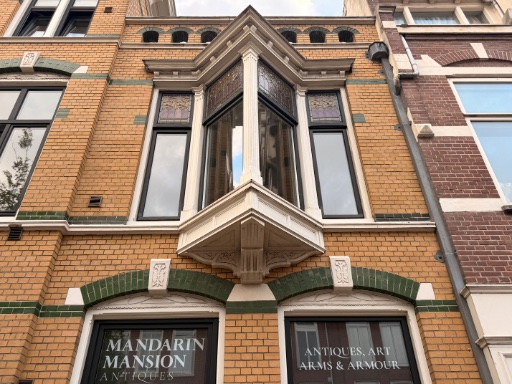
Offered by Mandarin Mansion
6 on the market


Bizen-den · Bizen · around 1830-1844
Fujishiro Jo saku · Tōken Taikan top 63%
6 pieces on the market now
Bizen-den · Bizen
24 pieces on the market now
| Smith | Era | Designated |
|---|---|---|
| Sukenobu祐信 | 1830-1844 | 0 |
| Suketaka祐高 | 1865-1868 | 0 |
| Sukeharu祐春 | 1864-1865 | 0 |
| Sukehiro祐廣 | 1854-1860 | 0 |
| Sukekane祐包 | 1868-1912 | 0 |
The Shinshintō revival
Around 1800 Suishinshi Masahide argued in his writings that the craft must return to the old masters’ methods: the fukkotō revival. His greatest successor Naotane worked convincingly in Bizen and Sōshū manners that had been dead for centuries.
A Hozon-certified blade judged to show notably superior workmanship and a better state of preservation. The bar is higher: re-tempered blades and most unsigned Muromachi/Edo works are excluded.
The NBTHK (Nihon Bijutsu Tōken Hozon Kyōkai, the Society for the Preservation of Japanese Art Swords) is a public-interest incorporated foundation founded in 1948 and supervised by Japan’s Agency for Cultural Affairs (Bunkachō); it is based at the Japanese Sword Museum in Tokyo. Its expert panels physically examine each submitted work (shinsa) and issue a certificate (kanteishō) ranking it by artistic and historical merit. NBTHK papers are the most widely recognized standard of authentication for Japanese swords and fittings.
NBTHK official site
Returns accepted on items ordered from the site when an item does not appear to be as depicted and described; buyer must notify via email within 7 days of receipt. Refund covers purchase price minus shipping, bank fees, and currency conversion. Sales on items paid in terms are final, as are sales of items personally inspected.
€10,700
Certificate reading — 銘 横山加賀介藤原祐永 天保十五年八月日 (菊紋)一備陽長船住