An Exceptional Commissioned Sword Associated with the Arao Family of the Tottori Domain
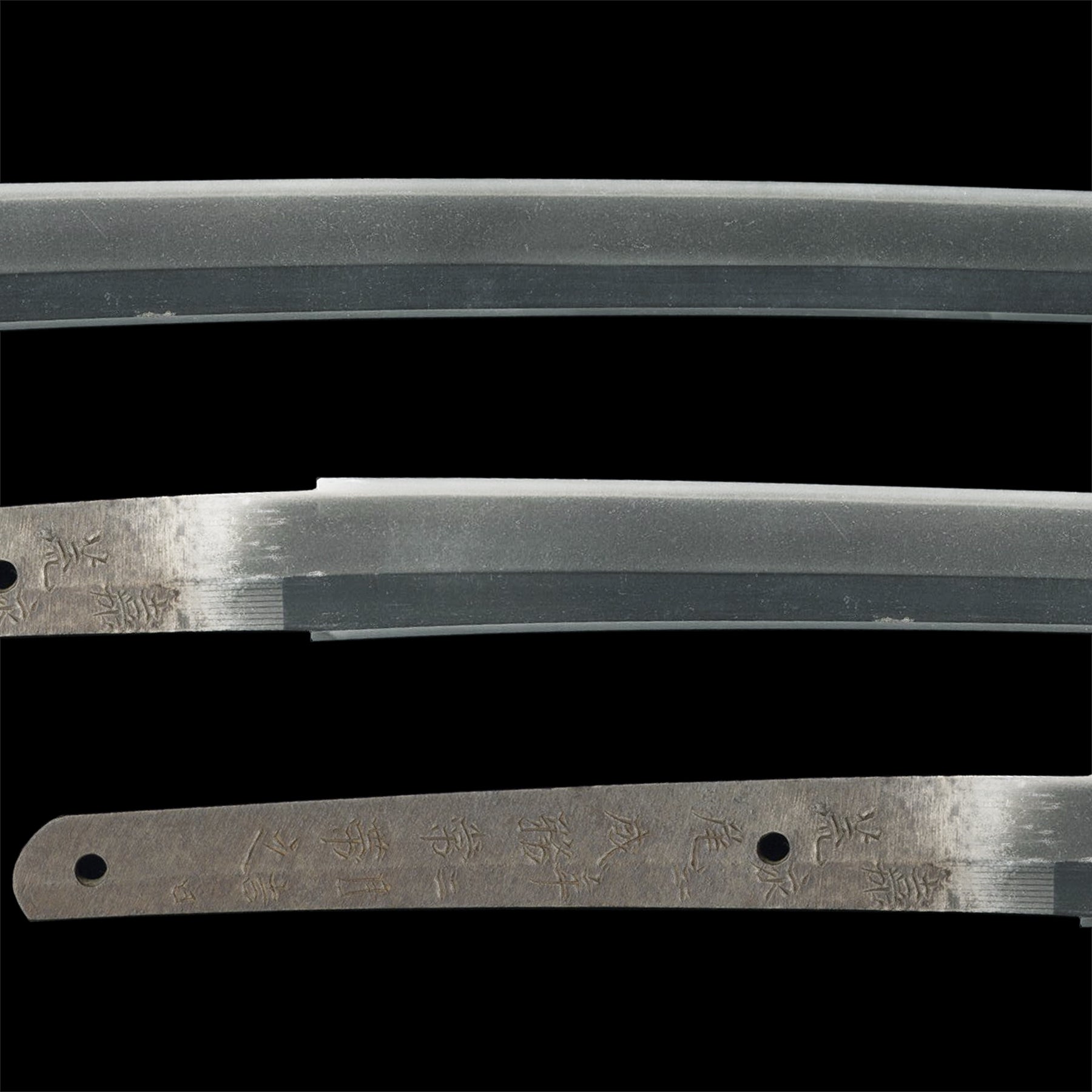
Inscription (Mei):
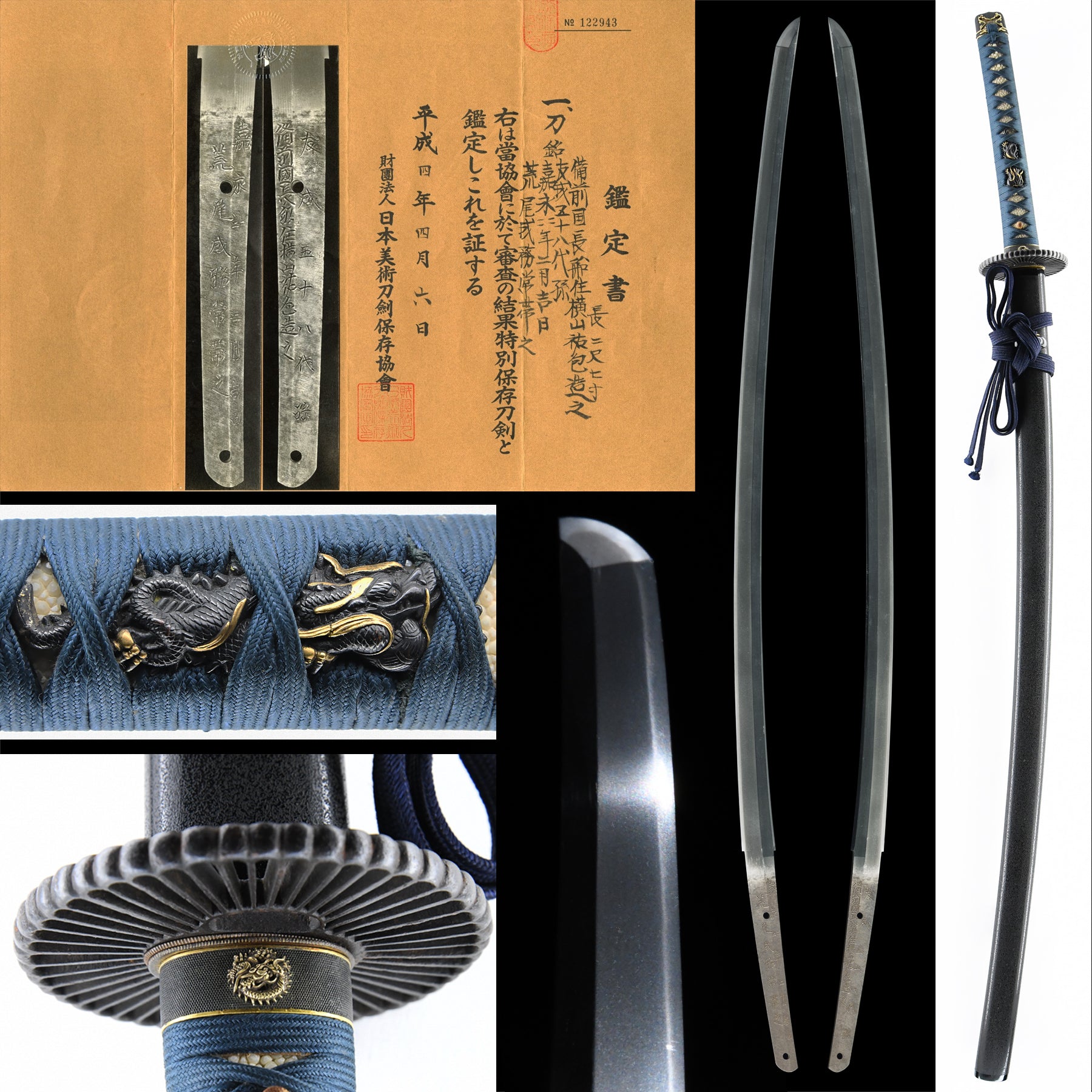
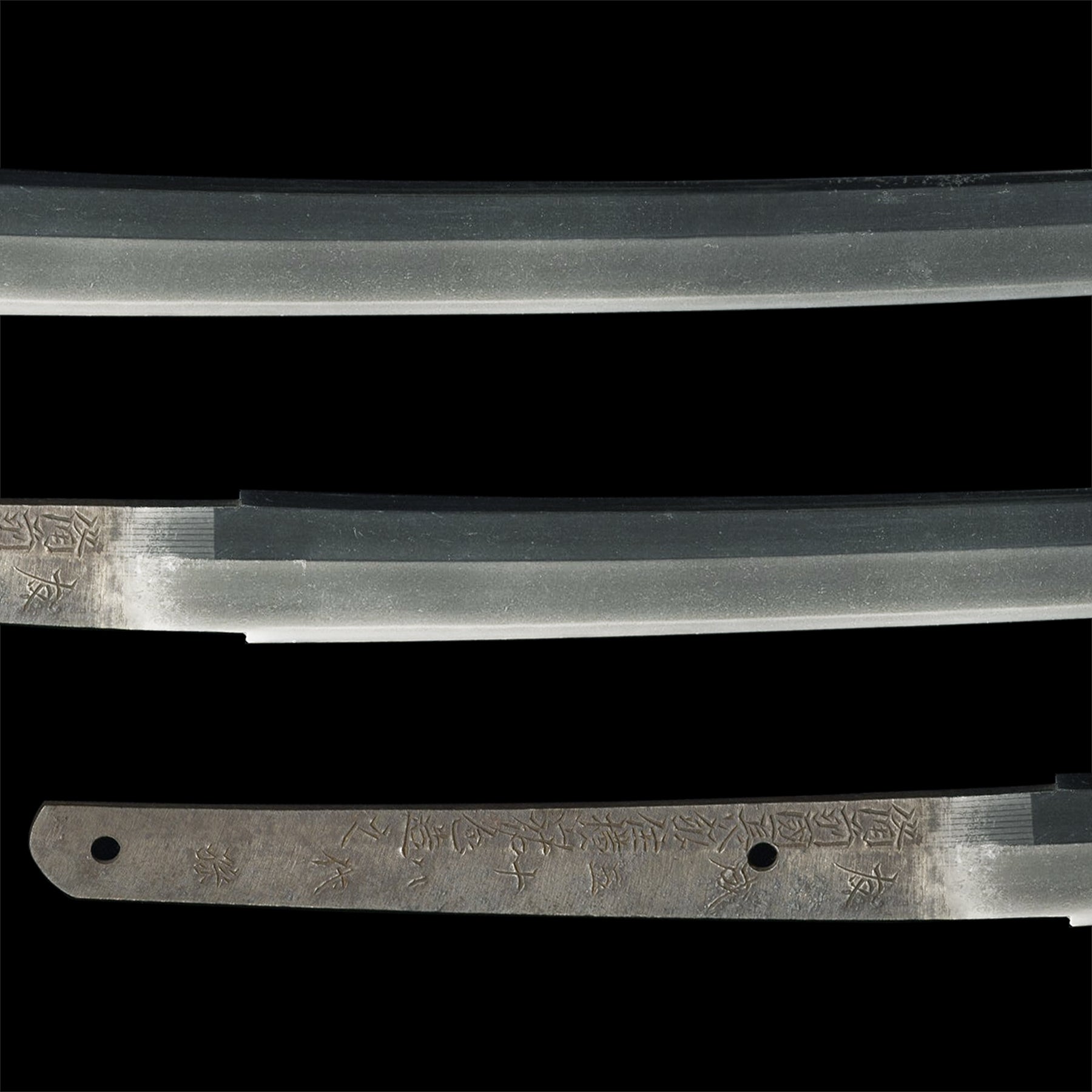
備前国長船住横山祐包造之
友成五十八代孫
嘉永四年二月吉日
荒尾成務常帯之
Made by Yokoyama Sukekane, resident of Osafune in Bizen Province, 58th-generation descendant of Tomonari. An auspicious day in February 1851. To be regularly worn by Arao Naritsune.
A Remarkable Tribute to One of Japan's Earliest Swordmaking Masters
This exceptional sword was forged in 1851 by Yokoyama Sukekane, a distinguished master of the Bizen Shinshinto tradition, as a faithful homage to the celebrated Heian-period swordsmith Ko-Bizen Tomonari.
Tomonari is traditionally regarded as one of the three great pioneering masters of Japanese swordmaking, alongside Sanjo Munechika and Hoki Yasutsuna. His surviving works represent some of the earliest and most revered achievements in the history of the Japanese sword.
The particular masterpiece that inspired this sword is the celebrated tachi by Tomonari, now preserved in the Tokyo National Museum and designated a National Treasure of Japan.
More than eight centuries after the original was forged, Sukekane sought to recreate its graceful proportions, deeply curved silhouette, and restrained elegance, preserving the aesthetic ideals of Japan's earliest classical swordmaking tradition.
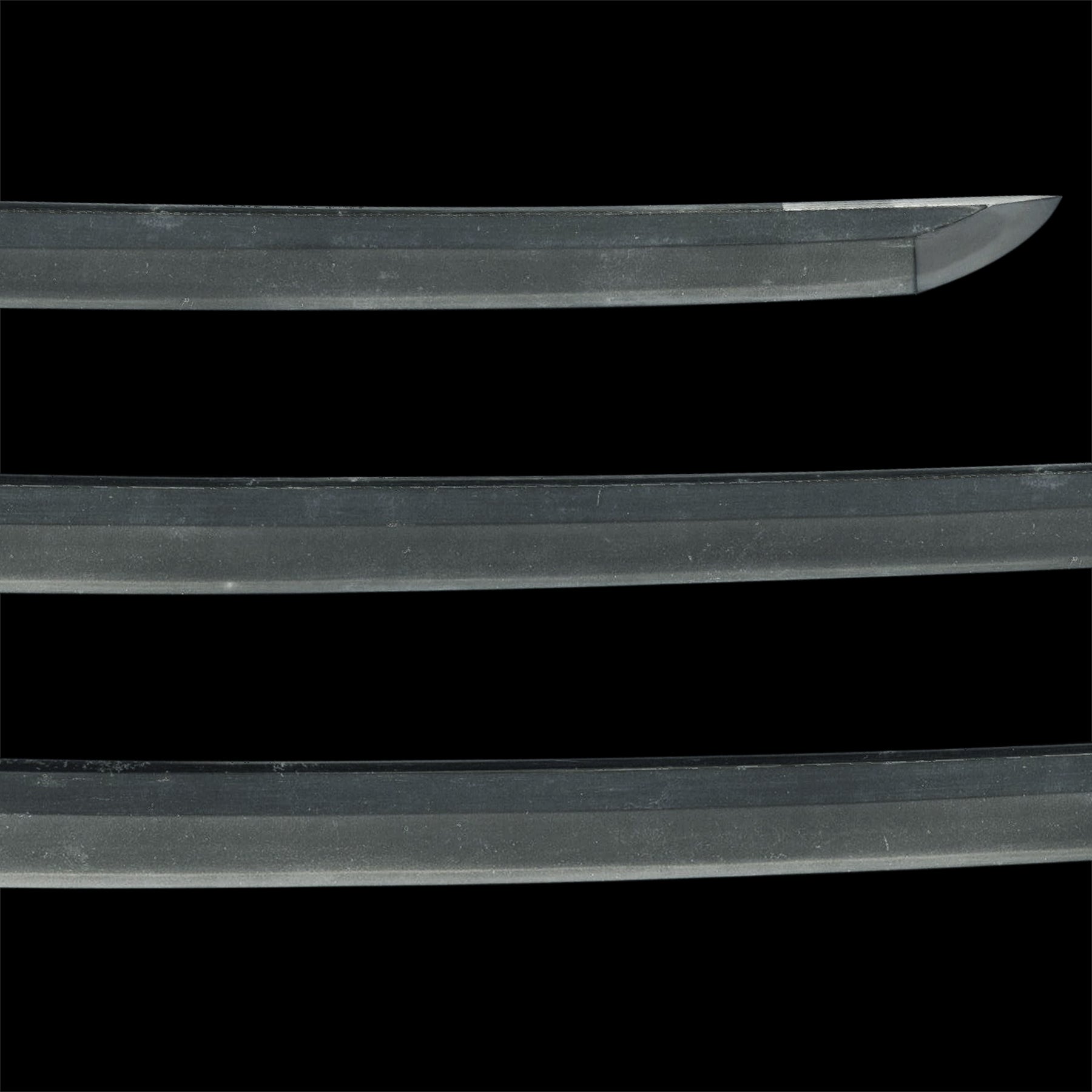
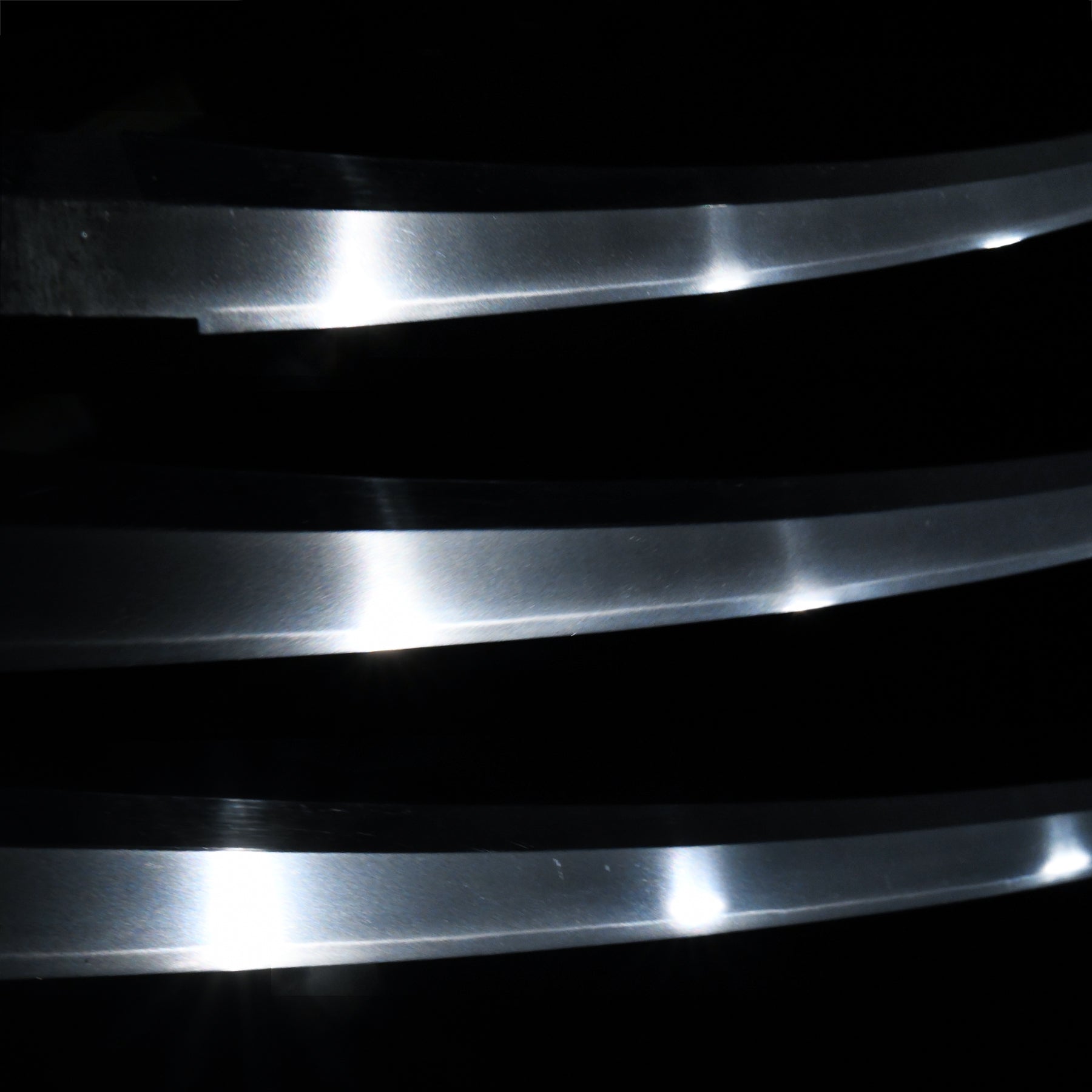
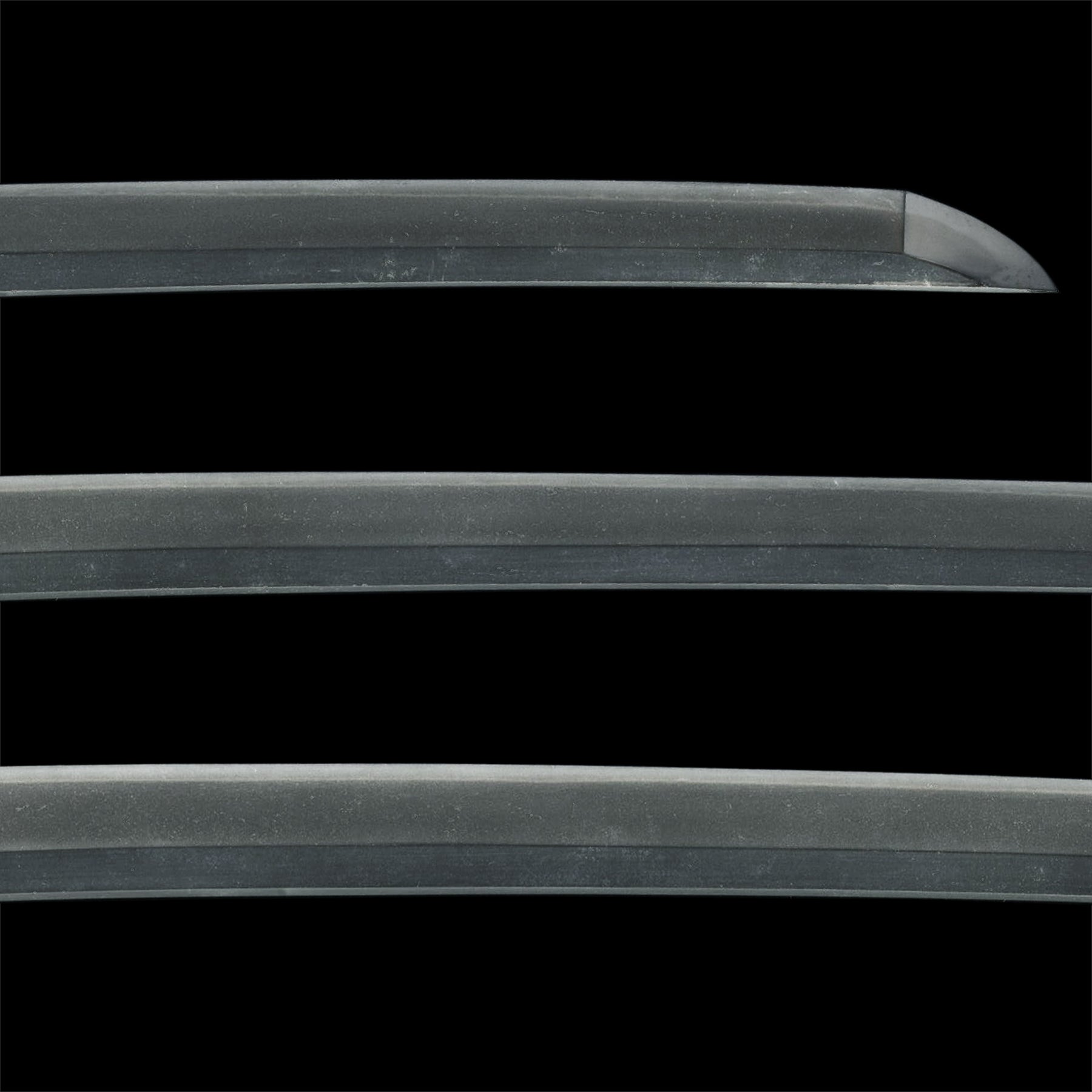
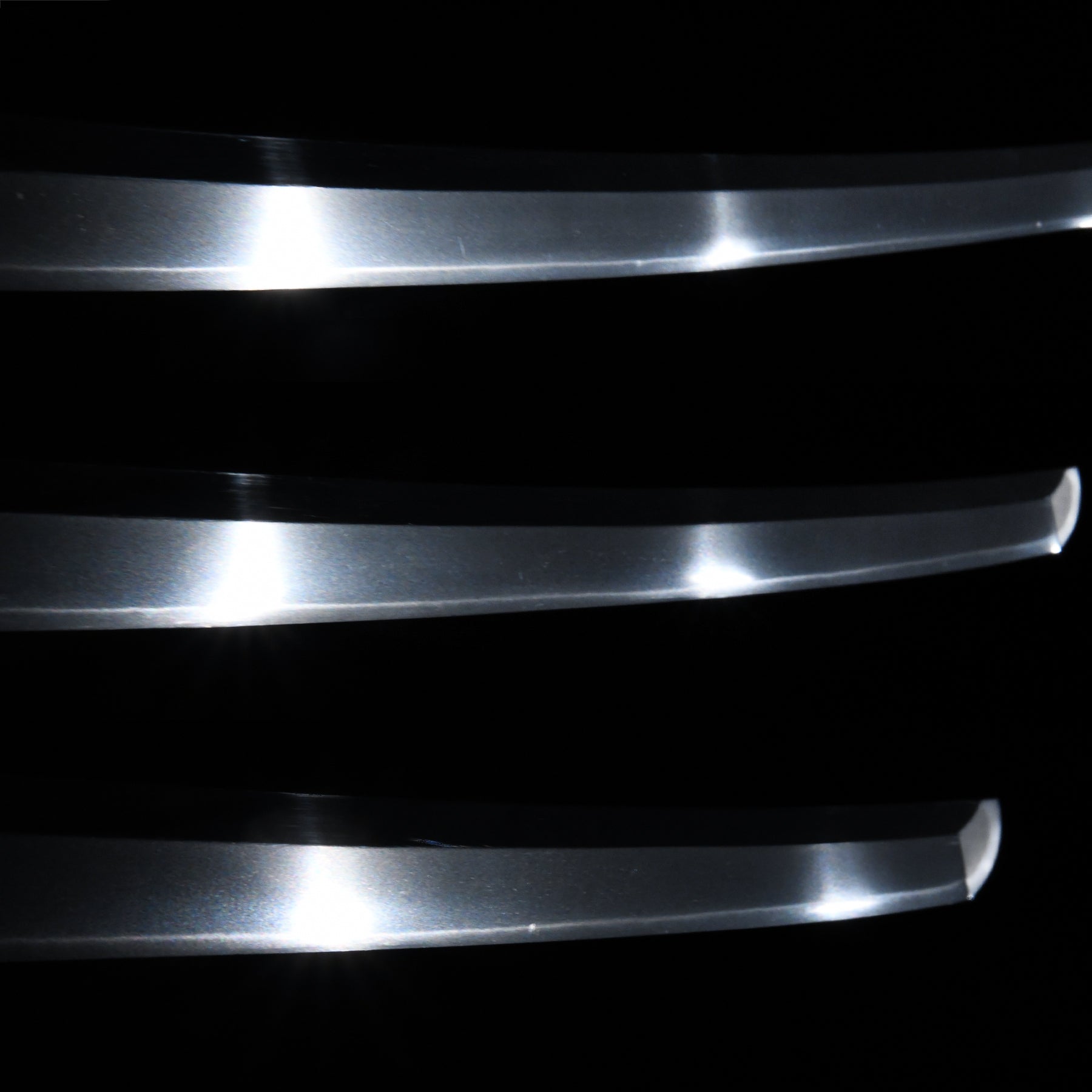
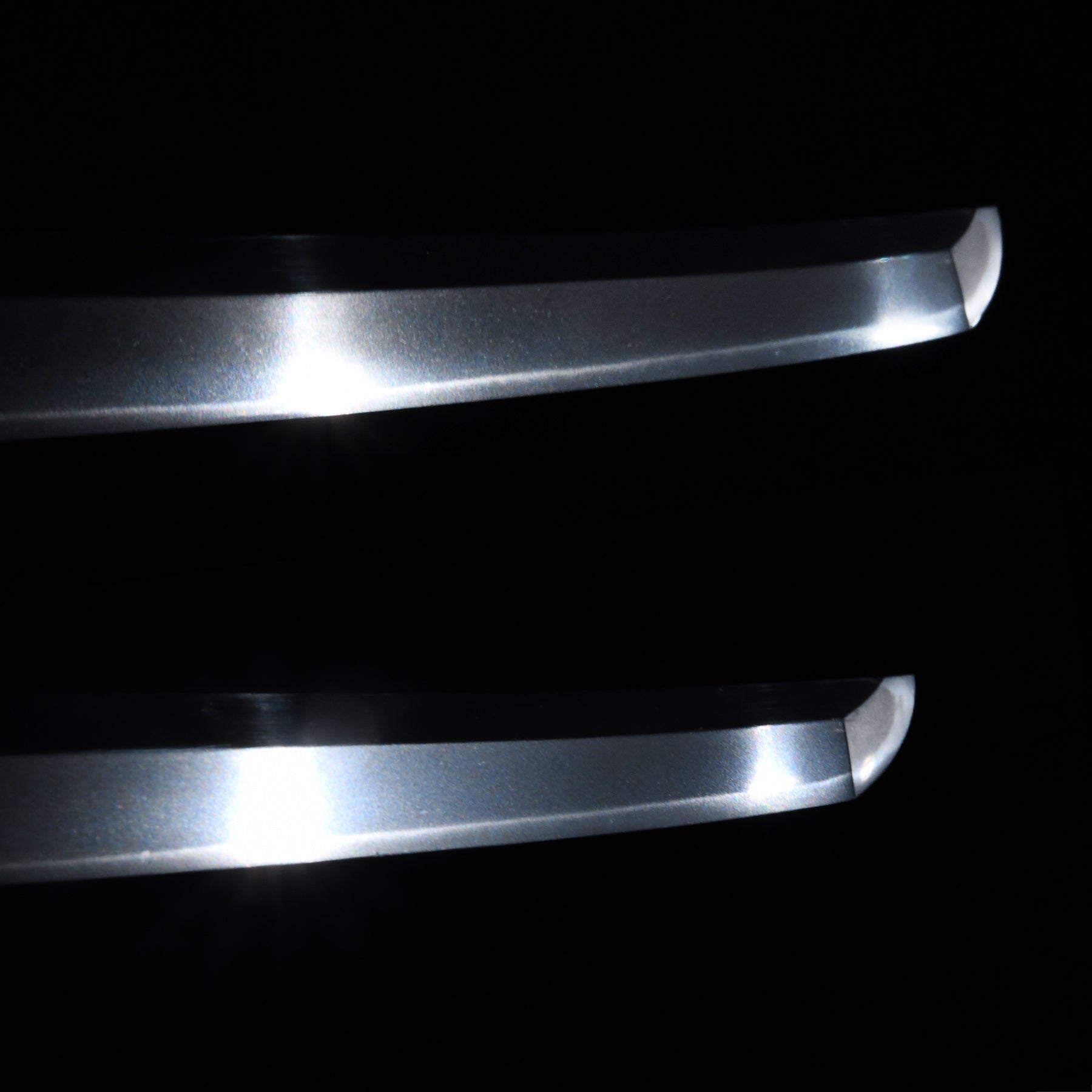
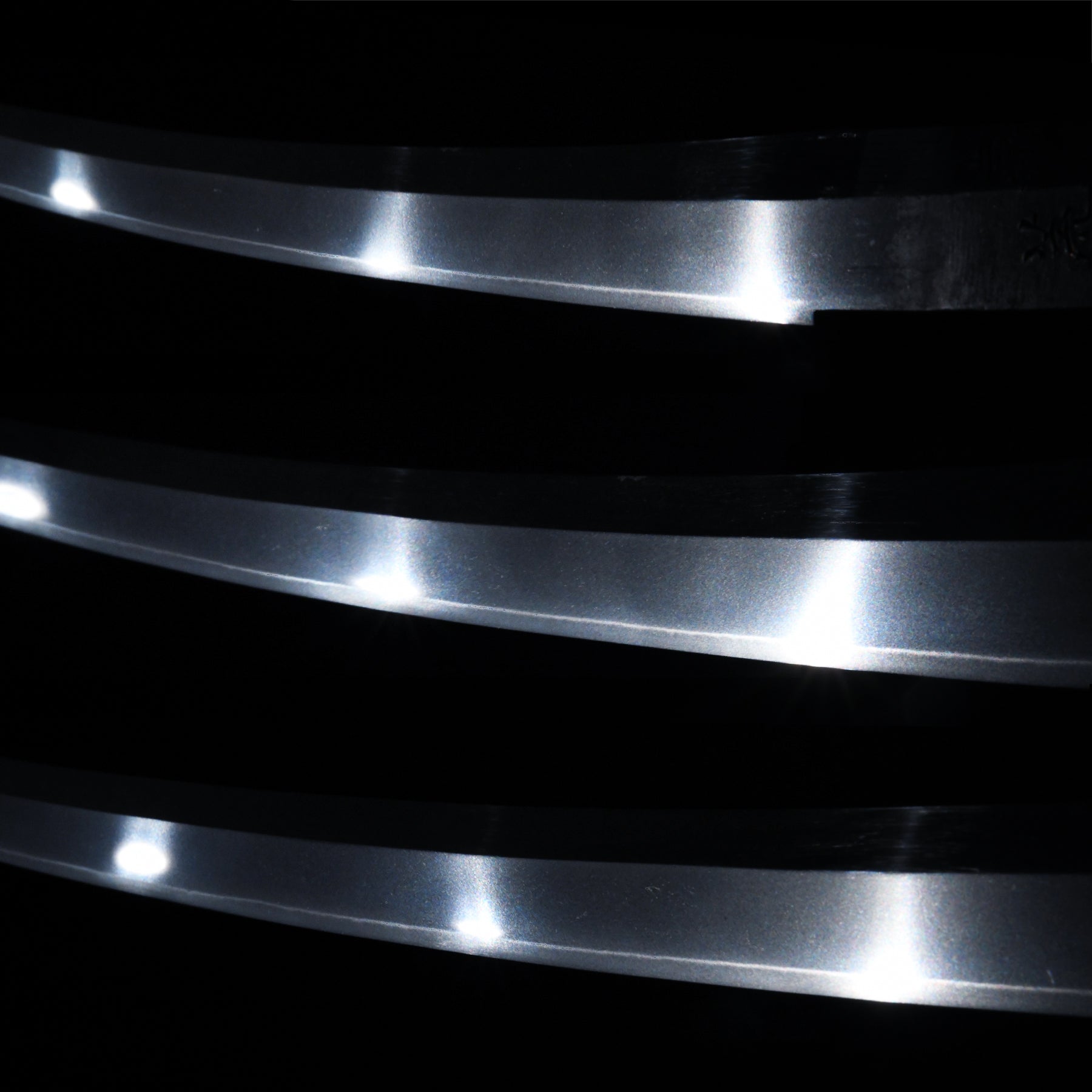
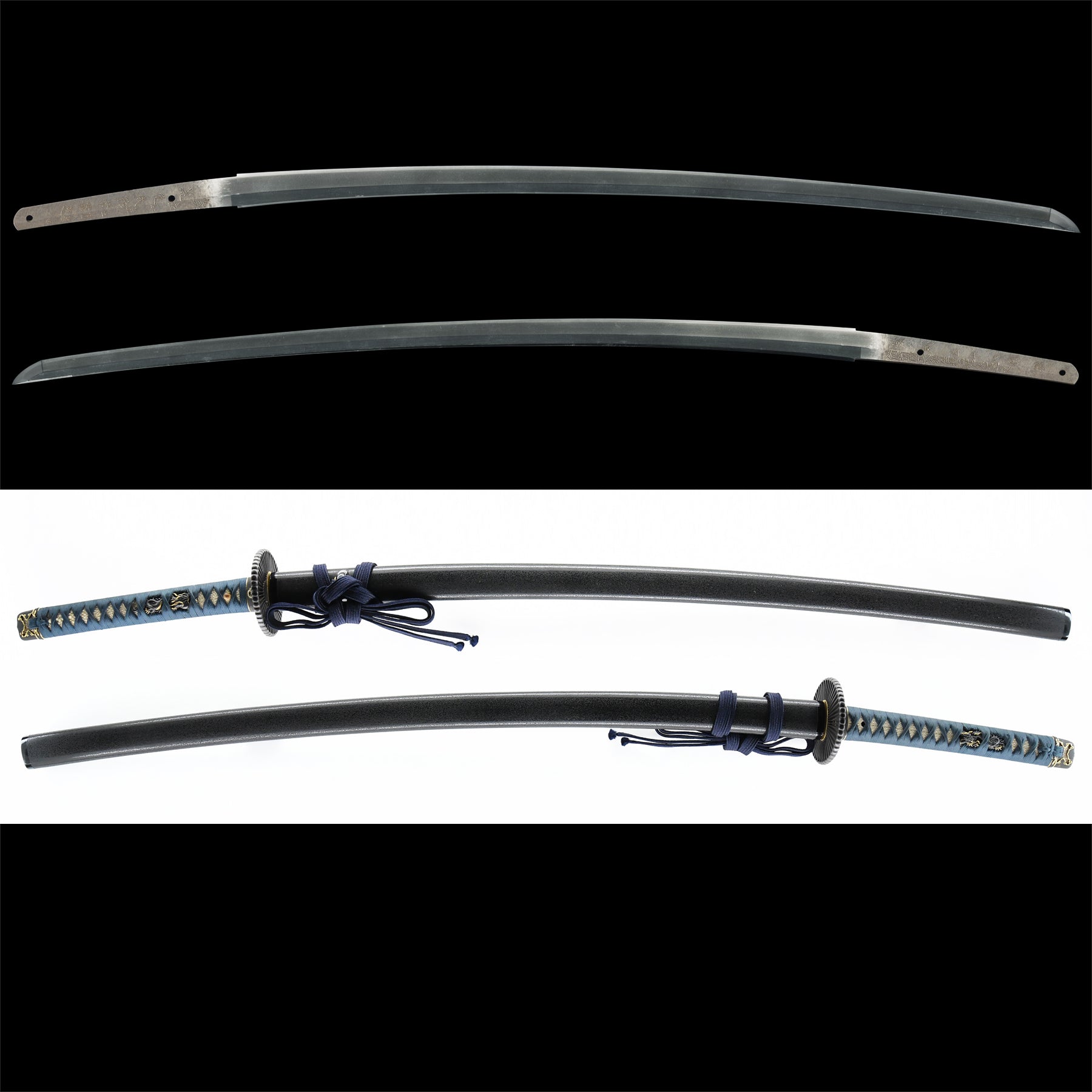
The result is an impressive sword measuring approximately 2 shaku 7 sun (81.8 cm), distinguished by its pronounced curvature and beautifully understated straight temper line (suguha).
Its elegant, deeply curved form recalls the magnificent tachi of the Heian period, giving the sword a dignified and distinctly classical presence.
Yokoyama Sukekane – A Master of the Bizen Shinshinto Tradition
Yokoyama Sukekane was one of the notable swordsmiths of the late Edo-period Bizen revival, working in Osafune, a region renowned for producing some of Japan's greatest swords over many centuries.
He proudly inscribed his blades with the designation "58th-generation descendant of Tomonari," expressing his claimed lineage and connection to the ancient Bizen swordmaking tradition.
Sukekane was particularly accomplished in producing finely forged blades with tightly compacted ko-itame hada and brilliant choji-midare temper patterns, characterized by well-defined nioiguchi. However, he was also capable of creating more restrained works with elegant straight temper lines.
This sword is a particularly fascinating example of the latter style.
Rather than displaying the flamboyant choji patterns for which late Edo-period Bizen swordsmiths were celebrated, Sukekane deliberately adopted the quiet refinement of the early Ko-Bizen tradition.
The choice of suguha, combined with the deeply curved blade, demonstrates his intention to reproduce the aesthetic character of Tomonari's celebrated Heian-period masterpiece.
A Special Commission Associated with the Arao Family of Tottori
One of the most historically significant features of this sword is its unusually detailed inscription.
In addition to the smith's name, claimed lineage, and precise date of manufacture, the tang bears the inscription:
荒尾成務常帯之 — "To be regularly worn by Arao Naritsune."
This inscription associates the sword directly with Arao Naritsune (also recorded as Arao Narihiro), a member of the powerful Arao family connected with the Tottori Domain in Inaba Province.
The Arao family occupied an important position within the domain's ruling hierarchy, and the inscription strongly indicates that this sword was specially commissioned for Arao's personal use.
Unlike an ordinary sword produced for the general market, this piece was evidently intended for a specifically named individual of considerable standing.
The decision to commission a recreation of a famous Ko-Bizen Tomonari tachi from Sukekane, who identified himself as Tomonari's 58th-generation descendant, gives the sword an especially meaningful historical connection.
It represents not only the admiration for classical Japanese swordmaking among the late Edo-period warrior elite, but also the continuing prestige of the ancient Bizen tradition.
An Elegant Heian-Style Blade with Distinguished Mountings
The sword's unusually long blade and deep curvature immediately distinguish it from the more conventional katana of the late Edo period.
Its graceful silhouette faithfully evokes the classical tachi of the Heian era, while the restrained suguha temper line contributes to an impression of quiet sophistication.
The original, unshortened tang (ubu nakago) preserves the extensive inscription, including the maker's name, date, claimed lineage, and the name of the individual for whom the sword was intended.
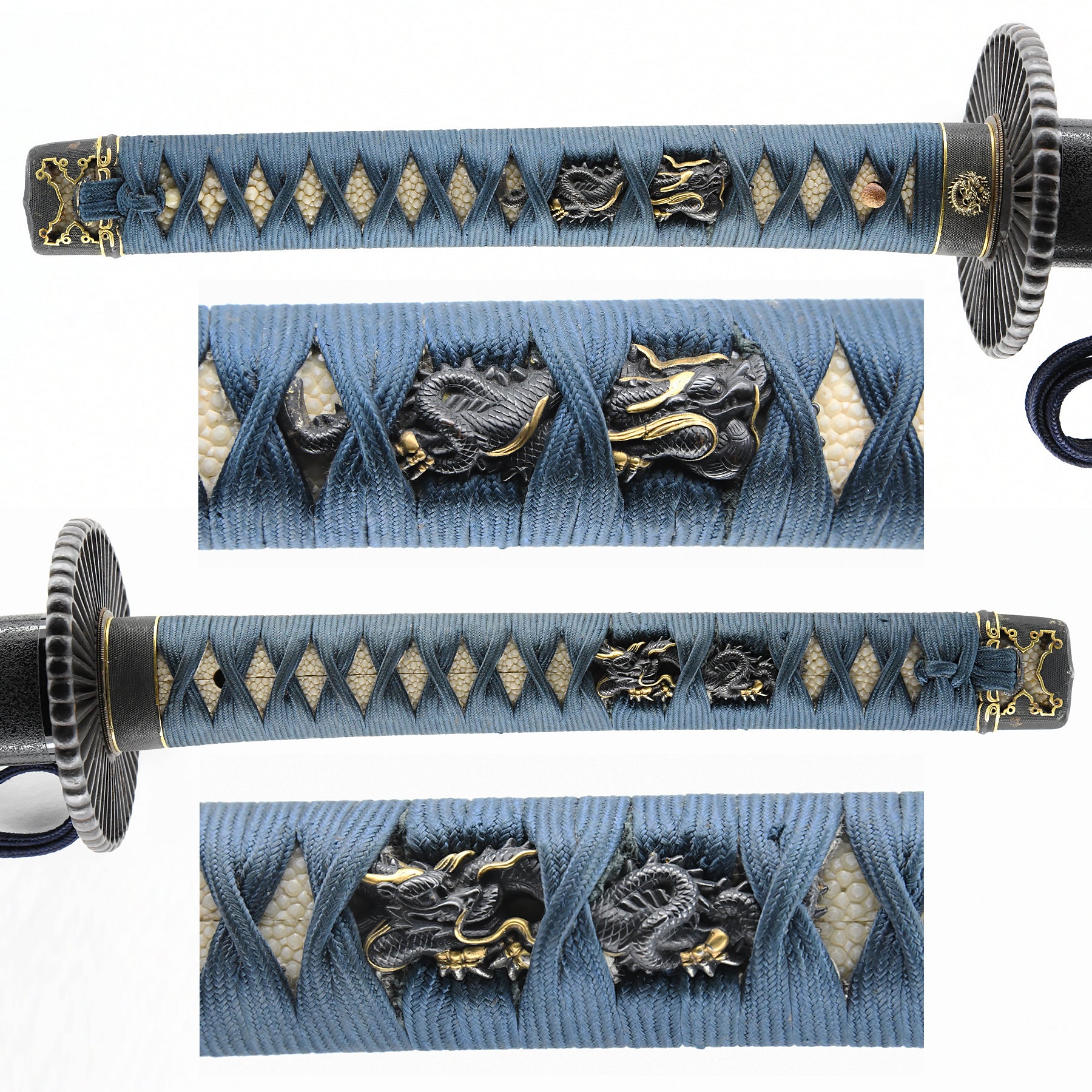
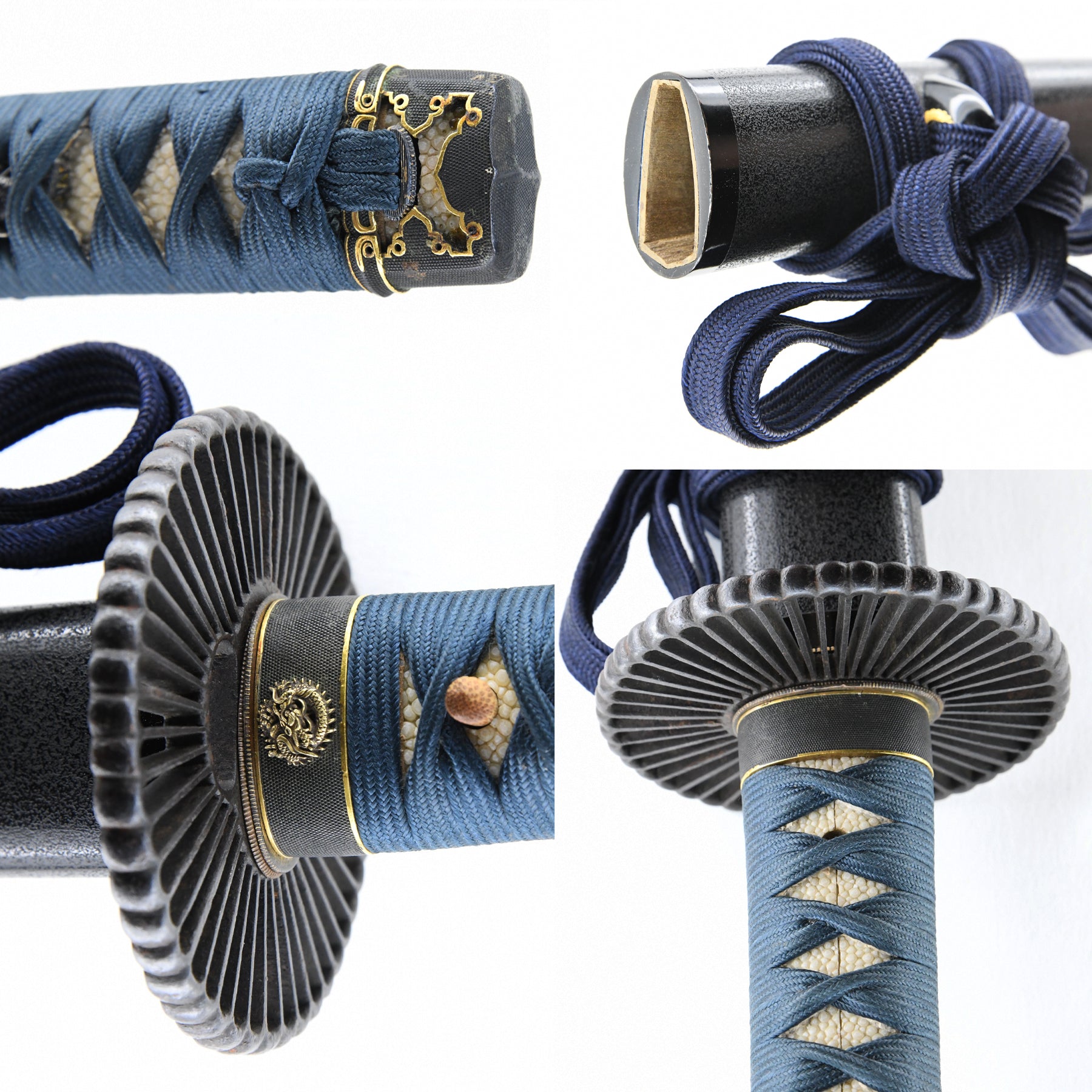
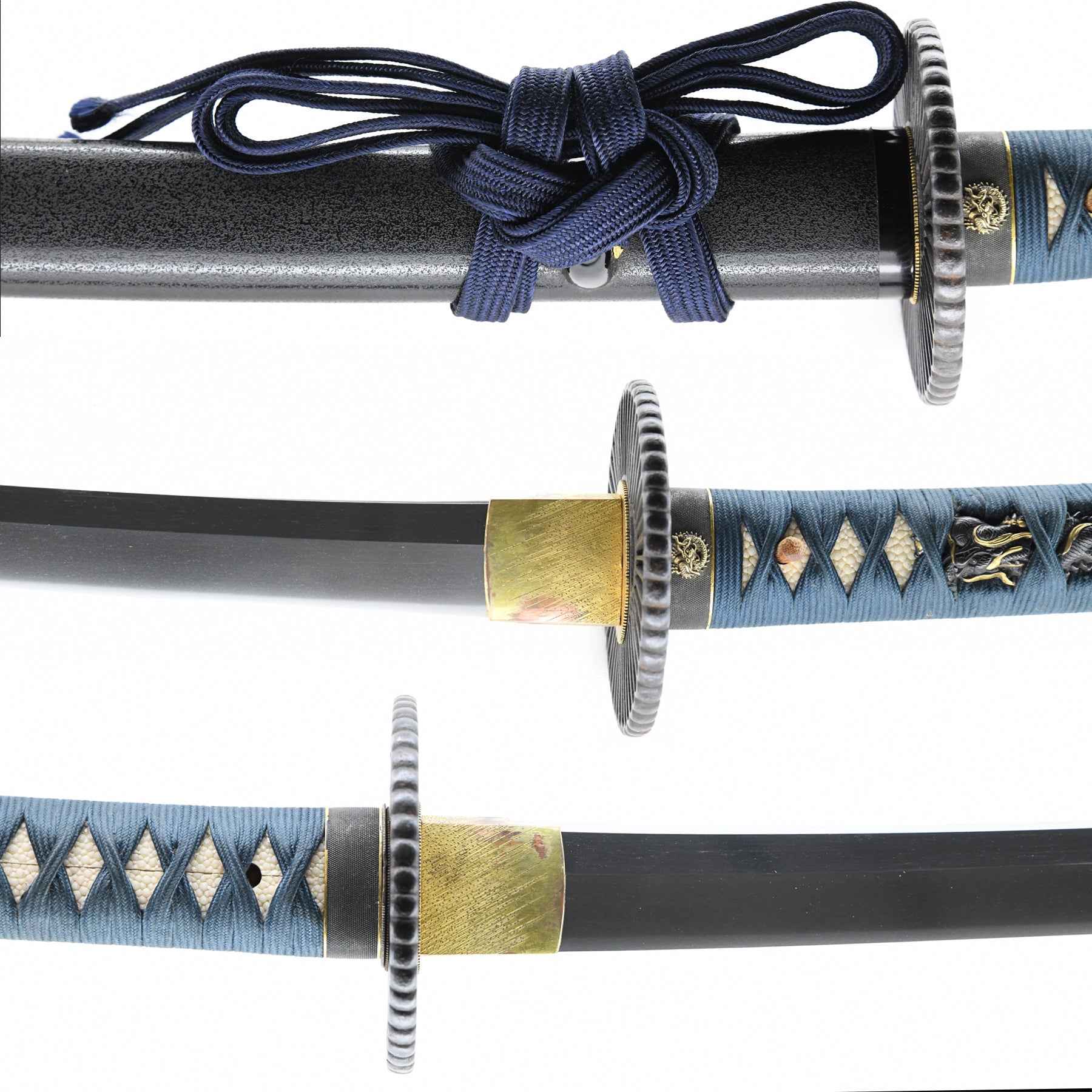
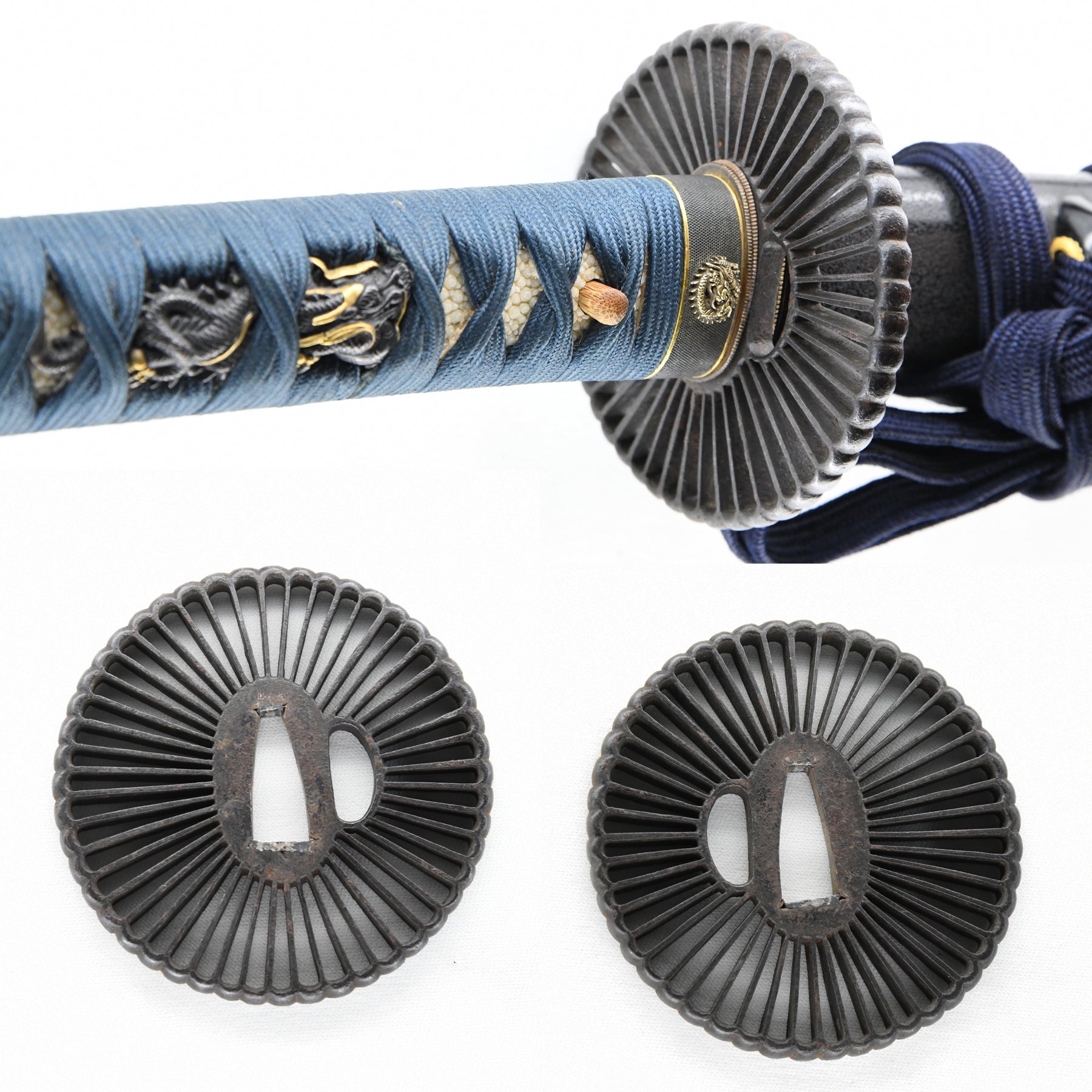
The accompanying koshirae is equally attractive, featuring elegant dark-blue silk wrapping, finely detailed dragon-themed menuki with gold accents, and a distinctive radiating tsuba. These refined fittings complement the sword's classical appearance and give the complete piece an imposing yet sophisticated character.
Certified NBTHK Tokubetsu Hozon Token
This sword is accompanied by a Tokubetsu Hozon Token certificate issued by the Nihon Bijutsu Token Hozon Kyokai (NBTHK), the Society for the Preservation of Japanese Art Swords.
The Tokubetsu Hozon designation recognizes swords considered especially worthy of preservation for their artistic and historical qualities.
For collectors, the combination of an authenticated signed blade, an exact date of manufacture, an original unshortened tang, and an inscription identifying its intended owner makes this an especially compelling example of late Edo-period swordmaking.
A Distinguished Collector's Sword
This is far more than an elegant late Edo-period katana.
It brings together several remarkable elements: a celebrated Bizen master, a direct artistic connection to one of Japan's oldest and most prestigious swordmaking traditions, an explicit association with the Arao family of the Tottori Domain, and a design inspired by a National Treasure preserved in the Tokyo National Museum.
A magnificent homage to Ko-Bizen Tomonari, created by a distinguished Shinshinto master for a named member of the warrior elite.
For the discerning collector, this sword offers an exceptional combination of classical beauty, historical significance, distinguished craftsmanship, and documented attribution.
The sword is available for personal inspection at the SAMURAI STORE showroom in Harajuku, Tokyo, by appointment. We warmly welcome serious collectors to examine this remarkable piece in person.
The blade comes with a Certificate of NBTHK Japan Sword Preservation Society - Tokubetsu Hozon Paper (Extremely Well-preserved sword)



 NihontoWatch