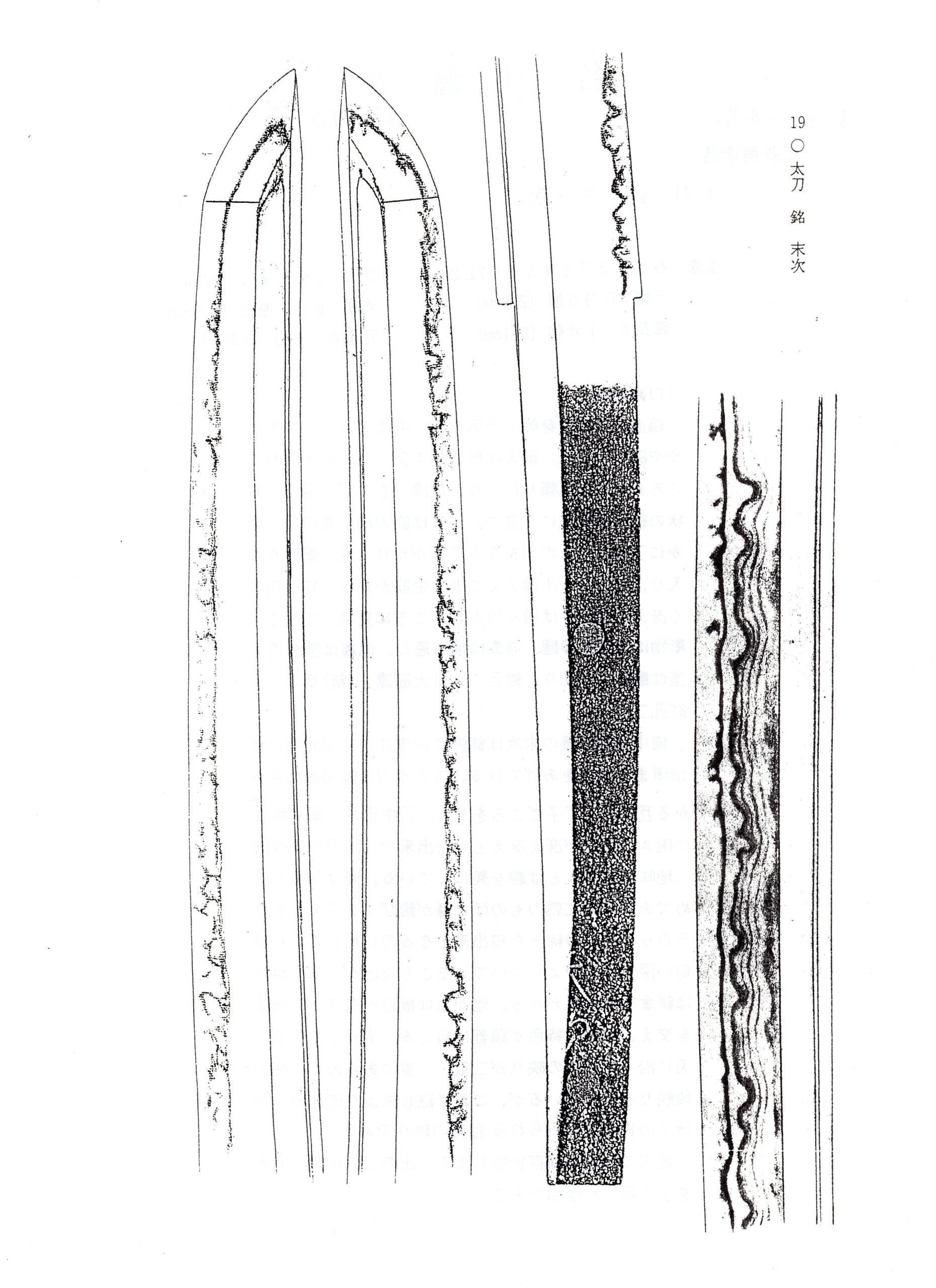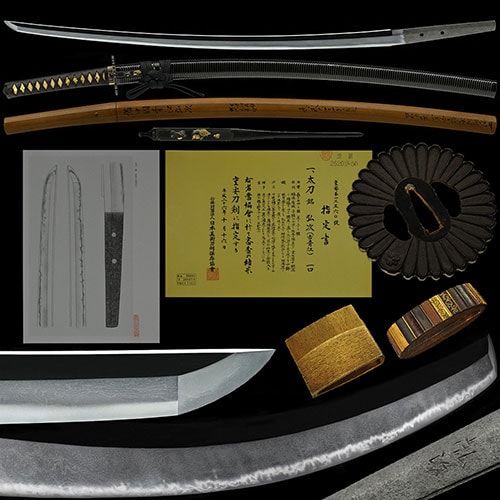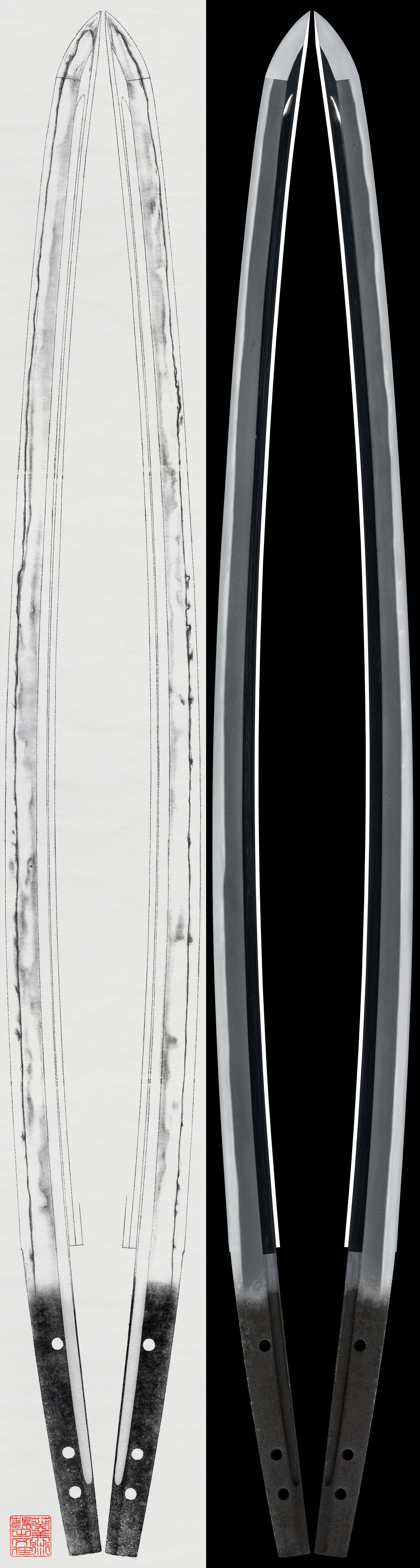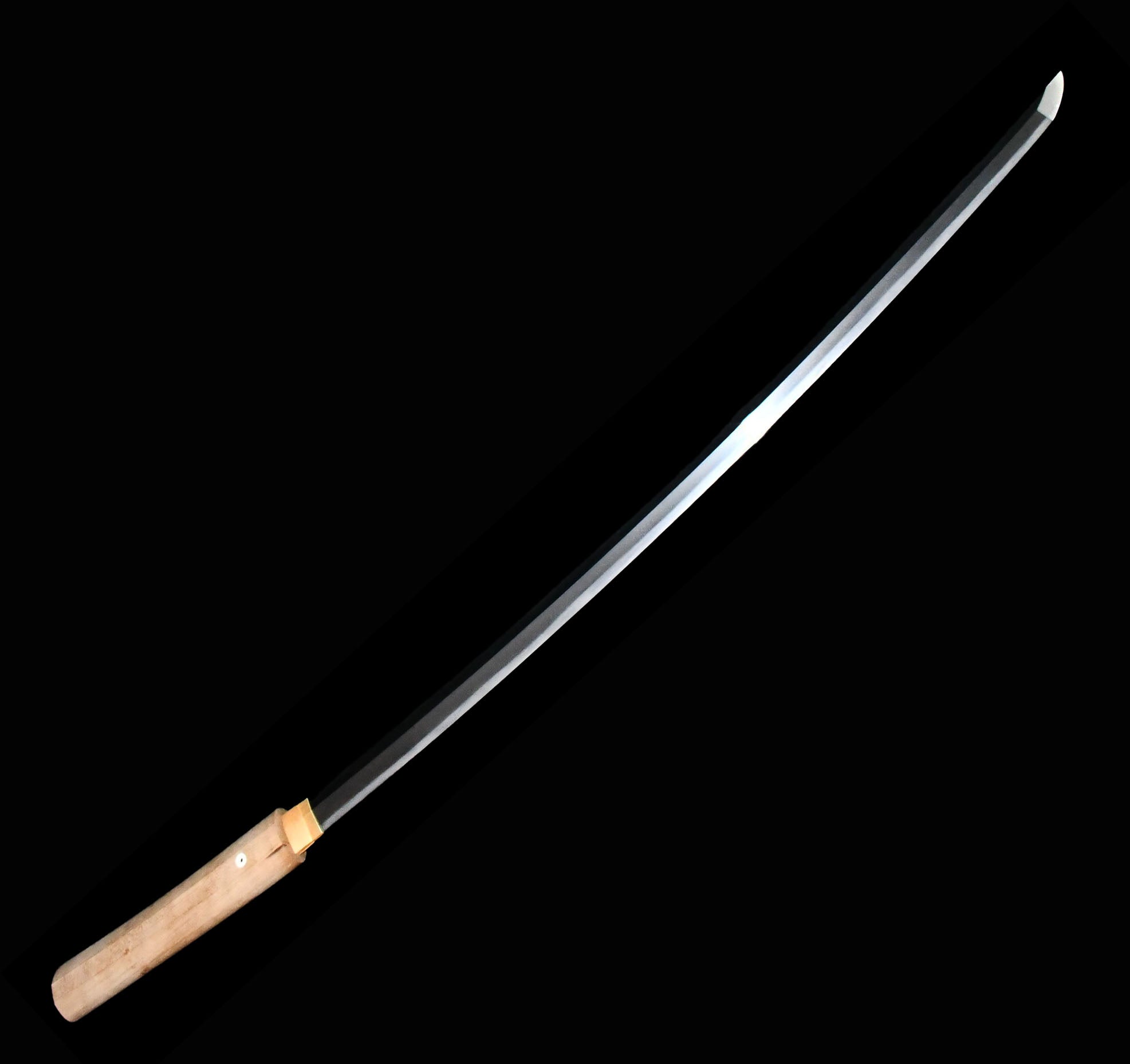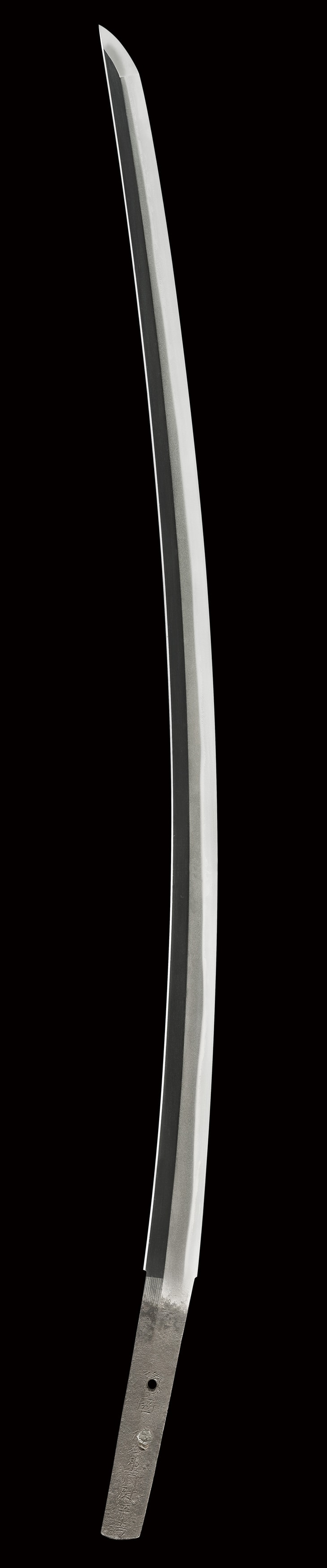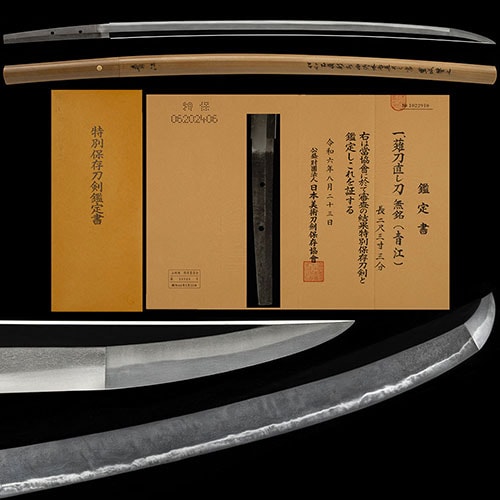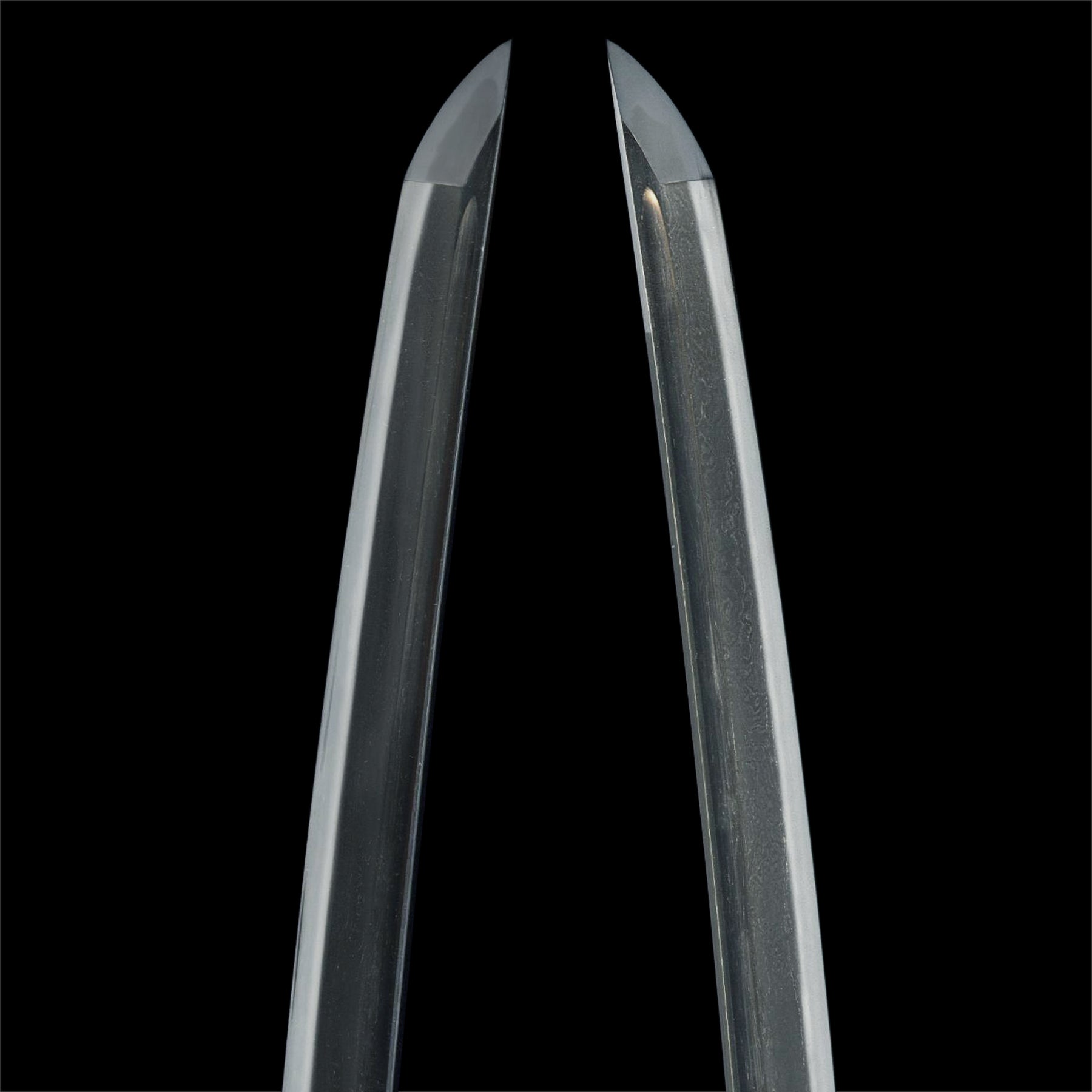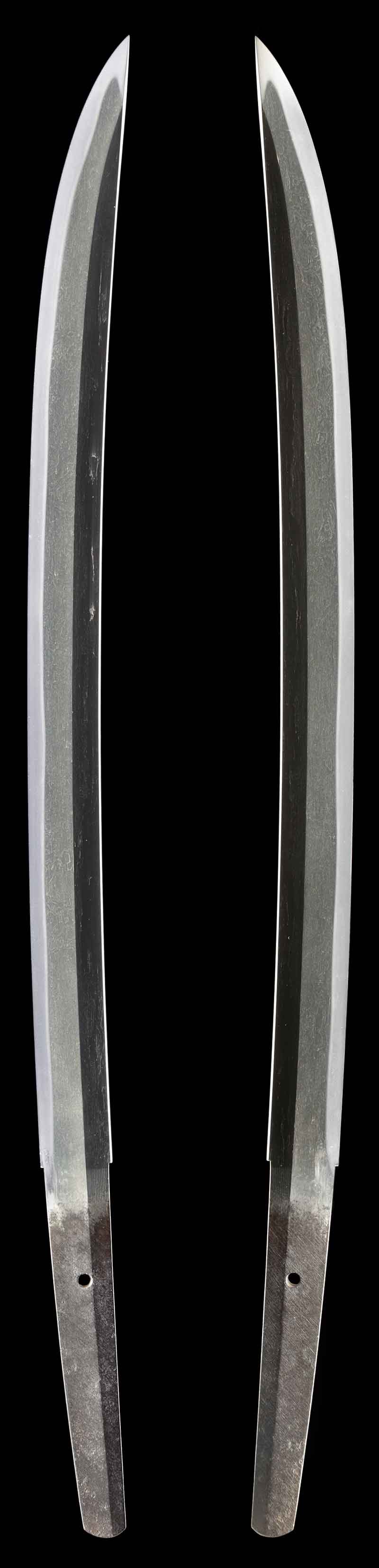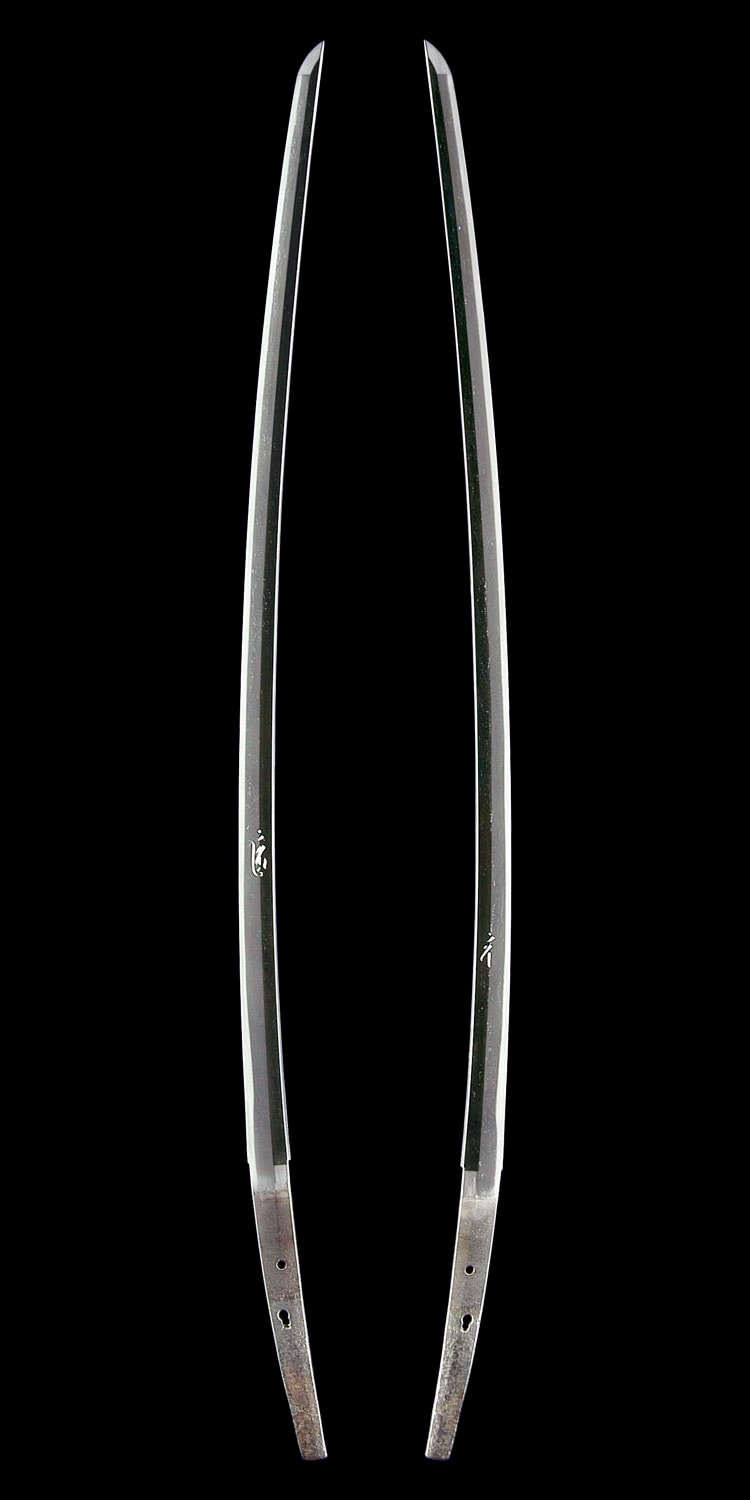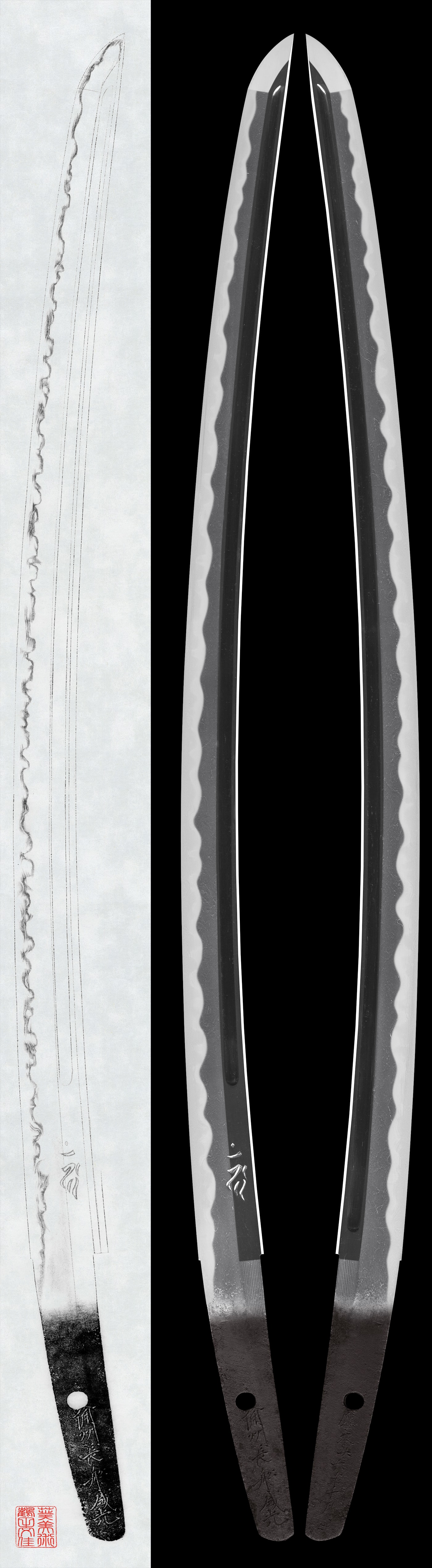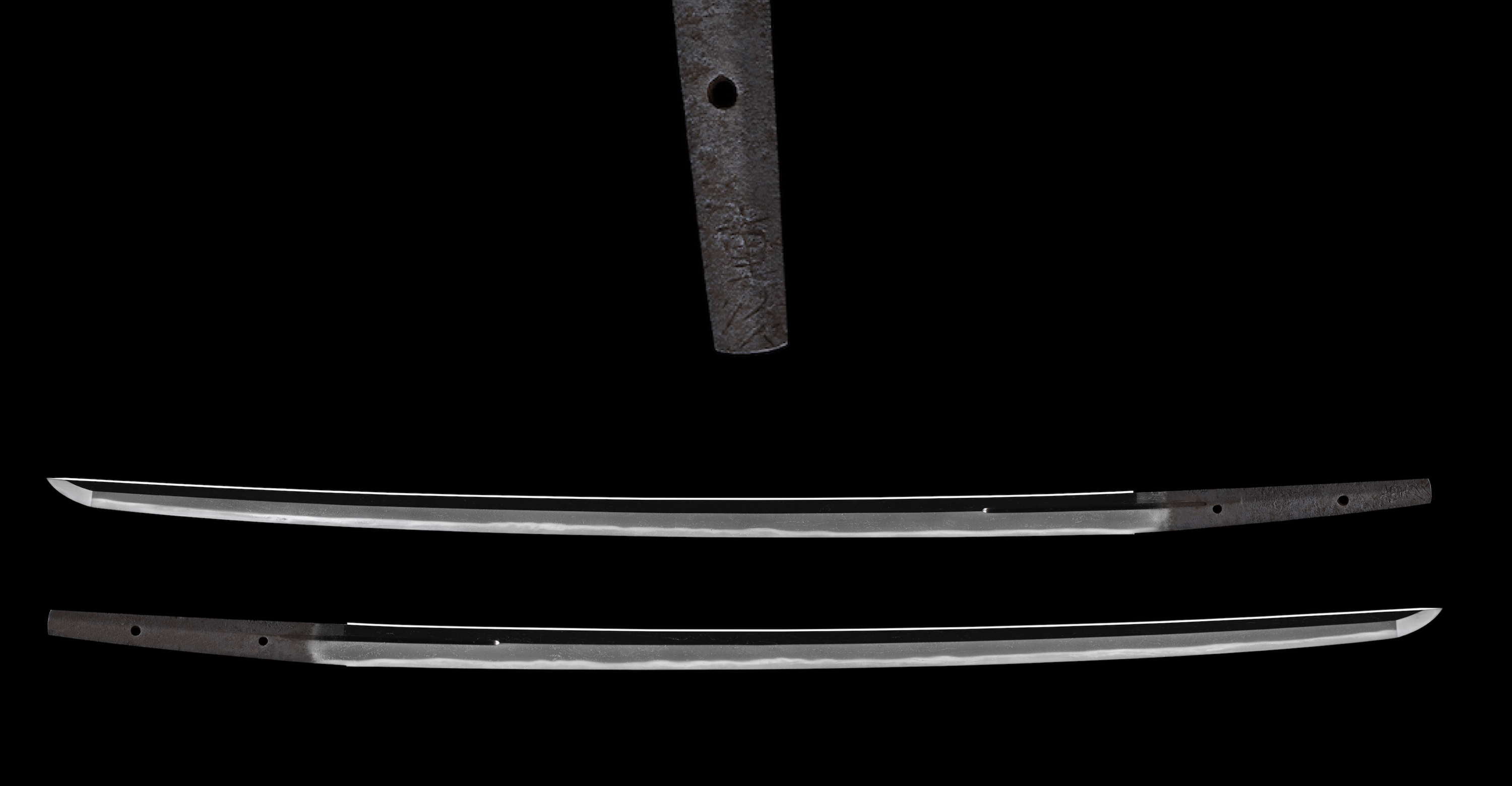
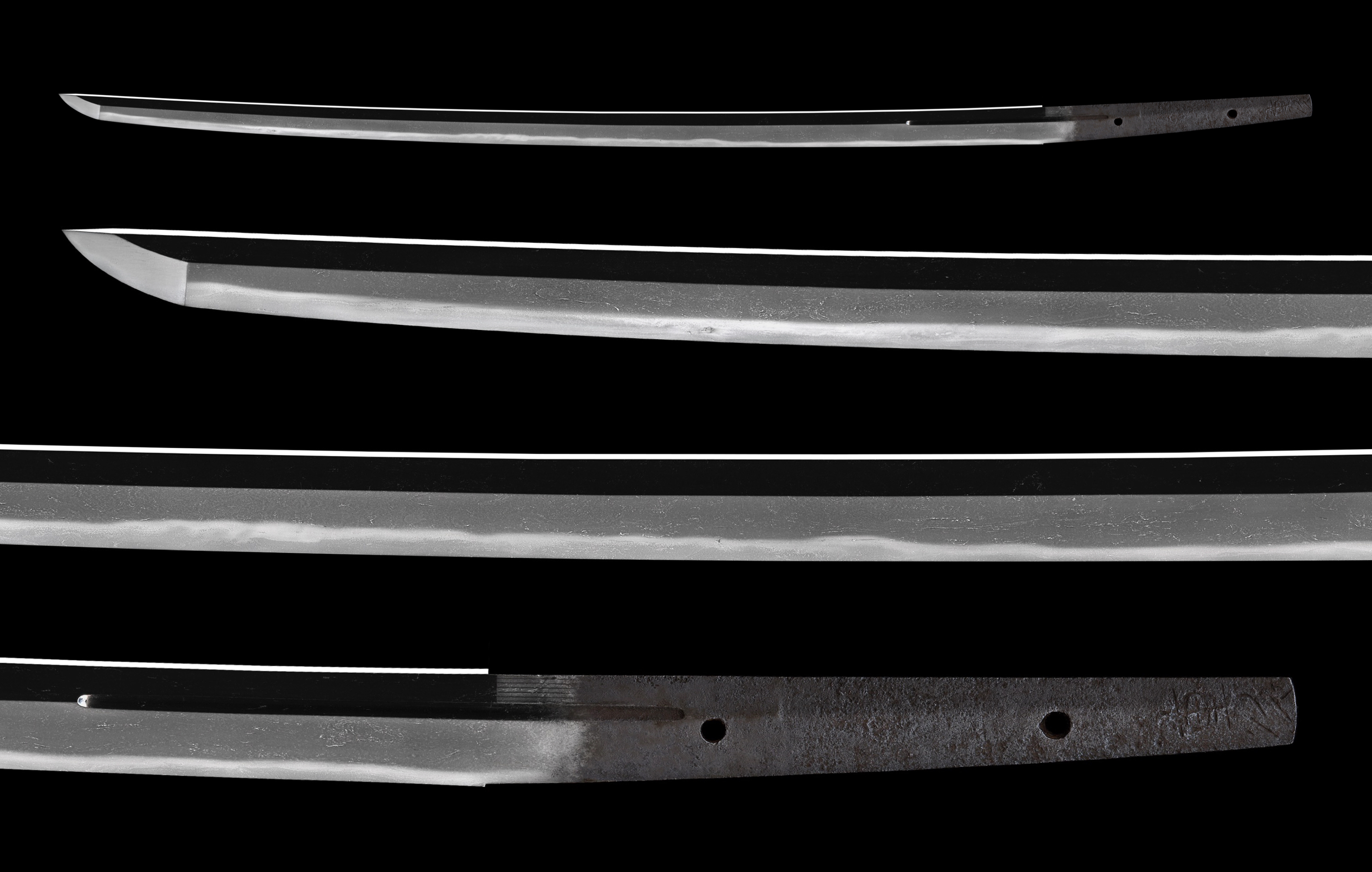
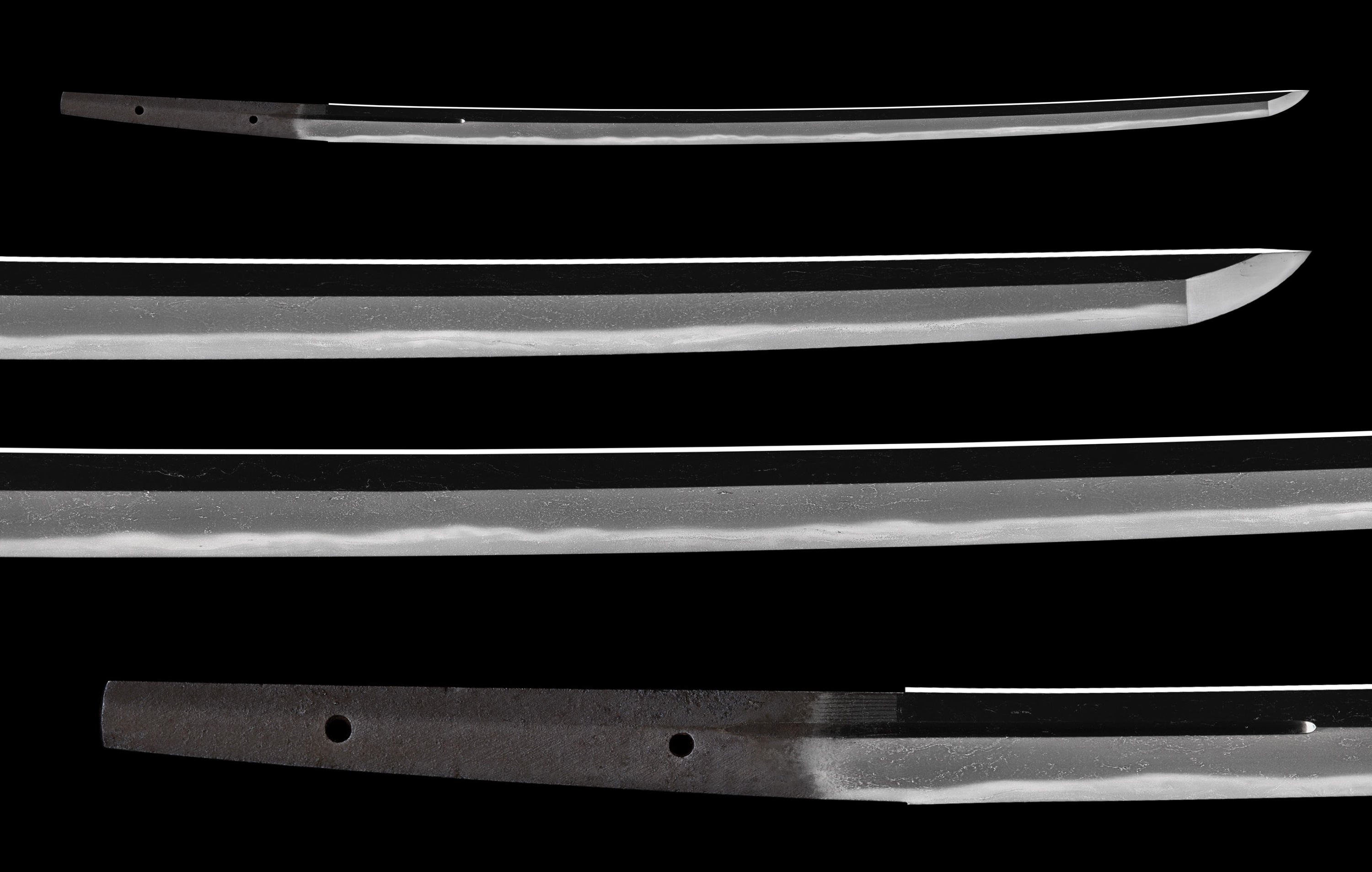
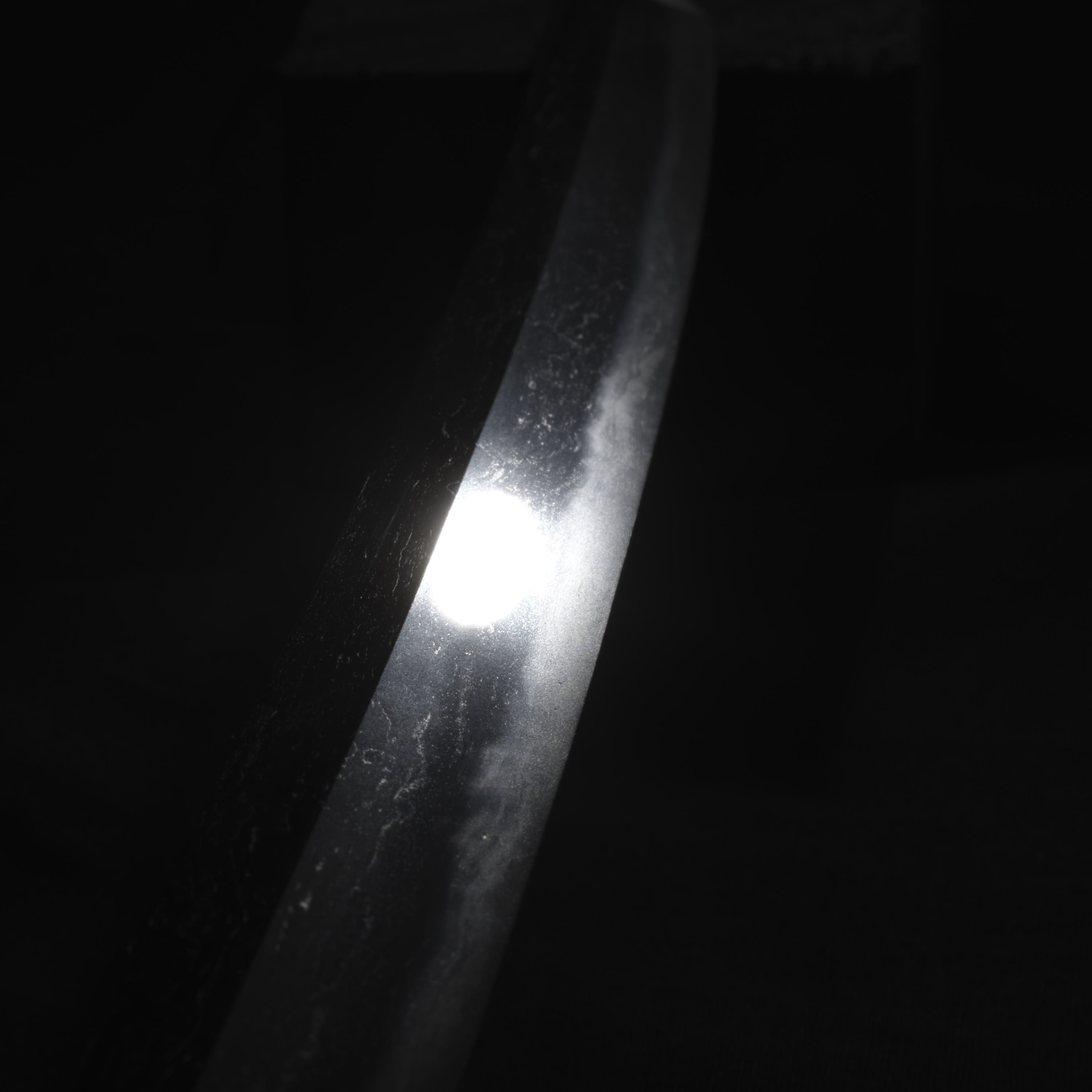
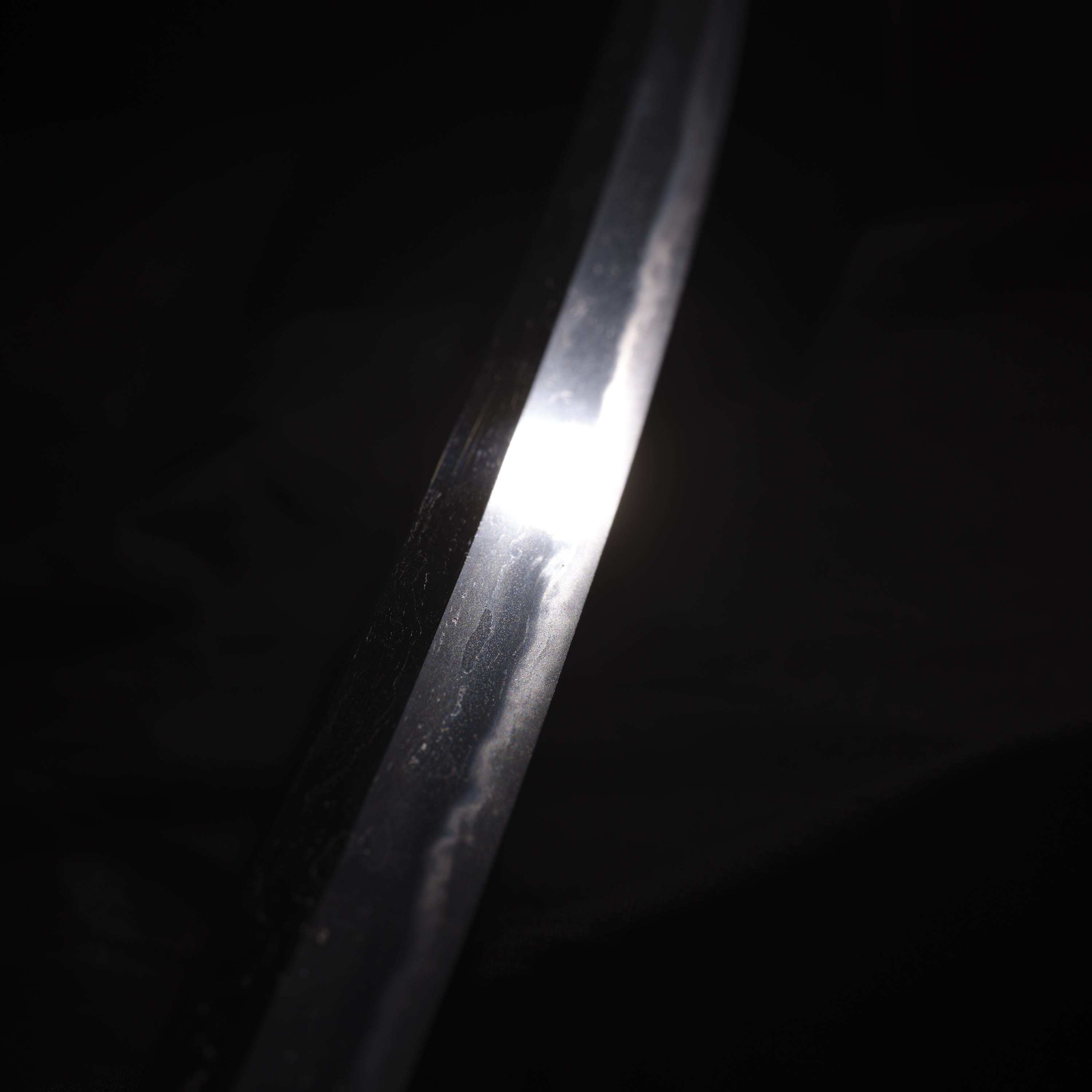
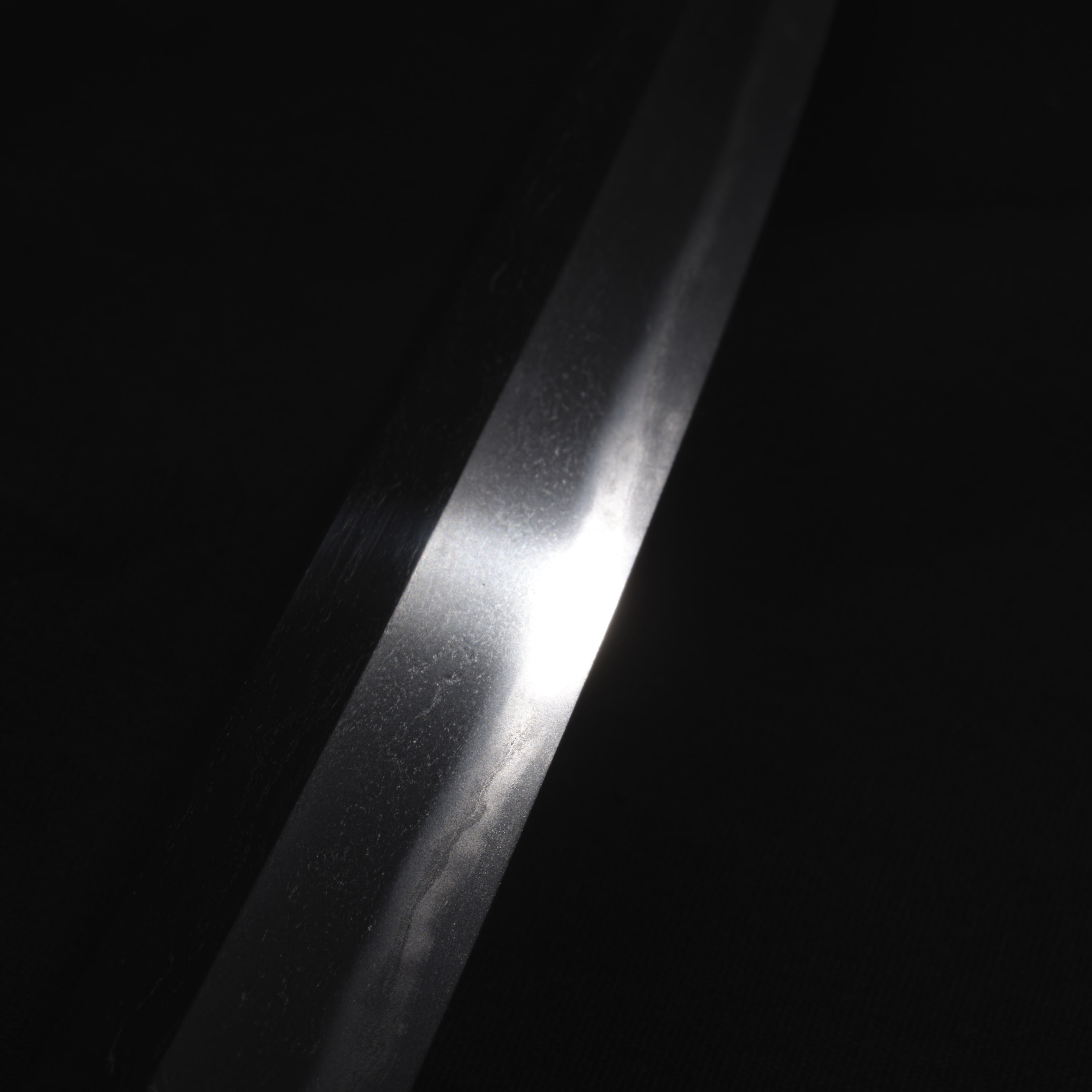
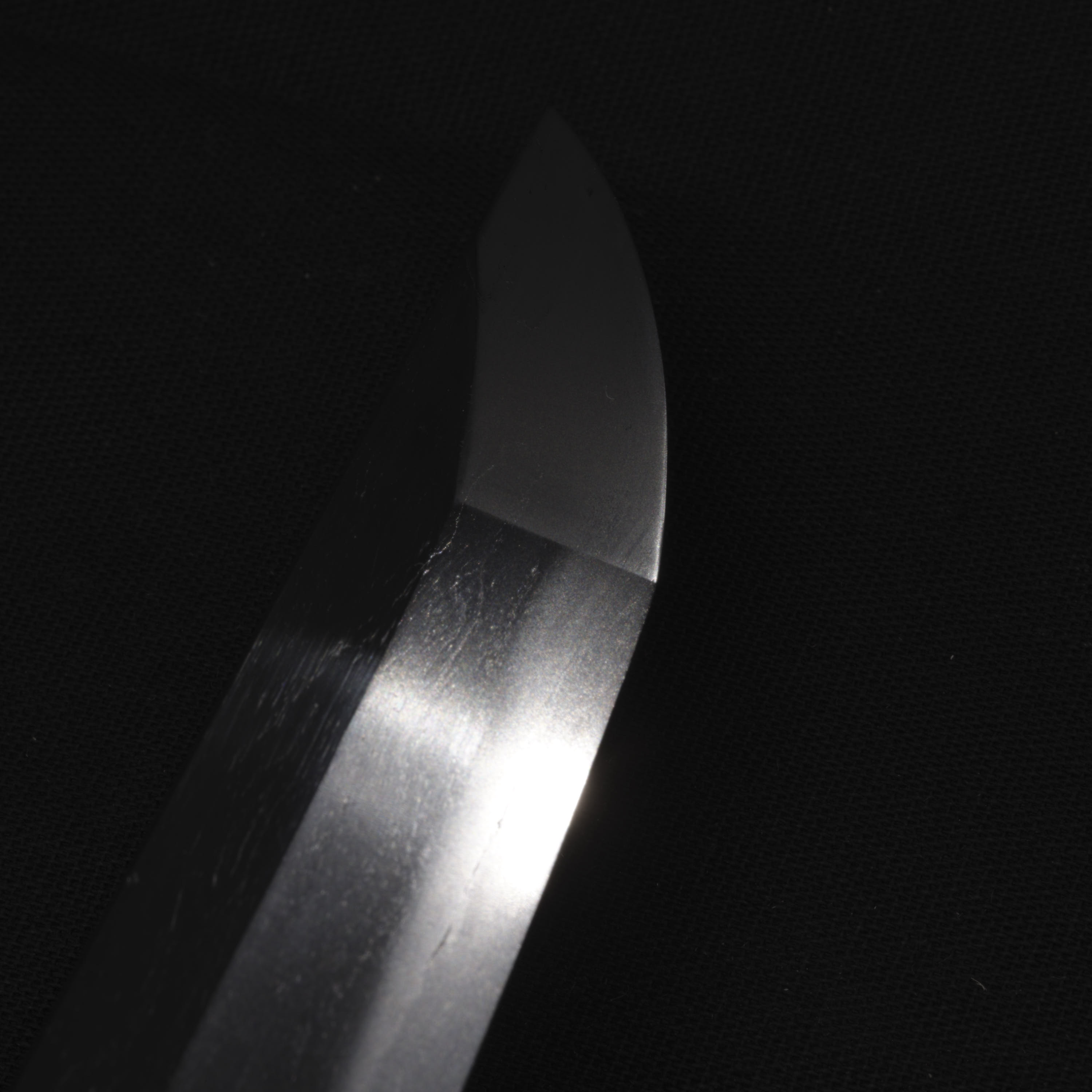
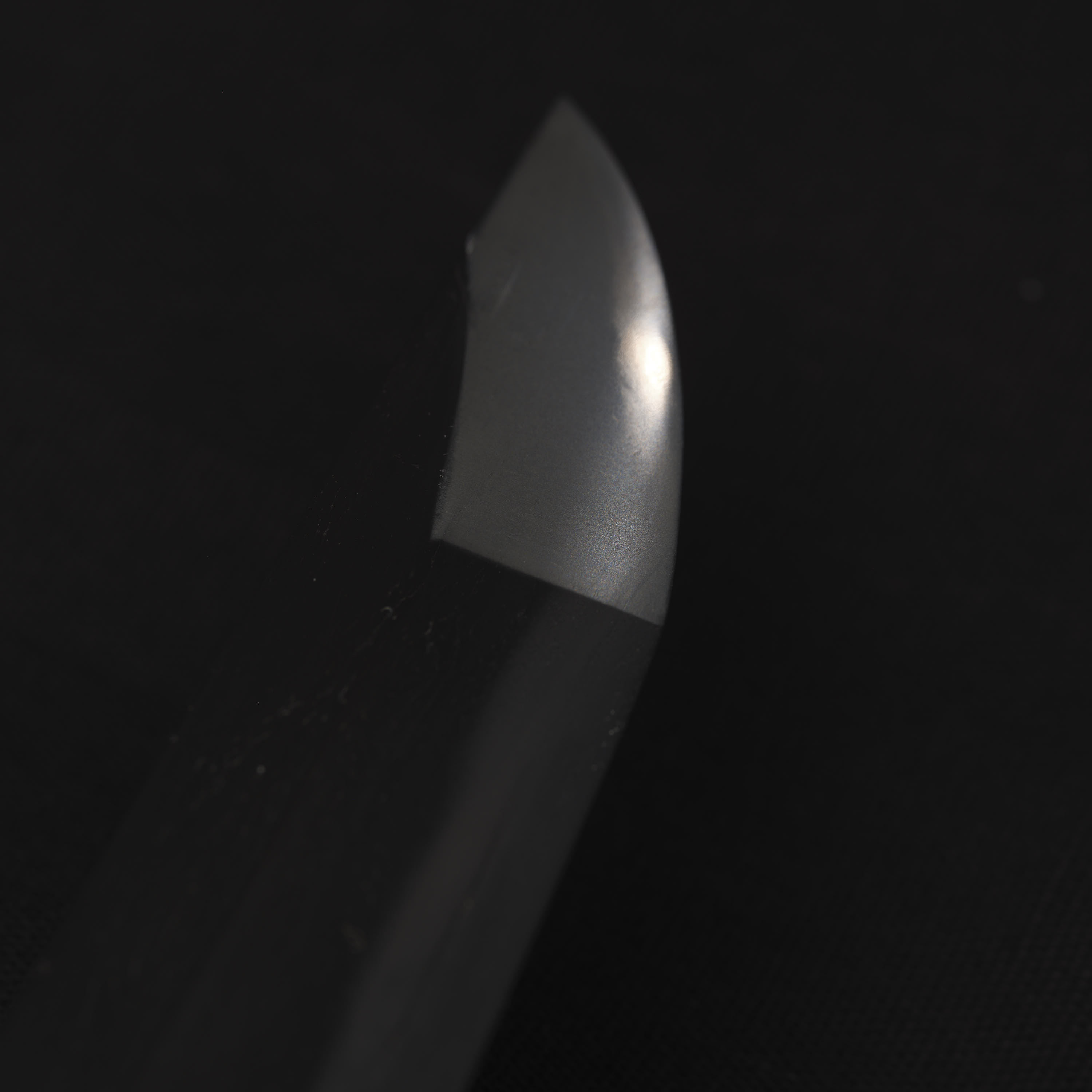
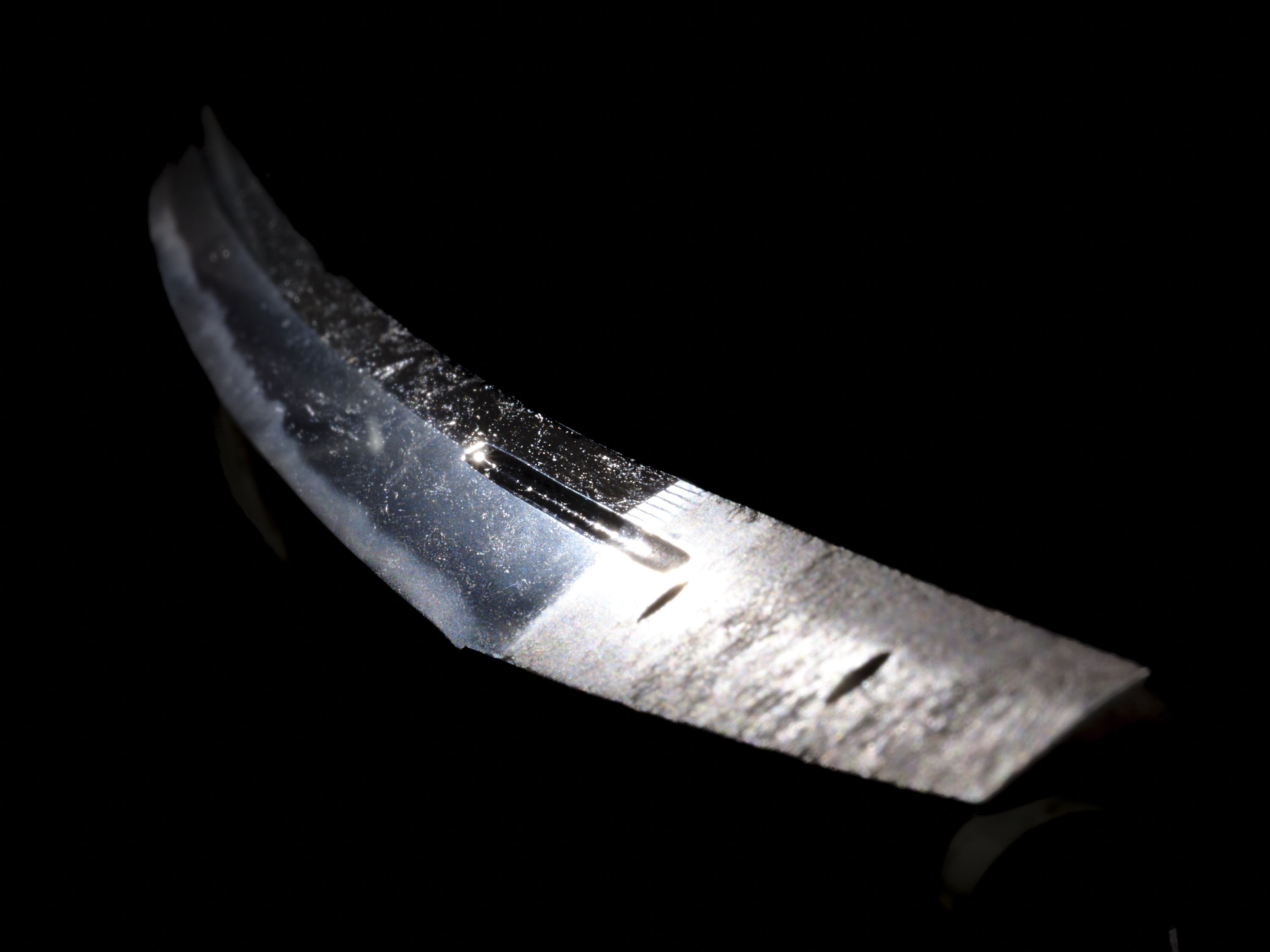
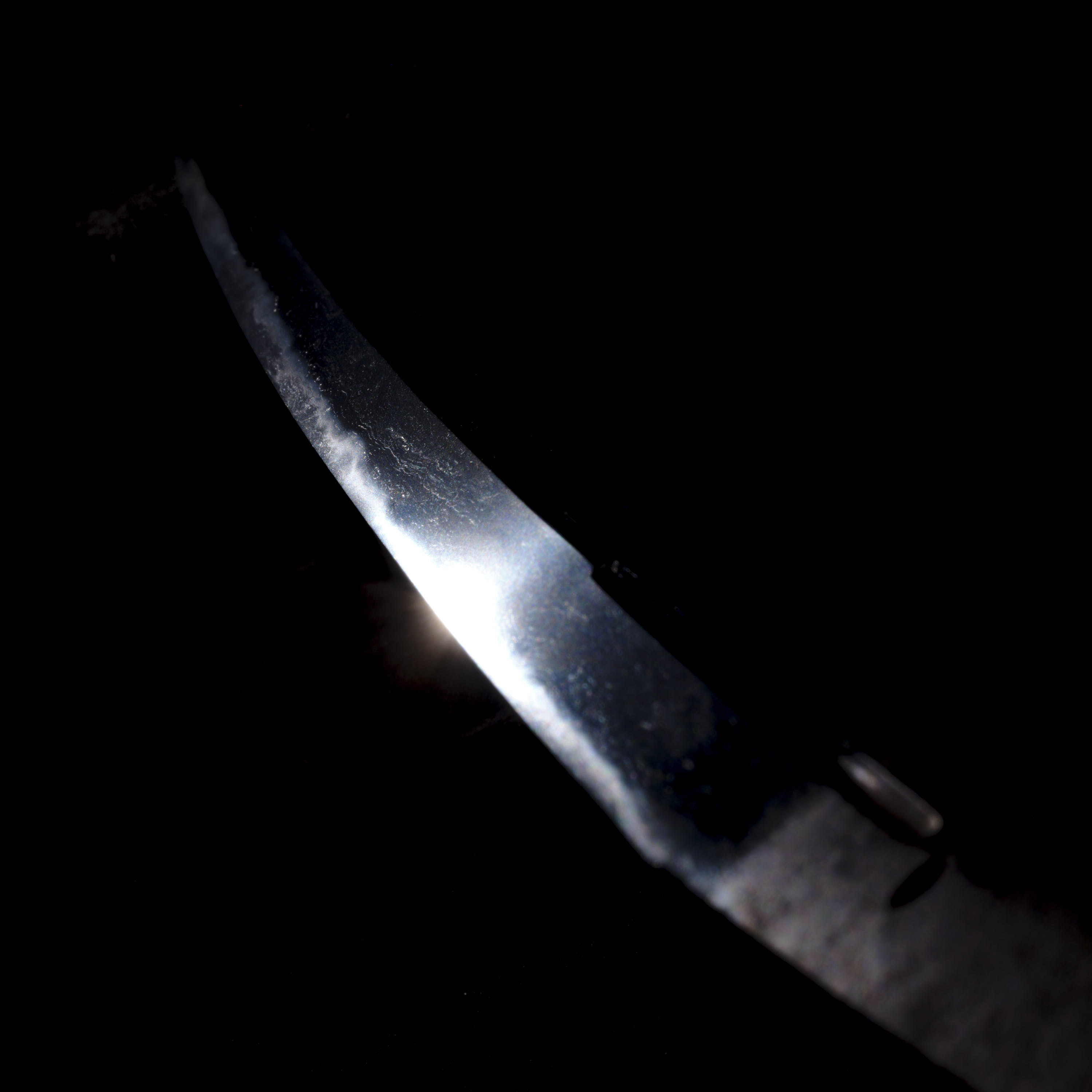
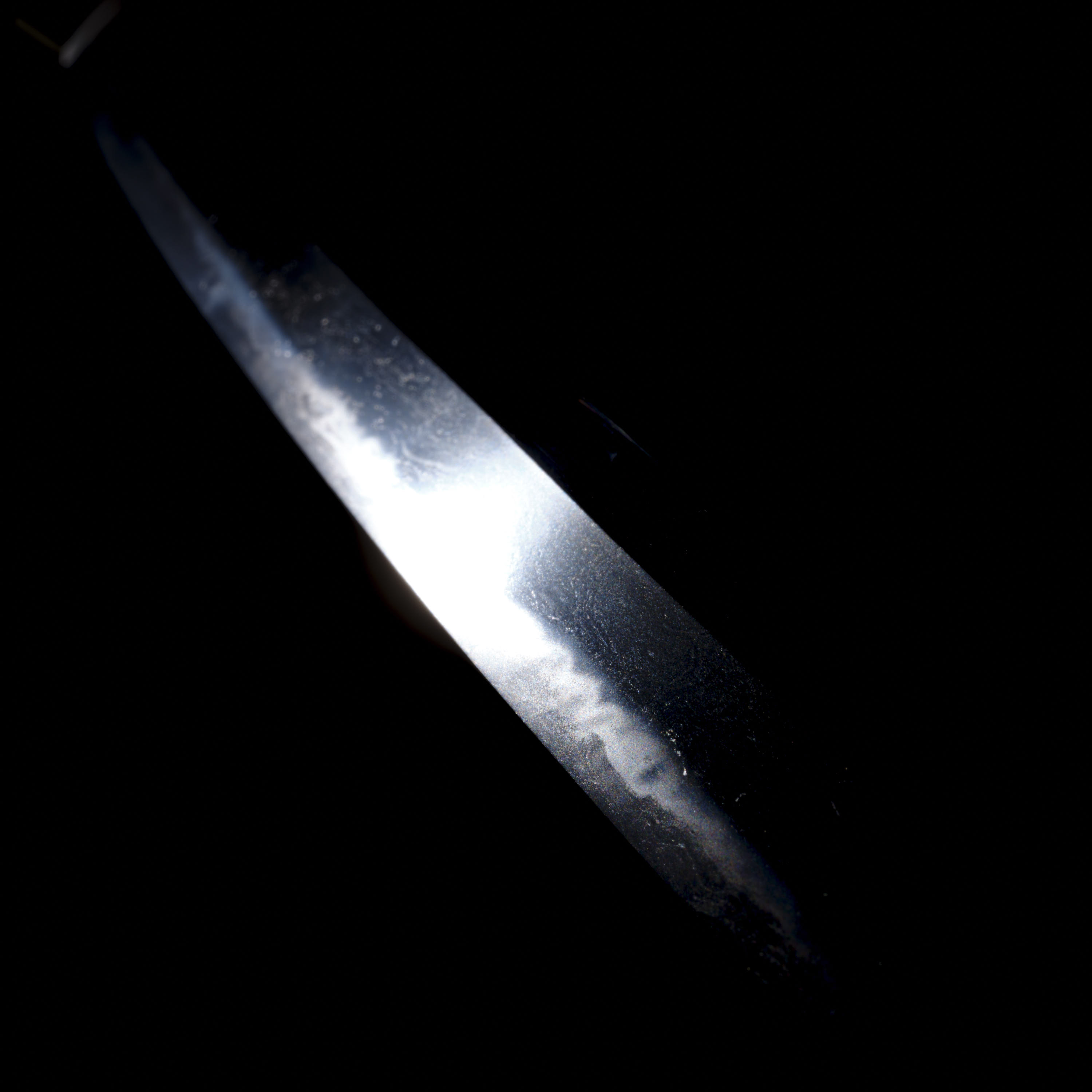
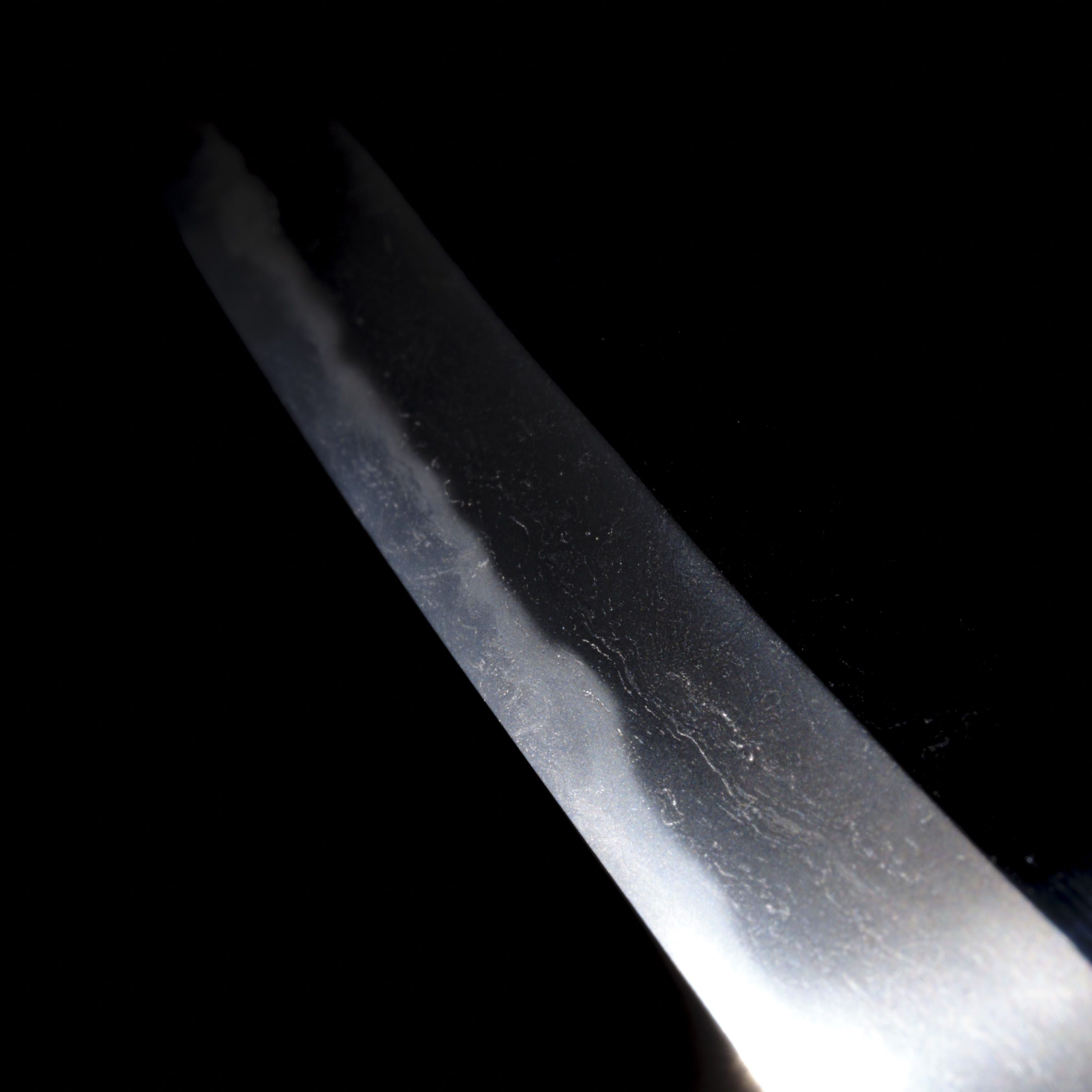
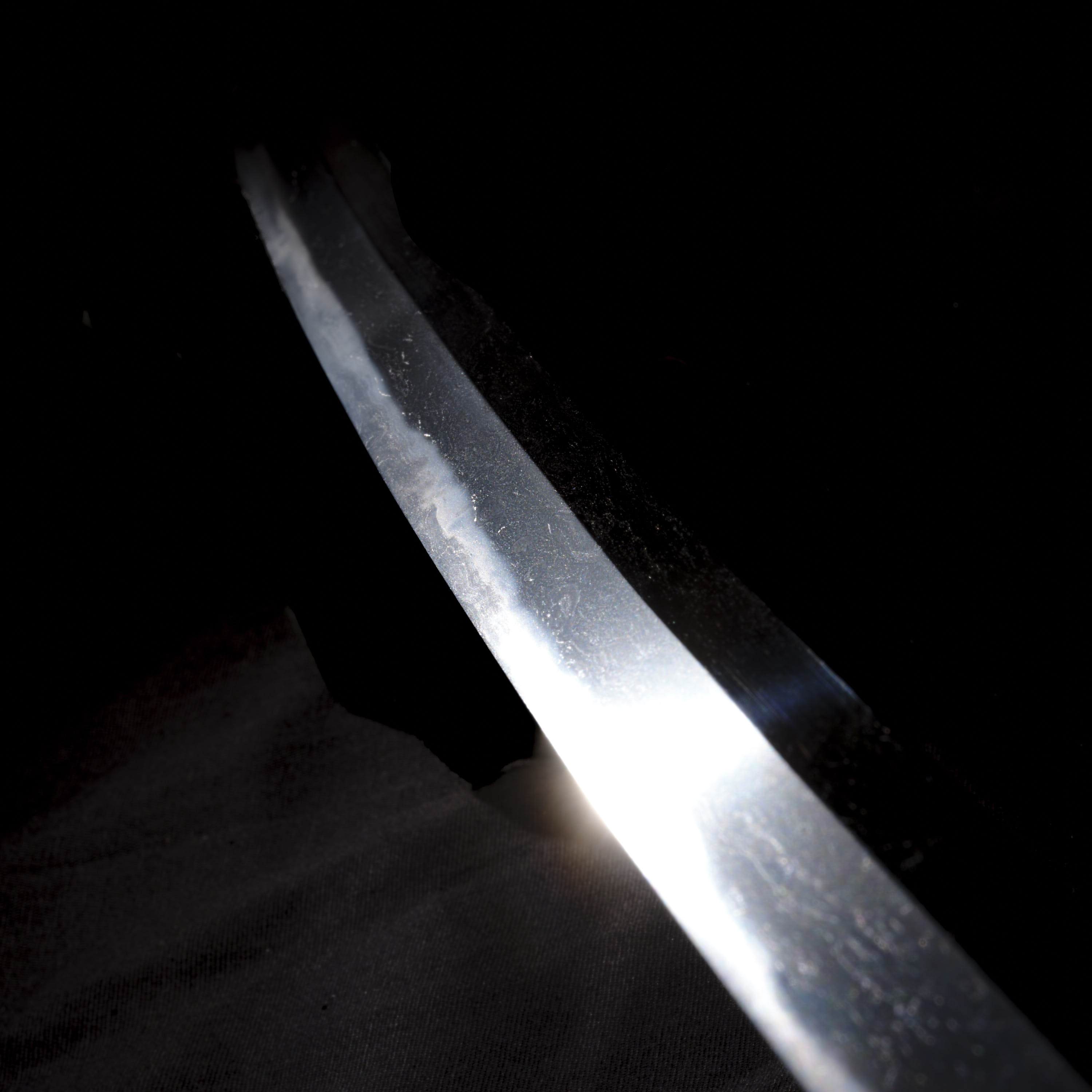
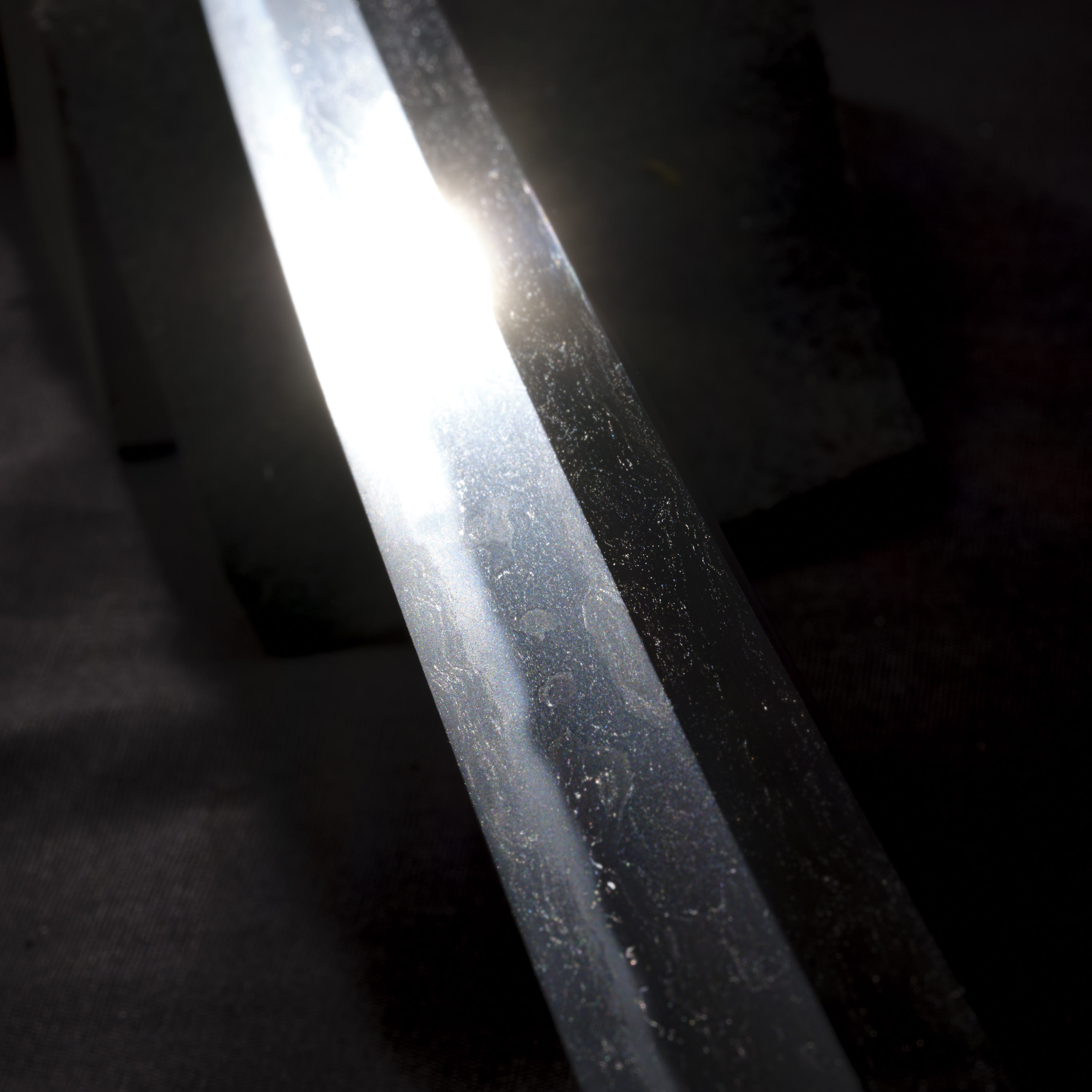
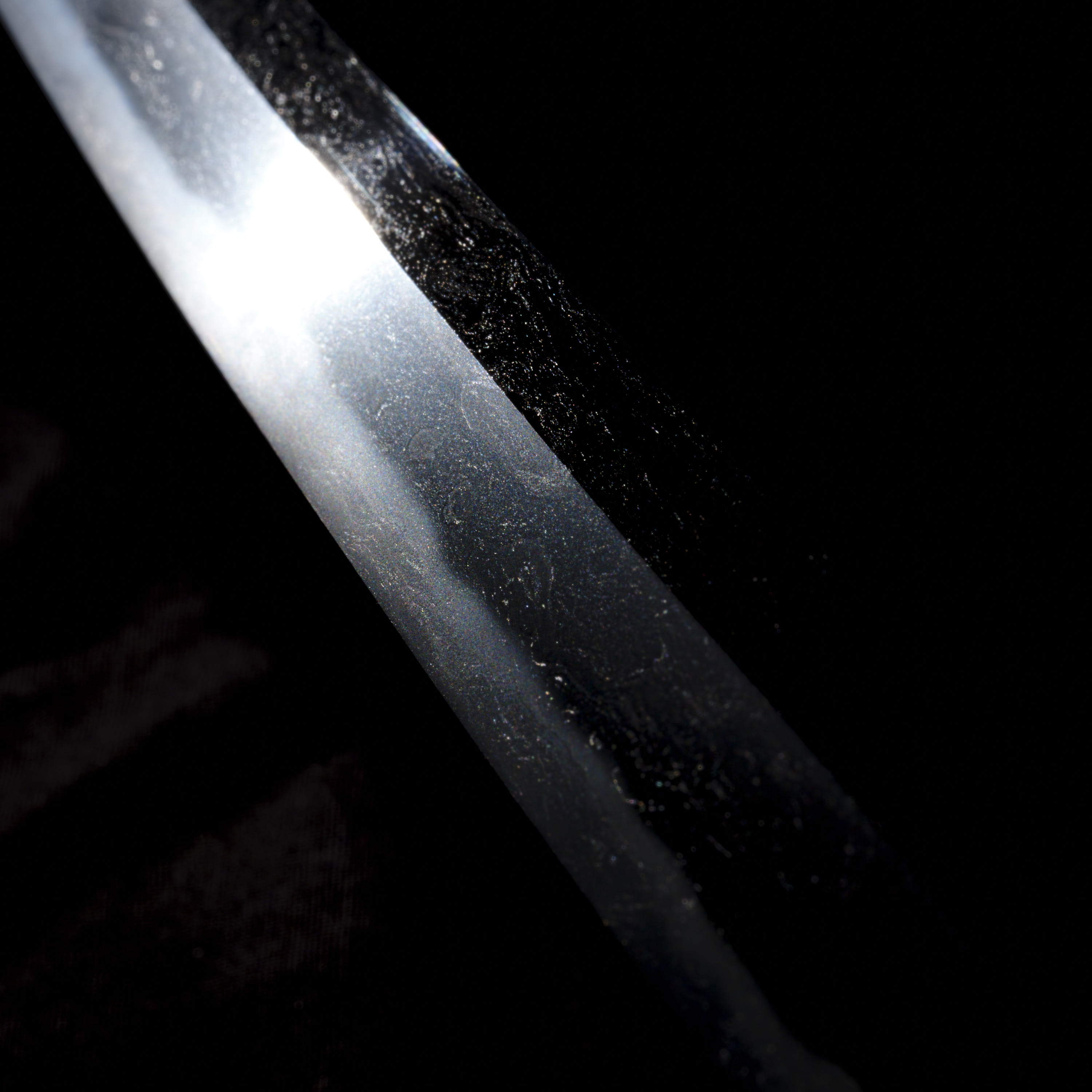
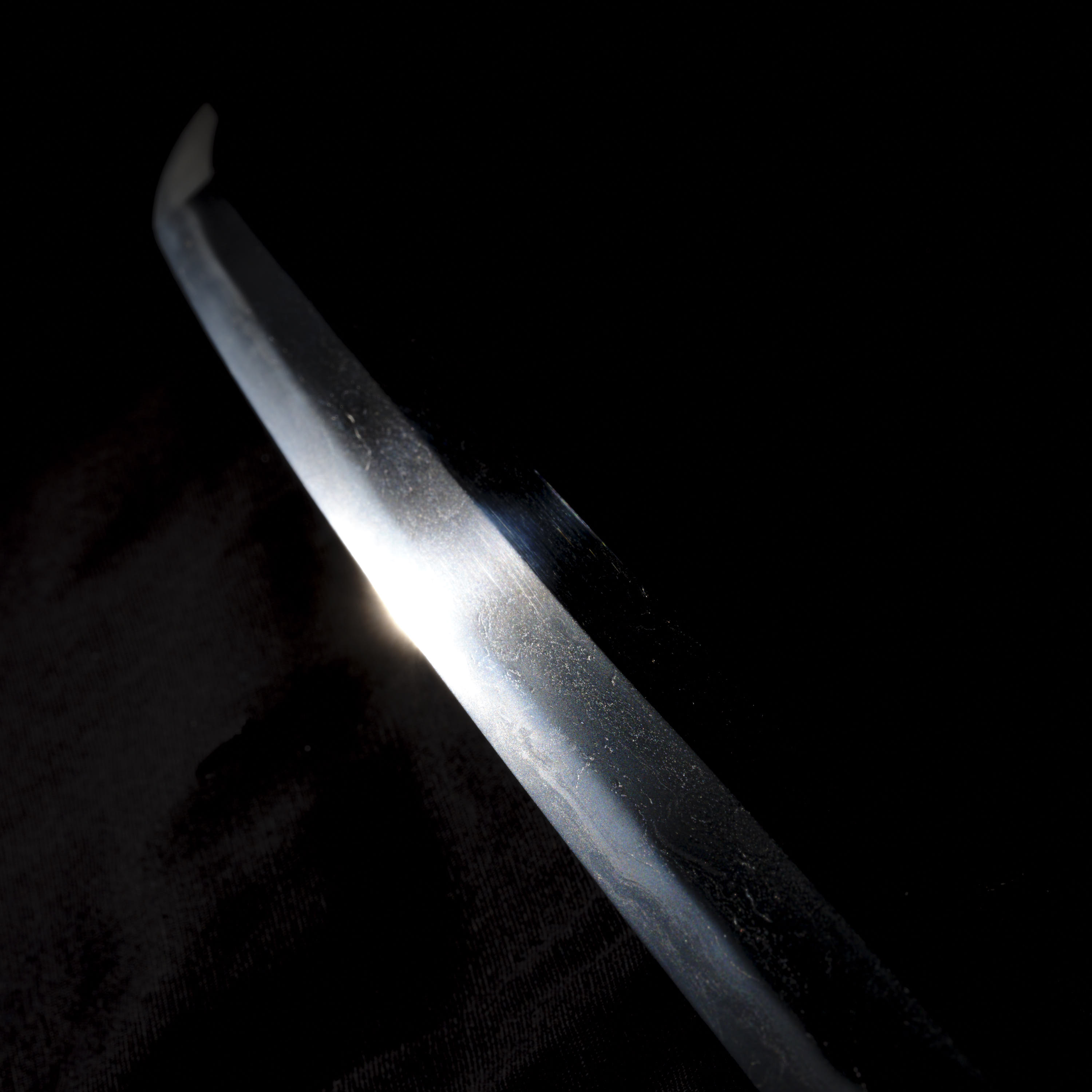
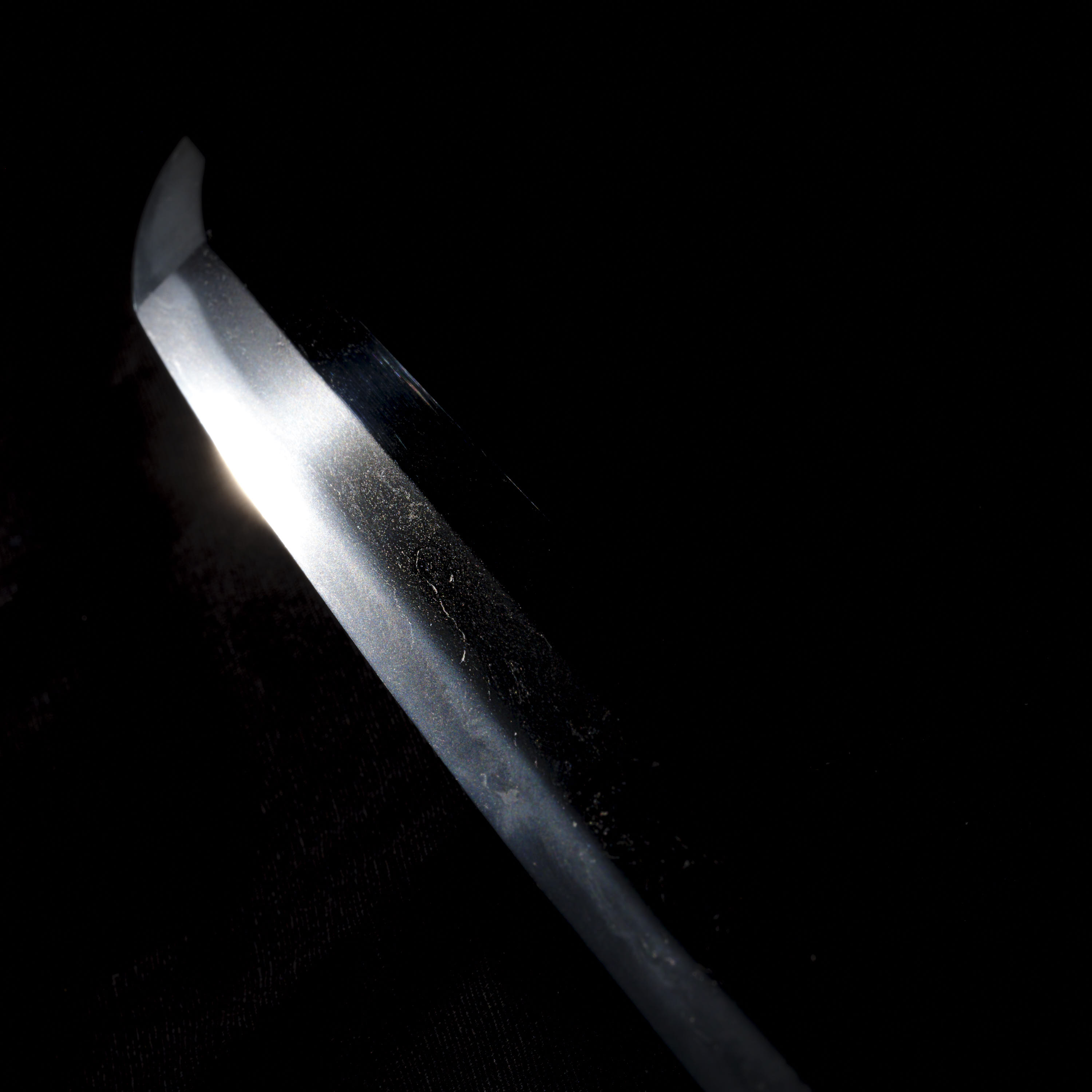
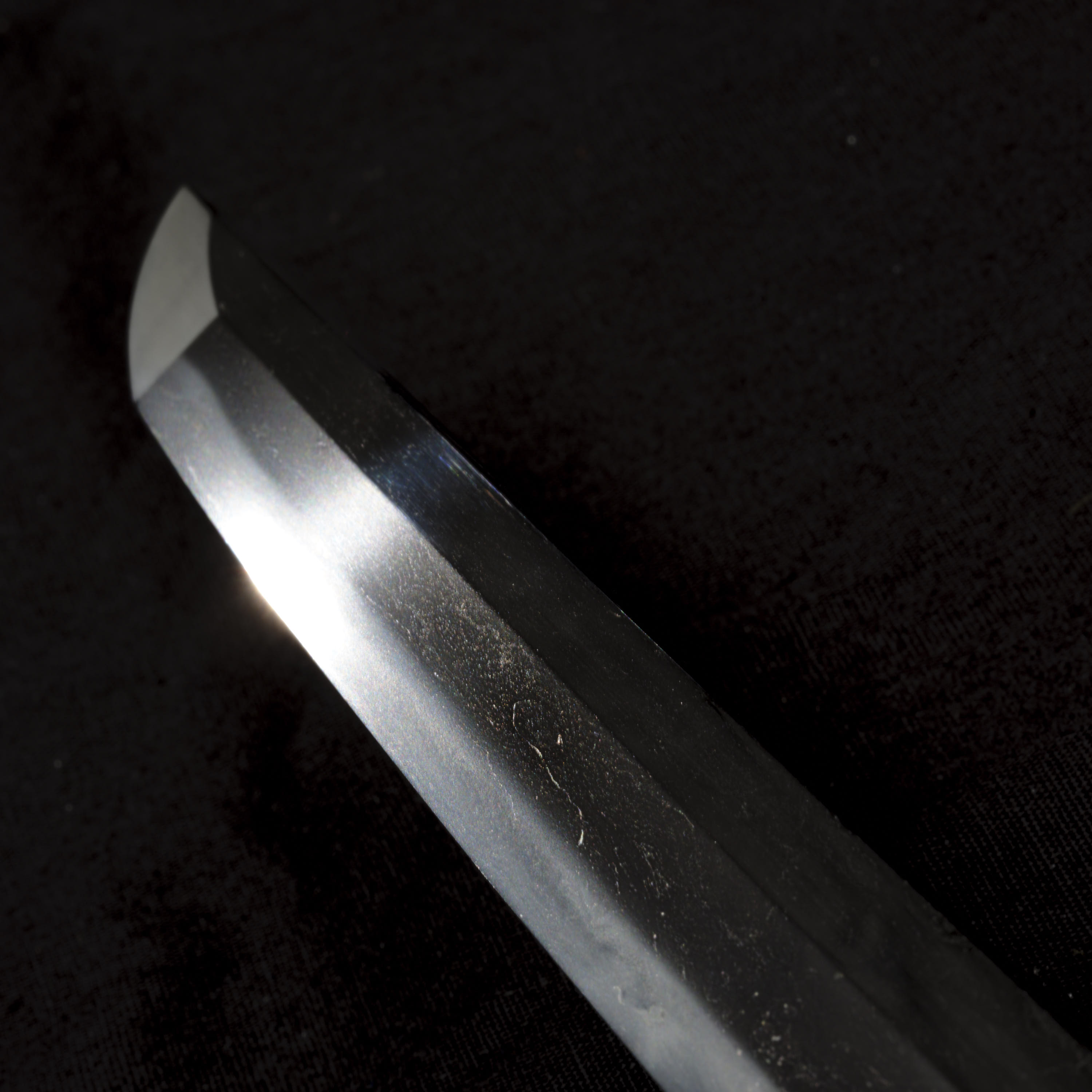
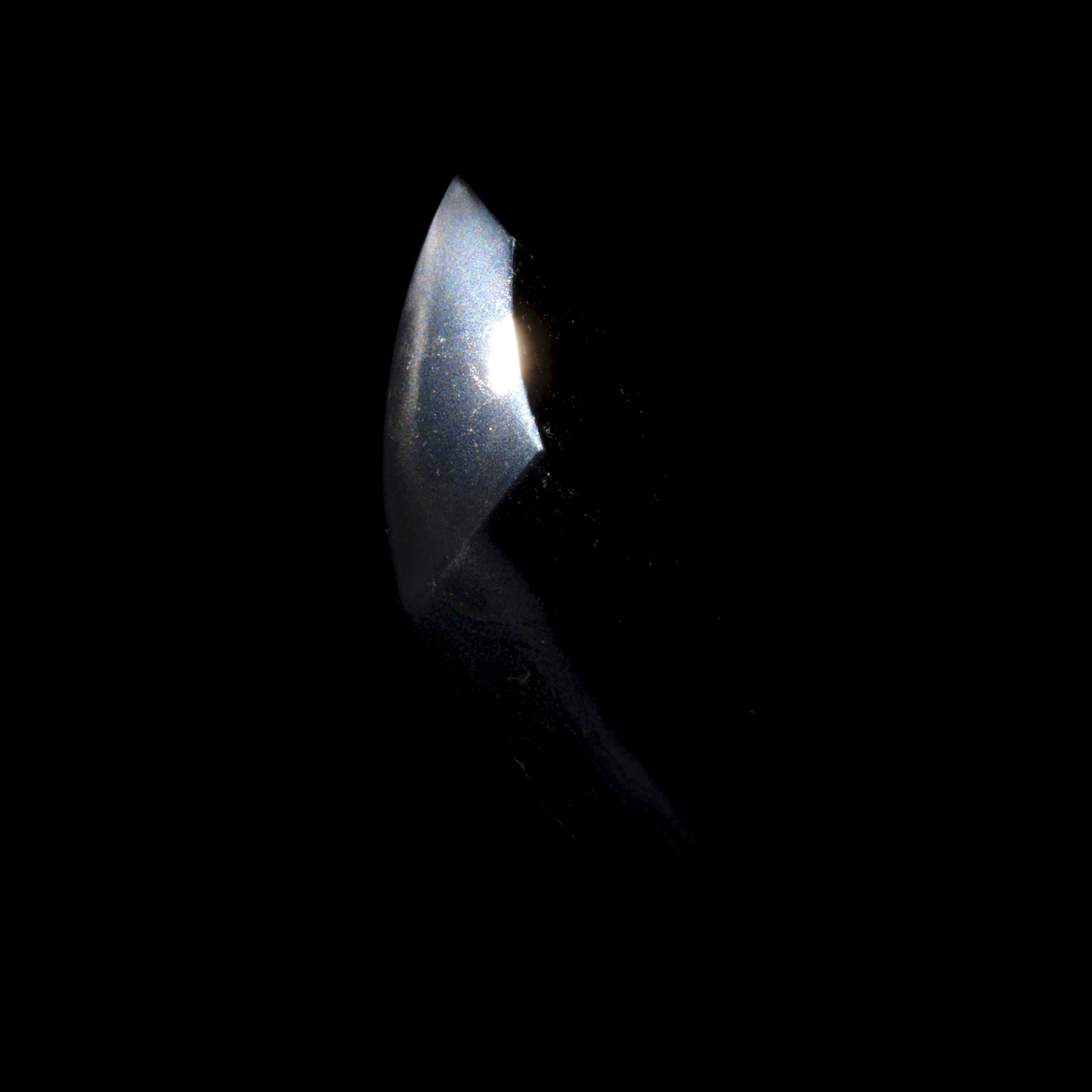



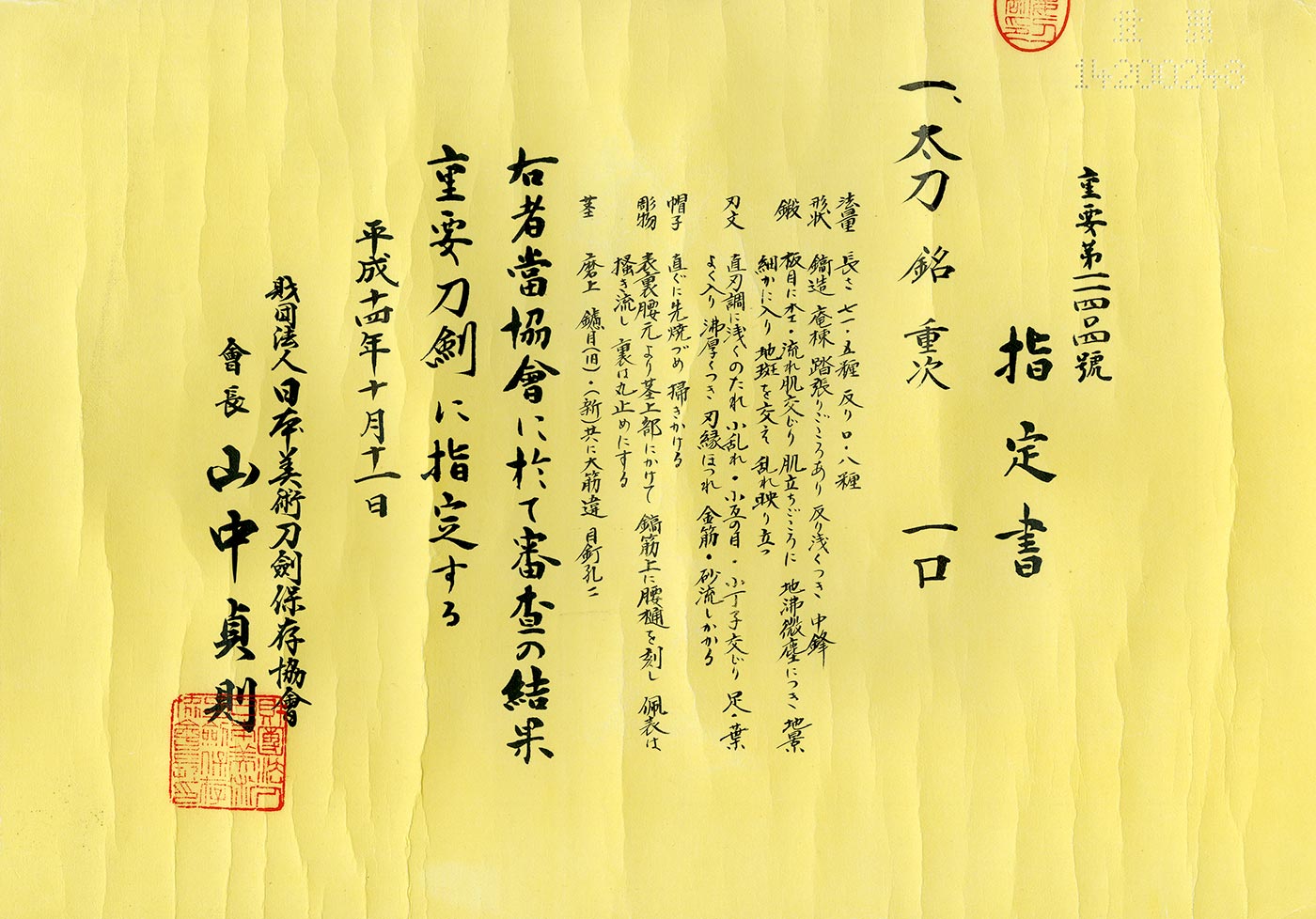
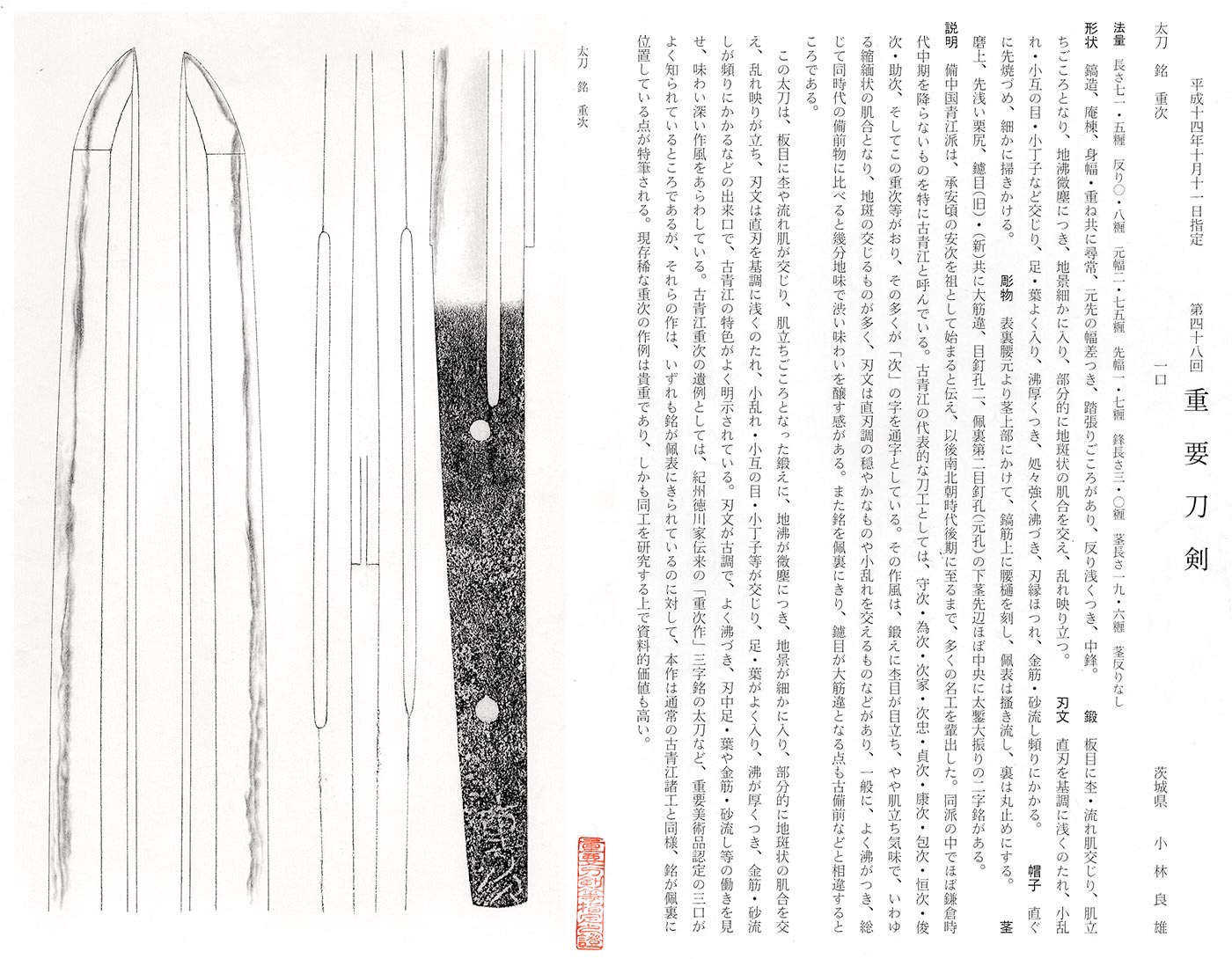
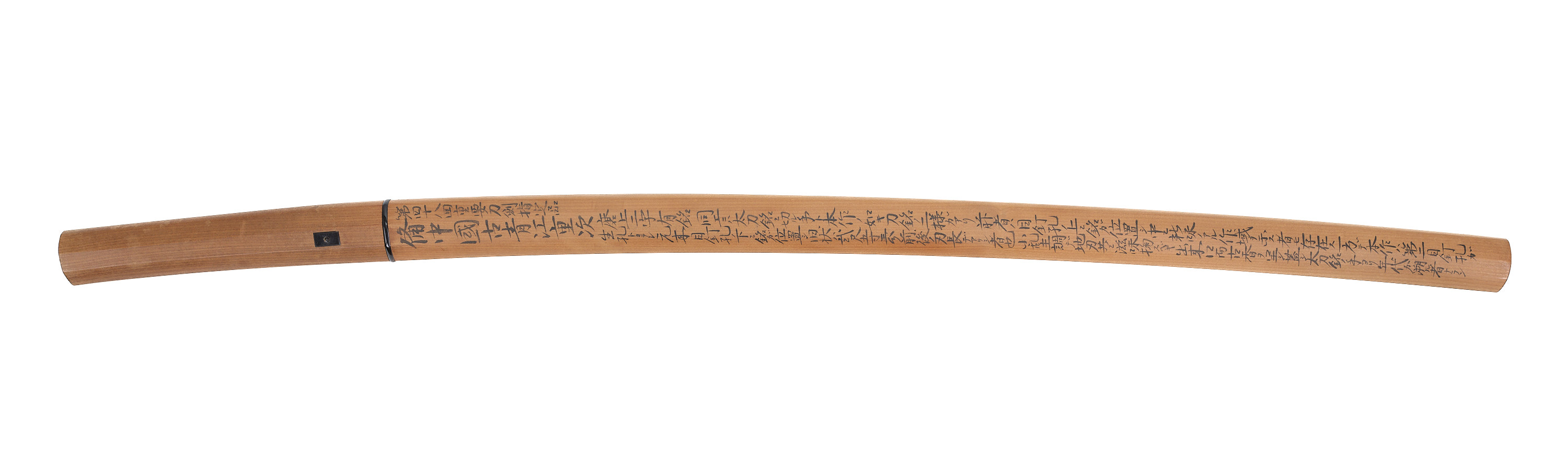
-, 48th Session — Designated October 11, 2002
, : Shigetsugu (重次)
Measurements 71.5 cm, 0.8 cm, 2.75 cm, 1.7 cm, 3.0 cm, 19.6 cm, none
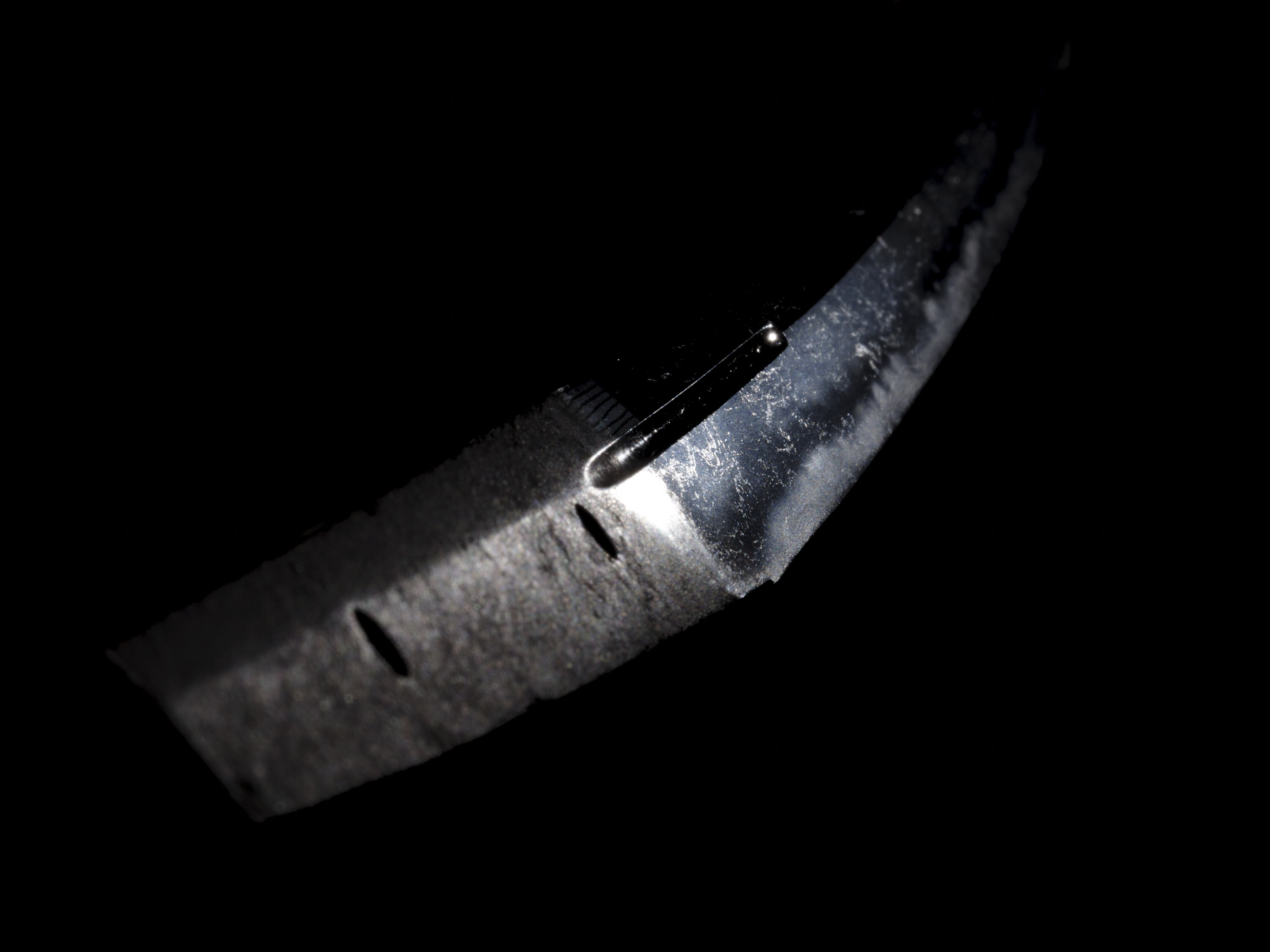
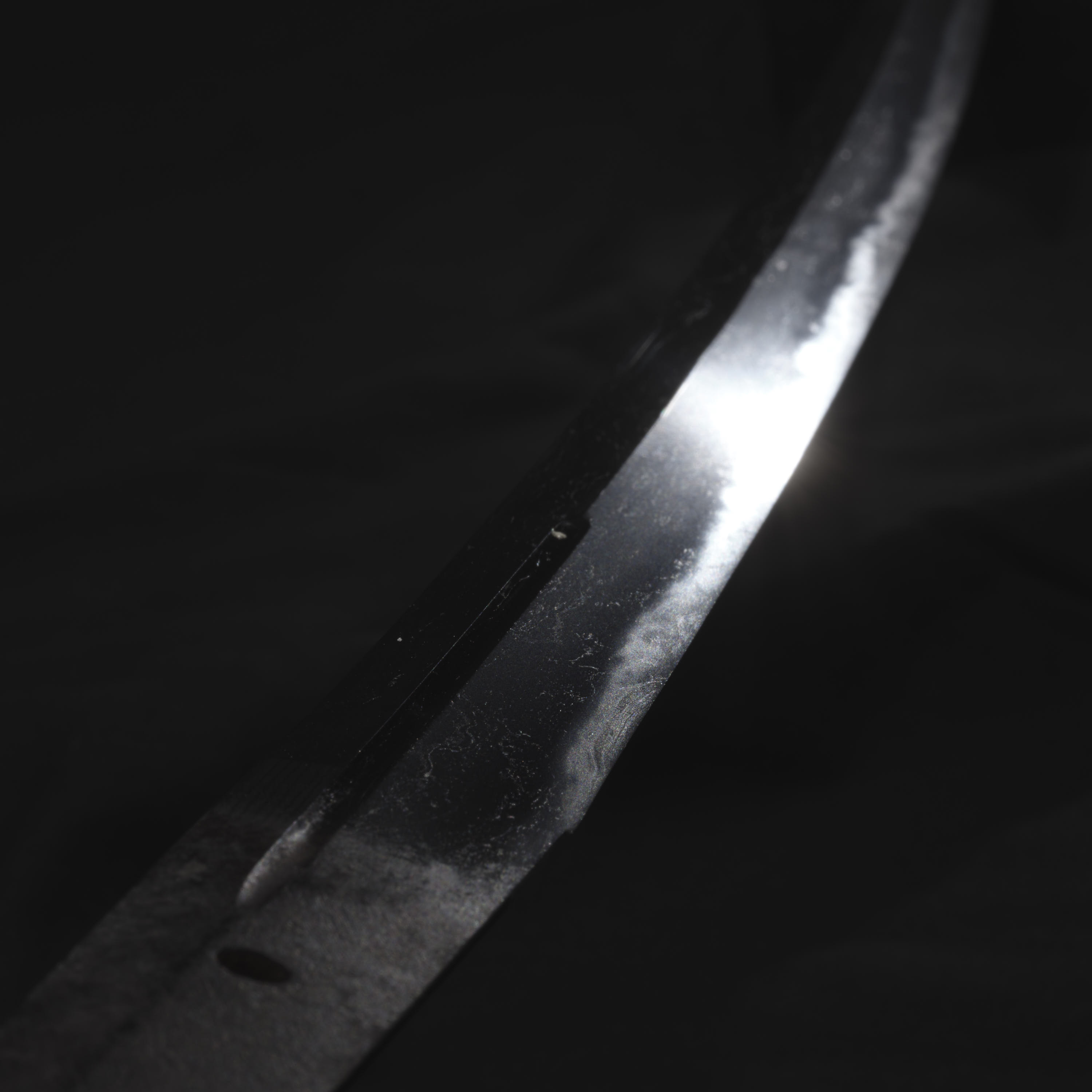
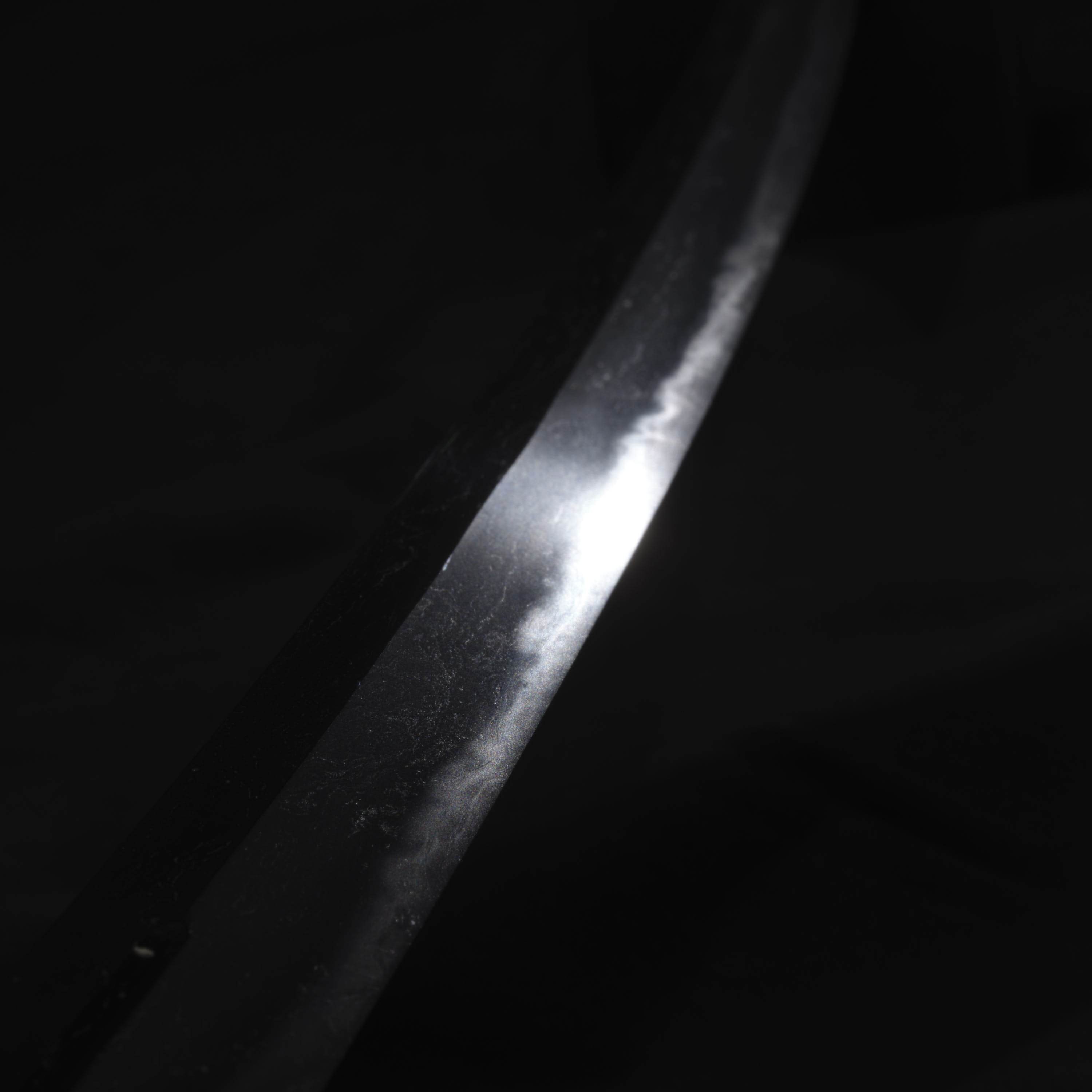
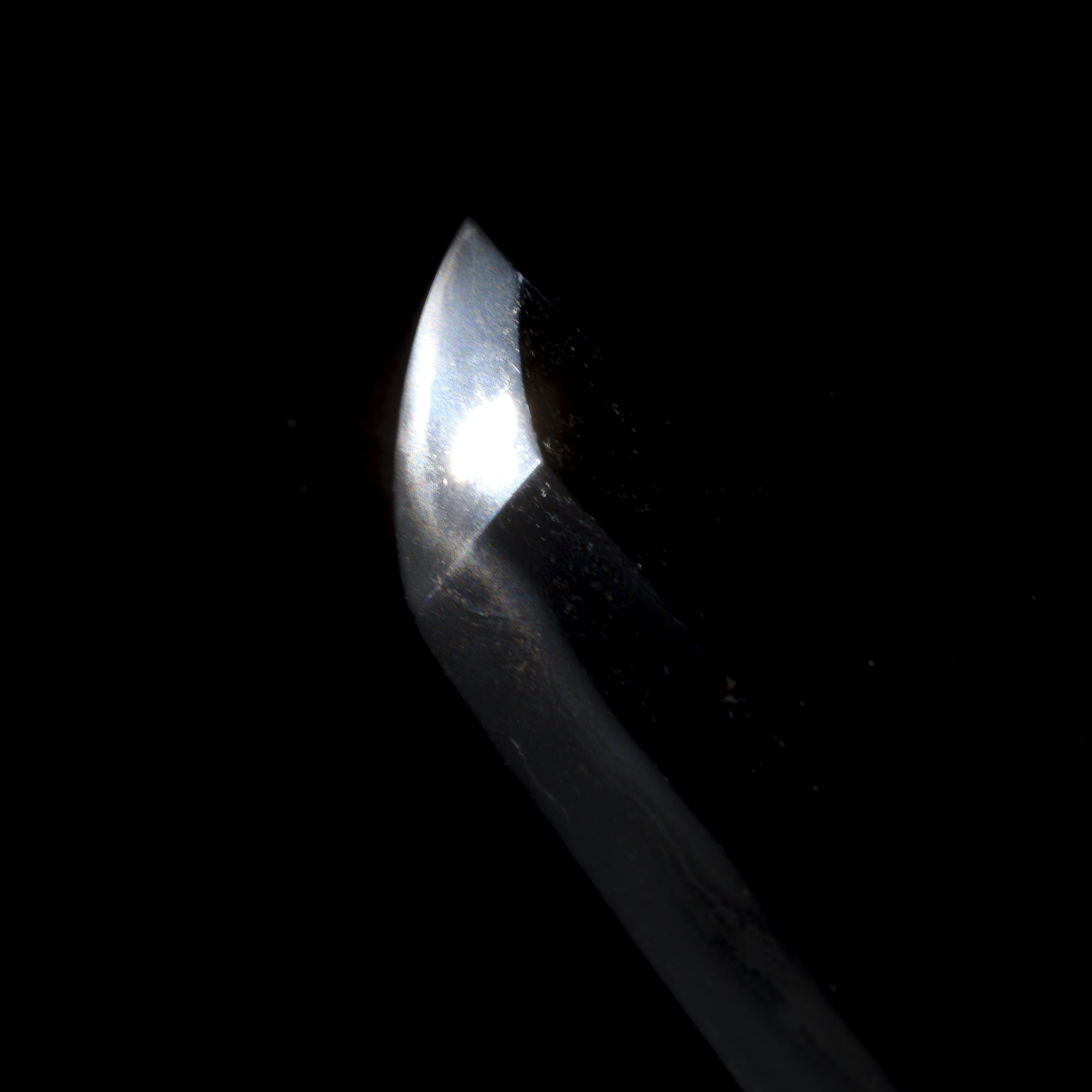
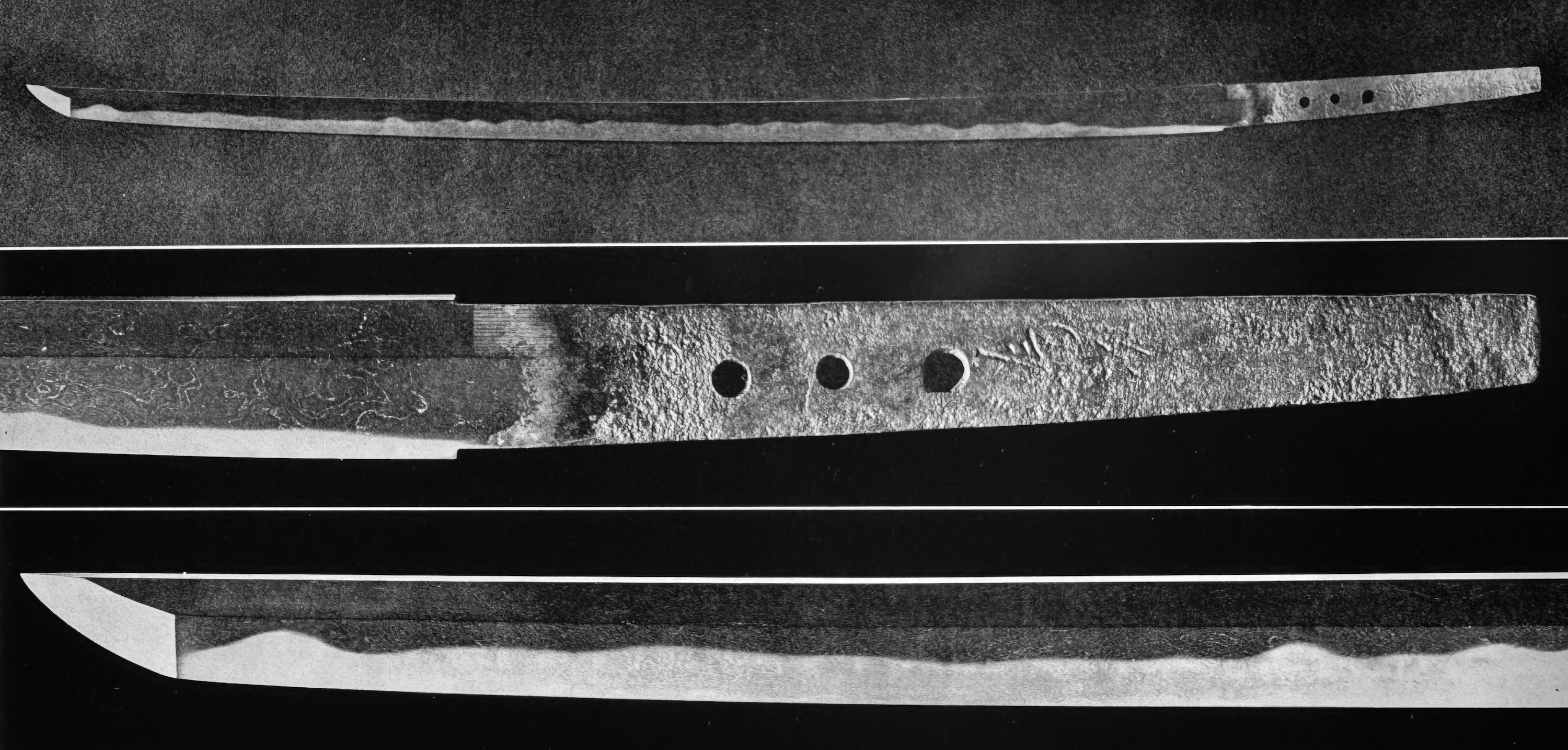
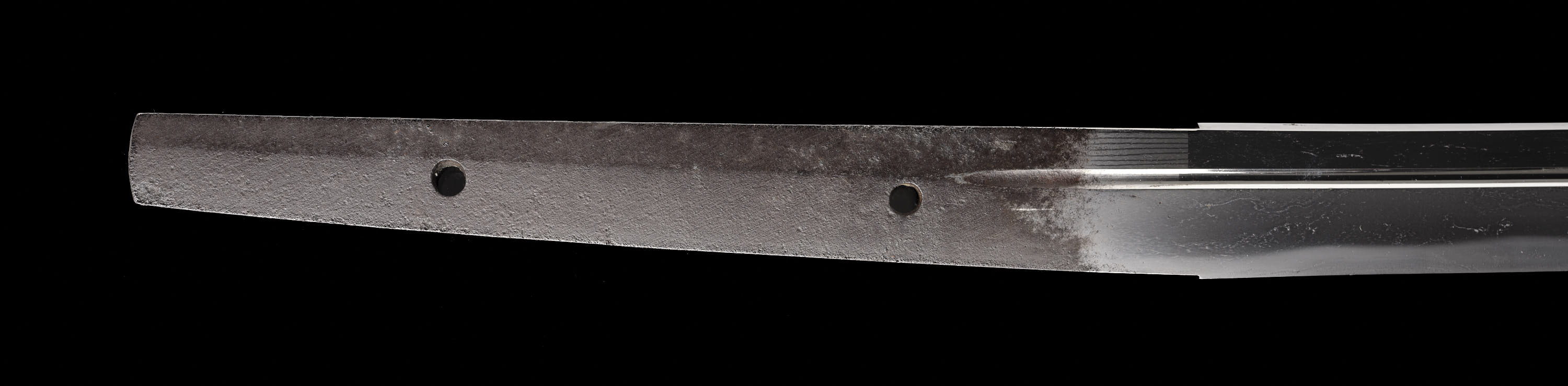
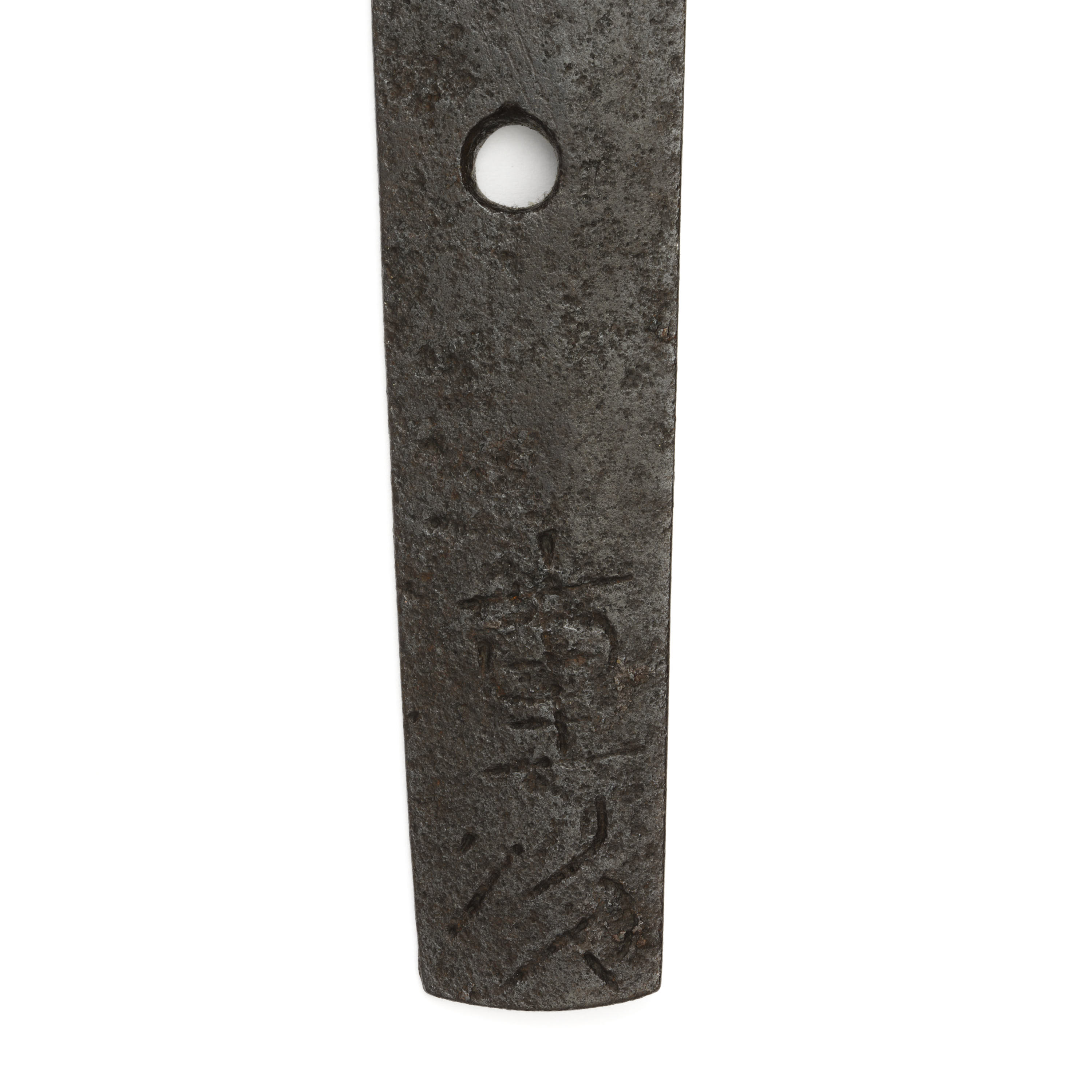
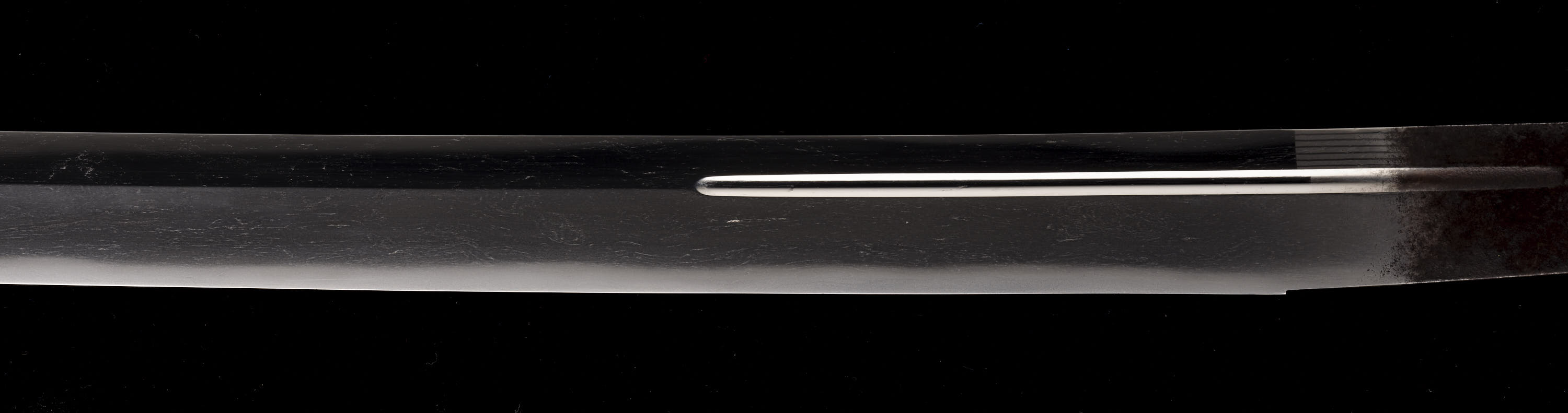
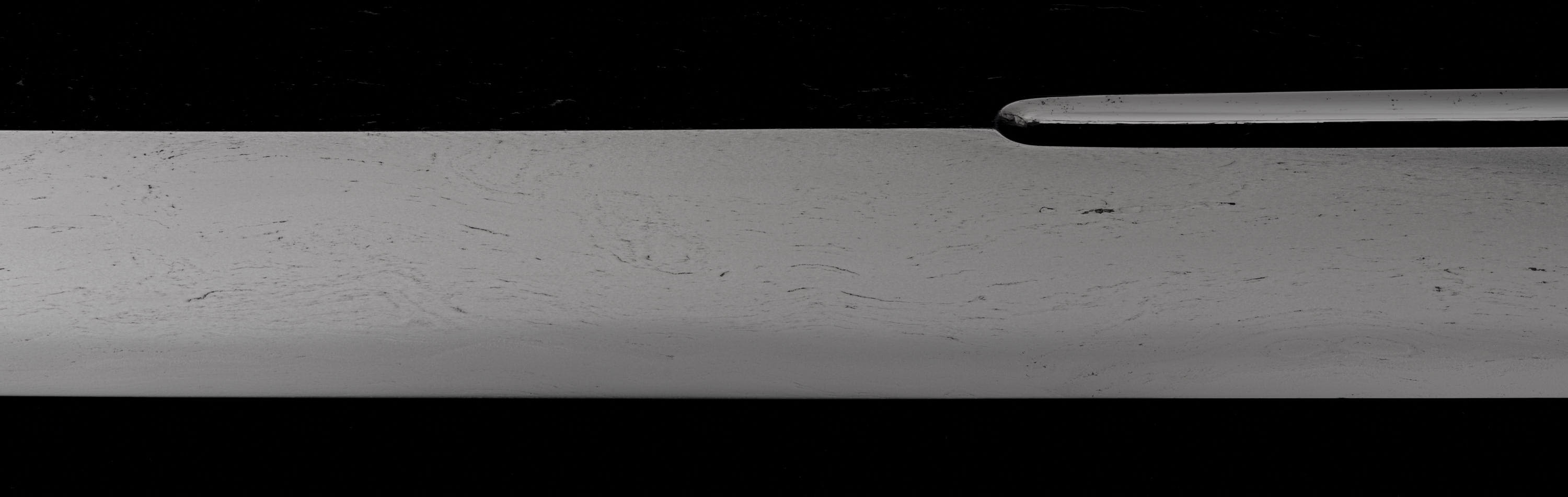
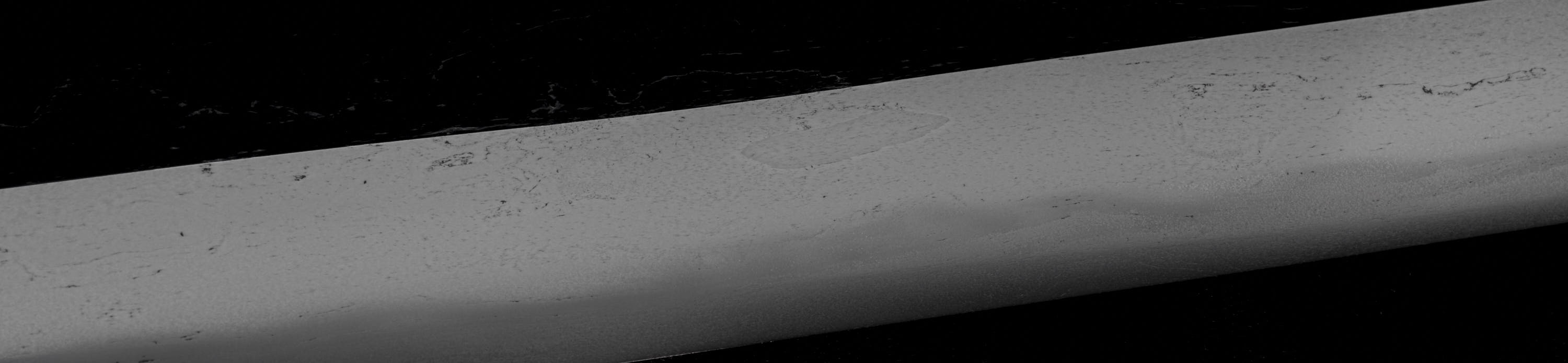
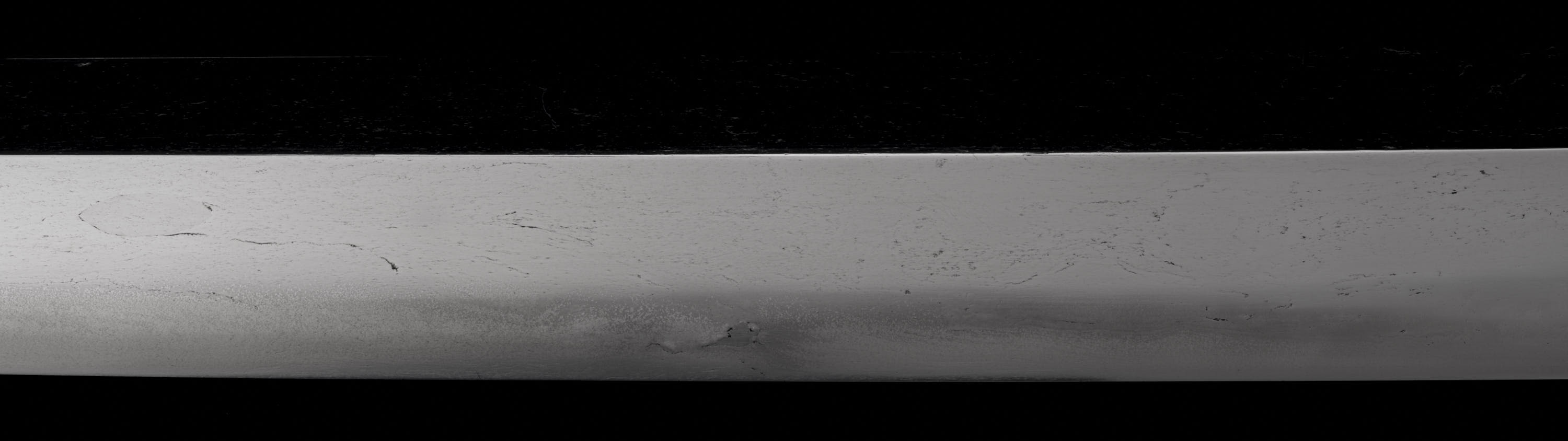
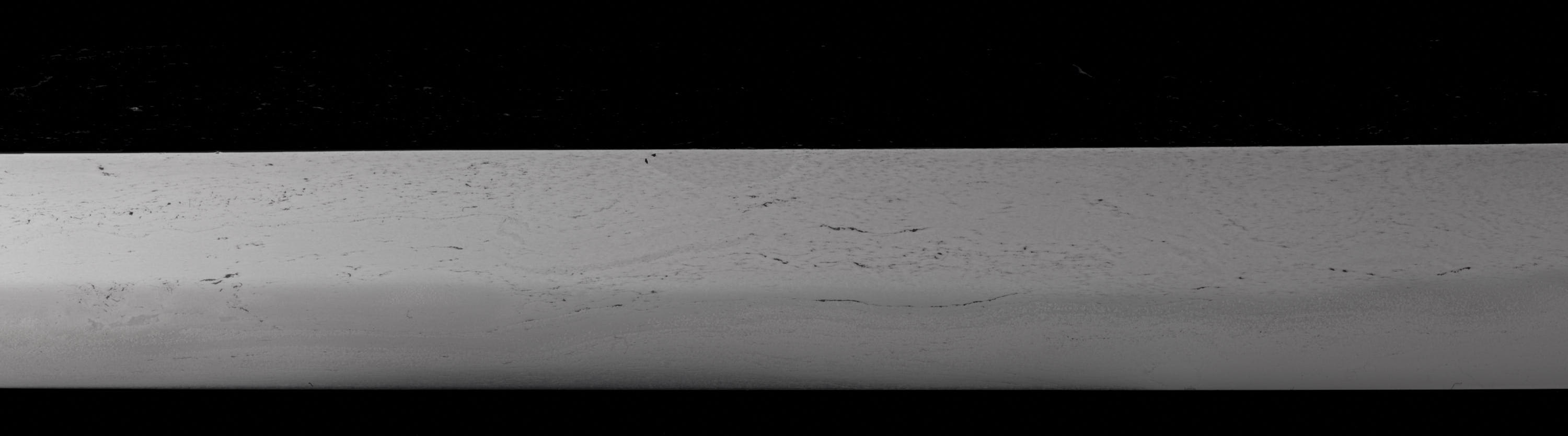
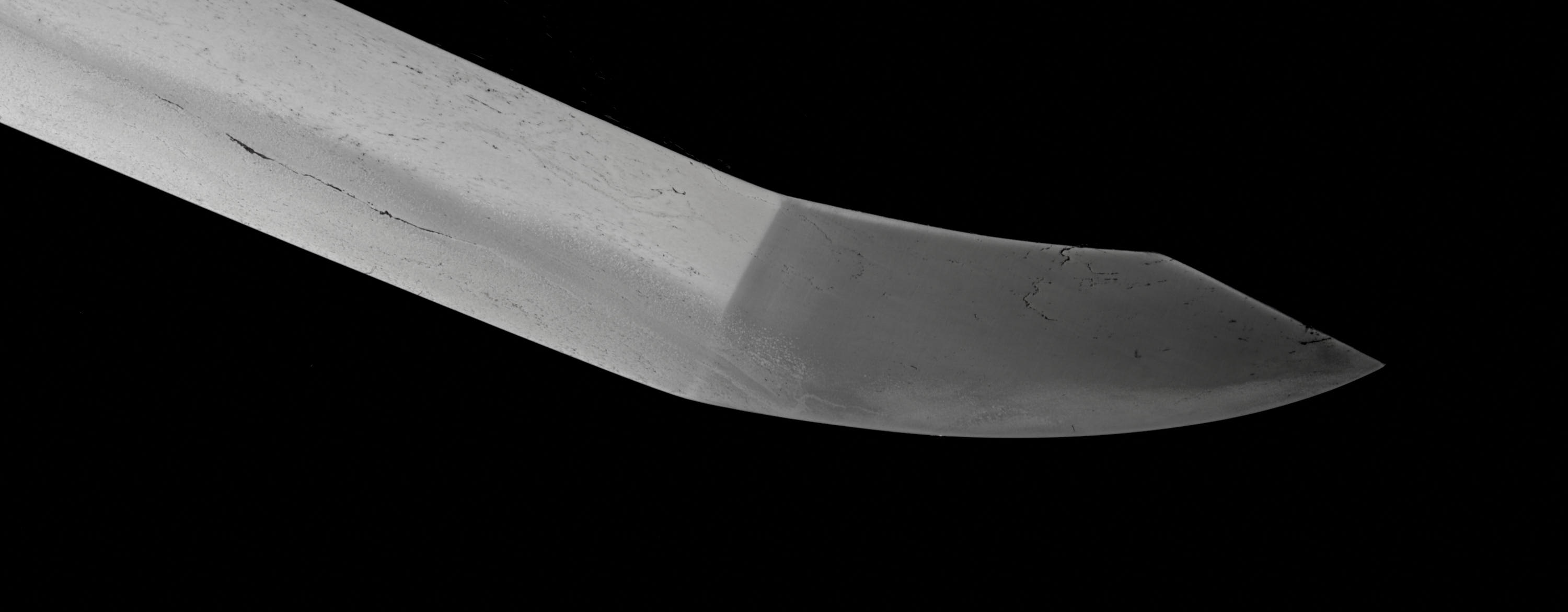
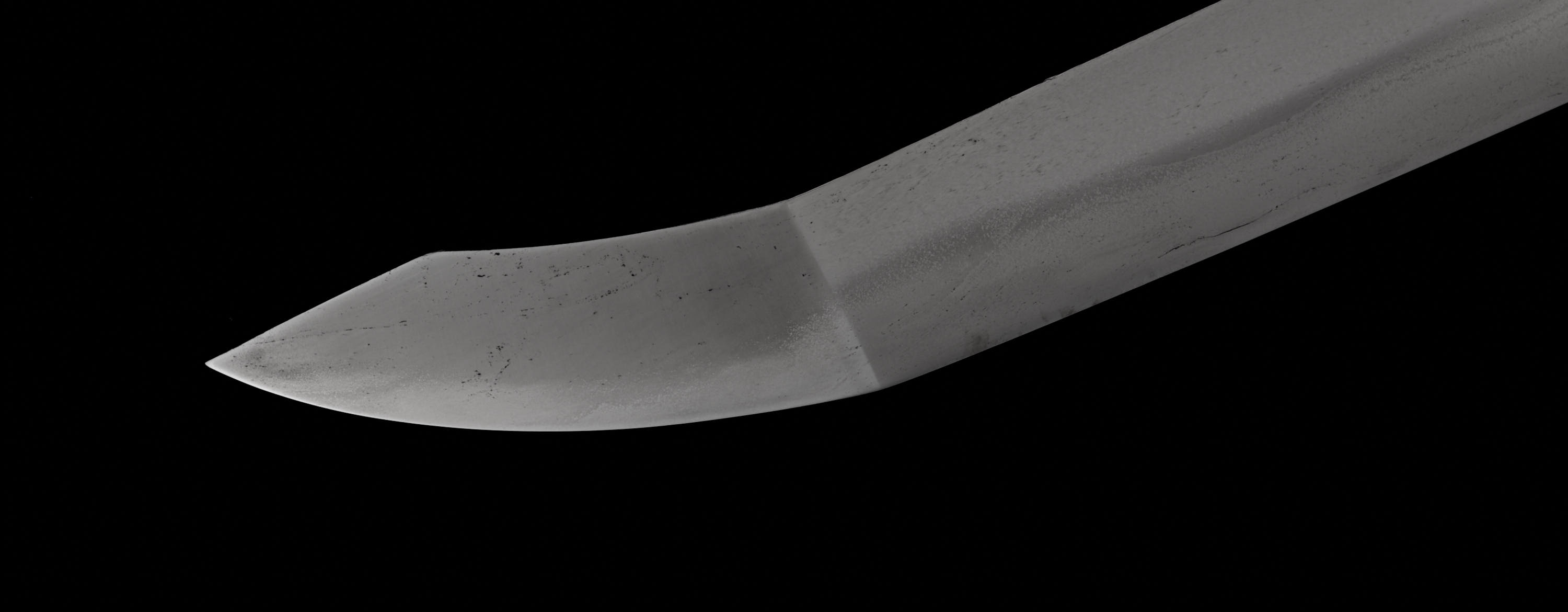
Description Keijō: , ; and are average; there is a clear difference between base and tip widths with a suggestion of ; the is shallow; . : mixed with and , tending toward ; fine adheres, with fine ; partially mixed with mottled areas in the ; appears. : Based on , with shallow and a mixture of , , and ; and enter well; is thickly applied, with places of particularly strong ; appears along the , and and occur frequently. : Straight, ending in , with fine . : On both sides, a is carved along the from the base up into the upper part of the ; on the it is kaki-nagashi, and on the it is finished . : ; shallow ; (both old and new) are ; two ; on the side, just below the second (the original hole), near the center toward the , there is a boldly cut two-character signature in thick chisel strokes.
Artisan school Shigetsugu (古青江 重次)
Era Mid period
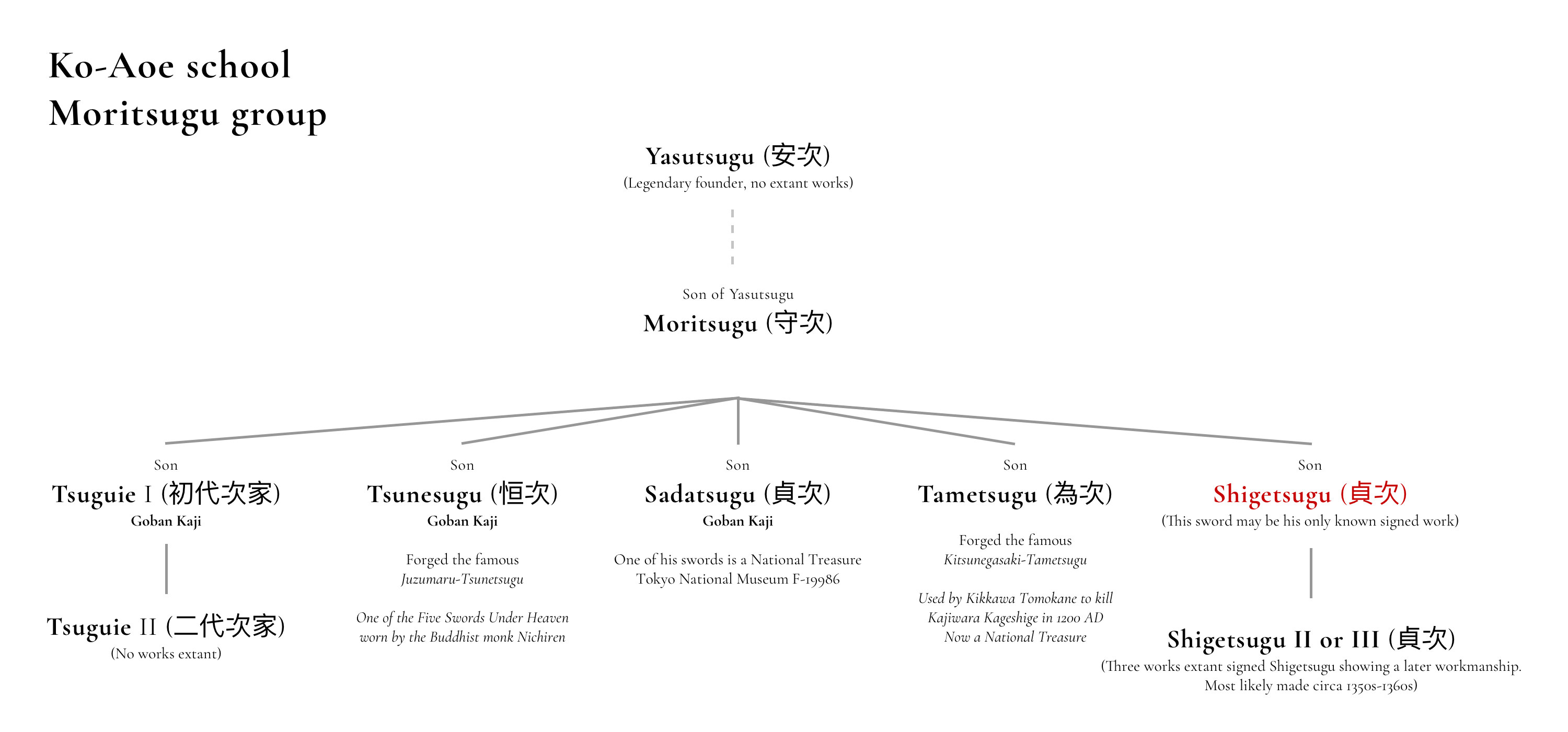
Explanation The school of Bicchū Province is traditionally said to have begun with Yasutsugu around the Jōan era, and thereafter produced many notable smiths down to the late period. Among this lineage, works that do not descend later than the mid- period are especially referred to as (Old ).
Representative smiths include Moritsugu, Tametsugu, Tsugie, Tsugutada, Sadatsugu, Yasutsugu, Kanetsugu, Tsunetsugu, Toshitsugu, Suketsugu, and this Shigetsugu; many of them share the character “tsugu” (次) as a common element in their names. Their workmanship typically shows conspicuous within the forging, with a tendency toward slightly standing grain, producing what is often described as a crepe-like texture; many examples also show mottled areas in the . Their may be calm, -based compositions or may incorporate small irregularities; in general, adheres well, and compared with works of the period, they tend to convey a somewhat subdued and quietly astringent taste. In addition, the practice of placing the signature on the (the side worn toward the body) and using file marks are points that distinguish them from groups such as .
This clearly displays characteristics: the is mixed with and , tending toward , with fine and fine , together with partial mottling, and a standing . The , based on with shallow and mixed small , , and , contains abundant and ; thick adheres, and and appear repeatedly. The is archaic in feeling, with strong and internal activities such as , , , and , expressing a deeply nuanced and engaging style.
As extant examples of Shigetsugu, three blades designated Important Works of Art (Jūyō Bijutsuhin) are well known, including a three-character signed inscribed “Shigetsugu ,” transmitted in the Kishu Tokugawa family. Whereas those works are all signed on the , this piece—like the usual practice among smiths—places the signature on the , a point especially deserving of note. Surviving works by Shigetsugu are rare, and this example is precious; moreover, it has high documentary value as reference material for research on this smith.