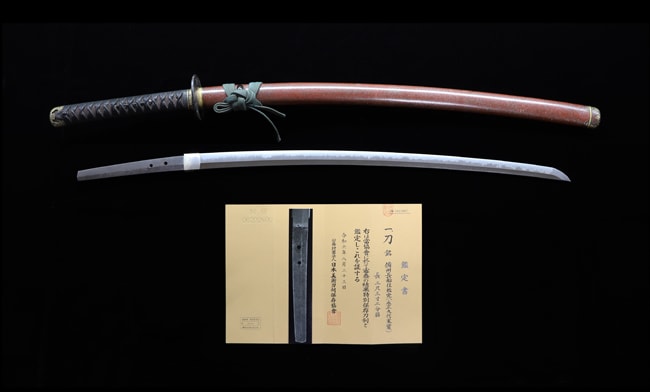
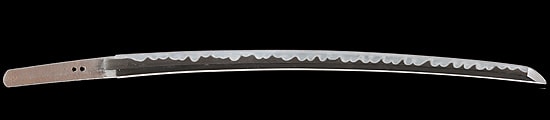
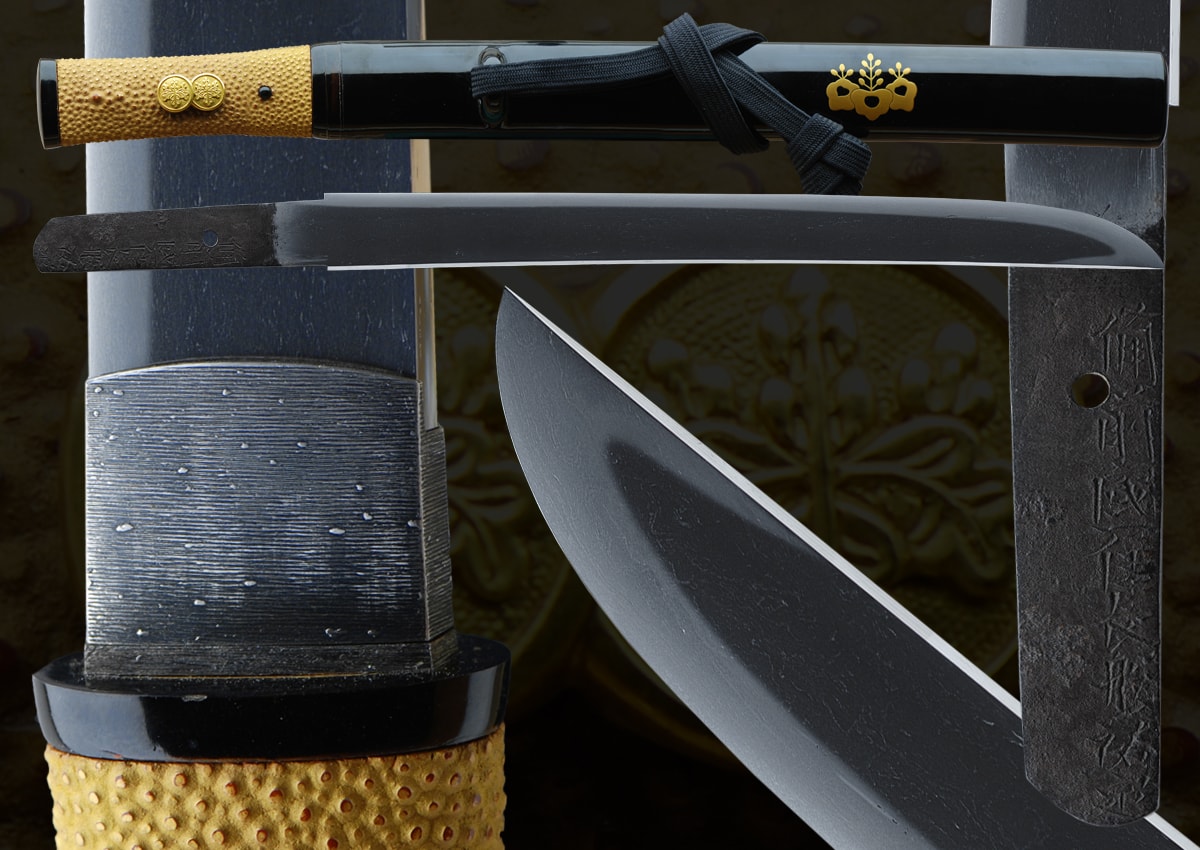
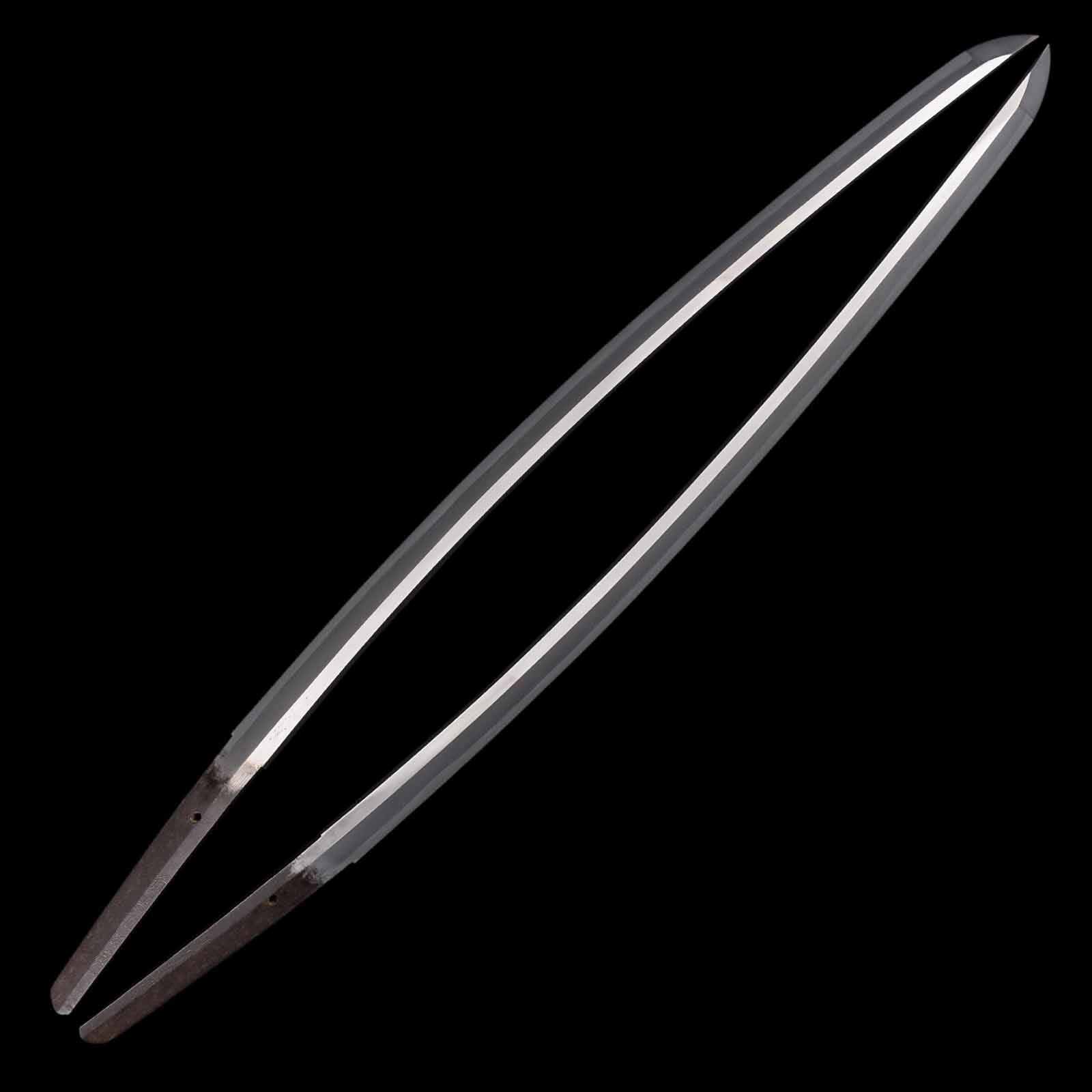
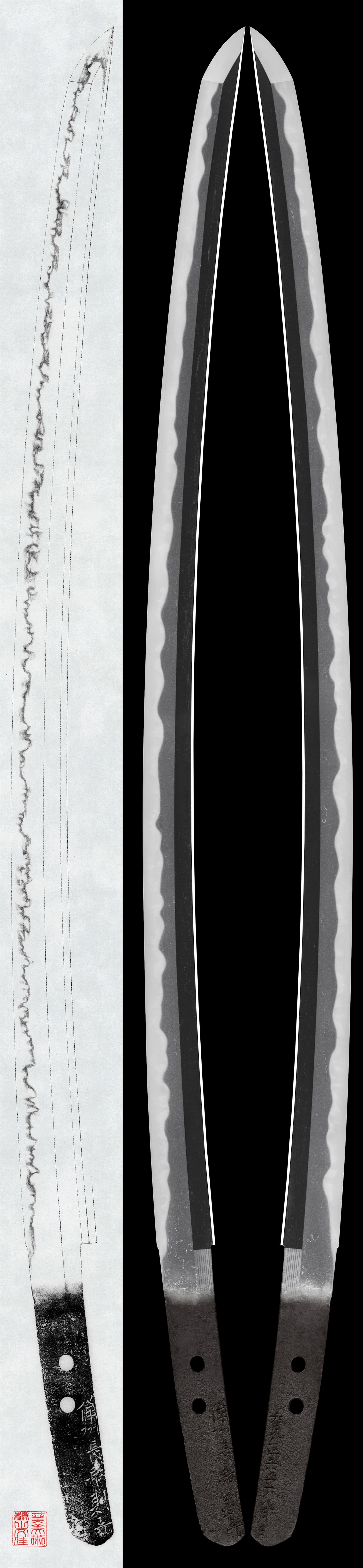
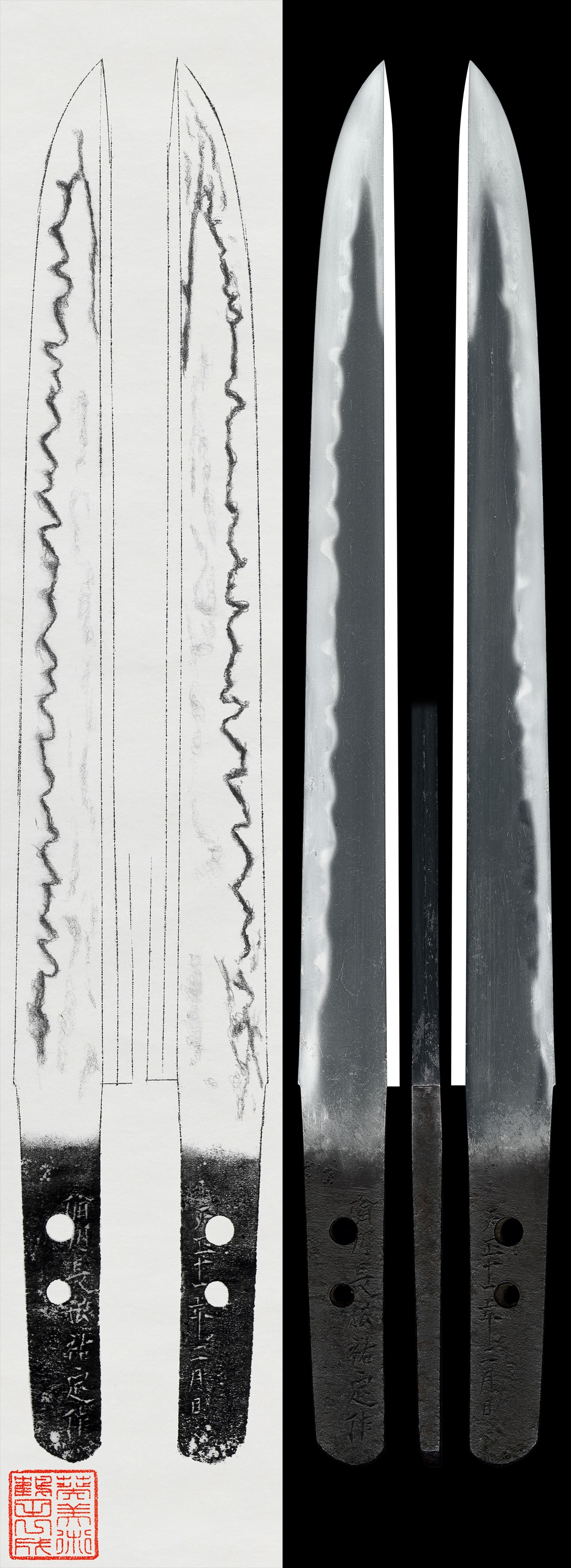
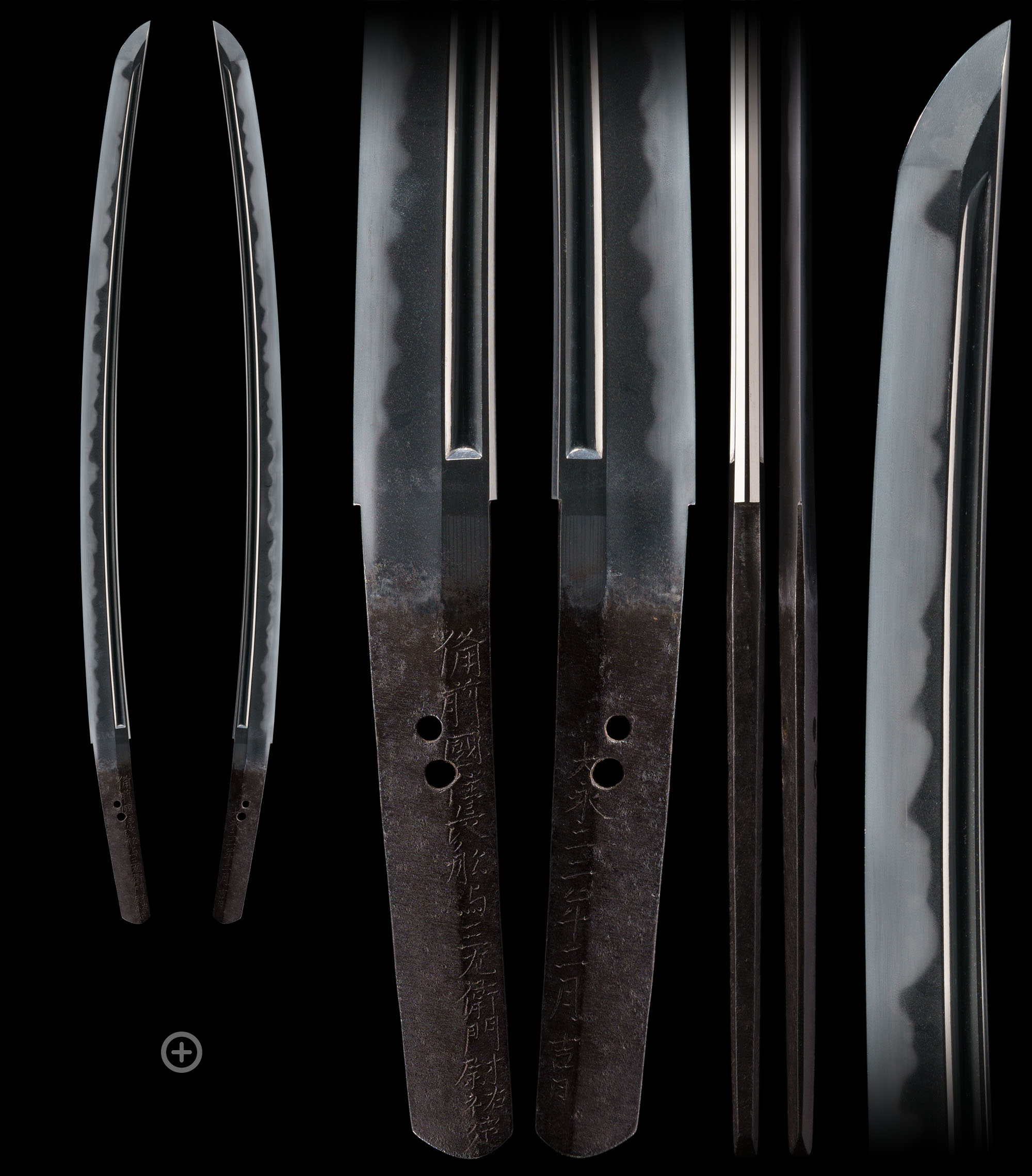
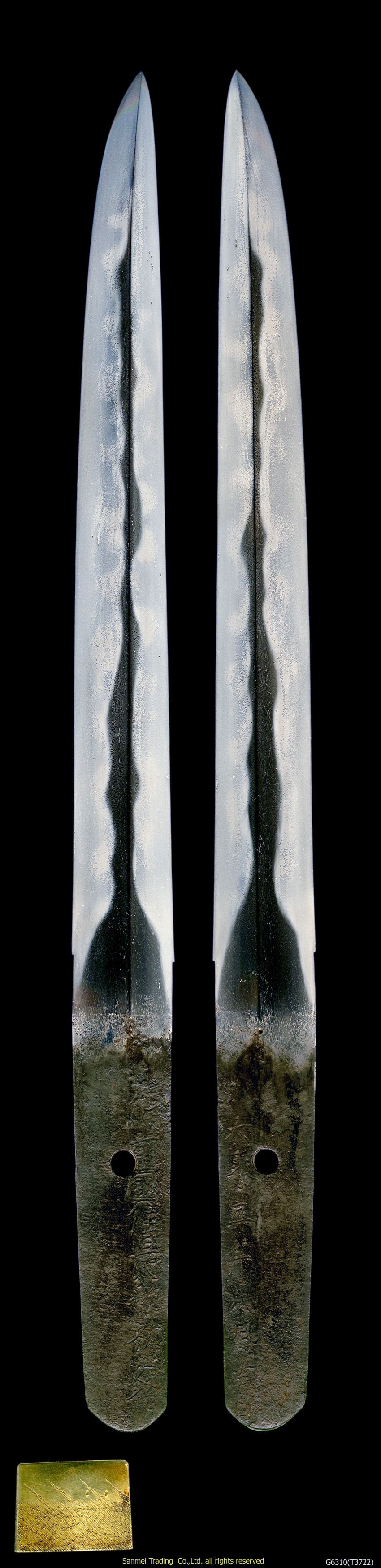
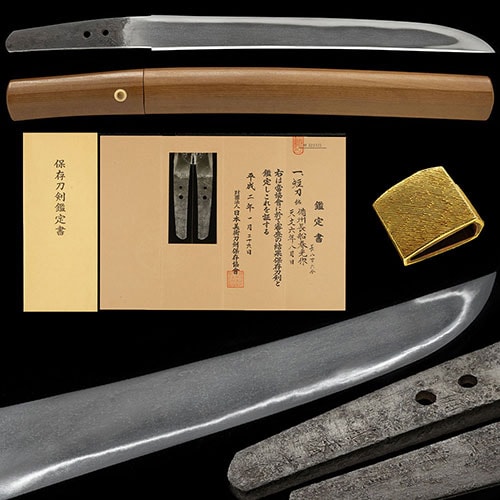
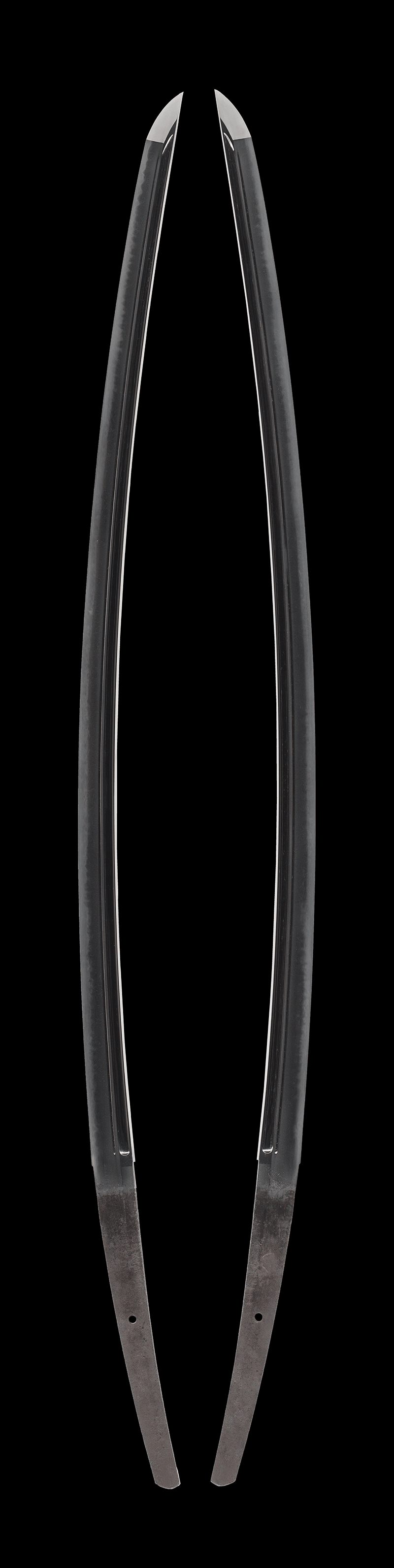
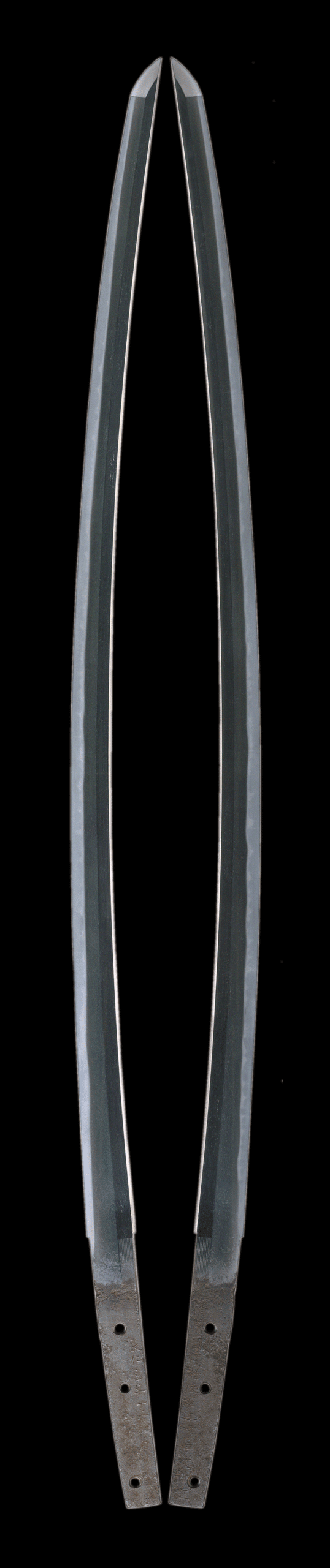
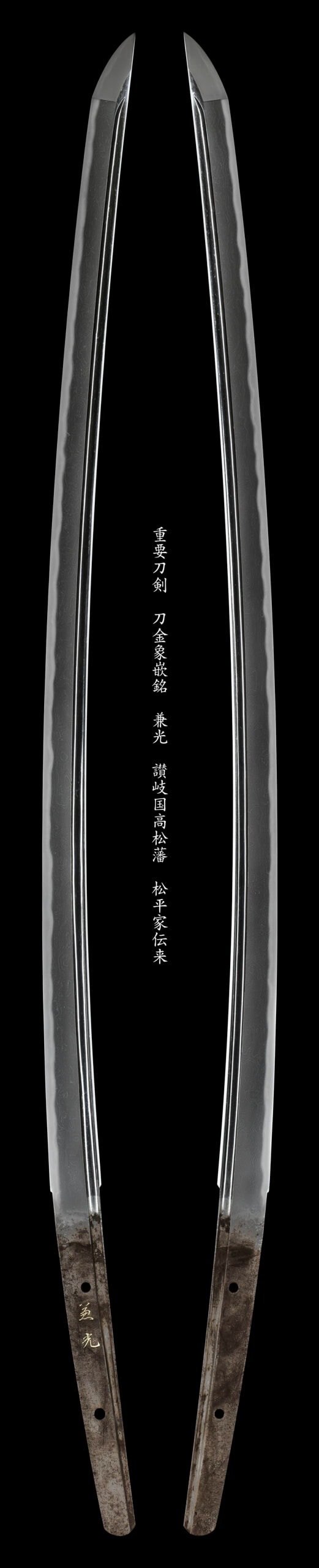
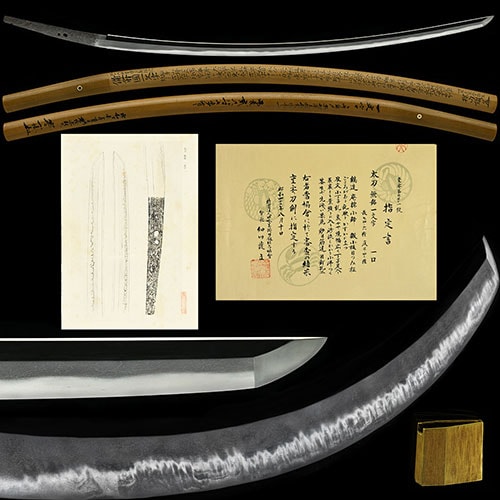
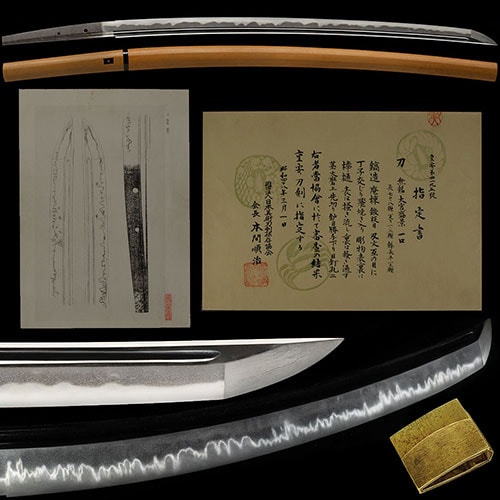
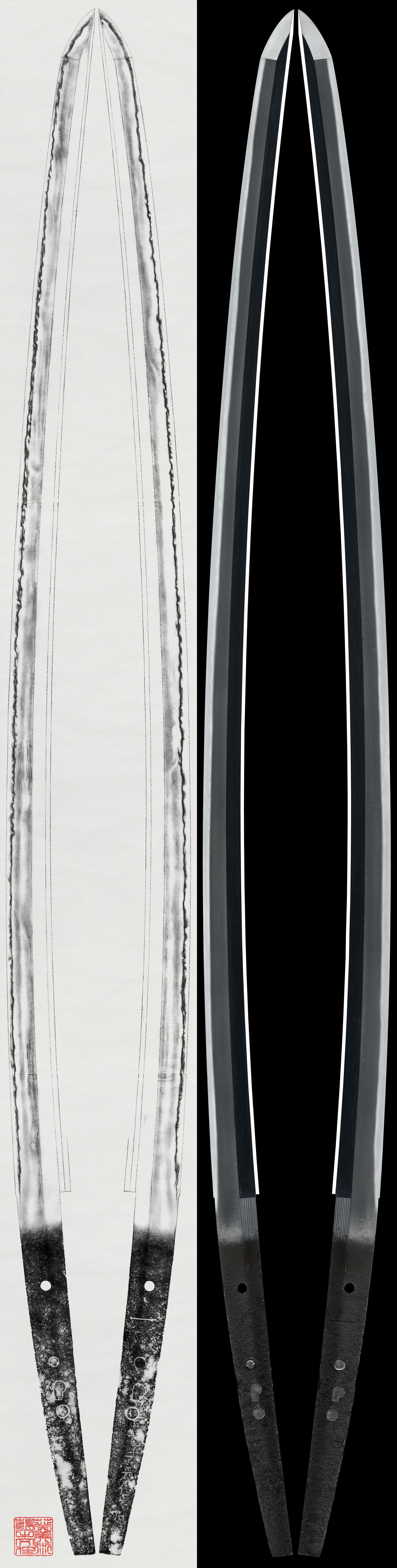
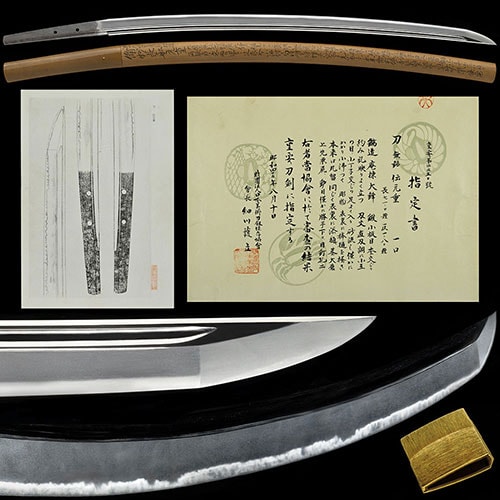
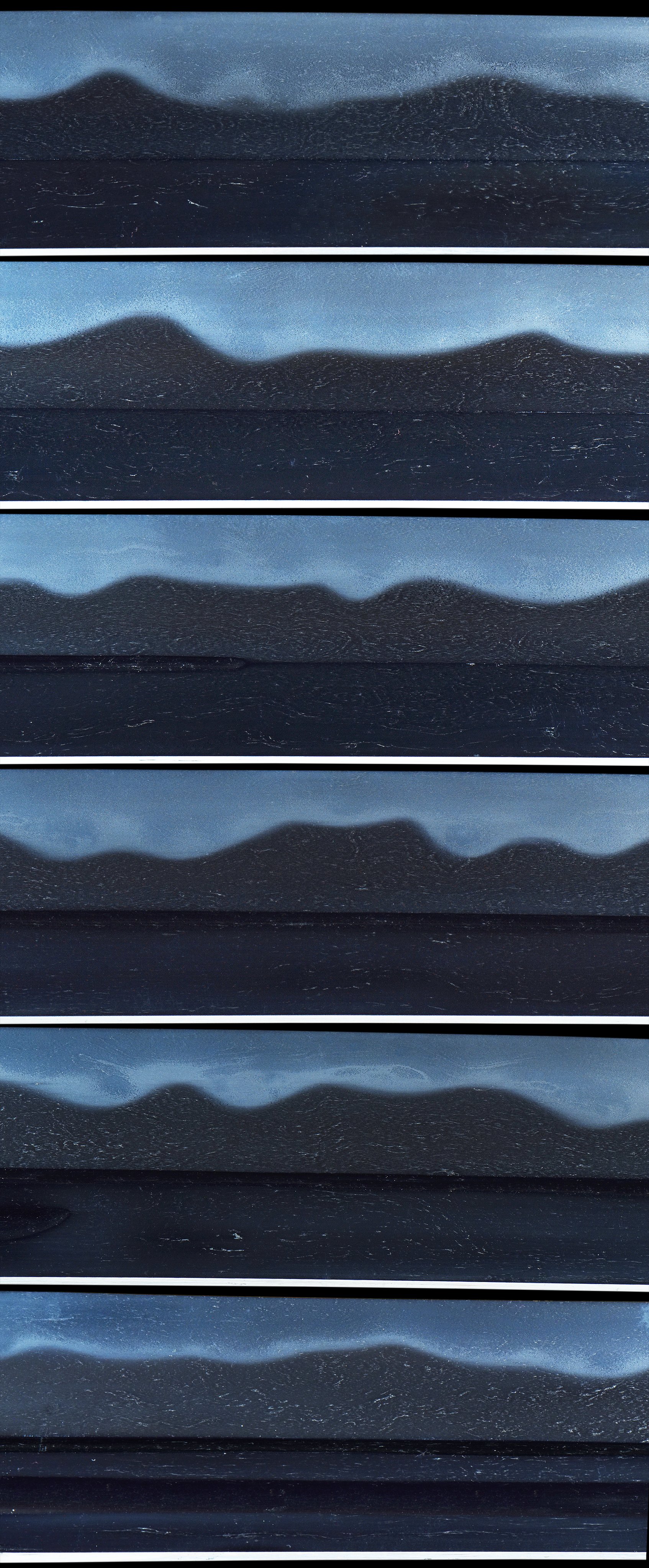
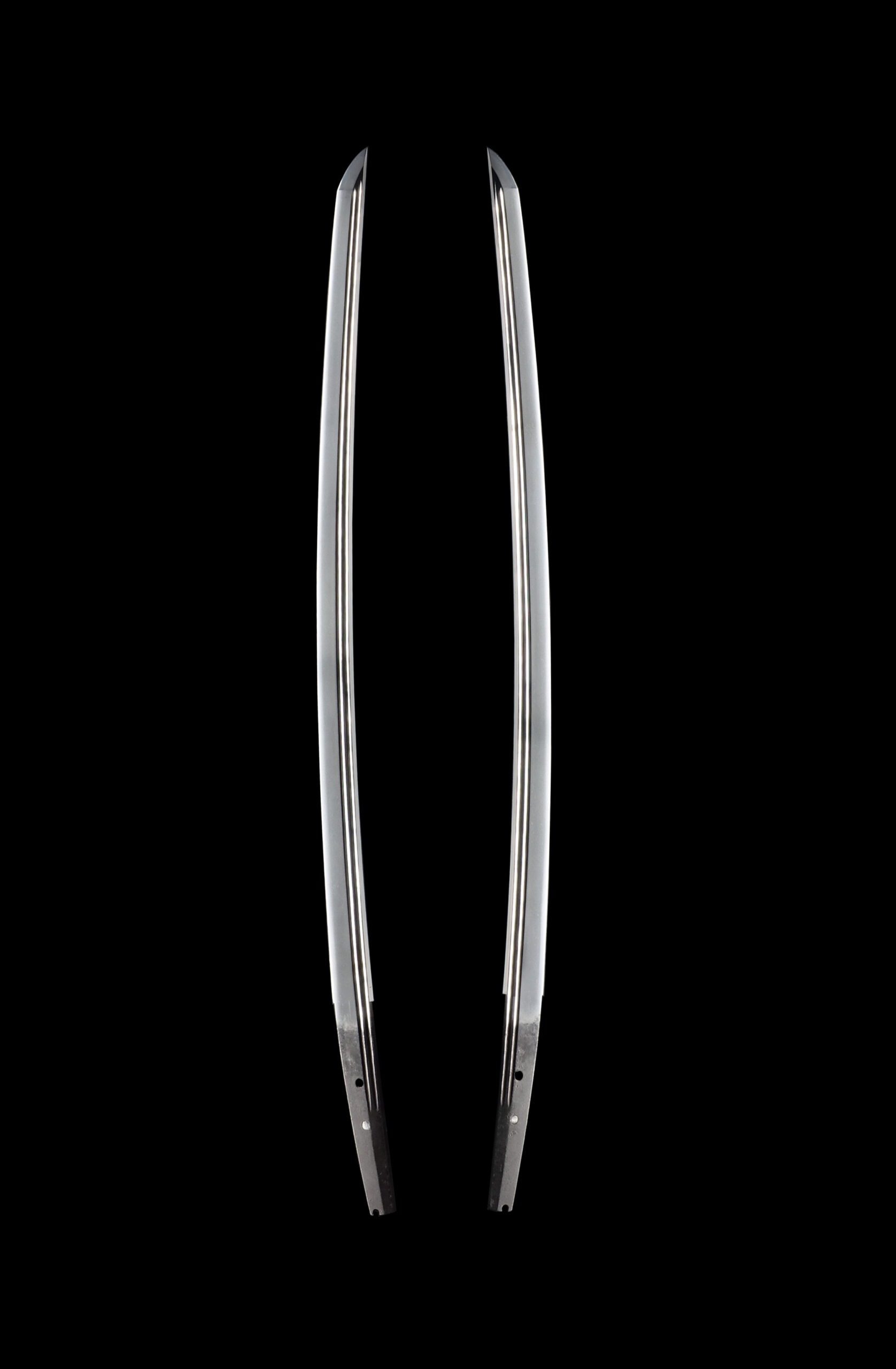
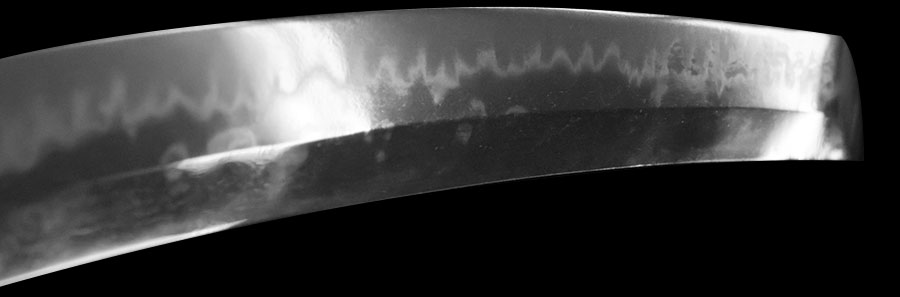
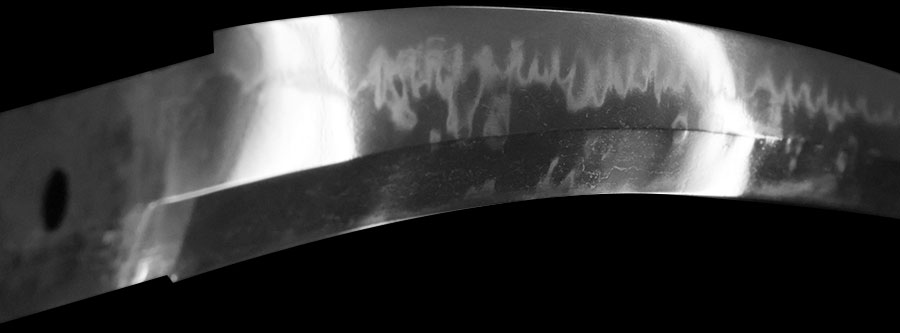
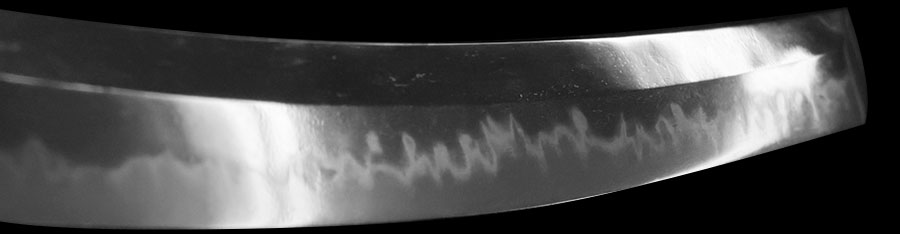
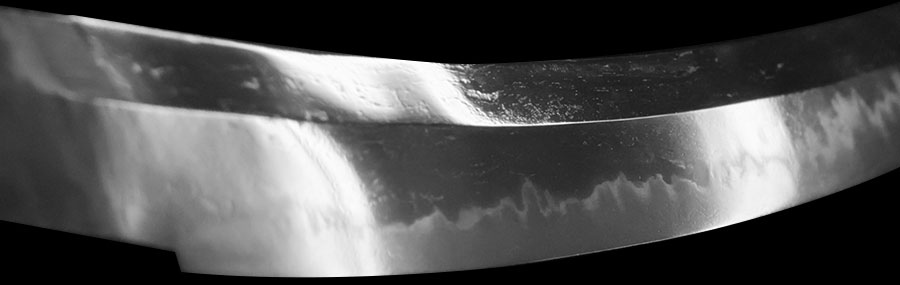
It has arrived, it has arrived! The father, Yokoyama Toshiro Sukesada, was a master smith who achieved the restoration of the Osafune smiths; while most Osafune swordsmiths were swept away and lost their lives in the great flood of the Yoshii River in Tensho 19 (1591) (434 years ago), he luckily reached the shore for dear life and returned to the land of Osafune. His son, Shichibei Sukesada, who claimed to be the 5th generation descendant of Yosozaemon-no-jo Sukesada (the head of the Eisho era), is famous as the highest peak of Shinto Sukesada swordsmiths. However, despite his longevity—passing away at the age of 98 in Enpo 2—he did not include his zokumei "Shichibei-no-jo Sukesada" on his works except for special orders. Because of this, his works are few, perhaps because they are hidden among older pieces, making this wakizashi with a zokumei wonderfully precious. This wakizashi by Shichibei-no-jo Sukesada is a valuable piece with a ninki of Manji 2 (1659) (366 years ago), and this work was crafted at the venerable age of 83. The sugata shows a wide difference between the moto-mihaba and saki-mihaba with little sori, exhibiting the grand sugata of the following era's Kanbun Shinto. The jigane is forged in itame-hada, and the ji shows many tobiyaki, displaying great spirit. The hamon is a nioi-deki with nie-attached gunome choji-ba fired in a wild, uninhibited manner; the nie is well-attached within the ha, making it a tasteful wakizashi that resembles koto works. On this occasion, an old collector mentioned, "I have also grown old, so please pass this to someone who will cherish it," and entrusted us with this wakizashi by Shichibei-no-jo Sukesada with its precious zokumei. Therefore, we are offering it at a special bargain price. Please enjoy this valuable, dated wakizashi by Shichibei-no-jo Sukesada.
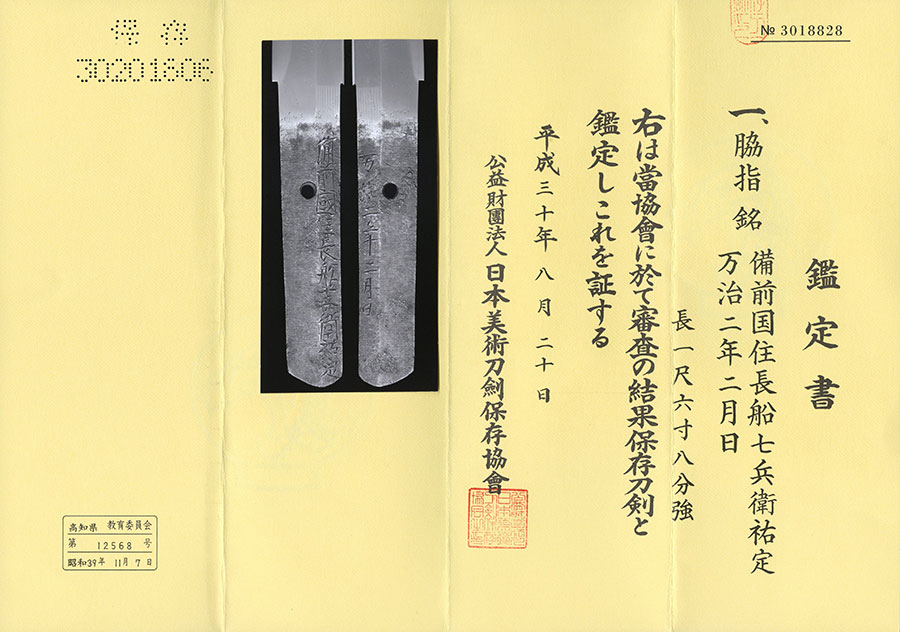
Certificate reading — 銘 備前国住長船七兵衛祐定 万治二年二月日
 NihontoWatchBETA
Genna (1615-1624) · nagasa 50.9cm · sori 1.2cm










Bizen-den · Bizen · around 1596-1615
5 pieces on the market now
Where Sukesada stands among comparable artisans: across all of nihontō, and within tradition, era, and period. The tiers (Foremost · Leading · Major · Notable) weigh official designations from the NBTHK and Japan's Agency for Cultural Affairs, together with historical honors of lasting repute such as the Sansaku and Meibutsu-chō.
Select a lens to see how it's measured.
Years he was demonstrably active, proven by signed-and-dated blades
Bizen-den · Bizen
Phase: Sue-Bizen末備前· 1441–1596
71 pieces on the market now
The last great chapter of Osafune unfolds in the Eisho and Tenbun years of the late Muromachi, when the riverside workshop turned its accumulated craft toward an age of constant war. Where Oei-Bizen had looked backward, reviving the tachi shape and the choji temper of the Kamakura masters under Yasumitsu and Morimitsu, Sue-Bizen faces forward into Sengoku demand. Learn more →
| Smith | Era | Designated |
|---|---|---|
| Sukesada祐定 | 1504-1551 | 72 |
| Sukesada祐定 | 1532-1583 | 18 |
| Sukesada祐定 | 1547-1592 | 8 |
| Sukesada祐定 | 1487-1521 | 5 |
| Sukesada祐定 | 1532-1573 | 3 |
Certifies a genuine blade worth preserving: a signature confirmed correct, or, if unsigned, an era, province, and school that the NBTHK can reliably identify.
The NBTHK (Nihon Bijutsu Tōken Hozon Kyōkai, the Society for the Preservation of Japanese Art Swords) is a public-interest incorporated foundation founded in 1948 and supervised by Japan’s Agency for Cultural Affairs (Bunkachō); it is based at the Japanese Sword Museum in Tokyo. Its expert panels physically examine each submitted work (shinsa) and issue a certificate (kanteishō) ranking it by artistic and historical merit. NBTHK papers are the most widely recognized standard of authentication for Japanese swords and fittings.
NBTHK official siteFor returns due to customer circumstances, the cost is the customer's responsibility. For returns due to our mis-shipment or a defective item, we bear the cost.
It has arrived, it has arrived! The father, Yokoyama Toshiro Sukesada, was a master smith who achieved the restoration of the Osafune smiths; while most Osafune swordsmiths were swept away and lost their lives in the great flood of the Yoshii River in Tensho 19 (1591) (434 years ago), he luckily reached the shore for dear life and returned to the land of Osafune. His son, Shichibei Sukesada, who claimed to be the 5th generation descendant of Yosozaemon-no-jo Sukesada (the head of the Eisho era), is famous as the highest peak of Shinto Sukesada swordsmiths. However, despite his longevity—passing away at the age of 98 in Enpo 2—he did not include his zokumei "Shichibei-no-jo Sukesada" on his works except for special orders. Because of this, his works are few, perhaps because they are hidden among older pieces, making this wakizashi with a zokumei wonderfully precious. This wakizashi by Shichibei-no-jo Sukesada is a valuable piece with a ninki of Manji 2 (1659) (366 years ago), and this work was crafted at the venerable age of 83. The sugata shows a wide difference between the moto-mihaba and saki-mihaba with little sori, exhibiting the grand sugata of the following era's Kanbun Shinto. The jigane is forged in itame-hada, and the ji shows many tobiyaki, displaying great spirit. The hamon is a nioi-deki with nie-attached gunome choji-ba fired in a wild, uninhibited manner; the nie is well-attached within the ha, making it a tasteful wakizashi that resembles koto works. On this occasion, an old collector mentioned, "I have also grown old, so please pass this to someone who will cherish it," and entrusted us with this wakizashi by Shichibei-no-jo Sukesada with its precious zokumei. Therefore, we are offering it at a special bargain price. Please enjoy this valuable, dated wakizashi by Shichibei-no-jo Sukesada.
Certificate reading — 銘 備前国住長船七兵衛祐定 万治二年二月日
NihontoWatchBETAGenna (1615-1624) · nagasa 50.9cm · sori 1.2cm
Bizen-den · Bizen · around 1596-1615
5 pieces on the market now
Where Sukesada stands among comparable artisans: across all of nihontō, and within tradition, era, and period. The tiers (Foremost · Leading · Major · Notable) weigh official designations from the NBTHK and Japan's Agency for Cultural Affairs, together with historical honors of lasting repute such as the Sansaku and Meibutsu-chō.
Select a lens to see how it's measured.
Years he was demonstrably active, proven by signed-and-dated blades
Bizen-den · Bizen
Phase: Sue-Bizen末備前· 1441–1596
71 pieces on the market now
The last great chapter of Osafune unfolds in the Eisho and Tenbun years of the late Muromachi, when the riverside workshop turned its accumulated craft toward an age of constant war. Where Oei-Bizen had looked backward, reviving the tachi shape and the choji temper of the Kamakura masters under Yasumitsu and Morimitsu, Sue-Bizen faces forward into Sengoku demand. Learn more →
| Smith | Era | Designated |
|---|---|---|
| Sukesada祐定 | 1504-1551 | 72 |
| Sukesada祐定 | 1532-1583 | 18 |
| Sukesada祐定 | 1547-1592 | 8 |
| Sukesada祐定 | 1487-1521 | 5 |
| Sukesada祐定 | 1532-1573 | 3 |
Certifies a genuine blade worth preserving: a signature confirmed correct, or, if unsigned, an era, province, and school that the NBTHK can reliably identify.
The NBTHK (Nihon Bijutsu Tōken Hozon Kyōkai, the Society for the Preservation of Japanese Art Swords) is a public-interest incorporated foundation founded in 1948 and supervised by Japan’s Agency for Cultural Affairs (Bunkachō); it is based at the Japanese Sword Museum in Tokyo. Its expert panels physically examine each submitted work (shinsa) and issue a certificate (kanteishō) ranking it by artistic and historical merit. NBTHK papers are the most widely recognized standard of authentication for Japanese swords and fittings.
NBTHK official siteFor returns due to customer circumstances, the cost is the customer's responsibility. For returns due to our mis-shipment or a defective item, we bear the cost.