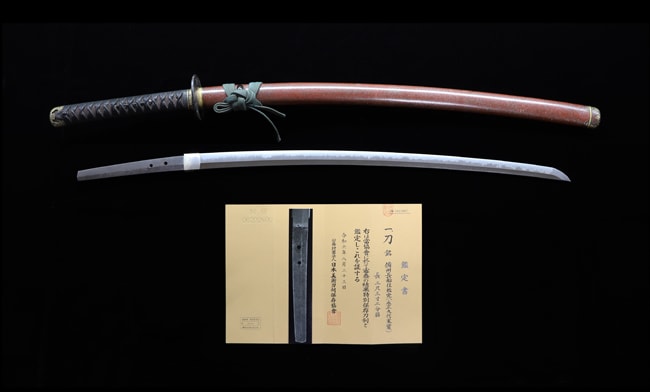
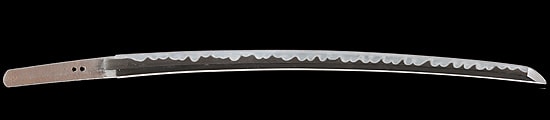
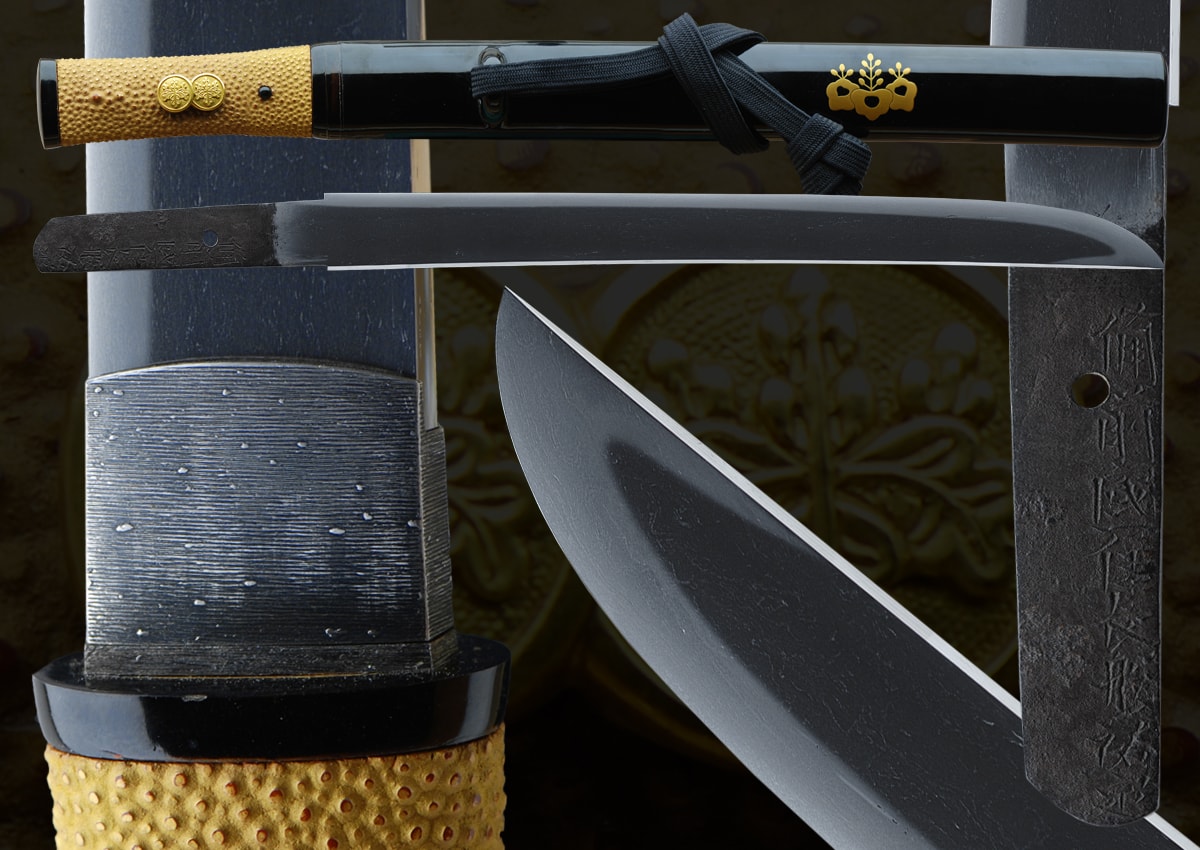
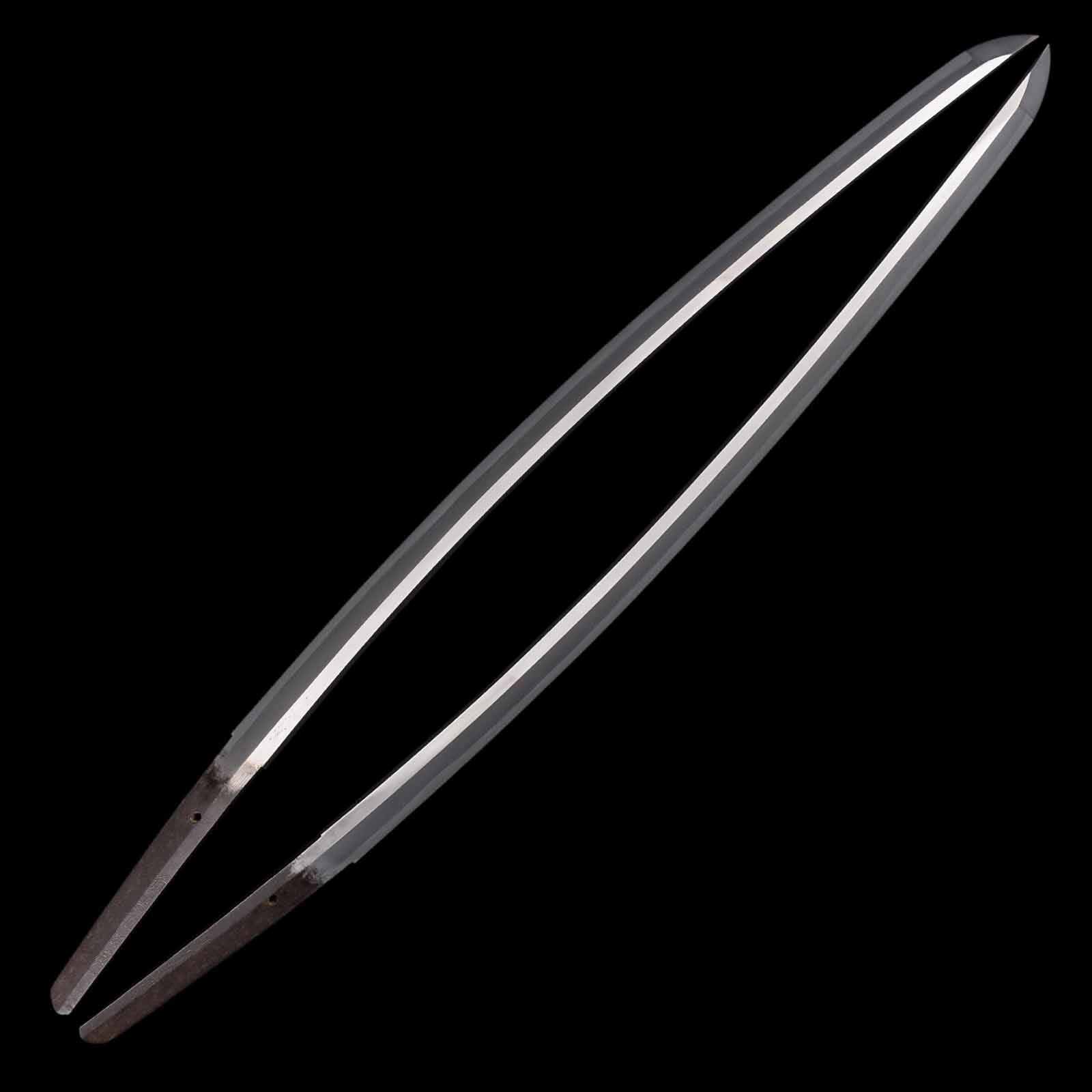
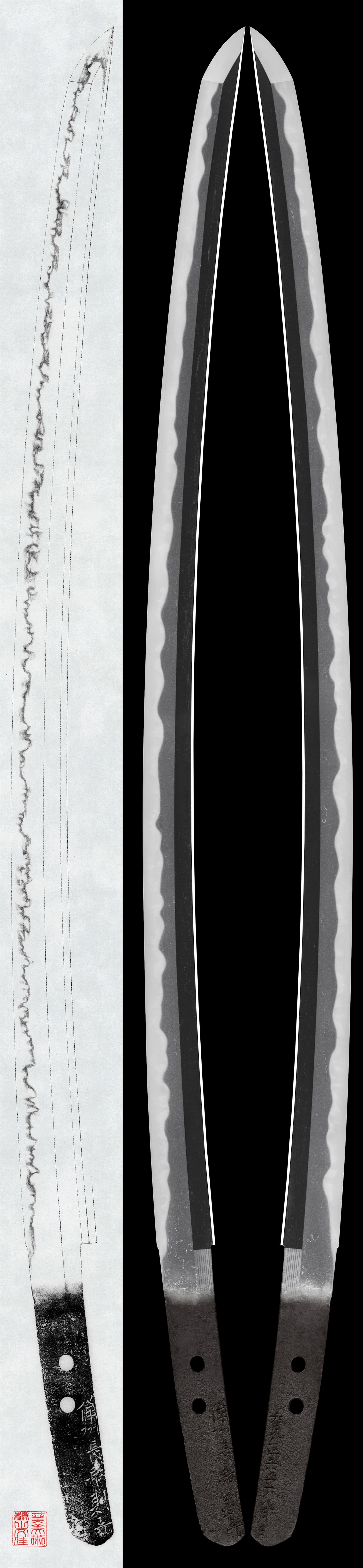
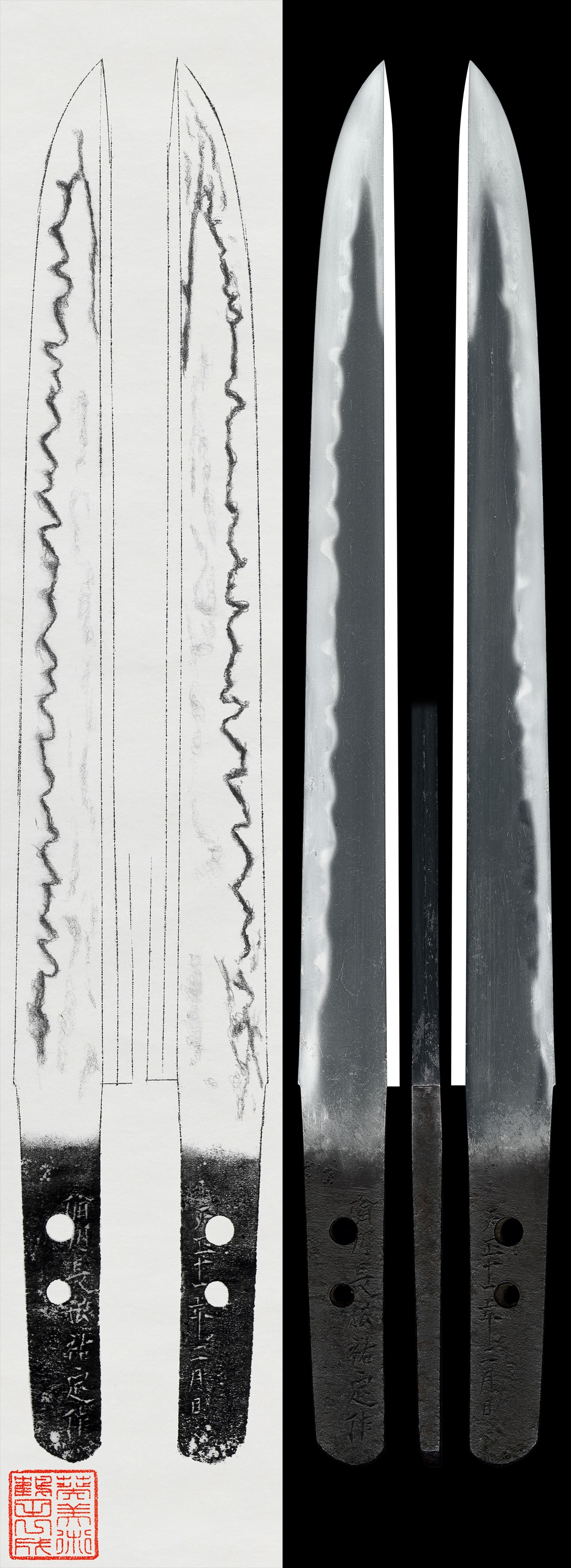
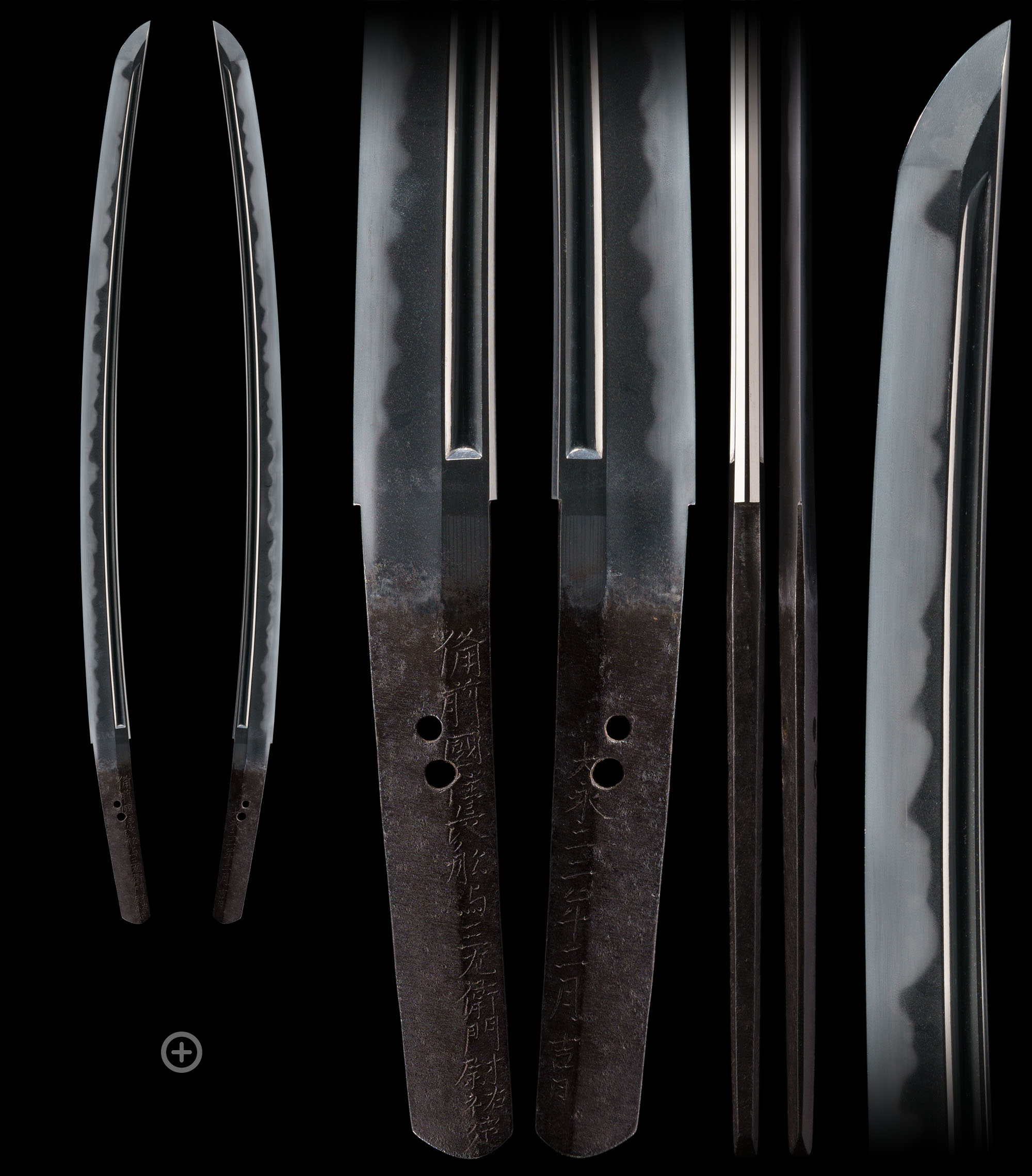
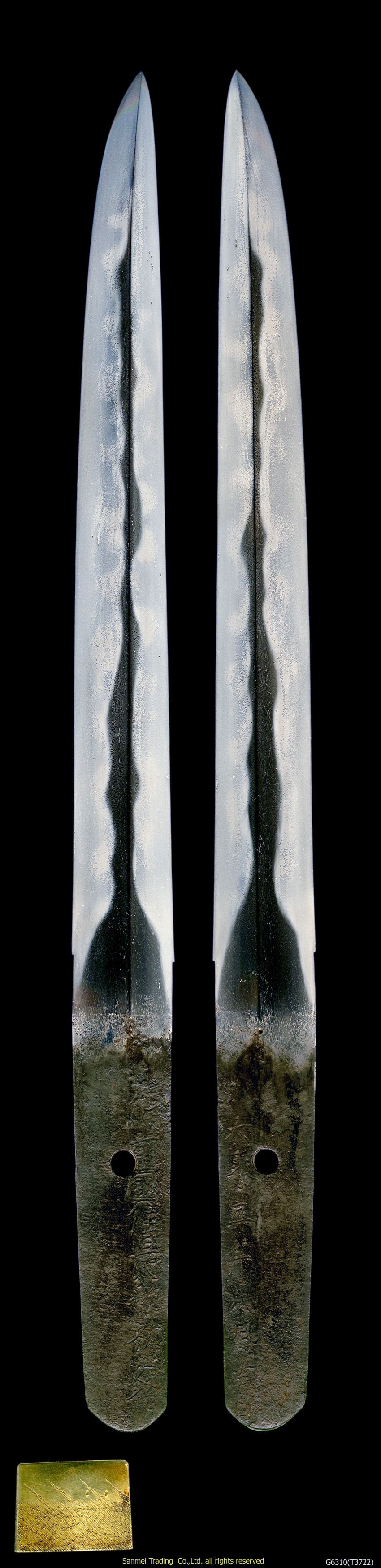
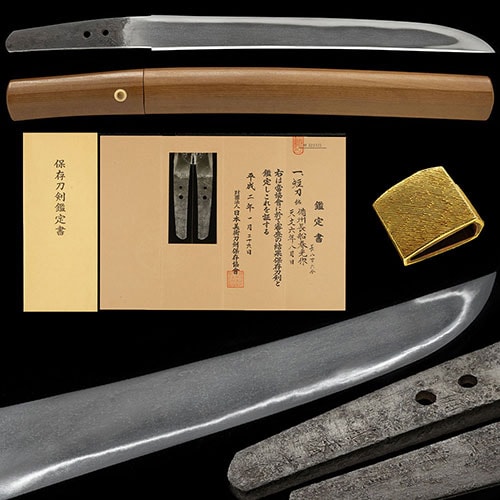
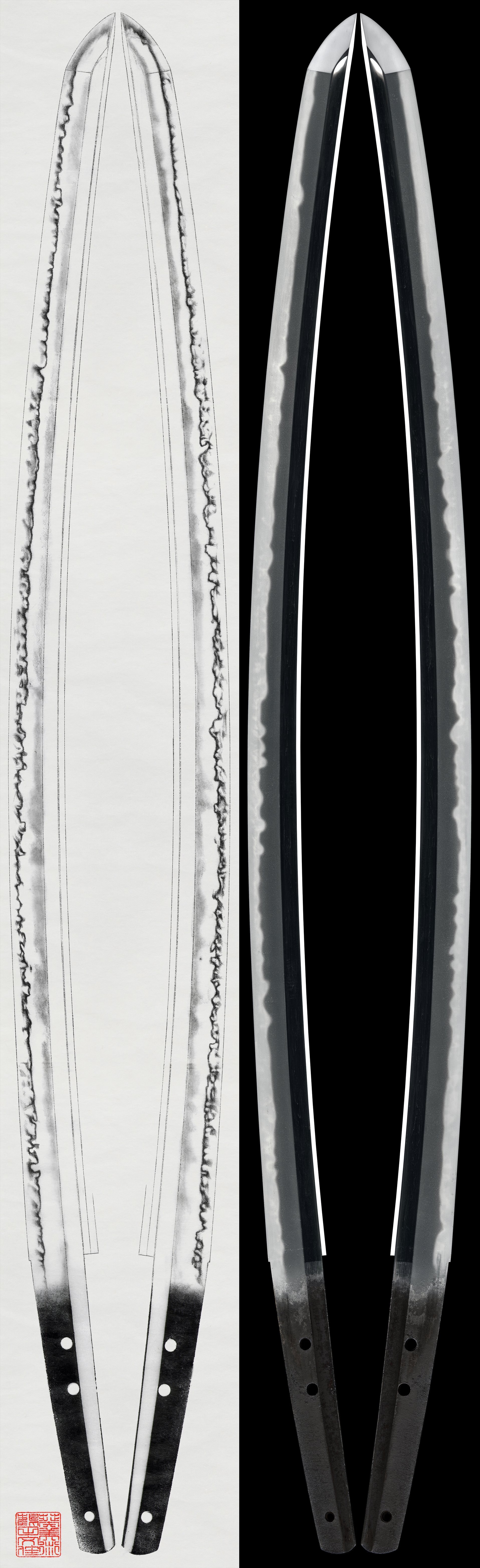
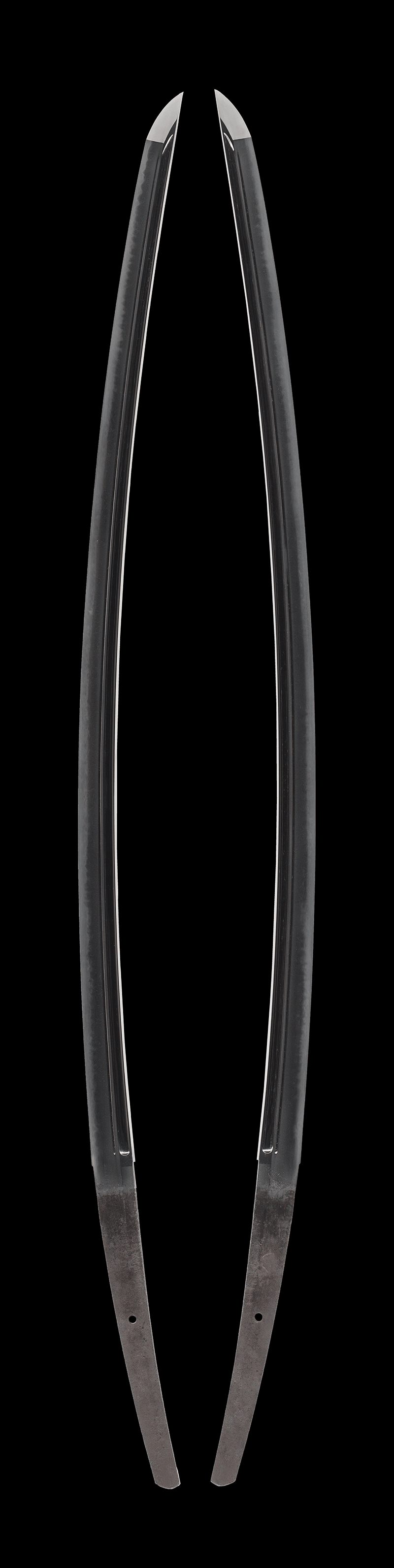
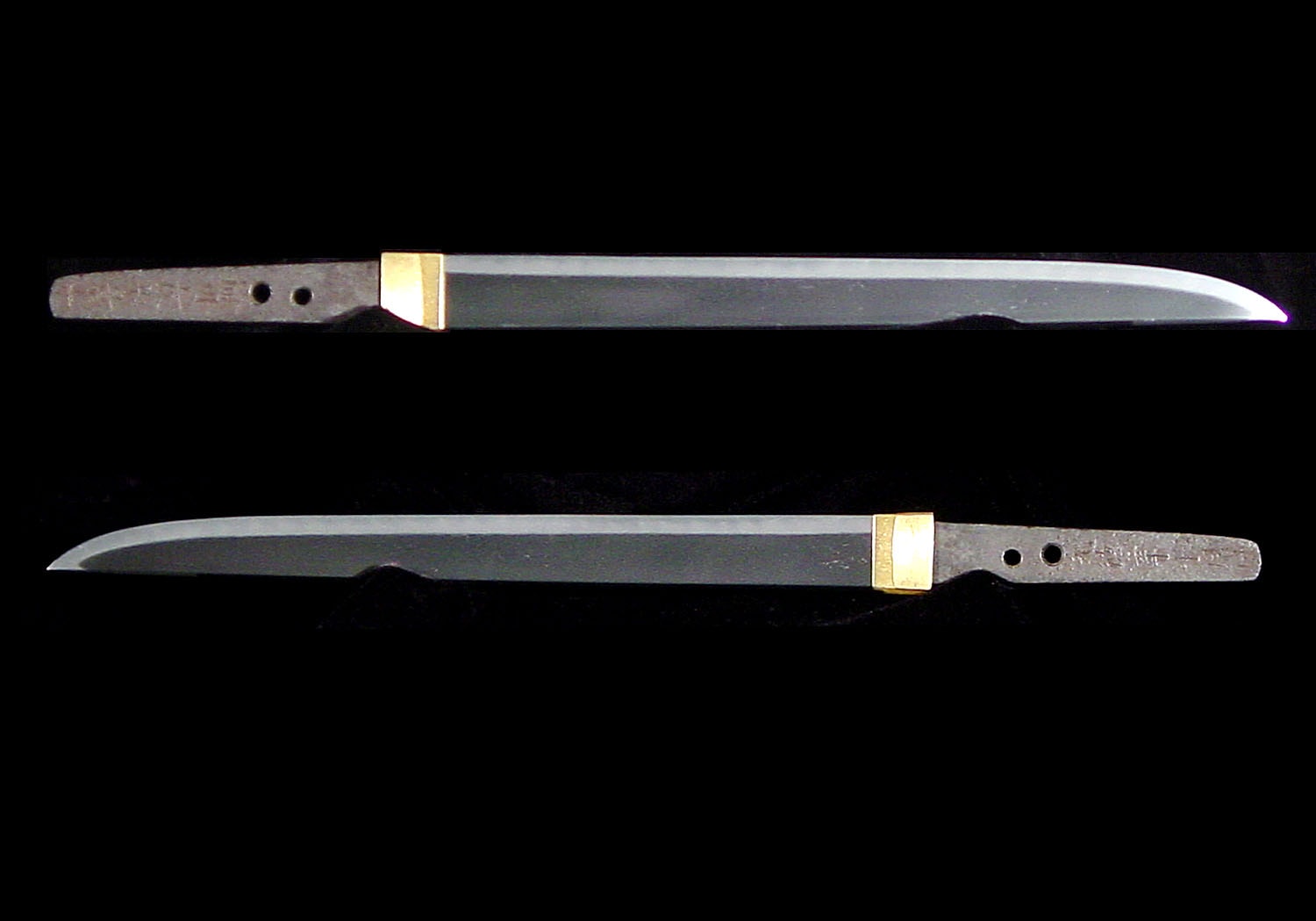
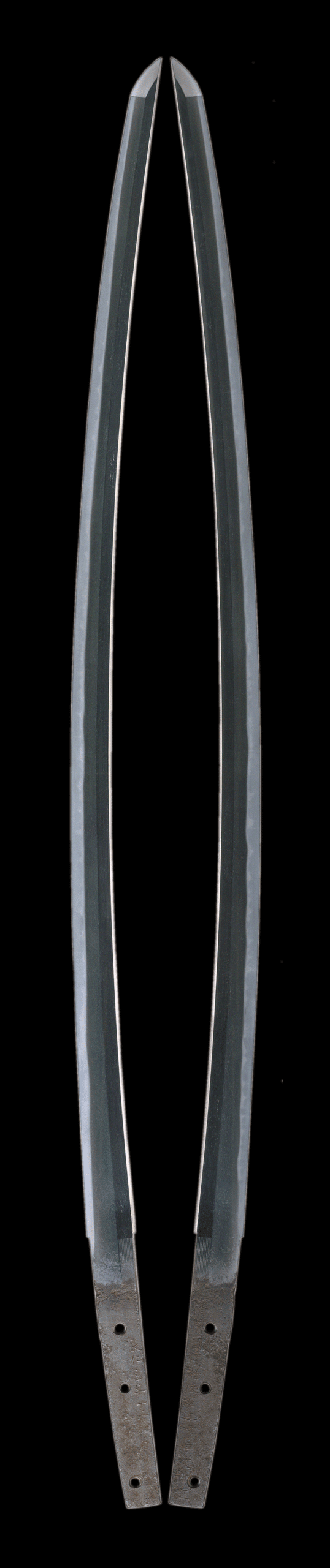
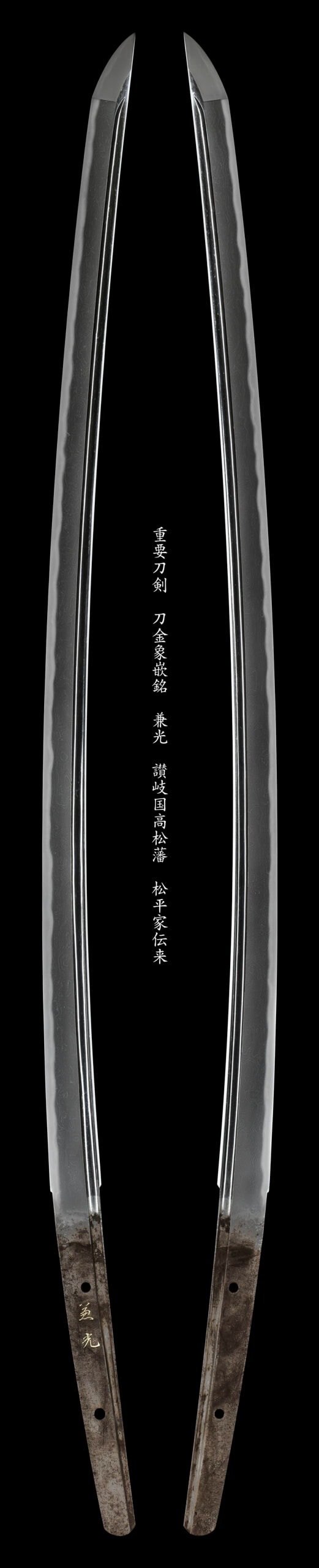
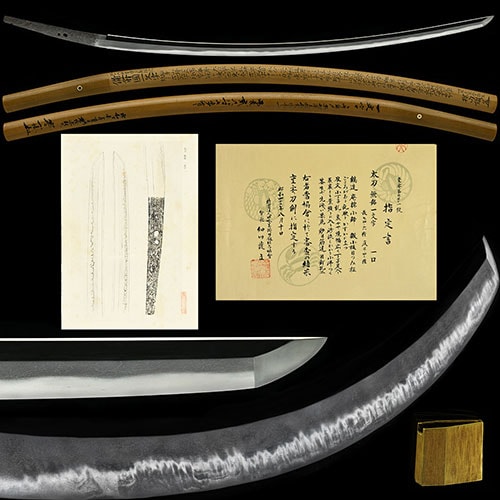
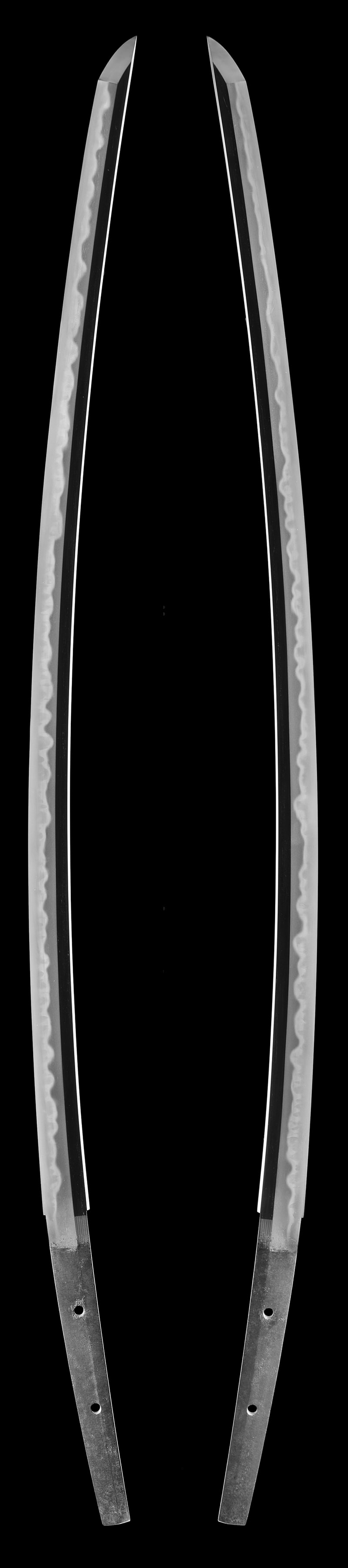
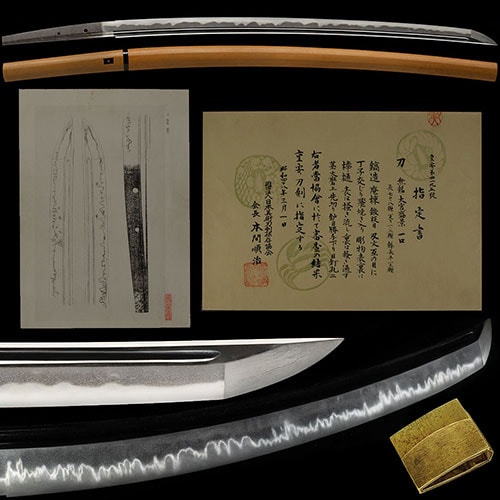
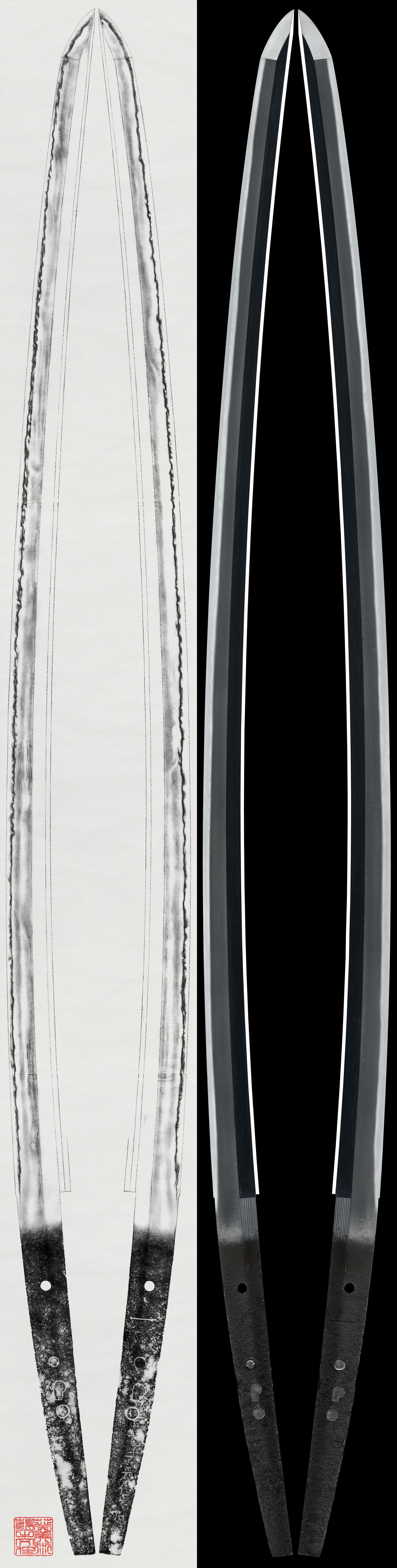
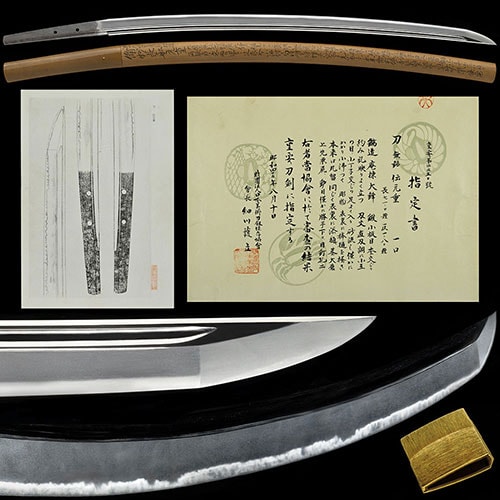
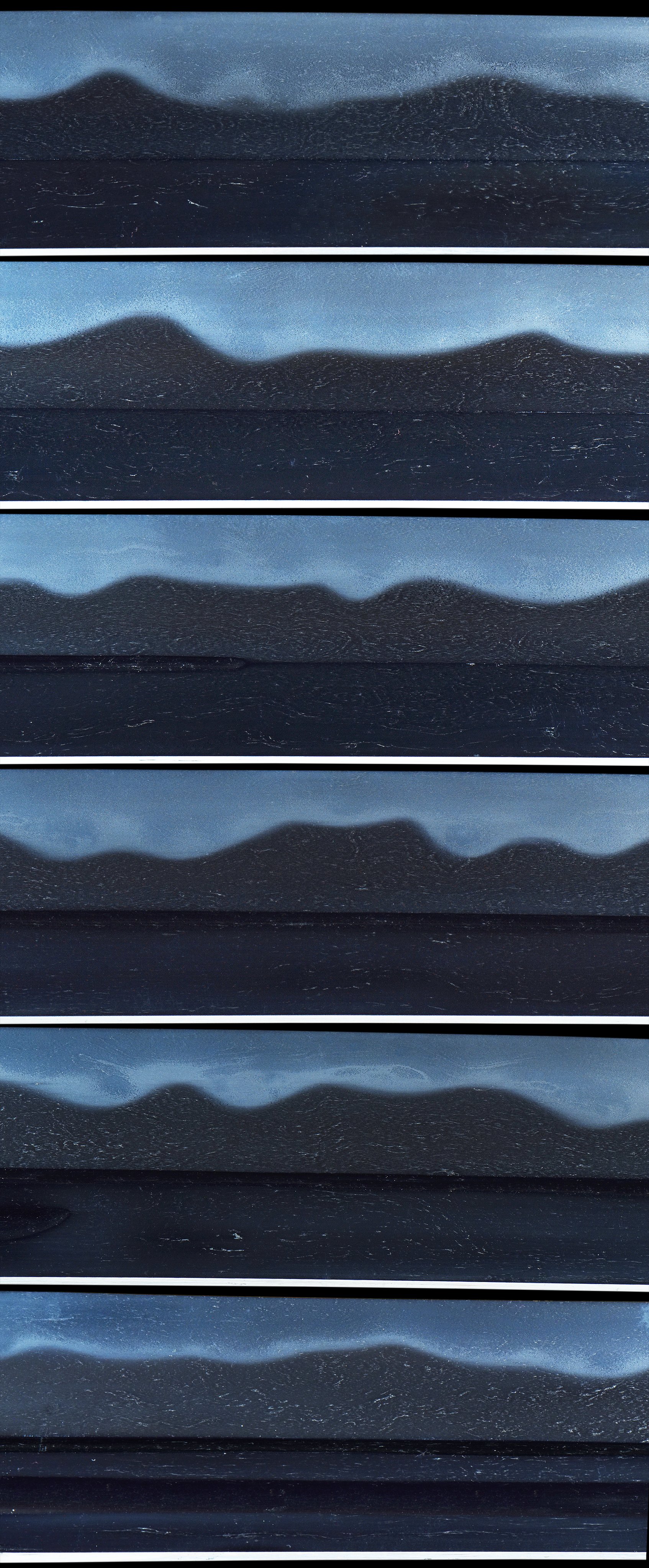
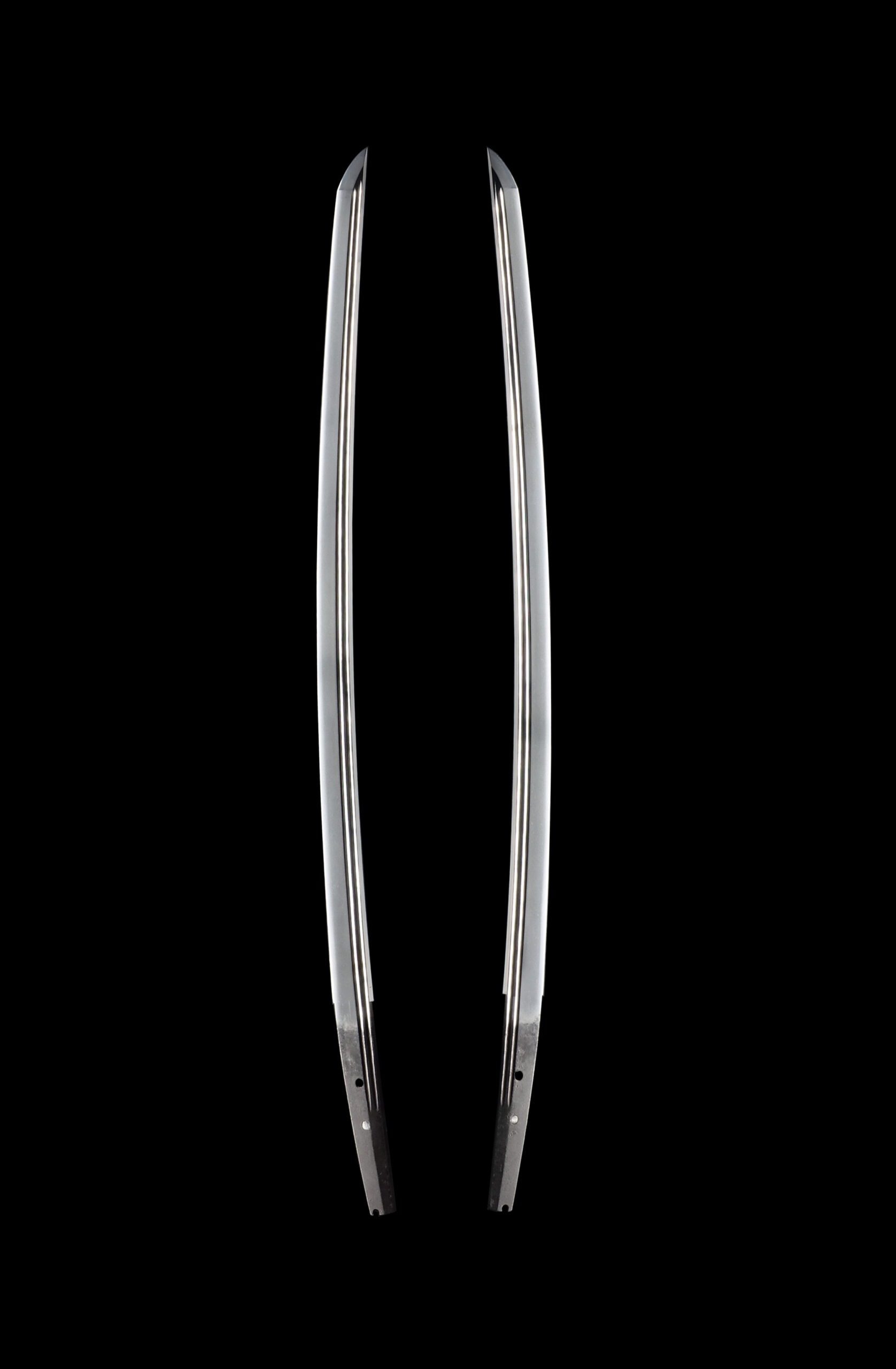
【Product Description】 Blade Classification: Wakizashi Mei: Mumei (Den: Enju) Appraisal: NBTHK Tokubetsu Hozon Token Nagasa: 45.4 cm Sori: 1.0 cm Motohaba: 2.8 cm Sakihaba: 1.9 cm Motokasane: 0.6 cm Sakikasane: 0.4 cm Mekugi-ana: 2 Weight: 395g (blade only) [Sugata] Shinogi-zukuri, Iori-mune. The nagasa is standard, the sori is shallow, and the chu-kissaki is well-proportioned. [Jitetsu] Itame-hada mixed with mokume, becoming fine and dense. The jigane is clear with abundant jinie and shirake-utsuri appears. [Hamon] Chu-suguba based, mixed with ko-gunome and ko-ashiri. The nioiguchi is bright and clear with fine konie. The habuchi is soft and elegant. [Boshi] Straight (sugu) with a small, rounded return (ko-maru). [Koshirae] Black lacquered (kuro-roiro) saya. Fuchi-kashira: Shakudo-nanako ground, autumn insects and flowers design, takabori, iro-e. Menuki: Shakudo-nanako ground, autumn flowers design, takabori, iro-e. Tsuba: Iron ground, round shape, openwork (sukashi) design. [Explanation] The Enju school was founded by Taro Kunimura, the grandson of Rai Kunitoshi, who moved from Yamashiro to Higo province (Kumamoto Prefecture) during the late Kamakura period. They served as the exclusive swordsmiths for the Kikuchi clan. This work is mumei but has been attributed to Enju by the NBTHK. The jitetsu shows a refined texture with shirake-utsuri, and the hamon is a graceful suguba, characteristic of the school's style which closely follows the Rai tradition. It is a masterpiece that exudes the elegance of the Yamashiro style while maintaining the sturdy dignity of Higo koshirae.
 NihontoWatchBETA
signed · Osafune · nagasa 46.4cm · sori 1.7cm
Bizen-den · Bizen · around 1596-1615
5 pieces on the market now
Where Sukesada stands among comparable artisans: across all of nihontō, and within tradition, era, and period. The tiers (Foremost · Leading · Major · Notable) weigh official designations from the NBTHK and Japan's Agency for Cultural Affairs, together with historical honors of lasting repute such as the Sansaku and Meibutsu-chō.
Select a lens to see how it's measured.
Years he was demonstrably active, proven by signed-and-dated blades
Bizen-den · Bizen
Phase: Sue-Bizen末備前· 1441–1596
71 pieces on the market now
The last great chapter of Osafune unfolds in the Eisho and Tenbun years of the late Muromachi, when the riverside workshop turned its accumulated craft toward an age of constant war. Where Oei-Bizen had looked backward, reviving the tachi shape and the choji temper of the Kamakura masters under Yasumitsu and Morimitsu, Sue-Bizen faces forward into Sengoku demand. Learn more →
| Smith | Era | Designated |
|---|---|---|
| Sukesada祐定 | 1504-1551 | 72 |
| Sukesada祐定 | 1532-1583 | 18 |
| Sukesada祐定 | 1547-1592 | 8 |
| Sukesada祐定 | 1487-1521 | 5 |
| Sukesada祐定 | 1532-1573 | 3 |
We could not find an authenticity certificate on the seller’s listing. Japanese swords and fittings are normally papered by the NBTHK (or the NTHK). Without one, the attribution is the seller’s own assessment and has not been independently verified — treat it with caution and ask the dealer about certification before buying.
【Product Description】 Blade Classification: Wakizashi Mei: Mumei (Den: Enju) Appraisal: NBTHK Tokubetsu Hozon Token Nagasa: 45.4 cm Sori: 1.0 cm Motohaba: 2.8 cm Sakihaba: 1.9 cm Motokasane: 0.6 cm Sakikasane: 0.4 cm Mekugi-ana: 2 Weight: 395g (blade only) [Sugata] Shinogi-zukuri, Iori-mune. The nagasa is standard, the sori is shallow, and the chu-kissaki is well-proportioned. [Jitetsu] Itame-hada mixed with mokume, becoming fine and dense. The jigane is clear with abundant jinie and shirake-utsuri appears. [Hamon] Chu-suguba based, mixed with ko-gunome and ko-ashiri. The nioiguchi is bright and clear with fine konie. The habuchi is soft and elegant. [Boshi] Straight (sugu) with a small, rounded return (ko-maru). [Koshirae] Black lacquered (kuro-roiro) saya. Fuchi-kashira: Shakudo-nanako ground, autumn insects and flowers design, takabori, iro-e. Menuki: Shakudo-nanako ground, autumn flowers design, takabori, iro-e. Tsuba: Iron ground, round shape, openwork (sukashi) design. [Explanation] The Enju school was founded by Taro Kunimura, the grandson of Rai Kunitoshi, who moved from Yamashiro to Higo province (Kumamoto Prefecture) during the late Kamakura period. They served as the exclusive swordsmiths for the Kikuchi clan. This work is mumei but has been attributed to Enju by the NBTHK. The jitetsu shows a refined texture with shirake-utsuri, and the hamon is a graceful suguba, characteristic of the school's style which closely follows the Rai tradition. It is a masterpiece that exudes the elegance of the Yamashiro style while maintaining the sturdy dignity of Higo koshirae.
NihontoWatchBETAsigned · Osafune · nagasa 46.4cm · sori 1.7cm
Bizen-den · Bizen · around 1596-1615
5 pieces on the market now
Where Sukesada stands among comparable artisans: across all of nihontō, and within tradition, era, and period. The tiers (Foremost · Leading · Major · Notable) weigh official designations from the NBTHK and Japan's Agency for Cultural Affairs, together with historical honors of lasting repute such as the Sansaku and Meibutsu-chō.
Select a lens to see how it's measured.
Years he was demonstrably active, proven by signed-and-dated blades
Bizen-den · Bizen
Phase: Sue-Bizen末備前· 1441–1596
71 pieces on the market now
The last great chapter of Osafune unfolds in the Eisho and Tenbun years of the late Muromachi, when the riverside workshop turned its accumulated craft toward an age of constant war. Where Oei-Bizen had looked backward, reviving the tachi shape and the choji temper of the Kamakura masters under Yasumitsu and Morimitsu, Sue-Bizen faces forward into Sengoku demand. Learn more →
| Smith | Era | Designated |
|---|---|---|
| Sukesada祐定 | 1504-1551 | 72 |
| Sukesada祐定 | 1532-1583 | 18 |
| Sukesada祐定 | 1547-1592 | 8 |
| Sukesada祐定 | 1487-1521 | 5 |
| Sukesada祐定 | 1532-1573 | 3 |
We could not find an authenticity certificate on the seller’s listing. Japanese swords and fittings are normally papered by the NBTHK (or the NTHK). Without one, the attribution is the seller’s own assessment and has not been independently verified — treat it with caution and ask the dealer about certification before buying.