The monasteries that had sustained Yamato lost ground through the Muromachi period, and the schools thinned with them; Sue-Tegai kept the old masame manner alive in quantity. The burning of Tōdaiji’s Great Buddha hall in 1567 closed the temple age.
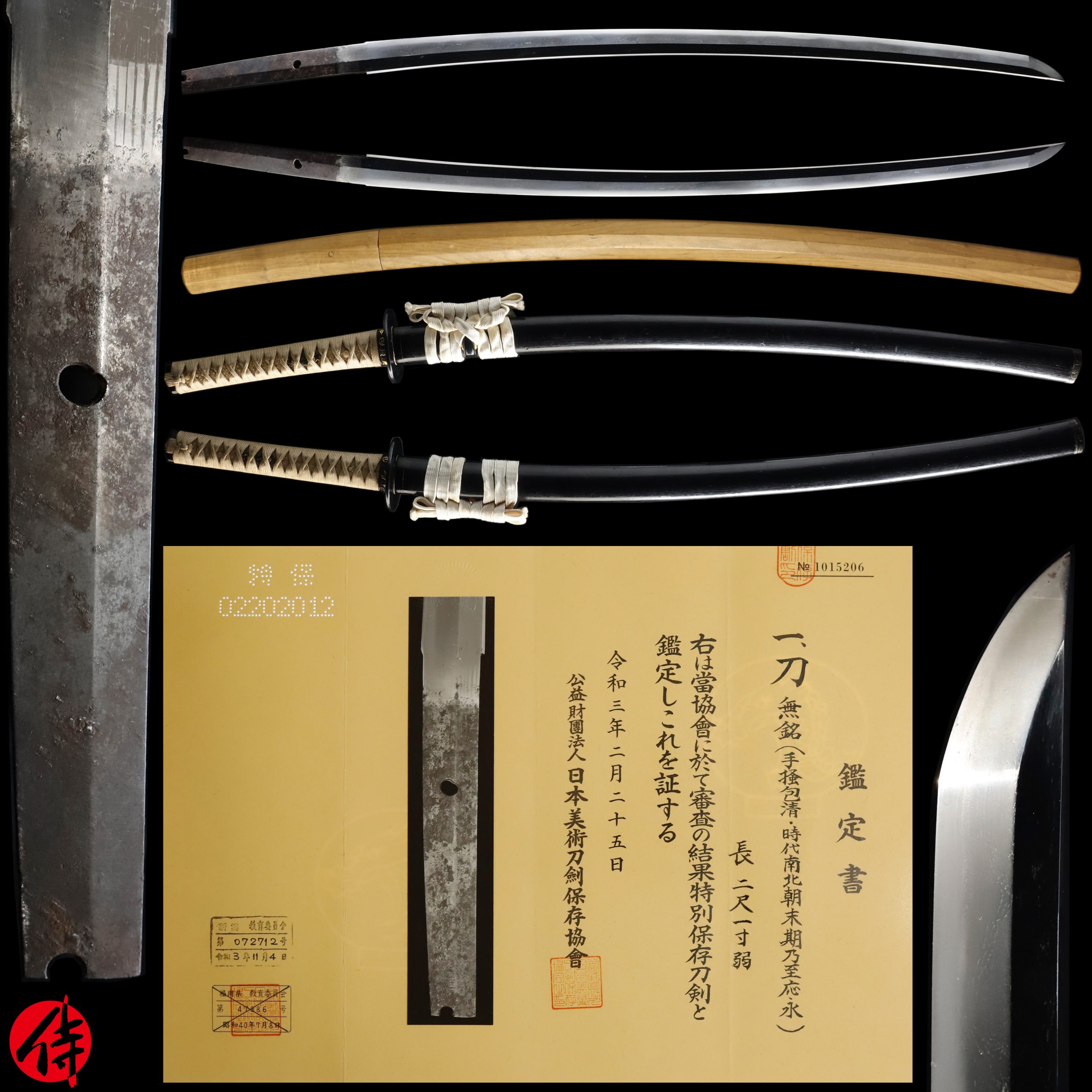
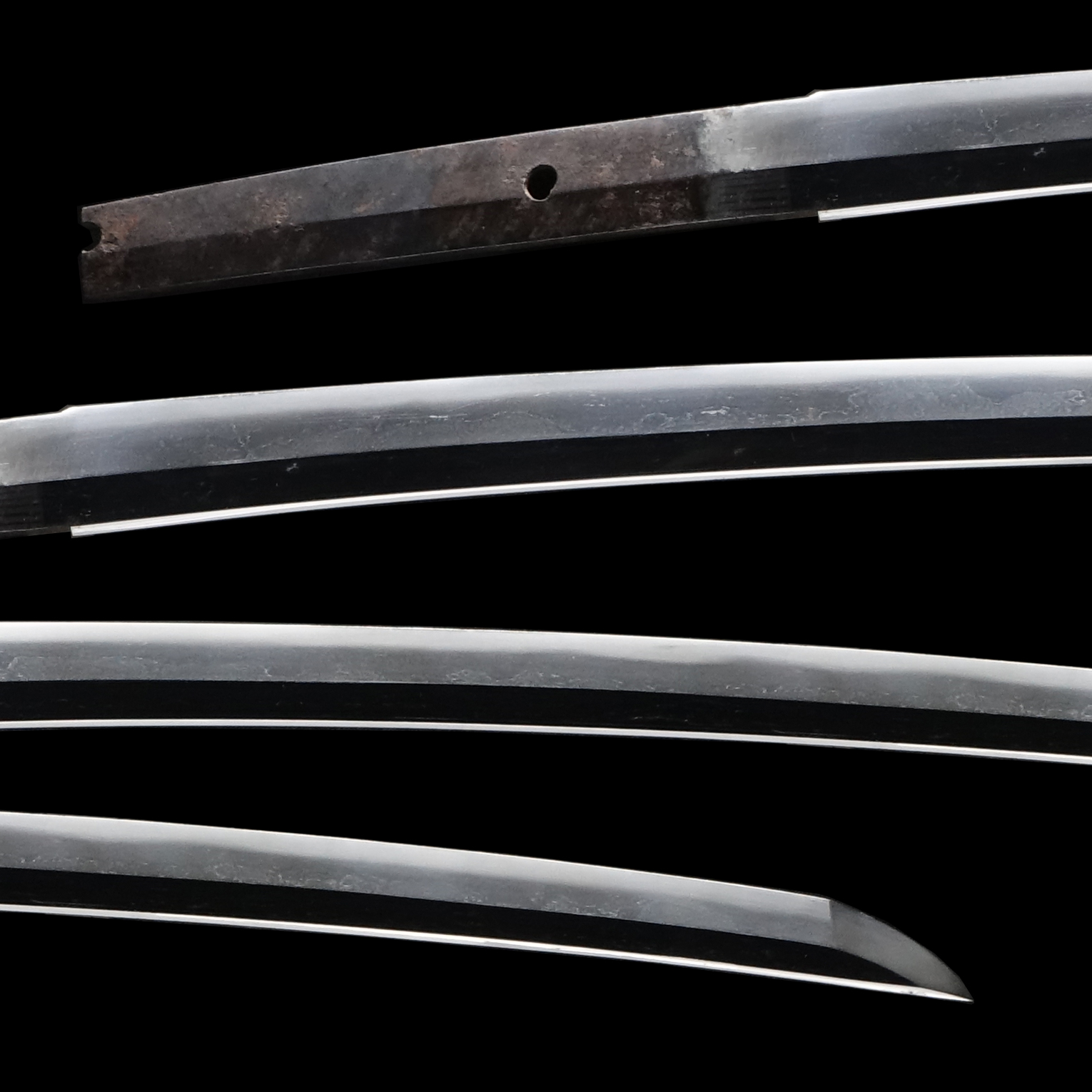
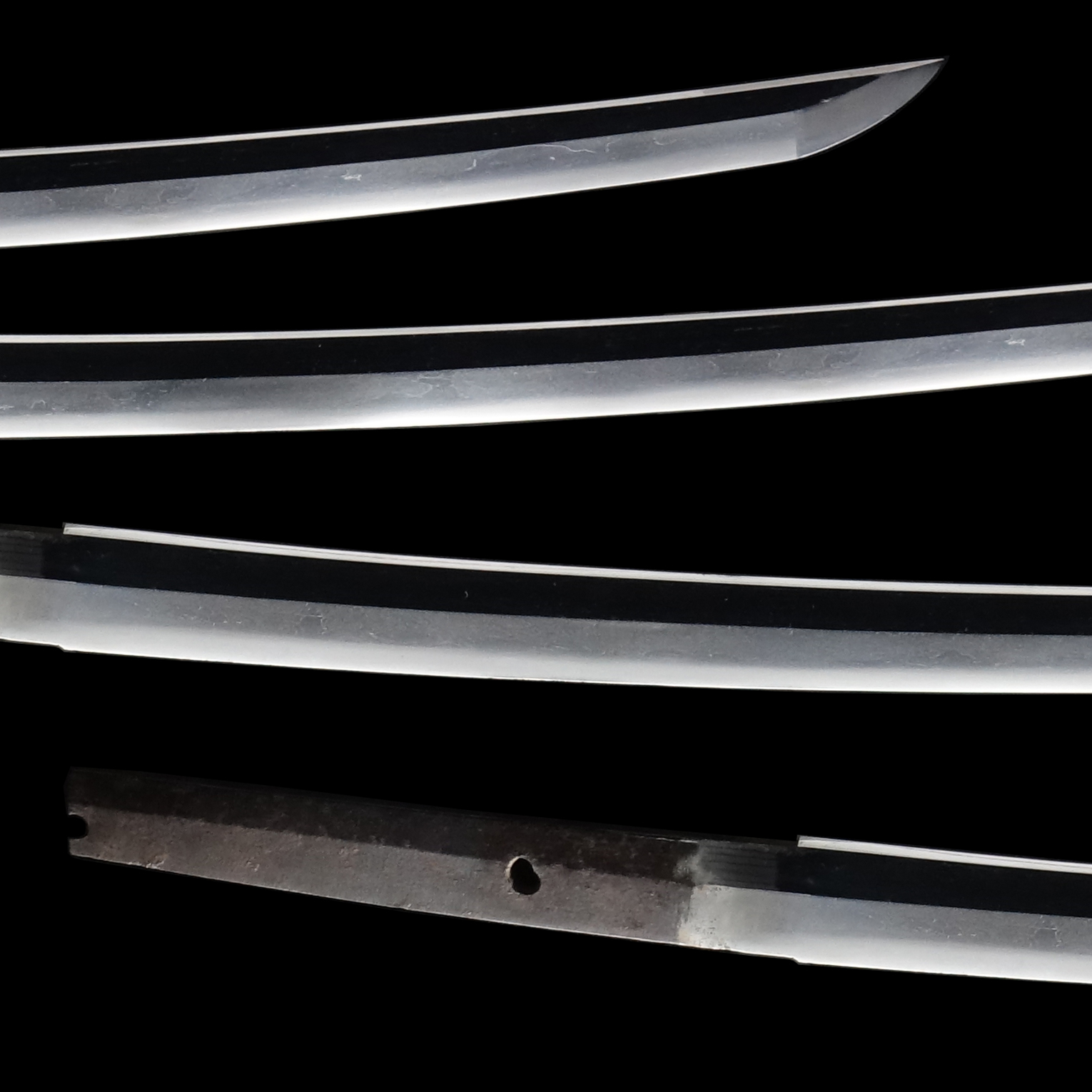
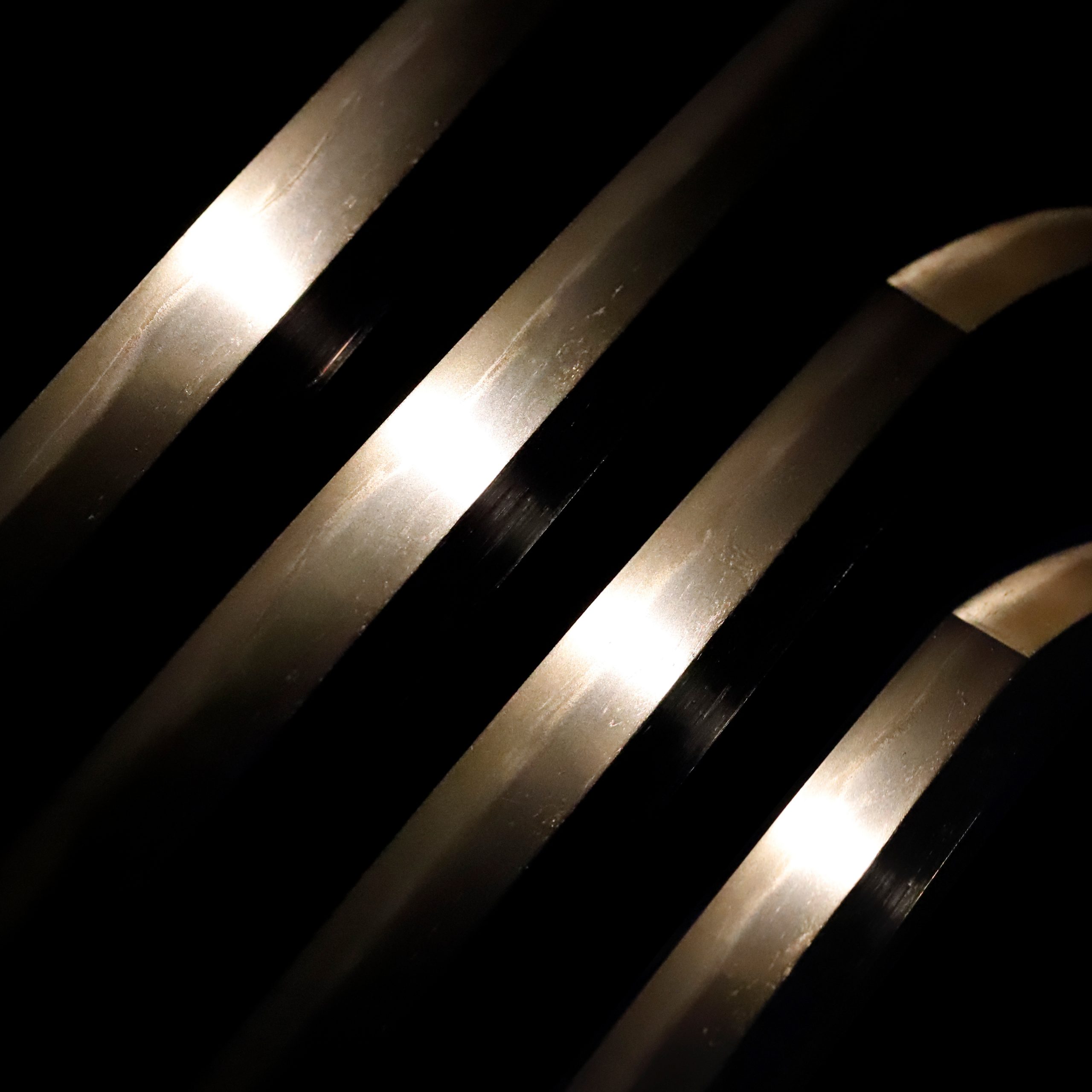
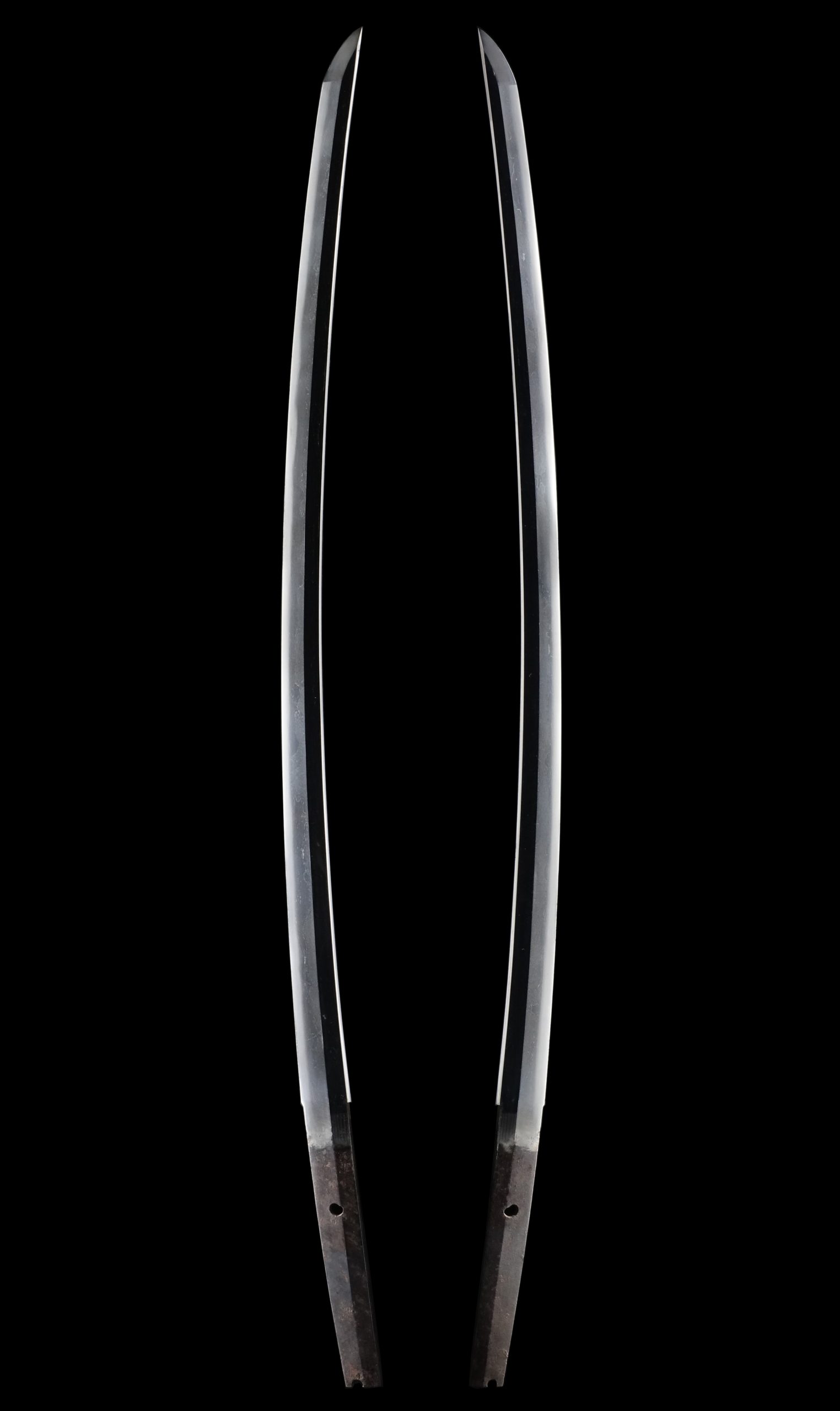
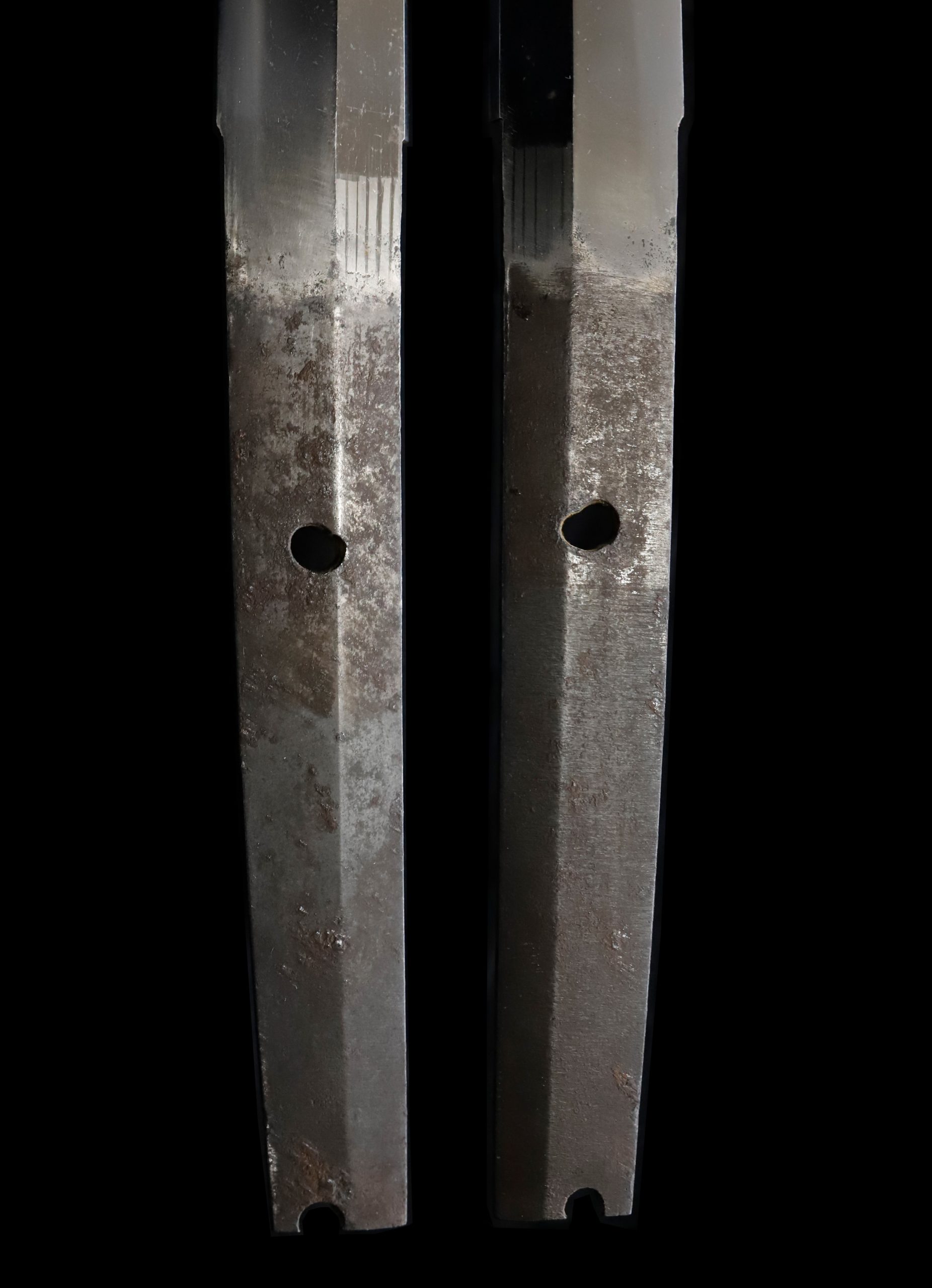
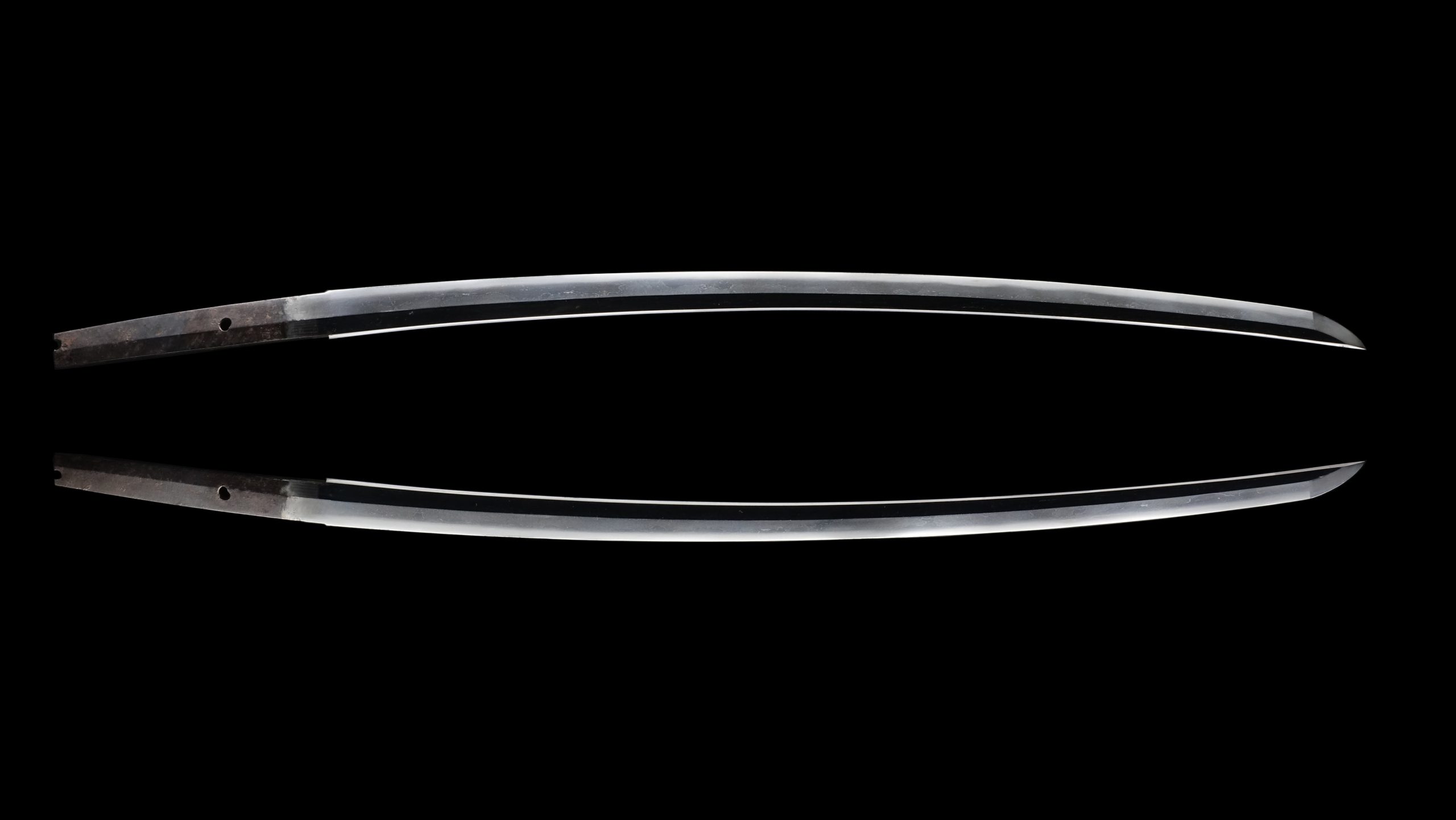
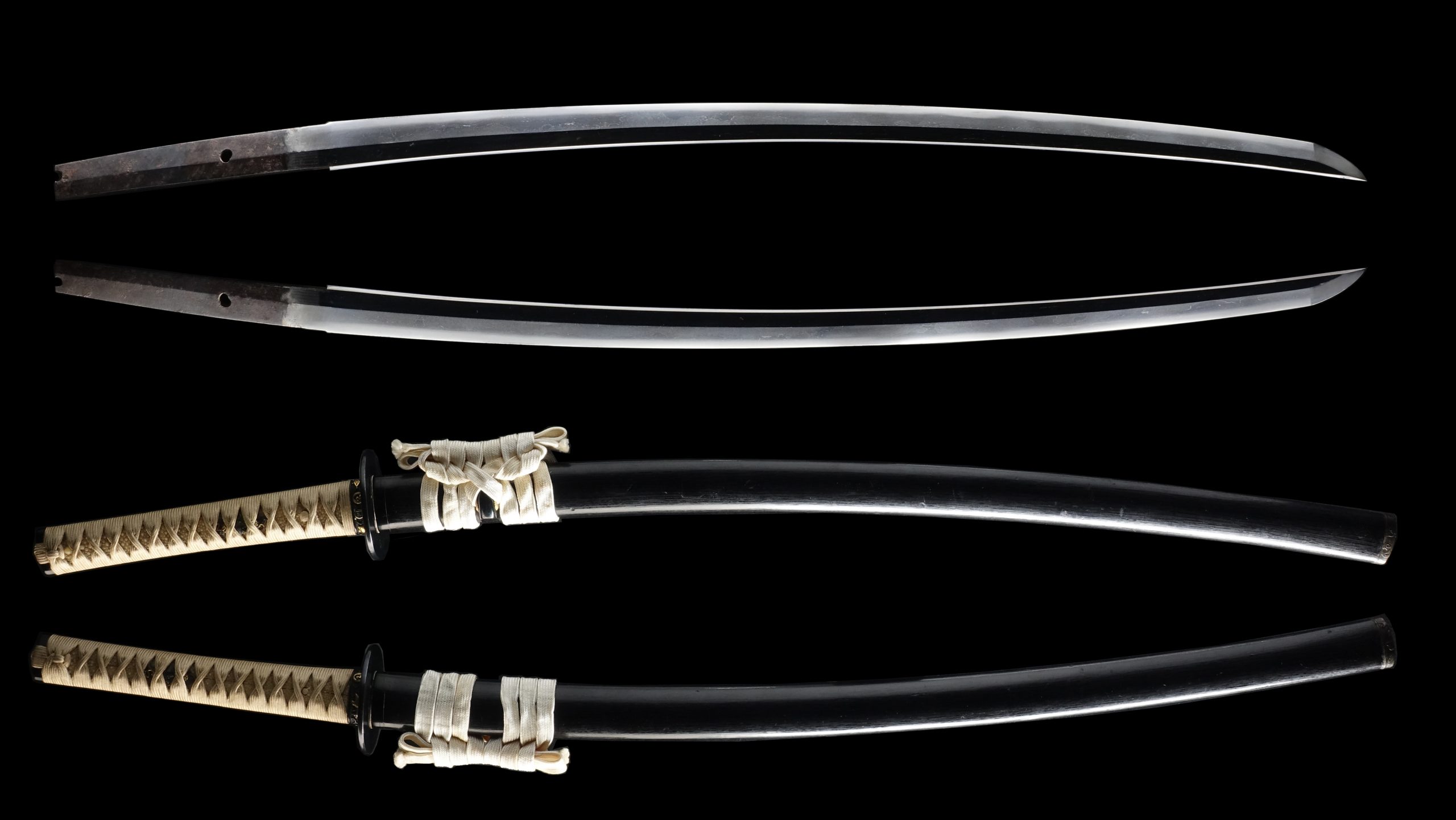
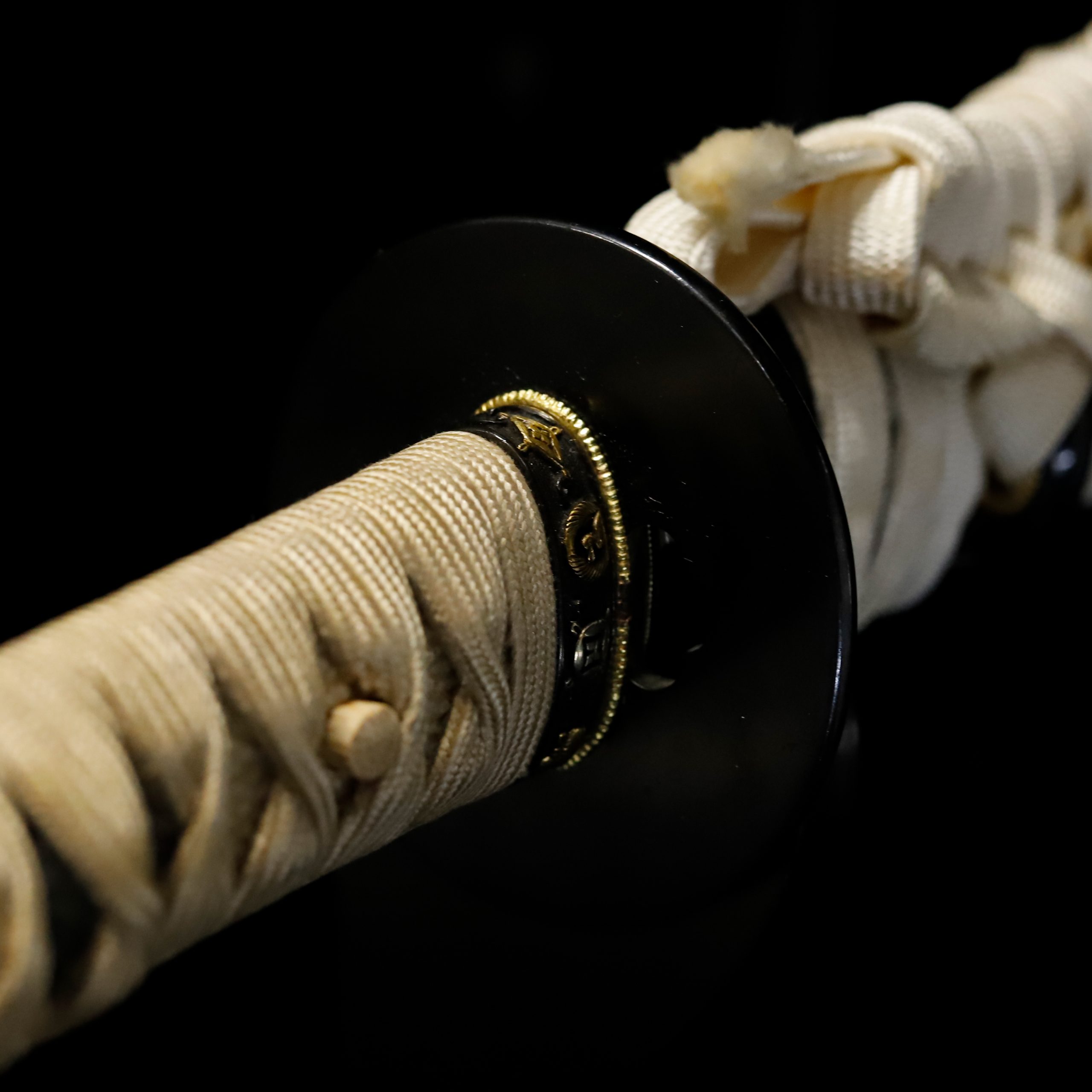
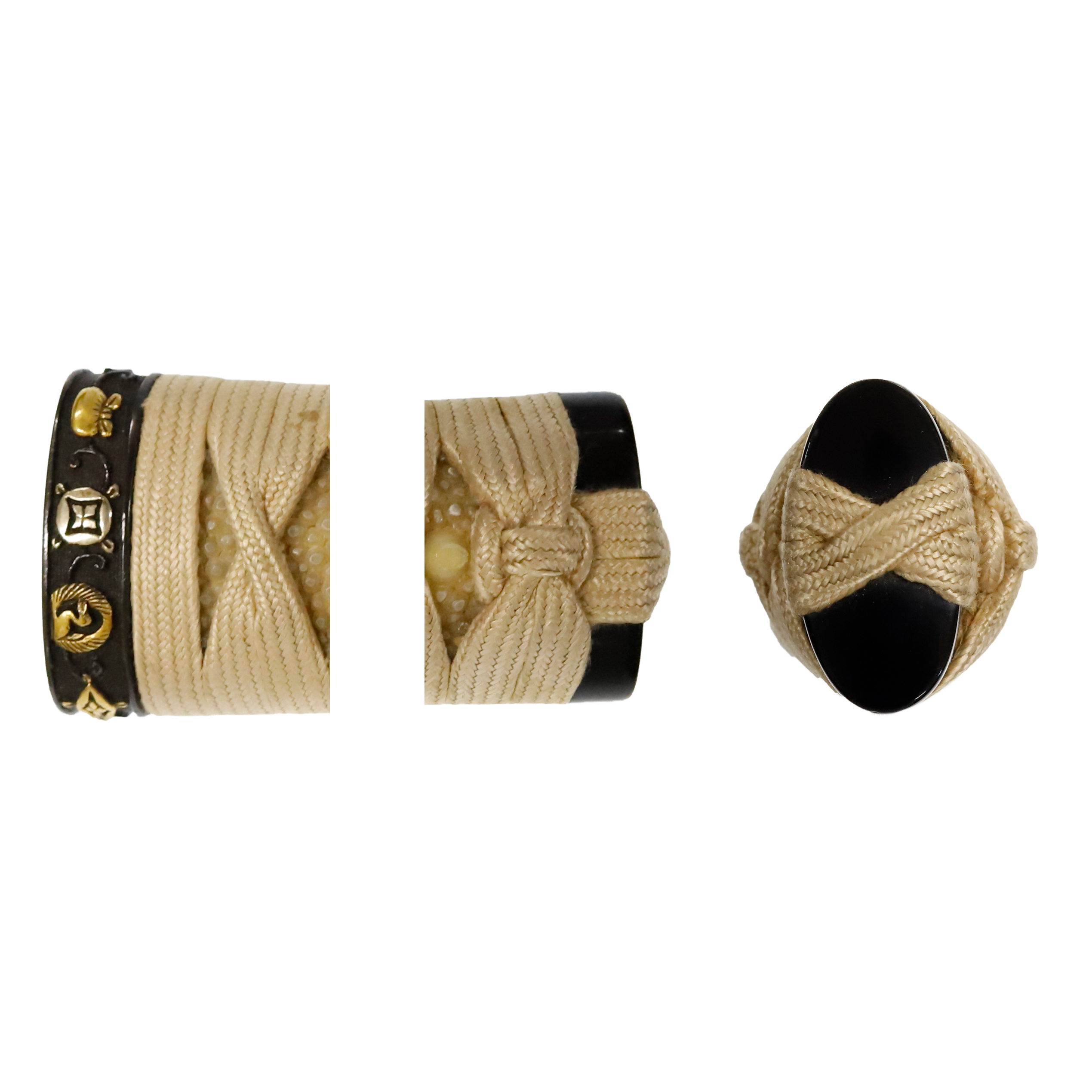
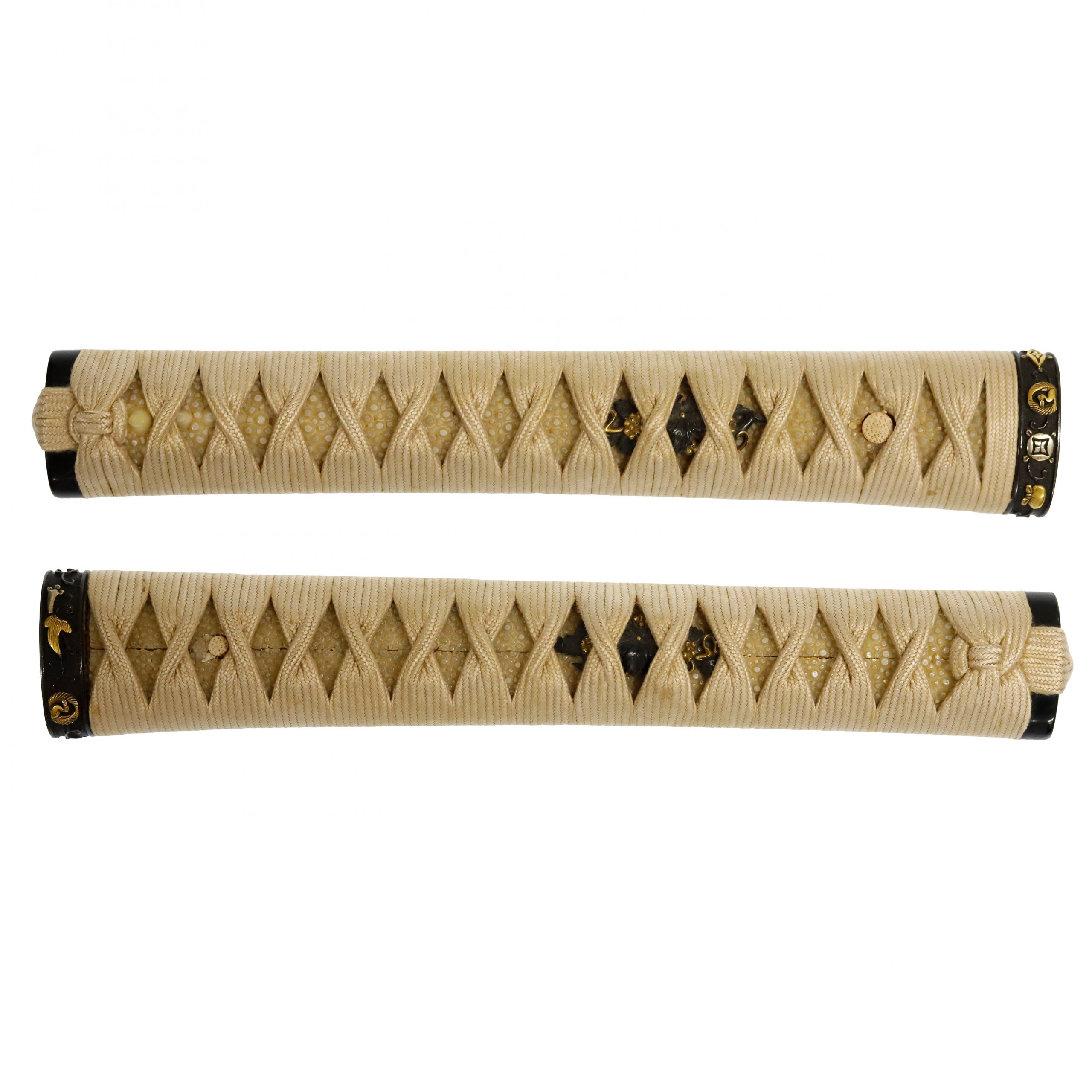
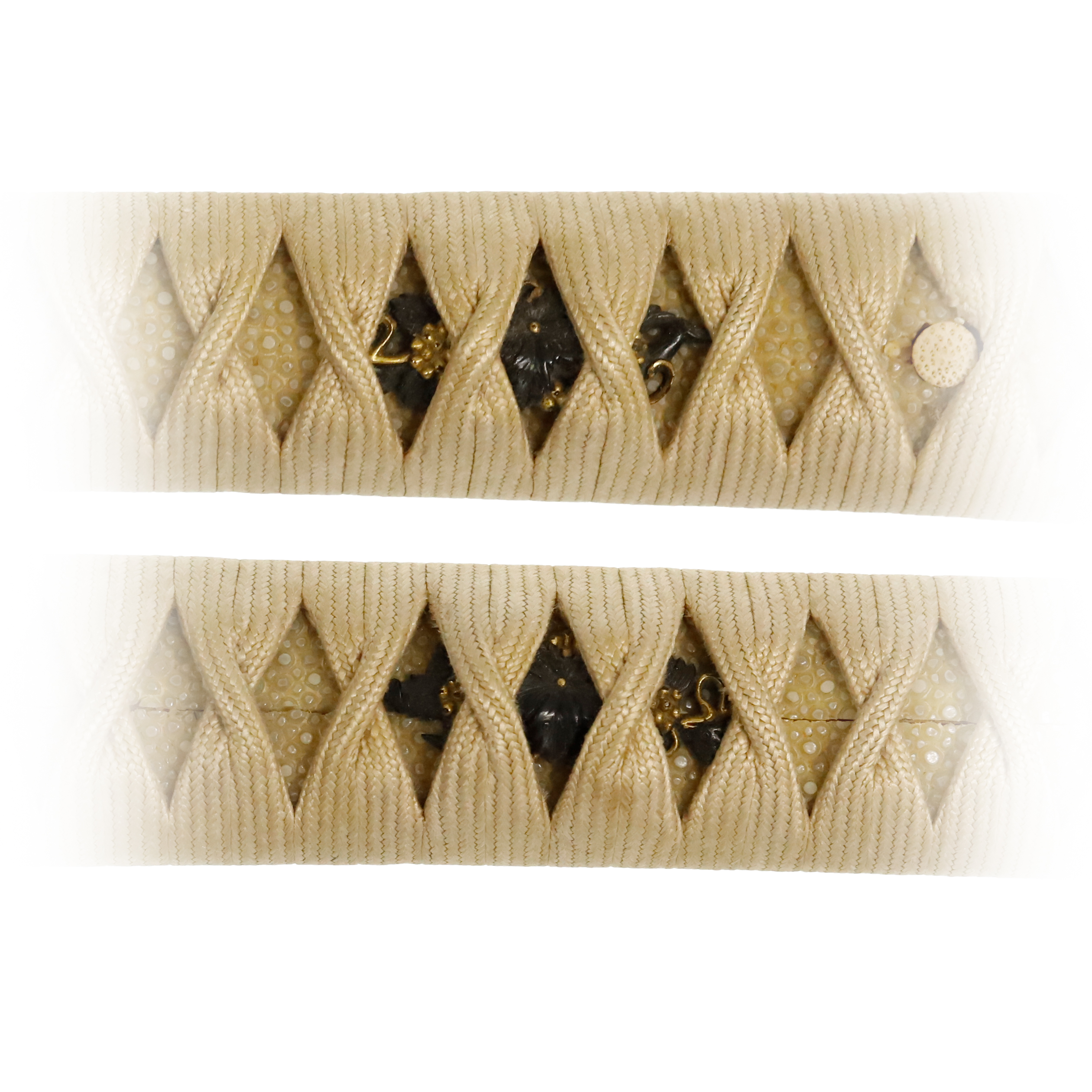
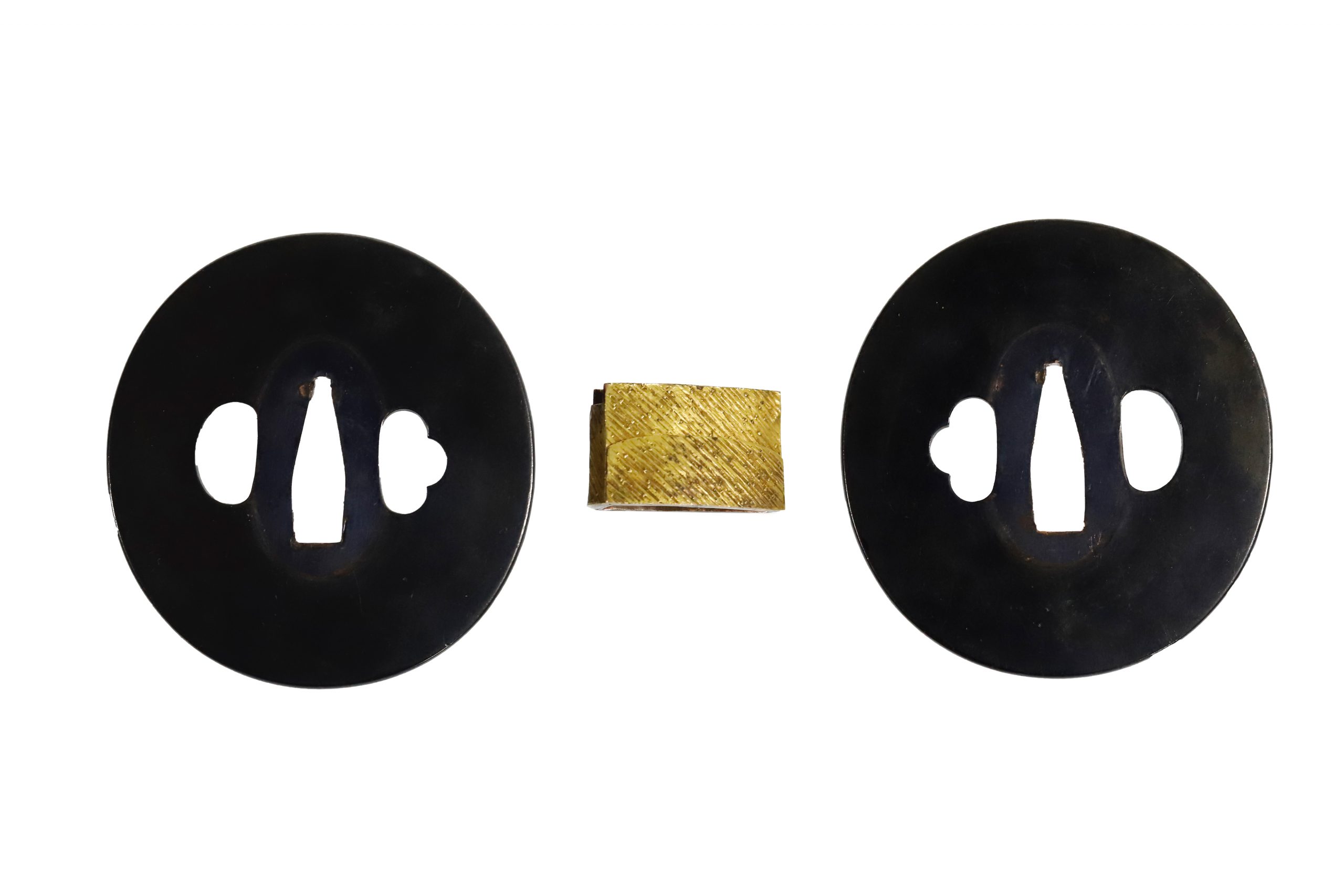
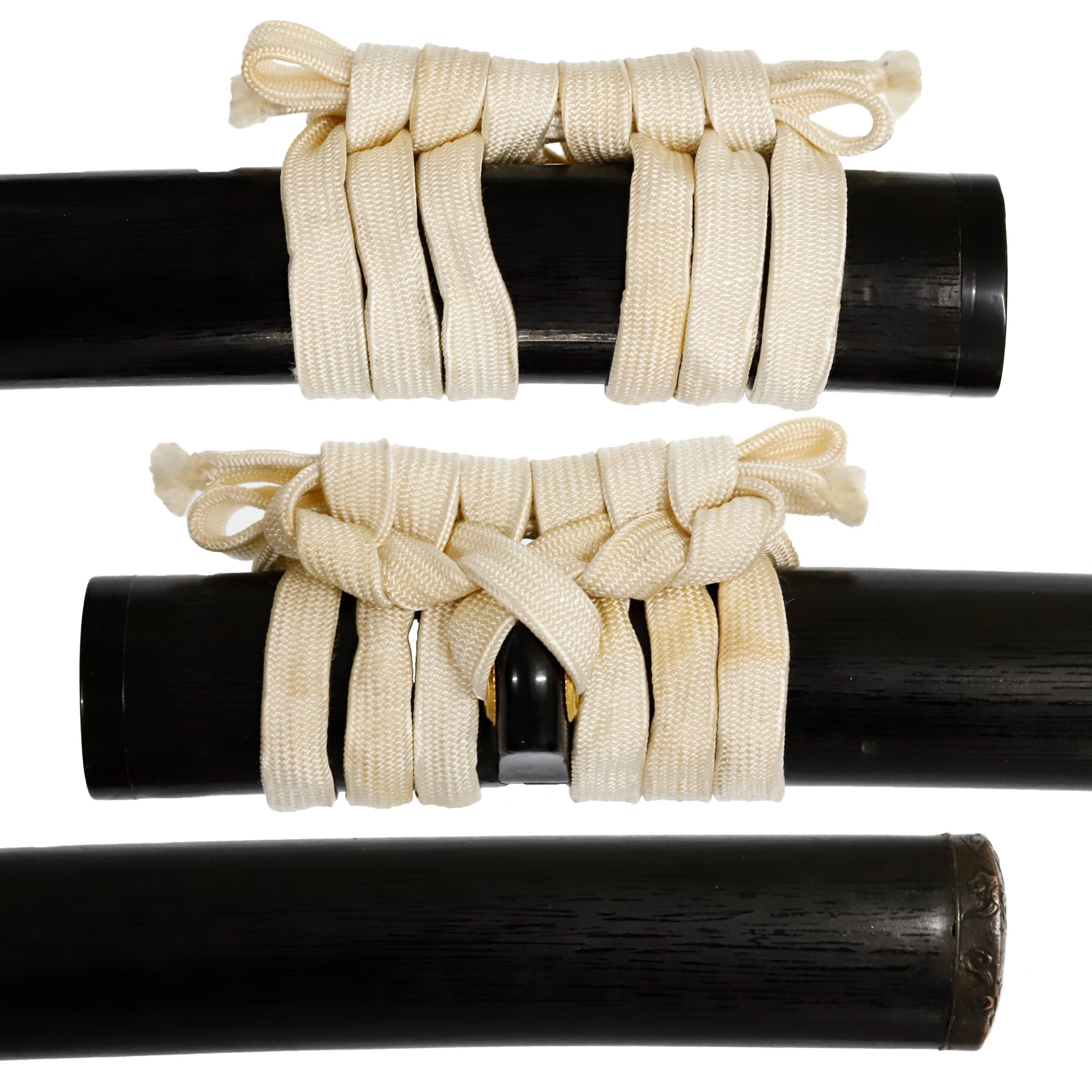
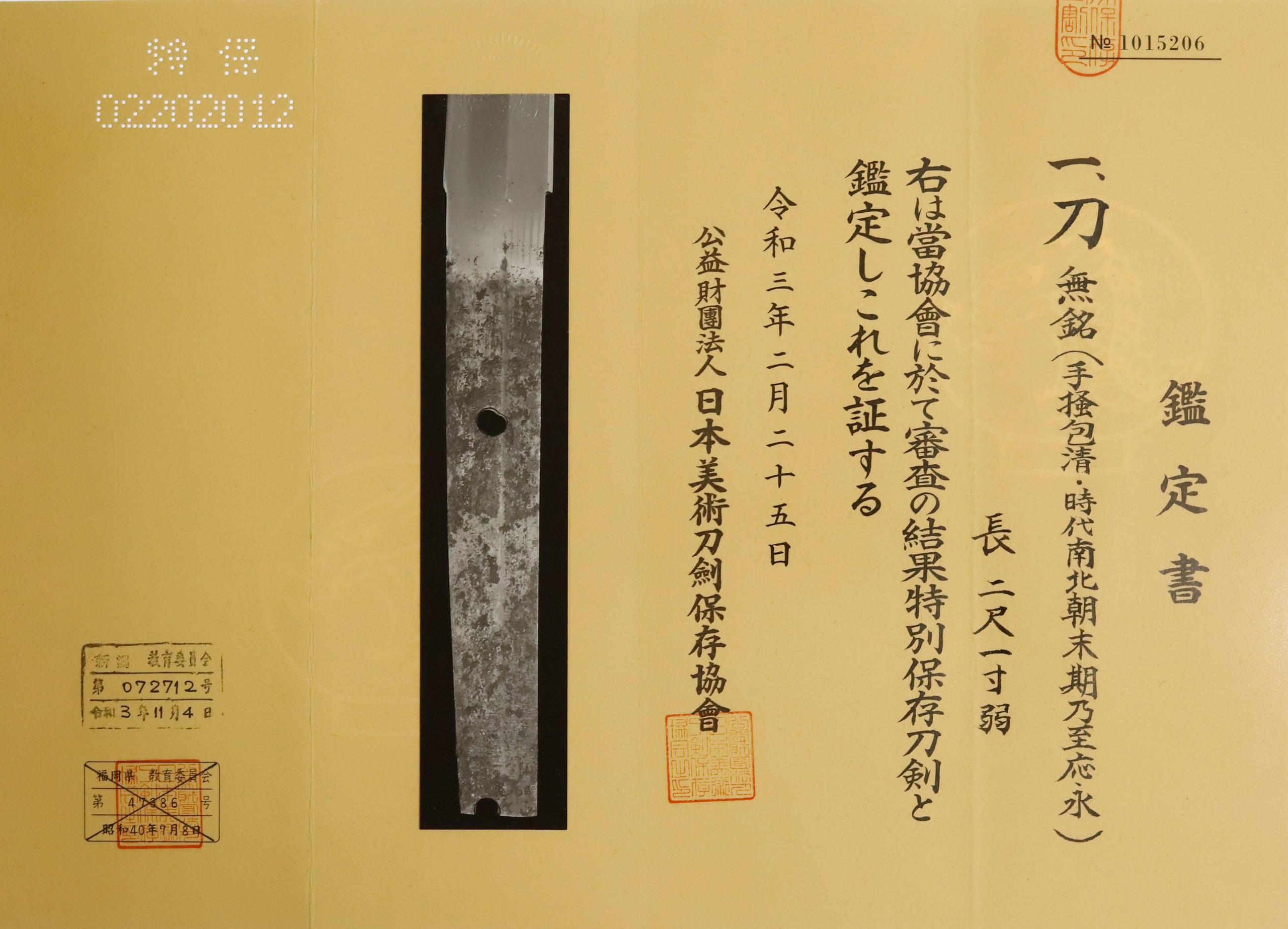
This blade is attributed to Tegai Kanekiyo (手掻包清) between the end of the Nanbokucho era and the O-Ei period (1392-1428), according to NBTHK’s appraisal. The swordsmith name Kanekiyo lasted a few generations in Yamato province (today’s Nara prefecture). The first-gen Kanenaga is known as the founder of Tegai school. Considering the age mentioned in the authentication paper, we believe NBTHK attributed it to a work of the late-gen Kanekiyo based on its characteristics. The school was prosperous during the late Kamakura-mid Muromachi period (1288-1460). It is said that Tegai school belonged to Todaiji temple, and it was located in front of the gate called Tengai Gate (輾磑門). The school name Tegai originally came from the sound of Tengai Gate. There were five prestigious schools, including Tegai school, during the Kamakura-Nanbokucho period in Yamato province. They are called Yamato Goha(大和五派); Senjyuin(千手院), Shikkake (尻懸), Taima(当麻), Hosho(保昌) and Tegai(手掻) school. They served politically powerful monks and temples in Nara, such as Todaiji temples. They were initially forging swords for military monks who became powerful due to the government’s policy back then. Monks needed many weapons as there were many political rivalries between influential temples. They required strong weapons like swords to protect themselves. During this time, Tegai school or other Yamato sword schools met the requests from monks. They also forged blades for Samurai during their heyday. It is often the case that those who belonged to Yamato Goha didn’t inscribe their signatures. Tegai school belonged to YAMATO DEN, which has the longest history among GOKADEN, five traditions of Japanese sword forging techniques. The blades forged by swordsmiths residing in the Yamato region are generally called Yamato Mono. The swords forged in the Yamato regions are famous for their beautiful Jigane, steel surface, and straight tempering line(Suguha). This blade has a beautiful Jigane with a Suguha tempering line, which shows an outstanding characteristic of the Yamato sword. This blade is appraised as a Tokubetsu Hozon Token(特別保存刀剣) issued by NBTHK(Nihon Bijutsu Touken Hozon Kyokai:日本美術刀剣保存協会). *Please keep in mind that there are a couple of partial light black rust on this blade. If you like to have them removed after your purchase, please feel free to contact us. Fuchi-Kashira Various motifs are designed for this Fuchi Kashira. We think these are family crests and auspicious items. For example, you would find a bird pattern that a bird’s figure with its wings spread. It might be a Tsuru (鶴, crane), and this design exists as a family crest. The Tsuru pattern itself has been treated as an auspicious design that represents longevity. You would also find other motifs. The Chouji (丁子, precious medicine, fragrance, dye) is a plant that represents happy marriage, good health, and longevity. Also, a small golden sac is probably a Kinnou (金嚢); it is a bag to store treasures. A theory says it has been regarded as a money charm. These are motifs in the Takaradukushi (宝尽くし) pattern. Tsuka and Menuki We need to image the entire shape of this Menuki by seeing from the gaps of the Tsukamaki thread. It might be a kind of flowers, such as chrysanthemum or dandelion. Although golden coloring has already faded due to aging partly, it seems some parts were initially decorated with elegant gold color. Tsuba and Habaki Oval-shaped Tsuba that has Kozuka and Kougai holes. This Tsuba has a plain design. You could enjoy the beauty of the black color and texture of its material directly. Also, as this Tsuba has a simple look, it matches well with other sword mountings when inserted into the handle. You would see how it looks in the pictures of the Koshirae. Authentication Paper They authenticated the blade on Feb 25th in the 3rd year of Reiwa (2021). They appraised it as Tokubetsu Hozon Touken, the blade especially worth preserving for Japanese society.
Offered by Samurai Museum
This piece has sold
Get an email when a new Tegai Kanekiyo piece hits the market.


Tegai (Yamato) · Yamato · around 1429-1441
Tōken Taikan top 26%
2 pieces on the market now
Kanekiyo is a smith of the Tegai school of Yamato, which the published sources call the largest of the five Yamato traditions. The school is said to take its name from the branch that lived and forged outside the Tegai Gate, the western main gate of Todai-ji, with Kanenaga as its progenitor. The name Kanekiyo began, by tradition, with a son of the first Kanenaga, and the reference works count seven successive Kanekiyo from the Karyaku era of the late Kamakura period to the Tenbun era of the late Muromachi. The three blades on record under this code, two tanto and a wakizashi, are all signed and ubu, and the published sources read them as the work of the Kanekiyo active around the Oei era, judging from the workmanship of the ji and ha and from the manner of the signature.
His hand is a Yamato suguha animated from within. Over an itame, or a dense ko-itame, that flows toward the edge and mixes masame, he tempers a suguha base into which slight ko-notare and linked small gunome enter, with ashi. The nioiguchi inclines toward tightness and ko-nie adheres well. The activity is the Tegai repertoire: hotsure along the habuchi, an uchi-noke suggestion turning toward nijuba, kuichigai-ba, a two-tiered ni-danba impression, yubashiri reaching into the ha, and kinsuji. Of one tanto the published sources conclude that these traits "clearly display the characteristic style of the Yamato Tegai group"[[c:1]].
The jigane carries the same reading. Thick ji-nie gathers, chikei enter, and on both tanto a nie-utsuri stands, toward the mune on one of them. On the signed tanto with the long Saemon no Jo Taira signature the hada rises on the omote and flows with masame. The boshi runs straight and pointed to its turnback, or comes in as a midare-komi that points and returns. On the two-character tanto he carves a suken on both faces, which the published sources describe as "cut deeply and with force, a feature characteristic of Yamato work"[[c:2]].
The record shows two registers of the one Oei hand. The core is the hira-zukuri tanto with mitsu-mune, its kasane thick and its construction sturdy, without sori. Of the long-signed example the published sources note the masame in the forging and the Yamato kuichigai-ba and nijuba in the temper, and judge it "a work that does not descend later than the early Muromachi period"[[c:3]]. Beside them stands a wide hira-zukuri wakizashi that carries the Oei sugata at its clearest. Its mihaba is somewhat wide, the blade large and sun-nobi for its width, with slight uchizori. The suguha takes on a shallow notare feeling with a bright nioiguchi, and the published sources write that "strongly lustrous nijuba sparkle intermittently along the edge"[[c:4]]. Its boshi runs straight to a ko-maru on both faces, the kaeri somewhat deep, with nijuba and hakikake.
Within his school he is set apart by his own attested traits. His is a well-worked itame that flows and leans toward masame only near the ha, and a suguha whose interest lies in the linked small gunome, the kuichigai-ba and the lustrous nijuba rather than in any wide irregular pattern. The published sources call the wakizashi "a typical work that fully manifests the distinctive features of the early-Muromachi Tegai school"[[c:5]]. That is the standing his record supports: a representative Oei-period Tegai hand, carrying the Yamato grammar of the school at the opening of the Muromachi period.
For the collector the record is small and entirely at the Juyo level. Three blades by this Kanekiyo hold Juyo papers, all of them signed. Nothing of his stands in the higher tiers, and none carries a recorded provenance or a named holder. He is known from a handful of designated works rather than from a roll of famous pieces, and the forms in which he survives are the signed tanto and the sun-nobi wakizashi. A signed, ubu Tegai blade of the Oei period comes to market only from time to time and with patience, and a recorded example remains a deliberate find rather than a casual one.
Where Kanekiyo stands among comparable artisans: across all of nihontō, and within tradition, era, and period. The tiers (Foremost · Leading · Major · Notable) weigh official designations from the NBTHK and Japan's Agency for Cultural Affairs, together with historical honors of lasting repute such as the Sansaku and Meibutsu-chō.
Select a lens to see how it's measured.
Yamato-den · Yamato
Phase: Sue-Tegai末手掻· 1390–1700
22 pieces on the market now
Sue-Tegai (末手掻) is the late phase of the Tegai school, from the Ōei era through the Muromachi period (with a thin tail of name-bearers into the early Edo period). The term 末手掻 is used directly in NBTHK setsumei to set this generation apart from the classical Ko-Tegai of the founder Kanenaga. Its representative smiths are Kanezane (包眞), Kanetoshi (包俊 / 包利), Kaneyoshi (包吉), and Kaneyuki (包行), names that recur across several generations as the workshop continued to supply blades through the fifteenth and sixteenth centuries. The Sue-Tegai idiom is a tightening and quieting of the classical Yamato manner.
The jigane becomes a closely-forged ko-itame mixed with prominent masame that frequently takes on a whitish (shirake) cast — a hallmark of the late phase — while the hamon narrows to a nioi-based suguha that frays into hotsure and ko-midare, with a komaru bōshi. The hiogi (檜垣) file-mark on the nakago is a recurring diagnostic. Production shifts toward tantō and wakizashi in standard Muromachi forms alongside some katana, and the NBTHK observes that the work shows comparatively little individual character, faithfully preserving the traditional house style rather than the bold personal expression of the Kamakura founders. The phase represents the orthodox Yamato tradition carried, with conservative consistency, to the close of the Muromachi age. Learn more →
| Smith | Era | Designated |
|---|---|---|
| Kanenaga包永 | 1288-1312 | 66 |
| Kanekiyo包清 | 1362-1370 | 8 |
| Kanetoshi包俊 | 1381-1384 | 4 |
| Kanetsugu包次 | 1317-1333 | 4 |
| Kanekiyo包清 | 1429-1441 | 3 |
Yamato in the Muromachi period
The monasteries that had sustained Yamato lost ground through the Muromachi period, and the schools thinned with them; Sue-Tegai kept the old masame manner alive in quantity. The burning of Tōdaiji’s Great Buddha hall in 1567 closed the temple age.
A Hozon-certified blade judged to show notably superior workmanship and a better state of preservation. The bar is higher: re-tempered blades and most unsigned Muromachi/Edo works are excluded.
The NBTHK (Nihon Bijutsu Tōken Hozon Kyōkai, the Society for the Preservation of Japanese Art Swords) is a public-interest incorporated foundation founded in 1948 and supervised by Japan’s Agency for Cultural Affairs (Bunkachō); it is based at the Japanese Sword Museum in Tokyo. Its expert panels physically examine each submitted work (shinsa) and issue a certificate (kanteishō) ranking it by artistic and historical merit. NBTHK papers are the most widely recognized standard of authentication for Japanese swords and fittings.
NBTHK official siteReturns/exchanges limited to defects caused by shipping (except willful misconduct or gross negligence by the company); customers must contact within 72 hours of receiving the product.