NihontoWatch MonNihontoWatch
Market
Encyclopedia
Kantei

Description

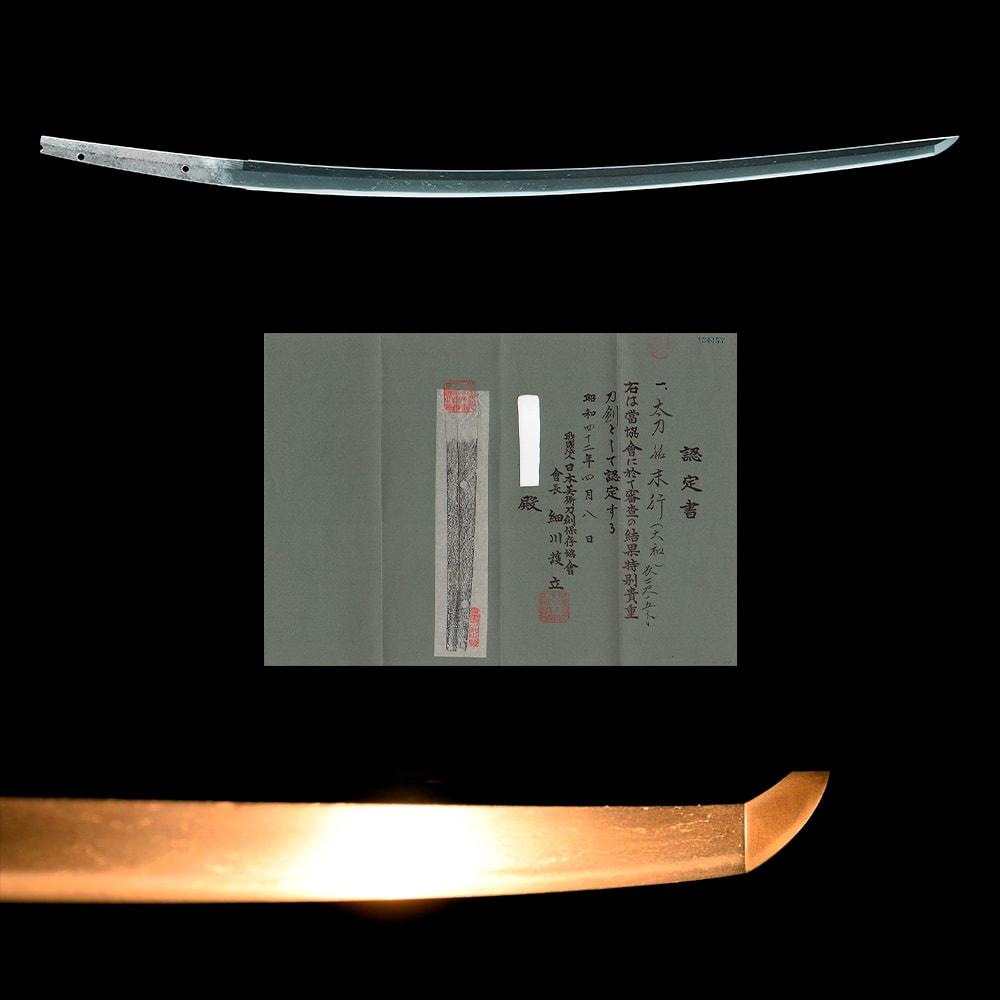
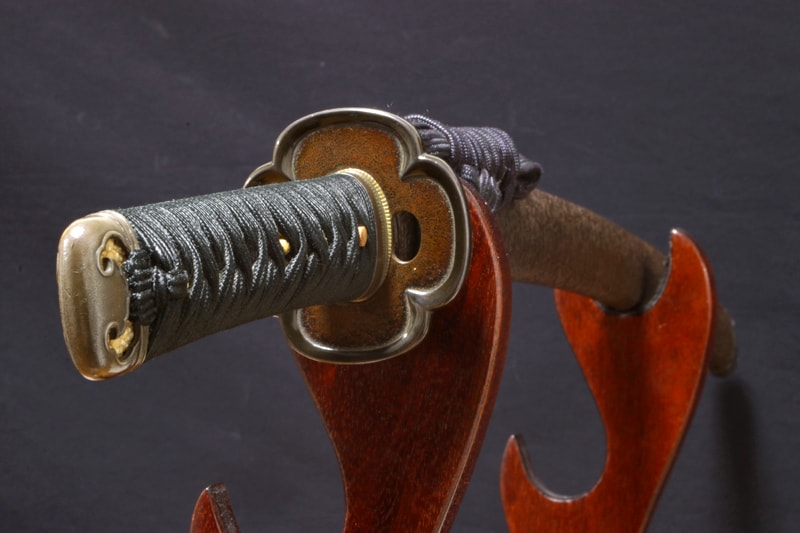
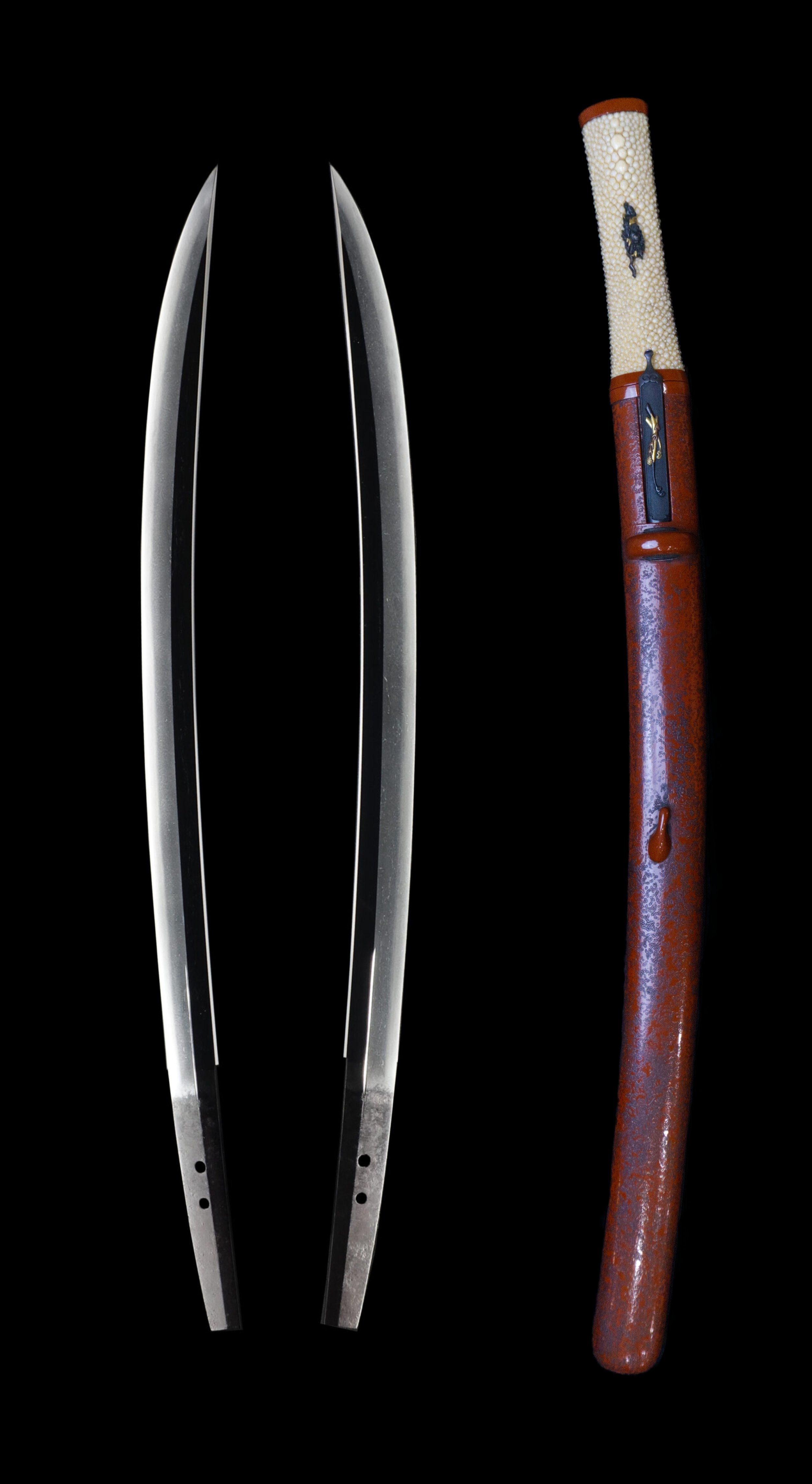
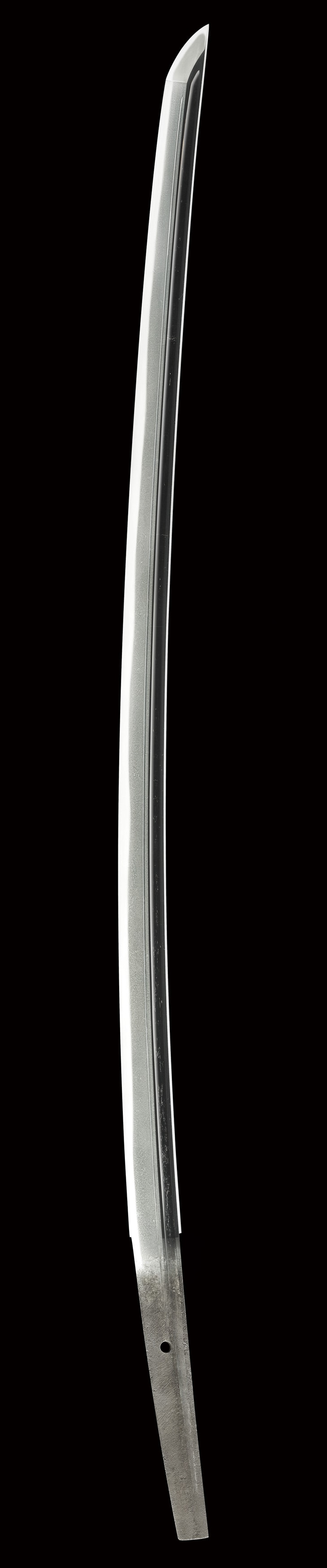
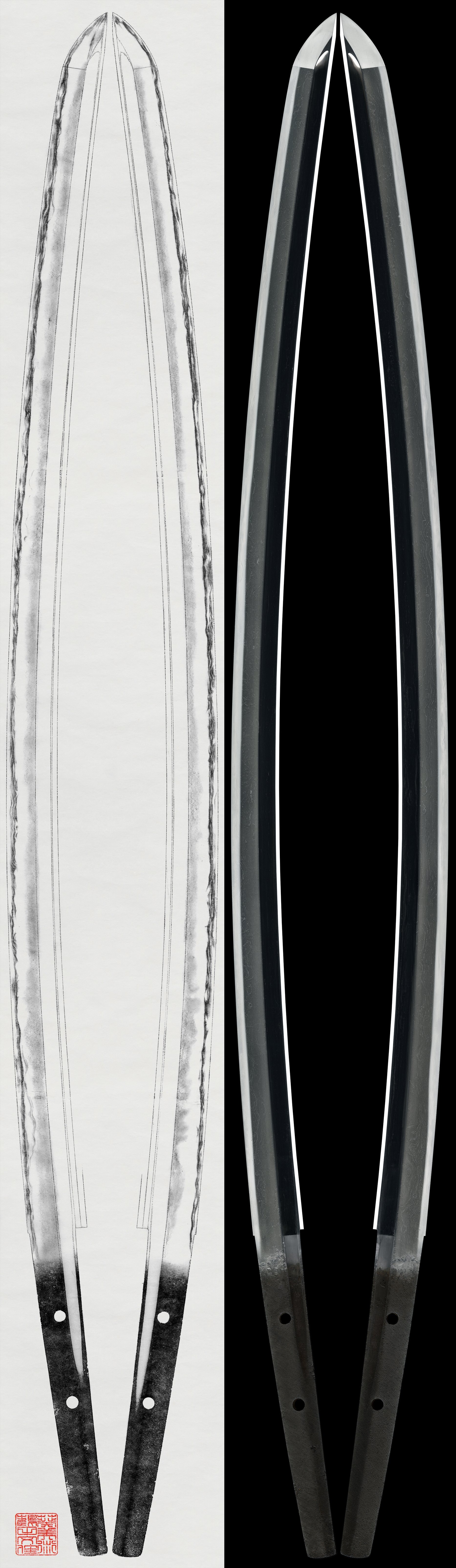
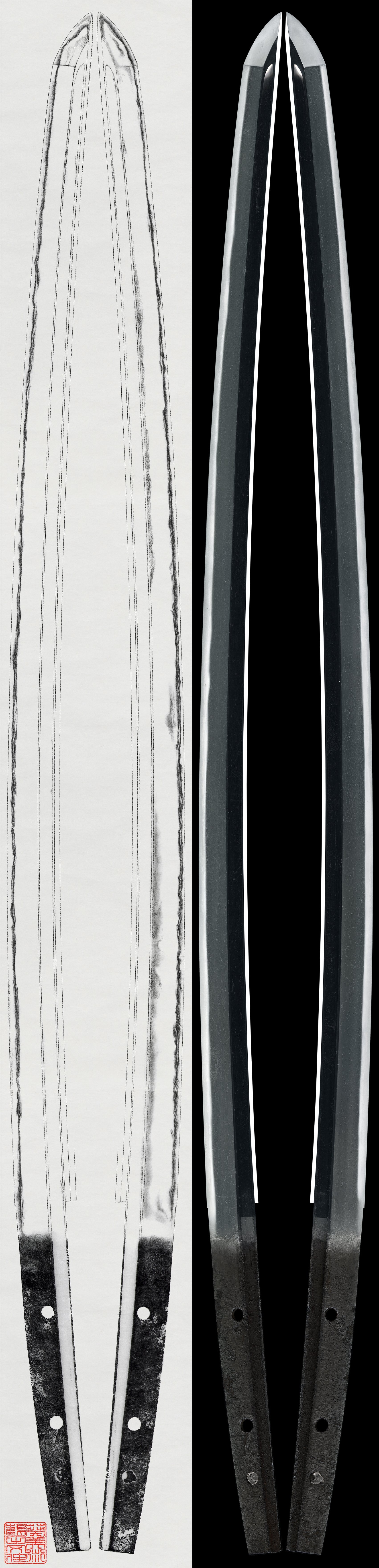
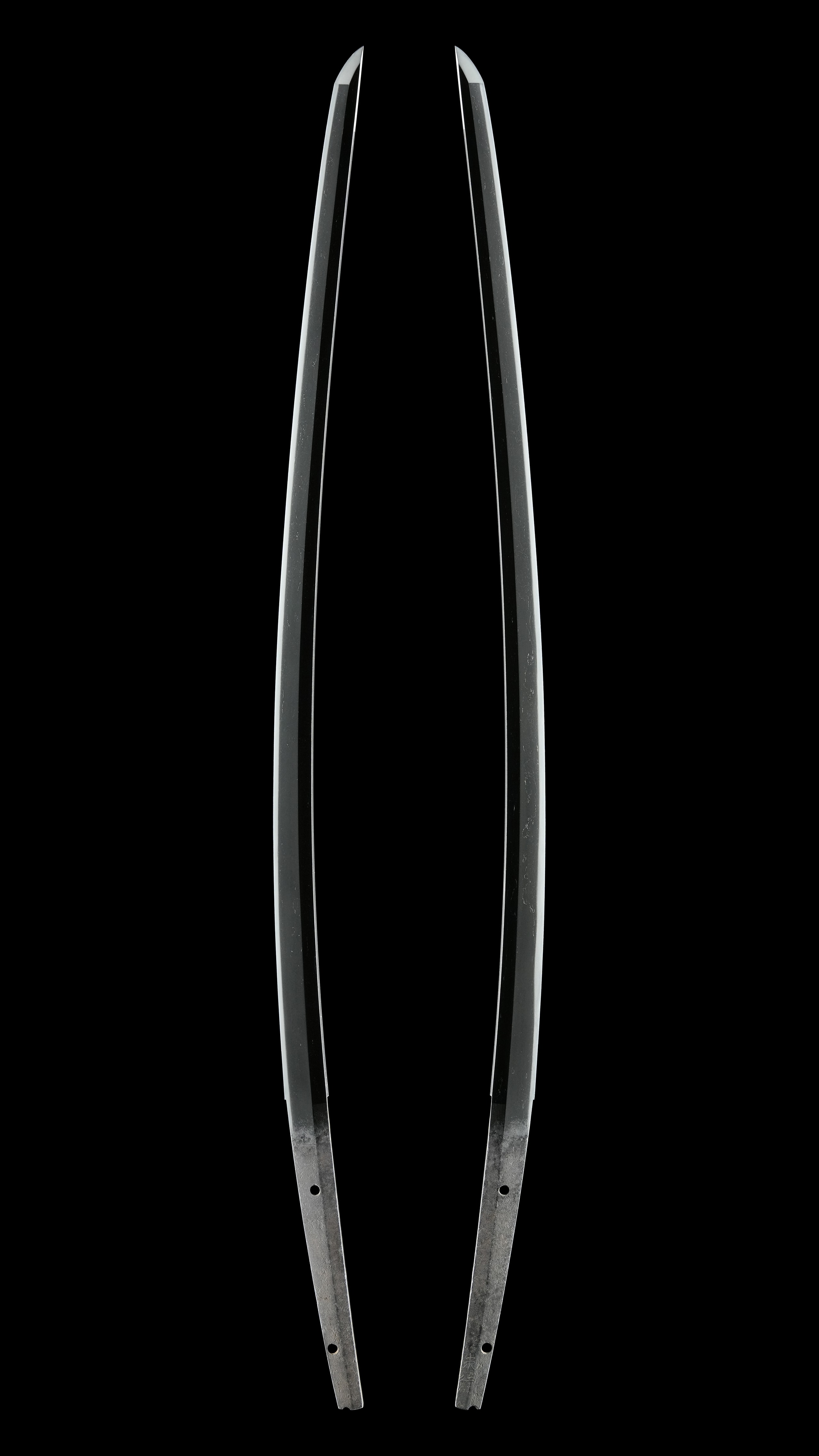
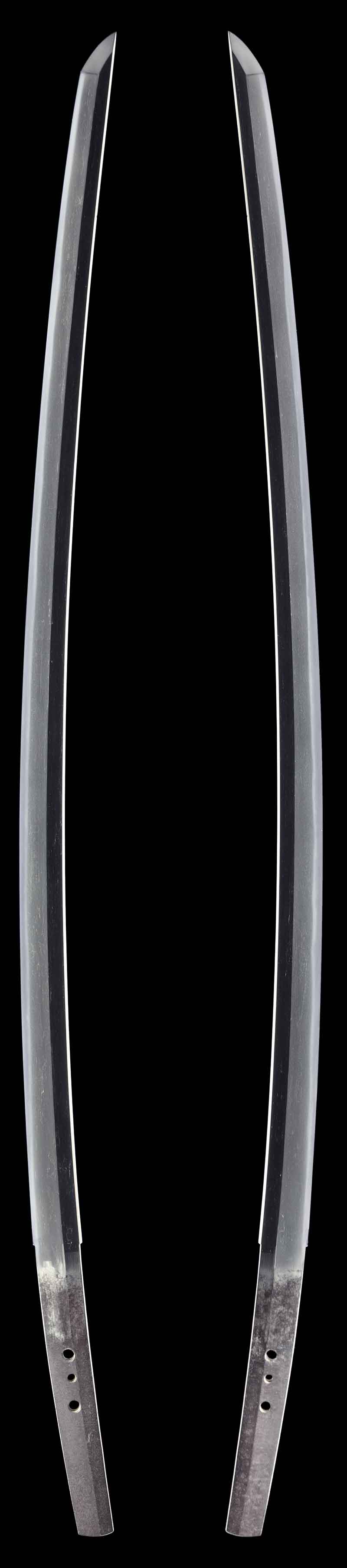
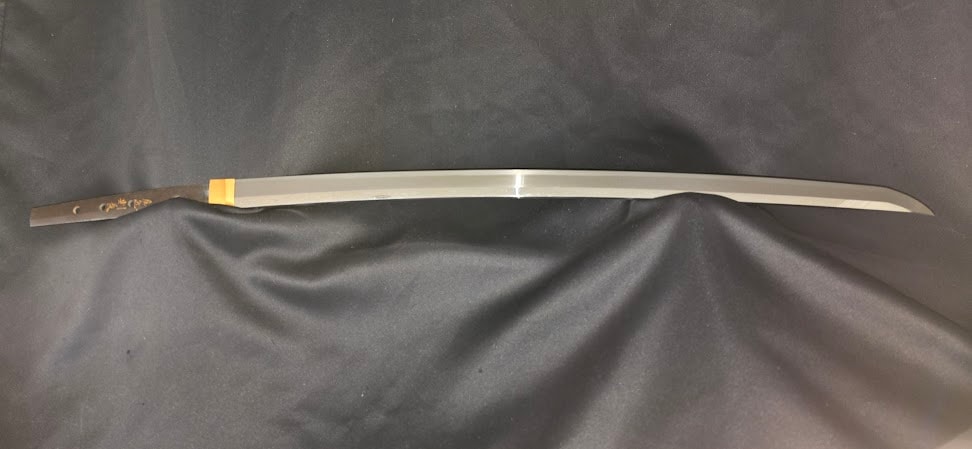
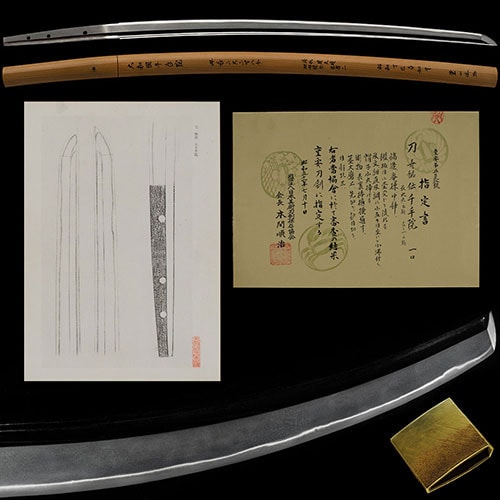
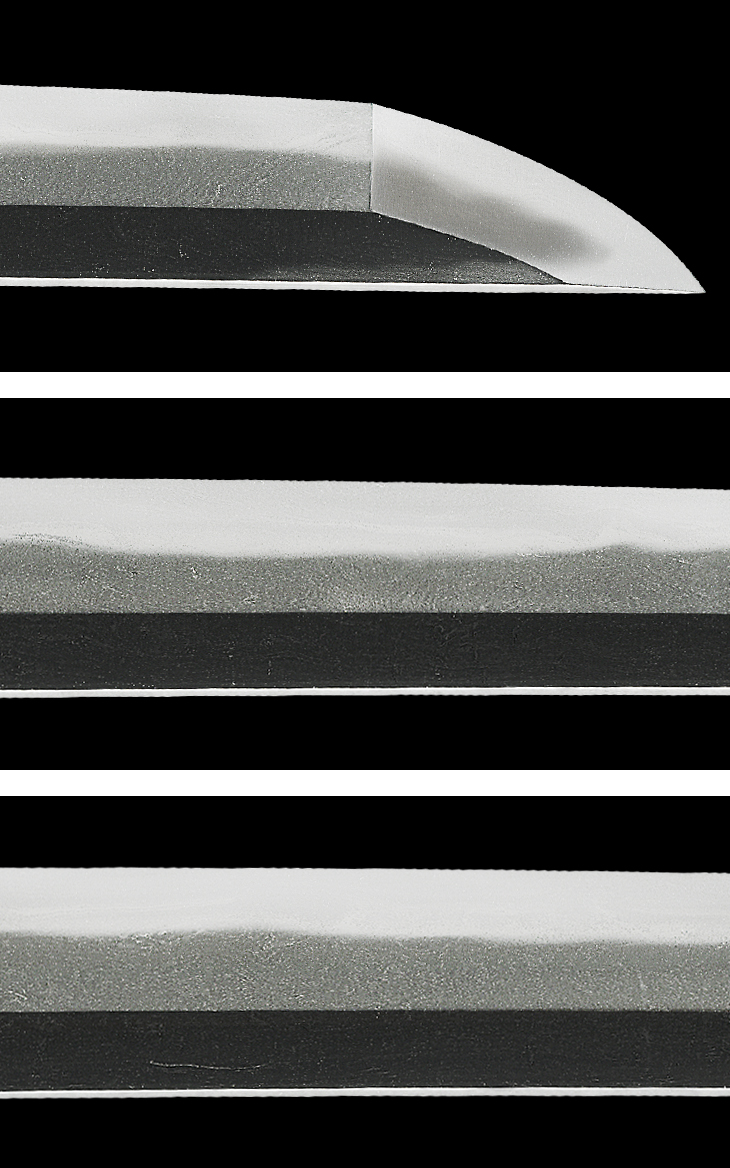
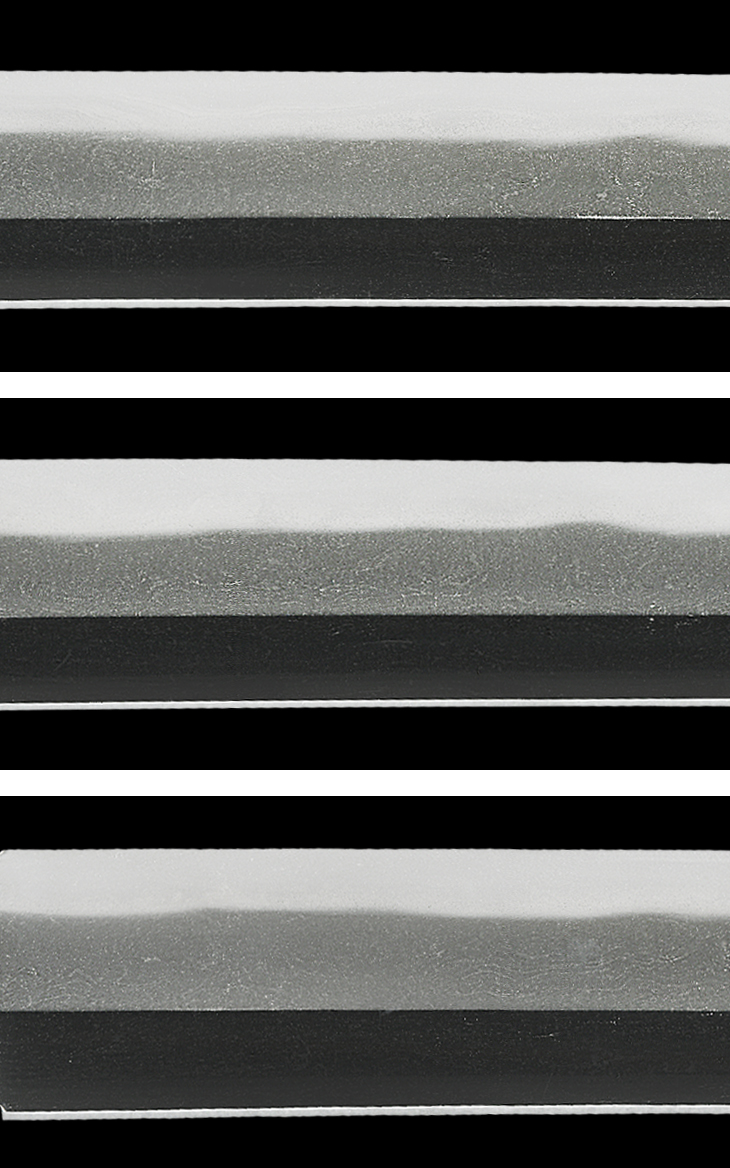
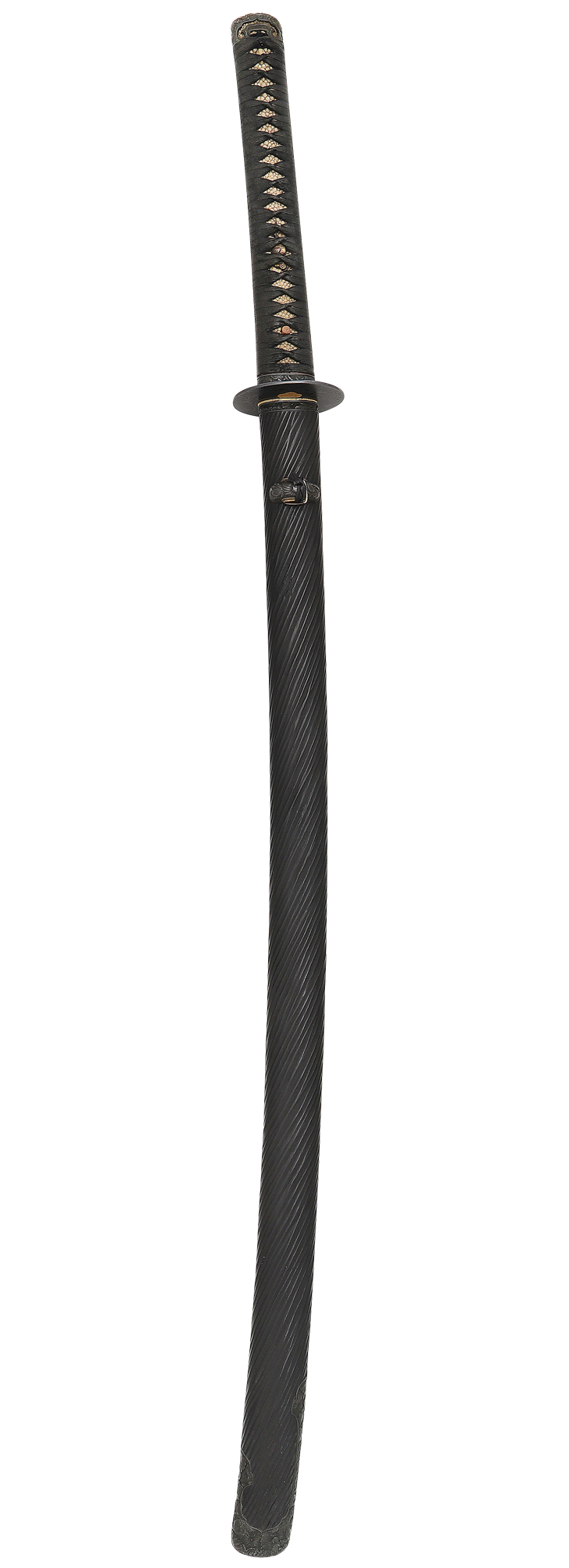
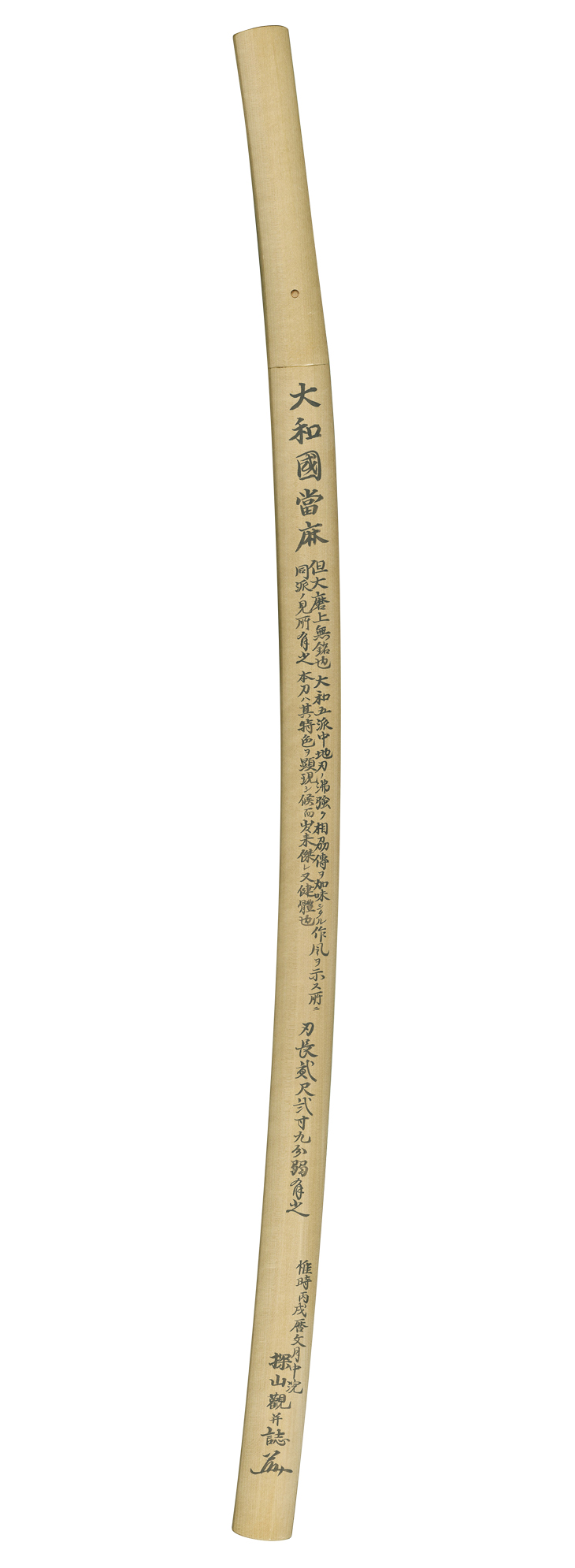
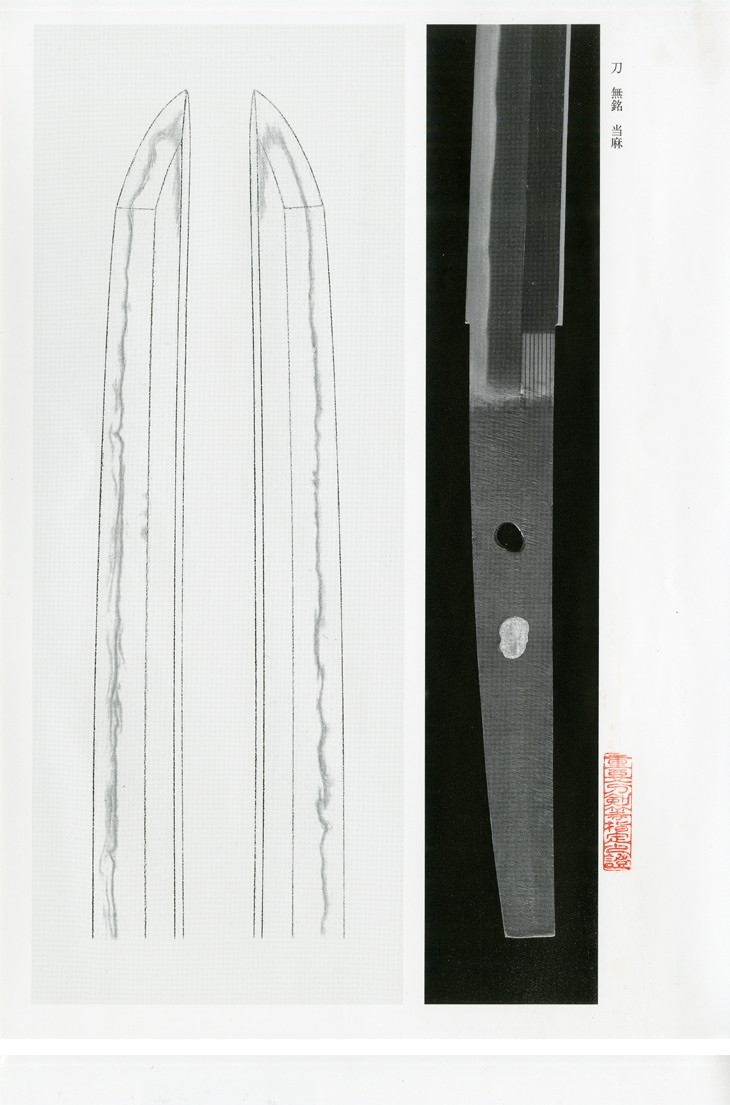
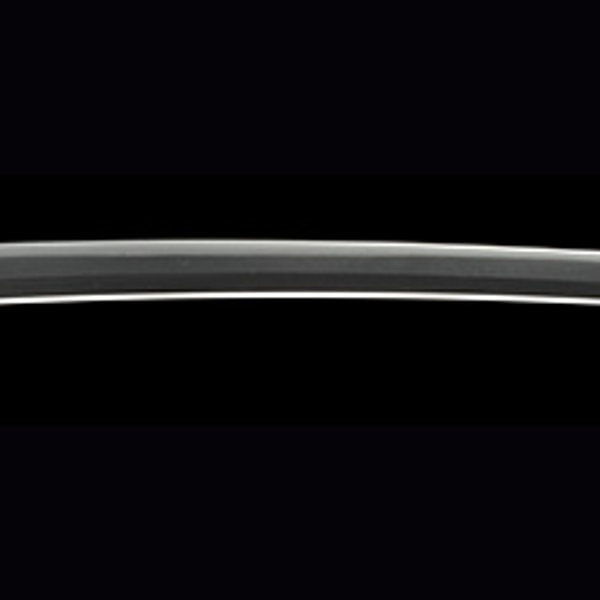
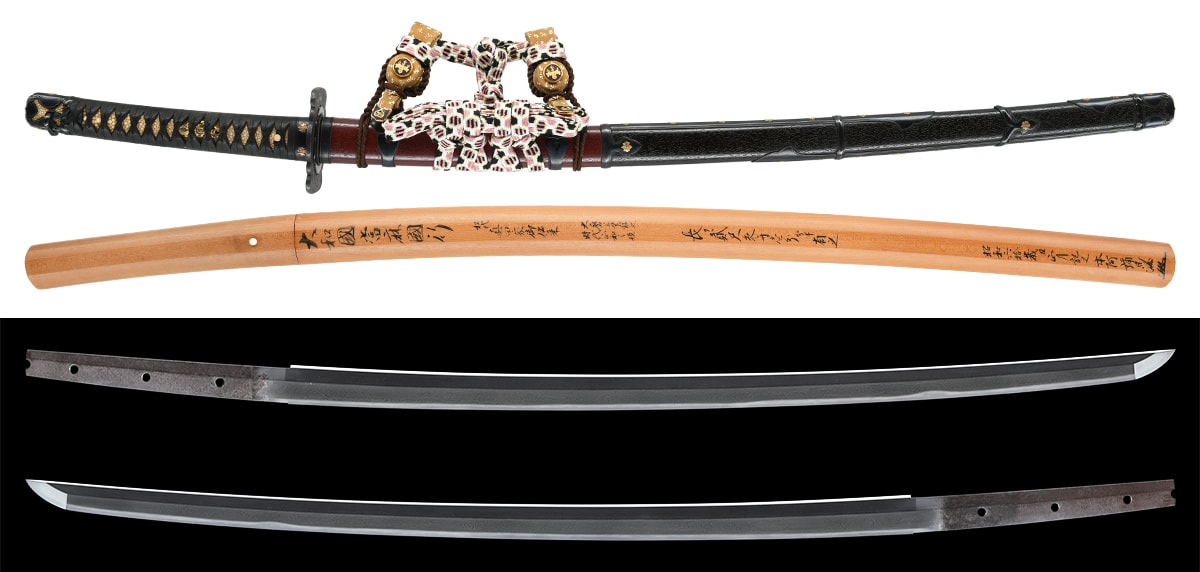
This is a Katana attributed to the Taima school, an excellent example combining the best qualities of Yamato and Soshu traditions. It is designated as a 69th session Juyo Token by the NBTHK, made during the late Kamakura to early Nanbokucho period. The blade features a healthy jigane with flowing itame mixed with mokume, and a bright hamon with ko-gunome mixed with suguha, showing abundant activities. It comes with both a shirasaya and an uchigatana koshirae from the late Edo period.

NBTHK Setsumei

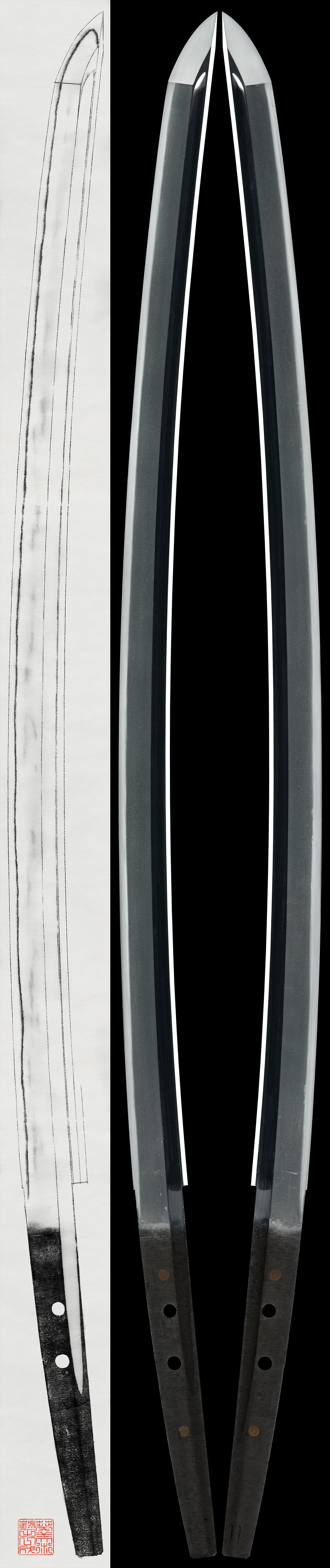
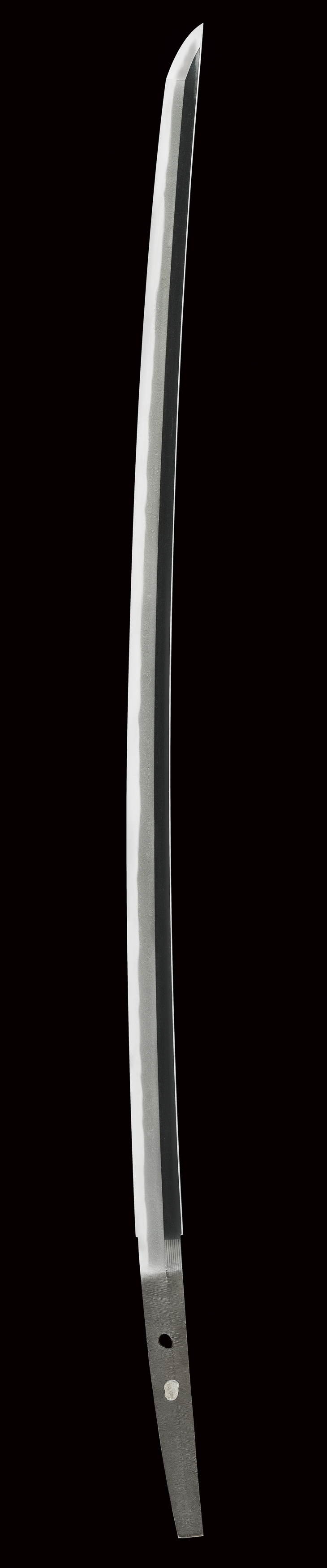
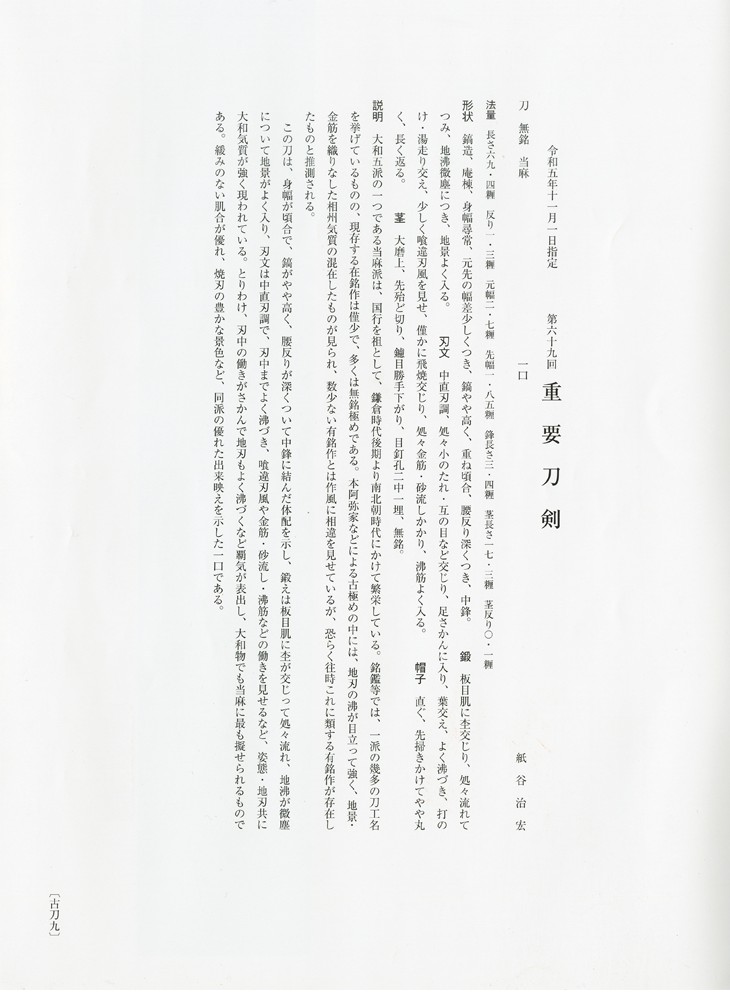
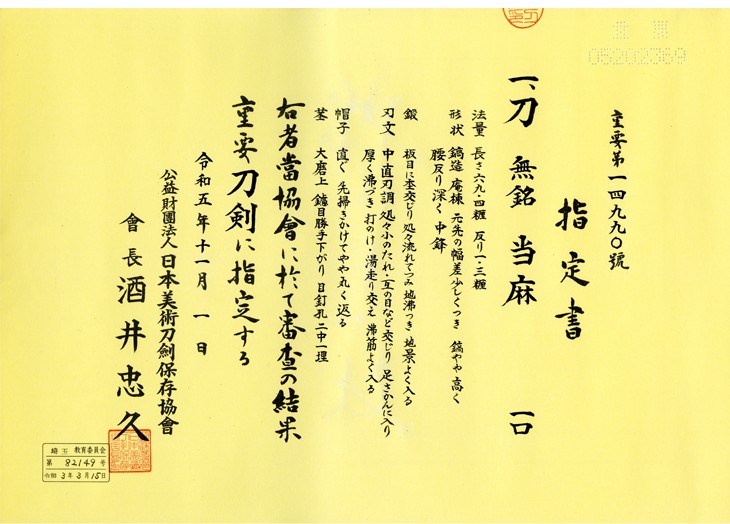
Jūyō-Tōken, 69th Session — Designated November 1, 2023 Katana, mumei: Taima (当麻) Paper by: Kamiya Haruhiro (紙谷治宏) Measurements Nagasa 69.4 cm, sori 1.3 cm, motohaba 2.7 cm, sakihaba 1.85 cm, kissaki-nagasa 3.4 cm, nakago-nagasa 17.3 cm, nakago-sori 0.1 cm Description Keijō: Shinogi-zukuri, iori-mune; mihaba of standard width; the difference between motohaba and sakihaba is slightly reduced; shinogi somewhat high; kasane moderate; deep koshizori; chū-kissaki. Kitae: Itame-hada mixed with mokume, with areas showing flowing grain and standing-grain tendencies; fine ji-nie; abundant chikei. Hamon: A medium-width suguha-based temper, with some ko-notare and gunome intermingled; ashi enter vigorously; yō appear; well covered with nie extending into the interior of the ha; mixed with uchi-noke and yubashiri; it shows slightly a kuichigai-ba-like manner; faint tobiyaki is also mixed in; kinsuji and sunagashi appear here and there, and nie-suji enter well. Bōshi: Sugu; toward the point it becomes hakikake and slightly rounded, with a long kaeri. Horimono: None. Nakago: Greatly shortened (ō-suriage); the end is almost kiri; yasurime are katte-sagari; two mekugi-ana (one filled/partly plugged); mumei. Artisan Taima school (当麻派), Yamato tradition Era Late Kamakura to Nanbokuchō period Explanation The Taima school, one of the five major lines of Yamato, flourished from the late Kamakura period through the Nanbokuchō period, taking Kuniyuki as its founder. Although sword manuals and reference works list numerous smiths of this group, extant signed works are exceedingly few, and the majority are pieces appraised as mumei Taima. Among old attributions made by the Hon’ami family and others, there are examples in which the nie in the ji and ha is conspicuously strong and in which chikei and kinsuji interweave—features that show an admixture of Sōshū temperament. These differ in style from the scarce signed works that survive; however, it is presumed that in former times there existed signed examples akin to these. This katana has a well-proportioned mihaba, a somewhat high shinogi, and a deep koshizori that concludes in a chū-kissaki, presenting a balanced overall figure. The forging shows itame mixed with mokume and areas of flowing grain; fine ji-nie adheres densely and chikei enter abundantly. The hamon is a medium suguha tone, and the nie is strong even within the body of the temper, showing activities such as a kuichigai-ba-like flavor as well as kinsuji, sunagashi, and nie-suji. In both shape and jihada/hamon the Yamato character emerges strongly. In particular, the vigorous internal activities and the well-developed nie in the ji and ha convey a forceful spirit, and among Yamato works this blade is one that can most fittingly be likened to Taima. With its excellent, tightly controlled surface texture and the richly scenic temper, it is a work that demonstrates the superior quality of this school.
NihontoWatch MonNihontoWatch
MarketEncyclopediaKantei
Swords›Yamato-den›Taima›Katana: Taima (Mumei)
katanaJūyō
Taima School

Katana: Taima (Mumei)

mumei · Taima · Nanbokucho · nagasa 69.4cm · sori 1.3cm

¥4,300,000
Visit seller website →
KatanaJūyō
Could you name the smith from the blade alone? Today’s kantei →
Taima School — 1 of 8
Taima School — 2 of 8
Taima School — 3 of 8
Taima School — 4 of 8
Taima School — 5 of 8
Taima School — 6 of 8
Taima School — 7 of 8
Taima School — 8 of 8
1 / 8
1 / 8
Taima School — 1 of 8Taima School — 2 of 8Taima School — 3 of 8Taima School — 4 of 8Taima School — 5 of 8Taima School — 6 of 8Taima School — 7 of 8Taima School — 8 of 8
KatanaJūyō
Could you name the smith from the blade alone? Today’s kantei →
Measurements & details
Smith
Taima School
Type
Katana
School
Taima
Period
Nanbokucho
Province
Yamato
Signature
Unsigned(1% of this smith's designated works are signed)
Measurements
Nagasa 69.4cmSori 1.3cmMotohaba 2.79cmSakihaba 1.93cmKasane 0.61cm
Description

This is a Katana attributed to the Taima school, an excellent example combining the best qualities of Yamato and Soshu traditions. It is designated as a 69th session Juyo Token by the NBTHK, made during the late Kamakura to early Nanbokucho period. The blade features a healthy jigane with flowing itame mixed with mokume, and a bright hamon with ko-gunome mixed with suguha, showing abundant activities. It comes with both a shirasaya and an uchigatana koshirae from the late Edo period.

NBTHK Zufu Commentary

Juyo #69

AI translation — may contain errors

-, 69th Session — Designated November 1, 2023

, : (当麻)

Paper by: Kamiya Haruhiro (紙谷治宏) [ 9]

Measurements 69.4 cm, 1.3 cm, 2.7 cm, 1.85 cm, 3.4 cm, 17.3 cm, 0.1 cm

Description Keijō: , ; of standard width; the difference between and is slightly reduced; somewhat high; moderate; deep ; . : mixed with , with areas showing flowing grain and standing-grain tendencies; fine ; abundant . : A medium-width -based temper, with some and intermingled; enter vigorously; appear; well covered with extending into the interior of the ; mixed with uchi-noke and ; it shows slightly a -like manner; faint is also mixed in; and appear here and there, and enter well. : ; toward the point it becomes and slightly rounded, with a long . : None. : Greatly shortened (); the end is almost ; are ; two (one filled/partly plugged); .

Artisan school (当麻派), Yamato tradition

Era Late to period

Explanation The school, one of the five major lines of Yamato, flourished from the late period through the period, taking Kuniyuki as its founder. Although sword manuals and reference works list numerous smiths of this group, extant signed works are exceedingly few, and the majority are pieces appraised as .

Among old attributions made by the Hon’ami family and others, there are examples in which the in the and is conspicuously strong and in which and interweave—features that show an admixture of temperament. These differ in style from the scarce signed works that survive; however, it is presumed that in former times there existed signed examples akin to these.

This has a well-proportioned , a somewhat high , and a deep that concludes in a , presenting a balanced overall figure. The forging shows mixed with and areas of flowing grain; fine adheres densely and enter abundantly. The is a medium tone, and the is strong even within the body of the temper, showing activities such as a -like flavor as well as , , and . In both shape and / the Yamato character emerges strongly. In particular, the vigorous internal activities and the well-developed in the and convey a forceful spirit, and among Yamato works this blade is one that can most fittingly be likened to . With its excellent, tightly controlled surface texture and the richly scenic temper, it is a work that demonstrates the superior quality of this school.
About the school

Taima

当麻

Yamato-den · Yamato

12 pieces on the market now

›

At Taima-dera in Yamato Province, the temple from which the school takes its name, a body of swordsmiths gathered in the late Kamakura period under Kuniyuki, who is transmitted as the founder of the line. The Taima group is counted among the five schools of the Yamato-den, the others being Tegai, Senjuin, Shikkake, and Hosho, and like its siblings it grew out of a monastic milieu in which the smiths worked in dependence upon the temple. That dependent standing is itself a fact of the record, for the published sources tie the scarcity of signed Taima work directly to it; the smiths, attached to the temple, naturally left few signatures, so that the line comes down largely as unsigned pieces fixed by appraisal. Only a small number of signed blades survive, chiefly by Kuniyuki and by Aritoshi, whose dated tachi of Einin 6 (1298) fixes the antiquity of the line and places its production at the close of the Kamakura age. The school continued through the Nanbokucho era and on into the Muromachi period, a northern branch removing to Asako in Echizen under the collective title Asako Taima. The Taima smiths share the full Yamato-den vocabulary, worked in a register that leans further toward nie activity than that of its Yamato siblings. The jigane is a flowing itame that gathers toward the edge into masame, the steel standing somewhat open, with thick ji-nie laid over it and chikei entering the grain frequently; on the finest blades a nie-utsuri rises in the ji, a reflection that on these smiths is a product of nie rather than of the Bizen midare-utsuri. Over this foundation the temper is built on a quiet line, a suguha or suguha-cho waved shallowly into notare and mixed with ko-gunome, small ko-choji, and at times ko-midare, the disorder always slight and worked over the straight base rather than displacing it.

The habuchi frays into hotsure, breaks into kuichigai-ba, doubles into nijuba, and lifts into uchinoke, while within the tempered area the ha-nie lies thick and bright, ashi and yo entering, and kinsuji and sunagashi flashing through repeatedly. Above it the boshi runs straight and is then swept with hakikake, most often finishing in yakizume without a turnback or turning in a small ko-maru. The recurring traits cohere into a recognizable hand: the masame-rich itame, the abundant glittering nie, and the brushed point are the marks by which the school is read, and the school leans toward nie where Tegai and the others keep a tighter, calmer key. Individual smiths inflect the manner: Aritoshi is set apart by a near-constant nijuba unusual even within Yamato, while the Echizen Nobunaga carries an angular gunome-midare and a darkened steel into Hokuriku. Kantei of a Taima blade proceeds from this cluster of Yamato evidence, the masame-leaning itame, the hotsure and nijuba along the habuchi, and the swept hakikake boshi, laid over a suguha base; against the other Yamato schools the appraisers look for the heavier nie activity and the conspicuous ashi and yo within a bright edge that separate Taima from the plainer suguha of Tegai and Senjuin, the togariba tendency of Shikkake, and the dense masame of Hosho. Kuniyuki stands as the progenitor and defining voice of the line, his signed tachi prized as documentary anchors against which the rest is measured; below him Aritoshi, Toshinaga, Tomoyuki, and Tomokiyo are read each by his own grounded traits, their few signed survivals valued first as reference material because so little of the school was ever signed. The greater part of the record is o-suriage mumei, wide-bodied Nanbokucho katana cut greatly down, their attribution argued from the markedly elongated chu-kissaki and from the Taima activity at its strongest, the texts candid that on such a shortened blade no individuality singling out one smith can be discerned even while the piece is held a fine work of the school. Provenance is mostly thin, running through private hands rather than the daimyo houses, with a few institutional holdings and the occasional notable mounting, so that an unsigned Taima blade is the usual encounter and a signed one a landmark of Yamato-den work. Learn more →

12 recorded smiths285 designated works
Leading smiths
SmithEraDesignated
Aritoshi有俊1264-127541
Nobunaga信長1394-14286
Toshinaga俊長1352-13565
Tomokiyo友清1319-13215
Tomoyuki友行1278-12885
Explore the Taima school →

Historical context

Yamato in the Nanbokuchō period

›

When the Southern Court made its capital at Yoshino, in Yamato itself, the province’s schools were at their height: the late Tegai line, Shikkake Norinaga, and the pure masame of Hōshō. Their technique was already spreading across the provinces.

Yamato in the Nanbokuchō period →

NBTHK Certificate
Jūyō Tōken重要刀剣
Important Sword
›

A blade of top-grade workmanship and condition, formally judged to rank with a nationally recognized Important Art Object (Jūyō Bijutsuhin). Awarded only at the NBTHK’s competitive annual examination.

Of Japan’s roughly 2.5 million registered swords, only 12,357 (about 1 in 202) have ever attained Jūyō.

About the NBTHK›

The NBTHK (Nihon Bijutsu Tōken Hozon Kyōkai, the Society for the Preservation of Japanese Art Swords) is a public-interest incorporated foundation founded in 1948 and supervised by Japan’s Agency for Cultural Affairs (Bunkachō); it is based at the Japanese Sword Museum in Tokyo. Its expert panels physically examine each submitted work (shinsa) and issue a certificate (kanteishō) ranking it by artistic and historical merit. NBTHK papers are the most widely recognized standard of authentication for Japanese swords and fittings.

NBTHK official site→
Seller
S
Samurai Nippon
Established 1977 · 49 yrs on the market
🇯🇵Ships from Japan
›
✓Verified dealersamurai-nippon.net
Settles in JPY
✓Ships worldwide✓English supportWire transferPayPalCredit card
Return policy

For one-of-a-kind items such as swords, sword fittings, and antiques, please contact us about a return within 3 days of the item's arrival and ship it back within 8 days. Refunds are issued the same day the returned item arrives.

View all of Samurai Nippon’s listings→View this item on the dealer’s site→

Previously sold — Taima School

View all →
Choshuya
Katana - by Taima School - Taima with Vermillion InscriptionKatana - by Taima School - Taima with Vermillion Inscription
Sold

Katana

ByTaima School
SOLD
Choshuya
Katana - by Taima School - O-suriage Mumei TaimaKatana - by Taima School - O-suriage Mumei Taima
Sold

Katana

ByTaima School
SOLD
World Seiyudo
Jūyō
Katana - Jūyō - by Taima School - Mumei Taima - NBTHK Juyo TokenKatana - Jūyō - by Taima School - Mumei Taima - NBTHK Juyo Token
Sold

Katana

ByTaima School
SOLD
Toushin
Tokubetsu Kichō
Tachi - Tokubetsu Kichō - by Taima School - Sueyuki (Yamato)Tachi - Tokubetsu Kichō - by Taima School - Sueyuki (Yamato)
Sold

Tachi

ByTaima School
SOLD
Giheiya
Jūyō
Katana - Jūyō - by Taima School - Juyo Token: Mumei (Attributed to Naga Arishige) - 2 Shaku 2 Sun 2 Bu, Shakudo Fittings Hantachi Koshirae, with ShirasayaKatana - Jūyō - by Taima School - Juyo Token: Mumei (Attributed to Naga Arishige) - 2 Shaku 2 Sun 2 Bu, Shakudo Fittings Hantachi Koshirae, with Shirasaya
Sold

Katana

ByTaima School
SOLD
Toukentakarado
Tokuho
Tokuho - by Taima School - Mumei Attributed to Taima WakizashiTokuho - by Taima School - Mumei Attributed to Taima Wakizashi
Sold

Mumei Attributed to Taima Wakizashi

ByTaima School
SOLD
Nipponto
Jūyō
Katana - Jūyō - by Taima School - Juyo Katana, Mumei Taima with Sayagaki by Tanobe MichihiroKatana - Jūyō - by Taima School - Juyo Katana, Mumei Taima with Sayagaki by Tanobe Michihiro
Sold

Katana

ByTaima School
SOLD
Samurai Nippon
Jūyō
Katana - Jūyō - by Taima School - Mumei (Den Taima)Katana - Jūyō - by Taima School - Mumei (Den Taima)
Sold

Katana

ByTaima School
SOLD

More from the Taima school

View all →
Eirakudo
Tokuho
Katana - Tokuho - by Taima School - Taima - Tokubetsu Hozon TokenKatana - Tokuho - by Taima School - Taima - Tokubetsu Hozon Token

Katana

ByTaima School
¥1,800,000
Nihonto US
Tokuho
Katana - Tokuho - by Taima School - Taima KatanaKatana - Tokuho - by Taima School - Taima Katana

Katana

ByTaima School
¥19,500
Aoi Art
Jūyō
Katana - Jūyō - by Taima School - Mumei (Taima)Katana - Jūyō - by Taima School - Mumei (Taima)

Katana

ByTaima School
¥4,500,000
Choshuya
Jūyō
Tanto - Jūyō - by Taima Nobunaga - Nobunaga (Asago Taima)Tanto - Jūyō - by Taima Nobunaga - Nobunaga (Asago Taima)
Koshirae

Tantō

ByTaima Nobunaga
Ask
Choshuya
Jūyō
Katana - Jūyō - by Taima Kuniyuki - Taima Kuniyuki with Vermilion SignatureKatana - Jūyō - by Taima Kuniyuki - Taima Kuniyuki with Vermilion Signature

Katana

ByTaima Kuniyuki
Ask
Nipponto
Jūyō
Katana - Jūyō - by Taima School - Juyo Katana attributed to Taima school, MumeiKatana - Jūyō - by Taima School - Juyo Katana attributed to Taima school, Mumei

Katana

ByTaima School
Ask
Aoi Art
Jūyō
Katana - Jūyō - by Taima School - Mumei (Unsigned) (attributed to Den Taima)Katana - Jūyō - by Taima School - Mumei (Unsigned) (attributed to Den Taima)

Katana

ByTaima School
¥3,500,000
Toushin
Tokubetsu Kichō
Tachi - Tokubetsu Kichō - by Taima School - Sueyuki (Yamato)Tachi - Tokubetsu Kichō - by Taima School - Sueyuki (Yamato)

Tachi

ByTaima School
¥2,970,000

More from the Yamato tradition

View all →
World Seiyudo
Tokuho
Katana - Tokuho - by Hokke School - Mumei Hokke Kaneyasu (Wazamono) - NBTHK Tokubetsu Hozon TokenKatana - Tokuho - by Hokke School - Mumei Hokke Kaneyasu (Wazamono) - NBTHK Tokubetsu Hozon Token

Katana

ByHokke School
¥2,800,000
Tsuruginoya
Jūyō
Katana - Jūyō - by Tegai Kanenaga - Tegai KanenagaKatana - Jūyō - by Tegai Kanenaga - Tegai Kanenaga
Koshirae

Katana

ByTegai Kanenaga
Ask
Goushuya
Tokujū
Katana - Tokuju - by Satsuma Yasuyo - Tokubetsu Juyo Token (One-Leaf Aoi Mon) Katana by Shumasu Ippei Fujiwara Ason Yasuyo, Made in Satsuma Province, Kirei-gun, on a Lucky Day in March, Kyoho 12Katana - Tokuju - by Satsuma Yasuyo - Tokubetsu Juyo Token (One-Leaf Aoi Mon) Katana by Shumasu Ippei Fujiwara Ason Yasuyo, Made in Satsuma Province, Kirei-gun, on a Lucky Day in March, Kyoho 12

Katana

BySatsuma Yasuyo
Ask
Bushido Antique Japanese Swords
Jūyō
Katana - Jūyō - by Shikkake Norinaga - Shikkake Norinaga Juyo TokenKatana - Jūyō - by Shikkake Norinaga - Shikkake Norinaga Juyo Token

Katana

ByShikkake Norinaga
¥42,000
Eirakudo
Jūyō
Katana - Jūyō - by Senjuin School - Senjuin - Juyo TokenKatana - Jūyō - by Senjuin School - Senjuin - Juyo Token

Katana

BySenjuin School
¥3,500,000
Choshuya
Jūyō
Katana - Jūyō - by Satsuma Masakiyo - Mondo no Kami MasakiyoKatana - Jūyō - by Satsuma Masakiyo - Mondo no Kami Masakiyo

Katana

BySatsuma Masakiyo
¥10,000,000
Aoi Art
Tokuho
Katana - Tokuho - by Ko-Mihara School - Mumei (Komihara) - NBTHK Tokubetsu Hozon TokenKatana - Tokuho - by Ko-Mihara School - Mumei (Komihara) - NBTHK Tokubetsu Hozon Token

Katana

ByKo-Mihara School
¥950,000
Touken Komachi
Tokuho
Wakizashi - Tokuho - by Tegai School - Wakizashi with Shirasaya and KoshiraeWakizashi - Tokuho - by Tegai School - Wakizashi with Shirasaya and Koshirae
Koshirae

Wakizashi

ByTegai School
¥450,000

Swords

  • Katana
  • Wakizashi
  • Tantō
  • Tachi
  • Naginata
  • Yari
  • Japanese Swords
  • Samurai Swords

Fittings

  • Tsuba
  • Fuchi-Kashira
  • Kozuka
  • Menuki
  • Sword Guards (Tsuba)

Armor

  • Kabuto
  • Samurai Armor
  • All Samurai Armor

By Certification

  • Tokujū
  • Jūyō
  • Tokuho
  • Hozon

Resources

  • Dealer Directory
  • Artist Directory
  • The Daily Kantei
  • Glossary
  • Browse All
Nihontowatch© 2026
TermsPrivacyCookiesAbout

¥4,300,000

View on Samurai Nippon
NihontoWatch MonNihontoWatch
Market
Encyclopedia
Kantei