NihontoWatch Mon

NihontoWatch

Market
Encyclopedia
Kantei
NihontoWatch Mon

NihontoWatch

Market
Encyclopedia
Kantei

Description

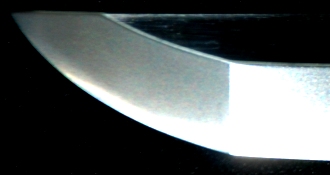
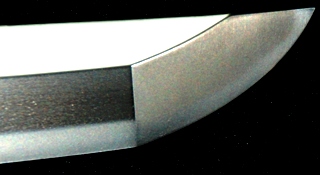
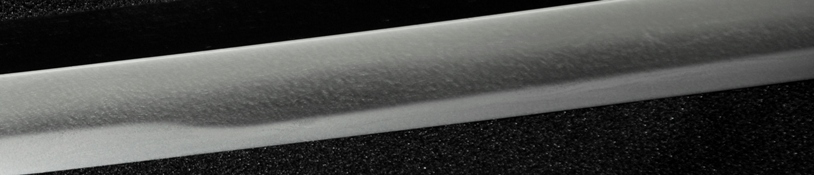
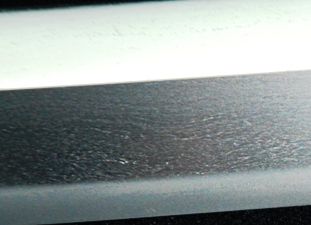
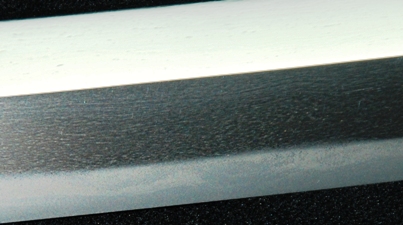
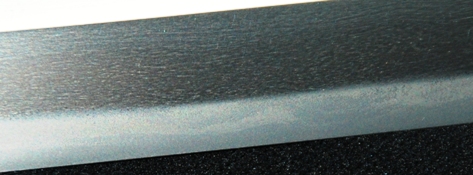
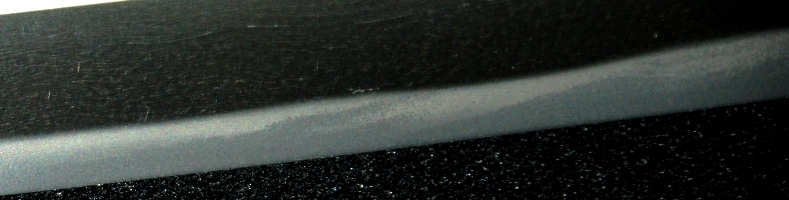
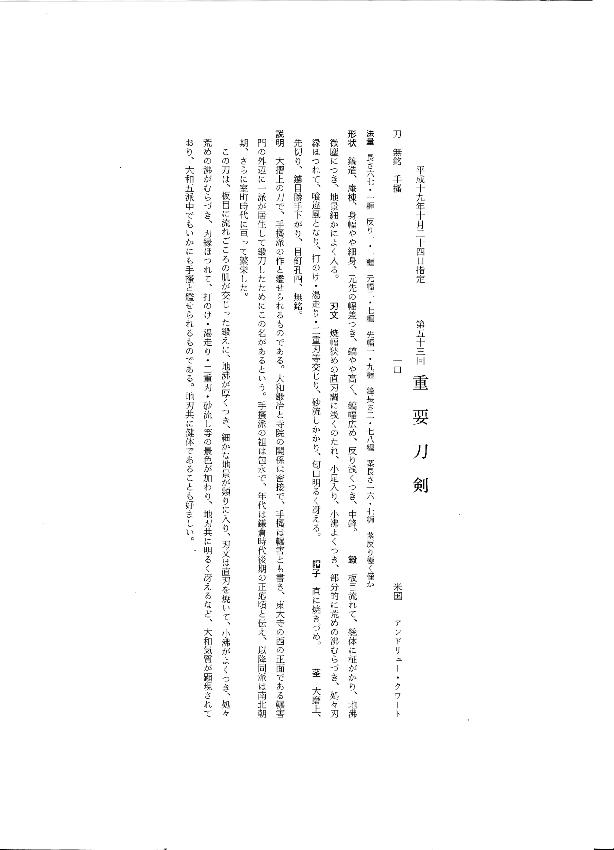
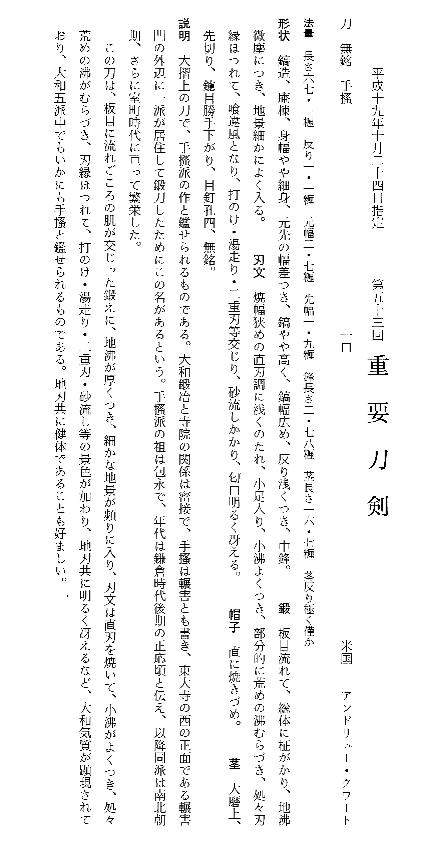
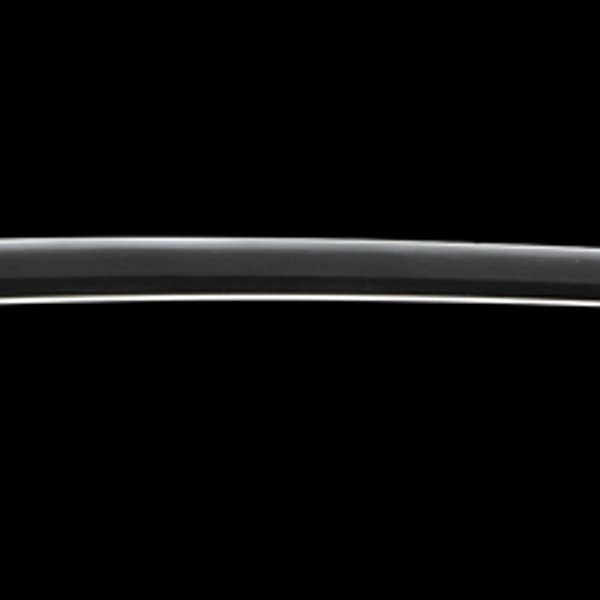
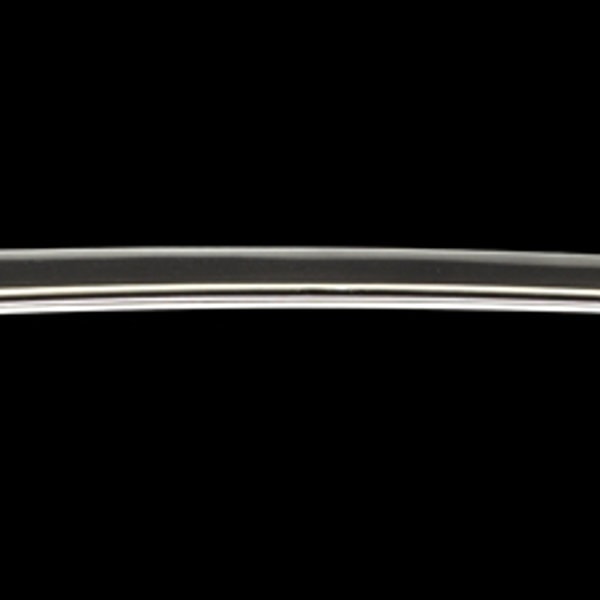
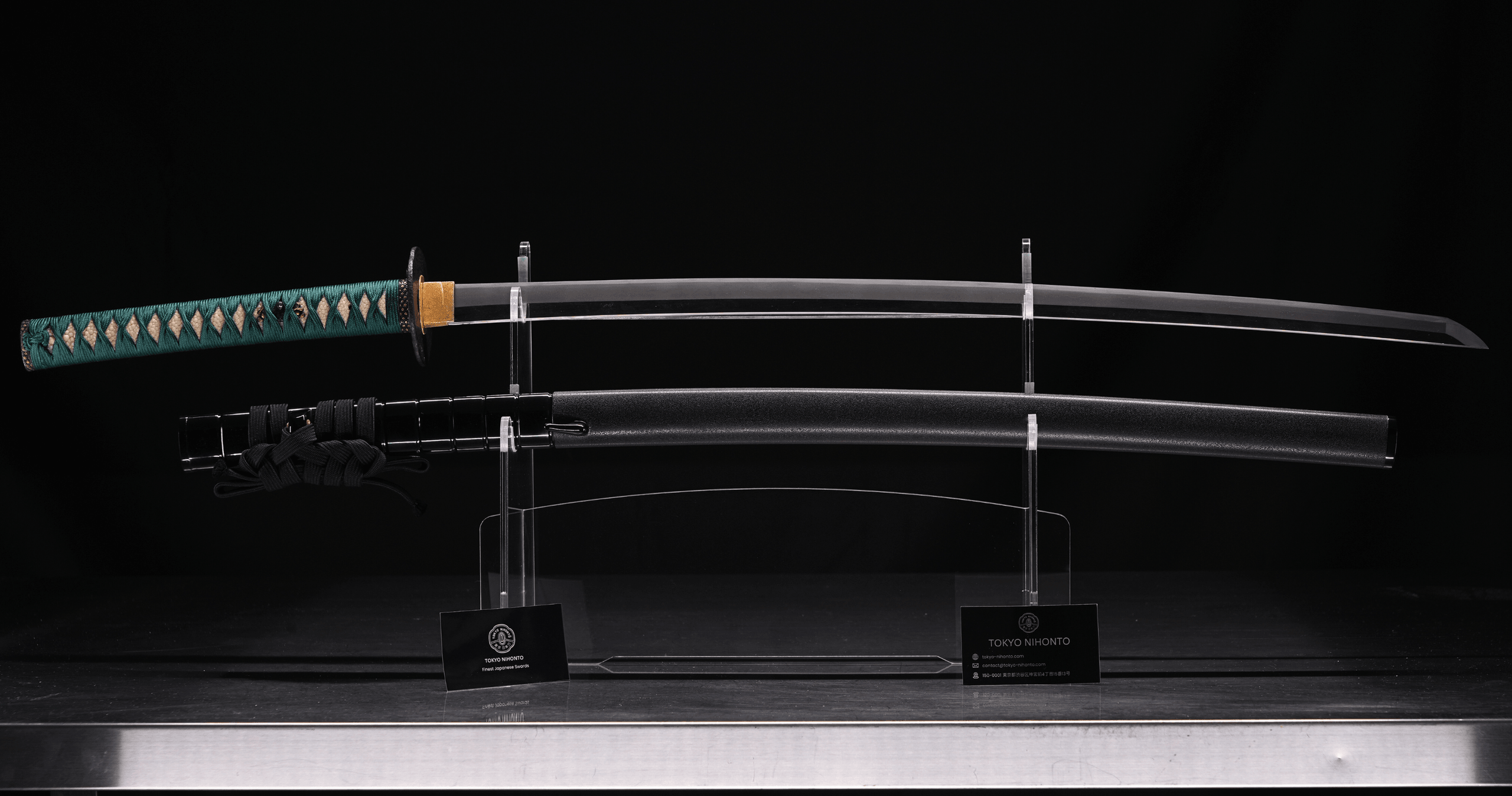
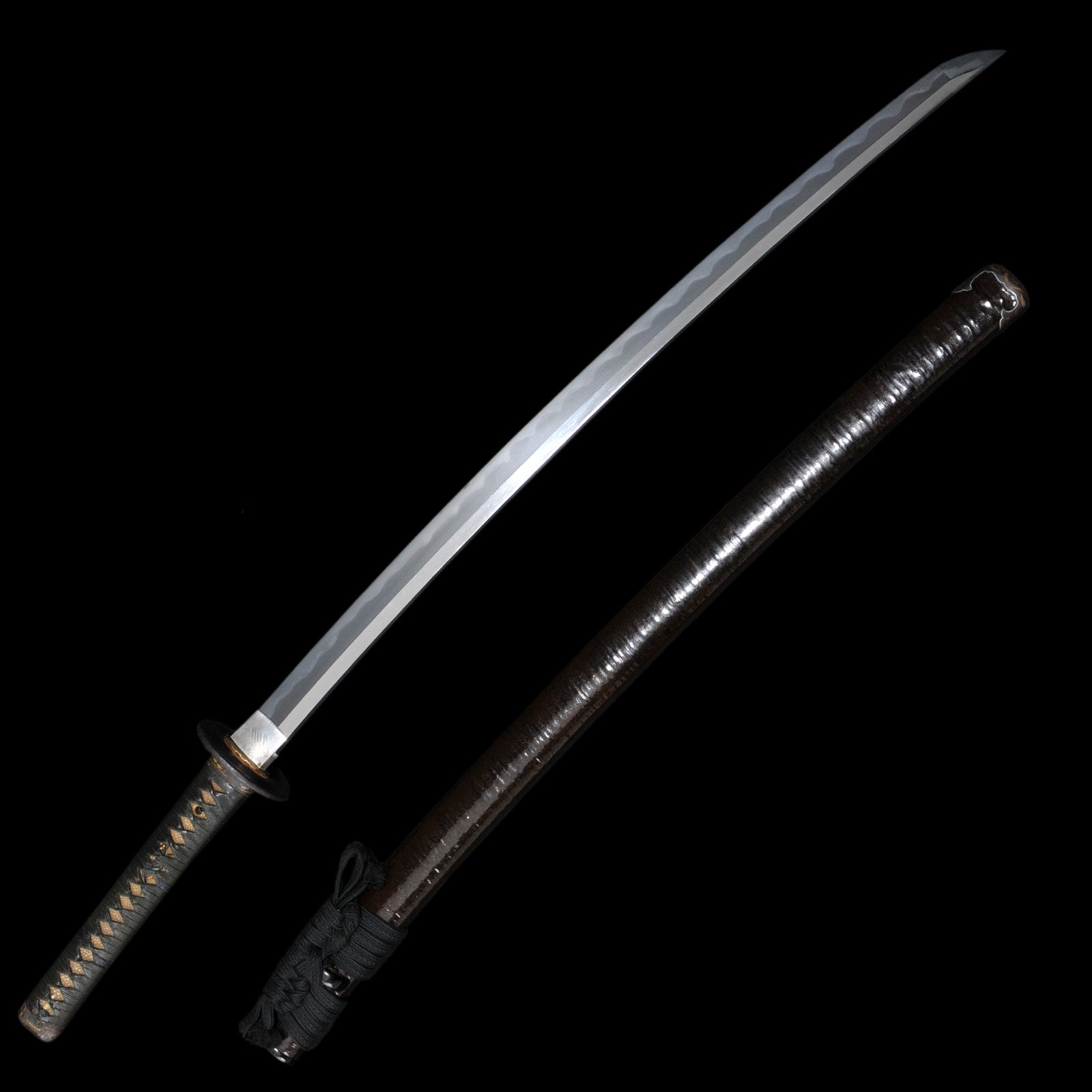
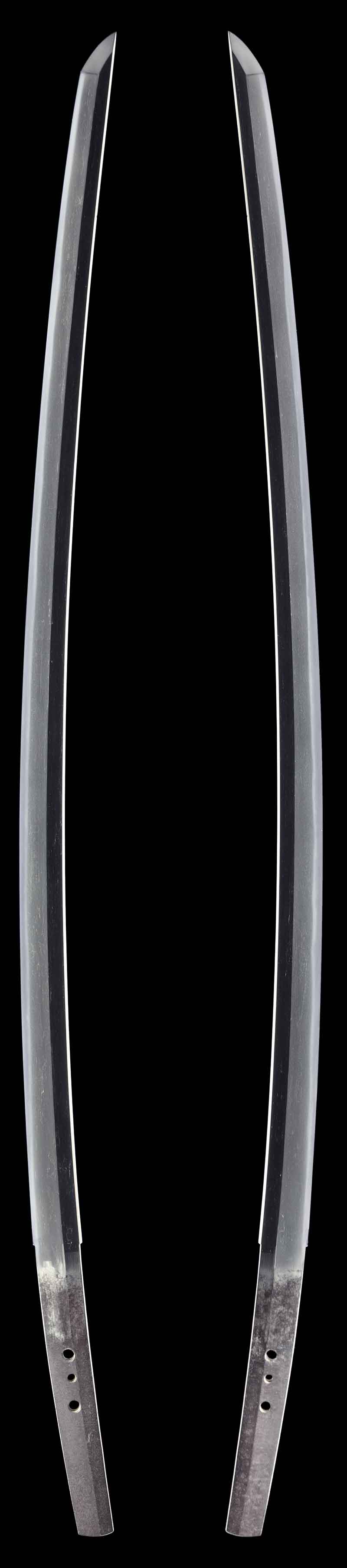
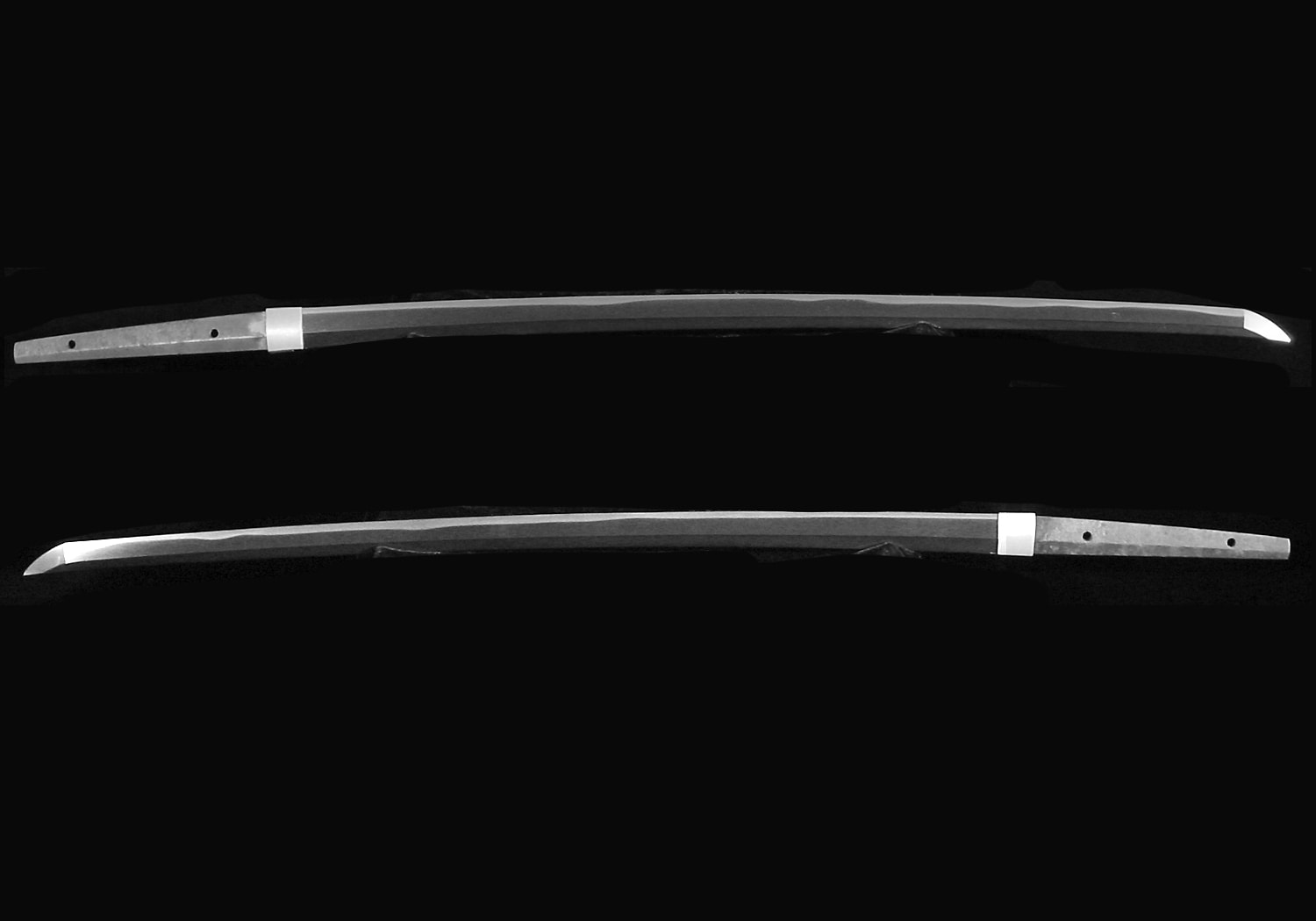
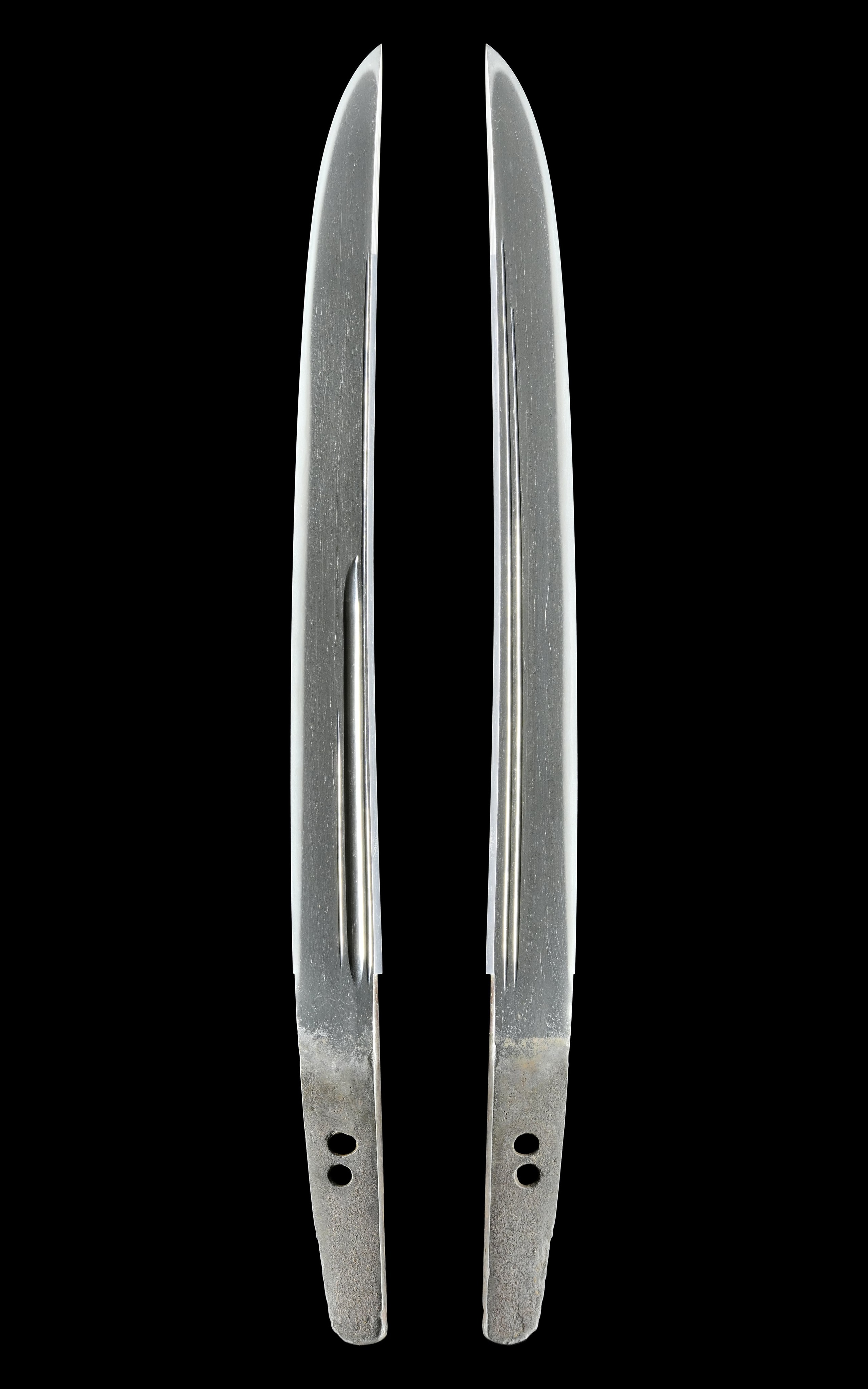
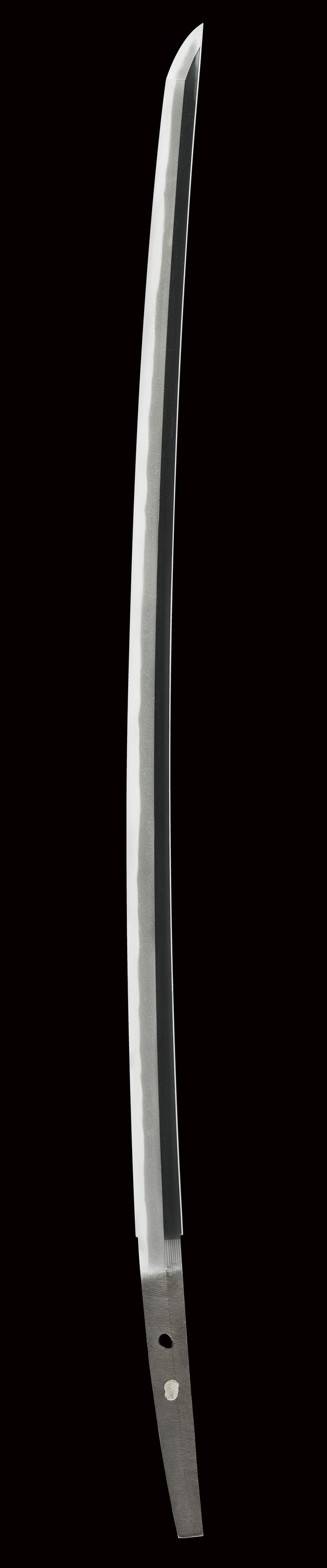
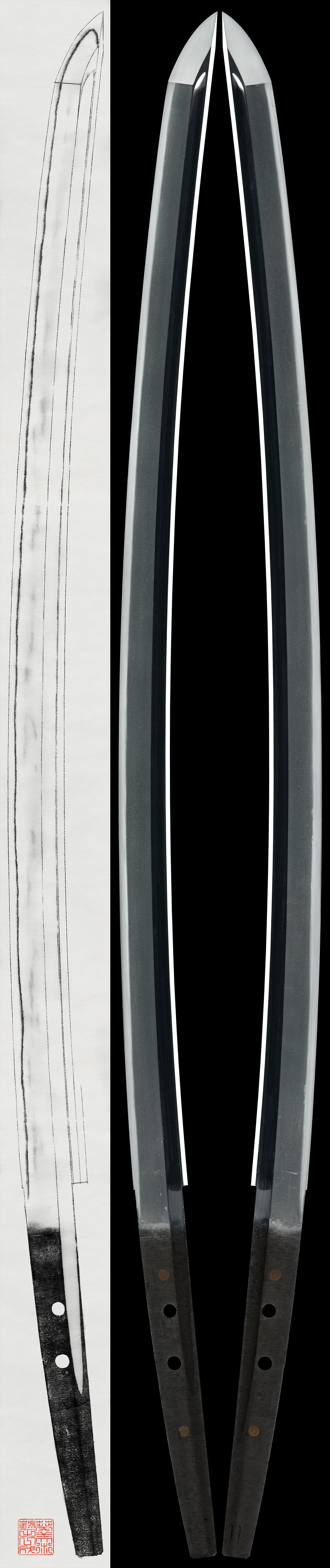
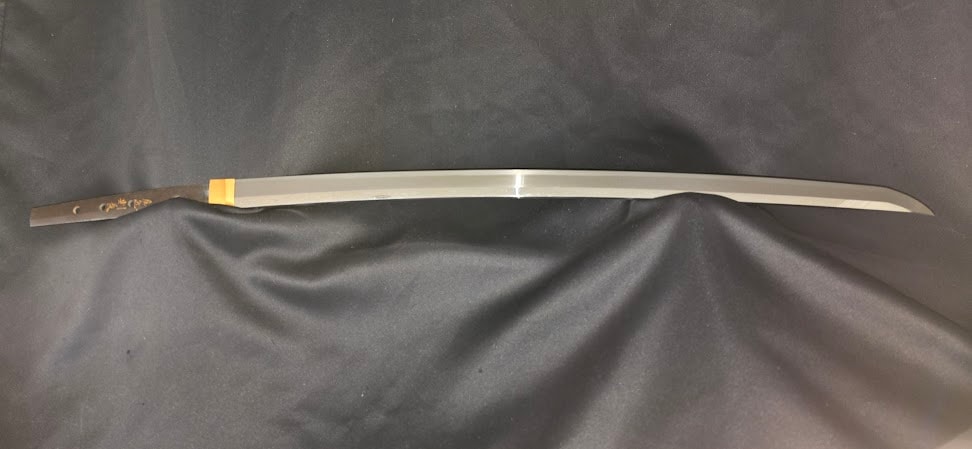
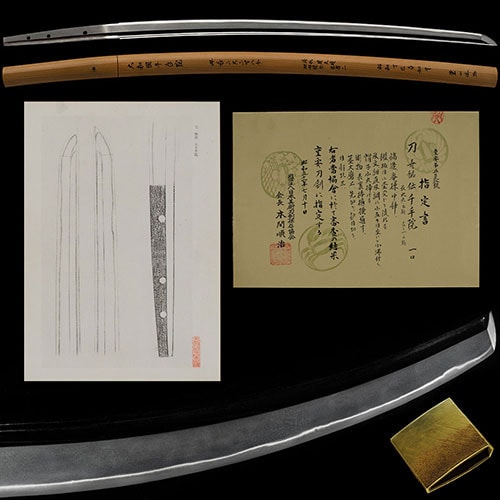
This is an absolutely stunning o-suriage Yamato Tegai katana, designated as Juyo Token at the fifty-third shinsa. It features a chu suguba midare hamon with bright habuchi, ko nie, ara nie, sungashi, nijuba, koichigaiba, and kinsuji. The jigane is a moist masame with mixed itame, konie, and chikei, showing a bo utsure.

NBTHK Setsumei

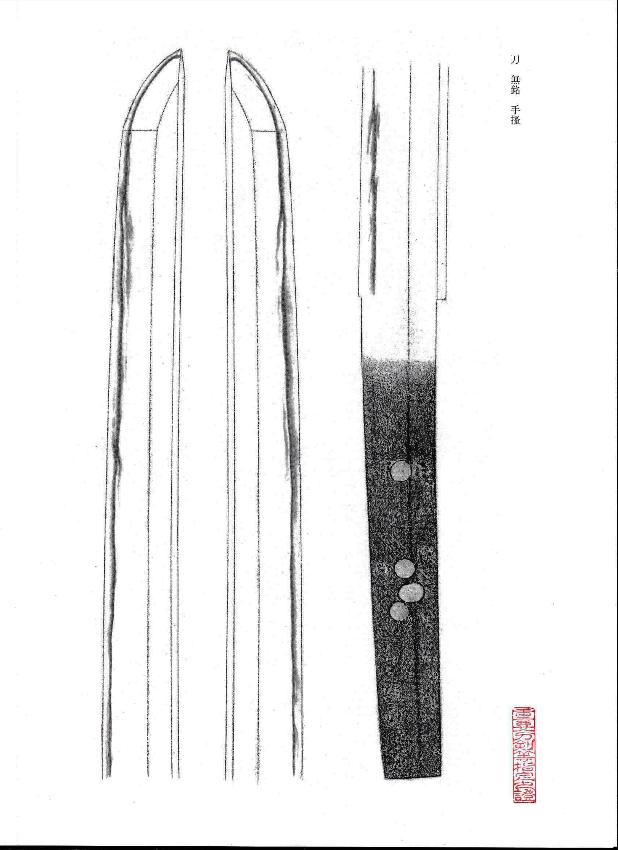
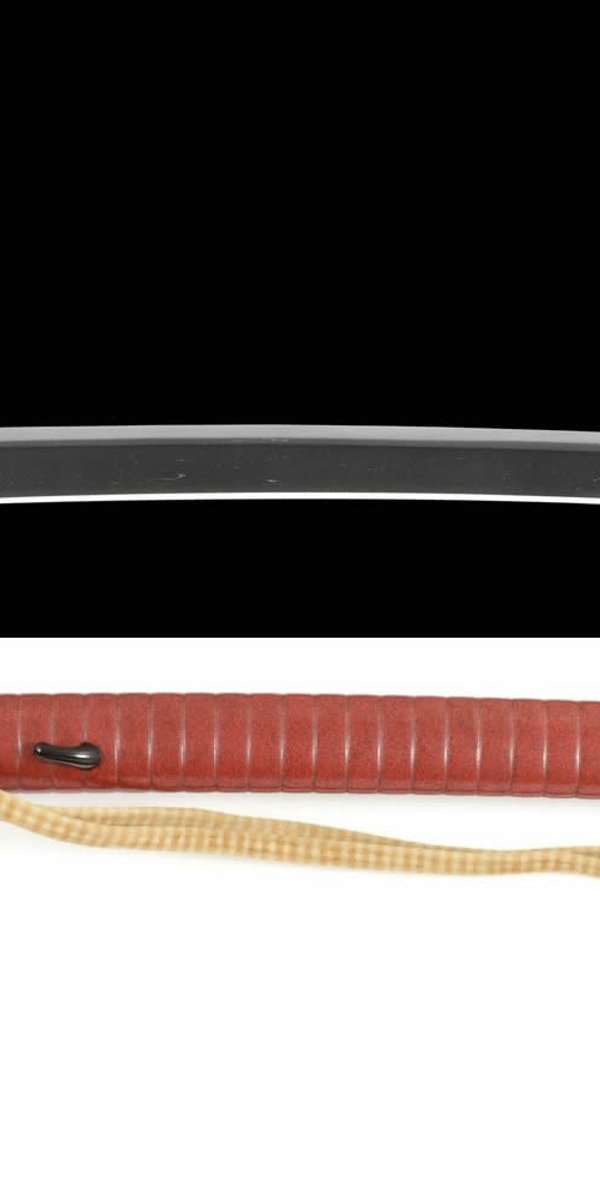
Jūyō-Tōken, 53rd Session — Designated October 24, 2007 Katana, mumei: Tegai school (手搔) Measurements Nagasa 67.1 cm, sori 1.1 cm, motohaba 2.7 cm, sakihaba 1.9 cm, kissaki-nagasa 2.78 cm, nakago-nagasa 16.7 cm, nakago-sori extremely slight Description Keijō: shinogi-zukuri, iori-mune; the mihaba is somewhat slender with a noticeable taper from moto to saki; the shinogi is slightly high and the shinogi-ji rather wide; shallow sori; chū-kissaki. Kitae: Flowing itame-hada overall with a general tendency toward masame; ji-nie adheres in fine mijin fashion, and fine chikei enter well throughout. Hamon: A rather narrow yakihaba in a suguha-based style with shallow notare; ko-ashi appear; ko-nie adheres well; in places somewhat coarser nie gathers unevenly; the habuchi is hotsure here and there, taking on a kuichigai-like aspect; with uchi-noke, yubashiri, nijūba, and other activities mixed in; with sunagashi applied; the nioiguchi is bright and clear. Bōshi: sugu and yakizume. Horimono: None. Nakago: Greatly shortened (ō-suriage); tip cut off (kiri); yasurime katte-sagari; four mekugi-ana; unsigned. Artisan Tegai school (手搔) Era Kotō Explanation This is a katana that has been greatly shortened (ō-suriage) and is judged to be a work of the Tegai group. The relationship between Yamato smiths and Buddhist temples was close, and Tegai is also written 輾害. It is said that the name derives from the fact that a group resided and forged swords outside the Tegai Gate (輾害門), located directly west before Tōdaiji. The founder of the Tegai lineage is Kanenaga, and his period is traditionally placed around Shōō in the late Kamakura period; thereafter the school flourished through the Nanbokuchō period and on into the Muromachi period. In this blade, the forging shows an itame with a flowing tendency mixed in; ji-nie adheres thickly, and fine chikei enter frequently. The temper is suguha, with ko-nie well applied; in places somewhat coarser nie gathers in patches, and the habuchi becomes hotsure, while additional effects—uchi-noke, yubashiri, nijūba, sunagashi, and others—are added. Moreover, both ji and ha are bright and clear, and Yamato temperament is plainly revealed. Among the Yamato Five Schools, this is judged to be very much in the manner of Tegai. It is also pleasing that both ji and ha are in kenzen (sound and well-preserved) condition.

NihontoWatch MonNihontoWatch
MarketEncyclopediaKantei
Swords›Yamato-den›Tegai›Yamato Tegai Katana
katanaJūyō
Tegai School

Yamato Tegai Katana

suriage-mumei · Tegai · Oei (1394-1428) · nagasa 67cm

$29,000
Visit seller website →
Tegai School — 1 of 16
Tegai School — 2 of 16
Tegai School — 3 of 16
Tegai School — 4 of 16
Tegai School — 5 of 16
Tegai School — 6 of 16
Tegai School — 7 of 16
Tegai School — 8 of 16
Tegai School — 9 of 16
Tegai School — 10 of 16
Tegai School — 11 of 16
Tegai School — 12 of 16
Tegai School — 13 of 16
Tegai School — 14 of 16
Tegai School — 15 of 16
Tegai School — 16 of 16
1 / 16
1 / 16
Tegai School — 1 of 16Tegai School — 2 of 16Tegai School — 3 of 16Tegai School — 4 of 16Tegai School — 5 of 16Tegai School — 6 of 16Tegai School — 7 of 16Tegai School — 8 of 16Tegai School — 9 of 16Tegai School — 10 of 16Tegai School — 11 of 16Tegai School — 12 of 16Tegai School — 13 of 16Tegai School — 14 of 16Tegai School — 15 of 16Tegai School — 16 of 16
Measurements & details
Smith
Tegai School
Type
Katana
School
Tegai
Period
Oei (1394-1428)
Province
Yamato
Signature
suriage-mumei(0% of this smith's designated works are signed)
Measurements
Nagasa 67cm
Description

This is an absolutely stunning o-suriage Yamato Tegai katana, designated as Juyo Token at the fifty-third shinsa. It features a chu suguba midare hamon with bright habuchi, ko nie, ara nie, sungashi, nijuba, koichigaiba, and kinsuji. The jigane is a moist masame with mixed itame, konie, and chikei, showing a bo utsure.

NBTHK Zufu Commentary

Juyo #53

AI translation — may contain errors

-, 53rd Session — Designated October 24, 2007

, : school (手搔)

Measurements 67.1 cm, 1.1 cm, 2.7 cm, 1.9 cm, 2.78 cm, 16.7 cm, extremely slight

Description Keijō: , ; the is somewhat slender with a noticeable taper from to ; the is slightly high and the rather wide; shallow ; . : Flowing overall with a general tendency toward ; adheres in fine fashion, and fine enter well throughout. : A rather narrow in a -based style with shallow ; appear; adheres well; in places somewhat coarser gathers unevenly; the is here and there, taking on a -like aspect; with uchi-noke, , , and other activities mixed in; with applied; the is bright and clear. : and . : None. : Greatly shortened (); tip cut off (); ; four ; unsigned.

Artisan school (手搔)

Era

Explanation This is a that has been greatly shortened () and is judged to be a work of the group. The relationship between Yamato smiths and Buddhist temples was close, and is also written 輾害. It is said that the name derives from the fact that a group resided and forged swords outside the Gate (輾害門), located directly west before Tōdaiji.

The founder of the lineage is Kanenaga, and his period is traditionally placed around Shōō in the late period; thereafter the school flourished through the period and on into the period.

In this blade, the forging shows an with a flowing tendency mixed in; adheres thickly, and fine enter frequently. The temper is , with well applied; in places somewhat coarser gathers in patches, and the becomes , while additional effects—uchi-noke, , , , and others—are added. Moreover, both and are bright and clear, and Yamato temperament is plainly revealed. Among the Yamato Five Schools, this is judged to be very much in the manner of . It is also pleasing that both and are in (sound and well-preserved) condition.

About the school

Tegai

手掻

Yamato-den · Yamato

29 pieces on the market now

›

Outside the Tegaimon (転害門), the western great gate of Todai-ji, a lineage of smiths forged for the temple through the closing decades of the Kamakura period, and from that monastic ground rose the Tegai school (手掻), one of the five branches of the Yamato-den. The published commentary of the NBTHK names Kanenaga (包永) its founder, placing his activity around the Shoo era (1288 to 1293) while reading his own workmanship, and a tanto by an early hand of his circle dated Karyaku 4 (1329), as evidence of a beginning reaching back further into middle and late Kamakura. The school took its name from the gate by which it worked, and the long Nanto-ju and Tegai-ju signatures cut by its later smiths keep that Nara setting on record. Among the five Yamato traditions Tegai was the largest in scale, and as the Muromachi years advanced it appears to have absorbed the others so that it alone effectively continued, a span the surviving generations of Kanenaga, Kanekiyo (包清), Kanetsugu (包次), Kanetoshi (包俊), Kanesada (包貞), and Kanemasa (包真) carry from the late Kamakura into the Eisho and Kyoroku eras. A Tegai blade is read first in the steel and then along the edge. The forging is itame mixed with mokume that flows into nagare and inclines toward masame near the ha, standing open in a hada-dachi character, with thick ji-nie, chikei entering frequently, and at times a whitish shirake utsuri toward the mune. Over that ground runs a suguha base, seldom left plain, taking in shallow notare, ko-midare, and ko-gunome; the habuchi frays into hotsure, with uchinoke, kuichigai-ba, nijuba, yubashiri drifting into the ji, and sunagashi and kinsuji sweeping through. The boshi answers in kind, swept with hakikake and finishing yakizume or turning back in a small ko-maru. Within this shared vocabulary the corpus divides along the Ko-Tegai and Sue-Tegai axis.

The founder's hand, the Ko-Tegai prime, carries the strongest nie among Yamato works, round and lustrous, over a bright and clear jigane, with many tachi holding a dignified, high-toned bearing; the Meibutsu Konotegashiwa Kanenaga even tempers omote and ura differently. The later Sue-Tegai generations part company, the steel turning whitish, the nioiguchi tightening toward ko-nie, and the temper broadening at the last toward ogunome and a hitatsura tendency near Muramasa, as in the late Tegai-ju Kanekiyo blades. To kantei a Tegai blade is to place it within Yamato and then along its own line. Against Senjuin, Shikkake, Taima, and Hosho, all working the same standing masame-inclined grain under fraying suguha, Tegai is told by the strength and brightness of its nie; Honma noted of the first generation a sparkle at times recalling Awataguchi Hisakuni, and one Tokubetsu Juyo tachi was read as rivaling the upper Soshu masters. Where Hosho runs a near-pure masame and a plain edge, and where Shikkake Norinaga strings his ko-gunome into connected rows, Kanenaga holds the suguha-cho through its shallow notare and lets yubashiri, uchinoke, and nijuba play above the habuchi with unusual freedom; the Rai suguha of Yamashiro, by contrast, runs clean over a close ko-itame. Rated Jo-jo saku by Fujishiro, Kanenaga stands at the head of the school, his signed tachi (the character Kane compressed, the second vertical of Naga drawn out long) unusually numerous for so early a smith, though most survive suriage and the o-suriage mumei attributions ride on the quality of the nie. The provenance is deep, running through shrines and the Tokugawa, Date, and Hachisuka families to the Imperial Family, with recorded holders including the Tokyo National Museum and the Tokugawa Art Museum. The later names hold mainly to the Juyo register and to private and designated hands, valued as fixed reference points for the Yamato-den, where the founder's bright, heavy nie over standing Yamato steel remains the measure by which the whole school is judged. Learn more →


27 recorded smiths184 designated works
Leading smiths
SmithEraDesignated
Kanenaga包永1288-131262
Kanekiyo包清1362-13708
Kanetsugu包次1317-13334
Kanetoshi包俊1381-13844
Kanezane包眞1394-14283
Explore the Tegai school →

Historical context

The monasteries that had sustained Yamato lost ground through the Muromachi period, and the schools thinned with them; Sue-Tegai kept the old masame manner alive in quantity. The burning of Tōdaiji’s Great Buddha hall in 1567 closed the temple age.

Yamato in the Muromachi period →

NBTHK Certificate
Jūyō Tōken重要刀剣
Important Sword
›

A blade of top-grade workmanship and condition, formally judged to rank with a nationally recognized Important Art Object (Jūyō Bijutsuhin). Awarded only at the NBTHK’s competitive annual examination.

Of Japan’s roughly 2.5 million registered swords, only 12,307 (about 1 in 203) have ever attained Jūyō.

About the NBTHK›

The NBTHK (Nihon Bijutsu Tōken Hozon Kyōkai, the Society for the Preservation of Japanese Art Swords) is a public-interest incorporated foundation founded in 1948 and supervised by Japan’s Agency for Cultural Affairs (Bunkachō); it is based at the Japanese Sword Museum in Tokyo. Its expert panels physically examine each submitted work (shinsa) and issue a certificate (kanteishō) ranking it by artistic and historical merit. NBTHK papers are the most widely recognized standard of authentication for Japanese swords and fittings.

NBTHK official site→
Seller
N
Nihonto US
🇺🇸Ships from United States
›
✓Verified dealernihonto.us
Settles in USD
Return policy

Three day, no penalty, inspection on every item. Returns must be in the same condition as shipped. Actual costs will be charged on returned items. No restocking fee. If you did not like the item is a good enough reason for return.

View all of Nihonto US’s listings→View this item on the dealer’s site→

Previously sold — Tegai School

Japanese Sword Books and Tsuba
Tanto - by Tegai School - K83. Nicely Mounted Mumei Tanto, Attributed to TegaiTanto - by Tegai School - K83. Nicely Mounted Mumei Tanto, Attributed to Tegai
Sold

Tantō

ByTegai School
SOLD
Choshuya
Katana - by Tegai School - Mei: Kanenaga, owned by Hon'ami Chikatoshi and Ogi IoriKatana - by Tegai School - Mei: Kanenaga, owned by Hon'ami Chikatoshi and Ogi Iori
Sold

Katana

ByTegai School
SOLD
Choshuya
Wakizashi - by Tegai School - O-suriage Mumei: TegaiWakizashi - by Tegai School - O-suriage Mumei: Tegai
Sold

Wakizashi

ByTegai School
SOLD
Aoi Art
Tokuho
Katana - Tokuho - by Tegai School - Mumei (Tegai Kanetoshi)Katana - Tokuho - by Tegai School - Mumei (Tegai Kanetoshi)
Sold

Katana

ByTegai School
SOLD
Katanahanbai
Tokuho
Katana - Tokuho - by Tegai School - Mumei Tegai KanekiyoKatana - Tokuho - by Tegai School - Mumei Tegai Kanekiyo
Sold

Katana

ByTegai School
SOLD
Tozando
Hozon
Tanto - Hozon - by Tegai School - KanekiyoTanto - Hozon - by Tegai School - Kanekiyo
Sold

Tantō

ByTegai School
SOLD
Toushin
Tokuho
Katana - Tokuho - by Tegai School - Tegai - MumeiKatana - Tokuho - by Tegai School - Tegai - Mumei
Sold

Katana

ByTegai School
SOLD
Choshuya
Katana - by Tegai School - Japanese Sword Sales | Ginza Choshuya | O-suriage Mumei Tegai Kanekiyo, 640Katana - by Tegai School - Japanese Sword Sales | Ginza Choshuya | O-suriage Mumei Tegai Kanekiyo, 640
Sold

Katana

ByTegai School
SOLD

More from the Tegai school

View all →
Tsuruginoya
Jūyō
Katana - Jūyō - by Tegai Kanenaga - Tegai KanenagaKatana - Jūyō - by Tegai Kanenaga - Tegai Kanenaga

Katana

ByTegai Kanenaga
¥7,500,000
Toushin
Tokuho
Tanto - Tokuho - by Tegai Kanekiyo - Mumei (Tegai Kanekiyo) - 4-377Tanto - Tokuho - by Tegai Kanekiyo - Mumei (Tegai Kanekiyo) - 4-377

Tantō

ByTegai Kanekiyo
¥770,000
Touken Komachi
Tokuho
Katana - Tokuho - by Tegai Kanenaga - Katana in ShirasayaKatana - Tokuho - by Tegai Kanenaga - Katana in Shirasaya

Katana

ByTegai Kanenaga
¥3,000,000
Nihonto.com
Jūyō
Katana - Jūyō - by Tegai School - Beautiful Juyo Yamato Tegai School KatanaKatana - Jūyō - by Tegai School - Beautiful Juyo Yamato Tegai School Katana

Katana

ByTegai School
¥36,500
Touken Komachi
Hozon
Wakizashi - Hozon - by Tegai School - Wakizashi, in ShirasayaWakizashi - Hozon - by Tegai School - Wakizashi, in Shirasaya

Wakizashi

ByTegai School
¥160,000
Aoi Art
Tokuho
Katana - Tokuho - by Tegai School - Mumei (Unsigned) (Tegai) (Koshirae: NBTHK Tokubetsu Kicho Tosogu)Katana - Tokuho - by Tegai School - Mumei (Unsigned) (Tegai) (Koshirae: NBTHK Tokubetsu Kicho Tosogu)

Katana

ByTegai School
¥2,500,000
Supein Nihonto
NTHK
Katana - NTHK - by Tegai School - Japanese Wakizashi Tegai School – Yamato Koto c.1428 | KanteishoKatana - NTHK - by Tegai School - Japanese Wakizashi Tegai School – Yamato Koto c.1428 | Kanteisho

Katana

ByTegai School
¥3,600
Toushin
Tokuho
Tanto - Tokuho - by Tegai School - Tegai KanetoshiTanto - Tokuho - by Tegai School - Tegai Kanetoshi

Tantō

ByTegai School
¥1,100,000

More from the Yamato tradition

View all →
Aoi Art
Tokuho
Yari - Tokuho - by Senjuin School - Senjuin SakuYari - Tokuho - by Senjuin School - Senjuin Saku

Yari

BySenjuin School
Starting Bid¥280,000
Aoi Art
Tokuho
Tachi - Tokuho - by Shikkake School - Unsigned (Shikkake)Tachi - Tokuho - by Shikkake School - Unsigned (Shikkake)

Tachi

ByShikkake School
Starting Bid¥1,550,000
Goushuya
Tokujū
Katana - Tokuju - by Satsuma Yasuyo - Tokubetsu Juyo Token (One-Leaf Aoi Mon) Shume no Kami Ichihei Fujiwara Ason Yasuyo, Made in Satsushu Kirei-gun on an Auspicious Day in March, Kyoho 12Katana - Tokuju - by Satsuma Yasuyo - Tokubetsu Juyo Token (One-Leaf Aoi Mon) Shume no Kami Ichihei Fujiwara Ason Yasuyo, Made in Satsushu Kirei-gun on an Auspicious Day in March, Kyoho 12

Katana

BySatsuma Yasuyo
Ask
Tokka Biz
Hozon
Katana - Hozon - by Mihara School - Mumei MiharaKatana - Hozon - by Mihara School - Mumei Mihara

Katana

ByMihara School
¥650,000
Choshuya
Jūyō
Katana - Jūyō - by Shikkake School - O-suriage Mumei, Attributed to ShikkakeKatana - Jūyō - by Shikkake School - O-suriage Mumei, Attributed to Shikkake

Katana

ByShikkake School
¥3,600,000
Touken Komachi
Tokuho
Katana - Tokuho - by Senjuin School - Senjuin - ShirasayaKatana - Tokuho - by Senjuin School - Senjuin - Shirasaya

Katana

BySenjuin School
¥880,000
Eirakudo
Jūyō
Katana - Jūyō - by Senjuin School - Senjuin - Juyo TokenKatana - Jūyō - by Senjuin School - Senjuin - Juyo Token

Katana

BySenjuin School
¥3,500,000
Bushido Antique Japanese Swords
Jūyō
Katana - Jūyō - by Shikkake Norinaga - Shikkake Norinaga Juyo TokenKatana - Jūyō - by Shikkake Norinaga - Shikkake Norinaga Juyo Token

Katana

ByShikkake Norinaga
¥42,000

Swords

  • Katana
  • Wakizashi
  • Tantō
  • Tachi
  • Naginata
  • Yari

Fittings

  • Tsuba
  • Fuchi-Kashira
  • Kozuka
  • Menuki

Armor

  • Kabuto
  • Samurai Armor

By Certification

  • Tokujū
  • Jūyō
  • Tokuho
  • Hozon

Resources

  • Dealer Directory
  • Artist Directory
  • The Daily Kantei
  • Glossary
  • Browse All
Nihontowatch© 2026
TermsPrivacyCookiesAbout

Description

This is an absolutely stunning o-suriage Yamato Tegai katana, designated as Juyo Token at the fifty-third shinsa. It features a chu suguba midare hamon with bright habuchi, ko nie, ara nie, sungashi, nijuba, koichigaiba, and kinsuji. The jigane is a moist masame with mixed itame, konie, and chikei, showing a bo utsure.

NBTHK Setsumei

Jūyō-Tōken, 53rd Session — Designated October 24, 2007 Katana, mumei: Tegai school (手搔) Measurements Nagasa 67.1 cm, sori 1.1 cm, motohaba 2.7 cm, sakihaba 1.9 cm, kissaki-nagasa 2.78 cm, nakago-nagasa 16.7 cm, nakago-sori extremely slight Description Keijō: shinogi-zukuri, iori-mune; the mihaba is somewhat slender with a noticeable taper from moto to saki; the shinogi is slightly high and the shinogi-ji rather wide; shallow sori; chū-kissaki. Kitae: Flowing itame-hada overall with a general tendency toward masame; ji-nie adheres in fine mijin fashion, and fine chikei enter well throughout. Hamon: A rather narrow yakihaba in a suguha-based style with shallow notare; ko-ashi appear; ko-nie adheres well; in places somewhat coarser nie gathers unevenly; the habuchi is hotsure here and there, taking on a kuichigai-like aspect; with uchi-noke, yubashiri, nijūba, and other activities mixed in; with sunagashi applied; the nioiguchi is bright and clear. Bōshi: sugu and yakizume. Horimono: None. Nakago: Greatly shortened (ō-suriage); tip cut off (kiri); yasurime katte-sagari; four mekugi-ana; unsigned. Artisan Tegai school (手搔) Era Kotō Explanation This is a katana that has been greatly shortened (ō-suriage) and is judged to be a work of the Tegai group. The relationship between Yamato smiths and Buddhist temples was close, and Tegai is also written 輾害. It is said that the name derives from the fact that a group resided and forged swords outside the Tegai Gate (輾害門), located directly west before Tōdaiji. The founder of the Tegai lineage is Kanenaga, and his period is traditionally placed around Shōō in the late Kamakura period; thereafter the school flourished through the Nanbokuchō period and on into the Muromachi period. In this blade, the forging shows an itame with a flowing tendency mixed in; ji-nie adheres thickly, and fine chikei enter frequently. The temper is suguha, with ko-nie well applied; in places somewhat coarser nie gathers in patches, and the habuchi becomes hotsure, while additional effects—uchi-noke, yubashiri, nijūba, sunagashi, and others—are added. Moreover, both ji and ha are bright and clear, and Yamato temperament is plainly revealed. Among the Yamato Five Schools, this is judged to be very much in the manner of Tegai. It is also pleasing that both ji and ha are in kenzen (sound and well-preserved) condition.

NihontoWatch MonNihontoWatch
MarketEncyclopediaKantei
Swords›Yamato-den›Tegai›Yamato Tegai Katana
katanaJūyō
Tegai School

Yamato Tegai Katana

suriage-mumei · Tegai · Oei (1394-1428) · nagasa 67cm

$29,000
Visit seller website →
Tegai School — 1 of 16
Tegai School — 2 of 16
Tegai School — 3 of 16
Tegai School — 4 of 16
Tegai School — 5 of 16
Tegai School — 6 of 16
Tegai School — 7 of 16
Tegai School — 8 of 16
Tegai School — 9 of 16
Tegai School — 10 of 16
Tegai School — 11 of 16
Tegai School — 12 of 16
Tegai School — 13 of 16
Tegai School — 14 of 16
Tegai School — 15 of 16
Tegai School — 16 of 16
1 / 16
1 / 16
Tegai School — 1 of 16Tegai School — 2 of 16Tegai School — 3 of 16Tegai School — 4 of 16Tegai School — 5 of 16Tegai School — 6 of 16Tegai School — 7 of 16Tegai School — 8 of 16Tegai School — 9 of 16Tegai School — 10 of 16Tegai School — 11 of 16Tegai School — 12 of 16Tegai School — 13 of 16Tegai School — 14 of 16Tegai School — 15 of 16Tegai School — 16 of 16
Measurements & details
Smith
Tegai School
Type
Katana
School
Tegai
Period
Oei (1394-1428)
Province
Yamato
Signature
suriage-mumei(0% of this smith's designated works are signed)
Measurements
Nagasa 67cm
Description

This is an absolutely stunning o-suriage Yamato Tegai katana, designated as Juyo Token at the fifty-third shinsa. It features a chu suguba midare hamon with bright habuchi, ko nie, ara nie, sungashi, nijuba, koichigaiba, and kinsuji. The jigane is a moist masame with mixed itame, konie, and chikei, showing a bo utsure.

NBTHK Zufu Commentary

Juyo #53

AI translation — may contain errors

-, 53rd Session — Designated October 24, 2007

, : school (手搔)

Measurements 67.1 cm, 1.1 cm, 2.7 cm, 1.9 cm, 2.78 cm, 16.7 cm, extremely slight

Description Keijō: , ; the is somewhat slender with a noticeable taper from to ; the is slightly high and the rather wide; shallow ; . : Flowing overall with a general tendency toward ; adheres in fine fashion, and fine enter well throughout. : A rather narrow in a -based style with shallow ; appear; adheres well; in places somewhat coarser gathers unevenly; the is here and there, taking on a -like aspect; with uchi-noke, , , and other activities mixed in; with applied; the is bright and clear. : and . : None. : Greatly shortened (); tip cut off (); ; four ; unsigned.

Artisan school (手搔)

Era

Explanation This is a that has been greatly shortened () and is judged to be a work of the group. The relationship between Yamato smiths and Buddhist temples was close, and is also written 輾害. It is said that the name derives from the fact that a group resided and forged swords outside the Gate (輾害門), located directly west before Tōdaiji.

The founder of the lineage is Kanenaga, and his period is traditionally placed around Shōō in the late period; thereafter the school flourished through the period and on into the period.

In this blade, the forging shows an with a flowing tendency mixed in; adheres thickly, and fine enter frequently. The temper is , with well applied; in places somewhat coarser gathers in patches, and the becomes , while additional effects—uchi-noke, , , , and others—are added. Moreover, both and are bright and clear, and Yamato temperament is plainly revealed. Among the Yamato Five Schools, this is judged to be very much in the manner of . It is also pleasing that both and are in (sound and well-preserved) condition.

About the school

Tegai

手掻

Yamato-den · Yamato

29 pieces on the market now

›

Outside the Tegaimon (転害門), the western great gate of Todai-ji, a lineage of smiths forged for the temple through the closing decades of the Kamakura period, and from that monastic ground rose the Tegai school (手掻), one of the five branches of the Yamato-den. The published commentary of the NBTHK names Kanenaga (包永) its founder, placing his activity around the Shoo era (1288 to 1293) while reading his own workmanship, and a tanto by an early hand of his circle dated Karyaku 4 (1329), as evidence of a beginning reaching back further into middle and late Kamakura. The school took its name from the gate by which it worked, and the long Nanto-ju and Tegai-ju signatures cut by its later smiths keep that Nara setting on record. Among the five Yamato traditions Tegai was the largest in scale, and as the Muromachi years advanced it appears to have absorbed the others so that it alone effectively continued, a span the surviving generations of Kanenaga, Kanekiyo (包清), Kanetsugu (包次), Kanetoshi (包俊), Kanesada (包貞), and Kanemasa (包真) carry from the late Kamakura into the Eisho and Kyoroku eras. A Tegai blade is read first in the steel and then along the edge. The forging is itame mixed with mokume that flows into nagare and inclines toward masame near the ha, standing open in a hada-dachi character, with thick ji-nie, chikei entering frequently, and at times a whitish shirake utsuri toward the mune. Over that ground runs a suguha base, seldom left plain, taking in shallow notare, ko-midare, and ko-gunome; the habuchi frays into hotsure, with uchinoke, kuichigai-ba, nijuba, yubashiri drifting into the ji, and sunagashi and kinsuji sweeping through. The boshi answers in kind, swept with hakikake and finishing yakizume or turning back in a small ko-maru. Within this shared vocabulary the corpus divides along the Ko-Tegai and Sue-Tegai axis.

The founder's hand, the Ko-Tegai prime, carries the strongest nie among Yamato works, round and lustrous, over a bright and clear jigane, with many tachi holding a dignified, high-toned bearing; the Meibutsu Konotegashiwa Kanenaga even tempers omote and ura differently. The later Sue-Tegai generations part company, the steel turning whitish, the nioiguchi tightening toward ko-nie, and the temper broadening at the last toward ogunome and a hitatsura tendency near Muramasa, as in the late Tegai-ju Kanekiyo blades. To kantei a Tegai blade is to place it within Yamato and then along its own line. Against Senjuin, Shikkake, Taima, and Hosho, all working the same standing masame-inclined grain under fraying suguha, Tegai is told by the strength and brightness of its nie; Honma noted of the first generation a sparkle at times recalling Awataguchi Hisakuni, and one Tokubetsu Juyo tachi was read as rivaling the upper Soshu masters. Where Hosho runs a near-pure masame and a plain edge, and where Shikkake Norinaga strings his ko-gunome into connected rows, Kanenaga holds the suguha-cho through its shallow notare and lets yubashiri, uchinoke, and nijuba play above the habuchi with unusual freedom; the Rai suguha of Yamashiro, by contrast, runs clean over a close ko-itame. Rated Jo-jo saku by Fujishiro, Kanenaga stands at the head of the school, his signed tachi (the character Kane compressed, the second vertical of Naga drawn out long) unusually numerous for so early a smith, though most survive suriage and the o-suriage mumei attributions ride on the quality of the nie. The provenance is deep, running through shrines and the Tokugawa, Date, and Hachisuka families to the Imperial Family, with recorded holders including the Tokyo National Museum and the Tokugawa Art Museum. The later names hold mainly to the Juyo register and to private and designated hands, valued as fixed reference points for the Yamato-den, where the founder's bright, heavy nie over standing Yamato steel remains the measure by which the whole school is judged. Learn more →

27 recorded smiths184 designated works
Leading smiths
SmithEraDesignated
Kanenaga包永1288-131262
Kanekiyo包清1362-13708
Kanetsugu包次1317-13334
Kanetoshi包俊1381-13844
Kanezane包眞1394-14283
Explore the Tegai school →
Historical context

The monasteries that had sustained Yamato lost ground through the Muromachi period, and the schools thinned with them; Sue-Tegai kept the old masame manner alive in quantity. The burning of Tōdaiji’s Great Buddha hall in 1567 closed the temple age.

Yamato in the Muromachi period →
NBTHK Certificate
Jūyō Tōken重要刀剣
Important Sword
›

A blade of top-grade workmanship and condition, formally judged to rank with a nationally recognized Important Art Object (Jūyō Bijutsuhin). Awarded only at the NBTHK’s competitive annual examination.

Of Japan’s roughly 2.5 million registered swords, only 12,307 (about 1 in 203) have ever attained Jūyō.

About the NBTHK›

The NBTHK (Nihon Bijutsu Tōken Hozon Kyōkai, the Society for the Preservation of Japanese Art Swords) is a public-interest incorporated foundation founded in 1948 and supervised by Japan’s Agency for Cultural Affairs (Bunkachō); it is based at the Japanese Sword Museum in Tokyo. Its expert panels physically examine each submitted work (shinsa) and issue a certificate (kanteishō) ranking it by artistic and historical merit. NBTHK papers are the most widely recognized standard of authentication for Japanese swords and fittings.

NBTHK official site→
Seller
N
Nihonto US
🇺🇸Ships from United States
›
✓Verified dealernihonto.us
Settles in USD
Return policy

Three day, no penalty, inspection on every item. Returns must be in the same condition as shipped. Actual costs will be charged on returned items. No restocking fee. If you did not like the item is a good enough reason for return.

View all of Nihonto US’s listings→View this item on the dealer’s site→

Previously sold — Tegai School

Japanese Sword Books and Tsuba
Tanto - by Tegai School - K83. Nicely Mounted Mumei Tanto, Attributed to TegaiTanto - by Tegai School - K83. Nicely Mounted Mumei Tanto, Attributed to Tegai
Sold

Tantō

ByTegai School
SOLD
Choshuya
Katana - by Tegai School - Mei: Kanenaga, owned by Hon'ami Chikatoshi and Ogi IoriKatana - by Tegai School - Mei: Kanenaga, owned by Hon'ami Chikatoshi and Ogi Iori
Sold

Katana

ByTegai School
SOLD
Choshuya
Wakizashi - by Tegai School - O-suriage Mumei: TegaiWakizashi - by Tegai School - O-suriage Mumei: Tegai
Sold

Wakizashi

ByTegai School
SOLD
Aoi Art
Tokuho
Katana - Tokuho - by Tegai School - Mumei (Tegai Kanetoshi)Katana - Tokuho - by Tegai School - Mumei (Tegai Kanetoshi)
Sold

Katana

ByTegai School
SOLD
Katanahanbai
Tokuho
Katana - Tokuho - by Tegai School - Mumei Tegai KanekiyoKatana - Tokuho - by Tegai School - Mumei Tegai Kanekiyo
Sold

Katana

ByTegai School
SOLD
Tozando
Hozon
Tanto - Hozon - by Tegai School - KanekiyoTanto - Hozon - by Tegai School - Kanekiyo
Sold

Tantō

ByTegai School
SOLD
Toushin
Tokuho
Katana - Tokuho - by Tegai School - Tegai - MumeiKatana - Tokuho - by Tegai School - Tegai - Mumei
Sold

Katana

ByTegai School
SOLD
Choshuya
Katana - by Tegai School - Japanese Sword Sales | Ginza Choshuya | O-suriage Mumei Tegai Kanekiyo, 640Katana - by Tegai School - Japanese Sword Sales | Ginza Choshuya | O-suriage Mumei Tegai Kanekiyo, 640
Sold

Katana

ByTegai School
SOLD

More from the Tegai school

View all →
Tsuruginoya
Jūyō
Katana - Jūyō - by Tegai Kanenaga - Tegai KanenagaKatana - Jūyō - by Tegai Kanenaga - Tegai Kanenaga

Katana

ByTegai Kanenaga
¥7,500,000
Toushin
Tokuho
Tanto - Tokuho - by Tegai Kanekiyo - Mumei (Tegai Kanekiyo) - 4-377Tanto - Tokuho - by Tegai Kanekiyo - Mumei (Tegai Kanekiyo) - 4-377

Tantō

ByTegai Kanekiyo
¥770,000
Touken Komachi
Tokuho
Katana - Tokuho - by Tegai Kanenaga - Katana in ShirasayaKatana - Tokuho - by Tegai Kanenaga - Katana in Shirasaya

Katana

ByTegai Kanenaga
¥3,000,000
Nihonto.com
Jūyō
Katana - Jūyō - by Tegai School - Beautiful Juyo Yamato Tegai School KatanaKatana - Jūyō - by Tegai School - Beautiful Juyo Yamato Tegai School Katana

Katana

ByTegai School
¥36,500
Touken Komachi
Hozon
Wakizashi - Hozon - by Tegai School - Wakizashi, in ShirasayaWakizashi - Hozon - by Tegai School - Wakizashi, in Shirasaya

Wakizashi

ByTegai School
¥160,000
Aoi Art
Tokuho
Katana - Tokuho - by Tegai School - Mumei (Unsigned) (Tegai) (Koshirae: NBTHK Tokubetsu Kicho Tosogu)Katana - Tokuho - by Tegai School - Mumei (Unsigned) (Tegai) (Koshirae: NBTHK Tokubetsu Kicho Tosogu)

Katana

ByTegai School
¥2,500,000
Supein Nihonto
NTHK
Katana - NTHK - by Tegai School - Japanese Wakizashi Tegai School – Yamato Koto c.1428 | KanteishoKatana - NTHK - by Tegai School - Japanese Wakizashi Tegai School – Yamato Koto c.1428 | Kanteisho

Katana

ByTegai School
¥3,600
Toushin
Tokuho
Tanto - Tokuho - by Tegai School - Tegai KanetoshiTanto - Tokuho - by Tegai School - Tegai Kanetoshi

Tantō

ByTegai School
¥1,100,000

More from the Yamato tradition

View all →
Aoi Art
Tokuho
Yari - Tokuho - by Senjuin School - Senjuin SakuYari - Tokuho - by Senjuin School - Senjuin Saku

Yari

BySenjuin School
Starting Bid¥280,000
Aoi Art
Tokuho
Tachi - Tokuho - by Shikkake School - Unsigned (Shikkake)Tachi - Tokuho - by Shikkake School - Unsigned (Shikkake)

Tachi

ByShikkake School
Starting Bid¥1,550,000
Goushuya
Tokujū
Katana - Tokuju - by Satsuma Yasuyo - Tokubetsu Juyo Token (One-Leaf Aoi Mon) Shume no Kami Ichihei Fujiwara Ason Yasuyo, Made in Satsushu Kirei-gun on an Auspicious Day in March, Kyoho 12Katana - Tokuju - by Satsuma Yasuyo - Tokubetsu Juyo Token (One-Leaf Aoi Mon) Shume no Kami Ichihei Fujiwara Ason Yasuyo, Made in Satsushu Kirei-gun on an Auspicious Day in March, Kyoho 12

Katana

BySatsuma Yasuyo
Ask
Tokka Biz
Hozon
Katana - Hozon - by Mihara School - Mumei MiharaKatana - Hozon - by Mihara School - Mumei Mihara

Katana

ByMihara School
¥650,000
Choshuya
Jūyō
Katana - Jūyō - by Shikkake School - O-suriage Mumei, Attributed to ShikkakeKatana - Jūyō - by Shikkake School - O-suriage Mumei, Attributed to Shikkake

Katana

ByShikkake School
¥3,600,000
Touken Komachi
Tokuho
Katana - Tokuho - by Senjuin School - Senjuin - ShirasayaKatana - Tokuho - by Senjuin School - Senjuin - Shirasaya

Katana

BySenjuin School
¥880,000
Eirakudo
Jūyō
Katana - Jūyō - by Senjuin School - Senjuin - Juyo TokenKatana - Jūyō - by Senjuin School - Senjuin - Juyo Token

Katana

BySenjuin School
¥3,500,000
Bushido Antique Japanese Swords
Jūyō
Katana - Jūyō - by Shikkake Norinaga - Shikkake Norinaga Juyo TokenKatana - Jūyō - by Shikkake Norinaga - Shikkake Norinaga Juyo Token

Katana

ByShikkake Norinaga
¥42,000

Swords

  • Katana
  • Wakizashi
  • Tantō
  • Tachi
  • Naginata
  • Yari

Fittings

  • Tsuba
  • Fuchi-Kashira
  • Kozuka
  • Menuki

Armor

  • Kabuto
  • Samurai Armor

By Certification

  • Tokujū
  • Jūyō
  • Tokuho
  • Hozon

Resources

  • Dealer Directory
  • Artist Directory
  • The Daily Kantei
  • Glossary
  • Browse All
Nihontowatch© 2026
TermsPrivacyCookiesAbout
NihontoWatch Mon

NihontoWatch

Market
Encyclopedia
Kantei
NihontoWatch Mon

NihontoWatch

Market
Encyclopedia
Kantei