NihontoWatch MonNihontoWatchBETA
MarketEncyclopedia
NihontoWatch Mon

NihontoWatchBETA

Market
Encyclopedia
Overview·Kantei·Designations·Provenance·Blade Forms·Signatures·Lineage·School
OverviewKanteiDesignationsProvenanceBlade FormsSignaturesLineageSchool
  1. Schools
  2. Satsuma
  3. Motohira

Satsuma Motohira

元平

Jūyō
Vol. 19, No. 399 · Katana

Satsuma Motohira

元平

38 ranked works

ProvinceSatsumaEraTenmei (1781–1789)PeriodEdoSchoolSatsumaTraditionYamato-denTeacherMotonaoFujishiroJo-jo sakuToko Taikan700(top 17%)TypeSwordsmithCodeMOT12
38Jūyō Tōken

Overview

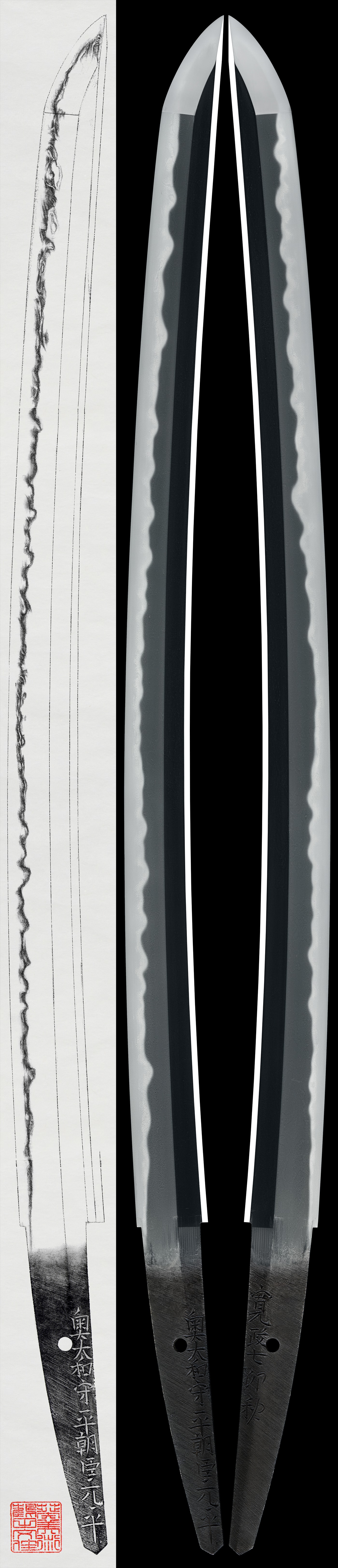
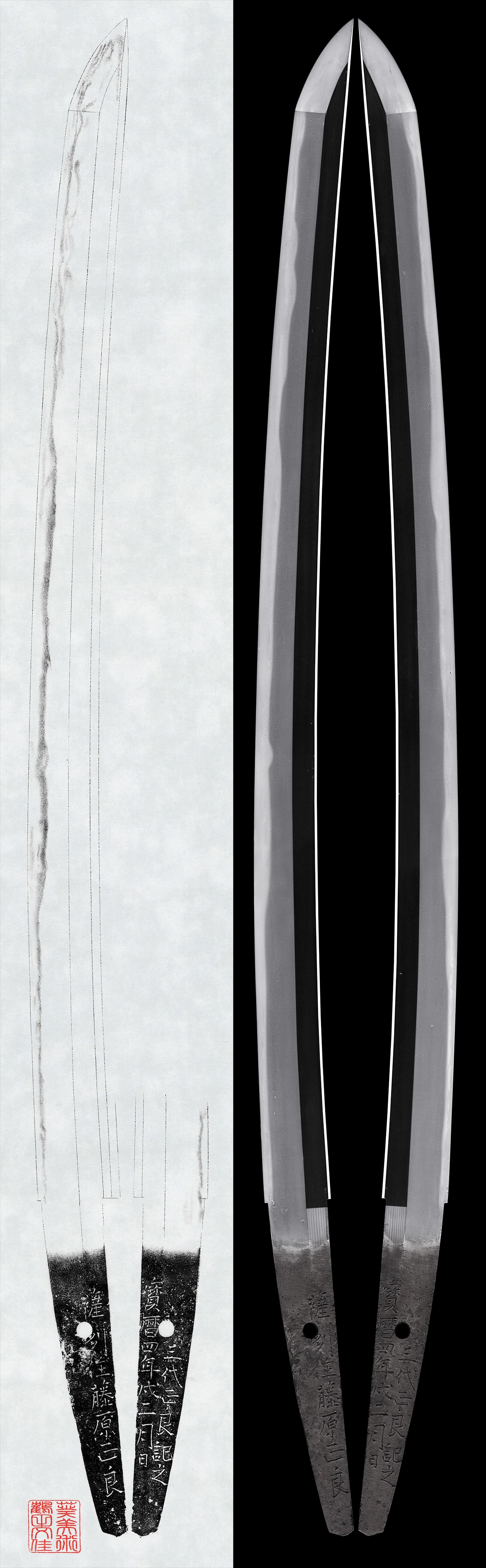
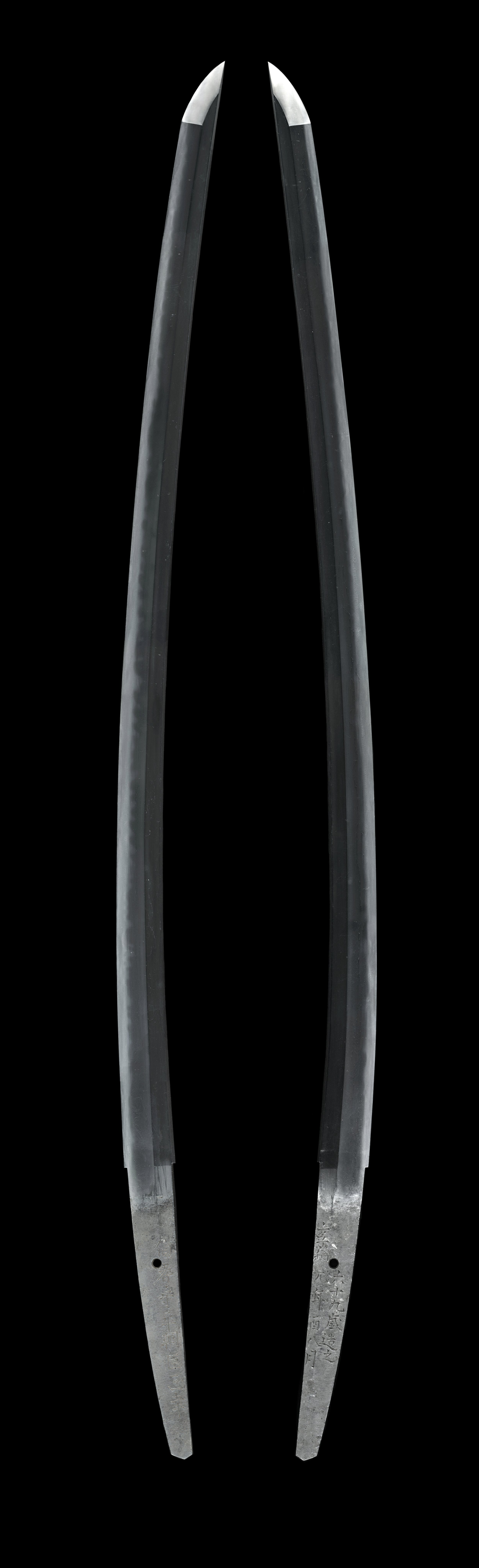
Oku Motohira, common name Oku Kozaemon, was the eldest son and heir of Oku Motonao, born in Enkyo 1 (1744). He learned forging from his father and earned early a reputation for surpassing his teacher, his work appearing from the Meiwa era and rising sharply in volume from about An'ei 8 to 9. The published sources place him by a single recurring pairing that has held ever since: with Hoki no Kami Masayuki he is acclaimed as one of the soheki, the twin pillars of Satsuma , eleven years Masayuki's junior. His signature itself maps his career. In his An'ei and early Tenmei years he cut Satsuyoshi Motohira; from Tenmei 5 he cut Satsuhan- Oku Motohira; and after receiving the title Yamato no Kami in Kansei 1 (1789) he most often cut the long Oku Yamato no Kami Taira Ason Motohira. He worked into extreme old age, with a dated and age-inscribed piece from the very year of his death, Bunsei 9 (1826), at eighty-three.

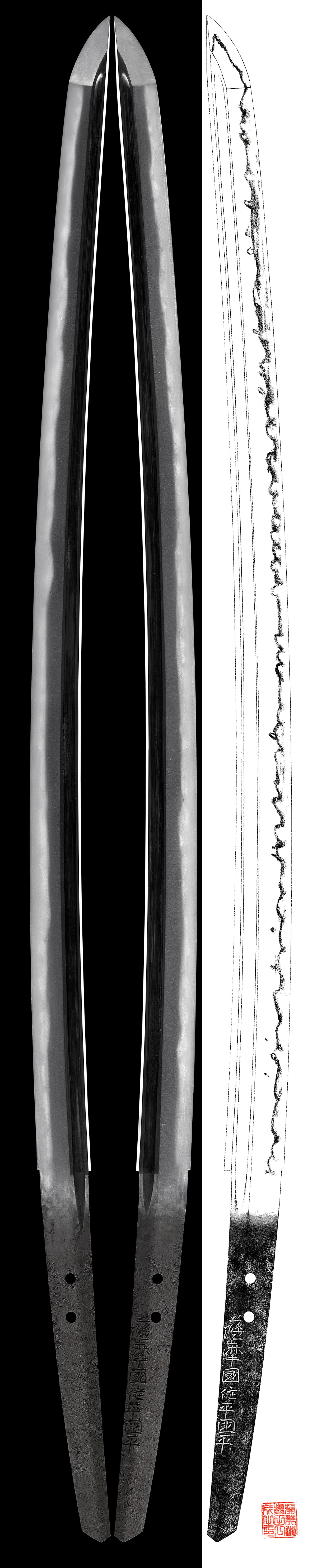
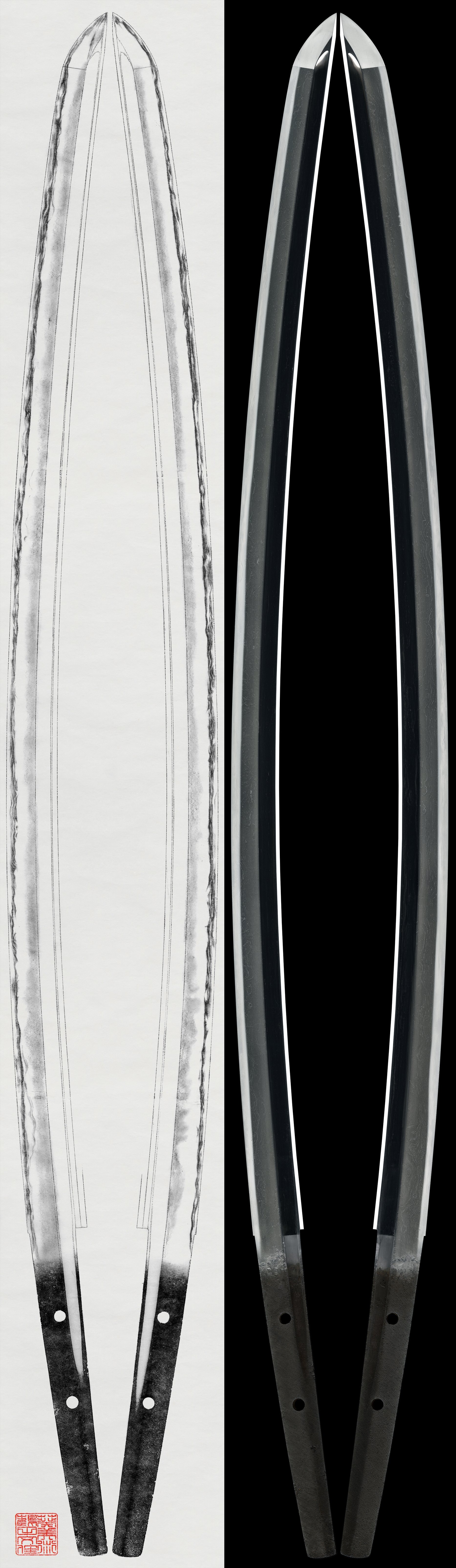
His characteristic hand is a broad, imposing the sources name his favored -. The body is wide in with ample and an extended , and the temper is a shallow -toned into which he sets pointed , at times opened at the base, sometimes widening to . The is deep and the thick and strong with mixed, and through the run frequent and long , the streaming Satsuma -lines the published sources name imozuru, the yam-vine, recording on one that the enter thick to show "vine-like -lines" (「芋蔓状の沸筋」). The pointed teeth and the running vine are the spine of his recognition, a - read in coarse rather than in clove-flower.

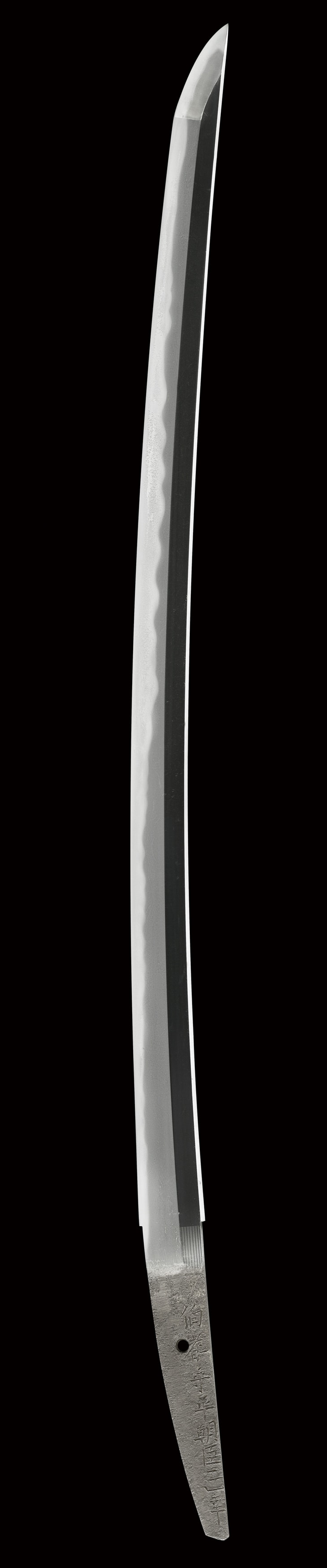
The is the constant beneath. It is a well-forged , often a tightly packed with mixed , carrying thick and , on his finest pieces bright and clear. Over it the runs in or straight, turning back in , the point swept with and on his most vigorous work flaring to a flame-like cast. There is one feature the published sources single out as a point on the tang itself: the is almost always , narrowed toward the tip in a -like manner to a sword-shaped point, a form they note did not change throughout his life, the long signature cut boldly with a thick chisel and frequently carrying his age.

His record divides cleanly by period. The earlier work, dated through the An'ei years and into early Tenmei, is read as a calmer manner before the full hand emerges: a shallow -toned temper, at times a wide undulating into gentle , deep in with well-attached and a bright clear . The sources give it a name, reading one Tenmei 5 piece as a Shinkai-like shallow of his earlier phase and a Tenmei 2 piece, among his early works, as a Shinkai manner of the Osaka tradition. The forging beneath, the tight , is already the steel he carries into his prime, so the early is the hand held quieter rather than a separate school. He also forged often with his younger brothers Mototake and Motoyasu, who signed independently only rarely and whose skill the sources hold below his; joint signatures of two or three of the brothers survive and are themselves called precious, the workmanship on them no different from his sole-signed blades.

What sets him within his province is exactly the pairing the judges name and the manner they return to. He is read first against his elder townsman Masayuki, the two held together as the twin pillars of Satsuma , and the published sources keep returning to the description of him: his swords are generally, in their words, "broad in body and imposing" (「身幅が広く、堂々とした」), excelling in with much coarse in a flamboyant style, and he is the smith they say "excelled in the -" (「相州伝を得意」). His bright deep- with pointed , his running imozuru and his flaring are the grounded traits that set him apart, not a borrowed comparison. He stands at the head of the Oku line, the hand by which a Satsuma blade of his descent is read.

For the collector he is one of the great names of late Satsuma, and Fujishiro grades him Jo-jo . He has no National Treasures and no Important Cultural Properties; his record on the modern designation tiers runs through the rank, where twenty-six of his works are held, almost all and signed across a working life from An'ei to his death year, with one carrying the provenance of the Matsue Matsudaira family. Most designated blades, including those in private hands, are held rather than traded, and a fine signed Motohira of his characteristic - comes to market only from time to time and with patience, a substantial thing for a collector to encounter when it does. His work is, comparatively, among the more findable of the first-rank masters, more so than the locked heritage of the older traditions, but a dated, age-inscribed in his full vigorous manner remains a landmark acquisition, a document of how the Satsuma school reached its late summit.

Kantei

one Satsuma shinshinto Soshu-den hand read across its career: the prime broad-bodied gunome-midare with togariba, deep nioi and thick ara-nie carrying the running imozuru nie-lines (sunagashi, long kinsuji) over a tight ji-nie itame, the boshi flaring kaen-like; with an earlier register, the calmer shallow-notare suguha the sources read as Shinkai-like Osaka shinto manner, and a recurring contrast that defines him against Masakiyo and pairs him with Masayuki

Oku Motohira, common name Oku Kozaemon, was the eldest son and heir of Oku Motonao; born in Enkyo 1 (1744), he learned forging from his father, earned early a reputation for surpassing his teacher, and died in Bunsei 9 (1826) at eighty-three. He is read first against his elder townsman: together with Hoki no Kami Masayuki he is acclaimed as one of the twin pillars of Satsuma , eleven years Masayuki's junior. His signature itself maps his career, the published sources cutting it Satsuyoshi Motohira in his An'ei and early Tenmei years, Satsuhan- Oku Motohira from Tenmei 5, and Oku Yamato no Kami Taira Ason Motohira after he received the title Yamato no Kami in Kansei 1 (1789). His characteristic hand is a broad, imposing - : over a well-forged , often a tight with mixed , thick and , he tempers a shallow -toned with pointed , deep in , the thick with mixed, and through it run frequent and long , the streaming Satsuma -lines the sources call imozuru, the swept with and often flaring -like. His tang is almost always , narrowed toward a sword-shaped tip in a manner the published sources note did not change his whole life. His earliest work, dated from An'ei into early Tenmei, shows a calmer shallow- in the Osaka Shinkai manner before the full hand emerges.

Diagnostic discriminators

unique vs the Satsuma name for his long sunagashi and kinsuji

Observation by phase

His characteristic hand: the broad Soshu-den gunome-midare with imozuru

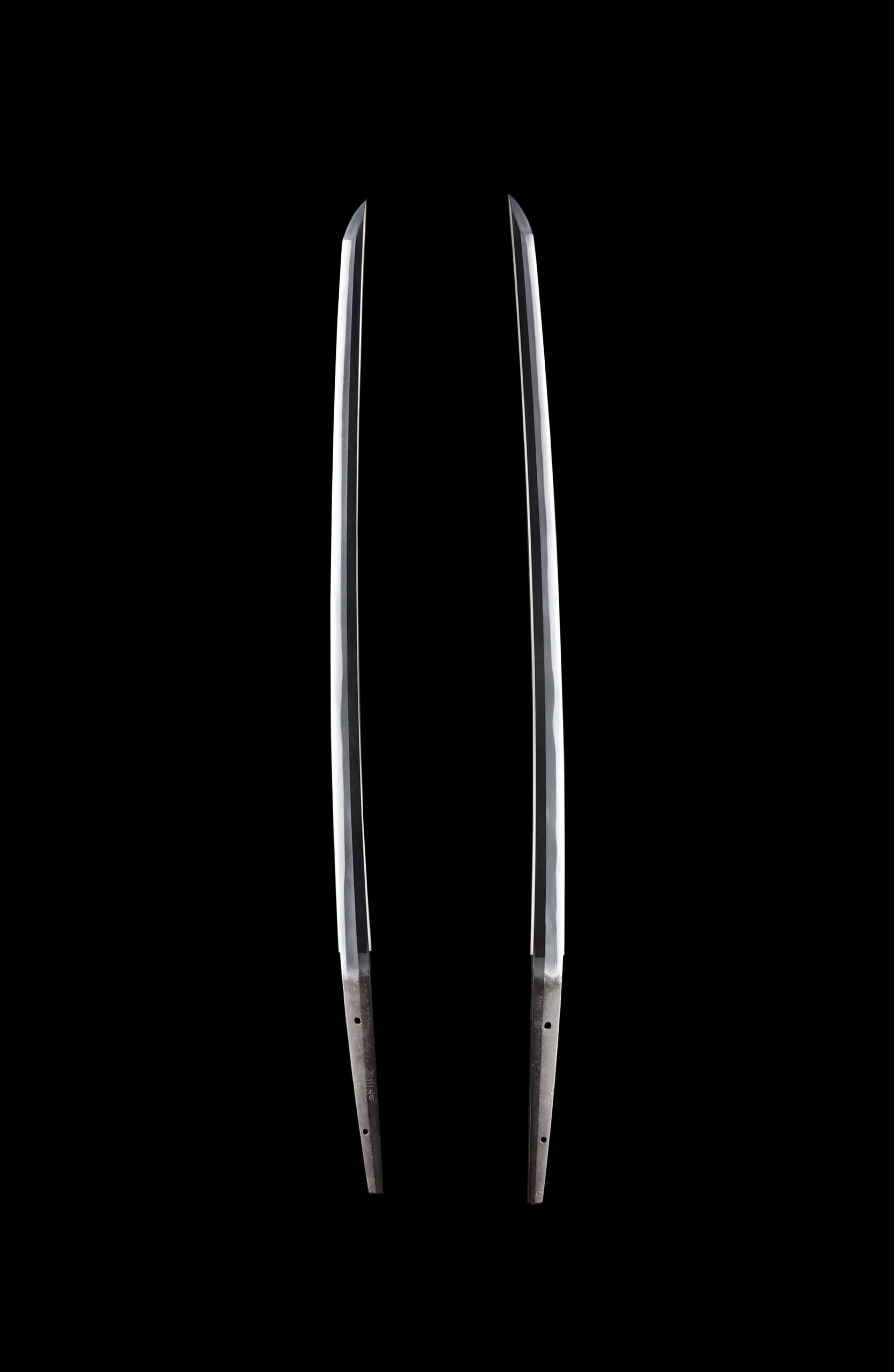
The recurring portrait the published sources give of Motohira is a broad, dignified , wide in with ample and an extended , the work the sources name his favored -. Over a well-forged , often a tightly packed mixed with , with thick and , he tempers a shallow -toned into which he sets pointed , sometimes opened-base , at times widening to ; and enter, the is deep, the thick and strong with mixed, and through it run frequent and long , the streaming -lines known in Satsuma as imozuru. The runs in or straight, turning back in , the point swept with and often flaring to a flame-like cast, sometimes tending to . The is almost always , narrowed toward a sword-shaped or tip with file marks, a tang form the sources note did not change throughout his life, signed with a bold long signature cut with a thick chisel and frequently carrying his age. On his finest pieces both and are bright and clear and the workmanship vigorous and imposing.

Sugata 姿
Jigane 地鉄
Hamon 刃文
Bōshi 帽子

His earlier face: the shallow notare-suguha in the Shinkai manner

A smaller, datable share of his record, falling in the An'ei and early Tenmei years before the full hand emerges, is read by the published sources as a calmer manner: a shallow -toned temper, at times a wide undulating into gentle , deep in with well-attached and bright clear , and entering, the activity quieter than his prime. The sources name two reference points for it. On a Tenmei 5 piece they call it a Shinkai-like shallow of his earlier phase; on a Tenmei 2 piece they read it, among his early works, as a Shinkai manner of the Osaka tradition. The beneath is a tight or with thick and , the forging he carries into his prime, so the face is continuous with his characteristic hand rather than separate from it, the temper simply held quieter.

Jigane 地鉄
Hamon 刃文
Scholarship

The published sources frame Motohira by a single recurring pairing: together with Hoki no Kami Masayuki he is acclaimed as one of the twin pillars (soheki) of Satsuma shinshinto, eleven years Masayuki's junior. This pairing is repeated across nearly every entry and is the spine of his connoisseurship, his favored Soshu-den the manner the sources return to.

The published sources track his career through his changing signature and his earlier manner: he signed Satsuyoshi Motohira in his An'ei and early Tenmei years, Satsuhan-shin Oku Motohira from Tenmei 5, and Oku Yamato no Kami Taira Ason Motohira after the Kansei 1 title, and his early work, before the full Soshu hand emerges, is read as a Shinkai-like shallow notare of the Osaka shinto tradition.

On his tang the published sources draw a constant: the nakago is almost always ubu, narrowed toward the tip in a funagata-like manner to a sword-shaped kengyo point, a form they note did not change throughout his life and worth attending to as a kantei point.

Designations

Kokuhō—
Jūyō Bunkazai—
Jūyō Bijutsuhin—
Gyobutsu—
Tokubetsu Jūyō—
Jūyō Tōken38

Elite Standing

0.16 across 38 designated works

Top 13% among smiths

Provenance

4 documented provenances across certified works by Motohira

Provenance Standing

0 works held in elite collections across 4 documented provenances

Top 61% among smiths

Raw score: 1.94 / 10

Blade Forms

Distribution across 38 ranked works

Signatures

Signature types across 38 ranked works

Currently Available

Lineage

TeacherMotonao
Motohira
Students (4)
  1. 1.Nobunao信直
  2. 2.Sukehira祐平1designated
  3. 3.Tsuguhira繼平
  4. 4.Tsuguhira繼平

Satsuma School

Other artisans of the Satsuma school

  1. 1.Yasuyo安代1 for sale20designated
  2. 2.Masayuki正幸4 for sale27designated
  3. 3.Masakiyo正清1 for sale26designated
  4. 4.Masayoshi正良1 for sale10designated
  5. 5.Yasuari安在4designated
  6. 6.Kunihira國平3designated
  7. 7.Masafusa正房3designated
  8. 8.Masakage正景3designated
  9. 9.Masayoshi正良3designated
  10. 10.Fuji富士1designated
  11. 11.Kageyoshi景吉1designated
  12. 12.Masachika正近1designated