War at home and trade abroad made Muromachi Bizen the busiest forge region in Japan: a century of Sengoku demand after the Ōnin War, and export missions to Ming China carrying blades by the tens of thousands.
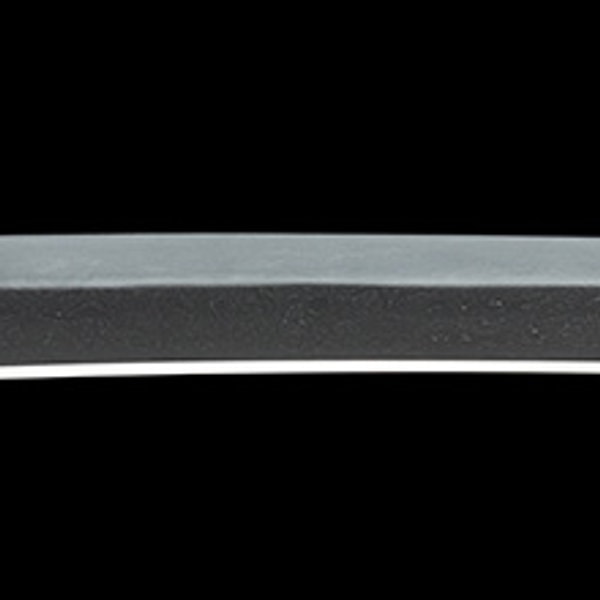
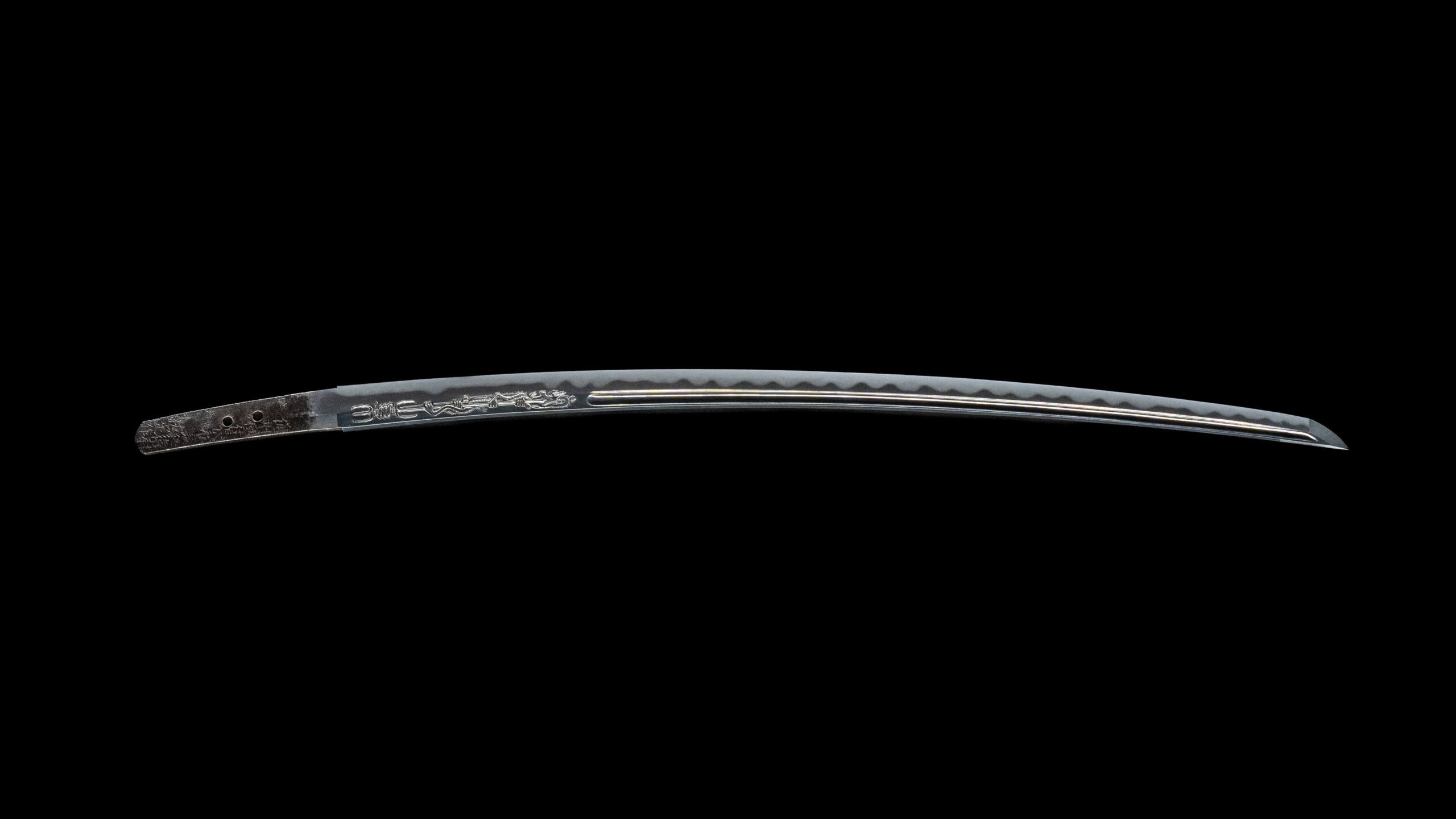
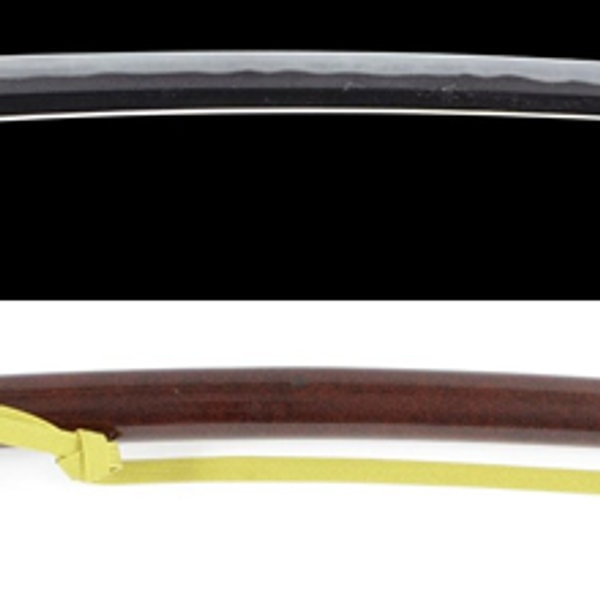
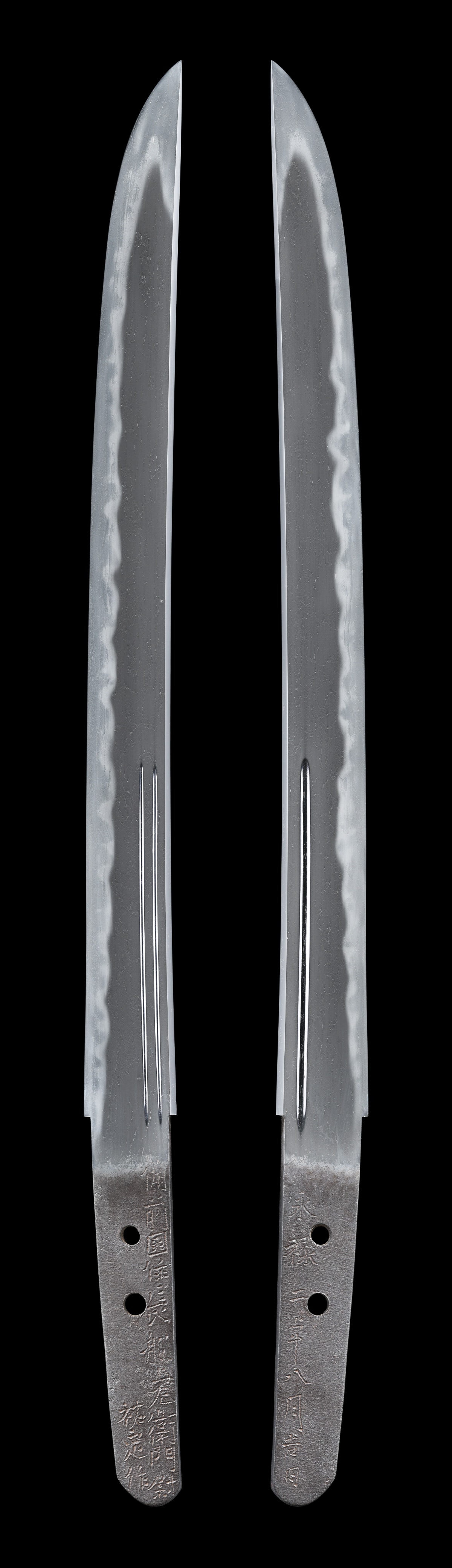
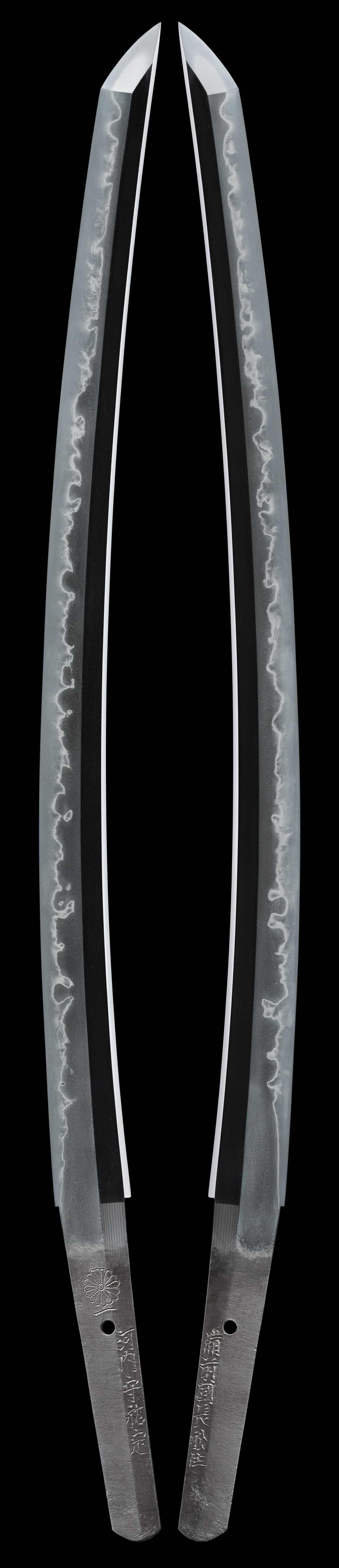
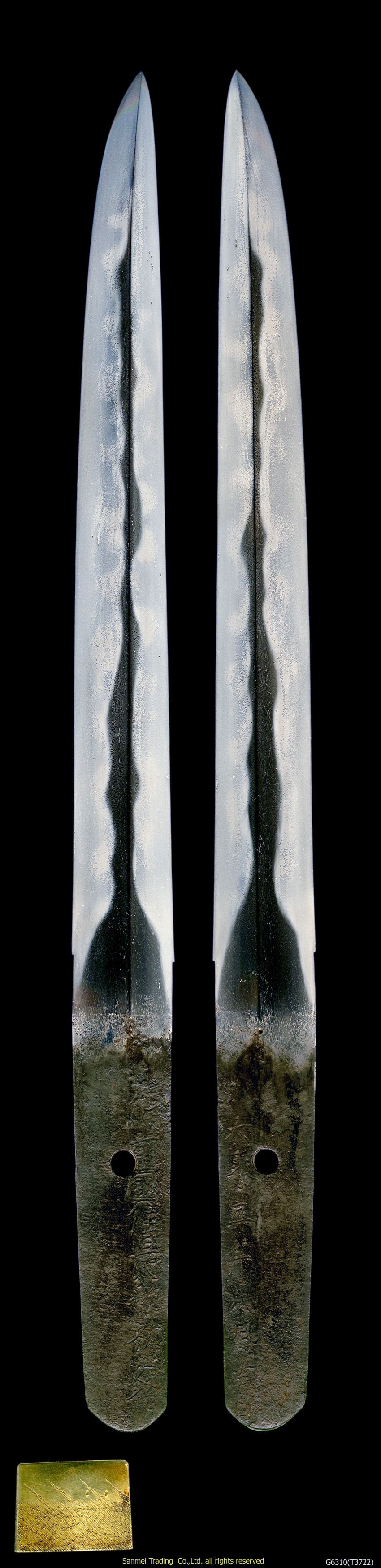
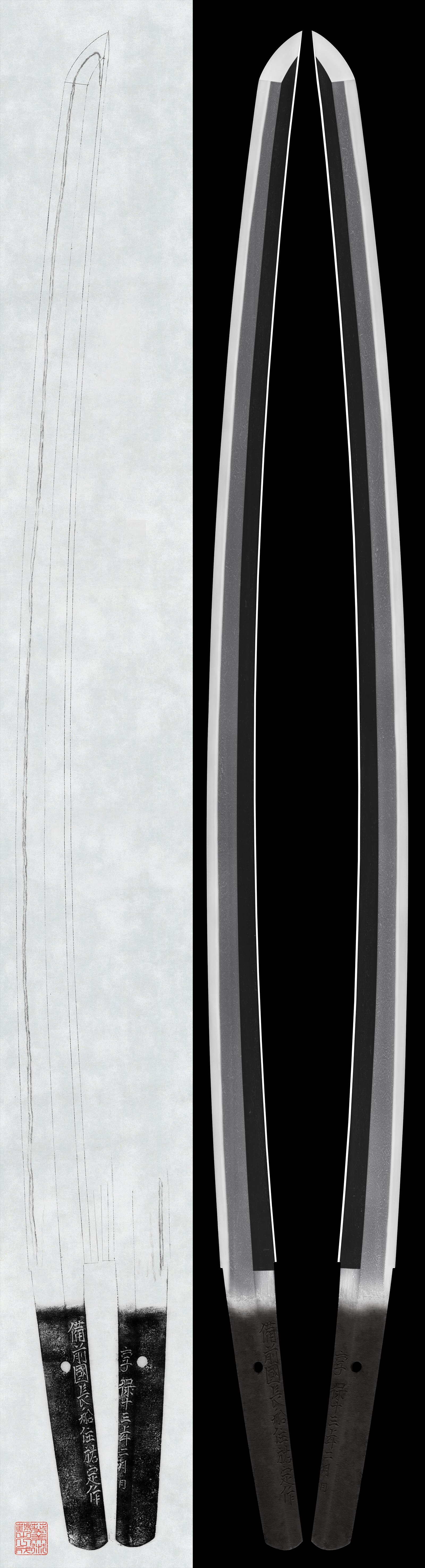
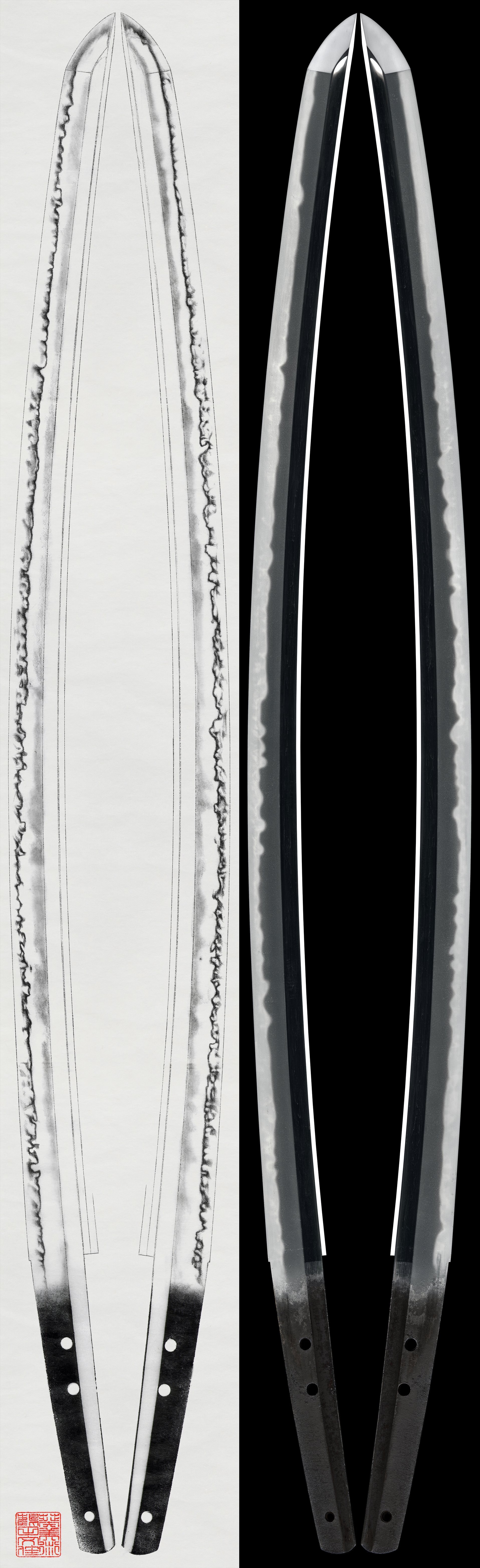
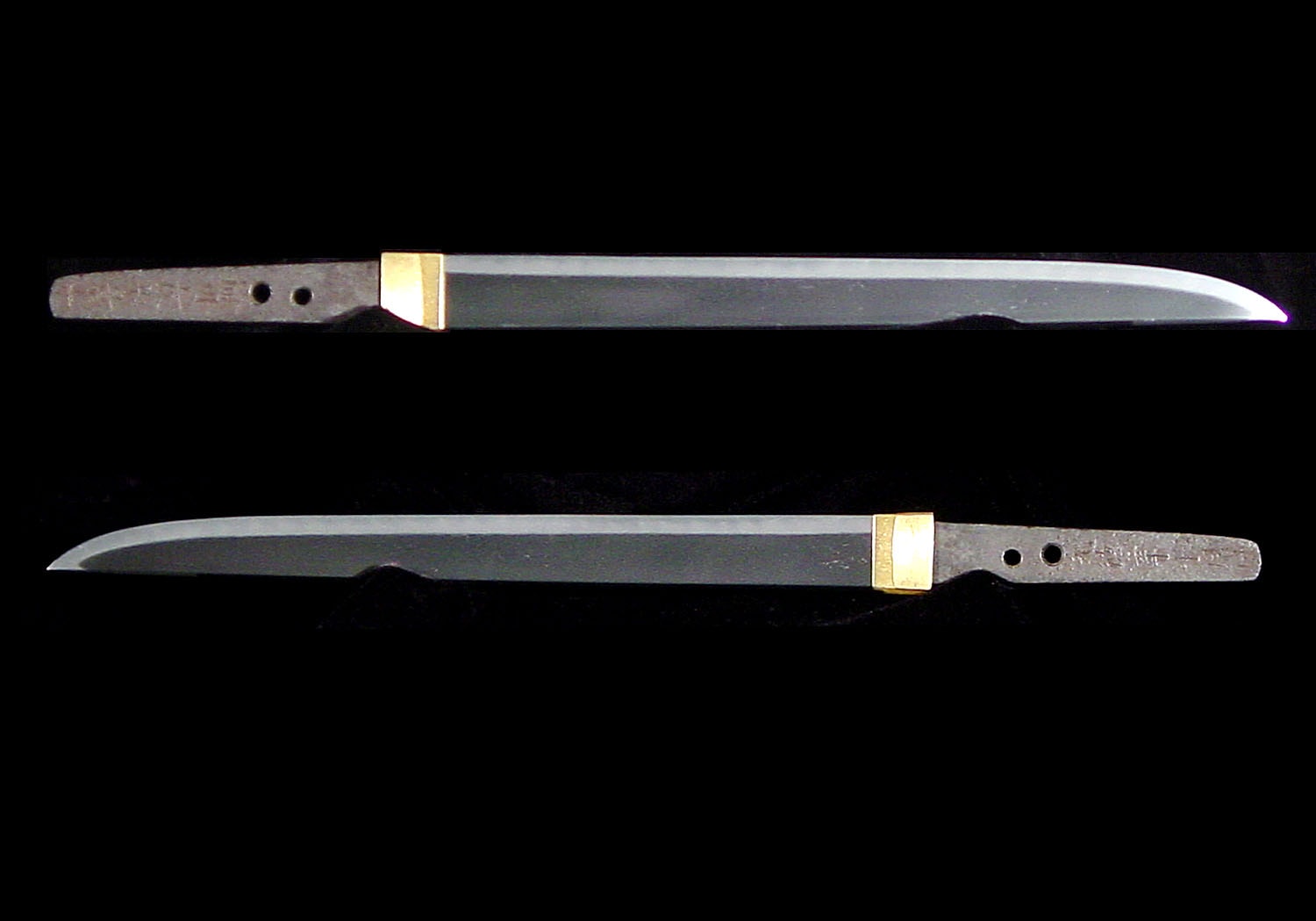
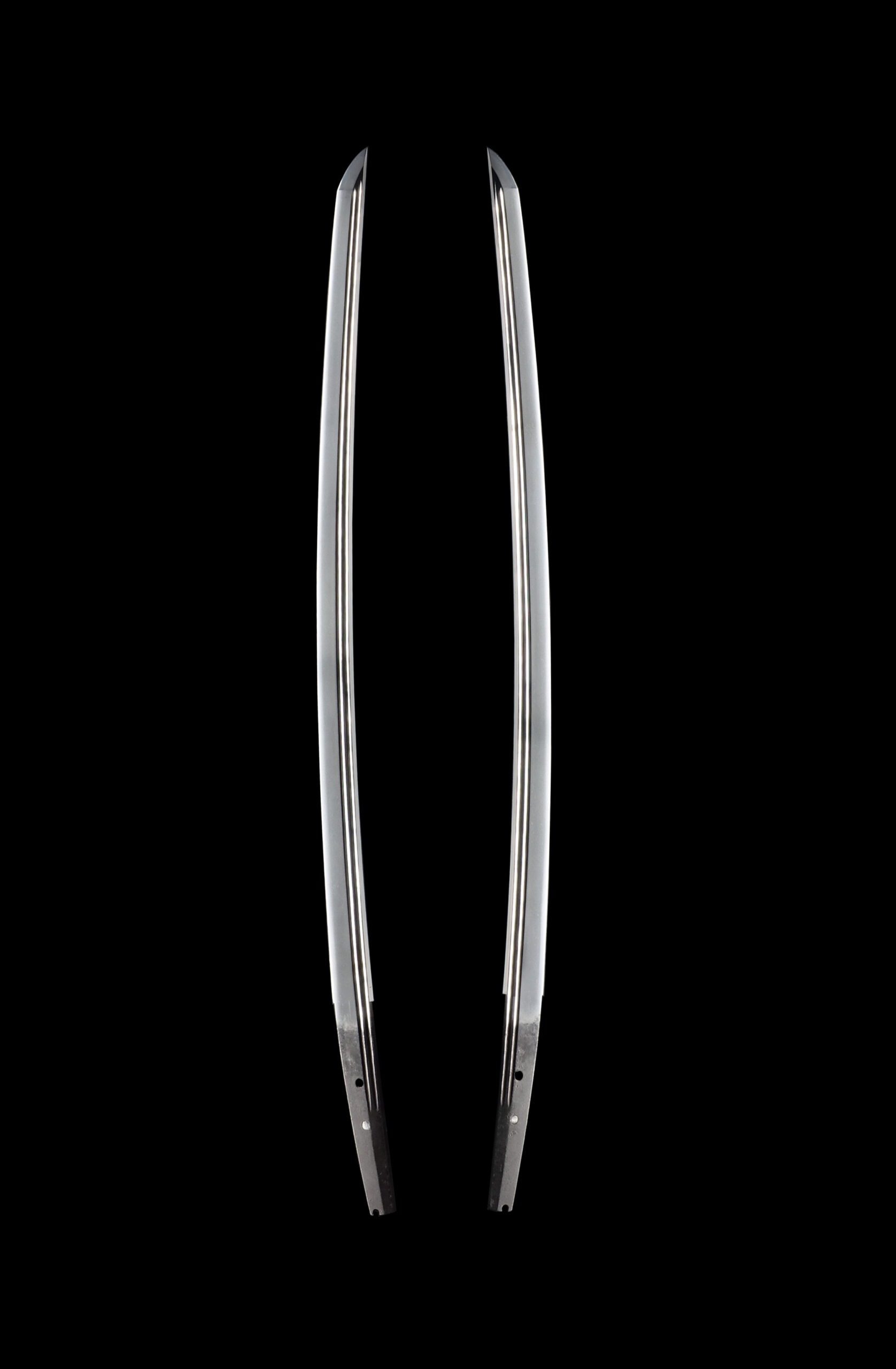
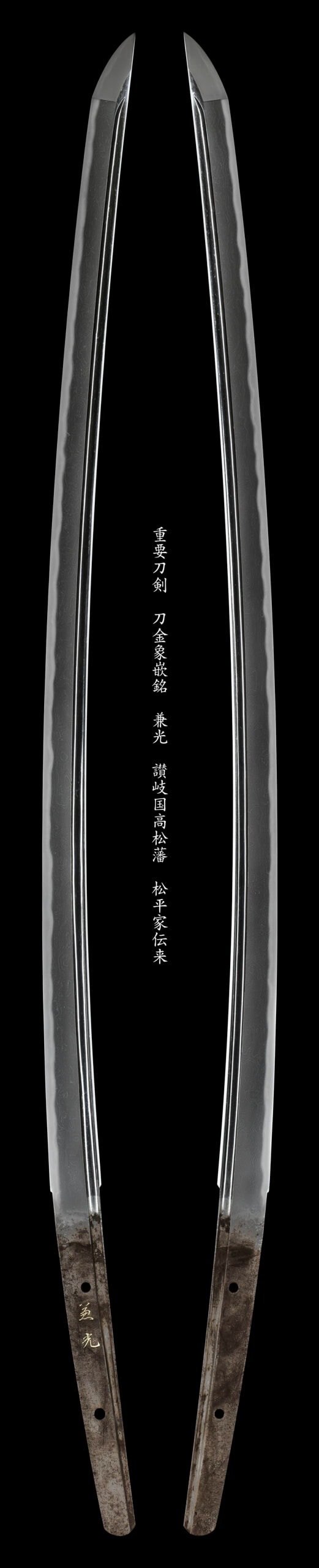
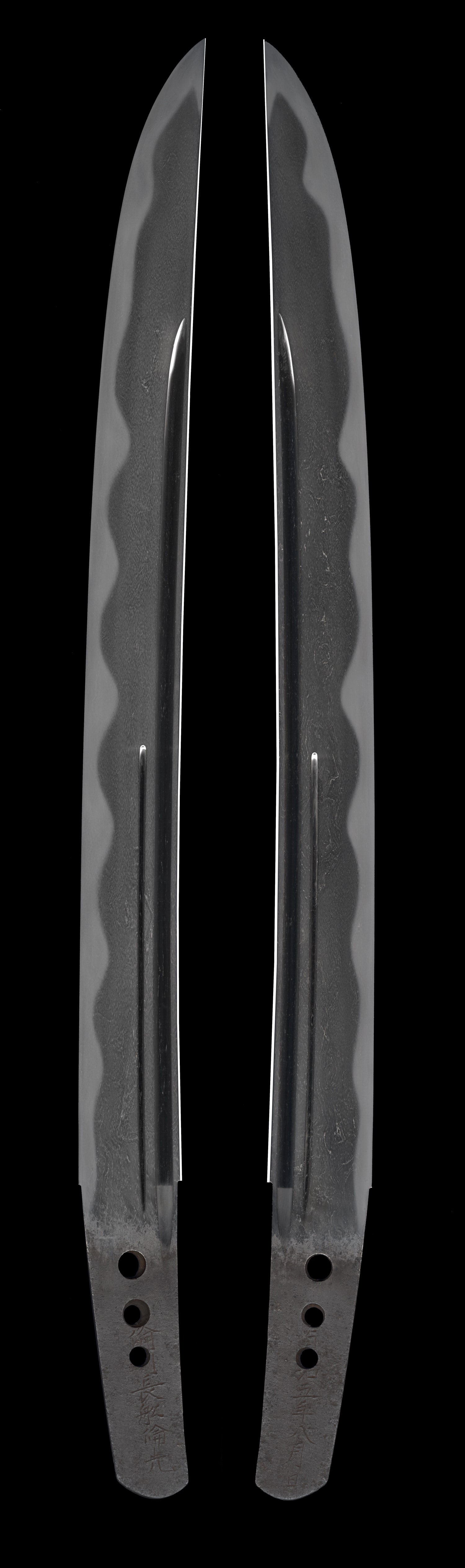
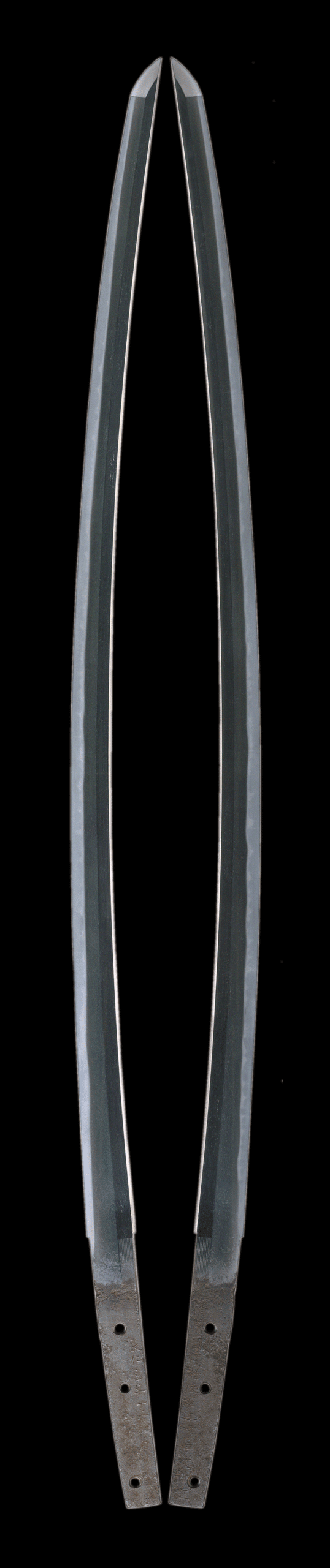
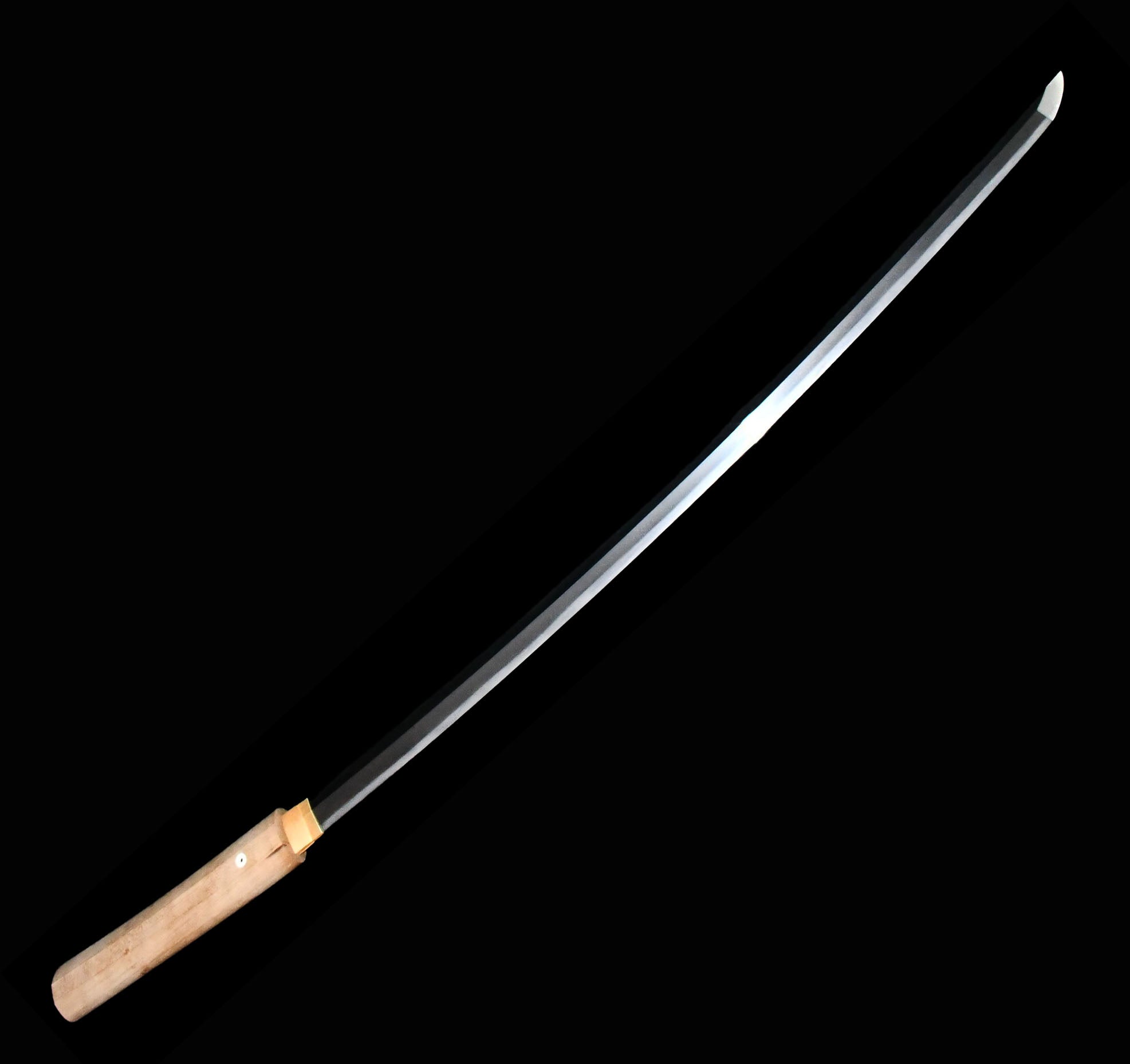
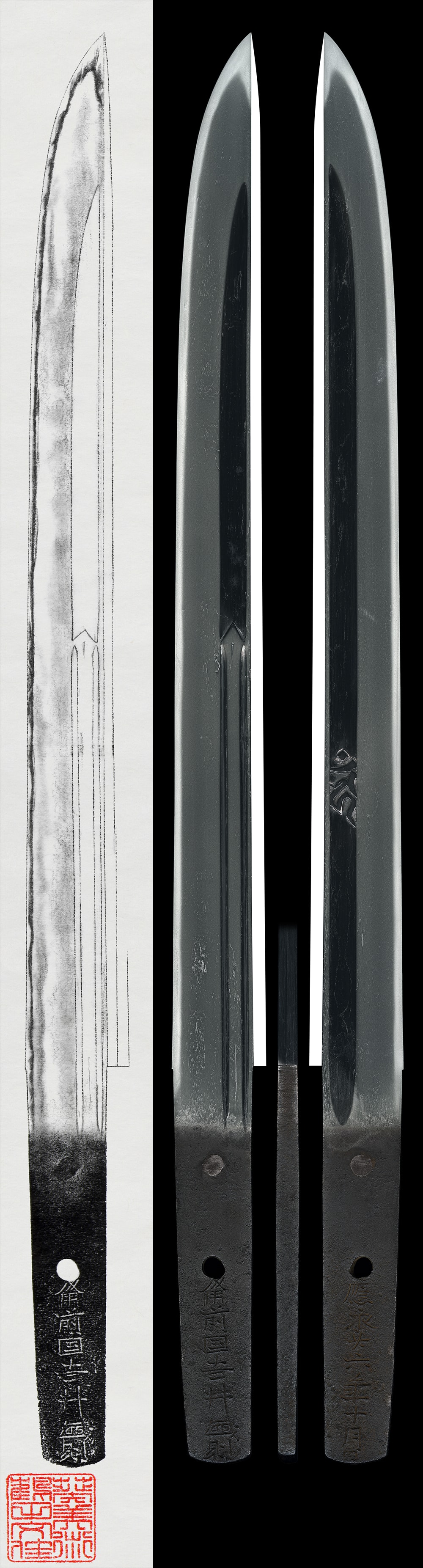
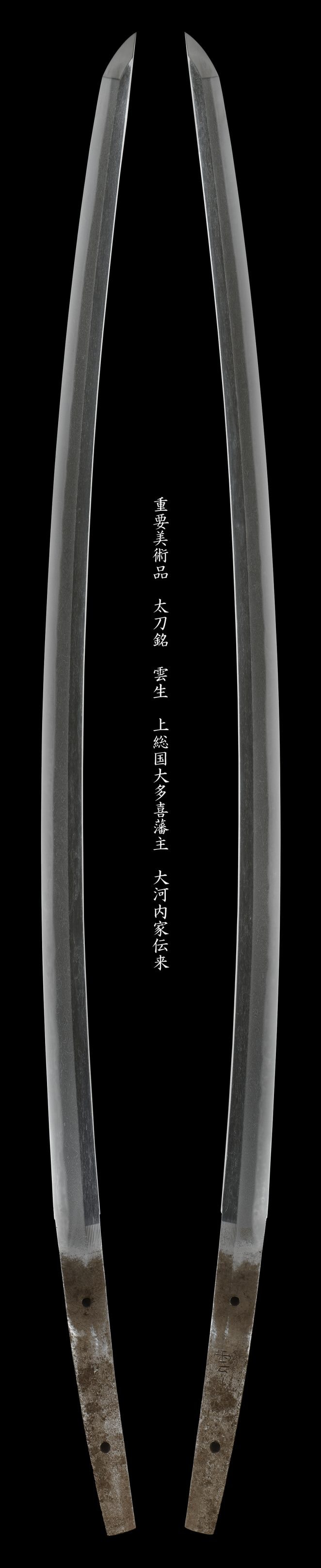
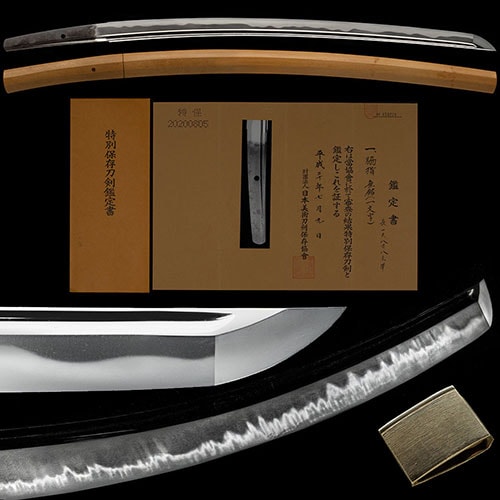
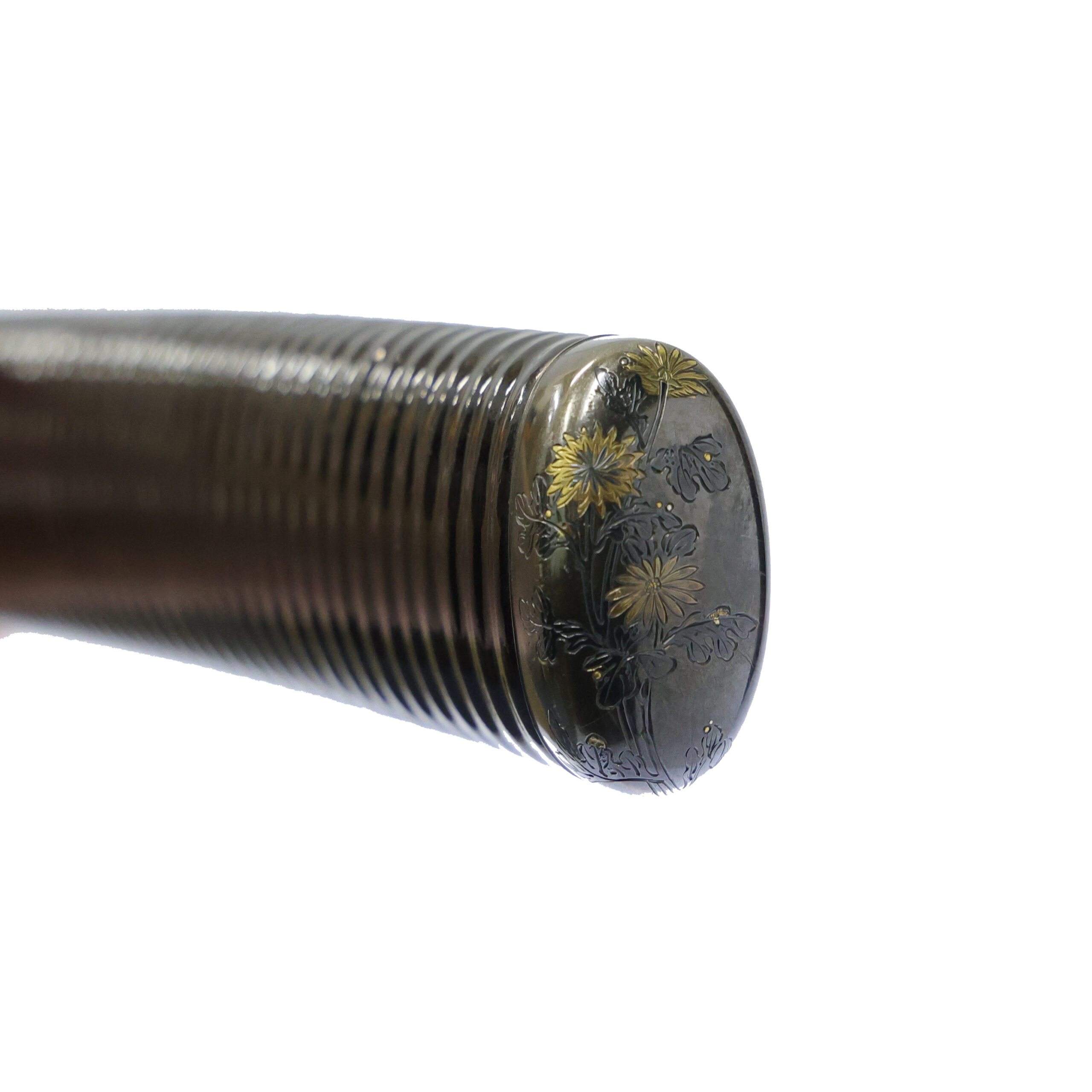
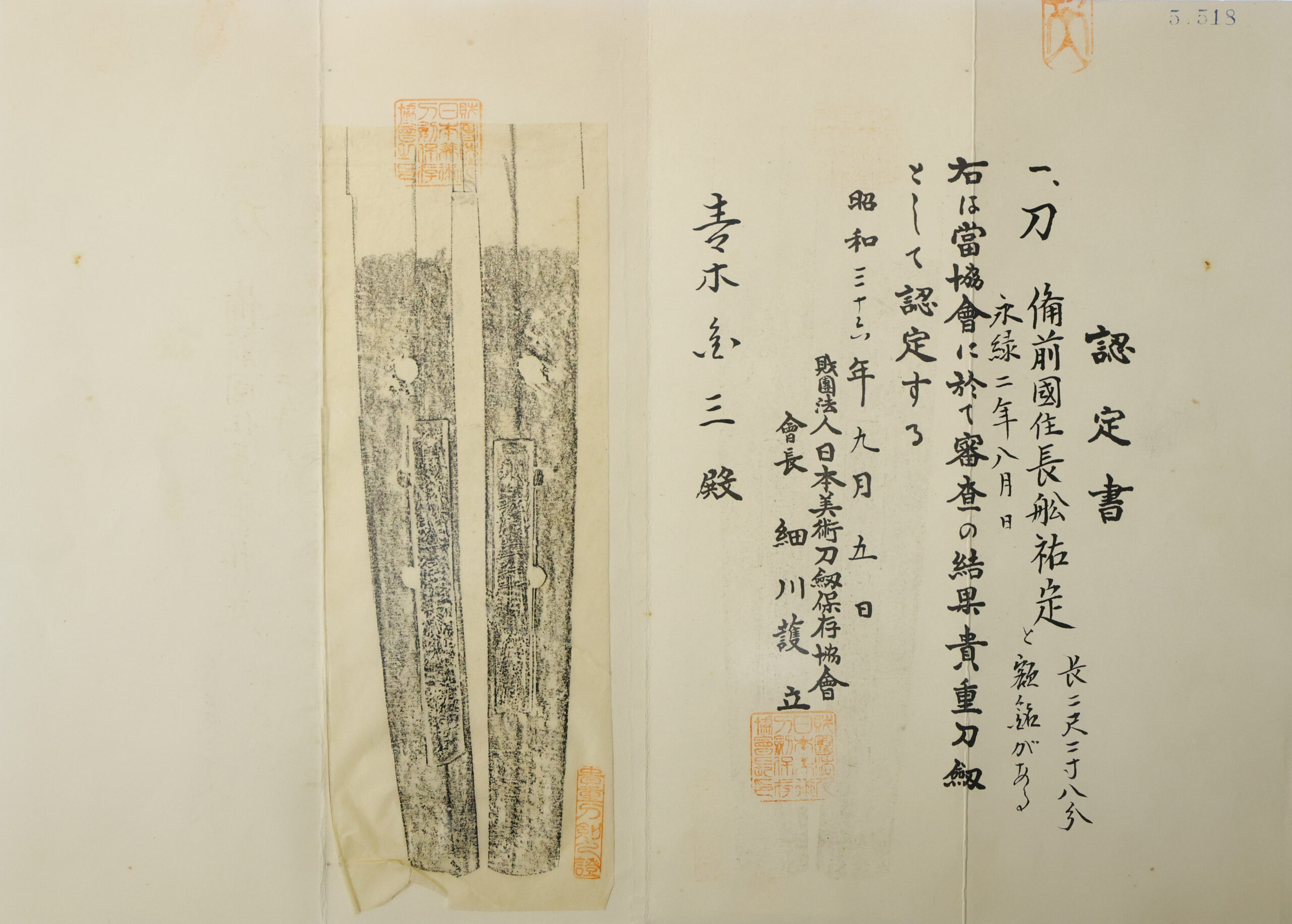
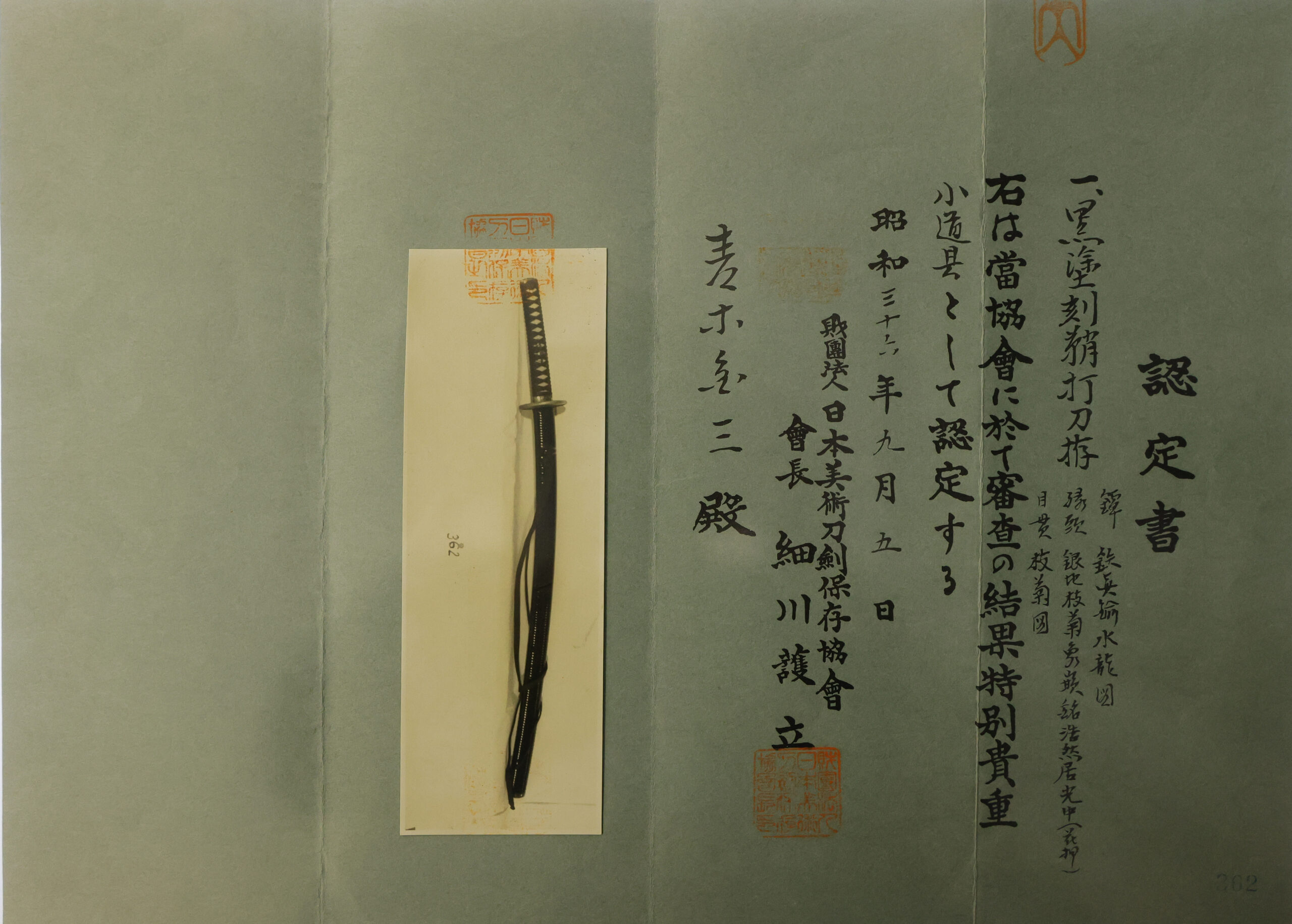
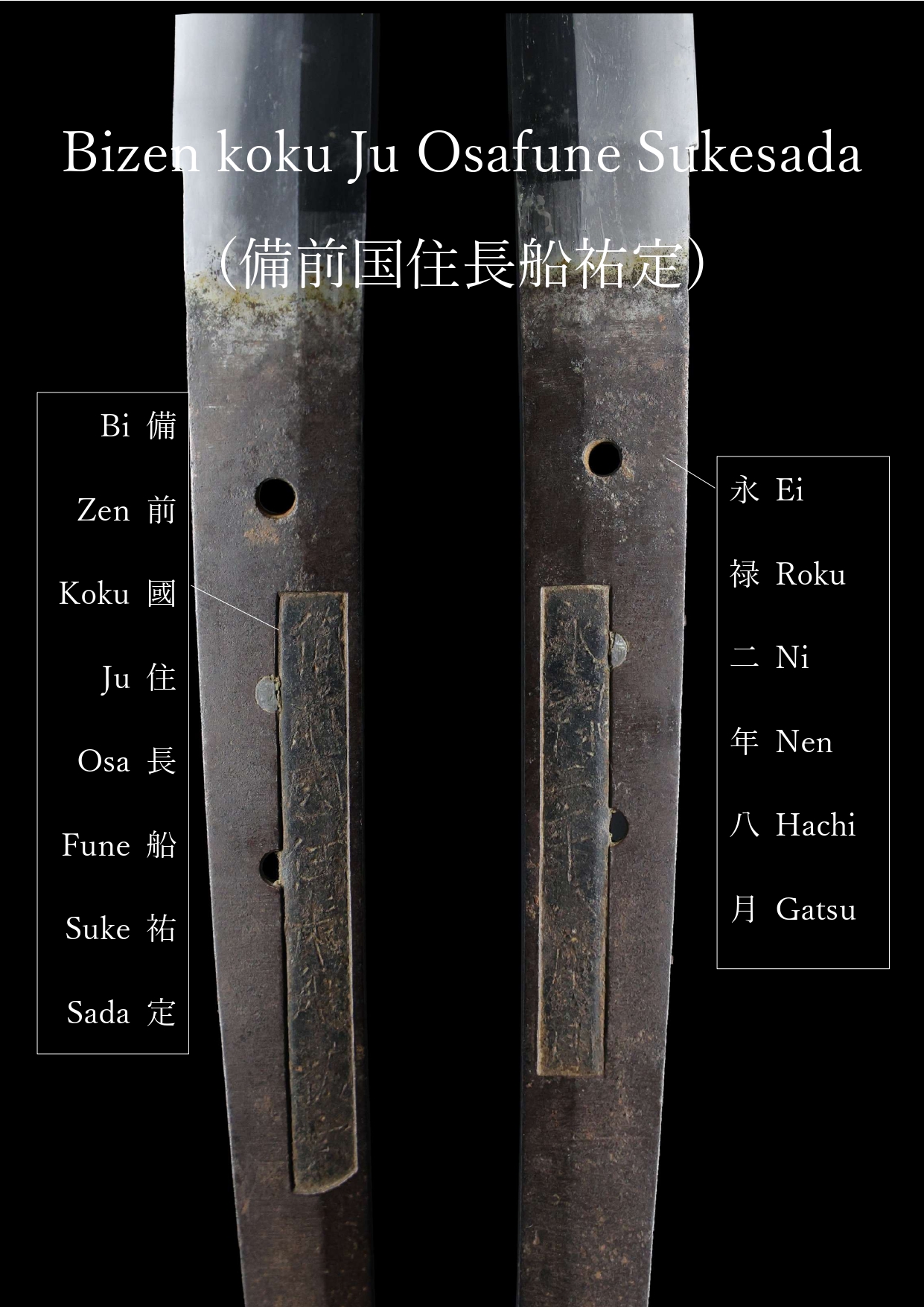
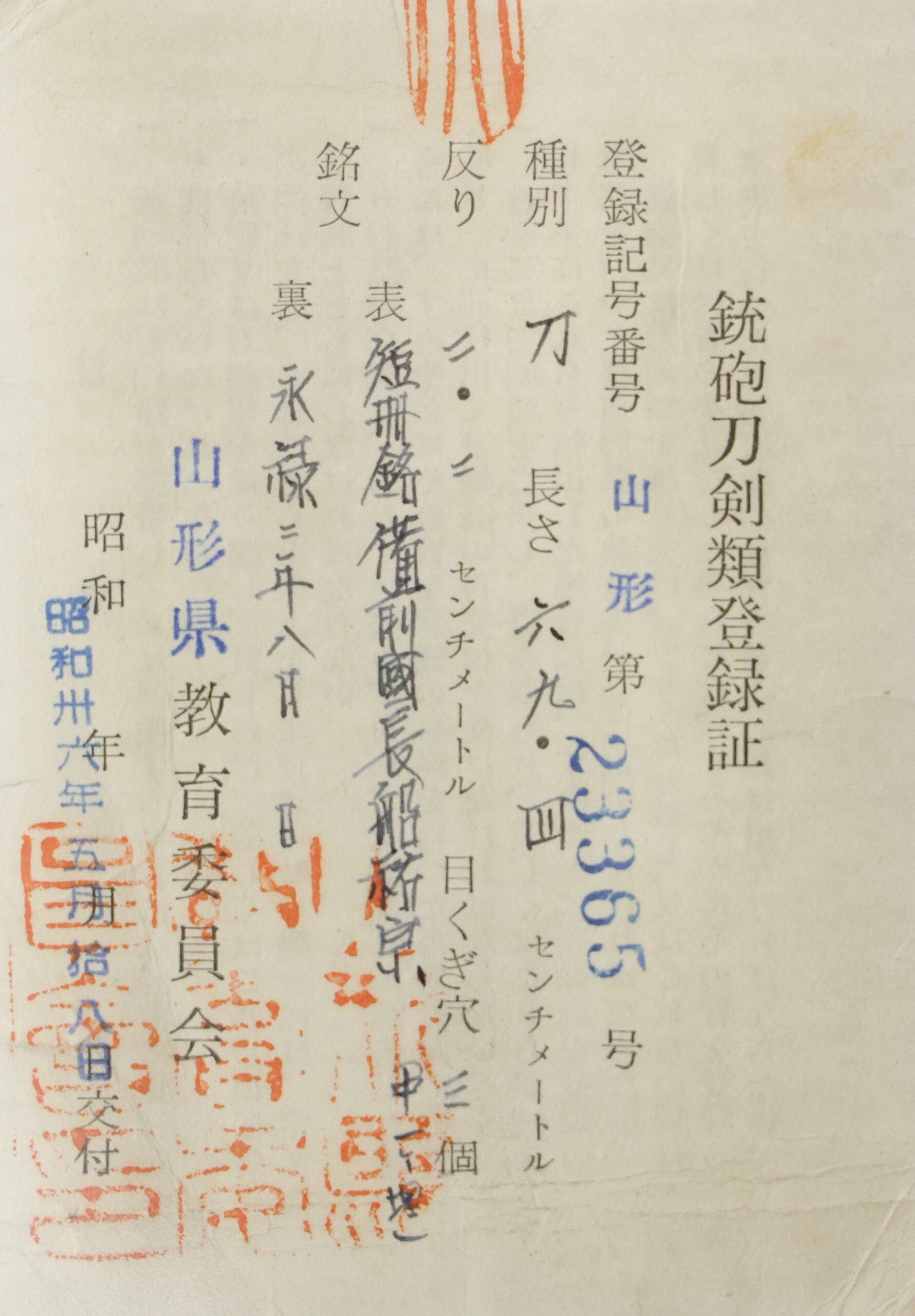
This antique Japanese Katana was signed by Osafune Sukesada in the 2nd year of the Eiroku era (1559), during the late Muromachi period. The blade comes with an NBTHK Kichou Certificate, while its koshirae (mountings) have a Tokubetsu Kicho Kodogu Certificate. The sword features a gakumei (framed signature) on the tang, indicating it was shortened but the original signature preserved.
 NihontoWatch
mei · Osafune · Muromachi · nagasa 69.4cm · sori 2.2cm
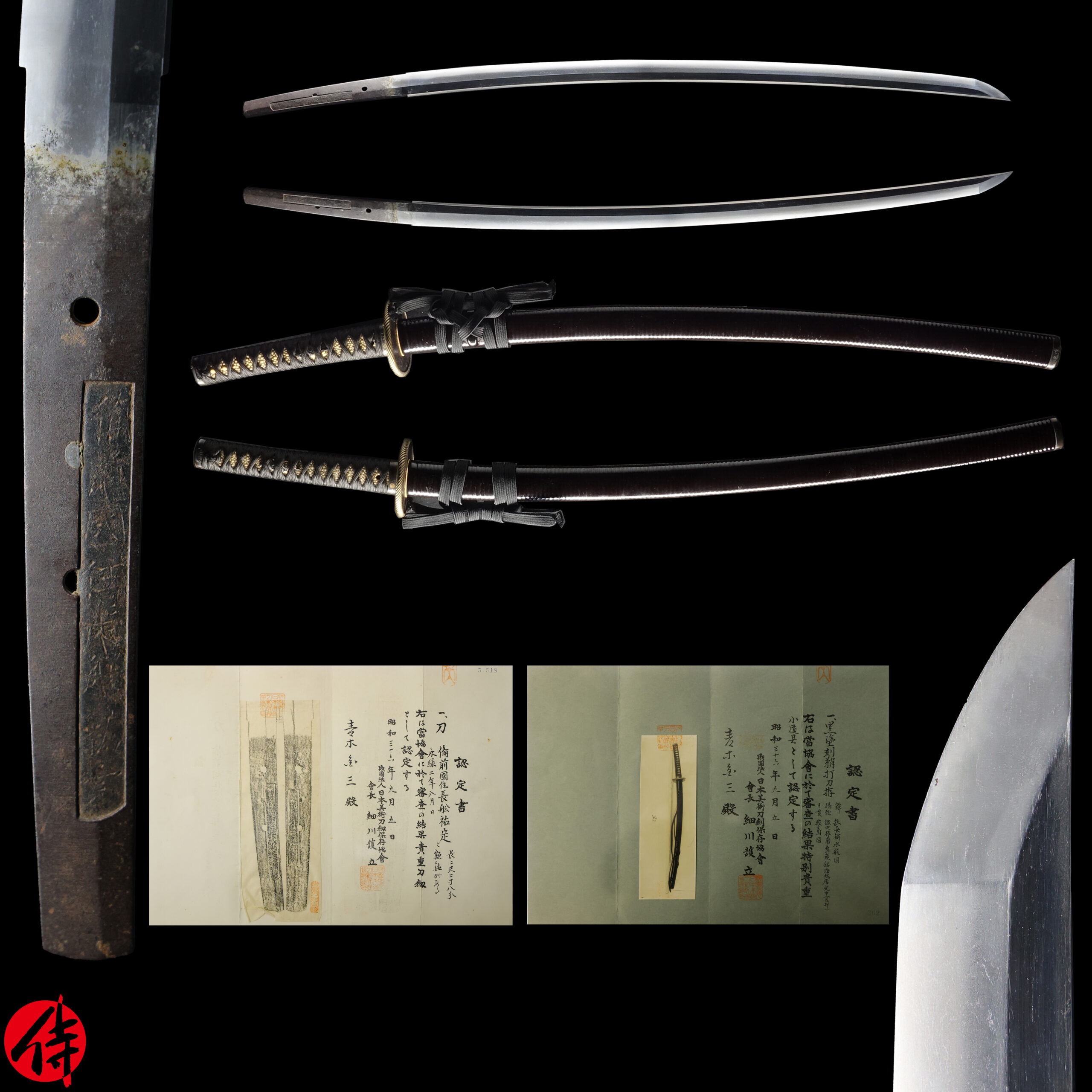
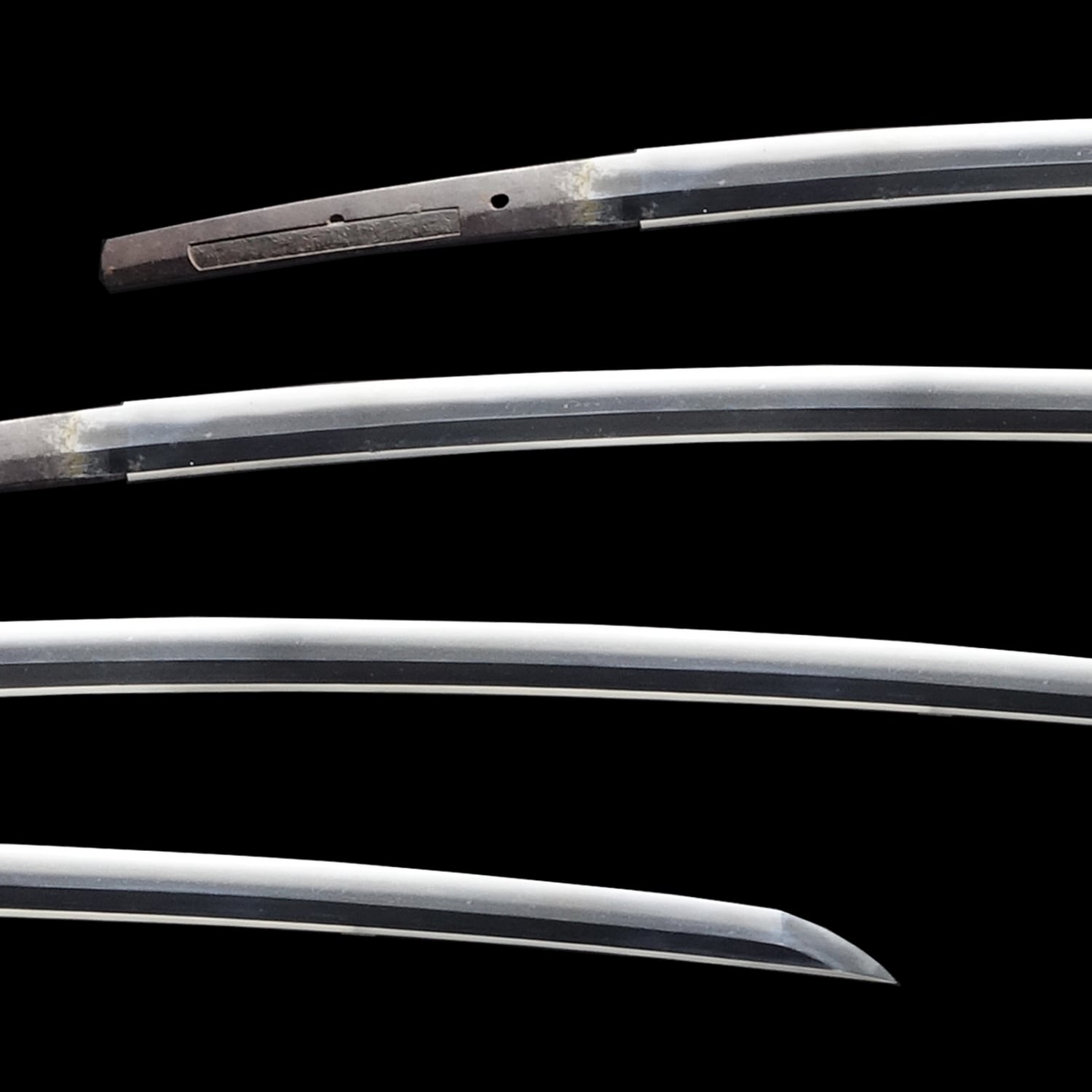
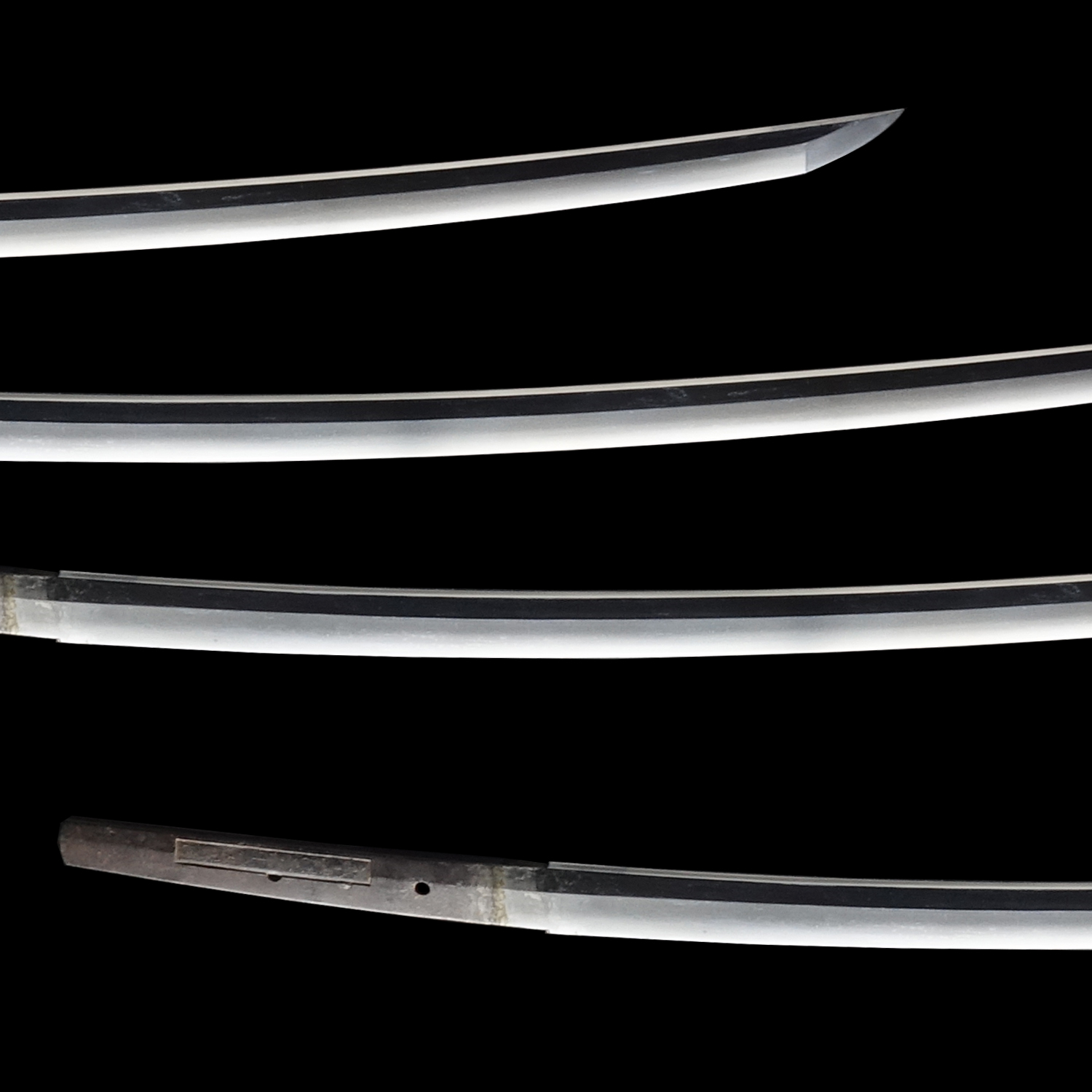
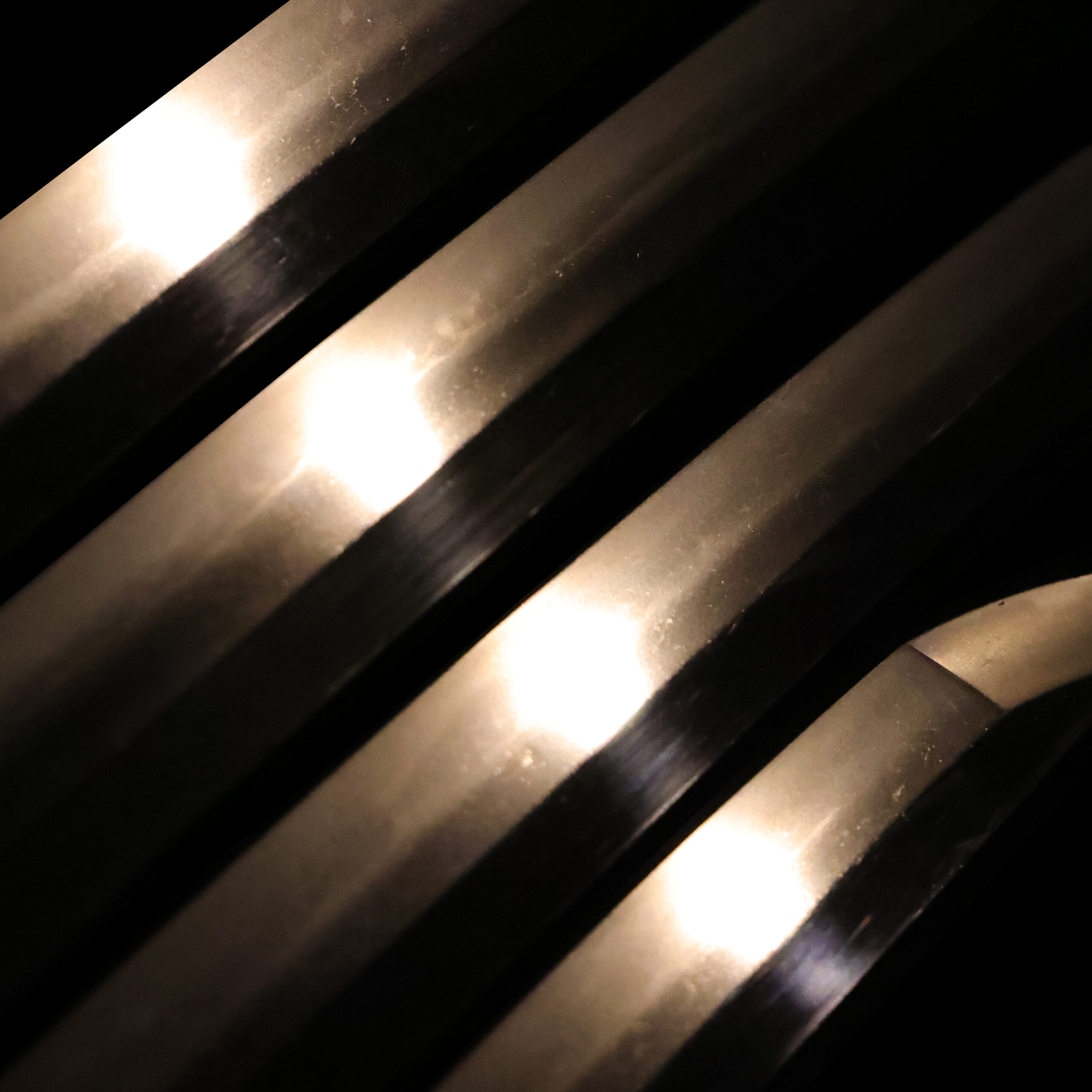
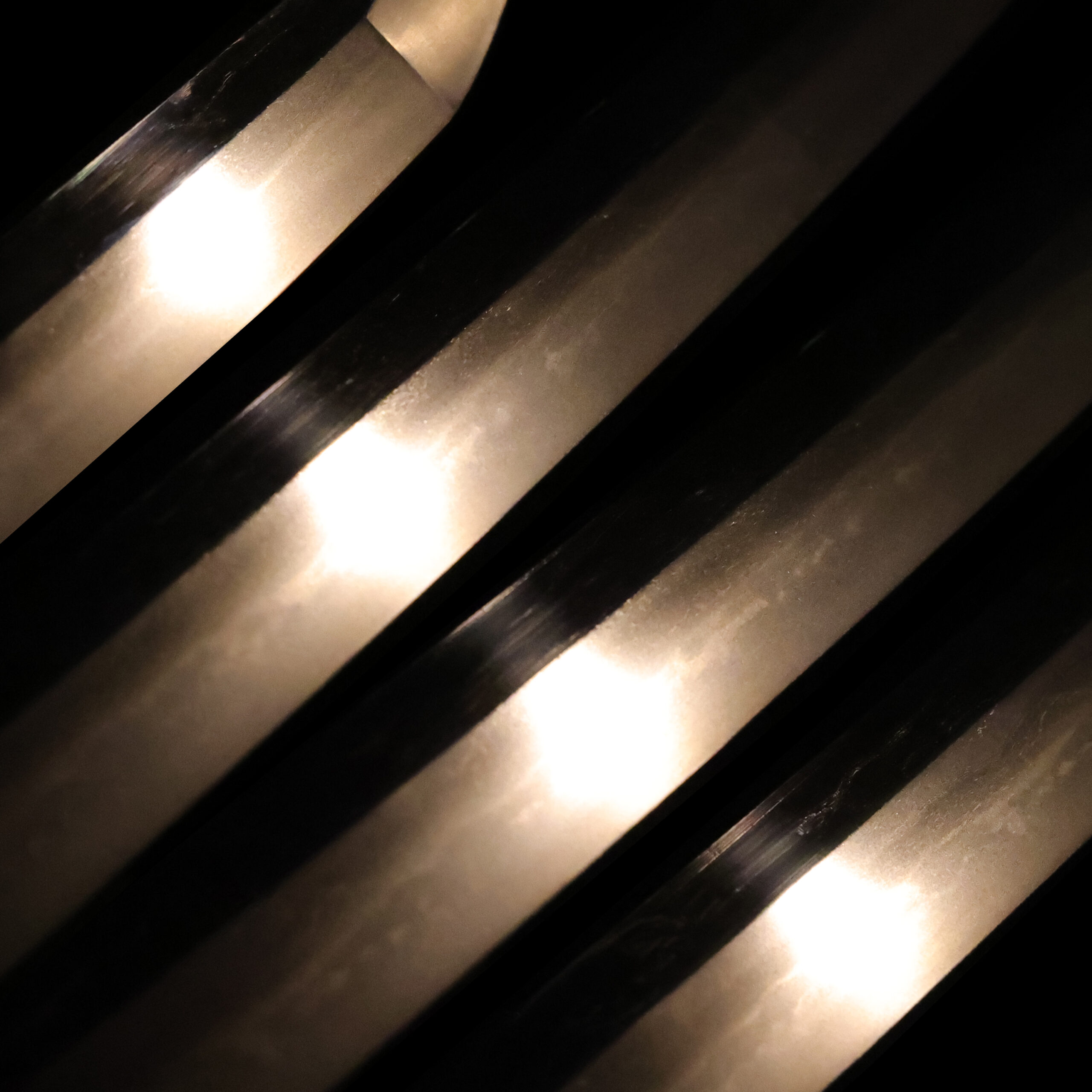
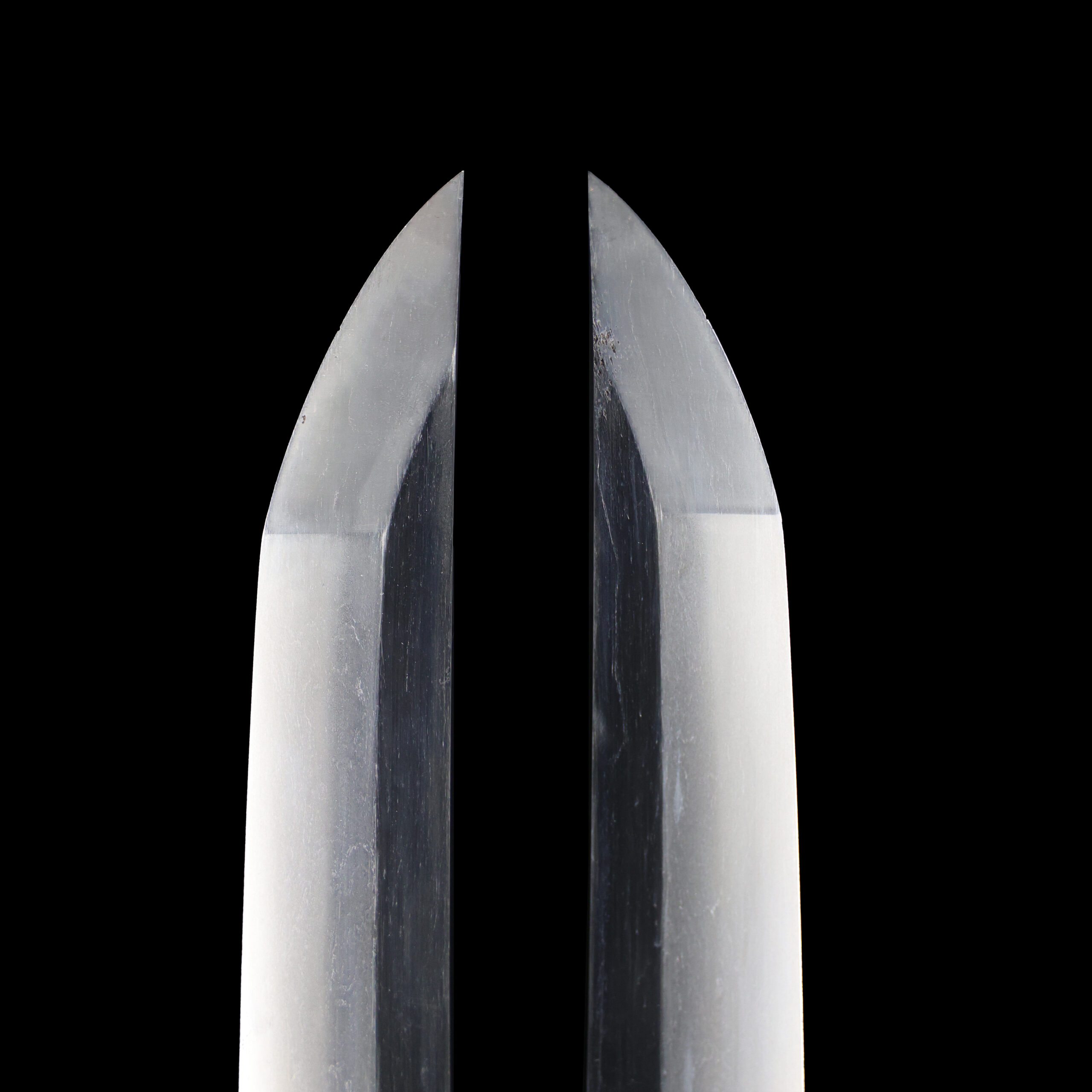
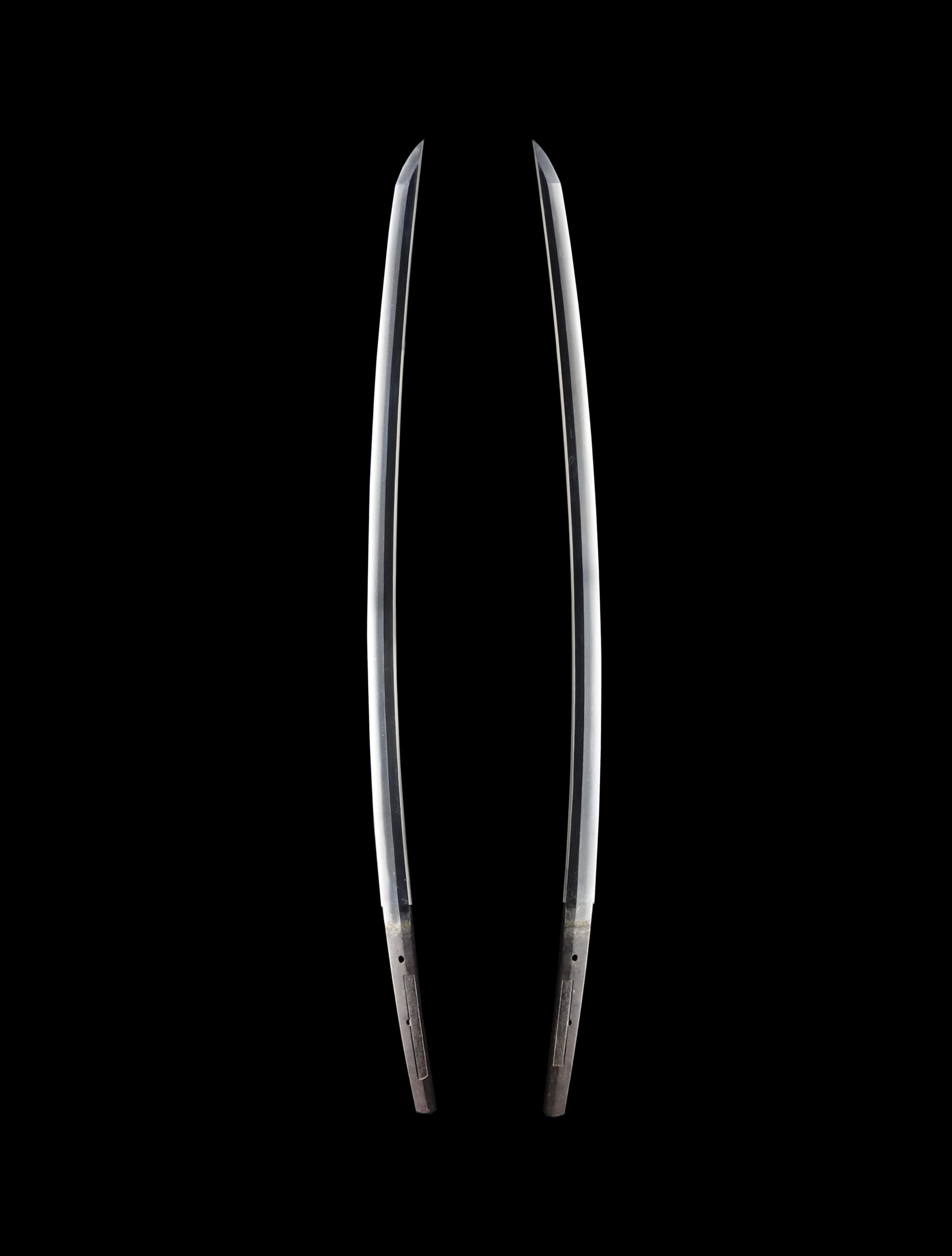
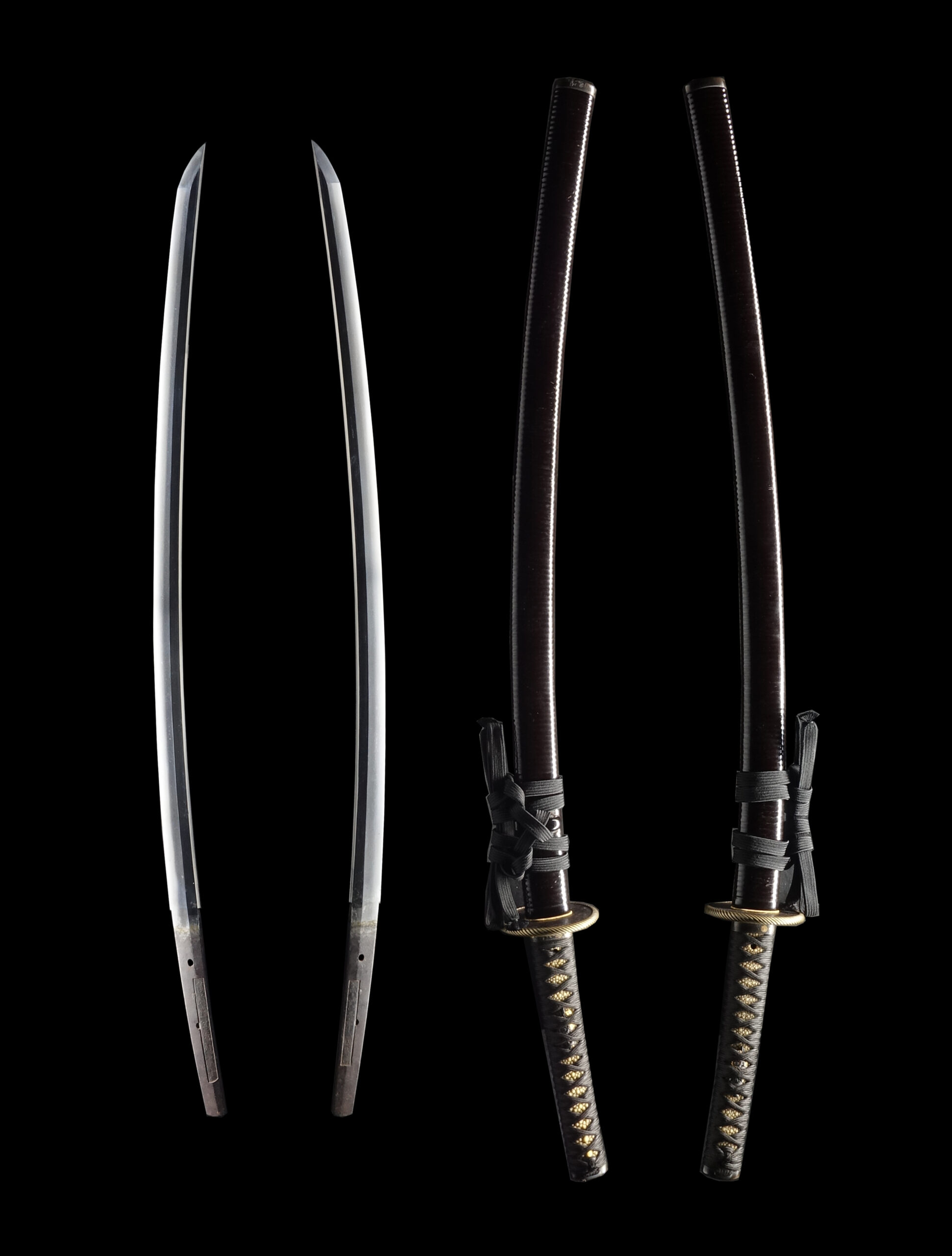
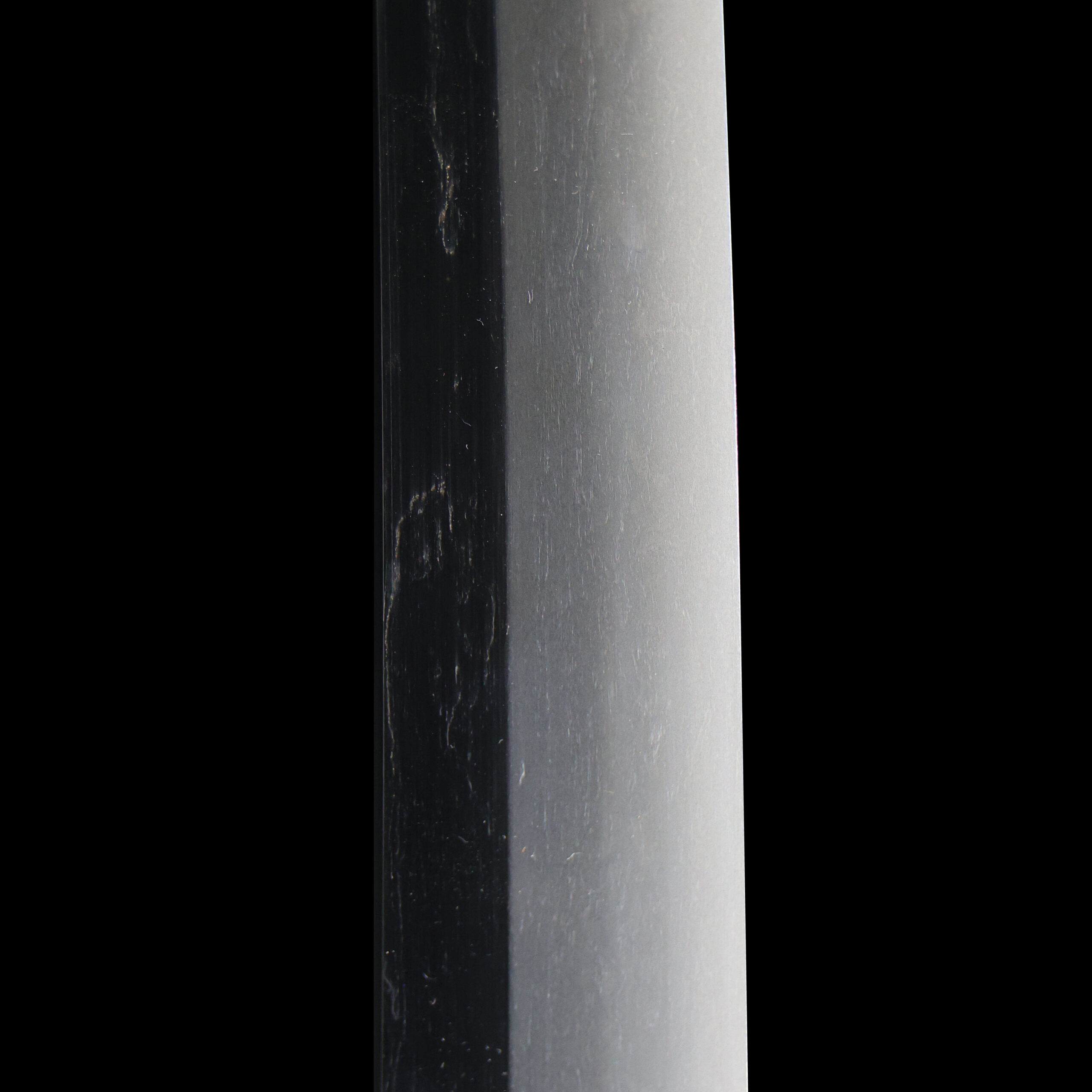
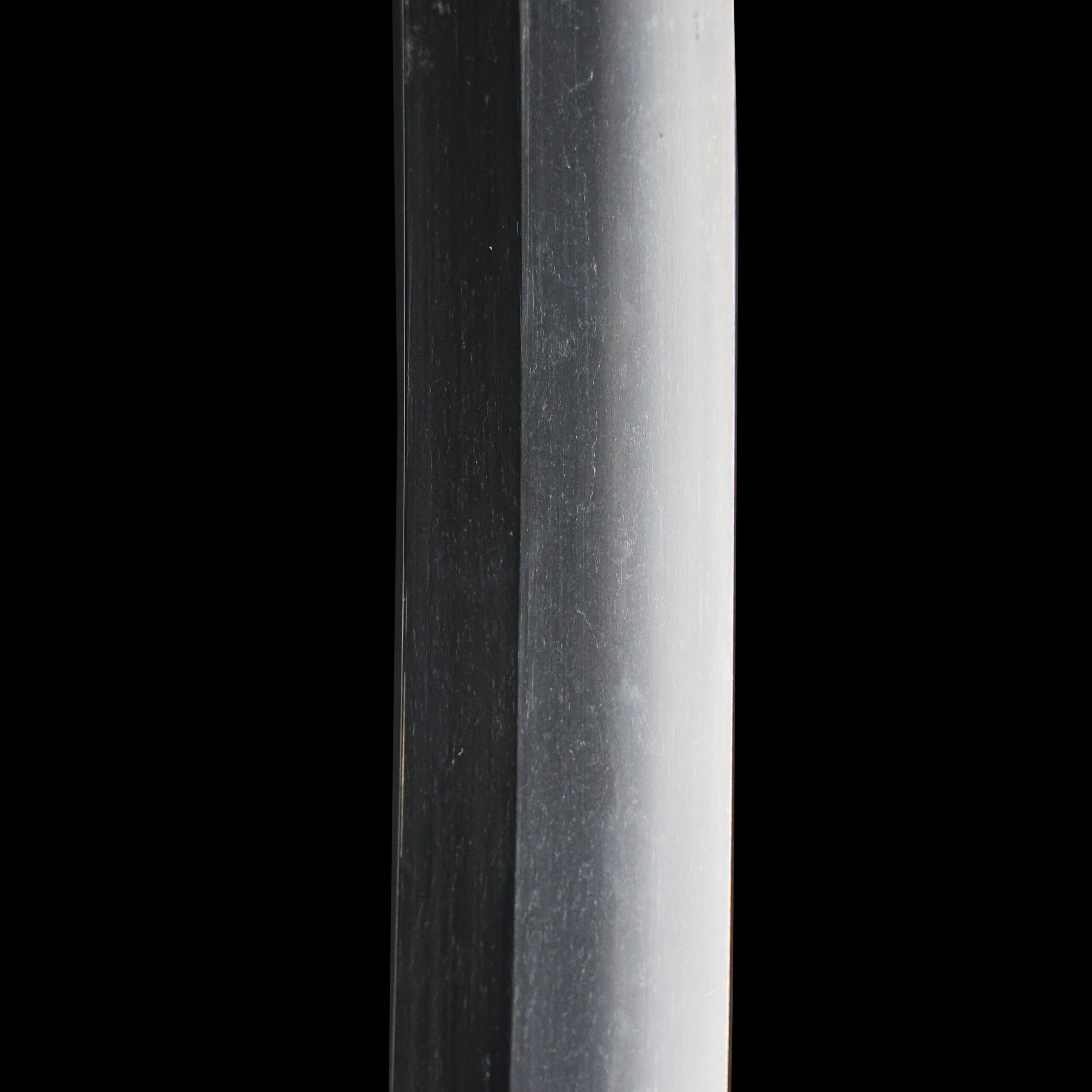
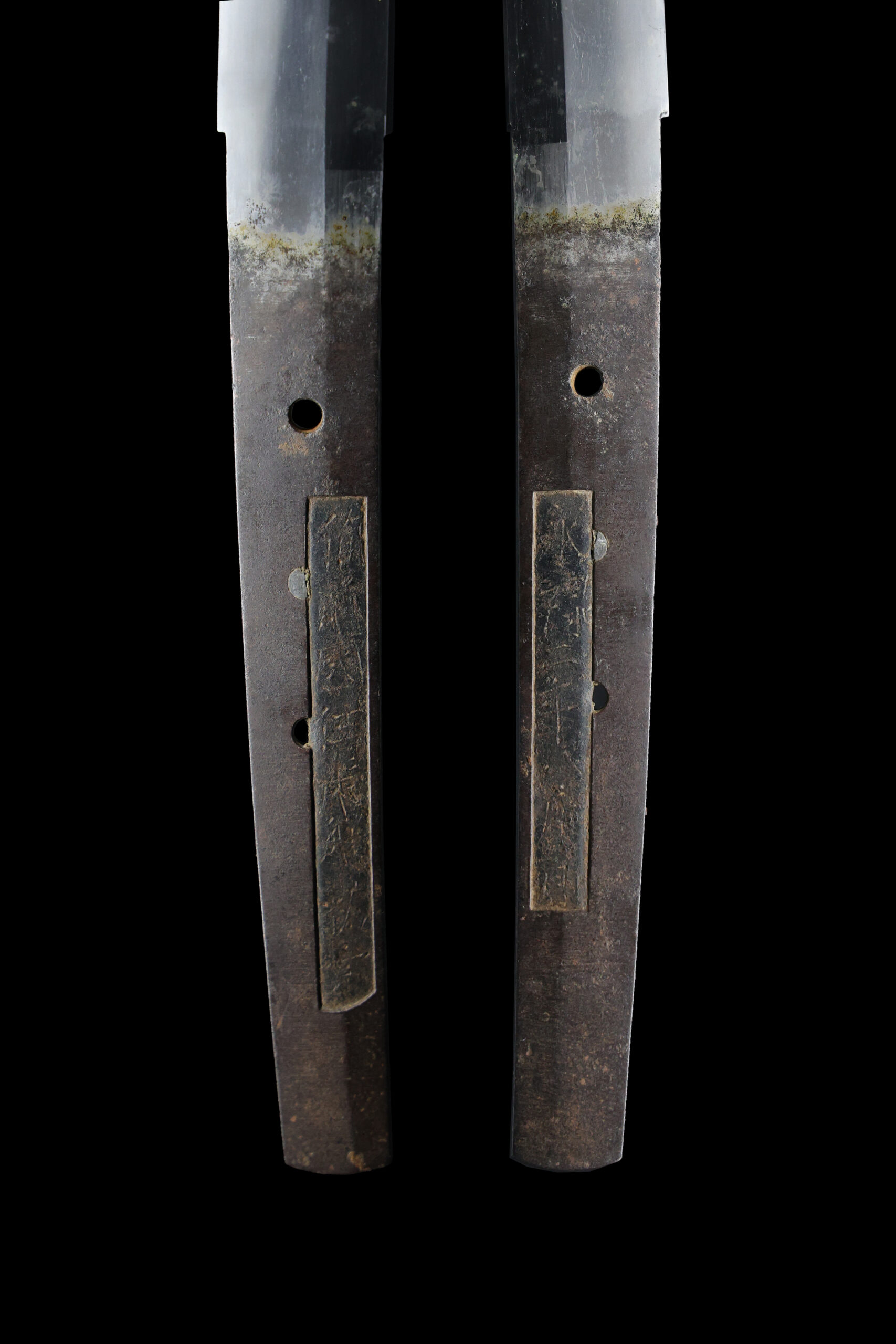
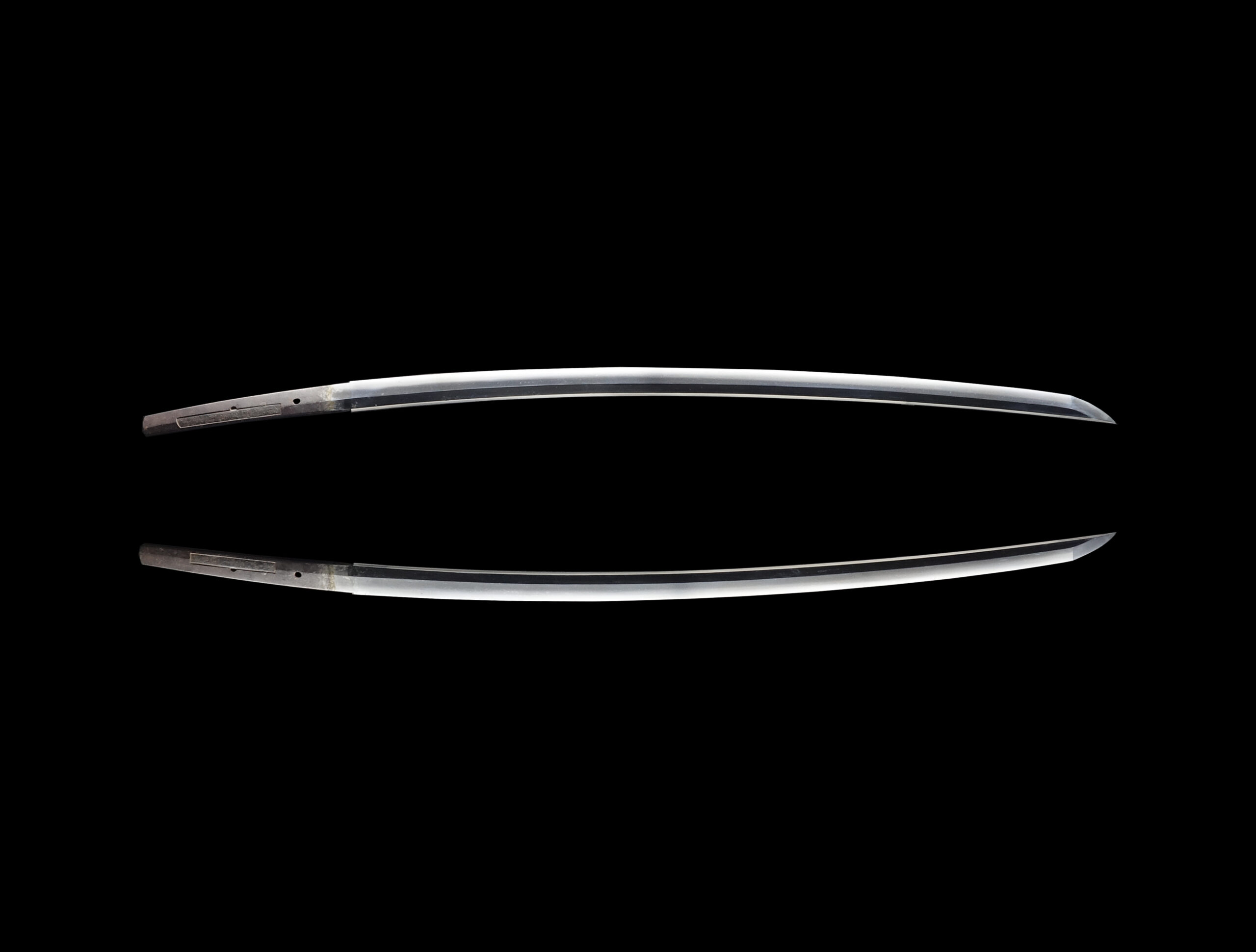
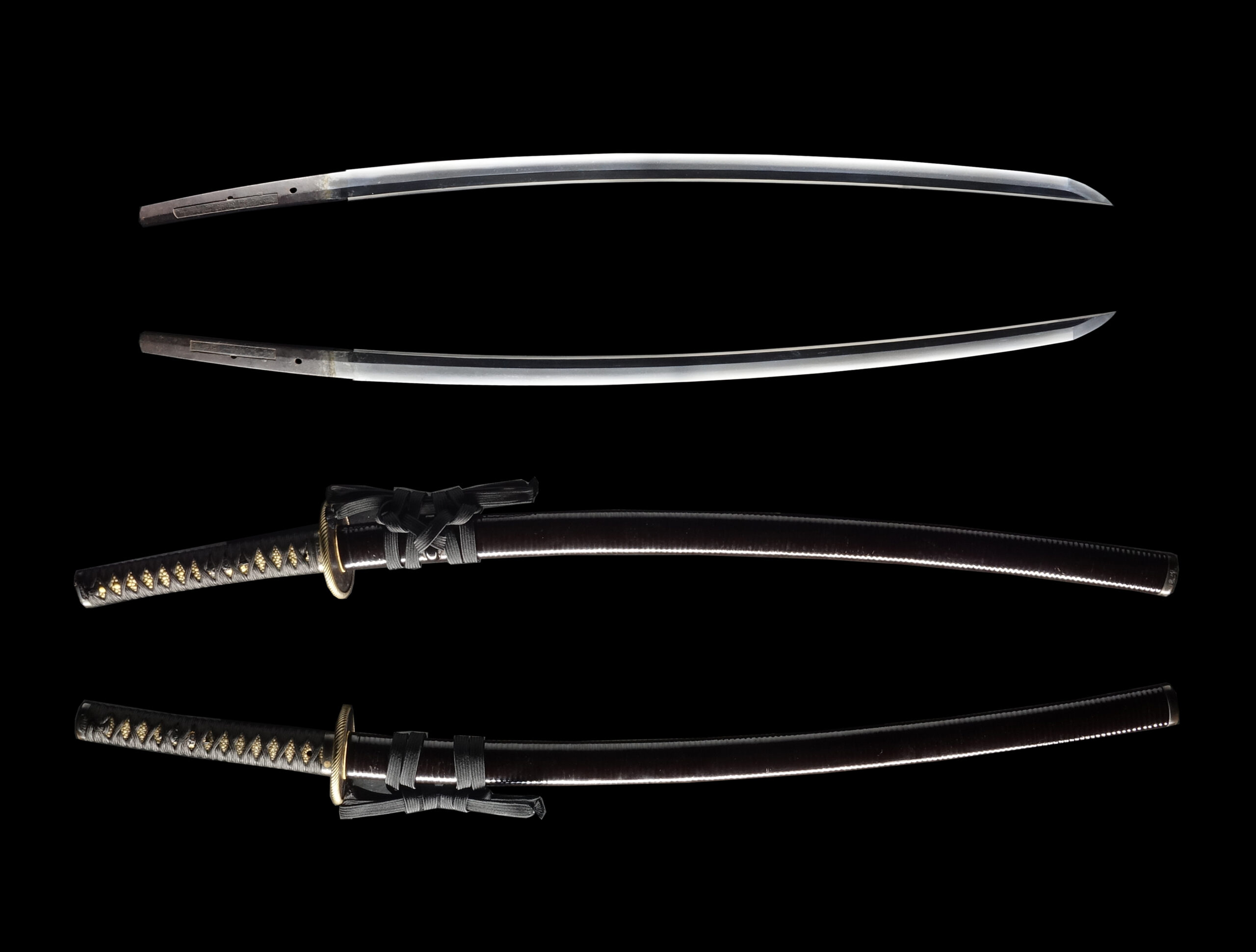
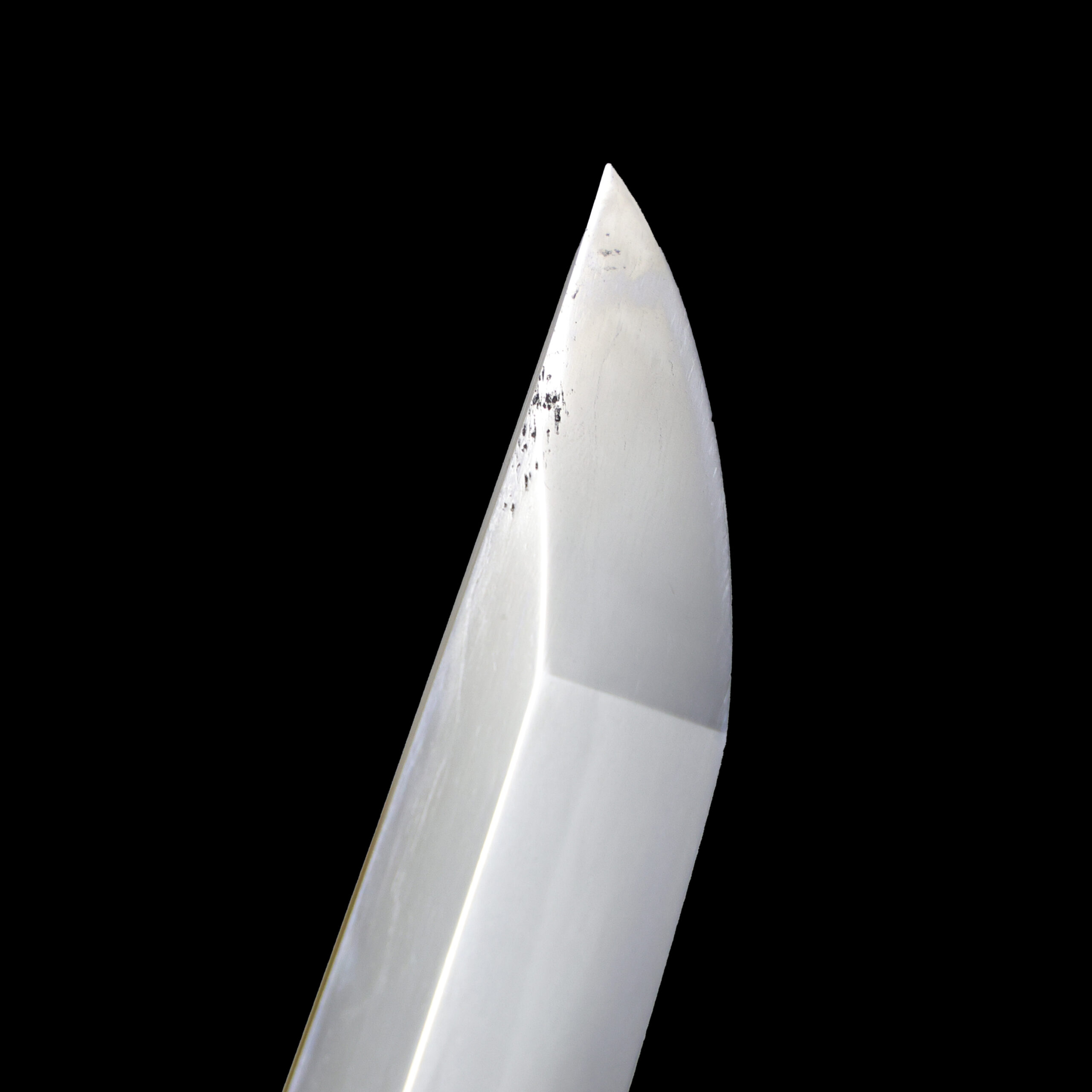
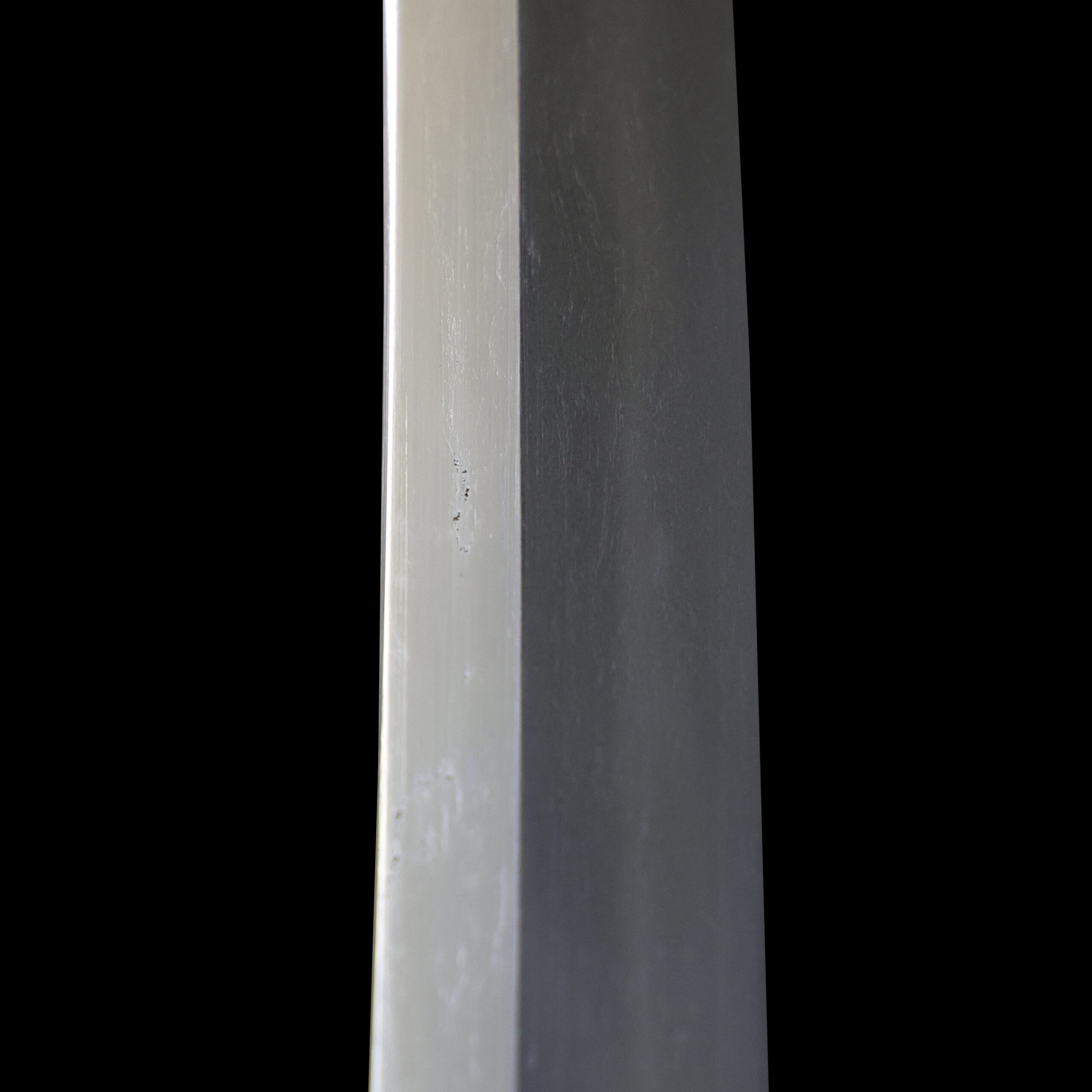
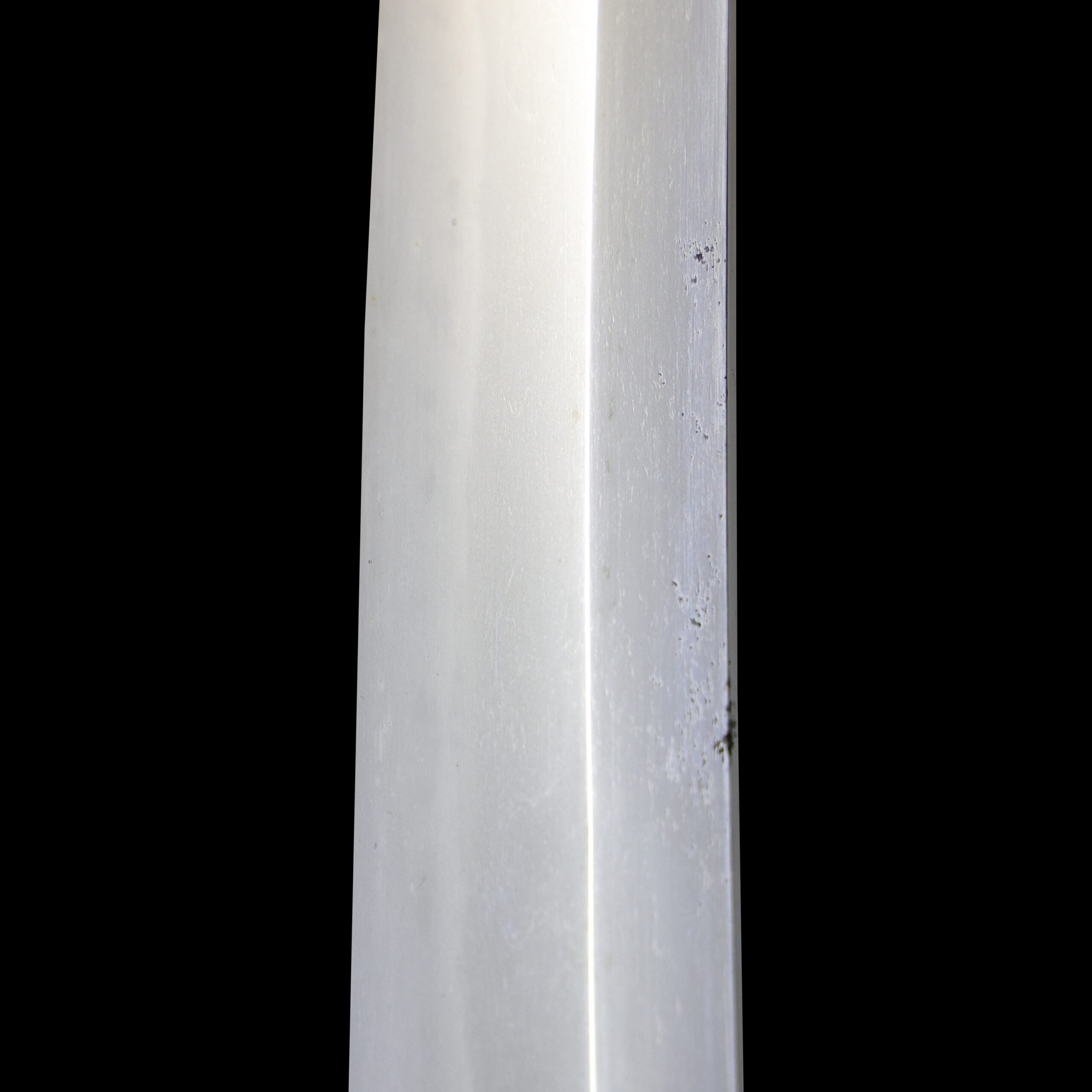
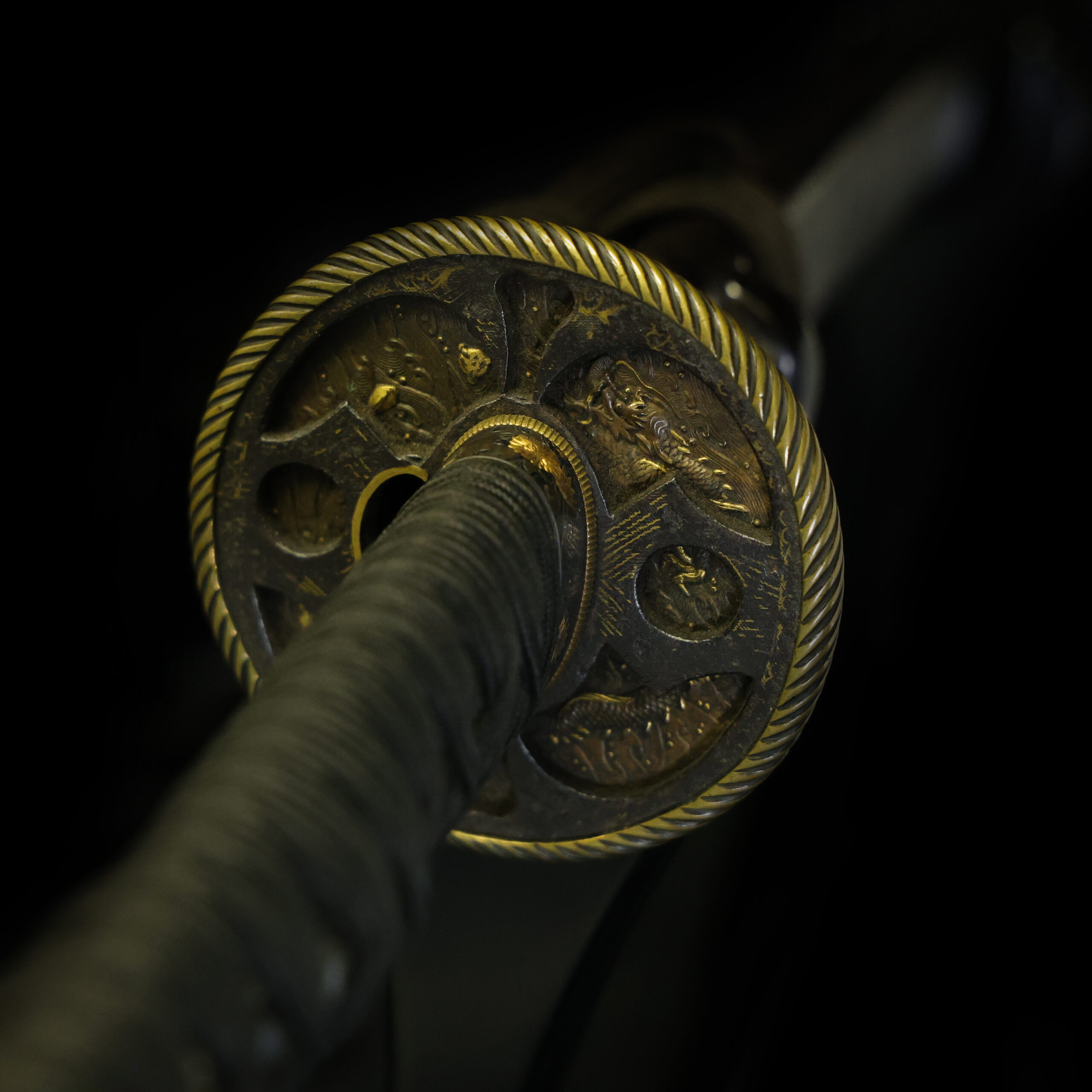
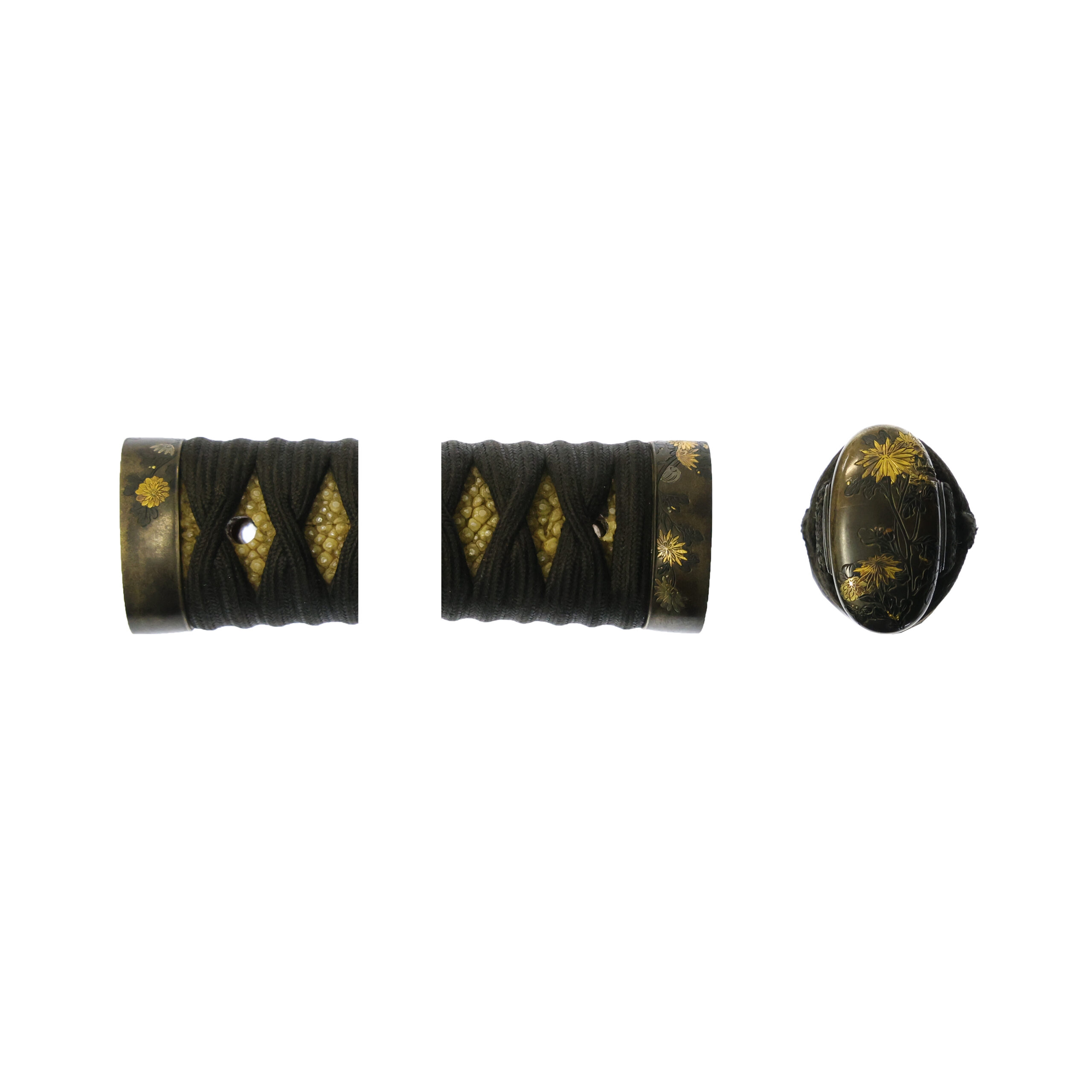
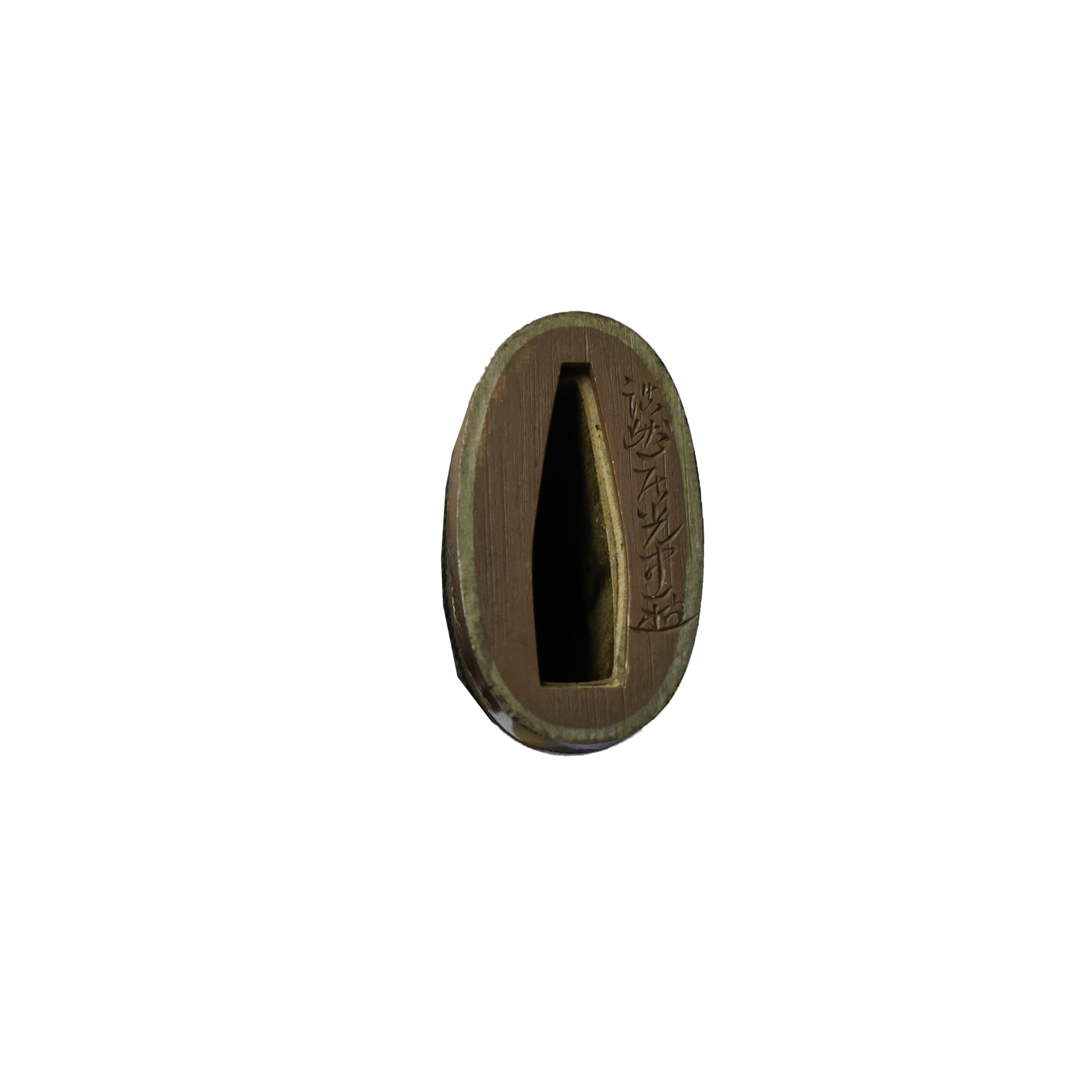
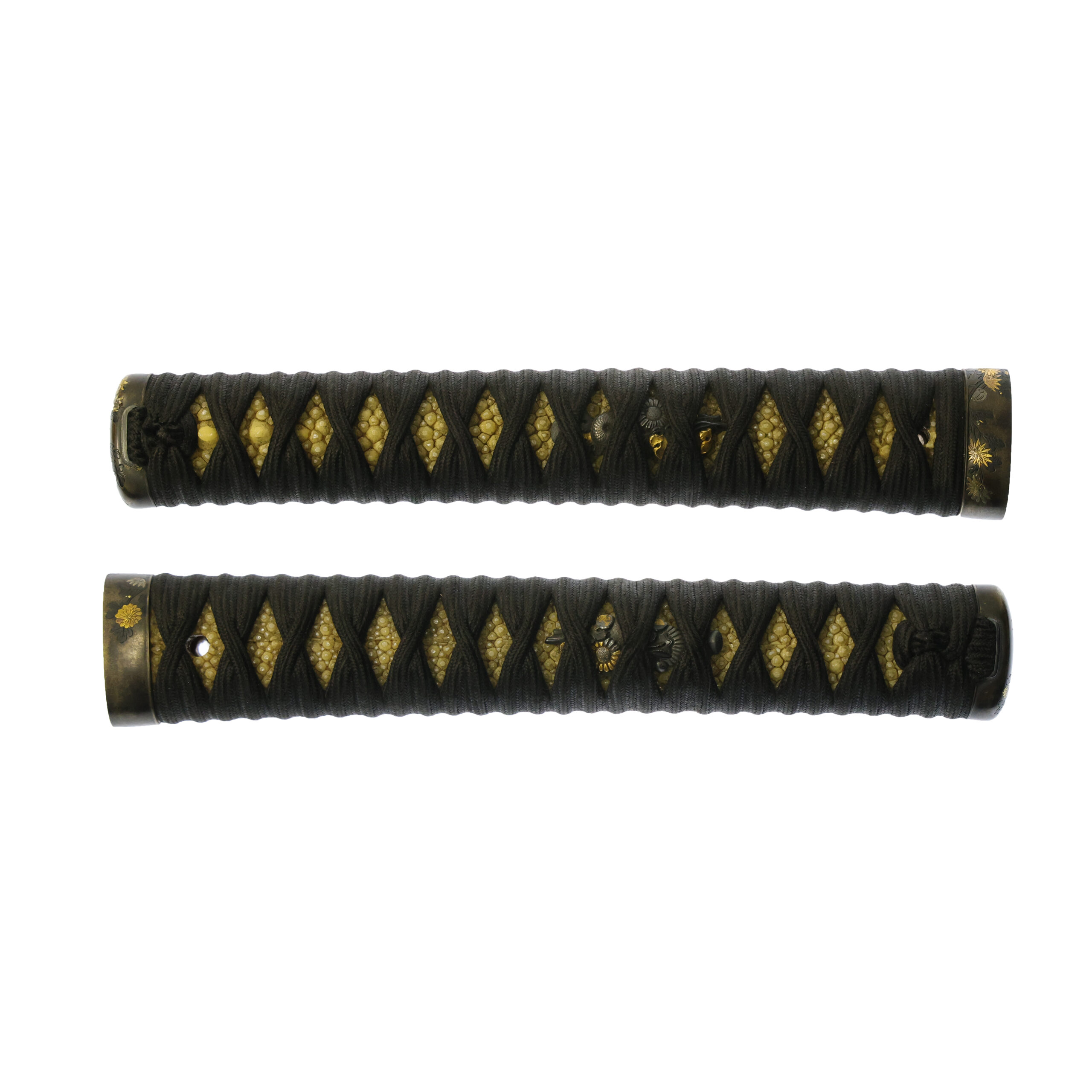
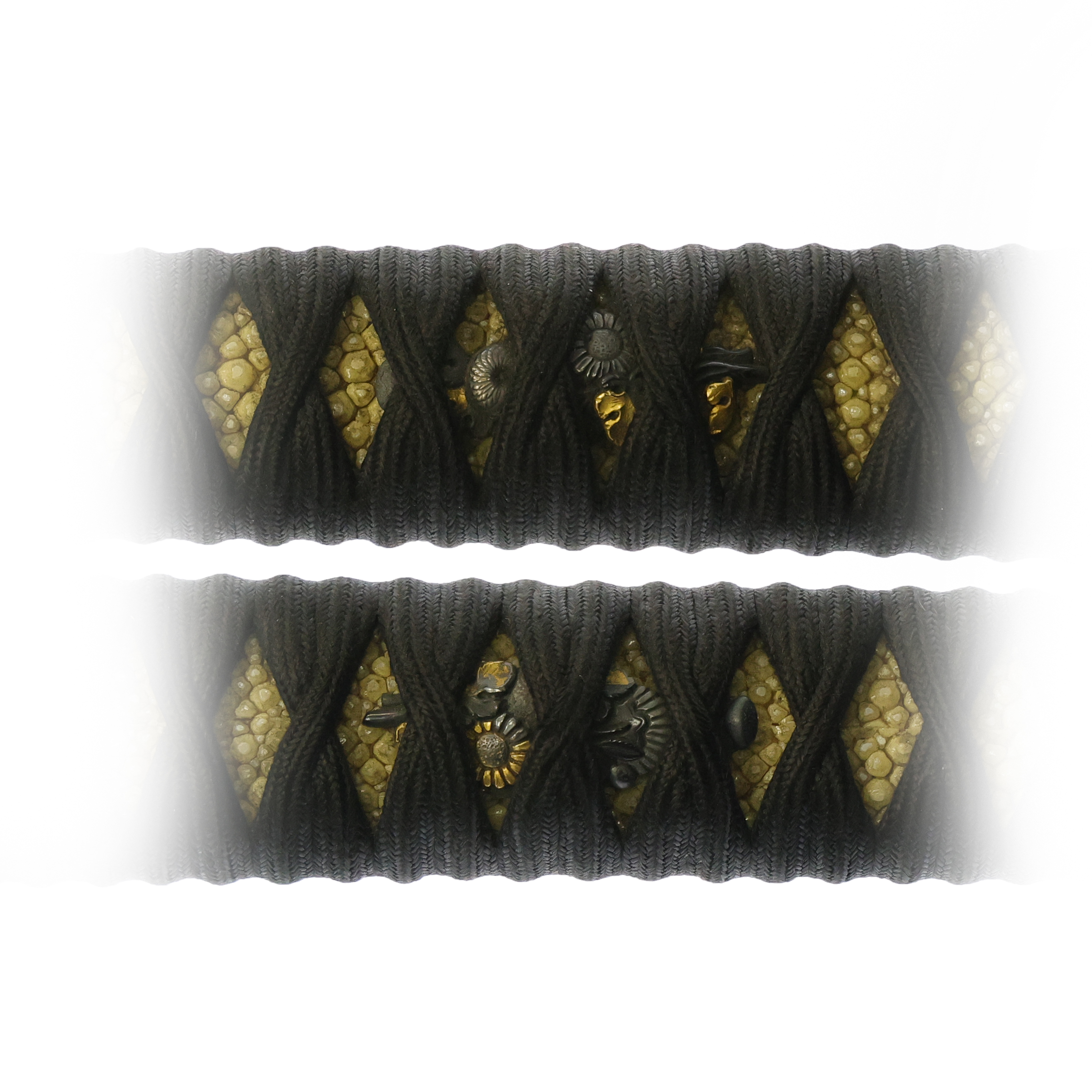
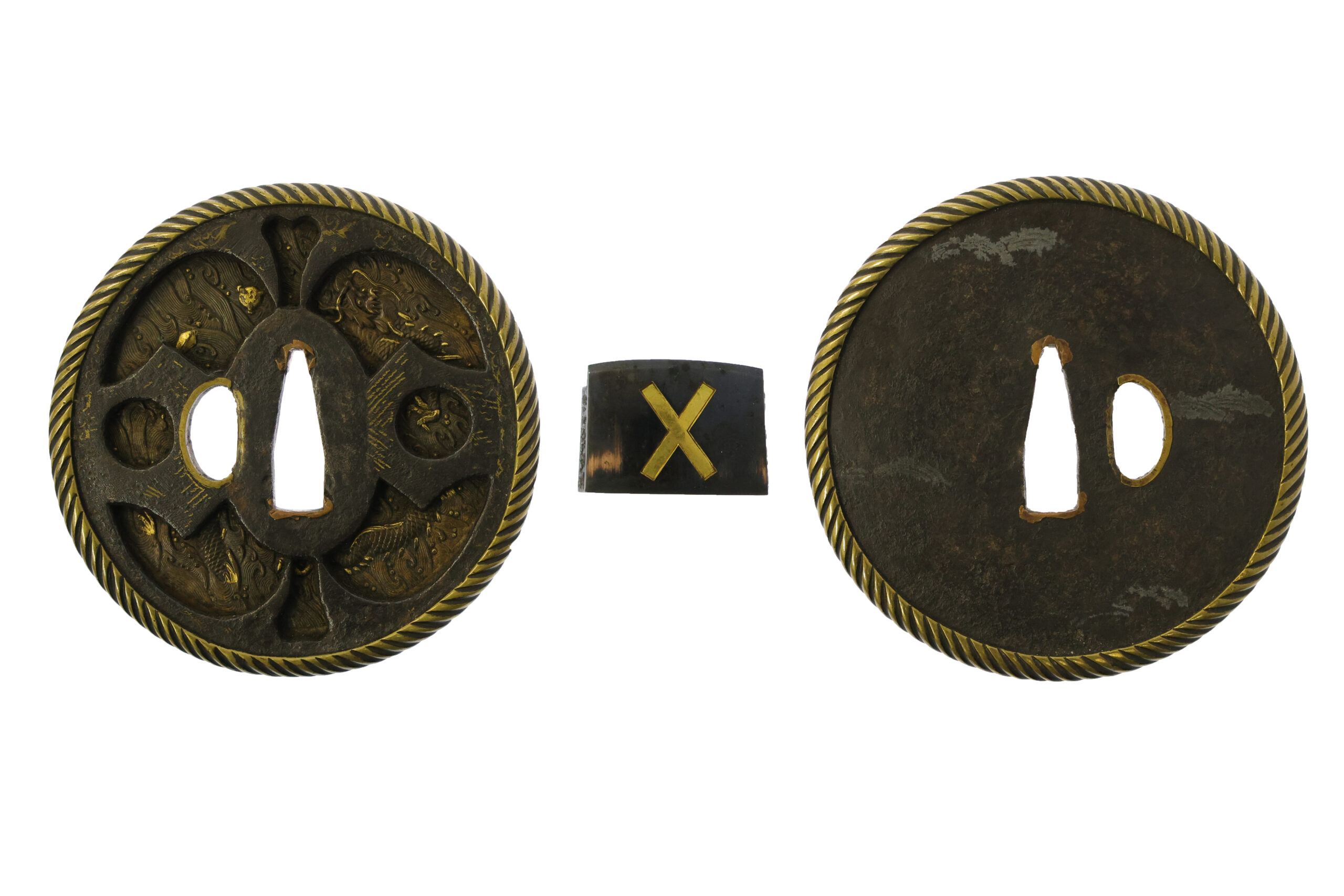
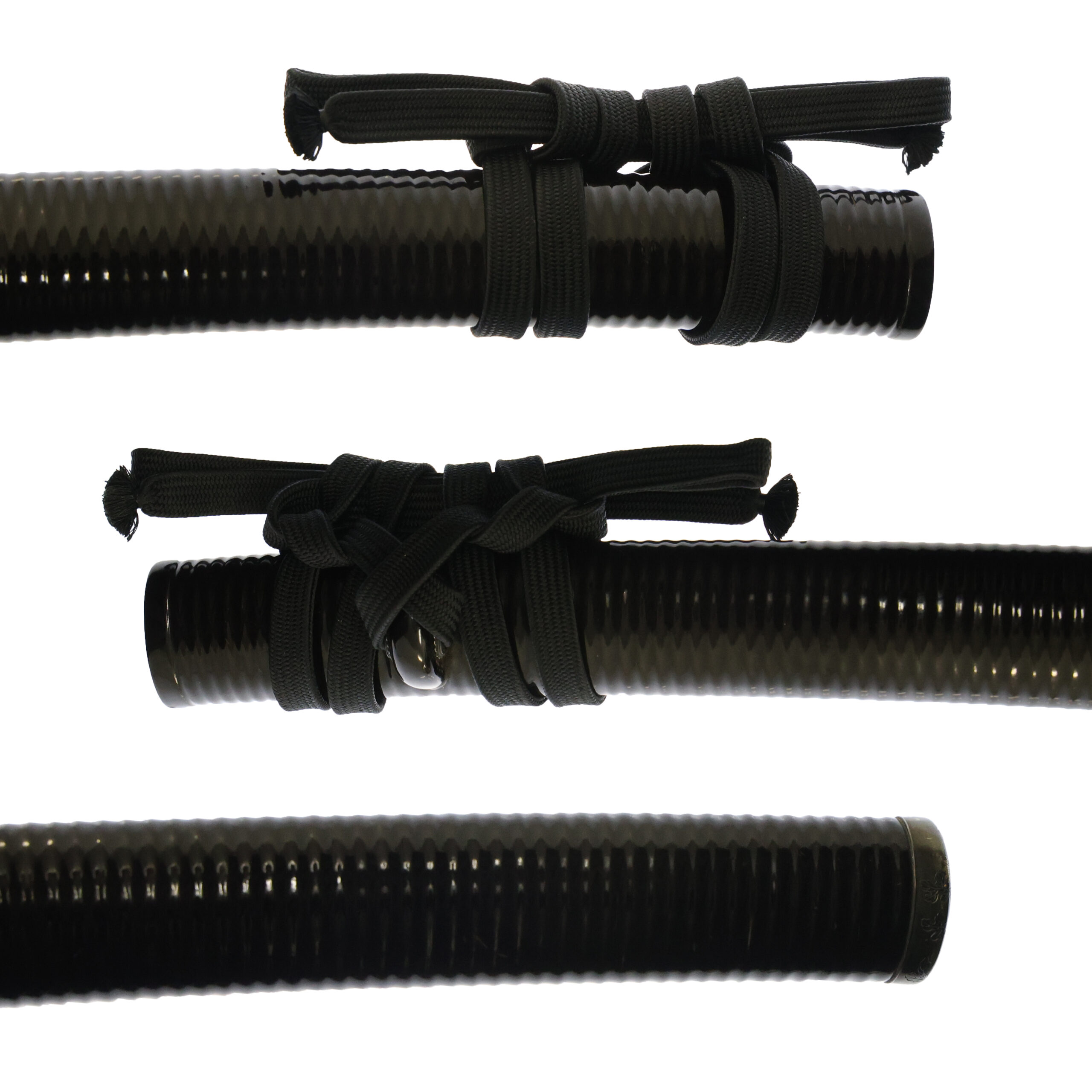
Sue-Bizen Osafune (Sukesada) · Bizen · around 1547-1592
Fujishiro Jo saku
5 pieces on the market now
Every designated work that survives under the Hikozaemon-no-jo Sukesada signature is a katana, ubu and dated, the earliest the Tenbun 16 (1547) blade that carries beside its long signature a nine-character kuji-in seal, the auspicious characters Daikichi, and a bonji, and the latest the Tensho 4 (1576) commission made for Wada Izumo no Kami of Harima. The name Sukesada is the great late-Muromachi name of Osafune, carried by a body of Sue-Bizen smiths of whom the most highly regarded bore distinguishing common-name titles: Yosozaemon no Jo, Genbei no Jo, Hikobei no Jo, and the Hikozaemon no Jo whose blades are gathered here. The published sources are candid that Hikozaemon no Jo stands somewhat lower in name than the first two, yet they judge these particular blades especially well made, one of them "a representative masterwork among Sue-Bizen swords"[[c:1]]. His hand is the mature Sue-Bizen katana, and the signature itself runs in three same-signature generations, read off the Meikan as a first in Eisho, a second in Tenbun-Eiroku, and a third in Genki-Tensho.
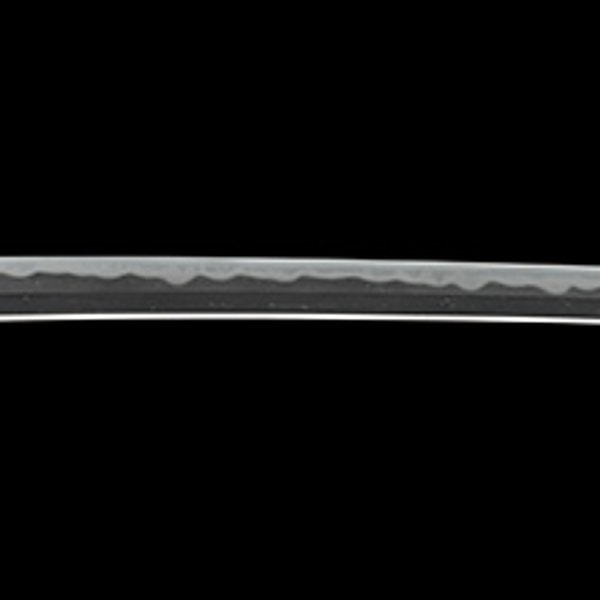
The distinguishing matter of his work is a single declared division of manner. The published sources state it almost verbatim across the corpus: the work of this period divides broadly into a koshi-biraki gunome-midare that develops into a compound, layered form, and a suguha-cho into which ashi and yo enter[[c:2]]. The first is the flamboyant pole. Over the jigane he tempers a midare whose valleys open at the base, deeply hardened, the gunome building into the doubled fukushiki structure, abundant ashi and yo within it, ko-nie attaching, with sunagashi and kinsuji running through; on the most agitated of these the nioiguchi is bright, while on others it grows subdued. The second is the quiet pole, a suguha-cho or broad suguha carrying ashi and yo well, ko-nie with sunagashi, the nioiguchi tending toward a tightened look, and on one Tensho katana yubashiri and a touch of tobiyaki gather around the monouchi. A blade falls cleanly into one mode or the other, and the judges name which on each.
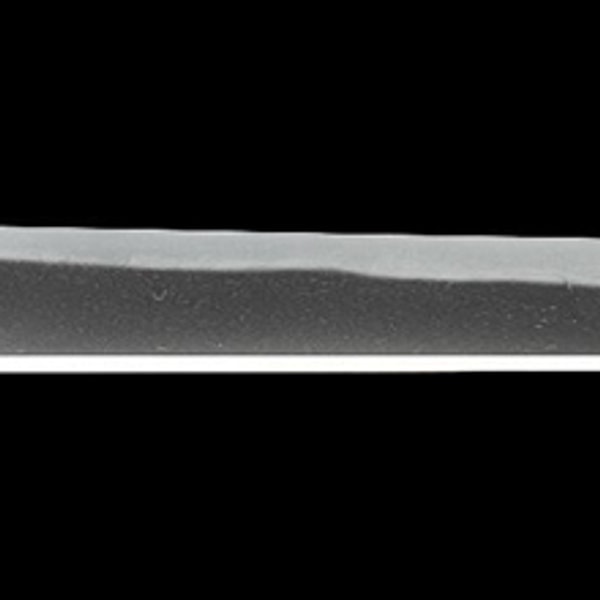
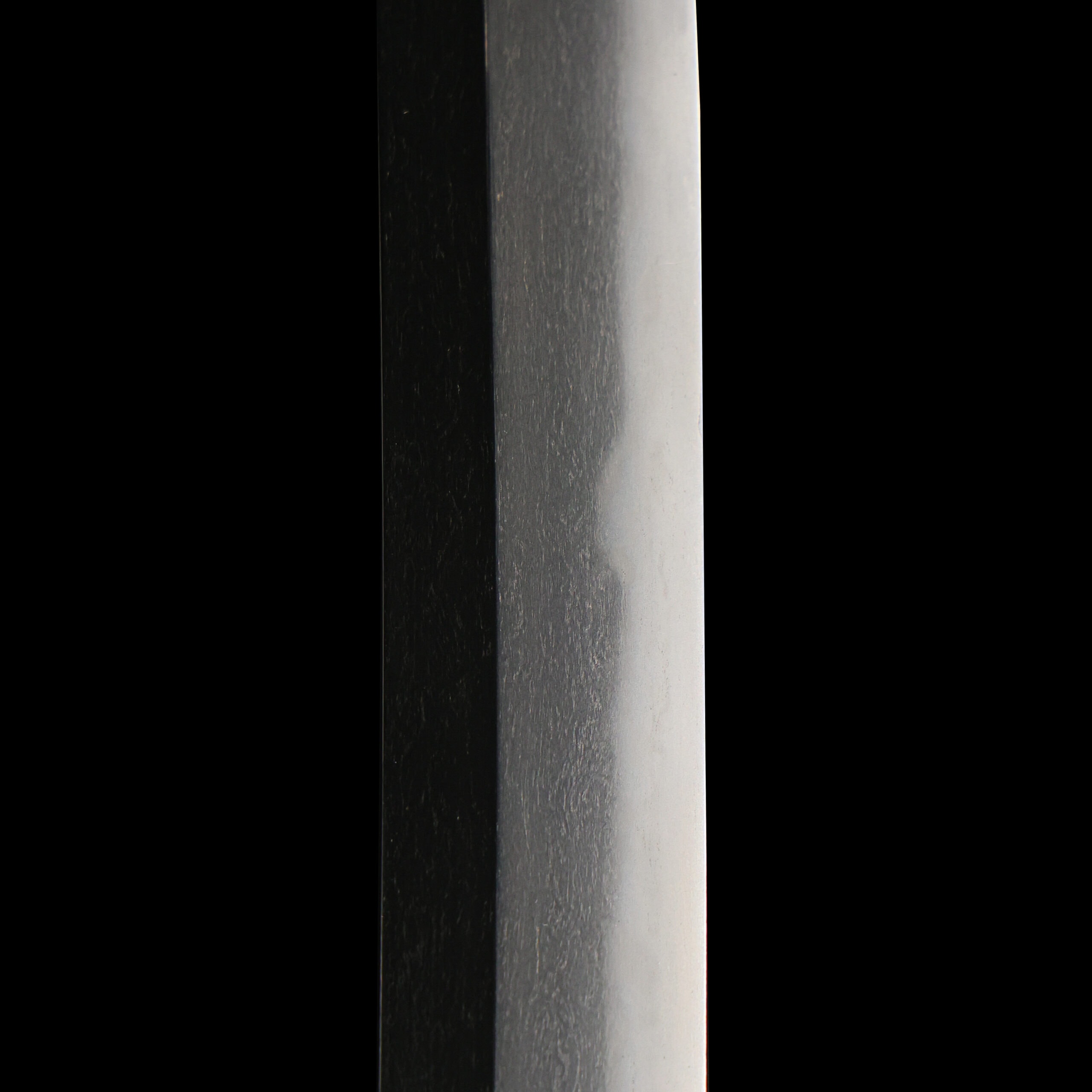
The jigane is the constant beneath both manners. It is a compact ko-itame, on the broader katana an itame, well forged and tight, with ji-nie attaching; on one blade it tightens so far as to appear muji-like, almost featureless, and on another it loosens into a standing hada (hada-dachi) mixed with mokume and carries muneyaki along the back. The forging is where the judges most often single him out: of the Tenbun 16 katana they write that the kitae is "outstanding"[[c:3]], forged in itame with ji-nie and abundant chikei, presenting overall "a strongly steely character"[[c:4]]. The boshi answers the hamon mode: midare-komi turning ko-maru, sometimes deeply tempered into a yakizume-like tip on the flamboyant blades, and a ko-maru with a long return, pointed, or faintly hakikake on the suguha ones. The sugata is the late-Muromachi katana throughout, a broad shinogi-zukuri with iori-mune, sakizori, and an extended chu-kissaki tending to an o-kissaki, the shinogi at times shaved high.
The generations are read directly off the nakago, since the blades are ubu and each carries a long signature on the omote with a date on the ura. The published sources date a piece, then place it against the three Hikozaemon no Jo of the Meikan: the Tenbun 16 and Tenbun 17 katana as the second generation, the Tensho 1 and Tensho 4 katana as the third. The second generation's working range they call broad, taking in koshi-biraki gunome, suguha, and hitatsura alike, and in each they perceive a high level of technique. The lengthening of the blade and of the nakago across these dates is read as a sign of the age: the tachi had fallen entirely out of use, and in its place the long uchigatana came to be worn and used two-handed with the development of swordsmanship, so the Sue-Bizen dimensions grow accordingly. The two modes and the three generations are orthogonal, the one a matter of manner and the other of date, and a full reading of any blade gives both.
Within his school he belongs to the dense Sue-Bizen Osafune body of the late Muromachi, the last great phase of the long Osafune line. The published sources rank Hikozaemon no Jo among the representative masters of the Sukesada group together with Yosozaemon no Jo, Genbei no Jo, and Hikobei no Jo, the smiths whose works, in their words, are foremost for the number of fine pieces and for especially high technical skill. His own distinction is read not by borrowing a comparison but by his own grounded traits, the two declared modes held on a tight ko-itame with ji-nie and the steely forging the judges praise, the descent kept within the one name rather than carried out to other lines. The Tenbun 16 katana, of which they say swords bearing the same signature are few, they call for that reason a representative work of the second generation.
Fujishiro rates the smith Jo-saku, and his designation record is modest: seven blades on record, all at the Juyo level, the higher designation tiers not among them. They are a body of late-koto katana held in private and long-recorded hands, and one of recorded whereabouts appears from time to time rather than rarely, a more findable thing than a Kamakura tachi though not on that account common. Provenance survives clearly on one: the Tensho 4 blade was made for Wada Izumo no Kami, a resident of Banshu, its owner inscription reading that it was "to be handed down through the generations of that house"[[c:5]], so that the katana descended through the Wada family as a heritable sword. For a collector the Hikozaemon no Jo Sukesada is the approachable end of a famous name, a dated and signed late-Bizen katana on which the two-mode reading and the generational frame can be worked out in the hand, and on the best of which, as the published sources say of the Tenbun 16 piece, the forging is outstanding.
Where Sukesada stands among comparable artisans: across all of nihontō, and within tradition, era, and period. The tiers (Foremost · Leading · Major · Notable) weigh official designations from the NBTHK and Japan's Agency for Cultural Affairs, together with historical honors of lasting repute such as the Sansaku and Meibutsu-chō.
Select a lens to see how it's measured.
Years he was demonstrably active, proven by signed-and-dated blades
Bizen-den · Bizen
Phase: Sue-Bizen末備前· 1441–1596
78 pieces on the market now
The last great chapter of Osafune unfolds in the Eisho and Tenbun years of the late Muromachi, when the riverside workshop turned its accumulated craft toward an age of constant war. Where Oei-Bizen had looked backward, reviving the tachi shape and the choji temper of the Kamakura masters under Yasumitsu and Morimitsu, Sue-Bizen faces forward into Sengoku demand. The leading hands carry the same family characters one generation further: the Sukesada group, headed by Yosazaemon-no-jo Sukesada and the Hikobee-jo Sukesada said to be his father, alongside Katsumitsu (often Jirozaemon-no-jo), Munemitsu, Tadamitsu of the Heiroemon-jo line, and the Kiyomitsu smiths Magoemon-no-jo and Gorozaemon-no-jo. The setsumei draw a sharp line through their output. Commissioned blades, chumon-uchi, were signed with full zokumyo, dated, and frequently inscribed with the name of the ordering party, as on the Katsumitsu and Sadamitsu naginata of Meio 8 made for the Miyake of Kojima, a house that fed into the Ukita. Below them ran the bulk trade of kazu-uchimono, the arms that supplied the warring provinces, and it is the chumon-uchi masters that the designations preserve. What the steel does in this window is distinct from every earlier Osafune register. The shape is the uchigatana: wide mihaba with thick kasane, pronounced sakizori, an extended chu-kissaki or o-kissaki, and a short nakago suited to the katate-uchi one-handed draw, a body unlike the koshizori tachi of Ko-Osafune or the broad Nanbokucho profile of Soden-Bizen. The forging tightens into ko-itame over which a midare-utsuri stands faintly rather than vividly, weaker than the bright reflection of the founding generation.
The signature temper is the open-waisted koshi-no-hiraita gunome, splitting at the heads into fukushiki compound midare and mixed with togariba and choji; it is nioi-based with ko-nie and a bright nioiguchi, with ashi, yo, kinsuji and small tobiyaki worked through. Against this, Soden-Bizen had pushed Soshu nie and notare, while the founders had tempered flamboyant choji over a vivid utsuri. Two specialties branch off the gunome base: the Kiyomitsu and Tadamitsu suguha, calm and tightly forged, and the hitatsura of high-tempered pieces with long muneyaki and yubashiri, seen in the warlord-smiths Akamatsu Masanori and Ishikawa Yukihisa. To kantei a Sue-Bizen blade is to read the body first and the temper second. The compact uchigatana sugata with thick kasane and a short tang fixes the late-Muromachi date; the faint utsuri over dense ko-itame keeps it in Bizen; the open-waisted compound gunome names the group. The masters then separate by hand: Katsumitsu is set apart by the abundant choji he folds into the gunome, yielding a more florid, brilliant dekiguchi than his peers; Tadamitsu and the Kiyomitsu smiths are read out by their suguha, with Magoemon-no-jo's itame standing in mokume to distinguish his ground. The cutting reputation is documented directly, as on the Hikobee-jo Sukesada katana of Keicho 5 carrying a tameshi inscription naming the tester Ichihara Hachibee. Provenance threads through the supplementary signatures: Masanori's reward blades cut for his retainers, the Miyake names tying the workshop to the Ukita, and the Shinjuro Sukesada whose few large works may have ended in the Tensho flood. The horimono carried from the mainline, bonji with rendai, Fudo Myoo, and shrine dedications, persist on these blades as a final mark of the line. Learn more →
| Smith | Era | Designated |
|---|---|---|
| Sukesada祐定 | 1504-1551 | 72 |
| Sukesada祐定 | 1532-1583 | 18 |
| Sukesada祐定 | 1547-1592 | 8 |
| Sukesada祐定 | 1487-1521 | 5 |
| Sukesada祐定 | 1532-1573 | 3 |
War at home and trade abroad made Muromachi Bizen the busiest forge region in Japan: a century of Sengoku demand after the Ōnin War, and export missions to Ming China carrying blades by the tens of thousands.
This work carries older NBTHK “Kichō”-era papers, which the NBTHK no longer issues and now regards as unreliable. To confirm the attribution, submission to an official Japanese examination body (such as the NBTHK or NTHK) for modern certification could be considered.
Returns/exchanges limited to defects caused by shipping (except willful misconduct or gross negligence by the company); customers must contact within 72 hours of receiving the product.
This antique Japanese Katana was signed by Osafune Sukesada in the 2nd year of the Eiroku era (1559), during the late Muromachi period. The blade comes with an NBTHK Kichou Certificate, while its koshirae (mountings) have a Tokubetsu Kicho Kodogu Certificate. The sword features a gakumei (framed signature) on the tang, indicating it was shortened but the original signature preserved.
NihontoWatchmei · Osafune · Muromachi · nagasa 69.4cm · sori 2.2cm
Sue-Bizen Osafune (Sukesada) · Bizen · around 1547-1592
Fujishiro Jo saku
5 pieces on the market now
Every designated work that survives under the Hikozaemon-no-jo Sukesada signature is a katana, ubu and dated, the earliest the Tenbun 16 (1547) blade that carries beside its long signature a nine-character kuji-in seal, the auspicious characters Daikichi, and a bonji, and the latest the Tensho 4 (1576) commission made for Wada Izumo no Kami of Harima. The name Sukesada is the great late-Muromachi name of Osafune, carried by a body of Sue-Bizen smiths of whom the most highly regarded bore distinguishing common-name titles: Yosozaemon no Jo, Genbei no Jo, Hikobei no Jo, and the Hikozaemon no Jo whose blades are gathered here. The published sources are candid that Hikozaemon no Jo stands somewhat lower in name than the first two, yet they judge these particular blades especially well made, one of them "a representative masterwork among Sue-Bizen swords"[[c:1]]. His hand is the mature Sue-Bizen katana, and the signature itself runs in three same-signature generations, read off the Meikan as a first in Eisho, a second in Tenbun-Eiroku, and a third in Genki-Tensho.
The distinguishing matter of his work is a single declared division of manner. The published sources state it almost verbatim across the corpus: the work of this period divides broadly into a koshi-biraki gunome-midare that develops into a compound, layered form, and a suguha-cho into which ashi and yo enter[[c:2]]. The first is the flamboyant pole. Over the jigane he tempers a midare whose valleys open at the base, deeply hardened, the gunome building into the doubled fukushiki structure, abundant ashi and yo within it, ko-nie attaching, with sunagashi and kinsuji running through; on the most agitated of these the nioiguchi is bright, while on others it grows subdued. The second is the quiet pole, a suguha-cho or broad suguha carrying ashi and yo well, ko-nie with sunagashi, the nioiguchi tending toward a tightened look, and on one Tensho katana yubashiri and a touch of tobiyaki gather around the monouchi. A blade falls cleanly into one mode or the other, and the judges name which on each.
The jigane is the constant beneath both manners. It is a compact ko-itame, on the broader katana an itame, well forged and tight, with ji-nie attaching; on one blade it tightens so far as to appear muji-like, almost featureless, and on another it loosens into a standing hada (hada-dachi) mixed with mokume and carries muneyaki along the back. The forging is where the judges most often single him out: of the Tenbun 16 katana they write that the kitae is "outstanding"[[c:3]], forged in itame with ji-nie and abundant chikei, presenting overall "a strongly steely character"[[c:4]]. The boshi answers the hamon mode: midare-komi turning ko-maru, sometimes deeply tempered into a yakizume-like tip on the flamboyant blades, and a ko-maru with a long return, pointed, or faintly hakikake on the suguha ones. The sugata is the late-Muromachi katana throughout, a broad shinogi-zukuri with iori-mune, sakizori, and an extended chu-kissaki tending to an o-kissaki, the shinogi at times shaved high.
The generations are read directly off the nakago, since the blades are ubu and each carries a long signature on the omote with a date on the ura. The published sources date a piece, then place it against the three Hikozaemon no Jo of the Meikan: the Tenbun 16 and Tenbun 17 katana as the second generation, the Tensho 1 and Tensho 4 katana as the third. The second generation's working range they call broad, taking in koshi-biraki gunome, suguha, and hitatsura alike, and in each they perceive a high level of technique. The lengthening of the blade and of the nakago across these dates is read as a sign of the age: the tachi had fallen entirely out of use, and in its place the long uchigatana came to be worn and used two-handed with the development of swordsmanship, so the Sue-Bizen dimensions grow accordingly. The two modes and the three generations are orthogonal, the one a matter of manner and the other of date, and a full reading of any blade gives both.
Within his school he belongs to the dense Sue-Bizen Osafune body of the late Muromachi, the last great phase of the long Osafune line. The published sources rank Hikozaemon no Jo among the representative masters of the Sukesada group together with Yosozaemon no Jo, Genbei no Jo, and Hikobei no Jo, the smiths whose works, in their words, are foremost for the number of fine pieces and for especially high technical skill. His own distinction is read not by borrowing a comparison but by his own grounded traits, the two declared modes held on a tight ko-itame with ji-nie and the steely forging the judges praise, the descent kept within the one name rather than carried out to other lines. The Tenbun 16 katana, of which they say swords bearing the same signature are few, they call for that reason a representative work of the second generation.
Fujishiro rates the smith Jo-saku, and his designation record is modest: seven blades on record, all at the Juyo level, the higher designation tiers not among them. They are a body of late-koto katana held in private and long-recorded hands, and one of recorded whereabouts appears from time to time rather than rarely, a more findable thing than a Kamakura tachi though not on that account common. Provenance survives clearly on one: the Tensho 4 blade was made for Wada Izumo no Kami, a resident of Banshu, its owner inscription reading that it was "to be handed down through the generations of that house"[[c:5]], so that the katana descended through the Wada family as a heritable sword. For a collector the Hikozaemon no Jo Sukesada is the approachable end of a famous name, a dated and signed late-Bizen katana on which the two-mode reading and the generational frame can be worked out in the hand, and on the best of which, as the published sources say of the Tenbun 16 piece, the forging is outstanding.
Where Sukesada stands among comparable artisans: across all of nihontō, and within tradition, era, and period. The tiers (Foremost · Leading · Major · Notable) weigh official designations from the NBTHK and Japan's Agency for Cultural Affairs, together with historical honors of lasting repute such as the Sansaku and Meibutsu-chō.
Select a lens to see how it's measured.
Years he was demonstrably active, proven by signed-and-dated blades
Bizen-den · Bizen
Phase: Sue-Bizen末備前· 1441–1596
78 pieces on the market now
The last great chapter of Osafune unfolds in the Eisho and Tenbun years of the late Muromachi, when the riverside workshop turned its accumulated craft toward an age of constant war. Where Oei-Bizen had looked backward, reviving the tachi shape and the choji temper of the Kamakura masters under Yasumitsu and Morimitsu, Sue-Bizen faces forward into Sengoku demand. The leading hands carry the same family characters one generation further: the Sukesada group, headed by Yosazaemon-no-jo Sukesada and the Hikobee-jo Sukesada said to be his father, alongside Katsumitsu (often Jirozaemon-no-jo), Munemitsu, Tadamitsu of the Heiroemon-jo line, and the Kiyomitsu smiths Magoemon-no-jo and Gorozaemon-no-jo. The setsumei draw a sharp line through their output. Commissioned blades, chumon-uchi, were signed with full zokumyo, dated, and frequently inscribed with the name of the ordering party, as on the Katsumitsu and Sadamitsu naginata of Meio 8 made for the Miyake of Kojima, a house that fed into the Ukita. Below them ran the bulk trade of kazu-uchimono, the arms that supplied the warring provinces, and it is the chumon-uchi masters that the designations preserve. What the steel does in this window is distinct from every earlier Osafune register. The shape is the uchigatana: wide mihaba with thick kasane, pronounced sakizori, an extended chu-kissaki or o-kissaki, and a short nakago suited to the katate-uchi one-handed draw, a body unlike the koshizori tachi of Ko-Osafune or the broad Nanbokucho profile of Soden-Bizen. The forging tightens into ko-itame over which a midare-utsuri stands faintly rather than vividly, weaker than the bright reflection of the founding generation.
The signature temper is the open-waisted koshi-no-hiraita gunome, splitting at the heads into fukushiki compound midare and mixed with togariba and choji; it is nioi-based with ko-nie and a bright nioiguchi, with ashi, yo, kinsuji and small tobiyaki worked through. Against this, Soden-Bizen had pushed Soshu nie and notare, while the founders had tempered flamboyant choji over a vivid utsuri. Two specialties branch off the gunome base: the Kiyomitsu and Tadamitsu suguha, calm and tightly forged, and the hitatsura of high-tempered pieces with long muneyaki and yubashiri, seen in the warlord-smiths Akamatsu Masanori and Ishikawa Yukihisa. To kantei a Sue-Bizen blade is to read the body first and the temper second. The compact uchigatana sugata with thick kasane and a short tang fixes the late-Muromachi date; the faint utsuri over dense ko-itame keeps it in Bizen; the open-waisted compound gunome names the group. The masters then separate by hand: Katsumitsu is set apart by the abundant choji he folds into the gunome, yielding a more florid, brilliant dekiguchi than his peers; Tadamitsu and the Kiyomitsu smiths are read out by their suguha, with Magoemon-no-jo's itame standing in mokume to distinguish his ground. The cutting reputation is documented directly, as on the Hikobee-jo Sukesada katana of Keicho 5 carrying a tameshi inscription naming the tester Ichihara Hachibee. Provenance threads through the supplementary signatures: Masanori's reward blades cut for his retainers, the Miyake names tying the workshop to the Ukita, and the Shinjuro Sukesada whose few large works may have ended in the Tensho flood. The horimono carried from the mainline, bonji with rendai, Fudo Myoo, and shrine dedications, persist on these blades as a final mark of the line. Learn more →
| Smith | Era | Designated |
|---|---|---|
| Sukesada祐定 | 1504-1551 | 72 |
| Sukesada祐定 | 1532-1583 | 18 |
| Sukesada祐定 | 1547-1592 | 8 |
| Sukesada祐定 | 1487-1521 | 5 |
| Sukesada祐定 | 1532-1573 | 3 |
War at home and trade abroad made Muromachi Bizen the busiest forge region in Japan: a century of Sengoku demand after the Ōnin War, and export missions to Ming China carrying blades by the tens of thousands.
This work carries older NBTHK “Kichō”-era papers, which the NBTHK no longer issues and now regards as unreliable. To confirm the attribution, submission to an official Japanese examination body (such as the NBTHK or NTHK) for modern certification could be considered.
Returns/exchanges limited to defects caused by shipping (except willful misconduct or gross negligence by the company); customers must contact within 72 hours of receiving the product.