NihontoWatch Mon

NihontoWatch

MarketAuctions
Encyclopedia
NihontoWatch Mon

NihontoWatch

MarketAuctions
Encyclopedia

Description

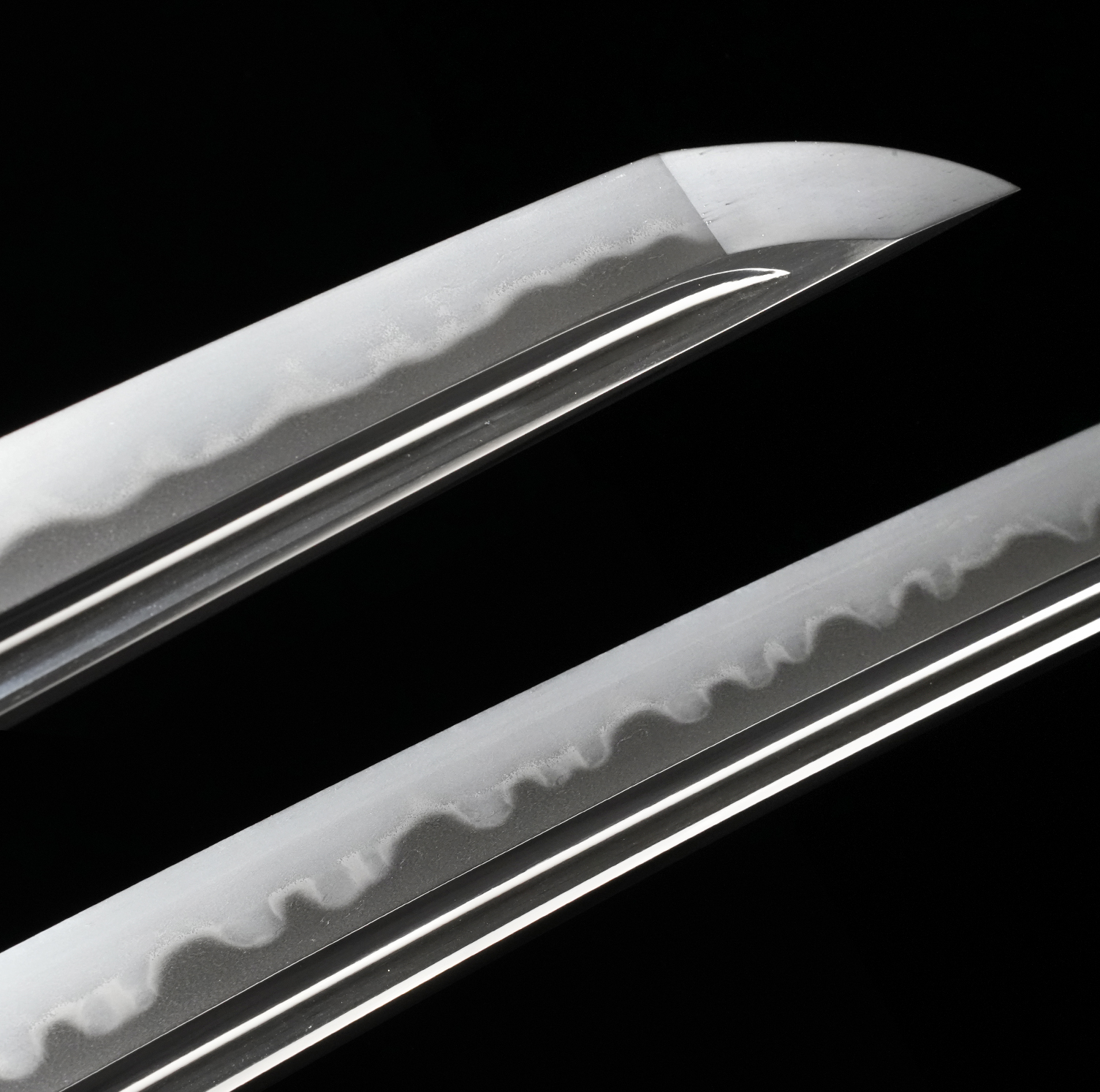
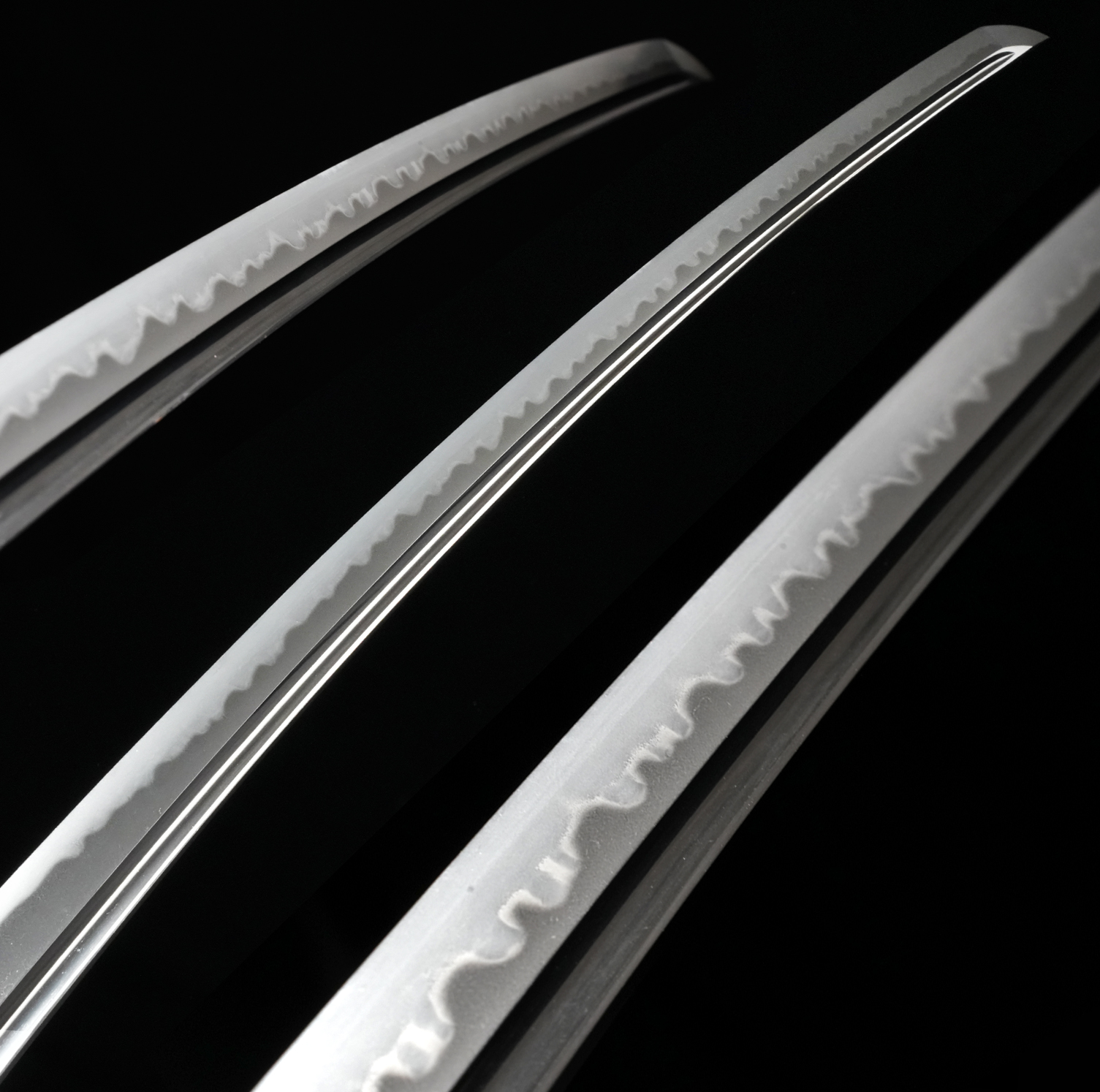
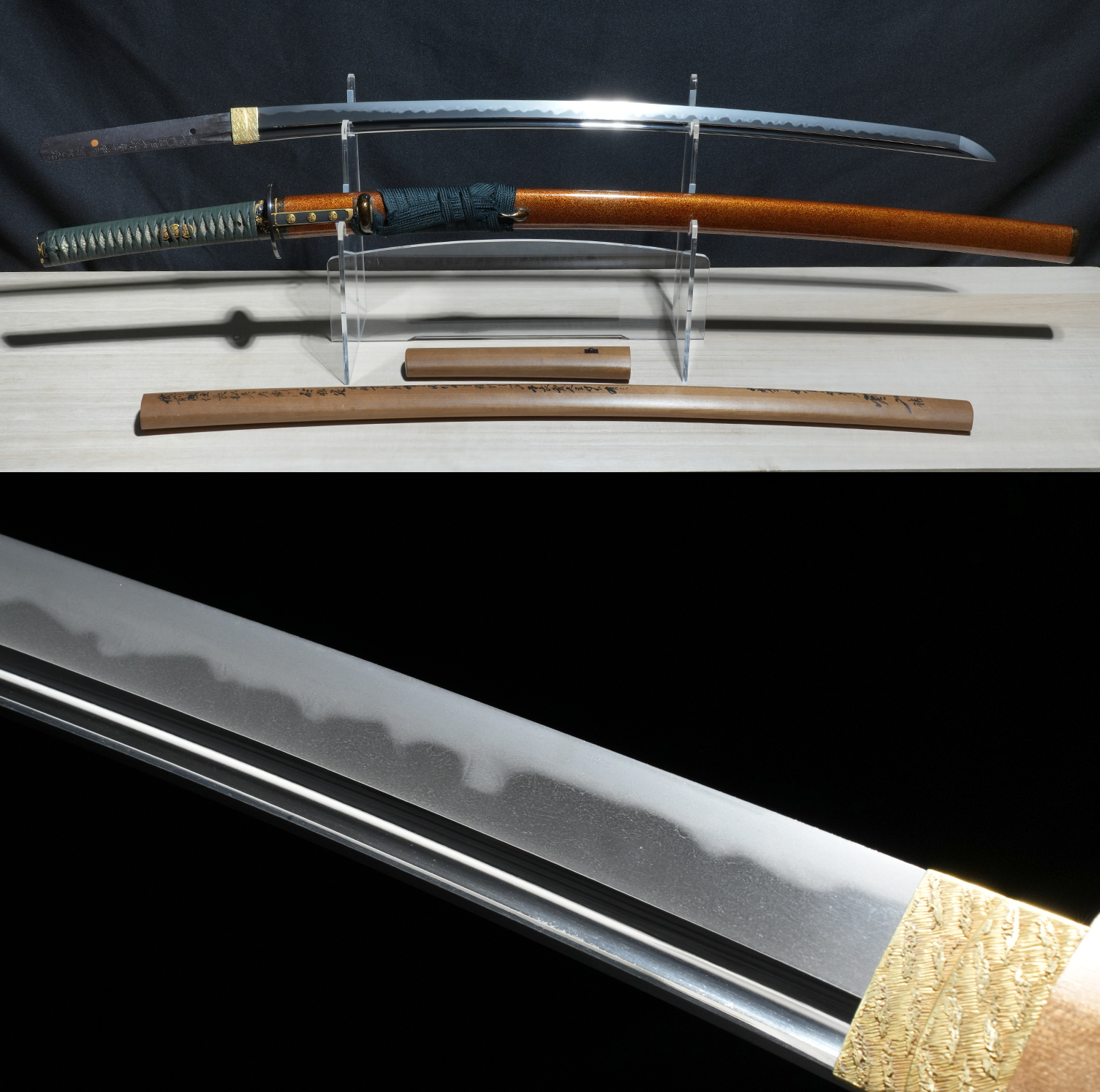
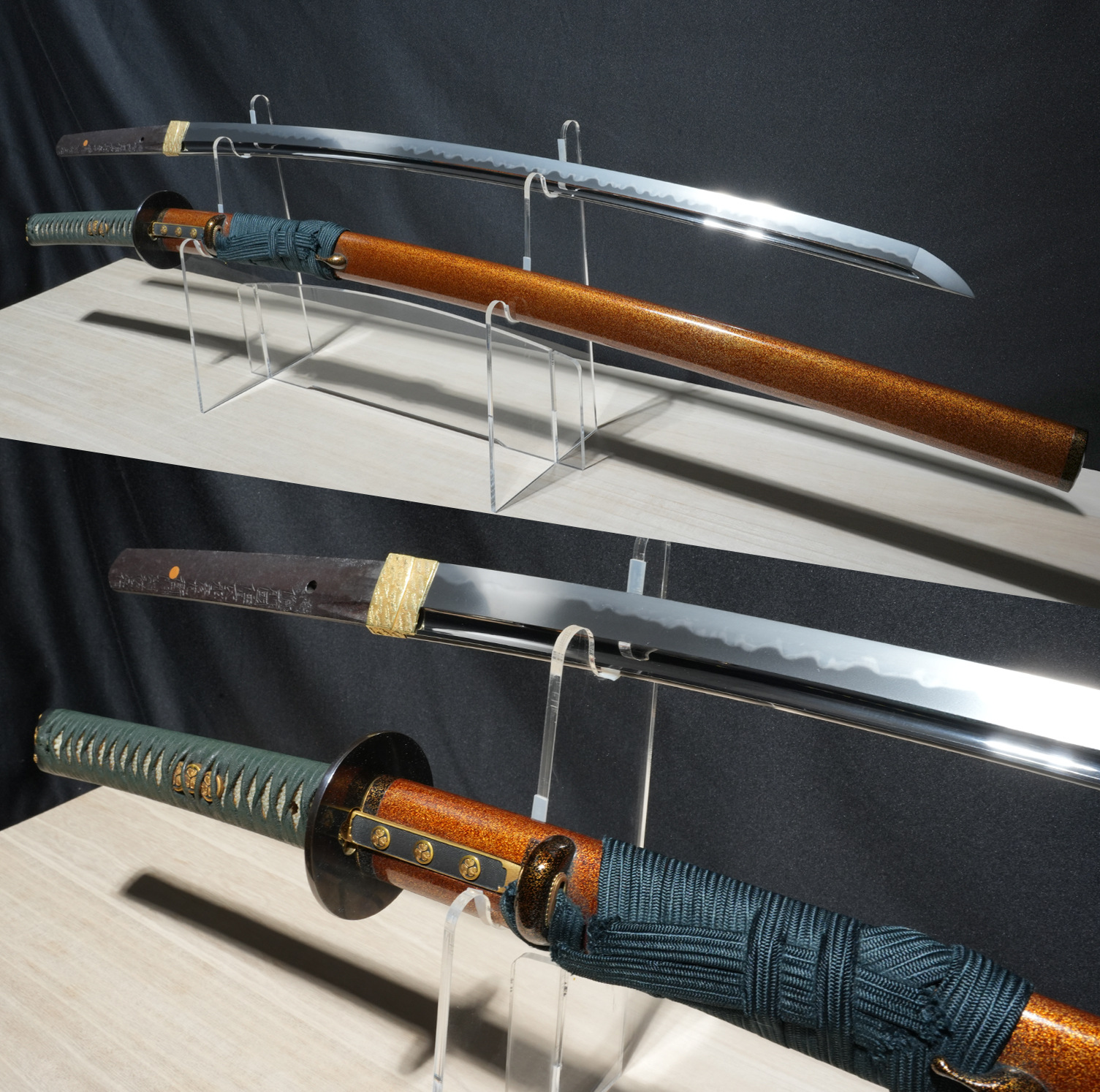
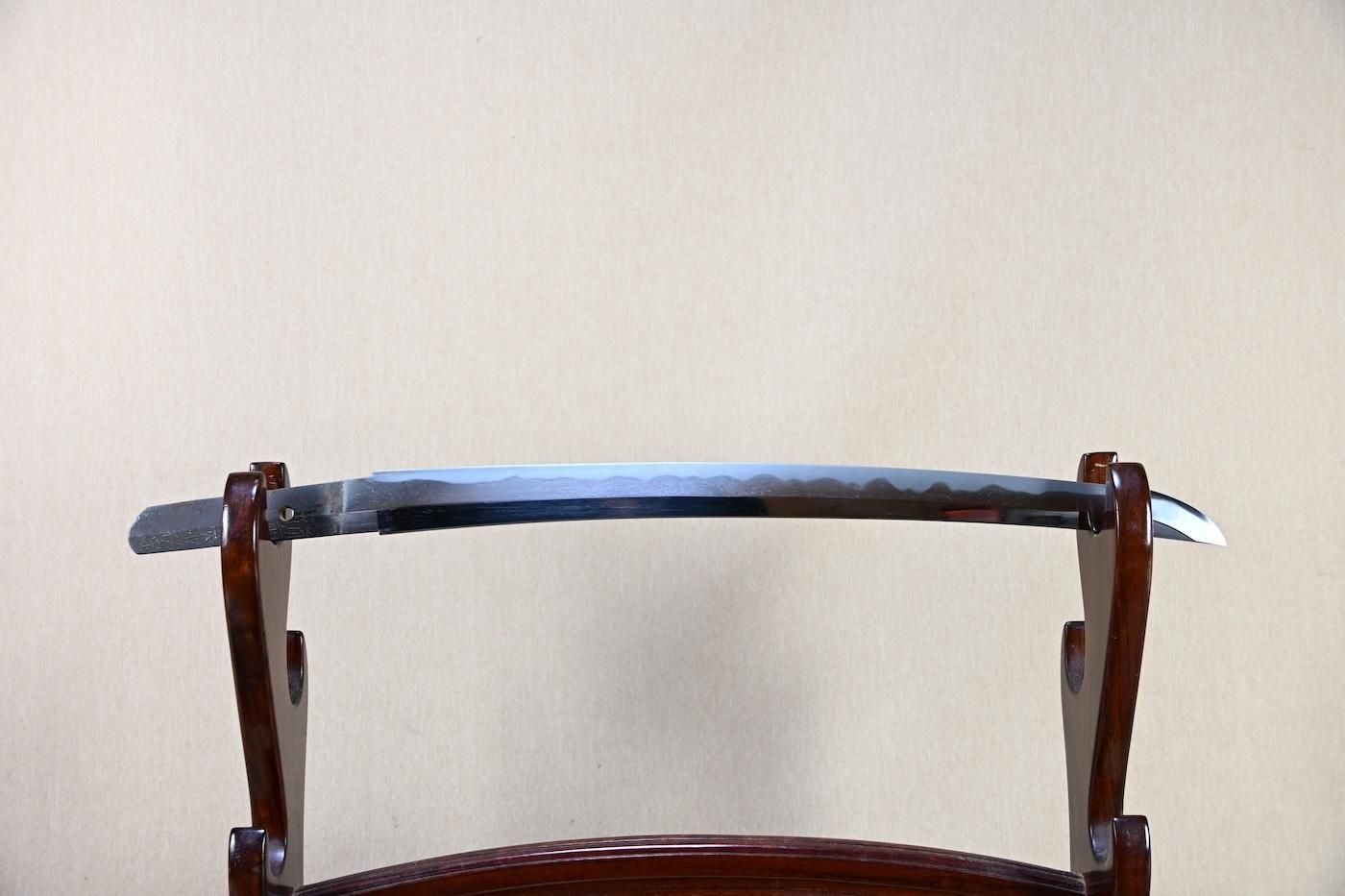
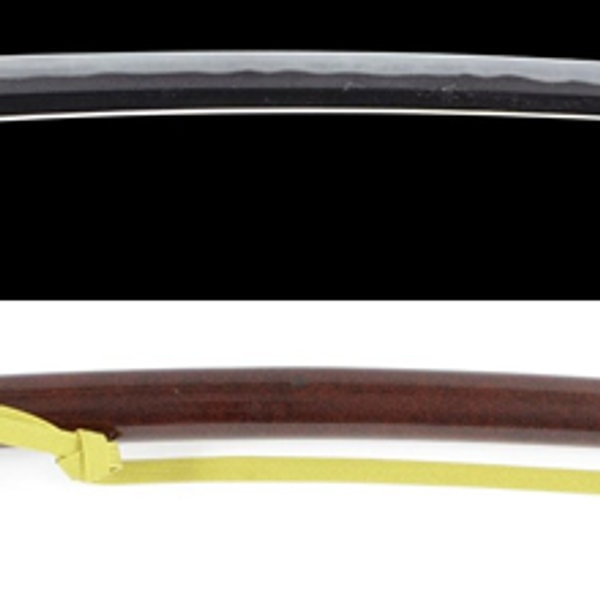
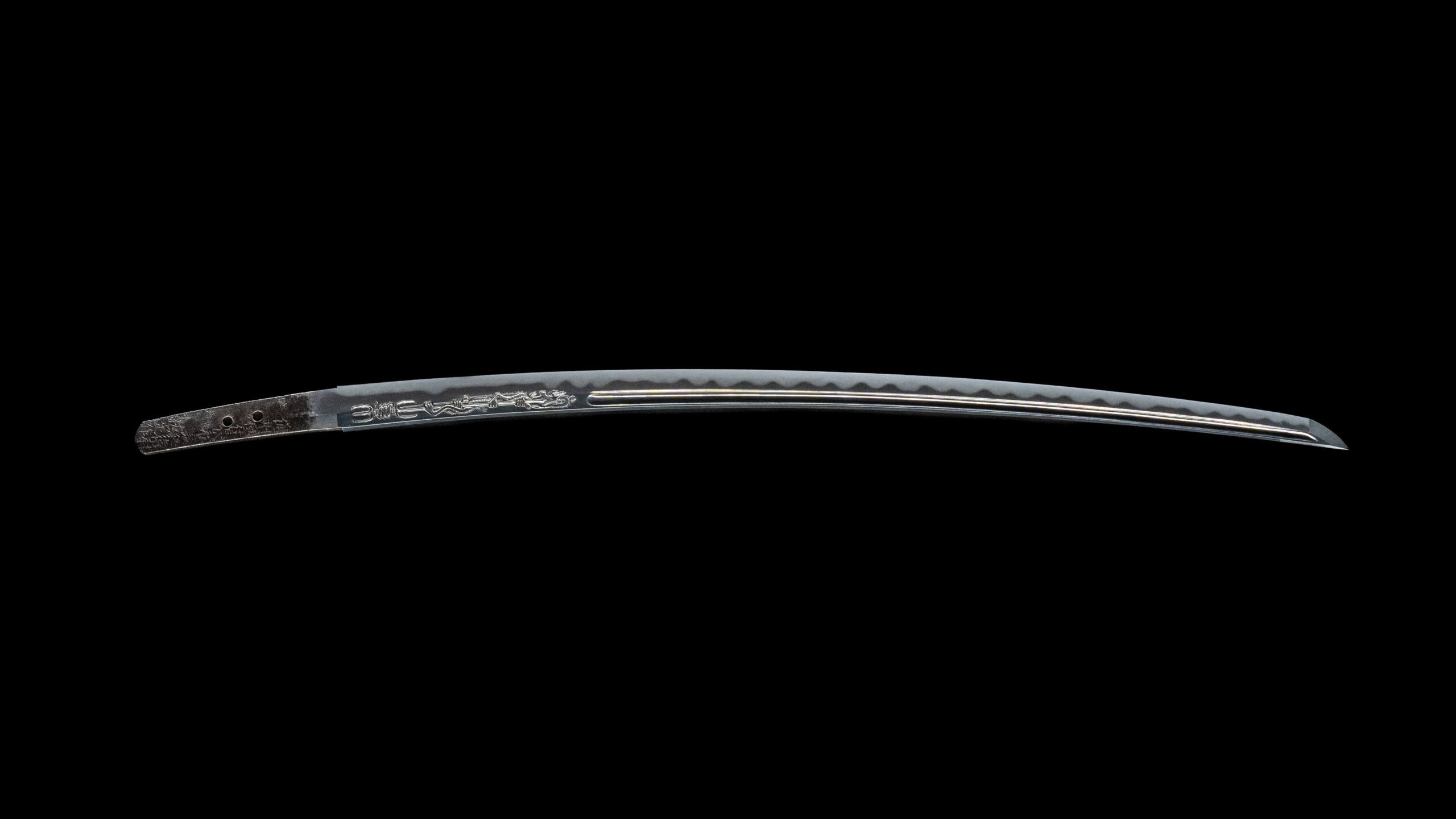
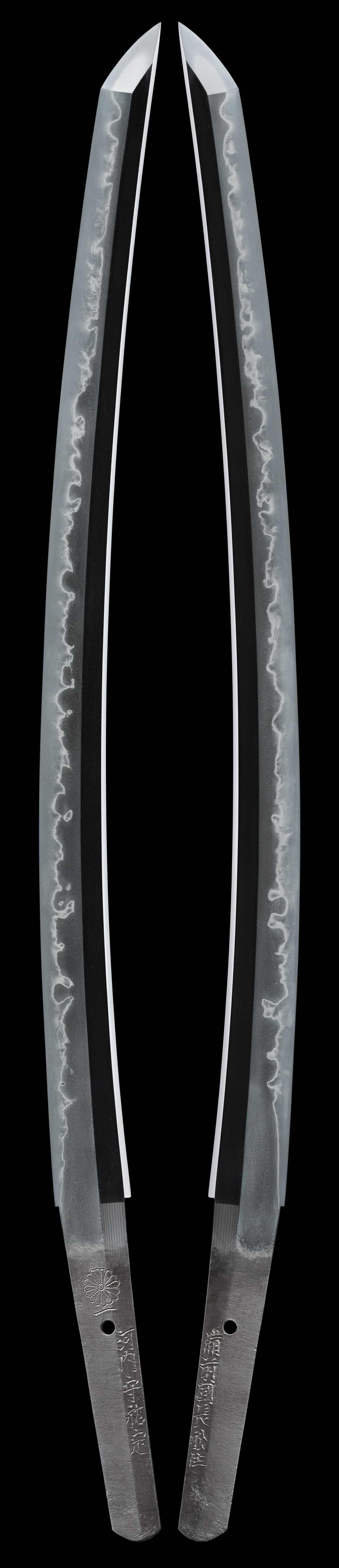
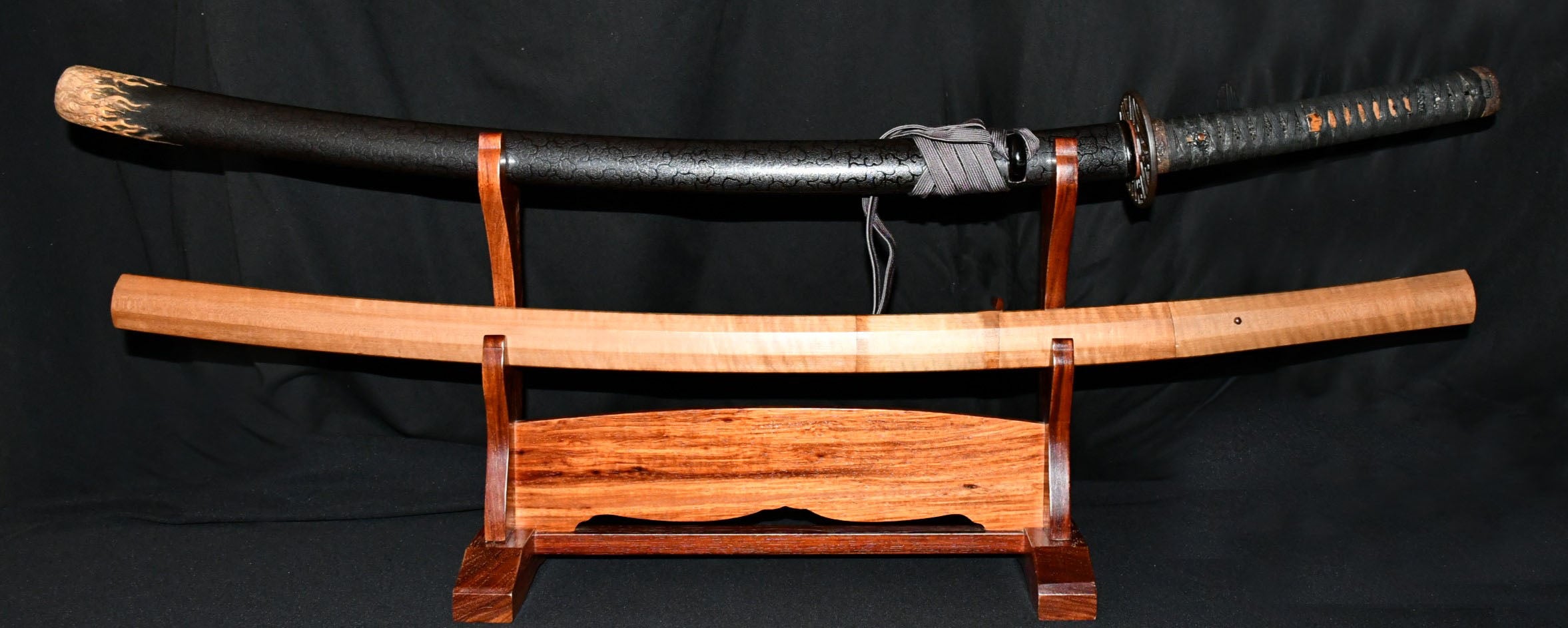
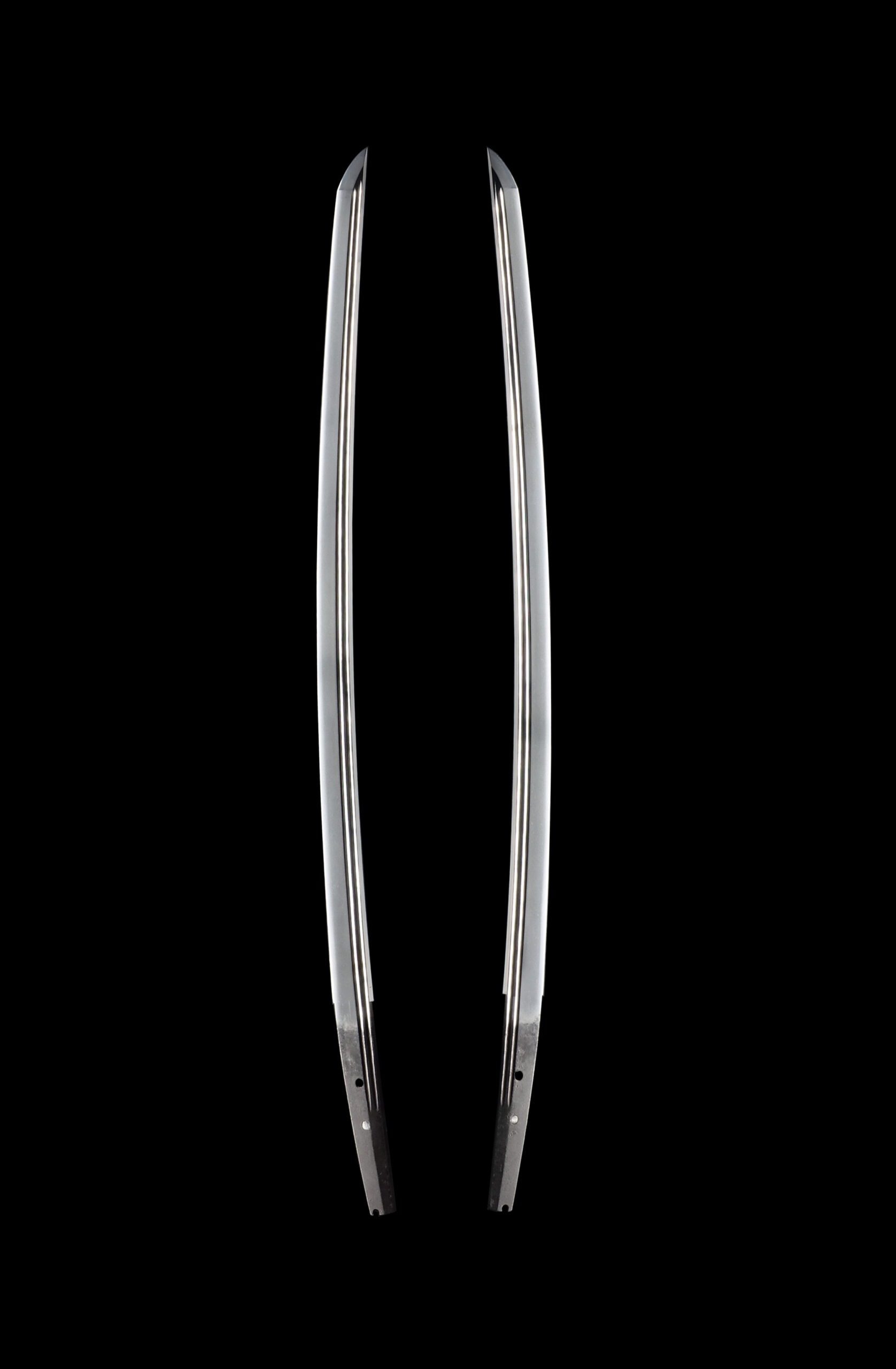
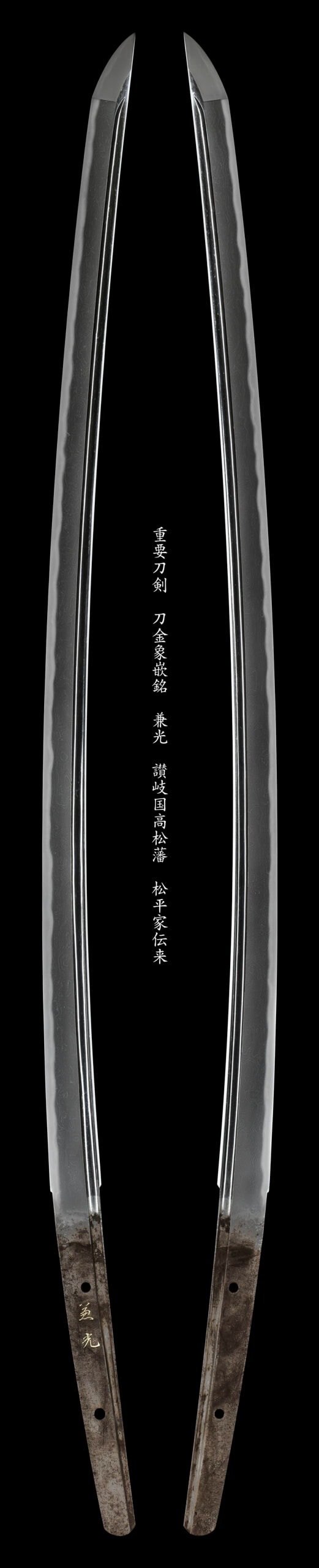
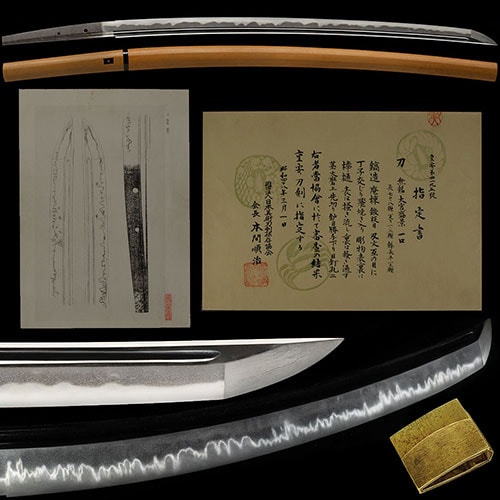
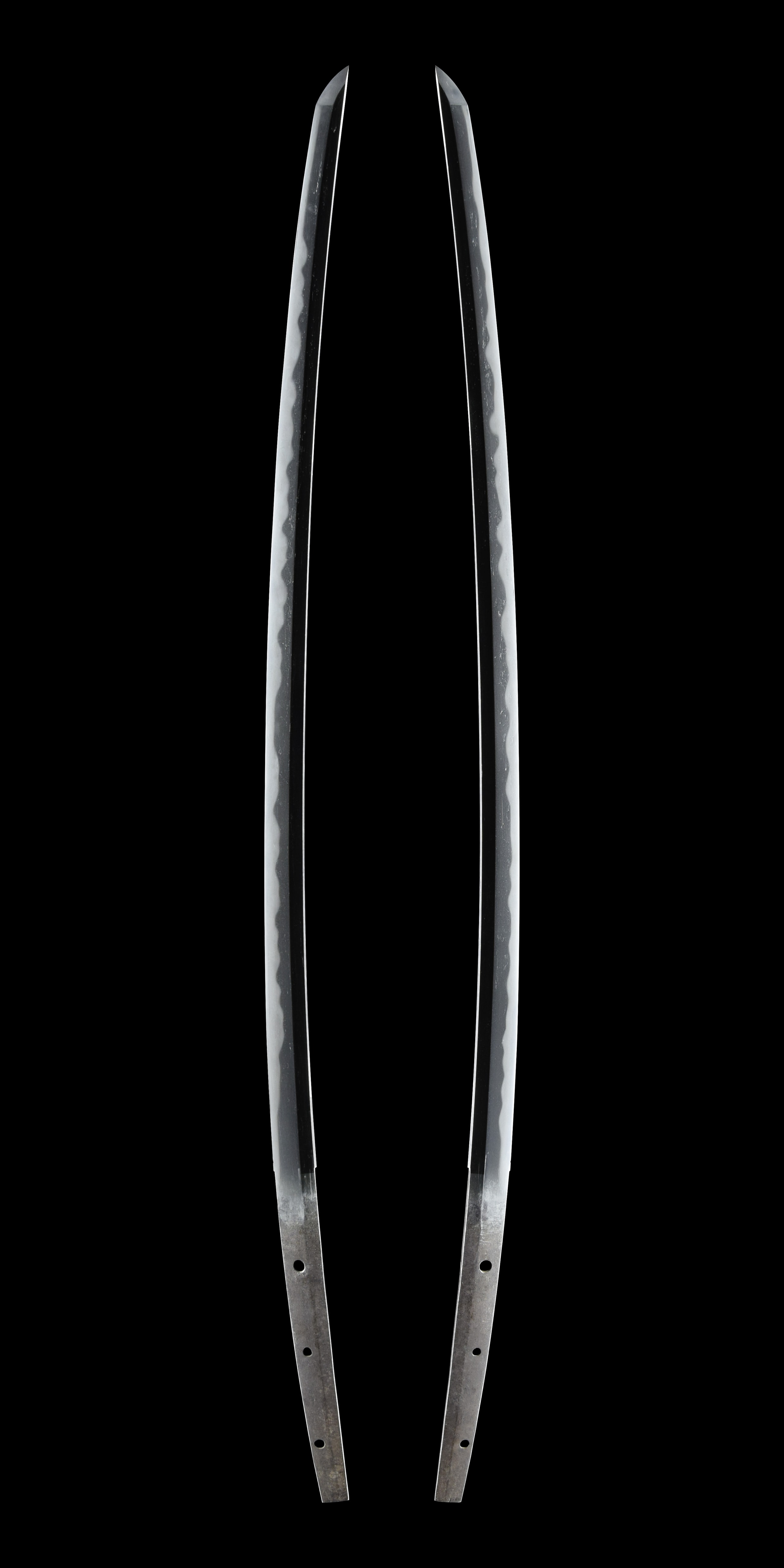
This katana is signed by Hikozaemonjo Sukesada, a smith from the Bizen province active in the late Muromachi period. It features a nagasa of 75.45 cm and a sori of 2.12 cm. The sword comes with a koshirae, shirasaya, and a gold-plated double habaki, and has been designated as a 13th session Juyo Token.

NBTHK Setsumei

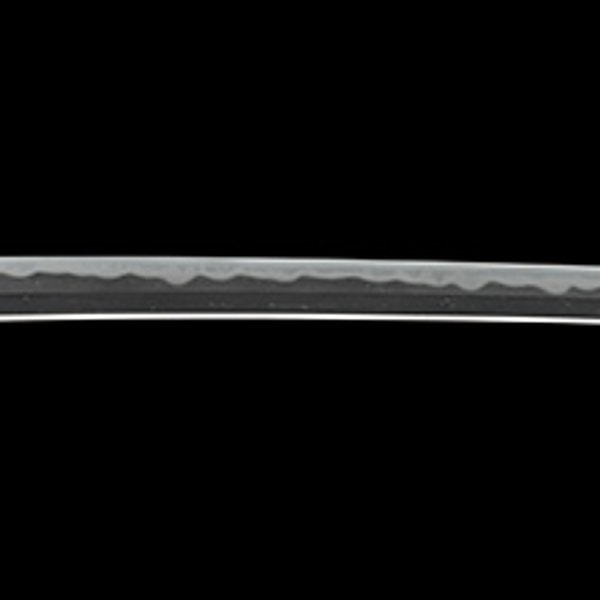
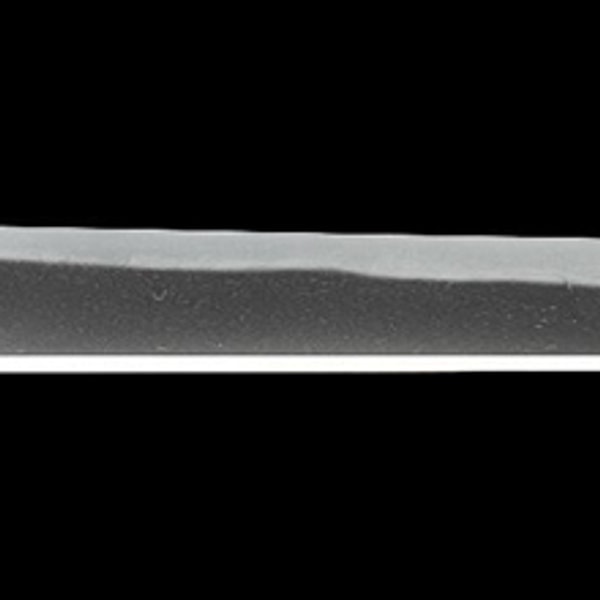
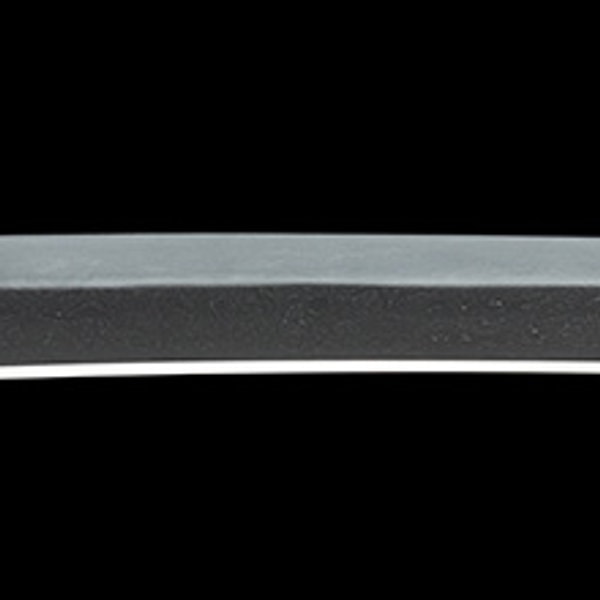
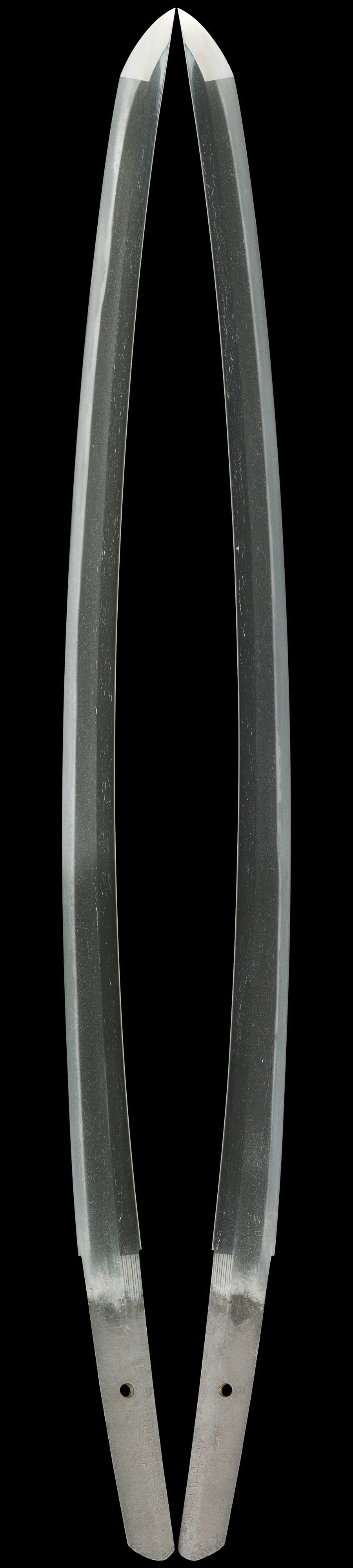
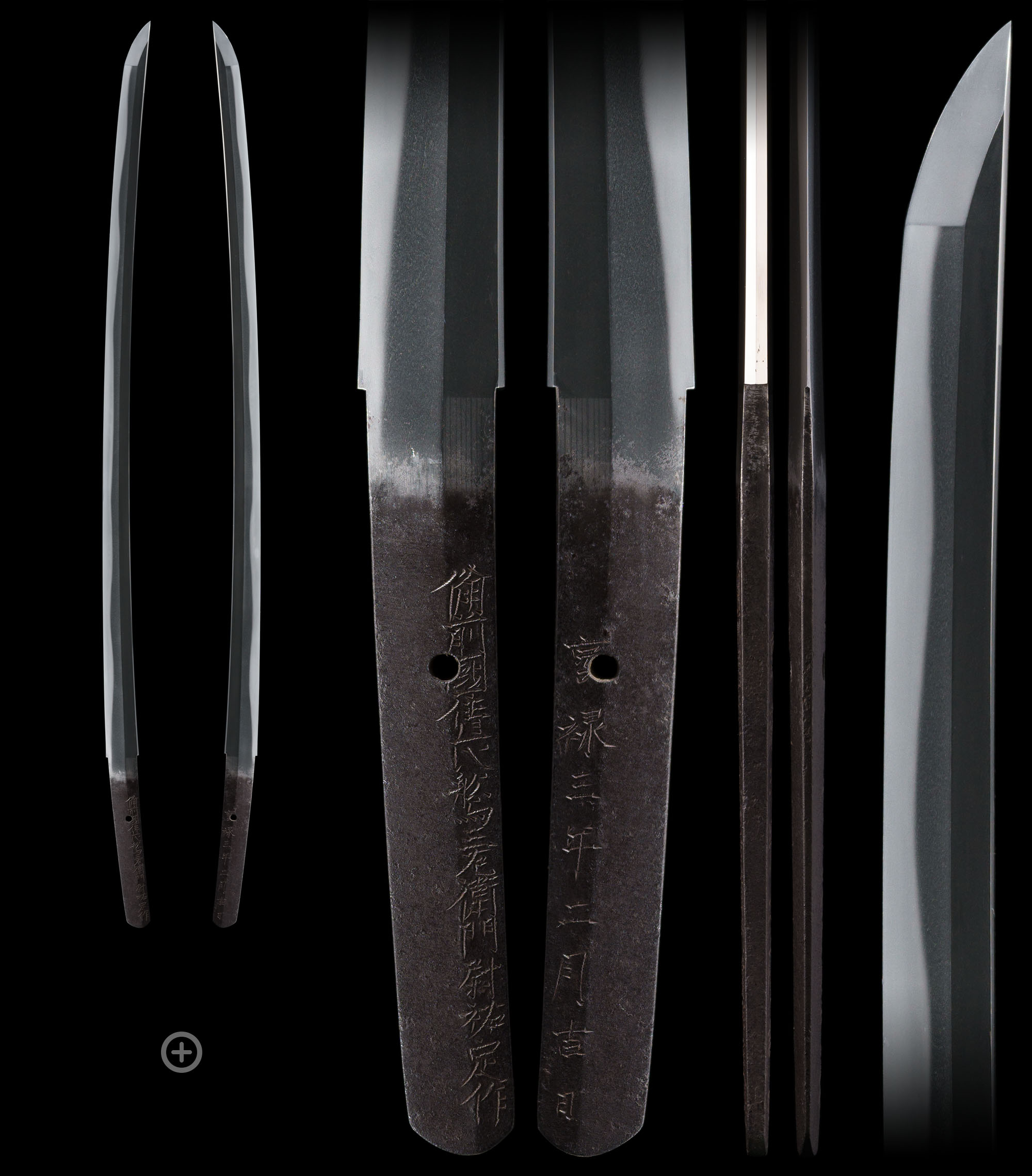
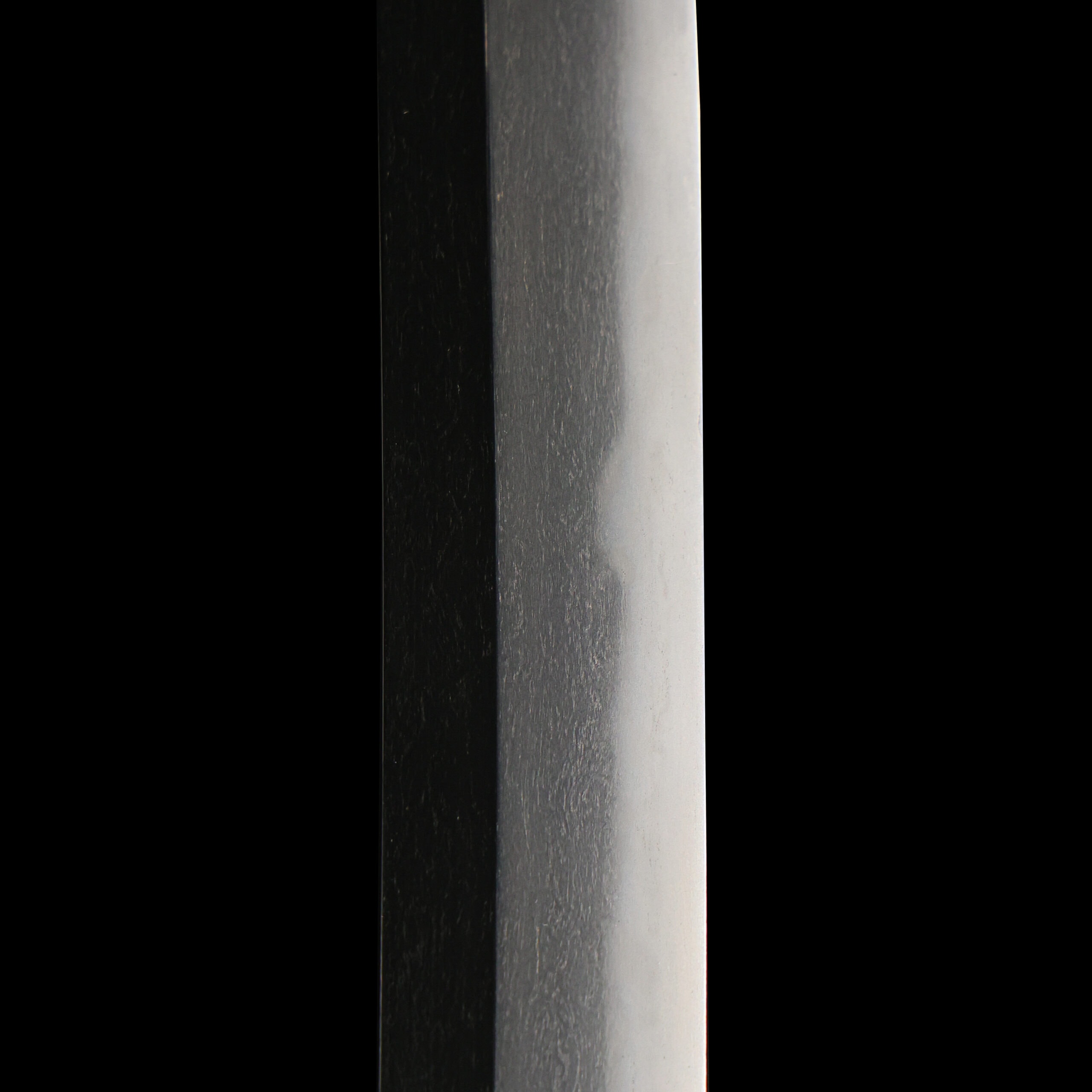
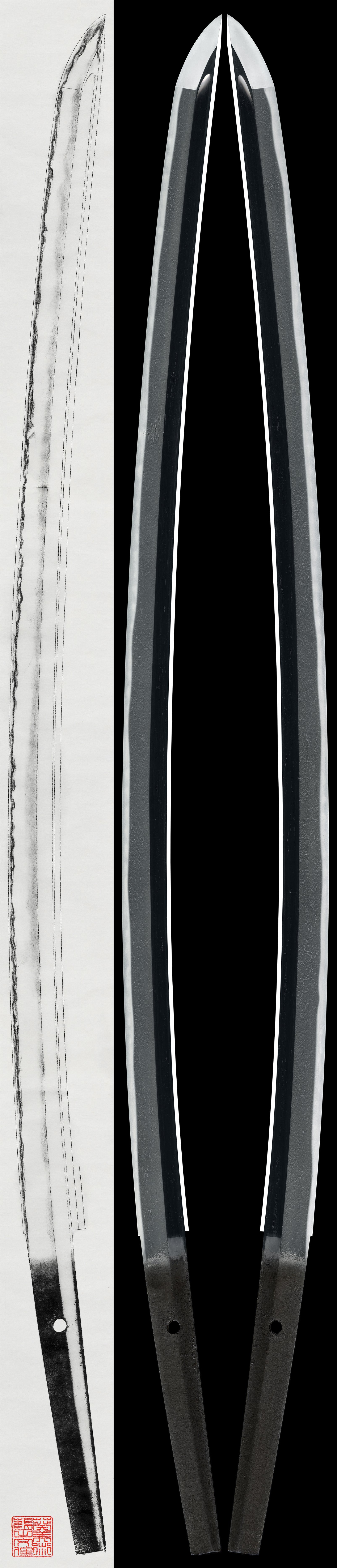
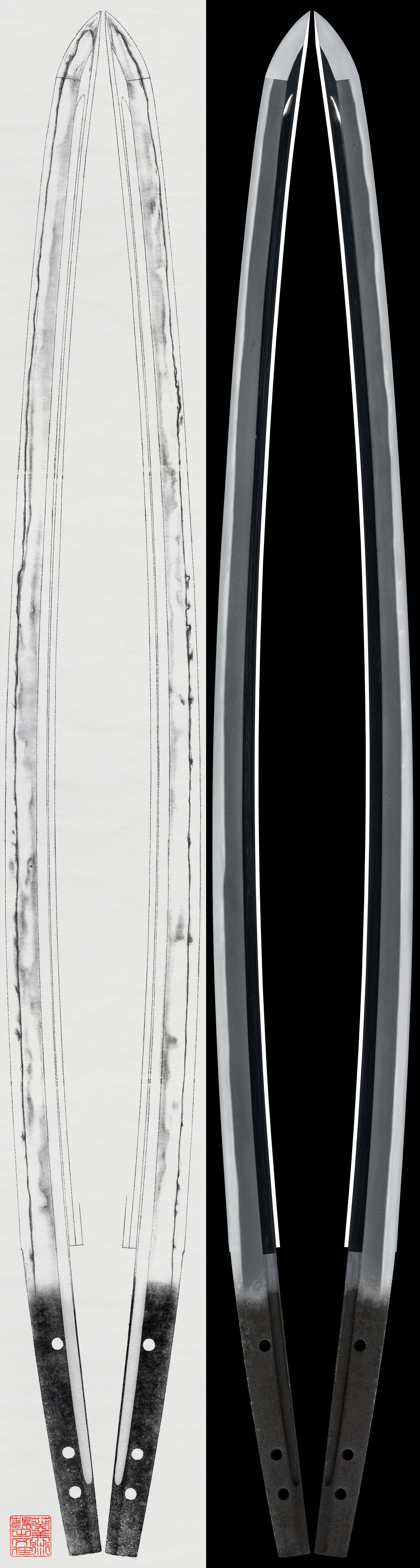
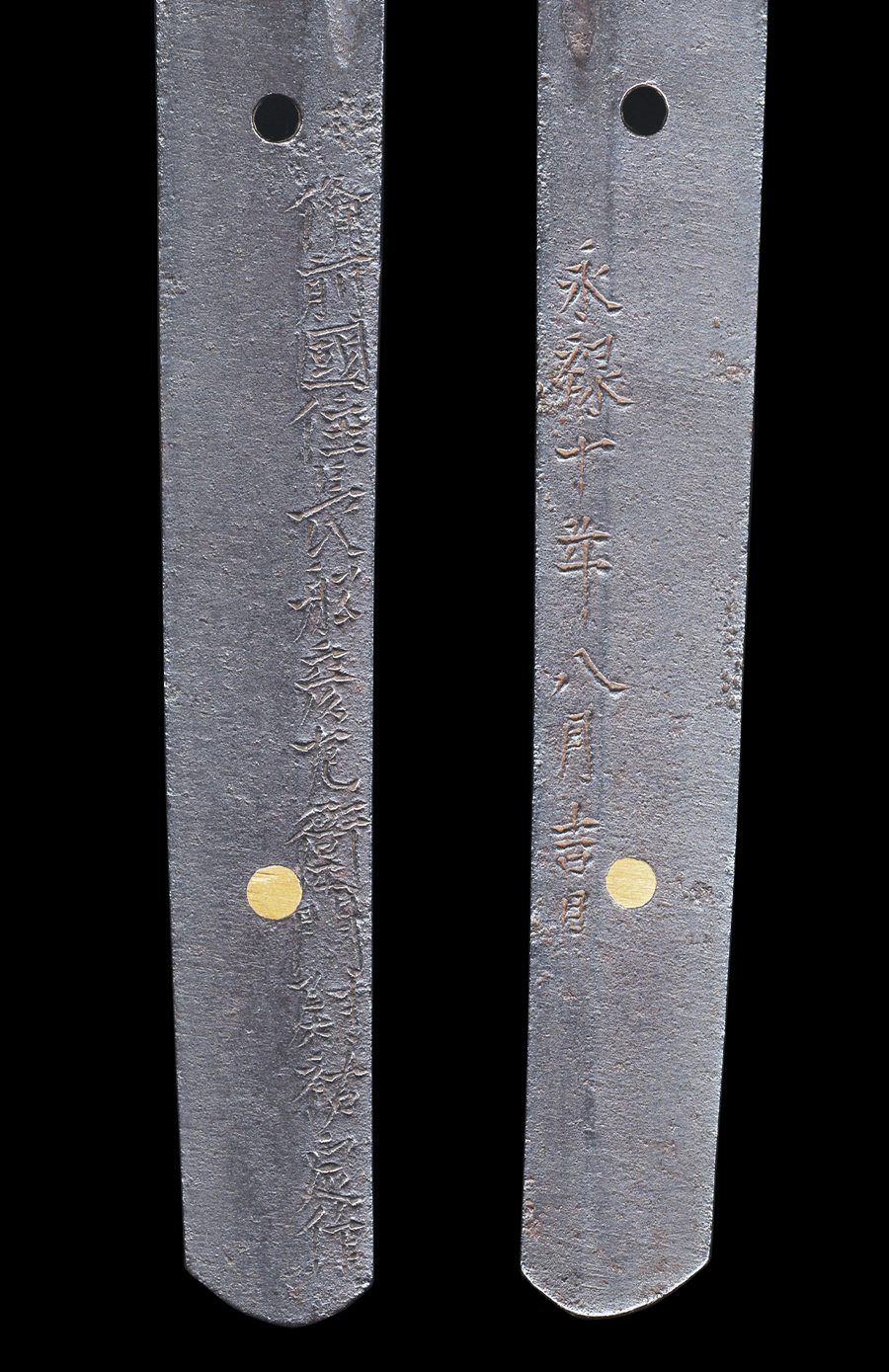
Jūyō-Tōken, 13th Session — Designated March 10, 1965 Katana, mei: Hikosaemon no Jō Sukesada (祐定) Measurements Nagasa 75.5 cm, sori 2.1 cm, motohaba 3.3 cm, sakihaba 2.2 cm, kissaki-nagasa 4.2 cm, nakago-nagasa 20.9 cm Description Keijō: shinogi-zukuri, iori-mune; with sakizori; an extended chū-kissaki. Kitae: Fine itame tightly forged; fine nie attach; overall appearing muji-like (plain). Hamon: Gunome mixed with chōji; deeply hardened; with a tendency toward a tightened nioiguchi, containing small ashi and yō. Bōshi: Small midare with hakikake; tip in ko-maru. Horimono: On both sides, bō-hi carved kaki-nagashi. Nakago: Ubu; ha-agari kurijiri; yasurime in katte-sagari; two mekugi-ana, with the central one plugged; a long signature on the omote and a date inscription on the ura. Artisan Bizen Province, Osafune — Hikosaemon no Jō Sukesada (祐定) Era Dated Eiroku 10 (1567), 8th month, an auspicious day (kichijitsu) — late Muromachi period Explanation This is an uchigatana by Hikosaemon no Jō Sukesada bearing an inscription dated Eiroku 10. As Sue-Bizen works entered this period, both the dimensions and the length of the nakago tend to increase. This reflects the fact that the tachi had fallen entirely out of use, and that in place of the tachi, longer uchigatana came to be worn and employed with both hands. Although Hikosaemon no Jō is less renowned than Sukesada smiths who bore common-name titles such as Yosazaemon no Jō, Hikobei no Jō, and Genbei no Jō, this blade is particularly superior in workmanship. It should be regarded as one representative masterwork among Sue-Bizen swords.

NihontoWatch MonNihontoWatch
MarketAuctionsEncyclopedia
Swords›Bizen-den›Osafune›Sue-Bizen›Sukesada›Katana: Bizen Kuni Ju Osafune Hikozaemonjo Sukesada Saku Kore
katanaJūyō
Sukesada

Katana: Bizen Kuni Ju Osafune Hikozaemonjo Sukesada Saku Kore

mei · Osafune · Tenmon–Tenshō (1532-1592) · nagasa 75.45cm · sori 2.12cm

Price on request
Visit seller website →
Sukesada — 1 of 6
Sukesada — 2 of 6
Sukesada — 3 of 6
Sukesada — 4 of 6
Sukesada — 5 of 6
Sukesada — 6 of 6
1 / 6
1 / 6
Sukesada — 1 of 6Sukesada — 2 of 6Sukesada — 3 of 6Sukesada — 4 of 6Sukesada — 5 of 6Sukesada — 6 of 6
Measurements & details
Smith
Sukesada
Type
Katana
School
Sukesada
Period
Around 1547–1592(Tenmon–Tenshō)
Province
Bizen
Signature
Signed(100% of this smith's designated works are signed)
Measurements
Nagasa 75.45cmSori 2.12cm
Description

This katana is signed by Hikozaemonjo Sukesada, a smith from the Bizen province active in the late Muromachi period. It features a nagasa of 75.45 cm and a sori of 2.12 cm. The sword comes with a koshirae, shirasaya, and a gold-plated double habaki, and has been designated as a 13th session Juyo Token.

NBTHK Zufu Commentary

Juyo #13

AI translation — may contain errors

-, 13th Session — Designated March 10, 1965

, : Hikosaemon no Jō Sukesada (祐定)

Measurements 75.5 cm, 2.1 cm, 3.3 cm, 2.2 cm, 4.2 cm, 20.9 cm

Description Keijō: , ; with ; an extended . : Fine tightly forged; fine attach; overall appearing -like (plain). : mixed with ; deeply hardened; with a tendency toward a tightened , containing small and . : Small with ; tip in . : On both sides, carved kaki-nagashi. : ; ; in ; two , with the central one plugged; a long signature on the and a date inscription on the .

Artisan Province, — Hikosaemon no Jō Sukesada (祐定)

Era Dated Eiroku 10 (1567), 8th month, an auspicious day () — late period

Explanation This is an by Hikosaemon no Jō Sukesada bearing an inscription dated Eiroku 10. As works entered this period, both the dimensions and the length of the tend to increase. This reflects the fact that the had fallen entirely out of use, and that in place of the , longer came to be worn and employed with both hands.

Although Hikosaemon no Jō is less renowned than Sukesada smiths who bore common-name titles such as Yosazaemon no Jō, Hikobei no Jō, and Genbei no Jō, this blade is particularly superior in workmanship. It should be regarded as one representative masterwork among swords.

About the maker

Sukesada

祐定

Sue-Bizen Osafune (Sukesada) · Bizen · around 1547-1592

Fujishiro Jo saku

6 pieces on the market now

›

Every designated work that survives under the Hikozaemon-no-jo Sukesada signature is a katana, ubu and dated, the earliest the Tenbun 16 (1547) blade that carries beside its long signature a nine-character kuji-in seal, the auspicious characters Daikichi, and a bonji, and the latest the Tensho 4 (1576) commission made for Wada Izumo no Kami of Harima. The name Sukesada is the great late-Muromachi name of Osafune, carried by a body of Sue-Bizen smiths of whom the most highly regarded bore distinguishing common-name titles: Yosozaemon no Jo, Genbei no Jo, Hikobei no Jo, and the Hikozaemon no Jo whose blades are gathered here. The published sources are candid that Hikozaemon no Jo stands somewhat lower in name than the first two, yet they judge these particular blades especially well made, one of them "a representative masterwork among Sue-Bizen swords"[[c:1]]. His hand is the mature Sue-Bizen katana, and the signature itself runs in three same-signature generations, read off the Meikan as a first in Eisho, a second in Tenbun-Eiroku, and a third in Genki-Tensho.

The distinguishing matter of his work is a single declared division of manner. The published sources state it almost verbatim across the corpus: the work of this period divides broadly into a koshi-biraki gunome-midare that develops into a compound, layered form, and a suguha-cho into which ashi and yo enter[[c:2]]. The first is the flamboyant pole. Over the jigane he tempers a midare whose valleys open at the base, deeply hardened, the gunome building into the doubled fukushiki structure, abundant ashi and yo within it, ko-nie attaching, with sunagashi and kinsuji running through; on the most agitated of these the nioiguchi is bright, while on others it grows subdued. The second is the quiet pole, a suguha-cho or broad suguha carrying ashi and yo well, ko-nie with sunagashi, the nioiguchi tending toward a tightened look, and on one Tensho katana yubashiri and a touch of tobiyaki gather around the monouchi. A blade falls cleanly into one mode or the other, and the judges name which on each.

The jigane is the constant beneath both manners. It is a compact ko-itame, on the broader katana an itame, well forged and tight, with ji-nie attaching; on one blade it tightens so far as to appear muji-like, almost featureless, and on another it loosens into a standing hada (hada-dachi) mixed with mokume and carries muneyaki along the back. The forging is where the judges most often single him out: of the Tenbun 16 katana they write that the kitae is "outstanding"[[c:3]], forged in itame with ji-nie and abundant chikei, presenting overall "a strongly steely character"[[c:4]]. The boshi answers the hamon mode: midare-komi turning ko-maru, sometimes deeply tempered into a yakizume-like tip on the flamboyant blades, and a ko-maru with a long return, pointed, or faintly hakikake on the suguha ones. The sugata is the late-Muromachi katana throughout, a broad shinogi-zukuri with iori-mune, sakizori, and an extended chu-kissaki tending to an o-kissaki, the shinogi at times shaved high.

The generations are read directly off the nakago, since the blades are ubu and each carries a long signature on the omote with a date on the ura. The published sources date a piece, then place it against the three Hikozaemon no Jo of the Meikan: the Tenbun 16 and Tenbun 17 katana as the second generation, the Tensho 1 and Tensho 4 katana as the third. The second generation's working range they call broad, taking in koshi-biraki gunome, suguha, and hitatsura alike, and in each they perceive a high level of technique. The lengthening of the blade and of the nakago across these dates is read as a sign of the age: the tachi had fallen entirely out of use, and in its place the long uchigatana came to be worn and used two-handed with the development of swordsmanship, so the Sue-Bizen dimensions grow accordingly. The two modes and the three generations are orthogonal, the one a matter of manner and the other of date, and a full reading of any blade gives both.

Within his school he belongs to the dense Sue-Bizen Osafune body of the late Muromachi, the last great phase of the long Osafune line. The published sources rank Hikozaemon no Jo among the representative masters of the Sukesada group together with Yosozaemon no Jo, Genbei no Jo, and Hikobei no Jo, the smiths whose works, in their words, are foremost for the number of fine pieces and for especially high technical skill. His own distinction is read not by borrowing a comparison but by his own grounded traits, the two declared modes held on a tight ko-itame with ji-nie and the steely forging the judges praise, the descent kept within the one name rather than carried out to other lines. The Tenbun 16 katana, of which they say swords bearing the same signature are few, they call for that reason a representative work of the second generation.

Fujishiro rates the smith Jo-saku, and his designation record is modest: seven blades on record, all at the Juyo level, the higher designation tiers not among them. They are a body of late-koto katana held in private and long-recorded hands, and one of recorded whereabouts appears from time to time rather than rarely, a more findable thing than a Kamakura tachi though not on that account common. Provenance survives clearly on one: the Tensho 4 blade was made for Wada Izumo no Kami, a resident of Banshu, its owner inscription reading that it was "to be handed down through the generations of that house"[[c:5]], so that the katana descended through the Wada family as a heritable sword. For a collector the Hikozaemon no Jo Sukesada is the approachable end of a famous name, a dated and signed late-Bizen katana on which the two-mode reading and the generational frame can be worked out in the hand, and on the best of which, as the published sources say of the Tenbun 16 piece, the forging is outstanding.


Historical importance

Where Sukesada stands among comparable artisans: across all of nihontō, and within tradition, era, and period. The tiers (Foremost · Leading · Major · Notable) weigh official designations from the NBTHK and Japan's Agency for Cultural Affairs, together with historical honors of lasting repute such as the Sansaku and Meibutsu-chō.

随一
Foremost
屈指
Leading
有数
Major
著名
Notable

Select a lens to see how it's measured.

Designation record
8 designated works
Jūyō
8
6 works by Sukesada on the market→
Sukesada — full profileSue-Bizen Osafune (Sukesada) school

Dated Works

Years he was demonstrably active, proven by signed-and-dated blades

Active period
1547–1573Editorial estimate: 1547–1592
7 of 8 designated works carry a date
1540
1550
1560
1570
1580
About the school

Sukesada

祐定

Bizen-den · Bizen

Phase: Sue-Bizen末備前· 1441–1596

79 pieces on the market now

›

The last great chapter of Osafune unfolds in the Eisho and Tenbun years of the late Muromachi, when the riverside workshop turned its accumulated craft toward an age of constant war. Where Oei-Bizen had looked backward, reviving the tachi shape and the choji temper of the Kamakura masters under Yasumitsu and Morimitsu, Sue-Bizen faces forward into Sengoku demand. Learn more →

11 recorded smiths118 designated works
Leading smiths
SmithEraDesignated
Sukesada祐定1504-155172
Sukesada祐定1532-158318
Sukesada祐定1547-15928
Sukesada祐定1487-15215
Sukesada祐定1532-15733
Explore the Sukesada school →
NBTHK Certificate
Jūyō Tōken重要刀剣
Important Sword
›

A blade of top-grade workmanship and condition, formally judged to rank with a nationally recognized Important Art Object (Jūyō Bijutsuhin). Awarded only at the NBTHK’s competitive annual examination.

Of Japan’s roughly 2.5 million registered swords, only 12,307 (about 1 in 203) have ever attained Jūyō.

About the NBTHK›

The NBTHK (Nihon Bijutsu Tōken Hozon Kyōkai, the Society for the Preservation of Japanese Art Swords) is a public-interest incorporated foundation founded in 1948 and supervised by Japan’s Agency for Cultural Affairs (Bunkachō); it is based at the Japanese Sword Museum in Tokyo. Its expert panels physically examine each submitted work (shinsa) and issue a certificate (kanteishō) ranking it by artistic and historical merit. NBTHK papers are the most widely recognized standard of authentication for Japanese swords and fittings.

NBTHK official site→
Seller
T
Token Bizenya
🇯🇵Ships from Japan
›
✓Verified dealerbizenya-katana.com
View all of Token Bizenya’s listings→View this item on the dealer’s site→

More works by Sukesada

View all →
Ginza Seikodo
Jūyō
Katana - Jūyō - by Sukesada - Katana Signed Bizen no Kuni Ju Osafune Hikobeno Jo Sukesada SakuKatana - Jūyō - by Sukesada - Katana Signed Bizen no Kuni Ju Osafune Hikobeno Jo Sukesada Saku

Katana

BySukesada
Ask
Iida Koendo
Tokuho
Katana - Tokuho - by Sukesada - Bizen Osafune SukesadaKatana - Tokuho - by Sukesada - Bizen Osafune Sukesada

Katana

BySukesada
¥11,000,000
Choshuya
Tokuho
Katana - Tokuho - by Sukesada - Signed Bizen no kuni ju Osafune Sukesada saku, Eiroku 5 nen 8 gatsujitsuKatana - Tokuho - by Sukesada - Signed Bizen no kuni ju Osafune Sukesada saku, Eiroku 5 nen 8 gatsujitsu

Katana

BySukesada
¥1,500,000
Yazawa Shokai
Tokubetsu Kichō
Katana - Tokubetsu Kichō - by Sukesada - Consignment Item (Price on Inquiry) Katana: Bizen Koku Ju Osafune Sukesada Saku, Nagasa 73.4cm, Sori 2.0cm, with Koshirae, Tokubetsu Kicho TokenKatana - Tokubetsu Kichō - by Sukesada - Consignment Item (Price on Inquiry) Katana: Bizen Koku Ju Osafune Sukesada Saku, Nagasa 73.4cm, Sori 2.0cm, with Koshirae, Tokubetsu Kicho Token

Katana

BySukesada
Ask
Token-Net
Tokuho
Katana - Tokuho - by Sukesada - Bizen Osafune SukesadaKatana - Tokuho - by Sukesada - Bizen Osafune Sukesada

Katana

BySukesada
Ask

Previously sold by Sukesada

Choshuya
Katana - by Sukesada - Bizen Kuni Ju Osafune Sukesada Saku, Eiroku San Nen Hachi Gatsu KichijitsuKatana - by Sukesada - Bizen Kuni Ju Osafune Sukesada Saku, Eiroku San Nen Hachi Gatsu Kichijitsu
Sold

Katana

BySukesada
SOLD
Choshuya
Tanto - by Sukesada - Bizen Kuni Ju Osafune Sukesada Genbei no jo Saku Kore, Eiroku Ju Nen Hachi Gatsu Hi (Yowamono)Tanto - by Sukesada - Bizen Kuni Ju Osafune Sukesada Genbei no jo Saku Kore, Eiroku Ju Nen Hachi Gatsu Hi (Yowamono)
Sold

Tantō

BySukesada
SOLD
Choshuya
Katana - by Sukesada - Japanese Sword for Sale | Ginza Choshuya | Signed Bizen Kuni Ju Osafune Sukesada Saku, Eiroku Jūnen Nigatsu HiKatana - by Sukesada - Japanese Sword for Sale | Ginza Choshuya | Signed Bizen Kuni Ju Osafune Sukesada Saku, Eiroku Jūnen Nigatsu Hi
Sold

Katana

BySukesada
SOLD
Ikeda Art
Katana - by Sukesada - Bizen Osafune Sukesada, 69.6cm - For Iai, Appreciation, and TameshigiriKatana - by Sukesada - Bizen Osafune Sukesada, 69.6cm - For Iai, Appreciation, and Tameshigiri
Sold

Katana

BySukesada
SOLD
Choshuya
Tanto - by Sukesada - Mei: Bizen Kuni Ju Osafune Sukesada Saku, Eiroku Junen Hachigatsu HiTanto - by Sukesada - Mei: Bizen Kuni Ju Osafune Sukesada Saku, Eiroku Junen Hachigatsu Hi
Sold

Tantō

BySukesada
SOLD
Samurai Museum
Katana - by Sukesada - Antique Japanese Sword Katana Signed by Sukesada NBTHK Kichou CertificateKatana - by Sukesada - Antique Japanese Sword Katana Signed by Sukesada NBTHK Kichou Certificate
Sold

Katana

BySukesada
SOLD
Samurai Museum
Hozon
Katana - Hozon - by Sukesada - Antique Japanese Sword Katana Signed by Osafune Sukesada NBTHK Hozon CertificateKatana - Hozon - by Sukesada - Antique Japanese Sword Katana Signed by Osafune Sukesada NBTHK Hozon Certificate
Sold

Katana

BySukesada
SOLD
Token Bizenya
Hozon
Wakizashi - Hozon - by Sukesada - Bizen Kuni Ju Osafune Sukesada SakuWakizashi - Hozon - by Sukesada - Bizen Kuni Ju Osafune Sukesada Saku
Sold

Wakizashi

BySukesada
SOLD

More Sue-Bizen works

View all →
Supein Nihonto
Hozon
Tanto - Hozon - by Osafune Harumitsu - NBTHK Hozon Tanto by Bizen Osafune HarumitsuTanto - Hozon - by Osafune Harumitsu - NBTHK Hozon Tanto by Bizen Osafune Harumitsu

Tantō

ByOsafune Harumitsu
¥7,800
Tozando
Hozon
Katana - Hozon - by Sukesada - Bishū Osafune Sukesada - NBTHK Hozon Token Certified, Dated Eiroku 8 (1565)Katana - Hozon - by Sukesada - Bishū Osafune Sukesada - NBTHK Hozon Token Certified, Dated Eiroku 8 (1565)

Katana

BySukesada
¥1,620,000
Sanmei
Tokuho
Tanto - Tokuho - by Sukesada - Double-Edged Tanto: Osafune SukesadaTanto - Tokuho - by Sukesada - Double-Edged Tanto: Osafune Sukesada

Tantō

BySukesada
¥1,200,000
Aoi Art
Hozon
Tanto - Hozon - by Sukesada - Bishu Osafune Sukesada Saku (1583)Tanto - Hozon - by Sukesada - Bishu Osafune Sukesada Saku (1583)

Tantō

BySukesada
¥250,000
Aoi Art
Hozon
Wakizashi - Hozon - by Osafune Norimitsu - Bishu Osafune Norimitsu. Dated August, 1465.Wakizashi - Hozon - by Osafune Norimitsu - Bishu Osafune Norimitsu. Dated August, 1465.

Wakizashi

ByOsafune Norimitsu
¥2,500,000
Asahi Token
Jūyō
Wakizashi - Jūyō - by Sukesada - Bizen Osafune Yosazaemonjo Sukesada, a Lucky Day in February, Daiei 2Wakizashi - Jūyō - by Sukesada - Bizen Osafune Yosazaemonjo Sukesada, a Lucky Day in February, Daiei 2

Wakizashi

BySukesada
Ask
Toyuukai
Katana - by Sukesada - Bizen-koku-sumi Osafune Yozaemon Sukesada, Eiroku 6th year, 8th month, with Hon'ami appraisalKatana - by Sukesada - Bizen-koku-sumi Osafune Yozaemon Sukesada, Eiroku 6th year, 8th month, with Hon'ami appraisal

Katana

BySukesada
¥1,200,000
Hyozaemon
Tokuho
Wakizashi - Tokuho - by Osafune Munemitsu - Sakyō-no-shin MunemitsuWakizashi - Tokuho - by Osafune Munemitsu - Sakyō-no-shin Munemitsu

Wakizashi

ByOsafune Munemitsu
¥2,900,000

More from the Osafune school

View all →
Katanahanbai
Tokuho
Wakizashi - Tokuho - by Osafune Tomomitsu - Bishu Osafune Tomomitsu - Dated Teiji 5th Year, 8th MonthWakizashi - Tokuho - by Osafune Tomomitsu - Bishu Osafune Tomomitsu - Dated Teiji 5th Year, 8th Month

Wakizashi

ByOsafune Tomomitsu
¥4,800,000
Nihonto.com
Jūyō
Tanto - Jūyō - by Osafune Kagemitsu - Juyo Tanto by Bizen KagemitsuTanto - Jūyō - by Osafune Kagemitsu - Juyo Tanto by Bizen Kagemitsu

Tantō

ByOsafune Kagemitsu
¥89,500
Aoi Art
Tokuho
Katana - Tokuho - by Osafune Motomitsu - Mumei (Attributed to Osafune Motomitsu)Katana - Tokuho - by Osafune Motomitsu - Mumei (Attributed to Osafune Motomitsu)

Katana

ByOsafune Motomitsu
¥1,200,000
Goushuya
Jūyō
Katana - Jūyō - by Osafune Kanemitsu - Kanemitsu with Gold Inlay InscriptionKatana - Jūyō - by Osafune Kanemitsu - Kanemitsu with Gold Inlay Inscription

Katana

ByOsafune Kanemitsu
Ask
Iida Koendo
Jūyō
Tachi - Jūyō - by Osafune Shigezane - Bishu Osafune ju Shigezane, Enbun 3rd year, 12th monthTachi - Jūyō - by Osafune Shigezane - Bishu Osafune ju Shigezane, Enbun 3rd year, 12th month

Tachi

ByOsafune Shigezane
¥33,000,000
Iida Koendo
Jūyō
Tachi - Jūyō - by Osafune Nagamitsu - Bizenkoku Osafune ju Sakonshogen Nagamitsu tsukuru, Einin Gannen Junigatsu Hi (December 1293)Tachi - Jūyō - by Osafune Nagamitsu - Bizenkoku Osafune ju Sakonshogen Nagamitsu tsukuru, Einin Gannen Junigatsu Hi (December 1293)

Tachi

ByOsafune Nagamitsu
¥55,000,000
Eirakudo
Tokuho
Tachi - Tokuho - by Osafune Sanenaga - Sanenaga - Tokubetsu Hozon TokenTachi - Tokuho - by Osafune Sanenaga - Sanenaga - Tokubetsu Hozon Token

Tachi

ByOsafune Sanenaga
¥7,500,000
Samurai Museum
Tokuho
Wakizashi - Tokuho - by Osafune Kagemitsu - Antique Japanese Sword Wakizashi Attributed to Den Osafune Kagemitsu NBTHK Tokubetsu Hozon CertificateWakizashi - Tokuho - by Osafune Kagemitsu - Antique Japanese Sword Wakizashi Attributed to Den Osafune Kagemitsu NBTHK Tokubetsu Hozon Certificate

Wakizashi

ByOsafune Kagemitsu
¥20,966

More from the Bizen tradition

View all →
Eirakudo
Jūyō Bijutsuhin
Katana - Jubi - by Chu-Aoe Sadatsugu - Aoe Sadatsugu - Juyo BijutsuhinKatana - Jubi - by Chu-Aoe Sadatsugu - Aoe Sadatsugu - Juyo Bijutsuhin

Katana

ByChu-Aoe Sadatsugu
Ask
Tsuruginoya
Jūyō
Katana - Jūyō - by Fukuoka Ichimonji School - Mumei Fukuoka IchimonjiKatana - Jūyō - by Fukuoka Ichimonji School - Mumei Fukuoka Ichimonji

Katana

ByFukuoka Ichimonji School
¥10,000,000
Eirakudo
Jūyō
Tachi - Jūyō - by Fukuoka Ichimonji School - Fukuoka Ichimonji - Juyo TokenTachi - Jūyō - by Fukuoka Ichimonji School - Fukuoka Ichimonji - Juyo Token

Tachi

ByFukuoka Ichimonji School
Ask
Aoi Art
Jūyō
Katana - Jūyō - by Yoshioka Ichimonji Sukemitsu - Ichi Bizen-koku Yoshioka Sakon Sho (Sukemitsu)Katana - Jūyō - by Yoshioka Ichimonji Sukemitsu - Ichi Bizen-koku Yoshioka Sakon Sho (Sukemitsu)

Katana

ByYoshioka Ichimonji Sukemitsu
¥9,500,000
Hyozaemon
Tokuho
Wakizashi - Tokuho - by Fukuoka Ichimonji Yoshifusa - Fukuoka Ichimonji YoshifusaWakizashi - Tokuho - by Fukuoka Ichimonji Yoshifusa - Fukuoka Ichimonji Yoshifusa

Wakizashi

ByFukuoka Ichimonji Yoshifusa
Ask
Goushuya
Jūyō Bijutsuhin
Tachi - Jubi - by Ukai Unsho - Kumoio - From the collection of the Okouchi family, lord of Otaki Domain, Kazusa ProvinceTachi - Jubi - by Ukai Unsho - Kumoio - From the collection of the Okouchi family, lord of Otaki Domain, Kazusa Province

Tachi

ByUkai Unsho
Ask
Iida Koendo
Jūyō
Tachi - Jūyō - by Osafune Nagamitsu - NagamitsuTachi - Jūyō - by Osafune Nagamitsu - Nagamitsu

Tachi

ByOsafune Nagamitsu
¥33,000,000
Choshuya
Jūyō
Tachi - Jūyō - by Osafune Motomitsu - Signed Bishu (ika kire) den Osafune MotomitsuTachi - Jūyō - by Osafune Motomitsu - Signed Bishu (ika kire) den Osafune Motomitsu

Tachi

ByOsafune Motomitsu
¥8,500,000

Swords

  • Katana
  • Wakizashi
  • Tantō
  • Tachi
  • Naginata
  • Yari

Fittings

  • Tsuba
  • Fuchi-Kashira
  • Kozuka
  • Menuki

By Certification

  • Tokujū
  • Jūyō
  • Tokuho
  • Hozon

Resources

  • Dealer Directory
  • Artist Directory
  • Glossary
  • Browse All
Nihontowatch© 2026
TermsPrivacyCookiesAbout

Description

This katana is signed by Hikozaemonjo Sukesada, a smith from the Bizen province active in the late Muromachi period. It features a nagasa of 75.45 cm and a sori of 2.12 cm. The sword comes with a koshirae, shirasaya, and a gold-plated double habaki, and has been designated as a 13th session Juyo Token.

NBTHK Setsumei

Jūyō-Tōken, 13th Session — Designated March 10, 1965 Katana, mei: Hikosaemon no Jō Sukesada (祐定) Measurements Nagasa 75.5 cm, sori 2.1 cm, motohaba 3.3 cm, sakihaba 2.2 cm, kissaki-nagasa 4.2 cm, nakago-nagasa 20.9 cm Description Keijō: shinogi-zukuri, iori-mune; with sakizori; an extended chū-kissaki. Kitae: Fine itame tightly forged; fine nie attach; overall appearing muji-like (plain). Hamon: Gunome mixed with chōji; deeply hardened; with a tendency toward a tightened nioiguchi, containing small ashi and yō. Bōshi: Small midare with hakikake; tip in ko-maru. Horimono: On both sides, bō-hi carved kaki-nagashi. Nakago: Ubu; ha-agari kurijiri; yasurime in katte-sagari; two mekugi-ana, with the central one plugged; a long signature on the omote and a date inscription on the ura. Artisan Bizen Province, Osafune — Hikosaemon no Jō Sukesada (祐定) Era Dated Eiroku 10 (1567), 8th month, an auspicious day (kichijitsu) — late Muromachi period Explanation This is an uchigatana by Hikosaemon no Jō Sukesada bearing an inscription dated Eiroku 10. As Sue-Bizen works entered this period, both the dimensions and the length of the nakago tend to increase. This reflects the fact that the tachi had fallen entirely out of use, and that in place of the tachi, longer uchigatana came to be worn and employed with both hands. Although Hikosaemon no Jō is less renowned than Sukesada smiths who bore common-name titles such as Yosazaemon no Jō, Hikobei no Jō, and Genbei no Jō, this blade is particularly superior in workmanship. It should be regarded as one representative masterwork among Sue-Bizen swords.

NihontoWatch MonNihontoWatch
MarketAuctionsEncyclopedia
Swords›Bizen-den›Osafune›Sue-Bizen›Sukesada›Katana: Bizen Kuni Ju Osafune Hikozaemonjo Sukesada Saku Kore
katanaJūyō
Sukesada

Katana: Bizen Kuni Ju Osafune Hikozaemonjo Sukesada Saku Kore

mei · Osafune · Tenmon–Tenshō (1532-1592) · nagasa 75.45cm · sori 2.12cm

Price on request
Visit seller website →
Sukesada — 1 of 6
Sukesada — 2 of 6
Sukesada — 3 of 6
Sukesada — 4 of 6
Sukesada — 5 of 6
Sukesada — 6 of 6
1 / 6
1 / 6
Sukesada — 1 of 6Sukesada — 2 of 6Sukesada — 3 of 6Sukesada — 4 of 6Sukesada — 5 of 6Sukesada — 6 of 6
Measurements & details
Smith
Sukesada
Type
Katana
School
Sukesada
Period
Around 1547–1592(Tenmon–Tenshō)
Province
Bizen
Signature
Signed(100% of this smith's designated works are signed)
Measurements
Nagasa 75.45cmSori 2.12cm
Description

This katana is signed by Hikozaemonjo Sukesada, a smith from the Bizen province active in the late Muromachi period. It features a nagasa of 75.45 cm and a sori of 2.12 cm. The sword comes with a koshirae, shirasaya, and a gold-plated double habaki, and has been designated as a 13th session Juyo Token.

NBTHK Zufu Commentary

Juyo #13

AI translation — may contain errors

-, 13th Session — Designated March 10, 1965

, : Hikosaemon no Jō Sukesada (祐定)

Measurements 75.5 cm, 2.1 cm, 3.3 cm, 2.2 cm, 4.2 cm, 20.9 cm

Description Keijō: , ; with ; an extended . : Fine tightly forged; fine attach; overall appearing -like (plain). : mixed with ; deeply hardened; with a tendency toward a tightened , containing small and . : Small with ; tip in . : On both sides, carved kaki-nagashi. : ; ; in ; two , with the central one plugged; a long signature on the and a date inscription on the .

Artisan Province, — Hikosaemon no Jō Sukesada (祐定)

Era Dated Eiroku 10 (1567), 8th month, an auspicious day () — late period

Explanation This is an by Hikosaemon no Jō Sukesada bearing an inscription dated Eiroku 10. As works entered this period, both the dimensions and the length of the tend to increase. This reflects the fact that the had fallen entirely out of use, and that in place of the , longer came to be worn and employed with both hands.

Although Hikosaemon no Jō is less renowned than Sukesada smiths who bore common-name titles such as Yosazaemon no Jō, Hikobei no Jō, and Genbei no Jō, this blade is particularly superior in workmanship. It should be regarded as one representative masterwork among swords.

About the maker

Sukesada

祐定

Sue-Bizen Osafune (Sukesada) · Bizen · around 1547-1592

Fujishiro Jo saku

6 pieces on the market now

›

Every designated work that survives under the Hikozaemon-no-jo Sukesada signature is a katana, ubu and dated, the earliest the Tenbun 16 (1547) blade that carries beside its long signature a nine-character kuji-in seal, the auspicious characters Daikichi, and a bonji, and the latest the Tensho 4 (1576) commission made for Wada Izumo no Kami of Harima. The name Sukesada is the great late-Muromachi name of Osafune, carried by a body of Sue-Bizen smiths of whom the most highly regarded bore distinguishing common-name titles: Yosozaemon no Jo, Genbei no Jo, Hikobei no Jo, and the Hikozaemon no Jo whose blades are gathered here. The published sources are candid that Hikozaemon no Jo stands somewhat lower in name than the first two, yet they judge these particular blades especially well made, one of them "a representative masterwork among Sue-Bizen swords"[[c:1]]. His hand is the mature Sue-Bizen katana, and the signature itself runs in three same-signature generations, read off the Meikan as a first in Eisho, a second in Tenbun-Eiroku, and a third in Genki-Tensho.

The distinguishing matter of his work is a single declared division of manner. The published sources state it almost verbatim across the corpus: the work of this period divides broadly into a koshi-biraki gunome-midare that develops into a compound, layered form, and a suguha-cho into which ashi and yo enter[[c:2]]. The first is the flamboyant pole. Over the jigane he tempers a midare whose valleys open at the base, deeply hardened, the gunome building into the doubled fukushiki structure, abundant ashi and yo within it, ko-nie attaching, with sunagashi and kinsuji running through; on the most agitated of these the nioiguchi is bright, while on others it grows subdued. The second is the quiet pole, a suguha-cho or broad suguha carrying ashi and yo well, ko-nie with sunagashi, the nioiguchi tending toward a tightened look, and on one Tensho katana yubashiri and a touch of tobiyaki gather around the monouchi. A blade falls cleanly into one mode or the other, and the judges name which on each.

The jigane is the constant beneath both manners. It is a compact ko-itame, on the broader katana an itame, well forged and tight, with ji-nie attaching; on one blade it tightens so far as to appear muji-like, almost featureless, and on another it loosens into a standing hada (hada-dachi) mixed with mokume and carries muneyaki along the back. The forging is where the judges most often single him out: of the Tenbun 16 katana they write that the kitae is "outstanding"[[c:3]], forged in itame with ji-nie and abundant chikei, presenting overall "a strongly steely character"[[c:4]]. The boshi answers the hamon mode: midare-komi turning ko-maru, sometimes deeply tempered into a yakizume-like tip on the flamboyant blades, and a ko-maru with a long return, pointed, or faintly hakikake on the suguha ones. The sugata is the late-Muromachi katana throughout, a broad shinogi-zukuri with iori-mune, sakizori, and an extended chu-kissaki tending to an o-kissaki, the shinogi at times shaved high.

The generations are read directly off the nakago, since the blades are ubu and each carries a long signature on the omote with a date on the ura. The published sources date a piece, then place it against the three Hikozaemon no Jo of the Meikan: the Tenbun 16 and Tenbun 17 katana as the second generation, the Tensho 1 and Tensho 4 katana as the third. The second generation's working range they call broad, taking in koshi-biraki gunome, suguha, and hitatsura alike, and in each they perceive a high level of technique. The lengthening of the blade and of the nakago across these dates is read as a sign of the age: the tachi had fallen entirely out of use, and in its place the long uchigatana came to be worn and used two-handed with the development of swordsmanship, so the Sue-Bizen dimensions grow accordingly. The two modes and the three generations are orthogonal, the one a matter of manner and the other of date, and a full reading of any blade gives both.

Within his school he belongs to the dense Sue-Bizen Osafune body of the late Muromachi, the last great phase of the long Osafune line. The published sources rank Hikozaemon no Jo among the representative masters of the Sukesada group together with Yosozaemon no Jo, Genbei no Jo, and Hikobei no Jo, the smiths whose works, in their words, are foremost for the number of fine pieces and for especially high technical skill. His own distinction is read not by borrowing a comparison but by his own grounded traits, the two declared modes held on a tight ko-itame with ji-nie and the steely forging the judges praise, the descent kept within the one name rather than carried out to other lines. The Tenbun 16 katana, of which they say swords bearing the same signature are few, they call for that reason a representative work of the second generation.

Fujishiro rates the smith Jo-saku, and his designation record is modest: seven blades on record, all at the Juyo level, the higher designation tiers not among them. They are a body of late-koto katana held in private and long-recorded hands, and one of recorded whereabouts appears from time to time rather than rarely, a more findable thing than a Kamakura tachi though not on that account common. Provenance survives clearly on one: the Tensho 4 blade was made for Wada Izumo no Kami, a resident of Banshu, its owner inscription reading that it was "to be handed down through the generations of that house"[[c:5]], so that the katana descended through the Wada family as a heritable sword. For a collector the Hikozaemon no Jo Sukesada is the approachable end of a famous name, a dated and signed late-Bizen katana on which the two-mode reading and the generational frame can be worked out in the hand, and on the best of which, as the published sources say of the Tenbun 16 piece, the forging is outstanding.
Historical importance

Where Sukesada stands among comparable artisans: across all of nihontō, and within tradition, era, and period. The tiers (Foremost · Leading · Major · Notable) weigh official designations from the NBTHK and Japan's Agency for Cultural Affairs, together with historical honors of lasting repute such as the Sansaku and Meibutsu-chō.

随一
Foremost
屈指
Leading
有数
Major
著名
Notable

Select a lens to see how it's measured.

Designation record
8 designated works
Jūyō
8
6 works by Sukesada on the market→
Sukesada — full profileSue-Bizen Osafune (Sukesada) school

Dated Works

Years he was demonstrably active, proven by signed-and-dated blades

Active period
1547–1573Editorial estimate: 1547–1592
7 of 8 designated works carry a date
1540
1550
1560
1570
1580
About the school

Sukesada

祐定

Bizen-den · Bizen

Phase: Sue-Bizen末備前· 1441–1596

79 pieces on the market now

›

The last great chapter of Osafune unfolds in the Eisho and Tenbun years of the late Muromachi, when the riverside workshop turned its accumulated craft toward an age of constant war. Where Oei-Bizen had looked backward, reviving the tachi shape and the choji temper of the Kamakura masters under Yasumitsu and Morimitsu, Sue-Bizen faces forward into Sengoku demand. Learn more →

11 recorded smiths118 designated works
Leading smiths
SmithEraDesignated
Sukesada祐定1504-155172
Sukesada祐定1532-158318
Sukesada祐定1547-15928
Sukesada祐定1487-15215
Sukesada祐定1532-15733
Explore the Sukesada school →
NBTHK Certificate
Jūyō Tōken重要刀剣
Important Sword
›

A blade of top-grade workmanship and condition, formally judged to rank with a nationally recognized Important Art Object (Jūyō Bijutsuhin). Awarded only at the NBTHK’s competitive annual examination.

Of Japan’s roughly 2.5 million registered swords, only 12,307 (about 1 in 203) have ever attained Jūyō.

About the NBTHK›

The NBTHK (Nihon Bijutsu Tōken Hozon Kyōkai, the Society for the Preservation of Japanese Art Swords) is a public-interest incorporated foundation founded in 1948 and supervised by Japan’s Agency for Cultural Affairs (Bunkachō); it is based at the Japanese Sword Museum in Tokyo. Its expert panels physically examine each submitted work (shinsa) and issue a certificate (kanteishō) ranking it by artistic and historical merit. NBTHK papers are the most widely recognized standard of authentication for Japanese swords and fittings.

NBTHK official site→
Seller
T
Token Bizenya
🇯🇵Ships from Japan
›
✓Verified dealerbizenya-katana.com
View all of Token Bizenya’s listings→View this item on the dealer’s site→

More works by Sukesada

View all →
Ginza Seikodo
Jūyō
Katana - Jūyō - by Sukesada - Katana Signed Bizen no Kuni Ju Osafune Hikobeno Jo Sukesada SakuKatana - Jūyō - by Sukesada - Katana Signed Bizen no Kuni Ju Osafune Hikobeno Jo Sukesada Saku

Katana

BySukesada
Ask
Iida Koendo
Tokuho
Katana - Tokuho - by Sukesada - Bizen Osafune SukesadaKatana - Tokuho - by Sukesada - Bizen Osafune Sukesada

Katana

BySukesada
¥11,000,000
Choshuya
Tokuho
Katana - Tokuho - by Sukesada - Signed Bizen no kuni ju Osafune Sukesada saku, Eiroku 5 nen 8 gatsujitsuKatana - Tokuho - by Sukesada - Signed Bizen no kuni ju Osafune Sukesada saku, Eiroku 5 nen 8 gatsujitsu

Katana

BySukesada
¥1,500,000
Yazawa Shokai
Tokubetsu Kichō
Katana - Tokubetsu Kichō - by Sukesada - Consignment Item (Price on Inquiry) Katana: Bizen Koku Ju Osafune Sukesada Saku, Nagasa 73.4cm, Sori 2.0cm, with Koshirae, Tokubetsu Kicho TokenKatana - Tokubetsu Kichō - by Sukesada - Consignment Item (Price on Inquiry) Katana: Bizen Koku Ju Osafune Sukesada Saku, Nagasa 73.4cm, Sori 2.0cm, with Koshirae, Tokubetsu Kicho Token

Katana

BySukesada
Ask
Token-Net
Tokuho
Katana - Tokuho - by Sukesada - Bizen Osafune SukesadaKatana - Tokuho - by Sukesada - Bizen Osafune Sukesada

Katana

BySukesada
Ask

Previously sold by Sukesada

Choshuya
Katana - by Sukesada - Bizen Kuni Ju Osafune Sukesada Saku, Eiroku San Nen Hachi Gatsu KichijitsuKatana - by Sukesada - Bizen Kuni Ju Osafune Sukesada Saku, Eiroku San Nen Hachi Gatsu Kichijitsu
Sold

Katana

BySukesada
SOLD
Choshuya
Tanto - by Sukesada - Bizen Kuni Ju Osafune Sukesada Genbei no jo Saku Kore, Eiroku Ju Nen Hachi Gatsu Hi (Yowamono)Tanto - by Sukesada - Bizen Kuni Ju Osafune Sukesada Genbei no jo Saku Kore, Eiroku Ju Nen Hachi Gatsu Hi (Yowamono)
Sold

Tantō

BySukesada
SOLD
Choshuya
Katana - by Sukesada - Japanese Sword for Sale | Ginza Choshuya | Signed Bizen Kuni Ju Osafune Sukesada Saku, Eiroku Jūnen Nigatsu HiKatana - by Sukesada - Japanese Sword for Sale | Ginza Choshuya | Signed Bizen Kuni Ju Osafune Sukesada Saku, Eiroku Jūnen Nigatsu Hi
Sold

Katana

BySukesada
SOLD
Ikeda Art
Katana - by Sukesada - Bizen Osafune Sukesada, 69.6cm - For Iai, Appreciation, and TameshigiriKatana - by Sukesada - Bizen Osafune Sukesada, 69.6cm - For Iai, Appreciation, and Tameshigiri
Sold

Katana

BySukesada
SOLD
Choshuya
Tanto - by Sukesada - Mei: Bizen Kuni Ju Osafune Sukesada Saku, Eiroku Junen Hachigatsu HiTanto - by Sukesada - Mei: Bizen Kuni Ju Osafune Sukesada Saku, Eiroku Junen Hachigatsu Hi
Sold

Tantō

BySukesada
SOLD
Samurai Museum
Katana - by Sukesada - Antique Japanese Sword Katana Signed by Sukesada NBTHK Kichou CertificateKatana - by Sukesada - Antique Japanese Sword Katana Signed by Sukesada NBTHK Kichou Certificate
Sold

Katana

BySukesada
SOLD
Samurai Museum
Hozon
Katana - Hozon - by Sukesada - Antique Japanese Sword Katana Signed by Osafune Sukesada NBTHK Hozon CertificateKatana - Hozon - by Sukesada - Antique Japanese Sword Katana Signed by Osafune Sukesada NBTHK Hozon Certificate
Sold

Katana

BySukesada
SOLD
Token Bizenya
Hozon
Wakizashi - Hozon - by Sukesada - Bizen Kuni Ju Osafune Sukesada SakuWakizashi - Hozon - by Sukesada - Bizen Kuni Ju Osafune Sukesada Saku
Sold

Wakizashi

BySukesada
SOLD

More Sue-Bizen works

View all →
Supein Nihonto
Hozon
Tanto - Hozon - by Osafune Harumitsu - NBTHK Hozon Tanto by Bizen Osafune HarumitsuTanto - Hozon - by Osafune Harumitsu - NBTHK Hozon Tanto by Bizen Osafune Harumitsu

Tantō

ByOsafune Harumitsu
¥7,800
Tozando
Hozon
Katana - Hozon - by Sukesada - Bishū Osafune Sukesada - NBTHK Hozon Token Certified, Dated Eiroku 8 (1565)Katana - Hozon - by Sukesada - Bishū Osafune Sukesada - NBTHK Hozon Token Certified, Dated Eiroku 8 (1565)

Katana

BySukesada
¥1,620,000
Sanmei
Tokuho
Tanto - Tokuho - by Sukesada - Double-Edged Tanto: Osafune SukesadaTanto - Tokuho - by Sukesada - Double-Edged Tanto: Osafune Sukesada

Tantō

BySukesada
¥1,200,000
Aoi Art
Hozon
Tanto - Hozon - by Sukesada - Bishu Osafune Sukesada Saku (1583)Tanto - Hozon - by Sukesada - Bishu Osafune Sukesada Saku (1583)

Tantō

BySukesada
¥250,000
Aoi Art
Hozon
Wakizashi - Hozon - by Osafune Norimitsu - Bishu Osafune Norimitsu. Dated August, 1465.Wakizashi - Hozon - by Osafune Norimitsu - Bishu Osafune Norimitsu. Dated August, 1465.

Wakizashi

ByOsafune Norimitsu
¥2,500,000
Asahi Token
Jūyō
Wakizashi - Jūyō - by Sukesada - Bizen Osafune Yosazaemonjo Sukesada, a Lucky Day in February, Daiei 2Wakizashi - Jūyō - by Sukesada - Bizen Osafune Yosazaemonjo Sukesada, a Lucky Day in February, Daiei 2

Wakizashi

BySukesada
Ask
Toyuukai
Katana - by Sukesada - Bizen-koku-sumi Osafune Yozaemon Sukesada, Eiroku 6th year, 8th month, with Hon'ami appraisalKatana - by Sukesada - Bizen-koku-sumi Osafune Yozaemon Sukesada, Eiroku 6th year, 8th month, with Hon'ami appraisal

Katana

BySukesada
¥1,200,000
Hyozaemon
Tokuho
Wakizashi - Tokuho - by Osafune Munemitsu - Sakyō-no-shin MunemitsuWakizashi - Tokuho - by Osafune Munemitsu - Sakyō-no-shin Munemitsu

Wakizashi

ByOsafune Munemitsu
¥2,900,000

More from the Osafune school

View all →
Katanahanbai
Tokuho
Wakizashi - Tokuho - by Osafune Tomomitsu - Bishu Osafune Tomomitsu - Dated Teiji 5th Year, 8th MonthWakizashi - Tokuho - by Osafune Tomomitsu - Bishu Osafune Tomomitsu - Dated Teiji 5th Year, 8th Month

Wakizashi

ByOsafune Tomomitsu
¥4,800,000
Nihonto.com
Jūyō
Tanto - Jūyō - by Osafune Kagemitsu - Juyo Tanto by Bizen KagemitsuTanto - Jūyō - by Osafune Kagemitsu - Juyo Tanto by Bizen Kagemitsu

Tantō

ByOsafune Kagemitsu
¥89,500
Aoi Art
Tokuho
Katana - Tokuho - by Osafune Motomitsu - Mumei (Attributed to Osafune Motomitsu)Katana - Tokuho - by Osafune Motomitsu - Mumei (Attributed to Osafune Motomitsu)

Katana

ByOsafune Motomitsu
¥1,200,000
Goushuya
Jūyō
Katana - Jūyō - by Osafune Kanemitsu - Kanemitsu with Gold Inlay InscriptionKatana - Jūyō - by Osafune Kanemitsu - Kanemitsu with Gold Inlay Inscription

Katana

ByOsafune Kanemitsu
Ask
Iida Koendo
Jūyō
Tachi - Jūyō - by Osafune Shigezane - Bishu Osafune ju Shigezane, Enbun 3rd year, 12th monthTachi - Jūyō - by Osafune Shigezane - Bishu Osafune ju Shigezane, Enbun 3rd year, 12th month

Tachi

ByOsafune Shigezane
¥33,000,000
Iida Koendo
Jūyō
Tachi - Jūyō - by Osafune Nagamitsu - Bizenkoku Osafune ju Sakonshogen Nagamitsu tsukuru, Einin Gannen Junigatsu Hi (December 1293)Tachi - Jūyō - by Osafune Nagamitsu - Bizenkoku Osafune ju Sakonshogen Nagamitsu tsukuru, Einin Gannen Junigatsu Hi (December 1293)

Tachi

ByOsafune Nagamitsu
¥55,000,000
Eirakudo
Tokuho
Tachi - Tokuho - by Osafune Sanenaga - Sanenaga - Tokubetsu Hozon TokenTachi - Tokuho - by Osafune Sanenaga - Sanenaga - Tokubetsu Hozon Token

Tachi

ByOsafune Sanenaga
¥7,500,000
Samurai Museum
Tokuho
Wakizashi - Tokuho - by Osafune Kagemitsu - Antique Japanese Sword Wakizashi Attributed to Den Osafune Kagemitsu NBTHK Tokubetsu Hozon CertificateWakizashi - Tokuho - by Osafune Kagemitsu - Antique Japanese Sword Wakizashi Attributed to Den Osafune Kagemitsu NBTHK Tokubetsu Hozon Certificate

Wakizashi

ByOsafune Kagemitsu
¥20,966

More from the Bizen tradition

View all →
Eirakudo
Jūyō Bijutsuhin
Katana - Jubi - by Chu-Aoe Sadatsugu - Aoe Sadatsugu - Juyo BijutsuhinKatana - Jubi - by Chu-Aoe Sadatsugu - Aoe Sadatsugu - Juyo Bijutsuhin

Katana

ByChu-Aoe Sadatsugu
Ask
Tsuruginoya
Jūyō
Katana - Jūyō - by Fukuoka Ichimonji School - Mumei Fukuoka IchimonjiKatana - Jūyō - by Fukuoka Ichimonji School - Mumei Fukuoka Ichimonji

Katana

ByFukuoka Ichimonji School
¥10,000,000
Eirakudo
Jūyō
Tachi - Jūyō - by Fukuoka Ichimonji School - Fukuoka Ichimonji - Juyo TokenTachi - Jūyō - by Fukuoka Ichimonji School - Fukuoka Ichimonji - Juyo Token

Tachi

ByFukuoka Ichimonji School
Ask
Aoi Art
Jūyō
Katana - Jūyō - by Yoshioka Ichimonji Sukemitsu - Ichi Bizen-koku Yoshioka Sakon Sho (Sukemitsu)Katana - Jūyō - by Yoshioka Ichimonji Sukemitsu - Ichi Bizen-koku Yoshioka Sakon Sho (Sukemitsu)

Katana

ByYoshioka Ichimonji Sukemitsu
¥9,500,000
Hyozaemon
Tokuho
Wakizashi - Tokuho - by Fukuoka Ichimonji Yoshifusa - Fukuoka Ichimonji YoshifusaWakizashi - Tokuho - by Fukuoka Ichimonji Yoshifusa - Fukuoka Ichimonji Yoshifusa

Wakizashi

ByFukuoka Ichimonji Yoshifusa
Ask
Goushuya
Jūyō Bijutsuhin
Tachi - Jubi - by Ukai Unsho - Kumoio - From the collection of the Okouchi family, lord of Otaki Domain, Kazusa ProvinceTachi - Jubi - by Ukai Unsho - Kumoio - From the collection of the Okouchi family, lord of Otaki Domain, Kazusa Province

Tachi

ByUkai Unsho
Ask
Iida Koendo
Jūyō
Tachi - Jūyō - by Osafune Nagamitsu - NagamitsuTachi - Jūyō - by Osafune Nagamitsu - Nagamitsu

Tachi

ByOsafune Nagamitsu
¥33,000,000
Choshuya
Jūyō
Tachi - Jūyō - by Osafune Motomitsu - Signed Bishu (ika kire) den Osafune MotomitsuTachi - Jūyō - by Osafune Motomitsu - Signed Bishu (ika kire) den Osafune Motomitsu

Tachi

ByOsafune Motomitsu
¥8,500,000

Swords

  • Katana
  • Wakizashi
  • Tantō
  • Tachi
  • Naginata
  • Yari

Fittings

  • Tsuba
  • Fuchi-Kashira
  • Kozuka
  • Menuki

By Certification

  • Tokujū
  • Jūyō
  • Tokuho
  • Hozon

Resources

  • Dealer Directory
  • Artist Directory
  • Glossary
  • Browse All
Nihontowatch© 2026
TermsPrivacyCookiesAbout
NihontoWatch Mon

NihontoWatch

MarketAuctions
Encyclopedia
NihontoWatch Mon

NihontoWatch

MarketAuctions
Encyclopedia