Sōshū was born in a boomtown: Kamakura, seat of the warrior government, dense with elite patrons. Tradition holds that master smiths were summoned east to serve it, and from their students came Shintōgo Kunimitsu and then Masamune.
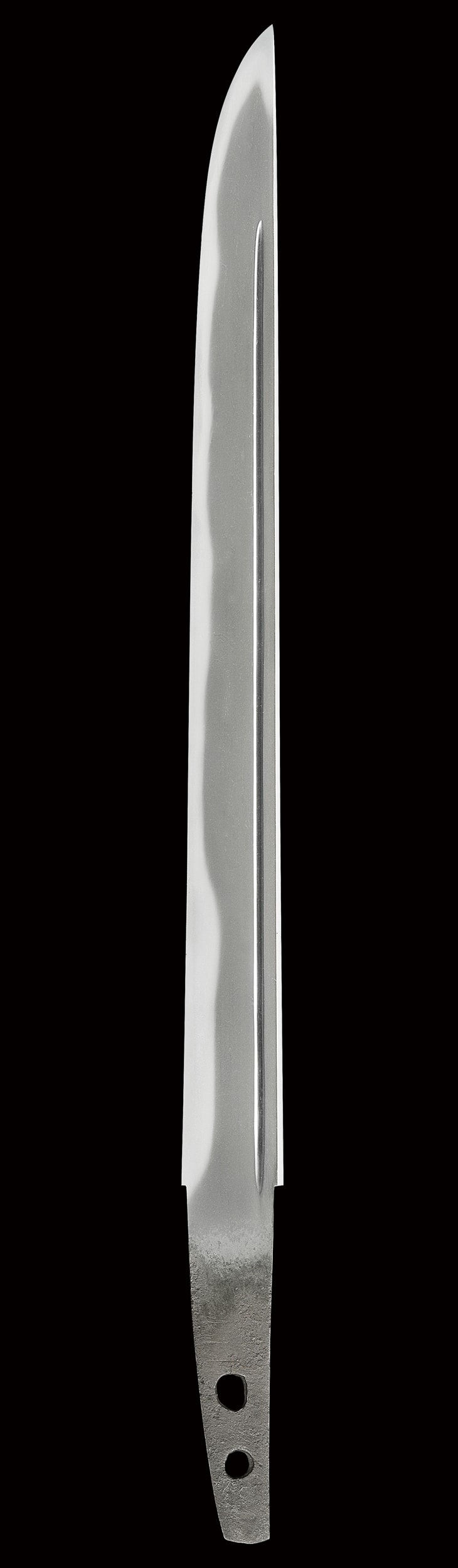
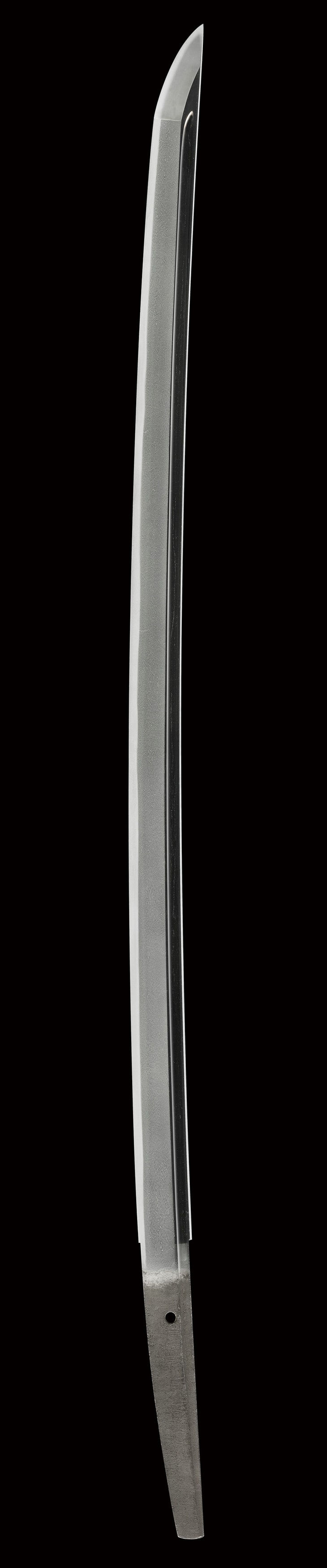
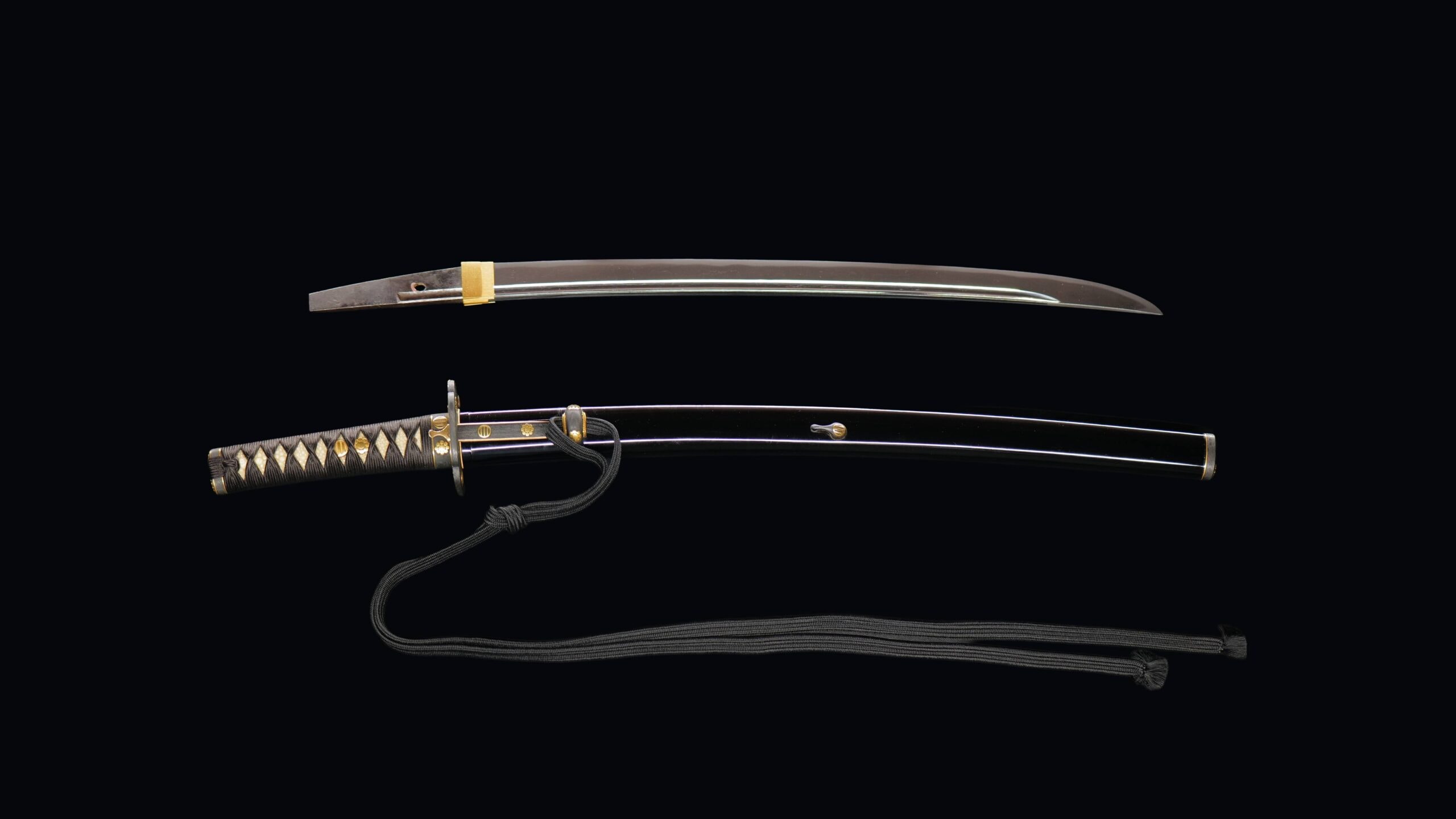
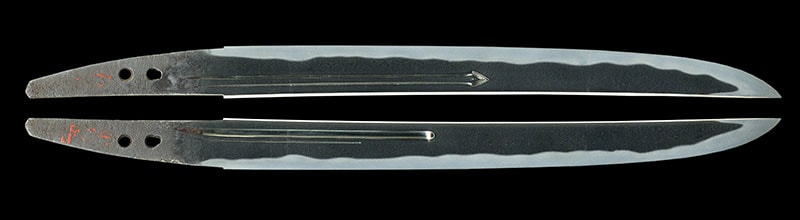
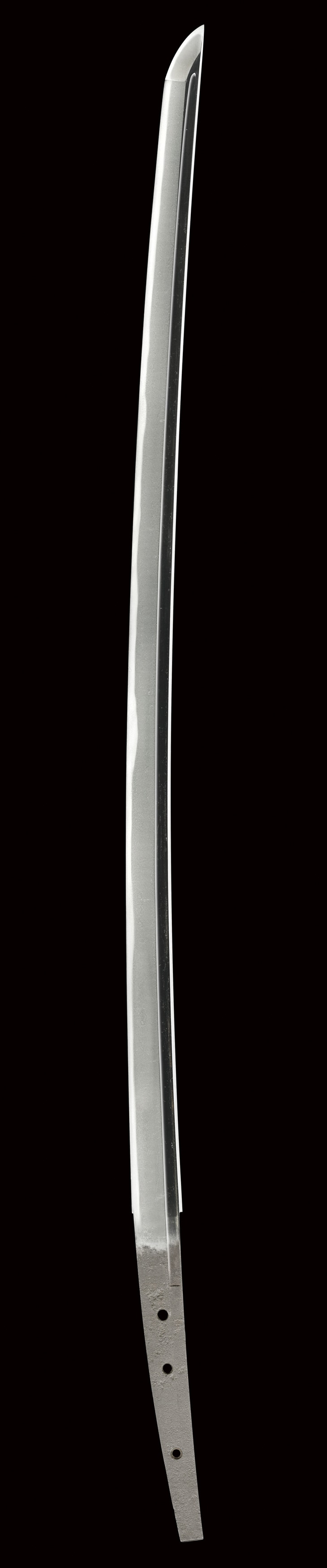
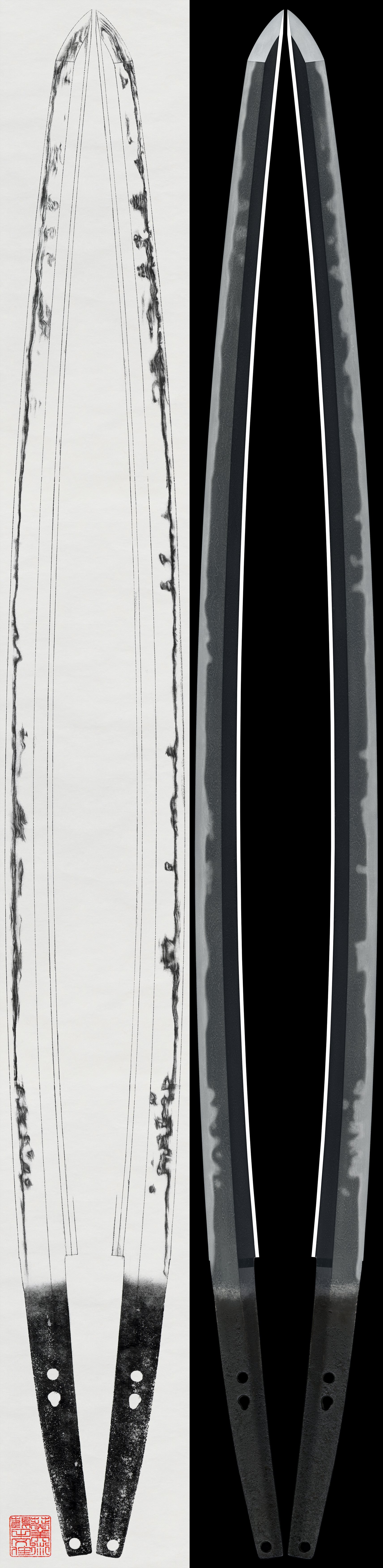
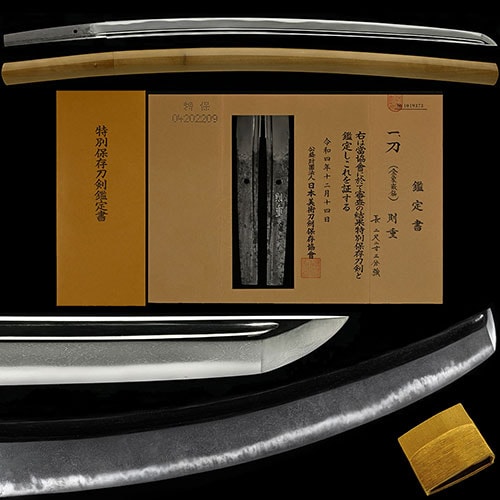
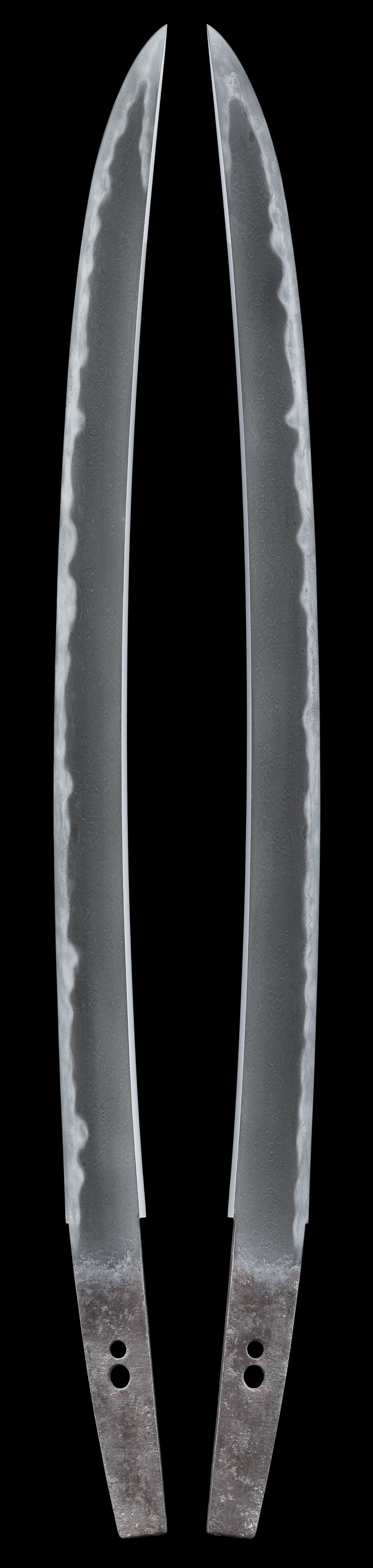
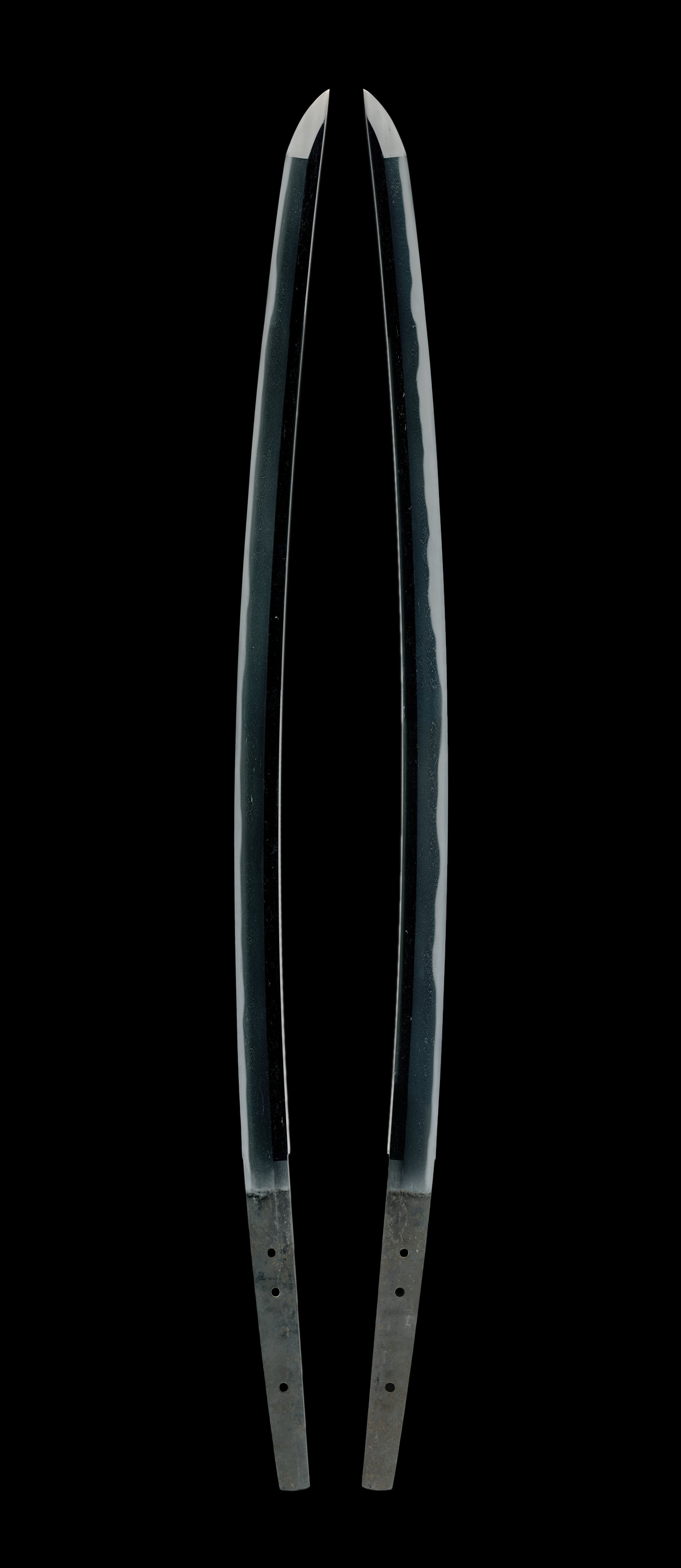
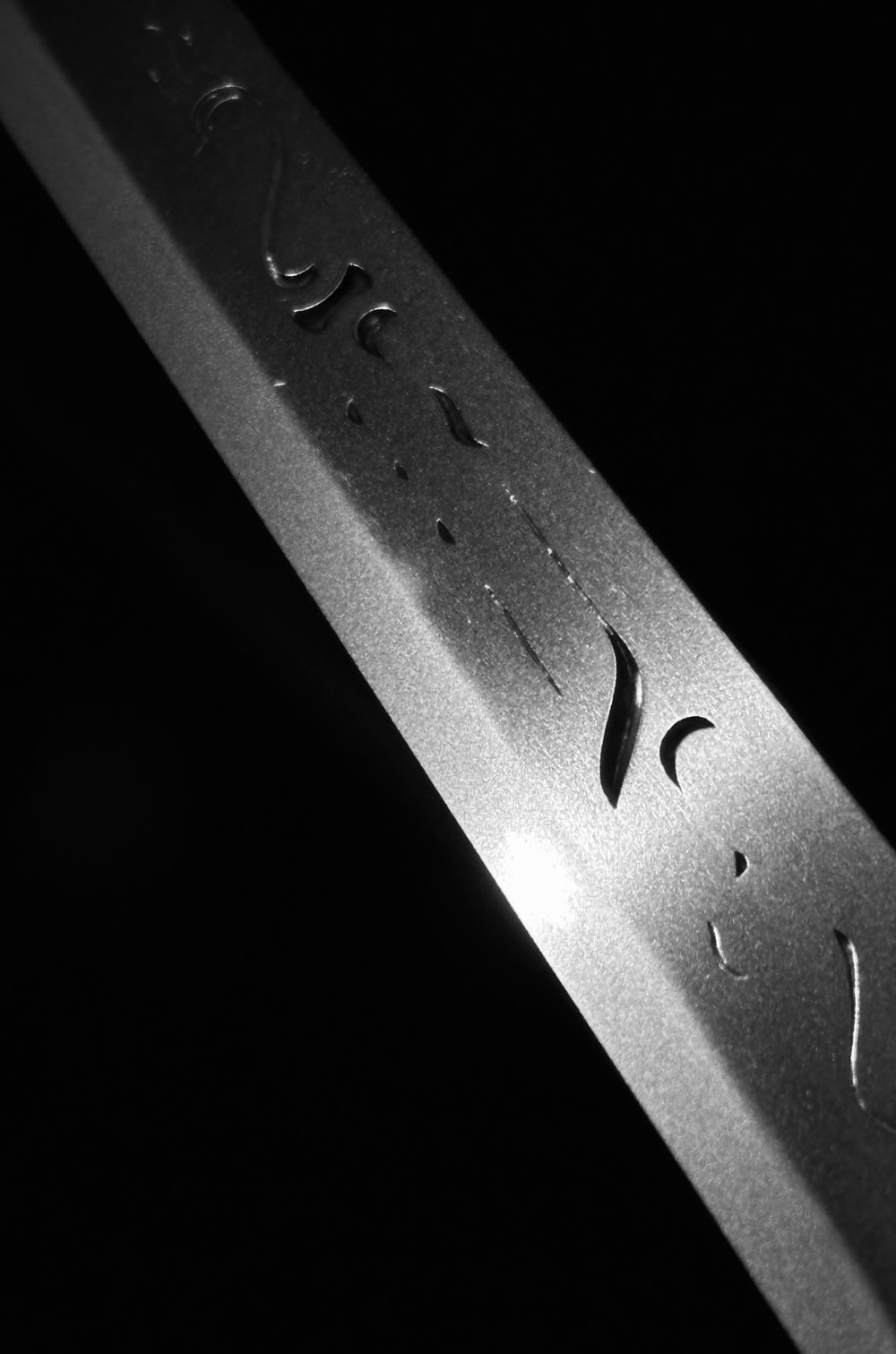
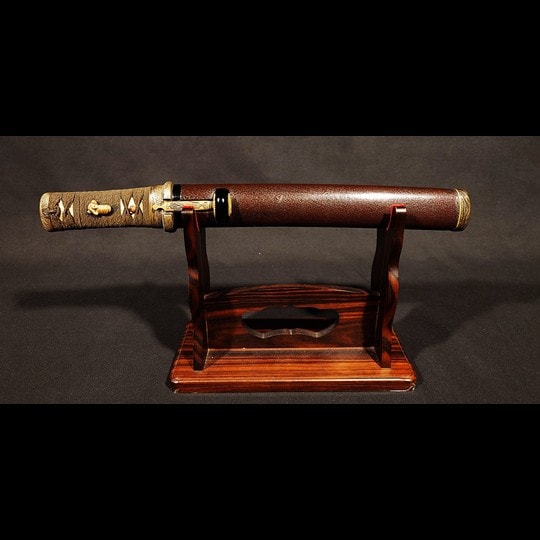
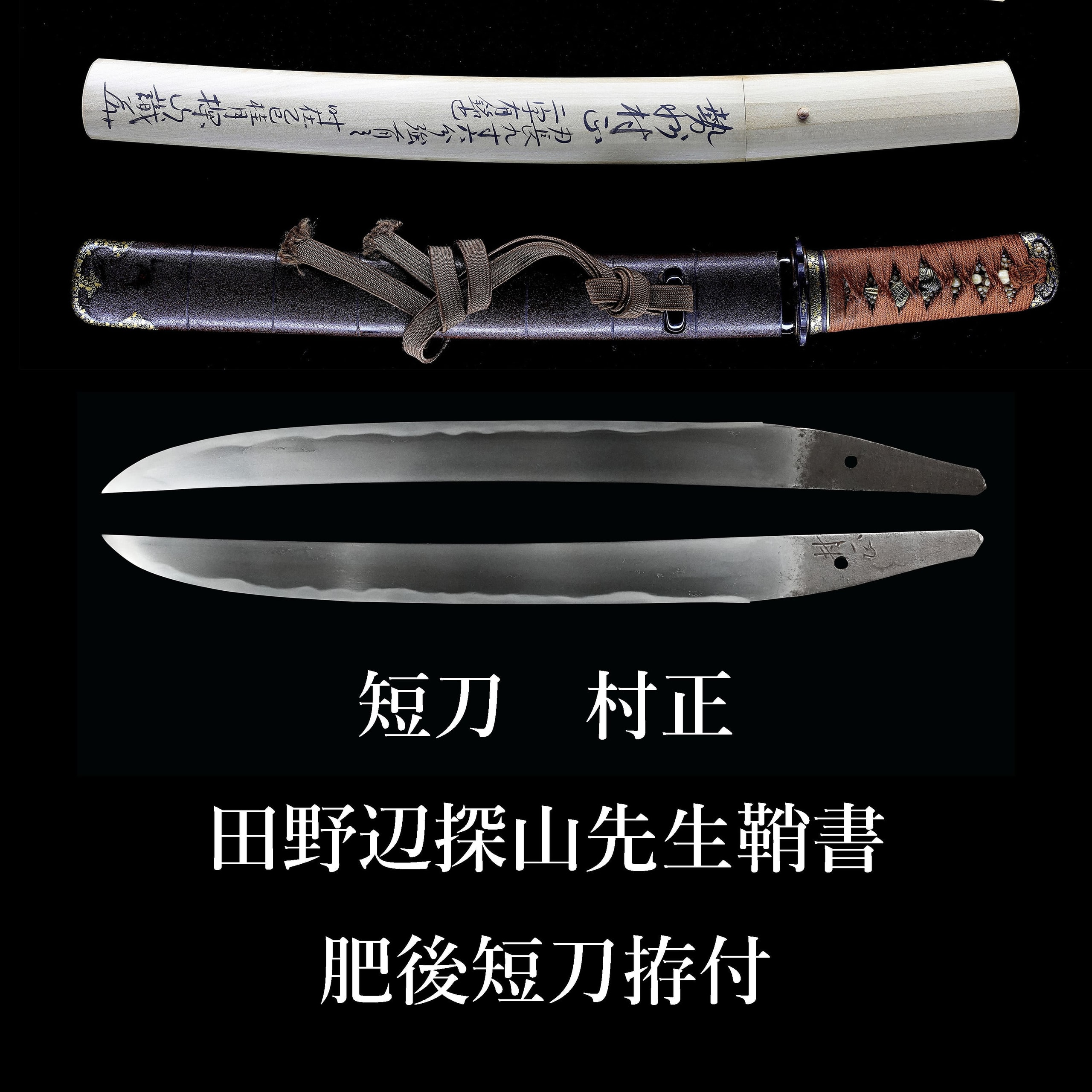
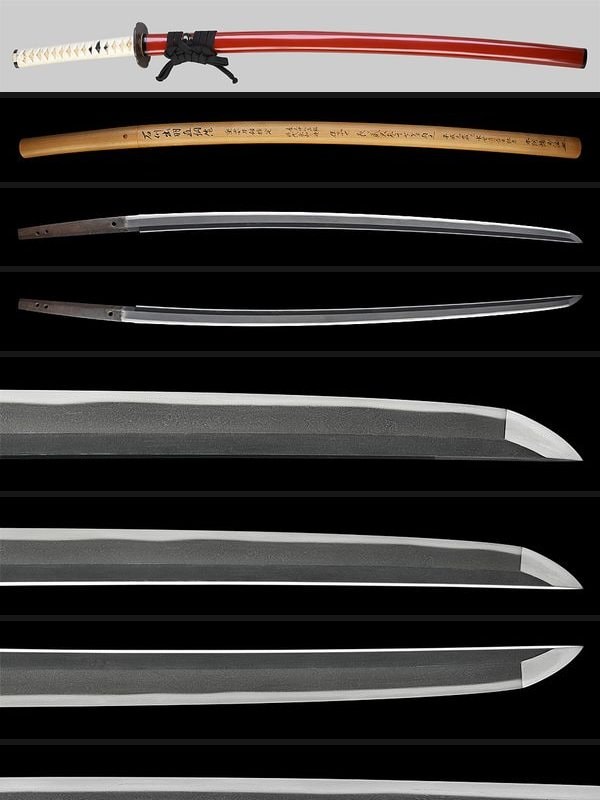
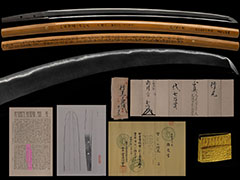
This katana is attributed to Yukimitsu, a master craftsman of the Soshu school and a disciple of Masamune, from the late Kamakura period. It features a wide mihaba, standard sori, and a beautiful jitetsu with fine jinie and chikei. The hamon is suguha-style with shallow notare, gunome mixed in, and deep nie, making it a bright and clear masterpiece with a history of being handed down by the Kuroda family.
 NihontoWatch
mumei · Soshu · Kamakura · nagasa 70.7cm · sori 1.6cm
Soshu (Sagami) · Sagami · around 1303-1306
Fujishiro Sai-jo saku · Tōken Taikan top 1%
4 pieces on the market now
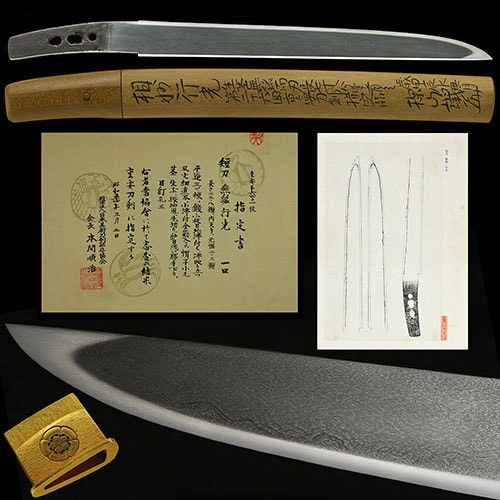
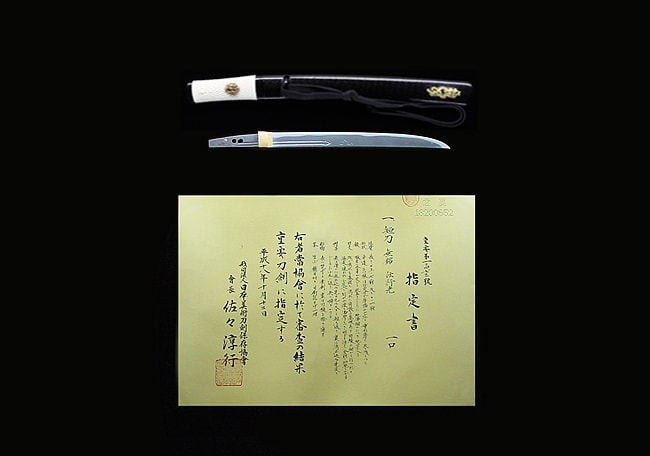
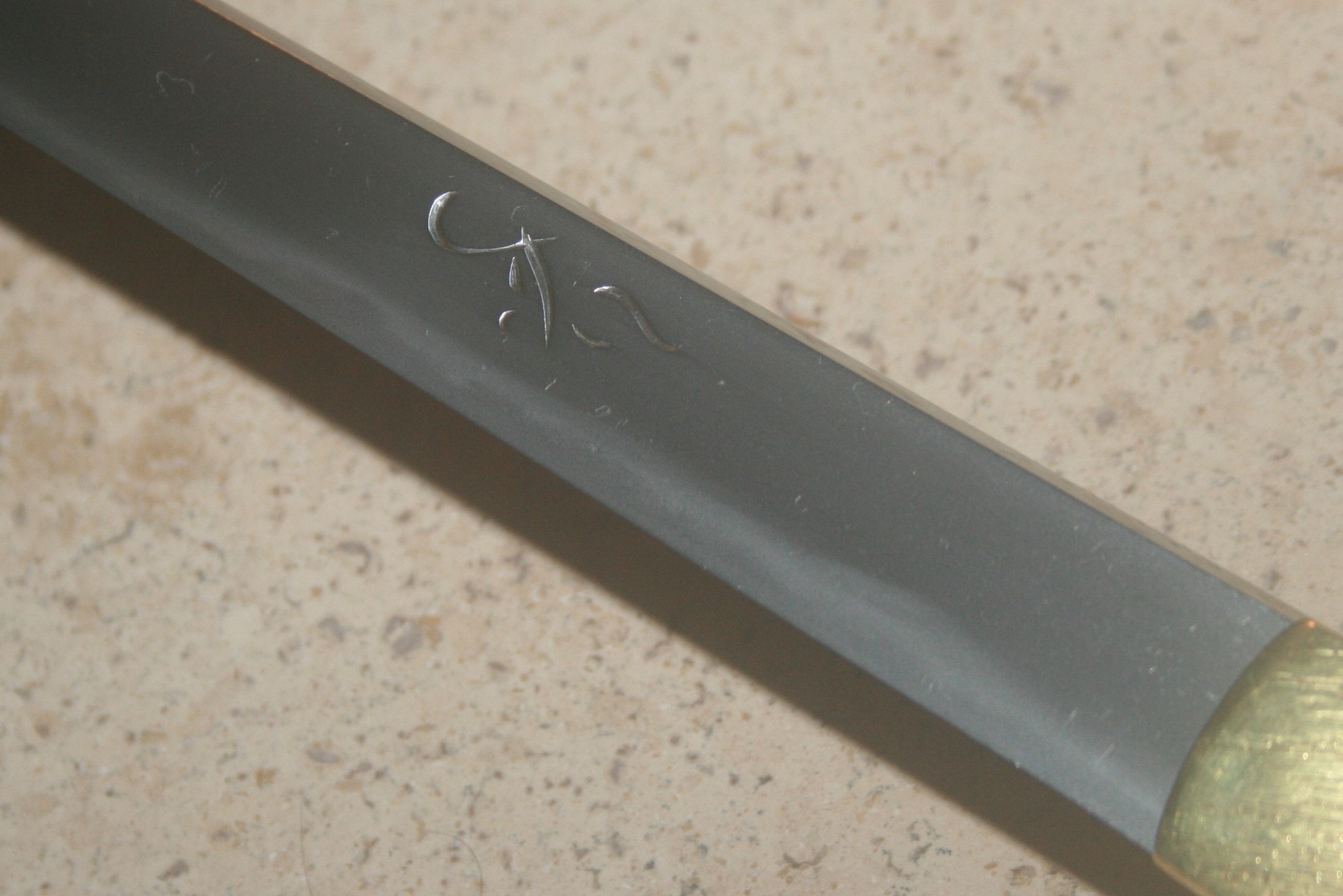
Yukimitsu worked in Sagami at the close of the Kamakura period, a pupil of Shintogo Kunimitsu and a brother-student of Masamune and Norishige, and he is read by the published sources as slightly the senior of the three. With those two he carried his teacher's new Soshu tradition forward and brought it to completion[[c:1]]. The surviving signed work is limited to tanto cut with the two-character mei 行光[[c:2]], so the smith is known above all through o-suriage mumei attributions, and the great houses kept his blades for that reason.
The foundation is a Soshu jigane of unusual quality. The forging is an itame, often mixed with mokume and with passages of nagare-hada, tightly worked yet with the grain standing in places; over it the ji-nie lies thick and fine, and abundant chikei (地景) enter, the steel clear and lit. This bold itame laced with thick chikei is the constant beneath every manner he works, and the old texts say as much when they speak of the breadth of his range[[c:3]]. Whatever the temper above it, the published sources return to one point that holds across all of his work: the ji and ha are richly charged with nie, with chikei, kinsuji and yubashiri conspicuously active, displaying the marvel of nie[[c:4]].
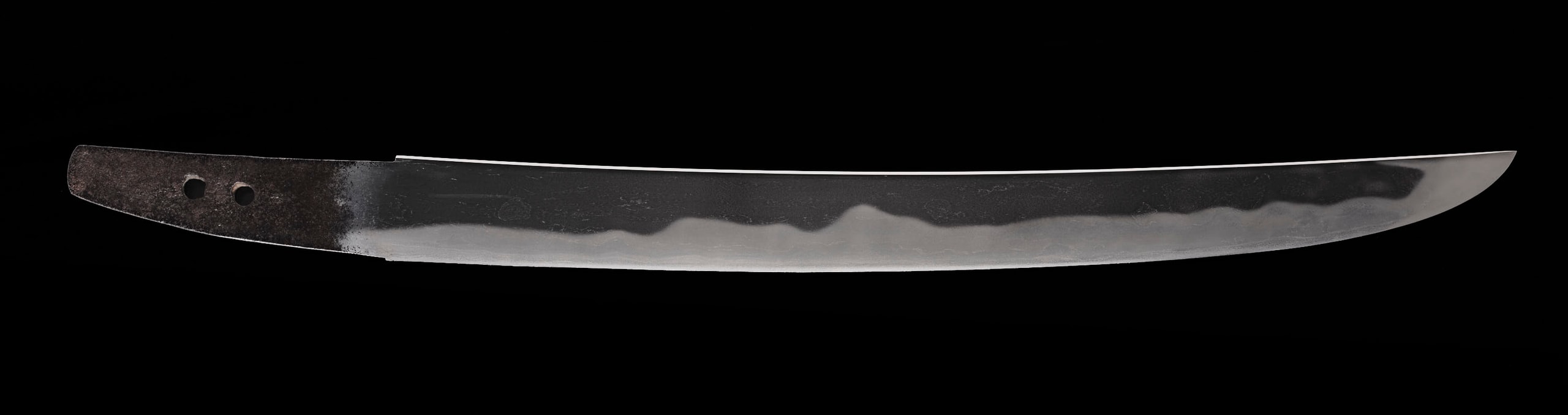
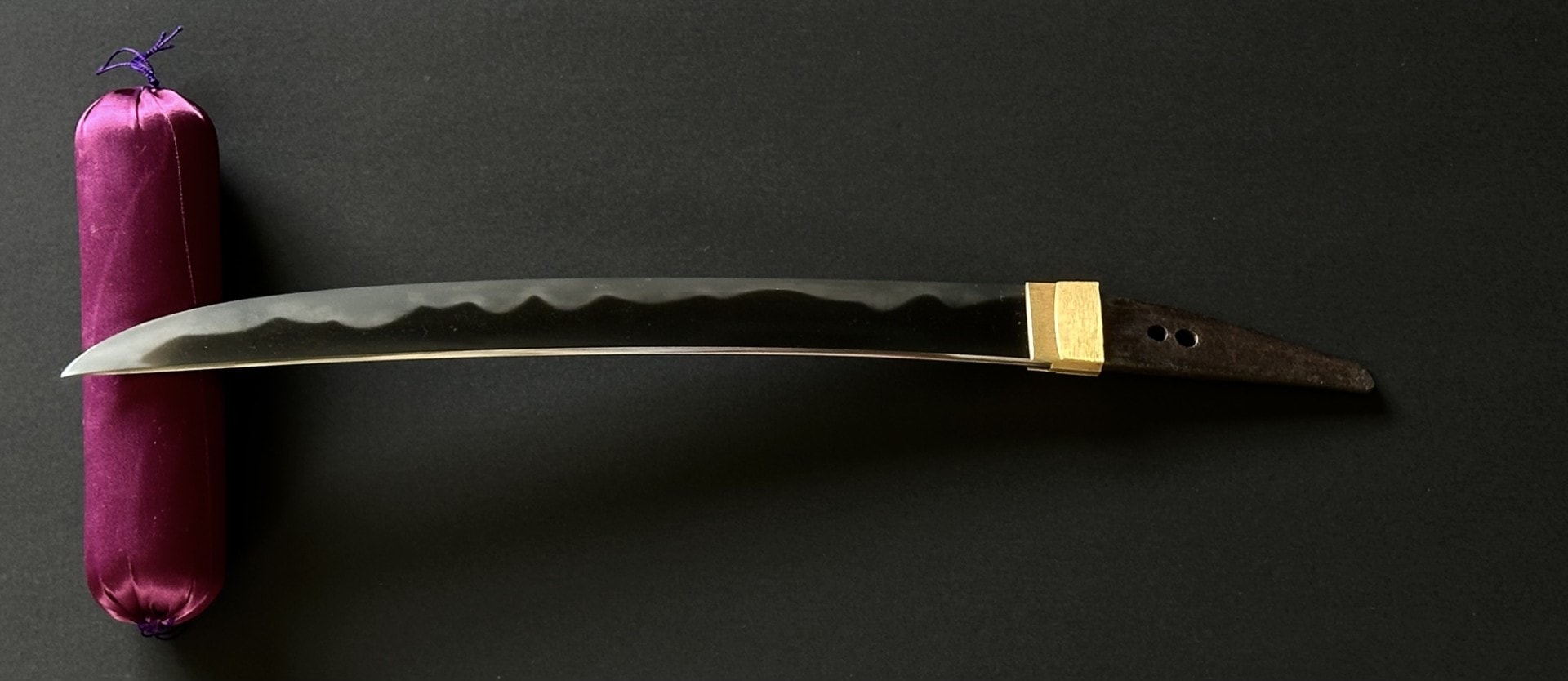
His quieter and more frequent manner descends directly from Shintogo. Over the chikei-laced jigane runs a suguha, or a suguha tending to shallow notare, mixed with ko-gunome and small ashi and yo, the nioiguchi somewhat deep and thickly covered in nie, with hotsure and drifting yubashiri at the habuchi and fine kinsuji and sunagashi within. The judges read these mumei attributions as the gentle, small-patterned side of him, noting that the unsigned attributed pieces are mostly a calm suguha or a shallow quiet midare and that the jigane is on the whole in the Shintogo manner[[c:5]]. This is the register that connects him most plainly to his teacher.
His bolder manner is the one the older profiles understated, and the boshi is where it shows. Far from a plain ko-maru that simply turns back, the temper of the point most often sweeps out strongly in hakikake (掃きかけ): the published sources record it as midare-komi with vigorous brushing that builds into a flame shape[[c:6]], the point at times pointed or burned through in yakizume, and on the calmer pieces as a straight run into a small round that still brushes out[[c:7]]. Beneath that point the temper opens into a notare-based midare with gunome and ko-gunome, sometimes a large-patterned midare reaching toward hitatsura, the kinsuji and sunagashi running busily and the nioiguchi deep and bright. The corrected reading of the boshi, ko-maru carrying conspicuous hakikake into a midare-komi and at times a pointed return, belongs with the thick chikei as a recognition key for him.
For the connoisseur the two manners share the same core, and that core is what carries an attribution when the mei is gone. The thick dark chikei, the deep bright nioiguchi of the upper Soshu hands, the busy kinsuji and sunagashi, and the swept hakikake boshi recur whether the temper above is a calm suguha or an open midare. The breadth of range is itself part of the fingerprint: where Masamune and Sadamune run hotter and larger in pattern, Yukimitsu keeps the quieter, smaller-patterned hand, and the judges place him toward Shintogo and Norishige and explicitly apart from Masamune and Sadamune. On one Tokubetsu-Juyo tanto they rate the make a notch finer than Sadamune's reach, while across his range the temper stays the more restrained. Fujishiro grades him Sai-jo saku, and among all swordsmiths his Tokubetsu-Juyo total stands near the very top.
Acquirability follows from the rarity. Of the works on record the overwhelming majority sit in the Tokuju and Juyo tiers, with a small number locked away forever as National Treasure and Important Cultural Property and never tradeable, and a single Kokuho among them. The recorded holdings read as a roster of the great collections and shrines: the Tokugawa Museum and the Uesugi Jinja, the Tokyo National Museum and the Kyushu National Museum, the Kurokawa Research Institute, the Seikado Bunko Art Museum, the Tokyo Fuji Museum, the Kunozan and Nikko Toshogu among them. The provenance chains carry the same weight, the named blades having passed through Tokugawa Ieyasu and Toyotomi Hideyoshi, the Hosokawa, the Uesugi and the Date houses, with the Meibutsu Oshima Yukimitsu among the famous wakizashi. A blade by this smith is for practical purposes unattainable on the open market, and the rare piece that does surface trades at the very top of the field.
Where Yukimitsu stands among comparable artisans: across all of nihontō, and within tradition, era, and period. The tiers (Foremost · Leading · Major · Notable) weigh official designations from the NBTHK and Japan's Agency for Cultural Affairs, together with historical honors of lasting repute such as the Sansaku and Meibutsu-chō.
Select a lens to see how it's measured.
Soshu-den · Sagami
Phase: Sōshū相州· 1288–1385
45 pieces on the market now
Steel "bright and clear," with thick ji-nie and chikei entering frequently, is the constant the NBTHK returns to in nearly every blade of this phase, and it marks the moment the Soshu tradition reached its summit in Sagami. " The sampled blades cluster around the masters who carried this manner forward: Go Yoshihiro of Matsukura-go in Etchu, counted among the Masamune Juttetsu and represented here by numerous ō-suriage katana, and the Sagami smiths Hiromitsu and Akihiro, who stand "next after Sadamune" and extend the phase with dated works running from Enbun 2 (1357) to Shitoku 4 (1387). The window spans late Kamakura proportions through the broad Enbun-Joji forms of the fourteenth century. The phase reads as itame-hada mixed with mokume, often tending toward standing or flowing grain, carrying very fine ji-nie laid thickly with chikei threaded densely throughout; over this the hamon is founded on notare mixed with gunome, ko-gunome, and a chōji flavor, with deep nioi, thick nie, and kinsuji and sunagashi running well, the nioiguchi bright and clear. This is precisely the distance the school traveled from its Awataguchi roots: where that foundation held a tight, restrained suguha, the Go katana break into wide yakihaba, nie-kuzure, and yubashiri (one setsumei records nie that "gathers, thickens, and congeals"), with a bōshi tempered so deeply it becomes ichimai and sweeps in hakikake. Go himself sits one step calmer than Masamune and Norishige, his chikei and kinsuji more reserved but his ji and ha a step brighter, the hada often masame-inclined; one wide-suguha example with ko-midare shows how close the quiet end of his range stays to the Kunimitsu manner.
" Here the classic phase divides from the later Sue-Soshu continuation, whose Muromachi smiths inherited the vocabulary without the depth of nie and clarity of steel recorded in these blades. A collector separates this phase because it holds the recognized masters at full strength. Go achieved the highest designation through the unmistakable brightness of his ji-ha alone, despite no surviving signed works, and the sample carries the weight of that reputation: the meibutsu Nakagawa-Go owned by a retainer of Oda Nobunaga and later the Tokugawa house, the "Kabuto-giri" Go inlaid by Hon'ami appraisal, the Okubo-Go transmitted in the Odawara Okubo family, and blades held by the Uwajima Date and Chikuzen Kuroda houses, with names recorded in the Kyoho Meibutsu-cho. The kantei points are concrete and repeated: Go's active nie-ashi, masame tendency, and ichimai bōshi; Akihiro's dated five-character "Soshu Akihiro" signatures, whose shift from full to abbreviated dating after Eiwa lets a viewer place a blade in time; and the near-indistinguishability of Hiromitsu and Akihiro, parsed only by scale and the prominence of dango-chōji. These are the works that define the Soshu apex, against which both the Awataguchi foundation and the Sue-Soshu aftermath are measured. Learn more →
| Smith | Era | Designated |
|---|---|---|
| Masamune正宗 | 1288-1293 | 84 |
| Sadamune貞宗 | 1329-1331 | 86 |
| Go Yoshihiro義弘 | 1299-1302 | 54 |
| Akihiro秋廣 | 1346-1370 | 27 |
| Kunimitsu國光 | 1293-1322 | 69 |
Sōshū in the Kamakura period
Sōshū was born in a boomtown: Kamakura, seat of the warrior government, dense with elite patrons. Tradition holds that master smiths were summoned east to serve it, and from their students came Shintōgo Kunimitsu and then Masamune.
A blade of top-grade workmanship and condition, formally judged to rank with a nationally recognized Important Art Object (Jūyō Bijutsuhin). Awarded only at the NBTHK’s competitive annual examination.
Of Japan’s roughly 2.5 million registered swords, only 12,307 (about 1 in 203) have ever attained Jūyō.
The NBTHK (Nihon Bijutsu Tōken Hozon Kyōkai, the Society for the Preservation of Japanese Art Swords) is a public-interest incorporated foundation founded in 1948 and supervised by Japan’s Agency for Cultural Affairs (Bunkachō); it is based at the Japanese Sword Museum in Tokyo. Its expert panels physically examine each submitted work (shinsa) and issue a certificate (kanteishō) ranking it by artistic and historical merit. NBTHK papers are the most widely recognized standard of authentication for Japanese swords and fittings.
NBTHK official siteReturns/exchanges/cancellations not accepted after shipment except for significant defects; if defective, return/exchange possible within 3 days of arrival (return shipping paid by customer).
This katana is attributed to Yukimitsu, a master craftsman of the Soshu school and a disciple of Masamune, from the late Kamakura period. It features a wide mihaba, standard sori, and a beautiful jitetsu with fine jinie and chikei. The hamon is suguha-style with shallow notare, gunome mixed in, and deep nie, making it a bright and clear masterpiece with a history of being handed down by the Kuroda family.
NihontoWatchmumei · Soshu · Kamakura · nagasa 70.7cm · sori 1.6cm
Soshu (Sagami) · Sagami · around 1303-1306
Fujishiro Sai-jo saku · Tōken Taikan top 1%
4 pieces on the market now
Yukimitsu worked in Sagami at the close of the Kamakura period, a pupil of Shintogo Kunimitsu and a brother-student of Masamune and Norishige, and he is read by the published sources as slightly the senior of the three. With those two he carried his teacher's new Soshu tradition forward and brought it to completion[[c:1]]. The surviving signed work is limited to tanto cut with the two-character mei 行光[[c:2]], so the smith is known above all through o-suriage mumei attributions, and the great houses kept his blades for that reason.
The foundation is a Soshu jigane of unusual quality. The forging is an itame, often mixed with mokume and with passages of nagare-hada, tightly worked yet with the grain standing in places; over it the ji-nie lies thick and fine, and abundant chikei (地景) enter, the steel clear and lit. This bold itame laced with thick chikei is the constant beneath every manner he works, and the old texts say as much when they speak of the breadth of his range[[c:3]]. Whatever the temper above it, the published sources return to one point that holds across all of his work: the ji and ha are richly charged with nie, with chikei, kinsuji and yubashiri conspicuously active, displaying the marvel of nie[[c:4]].
His quieter and more frequent manner descends directly from Shintogo. Over the chikei-laced jigane runs a suguha, or a suguha tending to shallow notare, mixed with ko-gunome and small ashi and yo, the nioiguchi somewhat deep and thickly covered in nie, with hotsure and drifting yubashiri at the habuchi and fine kinsuji and sunagashi within. The judges read these mumei attributions as the gentle, small-patterned side of him, noting that the unsigned attributed pieces are mostly a calm suguha or a shallow quiet midare and that the jigane is on the whole in the Shintogo manner[[c:5]]. This is the register that connects him most plainly to his teacher.
His bolder manner is the one the older profiles understated, and the boshi is where it shows. Far from a plain ko-maru that simply turns back, the temper of the point most often sweeps out strongly in hakikake (掃きかけ): the published sources record it as midare-komi with vigorous brushing that builds into a flame shape[[c:6]], the point at times pointed or burned through in yakizume, and on the calmer pieces as a straight run into a small round that still brushes out[[c:7]]. Beneath that point the temper opens into a notare-based midare with gunome and ko-gunome, sometimes a large-patterned midare reaching toward hitatsura, the kinsuji and sunagashi running busily and the nioiguchi deep and bright. The corrected reading of the boshi, ko-maru carrying conspicuous hakikake into a midare-komi and at times a pointed return, belongs with the thick chikei as a recognition key for him.
For the connoisseur the two manners share the same core, and that core is what carries an attribution when the mei is gone. The thick dark chikei, the deep bright nioiguchi of the upper Soshu hands, the busy kinsuji and sunagashi, and the swept hakikake boshi recur whether the temper above is a calm suguha or an open midare. The breadth of range is itself part of the fingerprint: where Masamune and Sadamune run hotter and larger in pattern, Yukimitsu keeps the quieter, smaller-patterned hand, and the judges place him toward Shintogo and Norishige and explicitly apart from Masamune and Sadamune. On one Tokubetsu-Juyo tanto they rate the make a notch finer than Sadamune's reach, while across his range the temper stays the more restrained. Fujishiro grades him Sai-jo saku, and among all swordsmiths his Tokubetsu-Juyo total stands near the very top.
Acquirability follows from the rarity. Of the works on record the overwhelming majority sit in the Tokuju and Juyo tiers, with a small number locked away forever as National Treasure and Important Cultural Property and never tradeable, and a single Kokuho among them. The recorded holdings read as a roster of the great collections and shrines: the Tokugawa Museum and the Uesugi Jinja, the Tokyo National Museum and the Kyushu National Museum, the Kurokawa Research Institute, the Seikado Bunko Art Museum, the Tokyo Fuji Museum, the Kunozan and Nikko Toshogu among them. The provenance chains carry the same weight, the named blades having passed through Tokugawa Ieyasu and Toyotomi Hideyoshi, the Hosokawa, the Uesugi and the Date houses, with the Meibutsu Oshima Yukimitsu among the famous wakizashi. A blade by this smith is for practical purposes unattainable on the open market, and the rare piece that does surface trades at the very top of the field.
Where Yukimitsu stands among comparable artisans: across all of nihontō, and within tradition, era, and period. The tiers (Foremost · Leading · Major · Notable) weigh official designations from the NBTHK and Japan's Agency for Cultural Affairs, together with historical honors of lasting repute such as the Sansaku and Meibutsu-chō.
Select a lens to see how it's measured.
Soshu-den · Sagami
Phase: Sōshū相州· 1288–1385
45 pieces on the market now
Steel "bright and clear," with thick ji-nie and chikei entering frequently, is the constant the NBTHK returns to in nearly every blade of this phase, and it marks the moment the Soshu tradition reached its summit in Sagami. " The sampled blades cluster around the masters who carried this manner forward: Go Yoshihiro of Matsukura-go in Etchu, counted among the Masamune Juttetsu and represented here by numerous ō-suriage katana, and the Sagami smiths Hiromitsu and Akihiro, who stand "next after Sadamune" and extend the phase with dated works running from Enbun 2 (1357) to Shitoku 4 (1387). The window spans late Kamakura proportions through the broad Enbun-Joji forms of the fourteenth century. The phase reads as itame-hada mixed with mokume, often tending toward standing or flowing grain, carrying very fine ji-nie laid thickly with chikei threaded densely throughout; over this the hamon is founded on notare mixed with gunome, ko-gunome, and a chōji flavor, with deep nioi, thick nie, and kinsuji and sunagashi running well, the nioiguchi bright and clear. This is precisely the distance the school traveled from its Awataguchi roots: where that foundation held a tight, restrained suguha, the Go katana break into wide yakihaba, nie-kuzure, and yubashiri (one setsumei records nie that "gathers, thickens, and congeals"), with a bōshi tempered so deeply it becomes ichimai and sweeps in hakikake. Go himself sits one step calmer than Masamune and Norishige, his chikei and kinsuji more reserved but his ji and ha a step brighter, the hada often masame-inclined; one wide-suguha example with ko-midare shows how close the quiet end of his range stays to the Kunimitsu manner.
" Here the classic phase divides from the later Sue-Soshu continuation, whose Muromachi smiths inherited the vocabulary without the depth of nie and clarity of steel recorded in these blades. A collector separates this phase because it holds the recognized masters at full strength. Go achieved the highest designation through the unmistakable brightness of his ji-ha alone, despite no surviving signed works, and the sample carries the weight of that reputation: the meibutsu Nakagawa-Go owned by a retainer of Oda Nobunaga and later the Tokugawa house, the "Kabuto-giri" Go inlaid by Hon'ami appraisal, the Okubo-Go transmitted in the Odawara Okubo family, and blades held by the Uwajima Date and Chikuzen Kuroda houses, with names recorded in the Kyoho Meibutsu-cho. The kantei points are concrete and repeated: Go's active nie-ashi, masame tendency, and ichimai bōshi; Akihiro's dated five-character "Soshu Akihiro" signatures, whose shift from full to abbreviated dating after Eiwa lets a viewer place a blade in time; and the near-indistinguishability of Hiromitsu and Akihiro, parsed only by scale and the prominence of dango-chōji. These are the works that define the Soshu apex, against which both the Awataguchi foundation and the Sue-Soshu aftermath are measured. Learn more →
| Smith | Era | Designated |
|---|---|---|
| Masamune正宗 | 1288-1293 | 84 |
| Sadamune貞宗 | 1329-1331 | 86 |
| Go Yoshihiro義弘 | 1299-1302 | 54 |
| Akihiro秋廣 | 1346-1370 | 27 |
| Kunimitsu國光 | 1293-1322 | 69 |
Sōshū in the Kamakura period
Sōshū was born in a boomtown: Kamakura, seat of the warrior government, dense with elite patrons. Tradition holds that master smiths were summoned east to serve it, and from their students came Shintōgo Kunimitsu and then Masamune.
A blade of top-grade workmanship and condition, formally judged to rank with a nationally recognized Important Art Object (Jūyō Bijutsuhin). Awarded only at the NBTHK’s competitive annual examination.
Of Japan’s roughly 2.5 million registered swords, only 12,307 (about 1 in 203) have ever attained Jūyō.
The NBTHK (Nihon Bijutsu Tōken Hozon Kyōkai, the Society for the Preservation of Japanese Art Swords) is a public-interest incorporated foundation founded in 1948 and supervised by Japan’s Agency for Cultural Affairs (Bunkachō); it is based at the Japanese Sword Museum in Tokyo. Its expert panels physically examine each submitted work (shinsa) and issue a certificate (kanteishō) ranking it by artistic and historical merit. NBTHK papers are the most widely recognized standard of authentication for Japanese swords and fittings.
NBTHK official siteReturns/exchanges/cancellations not accepted after shipment except for significant defects; if defective, return/exchange possible within 3 days of arrival (return shipping paid by customer).