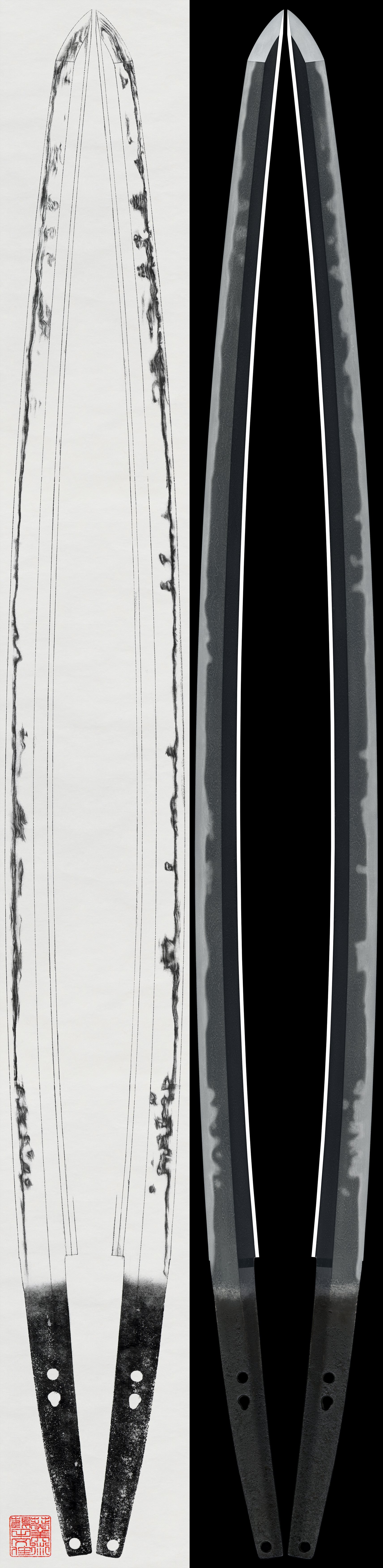
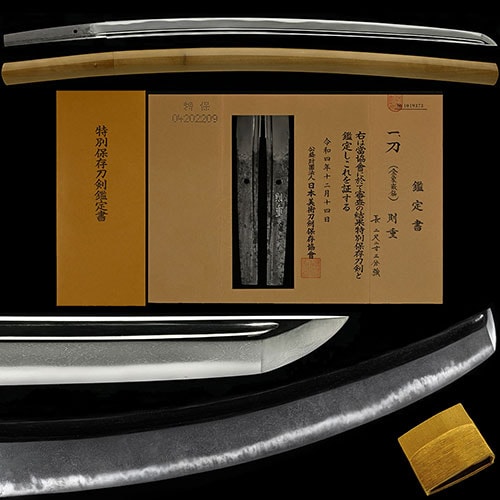
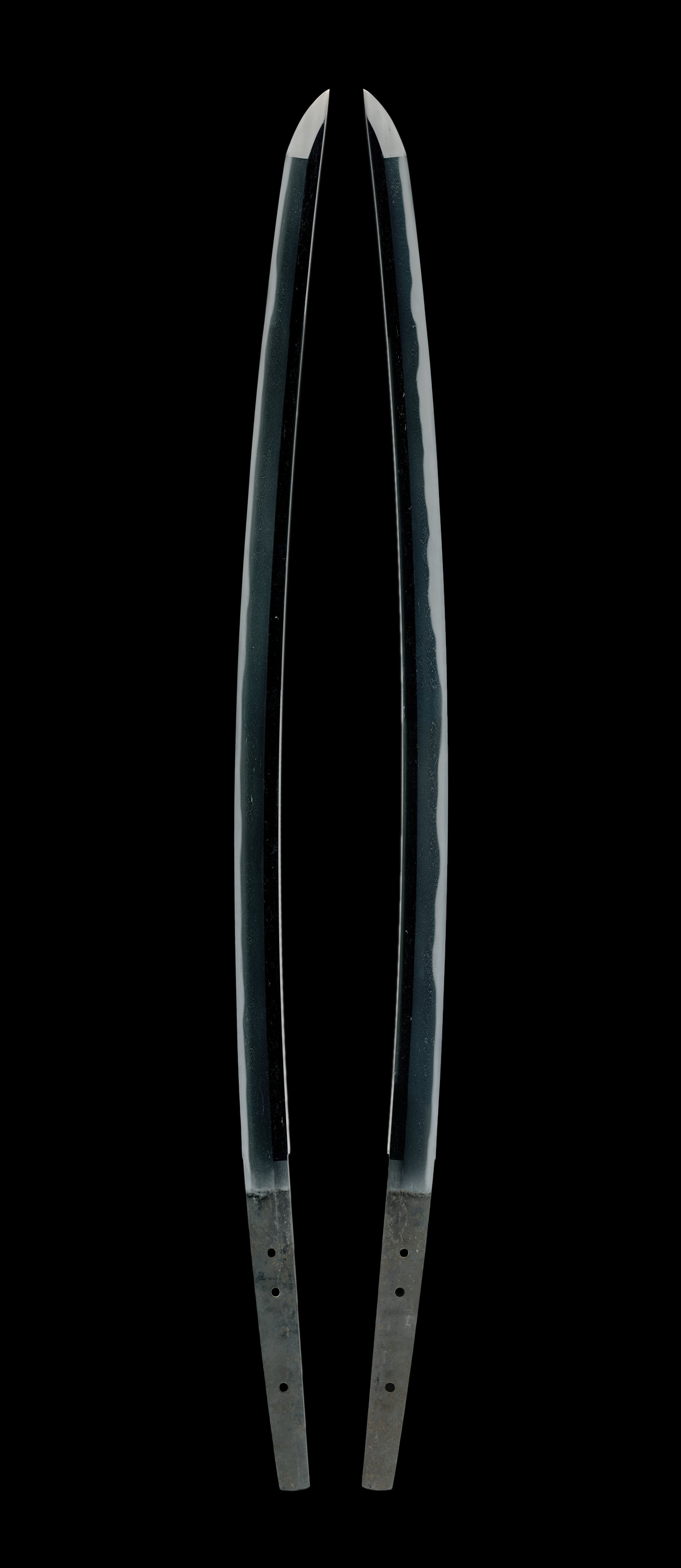
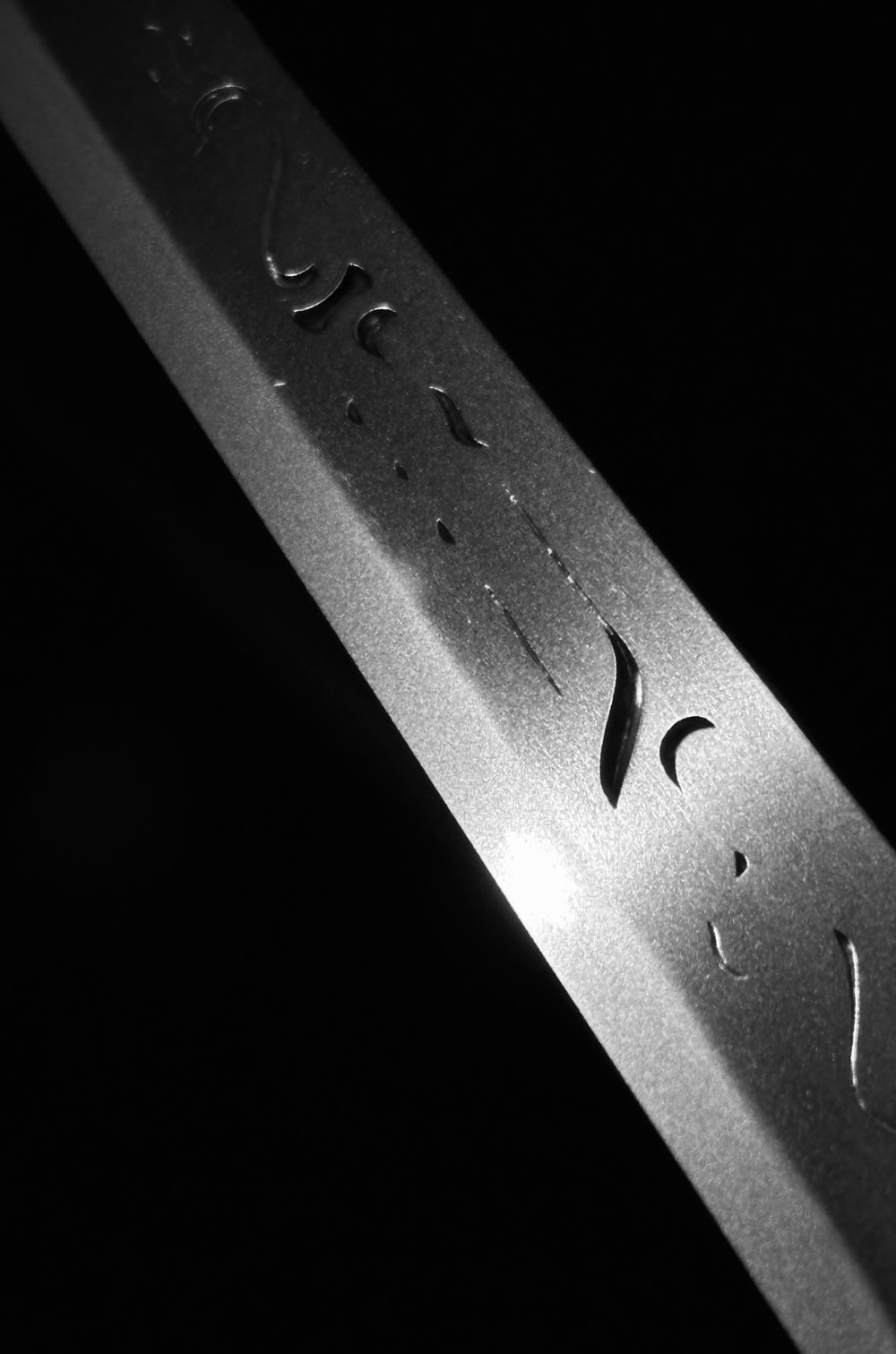
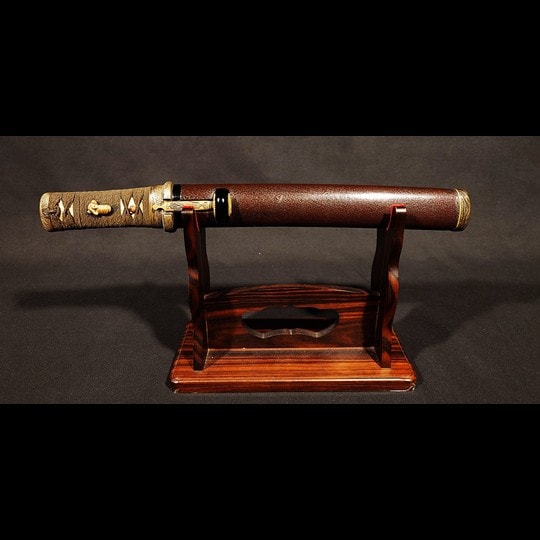
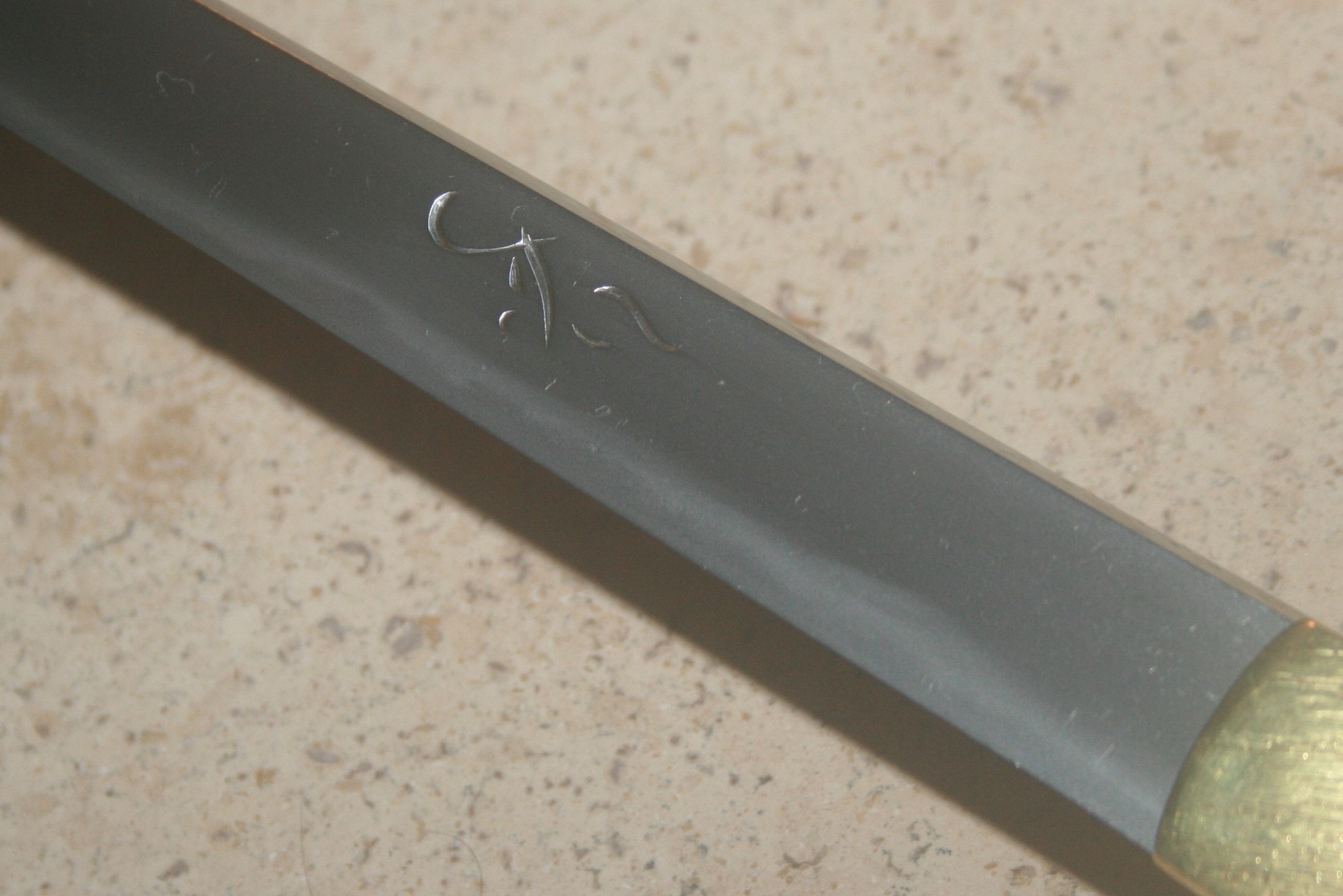
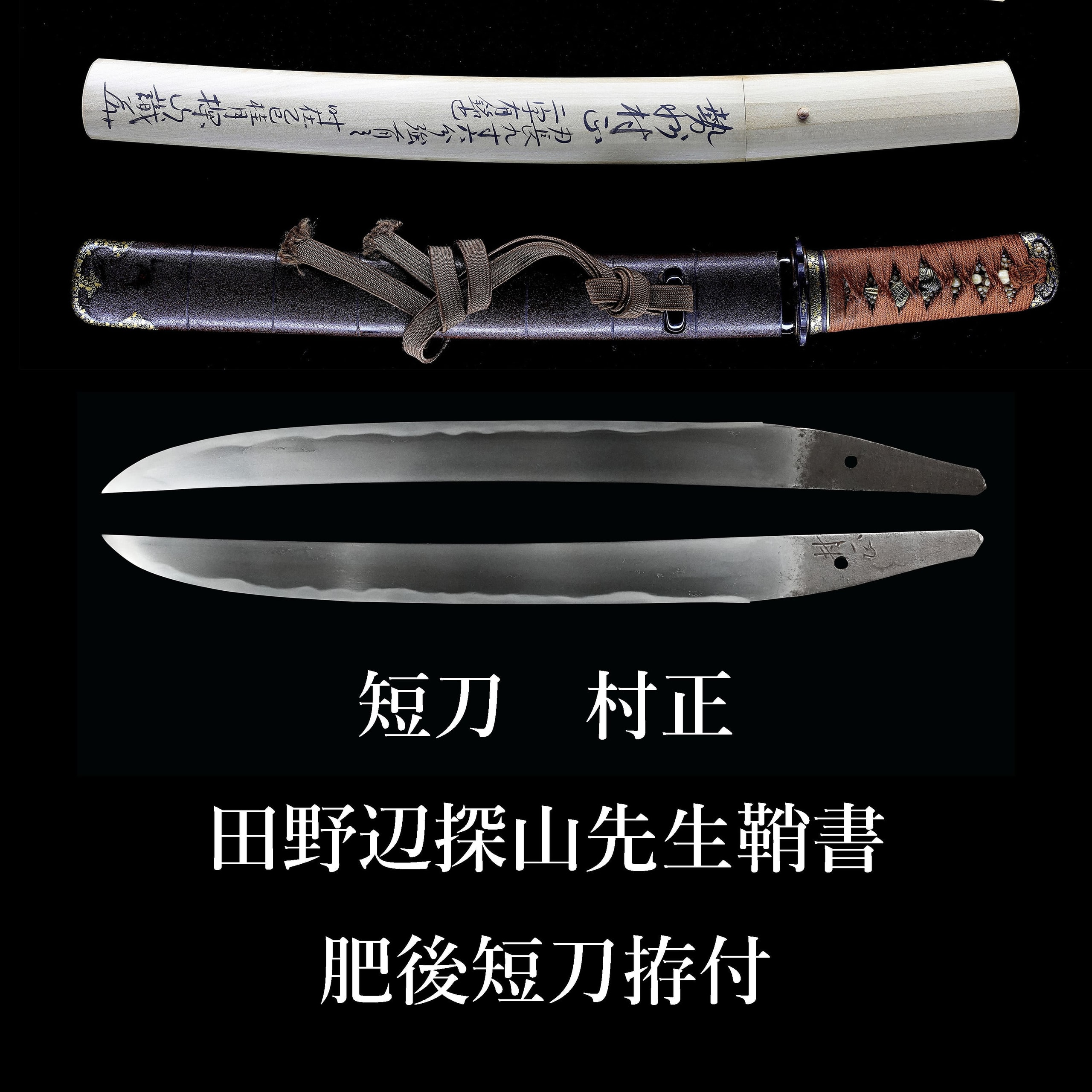
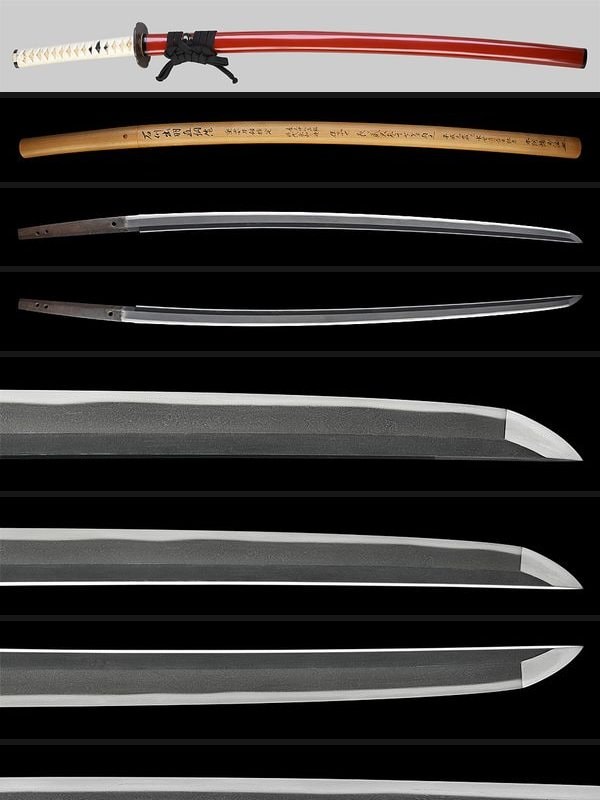
Yukimitsu worked in at the close of the period, a pupil of Kunimitsu and a brother-student of Masamune and Norishige, and he is read by the published sources as slightly the senior of the three. With those two he carried his teacher's new tradition forward and brought it to completion. The surviving signed work is limited to cut with the two-character 行光, so the smith is known above all through attributions, and the great houses kept his blades for that reason.
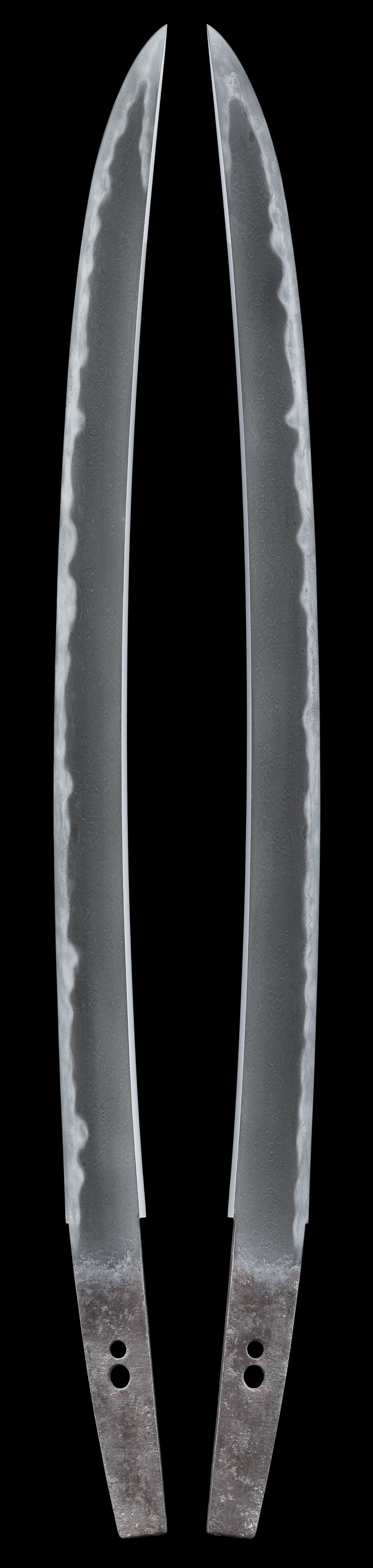
The foundation is a of unusual quality. The forging is an , often mixed with and with passages of , tightly worked yet with the grain standing in places; over it the lies thick and fine, and abundant (地景) enter, the steel clear and lit. This bold laced with thick is the constant beneath every manner he works, and the old texts say as much when they speak of the breadth of his range. Whatever the temper above it, the published sources return to one point that holds across all of his work: the and are richly charged with , with , and conspicuously active, displaying the marvel of .
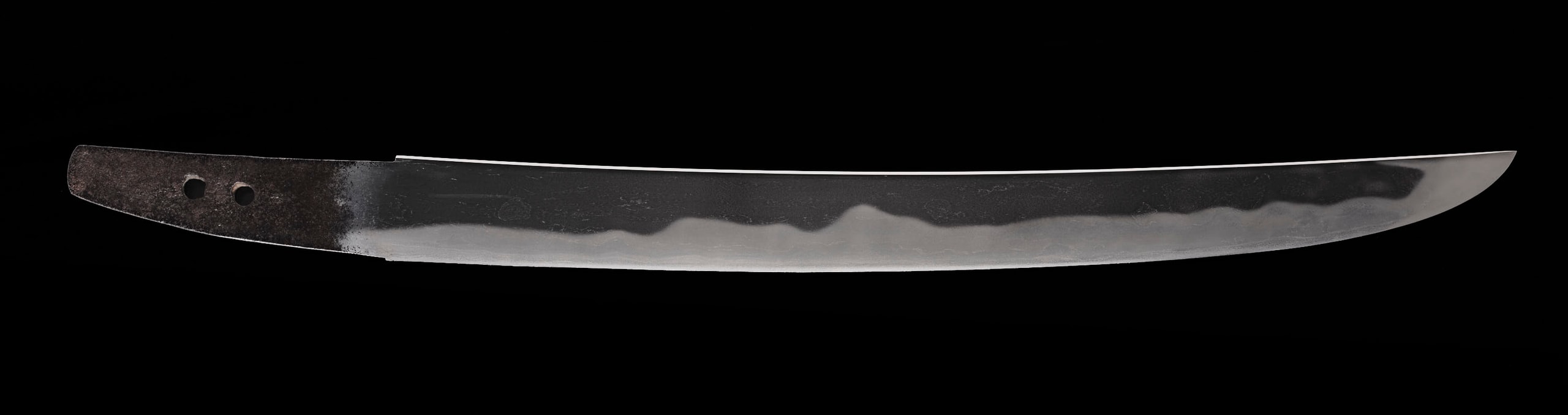
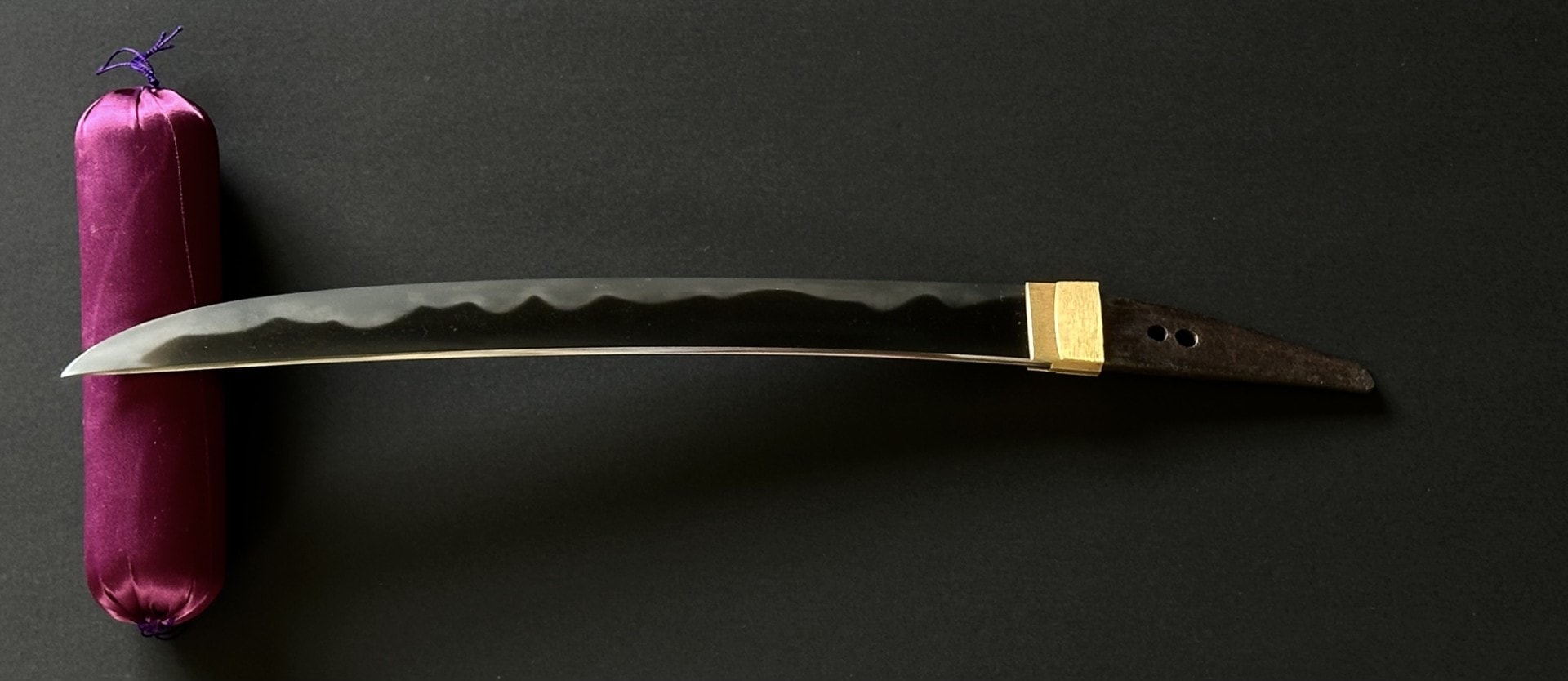
His quieter and more frequent manner descends directly from . Over the -laced runs a , or a tending to shallow , mixed with and small and , the somewhat deep and thickly covered in , with and drifting at the and fine and within. The judges read these attributions as the gentle, small-patterned side of him, noting that the unsigned attributed pieces are mostly a calm or a shallow quiet and that the is on the whole in the manner. This is the register that connects him most plainly to his teacher.
His bolder manner is the one the older profiles understated, and the is where it shows. Far from a plain that simply turns back, the temper of the point most often sweeps out strongly in (掃きかけ): the published sources record it as with vigorous brushing that builds into a flame shape, the point at times pointed or burned through in , and on the calmer pieces as a straight run into a small round that still brushes out. Beneath that point the temper opens into a notare-based with and , sometimes a large-patterned reaching toward , the and running busily and the deep and bright. The corrected reading of the , carrying conspicuous into a and at times a pointed return, belongs with the thick as a recognition key for him.
For the connoisseur the two manners share the core, and that core is what carries an attribution when the is gone. The thick dark , the deep bright of the upper hands, the busy and , and the swept recur whether the temper above is a calm or an open . The breadth of range is itself part of the fingerprint: where Masamune and Sadamune run hotter and larger in pattern, Yukimitsu keeps the quieter, smaller-patterned hand, and the judges place him toward and Norishige and explicitly apart from Masamune and Sadamune. On one they rate the make a notch finer than Sadamune's reach, while across his range the temper stays the more restrained. Fujishiro grades him Sai-jo , and among all swordsmiths his total stands near the very top.
Acquirability follows from the rarity. Of the works on record the overwhelming majority sit in the Tokuju and tiers, with a small number locked away forever as National Treasure and Important Cultural Property and never tradeable, and a single among them. The recorded holdings read as a roster of the great collections and shrines: the Tokugawa Museum and the Uesugi Jinja, the Tokyo National Museum and the Kyushu National Museum, the Kurokawa Research Institute, the Seikado Bunko Art Museum, the Tokyo Museum, the Kunozan and Nikko Toshogu among them. The provenance chains carry the weight, the named blades having passed through Tokugawa Ieyasu and Toyotomi Hideyoshi, the Hosokawa, the Uesugi and the Date houses, with the Oshima Yukimitsu among the famous . A blade by this smith is for practical purposes unattainable on the open market, and the rare piece that does surface trades at the very top of the field.