NihontoWatch MonNihontoWatchBETA
MarketEncyclopedia
NihontoWatch Mon

NihontoWatchBETA

Market
Encyclopedia
Overview·Kantei·Honors·Designations·Provenance·Blade Forms·Signatures·Lineage·School
OverviewKanteiHonorsDesignationsProvenanceBlade FormsSignaturesLineageSchool
  1. Schools
  2. Soshu
  3. Sōshū
  4. Yukimitsu

Soshu Yukimitsu

行光

Tokujū
Vol. 12, No. 16 · Tantō

Soshu Yukimitsu

行光

151 ranked works

享保名物帳
ProvinceSagamiEraKagen (1303–1306)PeriodKamakuraSchoolSoshuTraditionSoshu-denTeacherKunimitsuFujishiroSai-jo saku(Supreme Work)Toko Taikan2,500(top 1%)TypeSwordsmithCodeYUK268
1Kokuhō
7Jūyō Bunkazai
6Jūyō Bijutsuhin
1Gyobutsu
30Tokubetsu Jūyō106Jūyō Tōken

Overview

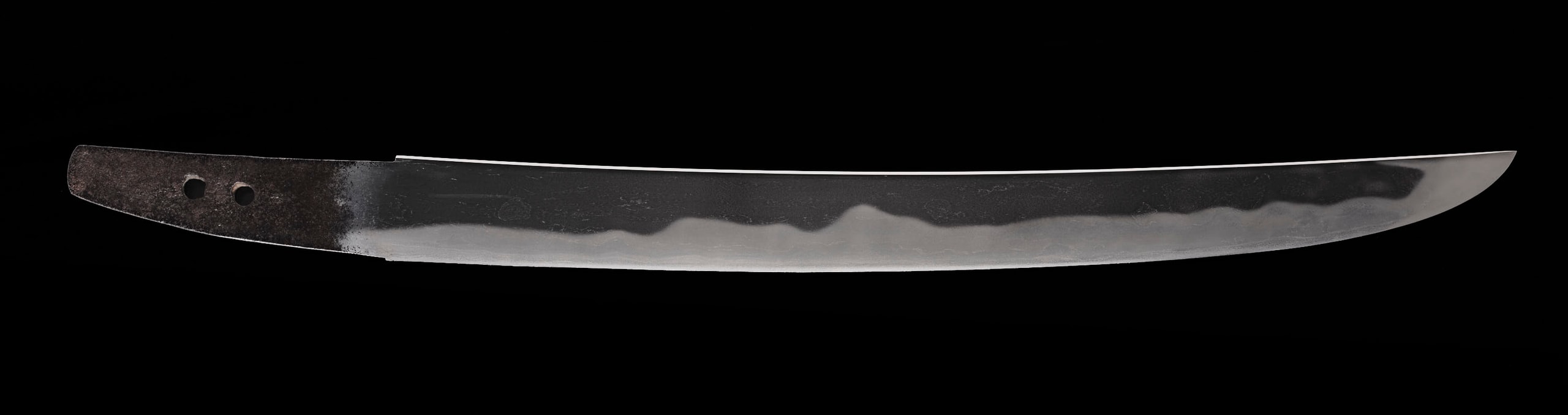
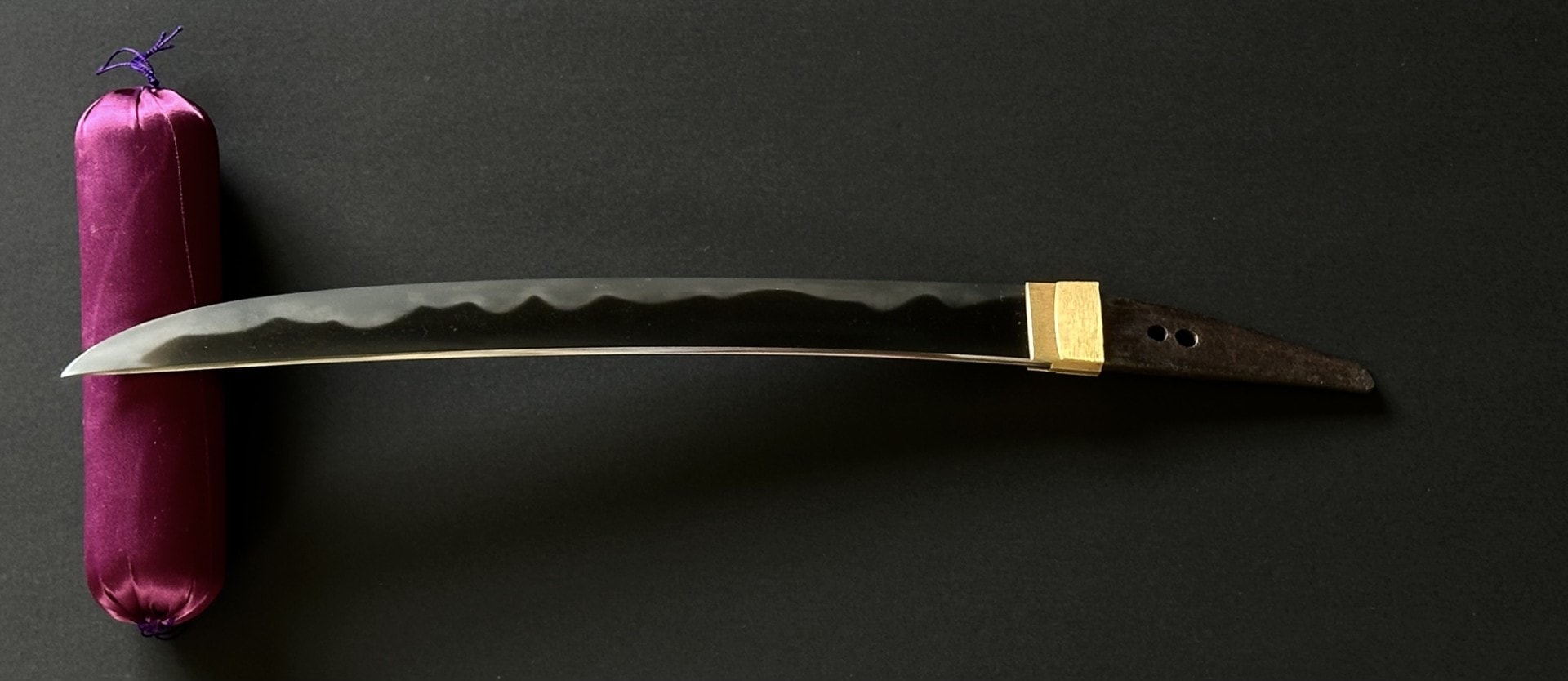
Yukimitsu worked in at the close of the period, a pupil of Kunimitsu and a brother-student of Masamune and Norishige, and he is read by the published sources as slightly the senior of the three. With those two he carried his teacher's new tradition forward and brought it to completion (正宗則重等と共に師新藤五国光の創始した相州伝をさらに発展させ完成へと導いた). The surviving signed work is limited to cut with the two-character 行光 (行光は正宗よりやや先輩とみられ、現存する有銘作は短刀に限られている), so the smith is known above all through attributions, and the great houses kept his blades for that reason.

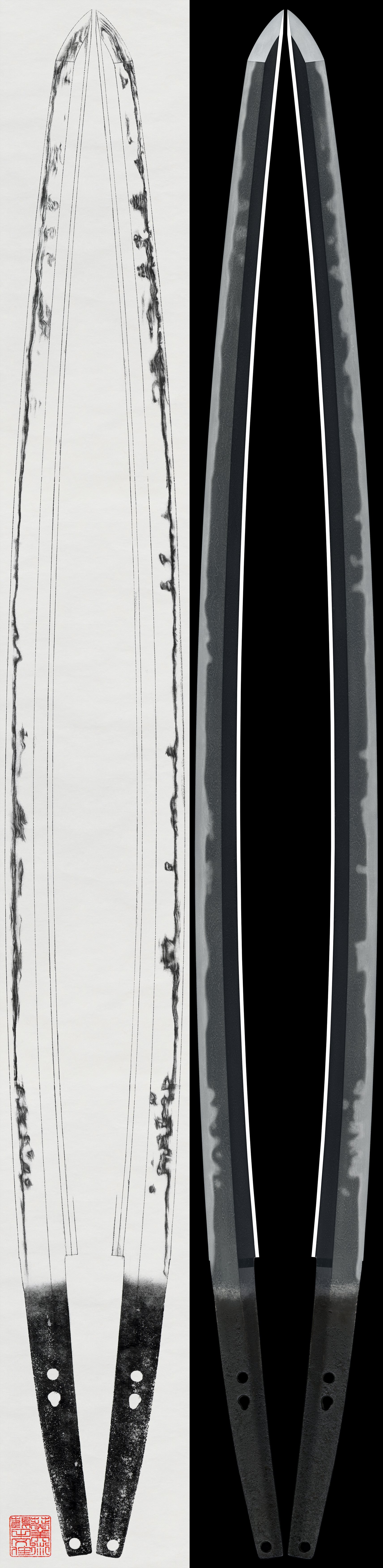
The foundation is a of unusual quality. The forging is an , often mixed with and with passages of , tightly worked yet with the grain standing in places; over it the lies thick and fine, and abundant (地景) enter, the steel clear and lit. This bold laced with thick is the constant beneath every manner he works, and the old texts say as much when they speak of the breadth of his range (古伝書にも本工の作域の広いことが述べられている). Whatever the temper above it, the published sources return to one point that holds across all of his work: the and are richly charged with , with , and conspicuously active, displaying the marvel of (地刃がよく沸えて、地景・金筋・湯走りの働きが顕著で、沸の妙味を発揮しているところである).

His quieter and more frequent manner descends directly from . Over the -laced runs a , or a tending to shallow , mixed with and small and , the somewhat deep and thickly covered in , with and drifting at the and fine and within. The judges read these attributions as the gentle, small-patterned side of him, noting that the unsigned attributed pieces are mostly a calm or a shallow quiet and that the is on the whole in the manner (無銘極めのものは直刃或いは浅い穏やかな乱れ刃が多く、地刃は総じて新藤五風である). This is the register that connects him most plainly to his teacher.

His bolder manner is the one the older profiles understated, and the is where it shows. Far from a plain that simply turns back, the temper of the point most often sweeps out strongly in (掃きかけ): the published sources record it as with vigorous brushing that builds into a flame shape (帽子乱れ込み、盛んに掃きかけて火炎状となる), the point at times pointed or burned through in , and on the calmer pieces as a straight run into a small round that still brushes out (帽子直ぐに小丸、掃きかける). Beneath that point the temper opens into a notare-based with and , sometimes a large-patterned reaching toward , the and running busily and the deep and bright. The corrected reading of the , carrying conspicuous into a and at times a pointed return, belongs with the thick as a recognition key for him.

For the connoisseur the two manners share the core, and that core is what carries an attribution when the is gone. The thick dark , the deep bright of the upper hands, the busy and , and the swept recur whether the temper above is a calm or an open . The breadth of range is itself part of the fingerprint: where Masamune and Sadamune run hotter and larger in pattern, Yukimitsu keeps the quieter, smaller-patterned hand, and the judges place him toward and Norishige and explicitly apart from Masamune and Sadamune. On one they rate the make a notch finer than Sadamune's reach, while across his range the temper stays the more restrained. Fujishiro grades him Sai-jo , and among all swordsmiths his total stands near the very top.

Acquirability follows from the rarity. Of the works on record the overwhelming majority sit in the Tokuju and tiers, with a small number locked away forever as National Treasure and Important Cultural Property and never tradeable, and a single among them. The recorded holdings read as a roster of the great collections and shrines: the Tokugawa Museum and the Uesugi Jinja, the Tokyo National Museum and the Kyushu National Museum, the Kurokawa Research Institute, the Seikado Bunko Art Museum, the Tokyo Museum, the Kunozan and Nikko Toshogu among them. The provenance chains carry the weight, the named blades having passed through Tokugawa Ieyasu and Toyotomi Hideyoshi, the Hosokawa, the Uesugi and the Date houses, with the Oshima Yukimitsu among the famous . A blade by this smith is for practical purposes unattainable on the open market, and the rare piece that does surface trades at the very top of the field.

Kantei

two-manner range: refined Shintogo-suguha vs nie-active midare (toward Norishige/Masamune) 、 "the widest 作域 in Soshu"

Yukimitsu, pupil of Kunimitsu and brother-student of Masamune (slightly his senior), is the great transitional master, said to have the widest range of any smith. His work spans two manners over a - and -rich : a refined -derived (45%), and a -active of and with profuse and , sometimes reaching . The judges place him toward and Norishige, and explicitly apart from Masamune and Sadamune.

Diagnostic discriminators

89% of his works

97% of his works

45% of his works

78% of his works

Observation by phase

Shintogo manner, refined suguha (the teacher side)

In his teacher’s manner: a tightly-forged with fine, beautiful and , a quiet with small / and , restrained and refined.

Jigane 地鉄
Hamon 刃文
Bōshi 帽子

Nie-active midare (toward Norishige/Masamune)

The bolder side: a standing with bold and , a -and- temper deep in with profuse and , , sometimes , at a glance recalling Norishige. The is most often with conspicuous , the point running into the and at times pointed.

Jigane 地鉄
Hamon 刃文
Bōshi 帽子
Scholarship

His most violently-tempered mumei pieces are attributed to him over Masamune (e.g. the Hosokawa Masamune was a Yukimitsu).

Some pieces resemble Norishige at a glance, distinguished chiefly by the longer, straight, tapering nakago.

On one Tokuju tanto the judges rate the make a notch finer than Sadamune's, 'by no means within Sadamune's reach,' though across his range his temper is the quieter and smaller-patterned.

Honors

享保名物帳Kyōhō Meibutsu Chō (Catalog of Celebrated Blades)

Catalog 4 · addenda 2 (6 total)

The family's catalog of celebrated blades (名物) presented to shogun Tokugawa Yoshimune in Kyōhō 4 (1719). Records ~274 blades of – manufacture (168 extant + ~80 burned + ~26 later additions), grouped by smith with valuations and provenance. This honor tags smiths whose work is recorded in the catalog; the detail field carries per-smith counts where the published tally is exact, or 所載 + named blades where only inclusion is verified.

Designations

Kokuhō1
Jūyō Bunkazai7
Jūyō Bijutsuhin6
Gyobutsu1
Tokubetsu Jūyō30
Jūyō Tōken106

Elite Standing

0.77 across 151 designated works

Top 3% among smiths

Provenance

37 documented provenances across certified works by Yukimitsu

Provenance Standing

20 works held in elite collections across 37 documented provenances

Top 3% among smiths

Raw score: 3.48 / 10

Blade Forms

Distribution across 151 ranked works

Signatures

Signature types across 151 ranked works

Currently Available

Lineage

TeacherKunimitsu
Yukimitsu
Students (3)
  1. 1.Masamune正宗1 for sale87designated
  2. 2.Norishige則重8 for sale132designated
  3. 3.Yukimitsu行光

Soshu School

Other artisans of the Soshu school

  1. 1.Masamune正宗1 for sale87designated
  2. 2.Sadamune貞宗87designated
  3. 3.Akihiro秋廣28designated
  4. 4.Go Yoshihiro義弘2 for sale55designated
  5. 5.Kunimitsu國光4 for sale72designated
  6. 6.Hiromitsu廣光1 for sale45designated
  7. 7.Norishige則重8 for sale132designated
  8. 8.Takagi Sadamune高木貞宗1 for sale40designated
  9. 9.Tametsugu爲繼2 for sale76designated
  10. 10.Kunihiro國廣15designated
  11. 11.Daishinbo大進房3designated
  12. 12.Mitsufusa光房1designated