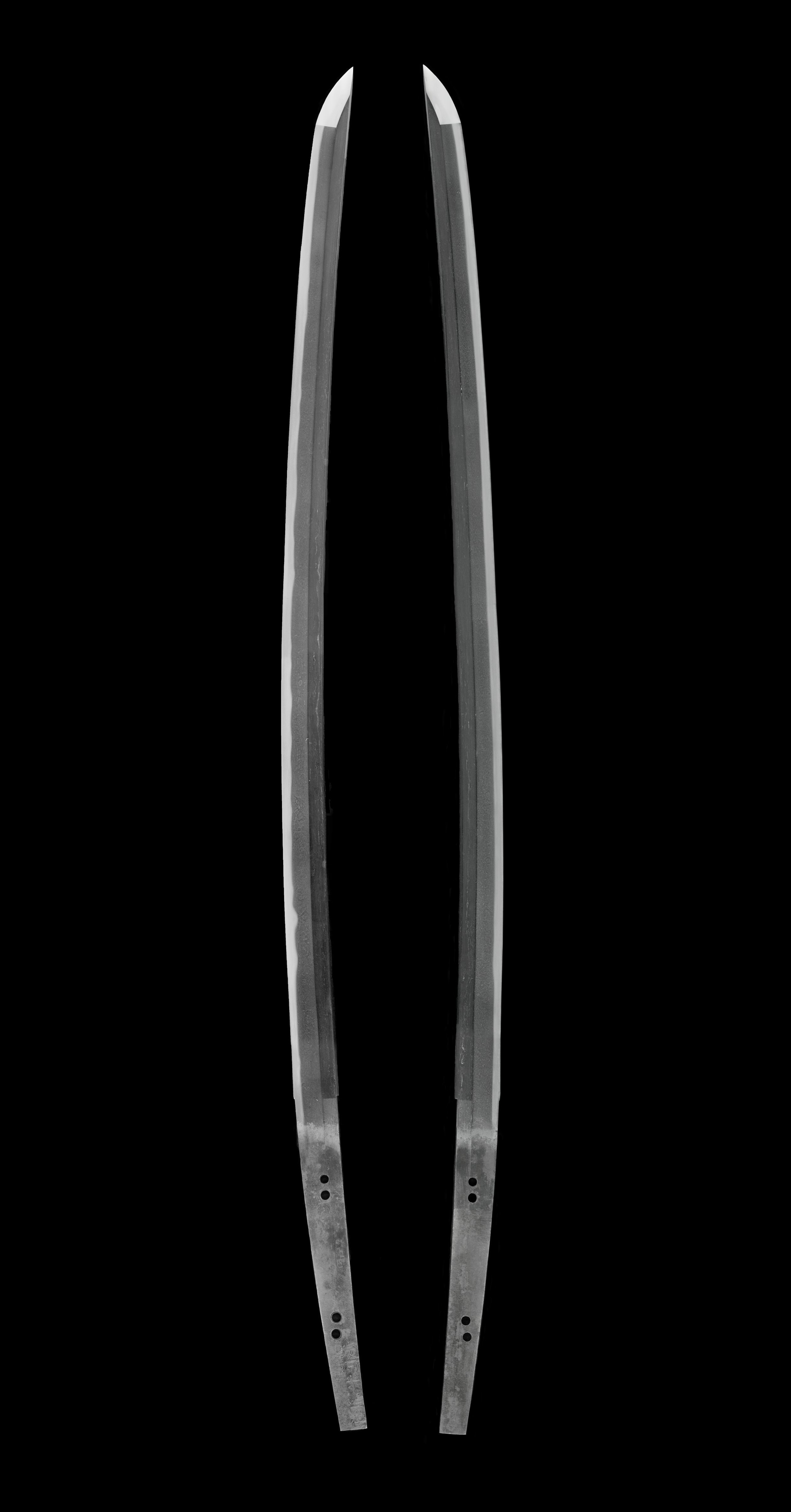
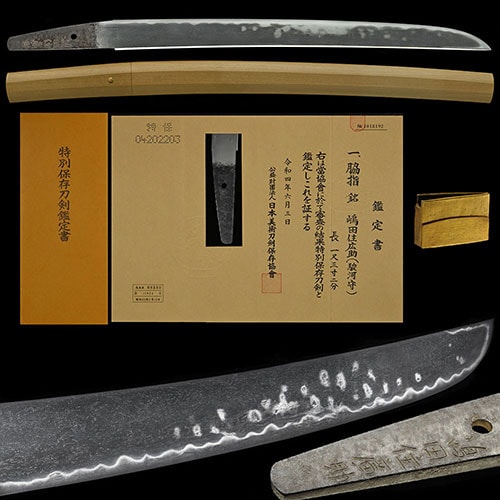
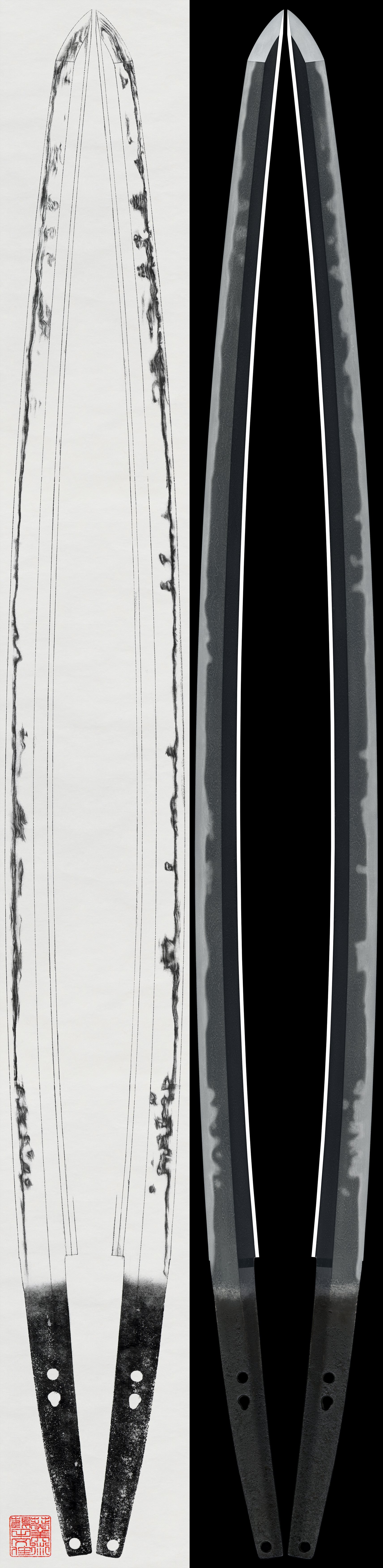
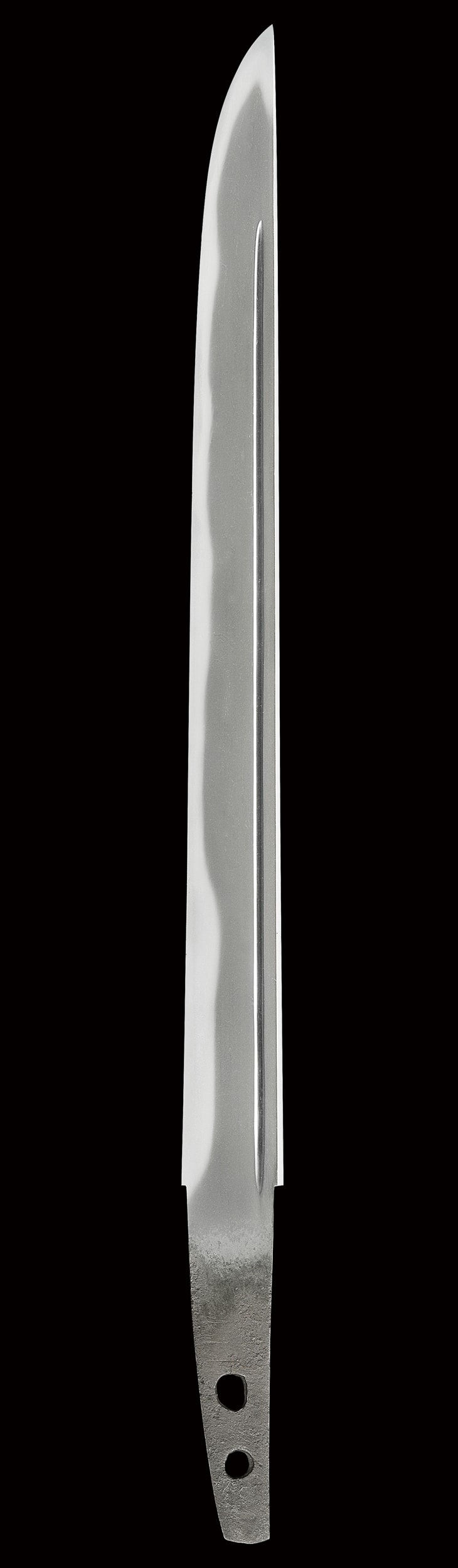
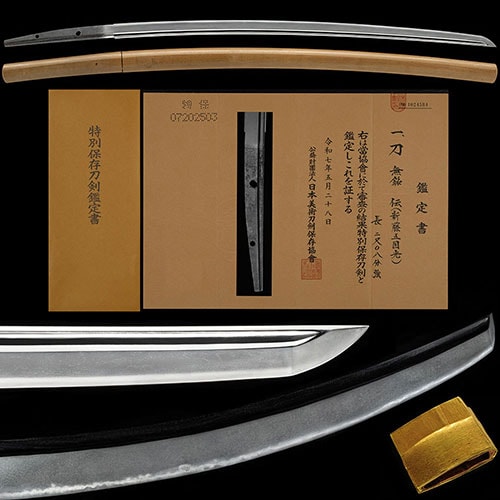
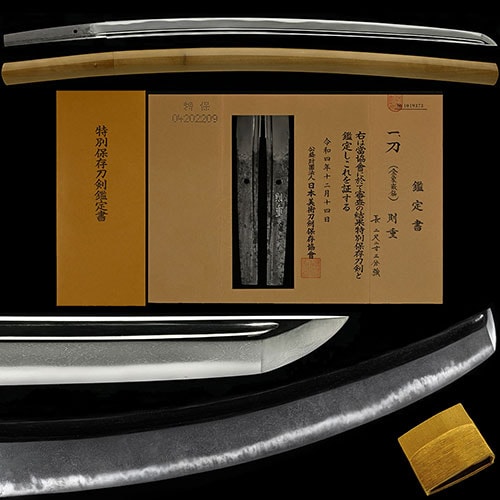
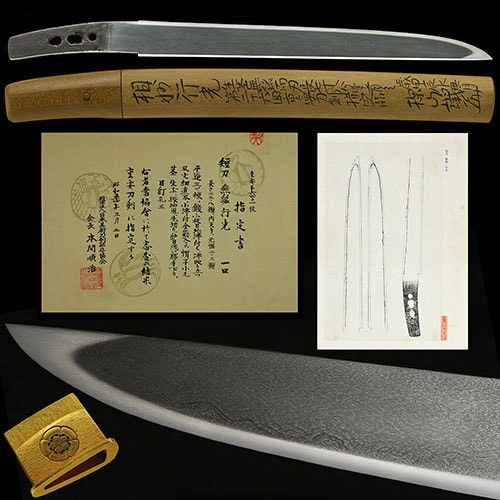
Yoshisuke is the principal mainstream name of the Shimada school of Suruga Province, a workshop that the published sources place at the head of all Shimada work. "Within the group of works known as Shimada-mono, the principal mainstream lineage is that of Yoshisuke", one commentary states plainly, and the name carried that standing across several generations. The reference works arrange those generations with the first about the Kōshō era, called Yasumasa, the second about Meiō and Eishō, and successors continuing without break to the end of the period. That neat scheme is the difficulty rather than the answer, for no work bearing a date earlier than Eishō survives, the oldest extant example being an Eishō 2 of 1505 regarded as the second generation. Because the signature style does not separate the hands either, the published record holds that the individual generations cannot be told apart, and a signed Yoshisuke is read for its workmanship rather than assigned a number.
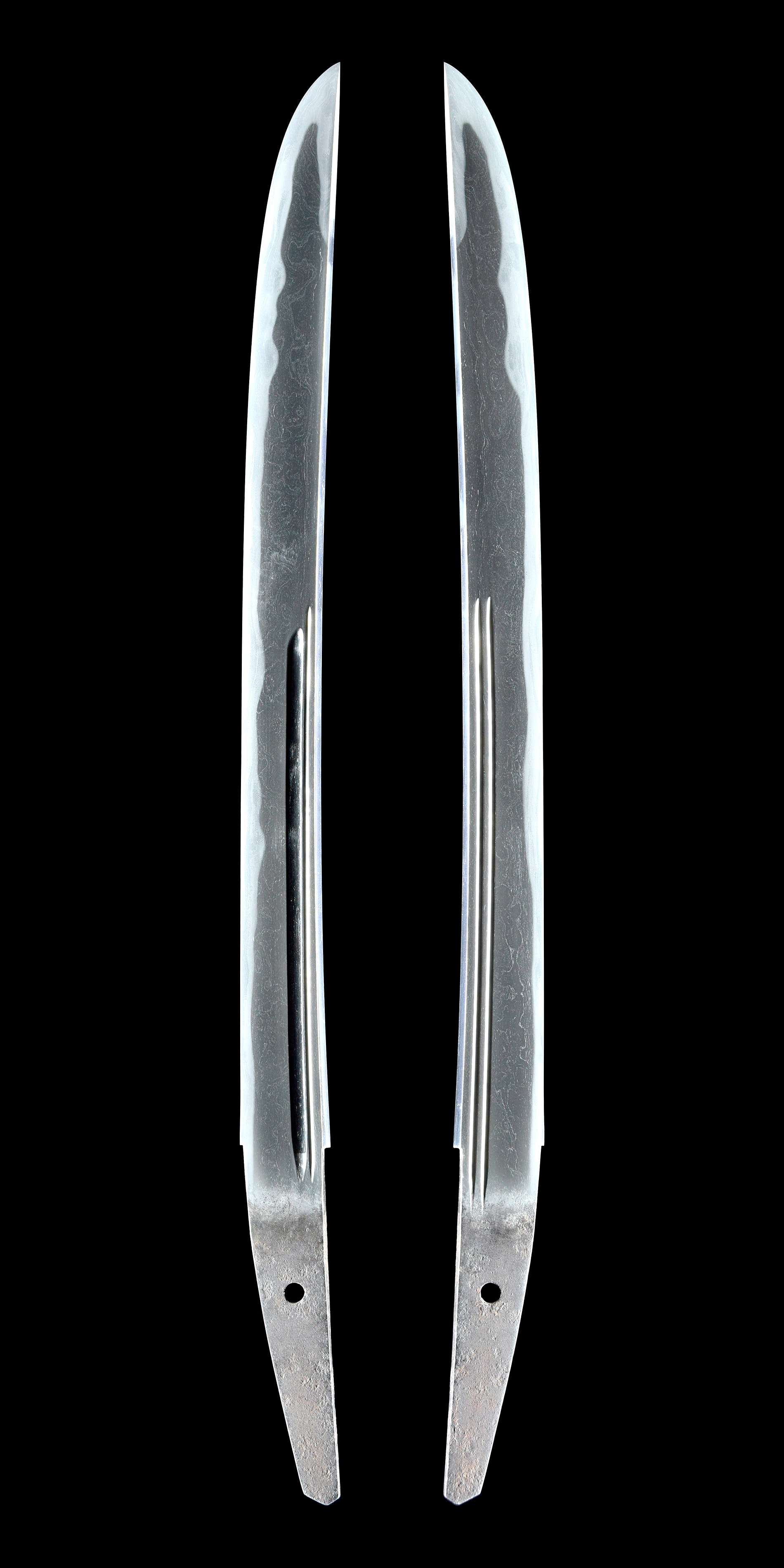
His characteristic hand is a -leaning . Over the the temper is a crossed with , the two together appearing on five of his six designated blades, with and pointed elements entering, , a inclining to tighten, and adhering, through which and run. The kinship is stated outright: of one the published sources write that the Shimada style "bears a deep relationship with the late smiths, and the two groups mutually influenced one another". The follows the , running to a that turns back with a pointed tendency, sometimes a -. Against this typical manner stands an uncommon register the itself flags, a narrow that on one late the commentary calls "a narrow , comparatively uncommon for Yoshisuke", the temper there a with a slight admixture of small , adhering and a -like tendency.
The is the steady foundation beneath both manners. The forging is an , well knit and at times dense, that overall flows and leans toward , standing somewhat open with on half his blades, fine lying through it and a passage of one blade appearing whitish. This flowing, slightly standing , rather than a tight , is what marks the Shimada hand for the eye, and it is the surface on which the activity of the is laid. On the finest of his blades the result is a and that the published record singles out for clarity, the v12 being judged the work in which "both and are especially clear and bright" among his surviving pieces.
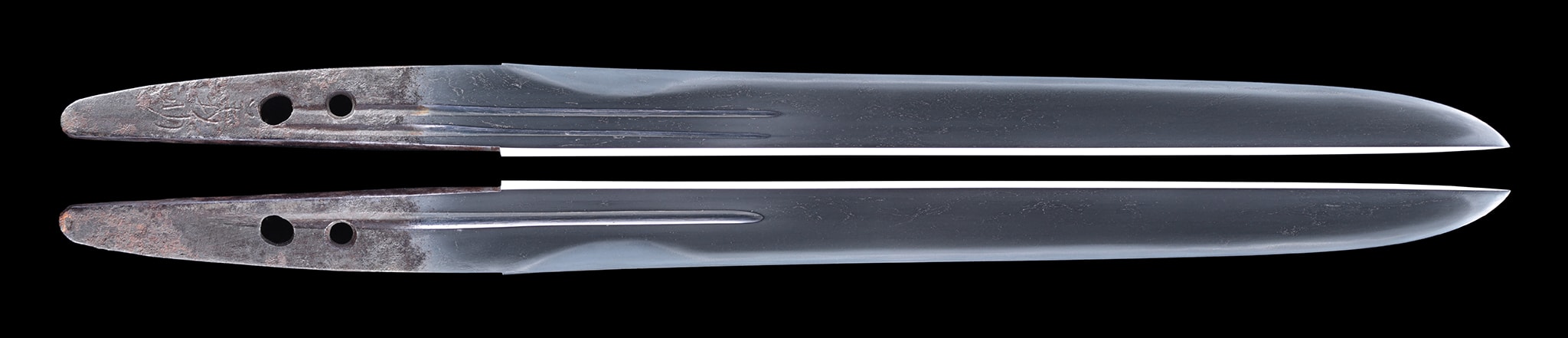
The Shimada workshop ranged widely in form, and Yoshisuke's surviving designations show it. They run from with strong through and an to a large-bodied , the published sources noting that "the Shimada lineage produced comparatively many " and naming his ōmi- a superior example among them. His are a school feature carried with skill, and the figure of cut in relief within a wide groove, and gyō on the two faces of a , and on a . The is cut , either a bare two-character Yoshisuke or a three-character Yoshisuke , at times in a fine chisel cut large, and because the dates and signatures will not divide the generations it is the quality of a given blade, not its , that the published sources weigh.
What distinguishes Yoshisuke is best drawn from his own grounded traits rather than by contrast. His is the -influenced in , with and over a flowing, standing , a provincial Suruga reading of the late idiom; the narrow is the deliberate exception, and the prominent and the are the marks of the broader Shimada shop around him. Where a generational verdict is impossible, the commentary turns to the blade itself, calling the v20 , an piece with , "an exceptional blade among works signed with this name", and reading another as a work near the earliest surviving phase. The cut struck into the at the of one of his drew a separate remark, the published sources observing that it "speaks to martial use", a reminder that these were the working blades of a province.
Yoshisuke is rated Chū-jō by Fujishiro, a solid provincial standing rather than a first rank, and his designated record is modest in scale and entirely signed. Six of his blades hold the rank, his record reaching no higher tier, so his work is encountered as and lower-ranked pieces rather than as patrimony held permanently out of reach. One blade carries a notable provenance, having been held by the Imperial Family. The number of designated works on record is small, and across the run of generations under one undivided name a securely fine example, of the clarity the published sources praise in his best and , is the thing worth waiting for. Such a blade comes to market only from time to time, and when one does it is a good representative of a respected provincial school whose work sits close to the late tradition.