In the Sengoku era the school served a second warrior court: the Later Hōjō at Odawara, whose patronage kept the Tsunahiro line forging hitatsura for the uchigatana age until the castle fell to Hideyoshi in 1590.
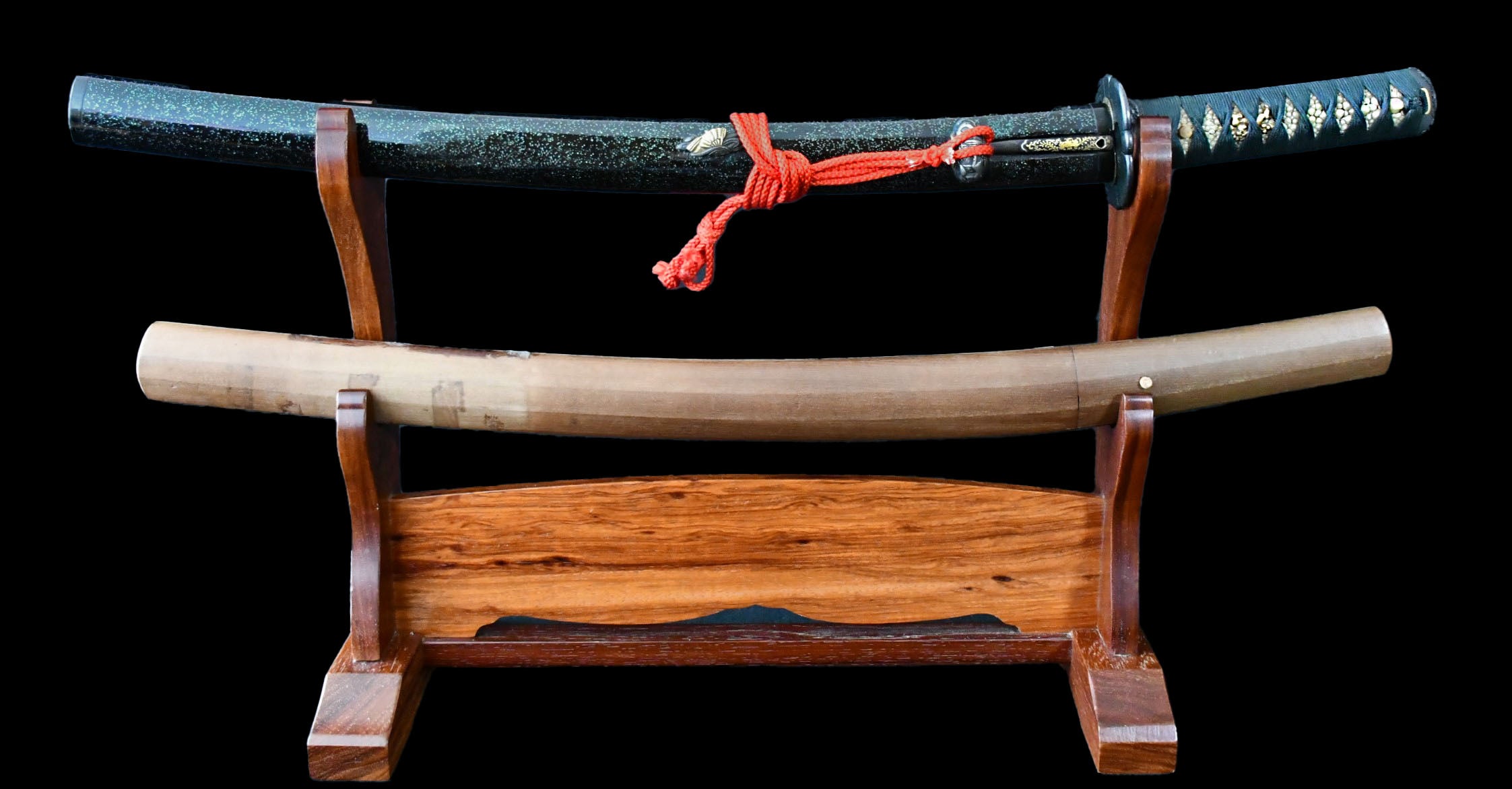
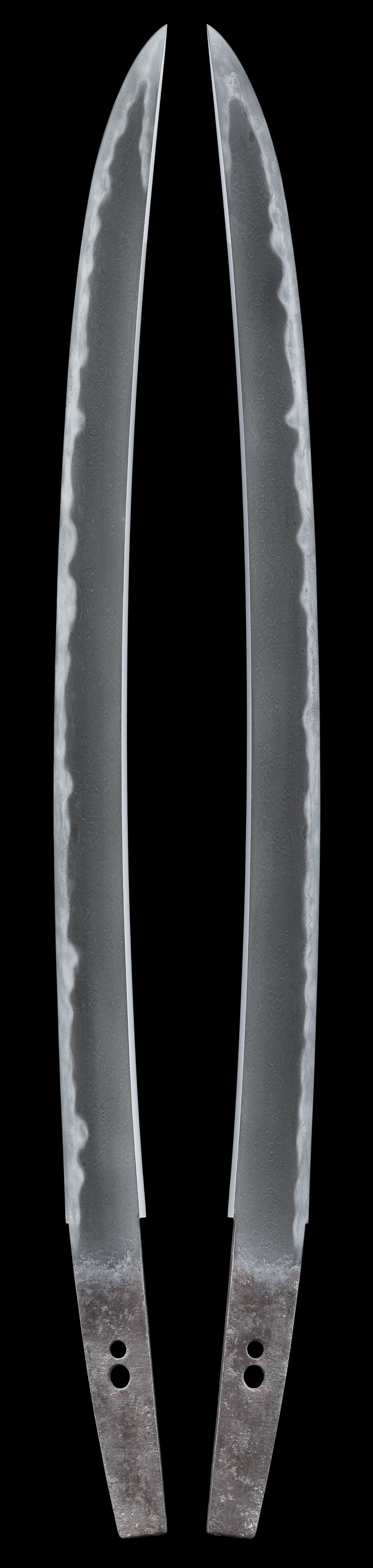
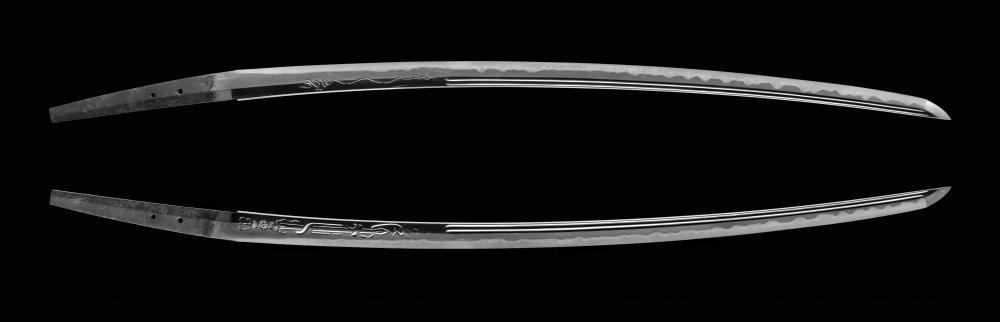
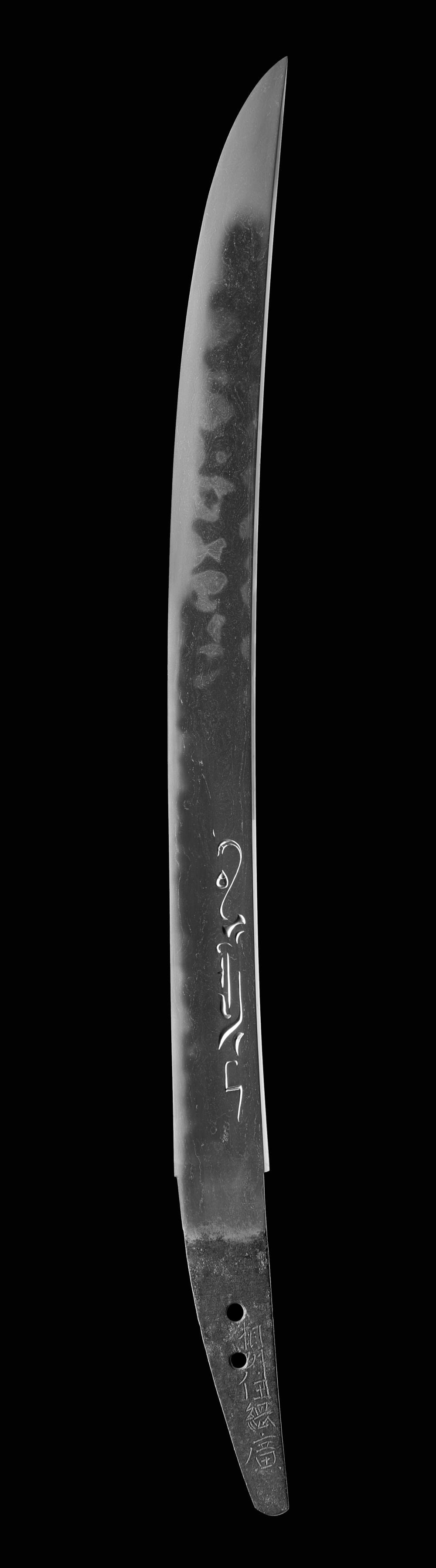
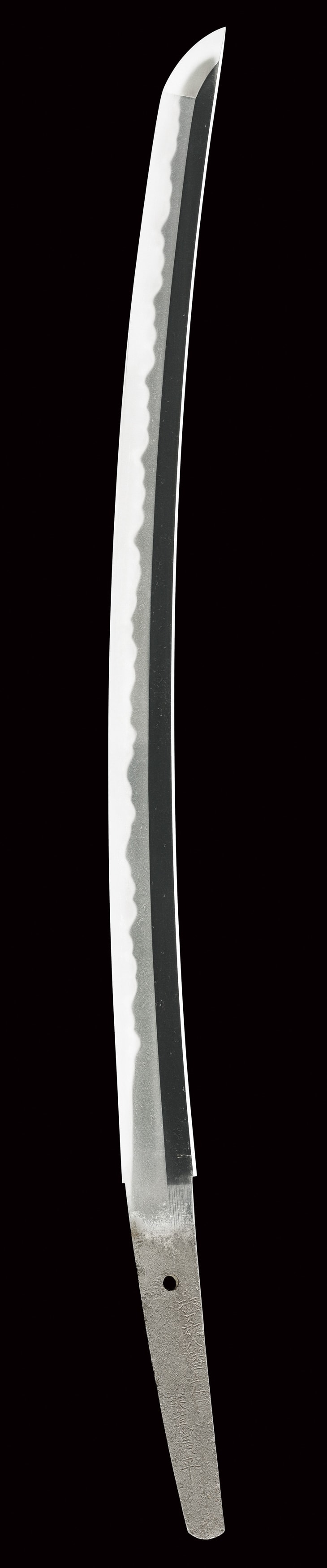
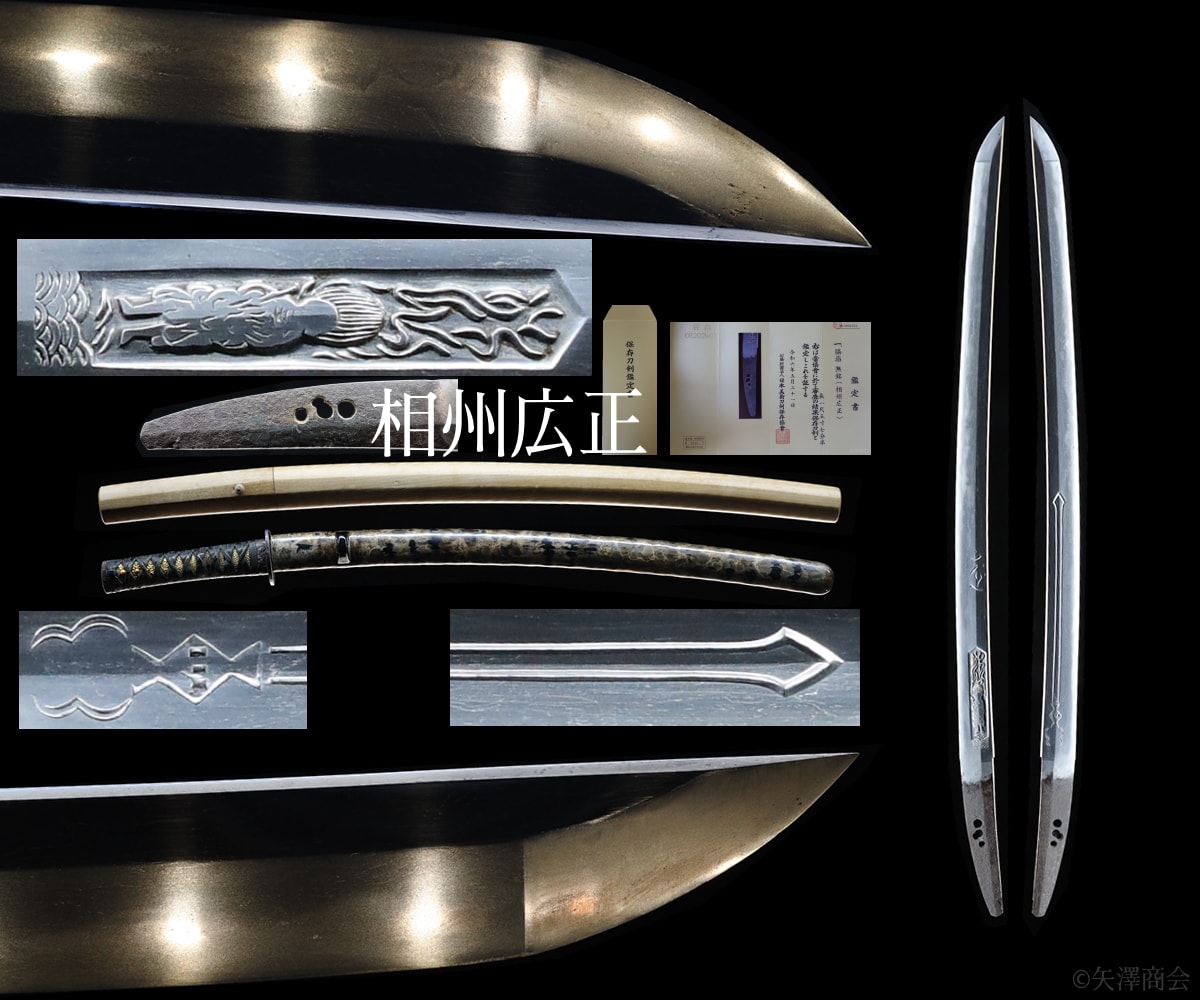
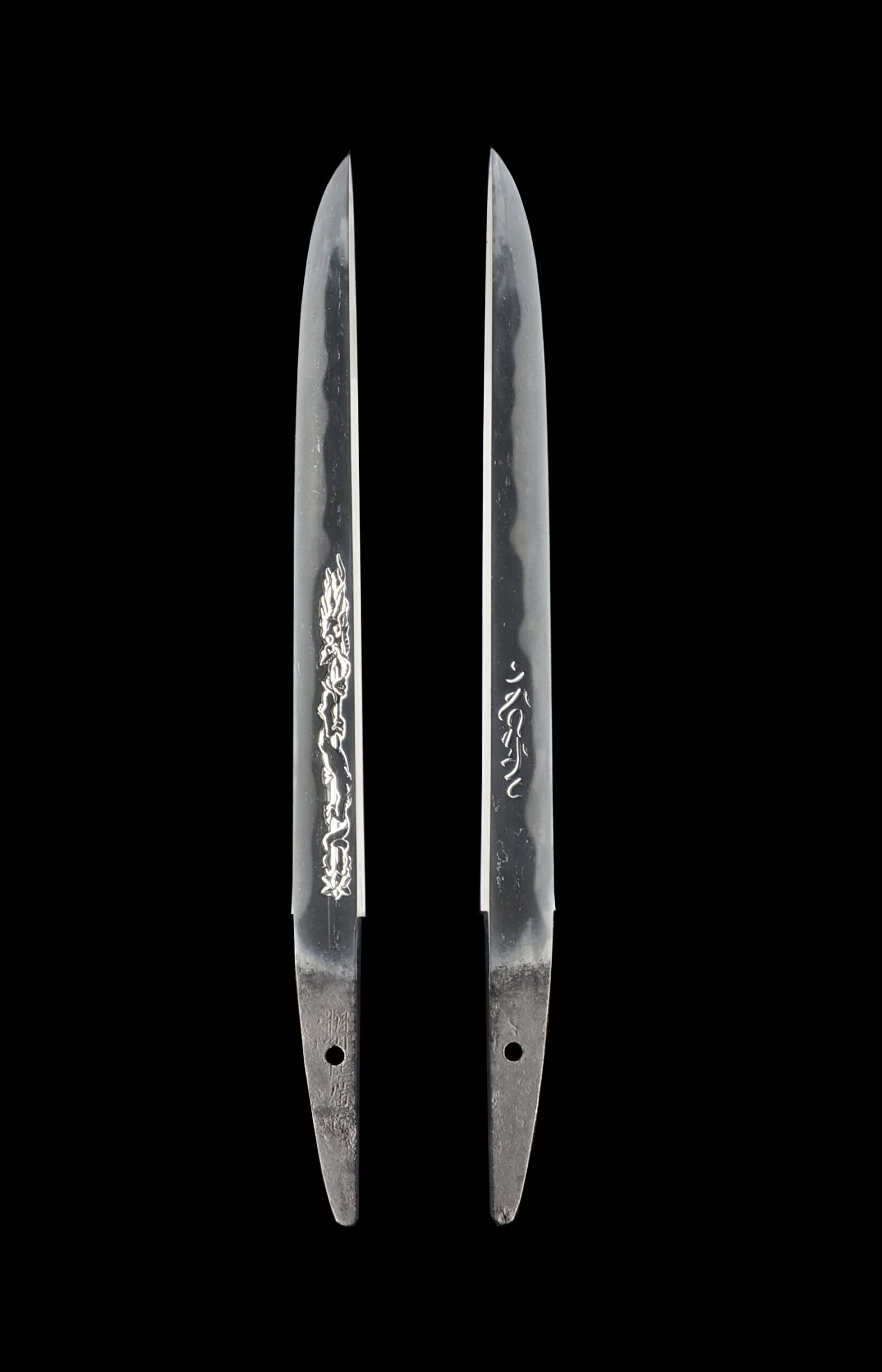
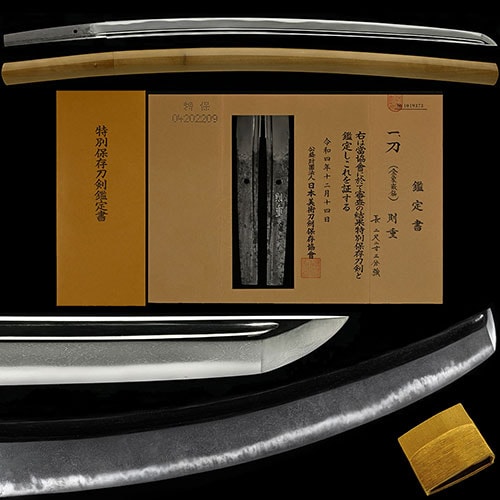
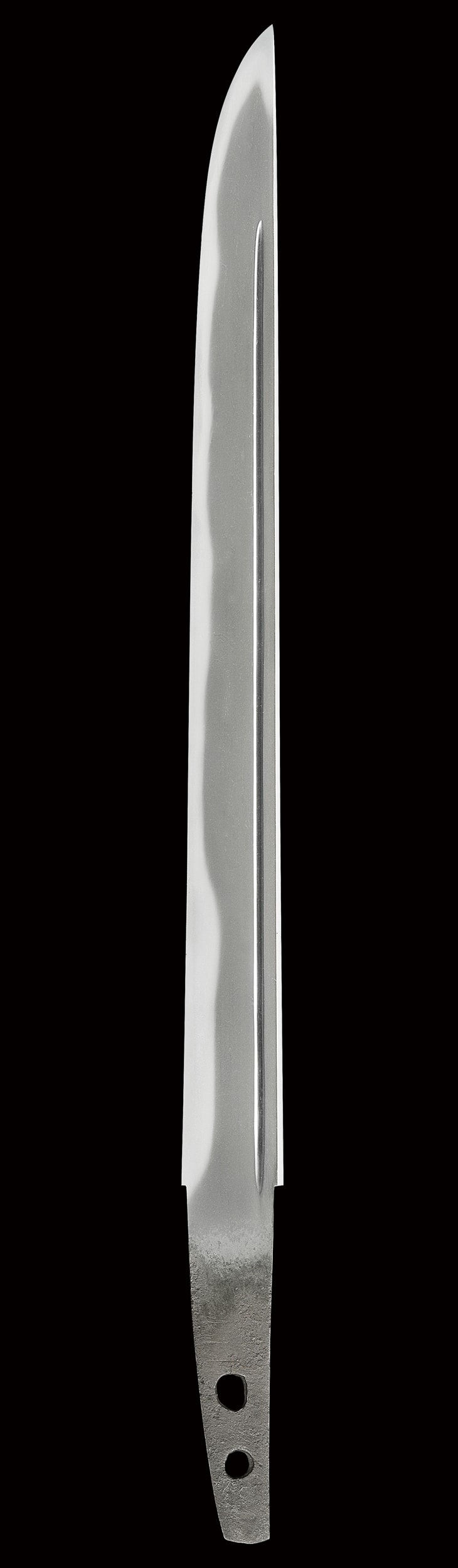
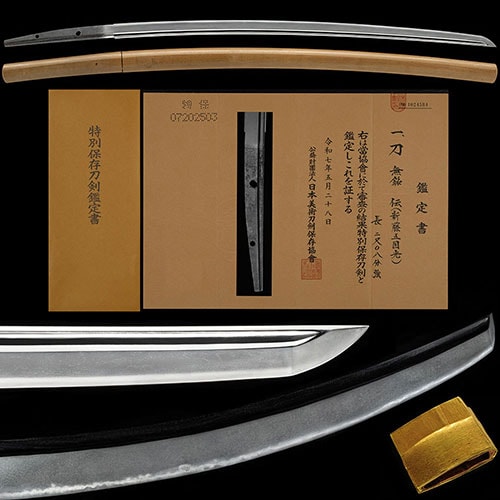
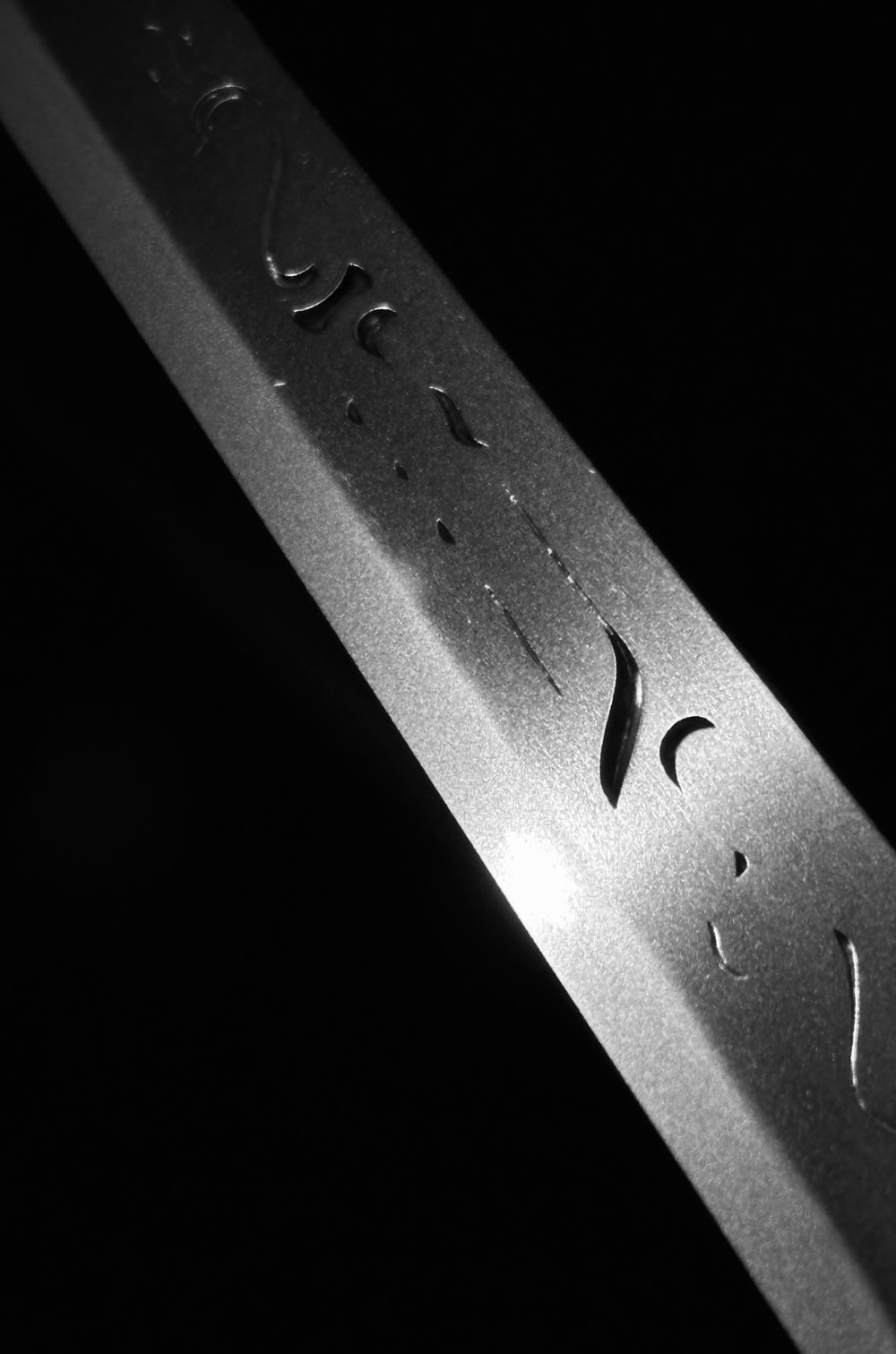
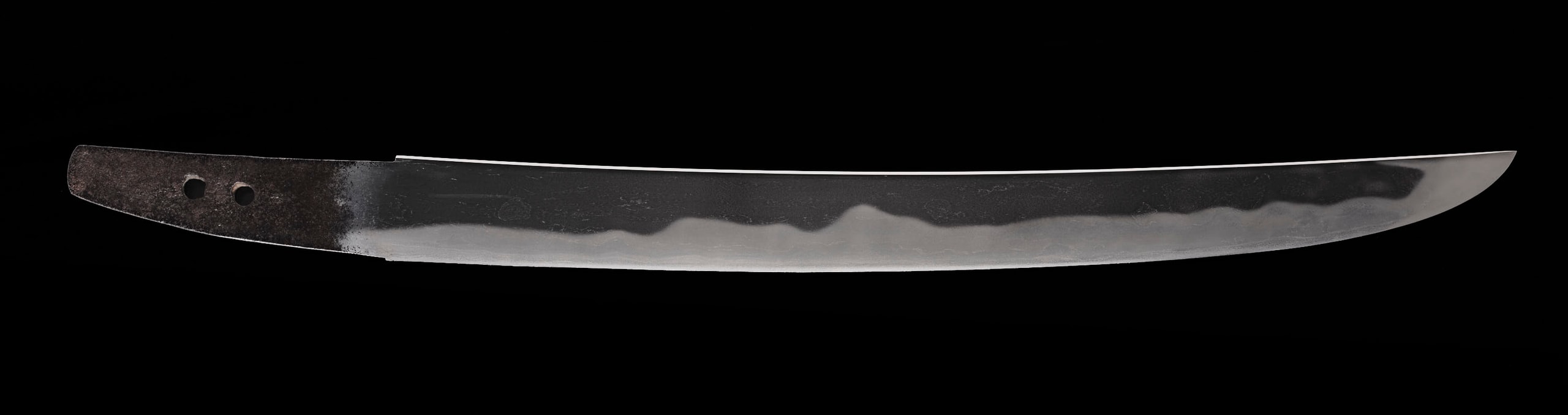
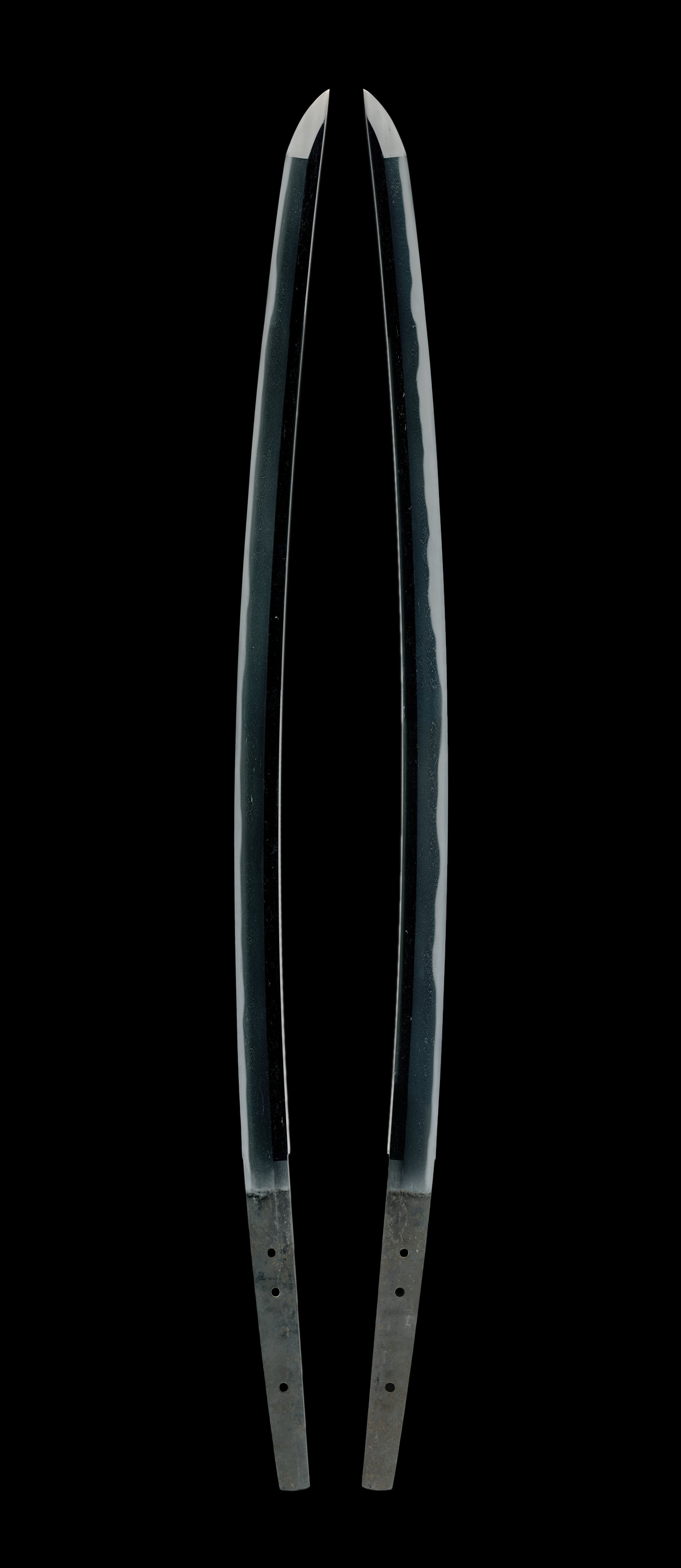
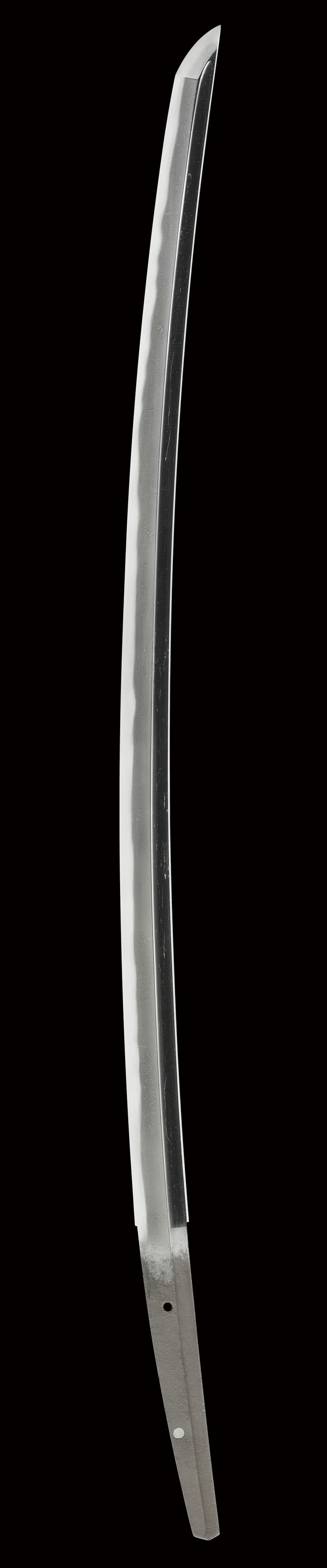
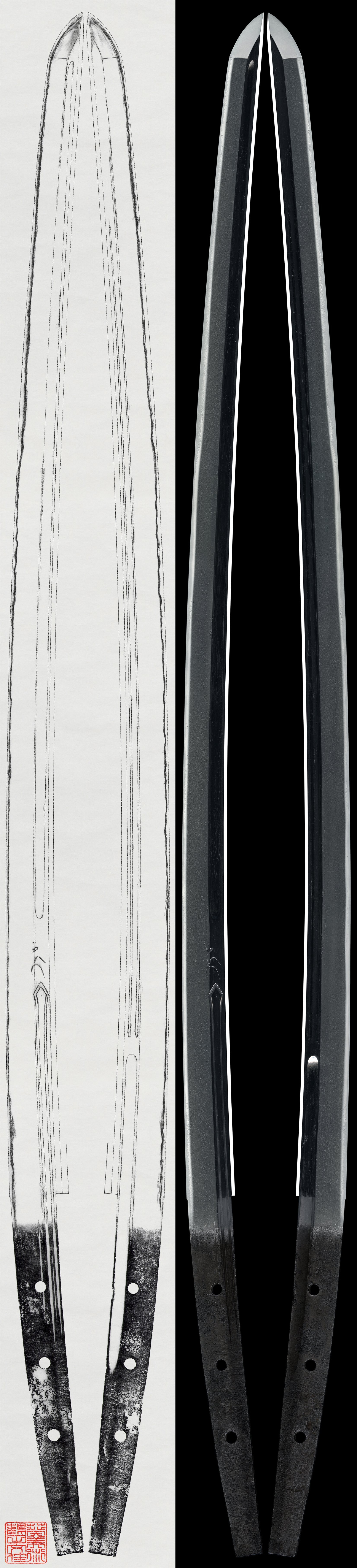
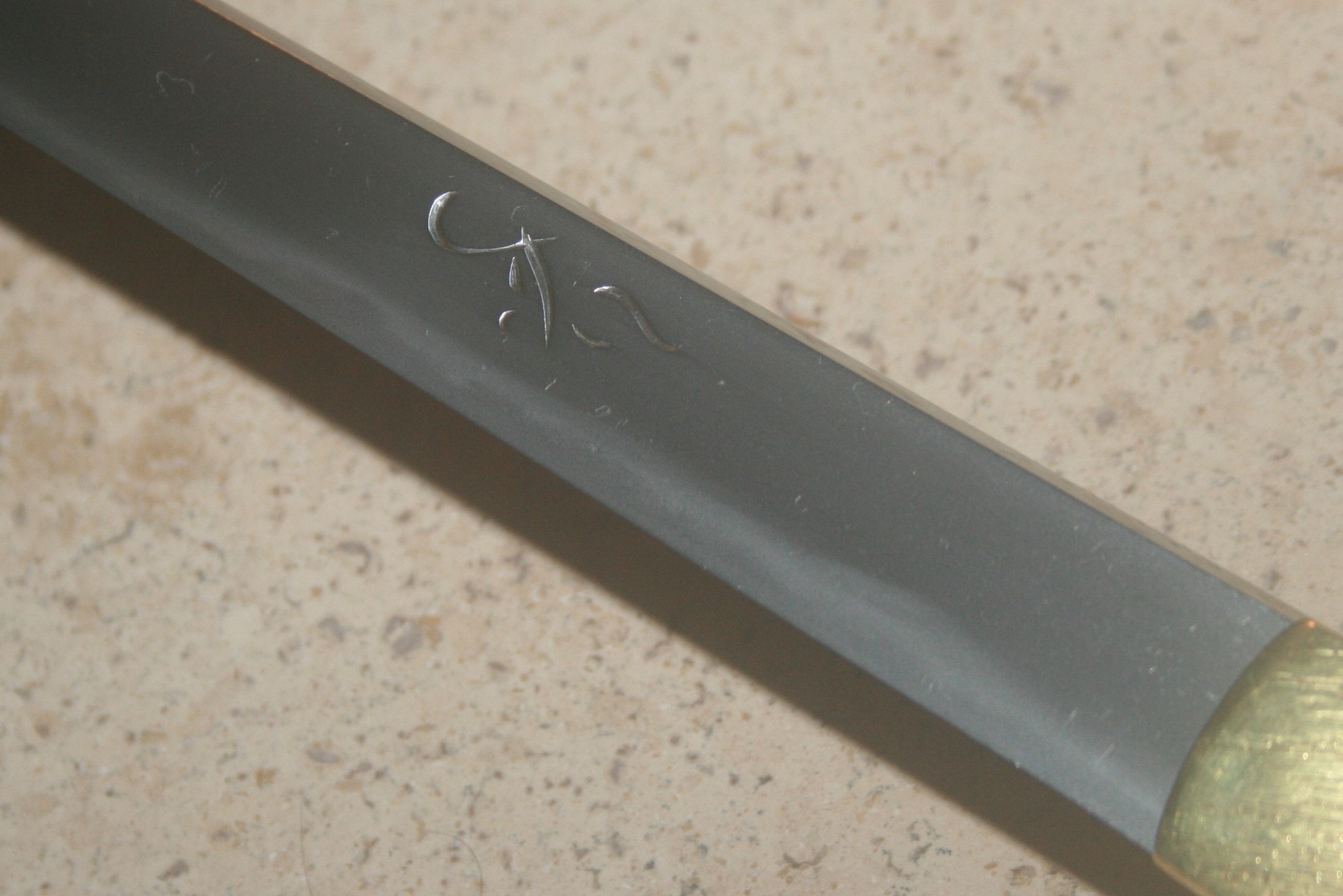
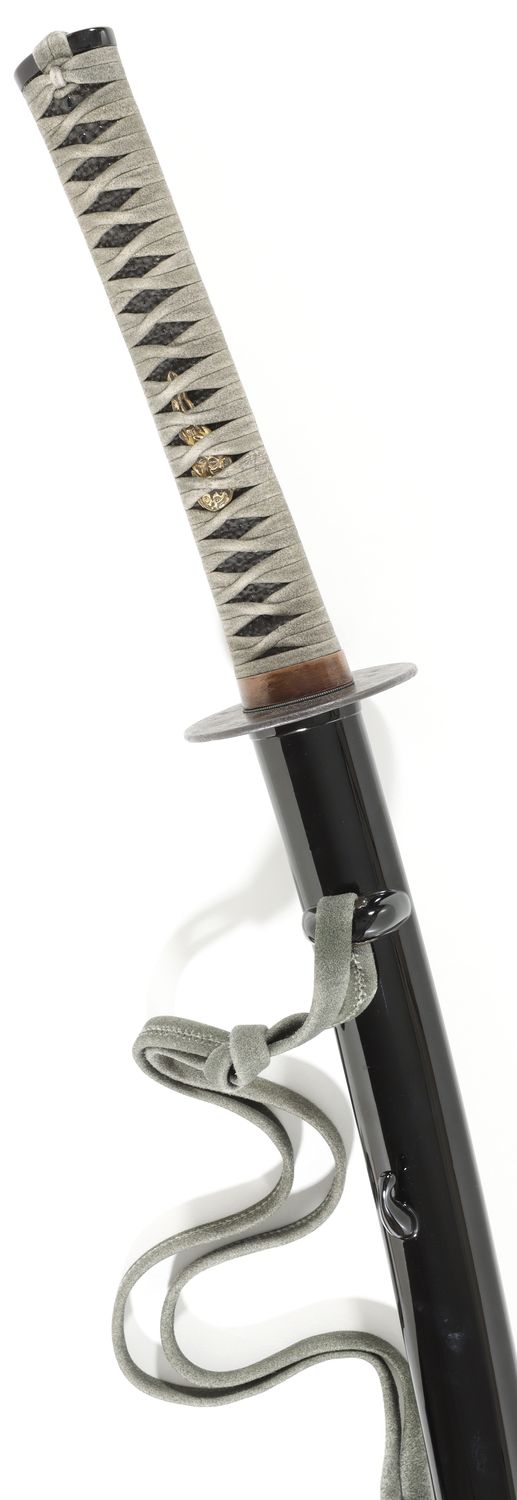
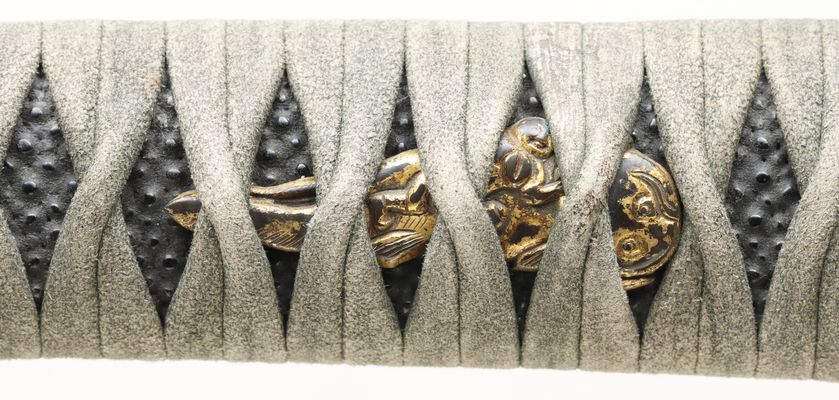
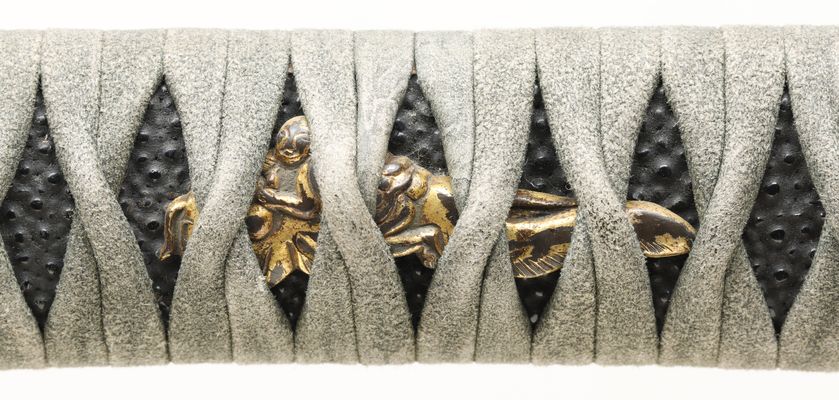
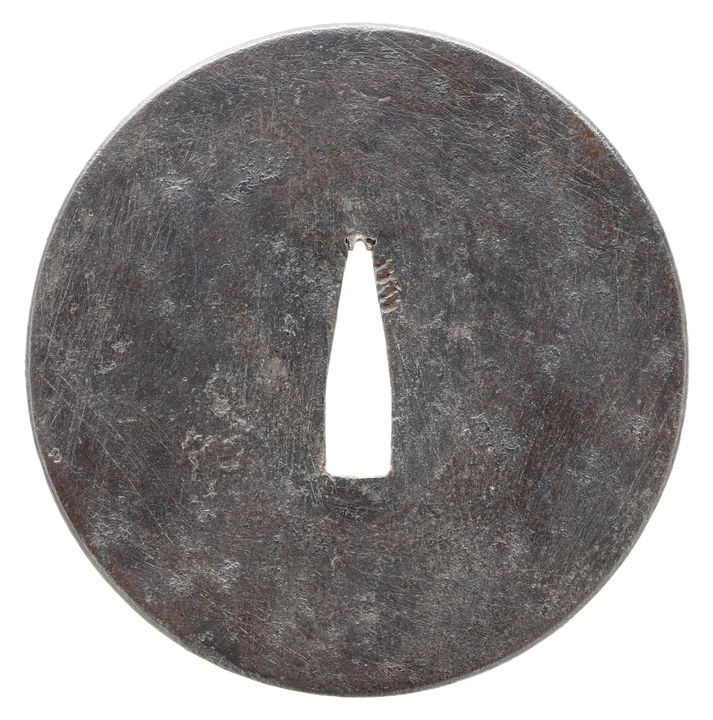
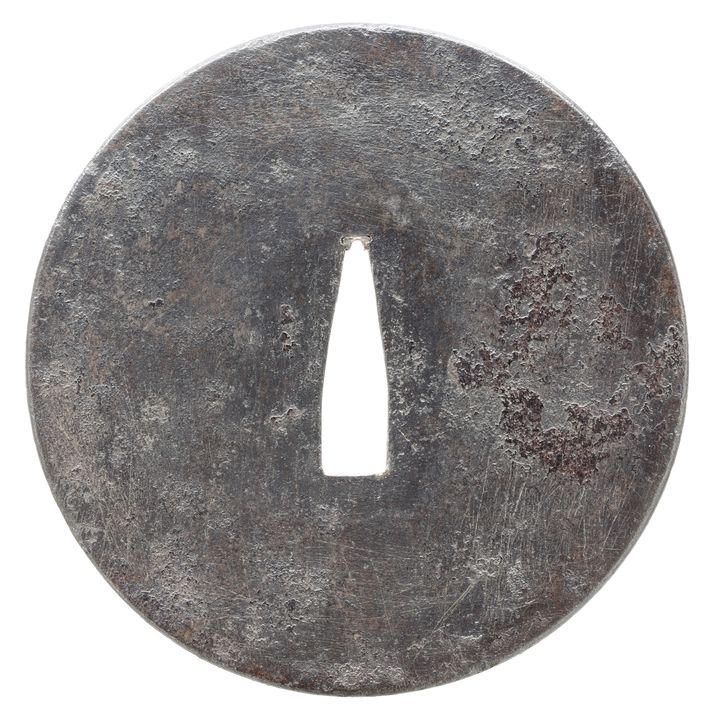
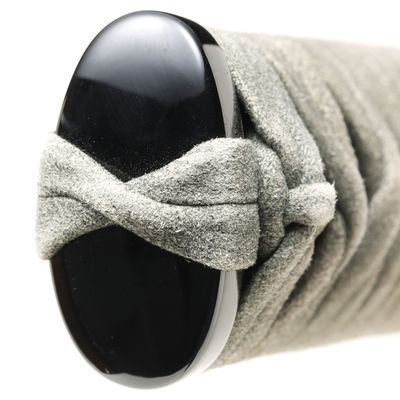
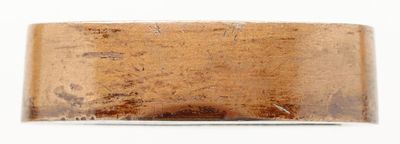
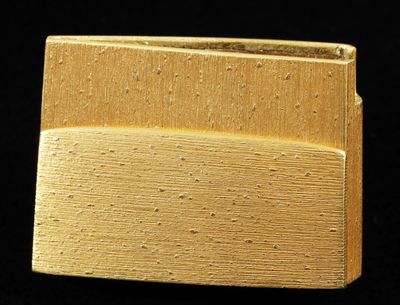
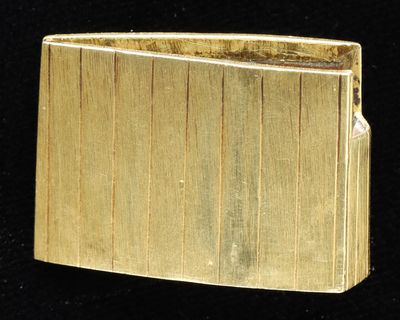
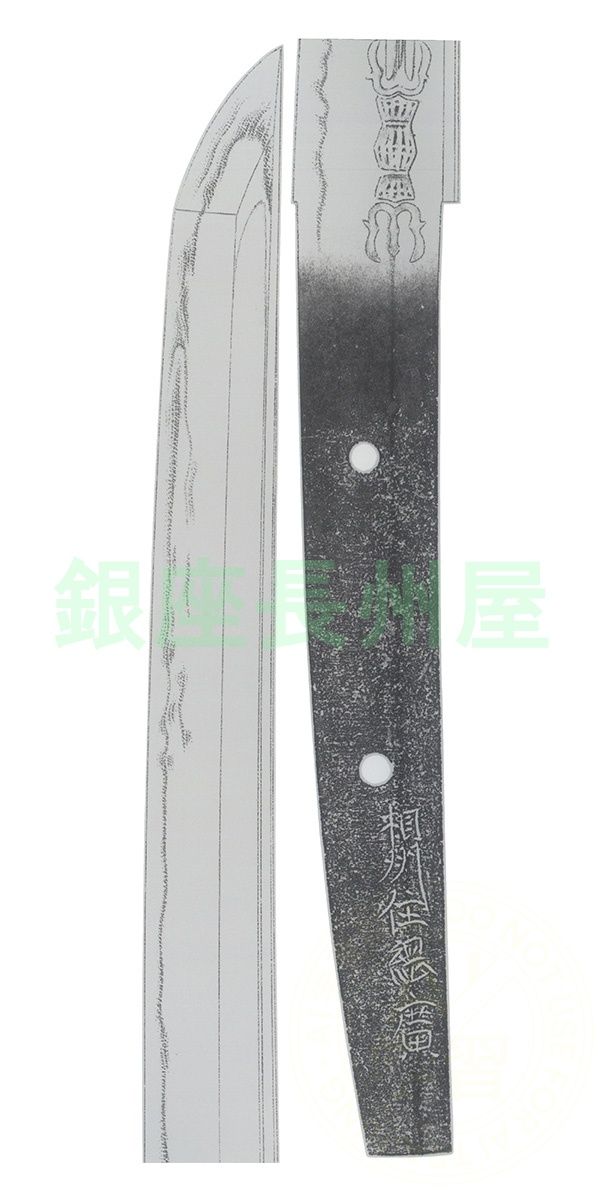
This is a katana signed by Soshu ju Tsunahiro, the founder, from Sagami province during the Tenbun era (1532-1555). It features impressive carvings of 'Bo-hi', 'Bonji', and 'San ko tsuka ken' on the omote, and 'Bo-hi', 'Bonji', and 'Gomabashi' on the ura. The blade comes with a gold-foiled double habaki, shirasaya, and a kuro ro-iro nuri saya uchigatana koshirae, and is certified as Tokubetsu Hozon.
 NihontoWatch
mei · Muromachi · nagasa 75.23cm · sori 2.27cm











Sue-Soshu (Odawara, Sagami) · Sagami · around 1532-1555
Fujishiro Jo saku · Tōken Taikan top 37%
3 pieces on the market now
Tsunahiro (綱広) is the smith who closes the Sōshū tradition. His earliest dated work falls in the Tenbun era (1532 to 1555), and the published sources take that shodai as the foremost representative of the Sōshū smiths of the Muromachi period, the one who, in their words, "most faithfully preserved the Sōshū-den style and was most active during the Tenbun era"[[c:1]]. He is transmitted as a descendant of Hiromasa who first signed Masahiro and, summoned by Hōjō Ujitsuna to Odawara, received the character tsuna and changed his name accordingly. The name then became a lineage-name carried into the Edo period, the second generation placed in Tenshō, the third in Keichō, so that "Tsunahiro" denotes a workshop sustained for generations under the Later Hōjō at Odawara rather than a single hand. He is signed and ubu almost throughout, the five-character Sōshū-jū Tsunahiro mei cut low on the omote toward the mune, the dated 1548 tachi and the Tenbun 22 (1553) wakizashi anchoring the shodai to whom the later generations are referred.
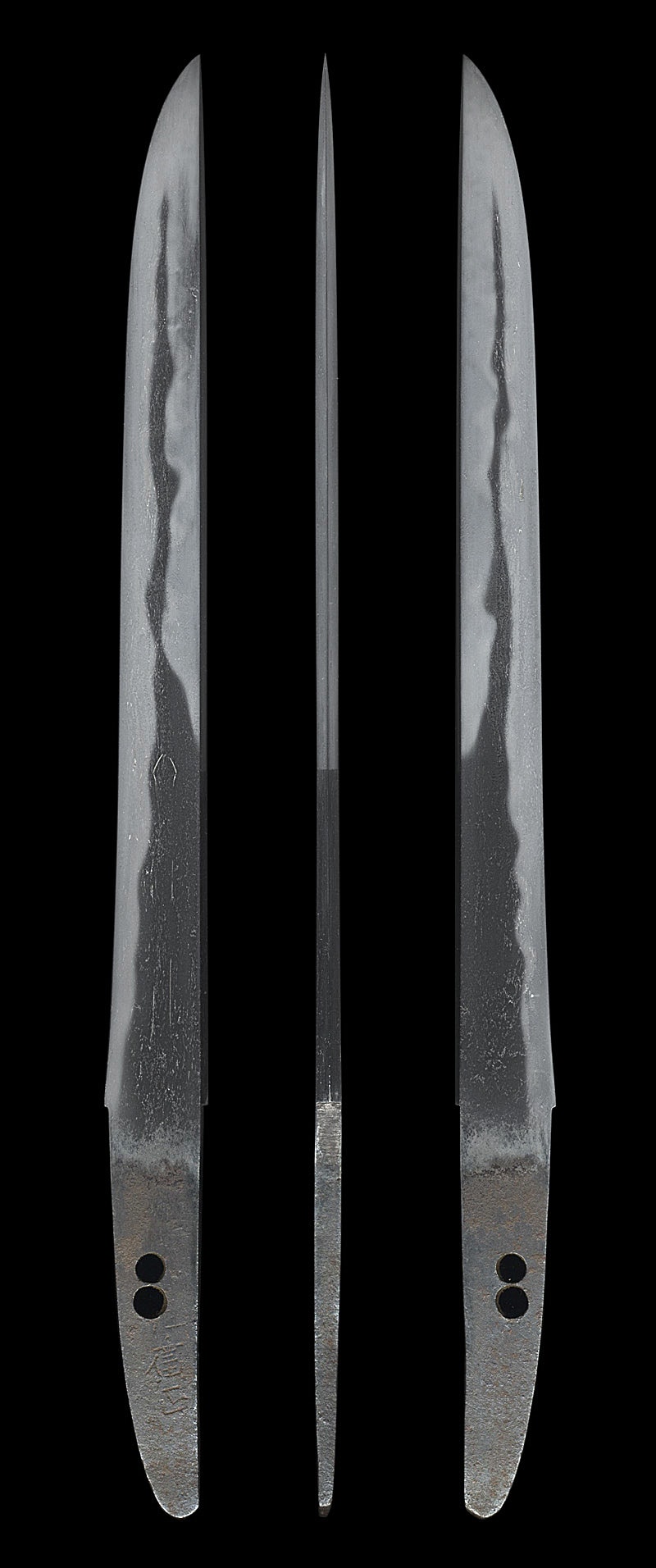
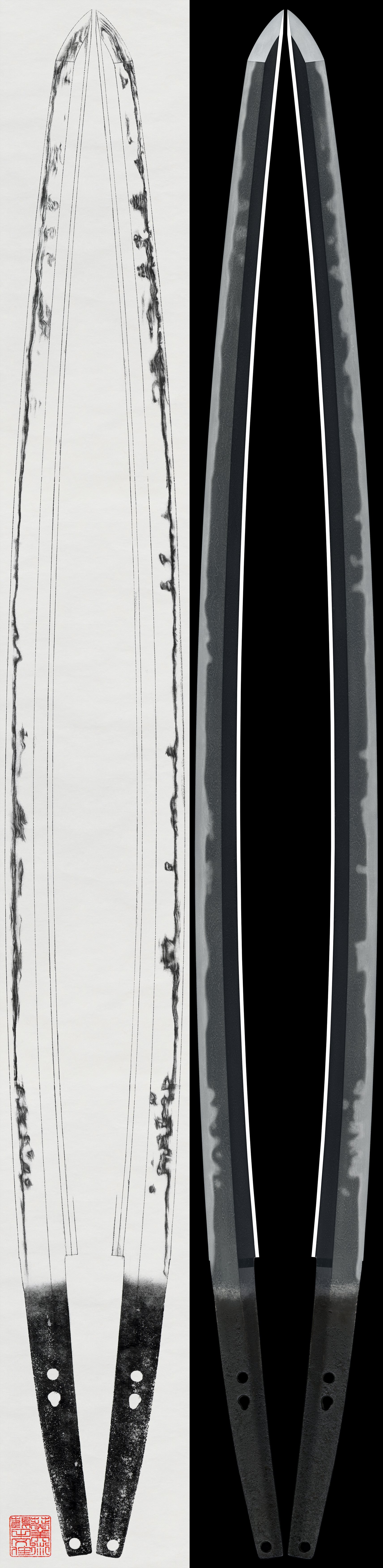
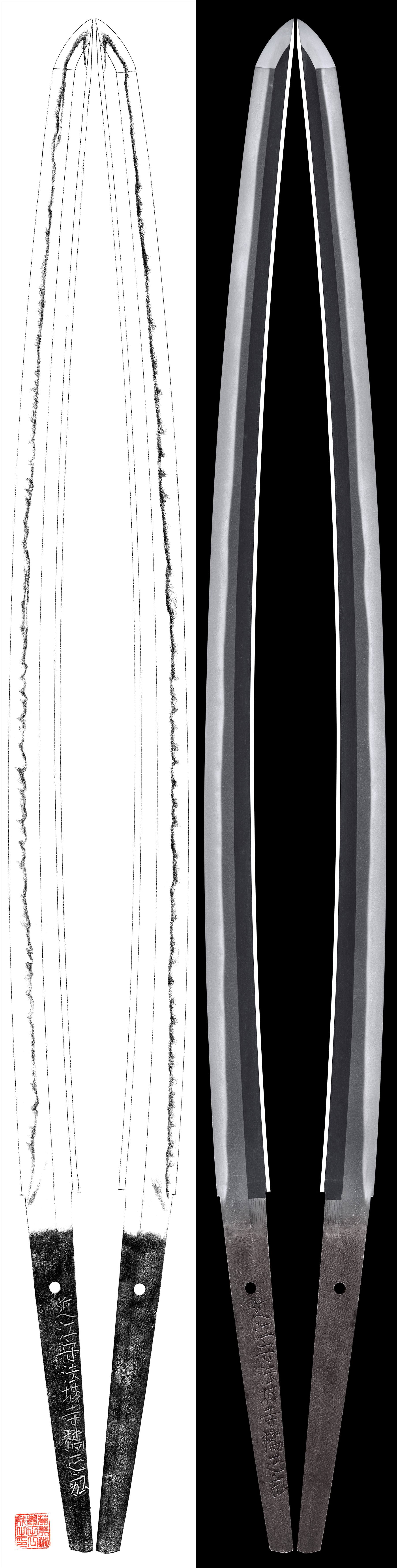
His characteristic hand is the late-Sōshū midareba built toward full temper. Over the ji he tempers a gunome-midare into which chōji, the yahazu arrow-notch tooth, togariba and ko-notare are mixed, the ha widening as it rises toward the tip; nie attaches well with sunagashi, and tobiyaki and muneyaki are then carried across the ji until the whole becomes hitatsura. The yahazu tooth, set into the gunome and rising with it, is the structural tell the judges keep returning to when they call a blade typical of him. The full-temper hitatsura is the manner the published sources name his forte, descending, they say, from Hiromitsu and Akihiro, "a skilled maker in the line following Hiromitsu and Akihiro, whose work contains much that is noteworthy in the hitatsura style said to have been established by them"[[c:2]]. On one wakizashi the hitatsura shows crescent-shaped tobiyaki, which the judges name a distinctive feature of his hand[[c:3]].
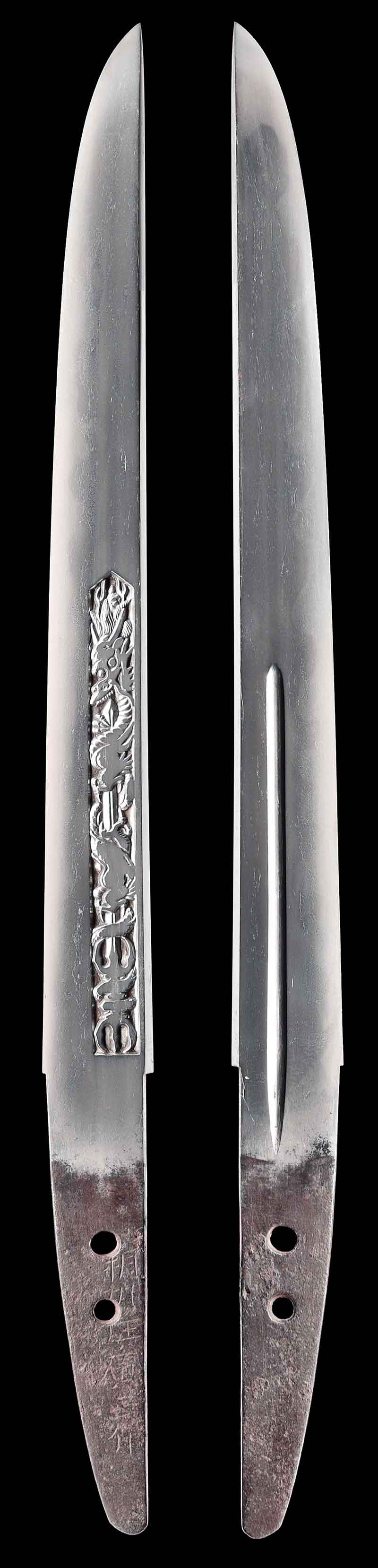
The jigane behind this is read together with the temper, for the full temper depends on it. He forges an itame mixed with mokume and nagare-hada that stands and runs, the grain open rather than tight, with ji-nie well attached and chikei entering, and against this open steel the tobiyaki and muneyaki gather into hitatsura. The standing grain is named on half his work and the flowing grain on a third, so the late-Sōshū ji is itself part of the recognition, not merely a backdrop. The bōshi runs in midare-komi to a ko-maru or pointed return, often hakikake, with a long kaeri sometimes tempered down. The carving is a further marked tell, true and grass kurikara, bonji set on a lotus pedestal, and incised invocations such as Hachiman Daibosatsu and Namu Myōhō Renge Kyō, which the judges repeatedly call distinctive of late-Sōshū work.
Against this flamboyant rule stands a documented exception. The dated 1548 tachi leaves the hitatsura range altogether for a chū-suguha-chō broken by ko-gunome with ashi, the nioiguchi tight with ko-nie, and the published sources call it an unusual work for him while noting that examples of the kind are occasionally met among his tantō and wakizashi. The generations are the other axis along which his work is read. The judges set out the accepted scheme, the first in Tenbun, the second in Tenshō, the third in Keichō, the fourth in Kan'ei and the fifth around Manji, and then appraise several undated blades by their overall bearing rather than by a date. A wide, sun-nobi wakizashi with strongly developed sakizori is placed around Genki to Tenshō, and several shinogi-zukuri katana are judged no earlier than the third generation, the judges leaving a closer determination to future study[[c:4]]. The hand is continuous across these generations, the same yahazu gunome-midare over a standing itame-mokume ji, so that the later work is recognised as Tsunahiro by the inherited range rather than by any changed manner.
What sets him apart is read off his own grounded traits rather than by borrowing a comparison. The published sources do compare him to the Nanbokuchō masters whose hitatsura he inherits, and the comparison cuts both ways: he is placed in the line of Hiromitsu and Akihiro, yet of his Important Art Object tantō the judges note that the shape of its hamon "differs from those associated with Hiromitsu and Akihiro"[[c:5]], distinguishing his hand from the very smiths he descends from. His own tell is the yahazu tooth woven into a gunome-midare that widens to the tip and is overrun into hitatsura, over a standing, chikei-laced itame. Standing at the end of the Sōshū line, he is the smith who, as the judges put it, adorns that tradition's final flourishing, his Tenbun shodai the documented origin against which the later workshop is dated. The published sources name him within the Sue-Sōshū group as one who "is well known and highly skilled"[[c:6]], his output large and many works surviving.
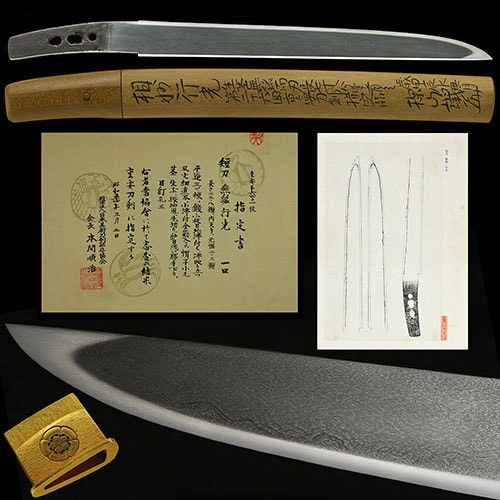
Tsunahiro is Jō saku in Fujishiro's grading, with a Tōkō Taikan valuation of four hundred man. The weight of designation behind his name is broad rather than rarefied: his standing rests on ten Jūyō blades together with an Important Art Object tantō and an early postwar Special-Preservation-tier wakizashi, the higher tiers above Jūyō not represented among his work. Among those ten the judges single out his hitatsura pieces as representative, one a work in which "Tsunahiro's forte is fully displayed"[[c:7]], another a representative Sōshū blade of the Muromachi period. The provenance recorded against his blades is distinguished and real: the wakizashi dated Tenbun 22 bears the ownership inscription of Sakurai Daigaku, a senior retainer of the Later Hōjō house, and afterward passed to Ōkubo Ichiō, the Meiji connoisseur who became the first mayor of Tokyo; the 1548 tachi carries a leather-covered iron mounting once cherished by Inukai Bokudō; and one of his blades descends through Akimoto Saemon Gorō Fujiwara Yoshihide and into the Imperial collection. Most designated blades, his included, are held rather than traded, but his are not beyond reach in the way a Kamakura masterwork is: a Jūyō Tsunahiro, signed and ubu, comes to the collector of late-Muromachi Sōshū from time to time, with patience, and is among the most rewarding things that close of the tradition offers.
Where Tsunahiro stands among comparable artisans: across all of nihontō, and within tradition, era, and period. The tiers (Foremost · Leading · Major · Notable) weigh official designations from the NBTHK and Japan's Agency for Cultural Affairs, together with historical honors of lasting repute such as the Sansaku and Meibutsu-chō.
Select a lens to see how it's measured.
Years he was demonstrably active, proven by signed-and-dated blades
Soshu-den · Sagami
Phase: Sue-Sōshū末相州· 1356–1868
20 pieces on the market now
When the great Kamakura masters had passed and the country slid into the wars of the late Muromachi, a residual Soshu-den held on in Sagami under a new patron. The Later Hojo, ruling from Odawara castle, kept smiths at hand, and it was from this orbit that the leading name of the window emerged: Tsunahiro, transmitted as a retained smith of the Odawara Hojo who took the character tsuna from Hojo Ujitsuna. The first generation's earliest dated works fall in the Tenbun era, and the line runs forward in the conventional reckoning through Tensho, Keicho, Kan'ei, and Manji, the third generation drawn west to Tsugaru by Tamenobu to forge daisho before returning home. Around him stood a wider Sagami population working the same idiom: Hirotsugu of Kamakura, whose strongest hands cluster near the Meio and Tenbun years; Hiromasa and Soso, names carried across several indistinct generations; Masahiro, reaching back toward Joji; and the Odawara group of Yasuharu, Yasukuni, and Fusamune, the last praised above all for his carving. These smiths inherited the manner of the Nanbokucho apex at a remove of generations rather than by direct descent from the mainline of Masamune and Sadamune. The signature of the phase is the open declaration of the full temper. The forging stays itame mixed with mokume, the grain inclined to stand (hadadachi-gokoro), with ji-nie and chikei; over it the smiths ran a notare-and-gunome ground that climbs the upper half into hitatsura, tobiyaki and muneyaki firing across ji and mune, sunagashi and kinsuji threading the ha. This is the hitatsura and o-midare learned from Hiromitsu and Akihiro, but pushed toward display: the Hirotsugu katana of the 61st Juyo runs its temper so high it reaches the shinogi, mixing choji, togariba, and yahazu-gata into a demonstrative yakidaka pattern.
The contrast with the classic apex is precise and the appraisers mark it. Where Masamune raised nie to its deepest refinement over a bright, clear steel, the Sue-Soshu ji tends to shirake, a whitish cast standing in for that clarity, and the nioiguchi inclines to shizumi, a sunken or subdued quality rather than depth. The 238th Jubi record states the point plainly for the first-generation Tsunahiro: the ji and ha carry abundant nie, yet the very shape of the hamon departs from that of Hiromitsu and Akihiro. The temper is broader and busier across the surface, but it lacks the quiet command and the leaping interior activity of the original. To kantei the window is to separate this demonstrative late temper from the classic Soshu-den it imitates: a standing itame with shirake, a wide hitatsura worked with yahazu and crescent tobiyaki, a nioiguchi that sinks rather than deepens, and signatures reading Soshu-ju with full given names rather than the o-suriage mumei of the great forebears. The named hands carry the distinctions, Fusamune through his dense, precise horimono of kurikara and bonji, Tsunahiro through his crescent tobiyaki and high monouchi fire, Hirotsugu through a hitatsura vigorous enough to recall Hasebe. Provenance keeps these blades close to power: several rest in the Imperial collection at the Kunaicho, one bearing the ownership inscription of Akimoto Yoshihide of Kozuke, another the Hachiman Daibosatsu invocation of a Sengoku warrior, the Tsunahiro commission tied by its dated nakago to the Tsugaru house. Learn more →
| Smith | Era | Designated |
|---|---|---|
| Fusamune總宗 | 1504-1521 | 5 |
| Tsunahiro綱廣 | 1532-1555 | 12 |
| Hiromasa廣正 | 1444-1456 | 4 |
| Tsunaie綱家 | 1532-1555 | 3 |
| Kiyohira清平 | 1673-1681 | 4 |
Sōshū in the Muromachi period
In the Sengoku era the school served a second warrior court: the Later Hōjō at Odawara, whose patronage kept the Tsunahiro line forging hitatsura for the uchigatana age until the castle fell to Hideyoshi in 1590.
A Hozon-certified blade judged to show notably superior workmanship and a better state of preservation. The bar is higher: re-tempered blades and most unsigned Muromachi/Edo works are excluded.
The NBTHK (Nihon Bijutsu Tōken Hozon Kyōkai, the Society for the Preservation of Japanese Art Swords) is a public-interest incorporated foundation founded in 1948 and supervised by Japan’s Agency for Cultural Affairs (Bunkachō); it is based at the Japanese Sword Museum in Tokyo. Its expert panels physically examine each submitted work (shinsa) and issue a certificate (kanteishō) ranking it by artistic and historical merit. NBTHK papers are the most widely recognized standard of authentication for Japanese swords and fittings.
NBTHK official siteIf, due to our fault, the item differs significantly from its proper condition, the item may be returned. Cooling-off is within one week of the item's arrival.
Price on request
This is a katana signed by Soshu ju Tsunahiro, the founder, from Sagami province during the Tenbun era (1532-1555). It features impressive carvings of 'Bo-hi', 'Bonji', and 'San ko tsuka ken' on the omote, and 'Bo-hi', 'Bonji', and 'Gomabashi' on the ura. The blade comes with a gold-foiled double habaki, shirasaya, and a kuro ro-iro nuri saya uchigatana koshirae, and is certified as Tokubetsu Hozon.
NihontoWatchmei · Muromachi · nagasa 75.23cm · sori 2.27cm
Sue-Soshu (Odawara, Sagami) · Sagami · around 1532-1555
Fujishiro Jo saku · Tōken Taikan top 37%
3 pieces on the market now
Tsunahiro (綱広) is the smith who closes the Sōshū tradition. His earliest dated work falls in the Tenbun era (1532 to 1555), and the published sources take that shodai as the foremost representative of the Sōshū smiths of the Muromachi period, the one who, in their words, "most faithfully preserved the Sōshū-den style and was most active during the Tenbun era"[[c:1]]. He is transmitted as a descendant of Hiromasa who first signed Masahiro and, summoned by Hōjō Ujitsuna to Odawara, received the character tsuna and changed his name accordingly. The name then became a lineage-name carried into the Edo period, the second generation placed in Tenshō, the third in Keichō, so that "Tsunahiro" denotes a workshop sustained for generations under the Later Hōjō at Odawara rather than a single hand. He is signed and ubu almost throughout, the five-character Sōshū-jū Tsunahiro mei cut low on the omote toward the mune, the dated 1548 tachi and the Tenbun 22 (1553) wakizashi anchoring the shodai to whom the later generations are referred.
His characteristic hand is the late-Sōshū midareba built toward full temper. Over the ji he tempers a gunome-midare into which chōji, the yahazu arrow-notch tooth, togariba and ko-notare are mixed, the ha widening as it rises toward the tip; nie attaches well with sunagashi, and tobiyaki and muneyaki are then carried across the ji until the whole becomes hitatsura. The yahazu tooth, set into the gunome and rising with it, is the structural tell the judges keep returning to when they call a blade typical of him. The full-temper hitatsura is the manner the published sources name his forte, descending, they say, from Hiromitsu and Akihiro, "a skilled maker in the line following Hiromitsu and Akihiro, whose work contains much that is noteworthy in the hitatsura style said to have been established by them"[[c:2]]. On one wakizashi the hitatsura shows crescent-shaped tobiyaki, which the judges name a distinctive feature of his hand[[c:3]].
The jigane behind this is read together with the temper, for the full temper depends on it. He forges an itame mixed with mokume and nagare-hada that stands and runs, the grain open rather than tight, with ji-nie well attached and chikei entering, and against this open steel the tobiyaki and muneyaki gather into hitatsura. The standing grain is named on half his work and the flowing grain on a third, so the late-Sōshū ji is itself part of the recognition, not merely a backdrop. The bōshi runs in midare-komi to a ko-maru or pointed return, often hakikake, with a long kaeri sometimes tempered down. The carving is a further marked tell, true and grass kurikara, bonji set on a lotus pedestal, and incised invocations such as Hachiman Daibosatsu and Namu Myōhō Renge Kyō, which the judges repeatedly call distinctive of late-Sōshū work.
Against this flamboyant rule stands a documented exception. The dated 1548 tachi leaves the hitatsura range altogether for a chū-suguha-chō broken by ko-gunome with ashi, the nioiguchi tight with ko-nie, and the published sources call it an unusual work for him while noting that examples of the kind are occasionally met among his tantō and wakizashi. The generations are the other axis along which his work is read. The judges set out the accepted scheme, the first in Tenbun, the second in Tenshō, the third in Keichō, the fourth in Kan'ei and the fifth around Manji, and then appraise several undated blades by their overall bearing rather than by a date. A wide, sun-nobi wakizashi with strongly developed sakizori is placed around Genki to Tenshō, and several shinogi-zukuri katana are judged no earlier than the third generation, the judges leaving a closer determination to future study[[c:4]]. The hand is continuous across these generations, the same yahazu gunome-midare over a standing itame-mokume ji, so that the later work is recognised as Tsunahiro by the inherited range rather than by any changed manner.
What sets him apart is read off his own grounded traits rather than by borrowing a comparison. The published sources do compare him to the Nanbokuchō masters whose hitatsura he inherits, and the comparison cuts both ways: he is placed in the line of Hiromitsu and Akihiro, yet of his Important Art Object tantō the judges note that the shape of its hamon "differs from those associated with Hiromitsu and Akihiro"[[c:5]], distinguishing his hand from the very smiths he descends from. His own tell is the yahazu tooth woven into a gunome-midare that widens to the tip and is overrun into hitatsura, over a standing, chikei-laced itame. Standing at the end of the Sōshū line, he is the smith who, as the judges put it, adorns that tradition's final flourishing, his Tenbun shodai the documented origin against which the later workshop is dated. The published sources name him within the Sue-Sōshū group as one who "is well known and highly skilled"[[c:6]], his output large and many works surviving.
Tsunahiro is Jō saku in Fujishiro's grading, with a Tōkō Taikan valuation of four hundred man. The weight of designation behind his name is broad rather than rarefied: his standing rests on ten Jūyō blades together with an Important Art Object tantō and an early postwar Special-Preservation-tier wakizashi, the higher tiers above Jūyō not represented among his work. Among those ten the judges single out his hitatsura pieces as representative, one a work in which "Tsunahiro's forte is fully displayed"[[c:7]], another a representative Sōshū blade of the Muromachi period. The provenance recorded against his blades is distinguished and real: the wakizashi dated Tenbun 22 bears the ownership inscription of Sakurai Daigaku, a senior retainer of the Later Hōjō house, and afterward passed to Ōkubo Ichiō, the Meiji connoisseur who became the first mayor of Tokyo; the 1548 tachi carries a leather-covered iron mounting once cherished by Inukai Bokudō; and one of his blades descends through Akimoto Saemon Gorō Fujiwara Yoshihide and into the Imperial collection. Most designated blades, his included, are held rather than traded, but his are not beyond reach in the way a Kamakura masterwork is: a Jūyō Tsunahiro, signed and ubu, comes to the collector of late-Muromachi Sōshū from time to time, with patience, and is among the most rewarding things that close of the tradition offers.
Where Tsunahiro stands among comparable artisans: across all of nihontō, and within tradition, era, and period. The tiers (Foremost · Leading · Major · Notable) weigh official designations from the NBTHK and Japan's Agency for Cultural Affairs, together with historical honors of lasting repute such as the Sansaku and Meibutsu-chō.
Select a lens to see how it's measured.
Years he was demonstrably active, proven by signed-and-dated blades
Soshu-den · Sagami
Phase: Sue-Sōshū末相州· 1356–1868
20 pieces on the market now
When the great Kamakura masters had passed and the country slid into the wars of the late Muromachi, a residual Soshu-den held on in Sagami under a new patron. The Later Hojo, ruling from Odawara castle, kept smiths at hand, and it was from this orbit that the leading name of the window emerged: Tsunahiro, transmitted as a retained smith of the Odawara Hojo who took the character tsuna from Hojo Ujitsuna. The first generation's earliest dated works fall in the Tenbun era, and the line runs forward in the conventional reckoning through Tensho, Keicho, Kan'ei, and Manji, the third generation drawn west to Tsugaru by Tamenobu to forge daisho before returning home. Around him stood a wider Sagami population working the same idiom: Hirotsugu of Kamakura, whose strongest hands cluster near the Meio and Tenbun years; Hiromasa and Soso, names carried across several indistinct generations; Masahiro, reaching back toward Joji; and the Odawara group of Yasuharu, Yasukuni, and Fusamune, the last praised above all for his carving. These smiths inherited the manner of the Nanbokucho apex at a remove of generations rather than by direct descent from the mainline of Masamune and Sadamune. The signature of the phase is the open declaration of the full temper. The forging stays itame mixed with mokume, the grain inclined to stand (hadadachi-gokoro), with ji-nie and chikei; over it the smiths ran a notare-and-gunome ground that climbs the upper half into hitatsura, tobiyaki and muneyaki firing across ji and mune, sunagashi and kinsuji threading the ha. This is the hitatsura and o-midare learned from Hiromitsu and Akihiro, but pushed toward display: the Hirotsugu katana of the 61st Juyo runs its temper so high it reaches the shinogi, mixing choji, togariba, and yahazu-gata into a demonstrative yakidaka pattern.
The contrast with the classic apex is precise and the appraisers mark it. Where Masamune raised nie to its deepest refinement over a bright, clear steel, the Sue-Soshu ji tends to shirake, a whitish cast standing in for that clarity, and the nioiguchi inclines to shizumi, a sunken or subdued quality rather than depth. The 238th Jubi record states the point plainly for the first-generation Tsunahiro: the ji and ha carry abundant nie, yet the very shape of the hamon departs from that of Hiromitsu and Akihiro. The temper is broader and busier across the surface, but it lacks the quiet command and the leaping interior activity of the original. To kantei the window is to separate this demonstrative late temper from the classic Soshu-den it imitates: a standing itame with shirake, a wide hitatsura worked with yahazu and crescent tobiyaki, a nioiguchi that sinks rather than deepens, and signatures reading Soshu-ju with full given names rather than the o-suriage mumei of the great forebears. The named hands carry the distinctions, Fusamune through his dense, precise horimono of kurikara and bonji, Tsunahiro through his crescent tobiyaki and high monouchi fire, Hirotsugu through a hitatsura vigorous enough to recall Hasebe. Provenance keeps these blades close to power: several rest in the Imperial collection at the Kunaicho, one bearing the ownership inscription of Akimoto Yoshihide of Kozuke, another the Hachiman Daibosatsu invocation of a Sengoku warrior, the Tsunahiro commission tied by its dated nakago to the Tsugaru house. Learn more →
| Smith | Era | Designated |
|---|---|---|
| Fusamune總宗 | 1504-1521 | 5 |
| Tsunahiro綱廣 | 1532-1555 | 12 |
| Hiromasa廣正 | 1444-1456 | 4 |
| Tsunaie綱家 | 1532-1555 | 3 |
| Kiyohira清平 | 1673-1681 | 4 |
Sōshū in the Muromachi period
In the Sengoku era the school served a second warrior court: the Later Hōjō at Odawara, whose patronage kept the Tsunahiro line forging hitatsura for the uchigatana age until the castle fell to Hideyoshi in 1590.
A Hozon-certified blade judged to show notably superior workmanship and a better state of preservation. The bar is higher: re-tempered blades and most unsigned Muromachi/Edo works are excluded.
The NBTHK (Nihon Bijutsu Tōken Hozon Kyōkai, the Society for the Preservation of Japanese Art Swords) is a public-interest incorporated foundation founded in 1948 and supervised by Japan’s Agency for Cultural Affairs (Bunkachō); it is based at the Japanese Sword Museum in Tokyo. Its expert panels physically examine each submitted work (shinsa) and issue a certificate (kanteishō) ranking it by artistic and historical merit. NBTHK papers are the most widely recognized standard of authentication for Japanese swords and fittings.
NBTHK official siteIf, due to our fault, the item differs significantly from its proper condition, the item may be returned. Cooling-off is within one week of the item's arrival.
Price on request