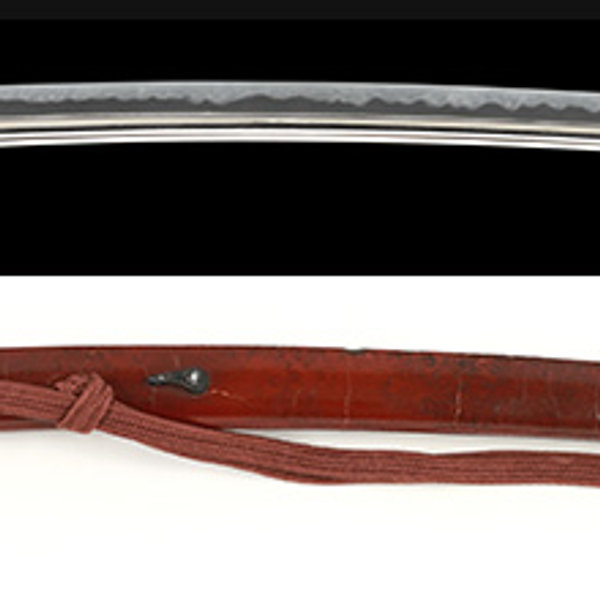
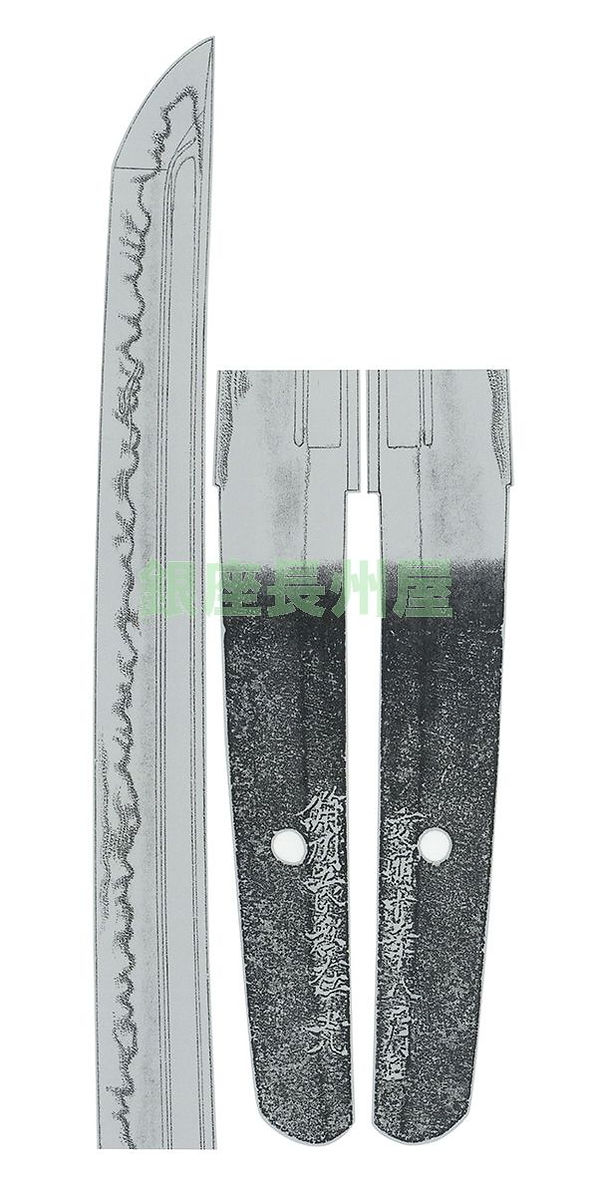
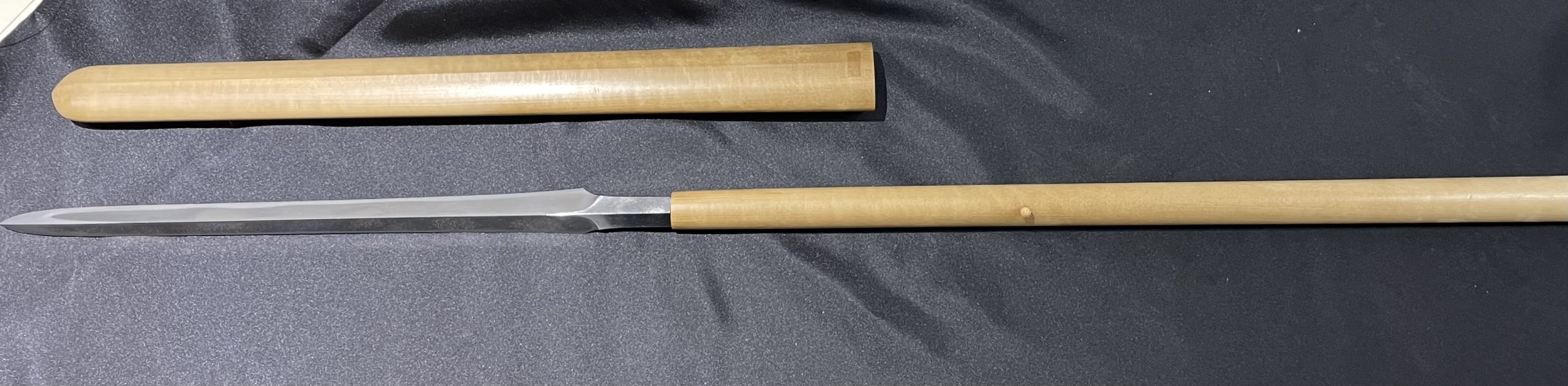
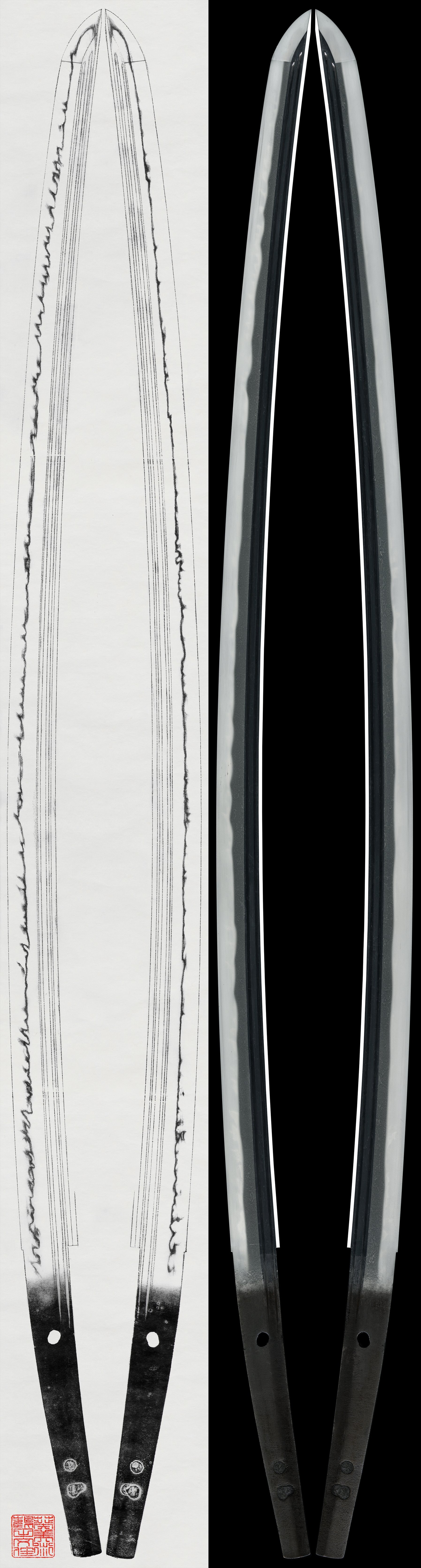
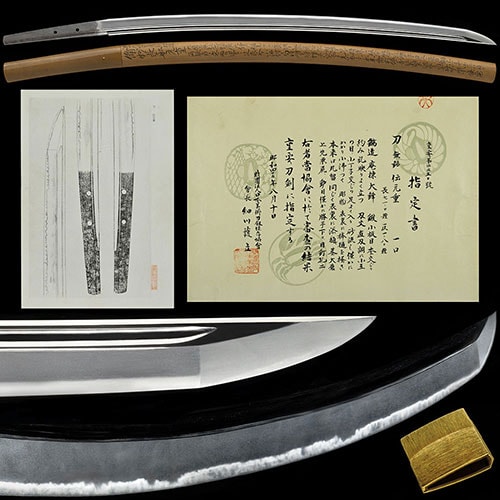
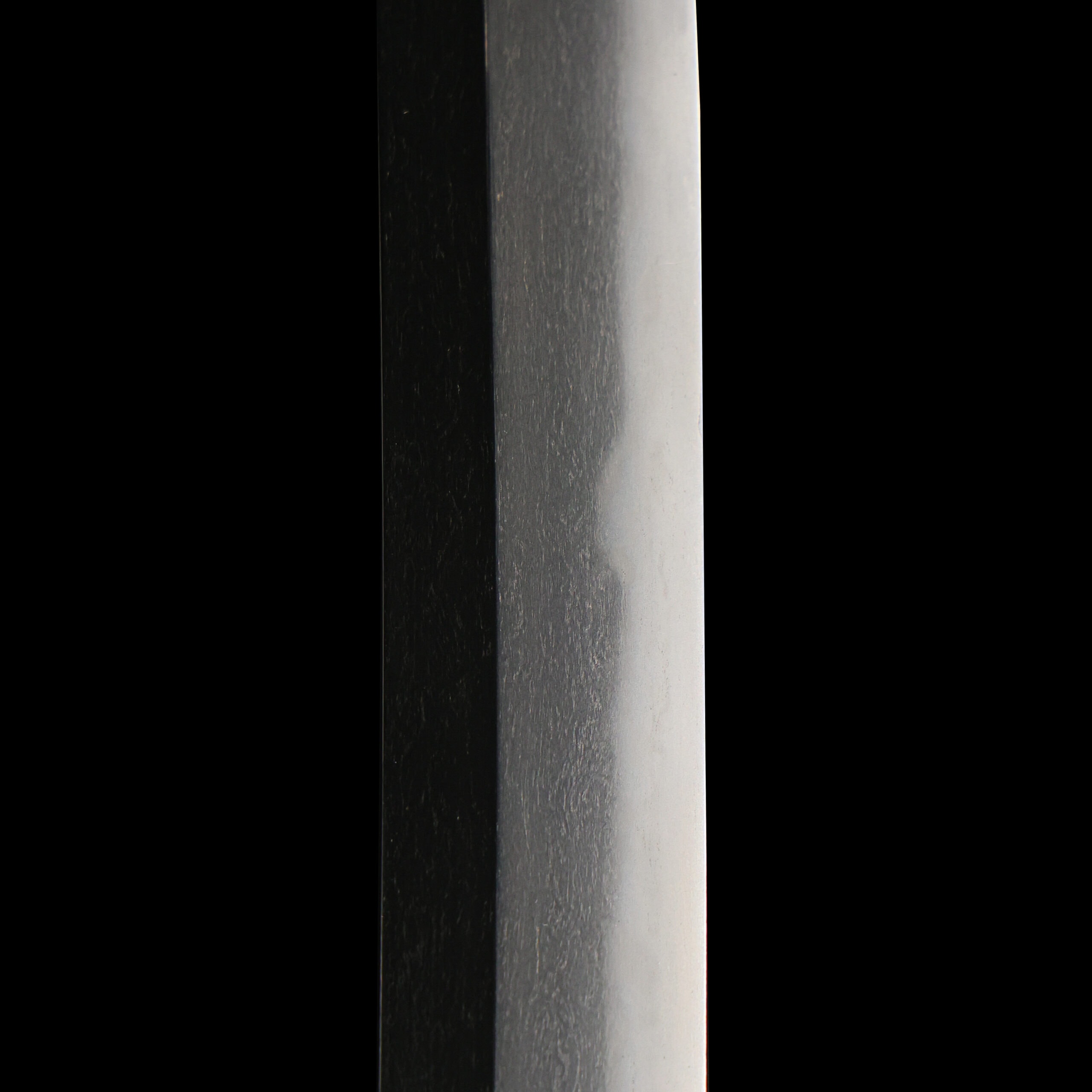
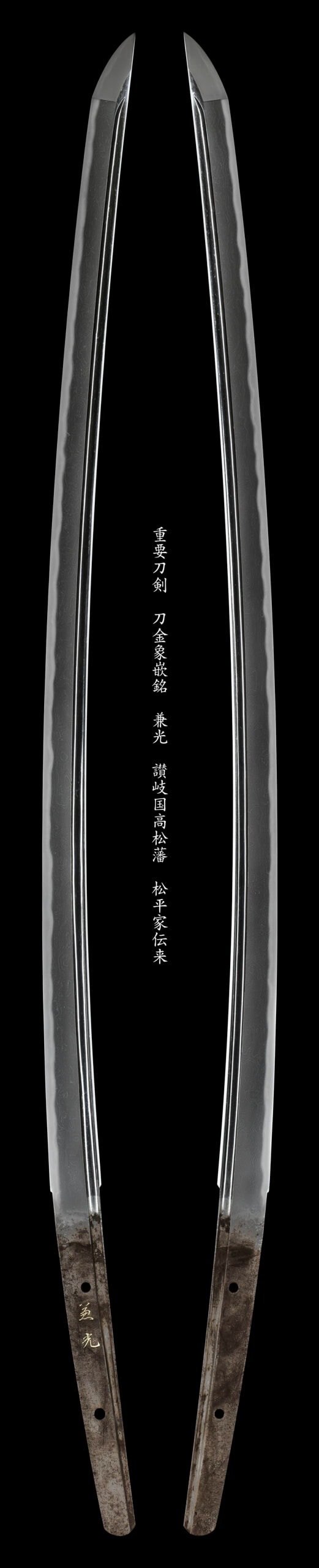
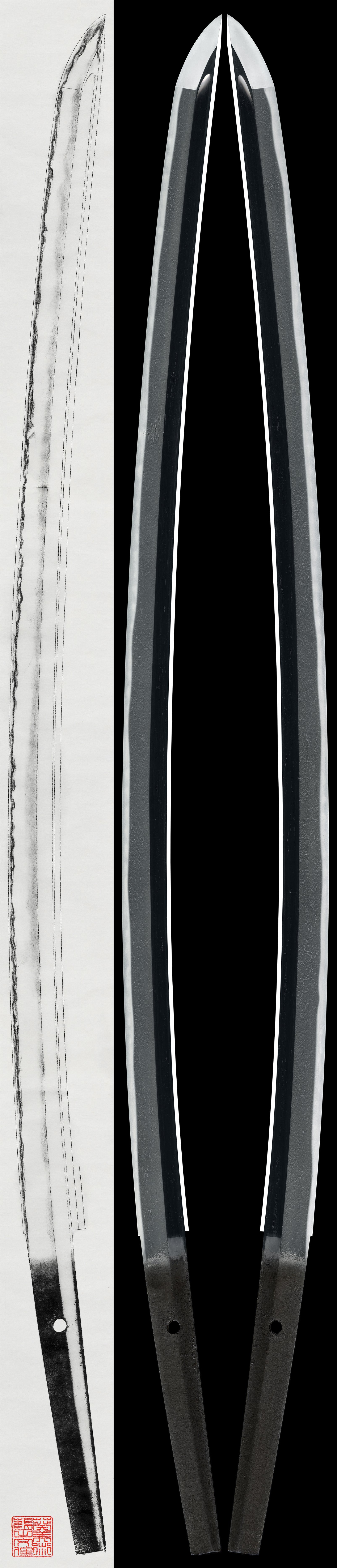
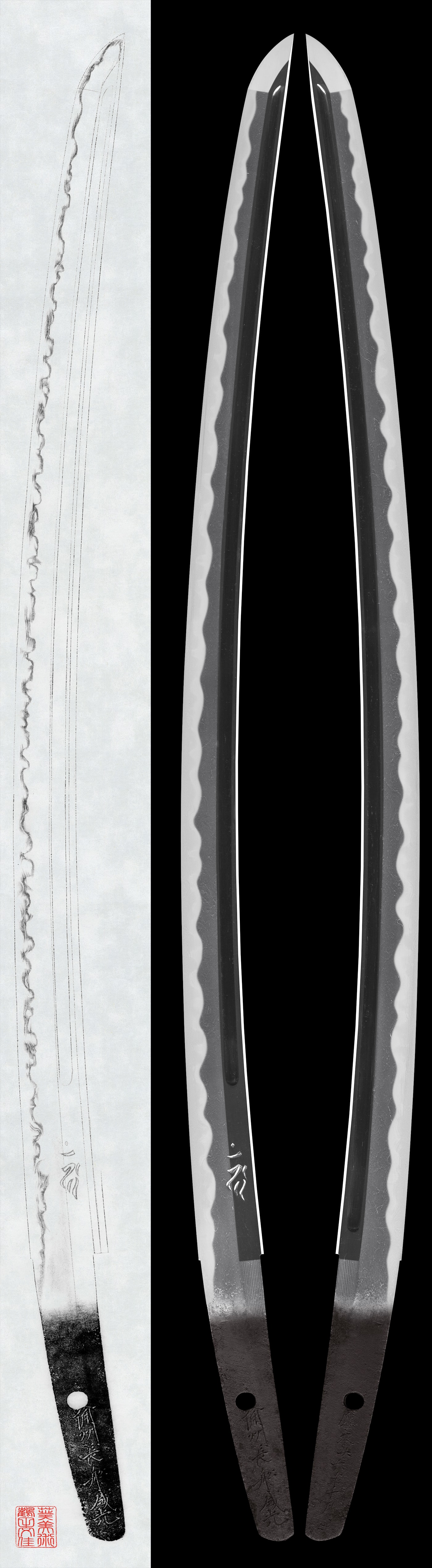
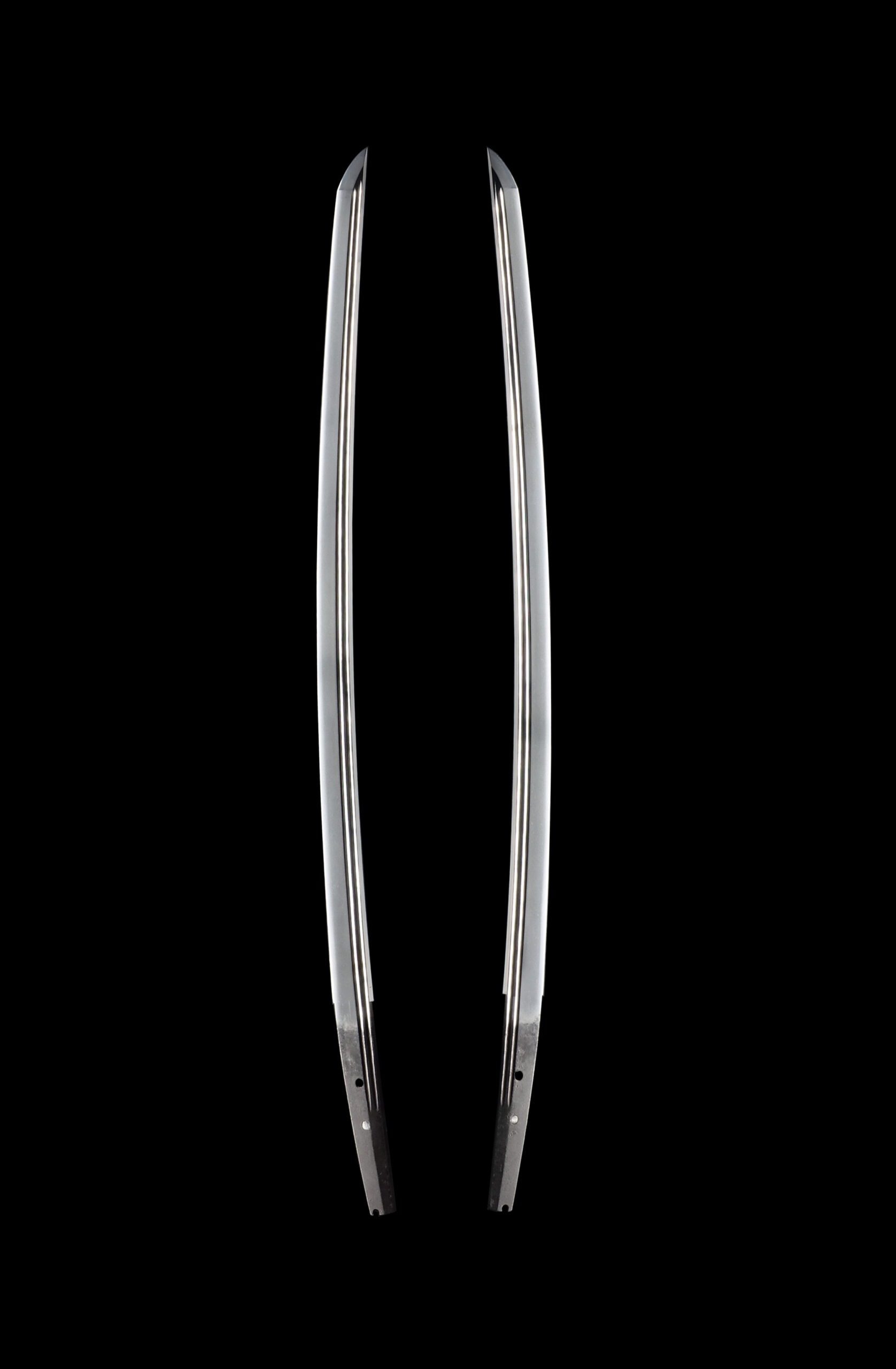
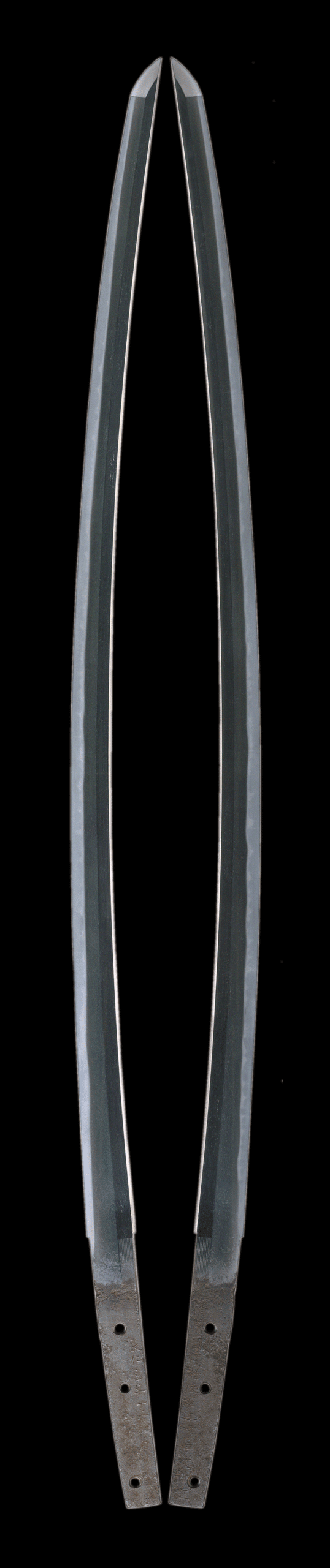
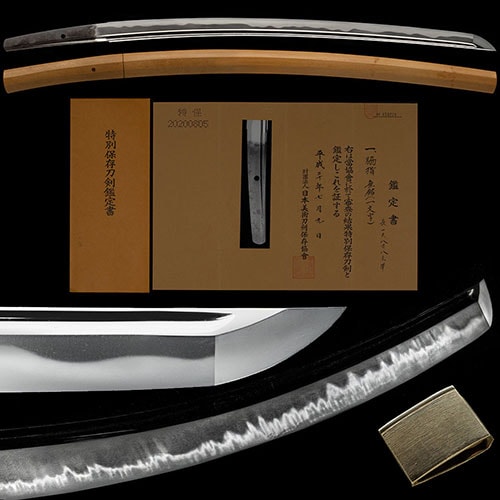
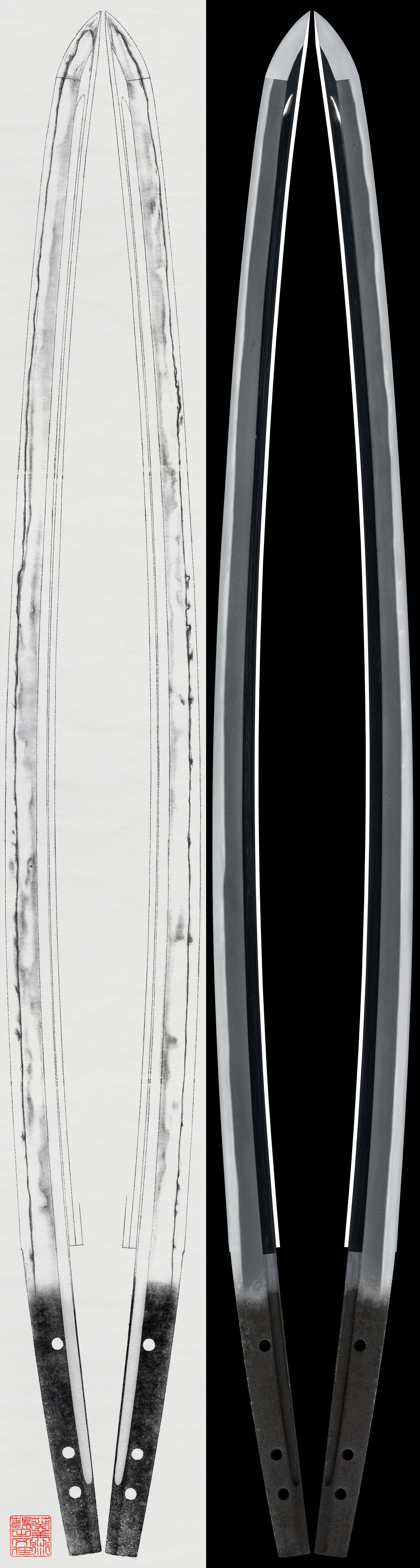
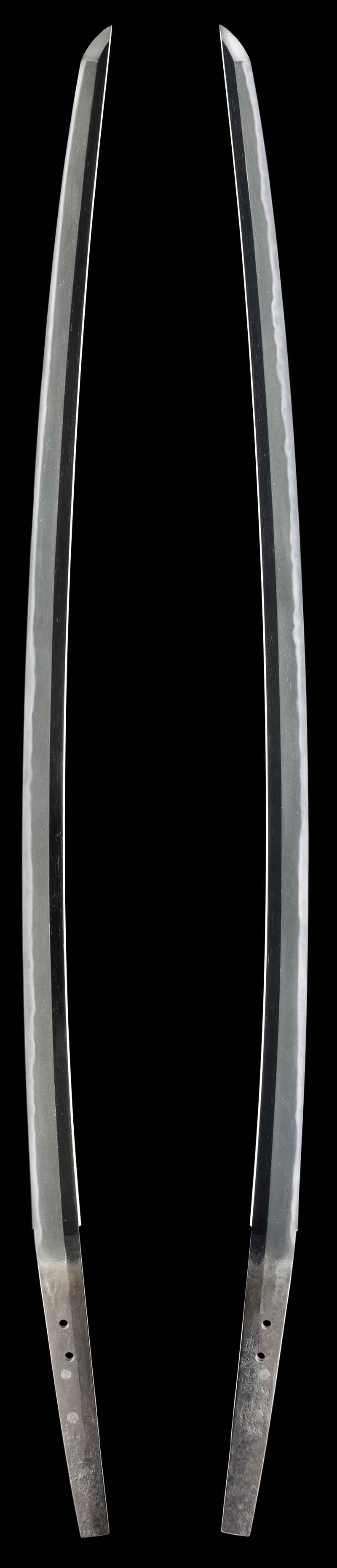
This is a katana made by Arimitsu of the Osafune school in Bizen province. The blade was made in the Bunmei era (mid-Muromachi period). Arimitsu was a swordsmith who worked with Sookyounosuke Munemitsu and was part of the Osafune school.
mei · Osafune · Muromachi


Bizen-den · Bizen · around 1361-1375
Tōken Taikan top 21%
2 pieces on the market now
Arimitsu (在光) was a swordsmith of the Sue-Bizen tradition working at Osafune. Reference works enumerate six smiths bearing this same name. Among the representative masters are a Zaiko who held the honorary title Izumo no Kami, active chiefly around the Eisho era (1504--1521), and another known as Kurozaemon no Jo, active around the Tenbun era (1532--1555). Izumo no Kami Zaiko stands as a figure of particular note: just as Seki produced Izumi no Kami Kanesada, so too Osafune in the koto period produced smiths granted court titles, yet among works by smiths whose names include the character mitsu (光), examples bearing such a conferred title are exceedingly few. The Kurozaemon line is documented through commissions that record both the smith's common title and the names of patrons, offering valuable evidence of the workshop's clientele during the final decades of Bizen production.
The workmanship of the Arimitsu line displays the characteristic dekiguchi of Sue-Bizen at its most accomplished. The forging is tightly packed ko-itame mixed with ko-mokume, with very fine ji-nie, delicate chikei, and vivid midare-utsuri standing out distinctly. The tempering centers on gunome with a widened koshi profile (koshi-biraki), intermixed with choji, ko-gunome, togariba, and angular forms, in places becoming a compound (fukushiki) midare. Within this tempered edge, ashi and yo are active, with nie adhering to a tightened nioiguchi and fine sunagashi and partial kinsuji running through. Certain works display yubashiri and small tobiyaki, imparting further variation. The Kurozaemon generation also produced blades in chu-suguha mixed with gunome, showing the broader stylistic range available within the lineage. Blade forms are typically compact, with strong sakizori and short ubu tangs that do not taper -- features constituting the classic Sue-Bizen uchigatana shape.
The NBTHK consistently praises works of this lineage for their careful execution and bright, clear impression in both ji and ha. Blades retain ample nikuoki and are frequently noted as preserved in kenzen condition. The forging is described as well-kneaded, and the nioiguchi is characteristically saeru -- clear and bright. Since extant works by these smiths are comparatively few, each authenticated example is regarded as fully demonstrating the high level of technique within the Arimitsu line and is especially precious as reference material, with dated inscriptions providing important documentary value for the study of late Muromachi-period Bizen production.
Where Arimitsu stands among comparable artisans: across all of nihontō, and within tradition, era, and period. The tiers (Foremost · Leading · Major · Notable) weigh official designations from the NBTHK and Japan's Agency for Cultural Affairs, together with historical honors of lasting repute such as the Sansaku and Meibutsu-chō.
Select a lens to see how it's measured.
Bizen-den · Bizen
Phase: Sōden-Bizen相伝備前· 1330–1394
222 pieces on the market now
The Soden Bizen school encompasses the group of Nanbokucho-period Osafune smiths in Bizen Province whose work absorbed the technical influence of the Soshu-den, producing a distinctive synthesis that stands apart from both orthodox Bizen and pure Sagami practice. Learn more →

| Smith | Era | Designated |
|---|---|---|
| Mitsutada光忠 | 1238-1239 | 60 |
| Nagamitsu長光 | 1274-1304 | 244 |
| Kagemitsu景光 | 1303-1336 | 144 |
| Kanemitsu兼光 | 1323-1370 | 233 |
| Sanenaga眞長 | 1299-1309 | 64 |
We could not find an authenticity certificate on the seller’s listing. Japanese swords and fittings are normally papered by the NBTHK (or the NTHK). Without one, the attribution is the seller’s own assessment and has not been independently verified — treat it with caution and ask the dealer about certification before buying.
If, due to our fault, the item differs significantly from its proper condition, the item may be returned. Cooling-off is within one week of the item's arrival.
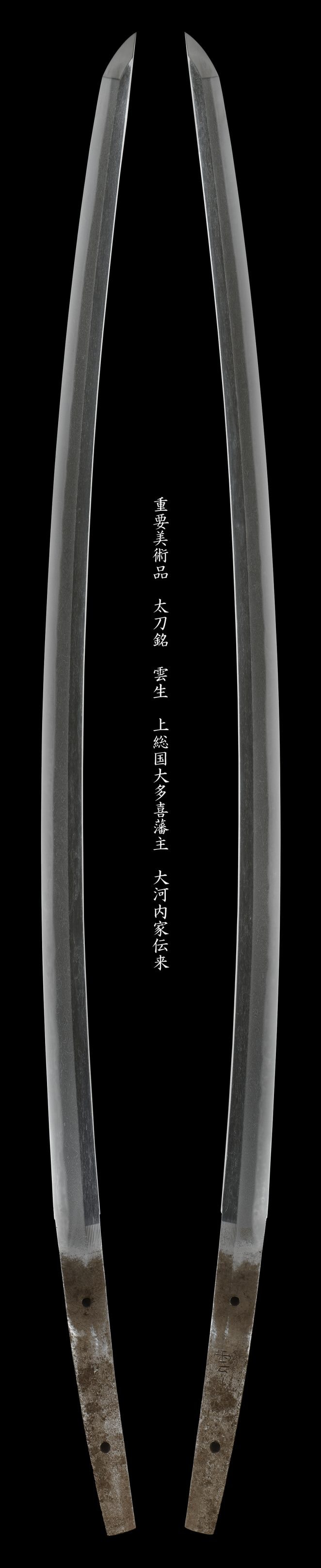
This is a katana made by Arimitsu of the Osafune school in Bizen province. The blade was made in the Bunmei era (mid-Muromachi period). Arimitsu was a swordsmith who worked with Sookyounosuke Munemitsu and was part of the Osafune school.
mei · Osafune · Muromachi


Bizen-den · Bizen · around 1361-1375
Tōken Taikan top 21%
2 pieces on the market now
Arimitsu (在光) was a swordsmith of the Sue-Bizen tradition working at Osafune. Reference works enumerate six smiths bearing this same name. Among the representative masters are a Zaiko who held the honorary title Izumo no Kami, active chiefly around the Eisho era (1504--1521), and another known as Kurozaemon no Jo, active around the Tenbun era (1532--1555). Izumo no Kami Zaiko stands as a figure of particular note: just as Seki produced Izumi no Kami Kanesada, so too Osafune in the koto period produced smiths granted court titles, yet among works by smiths whose names include the character mitsu (光), examples bearing such a conferred title are exceedingly few. The Kurozaemon line is documented through commissions that record both the smith's common title and the names of patrons, offering valuable evidence of the workshop's clientele during the final decades of Bizen production.
The workmanship of the Arimitsu line displays the characteristic dekiguchi of Sue-Bizen at its most accomplished. The forging is tightly packed ko-itame mixed with ko-mokume, with very fine ji-nie, delicate chikei, and vivid midare-utsuri standing out distinctly. The tempering centers on gunome with a widened koshi profile (koshi-biraki), intermixed with choji, ko-gunome, togariba, and angular forms, in places becoming a compound (fukushiki) midare. Within this tempered edge, ashi and yo are active, with nie adhering to a tightened nioiguchi and fine sunagashi and partial kinsuji running through. Certain works display yubashiri and small tobiyaki, imparting further variation. The Kurozaemon generation also produced blades in chu-suguha mixed with gunome, showing the broader stylistic range available within the lineage. Blade forms are typically compact, with strong sakizori and short ubu tangs that do not taper -- features constituting the classic Sue-Bizen uchigatana shape.
The NBTHK consistently praises works of this lineage for their careful execution and bright, clear impression in both ji and ha. Blades retain ample nikuoki and are frequently noted as preserved in kenzen condition. The forging is described as well-kneaded, and the nioiguchi is characteristically saeru -- clear and bright. Since extant works by these smiths are comparatively few, each authenticated example is regarded as fully demonstrating the high level of technique within the Arimitsu line and is especially precious as reference material, with dated inscriptions providing important documentary value for the study of late Muromachi-period Bizen production.
Where Arimitsu stands among comparable artisans: across all of nihontō, and within tradition, era, and period. The tiers (Foremost · Leading · Major · Notable) weigh official designations from the NBTHK and Japan's Agency for Cultural Affairs, together with historical honors of lasting repute such as the Sansaku and Meibutsu-chō.
Select a lens to see how it's measured.
Bizen-den · Bizen
Phase: Sōden-Bizen相伝備前· 1330–1394
222 pieces on the market now
The Soden Bizen school encompasses the group of Nanbokucho-period Osafune smiths in Bizen Province whose work absorbed the technical influence of the Soshu-den, producing a distinctive synthesis that stands apart from both orthodox Bizen and pure Sagami practice. Learn more →
| Smith | Era | Designated |
|---|---|---|
| Mitsutada光忠 | 1238-1239 | 60 |
| Nagamitsu長光 | 1274-1304 | 244 |
| Kagemitsu景光 | 1303-1336 | 144 |
| Kanemitsu兼光 | 1323-1370 | 233 |
| Sanenaga眞長 | 1299-1309 | 64 |
We could not find an authenticity certificate on the seller’s listing. Japanese swords and fittings are normally papered by the NBTHK (or the NTHK). Without one, the attribution is the seller’s own assessment and has not been independently verified — treat it with caution and ask the dealer about certification before buying.
If, due to our fault, the item differs significantly from its proper condition, the item may be returned. Cooling-off is within one week of the item's arrival.