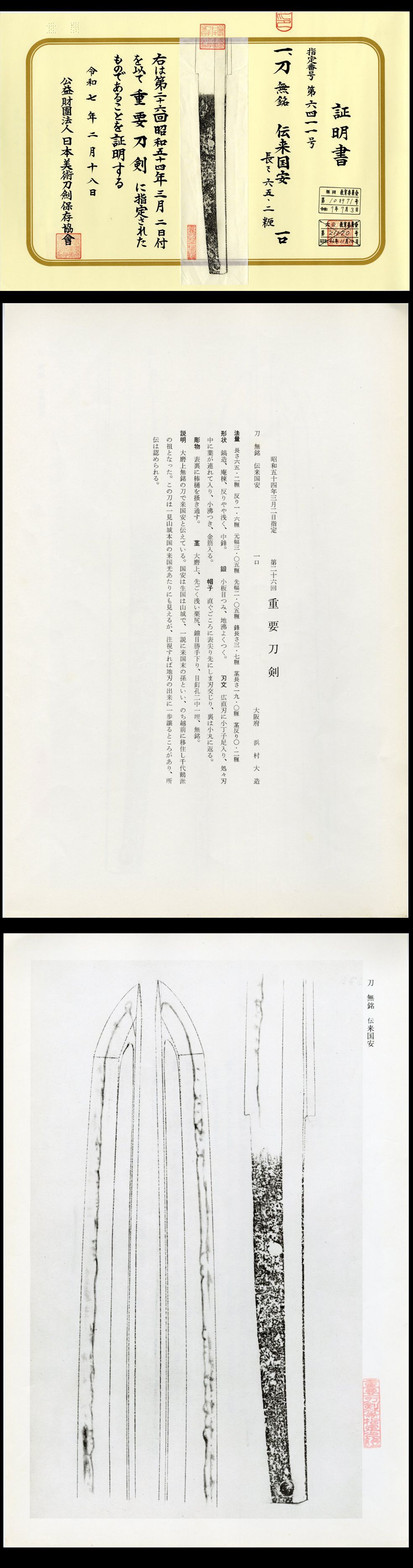
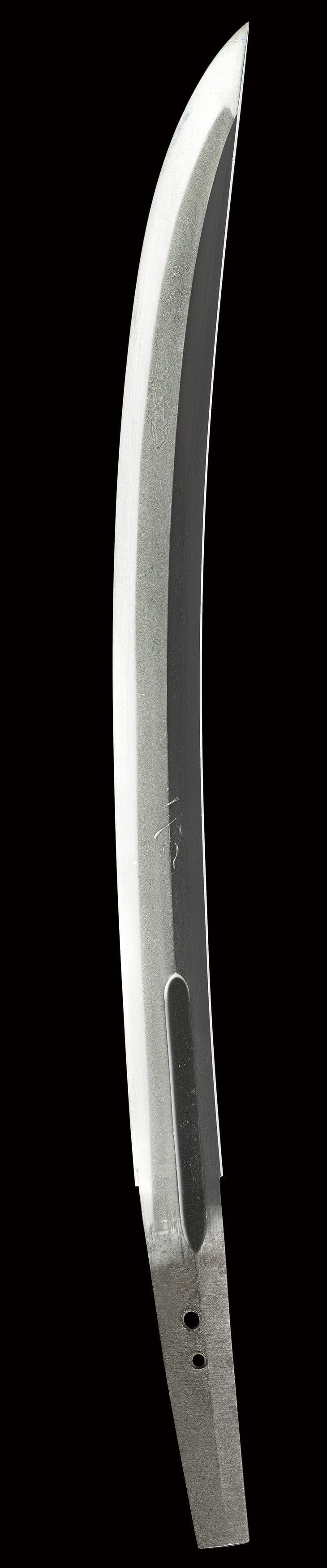
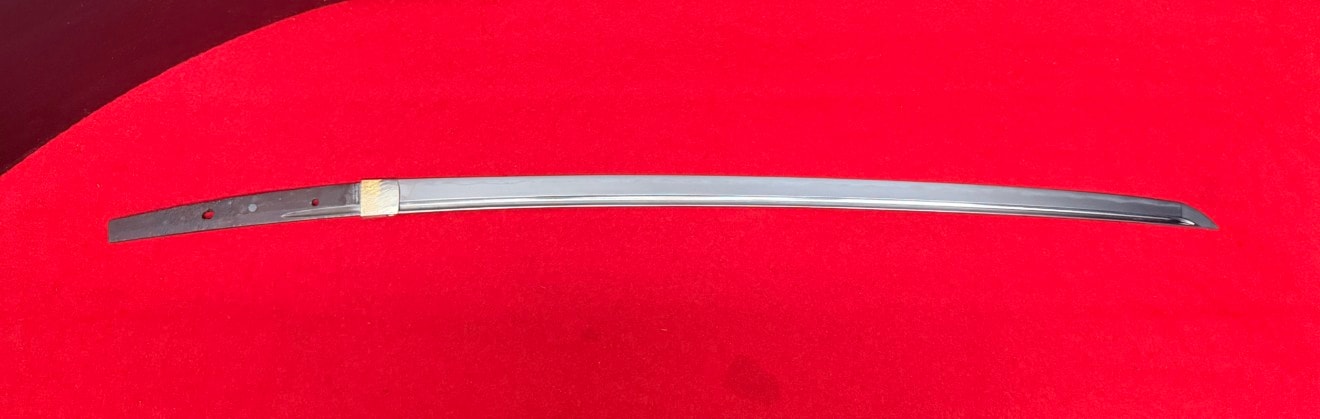
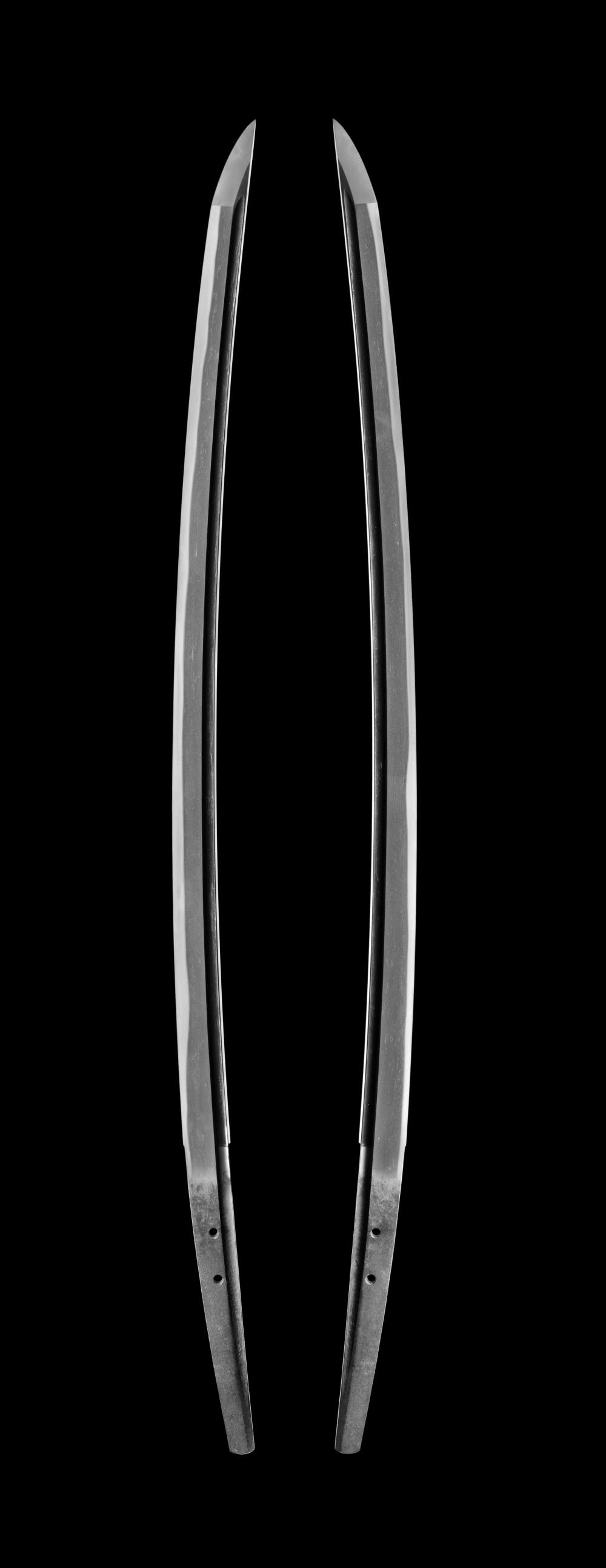
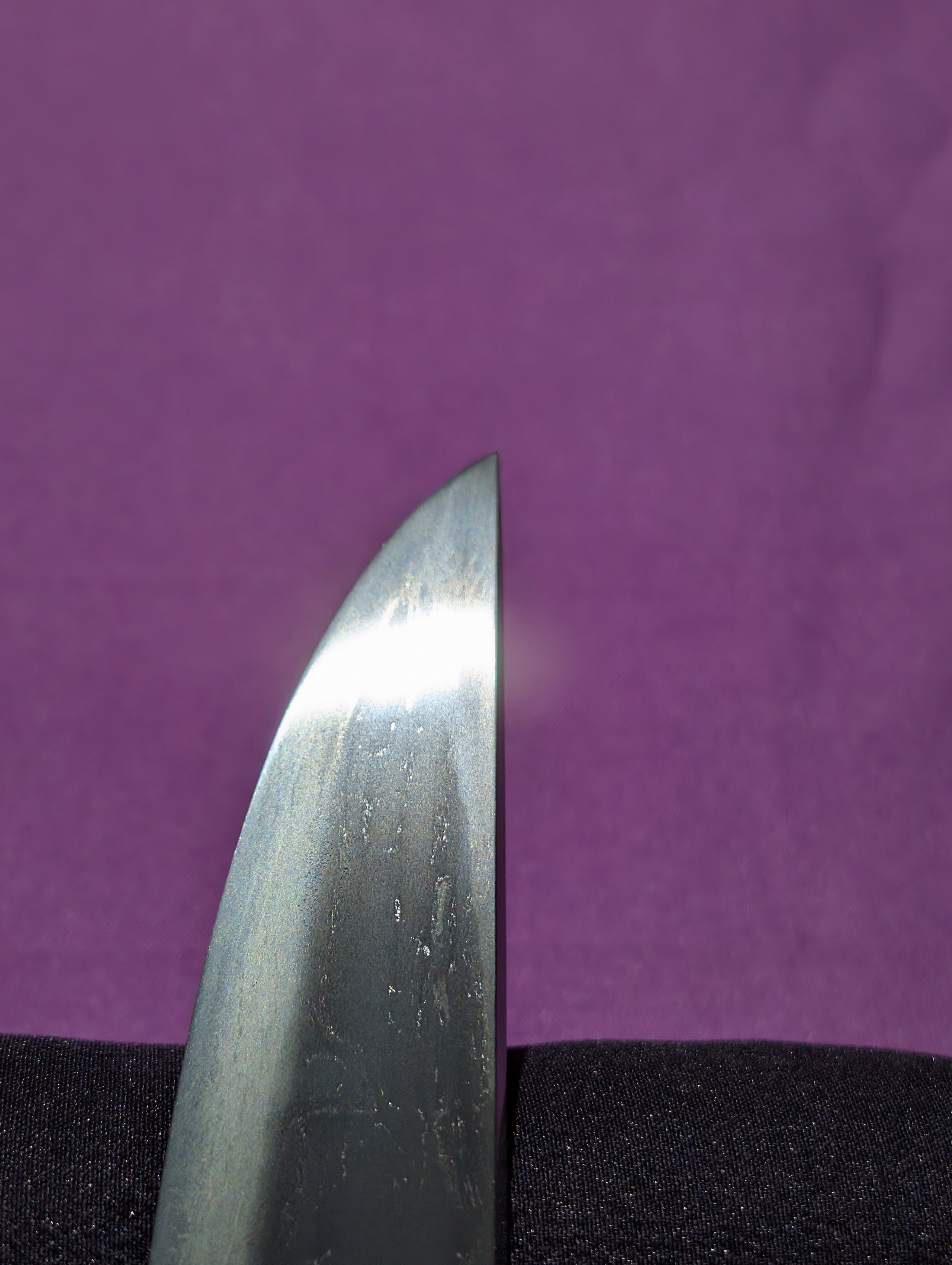
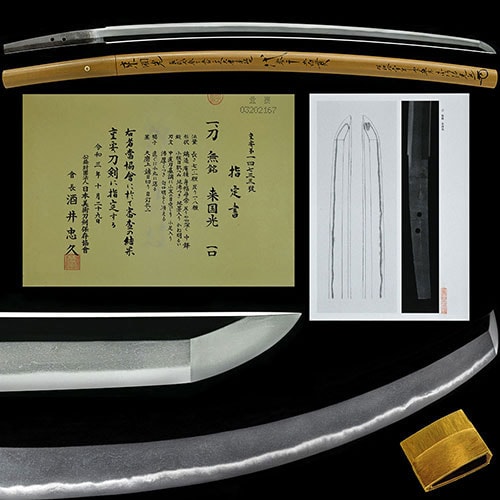
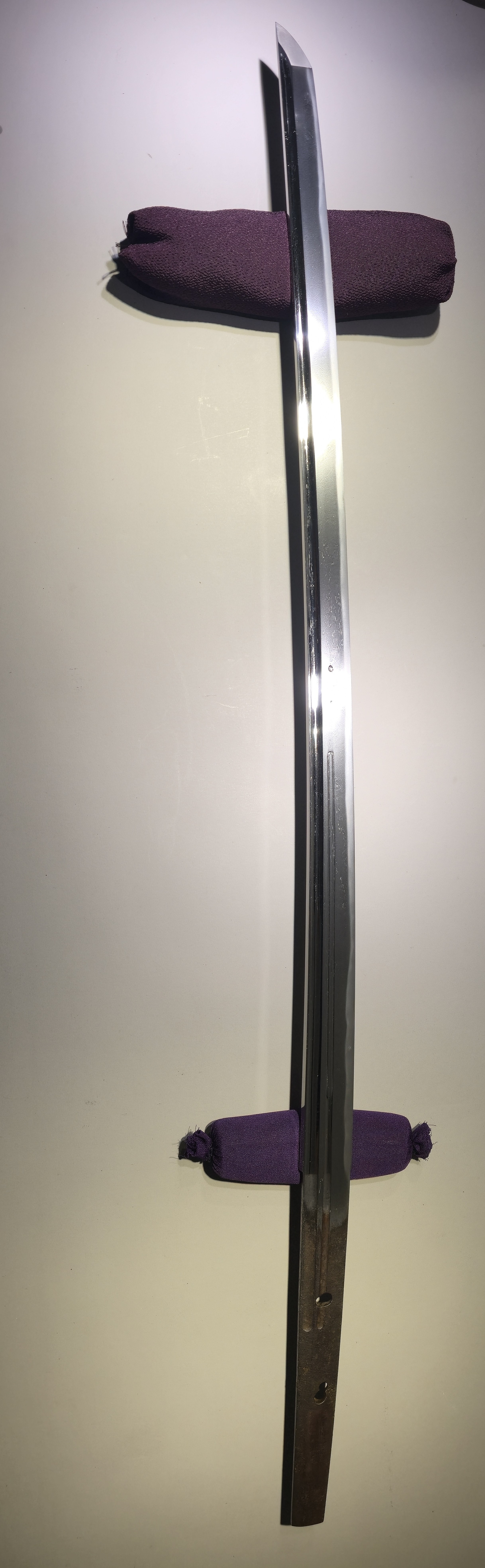
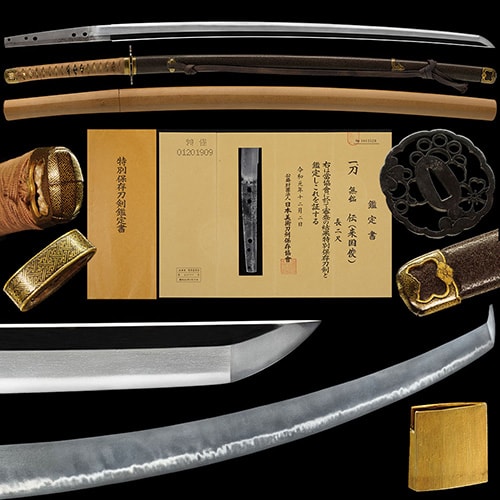
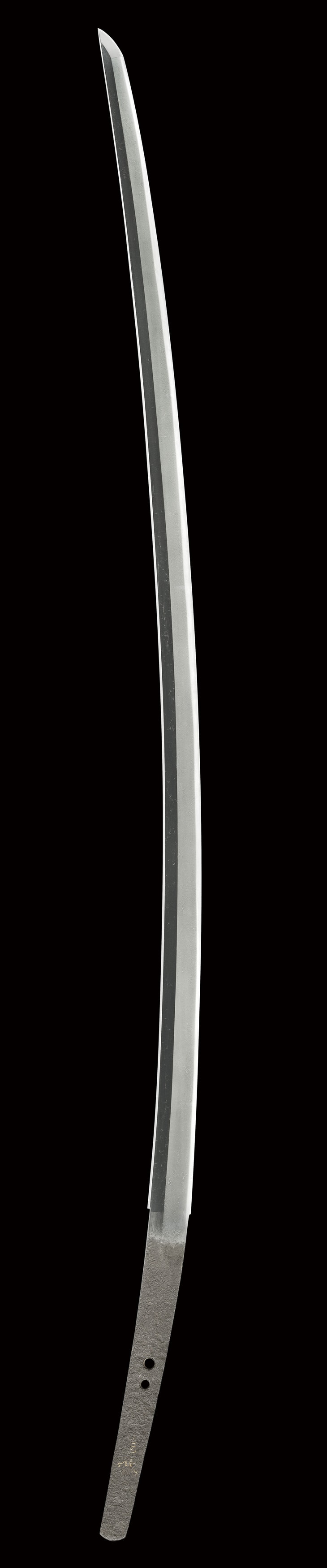
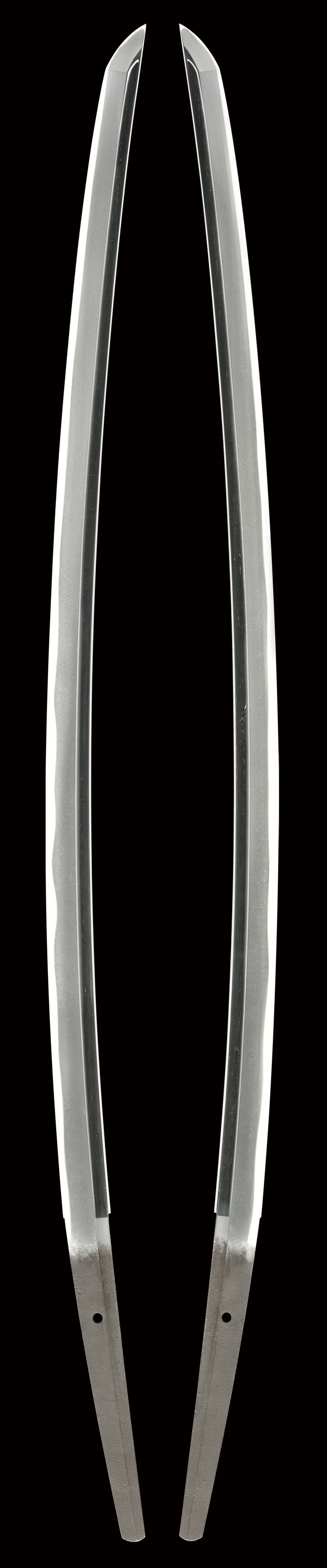
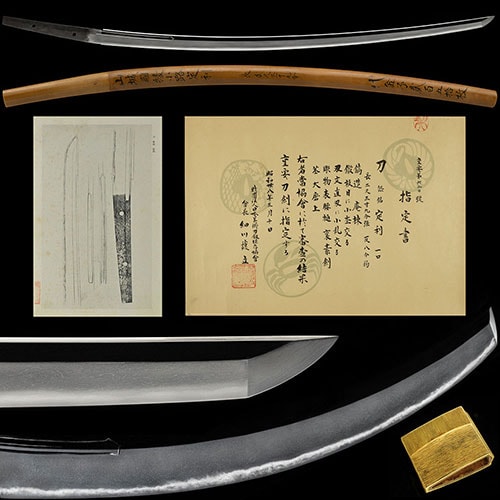
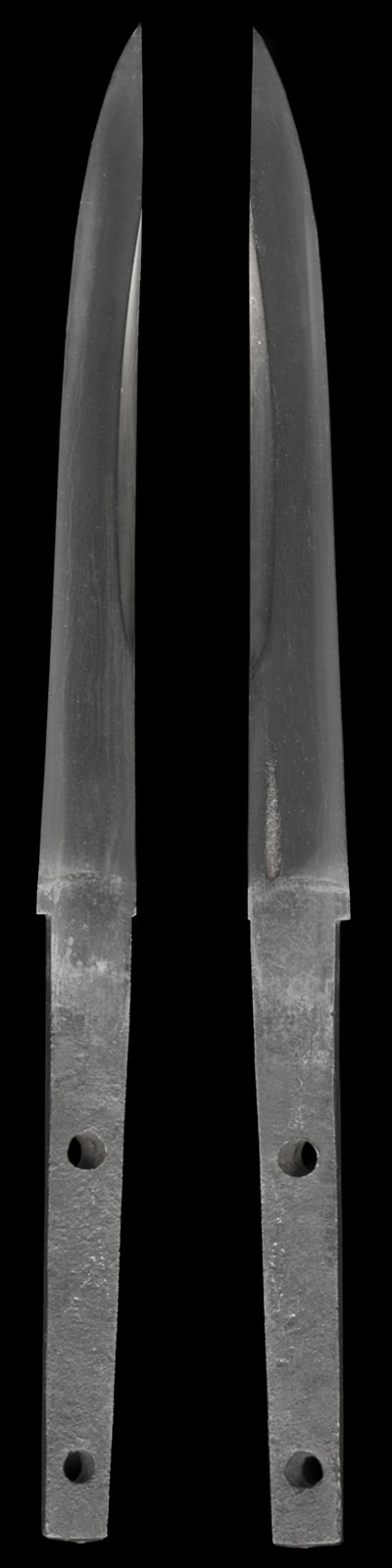
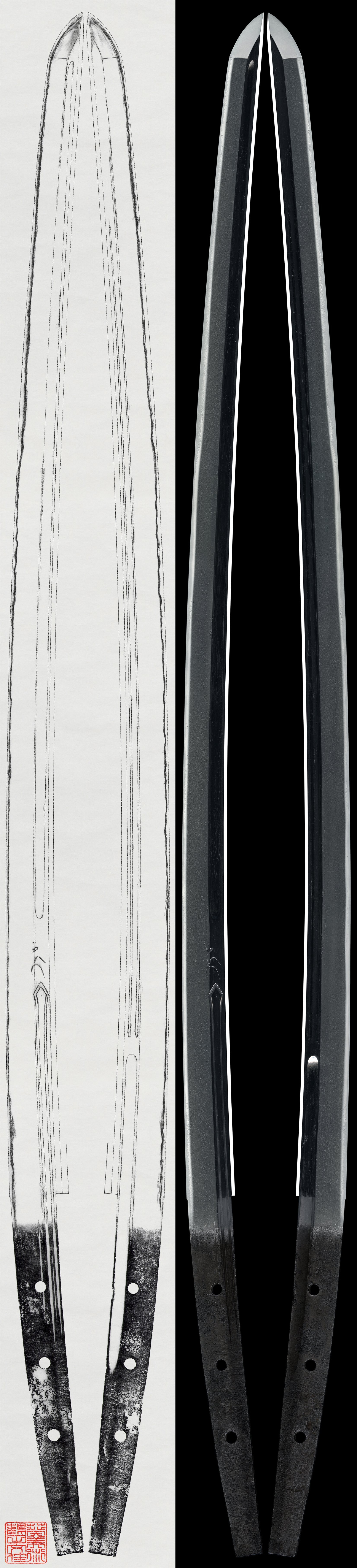
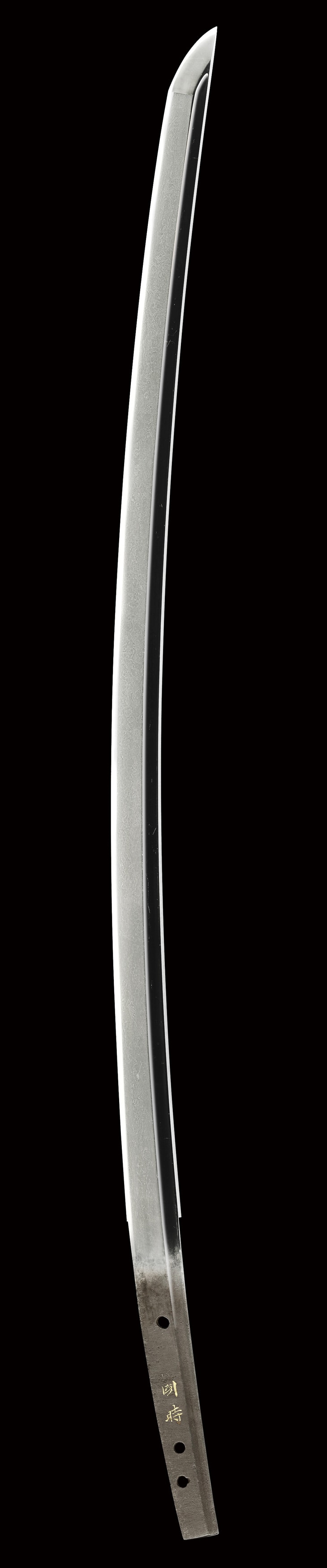
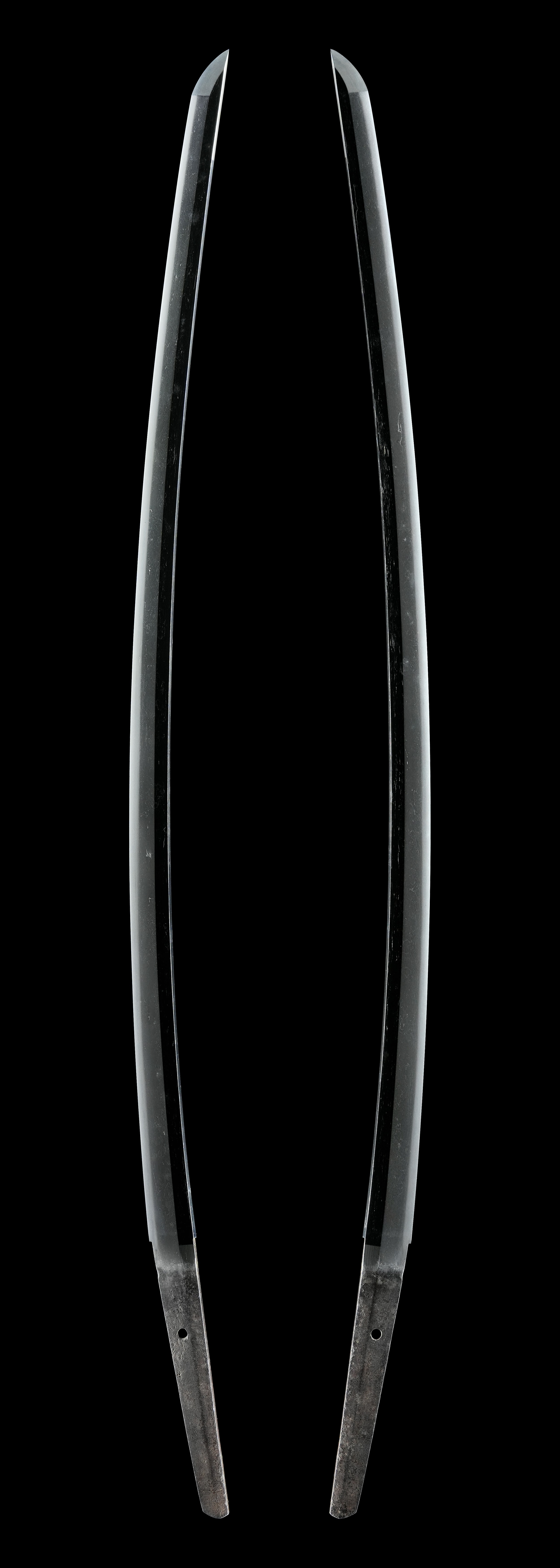
This is a katana made by Rai Kuniyasu from Yamashiro province. Kuniyasu is considered the founder of the Chiyozuru lineage and worked around the Jōji era. The blade features an itame jigane mixed with mokume and nagare-hada, a medium suguha hamon with ko-gunome, and characteristics typical of Rai work from the Nanbokuchō period.
 NihontoWatch
mei · Rai · Nanbokucho

Yamashiro-den · Yamashiro · around 1329-1331
1 piece on the market now
Where Kuniyasu stands among comparable artisans: across all of nihontō, and within tradition, era, and period. The tiers (Foremost · Leading · Major · Notable) weigh official designations from the NBTHK and Japan's Agency for Cultural Affairs, together with historical honors of lasting repute such as the Sansaku and Meibutsu-chō.
Select a lens to see how it's measured.
Yamashiro-den · Settsu
7 pieces on the market now
The Nakajima Rai designation identifies swordmaking traditions established when Rai Kuninaga, a disciple of the Kyōto master Rai Kunitoshi, relocated to the Nakajima district of Settsu Province during the late Kamakura period. This move represented both geographical expansion of Rai school influence beyond the imperial capital and the deliberate transplantation of technically sophisticated Kyōto nie-based forging practices into a provincial setting. Learn more →
| Smith | Era | Designated |
|---|---|---|
| Kuninaga國長 | 1329-1331 | 58 |
| Kuninaga國長 | 1345-1350 | 11 |
| Tomotsuna友綱 | 1394-1428 | 0 |
| Kuniyasu國安 | 1329-1331 | 1 |
| Kuniyasu國安 | 1329-1331 | 1 |
A Hozon-certified blade judged to show notably superior workmanship and a better state of preservation. The bar is higher: re-tempered blades and most unsigned Muromachi/Edo works are excluded.
The NBTHK (Nihon Bijutsu Tōken Hozon Kyōkai, the Society for the Preservation of Japanese Art Swords) is a public-interest incorporated foundation founded in 1948 and supervised by Japan’s Agency for Cultural Affairs (Bunkachō); it is based at the Japanese Sword Museum in Tokyo. Its expert panels physically examine each submitted work (shinsa) and issue a certificate (kanteishō) ranking it by artistic and historical merit. NBTHK papers are the most widely recognized standard of authentication for Japanese swords and fittings.
NBTHK official siteThis is a katana made by Rai Kuniyasu from Yamashiro province. Kuniyasu is considered the founder of the Chiyozuru lineage and worked around the Jōji era. The blade features an itame jigane mixed with mokume and nagare-hada, a medium suguha hamon with ko-gunome, and characteristics typical of Rai work from the Nanbokuchō period.
NihontoWatchmei · Rai · Nanbokucho
Yamashiro-den · Yamashiro · around 1329-1331
1 piece on the market now
Where Kuniyasu stands among comparable artisans: across all of nihontō, and within tradition, era, and period. The tiers (Foremost · Leading · Major · Notable) weigh official designations from the NBTHK and Japan's Agency for Cultural Affairs, together with historical honors of lasting repute such as the Sansaku and Meibutsu-chō.
Select a lens to see how it's measured.
Yamashiro-den · Settsu
7 pieces on the market now
The Nakajima Rai designation identifies swordmaking traditions established when Rai Kuninaga, a disciple of the Kyōto master Rai Kunitoshi, relocated to the Nakajima district of Settsu Province during the late Kamakura period. This move represented both geographical expansion of Rai school influence beyond the imperial capital and the deliberate transplantation of technically sophisticated Kyōto nie-based forging practices into a provincial setting. Learn more →
| Smith | Era | Designated |
|---|---|---|
| Kuninaga國長 | 1329-1331 | 58 |
| Kuninaga國長 | 1345-1350 | 11 |
| Tomotsuna友綱 | 1394-1428 | 0 |
| Kuniyasu國安 | 1329-1331 | 1 |
| Kuniyasu國安 | 1329-1331 | 1 |
A Hozon-certified blade judged to show notably superior workmanship and a better state of preservation. The bar is higher: re-tempered blades and most unsigned Muromachi/Edo works are excluded.
The NBTHK (Nihon Bijutsu Tōken Hozon Kyōkai, the Society for the Preservation of Japanese Art Swords) is a public-interest incorporated foundation founded in 1948 and supervised by Japan’s Agency for Cultural Affairs (Bunkachō); it is based at the Japanese Sword Museum in Tokyo. Its expert panels physically examine each submitted work (shinsa) and issue a certificate (kanteishō) ranking it by artistic and historical merit. NBTHK papers are the most widely recognized standard of authentication for Japanese swords and fittings.
NBTHK official site