The divided-courts war impoverished the court society that had sustained Kyōto’s most refined work. With the last Rai masters the classic line effectively closed, while Hasebe and Nobukuni carried the new Sōshū manner into the capital.
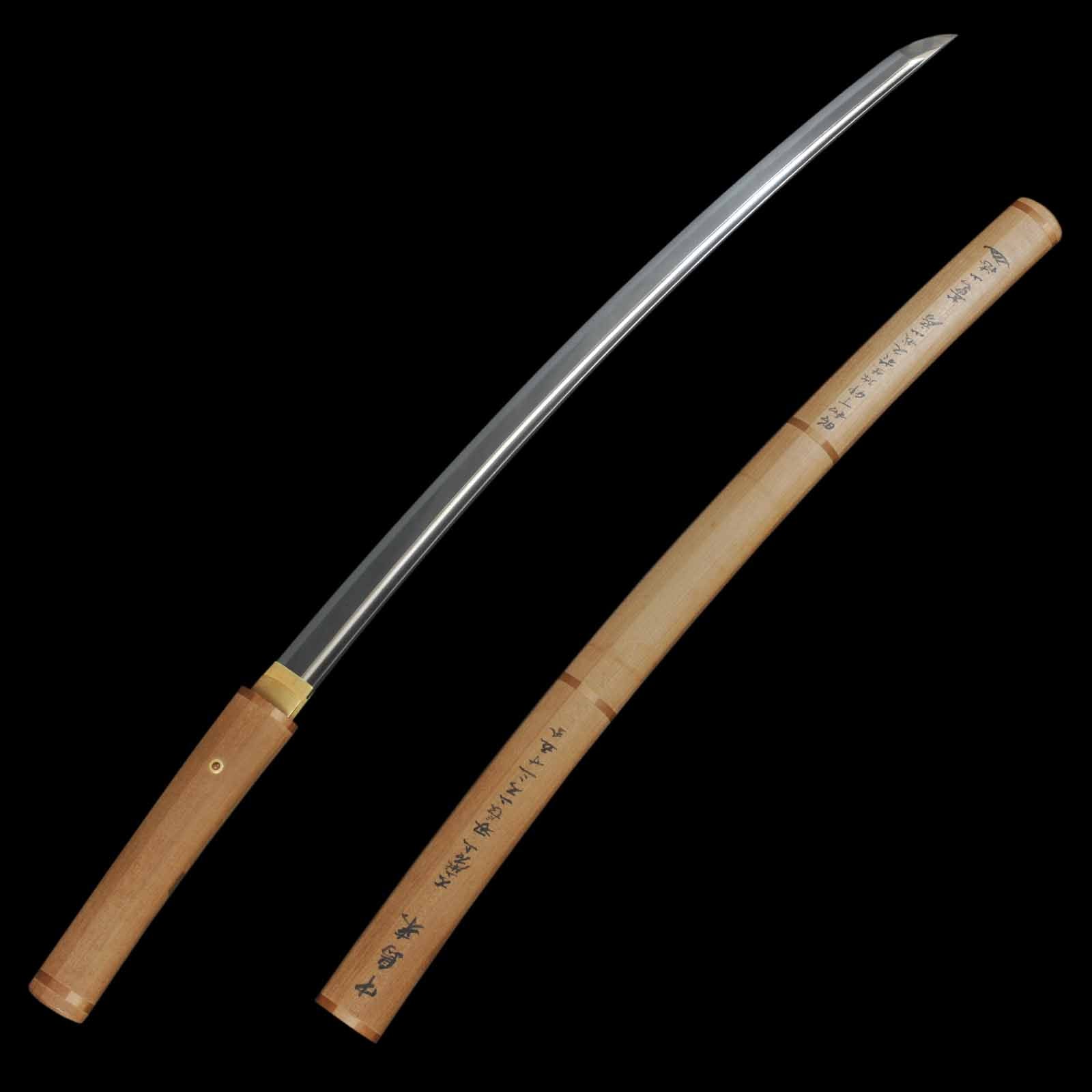
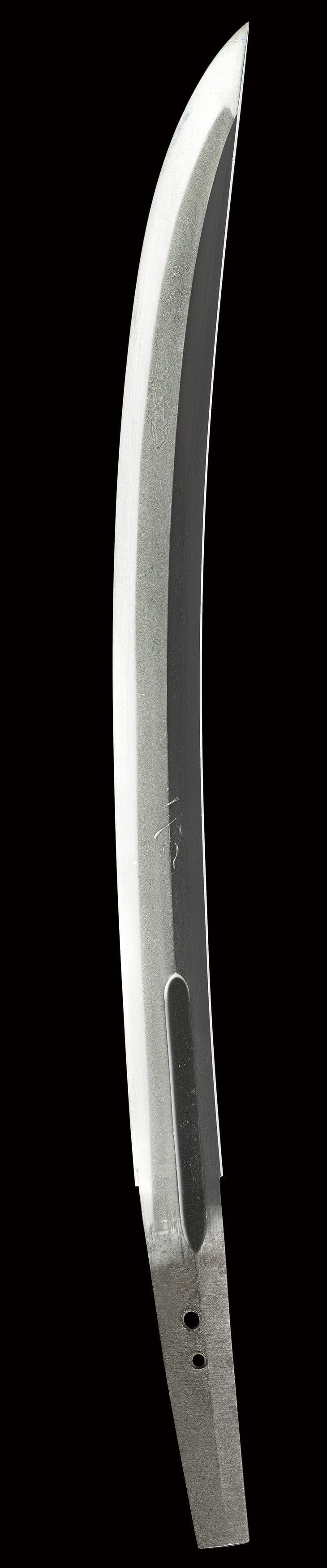
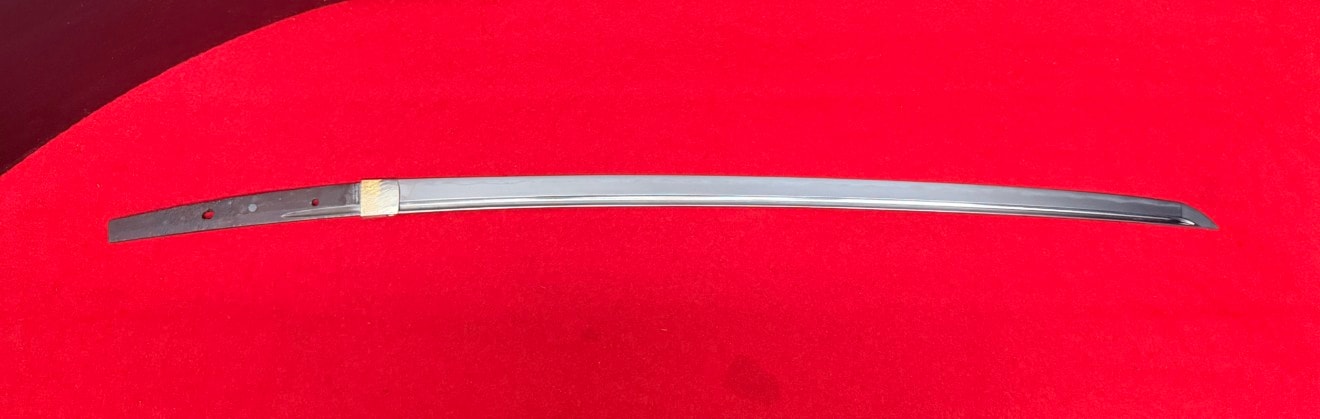
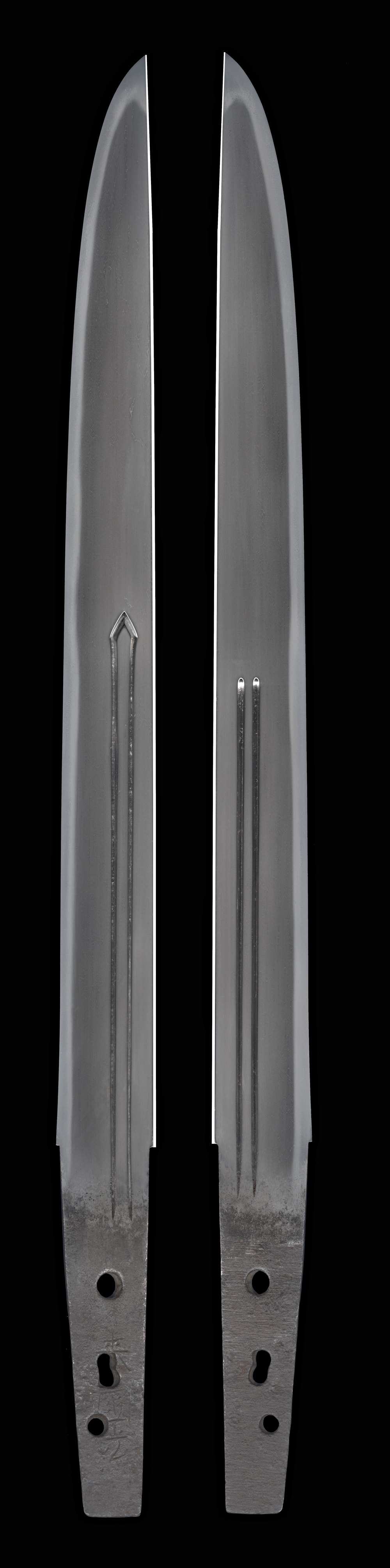
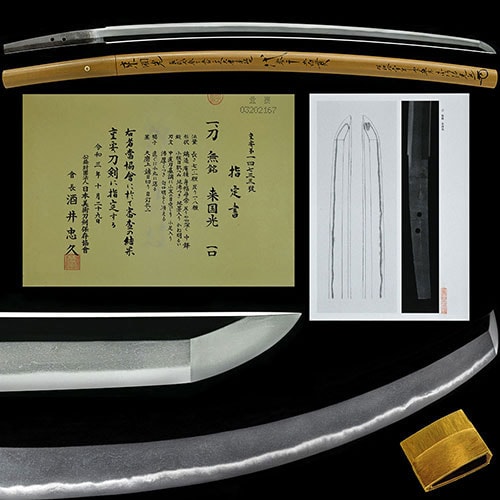
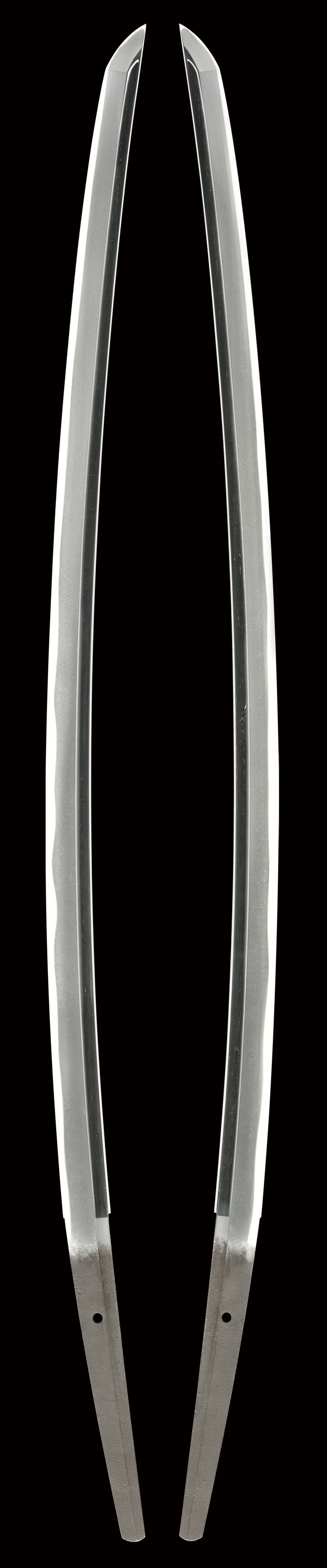
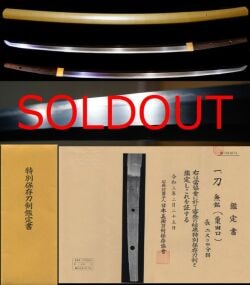
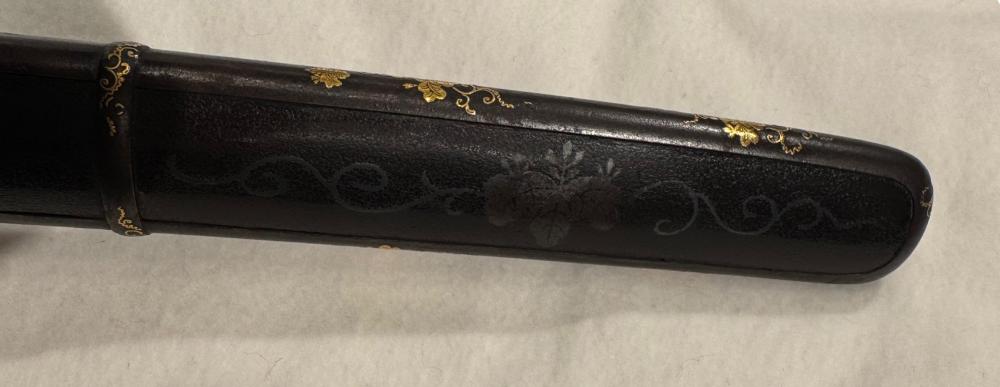
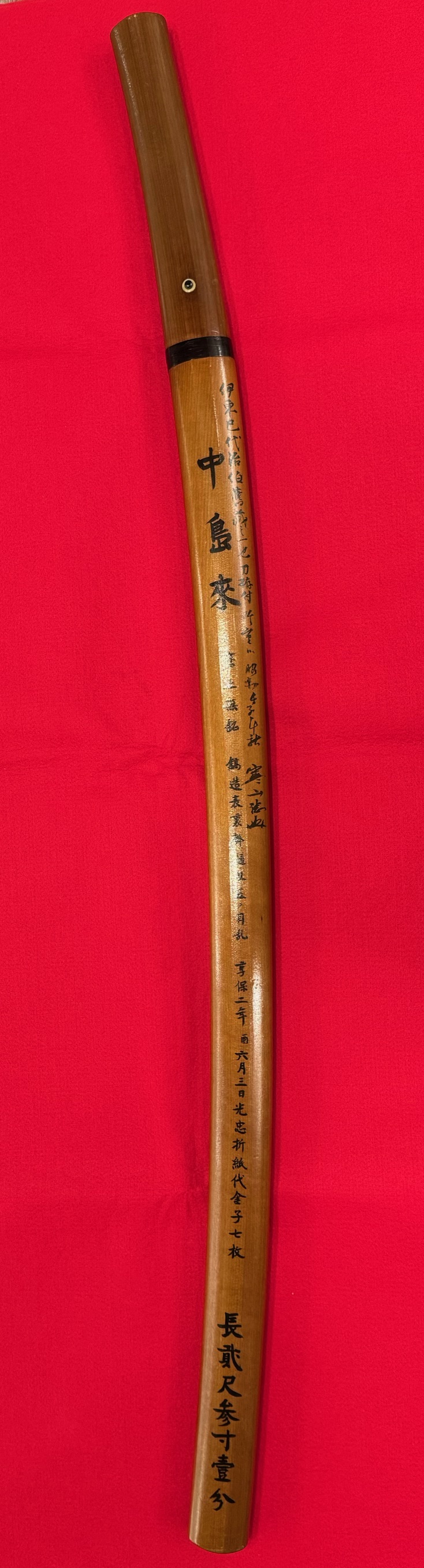
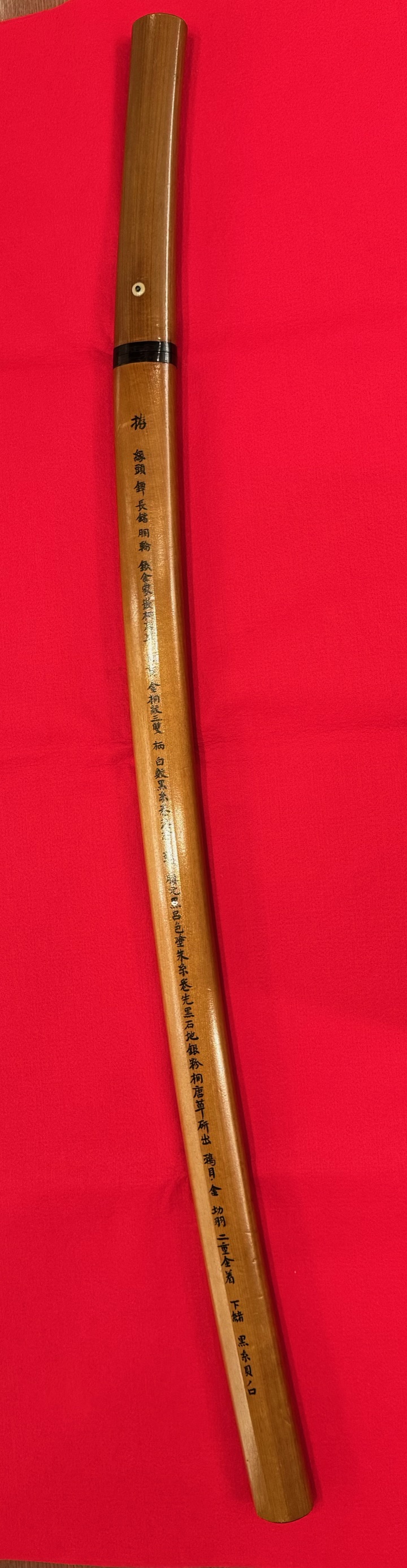
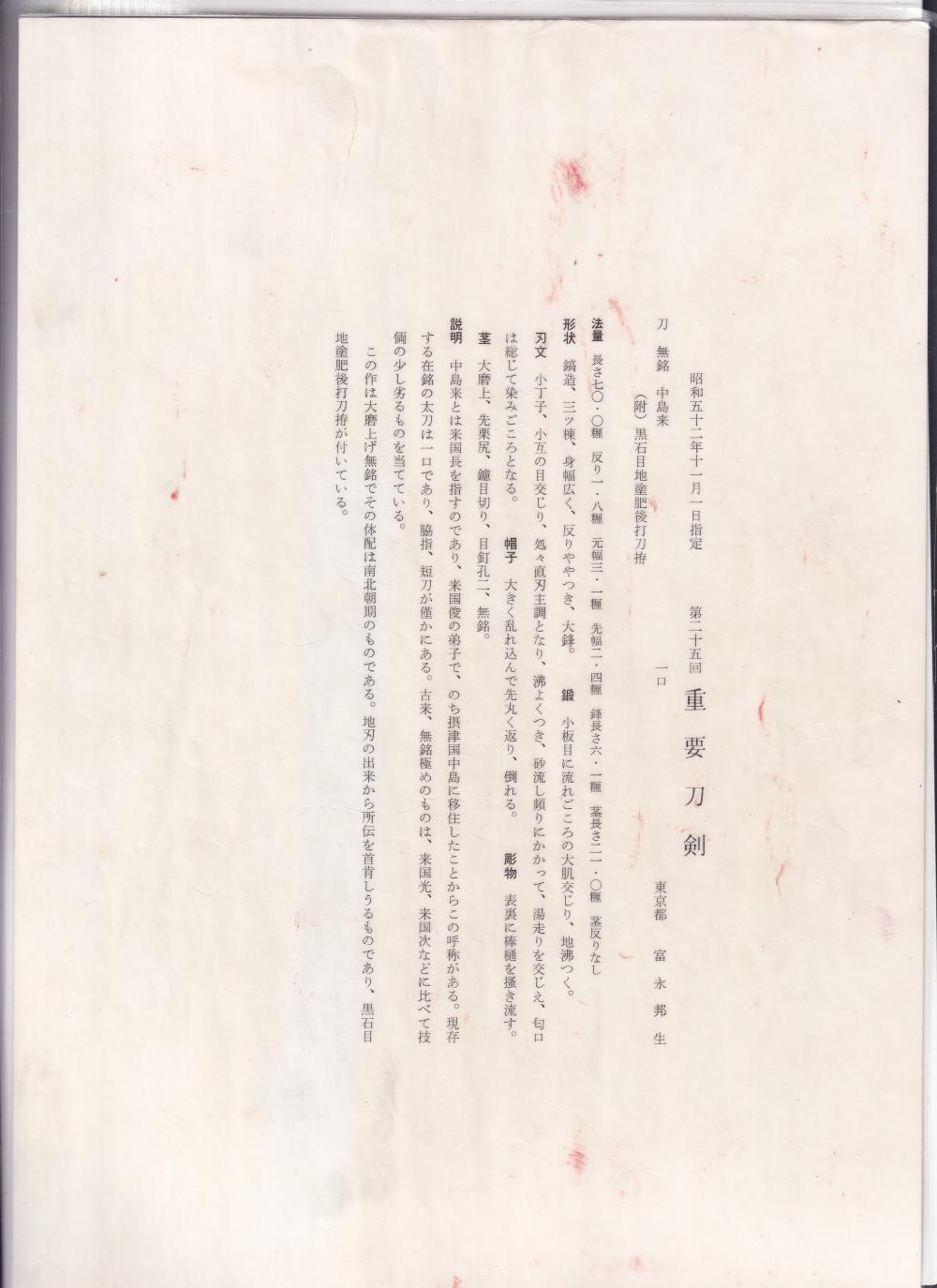
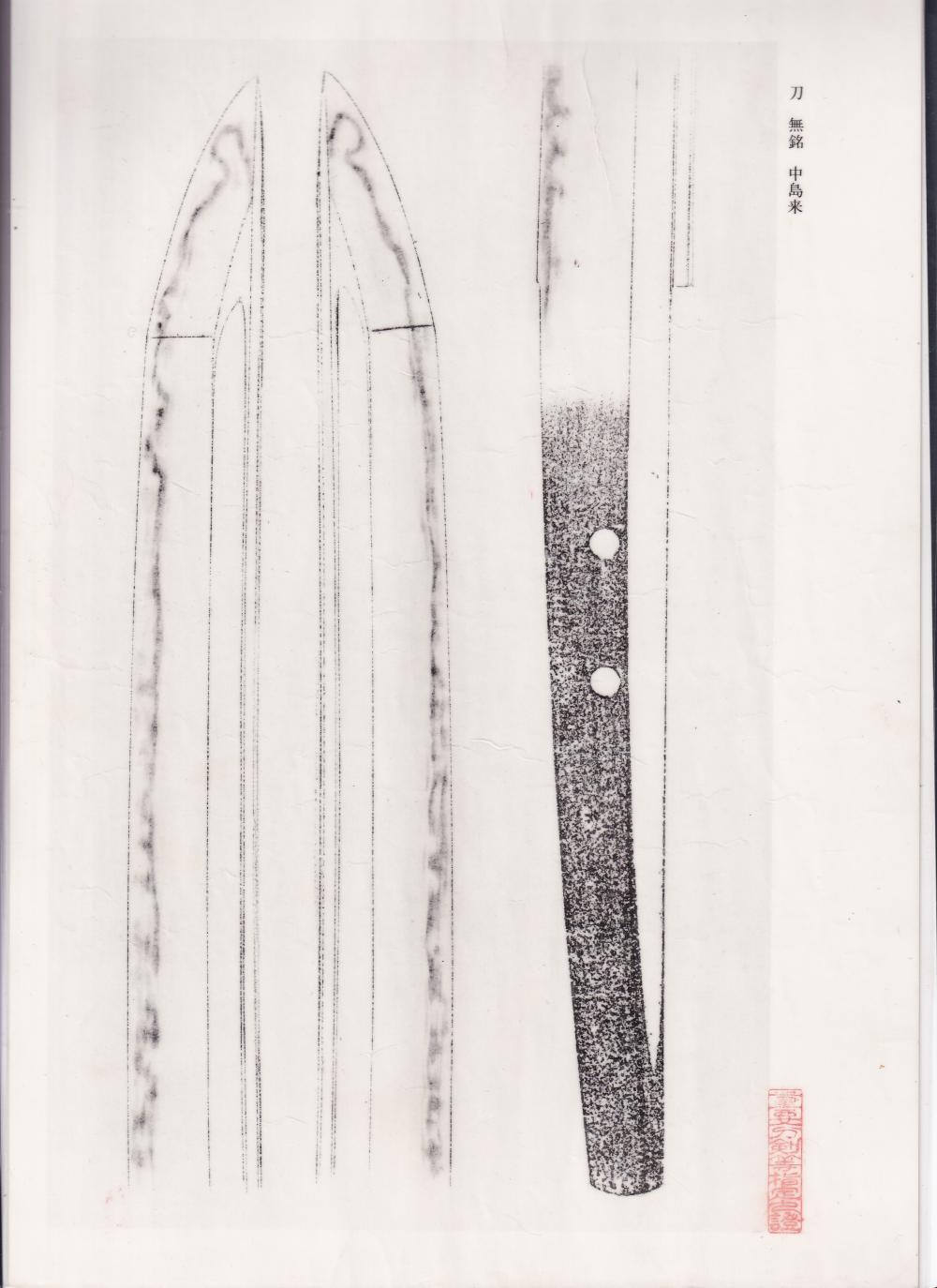
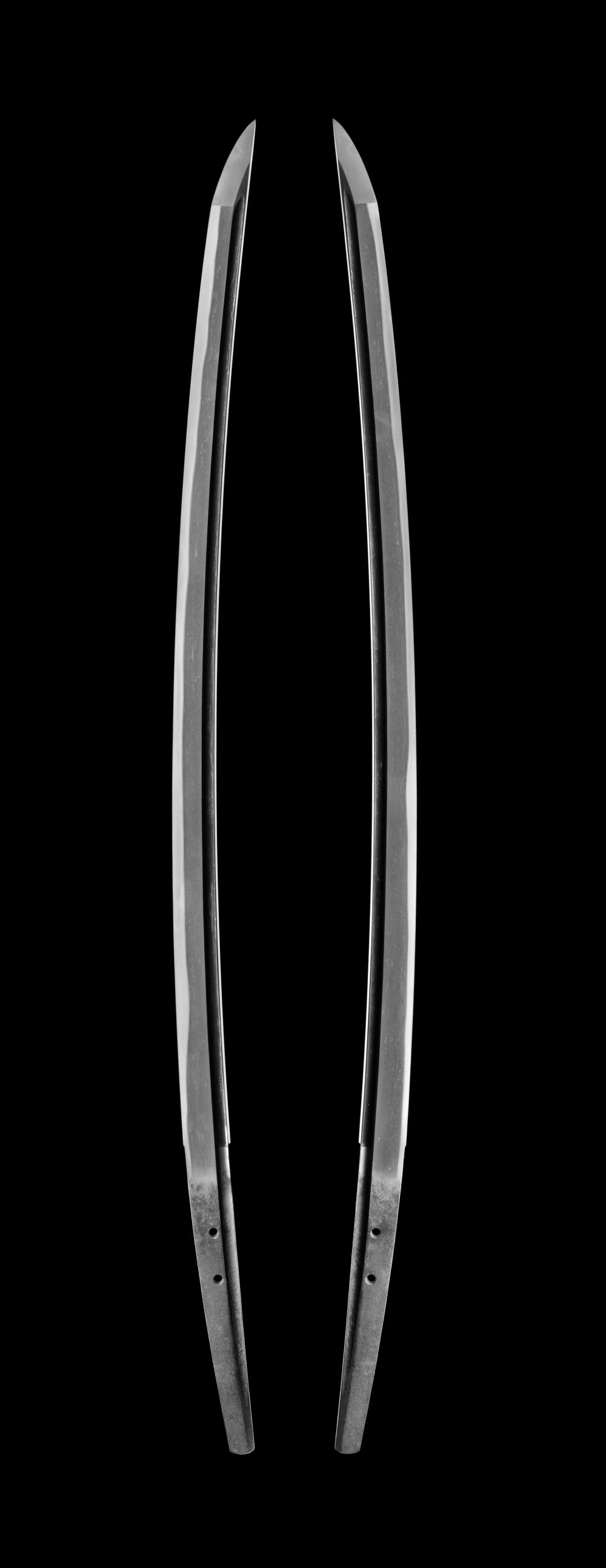
This katana is unsigned (mumei) but attributed to Nakajima Rai, a smith from the Rai school who moved to Settsu province during the Nanbokucho period. It is accompanied by an NBTHK Juyo Token certificate, indicating its high quality and historical significance. The blade comes with both koshirae (mountings) and a shirasaya.
中島来とは来国長を指すのであり、来国俊の弟子で、のち摂津国中島に移住したことからこの呼称がある。現存 する在銘の太刀は一口であり、脇指、短刀が僅かにある。古来、無銘極めのものは、来国光、来国次などに比べて技 何の少し劣るものを当てている。 この作は大磨上げ無銘でその体配は南北朝期のものである。地刃の出来から所伝を首肯しうるものであり、黒石目 地塗肥後打刀拵が付いている。
 NihontoWatch
suriage-mumei · Rai · Nanbokucho · nagasa 70cm · sori 1.8cm
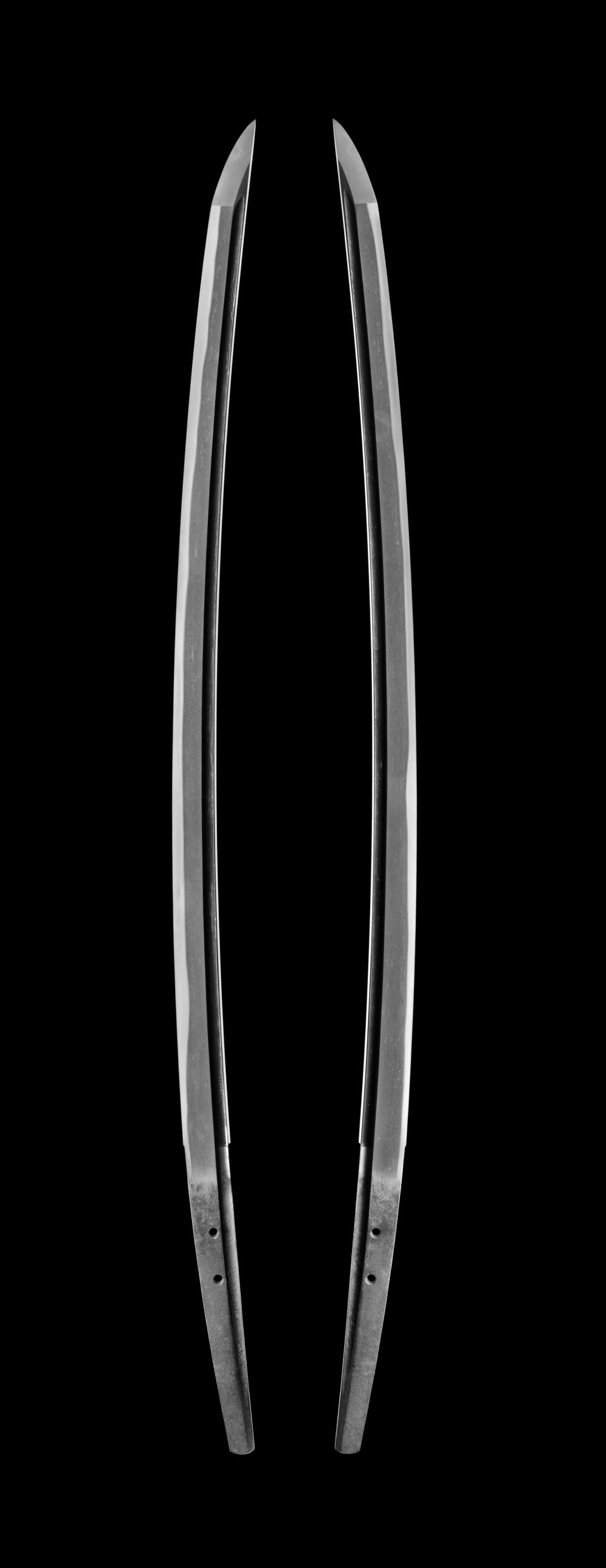
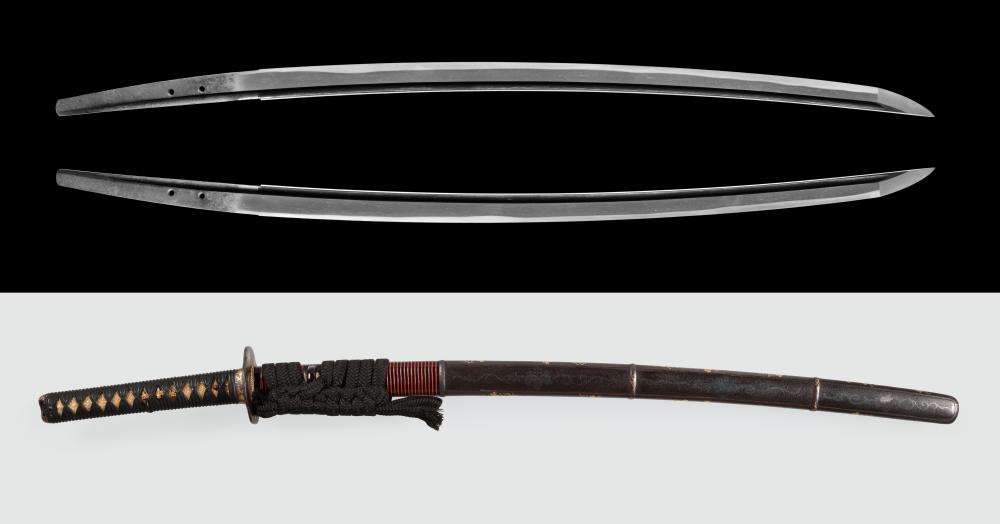
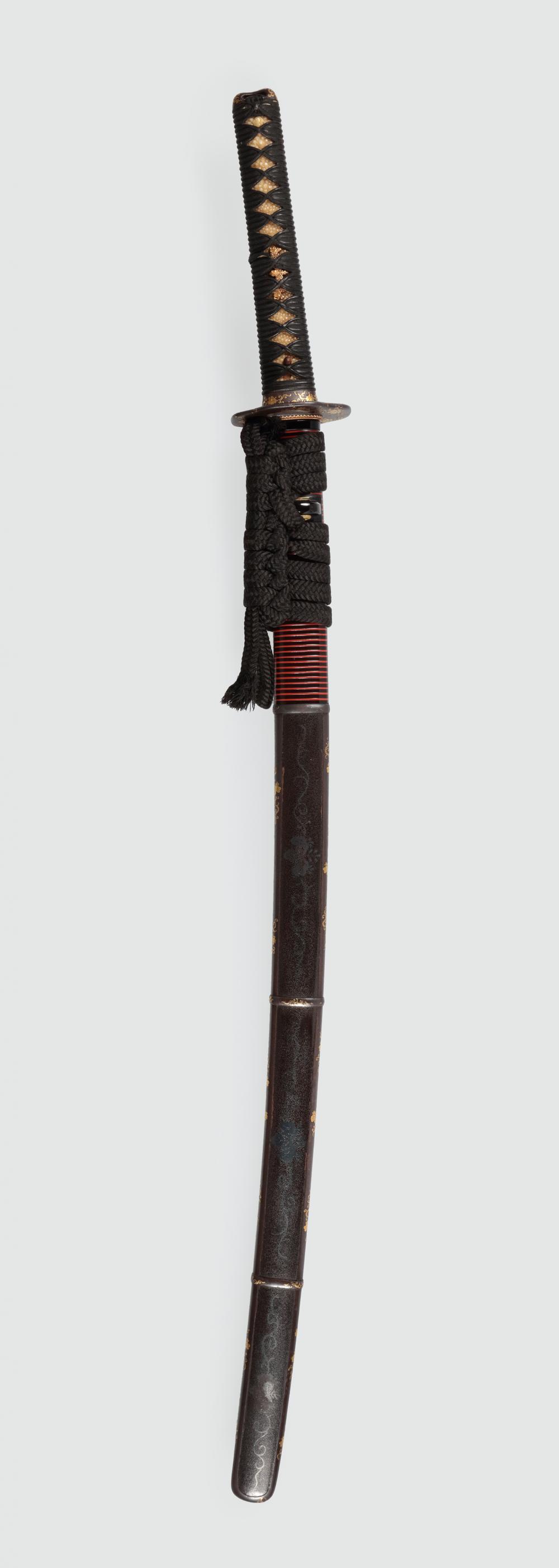
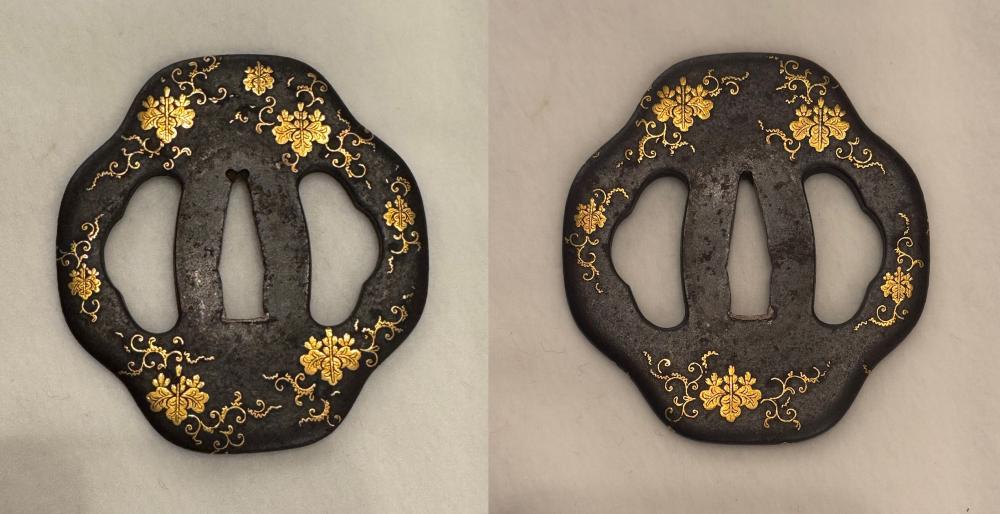
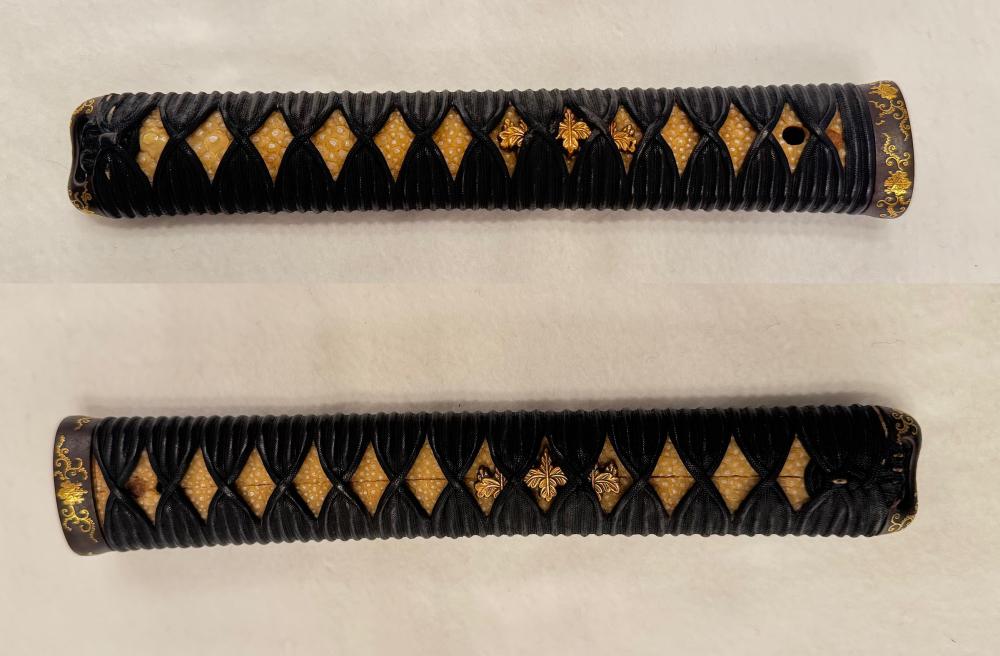
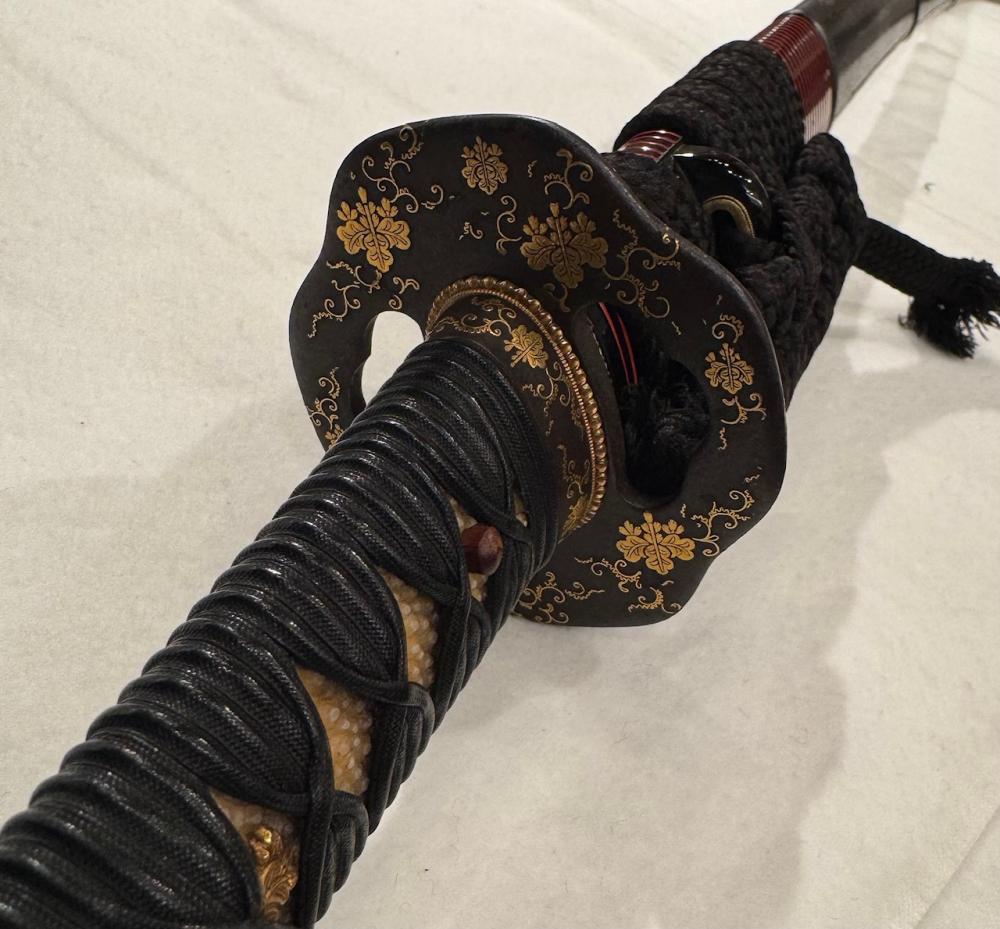
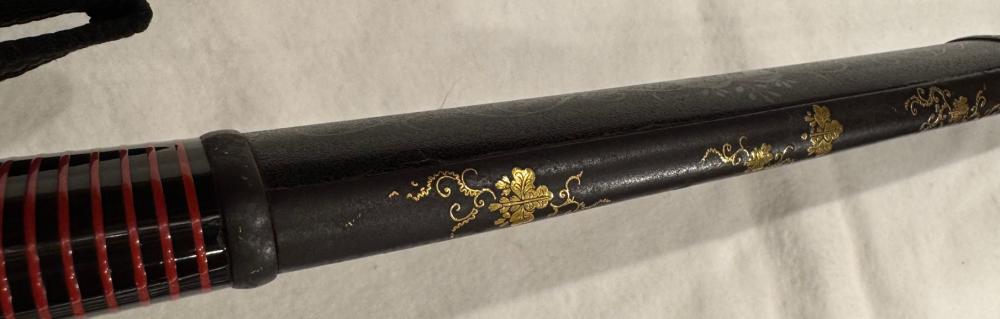
Nakajima Rai (Settsu offshoot of Yamashiro Rai) · Settsu · around 1345-1350
Fujishiro Jo-jo saku · Tōken Taikan top 15%
1 piece on the market now
The second-generation Kuninaga carries the name of Nakajima Rai, the Settsu branch of the Yamashiro Rai school founded by a pupil of Rai Kunitoshi who left Kyoto for Nakajima. The Meikan places the first generation about Gentoku at the close of Kamakura and the second about Shohei and Oan, and it is the second, working in the wide, large-pointed shape of the Enbun and Joji decades, whom the designated record here documents. The judges reach that division from the blades themselves. Of a signed wakizashi whose every feature belongs to Nanbokucho, they reason that a pupil of Kunitoshi could not have made it, and conclude 「この脇指は二代の作である」 (this wakizashi is the work of the second generation). Of a tachi wide in body with a large point, a fully Nanbokucho form, they write 「二代来国長と鑑るべきであろう」 (it should be judged the second-generation Rai Kuninaga).
His kantei is fixed in a sentence the commentary repeats: his work 「様式的には来国光や時に来国次に似るが, 格調の面で聊か譲るところがある」 (resembles Rai Kunimitsu, and at times Rai Kunitsugu, in style, but yields a little in dignity). The jigane is the first sign of the distance. Over a packed itame or ko-itame that flows toward masame near the edge, the grain stands a little, with thick ji-nie and fine chikei, a more provincial surface than the tight, bright steel of Kyoto.
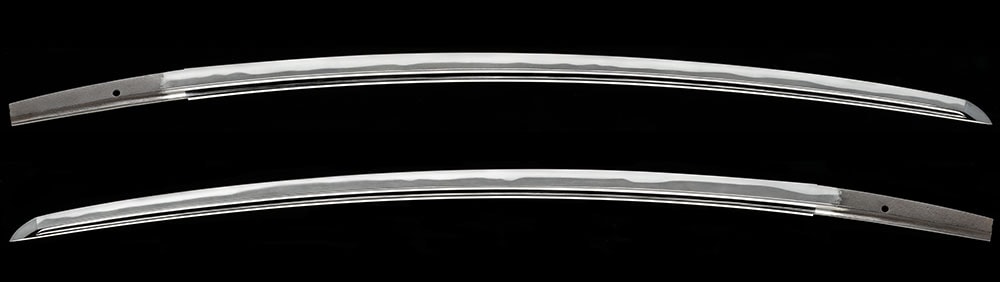
On that steel he lays a broad chu-suguha that does not stay plain. Ko-notare and ko-gunome break into it, ashi and yo run in, ko-nie settles along the edge, and sunagashi and, on the finest pieces, kinsuji play through the ha. One mumei katana is praised for 「刃縁上の湯走りや刃中の足・葉, 金筋・砂流しなど刃境や刃中に表した豊富な働き」 (the abundant activity along and within the edge, the yubashiri, ashi and yo, kinsuji and sunagashi). The boshi closes straight to a ko-maru, often brushed with hakikake; on the broad late katana it runs up toward a yakizume tendency.
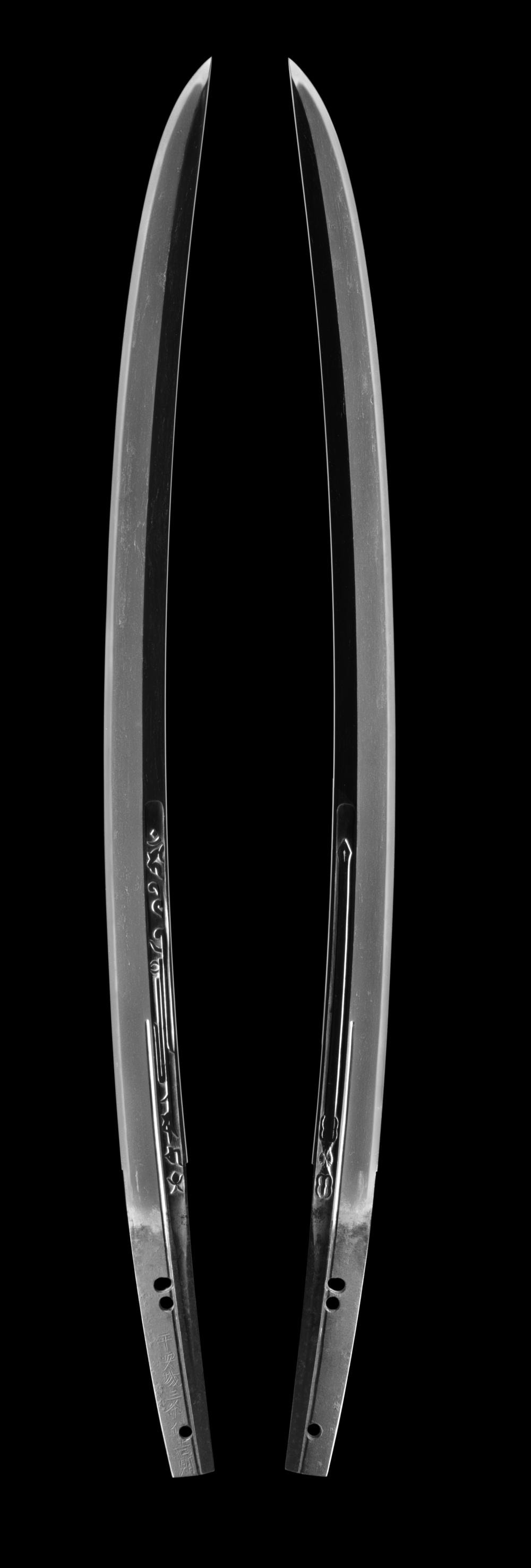
The published sources draw the line between the generations in temper: the first was the suguha hand, while 「二代にはむしろ直刃の作は少なく乱れたものが多い」 (in the second, suguha work is rather rare and irregular tempers are many). The signed pieces, they note, are mostly tanto and small wakizashi, 「その有銘の作は, 短刀, 小脇指に多く」, broad and a little extended with a thin kasane, the three-character mei cut below the mekugi-ana, and their carving 「彫物も簡素ながら上手である」 (simple but skilful). The mumei register is the o-suriage katana of Enbun and Joji form.
Two signed wakizashi from the Hisamatsu house of Iyo Matsuyama define his summit. Of the first the judges write that it is 「同作中のみならず同名中の白眉である」 (the finest not only among his works but among all smiths of the name), adding that the first generation, represented by a tachi in the collection of Eirin-ji, falls short of the second in technique. The second, a Tokubetsu Juyo of the large Nanbokucho shape, breaks in its upper half into choji mixed with tobiyaki of a yubashiri-like feeling until it becomes hitatsura, with a nie-utsuri standing strongly on the ji. The commentary calls it 「来派の作としては異色な出来口を示している」 (an idiom unusual for a Rai work) and 「資料的にも頗る貴重な作である」 (a piece of great documentary value), recording that it was 「伊予松山久松家に伝来した一口」 (handed down in the Hisamatsu house of Iyo Matsuyama).
Fujishiro rates him Jo-jo saku. He has no National Treasures and no Important Cultural Properties; his record is 13 blades in the Tokubetsu Juyo and Juyo tiers, one Tokubetsu Juyo among them. Signed examples are few, and the two Hisamatsu wakizashi are the pieces by which the name is measured. The mumei katana with their Hon'ami attributions reach the market from time to time, while a signed second-generation wakizashi in his irregular temper is a rare and legible document of the Rai manner carried into Settsu.
Where Kuninaga stands among comparable artisans: across all of nihontō, and within tradition, era, and period. The tiers (Foremost · Leading · Major · Notable) weigh official designations from the NBTHK and Japan's Agency for Cultural Affairs, together with historical honors of lasting repute such as the Sansaku and Meibutsu-chō.
Select a lens to see how it's measured.
Yamashiro-den · Settsu
6 pieces on the market now
The Nakajima Rai designation identifies swordmaking traditions established when Rai Kuninaga, a disciple of the Kyōto master Rai Kunitoshi, relocated to the Nakajima district of Settsu Province during the late Kamakura period. This move represented both geographical expansion of Rai school influence beyond the imperial capital and the deliberate transplantation of technically sophisticated Kyōto nie-based forging practices into a provincial setting. According to historical sword compendia, smiths using this designation are traditionally counted as two generations: the first active during the Gentoku era (1329–1331), and the second working through the middle decades of the fourteenth century, spanning the Shōhei and Ōan eras. Signed examples are exceedingly rare, and most attributions rest on stylistic analysis of unsigned blades greatly shortened from their original dimensions. Nakajima Rai workmanship faithfully perpetuates the core technical vocabulary of the main Rai school while exhibiting slightly more restrained execution. The forging typically shows compact ko-itame-hada or itame mixed with mokume and nagare-hada, frequently with a tendency toward standing grain; the surface is heavily laden with fine ji-nie that forms in thick, crystalline masses, producing a bright, clear appearance. Chikei enter actively and repeatedly, and faint nie-utsuri often appears along the shinogi side. The hamon follows a characteristic broad suguha-based pattern, into which are mixed ko-gunome, ko-chōji, and small midare elements; within this foundation, ashi and yō enter abundantly, and the nioiguchi is uniformly described as bright and clear.
Internal activities—kinsuji, sunagashi, yubashiri, hotsure, kuichigai-ba, nijūba, and uchi-noke—appear frequently along the habuchi, creating rich variation within the temper line. The bōshi typically forms ko-maru with hakikake, often showing vigorous activity. The overall impression is one of technically accomplished nie-deki work in which the foundational suguha serves as a vehicle for highly active crystalline formations and internal dynamics, closely resembling the style of Rai Kunimitsu but yielding slightly in artistic rank. Extant Nakajima Rai blades almost invariably preserve the bold proportions characteristic of Nanbokuchō-period production: wide mihaba with little taper from base to tip, shallow or deep sori (often retaining koshizori or wazori despite shortening), and extended chū-kissaki or ō-kissaki. Even when greatly shortened, these blades retain an imposing, martial presence that pairs well with the vigorous, nie-laden forging and temper. The technical consistency across designated examples—tight itame with thick ji-nie, broad suguha with active nie, and bright nioiguchi—establishes a coherent stylistic profile that clearly descends from Kyōto Rai traditions while expressing a distinctive provincial character. The combination of robust construction, excellent preservation in surviving examples, and flavorful hataraki within both ji and ha renders Nakajima Rai an important regional expression of late Kamakura and Nanbokuchō swordmaking, preserving the technical sophistication of the capital school in a relocated context. Learn more →
| Smith | Era | Designated |
|---|---|---|
| Kuninaga國長 | 1329-1331 | 58 |
| Kuninaga國長 | 1345-1350 | 13 |
| Kuniyasu國安 | 1329-1331 | 1 |
| Kuniyasu國安 | 1329-1331 | 1 |
| Munenaga宗長 | 1394-1428 | 0 |
Yamashiro in the Nanbokuchō period
The divided-courts war impoverished the court society that had sustained Kyōto’s most refined work. With the last Rai masters the classic line effectively closed, while Hasebe and Nobukuni carried the new Sōshū manner into the capital.
A blade of top-grade workmanship and condition, formally judged to rank with a nationally recognized Important Art Object (Jūyō Bijutsuhin). Awarded only at the NBTHK’s competitive annual examination.
Of Japan’s roughly 2.5 million registered swords, only 12,357 (about 1 in 202) have ever attained Jūyō.
The NBTHK (Nihon Bijutsu Tōken Hozon Kyōkai, the Society for the Preservation of Japanese Art Swords) is a public-interest incorporated foundation founded in 1948 and supervised by Japan’s Agency for Cultural Affairs (Bunkachō); it is based at the Japanese Sword Museum in Tokyo. Its expert panels physically examine each submitted work (shinsa) and issue a certificate (kanteishō) ranking it by artistic and historical merit. NBTHK papers are the most widely recognized standard of authentication for Japanese swords and fittings.
NBTHK official sitePlease contact us by phone within 3 days of the item's arrival and ship it back the next day. The postage and security service fees are the customer's responsibility.
¥5,800,000