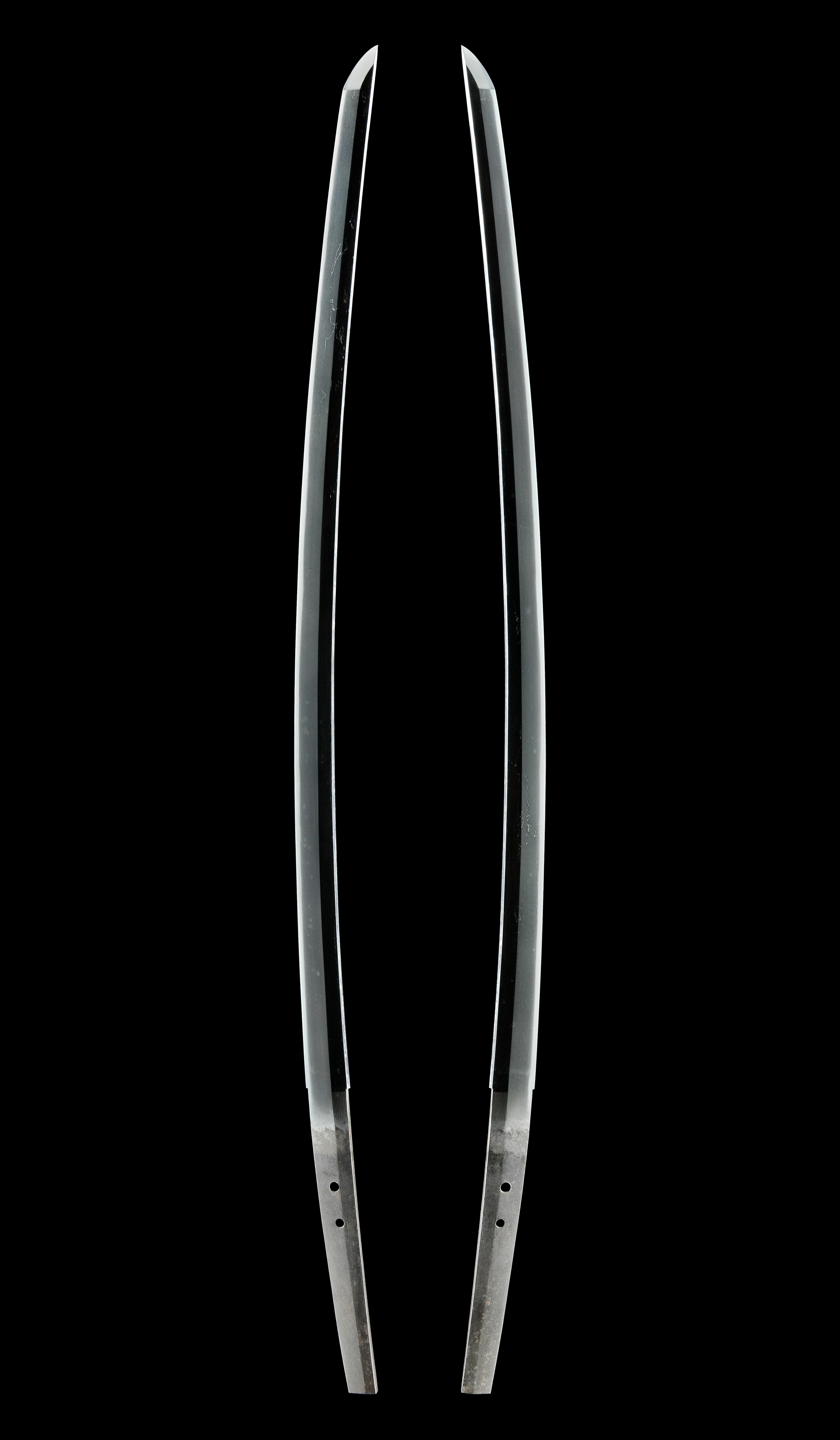
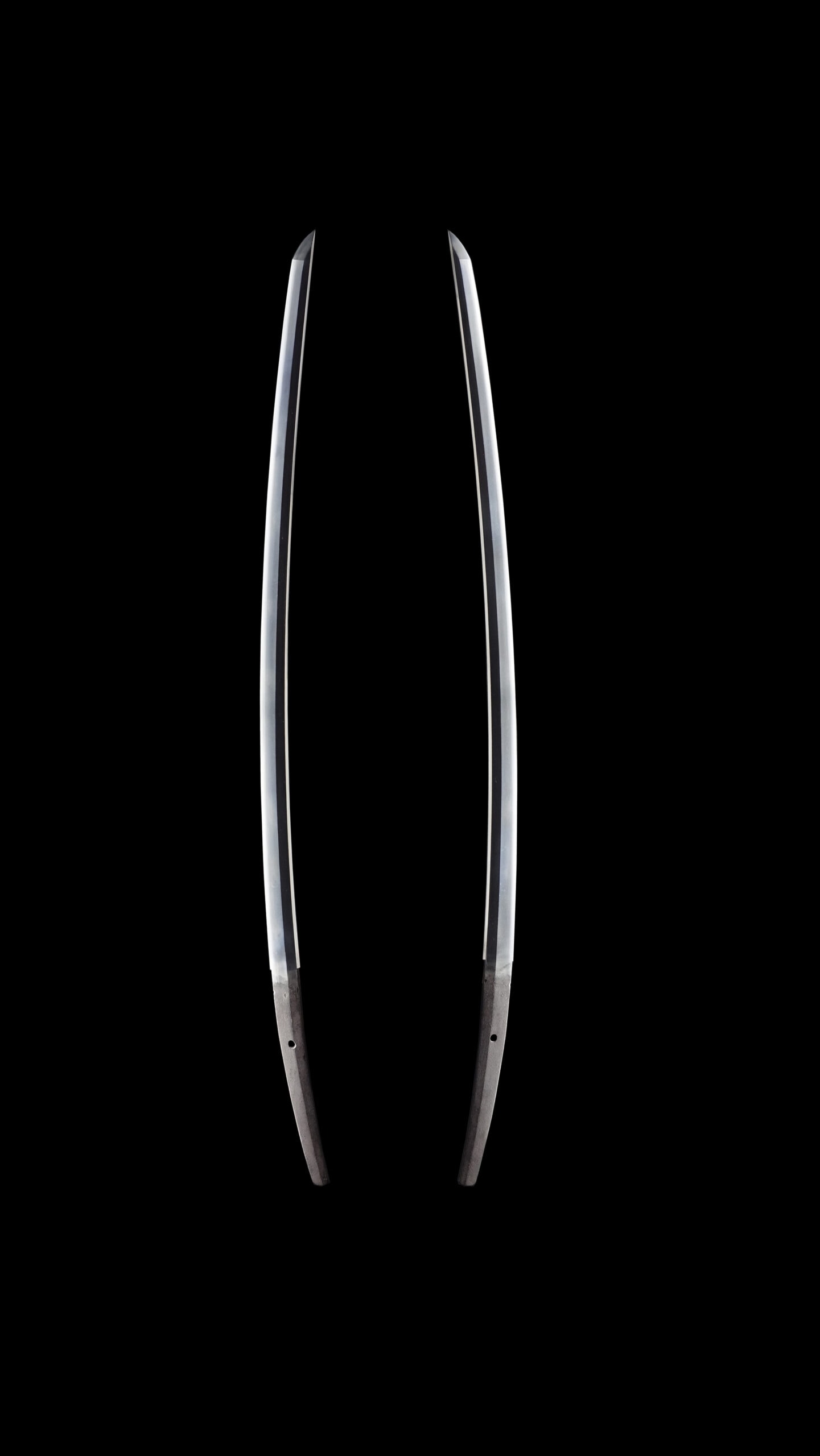
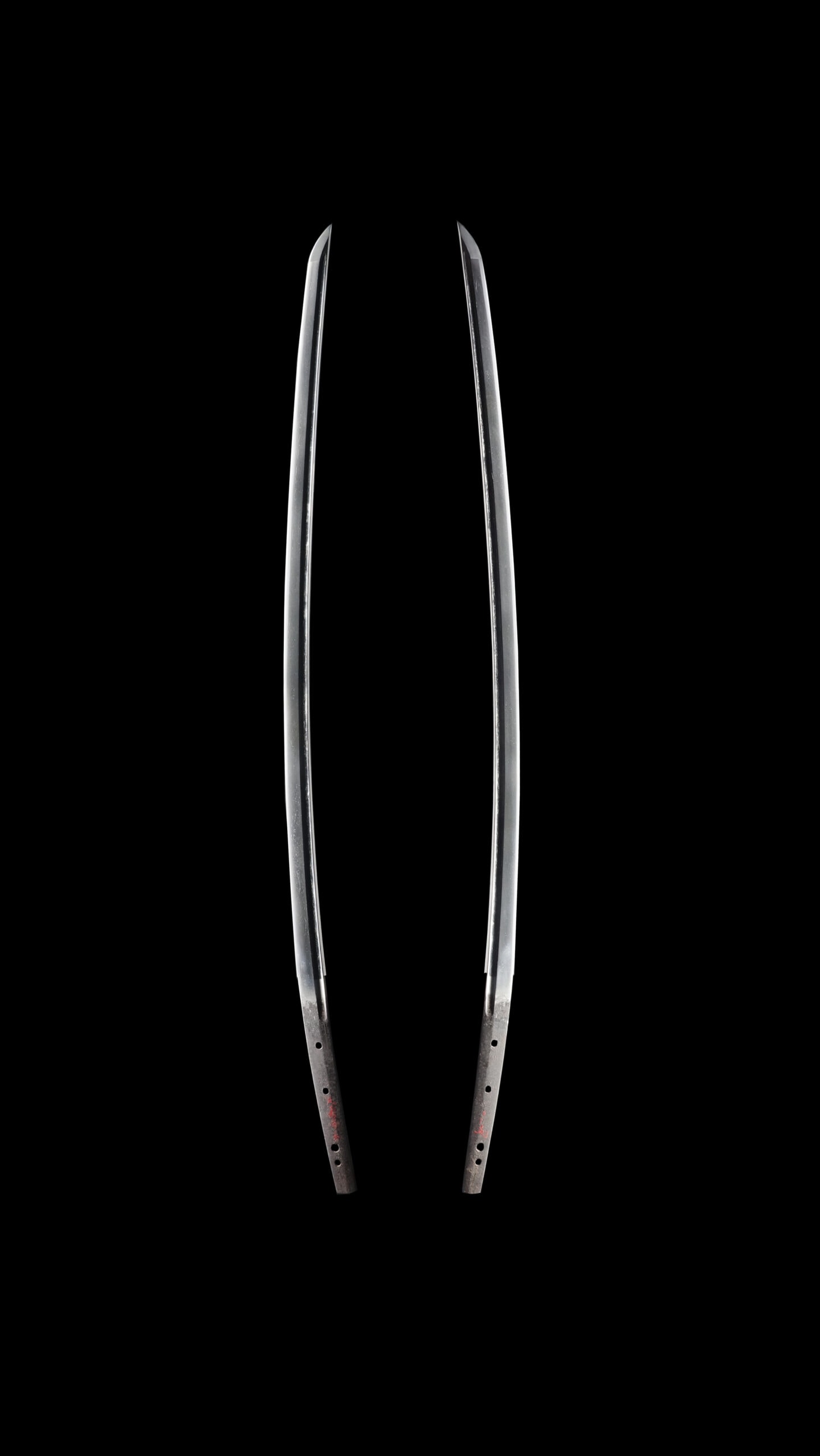
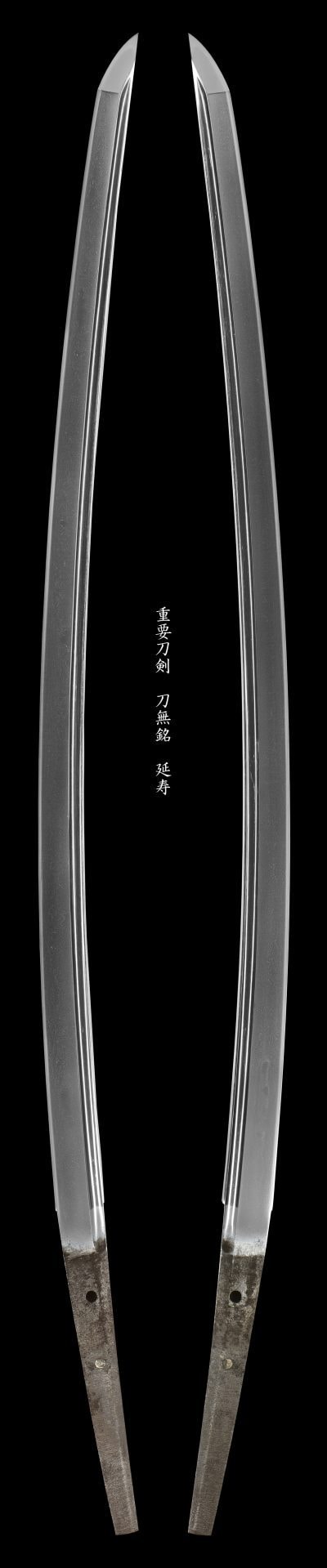
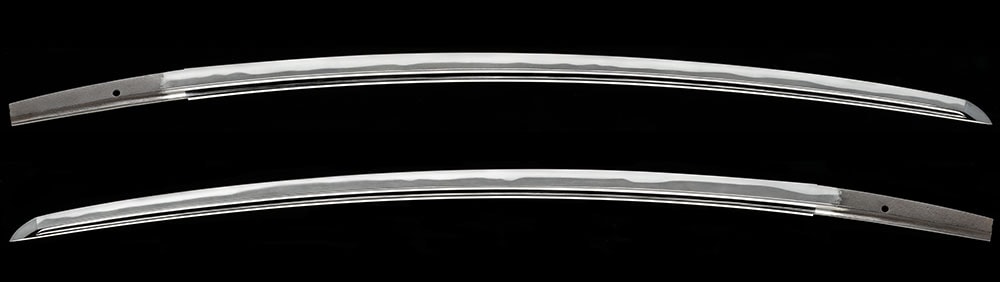
Kunitoki is the representative master of the school of , the line that carried the Yamashiro manner south into Kyushu. The published sources trace the school to Tarō Kunimura, transmitted as an "outside grandson" of Kuniyuki of Yamashiro through a daughter, and they place Kunitoki among the best-known smiths of the group, variously recorded as the son or the pupil of the founder. His working life runs from the close of the period into at Kumafu in the Kikuchi District; dated survivals carry the Southern-Court eras, one signed Shōhei 7 (1352), placing his late hand in the middle of the fourteenth century. The school is judged to show little individual variation and to resemble Rai broadly, so that the Enju manner reads almost as one hand. Within that uniformity Kunitoki stands out for two reasons. The published record judges that "relatively many of his works survive, and the average quality of his workmanship is high"1, and his hand worked the school's restrained suguha busier than any other of the line.
His characteristic manner is a chū-suguha or hoso-suguha that refuses to stay plain. Where the published sources record that "many works of the group temper a suguha sparing in internal activity," Kunitoki breaks his straight temper with continuous ko-gunome, occasional ko-chōji and pointed teeth, ko-ashi and yō entering well, ko-nie gathering along the edge, with fine sunagashi and kinsuji playing through. On his best blades the nioiguchi, which the school carries somewhat shizumi (subdued) against the brighter Rai, turns bright and clear. The school's own nature pulls the other way, and it is precisely because of that restraint that a lively blade reads as exceptional: of one tachi the published commentary writes that it shows "a midare-dominant tempering rare not only for Kunitoki but for Enju works generally"2, and of a suriagekatana with strong nijūba, kinsuji and a bōshi that goes into midare with vigorous hakikake, that it presents "the most active hamon not only of this smith but within the whole school"3. That a single blade can be called both rare and the most active is the measure of how quiet the line normally runs, and of how far Kunitoki pushes against it.
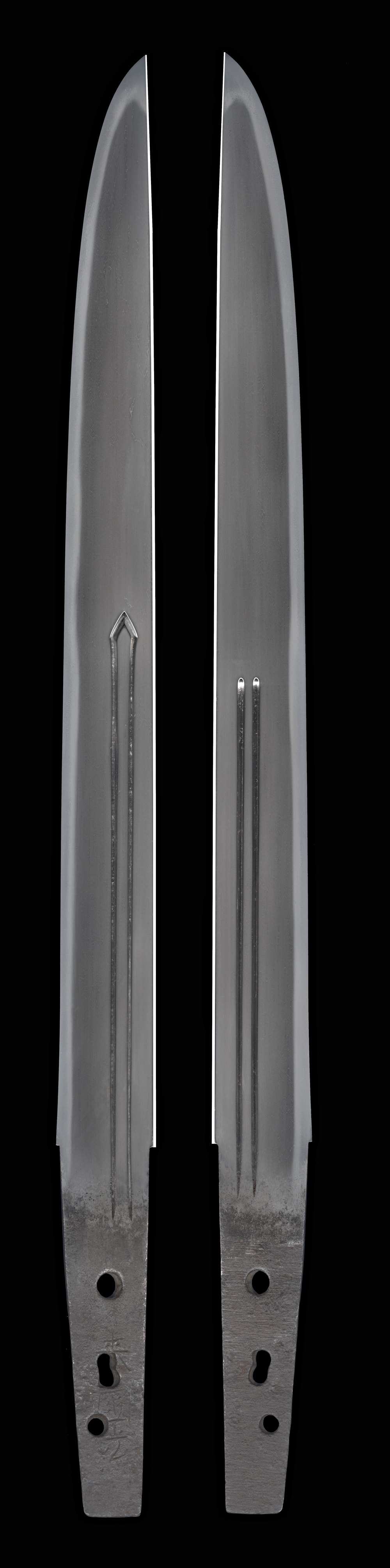
The forging is the school's whole inheritance read clearly. Over an itame or tightly forged ko-itame, generally flowing and gathering a masame-like tendency toward the edge, fine dust-like ji-nie adheres well and fine chikei enter, and the school's whitish shirake-utsuri stands in the ji. This whitish utsuri is the prime point the published sources name in separating Enju from Rai, and it sits on a jigane that keeps the Kyoto refinement of the parent while taking on the flowing Kyushu steel. The bōshi most often runs straight and closes in a ko-maru, frequently brushed with hakikake, and sometimes turns back round and shallow as a large ō-maru in the school habit. The signature, when present, is a large two-character mei, and the published sources repeatedly single out one calligraphic tell: in the character kuni (国), the right half within the enclosing strokes is cut in an "ear-shaped" manner4, a writing habit shared by the whole Enju line that cannot be confused with another school.
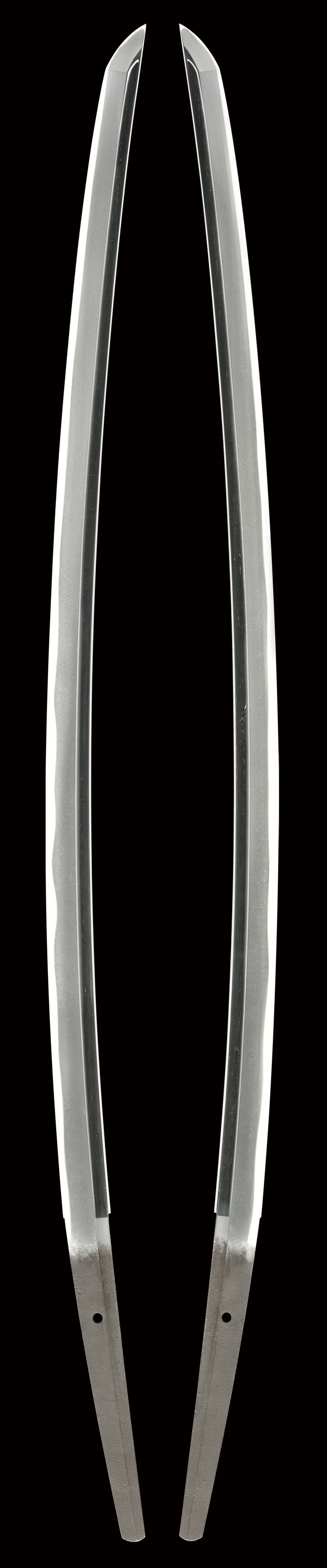
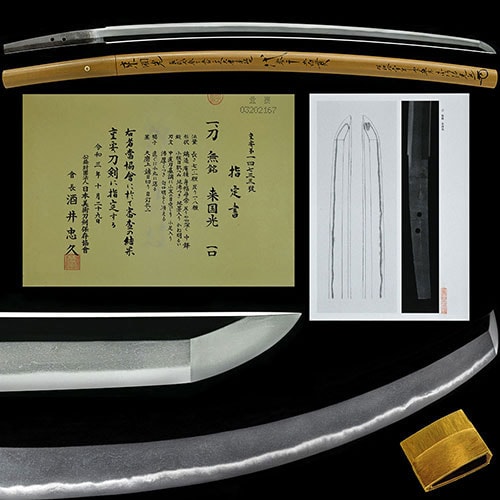
The surviving record falls into two registers. The first is signed and ubu: long tachi with a deep koshizori and funbari, and broad hira-zukuritantō, slightly sunobi with a thick kasane, carrying the bold two-character mei near the tang-tip; the chisel on some is noted as broader and stronger than usual. The dated late blades of this register sign the longer Kikuchi-jū Kunitoki with Engen and Shōhei dates, and the published sources assign that long signature to the lower generations of the name. The second register is ōsuriagemumeikatana, attributed to Enju Kunitoki and often fixed by a later appraisal: at first glance a ring-shaped wa-zori and a Kyoto air recall Rai, but the nagare in the ji, the shirake-utsuri and the subdued nioiguchi settle the attribution to Enju, and the overall level of the work narrows it to Kunitoki. Several of these carry a Hon'ami Kōsson appraisal inscription in gold, the smith's name set in kinzōgan or kinpun with his kaō.
Kunitoki's place is best read against his two neighbors. Against Rai, the parent, the difference is fixed: the published sources record the masame-lean, the whitish utsuri and the subdued nioiguchi as the points by which Enju parts from the Yamashiro line, and they note that the school is felt to be "somewhat weaker in ji and ha than Rai." Yet the kinship is close enough that one of his finest tantō is judged to show "a level of workmanship comparable to Rai Kunimitsu"5, the Enju tells visible only on close reading. Against Kunimura, the founder, the difference is Kunitoki's own: his suguha breaks into ko-gunome and ko-midare far more freely than the founder's plainer straight temper, and his bōshi closes sugu to a ko-maru more often than the founder's larger ō-maru. Because the line shows so little individual variation, Kunitoki is taken as its representative hand and its most frequently surviving one, and a plain Raisuguha can in turn be mistaken at a glance for Enju. The Enju smiths were attached to the Kikuchi clan, loyal to the Southern Court, and the dated blades carry that history in their Southern-Court eras.
Kunitoki's standing is matched by a substantial designated record: thirty blades stand in the Tokubetsu Juyo and Juyo tiers, six of them Tokubetsu Juyo, with one further work in the Important Cultural Property rank, and his work earns a high mark in the Tōkō Taikan. He is among the most heavily represented Enju hands on the official record. The provenance recorded against his blades reaches into the high households of late Edo: a tachi held by the Mito Tokugawa family and one by the Kishu Tokugawa family, a tantō now of Minatogawa Shrine, and a tantō known as a relic of Seikan'in-no-Miya, the imperial princess Kazunomiya6, the figure of the late-Tokugawa marriage settlement, by way of the Kan'in-no-Miya house. One blade is locked in the Important Cultural Property tier and will never trade. Of the rest, the school's quiet suguha and the relative abundance of Kunitoki's survival mean that his Tokubetsu Juyo and Juyo blades come to the serious collector from time to time, more readily than the rarest Kamakura masters but as designated heritage rather than ready stock; a fine signed ubutachi or a broad signed tantō of his is a landmark when it appears, and most of the recorded record is held, not traded.
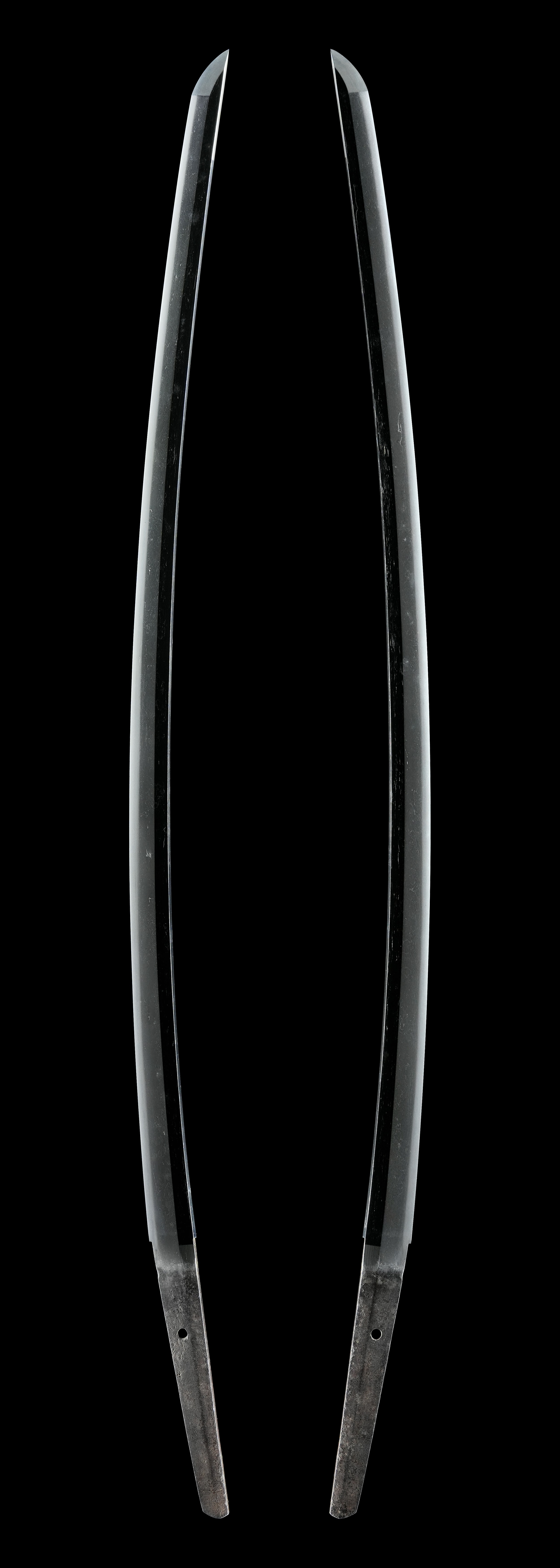
Kantei
One coherent Enju manner in Kunitoki's own cast (a chu/hoso-suguha that breaks more freely into ko-gunome and ko-midare than the rest of the school, over the school's shirake-bearing nagare jigane), read in two registers: signed ubu tachi and tanto carrying his two-character mei, and mumei osuriage katana attributed to Enju Kunitoki on the jigane and confirmed by appraisal inscriptions. The 国時 name continued over several generations into the Muromachi period, and the NBTHK lumps that line under one code while dating individual blades; this corpus is overwhelmingly the Late-Kamakura hand the judges call the shodai, with a few Nanbokucho dated pieces (Shohei 7 = 1352; Engen-era) noted as his late work.
Kunitoki is the representative master of the Enju school of Higo, by tradition the son (some accounts a pupil or younger brother) of the founder Kunimura, his work running from the close of Kamakura into Nanbokucho at Kikuchi-gun Waifu. The published sources call him the school's most prolific surviving hand with a high average level. He keeps the Enju manner whole, the Rai-Yamashiro look carried south: a packed itame/ko-itame flowing toward masame, thick dust-fine ji-nie and fine chikei, the school's whitish shirake-utsuri, hardened in a chu- or hoso-suguha whose nioiguchi sinks a little against the brighter Rai. What sets him apart within an otherwise uniform school is that his suguha repeatedly breaks into ko-gunome and ko-midare, the judges twice calling a midare-based blade rare for Kunitoki and one the most active hamon the whole school produced. The boshi closes sugu to a ko-maru, often with hakikake; the signature is a large two-character mei whose 国 is cut with the right half of its enclosure shaped like an ear, a tell of the whole line.
Diagnostic discriminators
白け映りshirake-utsuri12
the prime Enju tell, carried over from the founder: a whitish shirake-utsuri stands in the ji where the Rai parent has essentially none (Rai Kunimitsu 0%, Rai Kunitoshi 1%); the published sources name it the first point separating Enju from Rai
互の目gunome12
Kunitoki's own tell within a uniform school: his suguha breaks into ko-gunome and ko-midare about three times as often as the founder (Kunimura 19%, ko-gunome 41% vs Kunimura 13%); the judges twice call a midare-based blade rare for him and once the most active hamon the school produced, where the rest of Enju keeps the suguha plain
幾分沈みごころの直刃(来に対する延寿の相違)shizumi-gokoro no suguha3
the published sources fix it as the Enju difference from Rai: the nioiguchi runs somewhat subdued and the activity in the ha calm, where the Kyoto parent is brighter; the school is judged weaker in ji and ha than Rai. On Kunitoki's own best work, however, the nioiguchi is noted as turning bright and clear
直ぐに小丸・掃きかける帽子sugu ni ko-maru, hakikakeru boshi3
Kunitoki closes sugu to a ko-maru (43%) more often than the founder's large o-maru (Kunimura ko-maru 38%, o-maru 19%), the tip frequently brushed with hakikake (41%); on his most active blade the boshi itself goes into midare with strong hakikake
「国」のクニ構え右半を耳形にきる二字銘niji-mei, kuni no kamae mimigata3
the published sources repeatedly name this calligraphic habit a school tell that cannot be confused with another line; Kunitoki's signed survivals are the clearest exemplars of it
Observation by phase
Kunitoki's Enju manner: the school's shirake jigane, the suguha broken with ko-gunome
Over a packed itame or ko-itame, generally flowing and gathering a masame-lean toward the ha, the ji carries dust-fine ji-nie, fine chikei and the school's whitish shirake-utsuri. On this Enju ground Kunitoki tempers a chu- or hoso-suguha, but where the rest of the line keeps it plain and a little lifeless he works it busier: ko-gunome, ko-choji and pointed teeth enter, ko-ashi and yo run in, ko-nie gathers, fine sunagashi and kinsuji play through, and the nioiguchi, which the school carries somewhat sunk against the brighter Rai, on his best blades turns bright and clear. The boshi closes sugu to a ko-maru, frequently with hakikake, and sometimes turns back round and shallow as a large o-maru in the school habit. The published sources twice mark a midare-based blade of his as rare for Kunitoki, and once call a katana the most active hamon the whole Enju school produced.
Signed register: ubu tachi and tanto with the two-character mei
ubu (and slightly suriage) tachi, and ubu hira-zukuri tanto, carrying a large two-character 国時 mei set near the tang-tip; a few late blades are signed 菊池住国時 with an Engen or Shohei date, the long signature the published sources say marks the later generations
His signed survivals are ubutachi, long with a deep koshizori and standing taper to a small kissaki, and ubuhira-zukuritanto, broad and a touch sunobi with a thick kasane in the school habit. The mei is a large two-character signature, the chisel sometimes broader and stronger than usual. Several tachi carry a bo-hi, often with soe-hi or a companion groove, and gomabashi at the koshimoto; the tanto take a katana-hi or koshi-hi. On this register the suguha most freely admits ko-gunome and ko-midare, and the dated tanto run a small-notare base with a frayed, bright nioiguchi.
Hamon 刃文
小のたれko-notare3ほつれhotsure5喰違刃kuichigai-ba3
Bōshi 帽子
乱れ込みmidare-komi1
Mumei osuriage katana register (attributed on jigane, fixed by appraisal)
osuriage mumei katana attributed Enju Kunitoki: a wa-zori and Kyoto air recall Rai at first glance, but the nagare jigane, the shirake-utsuri and the somewhat sunk nioiguchi settle the attribution to Enju, narrowed to Kunitoki by the level of the work; several carry a Hon'ami Kosson kinzogan- or kinpun-mei naming him
A large part of the designated record is mumeiosuriagekatana. The ring-shaped wa-zori and the Kyoto air recall Rai, but the nagare in the ji, the shirake-utsuri and the nioiguchi running a little sunk read as Enju, and the overall level of the work narrows the attribution to Kunitoki. The suguha here is fine, intermittently breaking into ko-gunome with faint nijuba, hotsure and yubashiri, kinsuji and sunagashi entering fine, the boshisugu to a ko-maru or a round shallow o-maru. Several of these carry a Hon'ami Kosson appraisal inscription in gold.
Sugata 姿
輪反りwa-zori2
Jigane 地鉄
沸映りnie-utsuri1
Hamon 刃文
細直刃hoso-suguha8二重刃nijuba4ほつれhotsure5湯走りyubashiri4
Scholarship
A midare-based hamon is repeatedly called rare for Kunitoki, the school normally keeping a plain suguha; such blades are noted as exceptional within his and the school's record.2
His dated survivals carry the Southern-Court eras Engen and Shohei 7 (1352), taken as his late work, with the long Kikuchi-ju Kunitoki signature the published sources assign to the later generations of the name.3
Dated Works
Years he was demonstrably active, proven by signed-and-dated blades
Active period
1353Editorial estimate: 1317–1353
1 of 19 designated works carry a date
1353
正平七年Juyo session 16, item 176
Historical importance
Where Kunitoki stands among comparable artisans: across all of nihontō, and within tradition, era, and period. The tiers (Foremost · Leading · Major · Notable) weigh official designations from the NBTHK and Japan's Agency for Cultural Affairs, together with historical honors of lasting repute such as the Sansaku and Meibutsu-chō.
随一
Foremost
屈指
Leading
有数
Major
All nihontōYamashiroKotōNanbokuchō
著名
Notable
Select a lens to see how it's measured.
Designations
Kokuhō—
Jūyō Bunkazai1
Jūyō Bijutsuhin1
Gyobutsu—
Tokubetsu Jūyō6
Jūyō Tōken24
Elite Standing
0.39 across 32 designated works
Top 6% among smiths
Provenance
5 documented provenances across certified works by Kunitoki
▸Imperial1
▸Shogunal2
Premier Daimyō—
Major Daimyō—
Other Daimyō—
Zaibatsu—
Institutions—
▸Named Collectors2
Provenance Standing
3 works held in elite collections across 5 documented provenances