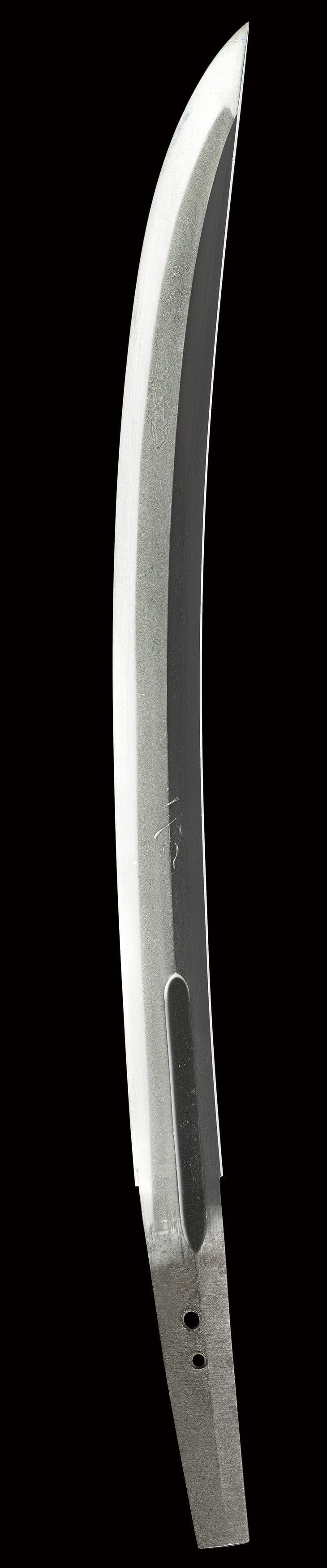
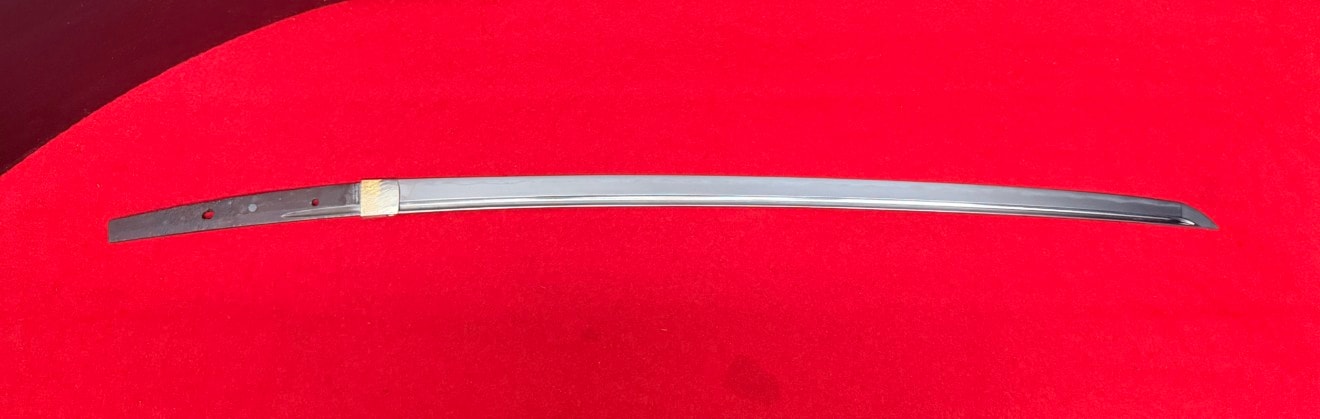
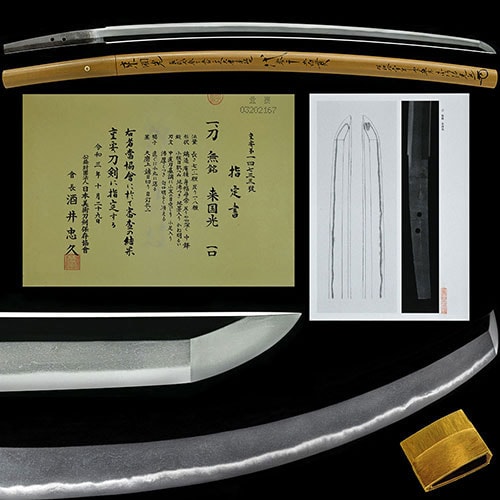
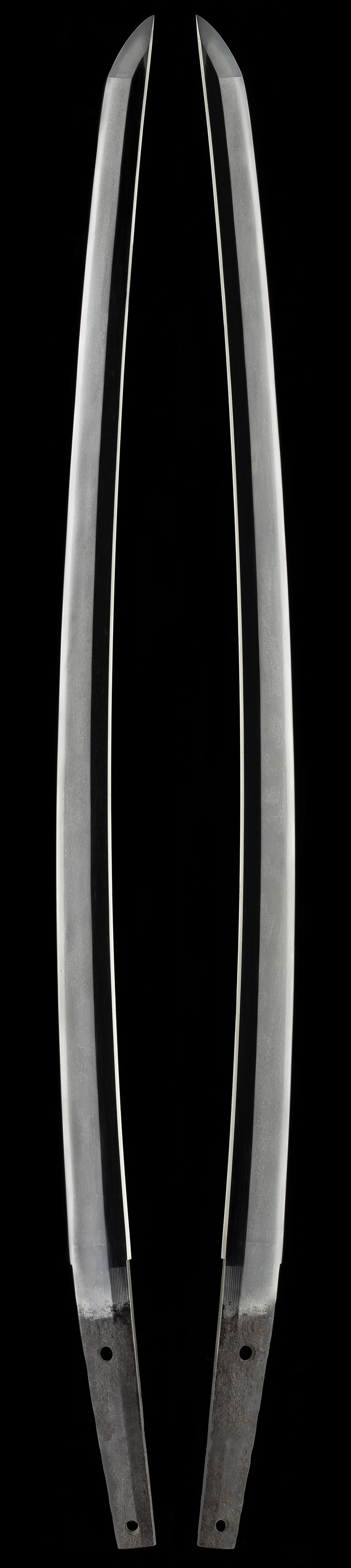
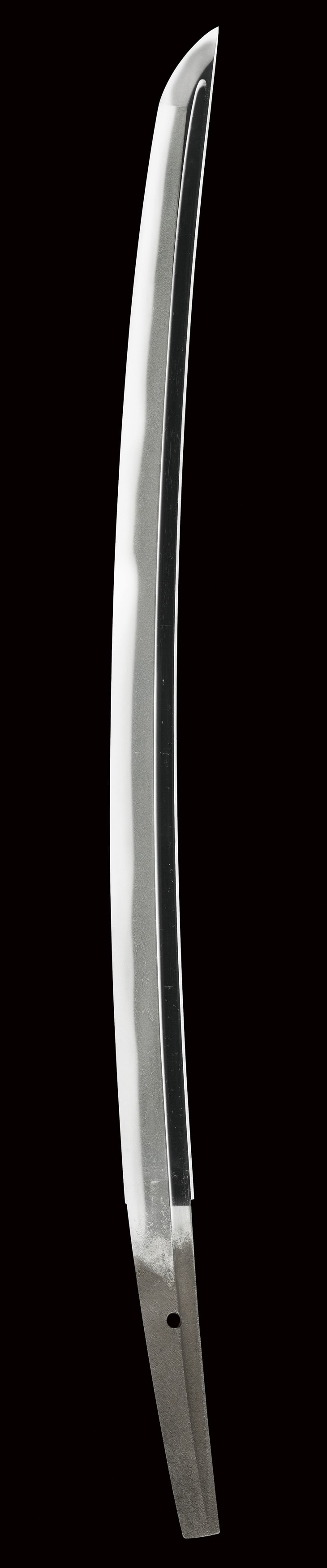
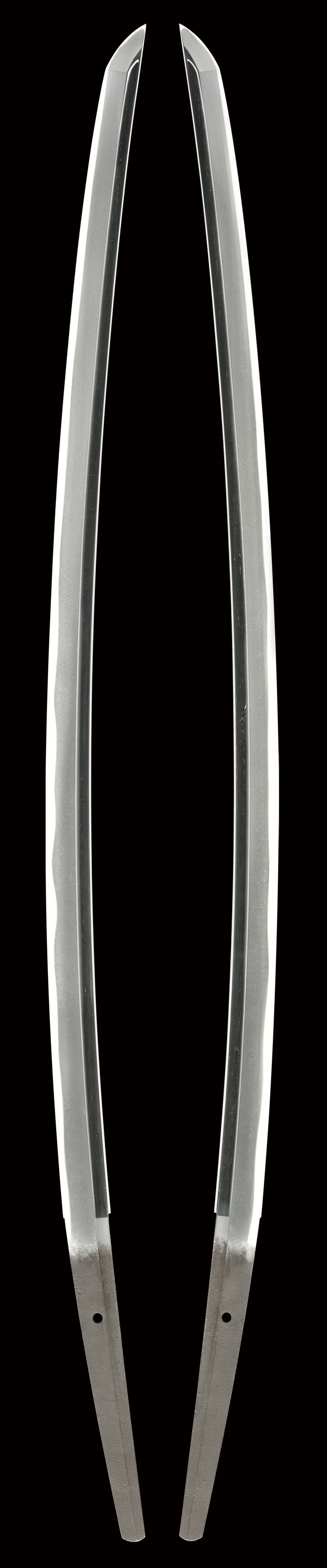
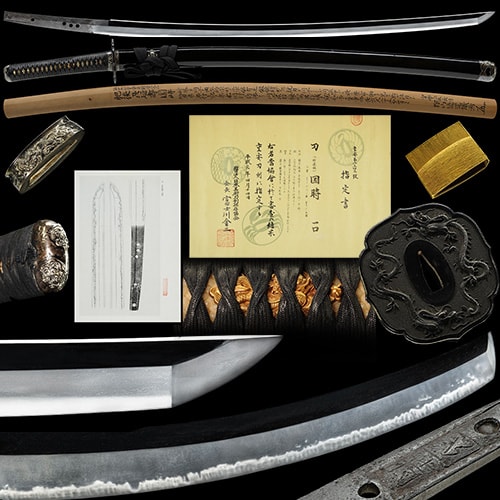
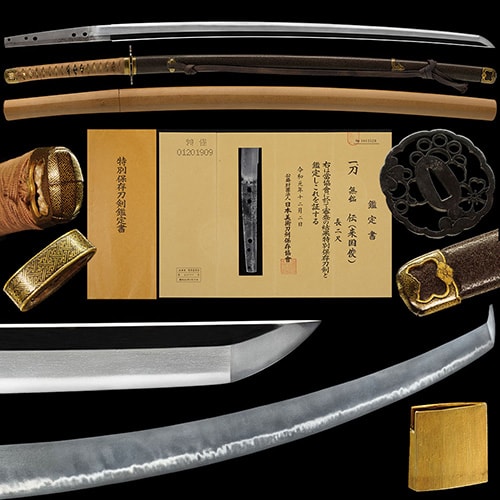
Kuninaga was a pupil of Kunitoshi who left Kyoto and settled at Nakajima in Settsu Province, and from that move the line he founded took the name by which the published sources still call it, "Nakajima ". Those sources count two generations under the single name Kuninaga, the first recorded in the Gentoku era at the very end of and the second active in around the Shohei and years; the designated record gathered here is almost wholly that second-generation hand, working in the broad, large-pointed shape of the Enbun and Joji decades. His standing is fixed by a sentence the judges repeat across his blades: among the group his work comes closest to Kunimitsu, and at times to Kunitsugu, yet yields a little to those masters in dignity and refinement. From that judgment follows the practical use of his name, for from old times, as the published sources put it, works that resemble Kunimitsu yet are reckoned slightly inferior have been appraised as Kuninaga.
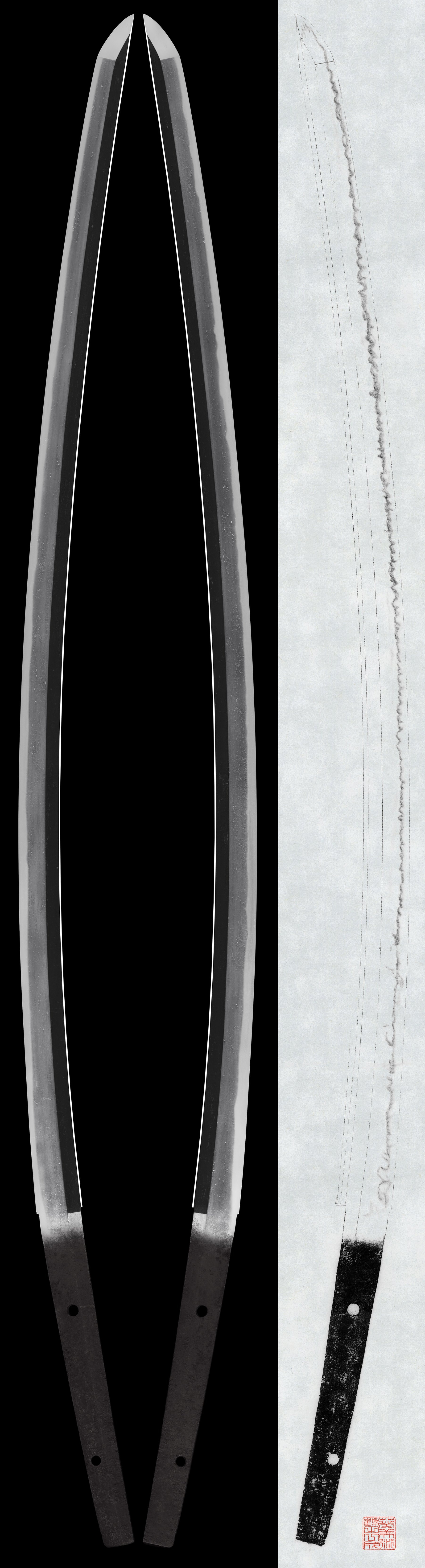
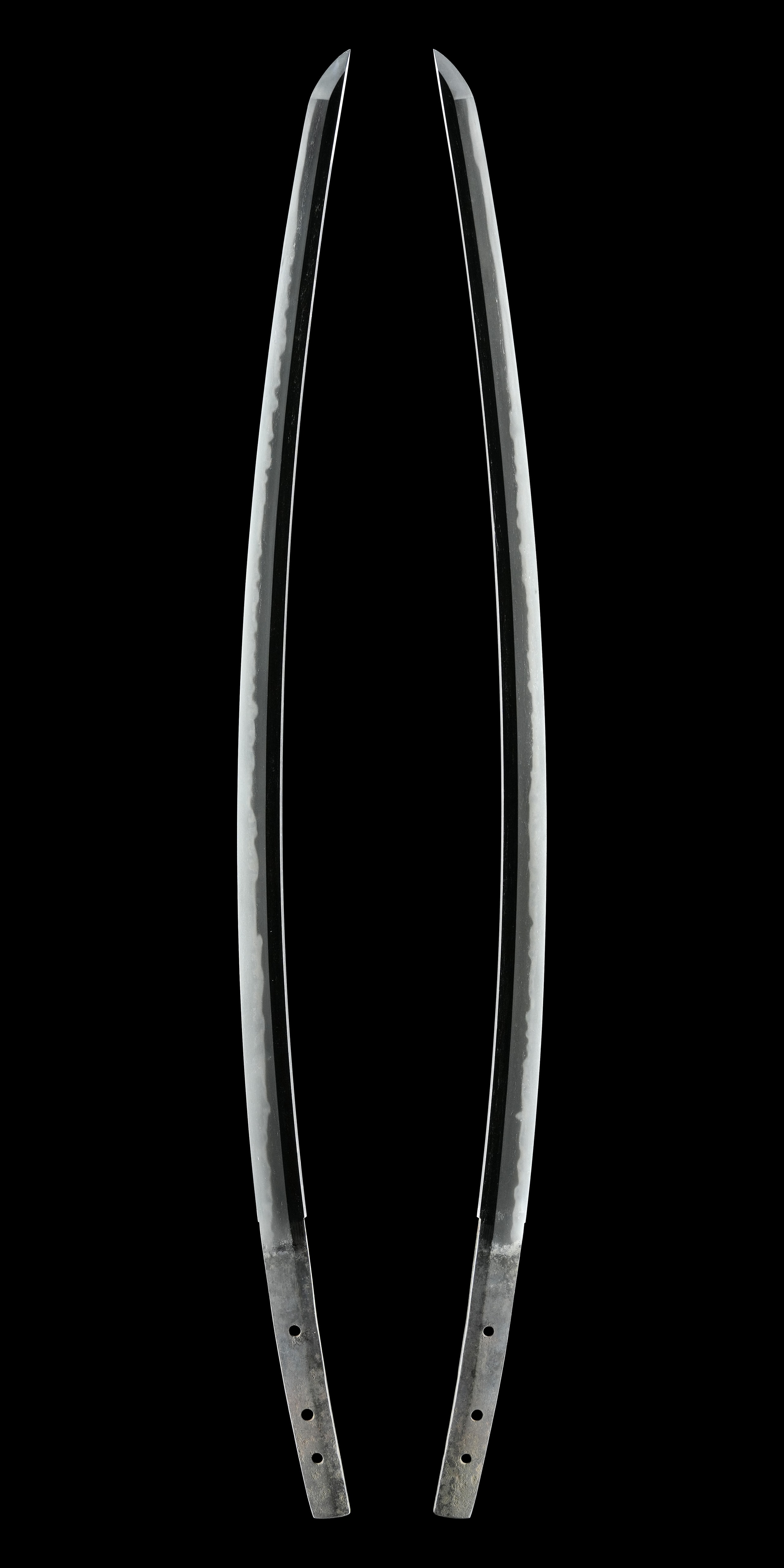
The hand that sentence describes is genuinely a hand carried south and turned a touch more provincial. Over a packed or that takes on a , -leaning tendency near the edge, the of the Kyoto parent, famous for being tight and bright, here stands up somewhat, the grain lifting into a visible surface that the published sources record again and again as . Thick gathers across it and fine wind through, and on the broad this standing, flowing steel carries a -leaning weight that is the first thing separating one of his blades from a true Kyoto . The temper laid over it is a broad , but it does not stay the plain, quiet of the orthodox line. It breaks instead into and , with and running in and settling along the , and through the body of the run and, on the finest pieces, and a faint above the line.
That busier edge is the heart of his manner, and the judges single it out in the longest of his designations, where the abundant activity in and along the is said to give the whole working surface change and force. The , which the school as a whole tends to carry a shade sunk against the brighter Kyoto , turns on his best bright and clear, deep in with the well applied. The closes straight to a and is frequently brushed with at the point; on the wide, large- late it runs up into a tendency on the and points and turns back on the , a tip habit that follows the imposing silhouette. are ordinary to the inheritance, carved through or run off as kaki-nagashi, sometimes with a companion groove, while the take a plain with claws or a with beneath.
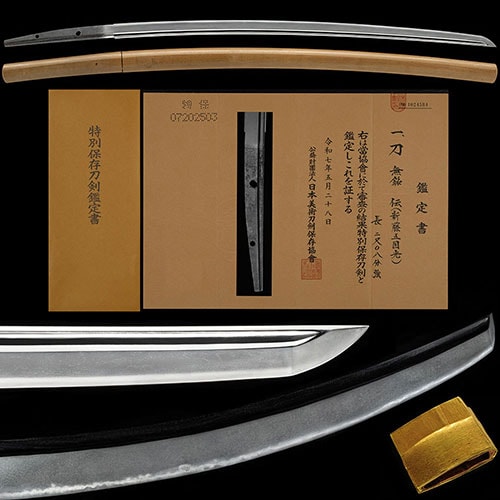
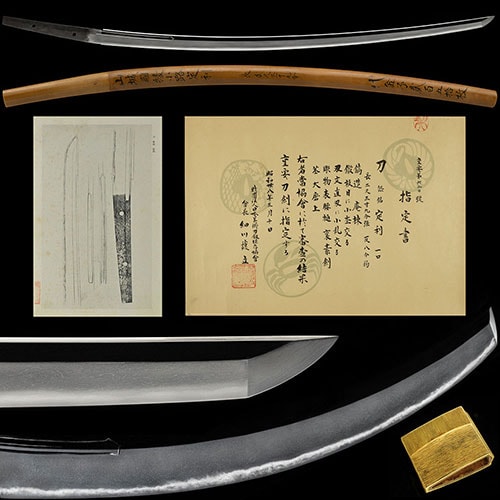
The corpus divides cleanly into two registers, and the division is itself a tool of attribution. The signed survivals are almost all and small , broad in the blade and a little with a thin , carrying a three-character cut below the on the , the chisel by turns fine and boldly thick. Signed are extremely rare, and signed work of the first generation rarer still, so that the published sources note the second generation's signed pieces survive in comparatively greater number. The other register is the of the Enbun and Joji shape, wide in body with little taper, deep in curvature and ending in a large point, attributed to Kuninaga on the reading of the and then confirmed by appraisal. Several of these carry a gold inscription, a of Koson or a of the sixteenth-generation Mitsuhisa, and one is accompanied by a Kochu of the Kyoho years; the published sources judge that such transmissions may be accepted, the forging and tempering conforming to the appraisal.
His place in the school is best taken from the way his blades are read against his relatives rather than from any claim of his own invention. A broad of his can recall Kunimitsu at first sight, and one of the later pieces is said even to call Kunitsugu to mind, yet the standing , the somewhat sunk lifting only on his best work, and the overall level of the workmanship settle the attribution on Kuninaga. The distance is one of degree and not of kind: he keeps the , the Kyoto air and the of the parent whole, and what he adds is the provincial, -leaning cast and the busier edge. The first generation is recorded keeping the orthodox , while the second made fewer pure and many blades in , and it is that more active second hand which the present blades document. The judges, weighing the broad , the thick and and the well-entering and , conclude that such a blade clearly manifests the characteristic traits of the school.
Kuninaga is a Jo-jo smith of the descent, and the connoisseurship of his work follows from his being a fine but residually attributed name rather than a celebrated one. Eleven of his blades stand on the designated record, all at the level and none raised to the higher tiers, so that there is no patrimony of his locked permanently into museum and shrine holdings. None of the designated blades carries a recorded provenance, and current ownership is largely unrecorded, so the honest account is that he is met not through a famous transmission but through the blades themselves: the broad with their gold attributions, and the signed and small in which his hand can be read directly. A collector encounters him as one of the more findable of the -descended names, since his blades sit in the tradeable designation tiers rather than beyond reach, yet a signed example with its three-character intact is the rarer thing, the first generation's almost never seen. What such a blade offers is a precise and legible specimen of the Yamashiro manner carried into Settsu and worked a degree busier, the best of which the judges have called a fine piece standing out even within the Kuninaga attribution.