NihontoWatch Mon

NihontoWatch

MarketAuctions
Encyclopedia
NihontoWatch Mon

NihontoWatch

MarketAuctions
Encyclopedia

Description

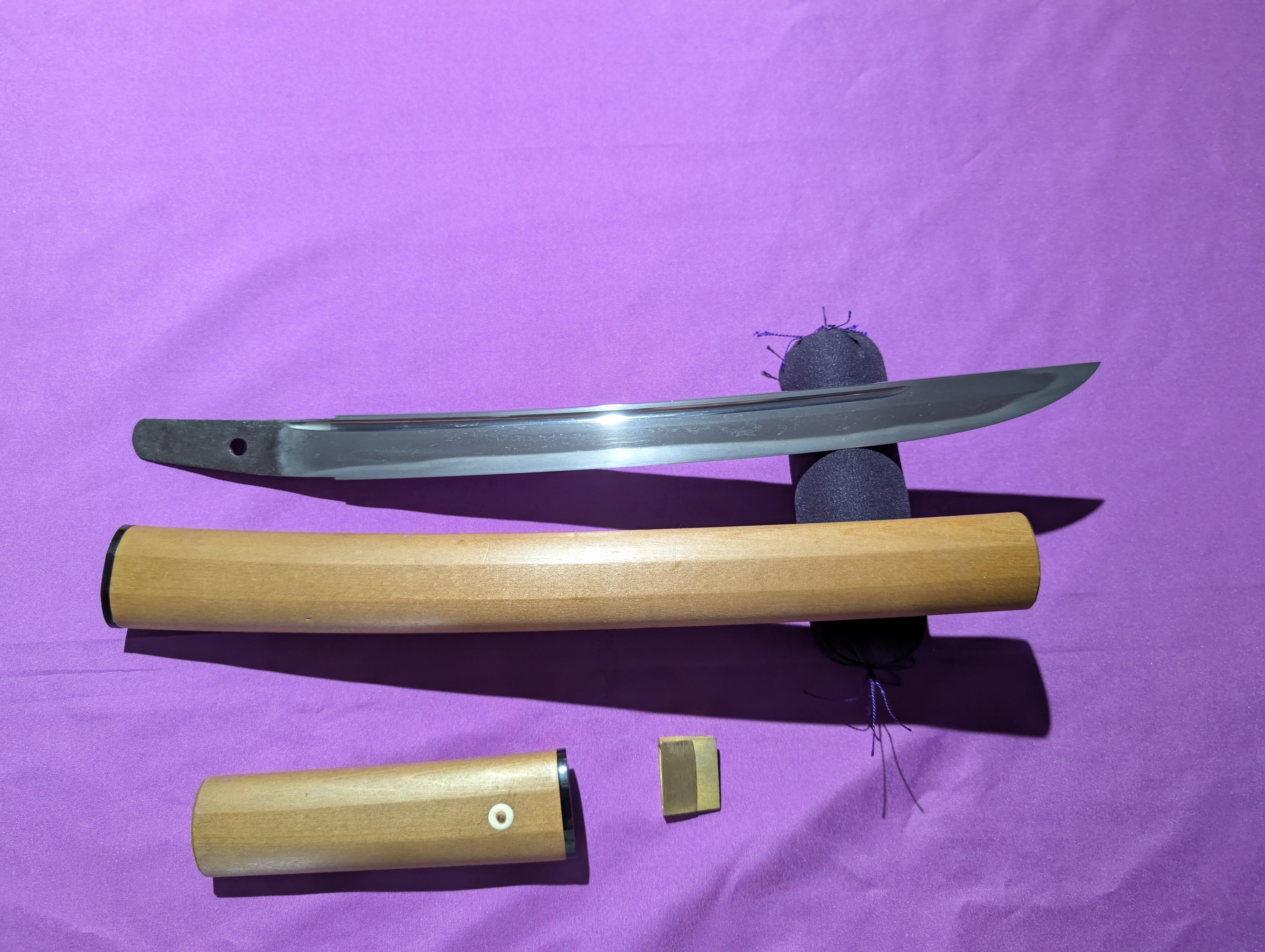
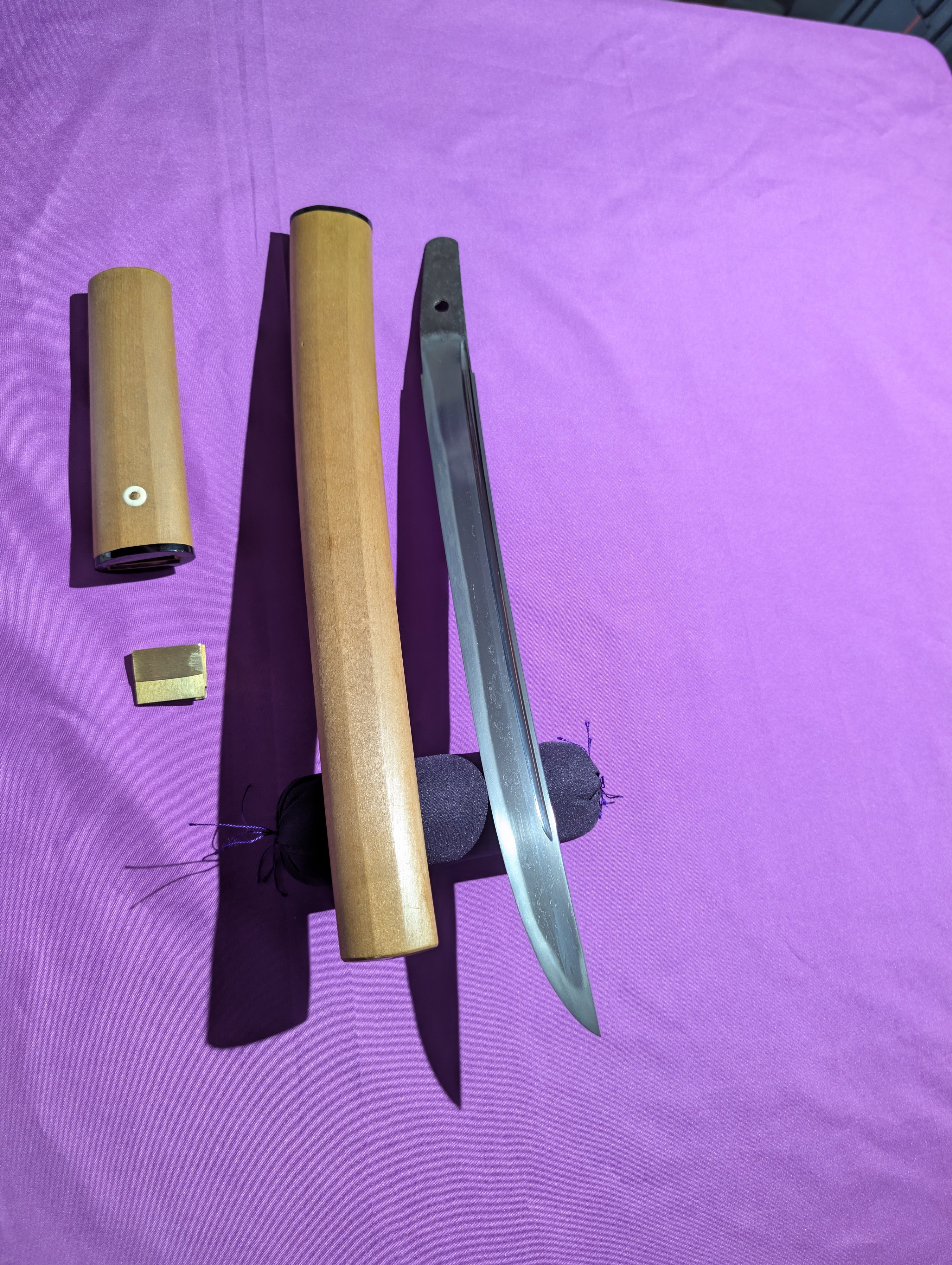
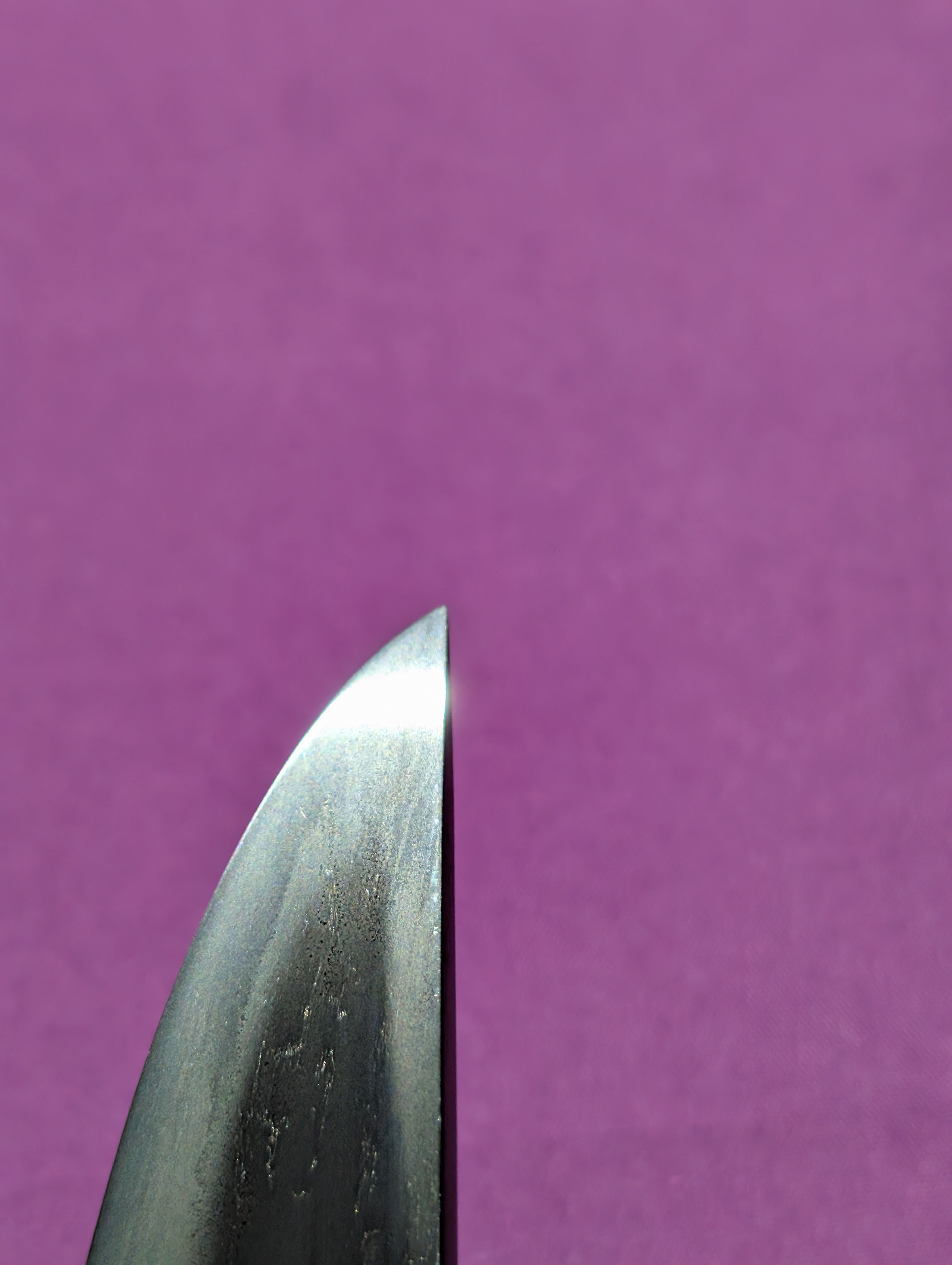
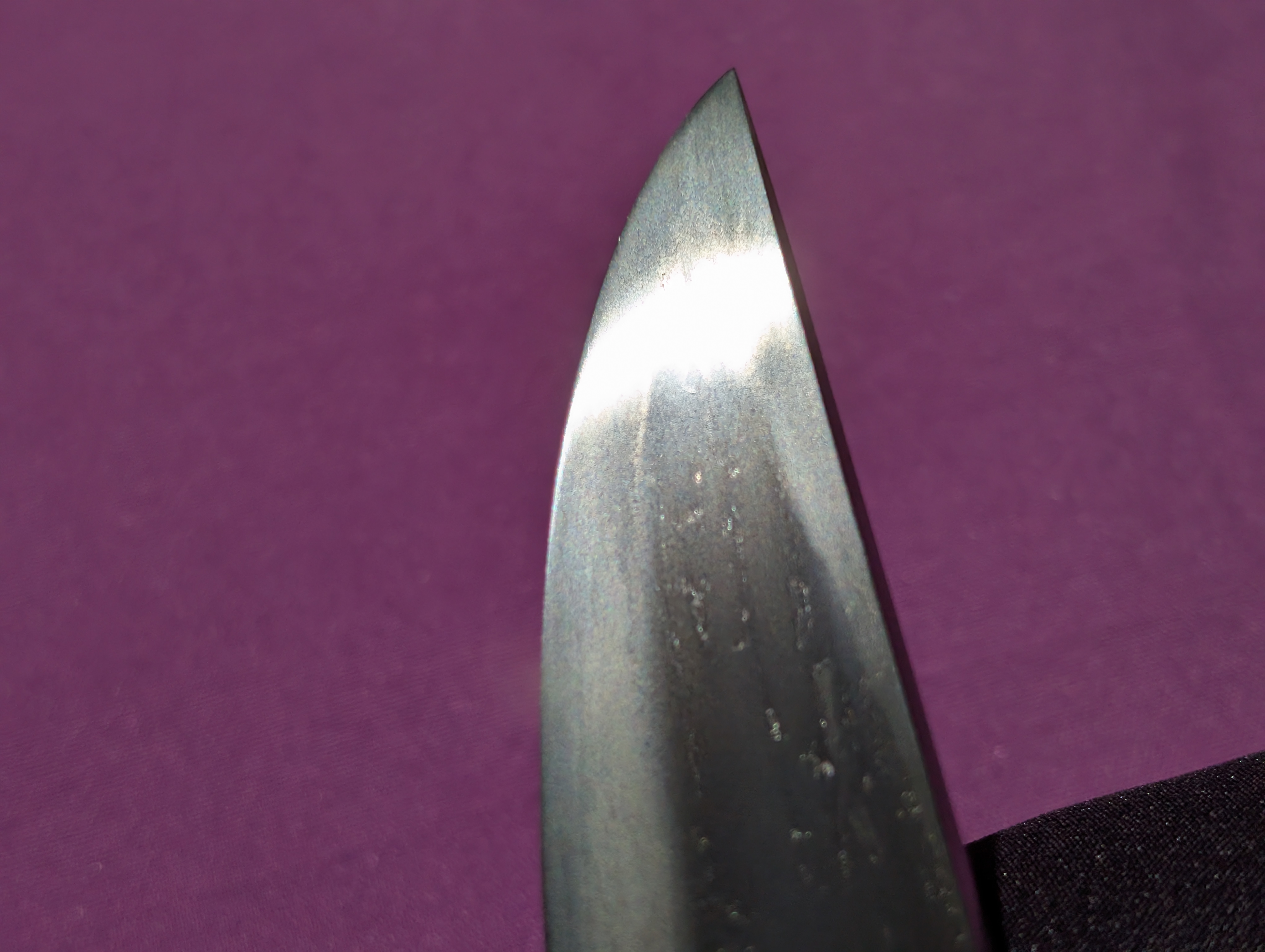
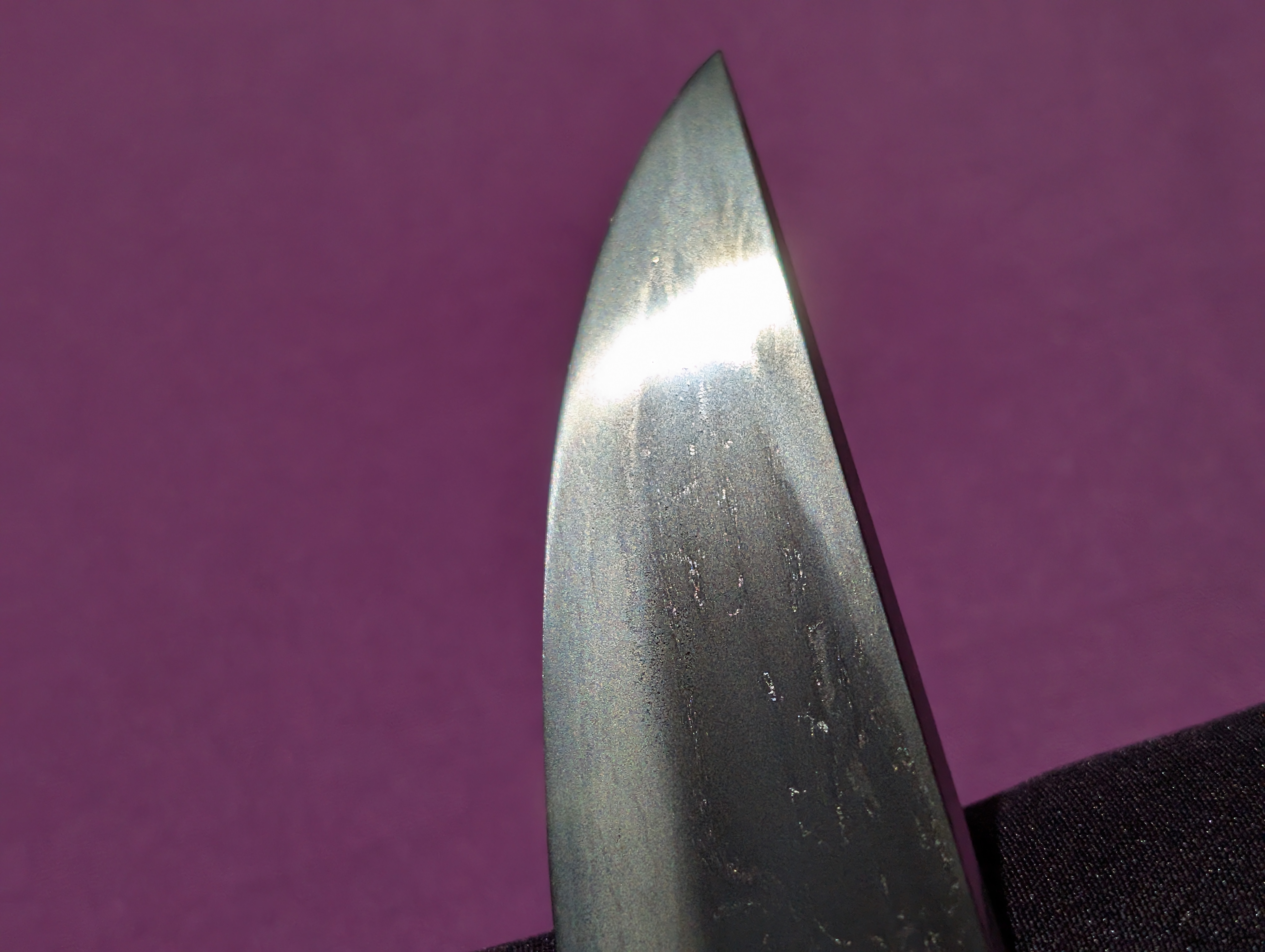
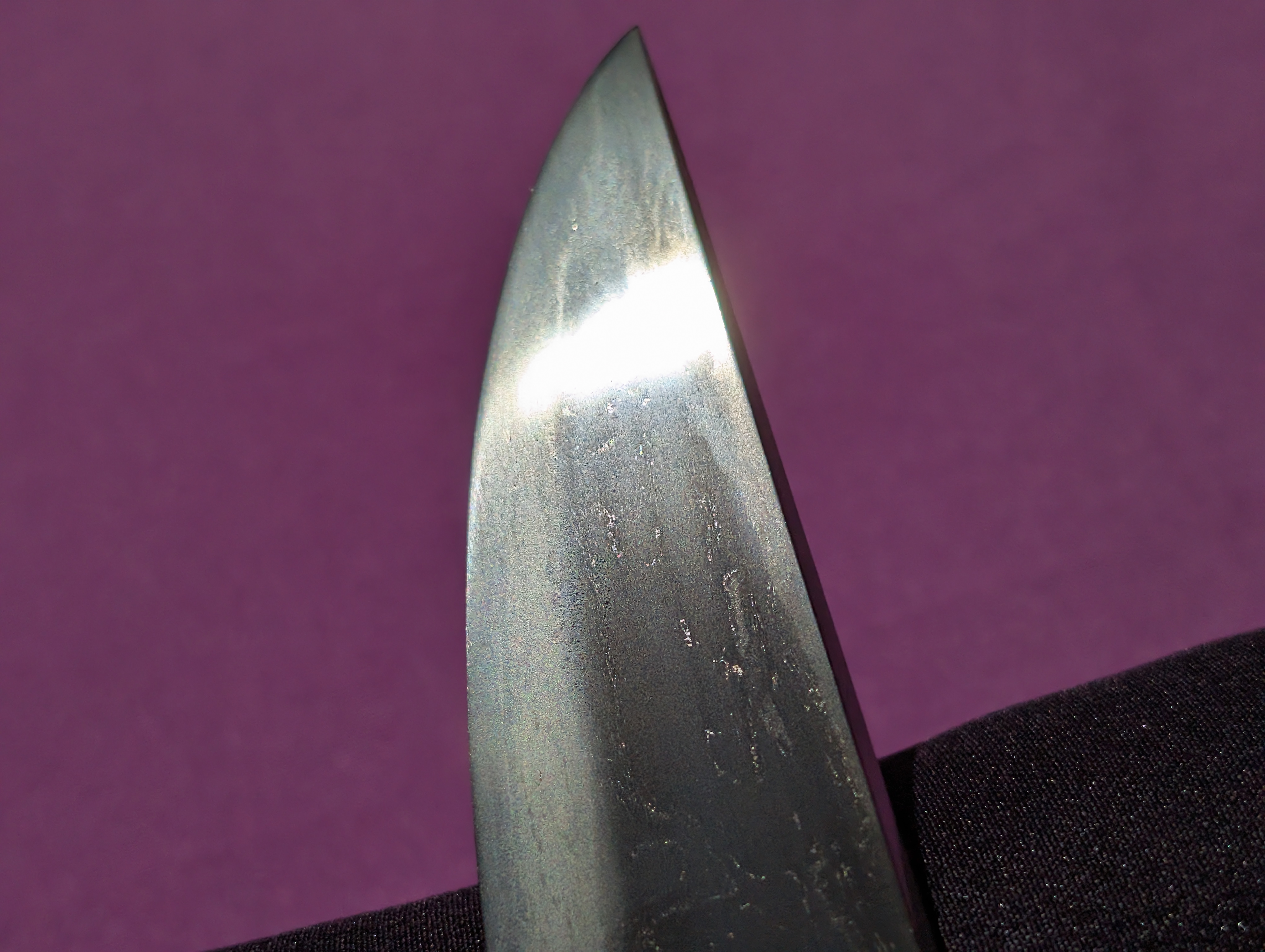
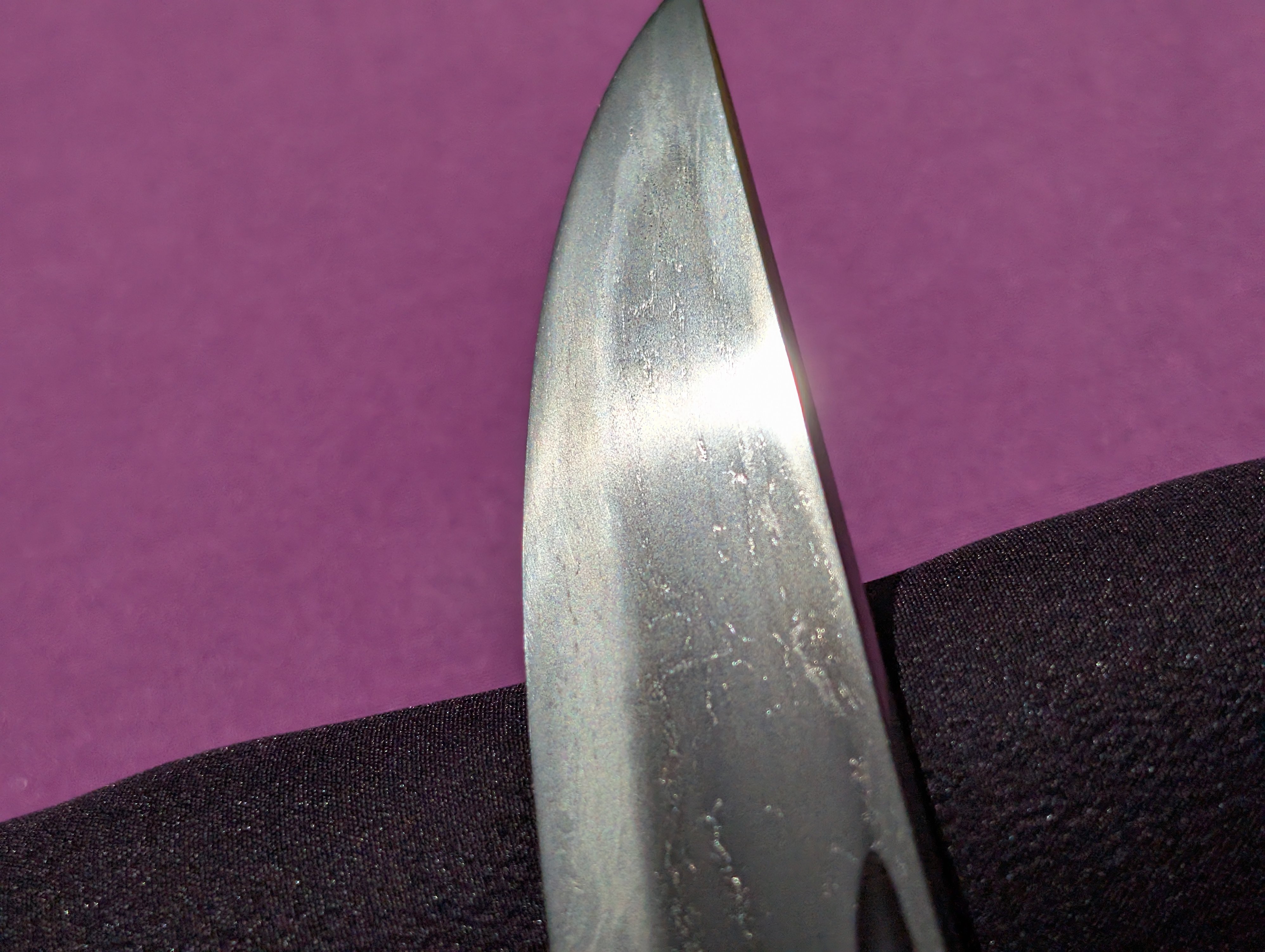
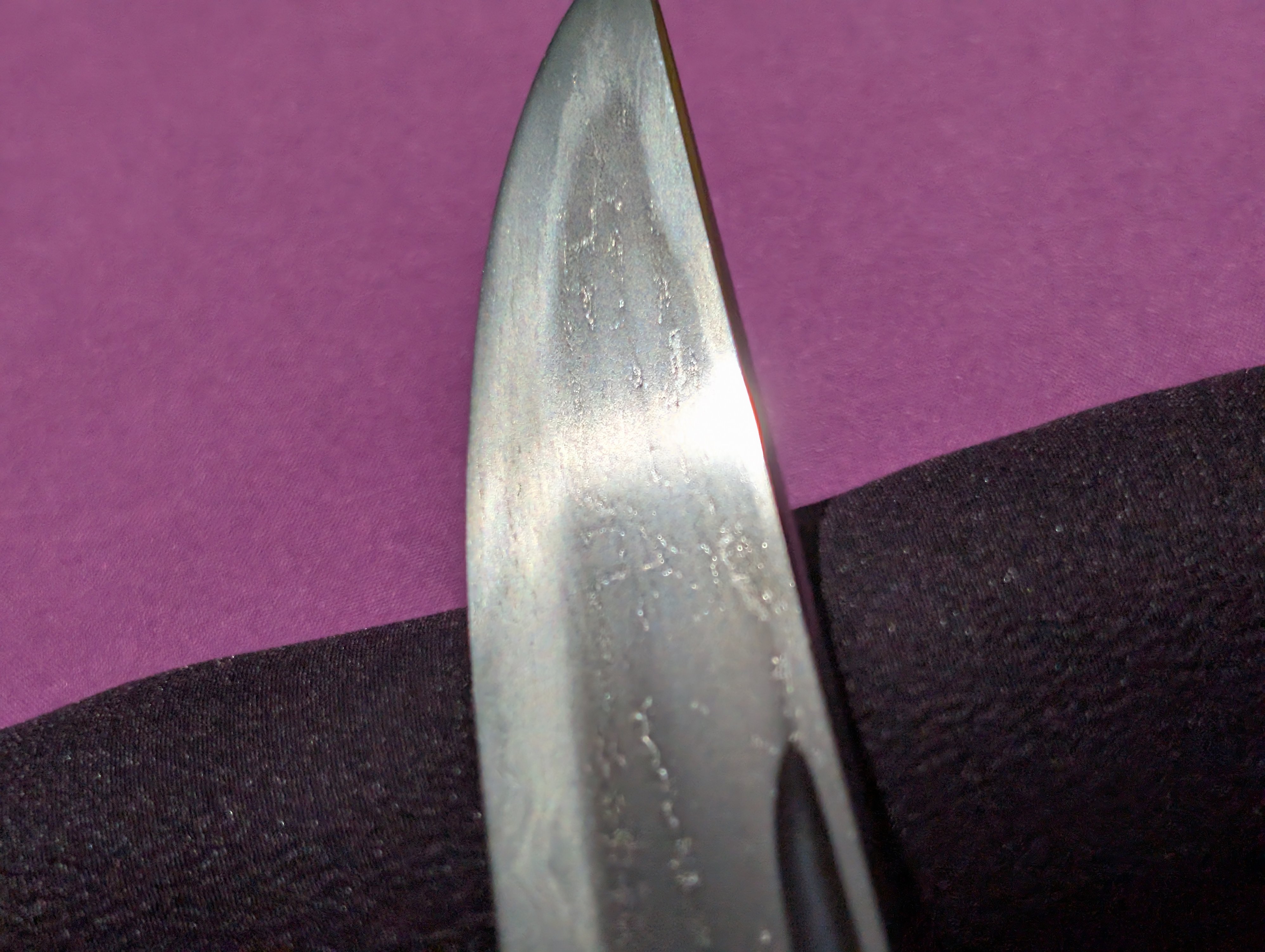
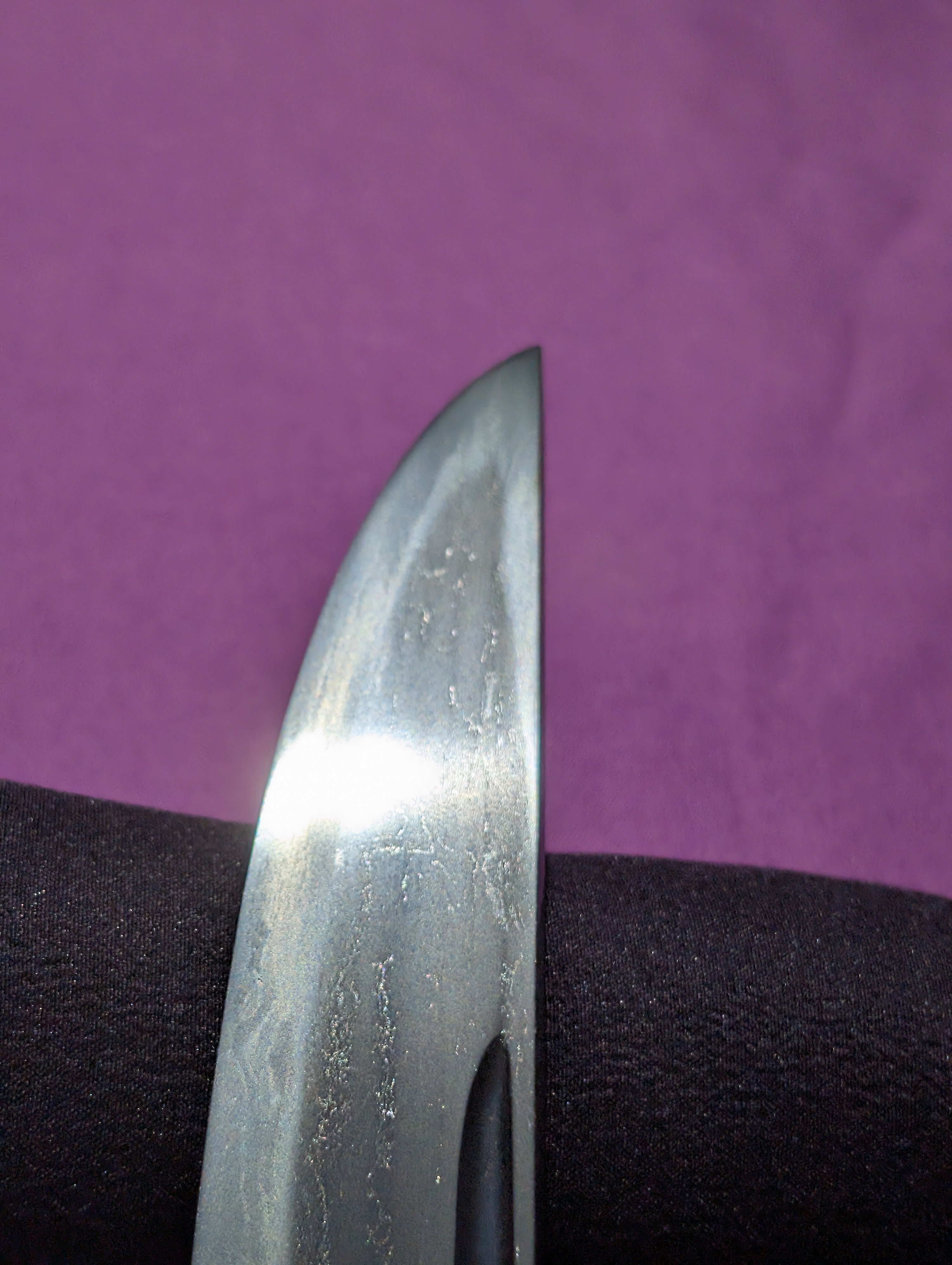
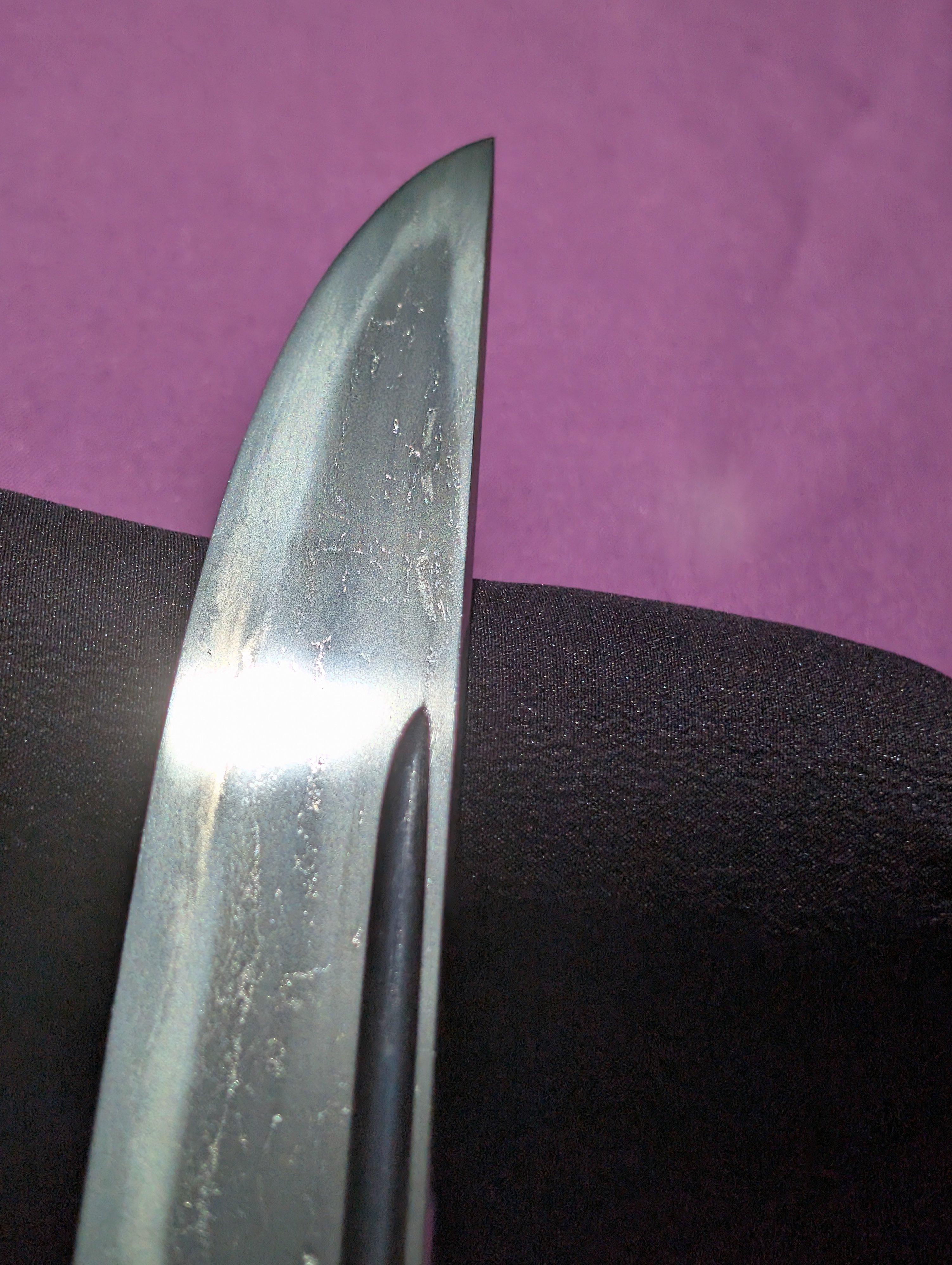
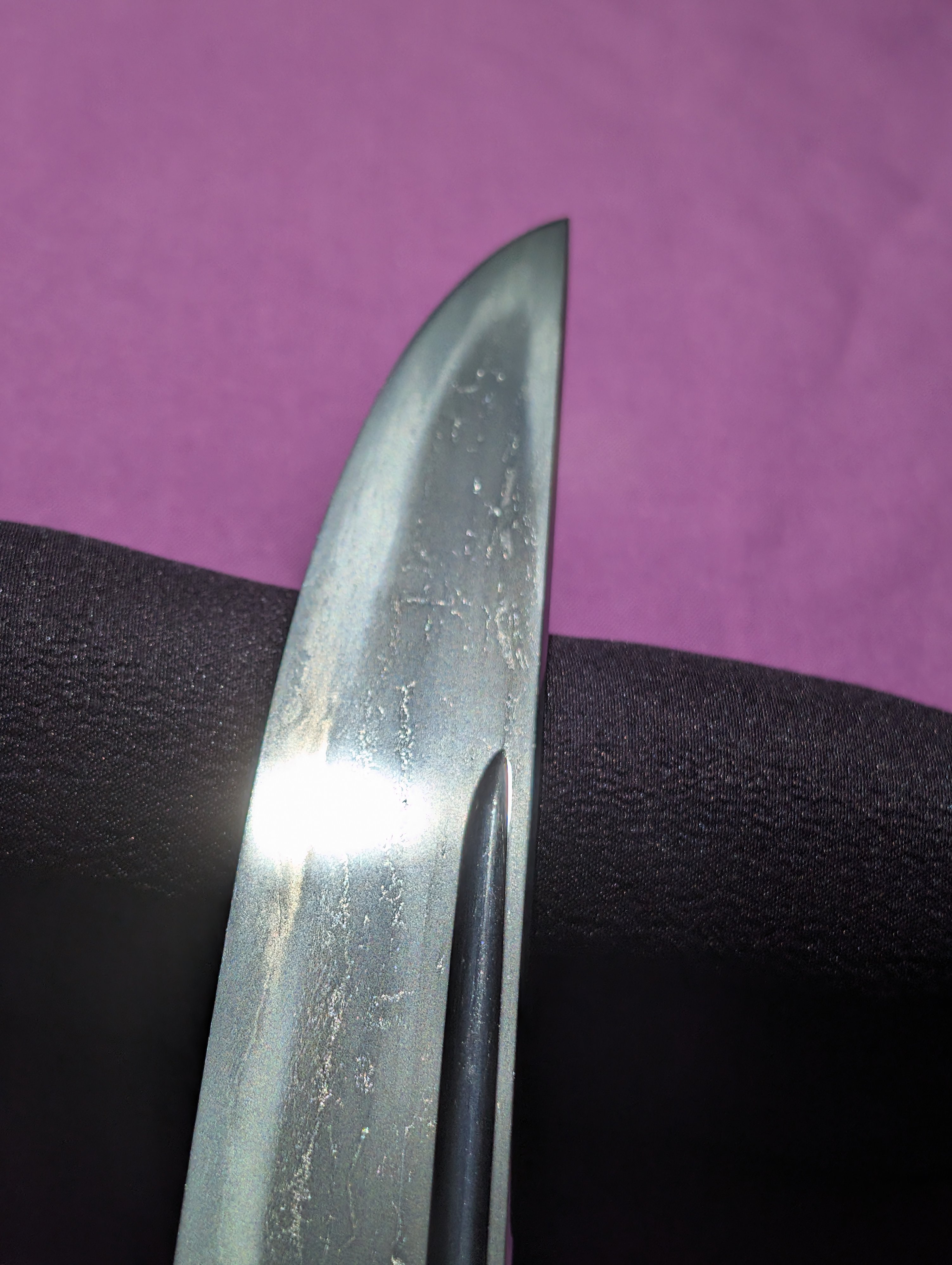
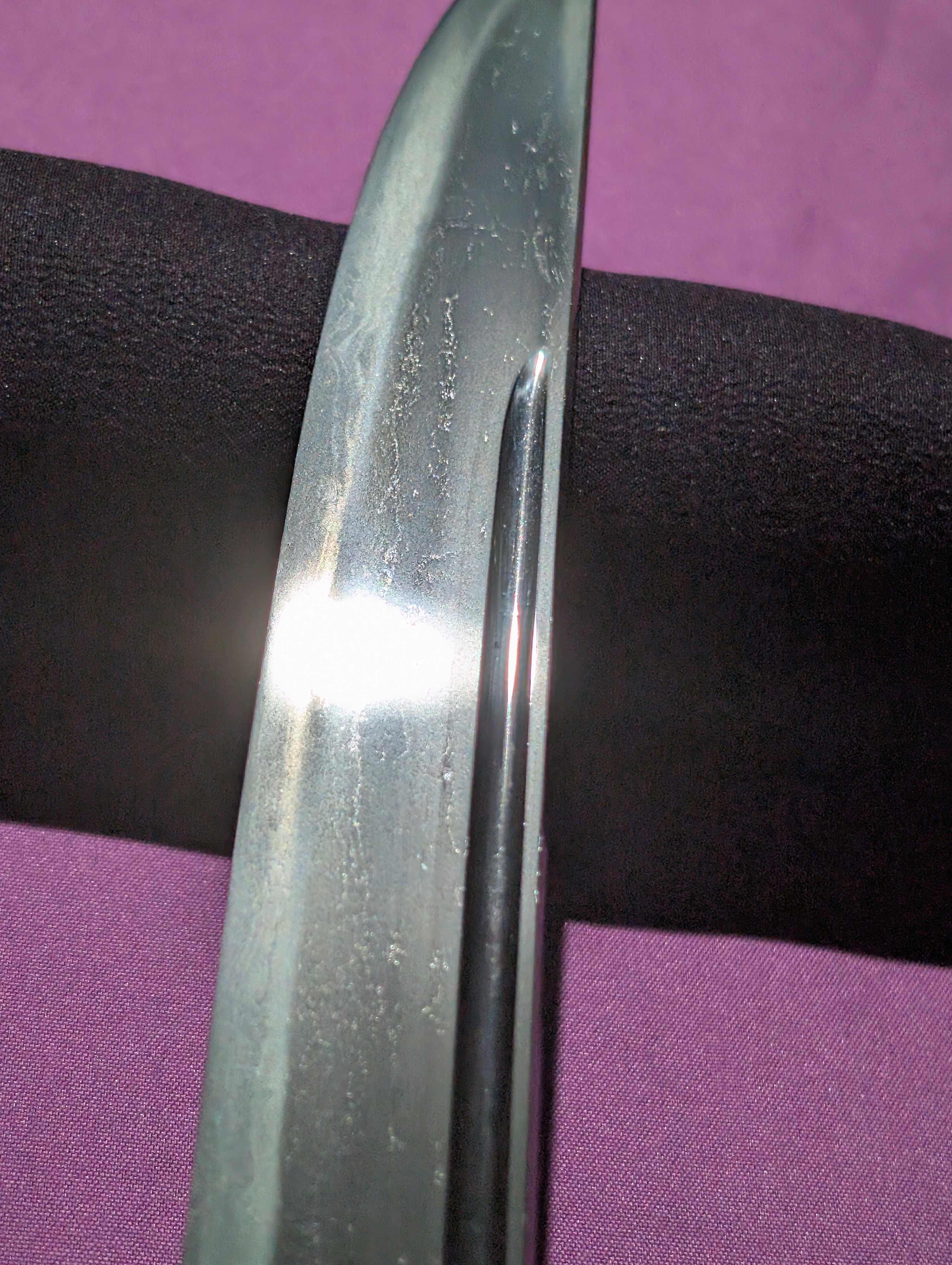
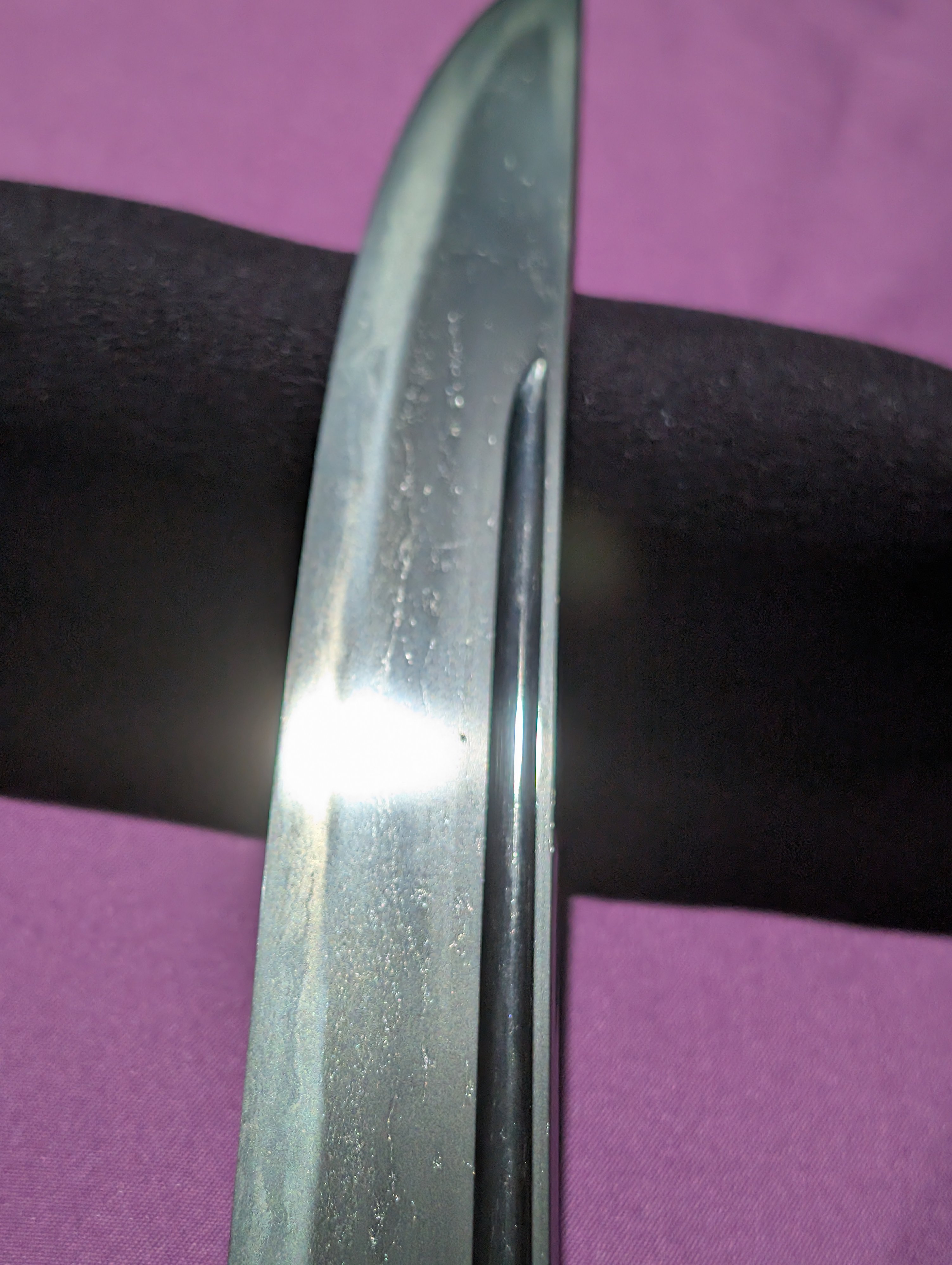
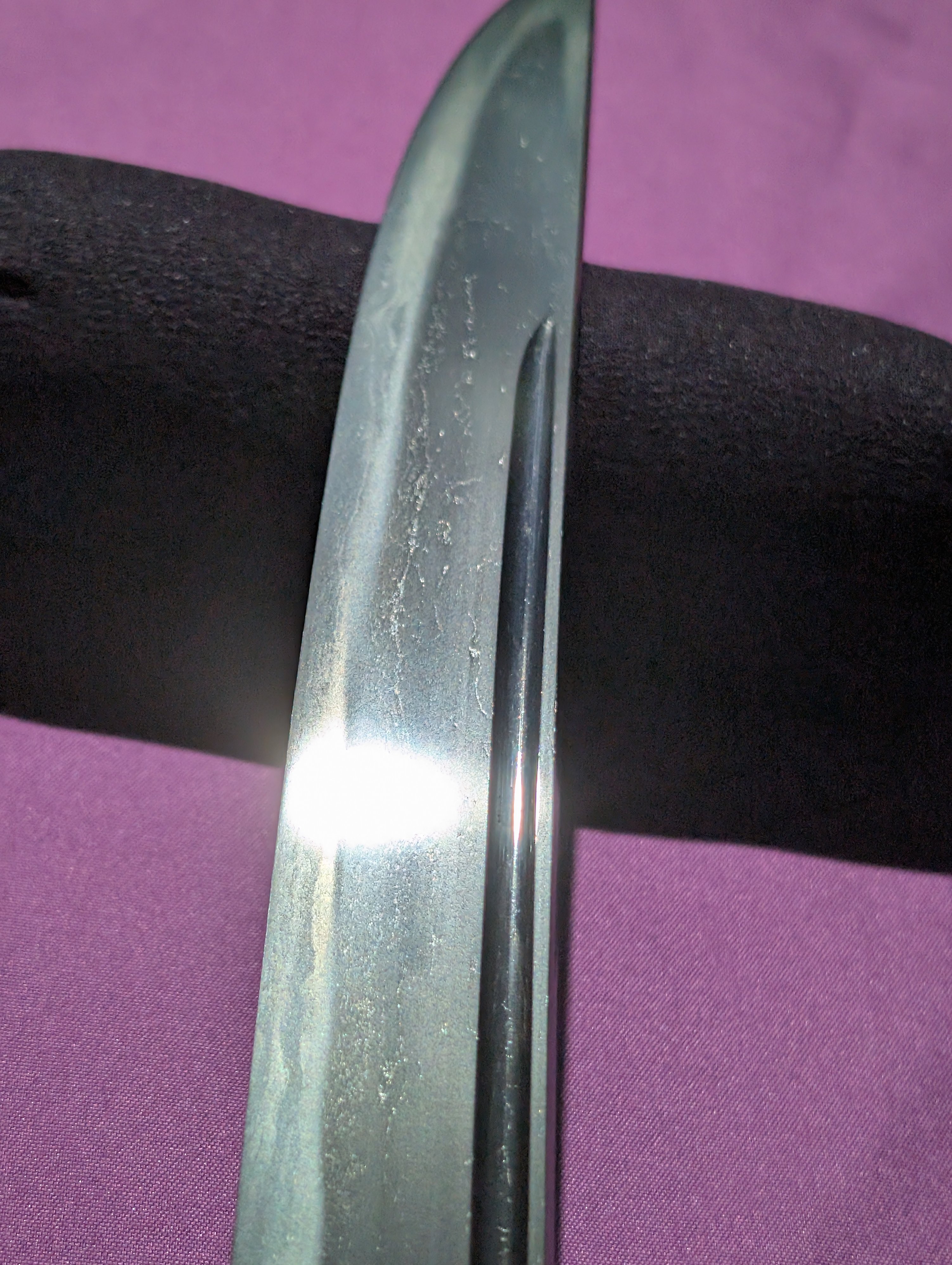
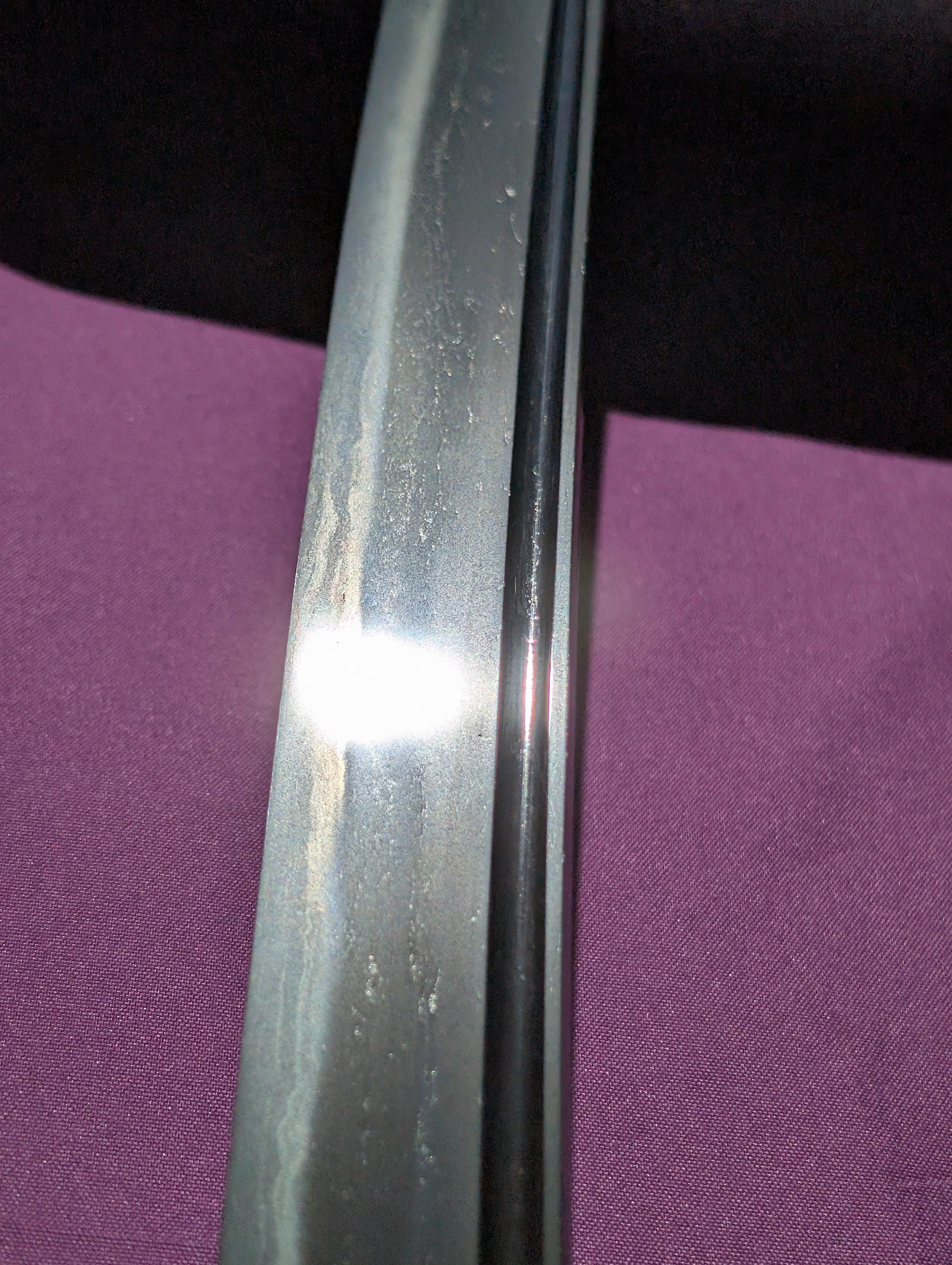
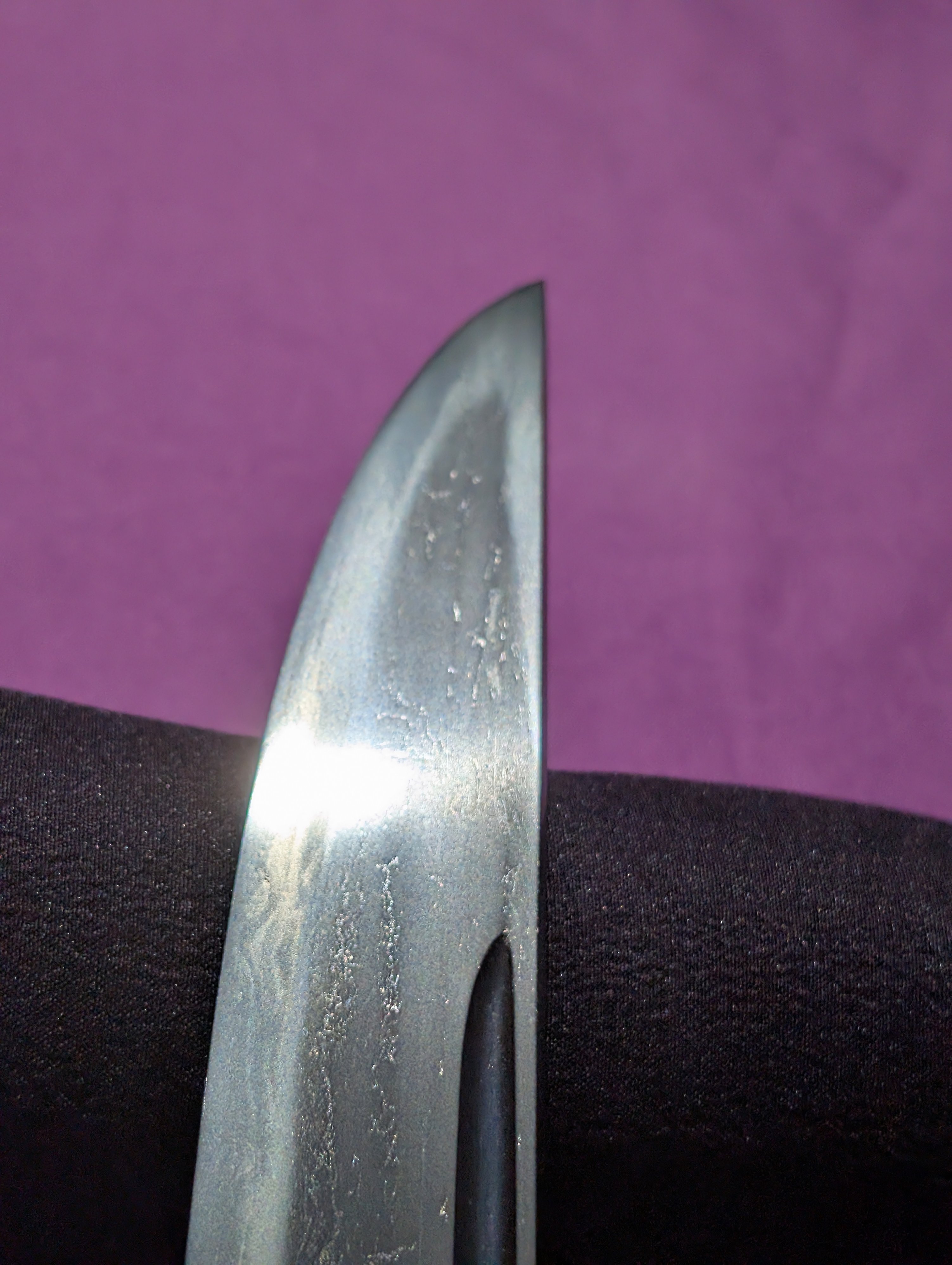
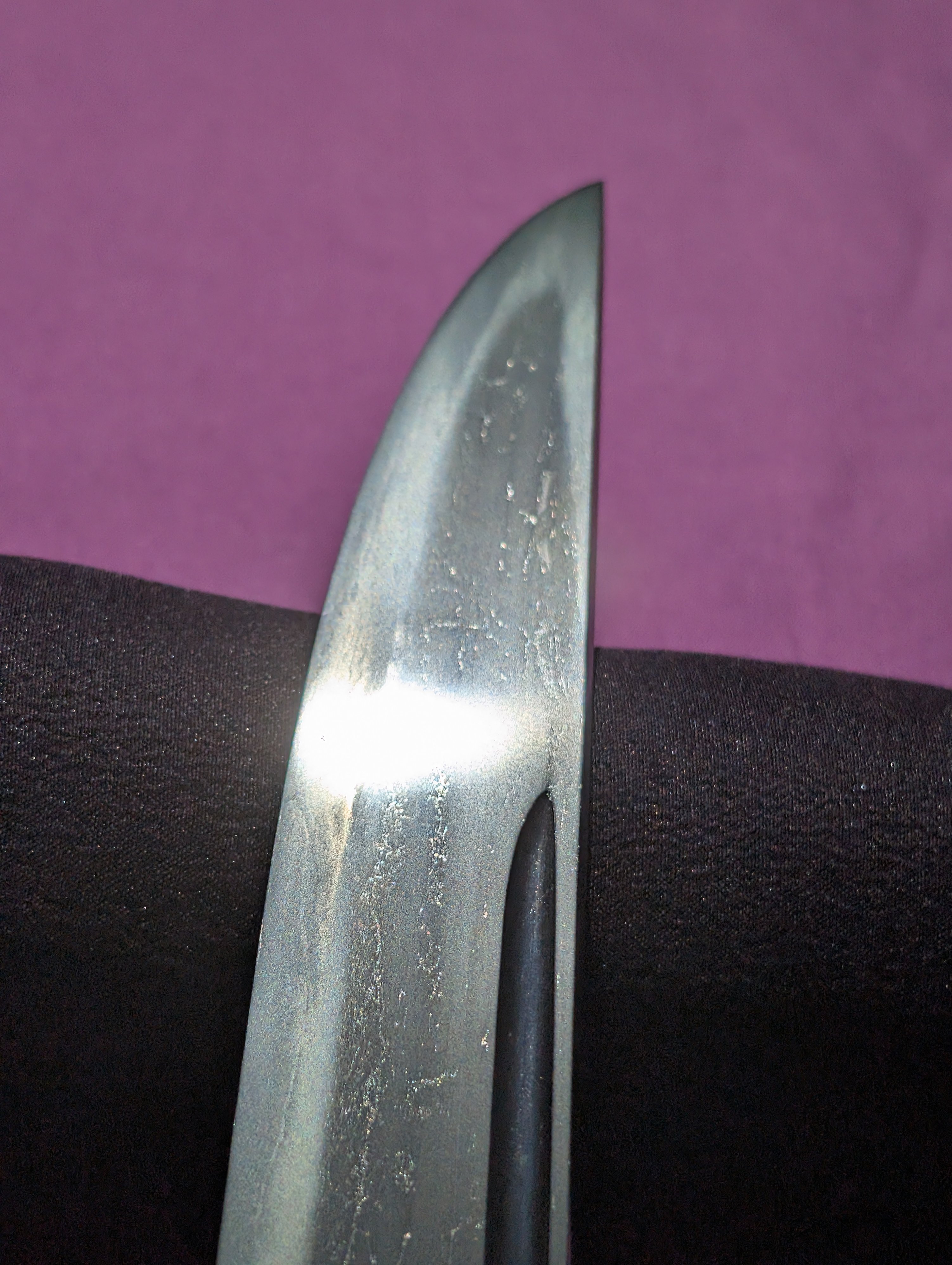
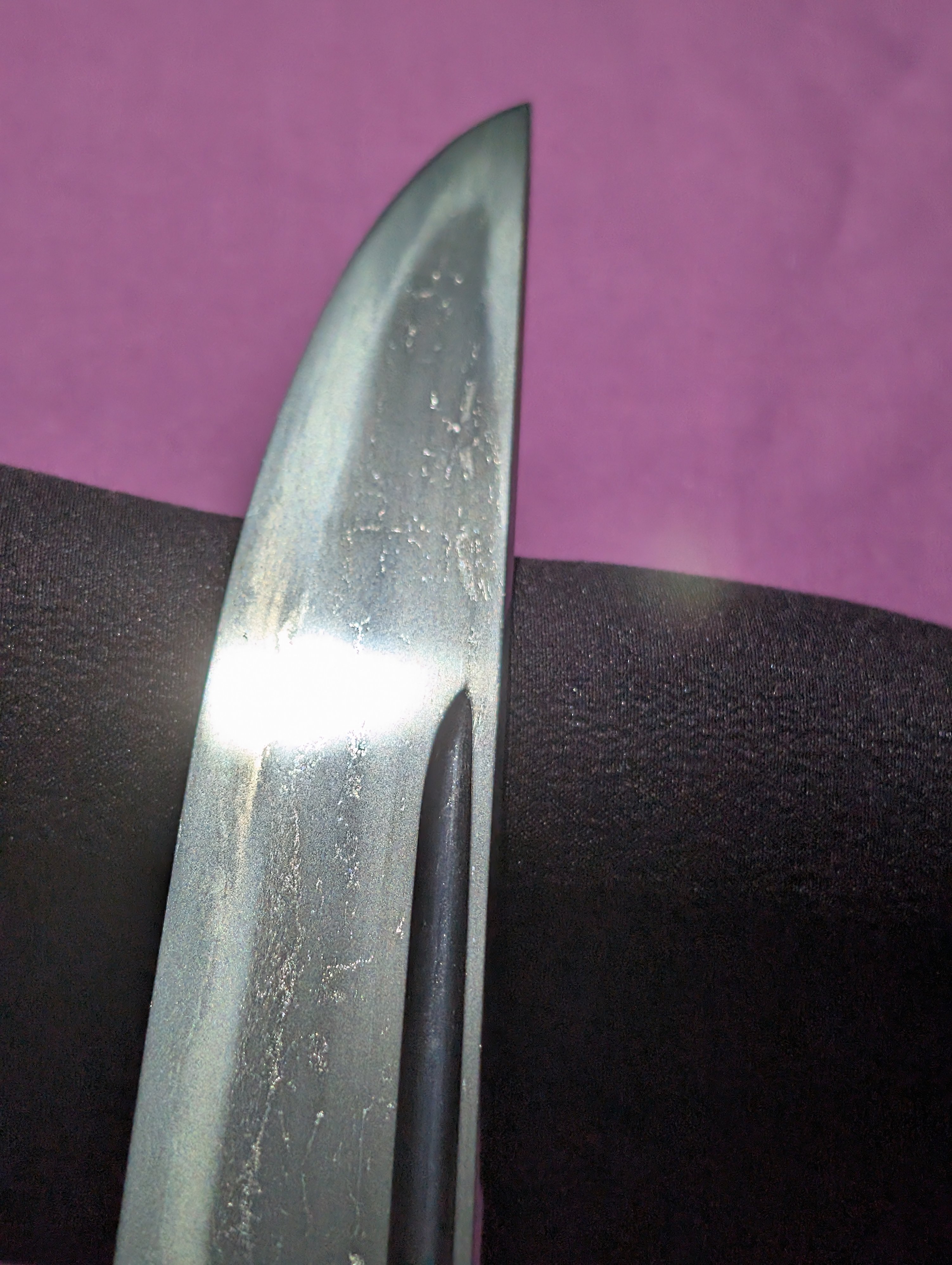
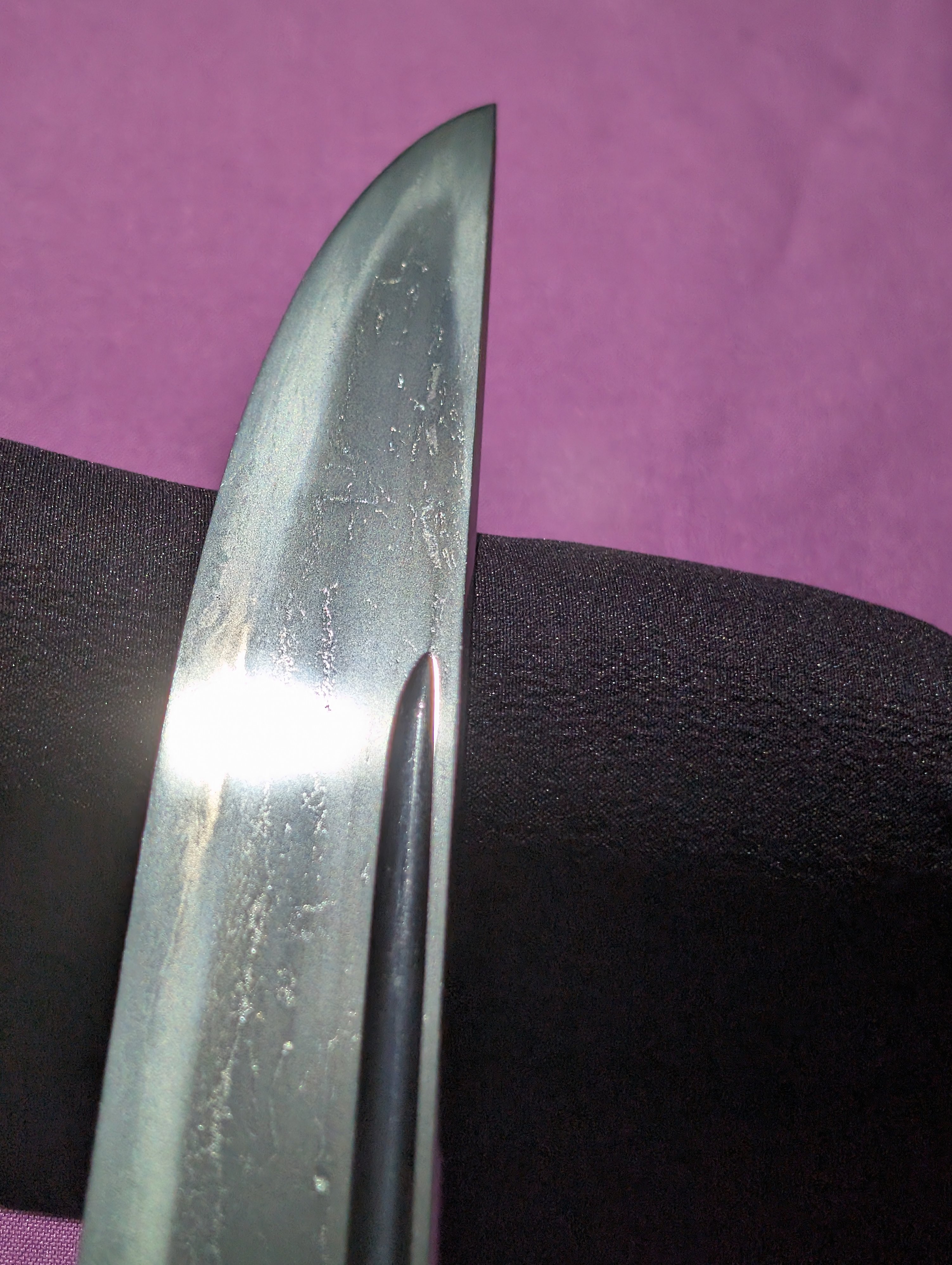
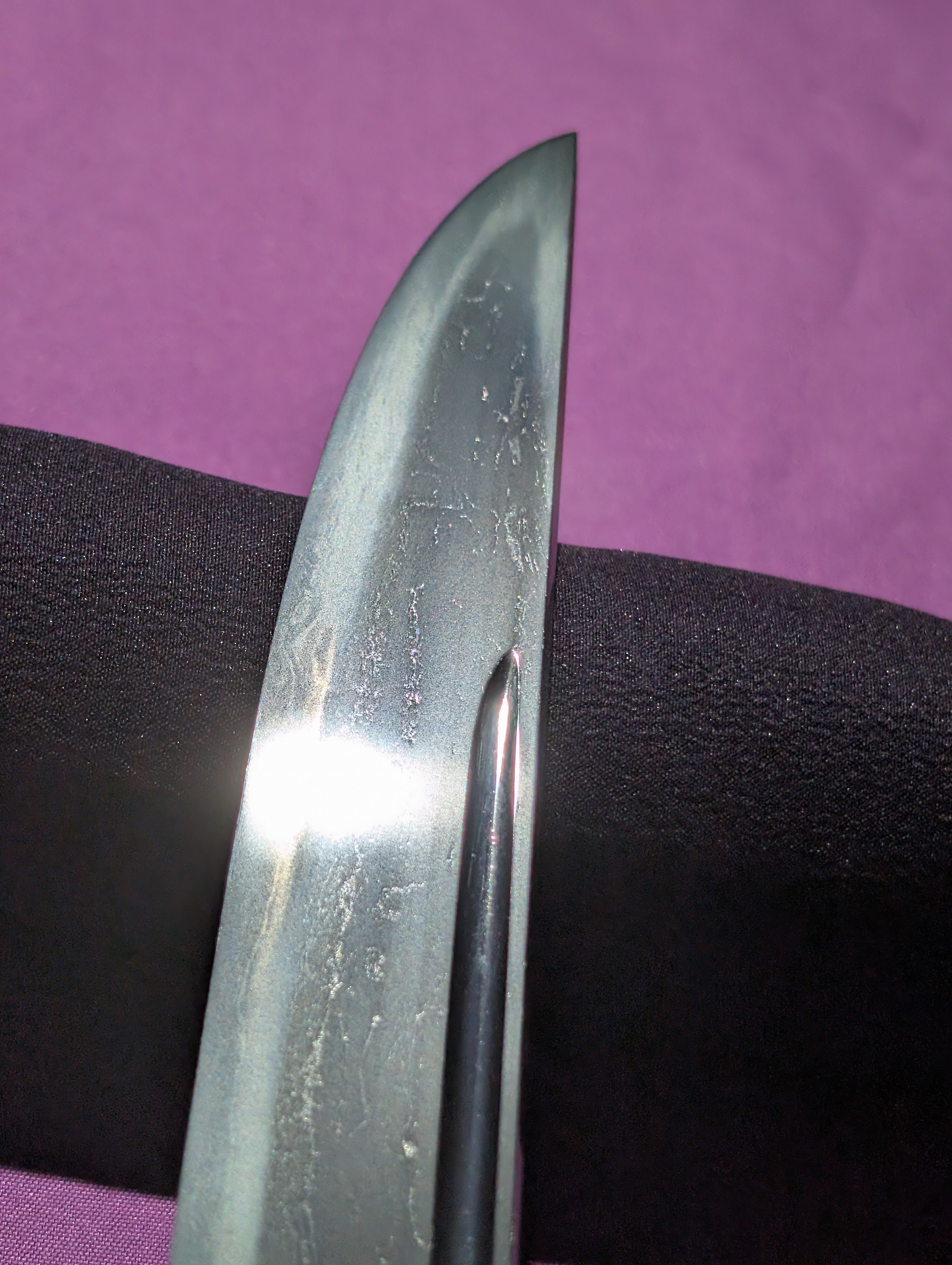
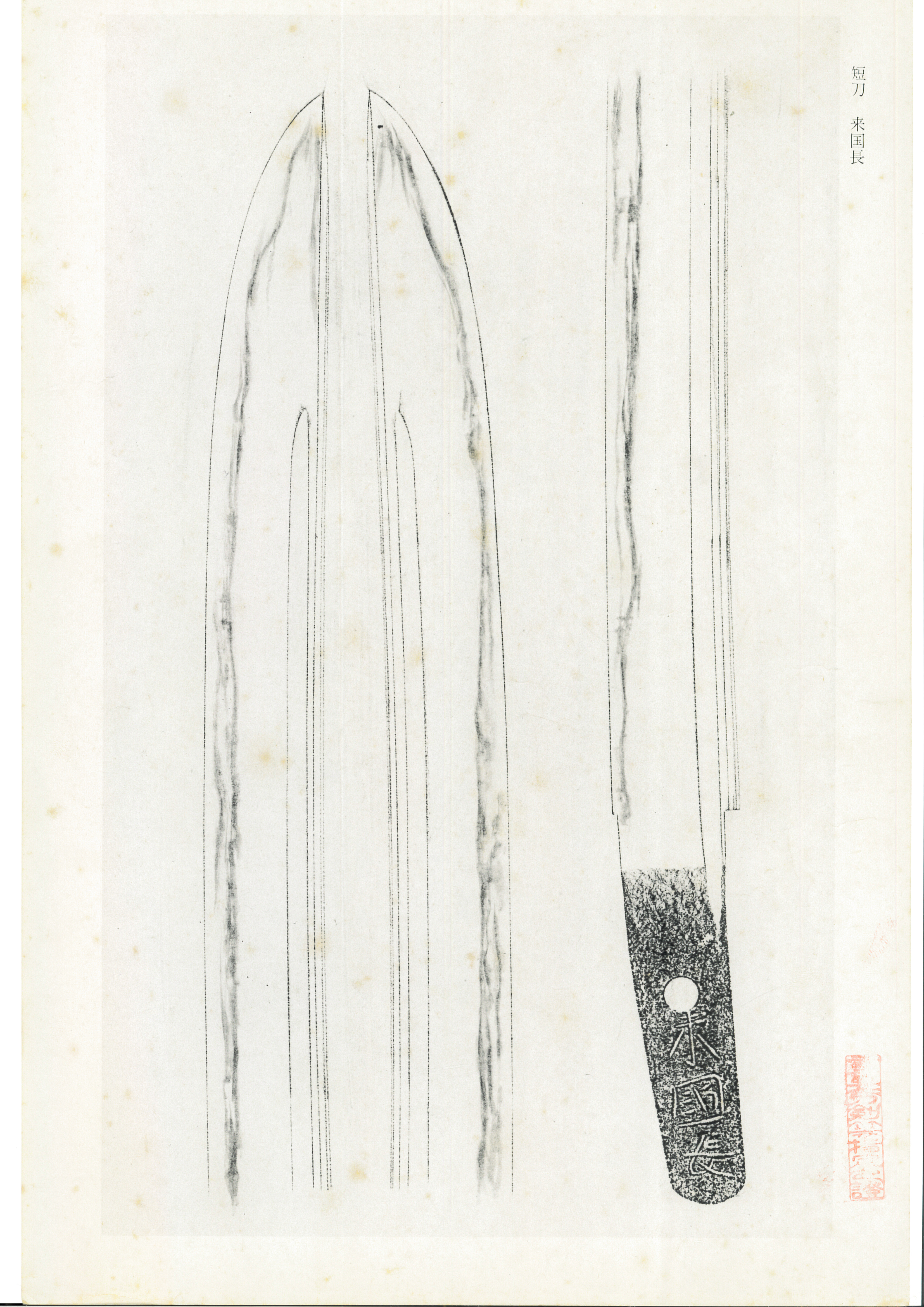
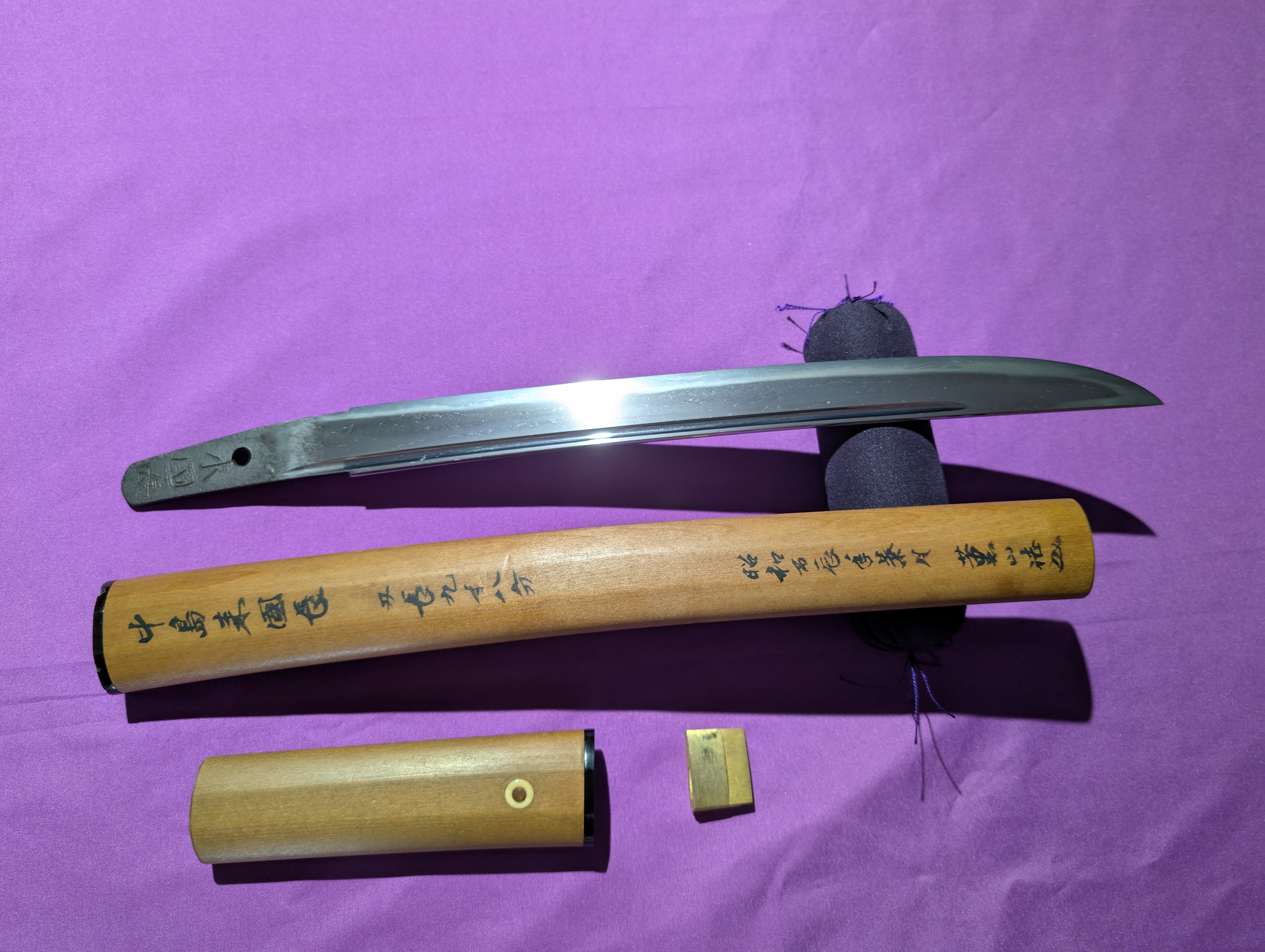
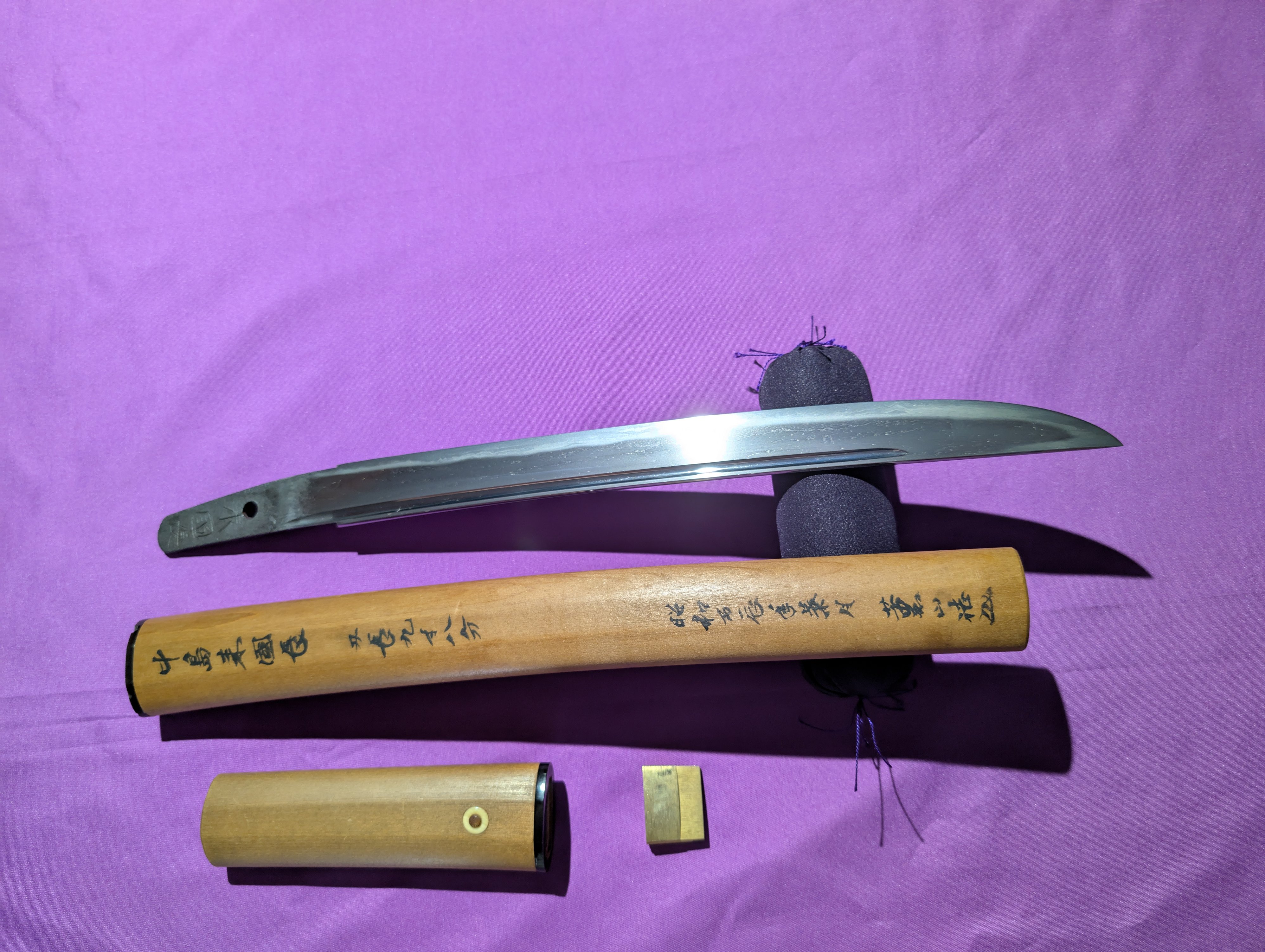
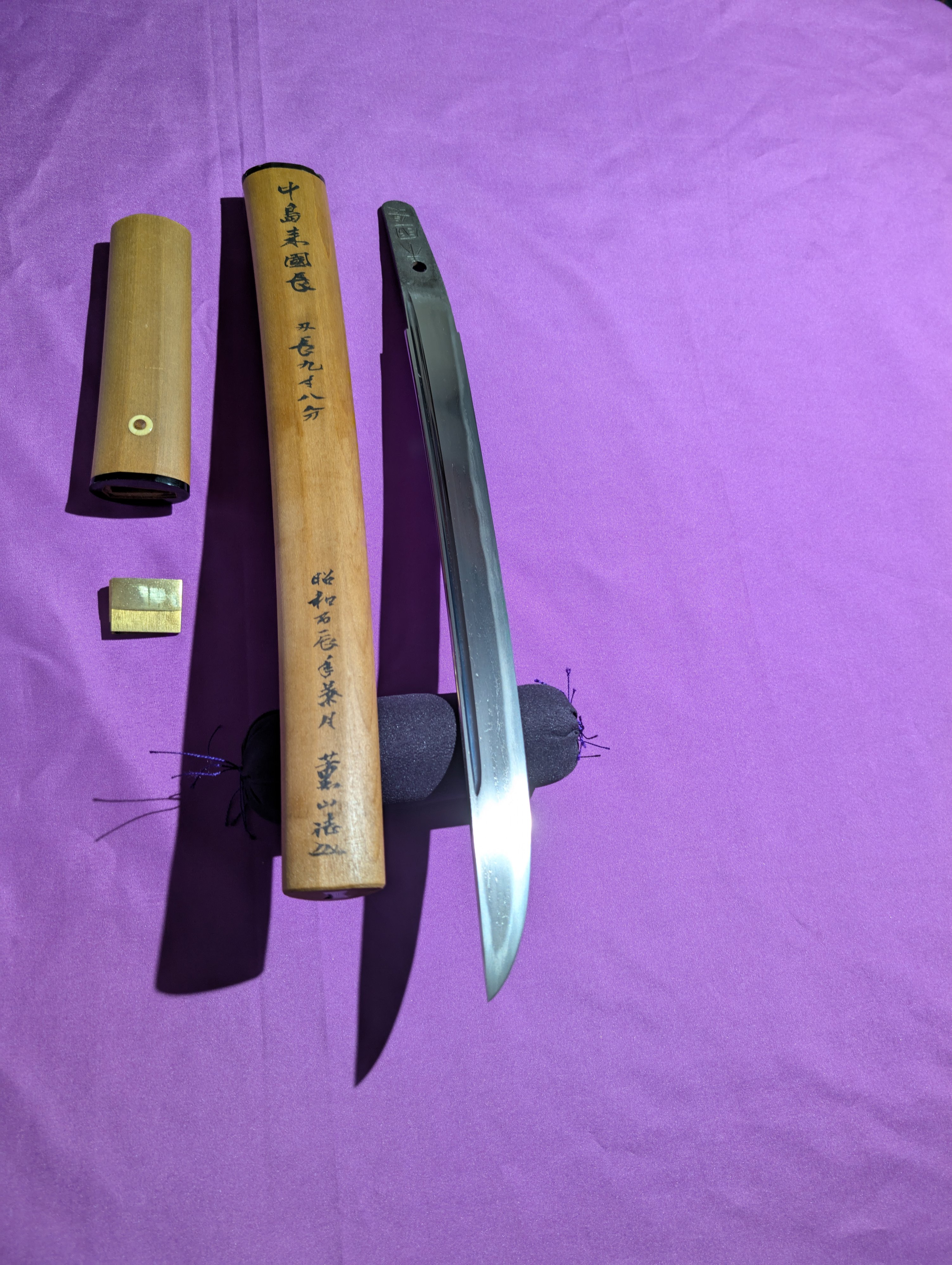
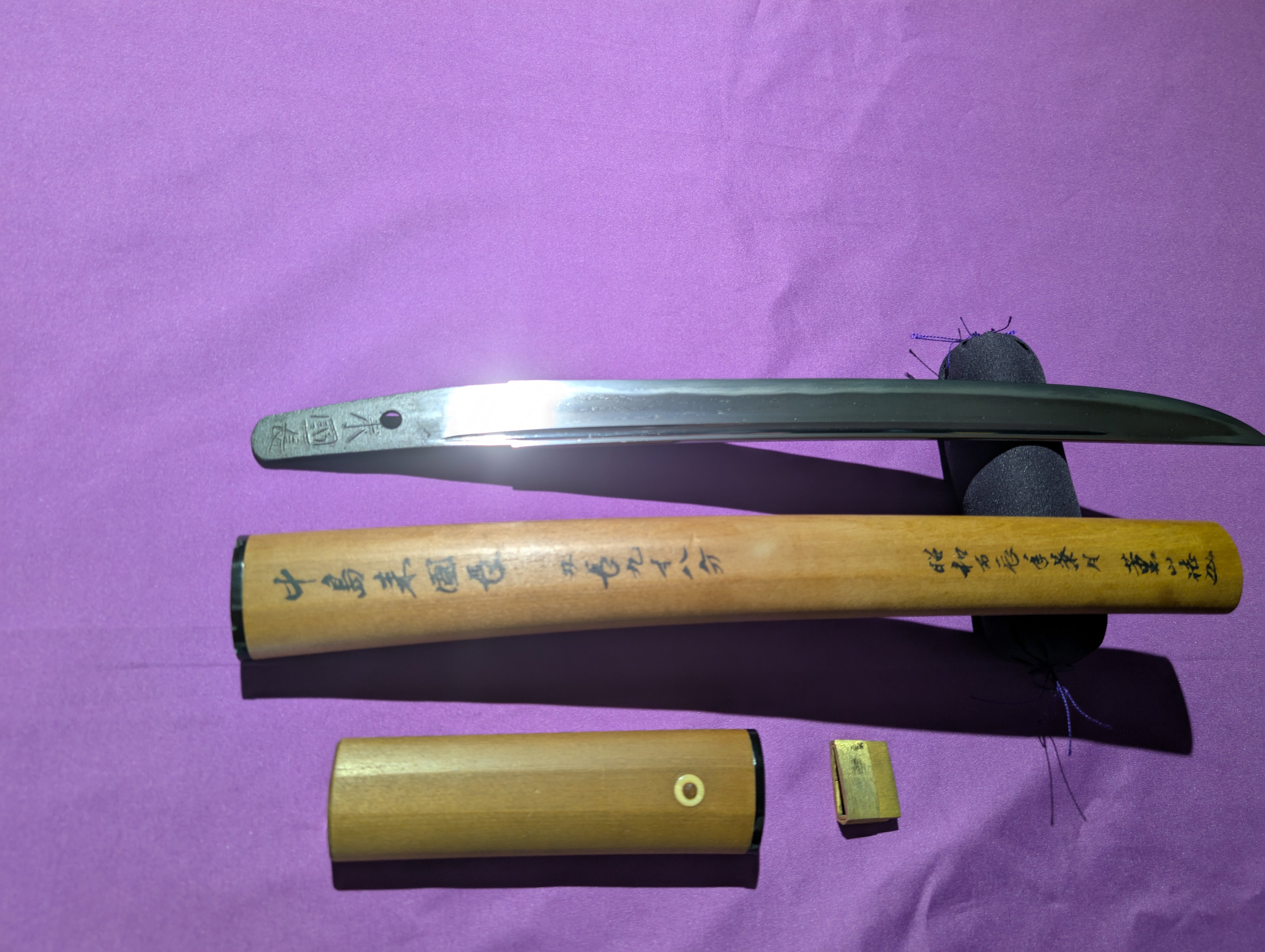
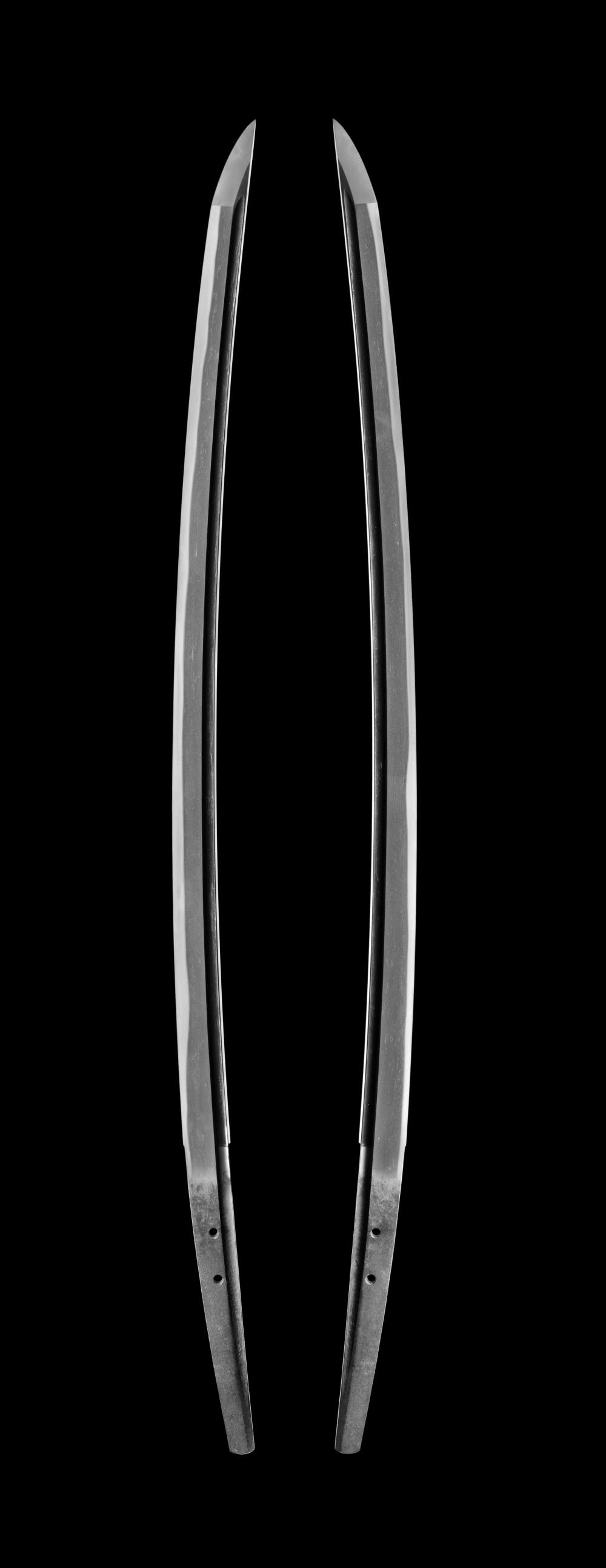
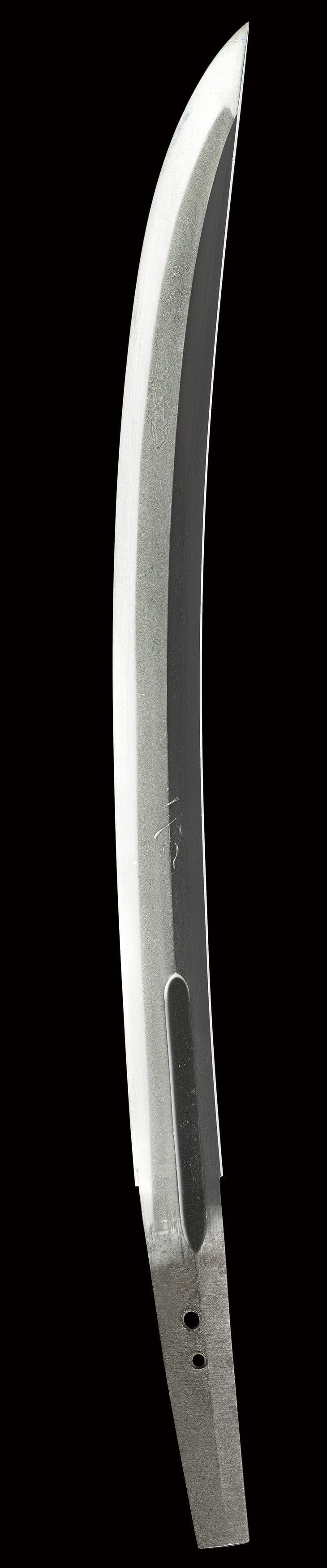
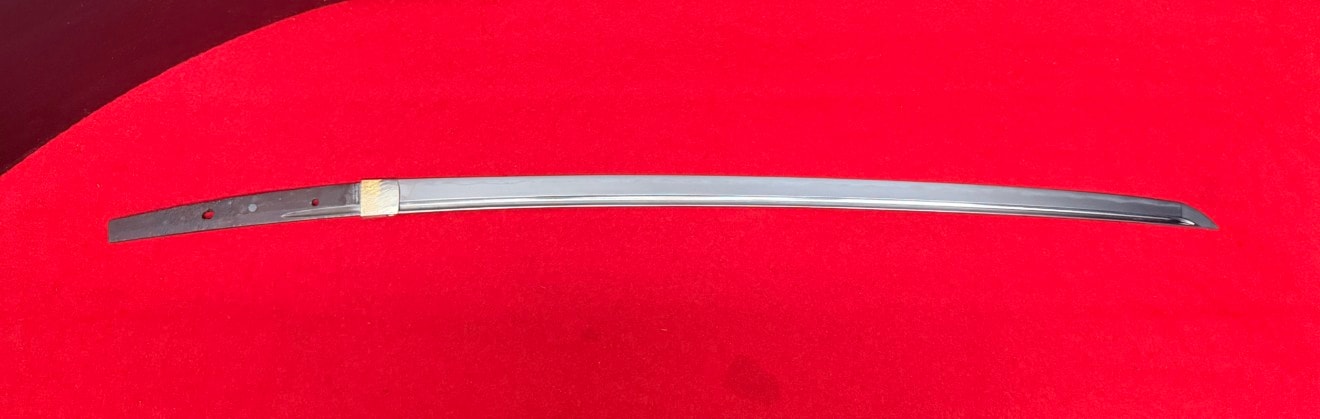
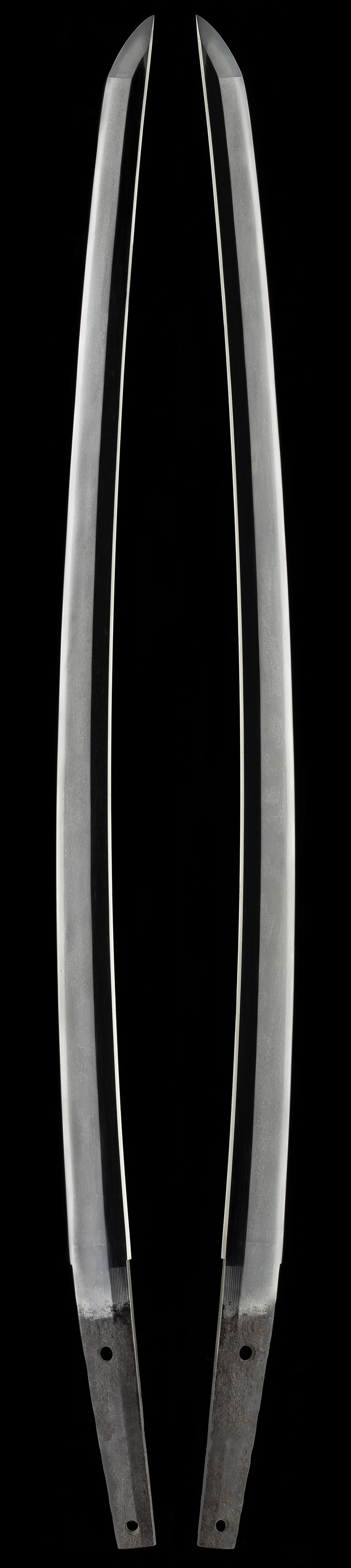
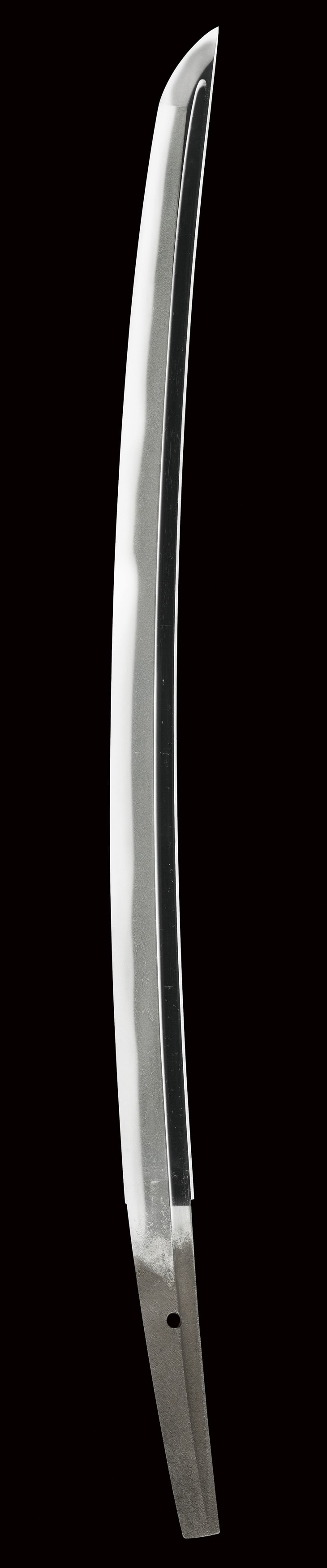
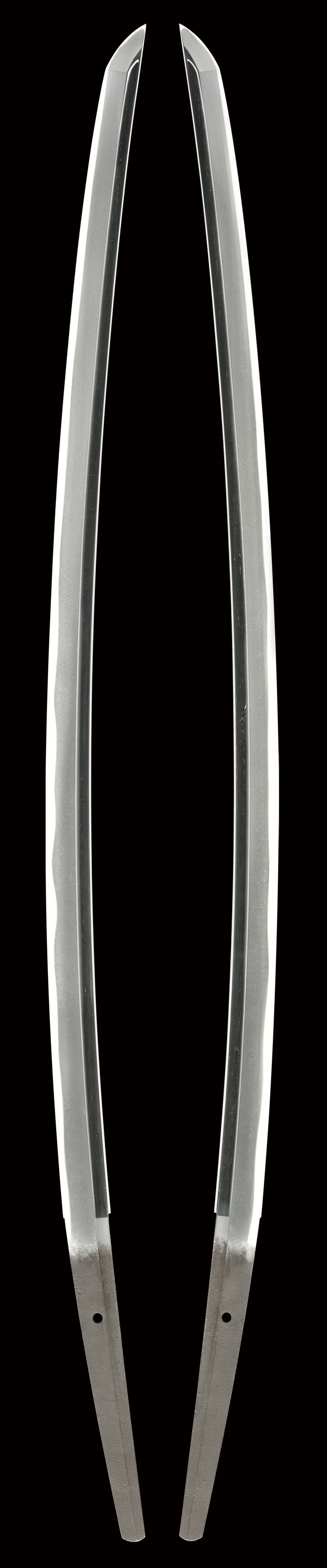
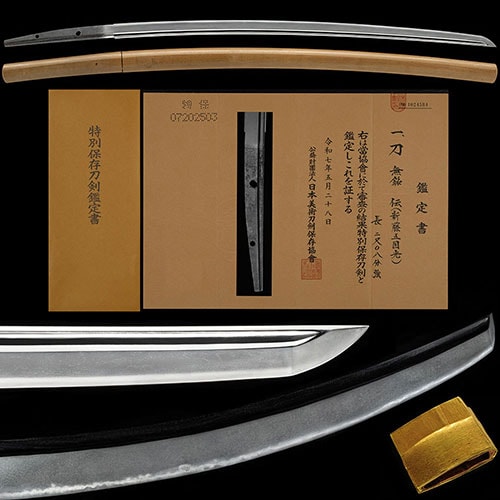
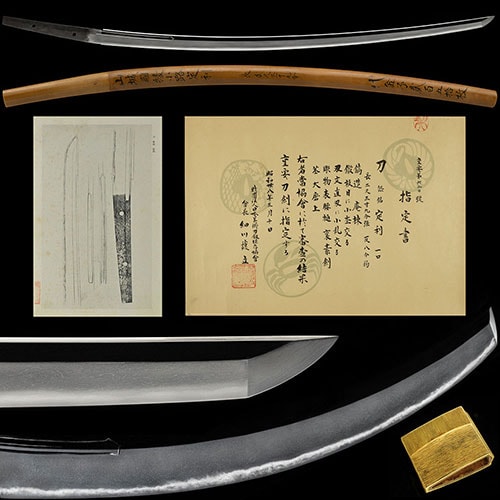
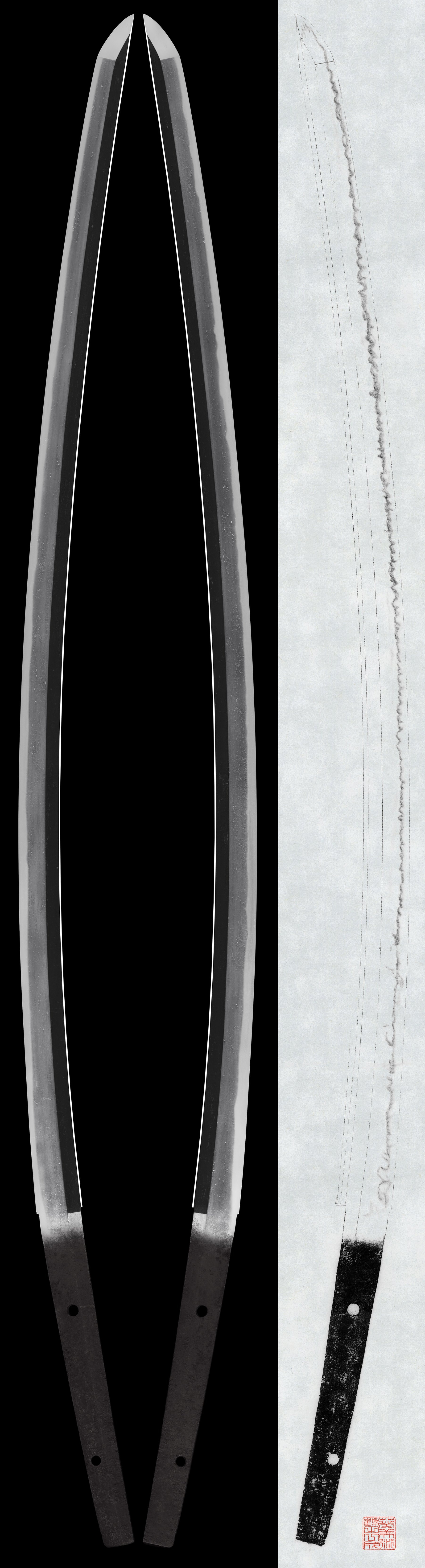
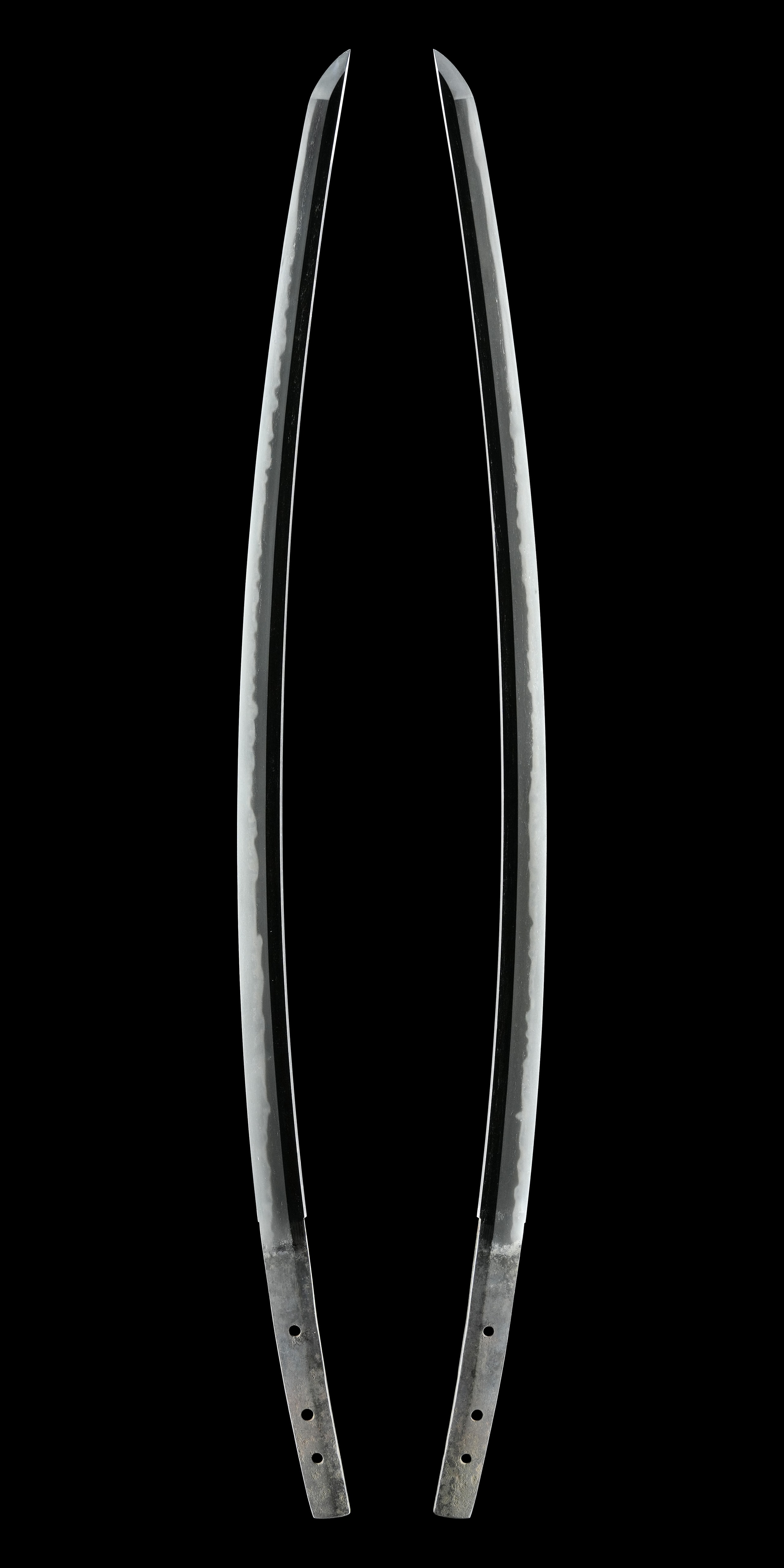
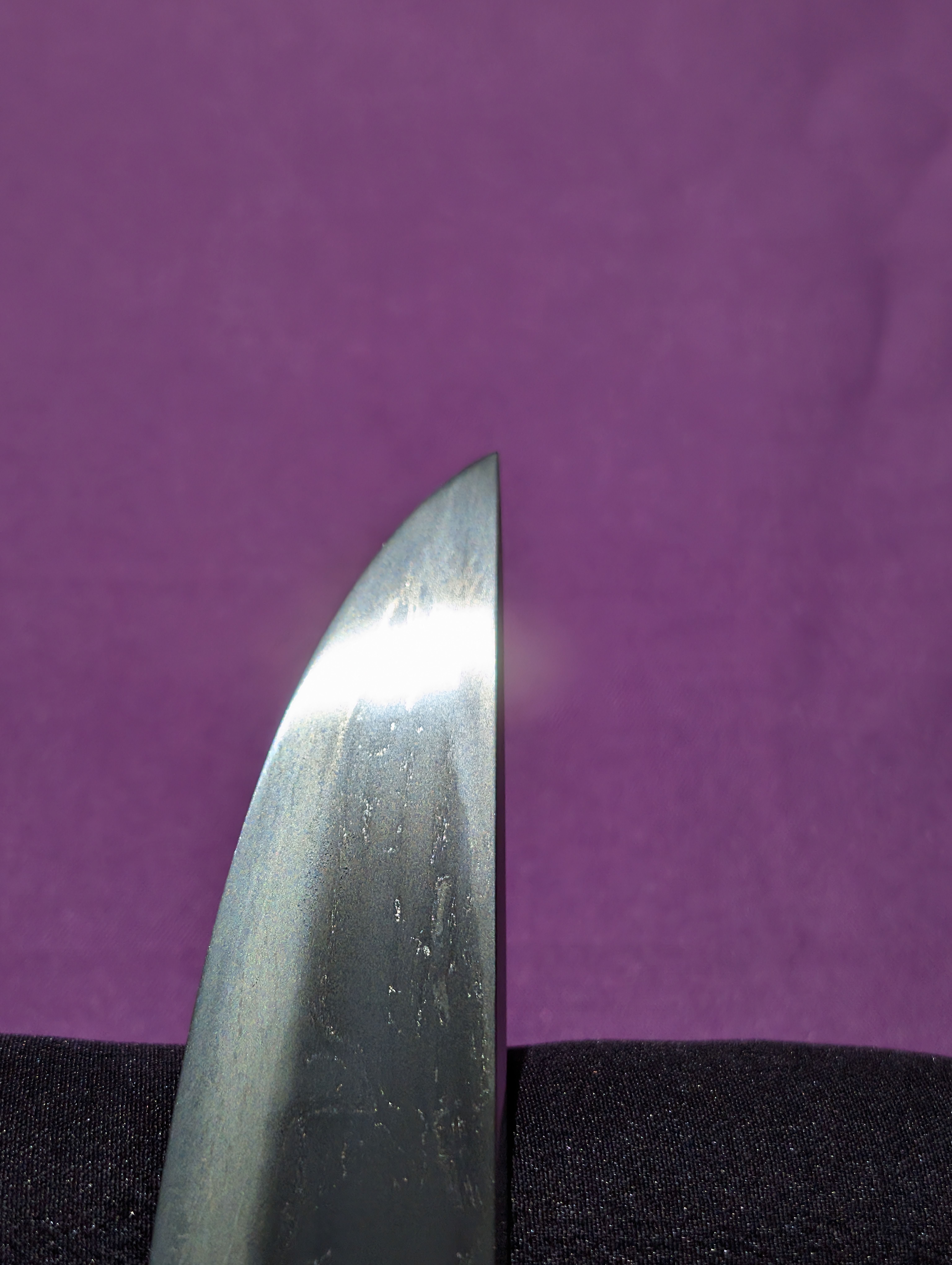
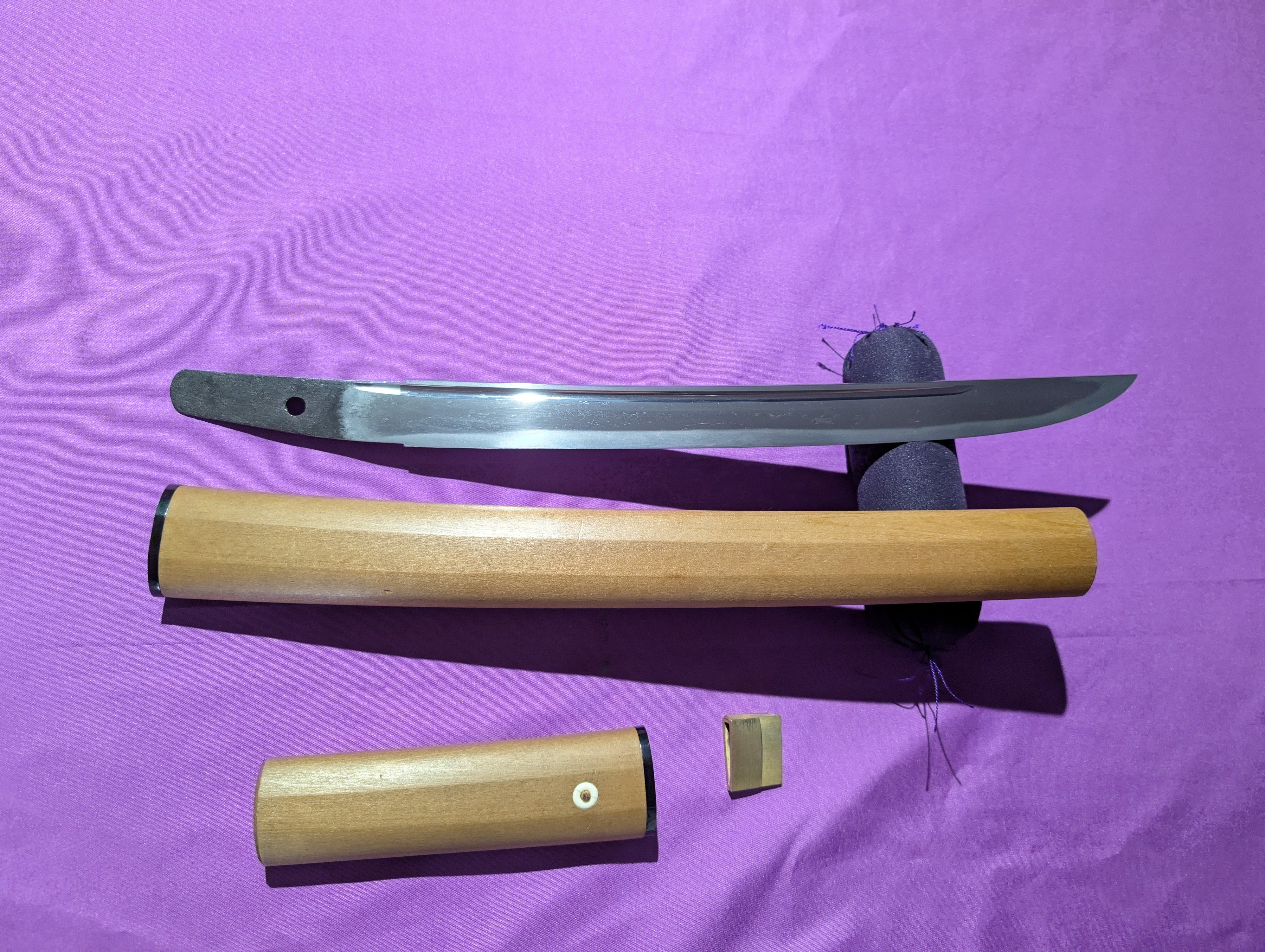
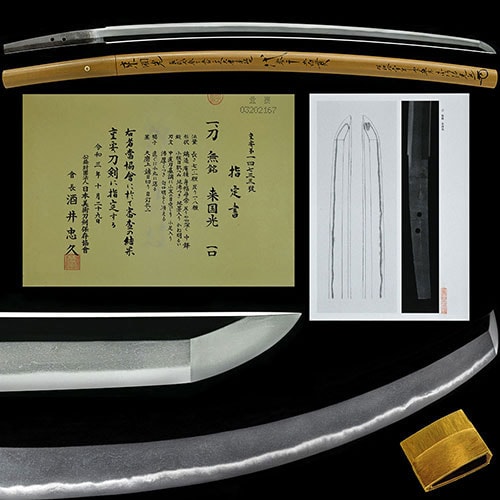
This is a Juyo-rated sunnobi tanto by Rai Kuninaga, a trailblazing smith of the Nanbokucho Period, blending Yamashiro and Soshu traditions. It features a fine itame jigane with abundant chikei and ji-nie, a bright suguha-cho hamon with kinsuji and sunagashi, and a bo-hi carving. The blade is signed "Rai Kuninaga" and comes with a modern aiguchi koshirae with Meiji Period accessories, featuring a golden lacquer saya with an aquatic theme and floral motifs.

NBTHK Setsumei

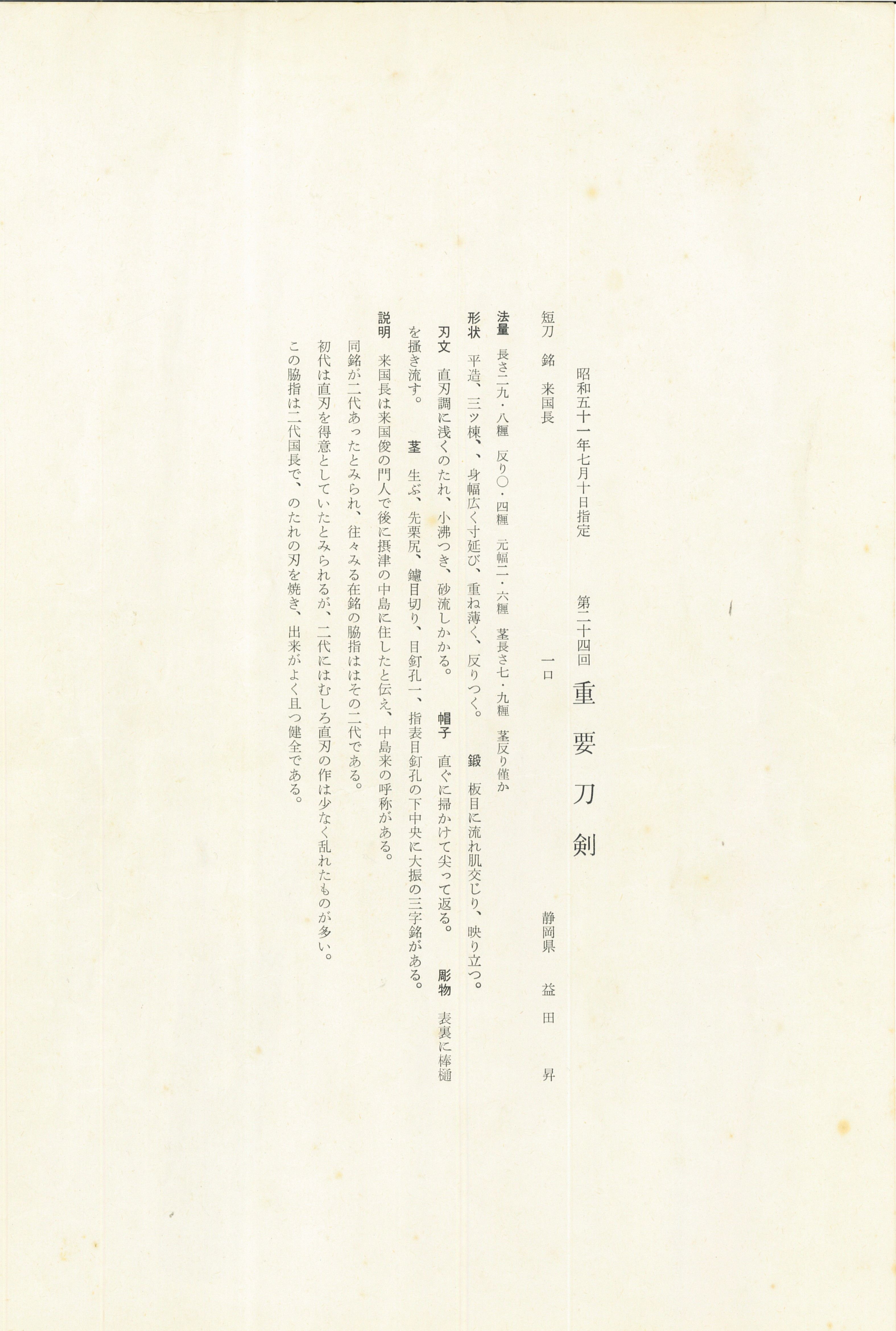
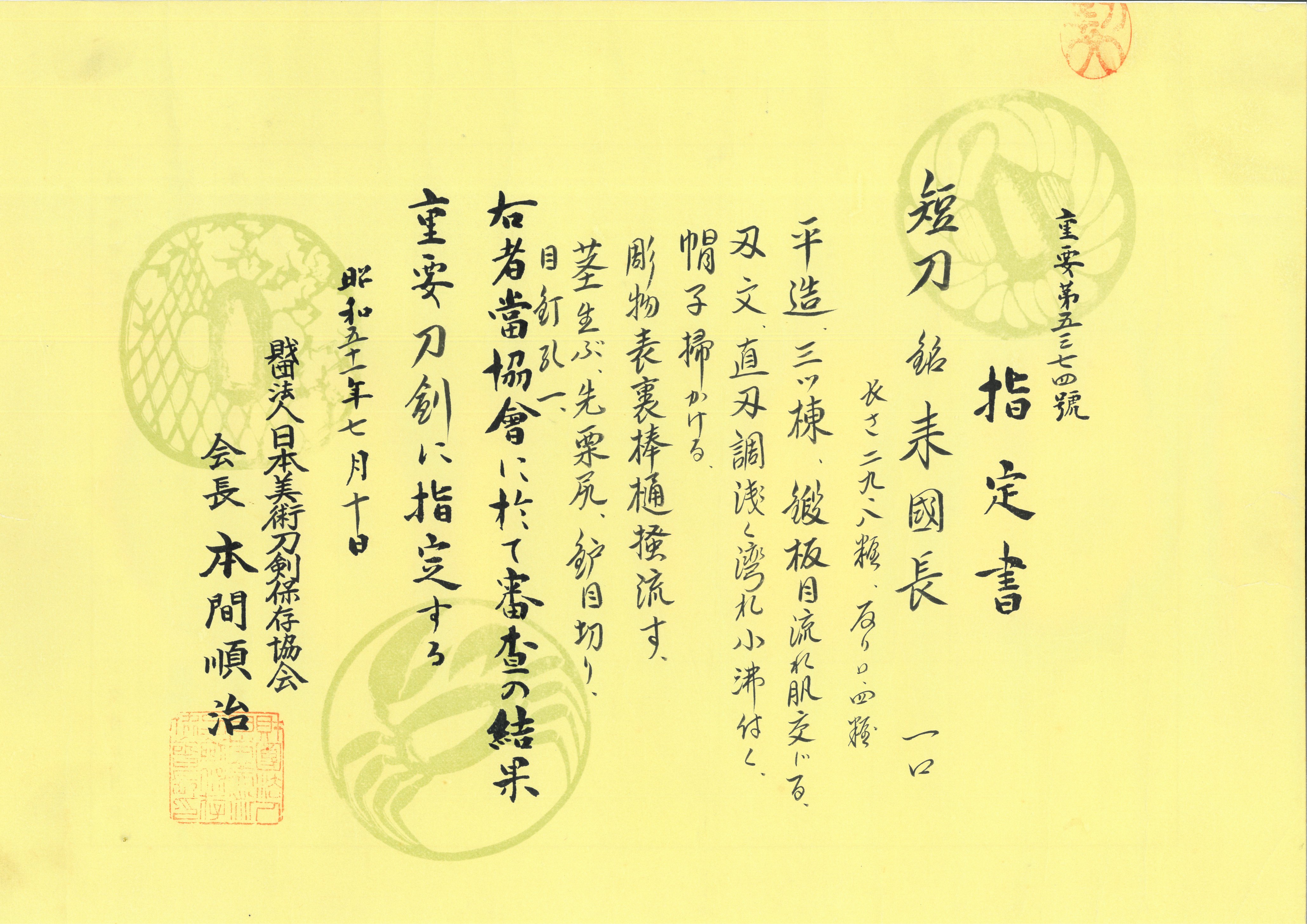
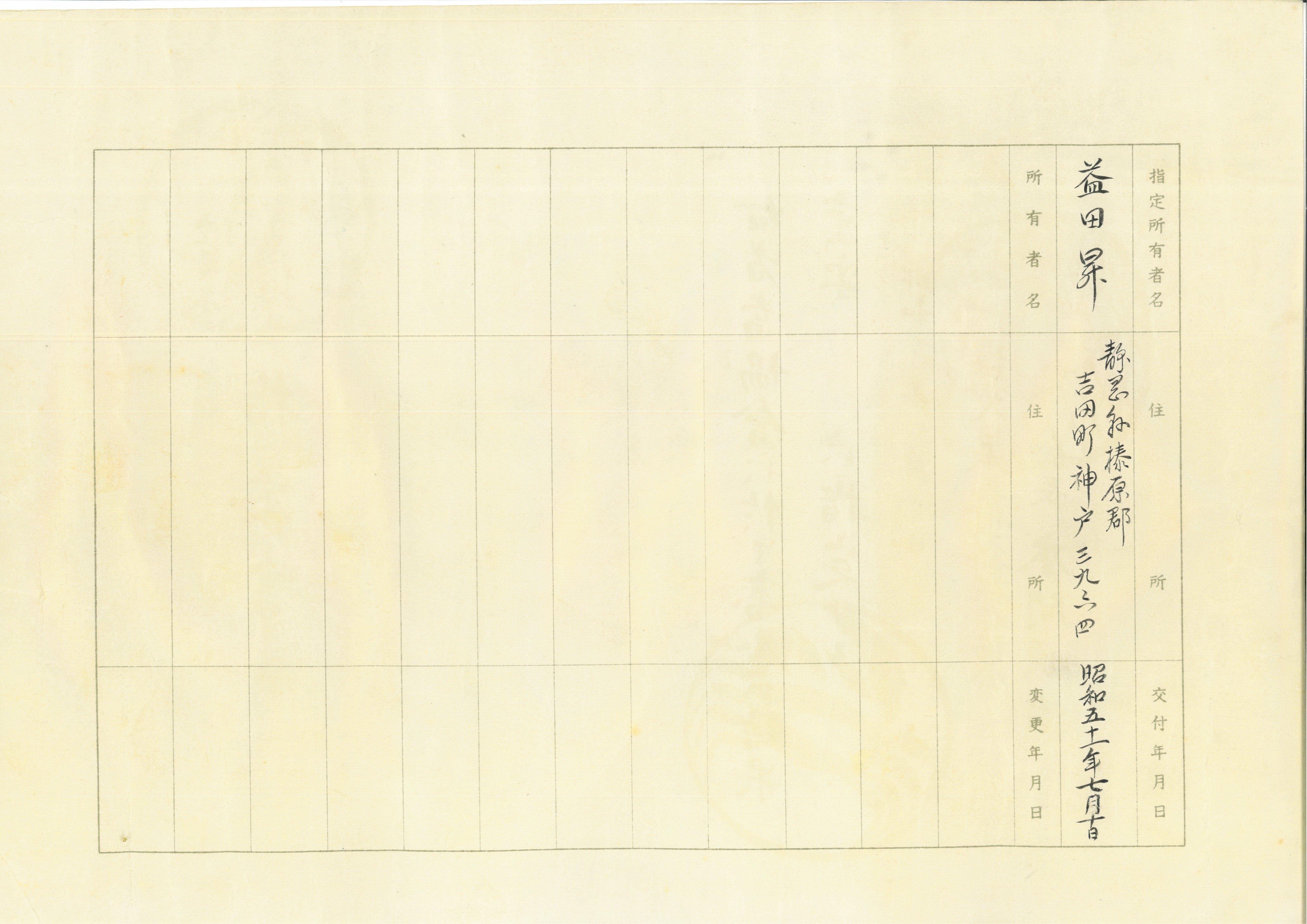
Jūyō-Tōken, 24th Session — Designated July 10, 1976 Tantō, mei: Rai Kuninaga (来国長) Setsumei by Noboru (昇) Measurements Nagasa 29.8 cm, sori 0.4 cm, motohaba 2.6 cm, nakago-nagasa 7.9 cm, nakago-sori slight Description Keijō: hira-zukuri, mitsu-mune; wide mihaba with slight sun-nobi proportions; thin kasane; a slight sori. Kitae: itame-hada mixed with nagare-hada; utsuri stands out. Hamon: suguha-chō with a shallow notare; ko-nie adheres, with sunagashi tending to appear. Bōshi: straight, with hakikake; pointed and turning back. Horimono: on both sides, a bō-hi carved kaki-nagashi. Nakago: ubu; kurijiri; kiri-yasurime; one mekugi-ana; on the sashi-omote, below the mekugi-ana at the center, there is a large three-character signature. Artisan Rai Kuninaga (来国長) Era Late Kamakura to Nanbokuchō period Explanation Rai Kuninaga is said to have been a student of Rai Kunitoshi, and it is further transmitted that he later resided at Nakajima in Settsu Province; hence he is also referred to as “Nakajima Rai.” It appears that there were two generations using the same signature. The signed wakizashi encountered from time to time are regarded as works of the second generation. The first generation seems to have been especially proficient in suguha, whereas in the second generation suguha works are comparatively few, and pieces with more irregular tempering are common. This blade is by the second-generation Kuninaga. It is tempered in a notare-based hamon, the workmanship is good, and it is moreover kenzen (sound and well-preserved).

NihontoWatch MonNihontoWatch
MarketAuctionsEncyclopedia
Swords›Yamashiro-den›Rai›Nakajima Rai›Kuninaga›Juyo Rai Kuninaga Tanto
tantoJūyō
Nakajima Rai Kuninaga

Juyo Rai Kuninaga Tanto

mei · Rai · Gentoku (1329-1331) · nagasa 29.8cm

Price on request
Visit seller website →
Nakajima Rai Kuninaga — 1 of 30
Nakajima Rai Kuninaga — 2 of 30
Nakajima Rai Kuninaga — 3 of 30
Nakajima Rai Kuninaga — 4 of 30
Nakajima Rai Kuninaga — 5 of 30
Nakajima Rai Kuninaga — 6 of 30
Nakajima Rai Kuninaga — 7 of 30
Nakajima Rai Kuninaga — 8 of 30
Nakajima Rai Kuninaga — 9 of 30
Nakajima Rai Kuninaga — 10 of 30
Nakajima Rai Kuninaga — 11 of 30
Nakajima Rai Kuninaga — 12 of 30
Nakajima Rai Kuninaga — 13 of 30
Nakajima Rai Kuninaga — 14 of 30
Nakajima Rai Kuninaga — 15 of 30
Nakajima Rai Kuninaga — 16 of 30
Nakajima Rai Kuninaga — 17 of 30
Nakajima Rai Kuninaga — 18 of 30
Nakajima Rai Kuninaga — 19 of 30
Nakajima Rai Kuninaga — 20 of 30
Nakajima Rai Kuninaga — 21 of 30
Nakajima Rai Kuninaga — 22 of 30
Nakajima Rai Kuninaga — 23 of 30
Nakajima Rai Kuninaga — 24 of 30
Nakajima Rai Kuninaga — 25 of 30
Nakajima Rai Kuninaga — 26 of 30
Nakajima Rai Kuninaga — 27 of 30
Nakajima Rai Kuninaga — 28 of 30
Nakajima Rai Kuninaga — 29 of 30
Nakajima Rai Kuninaga — 30 of 30
1 / 30
1 / 30
Nakajima Rai Kuninaga — 1 of 30Nakajima Rai Kuninaga — 2 of 30Nakajima Rai Kuninaga — 3 of 30Nakajima Rai Kuninaga — 4 of 30Nakajima Rai Kuninaga — 5 of 30Nakajima Rai Kuninaga — 6 of 30Nakajima Rai Kuninaga — 7 of 30Nakajima Rai Kuninaga — 8 of 30Nakajima Rai Kuninaga — 9 of 30Nakajima Rai Kuninaga — 10 of 30Nakajima Rai Kuninaga — 11 of 30Nakajima Rai Kuninaga — 12 of 30Nakajima Rai Kuninaga — 13 of 30Nakajima Rai Kuninaga — 14 of 30Nakajima Rai Kuninaga — 15 of 30Nakajima Rai Kuninaga — 16 of 30Nakajima Rai Kuninaga — 17 of 30Nakajima Rai Kuninaga — 18 of 30Nakajima Rai Kuninaga — 19 of 30Nakajima Rai Kuninaga — 20 of 30Nakajima Rai Kuninaga — 21 of 30Nakajima Rai Kuninaga — 22 of 30Nakajima Rai Kuninaga — 23 of 30Nakajima Rai Kuninaga — 24 of 30Nakajima Rai Kuninaga — 25 of 30Nakajima Rai Kuninaga — 26 of 30Nakajima Rai Kuninaga — 27 of 30Nakajima Rai Kuninaga — 28 of 30Nakajima Rai Kuninaga — 29 of 30Nakajima Rai Kuninaga — 30 of 30
Measurements & details
Smith
Nakajima Rai Kuninaga
Type
Tanto
School
Nakajima Rai
Period
Around 1329–1331(Gentoku)
Province
Yamashiro
Signature
Signed(17% of this smith's designated works are signed)
Measurements
Nagasa 29.8cmMotohaba 2.66cmSakihaba 2.16cm
Description

This is a Juyo-rated sunnobi tanto by Rai Kuninaga, a trailblazing smith of the Nanbokucho Period, blending Yamashiro and Soshu traditions. It features a fine itame jigane with abundant chikei and ji-nie, a bright suguha-cho hamon with kinsuji and sunagashi, and a bo-hi carving. The blade is signed "Rai Kuninaga" and comes with a modern aiguchi koshirae with Meiji Period accessories, featuring a golden lacquer saya with an aquatic theme and floral motifs.

NBTHK Zufu Commentary

Juyo #24

AI translation — may contain errors

-, 24th Session — Designated July 10, 1976

, : Kuninaga (来国長)

by Noboru (昇)

Measurements 29.8 cm, 0.4 cm, 2.6 cm, 7.9 cm, slight

Description Keijō: , ; wide with slight proportions; thin ; a slight . : mixed with ; stands out. : with a shallow ; adheres, with tending to appear. : straight, with ; pointed and turning back. : on both sides, a carved kaki-nagashi. : ; ; ; one ; on the , below the at the center, there is a large three-character signature.

Artisan Kuninaga (来国長)

Era Late to period

Explanation Kuninaga is said to have been a student of Kunitoshi, and it is further transmitted that he later resided at Nakajima in Settsu Province; hence he is also referred to as “Nakajima .”

It appears that there were two generations using the signature. The signed encountered from time to time are regarded as works of the second generation. The first generation seems to have been especially proficient in , whereas in the second generation works are comparatively few, and pieces with more irregular tempering are common.

This blade is by the second-generation Kuninaga. It is tempered in a -based , the workmanship is good, and it is moreover (sound and well-preserved).

About the maker

Kuninaga

國長

Nakajima Rai (a Rai-school offshoot, Yamashiro and Settsu) · Yamashiro · around 1329-1331

1 piece on the market now

›

Kuninaga is the smith the published sources call Nakajima Rai, a pupil of Rai Kunitoshi who left Yamashiro and settled at Nakajima in Settsu, carrying the Rai manner forward into the Nanbokucho period. The Meikan records two generations of the name, placing the first about the Gentoku era at the close of Kamakura and the second about the Shohei and Oan eras; only the three-character signature Rai Kuninaga (来国長) is known, and not a single dated work survives. From this scarcity grows the central scholarly fact about him: the published commentary holds that he resembles Rai Kunimitsu while falling slightly short of him, and it makes the Nakajima Rai attribution itself a standing question of connoisseurship rather than a settled record. His jigane, his quiet temper, and a signature that comes in one form alone are what the judges read him by.

The constant of his work is the jigane. Over a well-forged itame he mixes mokume and a flowing nagare-hada, the grain tending to stand a little, hada-tatsu, with thick ji-nie and frequent bold chikei. His is a faint utsuri or a quiet nie-utsuri standing on this open, standing grain, the steel a step away from the closely packed jigane of the Yamashiro Rai mainstream. That standing itame is the feature the judges mean when they place him just below Kunimitsu; it is also, by their own account, the basis of the attribution problem. Examining his mumei katana, one of them writes that the Nakajima Rai kiwame has from old times been directed to suguha works of somewhat lesser technical level than Kunimitsu, and asks whether the convention is sound: 「やや技術が劣る直刃出来の作をそれに当てている事が, 果して妥当なりや否やという問題に始まる」[[c:1]] (the matter begins with the question of whether it is right that suguha works of somewhat inferior technique have been assigned to him). For the present, the commentary follows tradition.

Over that jigane his temper stays calm. The characteristic line is a suguha-toned or medium suguha into which ko-gunome, ko-choji and a shallow notare enter, with ashi and yo, ko-nie well adhered, and kinsuji and sunagashi running through, the nioiguchi now tight, now bright. The boshi runs straight to a small ko-maru, or sweeps with hakikake to a slightly pointed turnback. This restrained register, not the flamboyant choji of a Bizen hand, is the Rai inheritance he carries; and the published sources note that the first generation in particular was proficient in suguha, 「初代は直刃を得意」とした[[c:2]]. It is the steel and this quiet edge, taken together, that the judges weigh against Rai Kunimitsu, finding the resemblance plain and the refinement a degree less.

The record divides cleanly along the line of signature and form. The body of it is the o-suriage, mumei katana attributed to Nakajima Rai, wide in body with a chu-kissaki over the standing itame, the temper a broad or medium suguha, often carved with a plain bo-hi. The signed pieces, encountered only from time to time, are the work of the second generation in hira-zukuri with mitsu-mune, wide and slightly elongated with a thin kasane, the three-character signature cut large below the mekugi-ana. The published sources draw a distinction within his own work: the first generation was the suguha hand, while in the second 「二代にはむしろ直刃の作は少なく」[[c:3]], more irregular notare tempering becoming common. The signed wakizashi and tanto keep a consistent carving habit, a suken on the omote and gomabashi on the ura, each with a tsume beneath, a devotional program that sets them apart from the grooved mumei blades.

One piece stands outside every part of this account. A Tokubetsu Juyo wakizashi, signed by kinzogan-mei, breaks the calm: over an itame with flowing nagare, ji-nie, chikei and a nie-utsuri standing strongly on the ji, he sets a gunome mixed with choji and ko-notare, and in the upper half tobiyaki with a yubashiri-like feeling intermingle until the whole becomes a hitatsura that undulates flamboyantly. The published commentary calls it 「来派の作としては異色な出来口」[[c:4]] (an idiom unusual for a Rai work), the activity within the temper abundant and the nie-utsuri strongly expressed, an outstanding example among this smith's work and 「資料的にも頗る貴重」[[c:5]] (extremely valuable as documentary material) for the breadth of expression possible within the Rai tradition. What separates Kuninaga from his Yamashiro source is exactly this: his is the Rai manner carried a step away from its origin, the jigane standing where Kunimitsu's is packed, the utsuri turned to nie, and the school's reserve held even where, once, it gives way to hitatsura.

For the collector Kuninaga is a scarce Nanbokucho name whose extant work, signed and attributed together, is exceedingly few. He has no National Treasures. His record runs instead through the Important Cultural Properties, a signed first-generation tachi in suguha preserved at Eirin-ji in Yamashiro and an attributed tachi held at Sakurayama Shrine, with two Tokubetsu Juyo blades and a long run of Juyo pieces carrying the rest. The denrai roll is a daimyo one, the Hisamatsu Matsudaira house, former lords of Matsuyama in Iyo, the Owari Tokugawa, and other Matsudaira lines among recorded owners. The published sources call one signed example 「同作中のみならず同名中の白眉」[[c:6]] (the finest not only among surviving works but among all smiths bearing this name). Most of his blades are held rather than traded, and a signed Nakajima Rai comes to light only seldom, so a privately held example is a notable thing for a collector to encounter, and a document of how the Rai line continued once it had left Kyoto.

Historical importance

Where Kuninaga stands among comparable artisans: across all of nihontō, and within tradition, era, and period. The tiers (Foremost · Leading · Major · Notable) weigh official designations from the NBTHK and Japan's Agency for Cultural Affairs, together with historical honors of lasting repute such as the Sansaku and Meibutsu-chō.

随一
Foremost
屈指
Leading
有数
Major
著名
Notable

Select a lens to see how it's measured.

Designation record
58 designated works
Jūyō Bunkazai
2
Tokubetsu Jūyō
2
Jūyō
54
1 work by Kuninaga on the market→
Kuninaga — full profileNakajima Rai (a Rai-school offshoot, Yamashiro and Settsu) school
About the school

Nakajima Rai

中島来

Yamashiro-den · Settsu

7 pieces on the market now

›

The Nakajima Rai designation identifies swordmaking traditions established when Rai Kuninaga, a disciple of the Kyōto master Rai Kunitoshi, relocated to the Nakajima district of Settsu Province during the late Kamakura period. This move represented both geographical expansion of Rai school influence beyond the imperial capital and the deliberate transplantation of technically sophisticated Kyōto nie-based forging practices into a provincial setting. Learn more →

6 recorded smiths117 designated works
Leading smiths
SmithEraDesignated
Kuninaga國長1329-133158
Kuninaga國長1345-135011
Tomotsuna友綱1394-14280
Kuniyasu國安1329-13311
Explore the Nakajima Rai school →
NBTHK Certificate
Jūyō Tōken重要刀剣
Important Sword
›

A blade of top-grade workmanship and condition, formally judged to rank with a nationally recognized Important Art Object (Jūyō Bijutsuhin). Awarded only at the NBTHK’s competitive annual examination.

Of Japan’s roughly 2.5 million registered swords, only 12,307 (about 1 in 203) have ever attained Jūyō.

About the NBTHK›

The NBTHK (Nihon Bijutsu Tōken Hozon Kyōkai, the Society for the Preservation of Japanese Art Swords) is a public-interest incorporated foundation founded in 1948 and supervised by Japan’s Agency for Cultural Affairs (Bunkachō); it is based at the Japanese Sword Museum in Tokyo. Its expert panels physically examine each submitted work (shinsa) and issue a certificate (kanteishō) ranking it by artistic and historical merit. NBTHK papers are the most widely recognized standard of authentication for Japanese swords and fittings.

NBTHK official site→
Seller
T
Tosa Touken Do
🇯🇵Ships from Japan
›
✓Verified dealertosatoukendo.com
✓Ships worldwide✓English support
Return policy

As a rule, we do not accept returns from overseas. Once a deposit is paid, we hold the item for up to 3 months. The deposit is non-refundable.

View all of Tosa Touken Do’s listings→View this item on the dealer’s site→

More from the Nakajima Rai school

View all →
Samurai Nippon
Tokuho
Tokuho - by Nakajima Rai School - Naginata-naoshi Wakizashi: Nakajima Rai (Mumei)Tokuho - by Nakajima Rai School - Naginata-naoshi Wakizashi: Nakajima Rai (Mumei)

Naginata-naoshi Wakizashi: Nakajima Rai (Mumei)

ByNakajima Rai School
¥780,000
Yushindou
Tokubetsu Kichō
Katana - Tokubetsu Kichō - by Nakajima Rai Munenaga - Munemasa - Koshu Tokubetsu KichoKatana - Tokubetsu Kichō - by Nakajima Rai Munenaga - Munemasa - Koshu Tokubetsu Kicho

Katana

ByNakajima Rai Munenaga
¥2,000,000
Shoubudou
Jūyō
Katana - Jūyō - by Nakajima Rai Kuninaga - Mumei (Nakajimarai)Katana - Jūyō - by Nakajima Rai Kuninaga - Mumei (Nakajimarai)

Katana

ByNakajima Rai Kuninaga
¥5,800,000
Touken Komachi
Tokuho
Katana - Tokuho - by Nakajima Rai Kuniyasu - Rai KuniyasuKatana - Tokuho - by Nakajima Rai Kuniyasu - Rai Kuniyasu

Katana

ByNakajima Rai Kuniyasu
¥1,500,000
Nihon Art
Tokuho
Katana - Tokuho - by Nakajima Rai Kuniyasu - Rai KuniyasuKatana - Tokuho - by Nakajima Rai Kuniyasu - Rai Kuniyasu

Katana

ByNakajima Rai Kuniyasu
Ask
Nipponto
Hozon
Katana - Hozon - by Nakajima Rai Munenaga - Katana by MunenagaKatana - Hozon - by Nakajima Rai Munenaga - Katana by Munenaga

Katana

ByNakajima Rai Munenaga
¥650,000

More from the Rai school

View all →
Yazawa Shokai
Tokuho
Tachi - Tokuho - by Rai Kuniyuki - Consignment: Rai Kuniyuki Mid-Kamakura Period - Blade Length 69.7cm, Sori 1.9cm, in Shirasaya with Tachi KoshiraeTachi - Tokuho - by Rai Kuniyuki - Consignment: Rai Kuniyuki Mid-Kamakura Period - Blade Length 69.7cm, Sori 1.9cm, in Shirasaya with Tachi Koshirae

Tachi

ByRai Kuniyuki
¥3,000,000
Eirakudo
Jūyō
Katana - Jūyō - by Rai Kunimitsu - Rai Kunimitsu - Juyo TokenKatana - Jūyō - by Rai Kunimitsu - Rai Kunimitsu - Juyo Token

Katana

ByRai Kunimitsu
¥7,800,000
Bushido Antique Japanese Swords
Tokuho
Katana - Tokuho - by Rai Kunitsugu - Rai Kunitsugu DaitoKatana - Tokuho - by Rai Kunitsugu - Rai Kunitsugu Daito

Katana

ByRai Kunitsugu
¥35,000
Choshuya
Tanto - by Rai Kunitoshi - Japanese Sword for Sale | Ginza Choshuya | Mei: Rai Kunitoshi (O-wazamono), 1746Tanto - by Rai Kunitoshi - Japanese Sword for Sale | Ginza Choshuya | Mei: Rai Kunitoshi (O-wazamono), 1746

Tantō

ByRai Kunitoshi
¥12,000,000
Eirakudo
Tokuho
Katana - Tokuho - by Rai Kunitoshi - Rai Kunitoshi Katana Tokubetsu Hozon TokenKatana - Tokuho - by Rai Kunitoshi - Rai Kunitoshi Katana Tokubetsu Hozon Token

Katana

ByRai Kunitoshi
¥3,000,000
Samurai Nippon
Jūyō
Tachi - Jūyō - by Ryokai - Ryokai (Kinpun-mei)Tachi - Jūyō - by Ryokai - Ryokai (Kinpun-mei)

Tachi

ByRyokai
¥4,850,000
Nipponto
Jūyō
Katana - Jūyō - by Rai Kuniyuki - Kuniyuki (Yamashiro Kyoto Rai School Founder) (From Baron Sugiyama Shigemaru Family)Katana - Jūyō - by Rai Kuniyuki - Kuniyuki (Yamashiro Kyoto Rai School Founder) (From Baron Sugiyama Shigemaru Family)

Katana

ByRai Kuniyuki
Ask
Nipponto
Jūyō
Katana - Jūyō - by Rai Kunitsugu - Rai Kunitsugu (Listed in Kantou Hibi Sho Zoku 2)Katana - Jūyō - by Rai Kunitsugu - Rai Kunitsugu (Listed in Kantou Hibi Sho Zoku 2)

Katana

ByRai Kunitsugu
Ask

More from the Yamashiro tradition

View all →
Samurai Nippon
Tokujū
Katana - Tokuju - by Awataguchi Kuniyoshi - Mumei (Attributed to Awataguchi Kuniyoshi)Katana - Tokuju - by Awataguchi Kuniyoshi - Mumei (Attributed to Awataguchi Kuniyoshi)

Katana

ByAwataguchi Kuniyoshi
Ask
Eirakudo
Tokuho
Katana - Tokuho - by Shintogo Kunimitsu - Shintogo Kunimitsu - Tokubetsu Hozon TokenKatana - Tokuho - by Shintogo Kunimitsu - Shintogo Kunimitsu - Tokubetsu Hozon Token

Katana

ByShintogo Kunimitsu
¥7,500,000
Eirakudo
Jūyō
Tachi - Jūyō - by Ayanokoji Sadatoshi - Sadatoshi Tachi - Juyo TokenTachi - Jūyō - by Ayanokoji Sadatoshi - Sadatoshi Tachi - Juyo Token

Tachi

ByAyanokoji Sadatoshi
¥7,700,000
Nihon Art
Tokuho
Tanto - Tokuho - by Shintogo Kunimitsu - Shintogo Kunimitsu TantoTanto - Tokuho - by Shintogo Kunimitsu - Shintogo Kunimitsu Tanto

Tantō

ByShintogo Kunimitsu
Ask
Giheiya
Tanto - by Enju School - Koto Mumei Kikuchi-yari naosi tanto with Aikuchi Koshirae and ShirasayaTanto - by Enju School - Koto Mumei Kikuchi-yari naosi tanto with Aikuchi Koshirae and Shirasaya

Tantō

ByEnju School
¥300,000
Aoi Art
Tokuho
Katana - Tokuho - by Shintogo Kunimitsu - Mumei (Attributed to Shintogo) - NBTHK Tokubetsu Hozon TokenKatana - Tokuho - by Shintogo Kunimitsu - Mumei (Attributed to Shintogo) - NBTHK Tokubetsu Hozon Token

Katana

ByShintogo Kunimitsu
¥7,800,000
Samurai Nippon
Jūyō
Katana - Jūyō - by Enju Kunitoki - Kunitoki (Enju) with Gold Inlay MeiKatana - Jūyō - by Enju Kunitoki - Kunitoki (Enju) with Gold Inlay Mei

Katana

ByEnju Kunitoki
¥4,900,000
Toushin
Hozon
Katana - Hozon - by Enju School - Enju (Mumei)Katana - Hozon - by Enju School - Enju (Mumei)

Katana

ByEnju School
¥550,000

Swords

  • Katana
  • Wakizashi
  • Tantō
  • Tachi
  • Naginata
  • Yari

Fittings

  • Tsuba
  • Fuchi-Kashira
  • Kozuka
  • Menuki

By Certification

  • Tokujū
  • Jūyō
  • Tokuho
  • Hozon

Resources

  • Dealer Directory
  • Artist Directory
  • Glossary
  • Browse All
Nihontowatch© 2026
TermsPrivacyCookiesAbout

Description

This is a Juyo-rated sunnobi tanto by Rai Kuninaga, a trailblazing smith of the Nanbokucho Period, blending Yamashiro and Soshu traditions. It features a fine itame jigane with abundant chikei and ji-nie, a bright suguha-cho hamon with kinsuji and sunagashi, and a bo-hi carving. The blade is signed "Rai Kuninaga" and comes with a modern aiguchi koshirae with Meiji Period accessories, featuring a golden lacquer saya with an aquatic theme and floral motifs.

NBTHK Setsumei

Jūyō-Tōken, 24th Session — Designated July 10, 1976 Tantō, mei: Rai Kuninaga (来国長) Setsumei by Noboru (昇) Measurements Nagasa 29.8 cm, sori 0.4 cm, motohaba 2.6 cm, nakago-nagasa 7.9 cm, nakago-sori slight Description Keijō: hira-zukuri, mitsu-mune; wide mihaba with slight sun-nobi proportions; thin kasane; a slight sori. Kitae: itame-hada mixed with nagare-hada; utsuri stands out. Hamon: suguha-chō with a shallow notare; ko-nie adheres, with sunagashi tending to appear. Bōshi: straight, with hakikake; pointed and turning back. Horimono: on both sides, a bō-hi carved kaki-nagashi. Nakago: ubu; kurijiri; kiri-yasurime; one mekugi-ana; on the sashi-omote, below the mekugi-ana at the center, there is a large three-character signature. Artisan Rai Kuninaga (来国長) Era Late Kamakura to Nanbokuchō period Explanation Rai Kuninaga is said to have been a student of Rai Kunitoshi, and it is further transmitted that he later resided at Nakajima in Settsu Province; hence he is also referred to as “Nakajima Rai.” It appears that there were two generations using the same signature. The signed wakizashi encountered from time to time are regarded as works of the second generation. The first generation seems to have been especially proficient in suguha, whereas in the second generation suguha works are comparatively few, and pieces with more irregular tempering are common. This blade is by the second-generation Kuninaga. It is tempered in a notare-based hamon, the workmanship is good, and it is moreover kenzen (sound and well-preserved).

NihontoWatch MonNihontoWatch
MarketAuctionsEncyclopedia
Swords›Yamashiro-den›Rai›Nakajima Rai›Kuninaga›Juyo Rai Kuninaga Tanto
tantoJūyō
Nakajima Rai Kuninaga

Juyo Rai Kuninaga Tanto

mei · Rai · Gentoku (1329-1331) · nagasa 29.8cm

Price on request
Visit seller website →
Nakajima Rai Kuninaga — 1 of 30
Nakajima Rai Kuninaga — 2 of 30
Nakajima Rai Kuninaga — 3 of 30
Nakajima Rai Kuninaga — 4 of 30
Nakajima Rai Kuninaga — 5 of 30
Nakajima Rai Kuninaga — 6 of 30
Nakajima Rai Kuninaga — 7 of 30
Nakajima Rai Kuninaga — 8 of 30
Nakajima Rai Kuninaga — 9 of 30
Nakajima Rai Kuninaga — 10 of 30
Nakajima Rai Kuninaga — 11 of 30
Nakajima Rai Kuninaga — 12 of 30
Nakajima Rai Kuninaga — 13 of 30
Nakajima Rai Kuninaga — 14 of 30
Nakajima Rai Kuninaga — 15 of 30
Nakajima Rai Kuninaga — 16 of 30
Nakajima Rai Kuninaga — 17 of 30
Nakajima Rai Kuninaga — 18 of 30
Nakajima Rai Kuninaga — 19 of 30
Nakajima Rai Kuninaga — 20 of 30
Nakajima Rai Kuninaga — 21 of 30
Nakajima Rai Kuninaga — 22 of 30
Nakajima Rai Kuninaga — 23 of 30
Nakajima Rai Kuninaga — 24 of 30
Nakajima Rai Kuninaga — 25 of 30
Nakajima Rai Kuninaga — 26 of 30
Nakajima Rai Kuninaga — 27 of 30
Nakajima Rai Kuninaga — 28 of 30
Nakajima Rai Kuninaga — 29 of 30
Nakajima Rai Kuninaga — 30 of 30
1 / 30
1 / 30
Nakajima Rai Kuninaga — 1 of 30Nakajima Rai Kuninaga — 2 of 30Nakajima Rai Kuninaga — 3 of 30Nakajima Rai Kuninaga — 4 of 30Nakajima Rai Kuninaga — 5 of 30Nakajima Rai Kuninaga — 6 of 30Nakajima Rai Kuninaga — 7 of 30Nakajima Rai Kuninaga — 8 of 30Nakajima Rai Kuninaga — 9 of 30Nakajima Rai Kuninaga — 10 of 30Nakajima Rai Kuninaga — 11 of 30Nakajima Rai Kuninaga — 12 of 30Nakajima Rai Kuninaga — 13 of 30Nakajima Rai Kuninaga — 14 of 30Nakajima Rai Kuninaga — 15 of 30Nakajima Rai Kuninaga — 16 of 30Nakajima Rai Kuninaga — 17 of 30Nakajima Rai Kuninaga — 18 of 30Nakajima Rai Kuninaga — 19 of 30Nakajima Rai Kuninaga — 20 of 30Nakajima Rai Kuninaga — 21 of 30Nakajima Rai Kuninaga — 22 of 30Nakajima Rai Kuninaga — 23 of 30Nakajima Rai Kuninaga — 24 of 30Nakajima Rai Kuninaga — 25 of 30Nakajima Rai Kuninaga — 26 of 30Nakajima Rai Kuninaga — 27 of 30Nakajima Rai Kuninaga — 28 of 30Nakajima Rai Kuninaga — 29 of 30Nakajima Rai Kuninaga — 30 of 30
Measurements & details
Smith
Nakajima Rai Kuninaga
Type
Tanto
School
Nakajima Rai
Period
Around 1329–1331(Gentoku)
Province
Yamashiro
Signature
Signed(17% of this smith's designated works are signed)
Measurements
Nagasa 29.8cmMotohaba 2.66cmSakihaba 2.16cm
Description

This is a Juyo-rated sunnobi tanto by Rai Kuninaga, a trailblazing smith of the Nanbokucho Period, blending Yamashiro and Soshu traditions. It features a fine itame jigane with abundant chikei and ji-nie, a bright suguha-cho hamon with kinsuji and sunagashi, and a bo-hi carving. The blade is signed "Rai Kuninaga" and comes with a modern aiguchi koshirae with Meiji Period accessories, featuring a golden lacquer saya with an aquatic theme and floral motifs.

NBTHK Zufu Commentary

Juyo #24

AI translation — may contain errors

-, 24th Session — Designated July 10, 1976

, : Kuninaga (来国長)

by Noboru (昇)

Measurements 29.8 cm, 0.4 cm, 2.6 cm, 7.9 cm, slight

Description Keijō: , ; wide with slight proportions; thin ; a slight . : mixed with ; stands out. : with a shallow ; adheres, with tending to appear. : straight, with ; pointed and turning back. : on both sides, a carved kaki-nagashi. : ; ; ; one ; on the , below the at the center, there is a large three-character signature.

Artisan Kuninaga (来国長)

Era Late to period

Explanation Kuninaga is said to have been a student of Kunitoshi, and it is further transmitted that he later resided at Nakajima in Settsu Province; hence he is also referred to as “Nakajima .”

It appears that there were two generations using the signature. The signed encountered from time to time are regarded as works of the second generation. The first generation seems to have been especially proficient in , whereas in the second generation works are comparatively few, and pieces with more irregular tempering are common.

This blade is by the second-generation Kuninaga. It is tempered in a -based , the workmanship is good, and it is moreover (sound and well-preserved).

About the maker

Kuninaga

國長

Nakajima Rai (a Rai-school offshoot, Yamashiro and Settsu) · Yamashiro · around 1329-1331

1 piece on the market now

›

Kuninaga is the smith the published sources call Nakajima Rai, a pupil of Rai Kunitoshi who left Yamashiro and settled at Nakajima in Settsu, carrying the Rai manner forward into the Nanbokucho period. The Meikan records two generations of the name, placing the first about the Gentoku era at the close of Kamakura and the second about the Shohei and Oan eras; only the three-character signature Rai Kuninaga (来国長) is known, and not a single dated work survives. From this scarcity grows the central scholarly fact about him: the published commentary holds that he resembles Rai Kunimitsu while falling slightly short of him, and it makes the Nakajima Rai attribution itself a standing question of connoisseurship rather than a settled record. His jigane, his quiet temper, and a signature that comes in one form alone are what the judges read him by.

The constant of his work is the jigane. Over a well-forged itame he mixes mokume and a flowing nagare-hada, the grain tending to stand a little, hada-tatsu, with thick ji-nie and frequent bold chikei. His is a faint utsuri or a quiet nie-utsuri standing on this open, standing grain, the steel a step away from the closely packed jigane of the Yamashiro Rai mainstream. That standing itame is the feature the judges mean when they place him just below Kunimitsu; it is also, by their own account, the basis of the attribution problem. Examining his mumei katana, one of them writes that the Nakajima Rai kiwame has from old times been directed to suguha works of somewhat lesser technical level than Kunimitsu, and asks whether the convention is sound: 「やや技術が劣る直刃出来の作をそれに当てている事が, 果して妥当なりや否やという問題に始まる」[[c:1]] (the matter begins with the question of whether it is right that suguha works of somewhat inferior technique have been assigned to him). For the present, the commentary follows tradition.

Over that jigane his temper stays calm. The characteristic line is a suguha-toned or medium suguha into which ko-gunome, ko-choji and a shallow notare enter, with ashi and yo, ko-nie well adhered, and kinsuji and sunagashi running through, the nioiguchi now tight, now bright. The boshi runs straight to a small ko-maru, or sweeps with hakikake to a slightly pointed turnback. This restrained register, not the flamboyant choji of a Bizen hand, is the Rai inheritance he carries; and the published sources note that the first generation in particular was proficient in suguha, 「初代は直刃を得意」とした[[c:2]]. It is the steel and this quiet edge, taken together, that the judges weigh against Rai Kunimitsu, finding the resemblance plain and the refinement a degree less.

The record divides cleanly along the line of signature and form. The body of it is the o-suriage, mumei katana attributed to Nakajima Rai, wide in body with a chu-kissaki over the standing itame, the temper a broad or medium suguha, often carved with a plain bo-hi. The signed pieces, encountered only from time to time, are the work of the second generation in hira-zukuri with mitsu-mune, wide and slightly elongated with a thin kasane, the three-character signature cut large below the mekugi-ana. The published sources draw a distinction within his own work: the first generation was the suguha hand, while in the second 「二代にはむしろ直刃の作は少なく」[[c:3]], more irregular notare tempering becoming common. The signed wakizashi and tanto keep a consistent carving habit, a suken on the omote and gomabashi on the ura, each with a tsume beneath, a devotional program that sets them apart from the grooved mumei blades.

One piece stands outside every part of this account. A Tokubetsu Juyo wakizashi, signed by kinzogan-mei, breaks the calm: over an itame with flowing nagare, ji-nie, chikei and a nie-utsuri standing strongly on the ji, he sets a gunome mixed with choji and ko-notare, and in the upper half tobiyaki with a yubashiri-like feeling intermingle until the whole becomes a hitatsura that undulates flamboyantly. The published commentary calls it 「来派の作としては異色な出来口」[[c:4]] (an idiom unusual for a Rai work), the activity within the temper abundant and the nie-utsuri strongly expressed, an outstanding example among this smith's work and 「資料的にも頗る貴重」[[c:5]] (extremely valuable as documentary material) for the breadth of expression possible within the Rai tradition. What separates Kuninaga from his Yamashiro source is exactly this: his is the Rai manner carried a step away from its origin, the jigane standing where Kunimitsu's is packed, the utsuri turned to nie, and the school's reserve held even where, once, it gives way to hitatsura.

For the collector Kuninaga is a scarce Nanbokucho name whose extant work, signed and attributed together, is exceedingly few. He has no National Treasures. His record runs instead through the Important Cultural Properties, a signed first-generation tachi in suguha preserved at Eirin-ji in Yamashiro and an attributed tachi held at Sakurayama Shrine, with two Tokubetsu Juyo blades and a long run of Juyo pieces carrying the rest. The denrai roll is a daimyo one, the Hisamatsu Matsudaira house, former lords of Matsuyama in Iyo, the Owari Tokugawa, and other Matsudaira lines among recorded owners. The published sources call one signed example 「同作中のみならず同名中の白眉」[[c:6]] (the finest not only among surviving works but among all smiths bearing this name). Most of his blades are held rather than traded, and a signed Nakajima Rai comes to light only seldom, so a privately held example is a notable thing for a collector to encounter, and a document of how the Rai line continued once it had left Kyoto.
Historical importance

Where Kuninaga stands among comparable artisans: across all of nihontō, and within tradition, era, and period. The tiers (Foremost · Leading · Major · Notable) weigh official designations from the NBTHK and Japan's Agency for Cultural Affairs, together with historical honors of lasting repute such as the Sansaku and Meibutsu-chō.

随一
Foremost
屈指
Leading
有数
Major
著名
Notable

Select a lens to see how it's measured.

Designation record
58 designated works
Jūyō Bunkazai
2
Tokubetsu Jūyō
2
Jūyō
54
1 work by Kuninaga on the market→
Kuninaga — full profileNakajima Rai (a Rai-school offshoot, Yamashiro and Settsu) school
About the school

Nakajima Rai

中島来

Yamashiro-den · Settsu

7 pieces on the market now

›

The Nakajima Rai designation identifies swordmaking traditions established when Rai Kuninaga, a disciple of the Kyōto master Rai Kunitoshi, relocated to the Nakajima district of Settsu Province during the late Kamakura period. This move represented both geographical expansion of Rai school influence beyond the imperial capital and the deliberate transplantation of technically sophisticated Kyōto nie-based forging practices into a provincial setting. Learn more →

6 recorded smiths117 designated works
Leading smiths
SmithEraDesignated
Kuninaga國長1329-133158
Kuninaga國長1345-135011
Tomotsuna友綱1394-14280
Kuniyasu國安1329-13311
Explore the Nakajima Rai school →
NBTHK Certificate
Jūyō Tōken重要刀剣
Important Sword
›

A blade of top-grade workmanship and condition, formally judged to rank with a nationally recognized Important Art Object (Jūyō Bijutsuhin). Awarded only at the NBTHK’s competitive annual examination.

Of Japan’s roughly 2.5 million registered swords, only 12,307 (about 1 in 203) have ever attained Jūyō.

About the NBTHK›

The NBTHK (Nihon Bijutsu Tōken Hozon Kyōkai, the Society for the Preservation of Japanese Art Swords) is a public-interest incorporated foundation founded in 1948 and supervised by Japan’s Agency for Cultural Affairs (Bunkachō); it is based at the Japanese Sword Museum in Tokyo. Its expert panels physically examine each submitted work (shinsa) and issue a certificate (kanteishō) ranking it by artistic and historical merit. NBTHK papers are the most widely recognized standard of authentication for Japanese swords and fittings.

NBTHK official site→
Seller
T
Tosa Touken Do
🇯🇵Ships from Japan
›
✓Verified dealertosatoukendo.com
✓Ships worldwide✓English support
Return policy

As a rule, we do not accept returns from overseas. Once a deposit is paid, we hold the item for up to 3 months. The deposit is non-refundable.

View all of Tosa Touken Do’s listings→View this item on the dealer’s site→

More from the Nakajima Rai school

View all →
Samurai Nippon
Tokuho
Tokuho - by Nakajima Rai School - Naginata-naoshi Wakizashi: Nakajima Rai (Mumei)Tokuho - by Nakajima Rai School - Naginata-naoshi Wakizashi: Nakajima Rai (Mumei)

Naginata-naoshi Wakizashi: Nakajima Rai (Mumei)

ByNakajima Rai School
¥780,000
Yushindou
Tokubetsu Kichō
Katana - Tokubetsu Kichō - by Nakajima Rai Munenaga - Munemasa - Koshu Tokubetsu KichoKatana - Tokubetsu Kichō - by Nakajima Rai Munenaga - Munemasa - Koshu Tokubetsu Kicho

Katana

ByNakajima Rai Munenaga
¥2,000,000
Shoubudou
Jūyō
Katana - Jūyō - by Nakajima Rai Kuninaga - Mumei (Nakajimarai)Katana - Jūyō - by Nakajima Rai Kuninaga - Mumei (Nakajimarai)

Katana

ByNakajima Rai Kuninaga
¥5,800,000
Touken Komachi
Tokuho
Katana - Tokuho - by Nakajima Rai Kuniyasu - Rai KuniyasuKatana - Tokuho - by Nakajima Rai Kuniyasu - Rai Kuniyasu

Katana

ByNakajima Rai Kuniyasu
¥1,500,000
Nihon Art
Tokuho
Katana - Tokuho - by Nakajima Rai Kuniyasu - Rai KuniyasuKatana - Tokuho - by Nakajima Rai Kuniyasu - Rai Kuniyasu

Katana

ByNakajima Rai Kuniyasu
Ask
Nipponto
Hozon
Katana - Hozon - by Nakajima Rai Munenaga - Katana by MunenagaKatana - Hozon - by Nakajima Rai Munenaga - Katana by Munenaga

Katana

ByNakajima Rai Munenaga
¥650,000

More from the Rai school

View all →
Yazawa Shokai
Tokuho
Tachi - Tokuho - by Rai Kuniyuki - Consignment: Rai Kuniyuki Mid-Kamakura Period - Blade Length 69.7cm, Sori 1.9cm, in Shirasaya with Tachi KoshiraeTachi - Tokuho - by Rai Kuniyuki - Consignment: Rai Kuniyuki Mid-Kamakura Period - Blade Length 69.7cm, Sori 1.9cm, in Shirasaya with Tachi Koshirae

Tachi

ByRai Kuniyuki
¥3,000,000
Eirakudo
Jūyō
Katana - Jūyō - by Rai Kunimitsu - Rai Kunimitsu - Juyo TokenKatana - Jūyō - by Rai Kunimitsu - Rai Kunimitsu - Juyo Token

Katana

ByRai Kunimitsu
¥7,800,000
Bushido Antique Japanese Swords
Tokuho
Katana - Tokuho - by Rai Kunitsugu - Rai Kunitsugu DaitoKatana - Tokuho - by Rai Kunitsugu - Rai Kunitsugu Daito

Katana

ByRai Kunitsugu
¥35,000
Choshuya
Tanto - by Rai Kunitoshi - Japanese Sword for Sale | Ginza Choshuya | Mei: Rai Kunitoshi (O-wazamono), 1746Tanto - by Rai Kunitoshi - Japanese Sword for Sale | Ginza Choshuya | Mei: Rai Kunitoshi (O-wazamono), 1746

Tantō

ByRai Kunitoshi
¥12,000,000
Eirakudo
Tokuho
Katana - Tokuho - by Rai Kunitoshi - Rai Kunitoshi Katana Tokubetsu Hozon TokenKatana - Tokuho - by Rai Kunitoshi - Rai Kunitoshi Katana Tokubetsu Hozon Token

Katana

ByRai Kunitoshi
¥3,000,000
Samurai Nippon
Jūyō
Tachi - Jūyō - by Ryokai - Ryokai (Kinpun-mei)Tachi - Jūyō - by Ryokai - Ryokai (Kinpun-mei)

Tachi

ByRyokai
¥4,850,000
Nipponto
Jūyō
Katana - Jūyō - by Rai Kuniyuki - Kuniyuki (Yamashiro Kyoto Rai School Founder) (From Baron Sugiyama Shigemaru Family)Katana - Jūyō - by Rai Kuniyuki - Kuniyuki (Yamashiro Kyoto Rai School Founder) (From Baron Sugiyama Shigemaru Family)

Katana

ByRai Kuniyuki
Ask
Nipponto
Jūyō
Katana - Jūyō - by Rai Kunitsugu - Rai Kunitsugu (Listed in Kantou Hibi Sho Zoku 2)Katana - Jūyō - by Rai Kunitsugu - Rai Kunitsugu (Listed in Kantou Hibi Sho Zoku 2)

Katana

ByRai Kunitsugu
Ask

More from the Yamashiro tradition

View all →
Samurai Nippon
Tokujū
Katana - Tokuju - by Awataguchi Kuniyoshi - Mumei (Attributed to Awataguchi Kuniyoshi)Katana - Tokuju - by Awataguchi Kuniyoshi - Mumei (Attributed to Awataguchi Kuniyoshi)

Katana

ByAwataguchi Kuniyoshi
Ask
Eirakudo
Tokuho
Katana - Tokuho - by Shintogo Kunimitsu - Shintogo Kunimitsu - Tokubetsu Hozon TokenKatana - Tokuho - by Shintogo Kunimitsu - Shintogo Kunimitsu - Tokubetsu Hozon Token

Katana

ByShintogo Kunimitsu
¥7,500,000
Eirakudo
Jūyō
Tachi - Jūyō - by Ayanokoji Sadatoshi - Sadatoshi Tachi - Juyo TokenTachi - Jūyō - by Ayanokoji Sadatoshi - Sadatoshi Tachi - Juyo Token

Tachi

ByAyanokoji Sadatoshi
¥7,700,000
Nihon Art
Tokuho
Tanto - Tokuho - by Shintogo Kunimitsu - Shintogo Kunimitsu TantoTanto - Tokuho - by Shintogo Kunimitsu - Shintogo Kunimitsu Tanto

Tantō

ByShintogo Kunimitsu
Ask
Giheiya
Tanto - by Enju School - Koto Mumei Kikuchi-yari naosi tanto with Aikuchi Koshirae and ShirasayaTanto - by Enju School - Koto Mumei Kikuchi-yari naosi tanto with Aikuchi Koshirae and Shirasaya

Tantō

ByEnju School
¥300,000
Aoi Art
Tokuho
Katana - Tokuho - by Shintogo Kunimitsu - Mumei (Attributed to Shintogo) - NBTHK Tokubetsu Hozon TokenKatana - Tokuho - by Shintogo Kunimitsu - Mumei (Attributed to Shintogo) - NBTHK Tokubetsu Hozon Token

Katana

ByShintogo Kunimitsu
¥7,800,000
Samurai Nippon
Jūyō
Katana - Jūyō - by Enju Kunitoki - Kunitoki (Enju) with Gold Inlay MeiKatana - Jūyō - by Enju Kunitoki - Kunitoki (Enju) with Gold Inlay Mei

Katana

ByEnju Kunitoki
¥4,900,000
Toushin
Hozon
Katana - Hozon - by Enju School - Enju (Mumei)Katana - Hozon - by Enju School - Enju (Mumei)

Katana

ByEnju School
¥550,000

Swords

  • Katana
  • Wakizashi
  • Tantō
  • Tachi
  • Naginata
  • Yari

Fittings

  • Tsuba
  • Fuchi-Kashira
  • Kozuka
  • Menuki

By Certification

  • Tokujū
  • Jūyō
  • Tokuho
  • Hozon

Resources

  • Dealer Directory
  • Artist Directory
  • Glossary
  • Browse All
Nihontowatch© 2026
TermsPrivacyCookiesAbout
NihontoWatch Mon

NihontoWatch

MarketAuctions
Encyclopedia
NihontoWatch Mon

NihontoWatch

MarketAuctions
Encyclopedia