The divided-courts war impoverished the court society that had sustained Kyōto’s most refined work. With the last Rai masters the classic line effectively closed, while Hasebe and Nobukuni carried the new Sōshū manner into the capital.
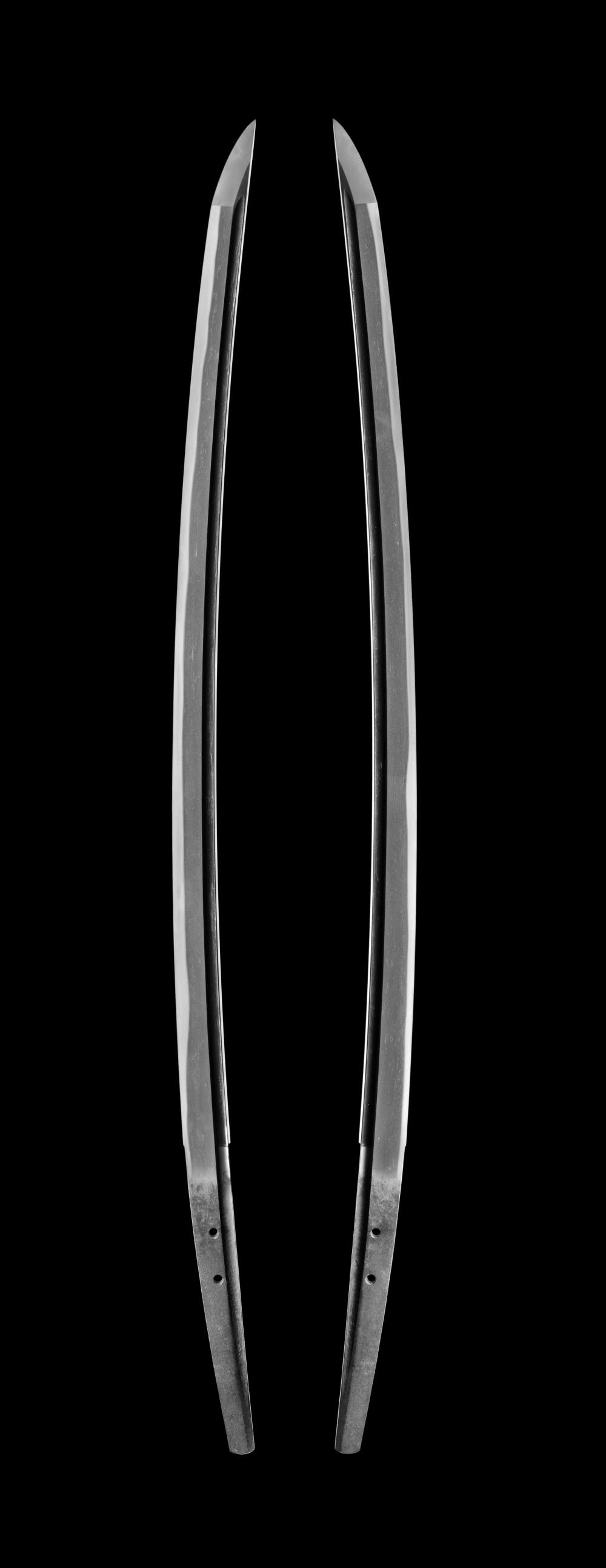
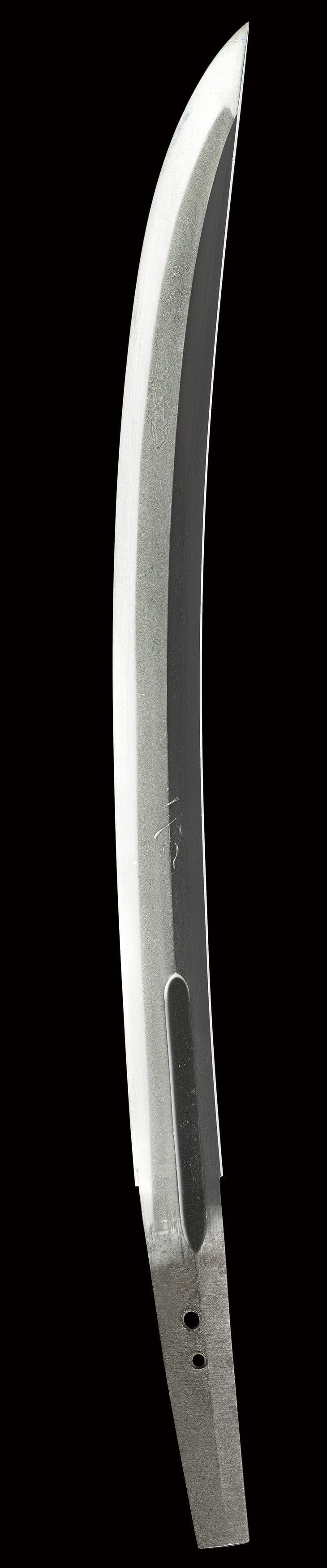
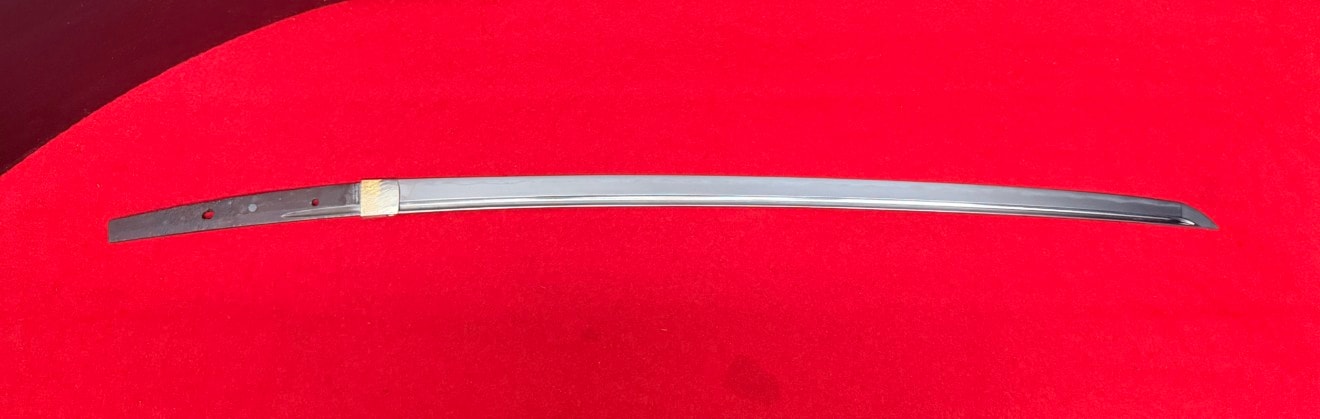
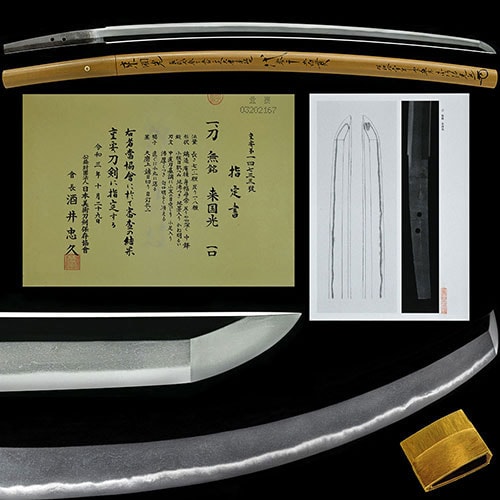
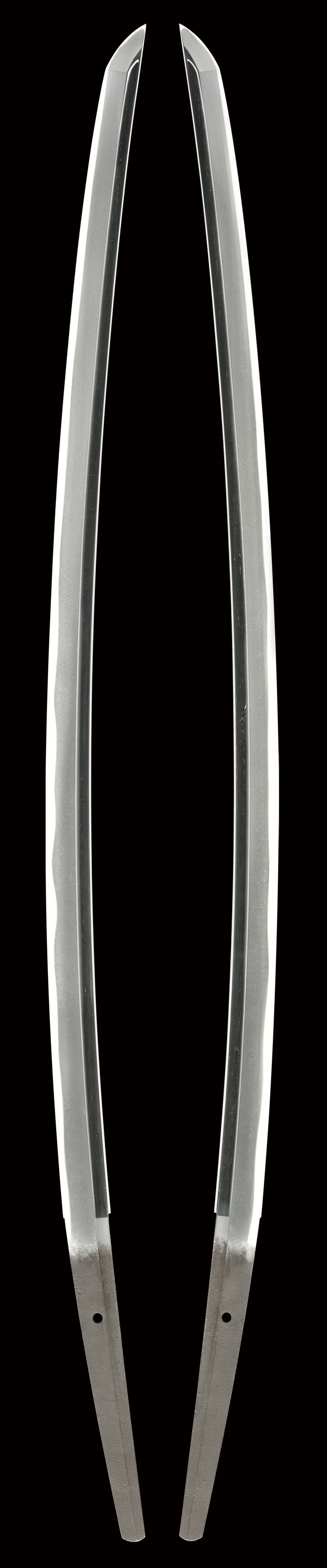
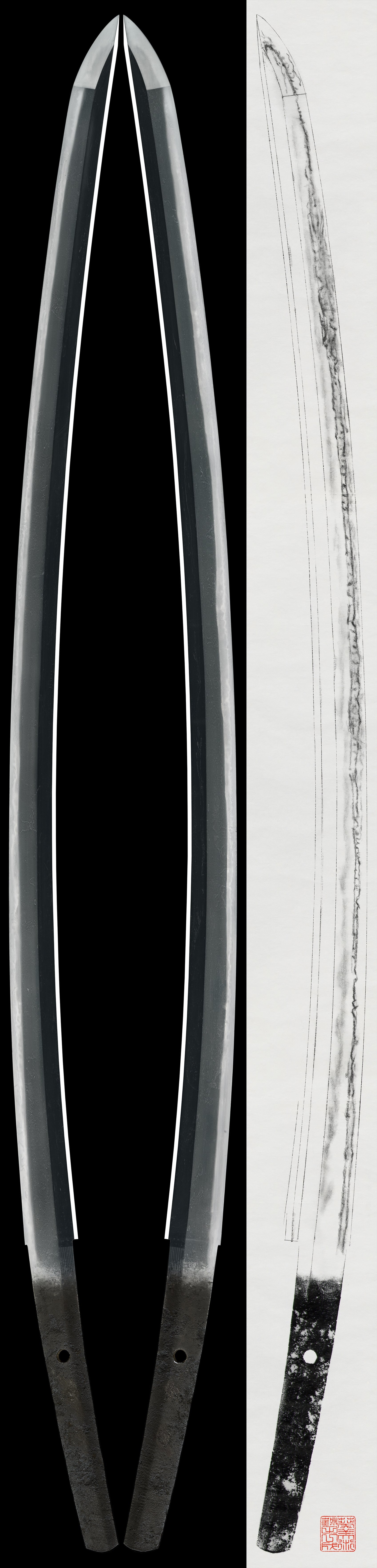
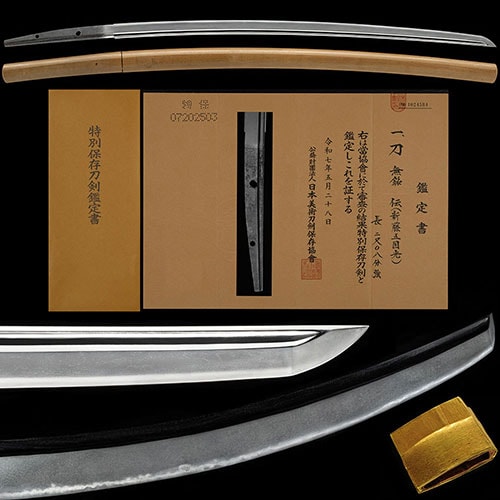
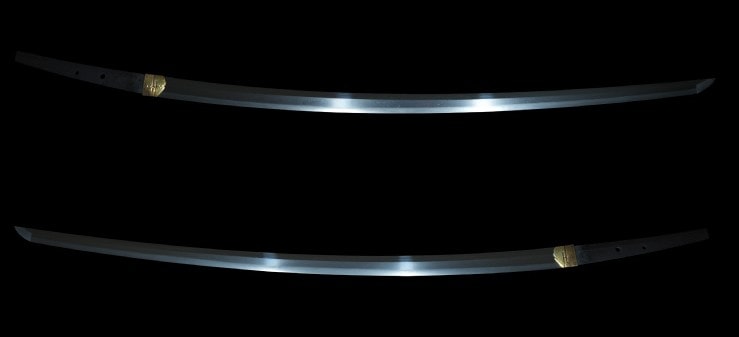
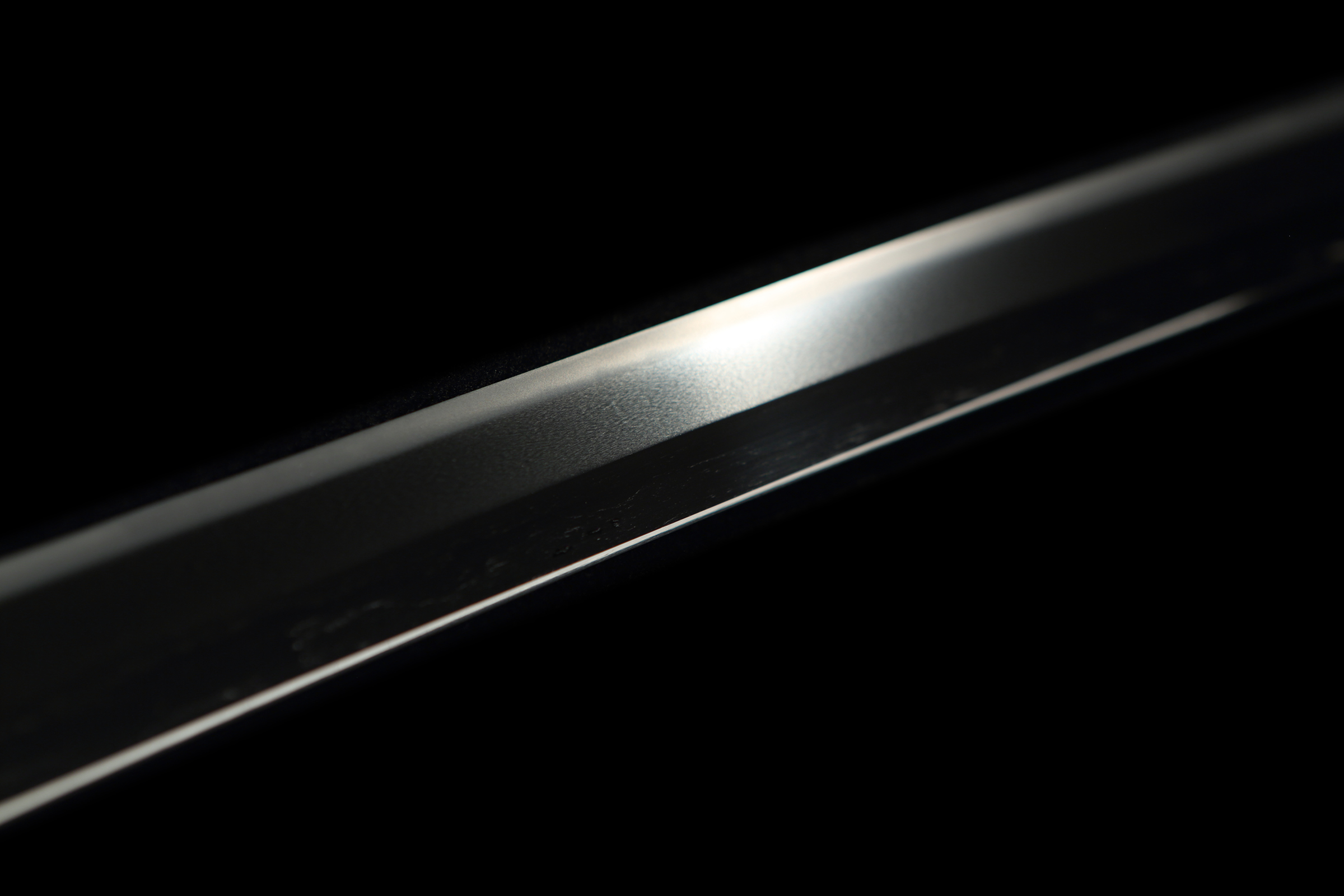
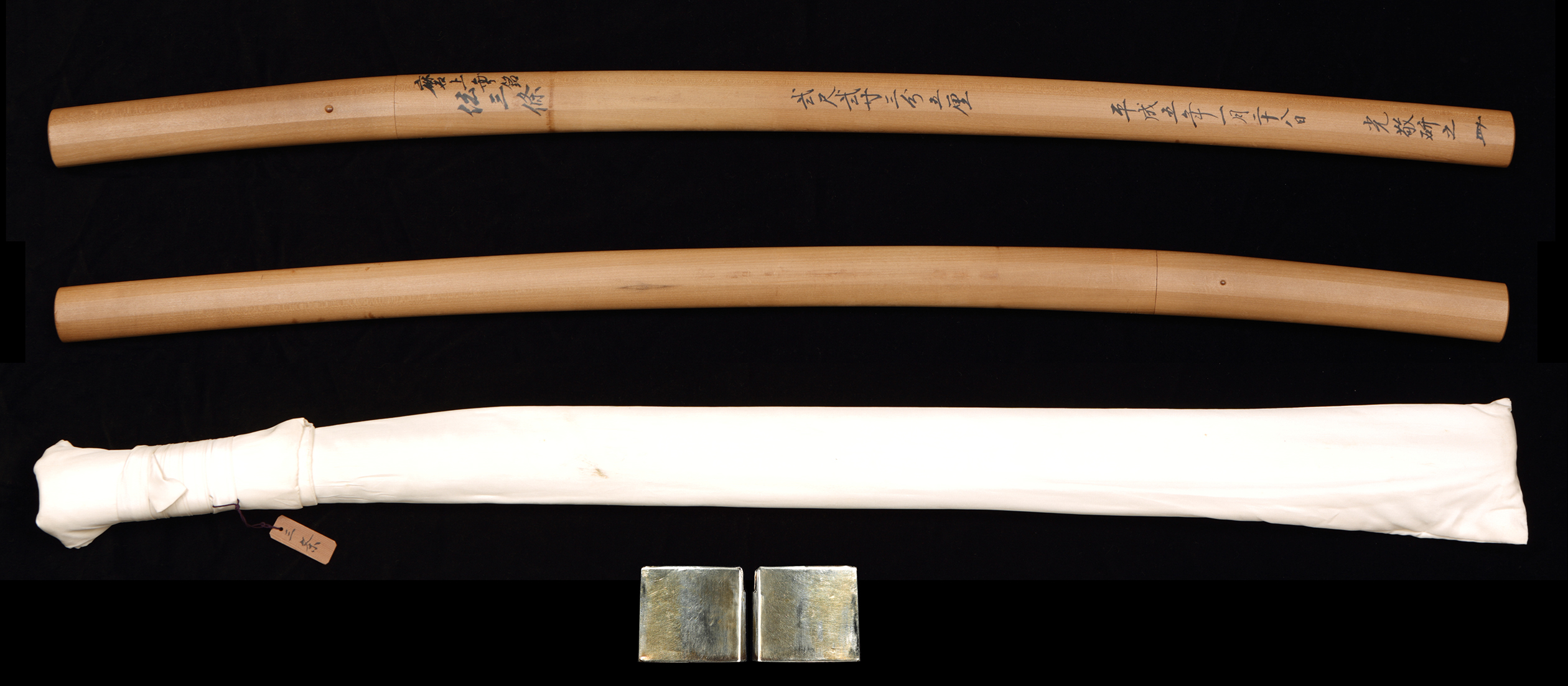
This is a katana attributed to Rai Kuniyasu from the Nanbokucho period. The blade has a length of 67.7cm and features a straight temper line with small irregular patterns. The sword comes with a shirasaya and a Tokubetsu Hozon certificate from the NBTHK. SOLD.
 NihontoWatch
mumei · Nanbokucho · nagasa 67.7cm · sori 1.2cm


Yamashiro-den · Settsu · around 1329-1331
Tōken Taikan top 14%
1 piece on the market now
Where Kuniyasu stands among comparable artisans: across all of nihontō, and within tradition, era, and period. The tiers (Foremost · Leading · Major · Notable) weigh official designations from the NBTHK and Japan's Agency for Cultural Affairs, together with historical honors of lasting repute such as the Sansaku and Meibutsu-chō.
Select a lens to see how it's measured.
Yamashiro-den · Settsu
6 pieces on the market now
The Nakajima Rai designation identifies swordmaking traditions established when Rai Kuninaga, a disciple of the Kyōto master Rai Kunitoshi, relocated to the Nakajima district of Settsu Province during the late Kamakura period. This move represented both geographical expansion of Rai school influence beyond the imperial capital and the deliberate transplantation of technically sophisticated Kyōto nie-based forging practices into a provincial setting. According to historical sword compendia, smiths using this designation are traditionally counted as two generations: the first active during the Gentoku era (1329–1331), and the second working through the middle decades of the fourteenth century, spanning the Shōhei and Ōan eras. Signed examples are exceedingly rare, and most attributions rest on stylistic analysis of unsigned blades greatly shortened from their original dimensions. Nakajima Rai workmanship faithfully perpetuates the core technical vocabulary of the main Rai school while exhibiting slightly more restrained execution. The forging typically shows compact ko-itame-hada or itame mixed with mokume and nagare-hada, frequently with a tendency toward standing grain; the surface is heavily laden with fine ji-nie that forms in thick, crystalline masses, producing a bright, clear appearance. Chikei enter actively and repeatedly, and faint nie-utsuri often appears along the shinogi side. The hamon follows a characteristic broad suguha-based pattern, into which are mixed ko-gunome, ko-chōji, and small midare elements; within this foundation, ashi and yō enter abundantly, and the nioiguchi is uniformly described as bright and clear.
Internal activities—kinsuji, sunagashi, yubashiri, hotsure, kuichigai-ba, nijūba, and uchi-noke—appear frequently along the habuchi, creating rich variation within the temper line. The bōshi typically forms ko-maru with hakikake, often showing vigorous activity. The overall impression is one of technically accomplished nie-deki work in which the foundational suguha serves as a vehicle for highly active crystalline formations and internal dynamics, closely resembling the style of Rai Kunimitsu but yielding slightly in artistic rank. Extant Nakajima Rai blades almost invariably preserve the bold proportions characteristic of Nanbokuchō-period production: wide mihaba with little taper from base to tip, shallow or deep sori (often retaining koshizori or wazori despite shortening), and extended chū-kissaki or ō-kissaki. Even when greatly shortened, these blades retain an imposing, martial presence that pairs well with the vigorous, nie-laden forging and temper. The technical consistency across designated examples—tight itame with thick ji-nie, broad suguha with active nie, and bright nioiguchi—establishes a coherent stylistic profile that clearly descends from Kyōto Rai traditions while expressing a distinctive provincial character. The combination of robust construction, excellent preservation in surviving examples, and flavorful hataraki within both ji and ha renders Nakajima Rai an important regional expression of late Kamakura and Nanbokuchō swordmaking, preserving the technical sophistication of the capital school in a relocated context. Learn more →
| Smith | Era | Designated |
|---|---|---|
| Kuninaga國長 | 1329-1331 | 58 |
| Kuninaga國長 | 1345-1350 | 11 |
| Kuninaga國長 | 1331-1336 | 2 |
| Munenaga宗長 | 1394-1428 | 0 |
| Naga長 | 1362-1368 | 1 |
Yamashiro in the Nanbokuchō period
The divided-courts war impoverished the court society that had sustained Kyōto’s most refined work. With the last Rai masters the classic line effectively closed, while Hasebe and Nobukuni carried the new Sōshū manner into the capital.
A Hozon-certified blade judged to show notably superior workmanship and a better state of preservation. The bar is higher: re-tempered blades and most unsigned Muromachi/Edo works are excluded.
The NBTHK (Nihon Bijutsu Tōken Hozon Kyōkai, the Society for the Preservation of Japanese Art Swords) is a public-interest incorporated foundation founded in 1948 and supervised by Japan’s Agency for Cultural Affairs (Bunkachō); it is based at the Japanese Sword Museum in Tokyo. Its expert panels physically examine each submitted work (shinsa) and issue a certificate (kanteishō) ranking it by artistic and historical merit. NBTHK papers are the most widely recognized standard of authentication for Japanese swords and fittings.
NBTHK official siteIf you judge that the condition of the delivered item differs significantly from the photos or description on our site, a return is possible. However, the return shipping cost is the customer's responsibility. To use cooling-off, please apply in writing by postal mail within one week of the item's arrival. The return shipping cost is the customer's responsibility.
¥1,500,000
This is a katana attributed to Rai Kuniyasu from the Nanbokucho period. The blade has a length of 67.7cm and features a straight temper line with small irregular patterns. The sword comes with a shirasaya and a Tokubetsu Hozon certificate from the NBTHK. SOLD.
NihontoWatchmumei · Nanbokucho · nagasa 67.7cm · sori 1.2cm
Yamashiro-den · Settsu · around 1329-1331
Tōken Taikan top 14%
1 piece on the market now
Where Kuniyasu stands among comparable artisans: across all of nihontō, and within tradition, era, and period. The tiers (Foremost · Leading · Major · Notable) weigh official designations from the NBTHK and Japan's Agency for Cultural Affairs, together with historical honors of lasting repute such as the Sansaku and Meibutsu-chō.
Select a lens to see how it's measured.
Yamashiro-den · Settsu
6 pieces on the market now
The Nakajima Rai designation identifies swordmaking traditions established when Rai Kuninaga, a disciple of the Kyōto master Rai Kunitoshi, relocated to the Nakajima district of Settsu Province during the late Kamakura period. This move represented both geographical expansion of Rai school influence beyond the imperial capital and the deliberate transplantation of technically sophisticated Kyōto nie-based forging practices into a provincial setting. According to historical sword compendia, smiths using this designation are traditionally counted as two generations: the first active during the Gentoku era (1329–1331), and the second working through the middle decades of the fourteenth century, spanning the Shōhei and Ōan eras. Signed examples are exceedingly rare, and most attributions rest on stylistic analysis of unsigned blades greatly shortened from their original dimensions. Nakajima Rai workmanship faithfully perpetuates the core technical vocabulary of the main Rai school while exhibiting slightly more restrained execution. The forging typically shows compact ko-itame-hada or itame mixed with mokume and nagare-hada, frequently with a tendency toward standing grain; the surface is heavily laden with fine ji-nie that forms in thick, crystalline masses, producing a bright, clear appearance. Chikei enter actively and repeatedly, and faint nie-utsuri often appears along the shinogi side. The hamon follows a characteristic broad suguha-based pattern, into which are mixed ko-gunome, ko-chōji, and small midare elements; within this foundation, ashi and yō enter abundantly, and the nioiguchi is uniformly described as bright and clear.
Internal activities—kinsuji, sunagashi, yubashiri, hotsure, kuichigai-ba, nijūba, and uchi-noke—appear frequently along the habuchi, creating rich variation within the temper line. The bōshi typically forms ko-maru with hakikake, often showing vigorous activity. The overall impression is one of technically accomplished nie-deki work in which the foundational suguha serves as a vehicle for highly active crystalline formations and internal dynamics, closely resembling the style of Rai Kunimitsu but yielding slightly in artistic rank. Extant Nakajima Rai blades almost invariably preserve the bold proportions characteristic of Nanbokuchō-period production: wide mihaba with little taper from base to tip, shallow or deep sori (often retaining koshizori or wazori despite shortening), and extended chū-kissaki or ō-kissaki. Even when greatly shortened, these blades retain an imposing, martial presence that pairs well with the vigorous, nie-laden forging and temper. The technical consistency across designated examples—tight itame with thick ji-nie, broad suguha with active nie, and bright nioiguchi—establishes a coherent stylistic profile that clearly descends from Kyōto Rai traditions while expressing a distinctive provincial character. The combination of robust construction, excellent preservation in surviving examples, and flavorful hataraki within both ji and ha renders Nakajima Rai an important regional expression of late Kamakura and Nanbokuchō swordmaking, preserving the technical sophistication of the capital school in a relocated context. Learn more →
| Smith | Era | Designated |
|---|---|---|
| Kuninaga國長 | 1329-1331 | 58 |
| Kuninaga國長 | 1345-1350 | 11 |
| Kuninaga國長 | 1331-1336 | 2 |
| Munenaga宗長 | 1394-1428 | 0 |
| Naga長 | 1362-1368 | 1 |
Yamashiro in the Nanbokuchō period
The divided-courts war impoverished the court society that had sustained Kyōto’s most refined work. With the last Rai masters the classic line effectively closed, while Hasebe and Nobukuni carried the new Sōshū manner into the capital.
A Hozon-certified blade judged to show notably superior workmanship and a better state of preservation. The bar is higher: re-tempered blades and most unsigned Muromachi/Edo works are excluded.
The NBTHK (Nihon Bijutsu Tōken Hozon Kyōkai, the Society for the Preservation of Japanese Art Swords) is a public-interest incorporated foundation founded in 1948 and supervised by Japan’s Agency for Cultural Affairs (Bunkachō); it is based at the Japanese Sword Museum in Tokyo. Its expert panels physically examine each submitted work (shinsa) and issue a certificate (kanteishō) ranking it by artistic and historical merit. NBTHK papers are the most widely recognized standard of authentication for Japanese swords and fittings.
NBTHK official siteIf you judge that the condition of the delivered item differs significantly from the photos or description on our site, a return is possible. However, the return shipping cost is the customer's responsibility. To use cooling-off, please apply in writing by postal mail within one week of the item's arrival. The return shipping cost is the customer's responsibility.
¥1,500,000