NihontoWatch Mon

NihontoWatchBETA

Market
Encyclopedia
NihontoWatch Mon

NihontoWatchBETA

Market
Encyclopedia

Description

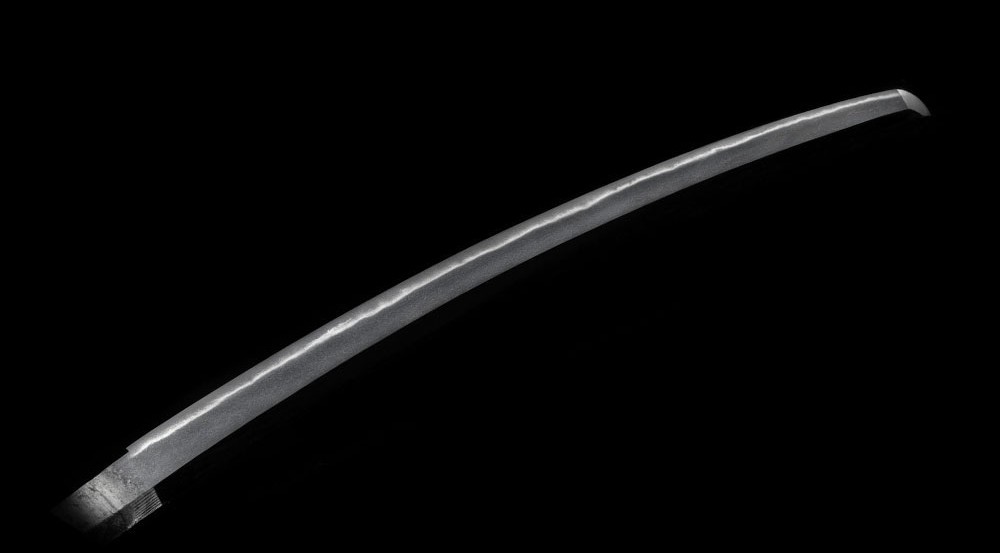
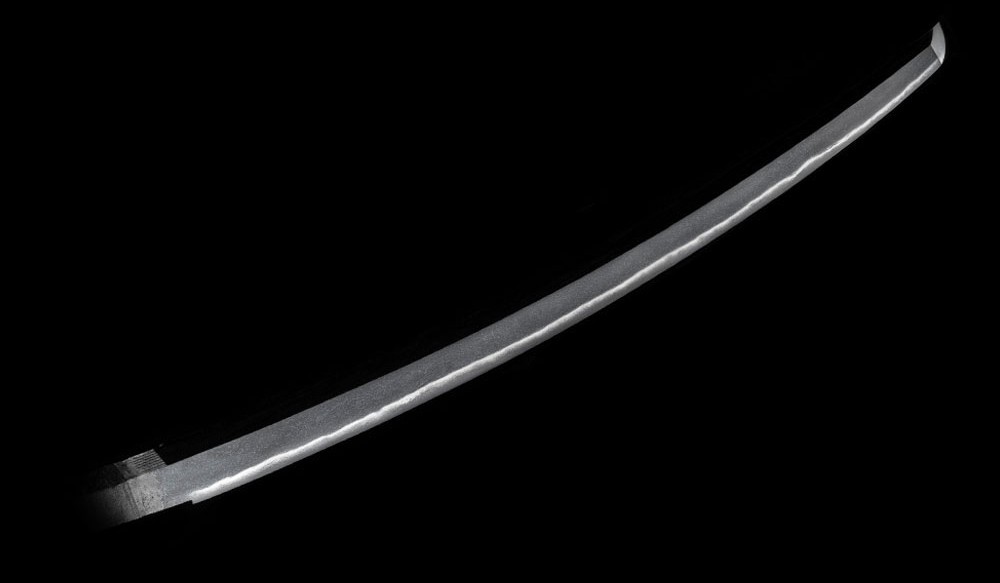
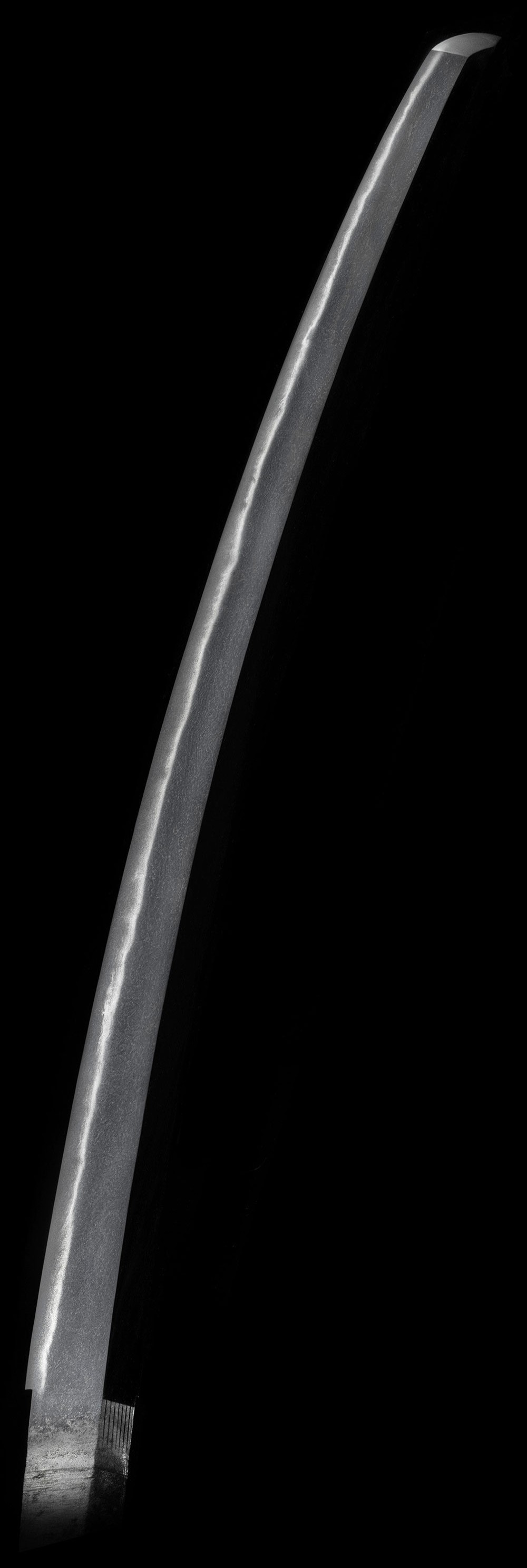
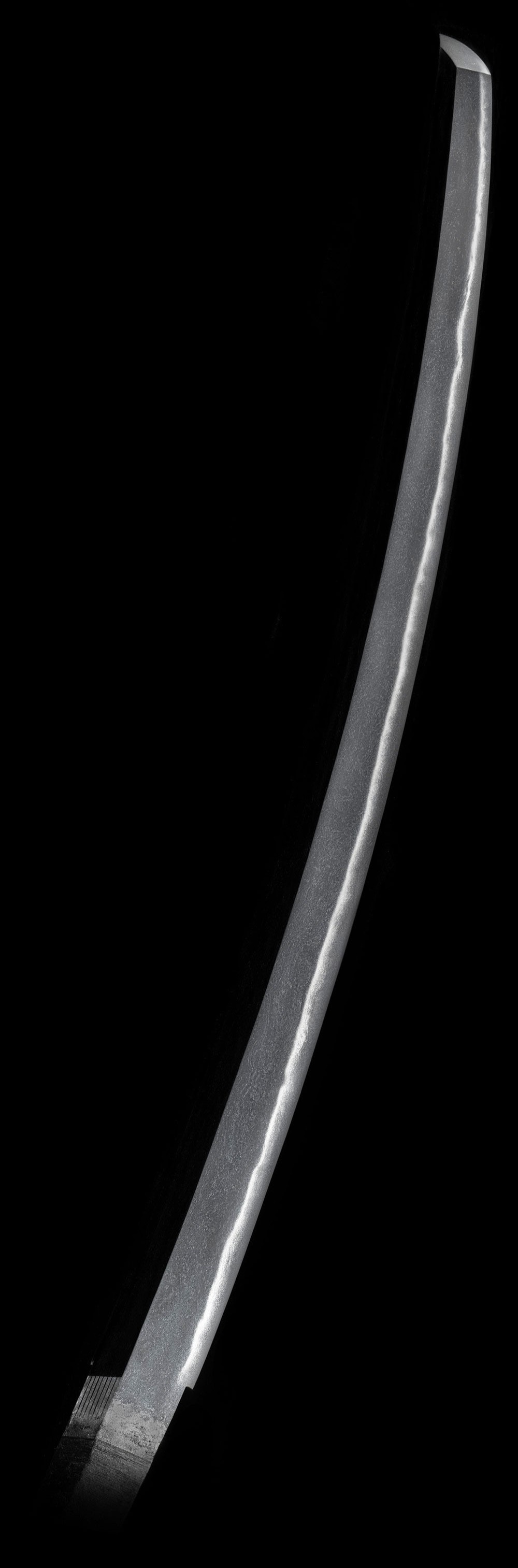
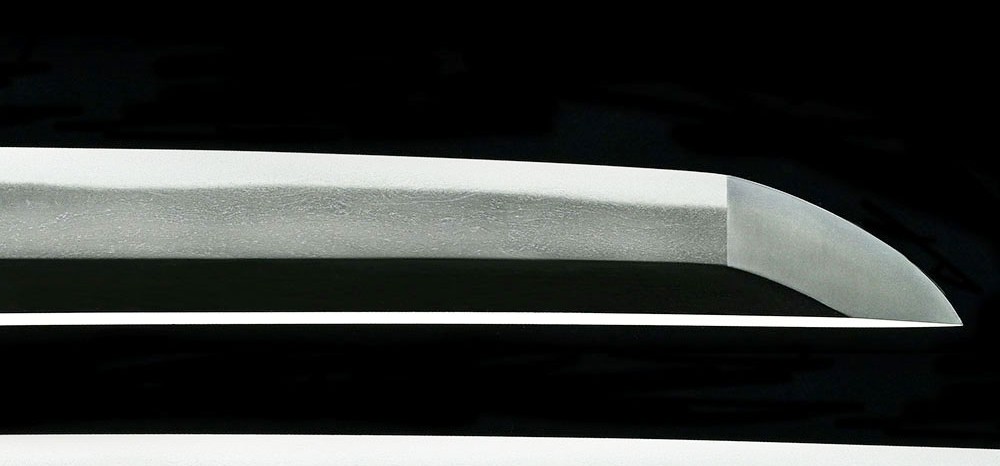
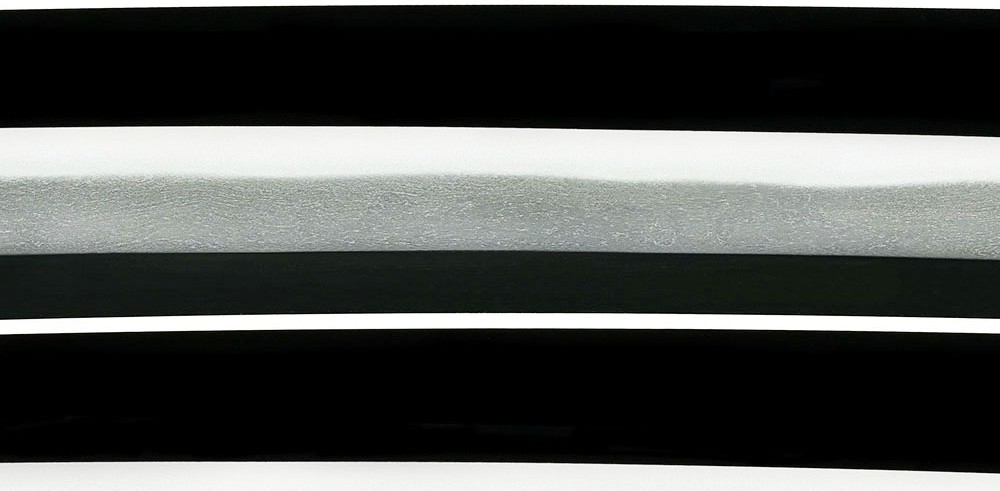
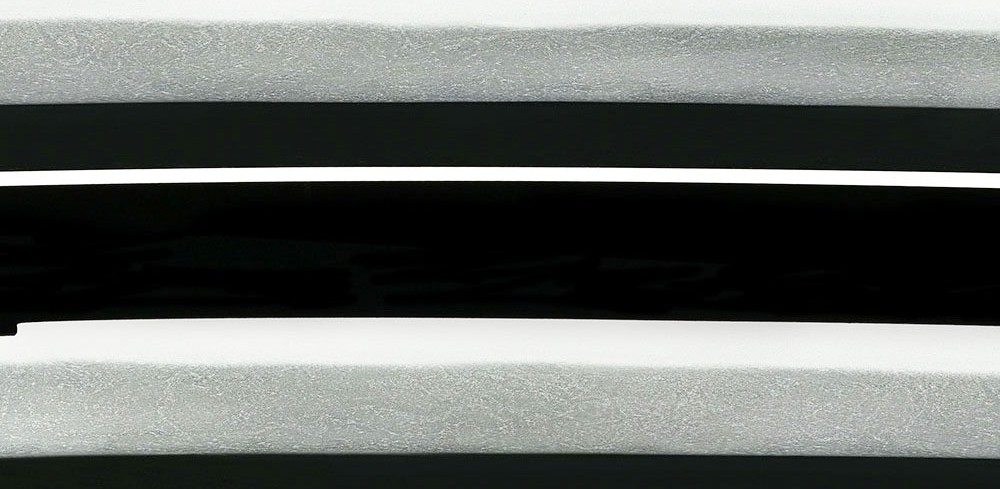
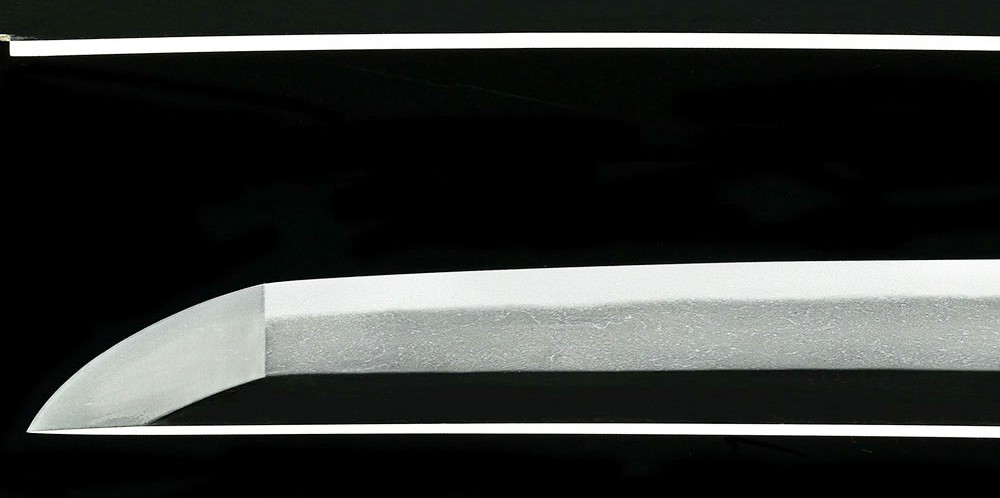
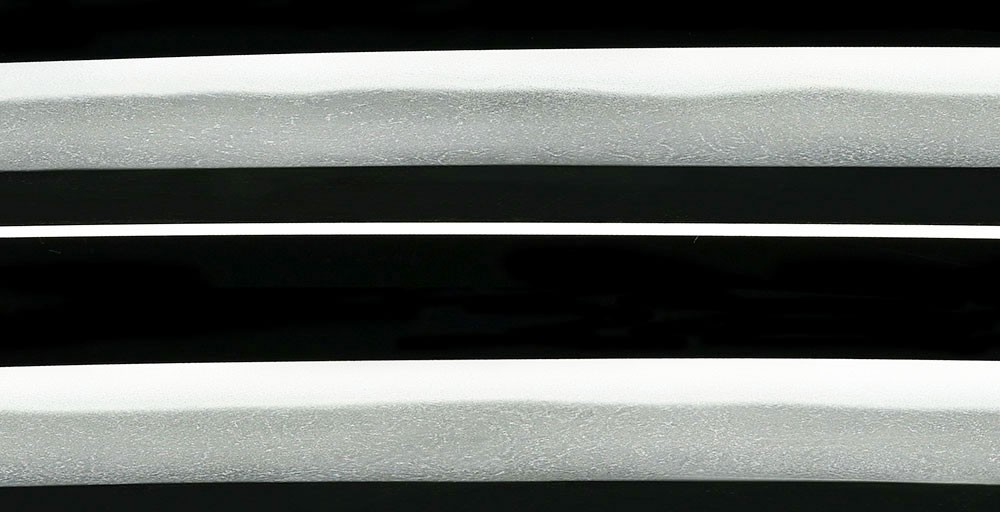
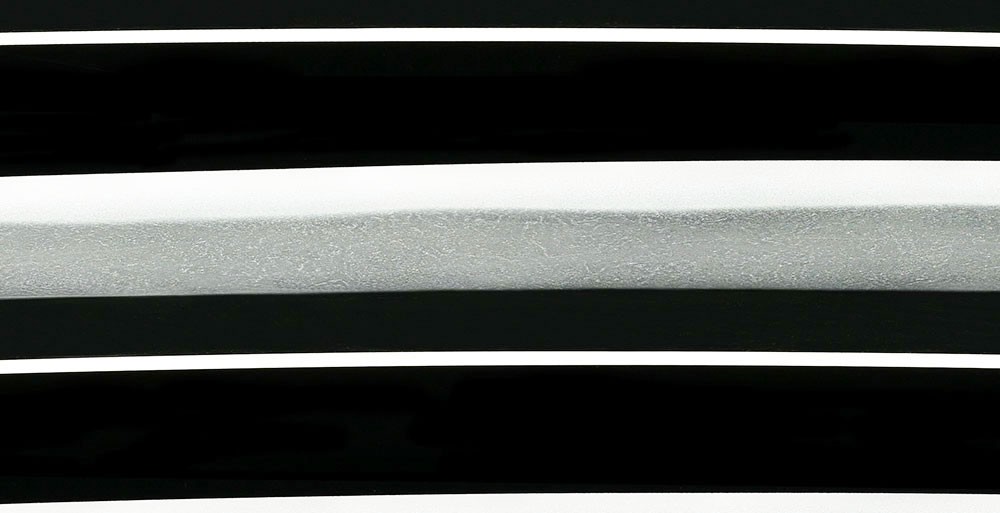
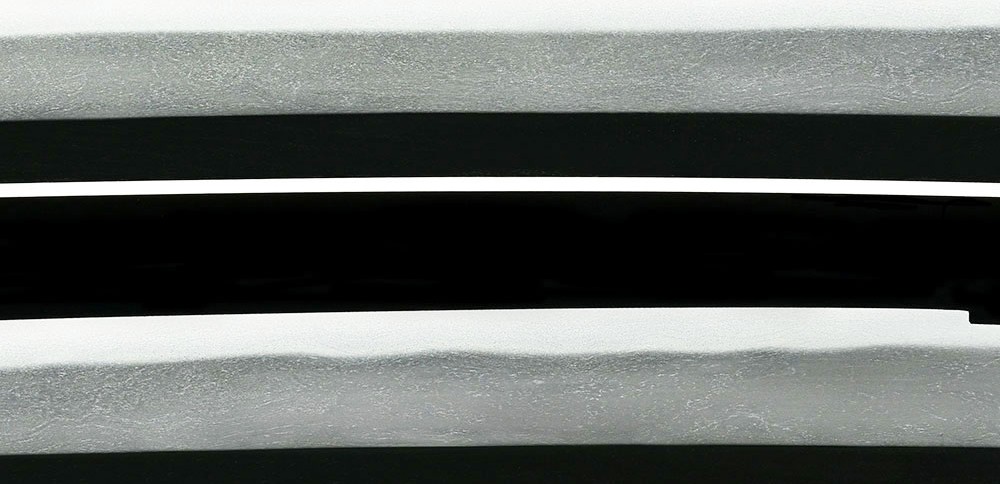
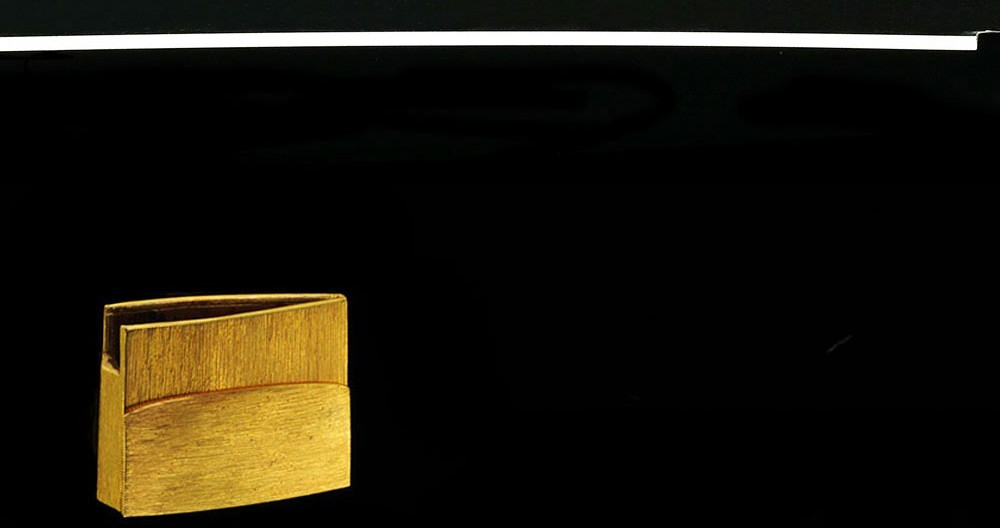
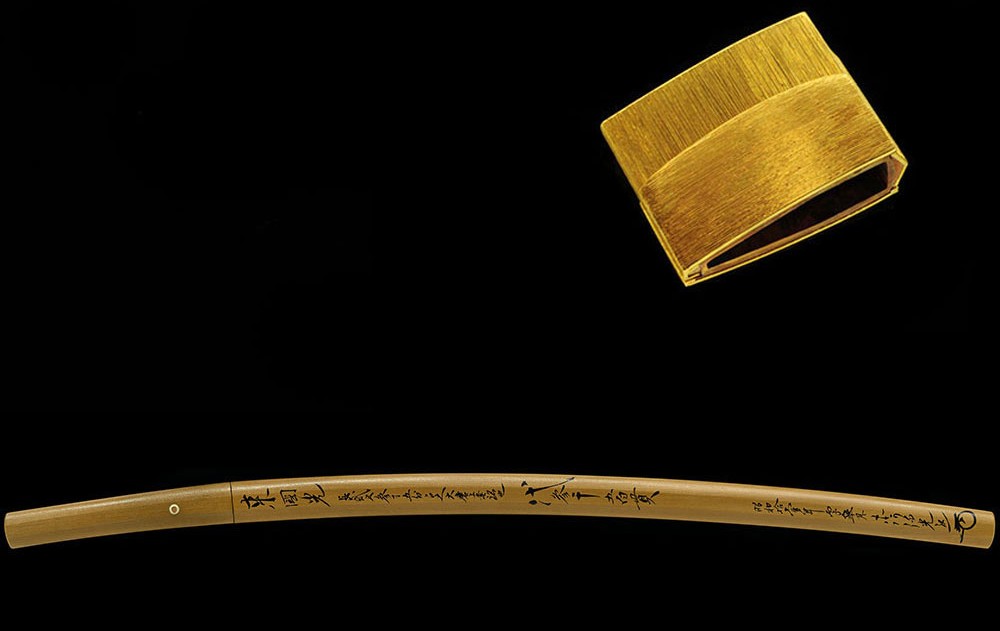
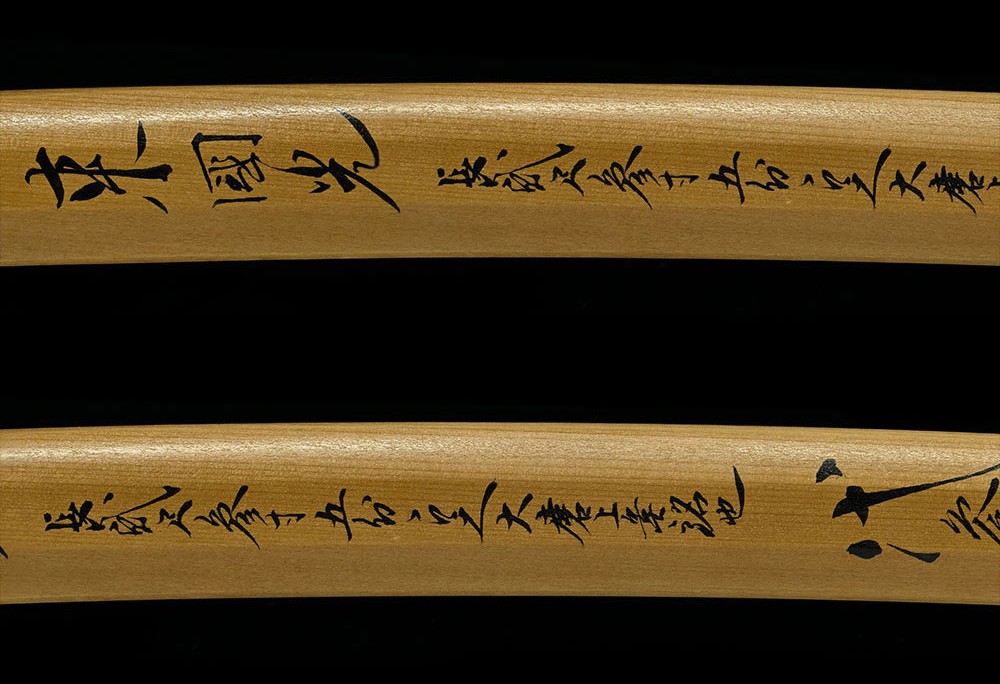
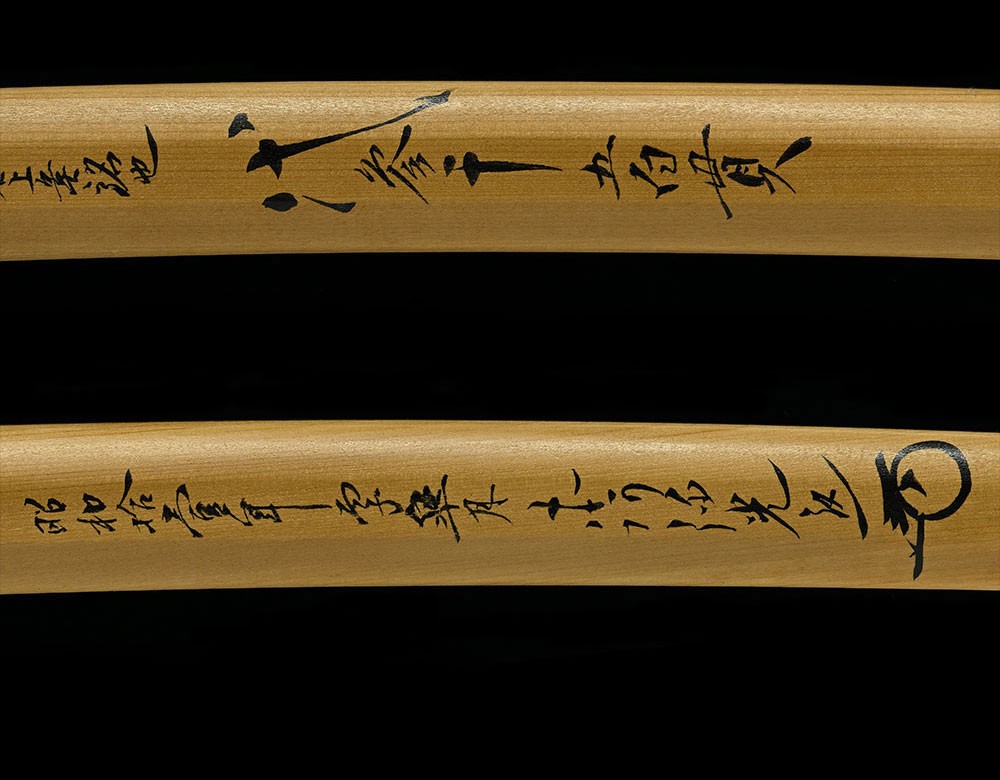
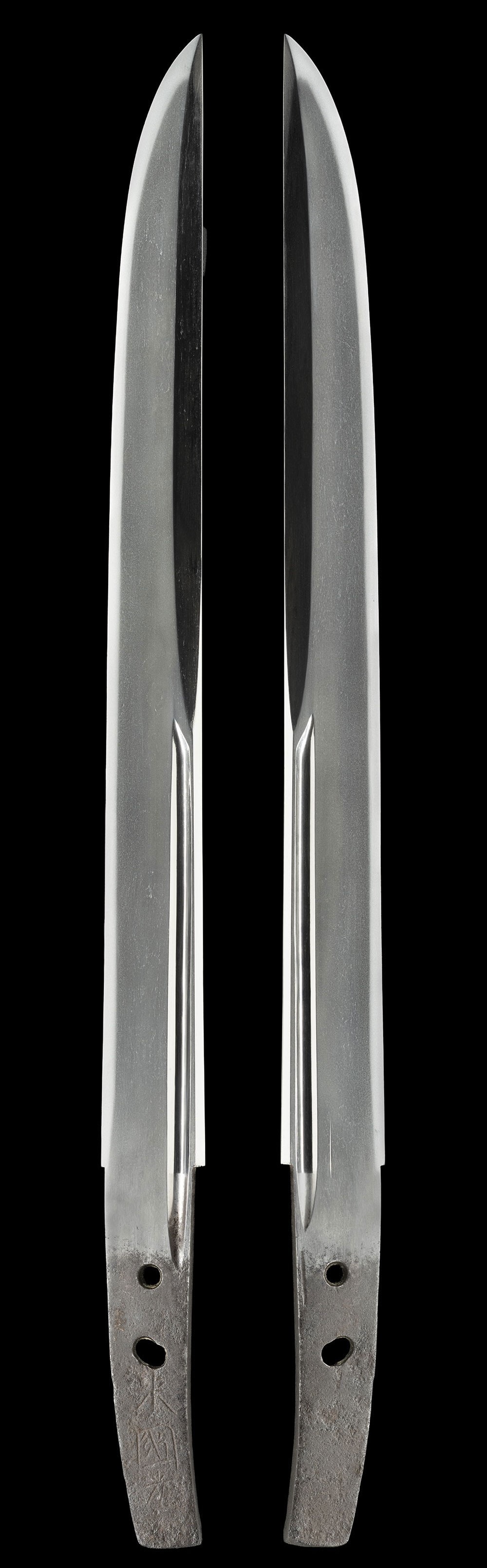
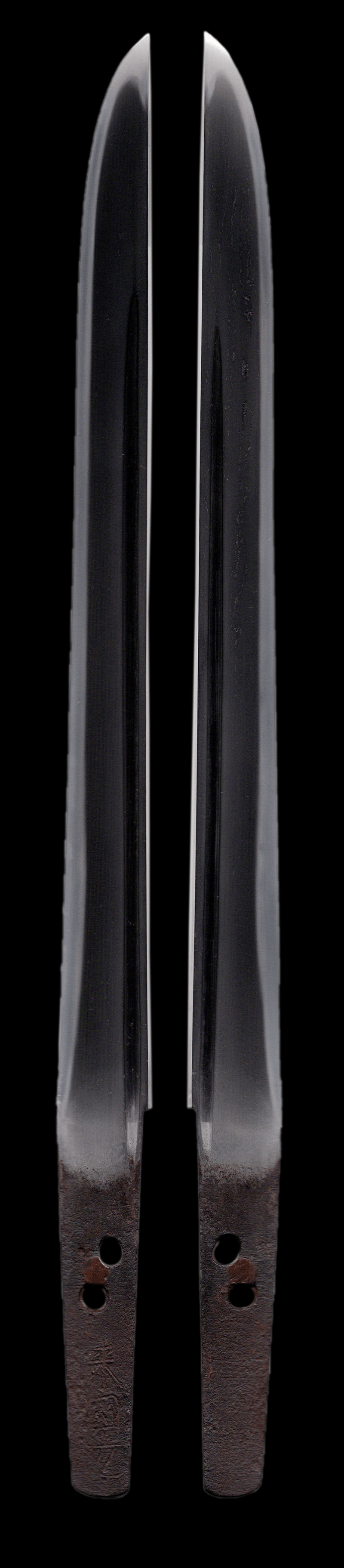
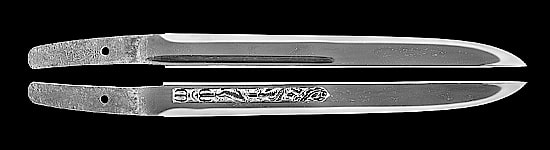
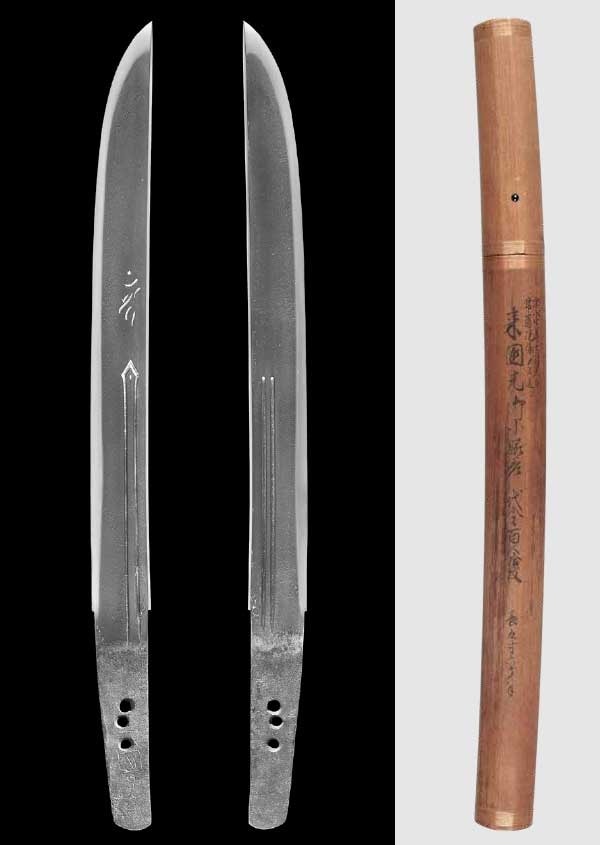
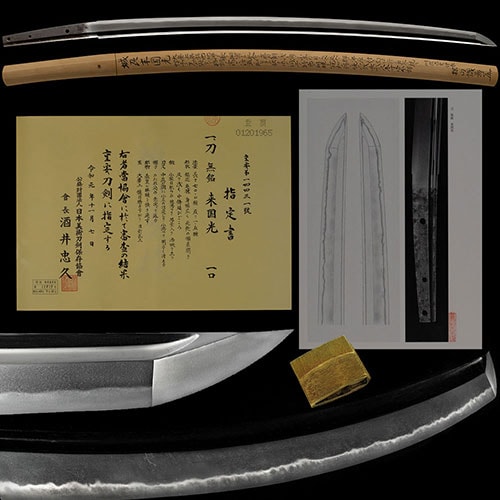
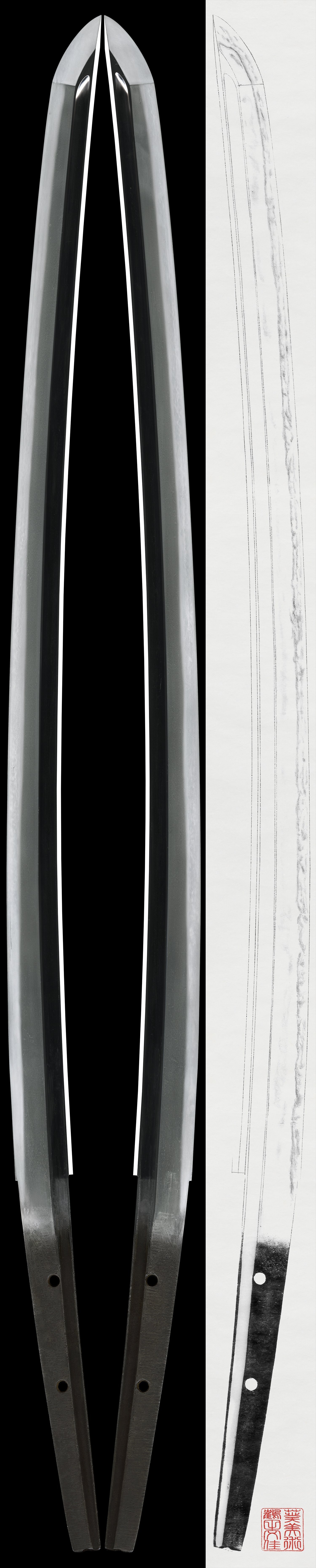
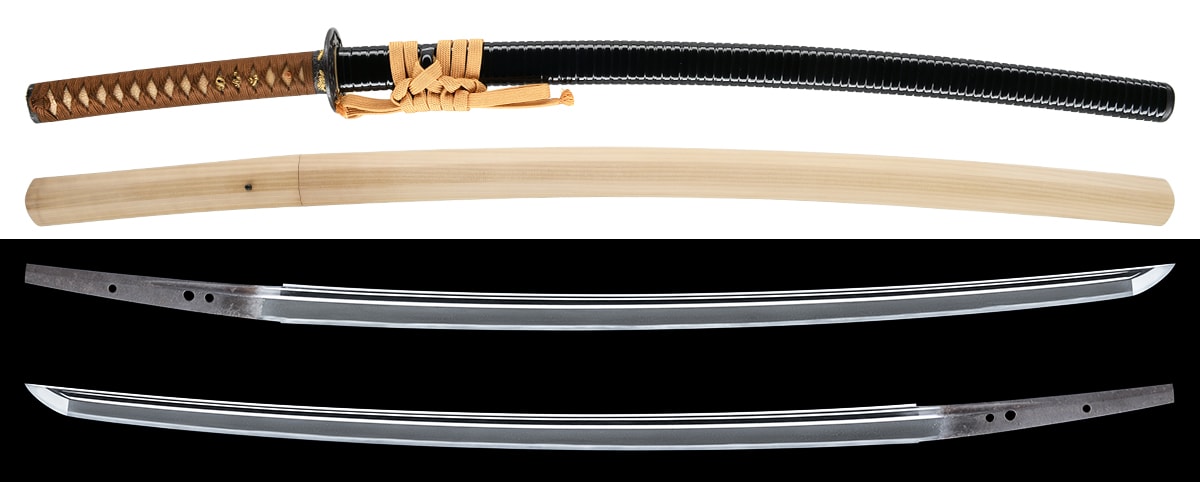
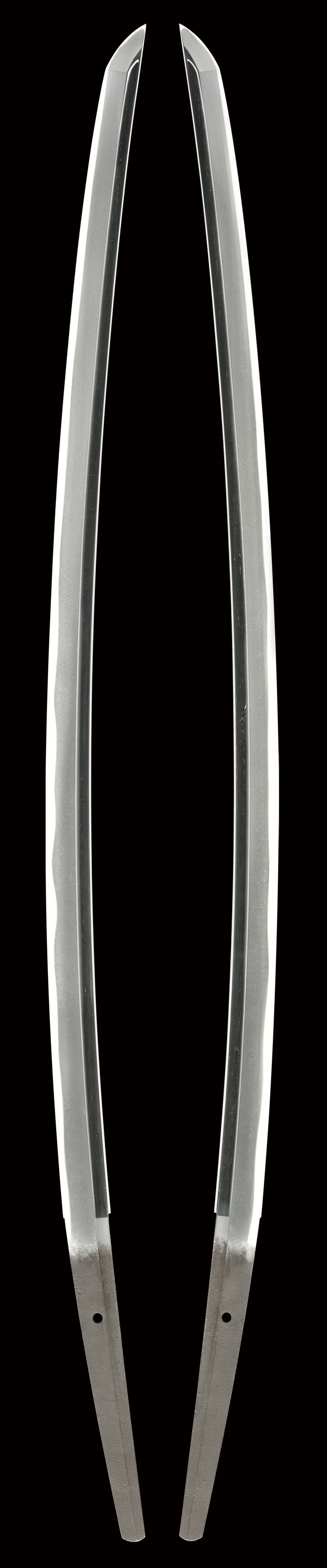
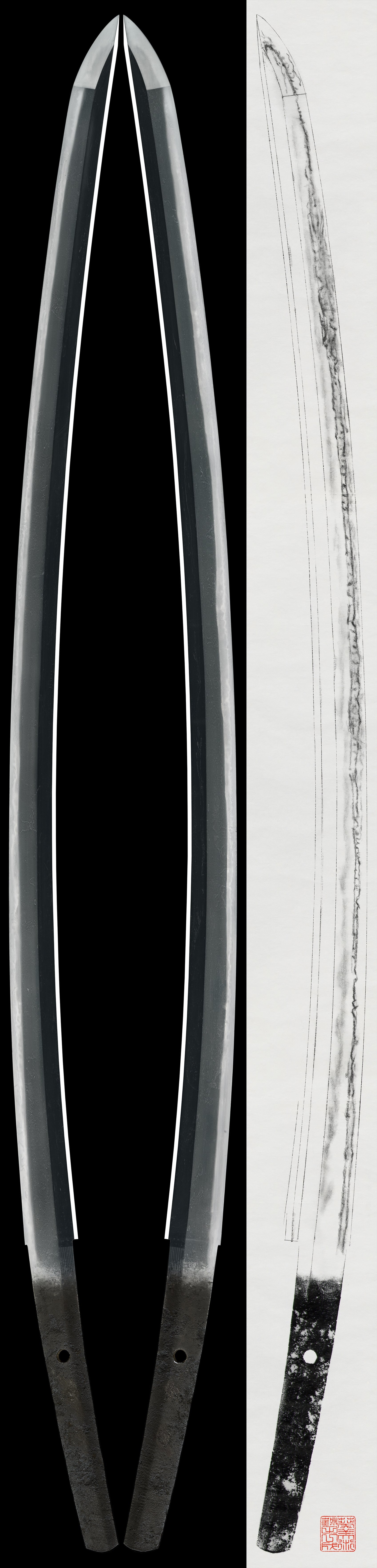
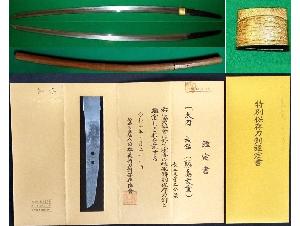
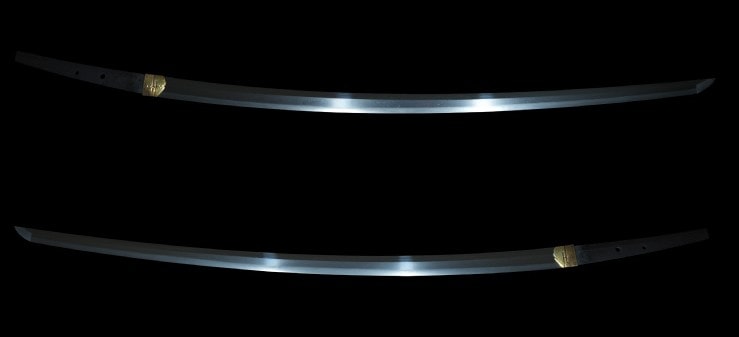
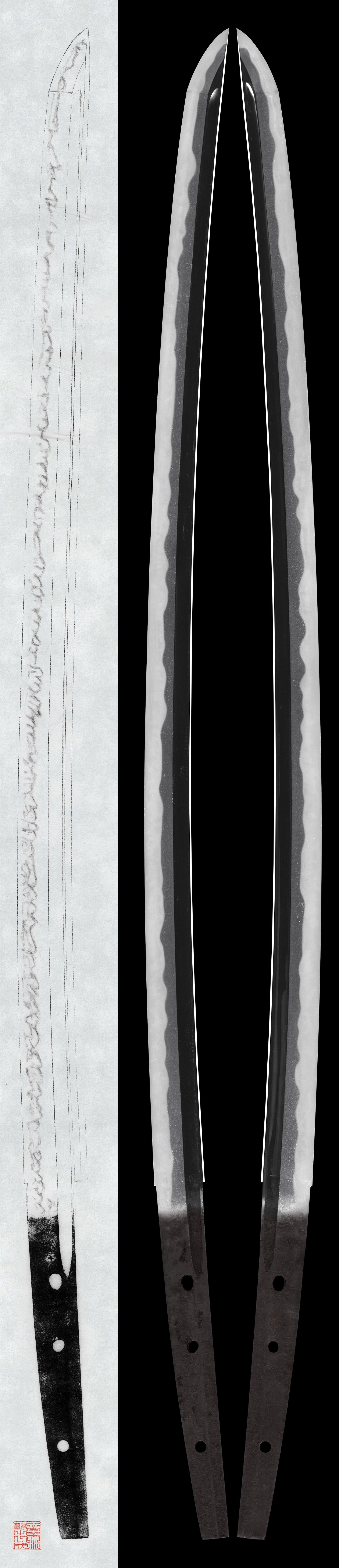
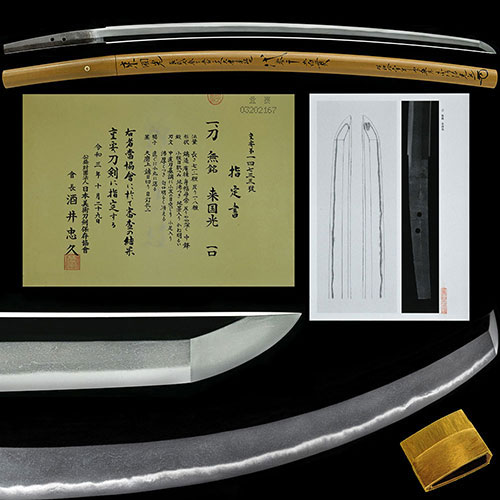
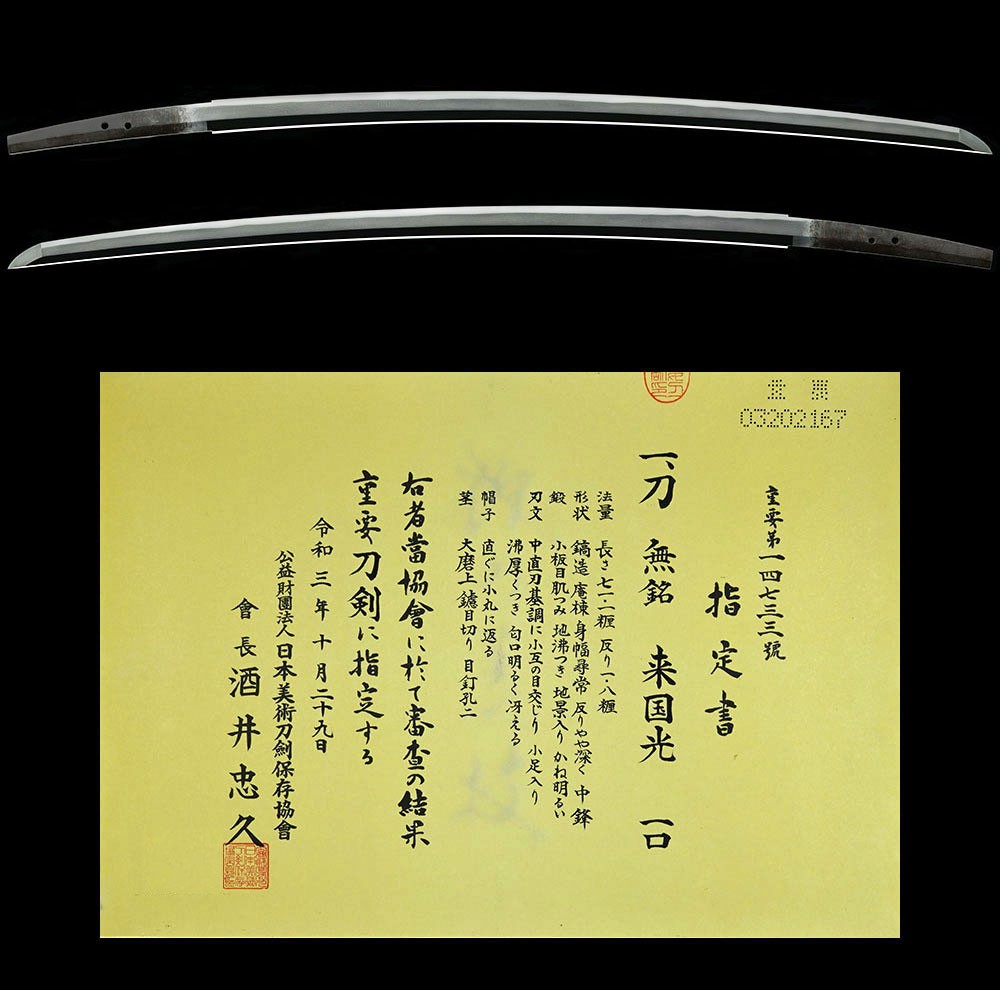
This is a masterpiece katana by Rai Kunimitsu, son of Rai Kunitoshi, from the Nanbokucho period. It features a beautiful jigane with frequent kinsuji and sunagashi, and a bright, clear jiha. The sword has a dignified tachi shape with deep sori and koshizori, showcasing the distinctive characteristics of Rai Kunimitsu's work. It is designated as a Juyo Token by the NBTHK.

NBTHK Setsumei

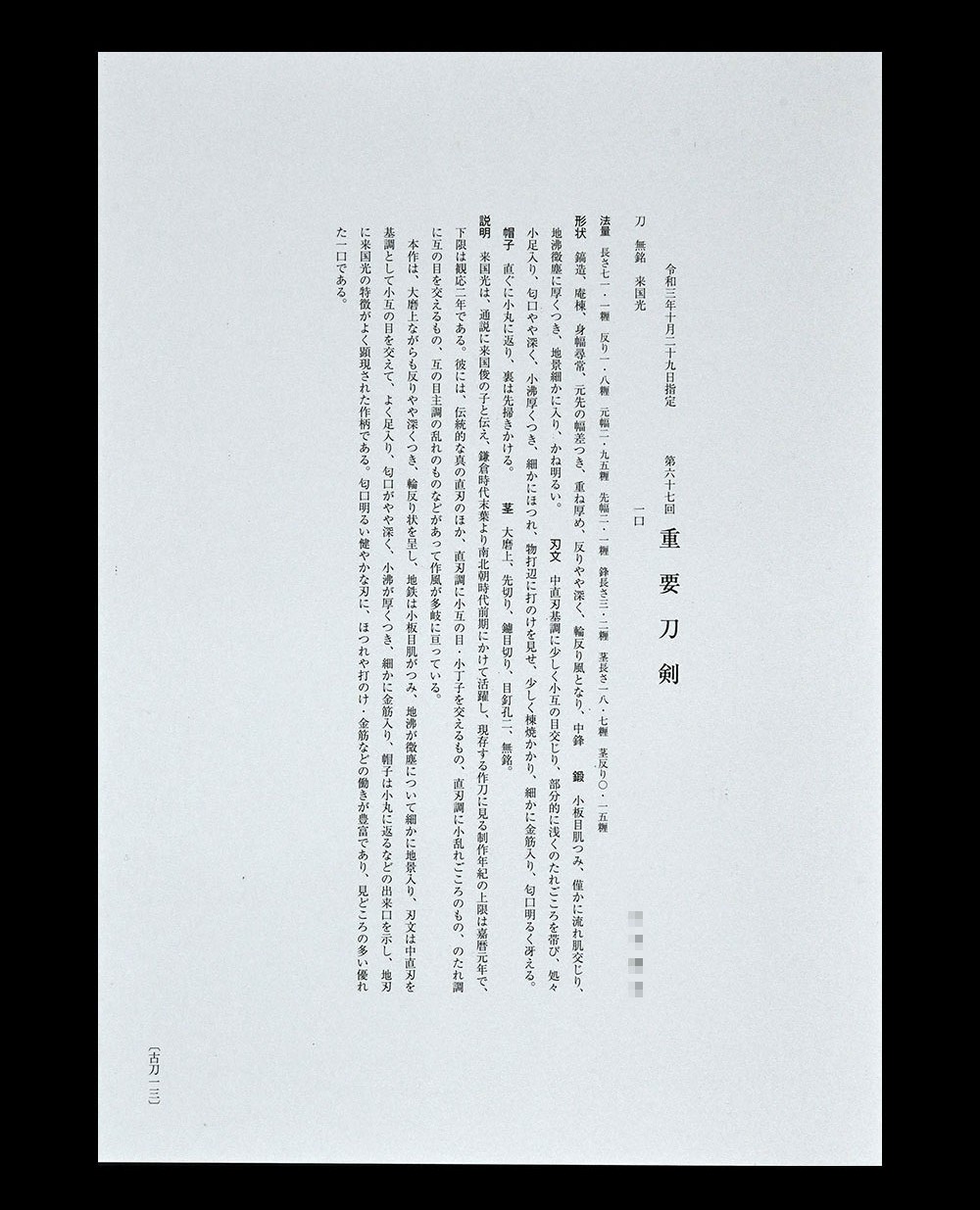
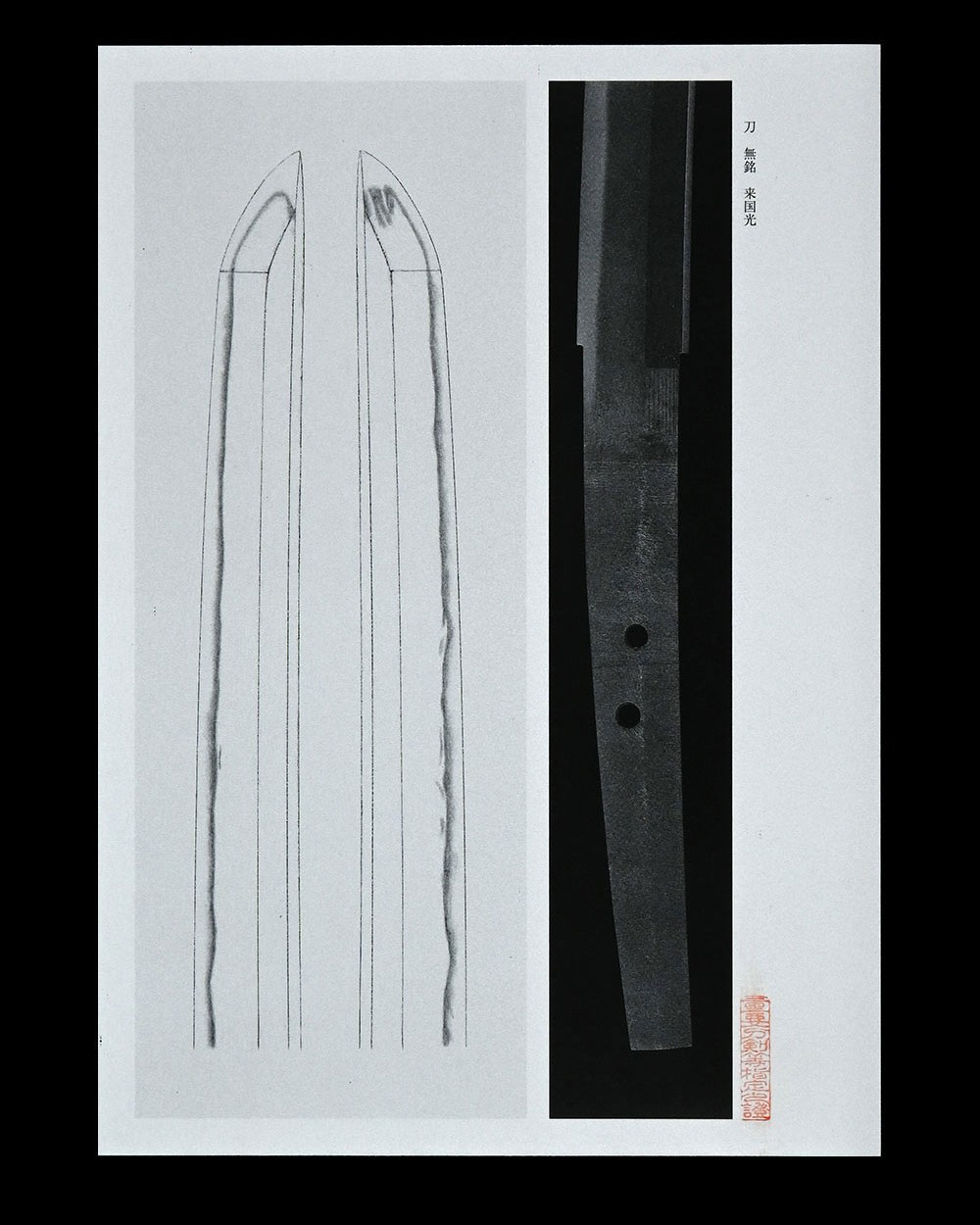
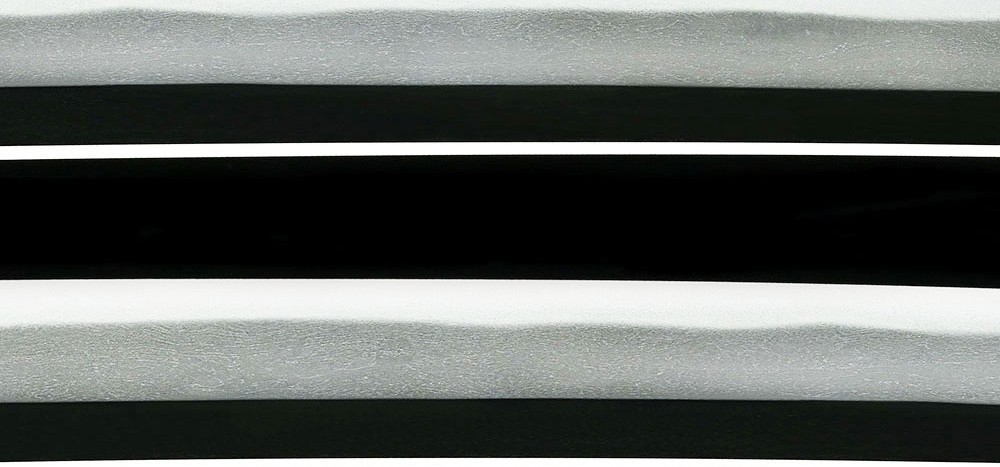
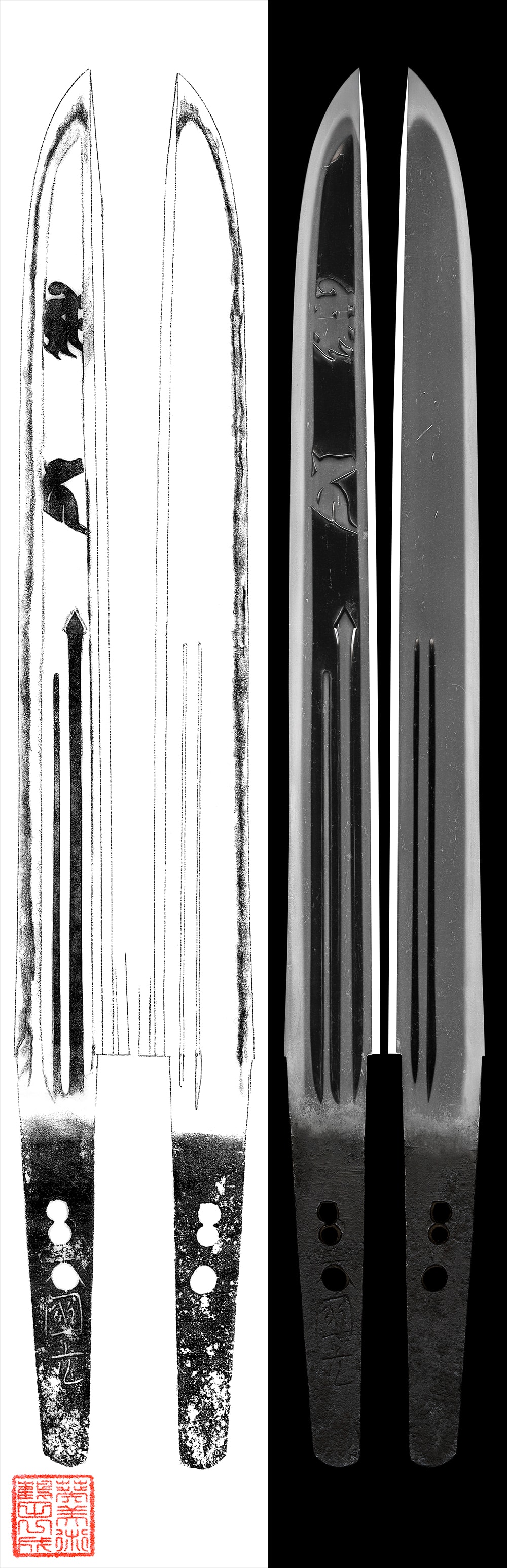
Juyo-Token, 67th Session — Designated October 29, 2021 Katana, mumei: Rai Kunimitsu (来国光) Measurements Nagasa 71.1 cm, sori 1.8 cm, motohaba 2.95 cm, sakihaba 2.1 cm, kissaki-nagasa 3.2 cm, nakago-nagasa 18.7 cm, nakago-sori 0.15 cm Description Keijo: Shinogi-zukuri, iori-mune; normal mihaba with a noticeable difference between base and tip widths; rather thick kasane; slightly deep sori with a koshizori-like tendency; chu-kissaki. Kitae: Dense ko-itame-hada, with a slight admixture of nagare-hada; very fine ji-nie thickly applied; fine chikei appear; the steel is bright. Hamon: Based on chu-suguha with some ko-gunome mixed in; in places it takes on a shallow notare-like feeling; ko-ashi enter in various areas; the nioiguchi is somewhat deep; ko-nie is thick; fine hotsure; uchi-noke is seen around the monouchi; slight muneyaki; fine kinsuji appear; the nioiguchi is bright and clear. Boshi: Sugu with a ko-maru turnback; on the ura side it shows hakikake toward the tip. Horimono: None stated. Nakago: O-suriage; kiri-yasurime; two mekugi-ana; unsigned. Artisan Rai Kunimitsu (来国光) Era Late Kamakura period to early Nanbokuchō period Explanation Rai Kunimitsu is traditionally said to have been a son of Rai Kunitoshi. He was active from the closing years of the Kamakura period into the early Nanbokuchō period. Among extant works, the earliest dated example bears the year Karyaku 1 (1326), and the latest is dated Kanno 2 (1351). His workmanship is notably diverse: alongside the traditional, true suguha, there are works in a suguha-based style mixed with ko-gunome and ko-chōji, works in a suguha-based style with a slight ko-midare tendency, works in a notare-based style mixed with gunome, and also irregular tempering in a gunome-based manner. Although this blade is o-suriage, it retains slightly deep curvature with a koshizori-like appearance. The jigane is a closely forged ko-itame with thickly applied, extremely fine ji-nie and delicate chikei, presenting bright steel. The hamon is fundamentally chu-suguha with ko-gunome interspersed; ashi enter well, the nioiguchi is somewhat deep, and thick ko-nie adheres. In addition, activities such as fine kinsuji, hotsure, and uchi-noke are abundant, and the boshi turns back in ko-maru. These features strongly manifest the characteristic traits of Rai Kunimitsu in both ji and ha. With its bright, vigorous edge and plentiful hataraki—hotsure, uchi-noke, and kinsuji among them—this is an excellent blade with many points of appreciation. (Koto)

NihontoWatch MonNihontoWatchBETA
MarketEncyclopedia
Swords›Yamashiro-den›Rai›Kunimitsu›Katana: Rai Kunimitsu - Juyo Token
katanaJūyō
Rai Kunimitsu

Katana: Rai Kunimitsu - Juyo Token

mei · Rai · Nanbokucho · nagasa 71.2cm · sori 1.8cm

¥7,800,000
Visit seller website →
Rai Kunimitsu — 1 of 21
Rai Kunimitsu — 2 of 21
Rai Kunimitsu — 3 of 21
Rai Kunimitsu — 4 of 21
Rai Kunimitsu — 5 of 21
Rai Kunimitsu — 6 of 21
Rai Kunimitsu — 7 of 21
Rai Kunimitsu — 8 of 21
Rai Kunimitsu — 9 of 21
Rai Kunimitsu — 10 of 21
Rai Kunimitsu — 11 of 21
Rai Kunimitsu — 12 of 21
Rai Kunimitsu — 13 of 21
Rai Kunimitsu — 14 of 21
Rai Kunimitsu — 15 of 21
Rai Kunimitsu — 16 of 21
Rai Kunimitsu — 17 of 21
Rai Kunimitsu — 18 of 21
Rai Kunimitsu — 19 of 21
Rai Kunimitsu — 20 of 21
Rai Kunimitsu — 21 of 21
1 / 21
1 / 21
Rai Kunimitsu — 1 of 21Rai Kunimitsu — 2 of 21Rai Kunimitsu — 3 of 21Rai Kunimitsu — 4 of 21Rai Kunimitsu — 5 of 21Rai Kunimitsu — 6 of 21Rai Kunimitsu — 7 of 21Rai Kunimitsu — 8 of 21Rai Kunimitsu — 9 of 21Rai Kunimitsu — 10 of 21Rai Kunimitsu — 11 of 21Rai Kunimitsu — 12 of 21Rai Kunimitsu — 13 of 21Rai Kunimitsu — 14 of 21Rai Kunimitsu — 15 of 21Rai Kunimitsu — 16 of 21Rai Kunimitsu — 17 of 21Rai Kunimitsu — 18 of 21Rai Kunimitsu — 19 of 21Rai Kunimitsu — 20 of 21Rai Kunimitsu — 21 of 21
Measurements & details
Smith
Rai Kunimitsu
Type
Katana
School
Rai
Period
Around 1326–1351(Karyaku–Kannō)
Province
Yamashiro
Signature
Signed(45% of this smith's designated works are signed)
Measurements
Nagasa 71.2cmSori 1.8cmMotohaba 3.1cmSakihaba 2.1cmKasane 0.69cmWeight 787g
Description

This is a masterpiece katana by Rai Kunimitsu, son of Rai Kunitoshi, from the Nanbokucho period. It features a beautiful jigane with frequent kinsuji and sunagashi, and a bright, clear jiha. The sword has a dignified tachi shape with deep sori and koshizori, showcasing the distinctive characteristics of Rai Kunimitsu's work. It is designated as a Juyo Token by the NBTHK.

NBTHK Zufu Commentary

Juyo #67

AI translation — may contain errors

-, 67th Session — Designated October 29, 2021

, : Kunimitsu (来国光)

Measurements 71.1 cm, 1.8 cm, 2.95 cm, 2.1 cm, 3.2 cm, 18.7 cm, 0.15 cm

Description Keijo: , ; normal with a noticeable difference between base and tip widths; rather thick ; slightly deep with a -like tendency; . : Dense , with a slight admixture of ; very fine thickly applied; fine appear; the steel is bright. : Based on with some mixed in; in places it takes on a shallow -like feeling; enter in various areas; the is somewhat deep; is thick; fine ; uchi-noke is seen around the ; slight ; fine appear; the is bright and clear. : with a turnback; on the side it shows toward the tip. : None stated. : ; ; two ; unsigned.

Artisan Kunimitsu (来国光)

Era Late period to early period

Explanation Kunimitsu is traditionally said to have been a son of Kunitoshi. He was active from the closing years of the period into the early period. Among extant works, the earliest dated example bears the year Karyaku 1 (1326), and the latest is dated Kanno 2 (1351). His workmanship is notably diverse: alongside the traditional, true , there are works in a -based style mixed with and , works in a -based style with a slight tendency, works in a -based style mixed with , and also irregular tempering in a -based manner.

Although this blade is , it retains slightly deep curvature with a -like appearance. The is a closely forged with thickly applied, extremely fine and delicate , presenting bright steel. The is fundamentally with interspersed; enter well, the is somewhat deep, and thick adheres. In addition, activities such as fine , , and uchi-noke are abundant, and the turns back in . These features strongly manifest the characteristic traits of Kunimitsu in both and . With its bright, vigorous edge and plentiful —, uchi-noke, and among them—this is an excellent blade with many points of appreciation.

()

About the maker

Kunimitsu

國光

Rai (Yamashiro) · Yamashiro · around 1326-1351

Fujishiro Sai-jo saku · Tōken Taikan top 3%

4 pieces on the market now

›

The dated works of Rai Kunimitsu (来国光) run from Karyaku 1 (1326) to Kan'o 2 (1351), carrying the Rai school of Yamashiro from the close of the Kamakura period into the early Nanbokucho period. By the prevailing tradition he is transmitted as a son of Rai Kunitoshi, by some accounts a pupil, and the published sources observe that the smith with the most surviving works in the school is Kunimitsu himself. Their constant judgment reaches further: he is "the most versatile smith of the Rai school, the one with the widest working range"[[c:1]]. The notes enumerate that range: beyond the traditional true suguha of the Kyoto line, there are works on a suguha base mixing ko-gunome and ko-choji, works in suguha with a slight ko-midare tendency, works in a notare tone mixed with gunome, and works whose midare is dominated by gunome, spread across tachi, tanto and ko-wakizashi of equally varied form.

His most numerous work is the wide, robust osuriage katana, unsigned yet keeping the deep, evenly arched curvature the published record calls wazori, the chu-kissaki often a little extended. On these blades the temper is a chu-suguha or hiro-suguha within which ko-gunome and ko-choji stand apart; ashi and yo enter thickly, and the nioiguchi runs deep, bright and clear. Ko-nie adheres richly, kinsuji and fine sunagashi pass through the ha, and the boshi is sugu with a komaru turnback. The conspicuous presence of gunome within the suguha is the recognition point the sources state outright, the feature that separates his hand from Kunitoshi and Kuniyuki; of one such katana the NBTHK writes that these features "clearly manifest the characteristic traits of Rai Kunimitsu."

The jigane is constant beneath all of his manners: a tightly packed ko-itame under thick, dust-fine ji-nie, with fine chikei woven in and a nie-utsuri standing in the ji, the steel bright and clear. Here and there a softer patch of hada appears, the so-called Rai-hada, which the record treats as a tell of the school rather than a fault. On the Karyaku 2 dated tanto the notes describe the nie-utsuri near the fukura taking on a yubashiri-like appearance, entering as though drooping down toward the tempered edge, an aspect frequently encountered not only in his work but throughout the Rai group.

His tanto carry the two poles of the range most plainly. The small ones with uchizori, often bearing the simple, skillful suken and gomabashi carvings the record calls most frequent in his work, follow the father so closely, down to the hardening over the machi, that they pass at first sight for Kunitoshi; a slender suguha blade of this class is read as early work. The large ones run wide, sunnobi and nearly without sori, and on them he tempers his midare, notare mixed with gunome or gunome-dominant patterns, in nie a step stronger than on his tachi; these, the sources write, resemble the work of his junior fellow pupil Rai Kunitsugu, being "tinged with the color of the Soshu tradition and filled with bold spirit"[[c:2]]. The tanto dated Karyaku 2 (1327) shows the manner already formed, and the largest of the class is the meibutsu Aratami Rai (新身来). The signatures follow the forms: "on tachi the mei is comparatively small"[[c:3]], cut low on the tang toward the mune, while on tanto a bold three-character mei is placed below the mekugi-ana; his character for Rai, the record adds, is cut in a form differing from that used by Kunitoshi. A chronology of the mei is established: those of the Karyaku and Gentoku years have a softness, the enclosing kuni component characteristically rounded, while those of Jowa and Kan'o harden and the enclosure turns angular. The long working span and these changes of style and signature sustain an argument for a first and a second generation, which the Kokon Kaji Meizukushi divides around Gentoku to Kenmu and around Koei; yet the single-generation view remains strong, and the published sources leave the question as one that should await further study.

Set beside his father, the judges' formula is exact: compared with Kunitoshi he yields a little in the point of dignity, but gives the impression of surpassing him in force[[c:4]]. His nie runs somewhat stronger, and the chikei in the ji together with the kinsuji and sunagashi in the ha lend the work its vigor. Beside Rai Kuniyuki he lacks the elder smith's expansiveness: the yakiba sits a shade tighter, ashi crowd in, and the boshi tends toward a point. The wide midare tanto can pass at a glance for Rai Kunitsugu, and there the record draws the line in a single sentence: against Kunitsugu his hardening sits a touch lower, and in the sharp boshi with its thrusting tendency[[c:5]] the individuality of this smith can be discerned. Even his standard suguha can momentarily suggest the Enju offshoot; of one such blade the notes say it can at first glance be confused with Enju, but on careful examination proves a step superior. With Kunitsugu he carries the Soshu-tinged manner that closes the Rai mainline into the Nanbokucho period.

Fujishiro grades him Sai-jo saku, and 249 designated works stand on record: three National Treasures and twenty Important Cultural Properties, preserved as patrimony in museums, shrines and long-held collections, with twenty-three Juyo Bijutsuhin and 197 blades in the Tokubetsu Juyo and Juyo tiers beneath them. Signed and unsigned works survive in nearly equal numbers, the tachi mostly osuriage and mumei, the tanto largely ubu and signed. Fifty-seven blades carry recorded provenance, and the roll is of the first rank: a tachi the record calls "a tachi worn by Ieyasu, treasured in the Tokugawa house together with the Honjo Masamune"[[c:6]]; heirlooms of the Kishu, Owari and Mito Tokugawa, the Date of Sendai, the Maeda of Kaga, and the Kuroda, Shimazu, Asano, Hosokawa, Ikeda and Satake houses, with pieces from the Imperial Family; among the Hon'ami appraisals that follow them is an origami of Genroku 3 (1690) by Hon'ami Kotsune valuing one Owari Tokugawa blade at 500 kan. Holders recorded against his blades today include the Tokyo National Museum, the Kyoto National Museum, the Tokugawa Art Museum, the Sano Art Museum and the Seikado Bunko Art Museum. For the private collector he is not wholly beyond reach: blades in the Tokubetsu Juyo and Juyo tiers remain in private hands and one appears on the market from time to time, though for a name of this rank such an appearance is infrequent, and an event when it comes.

Historical importance

Where Kunimitsu stands among comparable artisans: across all of nihontō, and within tradition, era, and period. The tiers (Foremost · Leading · Major · Notable) weigh official designations from the NBTHK and Japan's Agency for Cultural Affairs, together with historical honors of lasting repute such as the Sansaku and Meibutsu-chō.

随一
Foremost
屈指
Leading
有数
Major
著名
Notable

Select a lens to see how it's measured.

Designation record
259 designated works
Kokuhō (National Treasure)
3
Jūyō Bunkazai
21
Jūyō Bijutsuhin
14
Gyobutsu (Imperial)
6
Tokubetsu Jūyō
30
Jūyō
185
4 works by Kunimitsu on the market→
Kunimitsu — full profileRai (Yamashiro) school

Dated Works

Years he was demonstrably active, proven by signed-and-dated blades

Active period
1331–1351Editorial estimate: 1326–1351
5 of 98 designated works carry a date
1330
1340
1350
1360
About the school

Rai

来

Yamashiro-den · Yamashiro

44 pieces on the market now

›

A calm, lustrous steel is the first thing the connoisseur's eye is meant to settle on with the Rai school: a finely forged ko-itame (小板目) worked until it is dense and refined, over which the ji-nie lies thickly in minute particles, fine chikei (地景) enter, and a nie-utsuri rises in the ji. This bright, refined jihada, the surface the trade reads as Rai-hada when its softer, looser patches intrude, is the constant beneath every manner the house produced. Learn more →

23 recorded smiths1010 designated works
Leading smiths
SmithEraDesignated
Kuniyuki國行1259-1260125
Kunitoshi國俊1278-128879
Kunimitsu國光1326-1351259
Kunitsugu國次1311-132765
Kunitoshi國俊1288-1319196
Explore the Rai school →
NBTHK Certificate
Jūyō Tōken重要刀剣
Important Sword
›

A blade of top-grade workmanship and condition, formally judged to rank with a nationally recognized Important Art Object (Jūyō Bijutsuhin). Awarded only at the NBTHK’s competitive annual examination.

Of Japan’s roughly 2.5 million registered swords, only 12,307 (about 1 in 203) have ever attained Jūyō.

About the NBTHK›

The NBTHK (Nihon Bijutsu Tōken Hozon Kyōkai, the Society for the Preservation of Japanese Art Swords) is a public-interest incorporated foundation founded in 1948 and supervised by Japan’s Agency for Cultural Affairs (Bunkachō); it is based at the Japanese Sword Museum in Tokyo. Its expert panels physically examine each submitted work (shinsa) and issue a certificate (kanteishō) ranking it by artistic and historical merit. NBTHK papers are the most widely recognized standard of authentication for Japanese swords and fittings.

NBTHK official site→
Seller
E
Eirakudo
🇯🇵Ships from Japan
›
✓Verified dealereirakudo.shop
Settles in JPY
✓Ships worldwide✓English supportWire transferCredit card
Return policy

Returns/exchanges/cancellations not accepted after shipment except for significant defects; if defective, return/exchange possible within 3 days of arrival (return shipping paid by customer).

View all of Eirakudo’s listings→View this item on the dealer’s site→

More works by Rai Kunimitsu

View all →
Eirakudo
Jūyō
Tanto - Jūyō - by Rai Kunimitsu - Rai Kunimitsu Tanto - Juyo TokenTanto - Jūyō - by Rai Kunimitsu - Rai Kunimitsu Tanto - Juyo Token

Tantō

ByRai Kunimitsu
Ask
Iida Koendo
Tokuho
Tanto - Tokuho - by Rai Kunimitsu - Rai KunimitsuTanto - Tokuho - by Rai Kunimitsu - Rai Kunimitsu

Tantō

ByRai Kunimitsu
¥7,700,000
Nipponto
Jūyō
Katana - Jūyō - by Rai Kunimitsu - Juyo Tachi by Rai KunimitsuKatana - Jūyō - by Rai Kunimitsu - Juyo Tachi by Rai Kunimitsu

Katana

ByRai Kunimitsu
Ask

Previously sold by Rai Kunimitsu

World Seiyudo
Katana - by Rai Kunimitsu - Mumei Rai Kunimitsu - Juyo TokenKatana - by Rai Kunimitsu - Mumei Rai Kunimitsu - Juyo Token
Sold

Katana

ByRai Kunimitsu
SOLD
Aoi Art
Tokuho
Katana - Tokuho - by Rai Kunimitsu - Mumei (attributed to Rai Kunimitsu)Katana - Tokuho - by Rai Kunimitsu - Mumei (attributed to Rai Kunimitsu)
Sold

Katana

ByRai Kunimitsu
SOLD
Katana Hattori
Jūyō
Tanto - Jūyō - by Rai Kunimitsu - Rai KunimitsuTanto - Jūyō - by Rai Kunimitsu - Rai Kunimitsu
Sold

Tantō

ByRai Kunimitsu
SOLD
Nihonto Art
Tachi - by Rai Kunimitsu - Rai Kunimitsu with Sayagaki by Tanobe MichihiroTachi - by Rai Kunimitsu - Rai Kunimitsu with Sayagaki by Tanobe Michihiro
Sold

Tachi

ByRai Kunimitsu
SOLD
Aoi Art
Tokuho
Tanto - Tokuho - by Rai Kunimitsu - Rai Kunimitsu - NBTHK Tokubetsu HozonTanto - Tokuho - by Rai Kunimitsu - Rai Kunimitsu - NBTHK Tokubetsu Hozon
Sold

Tantō

ByRai Kunimitsu
SOLD
Eirakudo
Jūyō
Katana - Jūyō - by Rai Kunimitsu - Raikunimitsu - Juyo TokenKatana - Jūyō - by Rai Kunimitsu - Raikunimitsu - Juyo Token
Sold

Katana

ByRai Kunimitsu
SOLD
World Seiyudo
Tokuho
Tanto - Tokuho - by Rai Kunimitsu - Rai KunimitsuTanto - Tokuho - by Rai Kunimitsu - Rai Kunimitsu
Sold

Tantō

ByRai Kunimitsu
SOLD
Eirakudo
Jūyō
Tachi - Jūyō - by Rai Kunimitsu - Rai Kunimitsu - Juyo TokenTachi - Jūyō - by Rai Kunimitsu - Rai Kunimitsu - Juyo Token
Sold

Tachi

ByRai Kunimitsu
SOLD

More from the Rai school

View all →
Yazawa Shokai
Tokuho
Tachi - Tokuho - by Rai Kuniyuki - Consignment: Rai Kuniyuki Mid-Kamakura Period - Blade Length 69.7cm, Sori 1.9cm, in Shirasaya with Tachi KoshiraeTachi - Tokuho - by Rai Kuniyuki - Consignment: Rai Kuniyuki Mid-Kamakura Period - Blade Length 69.7cm, Sori 1.9cm, in Shirasaya with Tachi Koshirae

Tachi

ByRai Kuniyuki
¥3,000,000
Bushido Antique Japanese Swords
Tokuho
Katana - Tokuho - by Rai Kunitsugu - Rai Kunitsugu DaitoKatana - Tokuho - by Rai Kunitsugu - Rai Kunitsugu Daito

Katana

ByRai Kunitsugu
¥35,000
Choshuya
Tanto - by Rai Kunitoshi - Japanese Sword for Sale | Ginza Choshuya | Mei: Rai Kunitoshi (O-wazamono), 1746Tanto - by Rai Kunitoshi - Japanese Sword for Sale | Ginza Choshuya | Mei: Rai Kunitoshi (O-wazamono), 1746

Tantō

ByRai Kunitoshi
¥12,000,000
Nipponto
Jūyō
Katana - Jūyō - by Rai Kuniyuki - Kuniyuki (Yamashiro Kyoto Rai School Founder) (From Baron Sugiyama Shigemaru Family)Katana - Jūyō - by Rai Kuniyuki - Kuniyuki (Yamashiro Kyoto Rai School Founder) (From Baron Sugiyama Shigemaru Family)

Katana

ByRai Kuniyuki
Ask
Eirakudo
Tokuho
Katana - Tokuho - by Rai Kunitoshi - Rai Kunitoshi Katana Tokubetsu Hozon TokenKatana - Tokuho - by Rai Kunitoshi - Rai Kunitoshi Katana Tokubetsu Hozon Token

Katana

ByRai Kunitoshi
¥3,000,000
Samurai Nippon
Jūyō
Tachi - Jūyō - by Ryokai - Ryokai (Kinpun-mei)Tachi - Jūyō - by Ryokai - Ryokai (Kinpun-mei)

Tachi

ByRyokai
¥4,850,000
Nipponto
Jūyō
Katana - Jūyō - by Rai Kunitsugu - Rai Kunitsugu (Listed in Kantou Hibi Sho Zoku 2)Katana - Jūyō - by Rai Kunitsugu - Rai Kunitsugu (Listed in Kantou Hibi Sho Zoku 2)

Katana

ByRai Kunitsugu
Ask
Eirakudo
Jūyō
Tanto - Jūyō - by Rai Kunitoshi - Rai Kunitoshi Tanto - Juyo TokenTanto - Jūyō - by Rai Kunitoshi - Rai Kunitoshi Tanto - Juyo Token

Tantō

ByRai Kunitoshi
Ask

More from the Yamashiro tradition

View all →
Aoi Art
Tokuho
Wakizashi - Tokuho - by Enju Kunitoki - Kunitoki (Enju school) dated Gentoku 4 Nen (1332)Wakizashi - Tokuho - by Enju Kunitoki - Kunitoki (Enju school) dated Gentoku 4 Nen (1332)

Wakizashi

ByEnju Kunitoki
Starting Bid¥1,350,000
Samurai Nippon
Tokujū
Katana - Tokuju - by Awataguchi Kuniyoshi - Mumei (Attributed to Awataguchi Kuniyoshi)Katana - Tokuju - by Awataguchi Kuniyoshi - Mumei (Attributed to Awataguchi Kuniyoshi)

Katana

ByAwataguchi Kuniyoshi
Ask
Eirakudo
Tokuho
Katana - Tokuho - by Shintogo Kunimitsu - Shintogo Kunimitsu Katana - Tokubetsu Hozon TokenKatana - Tokuho - by Shintogo Kunimitsu - Shintogo Kunimitsu Katana - Tokubetsu Hozon Token

Katana

ByShintogo Kunimitsu
¥7,500,000
Eirakudo
Jūyō
Tachi - Jūyō - by Ayanokoji Sadatoshi - Sadatoshi Tachi - Juyo TokenTachi - Jūyō - by Ayanokoji Sadatoshi - Sadatoshi Tachi - Juyo Token

Tachi

ByAyanokoji Sadatoshi
¥7,700,000
Giheiya
Tanto - by Enju School - Koto Mumei Kikuchi-yari naosi tanto with Aikuchi Koshirae and ShirasayaTanto - by Enju School - Koto Mumei Kikuchi-yari naosi tanto with Aikuchi Koshirae and Shirasaya

Tantō

ByEnju School
¥300,000
Aoi Art
Tokuho
Katana - Tokuho - by Shintogo Kunimitsu - Mumei (Attributed to Shintogo) - NBTHK Tokubetsu Hozon TokenKatana - Tokuho - by Shintogo Kunimitsu - Mumei (Attributed to Shintogo) - NBTHK Tokubetsu Hozon Token

Katana

ByShintogo Kunimitsu
¥7,800,000
Shoubudou
Jūyō
Katana - Jūyō - by Nakajima Rai Kuninaga - Mumei (Nakajimarai)Katana - Jūyō - by Nakajima Rai Kuninaga - Mumei (Nakajimarai)

Katana

ByNakajima Rai Kuninaga
¥5,800,000
Nihonto.com
Jūyō
Wakizashi - Jūyō - by Nobukuni - Juyo Token Wakizashi by Shikibu no Jo NobukuniWakizashi - Jūyō - by Nobukuni - Juyo Token Wakizashi by Shikibu no Jo Nobukuni

Wakizashi

ByNobukuni
¥47,750

Swords

  • Katana
  • Wakizashi
  • Tantō
  • Tachi
  • Naginata
  • Yari

Fittings

  • Tsuba
  • Fuchi-Kashira
  • Kozuka
  • Menuki

Armor

  • Kabuto
  • Samurai Armor

By Certification

  • Tokujū
  • Jūyō
  • Tokuho
  • Hozon

Resources

  • Dealer Directory
  • Artist Directory
  • Glossary
  • Browse All
Nihontowatch© 2026
TermsPrivacyCookiesAbout

Description

This is a masterpiece katana by Rai Kunimitsu, son of Rai Kunitoshi, from the Nanbokucho period. It features a beautiful jigane with frequent kinsuji and sunagashi, and a bright, clear jiha. The sword has a dignified tachi shape with deep sori and koshizori, showcasing the distinctive characteristics of Rai Kunimitsu's work. It is designated as a Juyo Token by the NBTHK.

NBTHK Setsumei

Juyo-Token, 67th Session — Designated October 29, 2021 Katana, mumei: Rai Kunimitsu (来国光) Measurements Nagasa 71.1 cm, sori 1.8 cm, motohaba 2.95 cm, sakihaba 2.1 cm, kissaki-nagasa 3.2 cm, nakago-nagasa 18.7 cm, nakago-sori 0.15 cm Description Keijo: Shinogi-zukuri, iori-mune; normal mihaba with a noticeable difference between base and tip widths; rather thick kasane; slightly deep sori with a koshizori-like tendency; chu-kissaki. Kitae: Dense ko-itame-hada, with a slight admixture of nagare-hada; very fine ji-nie thickly applied; fine chikei appear; the steel is bright. Hamon: Based on chu-suguha with some ko-gunome mixed in; in places it takes on a shallow notare-like feeling; ko-ashi enter in various areas; the nioiguchi is somewhat deep; ko-nie is thick; fine hotsure; uchi-noke is seen around the monouchi; slight muneyaki; fine kinsuji appear; the nioiguchi is bright and clear. Boshi: Sugu with a ko-maru turnback; on the ura side it shows hakikake toward the tip. Horimono: None stated. Nakago: O-suriage; kiri-yasurime; two mekugi-ana; unsigned. Artisan Rai Kunimitsu (来国光) Era Late Kamakura period to early Nanbokuchō period Explanation Rai Kunimitsu is traditionally said to have been a son of Rai Kunitoshi. He was active from the closing years of the Kamakura period into the early Nanbokuchō period. Among extant works, the earliest dated example bears the year Karyaku 1 (1326), and the latest is dated Kanno 2 (1351). His workmanship is notably diverse: alongside the traditional, true suguha, there are works in a suguha-based style mixed with ko-gunome and ko-chōji, works in a suguha-based style with a slight ko-midare tendency, works in a notare-based style mixed with gunome, and also irregular tempering in a gunome-based manner. Although this blade is o-suriage, it retains slightly deep curvature with a koshizori-like appearance. The jigane is a closely forged ko-itame with thickly applied, extremely fine ji-nie and delicate chikei, presenting bright steel. The hamon is fundamentally chu-suguha with ko-gunome interspersed; ashi enter well, the nioiguchi is somewhat deep, and thick ko-nie adheres. In addition, activities such as fine kinsuji, hotsure, and uchi-noke are abundant, and the boshi turns back in ko-maru. These features strongly manifest the characteristic traits of Rai Kunimitsu in both ji and ha. With its bright, vigorous edge and plentiful hataraki—hotsure, uchi-noke, and kinsuji among them—this is an excellent blade with many points of appreciation. (Koto)

NihontoWatch MonNihontoWatchBETA
MarketEncyclopedia
Swords›Yamashiro-den›Rai›Kunimitsu›Katana: Rai Kunimitsu - Juyo Token
katanaJūyō
Rai Kunimitsu

Katana: Rai Kunimitsu - Juyo Token

mei · Rai · Nanbokucho · nagasa 71.2cm · sori 1.8cm

¥7,800,000
Visit seller website →
Rai Kunimitsu — 1 of 21
Rai Kunimitsu — 2 of 21
Rai Kunimitsu — 3 of 21
Rai Kunimitsu — 4 of 21
Rai Kunimitsu — 5 of 21
Rai Kunimitsu — 6 of 21
Rai Kunimitsu — 7 of 21
Rai Kunimitsu — 8 of 21
Rai Kunimitsu — 9 of 21
Rai Kunimitsu — 10 of 21
Rai Kunimitsu — 11 of 21
Rai Kunimitsu — 12 of 21
Rai Kunimitsu — 13 of 21
Rai Kunimitsu — 14 of 21
Rai Kunimitsu — 15 of 21
Rai Kunimitsu — 16 of 21
Rai Kunimitsu — 17 of 21
Rai Kunimitsu — 18 of 21
Rai Kunimitsu — 19 of 21
Rai Kunimitsu — 20 of 21
Rai Kunimitsu — 21 of 21
1 / 21
1 / 21
Rai Kunimitsu — 1 of 21Rai Kunimitsu — 2 of 21Rai Kunimitsu — 3 of 21Rai Kunimitsu — 4 of 21Rai Kunimitsu — 5 of 21Rai Kunimitsu — 6 of 21Rai Kunimitsu — 7 of 21Rai Kunimitsu — 8 of 21Rai Kunimitsu — 9 of 21Rai Kunimitsu — 10 of 21Rai Kunimitsu — 11 of 21Rai Kunimitsu — 12 of 21Rai Kunimitsu — 13 of 21Rai Kunimitsu — 14 of 21Rai Kunimitsu — 15 of 21Rai Kunimitsu — 16 of 21Rai Kunimitsu — 17 of 21Rai Kunimitsu — 18 of 21Rai Kunimitsu — 19 of 21Rai Kunimitsu — 20 of 21Rai Kunimitsu — 21 of 21
Measurements & details
Smith
Rai Kunimitsu
Type
Katana
School
Rai
Period
Around 1326–1351(Karyaku–Kannō)
Province
Yamashiro
Signature
Signed(45% of this smith's designated works are signed)
Measurements
Nagasa 71.2cmSori 1.8cmMotohaba 3.1cmSakihaba 2.1cmKasane 0.69cmWeight 787g
Description

This is a masterpiece katana by Rai Kunimitsu, son of Rai Kunitoshi, from the Nanbokucho period. It features a beautiful jigane with frequent kinsuji and sunagashi, and a bright, clear jiha. The sword has a dignified tachi shape with deep sori and koshizori, showcasing the distinctive characteristics of Rai Kunimitsu's work. It is designated as a Juyo Token by the NBTHK.

NBTHK Zufu Commentary

Juyo #67

AI translation — may contain errors

-, 67th Session — Designated October 29, 2021

, : Kunimitsu (来国光)

Measurements 71.1 cm, 1.8 cm, 2.95 cm, 2.1 cm, 3.2 cm, 18.7 cm, 0.15 cm

Description Keijo: , ; normal with a noticeable difference between base and tip widths; rather thick ; slightly deep with a -like tendency; . : Dense , with a slight admixture of ; very fine thickly applied; fine appear; the steel is bright. : Based on with some mixed in; in places it takes on a shallow -like feeling; enter in various areas; the is somewhat deep; is thick; fine ; uchi-noke is seen around the ; slight ; fine appear; the is bright and clear. : with a turnback; on the side it shows toward the tip. : None stated. : ; ; two ; unsigned.

Artisan Kunimitsu (来国光)

Era Late period to early period

Explanation Kunimitsu is traditionally said to have been a son of Kunitoshi. He was active from the closing years of the period into the early period. Among extant works, the earliest dated example bears the year Karyaku 1 (1326), and the latest is dated Kanno 2 (1351). His workmanship is notably diverse: alongside the traditional, true , there are works in a -based style mixed with and , works in a -based style with a slight tendency, works in a -based style mixed with , and also irregular tempering in a -based manner.

Although this blade is , it retains slightly deep curvature with a -like appearance. The is a closely forged with thickly applied, extremely fine and delicate , presenting bright steel. The is fundamentally with interspersed; enter well, the is somewhat deep, and thick adheres. In addition, activities such as fine , , and uchi-noke are abundant, and the turns back in . These features strongly manifest the characteristic traits of Kunimitsu in both and . With its bright, vigorous edge and plentiful —, uchi-noke, and among them—this is an excellent blade with many points of appreciation.

()

About the maker

Kunimitsu

國光

Rai (Yamashiro) · Yamashiro · around 1326-1351

Fujishiro Sai-jo saku · Tōken Taikan top 3%

4 pieces on the market now

›

The dated works of Rai Kunimitsu (来国光) run from Karyaku 1 (1326) to Kan'o 2 (1351), carrying the Rai school of Yamashiro from the close of the Kamakura period into the early Nanbokucho period. By the prevailing tradition he is transmitted as a son of Rai Kunitoshi, by some accounts a pupil, and the published sources observe that the smith with the most surviving works in the school is Kunimitsu himself. Their constant judgment reaches further: he is "the most versatile smith of the Rai school, the one with the widest working range"[[c:1]]. The notes enumerate that range: beyond the traditional true suguha of the Kyoto line, there are works on a suguha base mixing ko-gunome and ko-choji, works in suguha with a slight ko-midare tendency, works in a notare tone mixed with gunome, and works whose midare is dominated by gunome, spread across tachi, tanto and ko-wakizashi of equally varied form.

His most numerous work is the wide, robust osuriage katana, unsigned yet keeping the deep, evenly arched curvature the published record calls wazori, the chu-kissaki often a little extended. On these blades the temper is a chu-suguha or hiro-suguha within which ko-gunome and ko-choji stand apart; ashi and yo enter thickly, and the nioiguchi runs deep, bright and clear. Ko-nie adheres richly, kinsuji and fine sunagashi pass through the ha, and the boshi is sugu with a komaru turnback. The conspicuous presence of gunome within the suguha is the recognition point the sources state outright, the feature that separates his hand from Kunitoshi and Kuniyuki; of one such katana the NBTHK writes that these features "clearly manifest the characteristic traits of Rai Kunimitsu."

The jigane is constant beneath all of his manners: a tightly packed ko-itame under thick, dust-fine ji-nie, with fine chikei woven in and a nie-utsuri standing in the ji, the steel bright and clear. Here and there a softer patch of hada appears, the so-called Rai-hada, which the record treats as a tell of the school rather than a fault. On the Karyaku 2 dated tanto the notes describe the nie-utsuri near the fukura taking on a yubashiri-like appearance, entering as though drooping down toward the tempered edge, an aspect frequently encountered not only in his work but throughout the Rai group.

His tanto carry the two poles of the range most plainly. The small ones with uchizori, often bearing the simple, skillful suken and gomabashi carvings the record calls most frequent in his work, follow the father so closely, down to the hardening over the machi, that they pass at first sight for Kunitoshi; a slender suguha blade of this class is read as early work. The large ones run wide, sunnobi and nearly without sori, and on them he tempers his midare, notare mixed with gunome or gunome-dominant patterns, in nie a step stronger than on his tachi; these, the sources write, resemble the work of his junior fellow pupil Rai Kunitsugu, being "tinged with the color of the Soshu tradition and filled with bold spirit"[[c:2]]. The tanto dated Karyaku 2 (1327) shows the manner already formed, and the largest of the class is the meibutsu Aratami Rai (新身来). The signatures follow the forms: "on tachi the mei is comparatively small"[[c:3]], cut low on the tang toward the mune, while on tanto a bold three-character mei is placed below the mekugi-ana; his character for Rai, the record adds, is cut in a form differing from that used by Kunitoshi. A chronology of the mei is established: those of the Karyaku and Gentoku years have a softness, the enclosing kuni component characteristically rounded, while those of Jowa and Kan'o harden and the enclosure turns angular. The long working span and these changes of style and signature sustain an argument for a first and a second generation, which the Kokon Kaji Meizukushi divides around Gentoku to Kenmu and around Koei; yet the single-generation view remains strong, and the published sources leave the question as one that should await further study.

Set beside his father, the judges' formula is exact: compared with Kunitoshi he yields a little in the point of dignity, but gives the impression of surpassing him in force[[c:4]]. His nie runs somewhat stronger, and the chikei in the ji together with the kinsuji and sunagashi in the ha lend the work its vigor. Beside Rai Kuniyuki he lacks the elder smith's expansiveness: the yakiba sits a shade tighter, ashi crowd in, and the boshi tends toward a point. The wide midare tanto can pass at a glance for Rai Kunitsugu, and there the record draws the line in a single sentence: against Kunitsugu his hardening sits a touch lower, and in the sharp boshi with its thrusting tendency[[c:5]] the individuality of this smith can be discerned. Even his standard suguha can momentarily suggest the Enju offshoot; of one such blade the notes say it can at first glance be confused with Enju, but on careful examination proves a step superior. With Kunitsugu he carries the Soshu-tinged manner that closes the Rai mainline into the Nanbokucho period.

Fujishiro grades him Sai-jo saku, and 249 designated works stand on record: three National Treasures and twenty Important Cultural Properties, preserved as patrimony in museums, shrines and long-held collections, with twenty-three Juyo Bijutsuhin and 197 blades in the Tokubetsu Juyo and Juyo tiers beneath them. Signed and unsigned works survive in nearly equal numbers, the tachi mostly osuriage and mumei, the tanto largely ubu and signed. Fifty-seven blades carry recorded provenance, and the roll is of the first rank: a tachi the record calls "a tachi worn by Ieyasu, treasured in the Tokugawa house together with the Honjo Masamune"[[c:6]]; heirlooms of the Kishu, Owari and Mito Tokugawa, the Date of Sendai, the Maeda of Kaga, and the Kuroda, Shimazu, Asano, Hosokawa, Ikeda and Satake houses, with pieces from the Imperial Family; among the Hon'ami appraisals that follow them is an origami of Genroku 3 (1690) by Hon'ami Kotsune valuing one Owari Tokugawa blade at 500 kan. Holders recorded against his blades today include the Tokyo National Museum, the Kyoto National Museum, the Tokugawa Art Museum, the Sano Art Museum and the Seikado Bunko Art Museum. For the private collector he is not wholly beyond reach: blades in the Tokubetsu Juyo and Juyo tiers remain in private hands and one appears on the market from time to time, though for a name of this rank such an appearance is infrequent, and an event when it comes.
Historical importance

Where Kunimitsu stands among comparable artisans: across all of nihontō, and within tradition, era, and period. The tiers (Foremost · Leading · Major · Notable) weigh official designations from the NBTHK and Japan's Agency for Cultural Affairs, together with historical honors of lasting repute such as the Sansaku and Meibutsu-chō.

随一
Foremost
屈指
Leading
有数
Major
著名
Notable

Select a lens to see how it's measured.

Designation record
259 designated works
Kokuhō (National Treasure)
3
Jūyō Bunkazai
21
Jūyō Bijutsuhin
14
Gyobutsu (Imperial)
6
Tokubetsu Jūyō
30
Jūyō
185
4 works by Kunimitsu on the market→
Kunimitsu — full profileRai (Yamashiro) school

Dated Works

Years he was demonstrably active, proven by signed-and-dated blades

Active period
1331–1351Editorial estimate: 1326–1351
5 of 98 designated works carry a date
1330
1340
1350
1360
About the school

Rai

来

Yamashiro-den · Yamashiro

44 pieces on the market now

›

A calm, lustrous steel is the first thing the connoisseur's eye is meant to settle on with the Rai school: a finely forged ko-itame (小板目) worked until it is dense and refined, over which the ji-nie lies thickly in minute particles, fine chikei (地景) enter, and a nie-utsuri rises in the ji. This bright, refined jihada, the surface the trade reads as Rai-hada when its softer, looser patches intrude, is the constant beneath every manner the house produced. Learn more →

23 recorded smiths1010 designated works
Leading smiths
SmithEraDesignated
Kuniyuki國行1259-1260125
Kunitoshi國俊1278-128879
Kunimitsu國光1326-1351259
Kunitsugu國次1311-132765
Kunitoshi國俊1288-1319196
Explore the Rai school →
NBTHK Certificate
Jūyō Tōken重要刀剣
Important Sword
›

A blade of top-grade workmanship and condition, formally judged to rank with a nationally recognized Important Art Object (Jūyō Bijutsuhin). Awarded only at the NBTHK’s competitive annual examination.

Of Japan’s roughly 2.5 million registered swords, only 12,307 (about 1 in 203) have ever attained Jūyō.

About the NBTHK›

The NBTHK (Nihon Bijutsu Tōken Hozon Kyōkai, the Society for the Preservation of Japanese Art Swords) is a public-interest incorporated foundation founded in 1948 and supervised by Japan’s Agency for Cultural Affairs (Bunkachō); it is based at the Japanese Sword Museum in Tokyo. Its expert panels physically examine each submitted work (shinsa) and issue a certificate (kanteishō) ranking it by artistic and historical merit. NBTHK papers are the most widely recognized standard of authentication for Japanese swords and fittings.

NBTHK official site→
Seller
E
Eirakudo
🇯🇵Ships from Japan
›
✓Verified dealereirakudo.shop
Settles in JPY
✓Ships worldwide✓English supportWire transferCredit card
Return policy

Returns/exchanges/cancellations not accepted after shipment except for significant defects; if defective, return/exchange possible within 3 days of arrival (return shipping paid by customer).

View all of Eirakudo’s listings→View this item on the dealer’s site→

More works by Rai Kunimitsu

View all →
Eirakudo
Jūyō
Tanto - Jūyō - by Rai Kunimitsu - Rai Kunimitsu Tanto - Juyo TokenTanto - Jūyō - by Rai Kunimitsu - Rai Kunimitsu Tanto - Juyo Token

Tantō

ByRai Kunimitsu
Ask
Iida Koendo
Tokuho
Tanto - Tokuho - by Rai Kunimitsu - Rai KunimitsuTanto - Tokuho - by Rai Kunimitsu - Rai Kunimitsu

Tantō

ByRai Kunimitsu
¥7,700,000
Nipponto
Jūyō
Katana - Jūyō - by Rai Kunimitsu - Juyo Tachi by Rai KunimitsuKatana - Jūyō - by Rai Kunimitsu - Juyo Tachi by Rai Kunimitsu

Katana

ByRai Kunimitsu
Ask

Previously sold by Rai Kunimitsu

World Seiyudo
Katana - by Rai Kunimitsu - Mumei Rai Kunimitsu - Juyo TokenKatana - by Rai Kunimitsu - Mumei Rai Kunimitsu - Juyo Token
Sold

Katana

ByRai Kunimitsu
SOLD
Aoi Art
Tokuho
Katana - Tokuho - by Rai Kunimitsu - Mumei (attributed to Rai Kunimitsu)Katana - Tokuho - by Rai Kunimitsu - Mumei (attributed to Rai Kunimitsu)
Sold

Katana

ByRai Kunimitsu
SOLD
Katana Hattori
Jūyō
Tanto - Jūyō - by Rai Kunimitsu - Rai KunimitsuTanto - Jūyō - by Rai Kunimitsu - Rai Kunimitsu
Sold

Tantō

ByRai Kunimitsu
SOLD
Nihonto Art
Tachi - by Rai Kunimitsu - Rai Kunimitsu with Sayagaki by Tanobe MichihiroTachi - by Rai Kunimitsu - Rai Kunimitsu with Sayagaki by Tanobe Michihiro
Sold

Tachi

ByRai Kunimitsu
SOLD
Aoi Art
Tokuho
Tanto - Tokuho - by Rai Kunimitsu - Rai Kunimitsu - NBTHK Tokubetsu HozonTanto - Tokuho - by Rai Kunimitsu - Rai Kunimitsu - NBTHK Tokubetsu Hozon
Sold

Tantō

ByRai Kunimitsu
SOLD
Eirakudo
Jūyō
Katana - Jūyō - by Rai Kunimitsu - Raikunimitsu - Juyo TokenKatana - Jūyō - by Rai Kunimitsu - Raikunimitsu - Juyo Token
Sold

Katana

ByRai Kunimitsu
SOLD
World Seiyudo
Tokuho
Tanto - Tokuho - by Rai Kunimitsu - Rai KunimitsuTanto - Tokuho - by Rai Kunimitsu - Rai Kunimitsu
Sold

Tantō

ByRai Kunimitsu
SOLD
Eirakudo
Jūyō
Tachi - Jūyō - by Rai Kunimitsu - Rai Kunimitsu - Juyo TokenTachi - Jūyō - by Rai Kunimitsu - Rai Kunimitsu - Juyo Token
Sold

Tachi

ByRai Kunimitsu
SOLD

More from the Rai school

View all →
Yazawa Shokai
Tokuho
Tachi - Tokuho - by Rai Kuniyuki - Consignment: Rai Kuniyuki Mid-Kamakura Period - Blade Length 69.7cm, Sori 1.9cm, in Shirasaya with Tachi KoshiraeTachi - Tokuho - by Rai Kuniyuki - Consignment: Rai Kuniyuki Mid-Kamakura Period - Blade Length 69.7cm, Sori 1.9cm, in Shirasaya with Tachi Koshirae

Tachi

ByRai Kuniyuki
¥3,000,000
Bushido Antique Japanese Swords
Tokuho
Katana - Tokuho - by Rai Kunitsugu - Rai Kunitsugu DaitoKatana - Tokuho - by Rai Kunitsugu - Rai Kunitsugu Daito

Katana

ByRai Kunitsugu
¥35,000
Choshuya
Tanto - by Rai Kunitoshi - Japanese Sword for Sale | Ginza Choshuya | Mei: Rai Kunitoshi (O-wazamono), 1746Tanto - by Rai Kunitoshi - Japanese Sword for Sale | Ginza Choshuya | Mei: Rai Kunitoshi (O-wazamono), 1746

Tantō

ByRai Kunitoshi
¥12,000,000
Nipponto
Jūyō
Katana - Jūyō - by Rai Kuniyuki - Kuniyuki (Yamashiro Kyoto Rai School Founder) (From Baron Sugiyama Shigemaru Family)Katana - Jūyō - by Rai Kuniyuki - Kuniyuki (Yamashiro Kyoto Rai School Founder) (From Baron Sugiyama Shigemaru Family)

Katana

ByRai Kuniyuki
Ask
Eirakudo
Tokuho
Katana - Tokuho - by Rai Kunitoshi - Rai Kunitoshi Katana Tokubetsu Hozon TokenKatana - Tokuho - by Rai Kunitoshi - Rai Kunitoshi Katana Tokubetsu Hozon Token

Katana

ByRai Kunitoshi
¥3,000,000
Samurai Nippon
Jūyō
Tachi - Jūyō - by Ryokai - Ryokai (Kinpun-mei)Tachi - Jūyō - by Ryokai - Ryokai (Kinpun-mei)

Tachi

ByRyokai
¥4,850,000
Nipponto
Jūyō
Katana - Jūyō - by Rai Kunitsugu - Rai Kunitsugu (Listed in Kantou Hibi Sho Zoku 2)Katana - Jūyō - by Rai Kunitsugu - Rai Kunitsugu (Listed in Kantou Hibi Sho Zoku 2)

Katana

ByRai Kunitsugu
Ask
Eirakudo
Jūyō
Tanto - Jūyō - by Rai Kunitoshi - Rai Kunitoshi Tanto - Juyo TokenTanto - Jūyō - by Rai Kunitoshi - Rai Kunitoshi Tanto - Juyo Token

Tantō

ByRai Kunitoshi
Ask

More from the Yamashiro tradition

View all →
Aoi Art
Tokuho
Wakizashi - Tokuho - by Enju Kunitoki - Kunitoki (Enju school) dated Gentoku 4 Nen (1332)Wakizashi - Tokuho - by Enju Kunitoki - Kunitoki (Enju school) dated Gentoku 4 Nen (1332)

Wakizashi

ByEnju Kunitoki
Starting Bid¥1,350,000
Samurai Nippon
Tokujū
Katana - Tokuju - by Awataguchi Kuniyoshi - Mumei (Attributed to Awataguchi Kuniyoshi)Katana - Tokuju - by Awataguchi Kuniyoshi - Mumei (Attributed to Awataguchi Kuniyoshi)

Katana

ByAwataguchi Kuniyoshi
Ask
Eirakudo
Tokuho
Katana - Tokuho - by Shintogo Kunimitsu - Shintogo Kunimitsu Katana - Tokubetsu Hozon TokenKatana - Tokuho - by Shintogo Kunimitsu - Shintogo Kunimitsu Katana - Tokubetsu Hozon Token

Katana

ByShintogo Kunimitsu
¥7,500,000
Eirakudo
Jūyō
Tachi - Jūyō - by Ayanokoji Sadatoshi - Sadatoshi Tachi - Juyo TokenTachi - Jūyō - by Ayanokoji Sadatoshi - Sadatoshi Tachi - Juyo Token

Tachi

ByAyanokoji Sadatoshi
¥7,700,000
Giheiya
Tanto - by Enju School - Koto Mumei Kikuchi-yari naosi tanto with Aikuchi Koshirae and ShirasayaTanto - by Enju School - Koto Mumei Kikuchi-yari naosi tanto with Aikuchi Koshirae and Shirasaya

Tantō

ByEnju School
¥300,000
Aoi Art
Tokuho
Katana - Tokuho - by Shintogo Kunimitsu - Mumei (Attributed to Shintogo) - NBTHK Tokubetsu Hozon TokenKatana - Tokuho - by Shintogo Kunimitsu - Mumei (Attributed to Shintogo) - NBTHK Tokubetsu Hozon Token

Katana

ByShintogo Kunimitsu
¥7,800,000
Shoubudou
Jūyō
Katana - Jūyō - by Nakajima Rai Kuninaga - Mumei (Nakajimarai)Katana - Jūyō - by Nakajima Rai Kuninaga - Mumei (Nakajimarai)

Katana

ByNakajima Rai Kuninaga
¥5,800,000
Nihonto.com
Jūyō
Wakizashi - Jūyō - by Nobukuni - Juyo Token Wakizashi by Shikibu no Jo NobukuniWakizashi - Jūyō - by Nobukuni - Juyo Token Wakizashi by Shikibu no Jo Nobukuni

Wakizashi

ByNobukuni
¥47,750

Swords

  • Katana
  • Wakizashi
  • Tantō
  • Tachi
  • Naginata
  • Yari

Fittings

  • Tsuba
  • Fuchi-Kashira
  • Kozuka
  • Menuki

Armor

  • Kabuto
  • Samurai Armor

By Certification

  • Tokujū
  • Jūyō
  • Tokuho
  • Hozon

Resources

  • Dealer Directory
  • Artist Directory
  • Glossary
  • Browse All
Nihontowatch© 2026
TermsPrivacyCookiesAbout
NihontoWatch Mon

NihontoWatchBETA

Market
Encyclopedia
NihontoWatch Mon

NihontoWatchBETA

Market
Encyclopedia