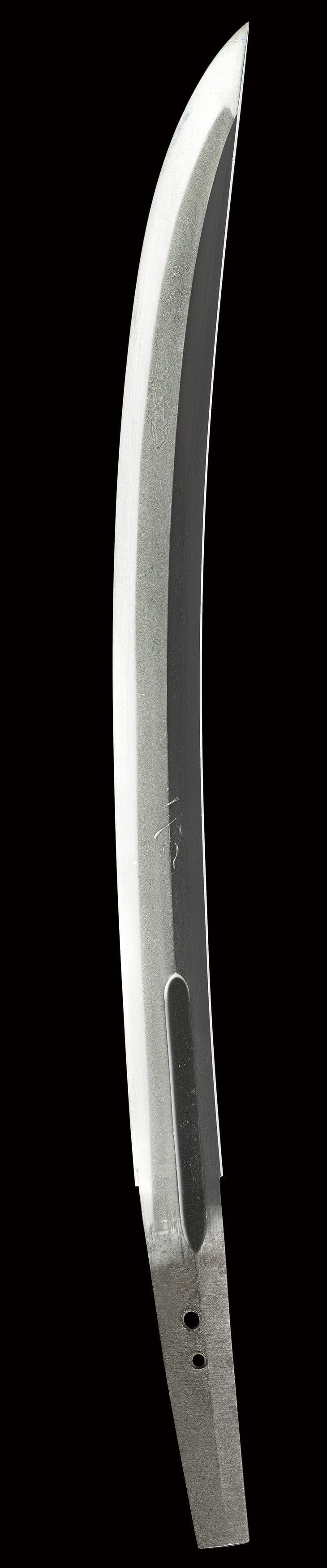
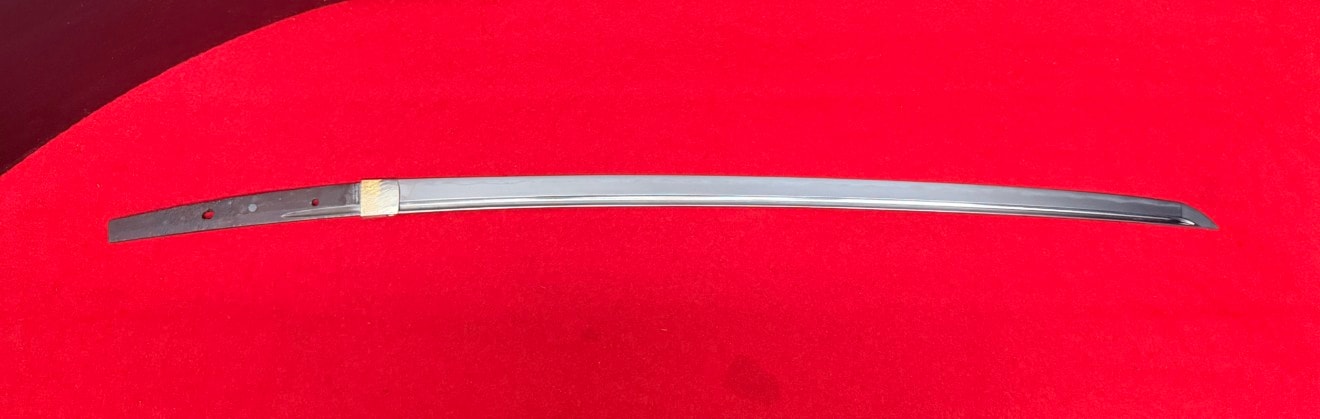
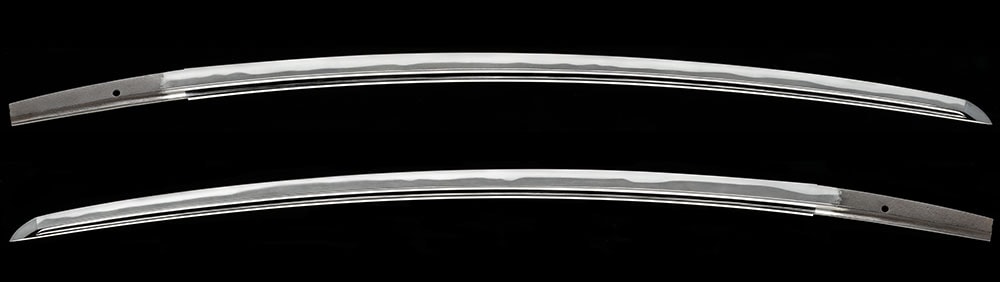
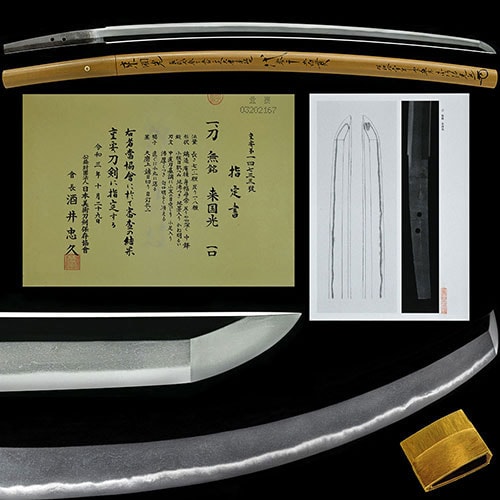
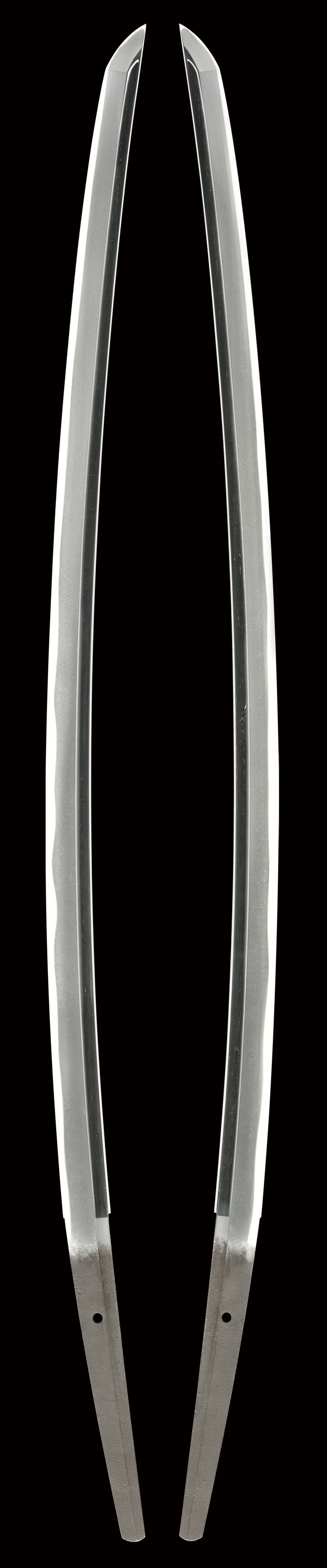
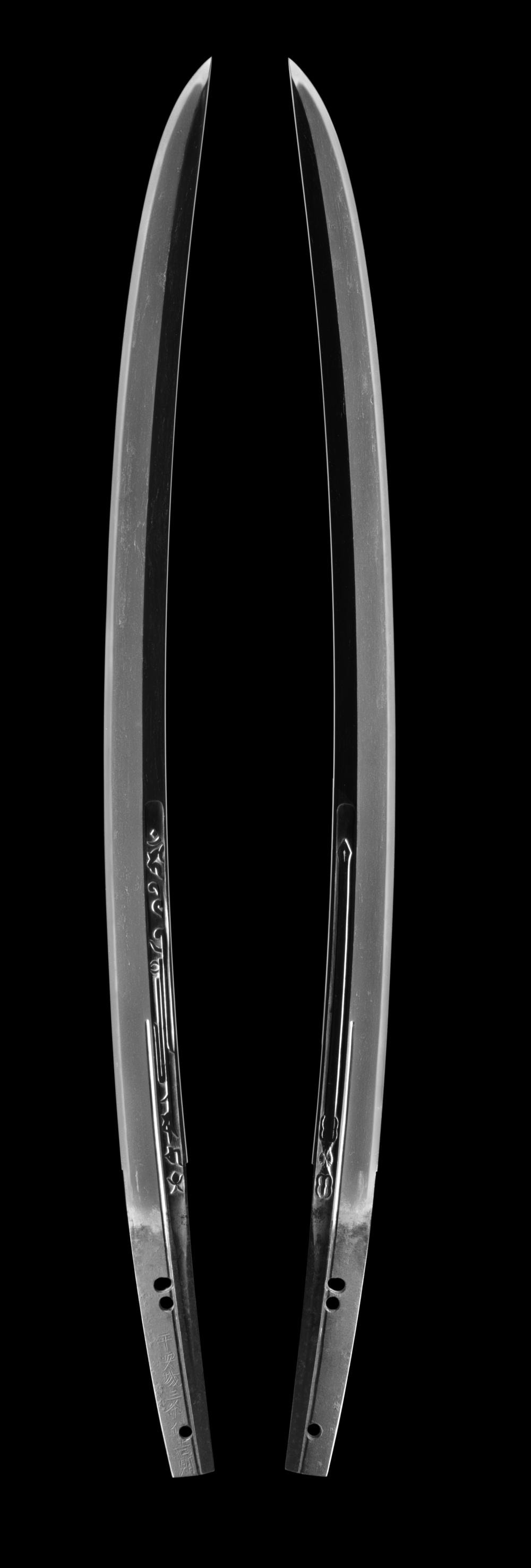
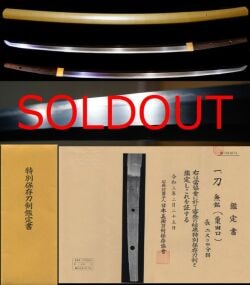
The second-generation Kuninaga carries the name of Nakajima , the Settsu branch of the Yamashiro school founded by a pupil of Kunitoshi who left Kyoto for Nakajima. The places the first generation about Gentoku at the close of and the second about Shohei and , and it is the second, working in the wide, large-pointed shape of the Enbun and Joji decades, whom the designated record here documents. The judges reach that division from the blades themselves. Of a signed whose every feature belongs to , they reason that a pupil of Kunitoshi could not have made it, and conclude 「この脇指は二代の作である」 (this is the work of the second generation). Of a wide in body with a large point, a fully form, they write 「二代来国長と鑑るべきであろう」 (it should be judged the second-generation Kuninaga).
His is fixed in a sentence the commentary repeats: his work 「様式的には来国光や時に来国次に似るが、格調の面で聊か譲るところがある」 (resembles Kunimitsu, and at times Kunitsugu, in style, but yields a little in dignity). The is the first sign of the distance. Over a packed or that flows toward near the edge, the grain stands a little, with thick and fine , a more provincial surface than the tight, bright steel of Kyoto.
On that steel he lays a broad that does not stay plain. and break into it, and run in, settles along the edge, and and, on the finest pieces, play through the . One is praised for 「刃縁上の湯走りや刃中の足・葉、金筋・砂流しなど刃境や刃中に表した豊富な働き」 (the abundant activity along and within the edge, the , and , and ). The closes straight to a , often brushed with ; on the broad late it runs up toward a tendency.
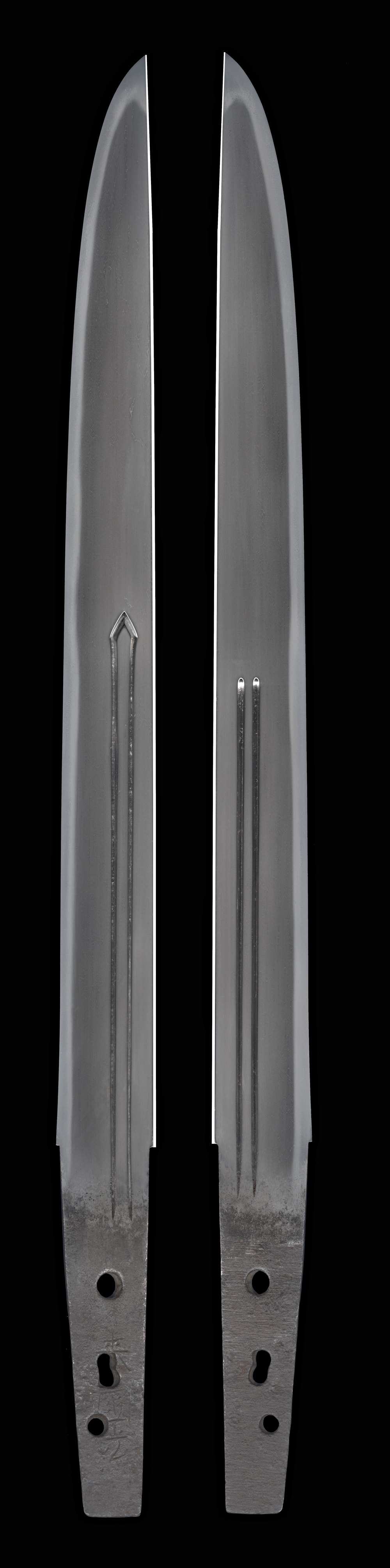
The published sources draw the line between the generations in temper: the first was the hand, while 「二代にはむしろ直刃の作は少なく乱れたものが多い」 (in the second, work is rather rare and irregular tempers are many). The signed pieces, they note, are mostly and small , 「その有銘の作は、短刀、小脇指に多く」, broad and a little extended with a thin , the three-character cut below the , and their carving 「彫物も簡素ながら上手である」 (simple but skilful). The register is the of Enbun and Joji form.
Two signed from the Hisamatsu house of Iyo Matsuyama define his summit. Of the first the judges write that it is 「同作中のみならず同名中の白眉である」 (the finest not only among his works but among all smiths of the name), adding that the first generation, represented by a in the collection of Eirin-, falls short of the second in technique. The second, a of the large shape, breaks in its upper half into mixed with of a -like feeling until it becomes , with a standing strongly on the . The commentary calls it 「来派の作としては異色な出来口を示している」 (an idiom unusual for a work) and 「資料的にも頗る貴重な作である」 (a piece of great documentary value), recording that it was 「伊予松山久松家に伝来した一口」 (handed down in the Hisamatsu house of Iyo Matsuyama).
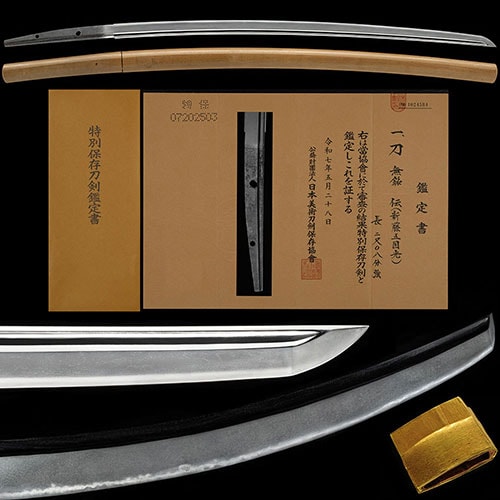
Fujishiro rates him Jo-jo . He has no National Treasures and no Important Cultural Properties; his record is 13 blades in the and tiers, one among them. Signed examples are few, and the two Hisamatsu are the pieces by which the name is measured. The with their attributions reach the market from time to time, while a signed second-generation in his irregular temper is a rare and legible document of the manner carried into Settsu.