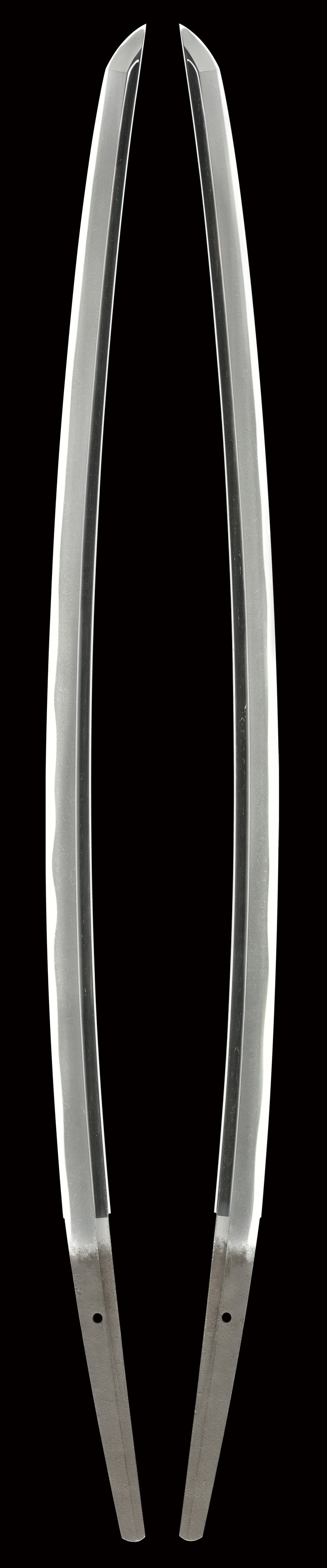
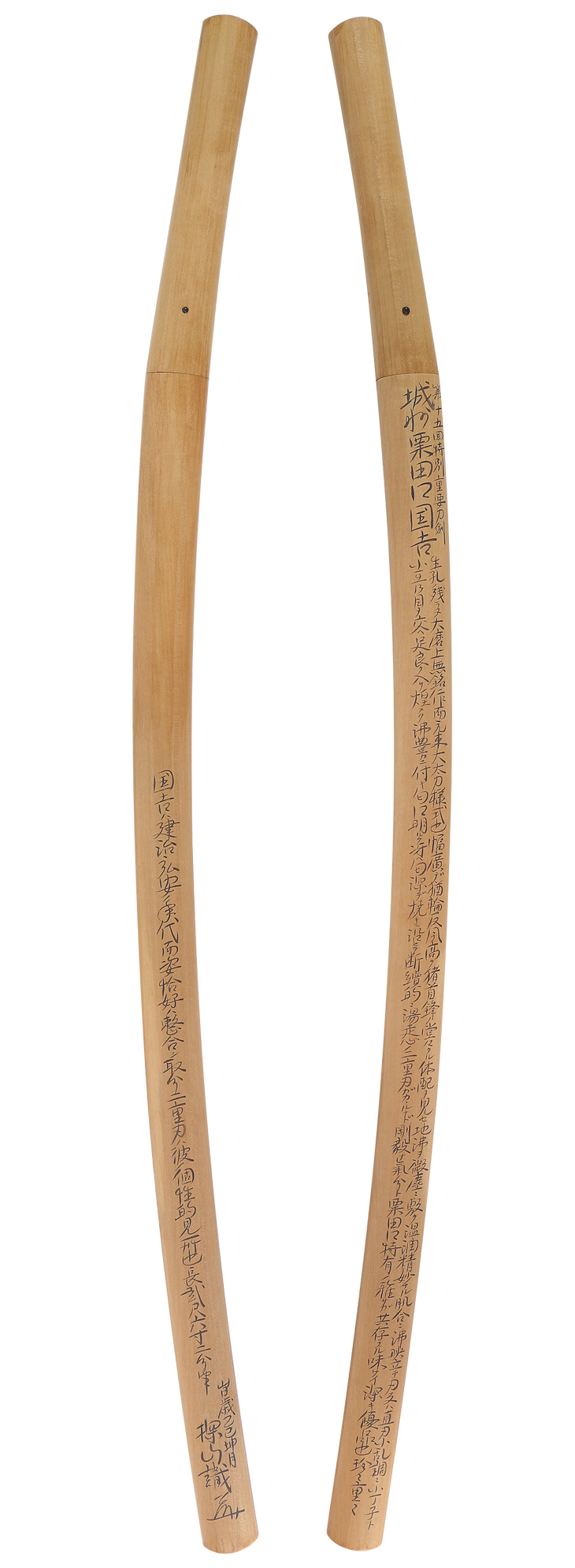
Nearly every published designation text on Awataguchi Kuniyoshi cites the meibutsu Narukitsune, the Crying Fox, a large hira-zukuri wakizashi bearing his long signature Sahyoe-no-jo Fujiwara Kuniyoshi[[c:1]], and newly judged blades are still read against its manner. Kuniyoshi is recorded as the son of Norikuni, by some accounts his pupil, and a grandson of Kunitomo, eldest of the six Awataguchi brothers of Yamashiro; his younger brother was Kunimitsu. Transmitted as either his son or his student is Toshiro Yoshimitsu, the celebrated master of the tanto. A tanto dated Koan 3 (1280) survives, and the sword drawings of the old books preserve dates of Kenji 4 (1278), Koan 6 (1283) and Koan 10 (1287); by these the published sources confirm the traditional sequence of the Awataguchi generations and fix him in the middle Kamakura period.
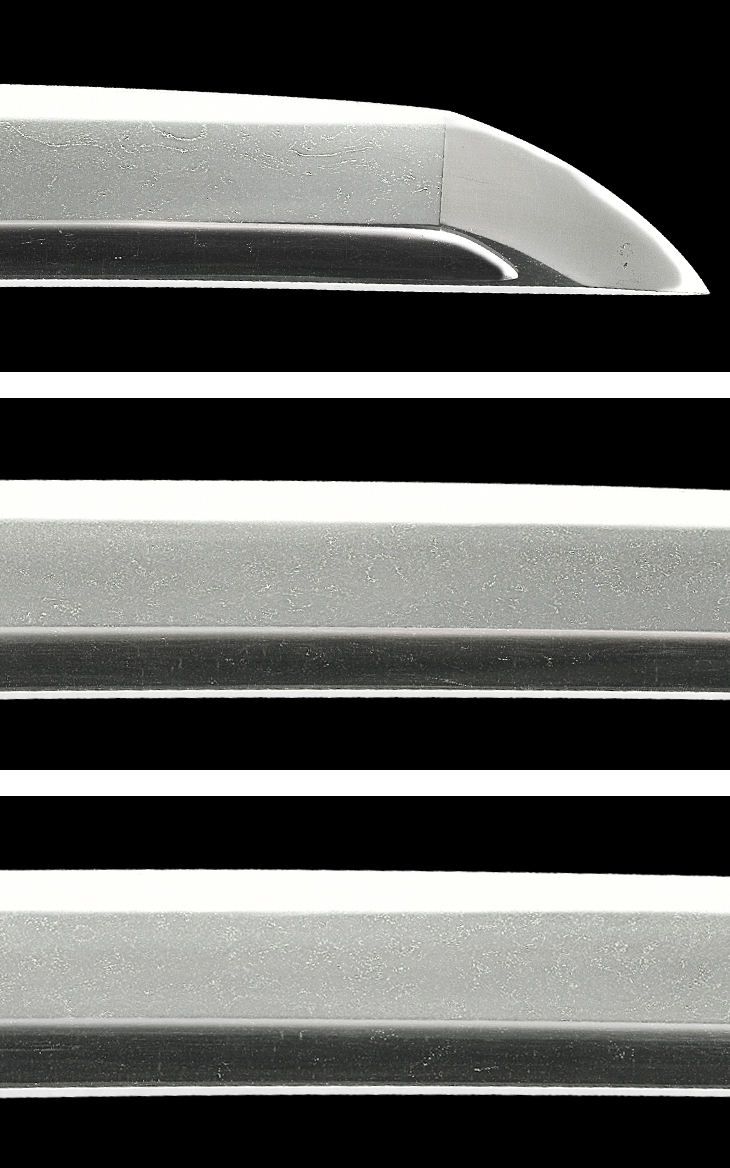
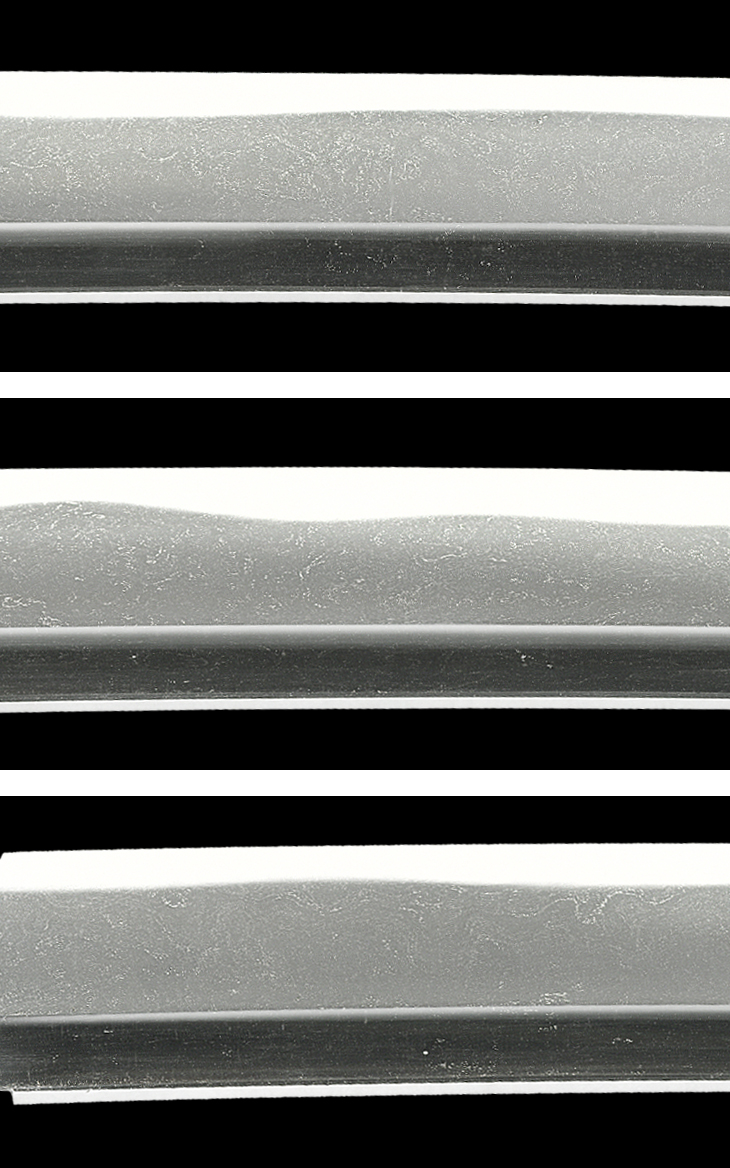
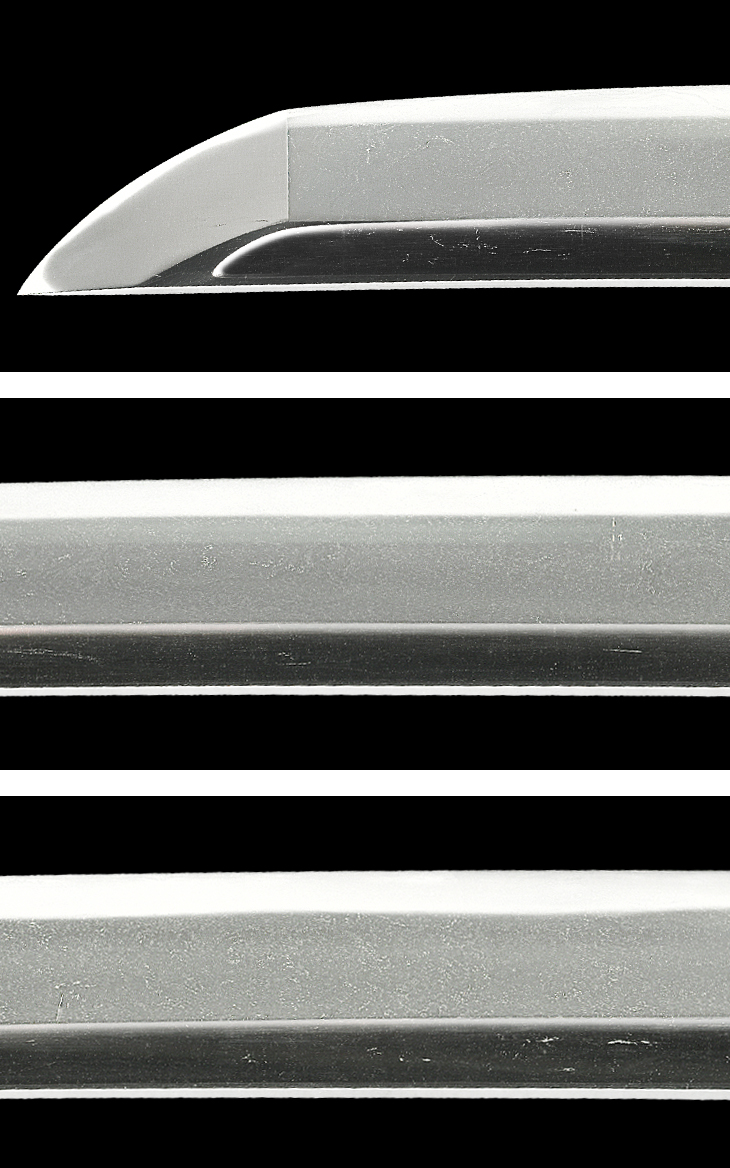
The published record describes his manner in a settled formula: a finely kneaded ko-itame rich in ji-nie, beautiful in effect, and a suguha in well-attached ko-nie mixing ko-midare and ko-gunome, the ji and ha together judged "a degree stronger than the Rai works"[[c:2]]. Above everything stands the nijuba, the doubled line that runs conspicuously along the ha and is cited again and again as his greatest point. The Kaifunki already names it his habit: "as a habitual mannerism there is often nijuba, and silver often floats in the ji as in a cast object"[[c:3]]. At times the line trebles into sanjuba, often formed of yubashiri strung along the edge, and on more than one blade it carries into the boshi. Ashi and yo enter frequently, kinsuji and fine sunagashi work through the ha, and the nioiguchi is repeatedly described as bright and clear. The boshi is typically straight with a refined ko-maru turnback.
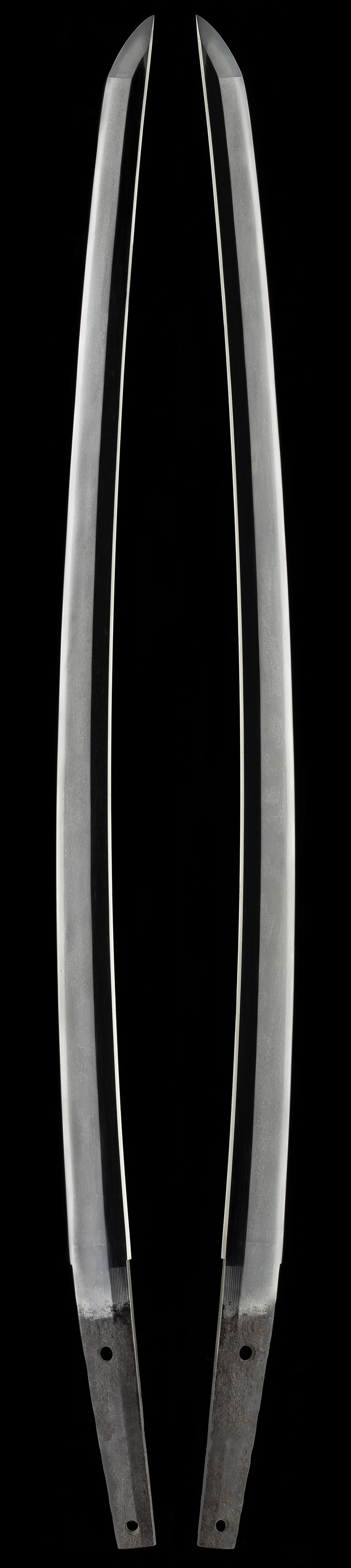
The jigane carries the school's name. He forges a ko-itame mixed with ko-mokume, kneaded extremely tight, over which ji-nie sits dust-fine and thick with delicate chikei, until the steel takes on the so-called nashiji-hada, the pear-skin steel of the Awataguchi idiom. Nie-utsuri stands over it, at times with a faint jifu-like tone mixed in. The Kokon Meizukushi praises the taste of his steel as a gleam deep in the color of the ji, "like the silver of a tenmoku bowl dusted with ash"[[c:4]].
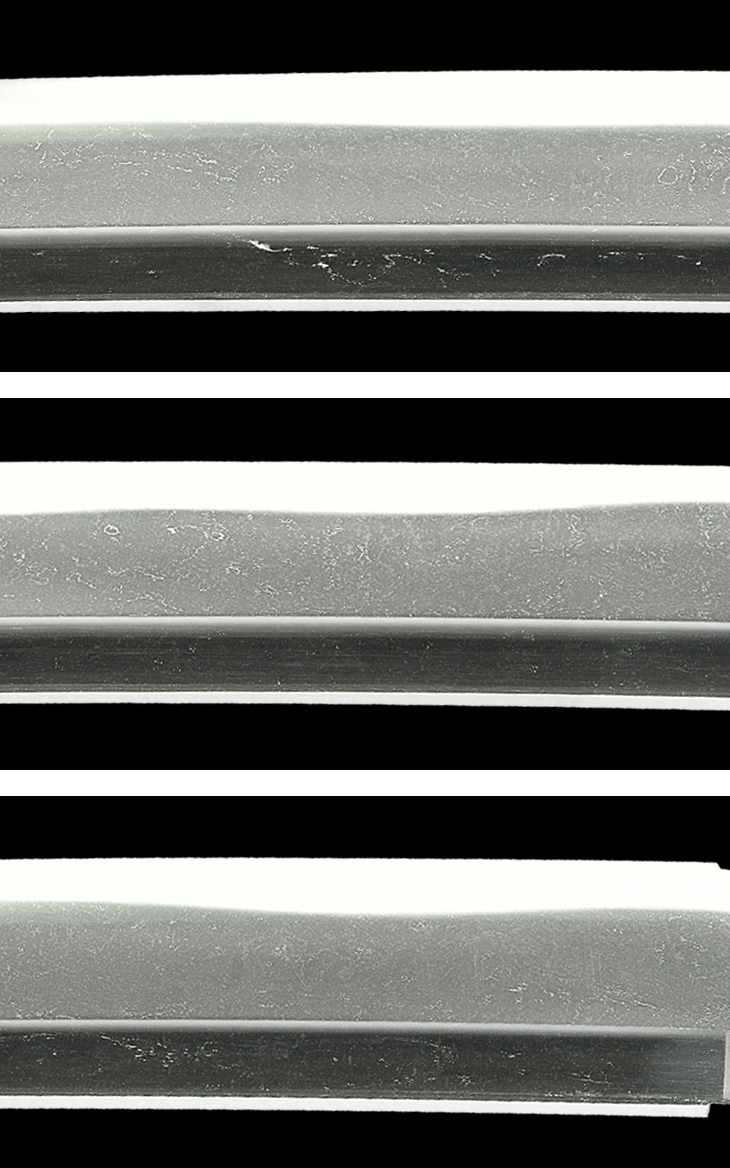
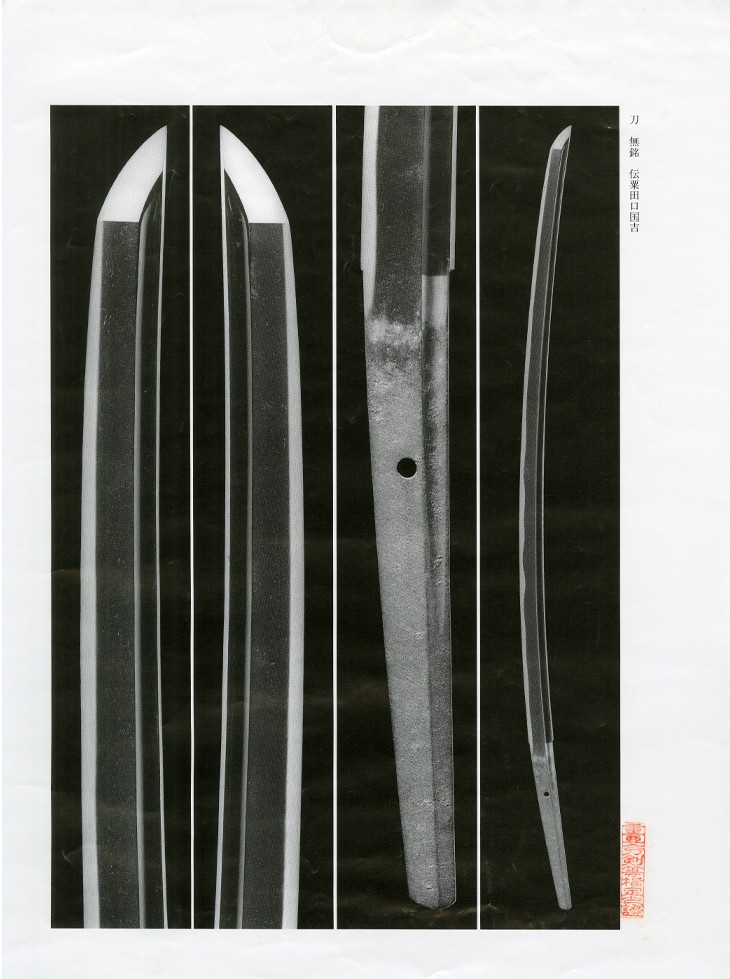
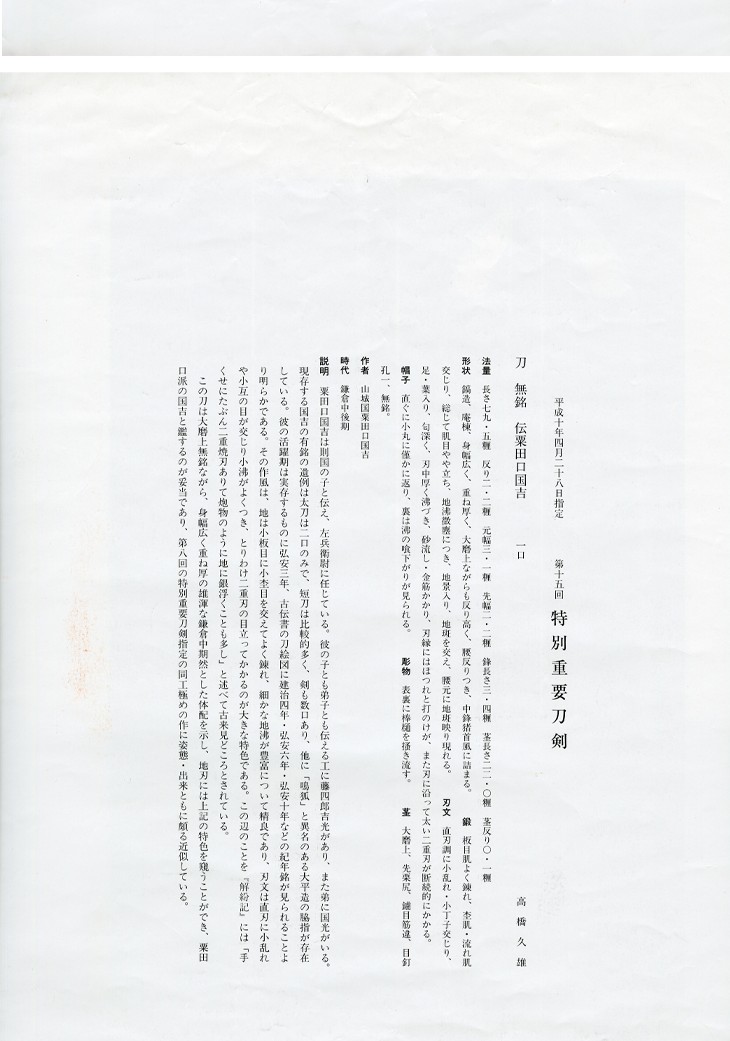
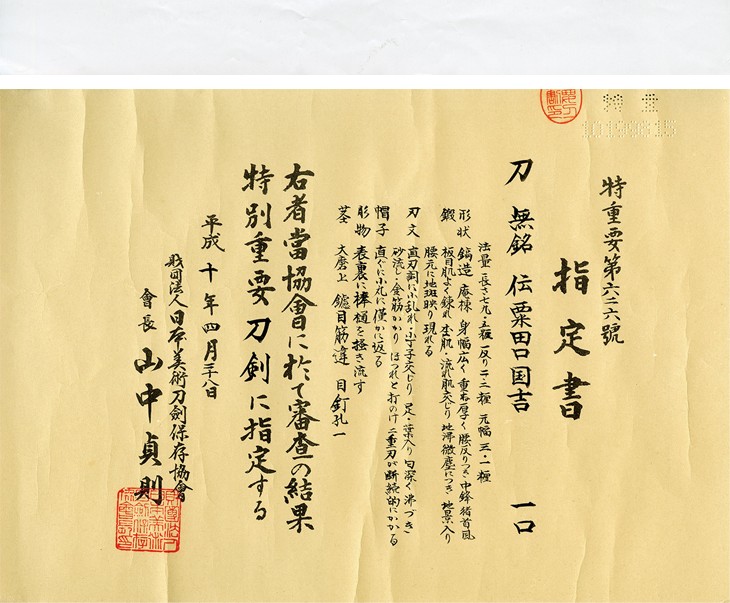
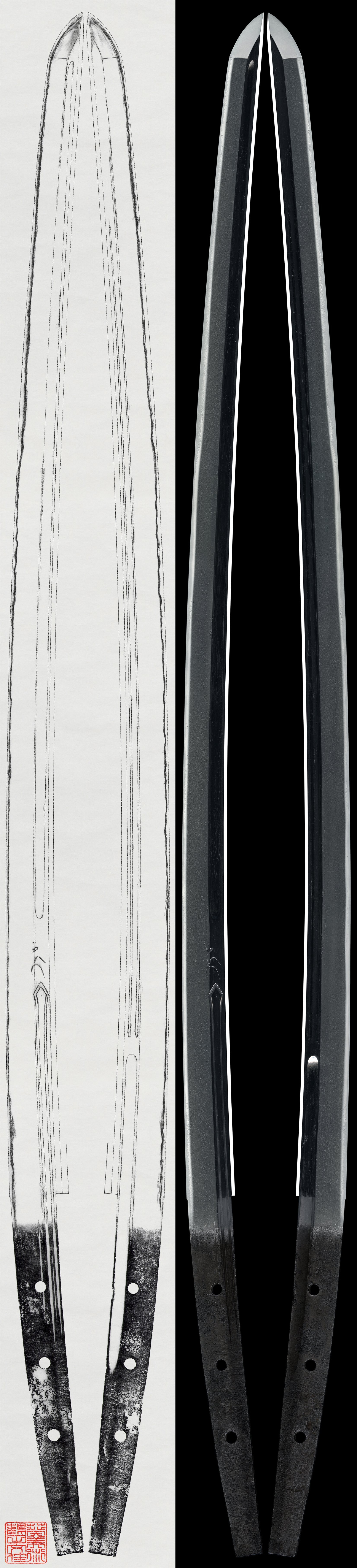
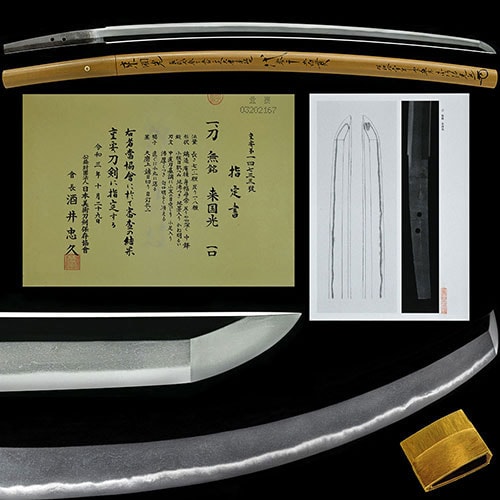
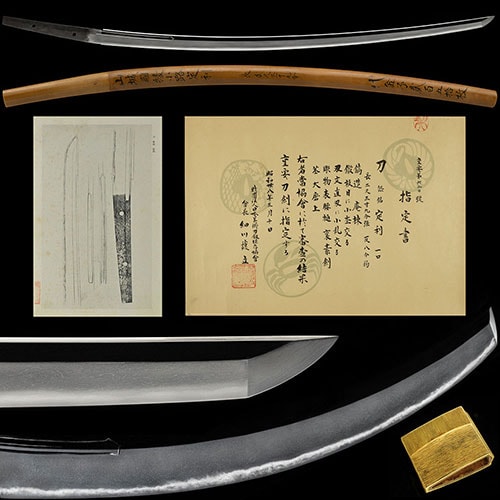
His certain signed tachi number only two. One has long been an Important Cultural Property; the second surfaced only at its Juyo designation in 1997, a slender, elegant blade of high koshi-zori with funbari. A third, shortened, with a two-character mei low on the tang, was admitted at its Tokubetsu Juyo designation as extremely close to those two. The tanto are comparatively many and carry most of his signatures, the ken number several, and the Narukitsune stands apart as the single great wakizashi. The tanto shapes, stubby and wide like a kitchen knife, ordinary, slender and elongated, or wide and elongated, in uchizori or without curve, are called "remarkably diverse"[[c:5]] and opposed to the uniformity of the Rai school; like Yoshimitsu he often works the temper down over the machi, and gomabashi or bonji are carved on many. The unsigned blades are the more numerous, o-suriage katana of wide mihaba and shallow wa-zori with the chu-kissaki pulled in ikubi fashion, where the suguha grows busier with ko-choji and gunome, ashi and yo thick. On these the nijuba is the point on which the judges anchor the attribution, and one ayame-zukuri katana is judged to give the very impression of a Narukitsune enlarged[[c:6]]. The ken are elegant, the point not flaring, often in hoso-suguha with the boshi yakizume, and "the ken of this maker often show strong nie"[[c:7]]. The signature is normally the two characters Kuniyoshi, the chisel running from fine to ordinary to thick, a variety ascribed to difference of period.
On his relation to Yoshimitsu the published sources reason from the dates. Kuniyoshi has the Koan 3 tanto and the dated drawings of the old books; Yoshimitsu has no dated work at all, extant or recorded. Both made few tachi and excelled in tanto of unusually varied shape, and from this the judges find it reasonable to see the two not as father and son but as master and pupil of comparatively small age difference[[c:8]]. One text states plainly that together with Yoshimitsu of his school he produced many tanto, both displaying superior technique. The nijuba appears on nearly half of his records, only occasionally in Yoshimitsu's, and never in those of his father Norikuni; the sanjuba is met in his work alone among them; and it is on his records that the texts name the nashiji-hada outright.
Fujishiro rates him Sai-jo saku, and fifty-one designated works stand on record. There are no National Treasures among them, but seven blades are Important Cultural Properties, his long-known signed tachi at their head, and five are prewar Juyo Bijutsuhin, one a tanto formerly of the Aoyama viscount family of Sasayama. Eighteen blades hold the Tokubetsu Juyo rank and twenty-one the Juyo, thirty-nine in the two tiers together. The provenance roll is in keeping. A signed tanto with an origami of Hon'ami Koon descends in the Matsudaira house of Iyo Saijo, and a mumei tanto in the Reizei house of court poets; the Tokubetsu Juyo two-character tachi was owned by Okubo Ichio and passed to the Iwasaki house; a signed ken belongs to the Owari Tokugawa Reimeikai; and one signed tanto, by its scabbard inscription, was presented by Todo Takamutsu at a birth celebration in the Tokugawa house. Of recorded whereabouts today, examples rest in the Tokugawa Art Museum, the Kyoto National Museum and the Hikone Castle Museum, with others in private hands. For the collector, Kuniyoshi is by Awataguchi measure not wholly beyond reach. The Important Cultural Properties are patrimony preserved outside the market, but the thirty-nine blades of the Tokubetsu Juyo and Juyo tiers are where a private example is met, most of them o-suriage mumei katana whose attribution rests on the doubled line along the ha. Such a blade comes to market only rarely, and is an event when it does; a signed tanto is rarer still, and a signed tachi, of which two certain examples exist, is among the rarest encounters the school affords.