NihontoWatch Mon

NihontoWatch

Market
Encyclopedia
Kantei
NihontoWatch Mon

NihontoWatch

Market
Encyclopedia
Kantei

Description

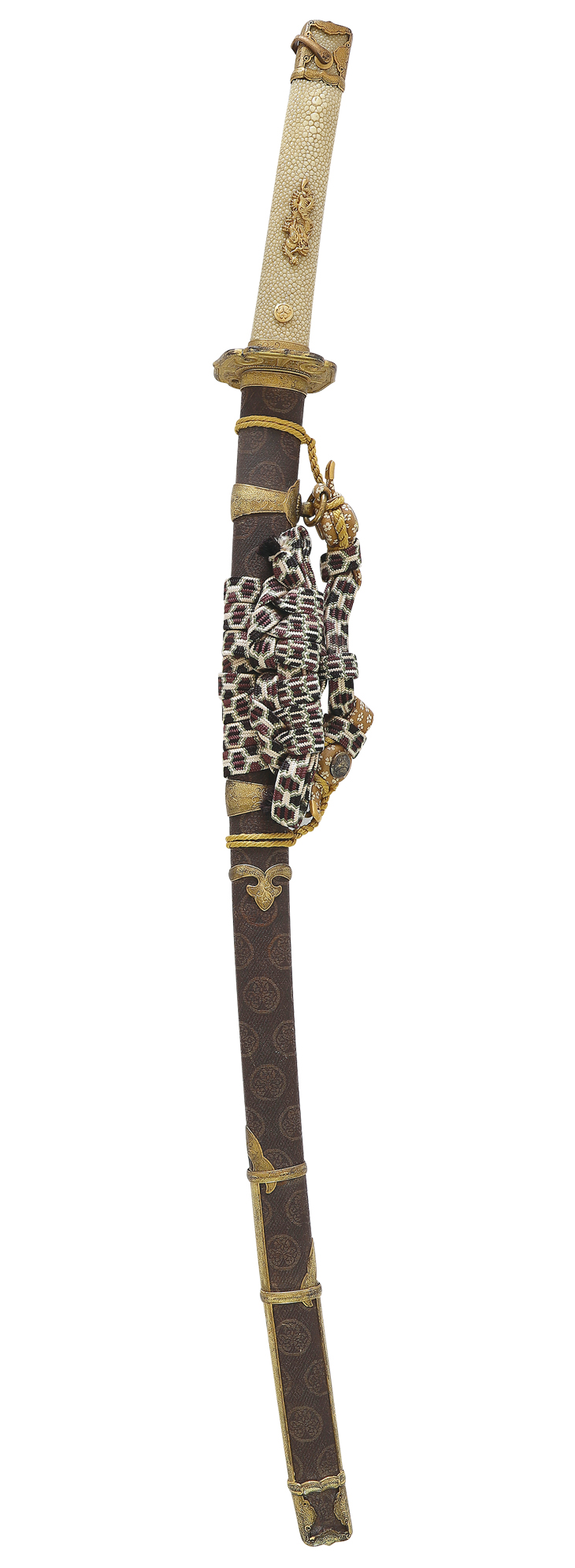
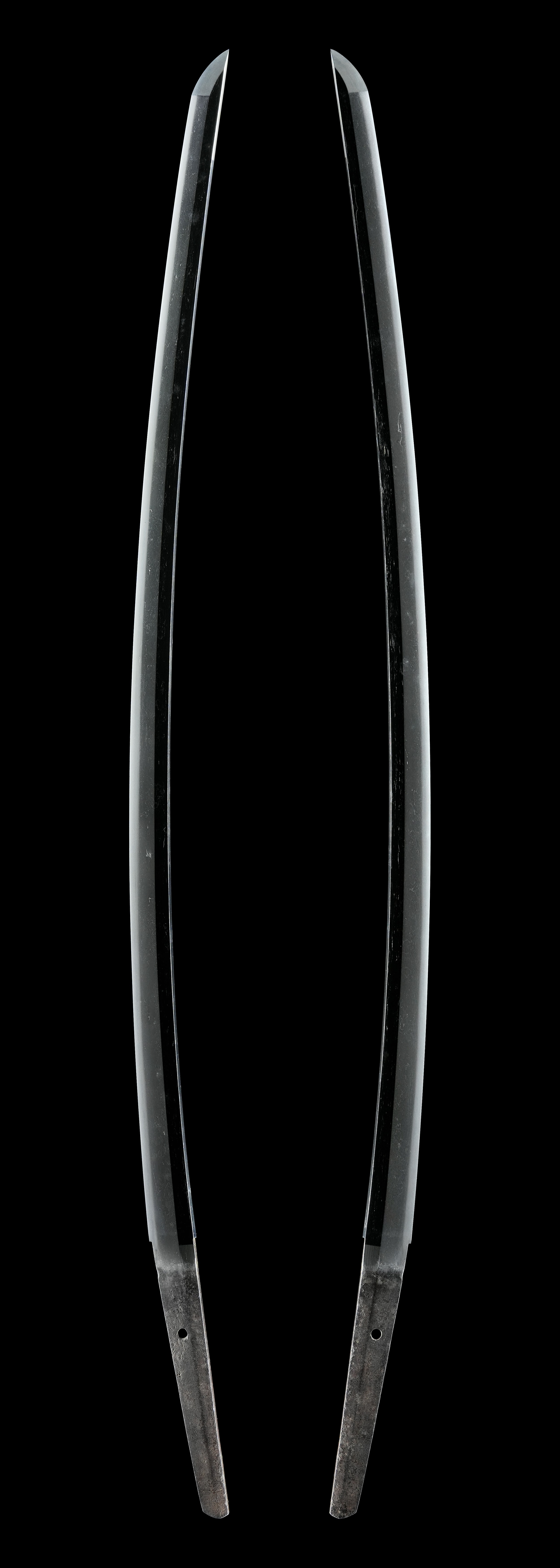
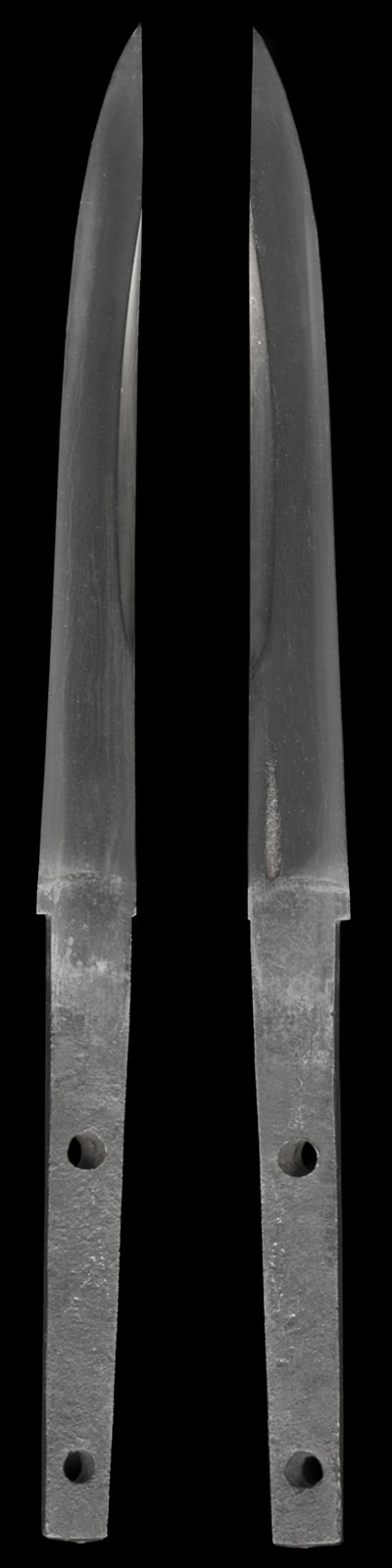
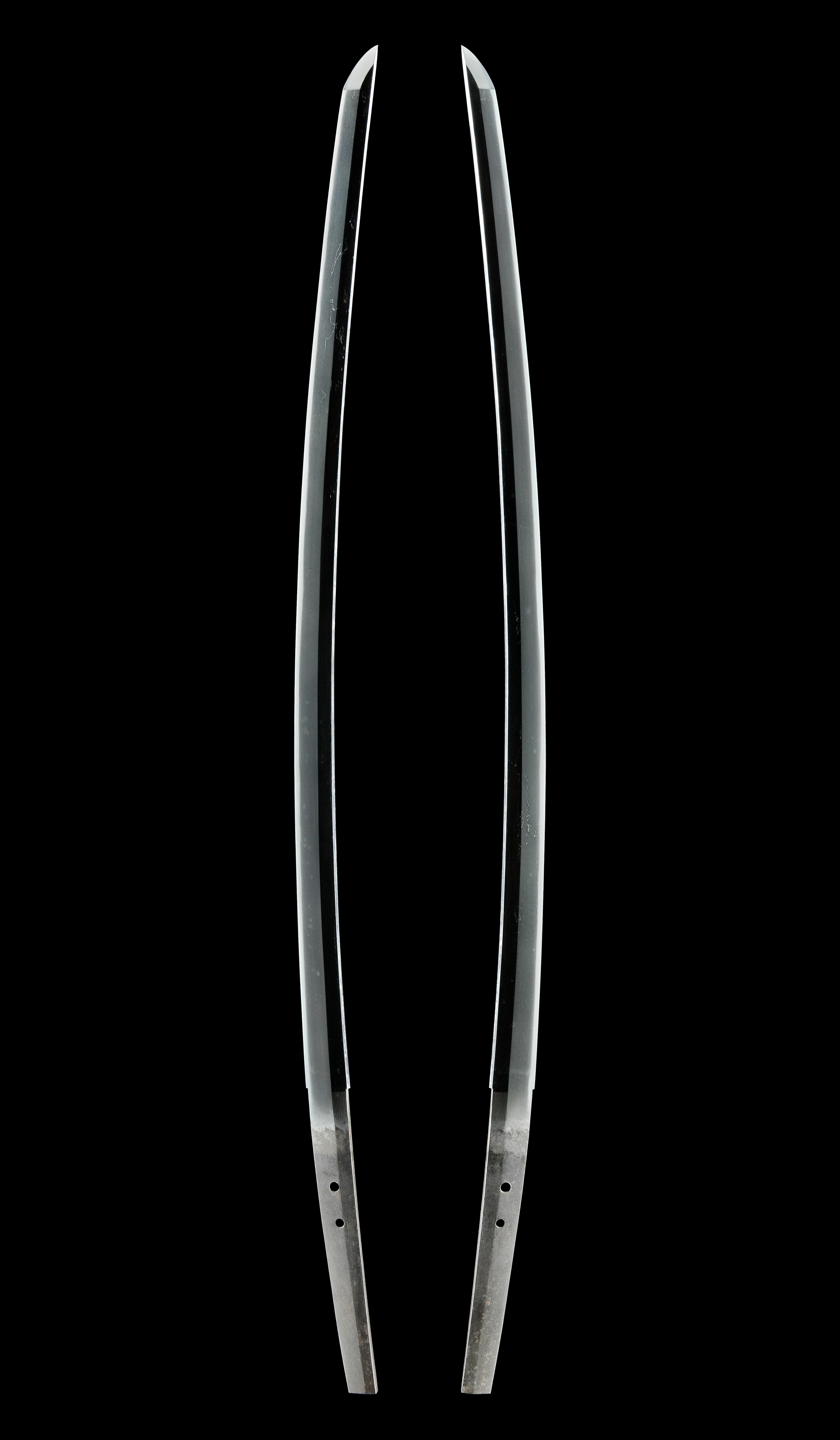
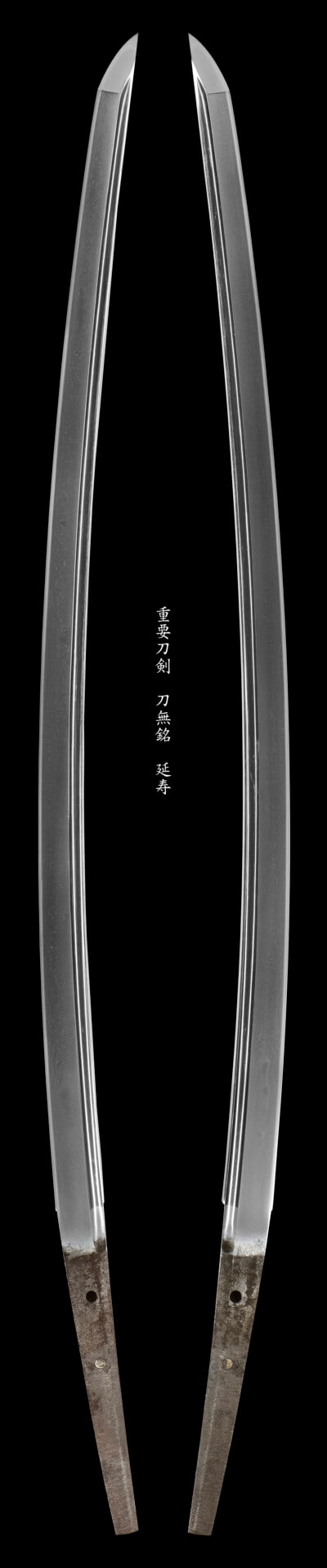
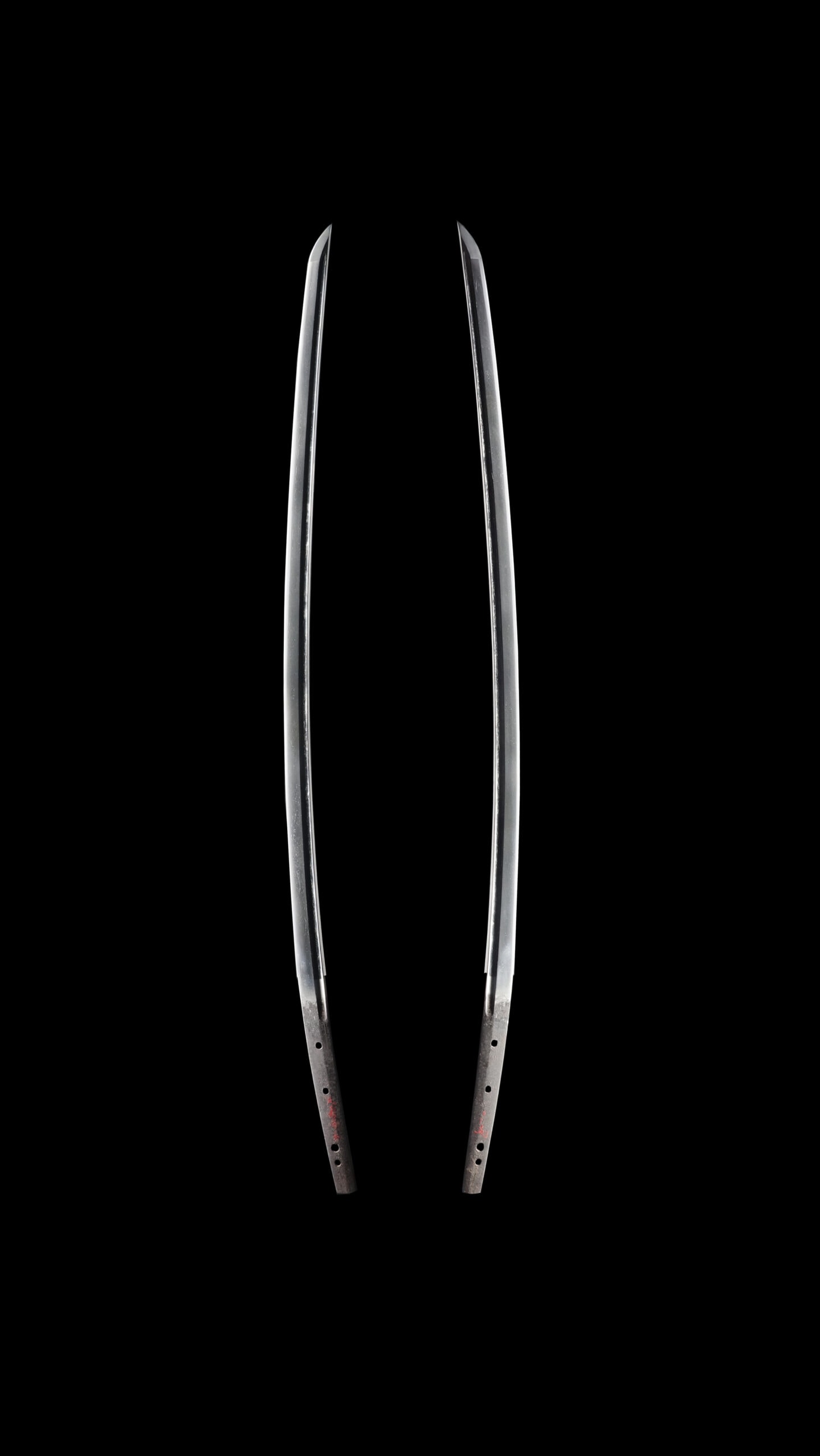
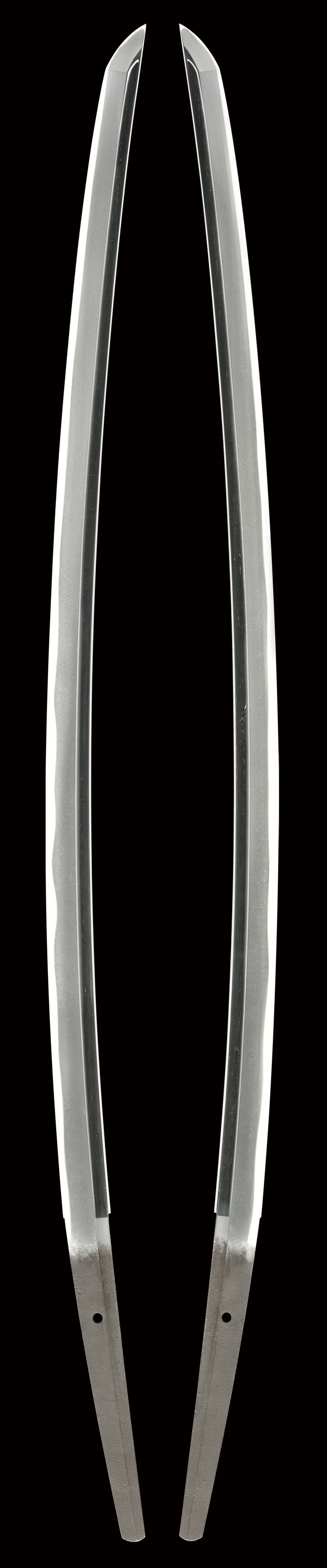
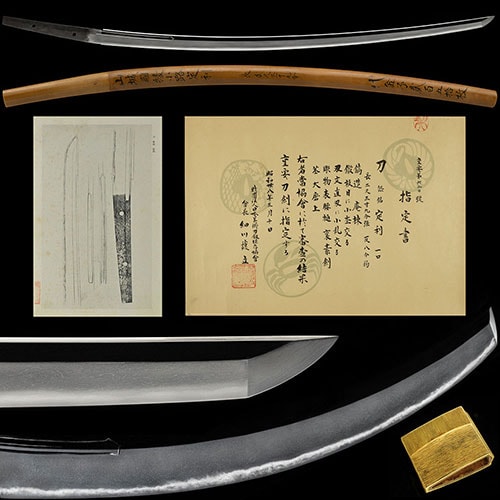
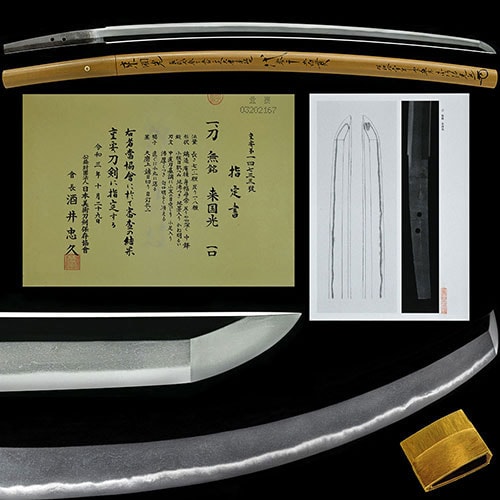
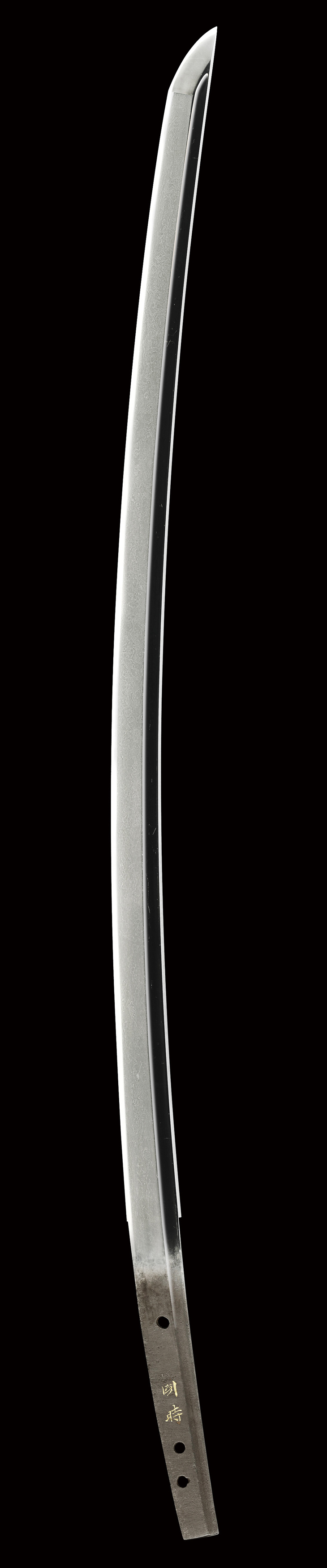
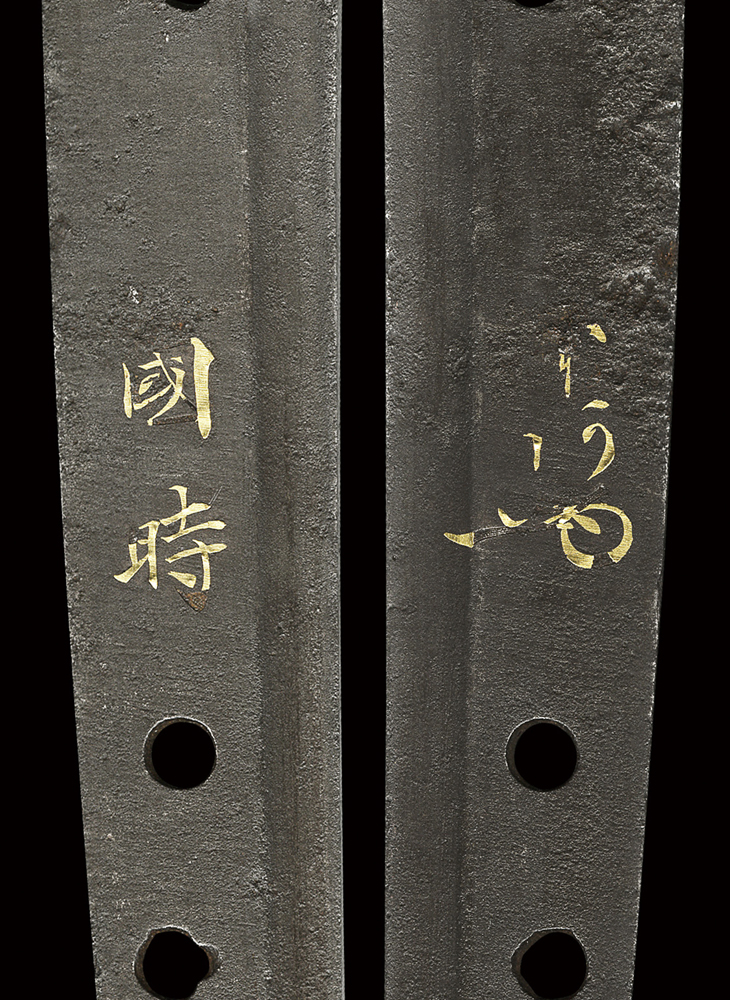
This is a Juyo Token designated katana by Kunitoki of the Enju school, attributed with a gold inlay mei by Hon'ami Koson. Dating from the late Kamakura to early Nanbokucho period, it features a robust form and excellent workmanship. The blade comes with a tachi koshirae and shirasaya.

NBTHK Setsumei

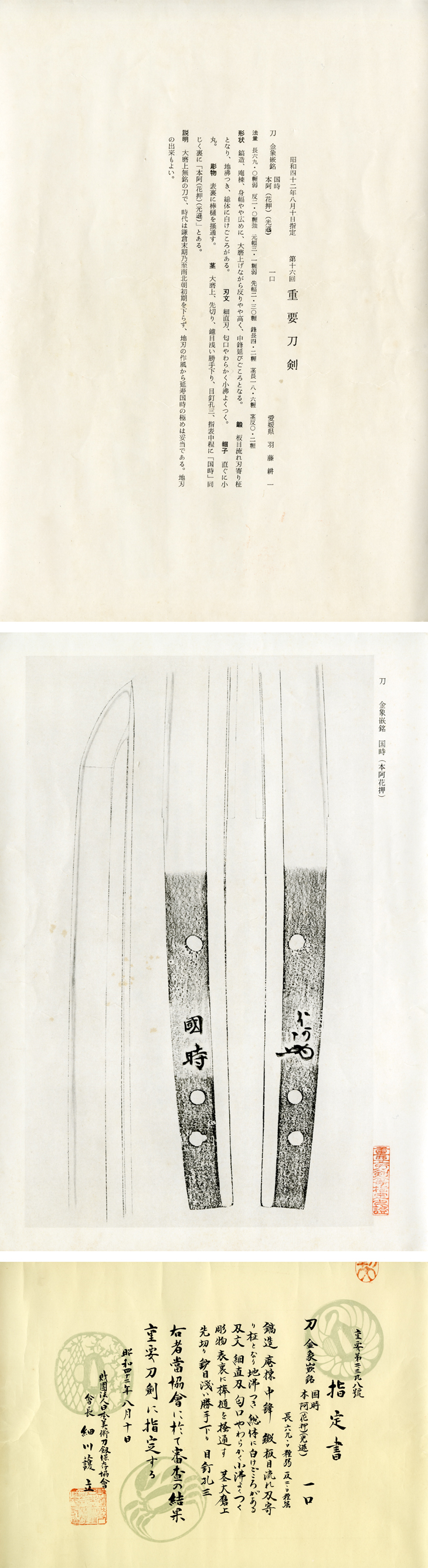
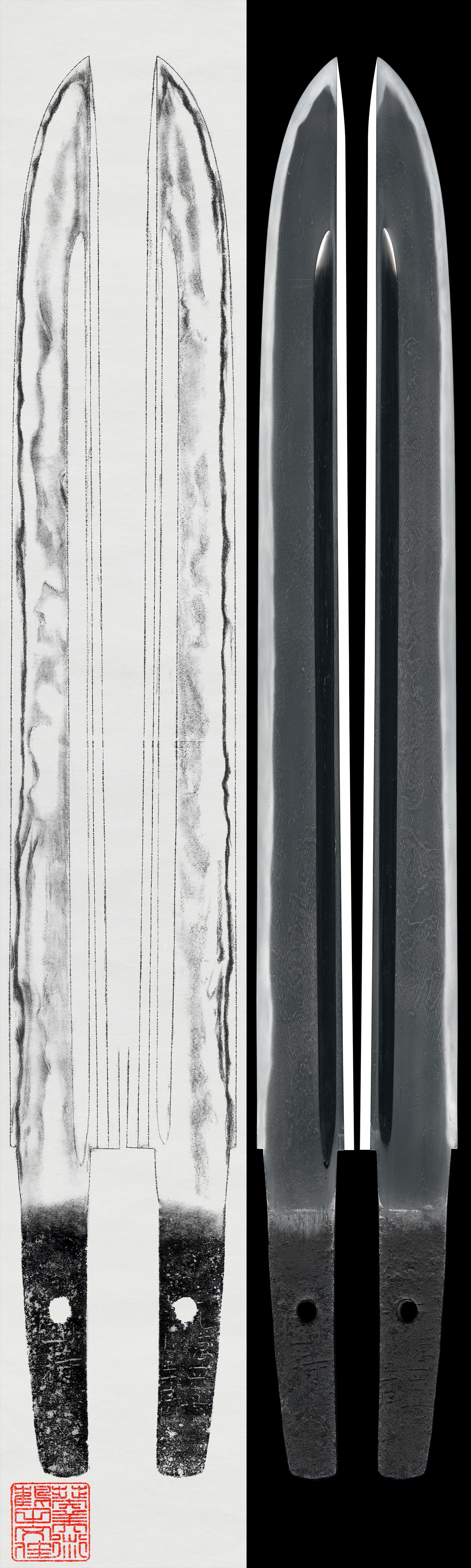
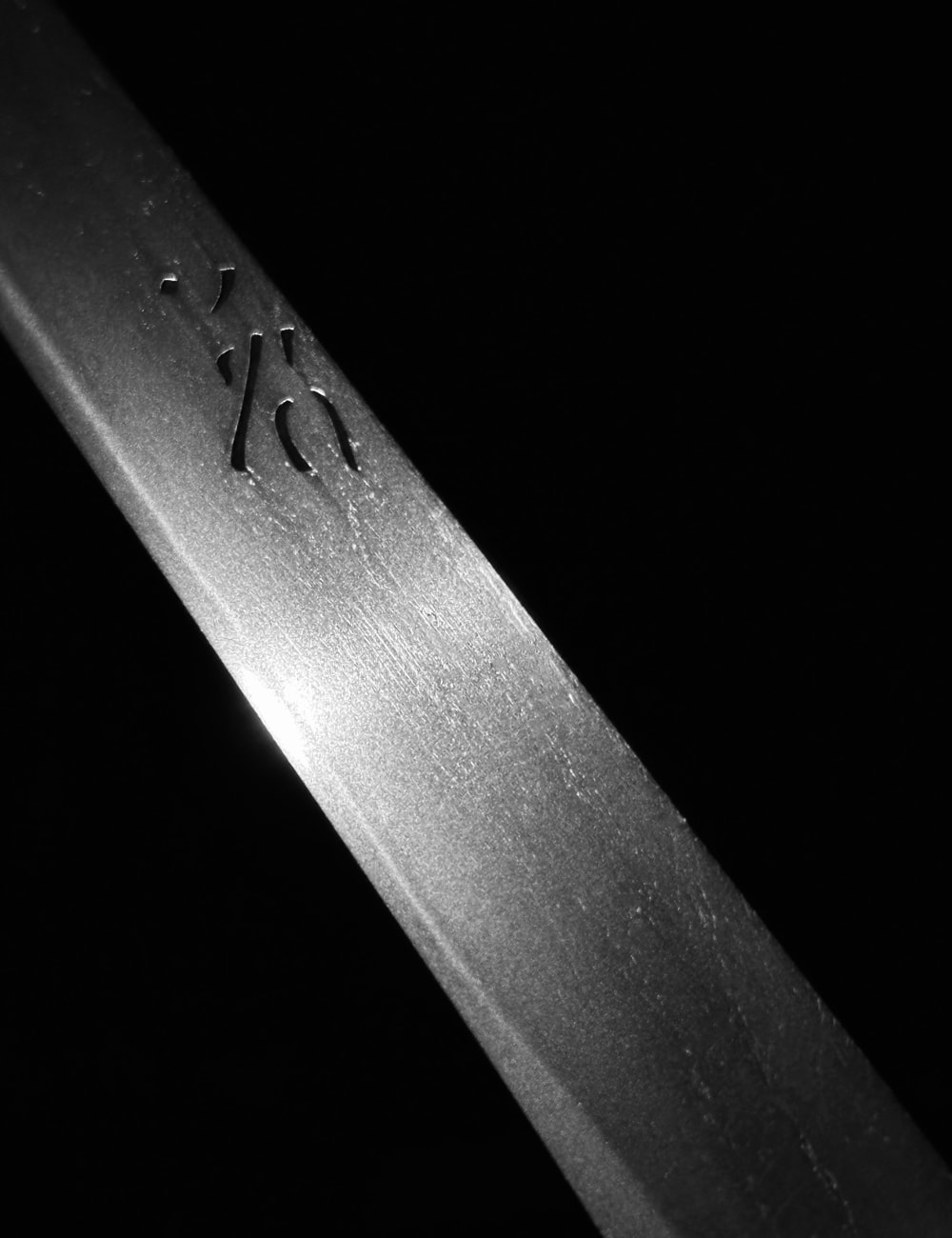
Jūyō-Tōken, 16th Session — Designated August 10, 1967 Katana, kinzogan-mei: Enju Kunitsoki (延寿国時) Measurements Nagasa 69.0 cm, sori 2.0 cm, motohaba 3.1 cm, sakihaba 2.30 cm, kissaki-nagasa 4.2 cm, nakago-nagasa 18.6 cm Description Keijō: shinogi-zukuri, iori-mune; the mihaba is somewhat wide; though ō-suriage, it retains a rather high sori and shows an extended tendency in chū-kissaki. Kitae: itame-hada with flowing nagare; toward the ha it becomes masame; ji-nie appears, and overall there is a slightly whitish tendency. Hamon: Fine suguha; the nioiguchi is soft, and ko-nie adheres well. Bōshi: Straight, forming a small maru. Horimono: On both sides, bō-hi are carved through (kaki-tōshi). Nakago: ō-suriage, kiri-jiri; file marks are shallow katte-sagari; three mekugi-ana; on the sashi-omote around the middle is inlaid “Kunitsoki,” and likewise on the ura is inlaid “Hon’ami (kaō) (Kōson).” Artisan Enju Kunitsoki Era Late Kamakura period to no later than the early Nanbokuchō period Explanation This is an ō-suriage katana and is unsigned. Its period does not descend later than the end of the Kamakura period to the beginning of the Nanbokuchō period. Judging from the workmanship of the jihada and hamon, the attribution to Enju Kunitsoki is appropriate. The quality of the work in both the ji and the ha is also good.

NihontoWatch MonNihontoWatch
MarketEncyclopediaKantei
Swords›Yamashiro-den›Enju›Kunitoki›Katana: Kunitoki (Enju) with Gold Inlay Mei
katanaJūyō
Enju Kunitoki

Katana: Kunitoki (Enju) with Gold Inlay Mei

kinzogan-mei · Enju · Bunpo (1317-1319) · nagasa 69cm · sori 2cm

¥4,900,000
Visit seller website →
Enju Kunitoki — 1 of 4
Enju Kunitoki — 2 of 4
Enju Kunitoki — 3 of 4
Enju Kunitoki — 4 of 4
1 / 4
1 / 4
Enju Kunitoki — 1 of 4Enju Kunitoki — 2 of 4Enju Kunitoki — 3 of 4Enju Kunitoki — 4 of 4
Measurements & details
Smith
Enju Kunitoki
Type
Katana
School
Enju
Period
Around 1317–1353(Bunpo)
Province
Higo
Signature
kinzogan-mei(63% of this smith's designated works are signed)
Measurements
Nagasa 69cmSori 2cmMotohaba 3.22cmSakihaba 2.37cmKasane 0.66cm
Description

This is a Juyo Token designated katana by Kunitoki of the Enju school, attributed with a gold inlay mei by Hon'ami Koson. Dating from the late Kamakura to early Nanbokucho period, it features a robust form and excellent workmanship. The blade comes with a tachi koshirae and shirasaya.

NBTHK Zufu Commentary

Juyo #16

AI translation — may contain errors

-, 16th Session — Designated August 10, 1967

, : Kunitsoki (延寿国時)

Measurements 69.0 cm, 2.0 cm, 3.1 cm, 2.30 cm, 4.2 cm, 18.6 cm

Description Keijō: , ; the is somewhat wide; though , it retains a rather high and shows an extended tendency in . : with flowing ; toward the it becomes ; appears, and overall there is a slightly whitish tendency. : Fine ; the is soft, and adheres well. : Straight, forming a small . : On both sides, are carved through (). : , ; file marks are shallow ; three ; on the around the middle is inlaid “Kunitsoki,” and likewise on the is inlaid “Hon’ami () (Kōson).”

Artisan Kunitsoki

Era Late period to no later than the early period

Explanation This is an and is unsigned. Its period does not descend later than the end of the period to the beginning of the period. Judging from the workmanship of the and , the attribution to Kunitsoki is appropriate. The quality of the work in both the and the is also good.

About the maker

Kunitoki

國時

Enju (Higo) · Higo · around 1317-1353

Tōken Taikan top 26%

1 piece on the market now

›

Kunitoki is the representative master of the Enju school of Higo, the line that carried the Yamashiro Rai manner south into Kyushu. The published sources trace the school to Tarō Kunimura, transmitted as an "outside grandson" of Rai Kuniyuki of Yamashiro through a daughter, and they place Kunitoki among the best-known smiths of the group, variously recorded as the son or the pupil of the founder. His working life runs from the close of the Kamakura period into Nanbokucho at Kumafu in the Kikuchi District; dated survivals carry the Southern-Court eras, one tachi signed Shōhei 7 (1352), placing his late hand in the middle of the fourteenth century. The school is judged to show little individual variation and to resemble Rai broadly, so that the Enju manner reads almost as one hand. Within that uniformity Kunitoki stands out for two reasons. The published record judges that "relatively many of his works survive, and the average quality of his workmanship is high"[[c:1]], and his hand worked the school's restrained suguha busier than any other of the line.

His characteristic manner is a chū-suguha or hoso-suguha that refuses to stay plain. Where the published sources record that "many works of the group temper a suguha sparing in internal activity," Kunitoki breaks his straight temper with continuous ko-gunome, occasional ko-chōji and pointed teeth, ko-ashi and yō entering well, ko-nie gathering along the edge, with fine sunagashi and kinsuji playing through. On his best blades the nioiguchi, which the school carries somewhat shizumi (subdued) against the brighter Rai, turns bright and clear. The school's own nature pulls the other way, and it is precisely because of that restraint that a lively blade reads as exceptional: of one tachi the published commentary writes that it shows "a midare-dominant tempering rare not only for Kunitoki but for Enju works generally"[[c:2]], and of a suriage katana with strong nijūba, kinsuji and a bōshi that goes into midare with vigorous hakikake, that it presents "the most active hamon not only of this smith but within the whole school"[[c:3]]. That a single blade can be called both rare and the most active is the measure of how quiet the line normally runs, and of how far Kunitoki pushes against it.

The forging is the school's whole inheritance read clearly. Over an itame or tightly forged ko-itame, generally flowing and gathering a masame-like tendency toward the edge, fine dust-like ji-nie adheres well and fine chikei enter, and the school's whitish shirake-utsuri stands in the ji. This whitish utsuri is the prime point the published sources name in separating Enju from Rai, and it sits on a jigane that keeps the Kyoto refinement of the parent while taking on the flowing Kyushu steel. The bōshi most often runs straight and closes in a ko-maru, frequently brushed with hakikake, and sometimes turns back round and shallow as a large ō-maru in the school habit. The signature, when present, is a large two-character mei, and the published sources repeatedly single out one calligraphic tell: in the character kuni (国), the right half within the enclosing strokes is cut in an "ear-shaped" manner[[c:4]], a writing habit shared by the whole Enju line that cannot be confused with another school.

The surviving record falls into two registers. The first is signed and ubu: long tachi with a deep koshizori and funbari, and broad hira-zukuri tantō, slightly sunobi with a thick kasane, carrying the bold two-character mei near the tang-tip; the chisel on some is noted as broader and stronger than usual. The dated late blades of this register sign the longer Kikuchi-jū Kunitoki with Engen and Shōhei dates, and the published sources assign that long signature to the lower generations of the name. The second register is ōsuriage mumei katana, attributed to Enju Kunitoki and often fixed by a later appraisal: at first glance a ring-shaped wa-zori and a Kyoto air recall Rai, but the nagare in the ji, the shirake-utsuri and the subdued nioiguchi settle the attribution to Enju, and the overall level of the work narrows it to Kunitoki. Several of these carry a Hon'ami Kōsson appraisal inscription in gold, the smith's name set in kinzōgan or kinpun with his kaō.

Kunitoki's place is best read against his two neighbors. Against Rai, the parent, the difference is fixed: the published sources record the masame-lean, the whitish utsuri and the subdued nioiguchi as the points by which Enju parts from the Yamashiro line, and they note that the school is felt to be "somewhat weaker in ji and ha than Rai." Yet the kinship is close enough that one of his finest tantō is judged to show "a level of workmanship comparable to Rai Kunimitsu"[[c:5]], the Enju tells visible only on close reading. Against Kunimura, the founder, the difference is Kunitoki's own: his suguha breaks into ko-gunome and ko-midare far more freely than the founder's plainer straight temper, and his bōshi closes sugu to a ko-maru more often than the founder's larger ō-maru. Because the line shows so little individual variation, Kunitoki is taken as its representative hand and its most frequently surviving one, and a plain Rai suguha can in turn be mistaken at a glance for Enju. The Enju smiths were attached to the Kikuchi clan, loyal to the Southern Court, and the dated blades carry that history in their Southern-Court eras.

Kunitoki's standing is matched by a substantial designated record: thirty blades stand in the Tokubetsu Juyo and Juyo tiers, six of them Tokubetsu Juyo, with one further work in the Important Cultural Property rank, and his work earns a high mark in the Tōkō Taikan. He is among the most heavily represented Enju hands on the official record. The provenance recorded against his blades reaches into the high households of late Edo: a tachi held by the Mito Tokugawa family and one by the Kishu Tokugawa family, a tantō now of Minatogawa Shrine, and a tantō known as a relic of Seikan'in-no-Miya, the imperial princess Kazunomiya[[c:6]], the figure of the late-Tokugawa marriage settlement, by way of the Kan'in-no-Miya house. One blade is locked in the Important Cultural Property tier and will never trade. Of the rest, the school's quiet suguha and the relative abundance of Kunitoki's survival mean that his Tokubetsu Juyo and Juyo blades come to the serious collector from time to time, more readily than the rarest Kamakura masters but as designated heritage rather than ready stock; a fine signed ubu tachi or a broad signed tantō of his is a landmark when it appears, and most of the recorded record is held, not traded.

Historical importance

Where Kunitoki stands among comparable artisans: across all of nihontō, and within tradition, era, and period. The tiers (Foremost · Leading · Major · Notable) weigh official designations from the NBTHK and Japan's Agency for Cultural Affairs, together with historical honors of lasting repute such as the Sansaku and Meibutsu-chō.

随一
Foremost
屈指
Leading
有数
Major
著名
Notable

Select a lens to see how it's measured.

Designation record
32 designated works
Jūyō Bunkazai
1
Jūyō Bijutsuhin
1
Tokubetsu Jūyō
6
Jūyō
24
1 work by Kunitoki on the market→
Kunitoki — full profileEnju (Higo) school

Dated Works

Years he was demonstrably active, proven by signed-and-dated blades

Active period
1353Editorial estimate: 1317–1353
1 of 19 designated works carry a date
About the school

Enju

延寿

Yamashiro-den · Higo

22 pieces on the market now

›

Among the provincial lines that carried the Kyoto manner beyond Yamashiro, the Enju (延寿) school of Higo province grew up at Kumafu in the Kikuchi District, working from the close of the Kamakura period through the Nanbokuchō era. Its founder, Tarō Kunimura, is transmitted in the prevailing account as the son of Hiromura of the Yamato Senjuin line, who married a daughter of Rai Kuniyuki of Yamashiro; by that marriage Kunimura is held to be Kuniyuki's grandson in the female line and a pupil of the Rai workshop (one early text instead places him in the gate of Rai Kunitoshi). The school name reads on the same characters as the Rai line itself, and from that double descent, Yamashiro through the Rai marriage and Yamato through the Senjuin side, the family took its character. Around the founder a cluster of named smiths arose almost at once, Kuniyoshi, Kunitoki, Kuniyasu, Kunitomo, Kunisuke, Kuninobu and Kunitsuna among them, the Enju line attached to the Kikuchi clan and loyal to the Southern Court, so that the dated blades carry that history in their Southern-Court eras. The published sources describe Enju work as one that broadly resembles the Rai school[[c:1]], refined in suguha yet cooler and whiter than its Kyoto parent, and they name the provincial accents by which the two are separated. The forging is an itame or closely packed ko-itame that flows toward the edge into masame, the grain standing a little, with fine ji-nie laid on and delicate chikei entering; over it rises a whitish shirake-utsuri, the surest single Enju tell, the cool reflection of a Kyushu steel that is not quite the bright Rai jigane. The temper is a chū-suguha or narrower hoso-suguha, the nioiguchi carried somewhat shizumi (sunken and quiet), often breaking into nijūba, the doubled line that recurs across the line; ko-ashi, yō, ko-nie, fine sunagashi and kinsuji play within it, the activity gentler than the brighter Rai suguha. The bōshi turns back on a larger radius than Rai's tight ko-maru, a shallow ō-maru with a short kaeri.

The signature is a tool of attribution: across the line the right half within the kuni (国) enclosure is cut in an ear-shaped form, a calligraphic habit the sources say cannot be confused with another school. Against true Rai, the school is read by its masame-lean, its whitish utsuri, its sinking nioiguchi and its quieter internal work, the ji and ha running a degree softer than the Yamashiro line. To kantei an Enju blade is to weigh those provincial accents against the Rai air it carries: a wheel-like wa-zori and Kyoto refinement may recall the parent at a glance, but the nagare in the ji, the shirake-utsuri, the subdued nioiguchi and the ear-shaped kuni settle the attribution, and the level of the work then narrows it to a hand. The founder Kunimura sets the quiet register and signs the slender, sharply tapering tachi the sources call distinctive even within the school; among the later smiths, Kunitoki survives in relative number and runs his suguha the busiest with ko-gunome and kinsuji, Kuniyasu is the most nie-laden and brightest, Kunisuke cuts the boldest chisel and hardens a unique flaming bōshi on his wide pieces, while Kuniyoshi, Kuninobu and the various other Kuni- smiths work the same vocabulary, the best of them refining the steel to a clarity that escapes the school's whitish thinness. The corpus runs mostly to slender signed tachi and to ō-suriage mumei katana attributed on appraisal, with broad sunobi tantō in the Nanbokuchō phase, the work confined to long blades in the founder's case. Provenance is unusually grand for a provincial line: blades pass through Toyotomi Hideyoshi and Tokugawa Ieyasu and rest in the Hosokawa, Date, Uesugi, Owari and Mito Tokugawa houses, with examples held today by the Sano, Tokugawa, Seikadō and other institutions. A signed ubu Enju tachi is among the rarer encounters in Higo work; most survive as the mumei attribution, held as heritage rather than offered. Learn more →

17 recorded smiths241 designated works
Leading smiths
SmithEraDesignated
Kunimura國村1275-127815
Kuniyasu國泰1329-133116
Kunitoki國時1317-135332
Kunisuke國資1346-137022
Kunitoki國時1275-12787
Explore the Enju school →

Historical context

Power sat in Kamakura, but taste was still made in Kyōto. The Awataguchi school’s pear-skin steel became a byword for perfection, and the Rai line supplied dignified tachi to the court, senior warriors, and the great temples alike.

Yamashiro in the Kamakura period →

NBTHK Certificate
Jūyō Tōken重要刀剣
Important Sword
›

A blade of top-grade workmanship and condition, formally judged to rank with a nationally recognized Important Art Object (Jūyō Bijutsuhin). Awarded only at the NBTHK’s competitive annual examination.

Of Japan’s roughly 2.5 million registered swords, only 12,307 (about 1 in 203) have ever attained Jūyō.

About the NBTHK›

The NBTHK (Nihon Bijutsu Tōken Hozon Kyōkai, the Society for the Preservation of Japanese Art Swords) is a public-interest incorporated foundation founded in 1948 and supervised by Japan’s Agency for Cultural Affairs (Bunkachō); it is based at the Japanese Sword Museum in Tokyo. Its expert panels physically examine each submitted work (shinsa) and issue a certificate (kanteishō) ranking it by artistic and historical merit. NBTHK papers are the most widely recognized standard of authentication for Japanese swords and fittings.

NBTHK official site→
Seller
S
Samurai Nippon
Established 1977 · 49 yrs on the market
🇯🇵Ships from Japan
›
✓Verified dealersamurai-nippon.net
Settles in JPY
✓Ships worldwide✓English supportWire transferPayPalCredit card
Return policy

For one-of-a-kind items such as swords, sword fittings, and antiques, please contact us about a return within 3 days of the item's arrival and ship it back within 8 days. Refunds are issued the same day the returned item arrives.

View all of Samurai Nippon’s listings→View this item on the dealer’s site→

Previously sold by Enju Kunitoki

Aoi Art
Tokuho
Wakizashi - Tokuho - by Enju Kunitoki - Kunitoki (Enju school) dated Gentoku 4 Nen (1332)Wakizashi - Tokuho - by Enju Kunitoki - Kunitoki (Enju school) dated Gentoku 4 Nen (1332)
Sold

Wakizashi

ByEnju Kunitoki
SOLD
World Seiyudo
Tokuho
Katana - Tokuho - by Enju Kunitoki - Kunitoki (Enju) - Tokubetsu Hozon TokenKatana - Tokuho - by Enju Kunitoki - Kunitoki (Enju) - Tokubetsu Hozon Token
Sold

Katana

ByEnju Kunitoki
SOLD
World Seiyudo
Jūyō
Katana - Jūyō - by Enju Kunitoki - Mumei Enju Kunitoki (O-wazamono) - Juyo TokenKatana - Jūyō - by Enju Kunitoki - Mumei Enju Kunitoki (O-wazamono) - Juyo Token
Sold

Katana

ByEnju Kunitoki
SOLD

More from the Enju school

View all →
Choshuya
Tokuho
Katana - Tokuho - by Enju Kunitoki - Kinpun mei Kunitoki, Hon'a (Koson oshigata)Katana - Tokuho - by Enju Kunitoki - Kinpun mei Kunitoki, Hon'a (Koson oshigata)

Katana

ByEnju Kunitoki
¥2,700,000
Toushin
Hozon
Katana - Hozon - by Enju School - Enju (Mumei)Katana - Hozon - by Enju School - Enju (Mumei)

Katana

ByEnju School
¥550,000
Touken Matsumoto
Gendaitō
Katana - by Enju School - Enju NobutsuguKatana - by Enju School - Enju Nobutsugu

Katana

ByEnju School
¥700,000
Giheiya
Tanto - by Enju School - Koto Mumei Kikuchi-yari naosi tanto with Aikuchi Koshirae and ShirasayaTanto - by Enju School - Koto Mumei Kikuchi-yari naosi tanto with Aikuchi Koshirae and Shirasaya

Tantō

ByEnju School
¥300,000
Aoi Art
Tokuho
Katana - Tokuho - by Enju School - Mumei (Enju)Katana - Tokuho - by Enju School - Mumei (Enju)

Katana

ByEnju School
¥1,200,000
Toushin
Tokuho
Katana - Tokuho - by Enju School - Mumei (Enju)Katana - Tokuho - by Enju School - Mumei (Enju)

Katana

ByEnju School
¥770,000
Goushuya
Jūyō
Katana - Jūyō - by Enju School - 14th Juyo Token: Mumei Enju (Katana)Katana - Jūyō - by Enju School - 14th Juyo Token: Mumei Enju (Katana)

Katana

ByEnju School
Ask
Samurai Museum
Tokuho
Katana - Tokuho - by Enju Kuniyoshi - Antique Japanese Sword Katana attributed to Enjyu Kuniyoshi (Shumei) with NBTHK Tokubetsu Hozon CertificateKatana - Tokuho - by Enju Kuniyoshi - Antique Japanese Sword Katana attributed to Enjyu Kuniyoshi (Shumei) with NBTHK Tokubetsu Hozon Certificate

Katana

ByEnju Kuniyoshi
¥8,802

More from the Yamashiro tradition

View all →
Choshuya
Jūyō
Tanto - Jūyō - by Rai Kunitoshi - Rai KunitoshiTanto - Jūyō - by Rai Kunitoshi - Rai Kunitoshi

Tantō

ByRai Kunitoshi
Ask
Samurai Nippon
Tokujū
Katana - Tokuju - by Awataguchi Kuniyoshi - Mumei (Attributed to Awataguchi Kuniyoshi)Katana - Tokuju - by Awataguchi Kuniyoshi - Mumei (Attributed to Awataguchi Kuniyoshi)

Katana

ByAwataguchi Kuniyoshi
Ask
Eirakudo
Tokuho
Katana - Tokuho - by Nobukuni School - Nobukuni - Tokubetsu Hozon TokenKatana - Tokuho - by Nobukuni School - Nobukuni - Tokubetsu Hozon Token

Katana

ByNobukuni School
¥1,200,000
Yazawa Shokai
Tokuho
Tachi - Tokuho - by Rai Kuniyuki - Consignment: Rai Kuniyuki Mid-Kamakura Period, Blade Length 69.7cm, Sori 1.9cm, in Shirasaya with Tachi KoshiraeTachi - Tokuho - by Rai Kuniyuki - Consignment: Rai Kuniyuki Mid-Kamakura Period, Blade Length 69.7cm, Sori 1.9cm, in Shirasaya with Tachi Koshirae

Tachi

ByRai Kuniyuki
¥3,000,000
Katanahanbai
Hozon
Tanto - Hozon - by Heianjo Nagayoshi - Heianjo NagayoshiTanto - Hozon - by Heianjo Nagayoshi - Heianjo Nagayoshi

Tantō

ByHeianjo Nagayoshi
¥1,350,000
Eirakudo
Jūyō
Tachi - Jūyō - by Ayanokoji Sadatoshi - Sadatoshi Tachi - Juyo TokenTachi - Jūyō - by Ayanokoji Sadatoshi - Sadatoshi Tachi - Juyo Token

Tachi

ByAyanokoji Sadatoshi
¥7,700,000
Choshuya
Tokuho
Tanto - Tokuho - by Rai Kunitoshi - Rai KunitoshiTanto - Tokuho - by Rai Kunitoshi - Rai Kunitoshi

Tantō

ByRai Kunitoshi
¥4,300,000
Eirakudo
Jūyō
Katana - Jūyō - by Rai Kunimitsu - Rai Kunimitsu - Juyo TokenKatana - Jūyō - by Rai Kunimitsu - Rai Kunimitsu - Juyo Token

Katana

ByRai Kunimitsu
¥7,800,000

Swords

  • Katana
  • Wakizashi
  • Tantō
  • Tachi
  • Naginata
  • Yari

Fittings

  • Tsuba
  • Fuchi-Kashira
  • Kozuka
  • Menuki

Armor

  • Kabuto
  • Samurai Armor

By Certification

  • Tokujū
  • Jūyō
  • Tokuho
  • Hozon

Resources

  • Dealer Directory
  • Artist Directory
  • The Daily Kantei
  • Glossary
  • Browse All
Nihontowatch© 2026
TermsPrivacyCookiesAbout

Description

This is a Juyo Token designated katana by Kunitoki of the Enju school, attributed with a gold inlay mei by Hon'ami Koson. Dating from the late Kamakura to early Nanbokucho period, it features a robust form and excellent workmanship. The blade comes with a tachi koshirae and shirasaya.

NBTHK Setsumei

Jūyō-Tōken, 16th Session — Designated August 10, 1967 Katana, kinzogan-mei: Enju Kunitsoki (延寿国時) Measurements Nagasa 69.0 cm, sori 2.0 cm, motohaba 3.1 cm, sakihaba 2.30 cm, kissaki-nagasa 4.2 cm, nakago-nagasa 18.6 cm Description Keijō: shinogi-zukuri, iori-mune; the mihaba is somewhat wide; though ō-suriage, it retains a rather high sori and shows an extended tendency in chū-kissaki. Kitae: itame-hada with flowing nagare; toward the ha it becomes masame; ji-nie appears, and overall there is a slightly whitish tendency. Hamon: Fine suguha; the nioiguchi is soft, and ko-nie adheres well. Bōshi: Straight, forming a small maru. Horimono: On both sides, bō-hi are carved through (kaki-tōshi). Nakago: ō-suriage, kiri-jiri; file marks are shallow katte-sagari; three mekugi-ana; on the sashi-omote around the middle is inlaid “Kunitsoki,” and likewise on the ura is inlaid “Hon’ami (kaō) (Kōson).” Artisan Enju Kunitsoki Era Late Kamakura period to no later than the early Nanbokuchō period Explanation This is an ō-suriage katana and is unsigned. Its period does not descend later than the end of the Kamakura period to the beginning of the Nanbokuchō period. Judging from the workmanship of the jihada and hamon, the attribution to Enju Kunitsoki is appropriate. The quality of the work in both the ji and the ha is also good.

NihontoWatch MonNihontoWatch
MarketEncyclopediaKantei
Swords›Yamashiro-den›Enju›Kunitoki›Katana: Kunitoki (Enju) with Gold Inlay Mei
katanaJūyō
Enju Kunitoki

Katana: Kunitoki (Enju) with Gold Inlay Mei

kinzogan-mei · Enju · Bunpo (1317-1319) · nagasa 69cm · sori 2cm

¥4,900,000
Visit seller website →
Enju Kunitoki — 1 of 4
Enju Kunitoki — 2 of 4
Enju Kunitoki — 3 of 4
Enju Kunitoki — 4 of 4
1 / 4
1 / 4
Enju Kunitoki — 1 of 4Enju Kunitoki — 2 of 4Enju Kunitoki — 3 of 4Enju Kunitoki — 4 of 4
Measurements & details
Smith
Enju Kunitoki
Type
Katana
School
Enju
Period
Around 1317–1353(Bunpo)
Province
Higo
Signature
kinzogan-mei(63% of this smith's designated works are signed)
Measurements
Nagasa 69cmSori 2cmMotohaba 3.22cmSakihaba 2.37cmKasane 0.66cm
Description

This is a Juyo Token designated katana by Kunitoki of the Enju school, attributed with a gold inlay mei by Hon'ami Koson. Dating from the late Kamakura to early Nanbokucho period, it features a robust form and excellent workmanship. The blade comes with a tachi koshirae and shirasaya.

NBTHK Zufu Commentary

Juyo #16

AI translation — may contain errors

-, 16th Session — Designated August 10, 1967

, : Kunitsoki (延寿国時)

Measurements 69.0 cm, 2.0 cm, 3.1 cm, 2.30 cm, 4.2 cm, 18.6 cm

Description Keijō: , ; the is somewhat wide; though , it retains a rather high and shows an extended tendency in . : with flowing ; toward the it becomes ; appears, and overall there is a slightly whitish tendency. : Fine ; the is soft, and adheres well. : Straight, forming a small . : On both sides, are carved through (). : , ; file marks are shallow ; three ; on the around the middle is inlaid “Kunitsoki,” and likewise on the is inlaid “Hon’ami () (Kōson).”

Artisan Kunitsoki

Era Late period to no later than the early period

Explanation This is an and is unsigned. Its period does not descend later than the end of the period to the beginning of the period. Judging from the workmanship of the and , the attribution to Kunitsoki is appropriate. The quality of the work in both the and the is also good.

About the maker

Kunitoki

國時

Enju (Higo) · Higo · around 1317-1353

Tōken Taikan top 26%

1 piece on the market now

›

Kunitoki is the representative master of the Enju school of Higo, the line that carried the Yamashiro Rai manner south into Kyushu. The published sources trace the school to Tarō Kunimura, transmitted as an "outside grandson" of Rai Kuniyuki of Yamashiro through a daughter, and they place Kunitoki among the best-known smiths of the group, variously recorded as the son or the pupil of the founder. His working life runs from the close of the Kamakura period into Nanbokucho at Kumafu in the Kikuchi District; dated survivals carry the Southern-Court eras, one tachi signed Shōhei 7 (1352), placing his late hand in the middle of the fourteenth century. The school is judged to show little individual variation and to resemble Rai broadly, so that the Enju manner reads almost as one hand. Within that uniformity Kunitoki stands out for two reasons. The published record judges that "relatively many of his works survive, and the average quality of his workmanship is high"[[c:1]], and his hand worked the school's restrained suguha busier than any other of the line.

His characteristic manner is a chū-suguha or hoso-suguha that refuses to stay plain. Where the published sources record that "many works of the group temper a suguha sparing in internal activity," Kunitoki breaks his straight temper with continuous ko-gunome, occasional ko-chōji and pointed teeth, ko-ashi and yō entering well, ko-nie gathering along the edge, with fine sunagashi and kinsuji playing through. On his best blades the nioiguchi, which the school carries somewhat shizumi (subdued) against the brighter Rai, turns bright and clear. The school's own nature pulls the other way, and it is precisely because of that restraint that a lively blade reads as exceptional: of one tachi the published commentary writes that it shows "a midare-dominant tempering rare not only for Kunitoki but for Enju works generally"[[c:2]], and of a suriage katana with strong nijūba, kinsuji and a bōshi that goes into midare with vigorous hakikake, that it presents "the most active hamon not only of this smith but within the whole school"[[c:3]]. That a single blade can be called both rare and the most active is the measure of how quiet the line normally runs, and of how far Kunitoki pushes against it.

The forging is the school's whole inheritance read clearly. Over an itame or tightly forged ko-itame, generally flowing and gathering a masame-like tendency toward the edge, fine dust-like ji-nie adheres well and fine chikei enter, and the school's whitish shirake-utsuri stands in the ji. This whitish utsuri is the prime point the published sources name in separating Enju from Rai, and it sits on a jigane that keeps the Kyoto refinement of the parent while taking on the flowing Kyushu steel. The bōshi most often runs straight and closes in a ko-maru, frequently brushed with hakikake, and sometimes turns back round and shallow as a large ō-maru in the school habit. The signature, when present, is a large two-character mei, and the published sources repeatedly single out one calligraphic tell: in the character kuni (国), the right half within the enclosing strokes is cut in an "ear-shaped" manner[[c:4]], a writing habit shared by the whole Enju line that cannot be confused with another school.

The surviving record falls into two registers. The first is signed and ubu: long tachi with a deep koshizori and funbari, and broad hira-zukuri tantō, slightly sunobi with a thick kasane, carrying the bold two-character mei near the tang-tip; the chisel on some is noted as broader and stronger than usual. The dated late blades of this register sign the longer Kikuchi-jū Kunitoki with Engen and Shōhei dates, and the published sources assign that long signature to the lower generations of the name. The second register is ōsuriage mumei katana, attributed to Enju Kunitoki and often fixed by a later appraisal: at first glance a ring-shaped wa-zori and a Kyoto air recall Rai, but the nagare in the ji, the shirake-utsuri and the subdued nioiguchi settle the attribution to Enju, and the overall level of the work narrows it to Kunitoki. Several of these carry a Hon'ami Kōsson appraisal inscription in gold, the smith's name set in kinzōgan or kinpun with his kaō.

Kunitoki's place is best read against his two neighbors. Against Rai, the parent, the difference is fixed: the published sources record the masame-lean, the whitish utsuri and the subdued nioiguchi as the points by which Enju parts from the Yamashiro line, and they note that the school is felt to be "somewhat weaker in ji and ha than Rai." Yet the kinship is close enough that one of his finest tantō is judged to show "a level of workmanship comparable to Rai Kunimitsu"[[c:5]], the Enju tells visible only on close reading. Against Kunimura, the founder, the difference is Kunitoki's own: his suguha breaks into ko-gunome and ko-midare far more freely than the founder's plainer straight temper, and his bōshi closes sugu to a ko-maru more often than the founder's larger ō-maru. Because the line shows so little individual variation, Kunitoki is taken as its representative hand and its most frequently surviving one, and a plain Rai suguha can in turn be mistaken at a glance for Enju. The Enju smiths were attached to the Kikuchi clan, loyal to the Southern Court, and the dated blades carry that history in their Southern-Court eras.

Kunitoki's standing is matched by a substantial designated record: thirty blades stand in the Tokubetsu Juyo and Juyo tiers, six of them Tokubetsu Juyo, with one further work in the Important Cultural Property rank, and his work earns a high mark in the Tōkō Taikan. He is among the most heavily represented Enju hands on the official record. The provenance recorded against his blades reaches into the high households of late Edo: a tachi held by the Mito Tokugawa family and one by the Kishu Tokugawa family, a tantō now of Minatogawa Shrine, and a tantō known as a relic of Seikan'in-no-Miya, the imperial princess Kazunomiya[[c:6]], the figure of the late-Tokugawa marriage settlement, by way of the Kan'in-no-Miya house. One blade is locked in the Important Cultural Property tier and will never trade. Of the rest, the school's quiet suguha and the relative abundance of Kunitoki's survival mean that his Tokubetsu Juyo and Juyo blades come to the serious collector from time to time, more readily than the rarest Kamakura masters but as designated heritage rather than ready stock; a fine signed ubu tachi or a broad signed tantō of his is a landmark when it appears, and most of the recorded record is held, not traded.
Historical importance

Where Kunitoki stands among comparable artisans: across all of nihontō, and within tradition, era, and period. The tiers (Foremost · Leading · Major · Notable) weigh official designations from the NBTHK and Japan's Agency for Cultural Affairs, together with historical honors of lasting repute such as the Sansaku and Meibutsu-chō.

随一
Foremost
屈指
Leading
有数
Major
著名
Notable

Select a lens to see how it's measured.

Designation record
32 designated works
Jūyō Bunkazai
1
Jūyō Bijutsuhin
1
Tokubetsu Jūyō
6
Jūyō
24
1 work by Kunitoki on the market→
Kunitoki — full profileEnju (Higo) school

Dated Works

Years he was demonstrably active, proven by signed-and-dated blades

Active period
1353Editorial estimate: 1317–1353
1 of 19 designated works carry a date
About the school

Enju

延寿

Yamashiro-den · Higo

22 pieces on the market now

›

Among the provincial lines that carried the Kyoto manner beyond Yamashiro, the Enju (延寿) school of Higo province grew up at Kumafu in the Kikuchi District, working from the close of the Kamakura period through the Nanbokuchō era. Its founder, Tarō Kunimura, is transmitted in the prevailing account as the son of Hiromura of the Yamato Senjuin line, who married a daughter of Rai Kuniyuki of Yamashiro; by that marriage Kunimura is held to be Kuniyuki's grandson in the female line and a pupil of the Rai workshop (one early text instead places him in the gate of Rai Kunitoshi). The school name reads on the same characters as the Rai line itself, and from that double descent, Yamashiro through the Rai marriage and Yamato through the Senjuin side, the family took its character. Around the founder a cluster of named smiths arose almost at once, Kuniyoshi, Kunitoki, Kuniyasu, Kunitomo, Kunisuke, Kuninobu and Kunitsuna among them, the Enju line attached to the Kikuchi clan and loyal to the Southern Court, so that the dated blades carry that history in their Southern-Court eras. The published sources describe Enju work as one that broadly resembles the Rai school[[c:1]], refined in suguha yet cooler and whiter than its Kyoto parent, and they name the provincial accents by which the two are separated. The forging is an itame or closely packed ko-itame that flows toward the edge into masame, the grain standing a little, with fine ji-nie laid on and delicate chikei entering; over it rises a whitish shirake-utsuri, the surest single Enju tell, the cool reflection of a Kyushu steel that is not quite the bright Rai jigane. The temper is a chū-suguha or narrower hoso-suguha, the nioiguchi carried somewhat shizumi (sunken and quiet), often breaking into nijūba, the doubled line that recurs across the line; ko-ashi, yō, ko-nie, fine sunagashi and kinsuji play within it, the activity gentler than the brighter Rai suguha. The bōshi turns back on a larger radius than Rai's tight ko-maru, a shallow ō-maru with a short kaeri.

The signature is a tool of attribution: across the line the right half within the kuni (国) enclosure is cut in an ear-shaped form, a calligraphic habit the sources say cannot be confused with another school. Against true Rai, the school is read by its masame-lean, its whitish utsuri, its sinking nioiguchi and its quieter internal work, the ji and ha running a degree softer than the Yamashiro line. To kantei an Enju blade is to weigh those provincial accents against the Rai air it carries: a wheel-like wa-zori and Kyoto refinement may recall the parent at a glance, but the nagare in the ji, the shirake-utsuri, the subdued nioiguchi and the ear-shaped kuni settle the attribution, and the level of the work then narrows it to a hand. The founder Kunimura sets the quiet register and signs the slender, sharply tapering tachi the sources call distinctive even within the school; among the later smiths, Kunitoki survives in relative number and runs his suguha the busiest with ko-gunome and kinsuji, Kuniyasu is the most nie-laden and brightest, Kunisuke cuts the boldest chisel and hardens a unique flaming bōshi on his wide pieces, while Kuniyoshi, Kuninobu and the various other Kuni- smiths work the same vocabulary, the best of them refining the steel to a clarity that escapes the school's whitish thinness. The corpus runs mostly to slender signed tachi and to ō-suriage mumei katana attributed on appraisal, with broad sunobi tantō in the Nanbokuchō phase, the work confined to long blades in the founder's case. Provenance is unusually grand for a provincial line: blades pass through Toyotomi Hideyoshi and Tokugawa Ieyasu and rest in the Hosokawa, Date, Uesugi, Owari and Mito Tokugawa houses, with examples held today by the Sano, Tokugawa, Seikadō and other institutions. A signed ubu Enju tachi is among the rarer encounters in Higo work; most survive as the mumei attribution, held as heritage rather than offered. Learn more →

17 recorded smiths241 designated works
Leading smiths
SmithEraDesignated
Kunimura國村1275-127815
Kuniyasu國泰1329-133116
Kunitoki國時1317-135332
Kunisuke國資1346-137022
Kunitoki國時1275-12787
Explore the Enju school →

Historical context

Power sat in Kamakura, but taste was still made in Kyōto. The Awataguchi school’s pear-skin steel became a byword for perfection, and the Rai line supplied dignified tachi to the court, senior warriors, and the great temples alike.

Yamashiro in the Kamakura period →

NBTHK Certificate
Jūyō Tōken重要刀剣
Important Sword
›

A blade of top-grade workmanship and condition, formally judged to rank with a nationally recognized Important Art Object (Jūyō Bijutsuhin). Awarded only at the NBTHK’s competitive annual examination.

Of Japan’s roughly 2.5 million registered swords, only 12,307 (about 1 in 203) have ever attained Jūyō.

About the NBTHK›

The NBTHK (Nihon Bijutsu Tōken Hozon Kyōkai, the Society for the Preservation of Japanese Art Swords) is a public-interest incorporated foundation founded in 1948 and supervised by Japan’s Agency for Cultural Affairs (Bunkachō); it is based at the Japanese Sword Museum in Tokyo. Its expert panels physically examine each submitted work (shinsa) and issue a certificate (kanteishō) ranking it by artistic and historical merit. NBTHK papers are the most widely recognized standard of authentication for Japanese swords and fittings.

NBTHK official site→
Seller
S
Samurai Nippon
Established 1977 · 49 yrs on the market
🇯🇵Ships from Japan
›
✓Verified dealersamurai-nippon.net
Settles in JPY
✓Ships worldwide✓English supportWire transferPayPalCredit card
Return policy

For one-of-a-kind items such as swords, sword fittings, and antiques, please contact us about a return within 3 days of the item's arrival and ship it back within 8 days. Refunds are issued the same day the returned item arrives.

View all of Samurai Nippon’s listings→View this item on the dealer’s site→

Previously sold by Enju Kunitoki

Aoi Art
Tokuho
Wakizashi - Tokuho - by Enju Kunitoki - Kunitoki (Enju school) dated Gentoku 4 Nen (1332)Wakizashi - Tokuho - by Enju Kunitoki - Kunitoki (Enju school) dated Gentoku 4 Nen (1332)
Sold

Wakizashi

ByEnju Kunitoki
SOLD
World Seiyudo
Tokuho
Katana - Tokuho - by Enju Kunitoki - Kunitoki (Enju) - Tokubetsu Hozon TokenKatana - Tokuho - by Enju Kunitoki - Kunitoki (Enju) - Tokubetsu Hozon Token
Sold

Katana

ByEnju Kunitoki
SOLD
World Seiyudo
Jūyō
Katana - Jūyō - by Enju Kunitoki - Mumei Enju Kunitoki (O-wazamono) - Juyo TokenKatana - Jūyō - by Enju Kunitoki - Mumei Enju Kunitoki (O-wazamono) - Juyo Token
Sold

Katana

ByEnju Kunitoki
SOLD

More from the Enju school

View all →
Choshuya
Tokuho
Katana - Tokuho - by Enju Kunitoki - Kinpun mei Kunitoki, Hon'a (Koson oshigata)Katana - Tokuho - by Enju Kunitoki - Kinpun mei Kunitoki, Hon'a (Koson oshigata)

Katana

ByEnju Kunitoki
¥2,700,000
Toushin
Hozon
Katana - Hozon - by Enju School - Enju (Mumei)Katana - Hozon - by Enju School - Enju (Mumei)

Katana

ByEnju School
¥550,000
Touken Matsumoto
Gendaitō
Katana - by Enju School - Enju NobutsuguKatana - by Enju School - Enju Nobutsugu

Katana

ByEnju School
¥700,000
Giheiya
Tanto - by Enju School - Koto Mumei Kikuchi-yari naosi tanto with Aikuchi Koshirae and ShirasayaTanto - by Enju School - Koto Mumei Kikuchi-yari naosi tanto with Aikuchi Koshirae and Shirasaya

Tantō

ByEnju School
¥300,000
Aoi Art
Tokuho
Katana - Tokuho - by Enju School - Mumei (Enju)Katana - Tokuho - by Enju School - Mumei (Enju)

Katana

ByEnju School
¥1,200,000
Toushin
Tokuho
Katana - Tokuho - by Enju School - Mumei (Enju)Katana - Tokuho - by Enju School - Mumei (Enju)

Katana

ByEnju School
¥770,000
Goushuya
Jūyō
Katana - Jūyō - by Enju School - 14th Juyo Token: Mumei Enju (Katana)Katana - Jūyō - by Enju School - 14th Juyo Token: Mumei Enju (Katana)

Katana

ByEnju School
Ask
Samurai Museum
Tokuho
Katana - Tokuho - by Enju Kuniyoshi - Antique Japanese Sword Katana attributed to Enjyu Kuniyoshi (Shumei) with NBTHK Tokubetsu Hozon CertificateKatana - Tokuho - by Enju Kuniyoshi - Antique Japanese Sword Katana attributed to Enjyu Kuniyoshi (Shumei) with NBTHK Tokubetsu Hozon Certificate

Katana

ByEnju Kuniyoshi
¥8,802

More from the Yamashiro tradition

View all →
Choshuya
Jūyō
Tanto - Jūyō - by Rai Kunitoshi - Rai KunitoshiTanto - Jūyō - by Rai Kunitoshi - Rai Kunitoshi

Tantō

ByRai Kunitoshi
Ask
Samurai Nippon
Tokujū
Katana - Tokuju - by Awataguchi Kuniyoshi - Mumei (Attributed to Awataguchi Kuniyoshi)Katana - Tokuju - by Awataguchi Kuniyoshi - Mumei (Attributed to Awataguchi Kuniyoshi)

Katana

ByAwataguchi Kuniyoshi
Ask
Eirakudo
Tokuho
Katana - Tokuho - by Nobukuni School - Nobukuni - Tokubetsu Hozon TokenKatana - Tokuho - by Nobukuni School - Nobukuni - Tokubetsu Hozon Token

Katana

ByNobukuni School
¥1,200,000
Yazawa Shokai
Tokuho
Tachi - Tokuho - by Rai Kuniyuki - Consignment: Rai Kuniyuki Mid-Kamakura Period, Blade Length 69.7cm, Sori 1.9cm, in Shirasaya with Tachi KoshiraeTachi - Tokuho - by Rai Kuniyuki - Consignment: Rai Kuniyuki Mid-Kamakura Period, Blade Length 69.7cm, Sori 1.9cm, in Shirasaya with Tachi Koshirae

Tachi

ByRai Kuniyuki
¥3,000,000
Katanahanbai
Hozon
Tanto - Hozon - by Heianjo Nagayoshi - Heianjo NagayoshiTanto - Hozon - by Heianjo Nagayoshi - Heianjo Nagayoshi

Tantō

ByHeianjo Nagayoshi
¥1,350,000
Eirakudo
Jūyō
Tachi - Jūyō - by Ayanokoji Sadatoshi - Sadatoshi Tachi - Juyo TokenTachi - Jūyō - by Ayanokoji Sadatoshi - Sadatoshi Tachi - Juyo Token

Tachi

ByAyanokoji Sadatoshi
¥7,700,000
Choshuya
Tokuho
Tanto - Tokuho - by Rai Kunitoshi - Rai KunitoshiTanto - Tokuho - by Rai Kunitoshi - Rai Kunitoshi

Tantō

ByRai Kunitoshi
¥4,300,000
Eirakudo
Jūyō
Katana - Jūyō - by Rai Kunimitsu - Rai Kunimitsu - Juyo TokenKatana - Jūyō - by Rai Kunimitsu - Rai Kunimitsu - Juyo Token

Katana

ByRai Kunimitsu
¥7,800,000

Swords

  • Katana
  • Wakizashi
  • Tantō
  • Tachi
  • Naginata
  • Yari

Fittings

  • Tsuba
  • Fuchi-Kashira
  • Kozuka
  • Menuki

Armor

  • Kabuto
  • Samurai Armor

By Certification

  • Tokujū
  • Jūyō
  • Tokuho
  • Hozon

Resources

  • Dealer Directory
  • Artist Directory
  • The Daily Kantei
  • Glossary
  • Browse All
Nihontowatch© 2026
TermsPrivacyCookiesAbout
NihontoWatch Mon

NihontoWatch

Market
Encyclopedia
Kantei
NihontoWatch Mon

NihontoWatch

Market
Encyclopedia
Kantei