NihontoWatch Mon

NihontoWatchBETA

MarketAuctions
Encyclopedia
NihontoWatch Mon

NihontoWatchBETA

MarketAuctions
Encyclopedia

Description

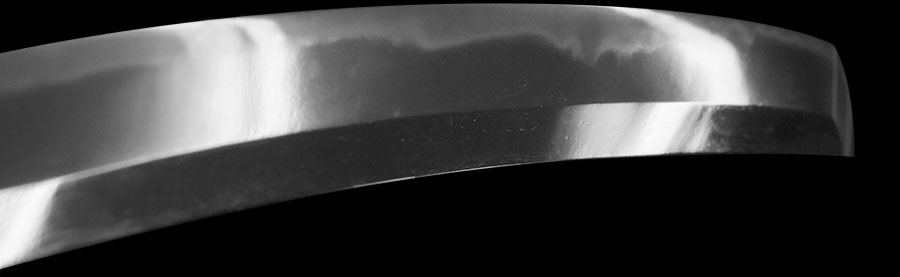
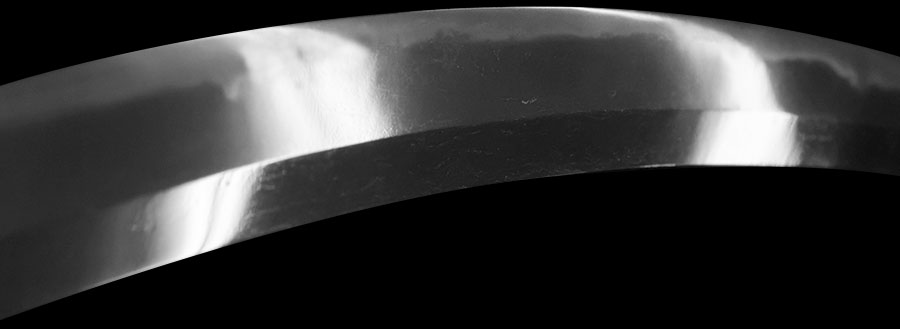
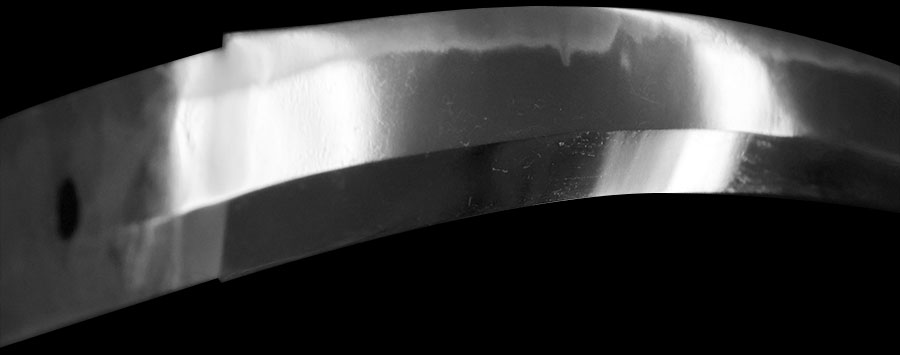
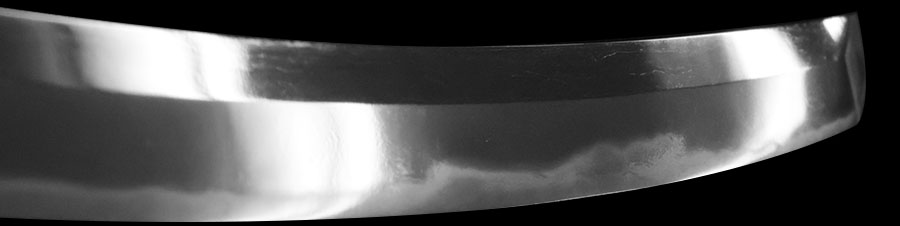
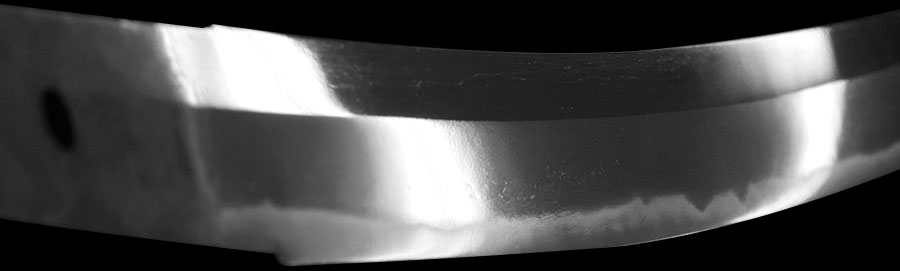
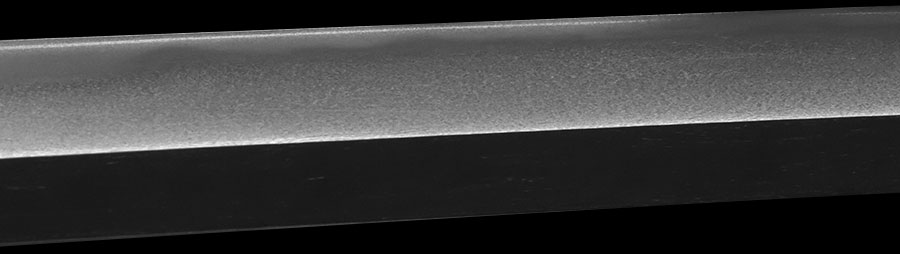
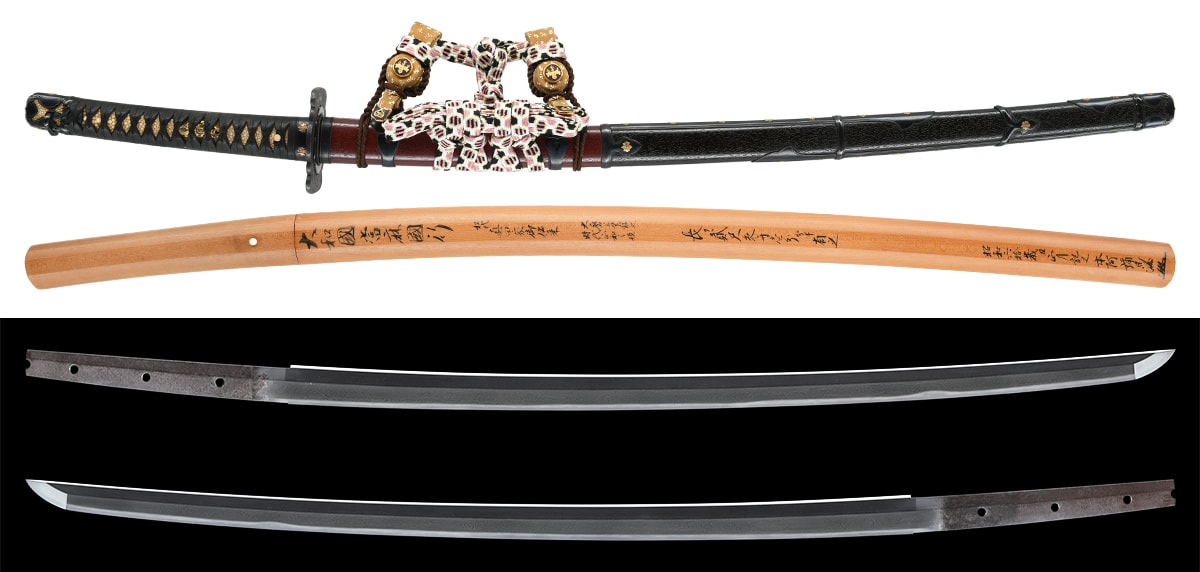
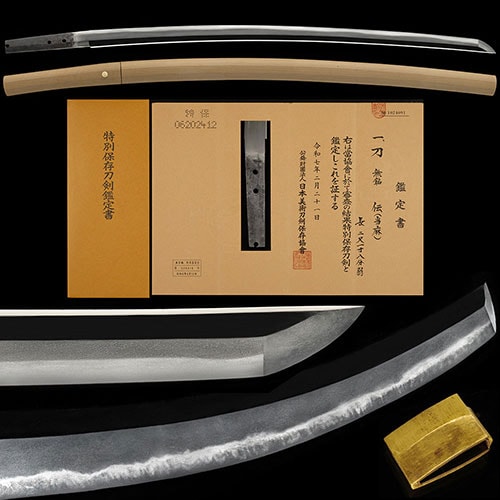
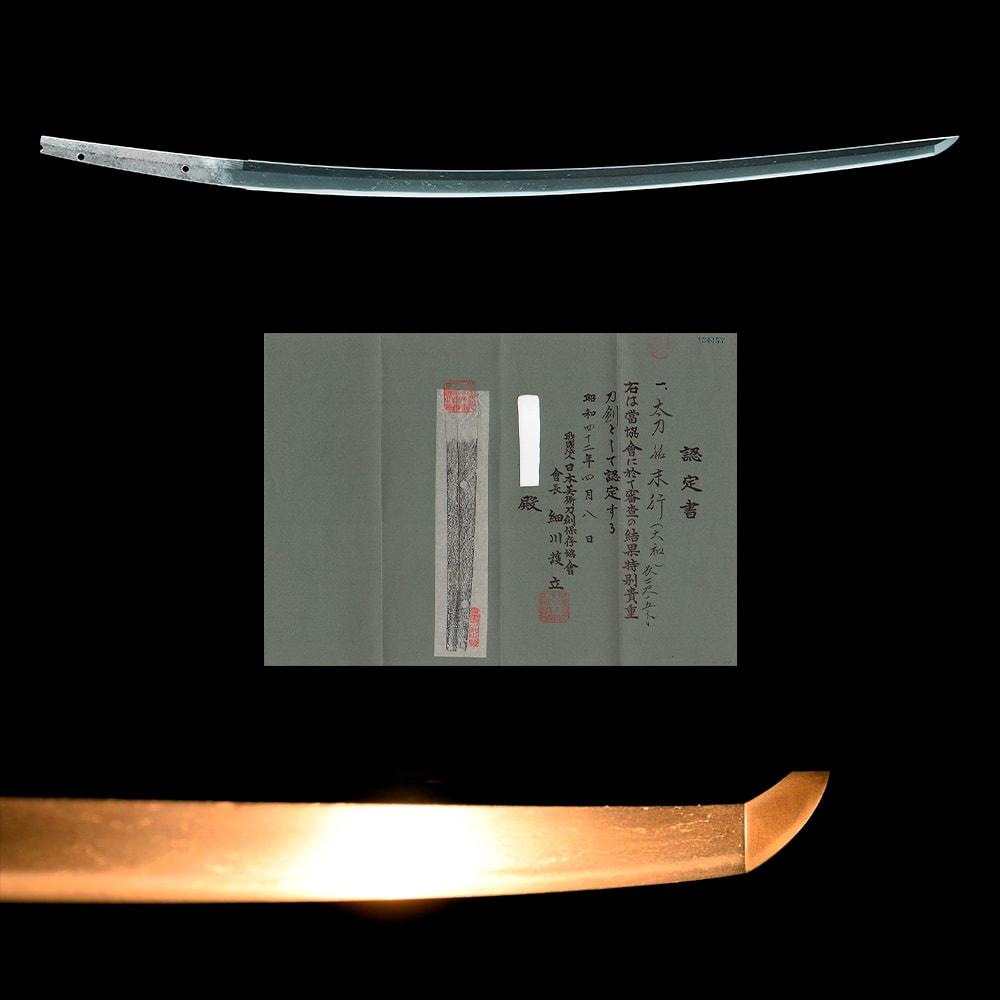
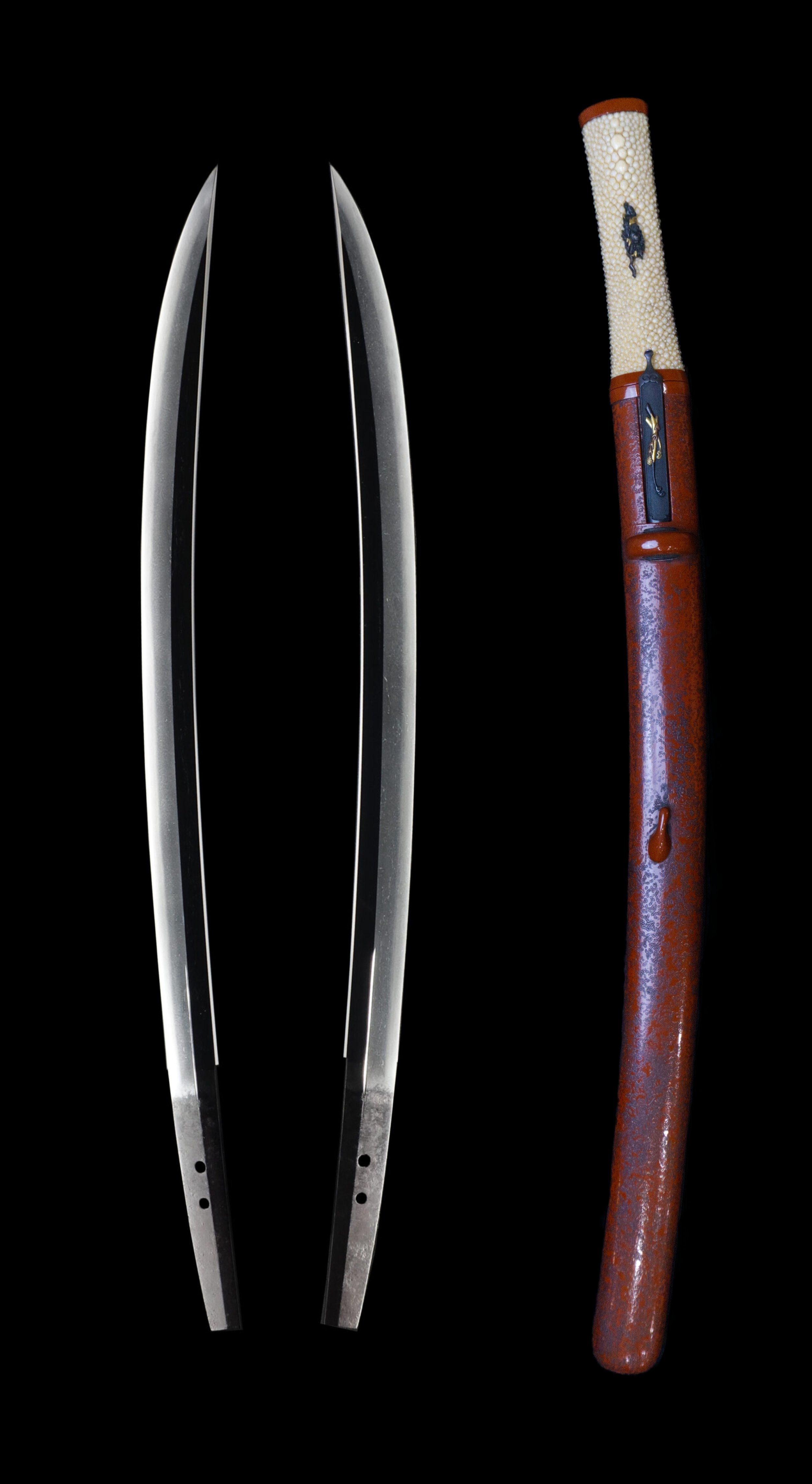
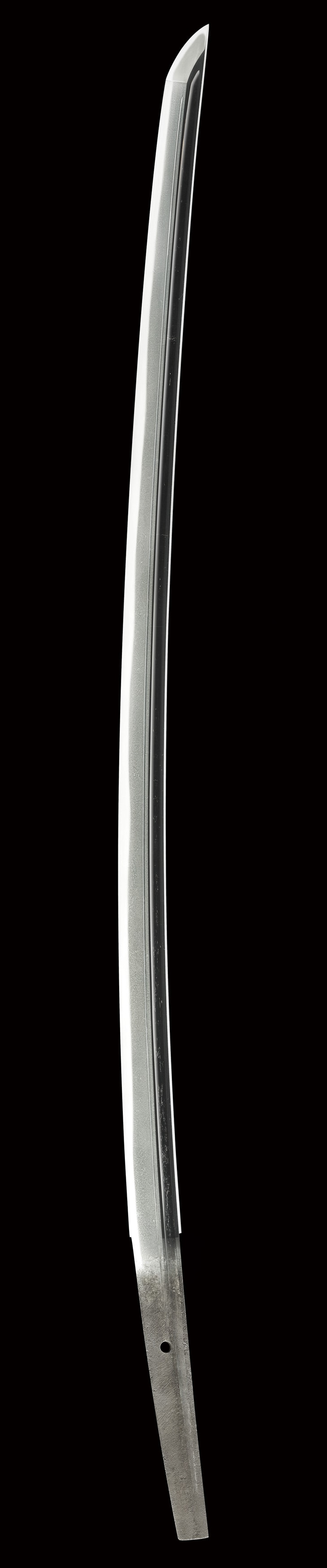
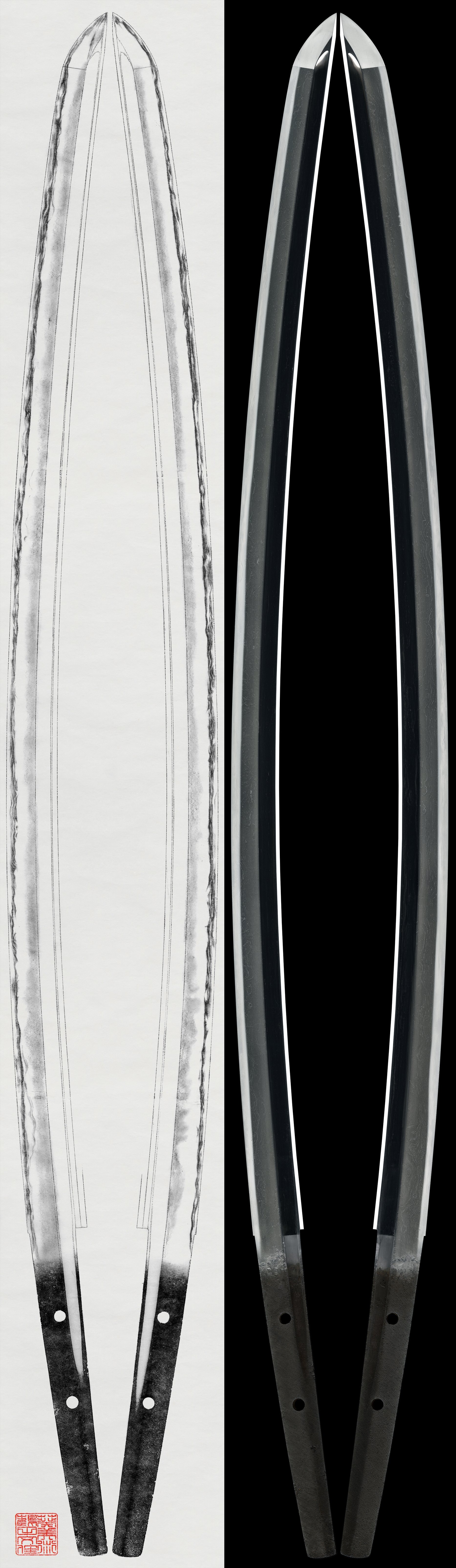
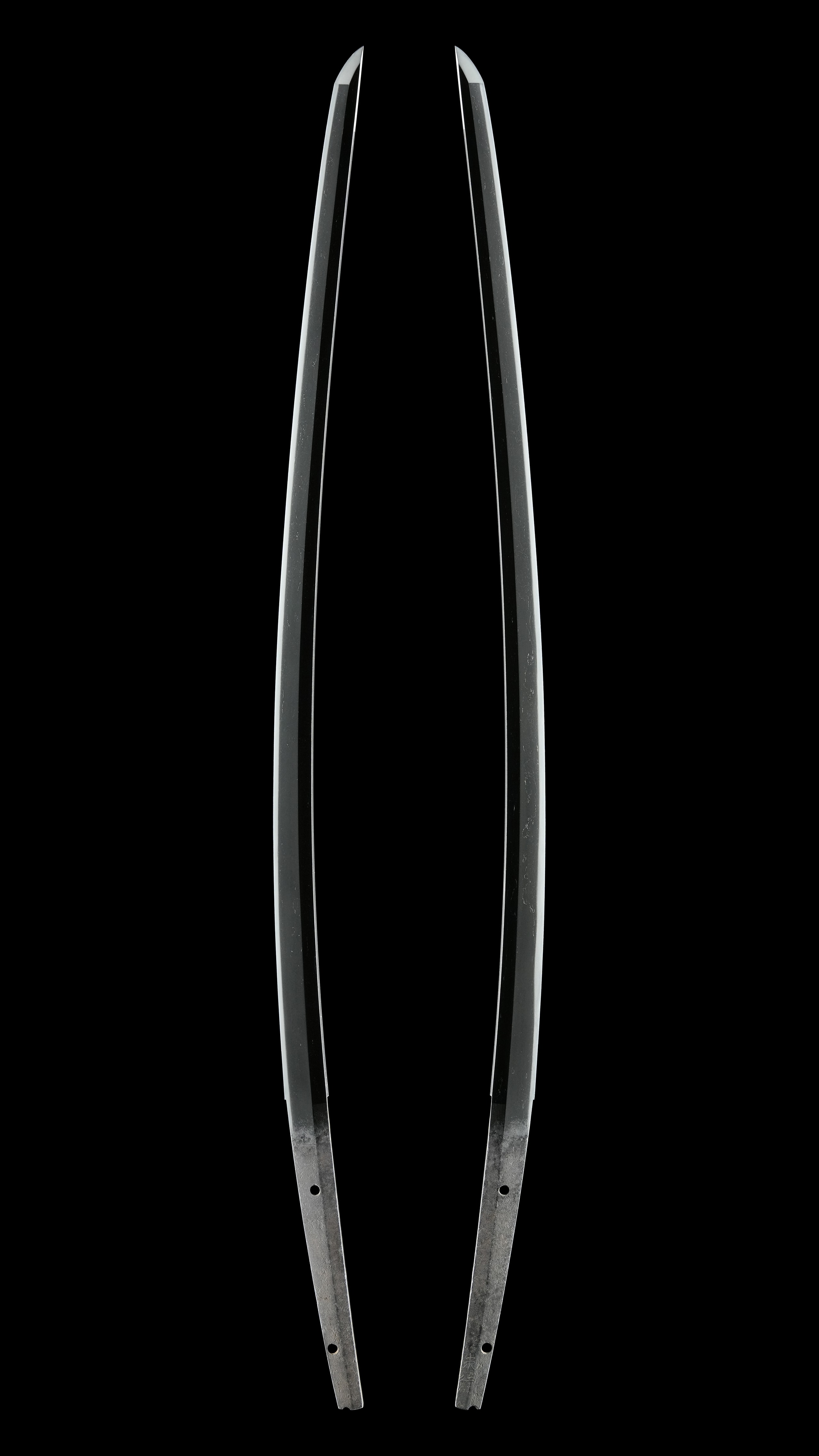
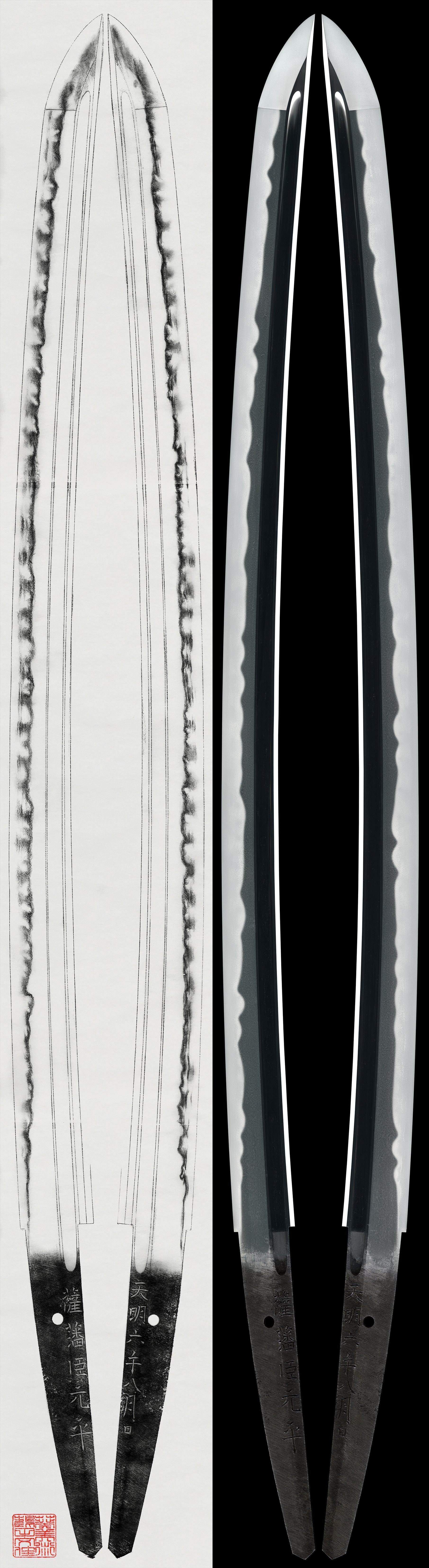
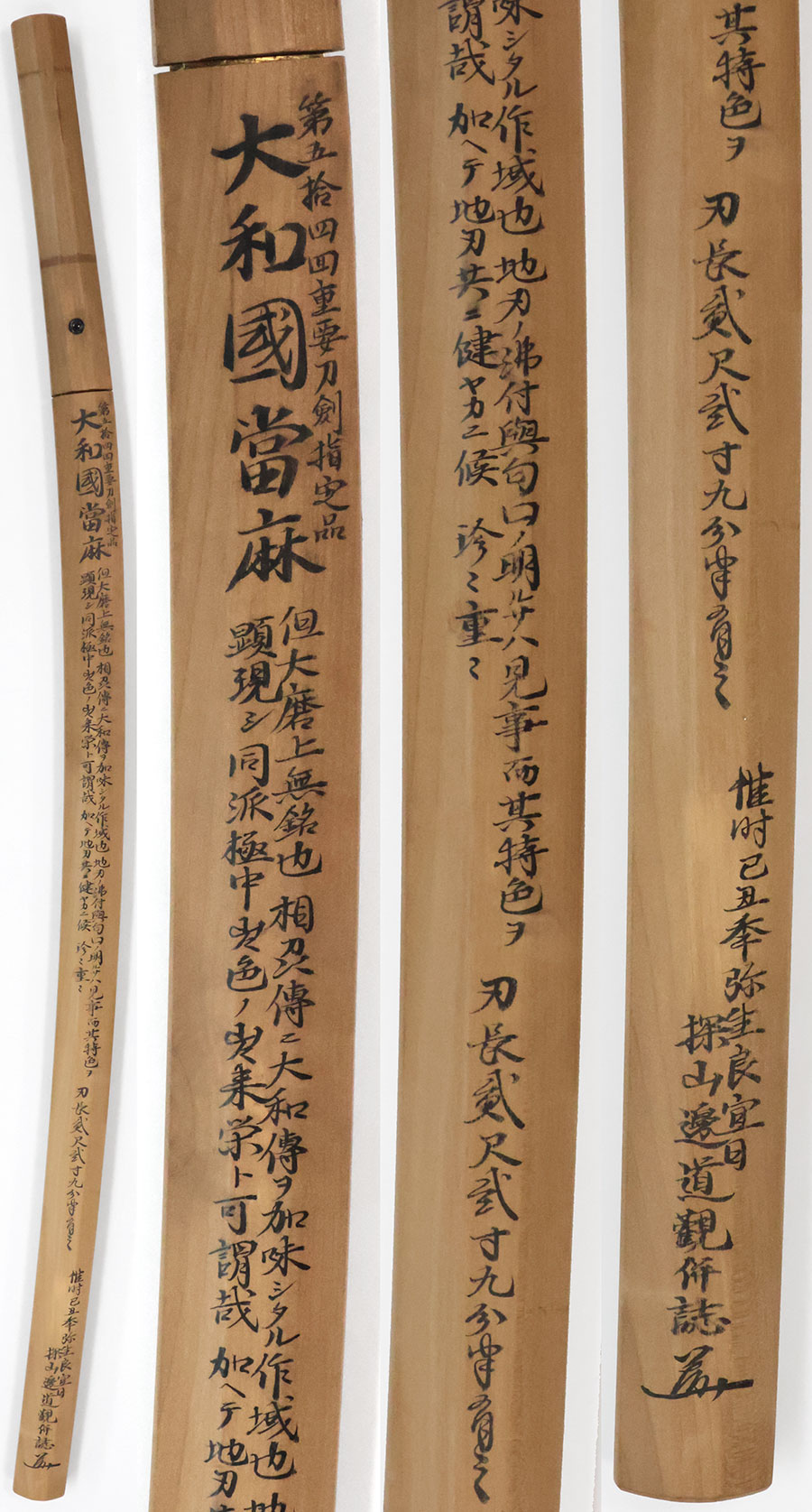
It has arrived, it has arrived! Since ancient times, the Hon'ami family has attributed *mumei* works to Taima when they exhibit a *jigane* with undulating *itame-hada* mixed with *chikei*, and extremely intense *nie* activity such as shimmering *kinsuji* within the *ha*. It is said that the high-level Soshu masters Shintogo Kunimitsu and Soshu Yukimitsu looked upon these Taima swords as their teachers and modeled their sword-making after them. The Taima school is said to display many Soshu-like characteristics and is treated as an exceptional entity among Yamato smiths. The Taima school was a group of smiths subordinate to the Taima-dera temple at the foot of Mount Nijo (present-day Taima, Katsuragi City, Nara Prefecture), with Kunigyo as the founder around the Shoo era (1288, 738 years ago) of the late Kamakura period, continuing to flourish through the Nanbokucho period. While names like Tomoyuki, Tomokiyo, and Tomotsuna exist, extant works with a *mei* are almost non-existent. This sword exhibits a beautiful *sugata* with high *koshizori*, wide *mihaba*, and a slightly high *shinogi*. The *jigane* is a well-wrought *itame-hada* mixed with slight *nagare-hada*, covered in thick, fine *ji-nie* with *chikei* entering the steel. The *hamon* is a *suguha* style mixed with *ko-gunome*, with a deep *nioi* and exceptionally thick *nie*. It is bright and clear, with *kinsuji* and *sunagashi* shimmering throughout, displaying the characteristics and merits of Taima with superior workmanship. In the *sayagaki* by Tanobe Michihiro Sensei, he praises it wonderfully as a "workmanship that adds Yamato tradition to the Soshu tradition; the *nie* of the *ji-ha* and the brightness of the *nioikuchi* are superb. Among swords attributed to Taima, this is a standout masterpiece, and furthermore, both *ji* and *ha* are *kenzen*. It is a rare and precious treasure." This sword greatly influenced the so-called Soshu-den, and its style was inherited; since ancient times, it has been said that Soshu Yukimitsu and Taima are but a paper's breadth apart in their influence on the Soshu tradition. With the clarity of the *ji-ha* and abundant *nie* activity, this is a work full of highlights and can be called the *hakubi* (the finest example) of Taima attributions. As this has appeared in the world for the first time, we are offering it at a specially discounted price. Please enjoy this masterpiece, the likes of which are rarely seen.

NBTHK Setsumei

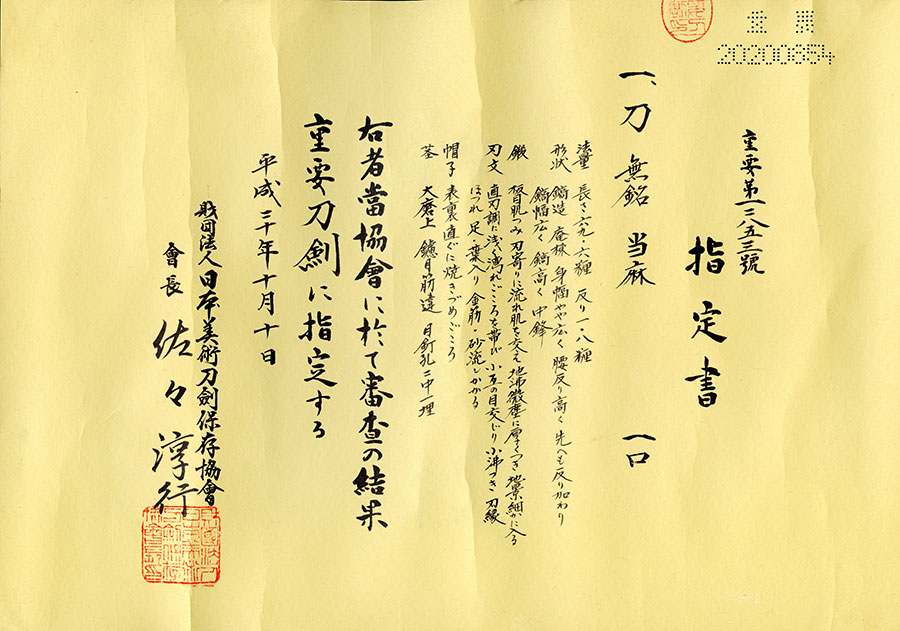
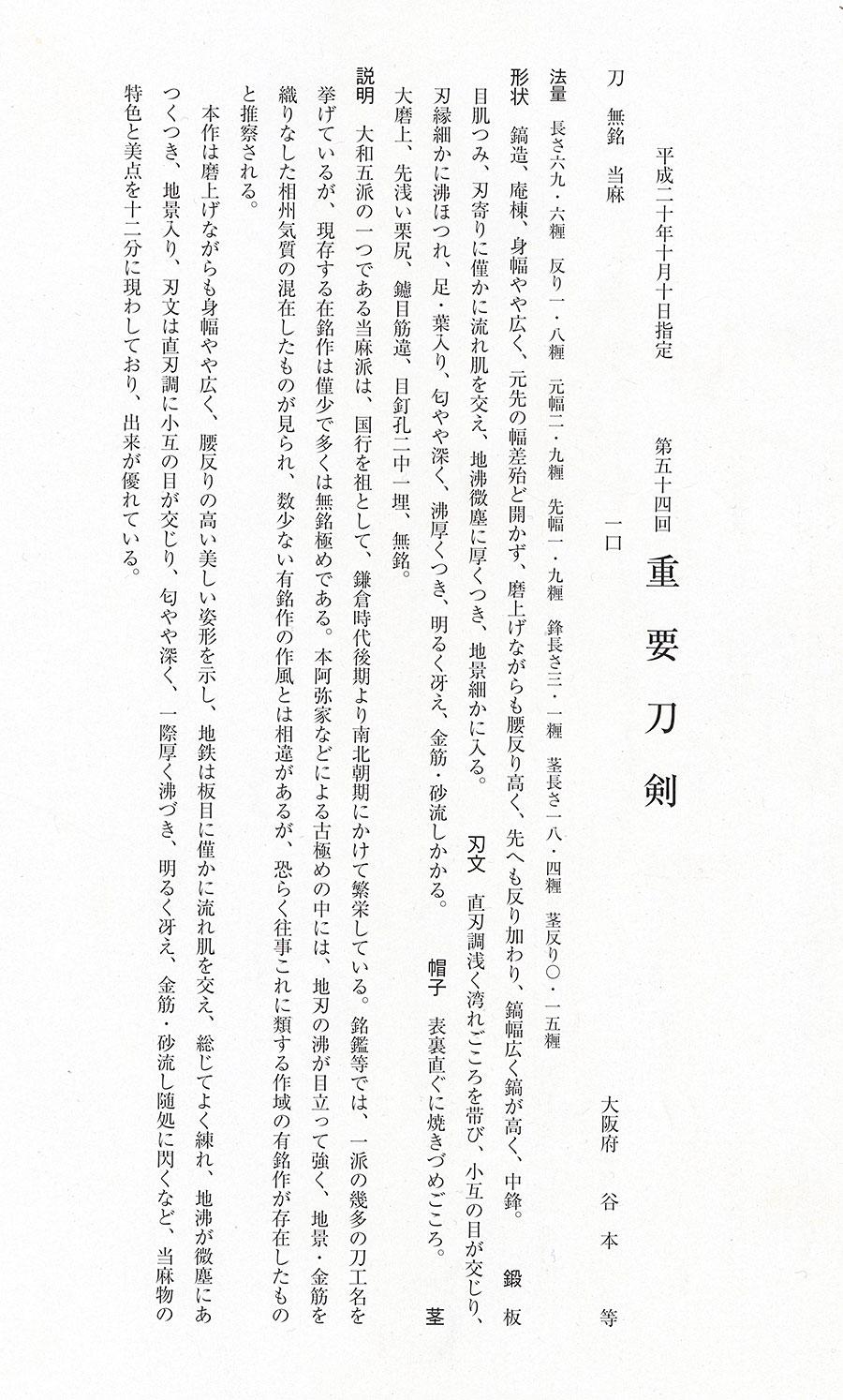
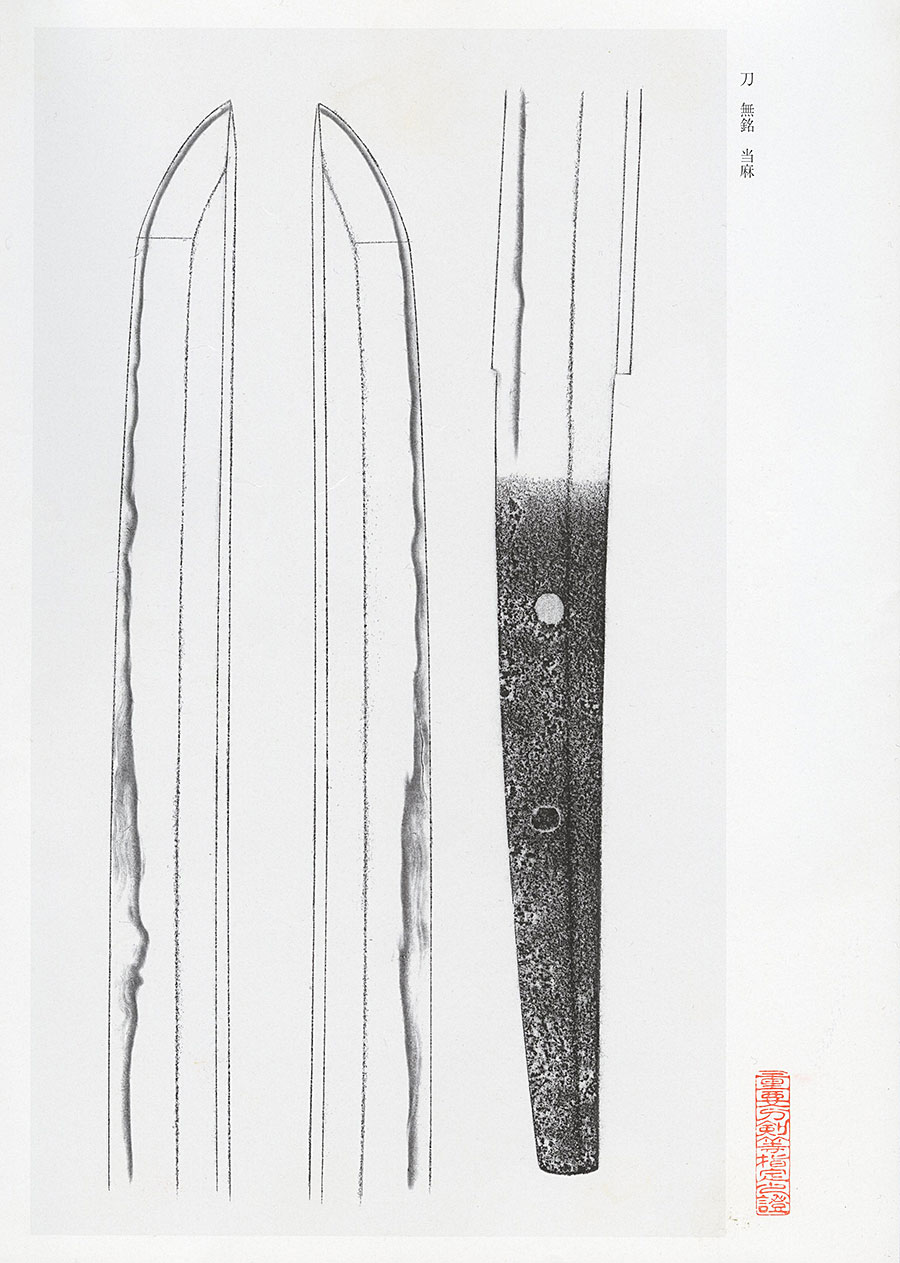
Jūyō-Tōken, 54th Session — Designated October 10, 2008 Katana, mumei: Taima school (当麻) Measurements Nagasa 69.6 cm, sori 1.8 cm, motohaba 2.9 cm, sakihaba 1.9 cm, kissaki-nagasa 3.1 cm, nakago-nagasa 18.4 cm, nakago-sori 0.15 cm Description Keijō: shinogi-zukuri, iori-mune; the mihaba is somewhat broad, with very little difference between base and tip width; although shortened, it shows an attractive form with high koshizori and added curvature toward the tip; wide shinogi-ji with a high shinogi; chū-kissaki. Kitae: A compactly forged itame-hada, with a slight admixture of flowing nagare-hada near the edge; fine ji-nie densely and thickly applied; fine chikei appear. Hamon: A suguha-based temper with a shallow, gently undulating tendency, mixed with small gunome; the habuchi shows fine nie and hotsure; ashi and yō appear; the nioi is somewhat deep; nie adheres conspicuously thickly, and the whole is bright and clear; kinsuji and sunagashi run through in places. Bōshi: On both sides it is straight, tending toward yakitsume. Horimono: None. Nakago: Ō-suriage; shallow kurijiri; file marks are sujikai; two mekugi-ana, one plugged; unsigned. Artisan Taima school Era Late Kamakura to Nanbokuchō period Explanation The Taima school, one of the five major Yamato traditions, traces its origin to Kuniyuki and flourished from the latter part of the Kamakura period into the Nanbokuchō era. Sword reference works enumerate many smiths within this group; however, extant signed pieces are exceedingly few, and most surviving works are unsigned and determined by attribution. Among the old appraisals by the Hon’ami family and others, there are examples in which the nie of both ji and ha stands out with particular strength, interweaving chikei and kinsuji and showing an admixture of Sōshū temperament. Such works differ in style from the few signed examples that remain; nevertheless, it may be inferred that in former times there existed signed works within a similar creative range. This blade, though shortened, retains a somewhat broad mihaba and presents a beautiful sugata with elevated koshizori. The jigane is itame with a slight admixture of nagare, and overall it is well worked; fine ji-nie densely and thickly appears, accompanied by chikei. The hamon is suguha-based with mixed small gunome; the nioi is somewhat deep, and nie is especially thickly applied, creating a bright, clear effect, with kinsuji and sunagashi flashing here and there. In this way, it fully manifests the characteristic features and merits of Taima work, and its workmanship is excellent.

NihontoWatch MonNihontoWatchBETA
MarketAuctionsEncyclopedia
Swords›Yamato-den›Taima›Juyo Katana, Mumei Taima with Sayagaki by Tanobe Michihiro
katanaJūyō
Taima School

Juyo Katana, Mumei Taima with Sayagaki by Tanobe Michihiro

mumei · Kamakura · nagasa 70cm · sori 1.6cm

Price on request
Visit seller website →
Taima School — 1 of 26
Taima School — 2 of 26
Taima School — 3 of 26
Taima School — 4 of 26
Taima School — 5 of 26
Taima School — 6 of 26
Taima School — 7 of 26
Taima School — 8 of 26
Taima School — 9 of 26
Taima School — 10 of 26
Taima School — 11 of 26
Taima School — 12 of 26
Taima School — 13 of 26
Taima School — 14 of 26
Taima School — 15 of 26
Taima School — 16 of 26
Taima School — 17 of 26
Taima School — 18 of 26
Taima School — 19 of 26
Taima School — 20 of 26
Taima School — 21 of 26
Taima School — 22 of 26
Taima School — 23 of 26
Taima School — 24 of 26
Taima School — 25 of 26
Taima School — 26 of 26
1 / 26
1 / 26
Taima School — 1 of 26Taima School — 2 of 26Taima School — 3 of 26Taima School — 4 of 26Taima School — 5 of 26Taima School — 6 of 26Taima School — 7 of 26Taima School — 8 of 26Taima School — 9 of 26Taima School — 10 of 26Taima School — 11 of 26Taima School — 12 of 26Taima School — 13 of 26Taima School — 14 of 26Taima School — 15 of 26Taima School — 16 of 26Taima School — 17 of 26Taima School — 18 of 26Taima School — 19 of 26Taima School — 20 of 26Taima School — 21 of 26Taima School — 22 of 26Taima School — 23 of 26Taima School — 24 of 26Taima School — 25 of 26Taima School — 26 of 26
Measurements & details
Smith
Taima School
Type
Katana
School
Taima
Period
Kamakura
Province
大和
Signature
Unsigned(1% of this smith's designated works are signed)
Measurements
Nagasa 70cmSori 1.6cmMotohaba 2.95cmSakihaba 1.96cmKasane 0.61cm
Description

It has arrived, it has arrived! Since ancient times, the Hon'ami family has attributed mumei works to Taima when they exhibit a jigane with undulating itame-hada mixed with chikei, and extremely intense nie activity such as shimmering kinsuji within the ha. It is said that the high-level Soshu masters Shintogo Kunimitsu and Soshu Yukimitsu looked upon these Taima swords as their teachers and modeled their sword-making after them. The Taima school is said to display many Soshu-like characteristics and is treated as an exceptional entity among Yamato smiths. The Taima school was a group of smiths subordinate to the Taima-dera temple at the foot of Mount Nijo (present-day Taima, Katsuragi City, Nara Prefecture), with Kunigyo as the founder around the Shoo era (1288, 738 years ago) of the late Kamakura period, continuing to flourish through the Nanbokucho period. While names like Tomoyuki, Tomokiyo, and Tomotsuna exist, extant works with a mei are almost non-existent.

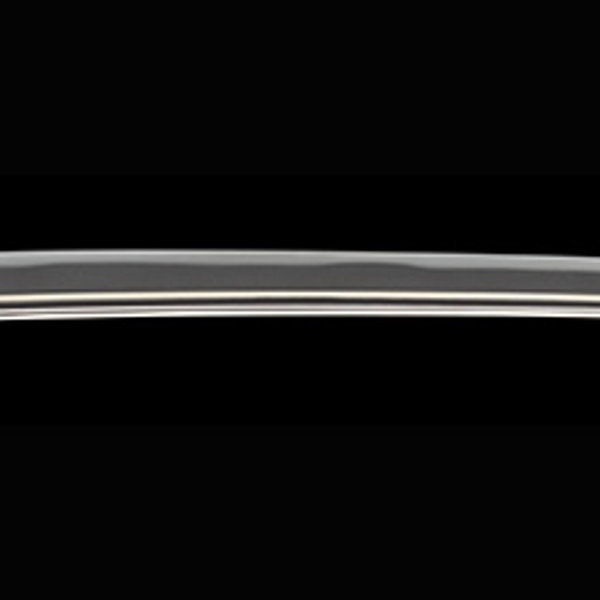
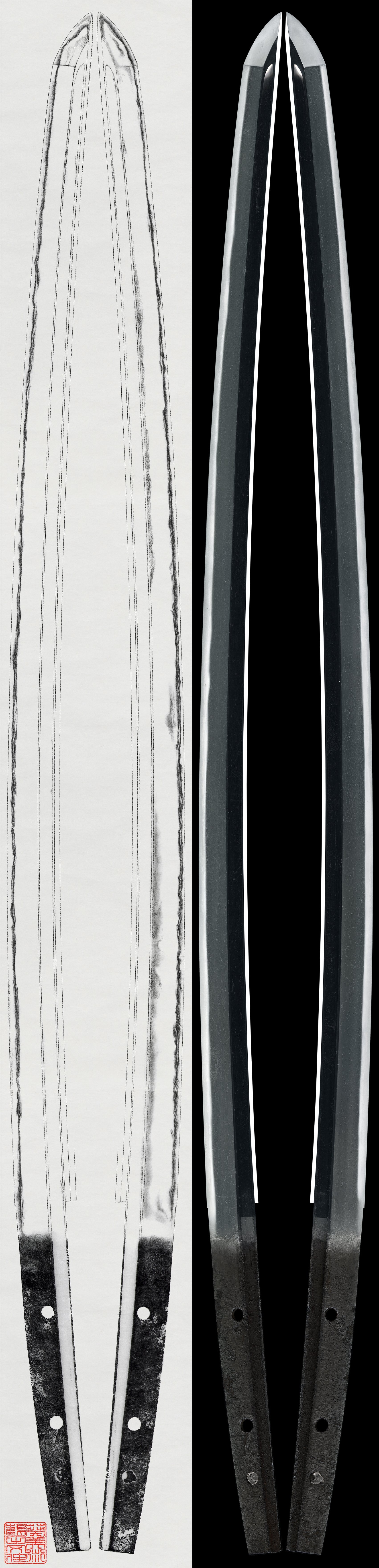
This sword exhibits a beautiful sugata with high koshizori, wide mihaba, and a slightly high shinogi. The jigane is a well-wrought itame-hada mixed with slight nagare-hada, covered in thick, fine ji-nie with chikei entering the steel. The hamon is a suguha style mixed with ko-gunome, with a deep nioi and exceptionally thick nie. It is bright and clear, with kinsuji and sunagashi shimmering throughout, displaying the characteristics and merits of Taima with superior workmanship. In the sayagaki by Tanobe Michihiro Sensei, he praises it wonderfully as a "workmanship that adds Yamato tradition to the Soshu tradition; the nie of the ji-ha and the brightness of the nioikuchi are superb. Among swords attributed to Taima, this is a standout masterpiece, and furthermore, both ji and ha are kenzen. It is a rare and precious treasure."

This sword greatly influenced the so-called Soshu-den, and its style was inherited; since ancient times, it has been said that Soshu Yukimitsu and Taima are but a paper's breadth apart in their influence on the Soshu tradition. With the clarity of the ji-ha and abundant nie activity, this is a work full of highlights and can be called the hakubi (the finest example) of Taima attributions. As this has appeared in the world for the first time, we are offering it at a specially discounted price. Please enjoy this masterpiece, the likes of which are rarely seen.

NBTHK Zufu Commentary

Juyo #54

AI translation — may contain errors

-, 54th Session — Designated October 10, 2008

, : school (当麻)

Measurements 69.6 cm, 1.8 cm, 2.9 cm, 1.9 cm, 3.1 cm, 18.4 cm, 0.15 cm

Description Keijō: , ; the is somewhat broad, with very little difference between base and tip width; although shortened, it shows an attractive form with high and added curvature toward the tip; wide with a high ; . : A compactly forged , with a slight admixture of flowing near the edge; fine densely and thickly applied; fine appear. : A -based temper with a shallow, gently undulating tendency, mixed with small ; the shows fine and ; and appear; the is somewhat deep; adheres conspicuously thickly, and the whole is bright and clear; and run through in places. : On both sides it is straight, tending toward . : None. : ; shallow ; file marks are ; two , one plugged; unsigned.

Artisan school

Era Late to period

Explanation The school, one of the five major Yamato traditions, traces its origin to Kuniyuki and flourished from the latter part of the period into the era. Sword reference works enumerate many smiths within this group; however, extant signed pieces are exceedingly few, and most surviving works are unsigned and determined by attribution.

Among the old appraisals by the Hon’ami family and others, there are examples in which the of both and stands out with particular strength, interweaving and and showing an admixture of temperament. Such works differ in style from the few signed examples that remain; nevertheless, it may be inferred that in former times there existed signed works within a similar creative range.

This blade, though shortened, retains a somewhat broad and presents a beautiful with elevated . The is with a slight admixture of , and overall it is well worked; fine densely and thickly appears, accompanied by . The is -based with mixed small ; the is somewhat deep, and is especially thickly applied, creating a bright, clear effect, with and flashing here and there. In this way, it fully manifests the characteristic features and merits of work, and its workmanship is excellent.

About the school

Taima

当麻

Yamato-den · Yamato

11 pieces on the market now

›

At Taima-dera in Yamato Province, the temple from which the school takes its name, a body of swordsmiths gathered in the late Kamakura period under Kuniyuki, who is transmitted as the founder of the line. The Taima group is counted among the five schools of the Yamato-den, the others being Tegai, Senjuin, Shikkake, and Hosho, and like its siblings it grew out of a monastic milieu in which the smiths worked in dependence upon the temple. Learn more →
12 recorded smiths285 designated works
Leading smiths
SmithEraDesignated
Aritoshi有俊1264-127541
Nobunaga信長1394-14286
Tomokiyo友清1319-13215
Tomoyuki友行1278-12885
Toshinaga俊長1352-13565
Explore the Taima school →
NBTHK Certificate
Jūyō Tōken重要刀剣
Important Sword
›

A blade of top-grade workmanship and condition, formally judged to rank with a nationally recognized Important Art Object (Jūyō Bijutsuhin). Awarded only at the NBTHK’s competitive annual examination.

Of Japan’s roughly 2.5 million registered swords, only 12,307 (about 1 in 203) have ever attained Jūyō.

About the NBTHK›

The NBTHK (Nihon Bijutsu Tōken Hozon Kyōkai, the Society for the Preservation of Japanese Art Swords) is a public-interest incorporated foundation founded in 1948 and supervised by Japan’s Agency for Cultural Affairs (Bunkachō); it is based at the Japanese Sword Museum in Tokyo. Its expert panels physically examine each submitted work (shinsa) and issue a certificate (kanteishō) ranking it by artistic and historical merit. NBTHK papers are the most widely recognized standard of authentication for Japanese swords and fittings.

NBTHK official site→
Seller
N
Nipponto
Established 1953 · 73 yrs on the market
🇯🇵Ships from Japan
›
✓Verified dealernipponto.co.jp
✓Ships worldwide✓English supportPayPalCredit card
Return policy

For returns due to customer circumstances, the cost is the customer's responsibility. For returns due to our mis-shipment or a defective item, we bear the cost.

View all of Nipponto’s listings→View this item on the dealer’s site→

Previously sold — Taima School

Choshuya
Katana - by Taima School - O-suriage Mumei TaimaKatana - by Taima School - O-suriage Mumei Taima
Sold

Katana

ByTaima School
SOLD
Choshuya
Katana - by Taima School - Japanese Sword for Sale | Ginza Choshuya | Taima, 1355Katana - by Taima School - Japanese Sword for Sale | Ginza Choshuya | Taima, 1355
Sold

Katana

ByTaima School
SOLD
Giheiya
Jūyō
Katana - Jūyō - by Taima School - Juyo Token: Mumei (Attributed to Naga Arishige) - 2 Shaku 2 Sun 2 Bu, Shakudo Fittings Hantachi Koshirae, with ShirasayaKatana - Jūyō - by Taima School - Juyo Token: Mumei (Attributed to Naga Arishige) - 2 Shaku 2 Sun 2 Bu, Shakudo Fittings Hantachi Koshirae, with Shirasaya
Sold

Katana

ByTaima School
SOLD
Samurai Nippon
Jūyō
Katana - Jūyō - by Taima School - Taima (Mumei)Katana - Jūyō - by Taima School - Taima (Mumei)
Sold

Katana

ByTaima School
SOLD
Toukentakarado
Tokuho
Tokuho - by Taima School - Mumei Attributed to Taima WakizashiTokuho - by Taima School - Mumei Attributed to Taima Wakizashi
Sold

Mumei Attributed to Taima Wakizashi

ByTaima School
SOLD
Choshuya
Katana - by Taima School - O-suriage Mumei: TaimaKatana - by Taima School - O-suriage Mumei: Taima
Sold

Katana

ByTaima School
SOLD
World Seiyudo
Jūyō
Katana - Jūyō - by Taima School - Mumei Taima - NBTHK Juyo TokenKatana - Jūyō - by Taima School - Mumei Taima - NBTHK Juyo Token
Sold

Katana

ByTaima School
SOLD
Toushin
Tokubetsu Kichō
Tachi - Tokubetsu Kichō - by Taima School - Sueyuki (Yamato)Tachi - Tokubetsu Kichō - by Taima School - Sueyuki (Yamato)
Sold

Tachi

ByTaima School
SOLD

More from the Taima school

View all →
Nihon Art
Tokuho
Wakizashi - Tokuho - by Taima School - Yamato Taima with Tanobe SayagakiWakizashi - Tokuho - by Taima School - Yamato Taima with Tanobe Sayagaki

Wakizashi

ByTaima School
Ask
Aoi Art
Jūyō
Katana - Jūyō - by Taima School - Mumei (attributed to Den Taima)Katana - Jūyō - by Taima School - Mumei (attributed to Den Taima)

Katana

ByTaima School
¥3,500,000
Nihonto US
Tokuho
Katana - Tokuho - by Taima School - Taima KatanaKatana - Tokuho - by Taima School - Taima Katana

Katana

ByTaima School
¥30,000
Choshuya
Jūyō
Katana - Jūyō - by Taima Kuniyuki - Taima Kuniyuki with Vermilion SignatureKatana - Jūyō - by Taima Kuniyuki - Taima Kuniyuki with Vermilion Signature

Katana

ByTaima Kuniyuki
Ask
Nipponto
Jūyō
Katana - Jūyō - by Taima School - Juyo Katana attributed to Taima school, MumeiKatana - Jūyō - by Taima School - Juyo Katana attributed to Taima school, Mumei

Katana

ByTaima School
Ask
Toushin
Tokubetsu Kichō
Tachi - Tokubetsu Kichō - by Taima School - Sueyuki (Yamato)Tachi - Tokubetsu Kichō - by Taima School - Sueyuki (Yamato)

Tachi

ByTaima School
¥2,970,000
Aoi Art
Tokuho
Tanto - Tokuho - by Taima School - Mumei (Unsigned) Taima School (Late Nanbokucho period to Oei era)Tanto - Tokuho - by Taima School - Mumei (Unsigned) Taima School (Late Nanbokucho period to Oei era)

Tantō

ByTaima School
¥1,700,000
Nipponto
Katana - by Taima Nobukiyo - Japanese Sword Katana by Nantoju Nobukiyo, dated Tenbun 23rd year, 8th month (1554)Katana - by Taima Nobukiyo - Japanese Sword Katana by Nantoju Nobukiyo, dated Tenbun 23rd year, 8th month (1554)

Katana

ByTaima Nobukiyo
¥380,000

More from the Yamato tradition

View all →
Aoi Art
Tokuho
Katana - Tokuho - by Tegai School - Mumei (Tegai) (Koshirae: NBTHK Tokubetsu Kicho Tosogu)Katana - Tokuho - by Tegai School - Mumei (Tegai) (Koshirae: NBTHK Tokubetsu Kicho Tosogu)

Katana

ByTegai School
Starting Bid¥2,500,000
Kusanagi
Tokuho
Katana - Tokuho - by Shikkake Norinaga - Shitagake School Founder, Oowazamono 1st Gen. "Shitagake Norinaga" - Tokubetsu Hozon Token AppraisalKatana - Tokuho - by Shikkake Norinaga - Shitagake School Founder, Oowazamono 1st Gen. "Shitagake Norinaga" - Tokubetsu Hozon Token Appraisal

Katana

ByShikkake Norinaga
¥1,280,000
Aoi Art
Hozon
Wakizashi - Hozon - by Mihara School - Mumei (Mihara school)Wakizashi - Hozon - by Mihara School - Mumei (Mihara school)

Wakizashi

ByMihara School
Starting Bid¥250,000
Tsuruginoya
Jūyō
Katana - Jūyō - by Tegai Kanenaga - Tegai KanenagaKatana - Jūyō - by Tegai Kanenaga - Tegai Kanenaga

Katana

ByTegai Kanenaga
¥7,500,000
Goushuya
Tokujū
Katana - Tokuju - by Satsuma Yasuyo - Tokubetsu Juyo Token (One-Leaf Aoi Mon) Shume no Kami Ichihei Fujiwara Ason Yasuyo, Made in Satsushu Kirei-gun on an Auspicious Day in March, Kyoho 12Katana - Tokuju - by Satsuma Yasuyo - Tokubetsu Juyo Token (One-Leaf Aoi Mon) Shume no Kami Ichihei Fujiwara Ason Yasuyo, Made in Satsushu Kirei-gun on an Auspicious Day in March, Kyoho 12

Katana

BySatsuma Yasuyo
Ask
Eirakudo
Tokuho
Katana - Tokuho - by Monju Shigekuni - Nanki Shigekuni - Tokubetsu Hozon TokenKatana - Tokuho - by Monju Shigekuni - Nanki Shigekuni - Tokubetsu Hozon Token

Katana

ByMonju Shigekuni
¥5,500,000
Nihon Art
NTHK
Katana - NTHK - by Tegai Kanetoshi - Yamato Tegai KanetoshiKatana - NTHK - by Tegai Kanetoshi - Yamato Tegai Kanetoshi

Katana

ByTegai Kanetoshi
Ask
Toushin
Tokuho
Tanto - Tokuho - by Tegai School - Tegai KanetoshiTanto - Tokuho - by Tegai School - Tegai Kanetoshi

Tantō

ByTegai School
¥1,100,000

Swords

  • Katana
  • Wakizashi
  • Tantō
  • Tachi
  • Naginata
  • Yari

Fittings

  • Tsuba
  • Fuchi-Kashira
  • Kozuka
  • Menuki

By Certification

  • Tokujū
  • Jūyō
  • Tokuho
  • Hozon

Resources

  • Dealer Directory
  • Artist Directory
  • Glossary
  • Browse All
Nihontowatch© 2026
TermsPrivacyCookiesAbout

Description

It has arrived, it has arrived! Since ancient times, the Hon'ami family has attributed *mumei* works to Taima when they exhibit a *jigane* with undulating *itame-hada* mixed with *chikei*, and extremely intense *nie* activity such as shimmering *kinsuji* within the *ha*. It is said that the high-level Soshu masters Shintogo Kunimitsu and Soshu Yukimitsu looked upon these Taima swords as their teachers and modeled their sword-making after them. The Taima school is said to display many Soshu-like characteristics and is treated as an exceptional entity among Yamato smiths. The Taima school was a group of smiths subordinate to the Taima-dera temple at the foot of Mount Nijo (present-day Taima, Katsuragi City, Nara Prefecture), with Kunigyo as the founder around the Shoo era (1288, 738 years ago) of the late Kamakura period, continuing to flourish through the Nanbokucho period. While names like Tomoyuki, Tomokiyo, and Tomotsuna exist, extant works with a *mei* are almost non-existent. This sword exhibits a beautiful *sugata* with high *koshizori*, wide *mihaba*, and a slightly high *shinogi*. The *jigane* is a well-wrought *itame-hada* mixed with slight *nagare-hada*, covered in thick, fine *ji-nie* with *chikei* entering the steel. The *hamon* is a *suguha* style mixed with *ko-gunome*, with a deep *nioi* and exceptionally thick *nie*. It is bright and clear, with *kinsuji* and *sunagashi* shimmering throughout, displaying the characteristics and merits of Taima with superior workmanship. In the *sayagaki* by Tanobe Michihiro Sensei, he praises it wonderfully as a "workmanship that adds Yamato tradition to the Soshu tradition; the *nie* of the *ji-ha* and the brightness of the *nioikuchi* are superb. Among swords attributed to Taima, this is a standout masterpiece, and furthermore, both *ji* and *ha* are *kenzen*. It is a rare and precious treasure." This sword greatly influenced the so-called Soshu-den, and its style was inherited; since ancient times, it has been said that Soshu Yukimitsu and Taima are but a paper's breadth apart in their influence on the Soshu tradition. With the clarity of the *ji-ha* and abundant *nie* activity, this is a work full of highlights and can be called the *hakubi* (the finest example) of Taima attributions. As this has appeared in the world for the first time, we are offering it at a specially discounted price. Please enjoy this masterpiece, the likes of which are rarely seen.

NBTHK Setsumei

Jūyō-Tōken, 54th Session — Designated October 10, 2008 Katana, mumei: Taima school (当麻) Measurements Nagasa 69.6 cm, sori 1.8 cm, motohaba 2.9 cm, sakihaba 1.9 cm, kissaki-nagasa 3.1 cm, nakago-nagasa 18.4 cm, nakago-sori 0.15 cm Description Keijō: shinogi-zukuri, iori-mune; the mihaba is somewhat broad, with very little difference between base and tip width; although shortened, it shows an attractive form with high koshizori and added curvature toward the tip; wide shinogi-ji with a high shinogi; chū-kissaki. Kitae: A compactly forged itame-hada, with a slight admixture of flowing nagare-hada near the edge; fine ji-nie densely and thickly applied; fine chikei appear. Hamon: A suguha-based temper with a shallow, gently undulating tendency, mixed with small gunome; the habuchi shows fine nie and hotsure; ashi and yō appear; the nioi is somewhat deep; nie adheres conspicuously thickly, and the whole is bright and clear; kinsuji and sunagashi run through in places. Bōshi: On both sides it is straight, tending toward yakitsume. Horimono: None. Nakago: Ō-suriage; shallow kurijiri; file marks are sujikai; two mekugi-ana, one plugged; unsigned. Artisan Taima school Era Late Kamakura to Nanbokuchō period Explanation The Taima school, one of the five major Yamato traditions, traces its origin to Kuniyuki and flourished from the latter part of the Kamakura period into the Nanbokuchō era. Sword reference works enumerate many smiths within this group; however, extant signed pieces are exceedingly few, and most surviving works are unsigned and determined by attribution. Among the old appraisals by the Hon’ami family and others, there are examples in which the nie of both ji and ha stands out with particular strength, interweaving chikei and kinsuji and showing an admixture of Sōshū temperament. Such works differ in style from the few signed examples that remain; nevertheless, it may be inferred that in former times there existed signed works within a similar creative range. This blade, though shortened, retains a somewhat broad mihaba and presents a beautiful sugata with elevated koshizori. The jigane is itame with a slight admixture of nagare, and overall it is well worked; fine ji-nie densely and thickly appears, accompanied by chikei. The hamon is suguha-based with mixed small gunome; the nioi is somewhat deep, and nie is especially thickly applied, creating a bright, clear effect, with kinsuji and sunagashi flashing here and there. In this way, it fully manifests the characteristic features and merits of Taima work, and its workmanship is excellent.

NihontoWatch MonNihontoWatchBETA
MarketAuctionsEncyclopedia
Swords›Yamato-den›Taima›Juyo Katana, Mumei Taima with Sayagaki by Tanobe Michihiro
katanaJūyō
Taima School

Juyo Katana, Mumei Taima with Sayagaki by Tanobe Michihiro

mumei · Kamakura · nagasa 70cm · sori 1.6cm

Price on request
Visit seller website →
Taima School — 1 of 26
Taima School — 2 of 26
Taima School — 3 of 26
Taima School — 4 of 26
Taima School — 5 of 26
Taima School — 6 of 26
Taima School — 7 of 26
Taima School — 8 of 26
Taima School — 9 of 26
Taima School — 10 of 26
Taima School — 11 of 26
Taima School — 12 of 26
Taima School — 13 of 26
Taima School — 14 of 26
Taima School — 15 of 26
Taima School — 16 of 26
Taima School — 17 of 26
Taima School — 18 of 26
Taima School — 19 of 26
Taima School — 20 of 26
Taima School — 21 of 26
Taima School — 22 of 26
Taima School — 23 of 26
Taima School — 24 of 26
Taima School — 25 of 26
Taima School — 26 of 26
1 / 26
1 / 26
Taima School — 1 of 26Taima School — 2 of 26Taima School — 3 of 26Taima School — 4 of 26Taima School — 5 of 26Taima School — 6 of 26Taima School — 7 of 26Taima School — 8 of 26Taima School — 9 of 26Taima School — 10 of 26Taima School — 11 of 26Taima School — 12 of 26Taima School — 13 of 26Taima School — 14 of 26Taima School — 15 of 26Taima School — 16 of 26Taima School — 17 of 26Taima School — 18 of 26Taima School — 19 of 26Taima School — 20 of 26Taima School — 21 of 26Taima School — 22 of 26Taima School — 23 of 26Taima School — 24 of 26Taima School — 25 of 26Taima School — 26 of 26
Measurements & details
Smith
Taima School
Type
Katana
School
Taima
Period
Kamakura
Province
大和
Signature
Unsigned(1% of this smith's designated works are signed)
Measurements
Nagasa 70cmSori 1.6cmMotohaba 2.95cmSakihaba 1.96cmKasane 0.61cm
Description

It has arrived, it has arrived! Since ancient times, the Hon'ami family has attributed mumei works to Taima when they exhibit a jigane with undulating itame-hada mixed with chikei, and extremely intense nie activity such as shimmering kinsuji within the ha. It is said that the high-level Soshu masters Shintogo Kunimitsu and Soshu Yukimitsu looked upon these Taima swords as their teachers and modeled their sword-making after them. The Taima school is said to display many Soshu-like characteristics and is treated as an exceptional entity among Yamato smiths. The Taima school was a group of smiths subordinate to the Taima-dera temple at the foot of Mount Nijo (present-day Taima, Katsuragi City, Nara Prefecture), with Kunigyo as the founder around the Shoo era (1288, 738 years ago) of the late Kamakura period, continuing to flourish through the Nanbokucho period. While names like Tomoyuki, Tomokiyo, and Tomotsuna exist, extant works with a mei are almost non-existent.

This sword exhibits a beautiful sugata with high koshizori, wide mihaba, and a slightly high shinogi. The jigane is a well-wrought itame-hada mixed with slight nagare-hada, covered in thick, fine ji-nie with chikei entering the steel. The hamon is a suguha style mixed with ko-gunome, with a deep nioi and exceptionally thick nie. It is bright and clear, with kinsuji and sunagashi shimmering throughout, displaying the characteristics and merits of Taima with superior workmanship. In the sayagaki by Tanobe Michihiro Sensei, he praises it wonderfully as a "workmanship that adds Yamato tradition to the Soshu tradition; the nie of the ji-ha and the brightness of the nioikuchi are superb. Among swords attributed to Taima, this is a standout masterpiece, and furthermore, both ji and ha are kenzen. It is a rare and precious treasure."

This sword greatly influenced the so-called Soshu-den, and its style was inherited; since ancient times, it has been said that Soshu Yukimitsu and Taima are but a paper's breadth apart in their influence on the Soshu tradition. With the clarity of the ji-ha and abundant nie activity, this is a work full of highlights and can be called the hakubi (the finest example) of Taima attributions. As this has appeared in the world for the first time, we are offering it at a specially discounted price. Please enjoy this masterpiece, the likes of which are rarely seen.

NBTHK Zufu Commentary

Juyo #54

AI translation — may contain errors

-, 54th Session — Designated October 10, 2008

, : school (当麻)

Measurements 69.6 cm, 1.8 cm, 2.9 cm, 1.9 cm, 3.1 cm, 18.4 cm, 0.15 cm

Description Keijō: , ; the is somewhat broad, with very little difference between base and tip width; although shortened, it shows an attractive form with high and added curvature toward the tip; wide with a high ; . : A compactly forged , with a slight admixture of flowing near the edge; fine densely and thickly applied; fine appear. : A -based temper with a shallow, gently undulating tendency, mixed with small ; the shows fine and ; and appear; the is somewhat deep; adheres conspicuously thickly, and the whole is bright and clear; and run through in places. : On both sides it is straight, tending toward . : None. : ; shallow ; file marks are ; two , one plugged; unsigned.

Artisan school

Era Late to period

Explanation The school, one of the five major Yamato traditions, traces its origin to Kuniyuki and flourished from the latter part of the period into the era. Sword reference works enumerate many smiths within this group; however, extant signed pieces are exceedingly few, and most surviving works are unsigned and determined by attribution.

Among the old appraisals by the Hon’ami family and others, there are examples in which the of both and stands out with particular strength, interweaving and and showing an admixture of temperament. Such works differ in style from the few signed examples that remain; nevertheless, it may be inferred that in former times there existed signed works within a similar creative range.

This blade, though shortened, retains a somewhat broad and presents a beautiful with elevated . The is with a slight admixture of , and overall it is well worked; fine densely and thickly appears, accompanied by . The is -based with mixed small ; the is somewhat deep, and is especially thickly applied, creating a bright, clear effect, with and flashing here and there. In this way, it fully manifests the characteristic features and merits of work, and its workmanship is excellent.

About the school

Taima

当麻

Yamato-den · Yamato

11 pieces on the market now

›

At Taima-dera in Yamato Province, the temple from which the school takes its name, a body of swordsmiths gathered in the late Kamakura period under Kuniyuki, who is transmitted as the founder of the line. The Taima group is counted among the five schools of the Yamato-den, the others being Tegai, Senjuin, Shikkake, and Hosho, and like its siblings it grew out of a monastic milieu in which the smiths worked in dependence upon the temple. Learn more →
12 recorded smiths285 designated works
Leading smiths
SmithEraDesignated
Aritoshi有俊1264-127541
Nobunaga信長1394-14286
Tomokiyo友清1319-13215
Tomoyuki友行1278-12885
Toshinaga俊長1352-13565
Explore the Taima school →
NBTHK Certificate
Jūyō Tōken重要刀剣
Important Sword
›

A blade of top-grade workmanship and condition, formally judged to rank with a nationally recognized Important Art Object (Jūyō Bijutsuhin). Awarded only at the NBTHK’s competitive annual examination.

Of Japan’s roughly 2.5 million registered swords, only 12,307 (about 1 in 203) have ever attained Jūyō.

About the NBTHK›

The NBTHK (Nihon Bijutsu Tōken Hozon Kyōkai, the Society for the Preservation of Japanese Art Swords) is a public-interest incorporated foundation founded in 1948 and supervised by Japan’s Agency for Cultural Affairs (Bunkachō); it is based at the Japanese Sword Museum in Tokyo. Its expert panels physically examine each submitted work (shinsa) and issue a certificate (kanteishō) ranking it by artistic and historical merit. NBTHK papers are the most widely recognized standard of authentication for Japanese swords and fittings.

NBTHK official site→

Seller
N
Nipponto
Established 1953 · 73 yrs on the market
🇯🇵Ships from Japan
›
✓Verified dealernipponto.co.jp
✓Ships worldwide✓English supportPayPalCredit card
Return policy

For returns due to customer circumstances, the cost is the customer's responsibility. For returns due to our mis-shipment or a defective item, we bear the cost.

View all of Nipponto’s listings→View this item on the dealer’s site→

Previously sold — Taima School

Choshuya
Katana - by Taima School - O-suriage Mumei TaimaKatana - by Taima School - O-suriage Mumei Taima
Sold

Katana

ByTaima School
SOLD
Choshuya
Katana - by Taima School - Japanese Sword for Sale | Ginza Choshuya | Taima, 1355Katana - by Taima School - Japanese Sword for Sale | Ginza Choshuya | Taima, 1355
Sold

Katana

ByTaima School
SOLD
Giheiya
Jūyō
Katana - Jūyō - by Taima School - Juyo Token: Mumei (Attributed to Naga Arishige) - 2 Shaku 2 Sun 2 Bu, Shakudo Fittings Hantachi Koshirae, with ShirasayaKatana - Jūyō - by Taima School - Juyo Token: Mumei (Attributed to Naga Arishige) - 2 Shaku 2 Sun 2 Bu, Shakudo Fittings Hantachi Koshirae, with Shirasaya
Sold

Katana

ByTaima School
SOLD
Samurai Nippon
Jūyō
Katana - Jūyō - by Taima School - Taima (Mumei)Katana - Jūyō - by Taima School - Taima (Mumei)
Sold

Katana

ByTaima School
SOLD
Toukentakarado
Tokuho
Tokuho - by Taima School - Mumei Attributed to Taima WakizashiTokuho - by Taima School - Mumei Attributed to Taima Wakizashi
Sold

Mumei Attributed to Taima Wakizashi

ByTaima School
SOLD
Choshuya
Katana - by Taima School - O-suriage Mumei: TaimaKatana - by Taima School - O-suriage Mumei: Taima
Sold

Katana

ByTaima School
SOLD
World Seiyudo
Jūyō
Katana - Jūyō - by Taima School - Mumei Taima - NBTHK Juyo TokenKatana - Jūyō - by Taima School - Mumei Taima - NBTHK Juyo Token
Sold

Katana

ByTaima School
SOLD
Toushin
Tokubetsu Kichō
Tachi - Tokubetsu Kichō - by Taima School - Sueyuki (Yamato)Tachi - Tokubetsu Kichō - by Taima School - Sueyuki (Yamato)
Sold

Tachi

ByTaima School
SOLD

More from the Taima school

View all →
Nihon Art
Tokuho
Wakizashi - Tokuho - by Taima School - Yamato Taima with Tanobe SayagakiWakizashi - Tokuho - by Taima School - Yamato Taima with Tanobe Sayagaki

Wakizashi

ByTaima School
Ask
Aoi Art
Jūyō
Katana - Jūyō - by Taima School - Mumei (attributed to Den Taima)Katana - Jūyō - by Taima School - Mumei (attributed to Den Taima)

Katana

ByTaima School
¥3,500,000
Nihonto US
Tokuho
Katana - Tokuho - by Taima School - Taima KatanaKatana - Tokuho - by Taima School - Taima Katana

Katana

ByTaima School
¥30,000
Choshuya
Jūyō
Katana - Jūyō - by Taima Kuniyuki - Taima Kuniyuki with Vermilion SignatureKatana - Jūyō - by Taima Kuniyuki - Taima Kuniyuki with Vermilion Signature

Katana

ByTaima Kuniyuki
Ask
Nipponto
Jūyō
Katana - Jūyō - by Taima School - Juyo Katana attributed to Taima school, MumeiKatana - Jūyō - by Taima School - Juyo Katana attributed to Taima school, Mumei

Katana

ByTaima School
Ask
Toushin
Tokubetsu Kichō
Tachi - Tokubetsu Kichō - by Taima School - Sueyuki (Yamato)Tachi - Tokubetsu Kichō - by Taima School - Sueyuki (Yamato)

Tachi

ByTaima School
¥2,970,000
Aoi Art
Tokuho
Tanto - Tokuho - by Taima School - Mumei (Unsigned) Taima School (Late Nanbokucho period to Oei era)Tanto - Tokuho - by Taima School - Mumei (Unsigned) Taima School (Late Nanbokucho period to Oei era)

Tantō

ByTaima School
¥1,700,000
Nipponto
Katana - by Taima Nobukiyo - Japanese Sword Katana by Nantoju Nobukiyo, dated Tenbun 23rd year, 8th month (1554)Katana - by Taima Nobukiyo - Japanese Sword Katana by Nantoju Nobukiyo, dated Tenbun 23rd year, 8th month (1554)

Katana

ByTaima Nobukiyo
¥380,000

More from the Yamato tradition

View all →
Aoi Art
Tokuho
Katana - Tokuho - by Tegai School - Mumei (Tegai) (Koshirae: NBTHK Tokubetsu Kicho Tosogu)Katana - Tokuho - by Tegai School - Mumei (Tegai) (Koshirae: NBTHK Tokubetsu Kicho Tosogu)

Katana

ByTegai School
Starting Bid¥2,500,000
Kusanagi
Tokuho
Katana - Tokuho - by Shikkake Norinaga - Shitagake School Founder, Oowazamono 1st Gen. "Shitagake Norinaga" - Tokubetsu Hozon Token AppraisalKatana - Tokuho - by Shikkake Norinaga - Shitagake School Founder, Oowazamono 1st Gen. "Shitagake Norinaga" - Tokubetsu Hozon Token Appraisal

Katana

ByShikkake Norinaga
¥1,280,000
Aoi Art
Hozon
Wakizashi - Hozon - by Mihara School - Mumei (Mihara school)Wakizashi - Hozon - by Mihara School - Mumei (Mihara school)

Wakizashi

ByMihara School
Starting Bid¥250,000
Tsuruginoya
Jūyō
Katana - Jūyō - by Tegai Kanenaga - Tegai KanenagaKatana - Jūyō - by Tegai Kanenaga - Tegai Kanenaga

Katana

ByTegai Kanenaga
¥7,500,000
Goushuya
Tokujū
Katana - Tokuju - by Satsuma Yasuyo - Tokubetsu Juyo Token (One-Leaf Aoi Mon) Shume no Kami Ichihei Fujiwara Ason Yasuyo, Made in Satsushu Kirei-gun on an Auspicious Day in March, Kyoho 12Katana - Tokuju - by Satsuma Yasuyo - Tokubetsu Juyo Token (One-Leaf Aoi Mon) Shume no Kami Ichihei Fujiwara Ason Yasuyo, Made in Satsushu Kirei-gun on an Auspicious Day in March, Kyoho 12

Katana

BySatsuma Yasuyo
Ask
Eirakudo
Tokuho
Katana - Tokuho - by Monju Shigekuni - Nanki Shigekuni - Tokubetsu Hozon TokenKatana - Tokuho - by Monju Shigekuni - Nanki Shigekuni - Tokubetsu Hozon Token

Katana

ByMonju Shigekuni
¥5,500,000
Nihon Art
NTHK
Katana - NTHK - by Tegai Kanetoshi - Yamato Tegai KanetoshiKatana - NTHK - by Tegai Kanetoshi - Yamato Tegai Kanetoshi

Katana

ByTegai Kanetoshi
Ask
Toushin
Tokuho
Tanto - Tokuho - by Tegai School - Tegai KanetoshiTanto - Tokuho - by Tegai School - Tegai Kanetoshi

Tantō

ByTegai School
¥1,100,000

Swords

  • Katana
  • Wakizashi
  • Tantō
  • Tachi
  • Naginata
  • Yari

Fittings

  • Tsuba
  • Fuchi-Kashira
  • Kozuka
  • Menuki

By Certification

  • Tokujū
  • Jūyō
  • Tokuho
  • Hozon

Resources

  • Dealer Directory
  • Artist Directory
  • Glossary
  • Browse All
Nihontowatch© 2026
TermsPrivacyCookiesAbout
NihontoWatch Mon

NihontoWatchBETA

MarketAuctions
Encyclopedia
NihontoWatch Mon

NihontoWatchBETA

MarketAuctions
Encyclopedia