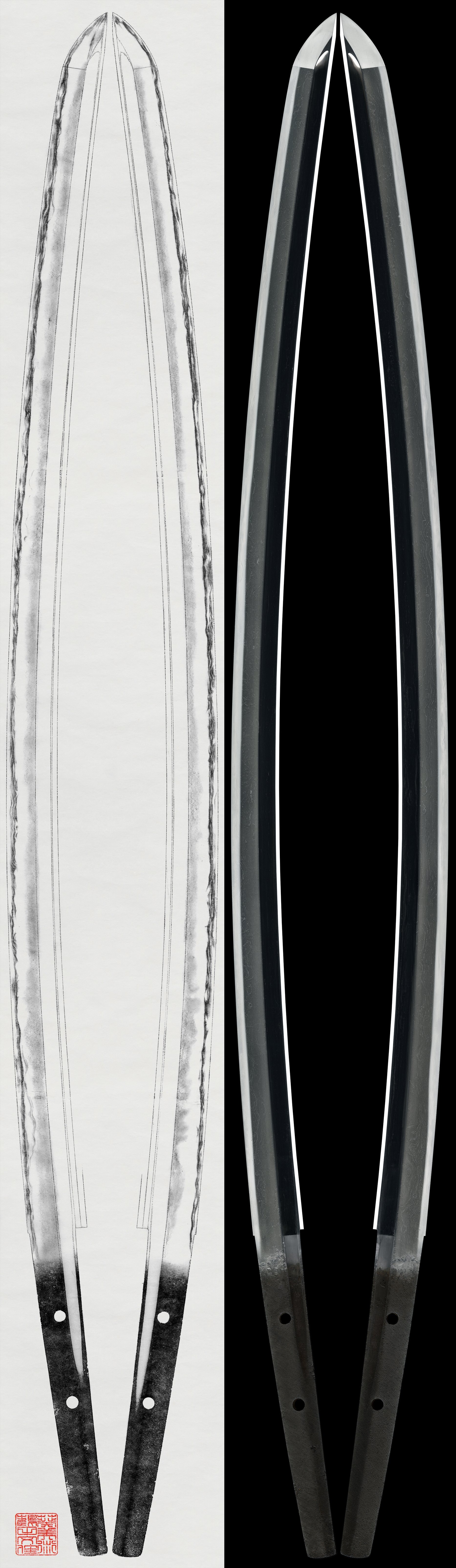
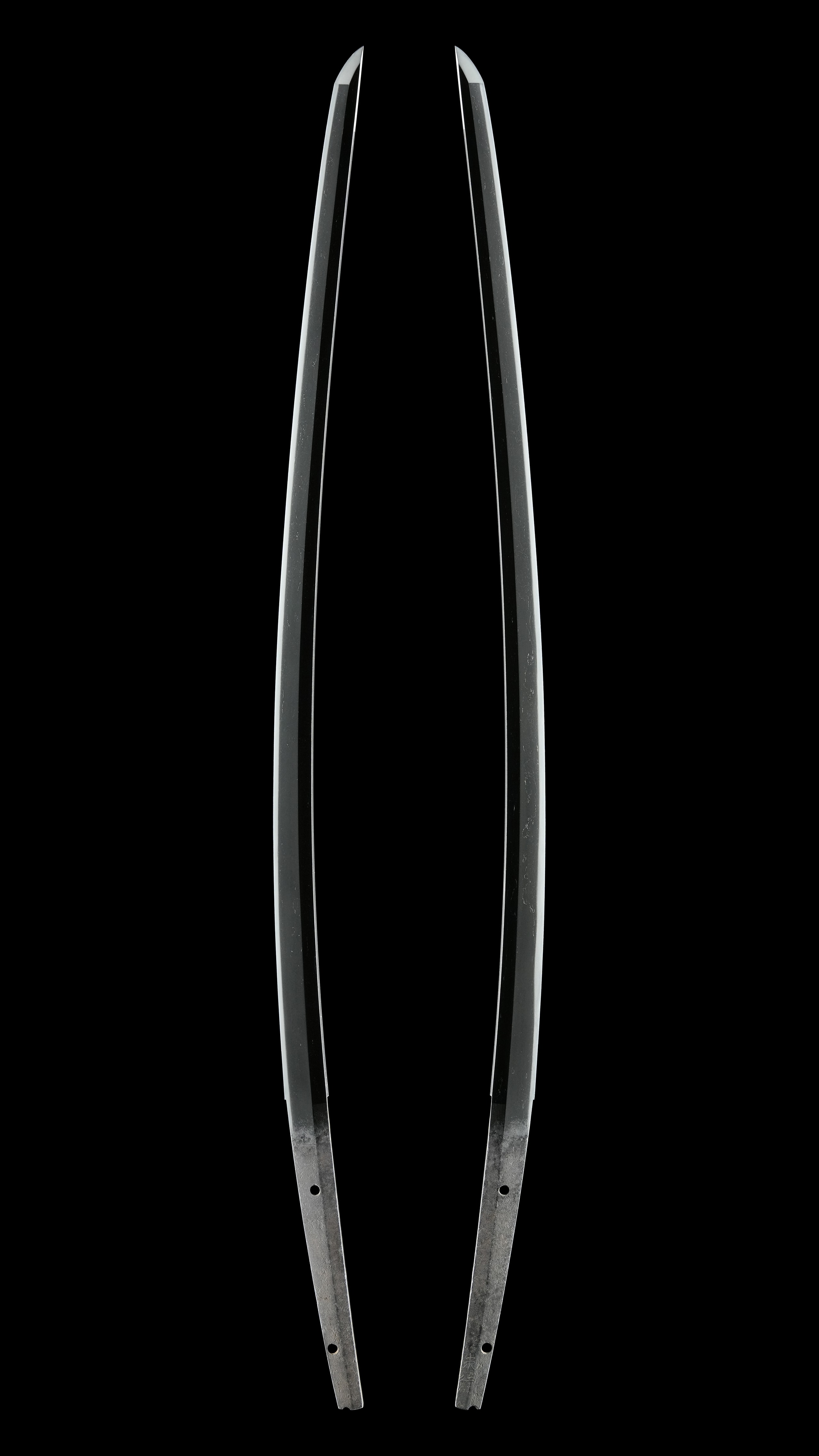
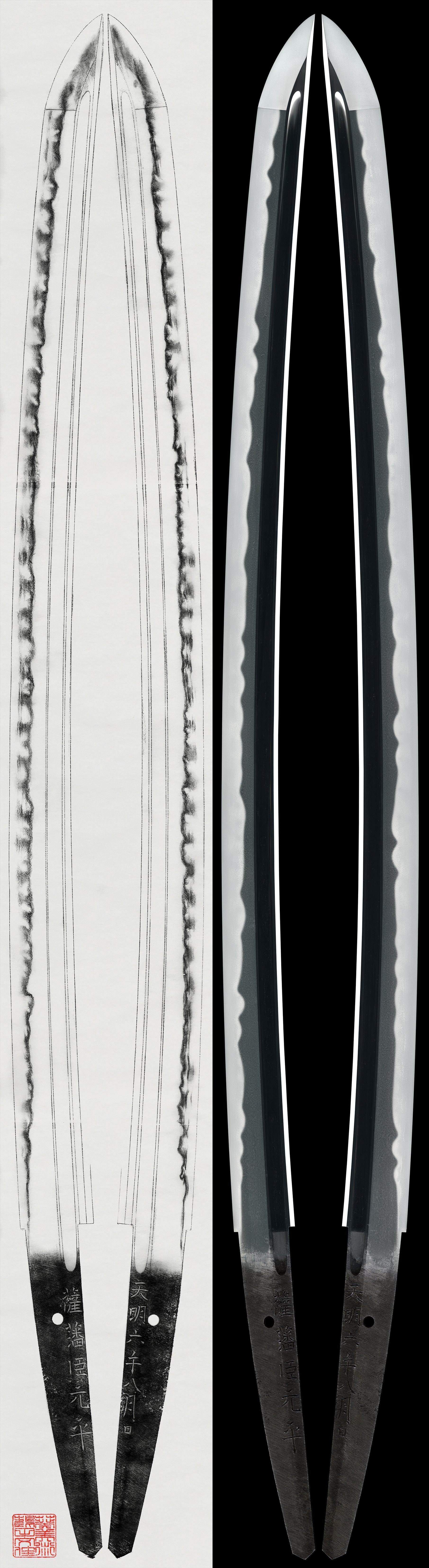
Nobunaga is recorded in the published sources as a smith of the Yamato school who, at the start of the period, removed to Asako in , where the name continued for several generations under the collective title Asako . The group was one of the five Yamato traditions, the temple smiths of -dera, and Nobunaga carried its -leaning steel and -laden temper north into Hokuriku. There the work took on a second character. The published commentary on a designated in 2023 names it outright, finding in the forging both the steel of the Hokuriku makers and the temperament of Yamato, 「北陸物の特徴と大和気質が看取される」. His prime years are placed around the Oei era, and the designated record gathers six blades, all signed with a bold two-character 信長 and overwhelmingly , so that he is known less as one documented hand than as the manner of a northern line held across generations.
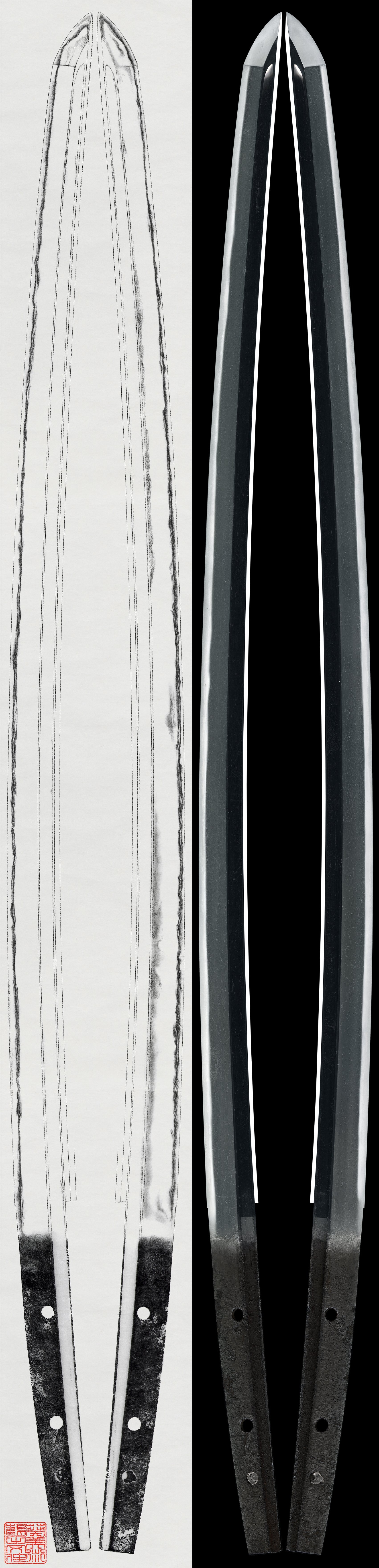
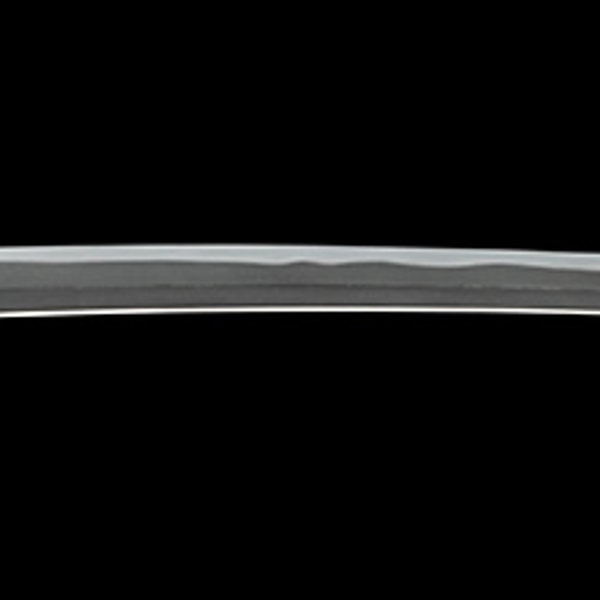
The make that most distinguishes his work is an angular . The published sources fix it in a single repeated sentence, that his style resembles the Fujishima line of and , 「藤島一派に似て」, with an angular predominating, 「角ばる互の目乱れが多く」, and they say so again of the Kashu Fujishima manner with the words, 「角張る互の目乱れが多く」. The square-shouldered teeth run linked together with and small , and the frays as it goes, and opening along the edge while sweeps the and enter. On a of the twenty-fourth session the hand works mixed with , the thick, the and frequent, and the published sources call it a superior work of the smith, 「同工の優れた作である」. The is the school's other tell, most often brushed into , 「帽子は掃きかけていることが多い」, turning back or to a point.
Under this temper lies a forging that reads two ways at once. It is an mixed with and a flowing , standing open rather than tight, the gathering well and entering, the steel inclining to a darkened tone the commentary calls -black. That standing, blackish is the Hokuriku side of the inheritance, while the mixed near edge and ridge and the quiet of the pieces keep the Yamato side visible. A of the twenty-fifth session adds a faint rising over the and a leaning on the lower , a touch of the misty old reflection on otherwise northern steel. The of the sixty-ninth session sets the whole out at its most open, the grain standing with and and the darkening, and it is on that blade that the published sources read the Hokuriku character and the Yamato temperament together.
Against the angular standard the published sources mark a quieter register, noting that and shallow are also among the work. A of the twenty-second session is a , the drawn tight with and a touch of near the , well forged and sound, the school in its calm key. A of the twenty-fourth session takes a shallow instead, laid with , , frequent and , and the commentary singles out exactly this manner as the very feature of the smith, that the blade tempers a and shows Nobunaga's character, 「のたれの刃を焼いて信長の特色をみせ」. The two registers are not finally separate, and the latest proves it: on the , on the , its breaking into a boxed with a suggestion of while its runs a shallow , a single blade in which two manners are shown at once, 「一口で二様の作域が示された」. Because not one of the six is dated, this manner-reading is how the line is ordered, the judged not to fall below early serving as the chief anchor.
What sets Nobunaga apart is best drawn from his own grounded traits rather than from his model. The resemblance to Fujishima is real and the sources insist on it, but the discriminators are the angular run linked with a frayed , the standing dark steel that turns -black, and the , the cluster that marks a northern blade and separates it from the tighter Yamashiro-leaning of the parent at home. A -name smith worked in , and the published sources are careful to keep the two apart, recording that the relationship between them is not clear. The signature itself is part of the : all six designated blades carry the two-character 信長, four on and two shortened, the form almost always , and the commentary observes that genuinely signed long pieces are uncommon, 「信長有銘の作品はめずらしく」.
The designated record runs to six blades, all of them in the tier and none raised to the higher designations above it, and the toko-taikan valuation sits in the middle of the field, so Nobunaga is a connoisseur's name rather than a headline one. His standing rests instead on a single celebrated mounting. The of the twenty-fifth session is housed in a copied faithfully after the Nobunaga mounting once held by Hosokawa Sansai, the blade within a shortened but genuinely two-character-signed that the published sources praise for showing the period color of early well, 「室町初期の時代色をよく示した」, and they prize it the more because his signed long work is so rare. Provenance is otherwise thin in his record, the Sansai association the one firmly grounded thread. For a private collector the practical picture follows from the numbers: the surviving designated pieces sit in the and lower tiers rather than locked away as cultural property, so an Asako is not beyond reach, but only a handful are on record and one comes to market rarely, a signed long blade rarer still, so that meeting one is a matter of patience.