The Yamato schools grew up in the shadow of Nara’s great monasteries: Tegai took its name from a gate of Tōdaiji. Their austere masame and quiet suguha are a temple aesthetic, prized ever since for exactly that restraint.
 NihontoWatchNihontoWatch
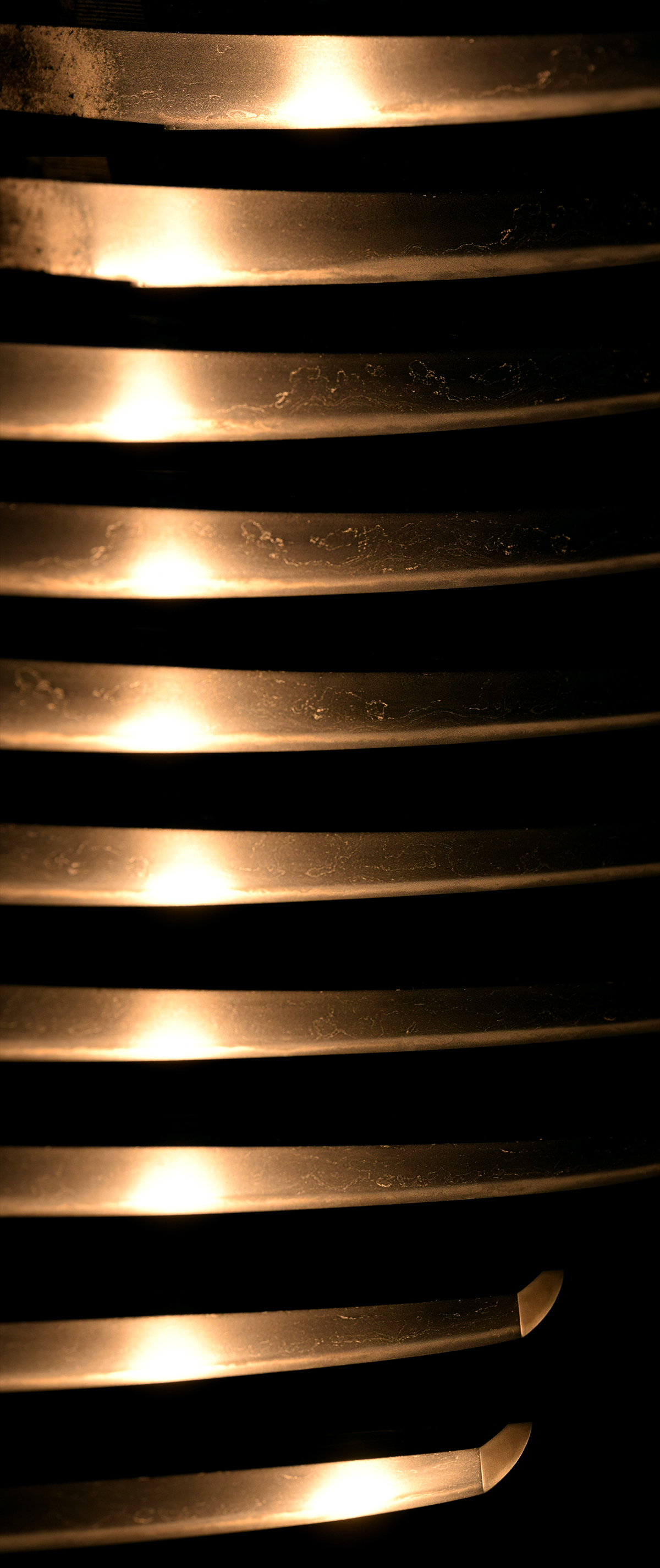
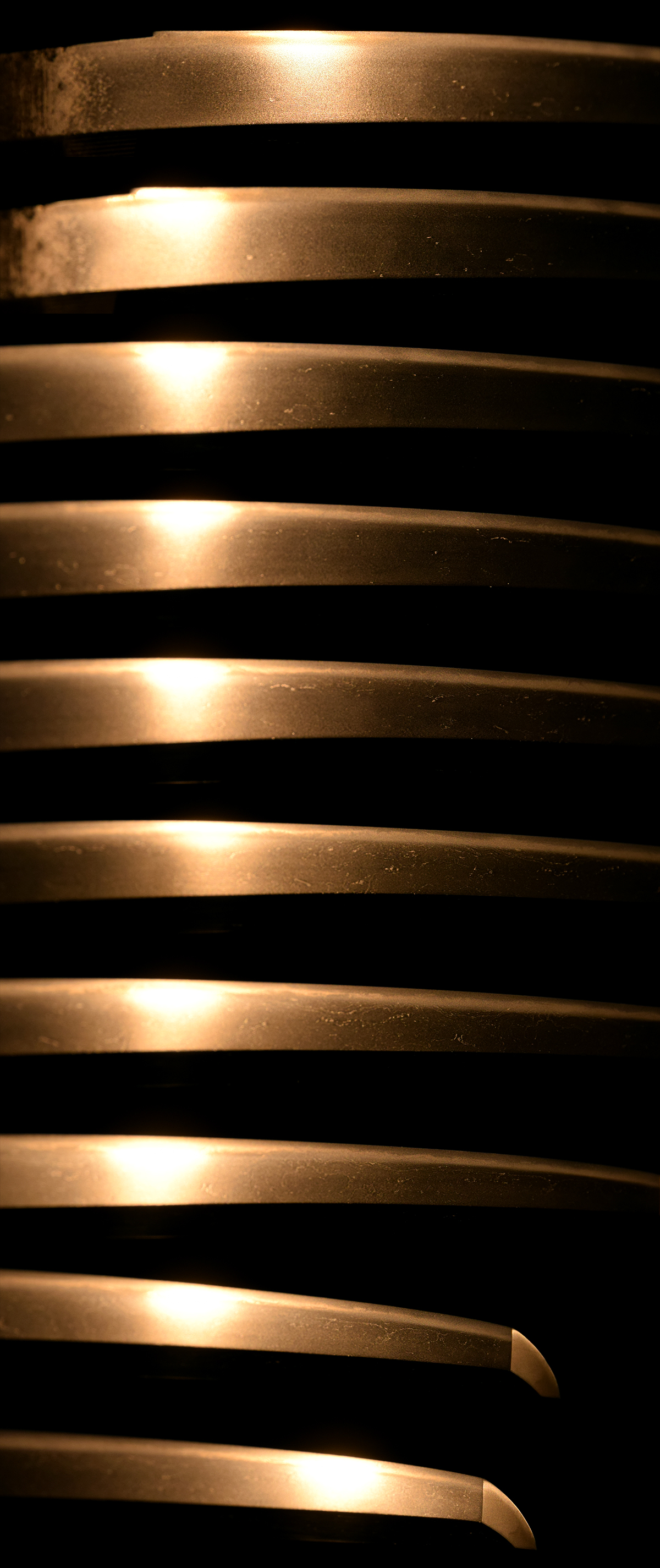
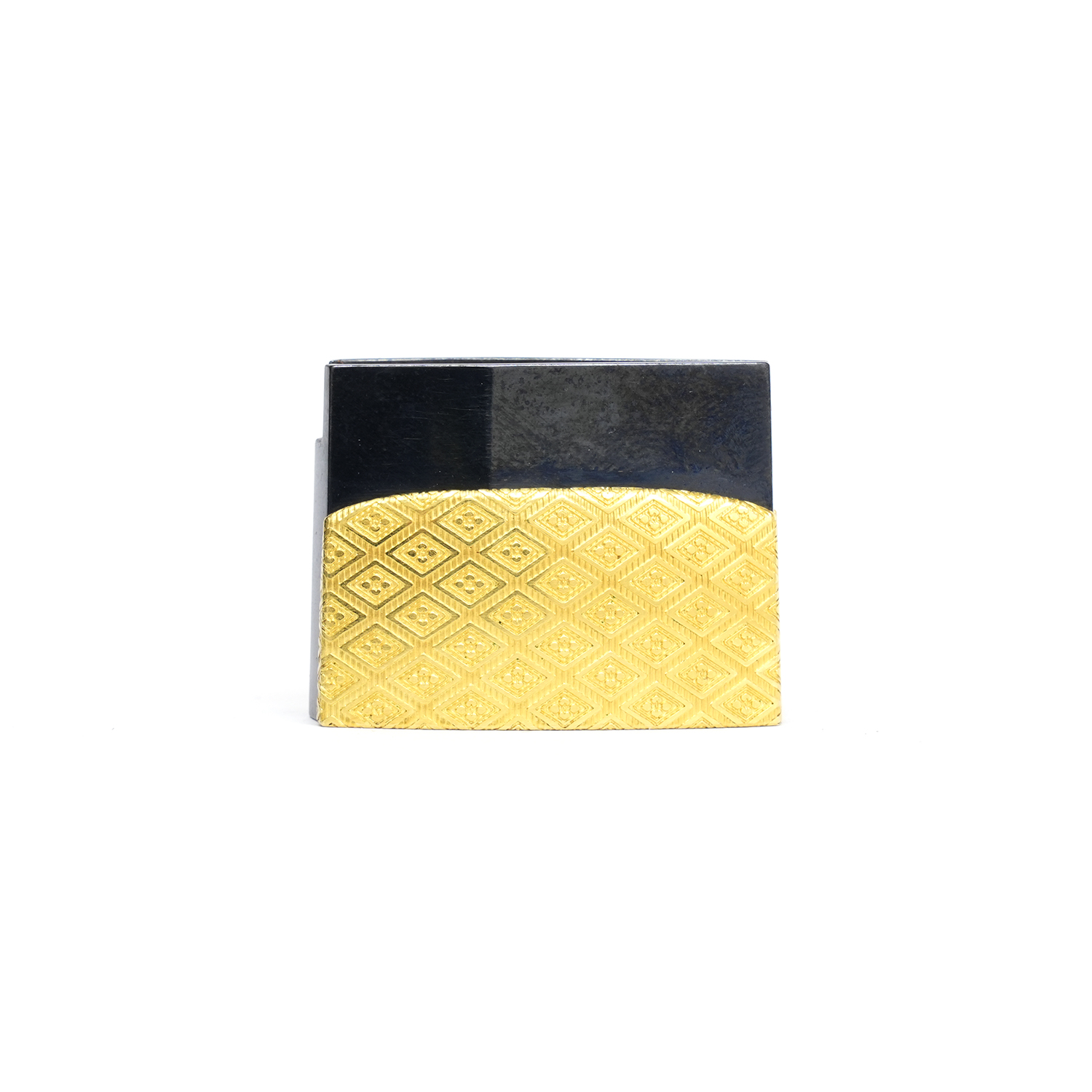
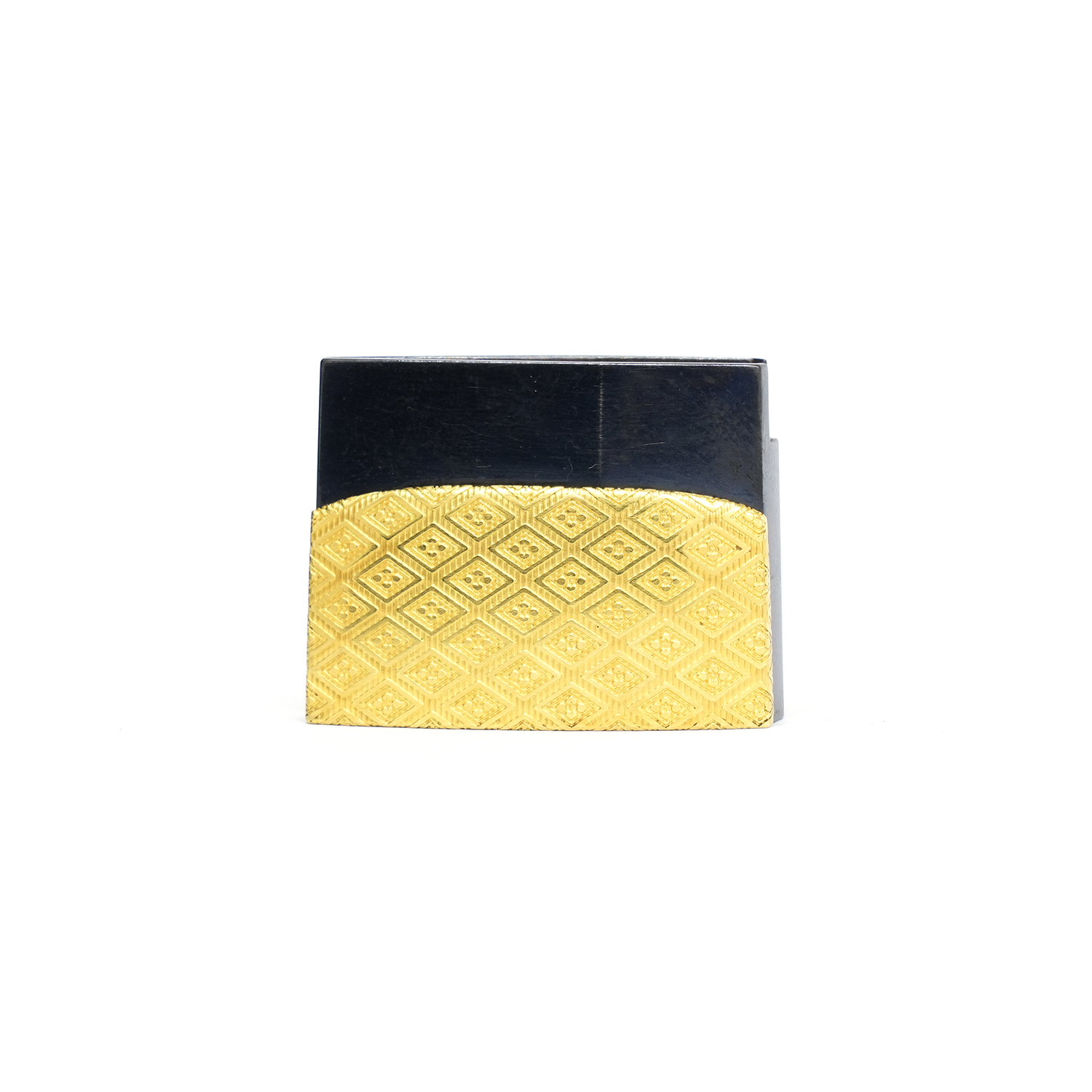
This sword has a wide difference between the width at the moto and the saki, with a slightly extended kokissaki. From its dignified sugata taihai, it is a masterpiece by Yamato Sueyuki, judged to be a work from the late Kamakura period to the early Nanbokucho period. Originally a tachi of about 2 shaku 3 sun to 4 sun, which was somewhat small for that time, it was forged as a so-called kachi-yo or kodachi; among the extant works of this smith, small-sized masterpieces like this one are only rarely encountered, and it can be said to be a very precious existence. Despite being narrow, a certain funbari remains, and it maintains an elegant taihai where the kissaki is slightly extended; the jitetsu is based on itame hada mixed with nagare hada, which is exquisitely and well-packed, partially hadadachi, and shows an extremely excellent kitae hada where chikei are finely mixed and ji-nie attaches thickly. The hamon is a solemn suguha in konie deki, and the boshi is sugu saki yakizume-fu with an extremely short kaeri; the magnificent hataraki rich in variations along the habuchi, which strongly reflects the tradition and temperament so typical of Yamato-mono, is a major highlight. At our shop, we have commissioned a top-quality polishing by a Tokusho winner of the polishing competition, a top-quality shirasaya by a Mukansa, and likewise a superb nijuhabaki by a Mukansa. Please by all means add this refreshing Yamato-mono zaimei koto, which has just been polished, to your collection.
Certificate reading — 銘 末行
NihontoWatchOffered by Toushin

That’s real money, and we couldn’t find current papers for this piece. Before you buy, ask the dealer whether it has been, or can be, submitted to shinsa. — Hoshi Ask me first
7 on the market

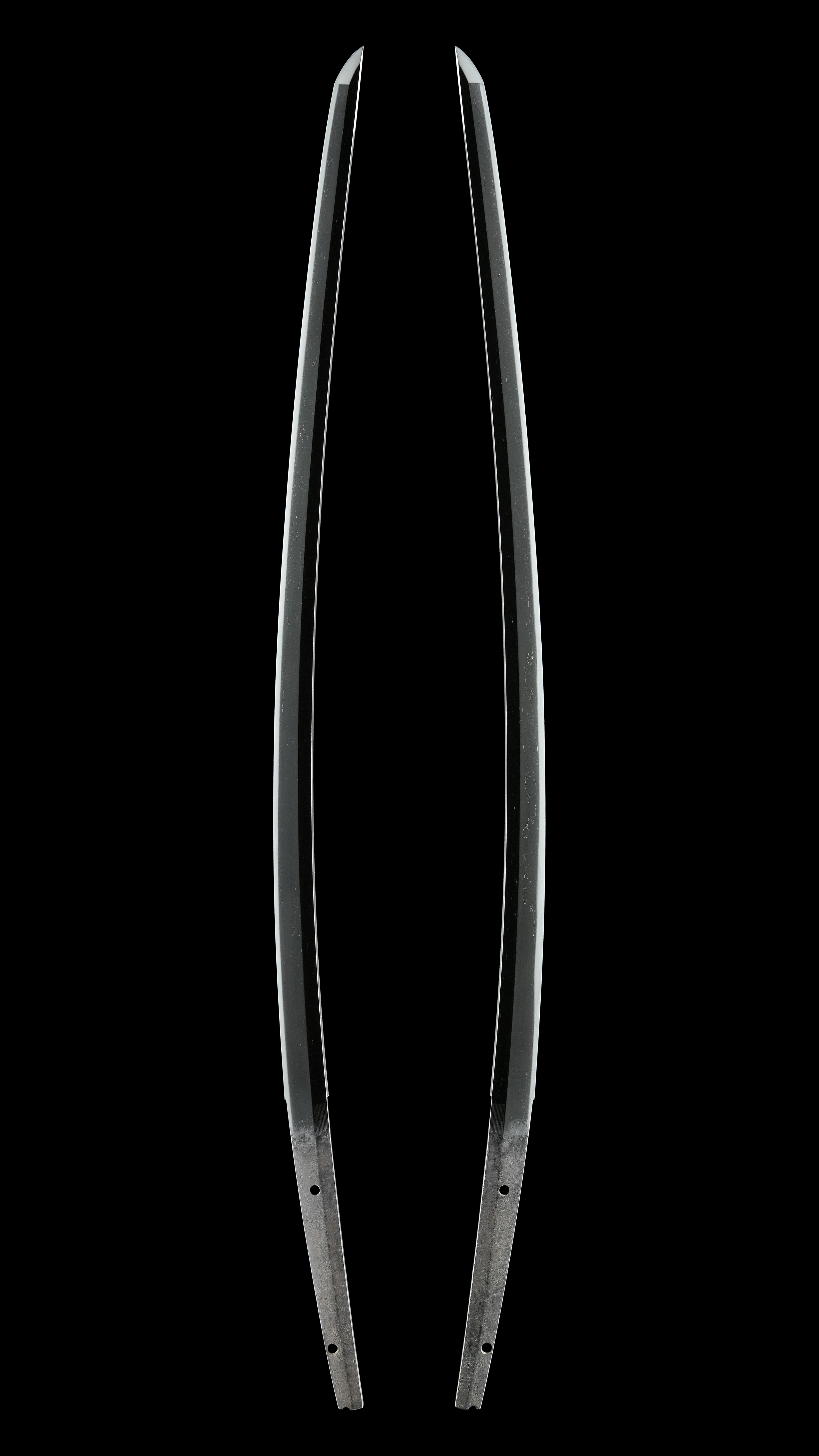
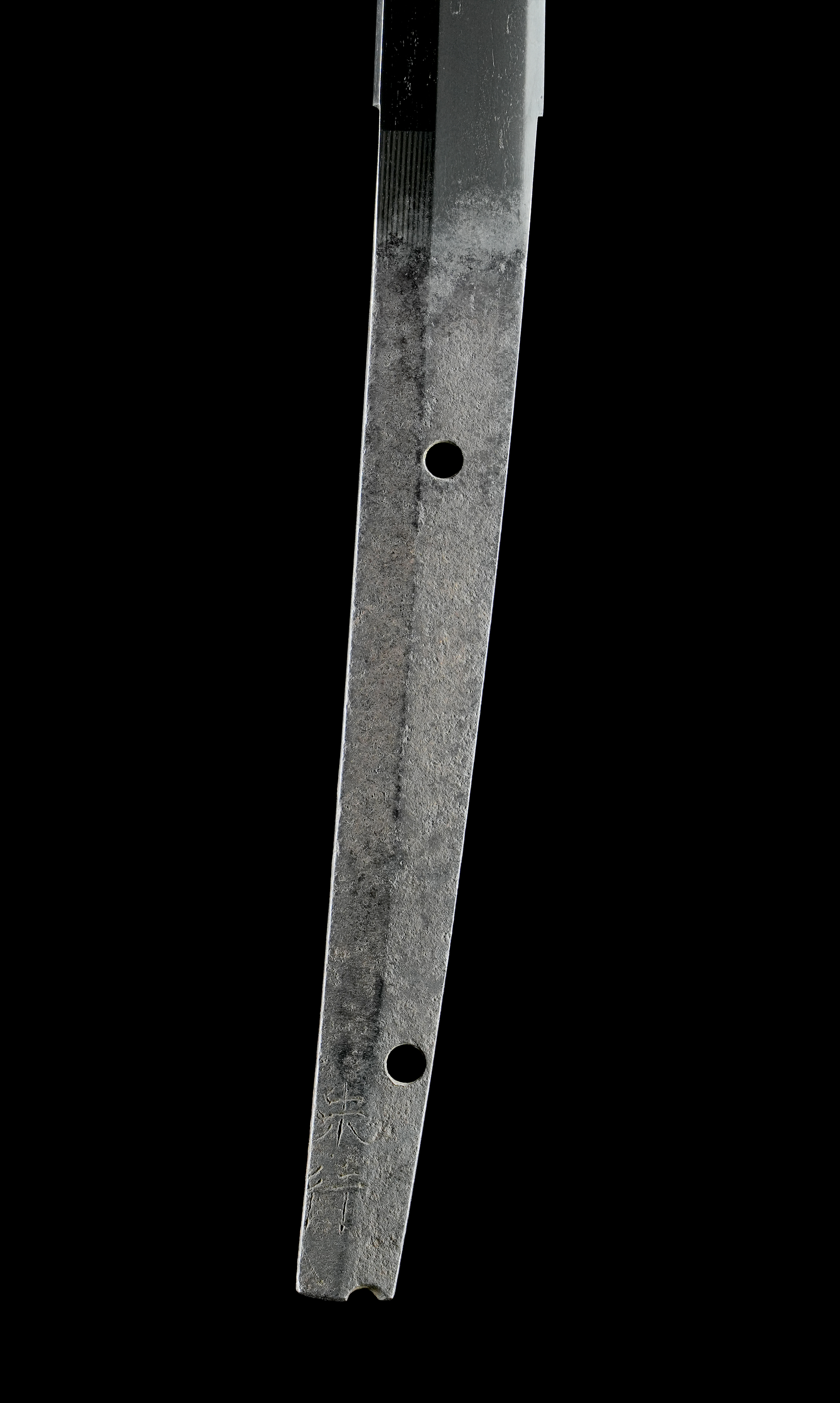
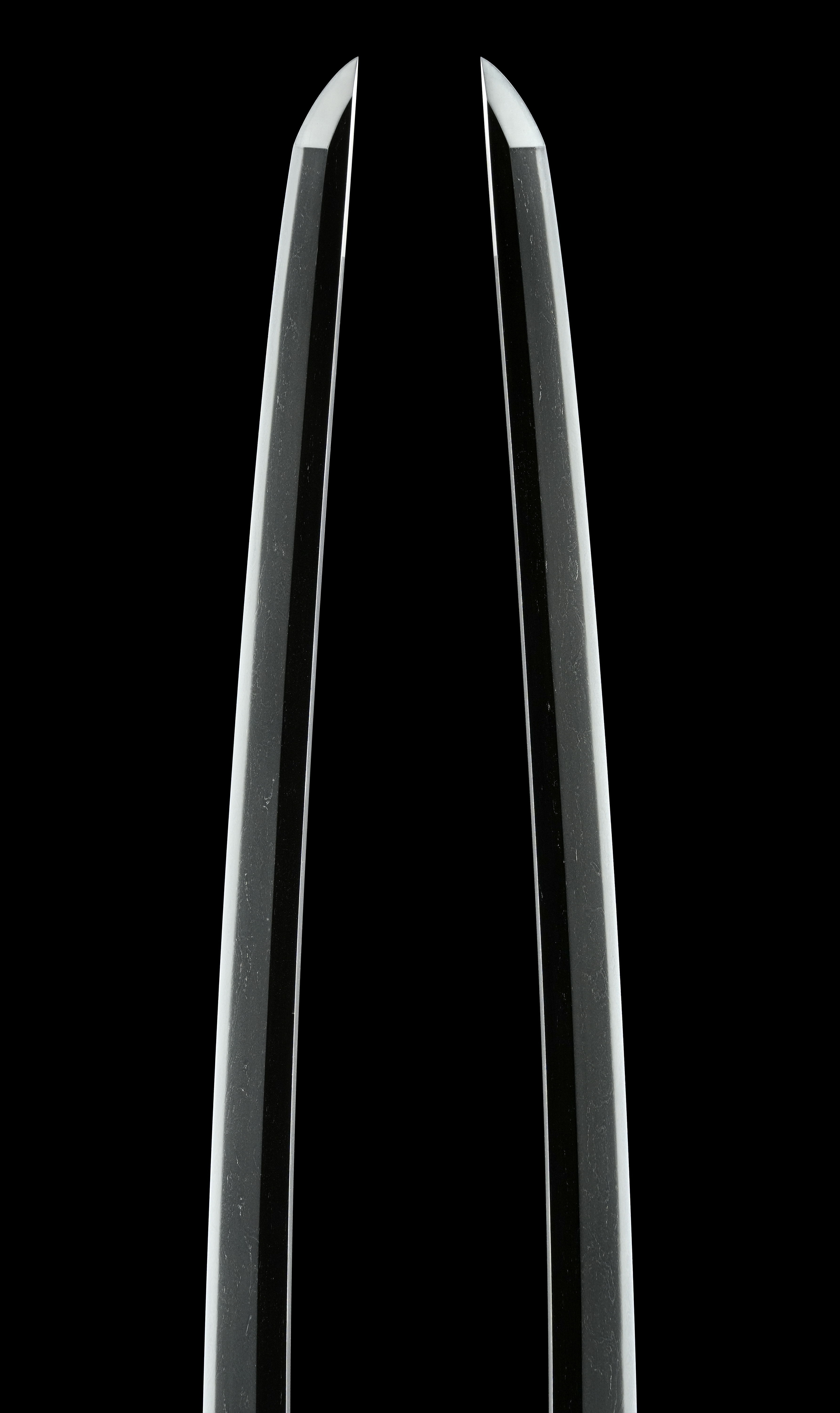
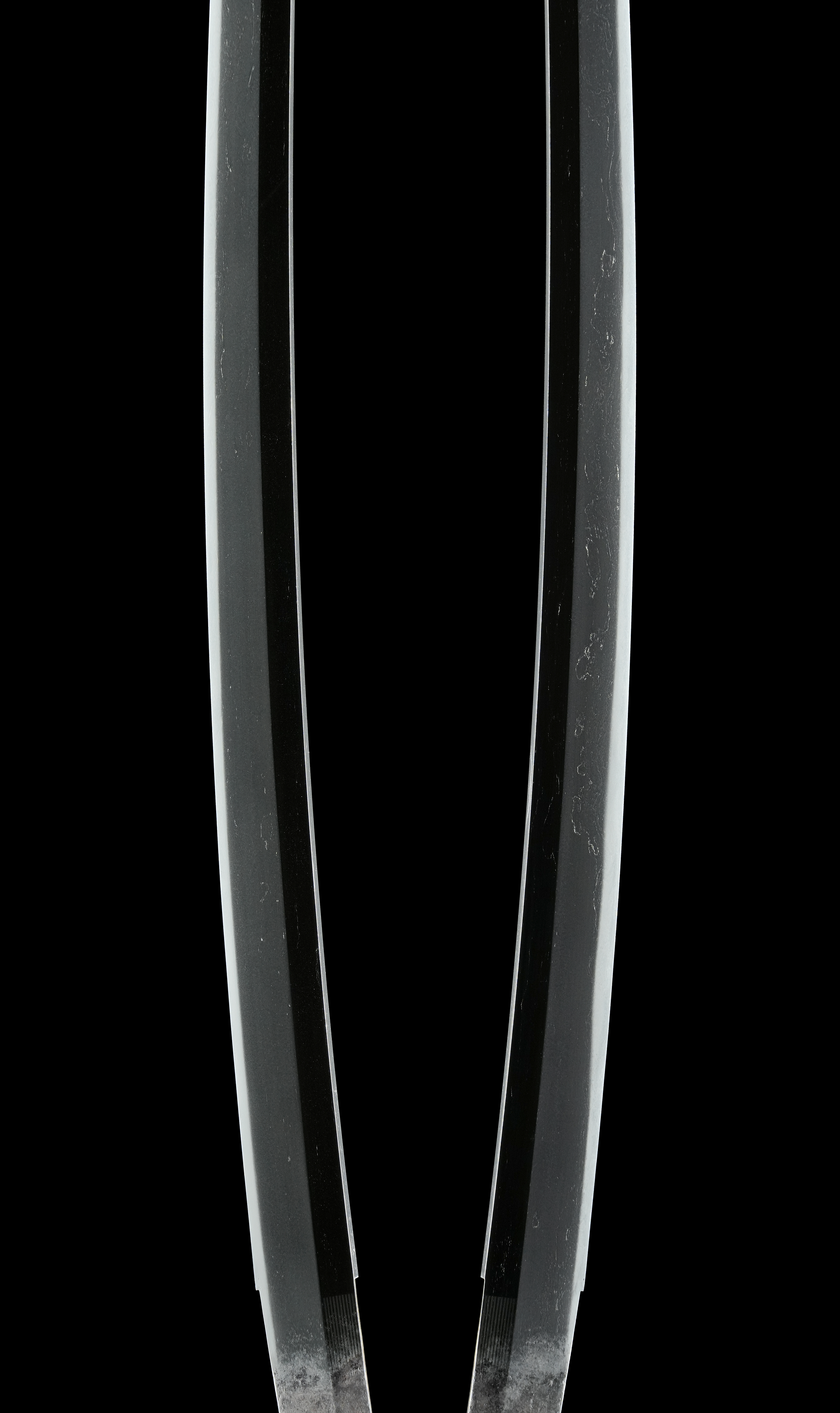
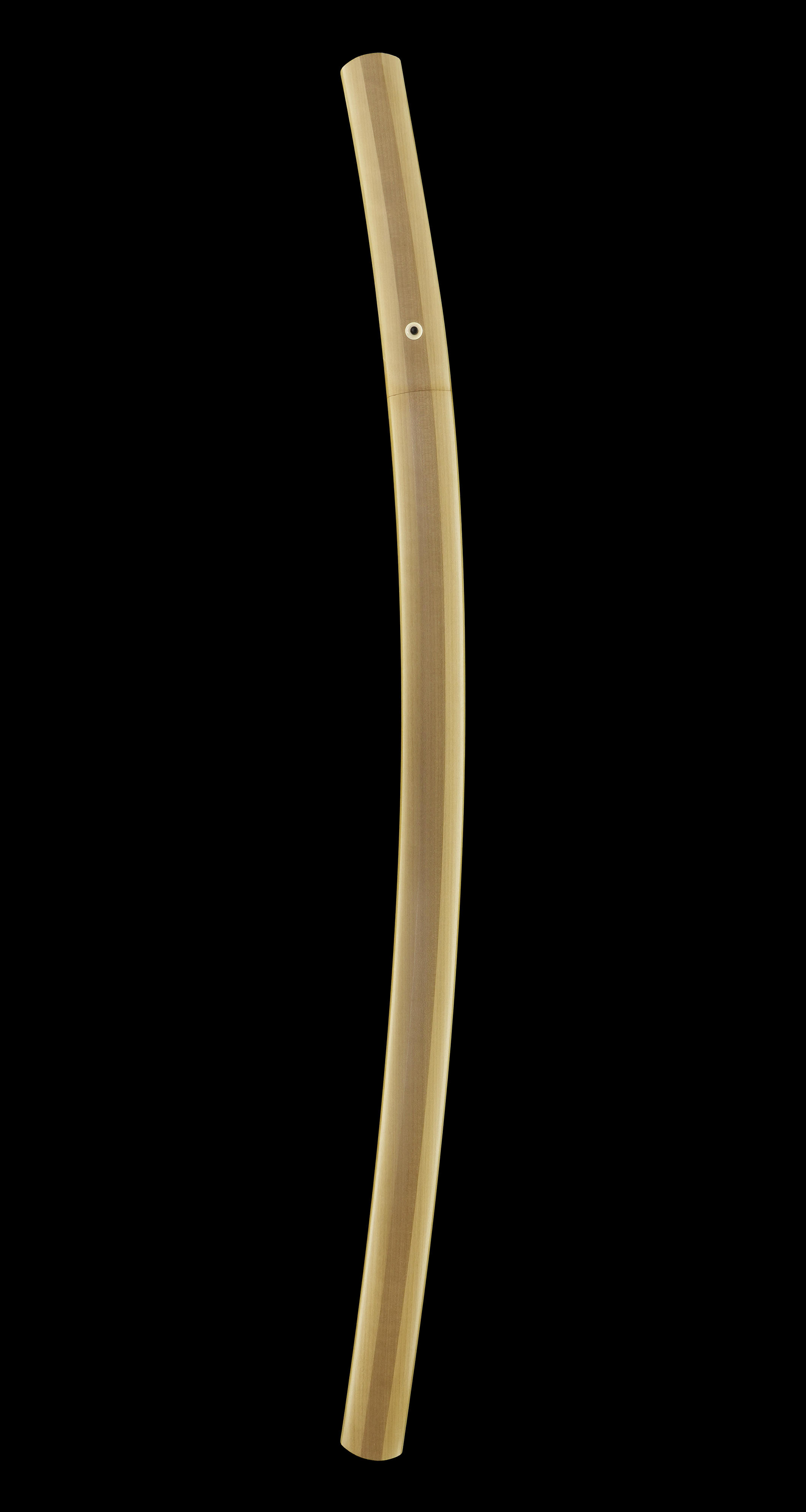
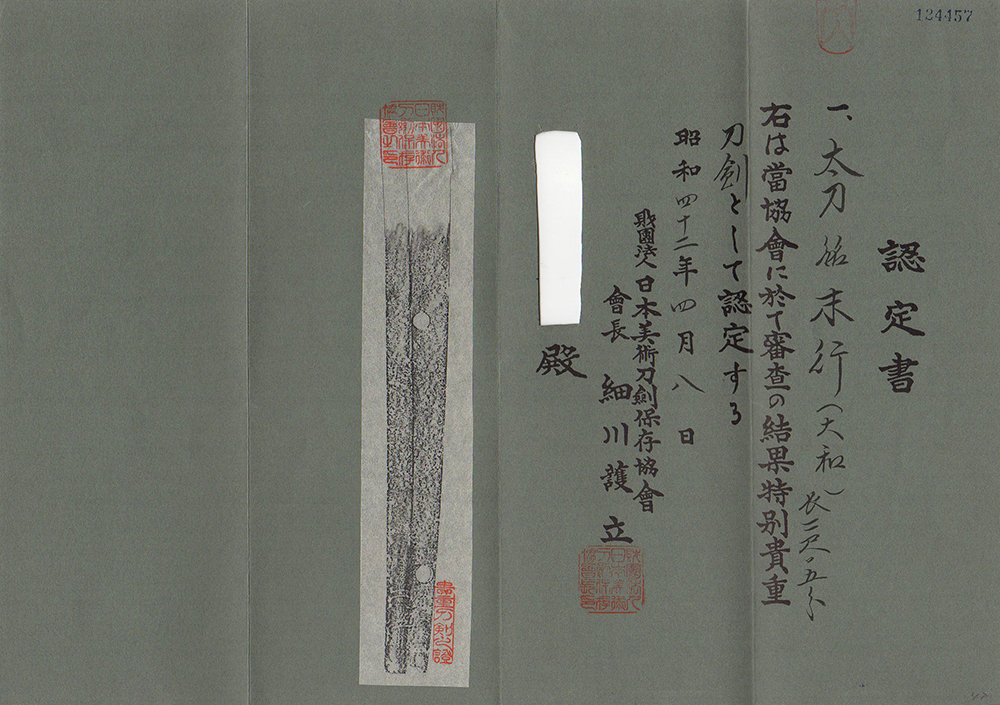
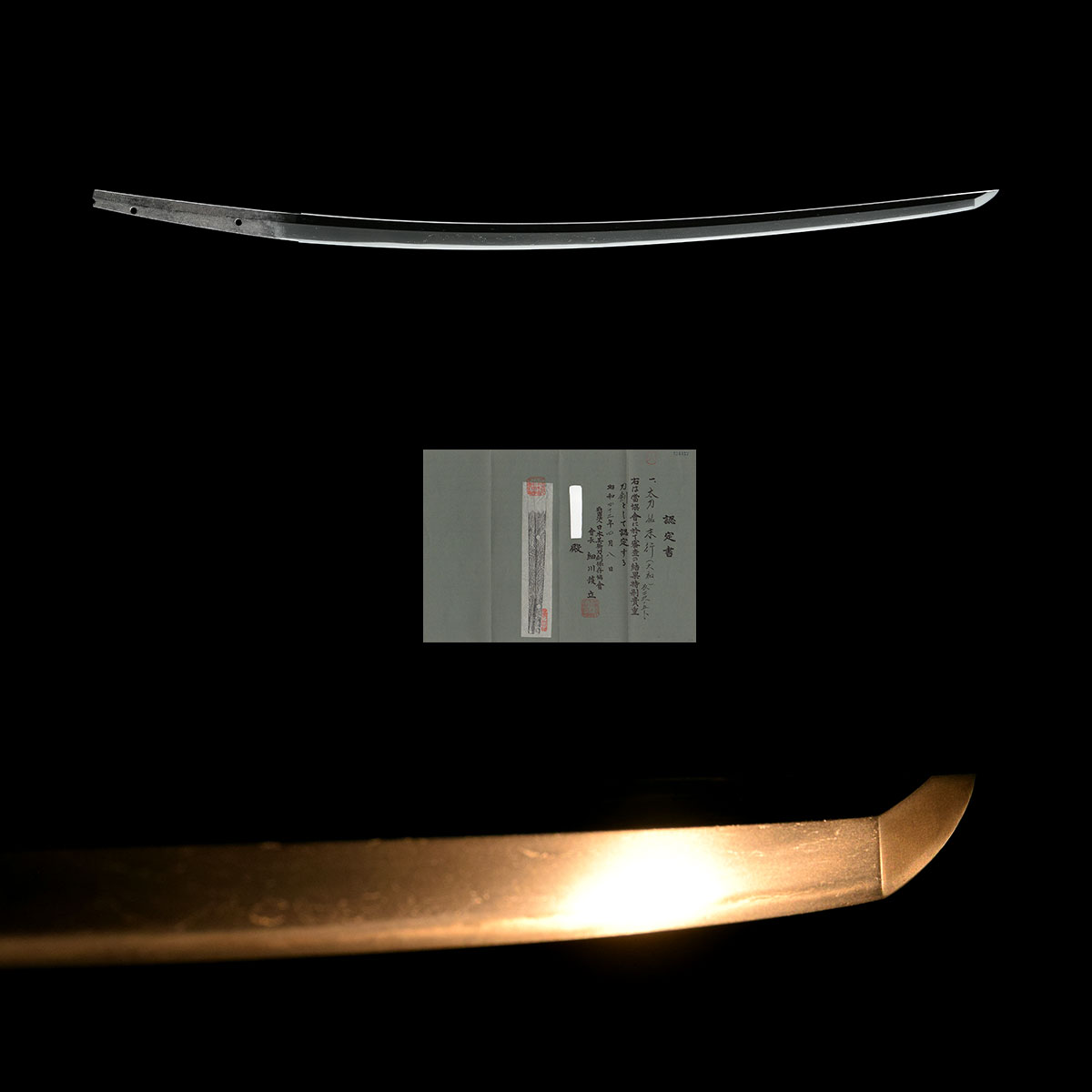
As written by the shop
Machine translation from the shop's Japanese · may contain errors ·
Yamato-den · Yamato
7 pieces on the market now
At Taima-dera in Yamato Province, the temple from which the school takes its name, a body of swordsmiths gathered in the late Kamakura period under Kuniyuki, who is transmitted as the founder of the line. The Taima group is counted among the five schools of the Yamato-den, the others being Tegai, Senjuin, Shikkake, and Hosho, and like its siblings it grew out of a monastic milieu in which the smiths worked in dependence upon the temple. That dependent standing is itself a fact of the record, for the published sources tie the scarcity of signed Taima work directly to it; the smiths, attached to the temple, naturally left few signatures, so that the line comes down largely as unsigned pieces fixed by appraisal. Only a small number of signed blades survive, chiefly by Kuniyuki and by Aritoshi, whose dated tachi of Einin 6 (1298) fixes the antiquity of the line and places its production at the close of the Kamakura age. The school continued through the Nanbokucho era and on into the Muromachi period, a northern branch removing to Asako in Echizen under the collective title Asako Taima. The Taima smiths share the full Yamato-den vocabulary, worked in a register that leans further toward nie activity than that of its Yamato siblings. The jigane is a flowing itame that gathers toward the edge into masame, the steel standing somewhat open, with thick ji-nie laid over it and chikei entering the grain frequently; on the finest blades a nie-utsuri rises in the ji, a reflection that on these smiths is a product of nie rather than of the Bizen midare-utsuri. Over this foundation the temper is built on a quiet line, a suguha or suguha-cho waved shallowly into notare and mixed with ko-gunome, small ko-choji, and at times ko-midare, the disorder always slight and worked over the straight base rather than displacing it.
The habuchi frays into hotsure, breaks into kuichigai-ba, doubles into nijuba, and lifts into uchinoke, while within the tempered area the ha-nie lies thick and bright, ashi and yo entering, and kinsuji and sunagashi flashing through repeatedly. Above it the boshi runs straight and is then swept with hakikake, most often finishing in yakizume without a turnback or turning in a small ko-maru. The recurring traits cohere into a recognizable hand: the masame-rich itame, the abundant glittering nie, and the brushed point are the marks by which the school is read, and the school leans toward nie where Tegai and the others keep a tighter, calmer key. Individual smiths inflect the manner: Aritoshi is set apart by a near-constant nijuba unusual even within Yamato, while the Echizen Nobunaga carries an angular gunome-midare and a darkened steel into Hokuriku. Kantei of a Taima blade proceeds from this cluster of Yamato evidence, the masame-leaning itame, the hotsure and nijuba along the habuchi, and the swept hakikake boshi, laid over a suguha base; against the other Yamato schools the appraisers look for the heavier nie activity and the conspicuous ashi and yo within a bright edge that separate Taima from the plainer suguha of Tegai and Senjuin, the togariba tendency of Shikkake, and the dense masame of Hosho. Kuniyuki stands as the progenitor and defining voice of the line, his signed tachi prized as documentary anchors against which the rest is measured; below him Aritoshi, Toshinaga, Tomoyuki, and Tomokiyo are read each by his own grounded traits, their few signed survivals valued first as reference material because so little of the school was ever signed. The greater part of the record is o-suriage mumei, wide-bodied Nanbokucho katana cut greatly down, their attribution argued from the markedly elongated chu-kissaki and from the Taima activity at its strongest, the texts candid that on such a shortened blade no individuality singling out one smith can be discerned even while the piece is held a fine work of the school. Provenance is mostly thin, running through private hands rather than the daimyo houses, with a few institutional holdings and the occasional notable mounting, so that an unsigned Taima blade is the usual encounter and a signed one a landmark of Yamato-den work. Learn more →
| Smith | Era | Designated |
|---|---|---|
| Aritoshi有俊 | 1264-1275 | 41 |
| Nobunaga信長 | 1394-1428 | 6 |
| Tomokiyo友清 | 1319-1321 | 5 |
| Tomoyuki友行 | 1278-1288 | 5 |
| Tomoyuki友行 | 1247-1249 | 4 |
Yamato in the Kamakura period
The Yamato schools grew up in the shadow of Nara’s great monasteries: Tegai took its name from a gate of Tōdaiji. Their austere masame and quiet suguha are a temple aesthetic, prized ever since for exactly that restraint.
This work carries older NBTHK “Kichō”-era papers, which the NBTHK no longer issues and largely disavows today. To confirm the attribution, submission to an official Japanese examination body (such as the NBTHK or NTHK) for modern certification could be considered.
As a rule we do not accept returns, except when we have sent a different item from the one ordered or when there is a significant discrepancy between the description and the item. If you wish to return an item, please contact us within 3 days of its arrival and then send it back.
¥2,970,000