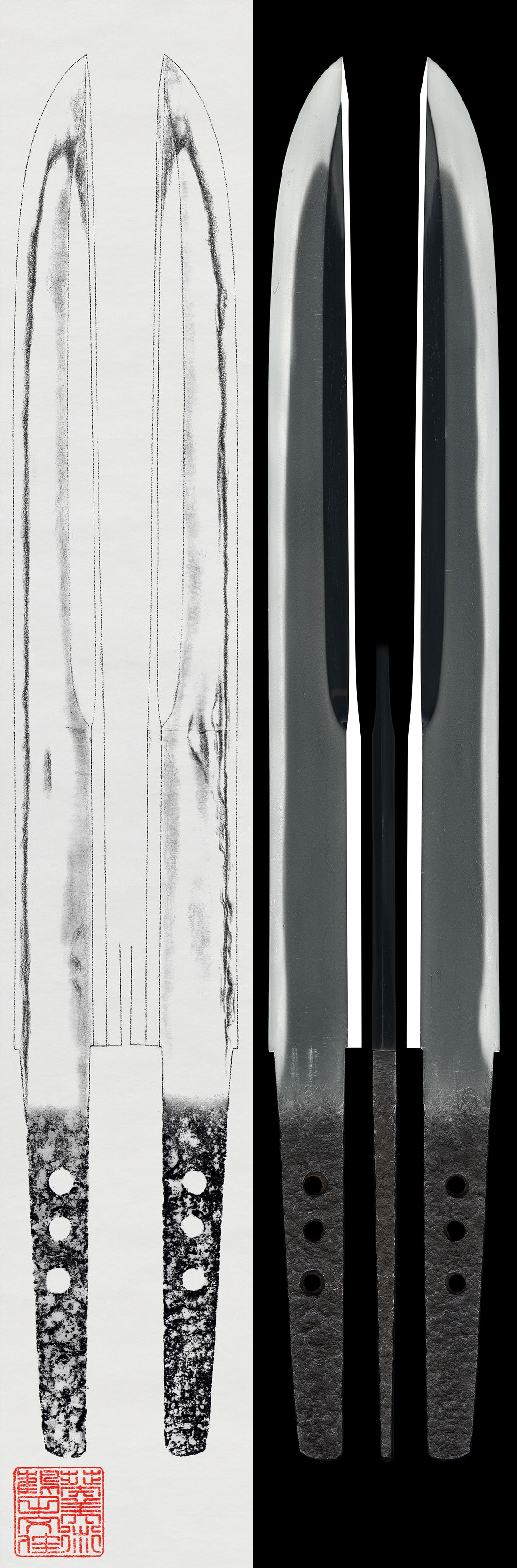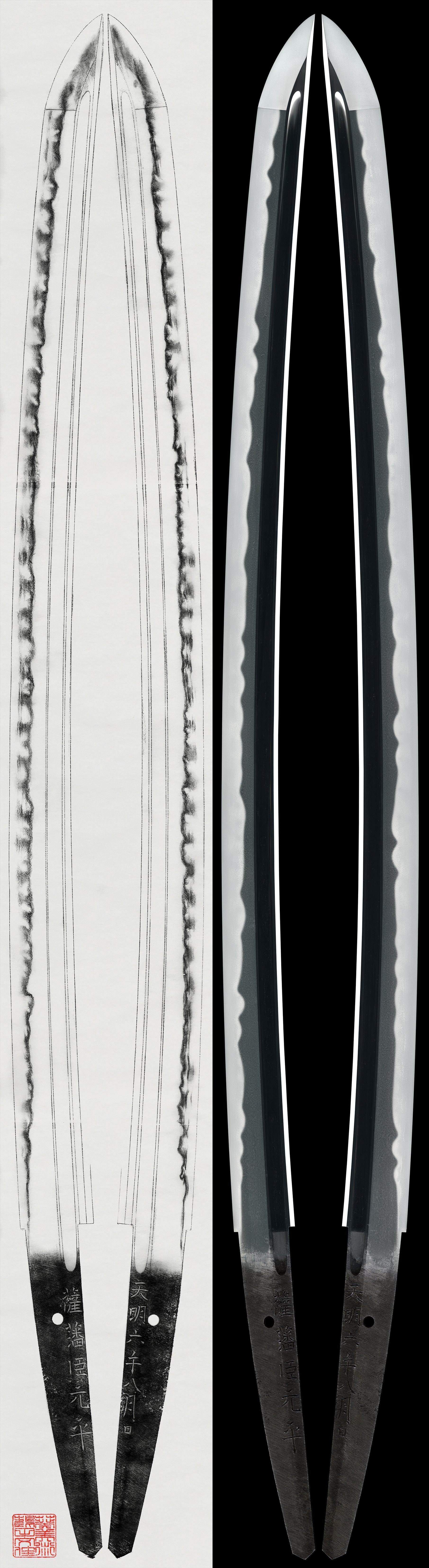




-, 70th Session — Designated November 6, 2024
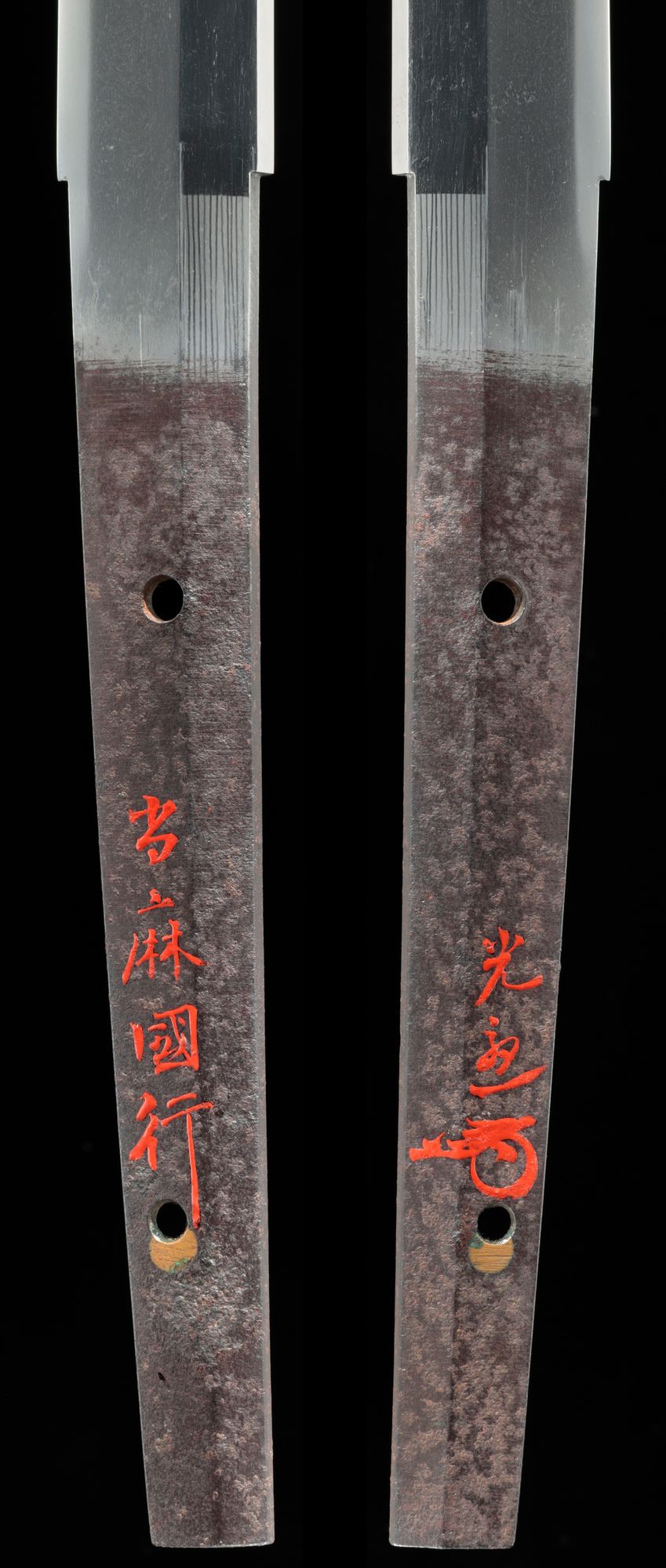
(red inscription): Taimа Kuniyuki (当麻国行) / Hon’ami Kōson (光遜) ()
Article by Zenzai
Measurements 70.1 cm, 1.35 cm, 3.0 cm, 2.05 cm, 3.5 cm, 19.0 cm, 0.1 cm
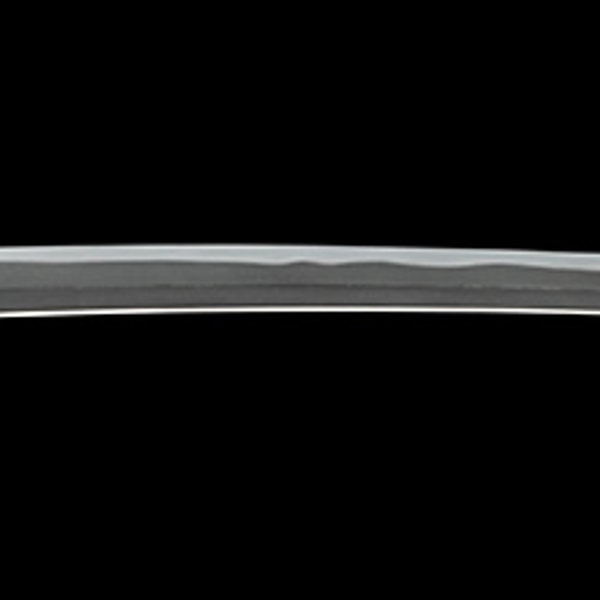
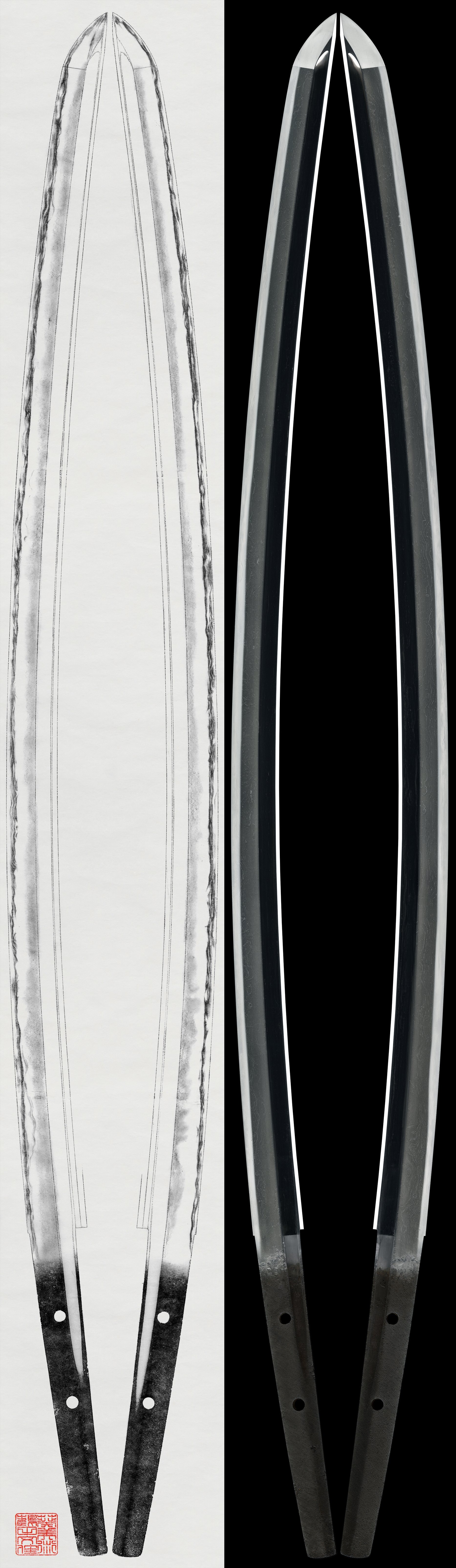
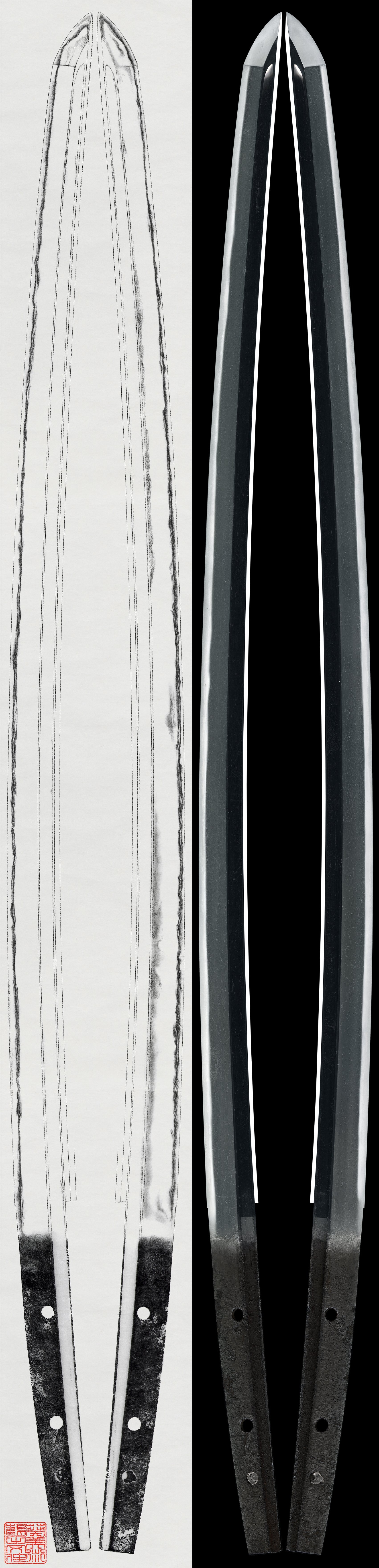
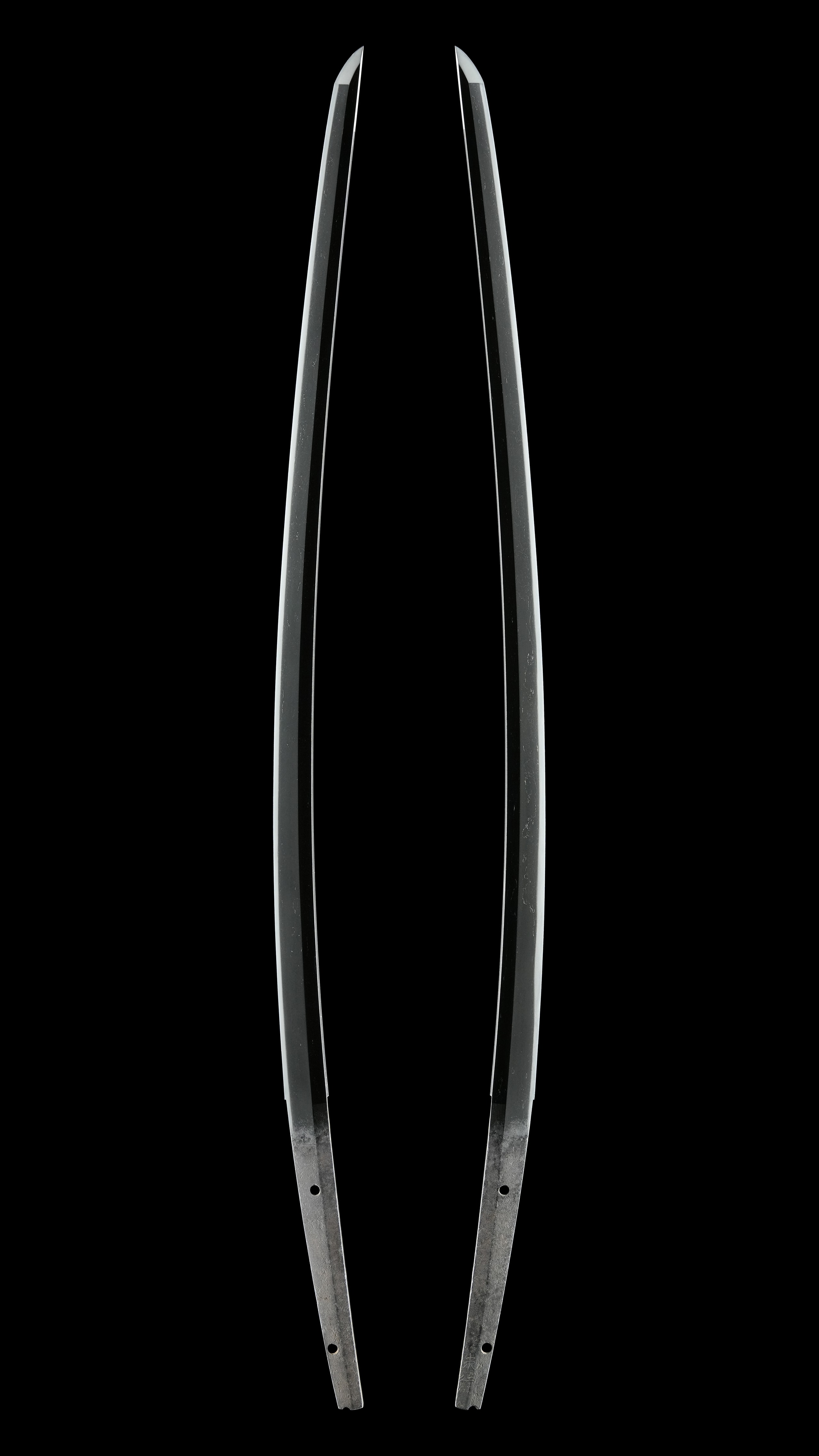
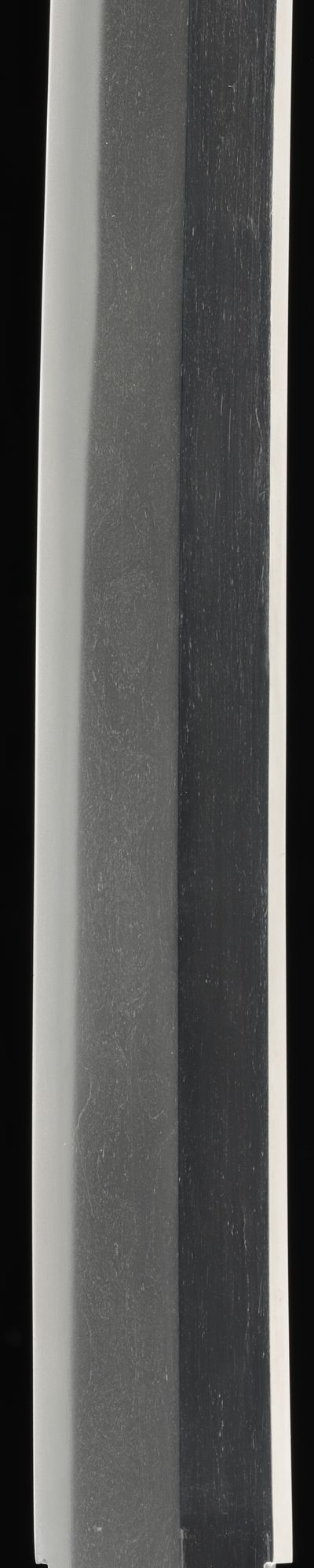
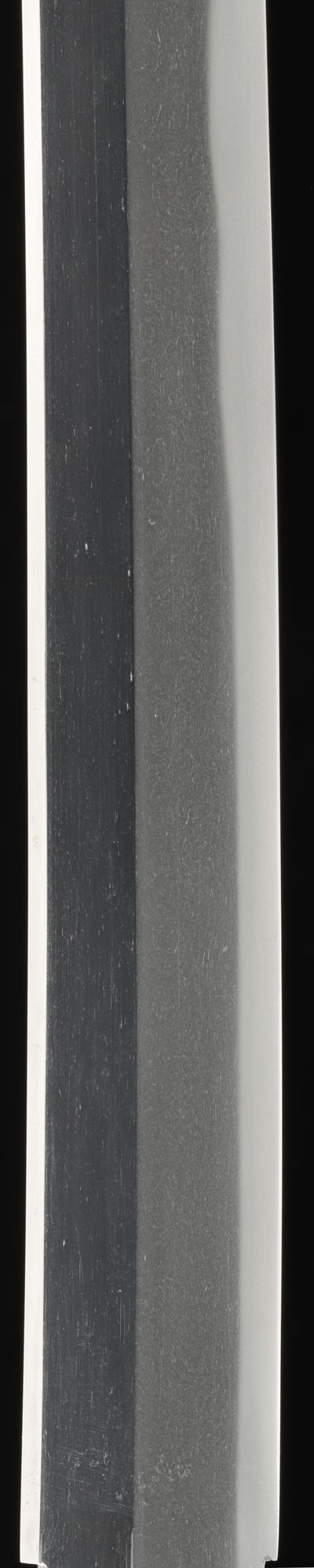
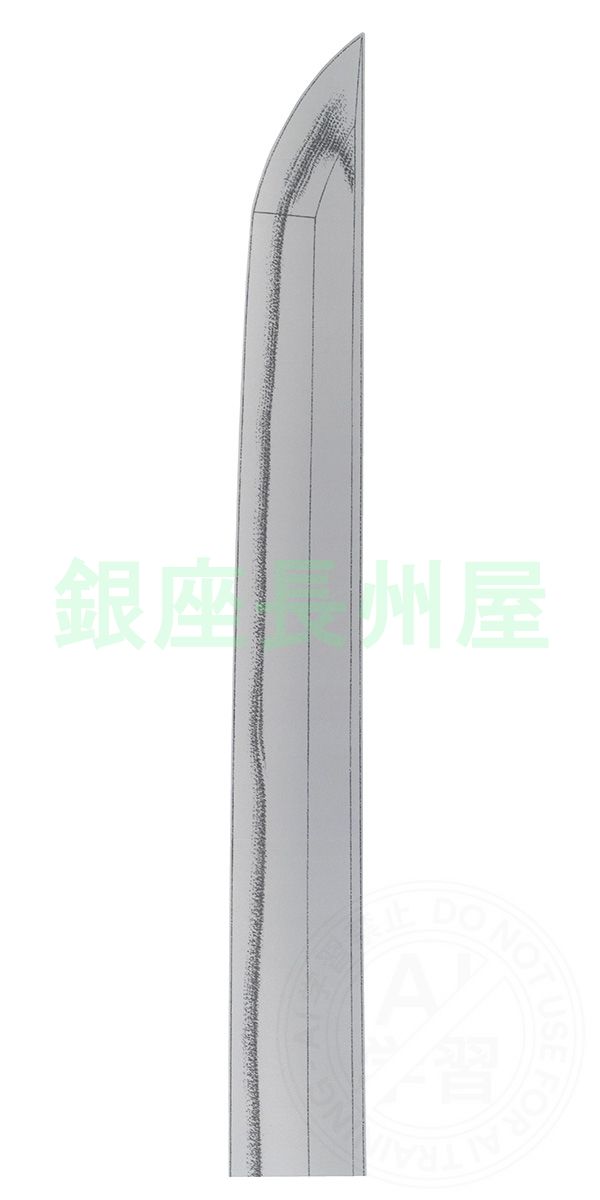
Description Keijō: , ; standard width; the difference between base and tip widths is somewhat pronounced; wide and high ; thin ; shallow curvature; . : mixed with ; overall well-forged; appears; enters. : , with slight tendencies around the middle; mixed in places with ; deep with thick ; appears along the here and there; a overlays the on the side; intermittent runs from the base toward the tip. : deep temper; before breaking into at the point, with strong . : None. : ; tip cut ; removed; two ; on the flat of the above the second peg-hole is written in red, “Taimа Kuniyuki,” and on the reverse likewise “Hon’ami Kōson (),” being a red appraisal inscription by Hon’ami Kōson.
Artisan Taimа Kuniyuki (attribution by Hon’ami Kōson’s red inscription)
Era Late to period
Explanation The Taimа school, one of the five great schools of Yamato, flourished from the late period through the period, taking Kuniyuki as its founding master. While sword compendia and related sources list many smiths of this group, extant signed works are exceedingly few, and most examples are pieces attributed through appraisal.
Among older attributions by the Hon’ami family and others are blades in which the in both and stands out with particular strength, and in which and are interwoven—showing an admixture of character. These differ in style from the rare signed works that remain; however, it is conjectured that in former times there existed signed works akin to such pieces.
This , though of standard width with a , is constructed with a wide and a high , features that plainly manifest the characteristics of the Yamato tradition. The is mixed with ; it is well kneaded overall, showing no loosening from base to tip, and presents an excellent-quality texture. The is a with a deep and thickly applied ; moreover, appears along the edge in places, a overlays the , and is partially mixed in—points of appreciation in the that should be regarded as Yamato’s traditional method. Because a somewhat rough is mixed in, adding an element of temperament, the appraisal by Hon’ami Kōson is appropriate when considered together with the construction, and this is a blade that is sound in both and .
[ 11]