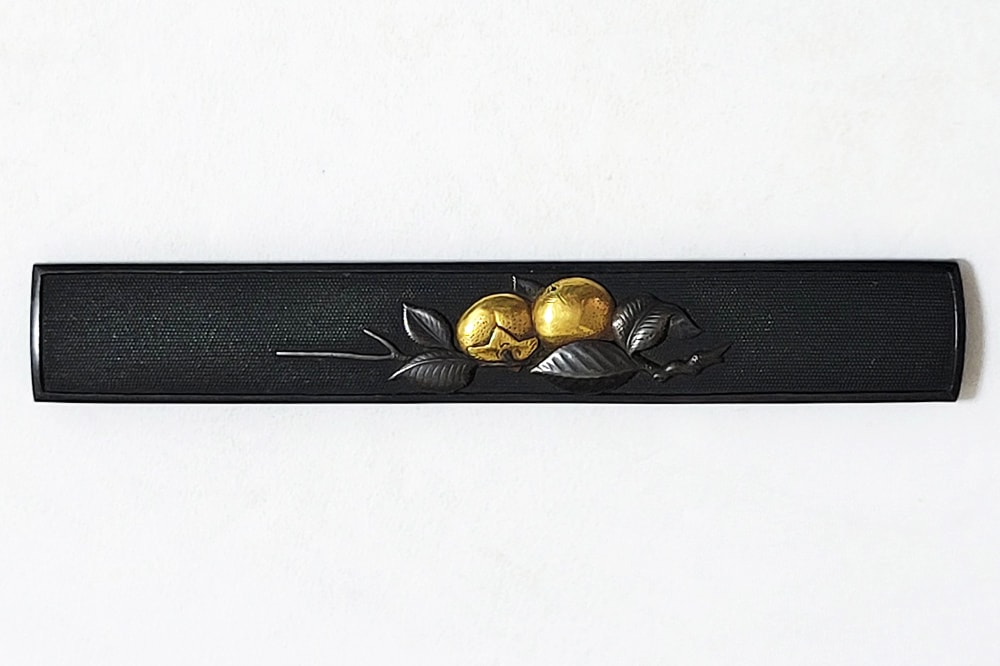
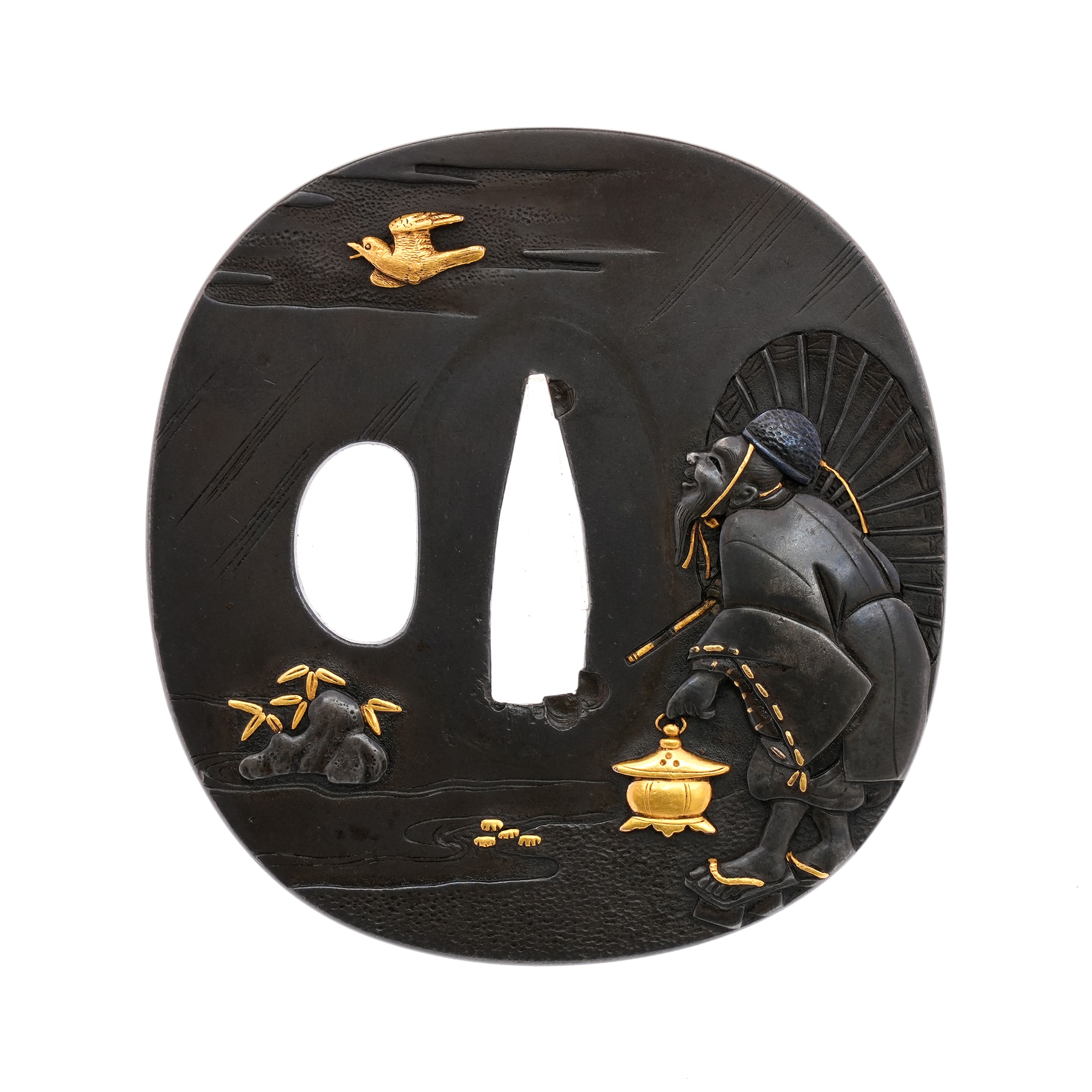
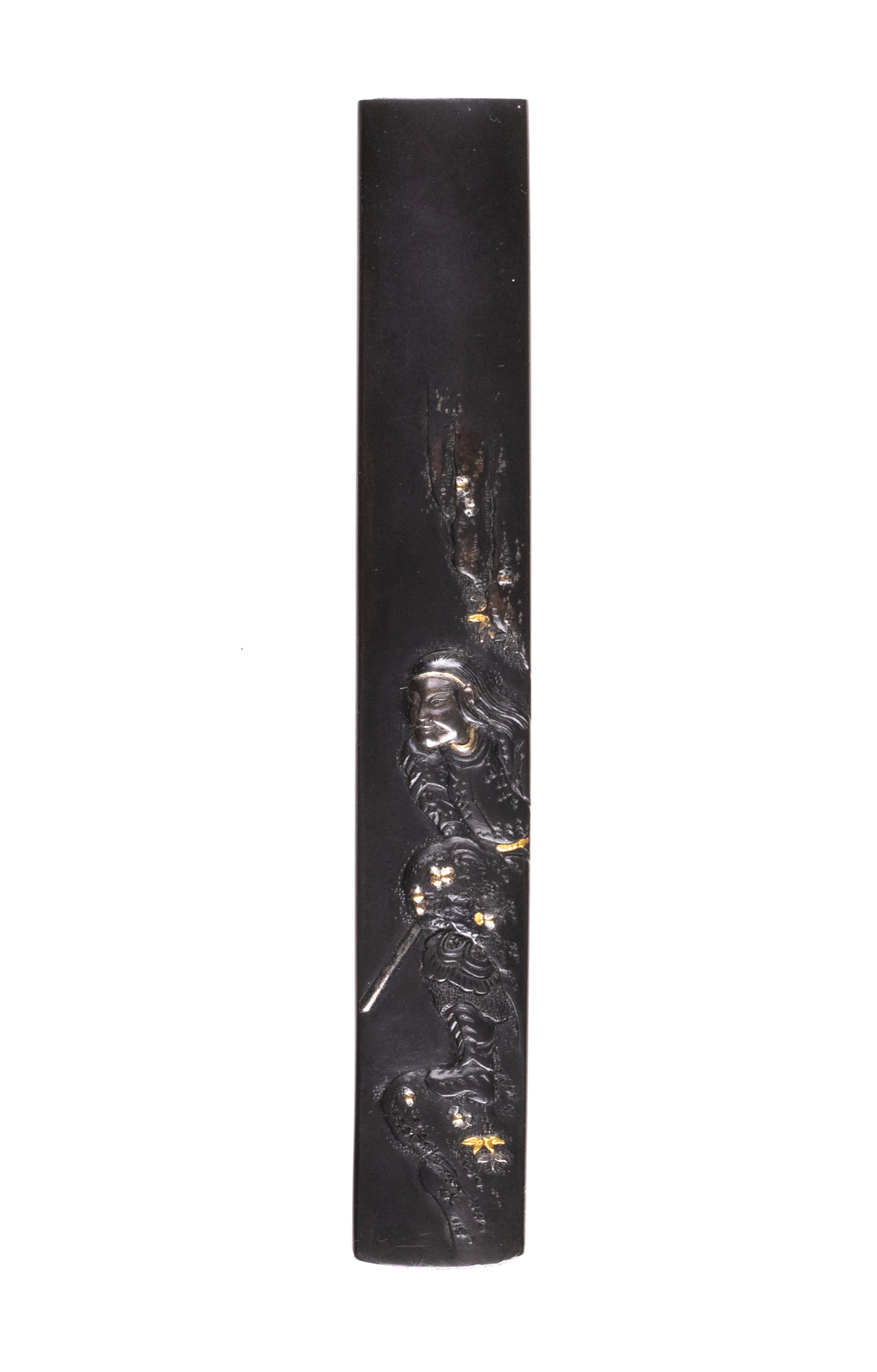
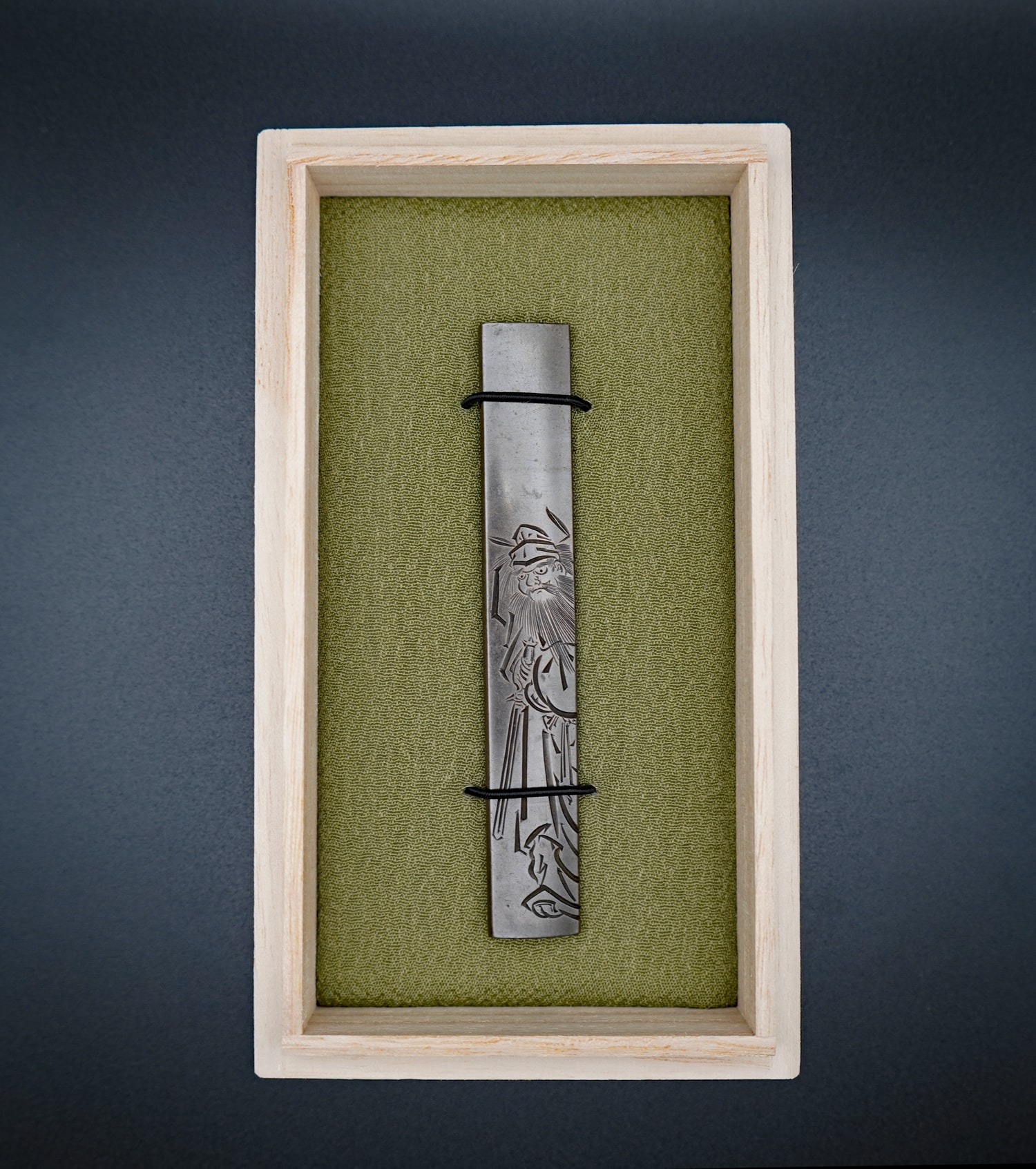
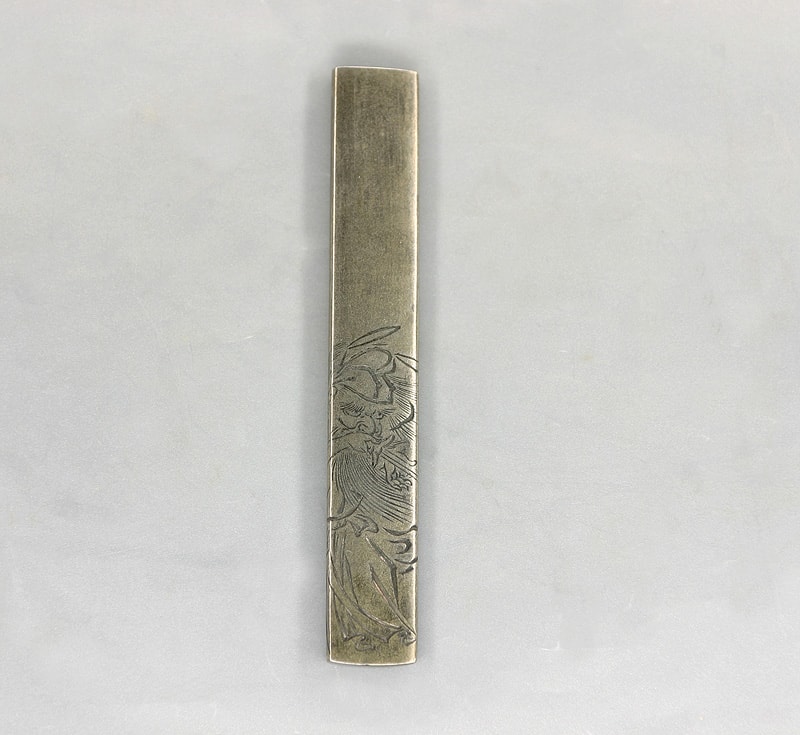
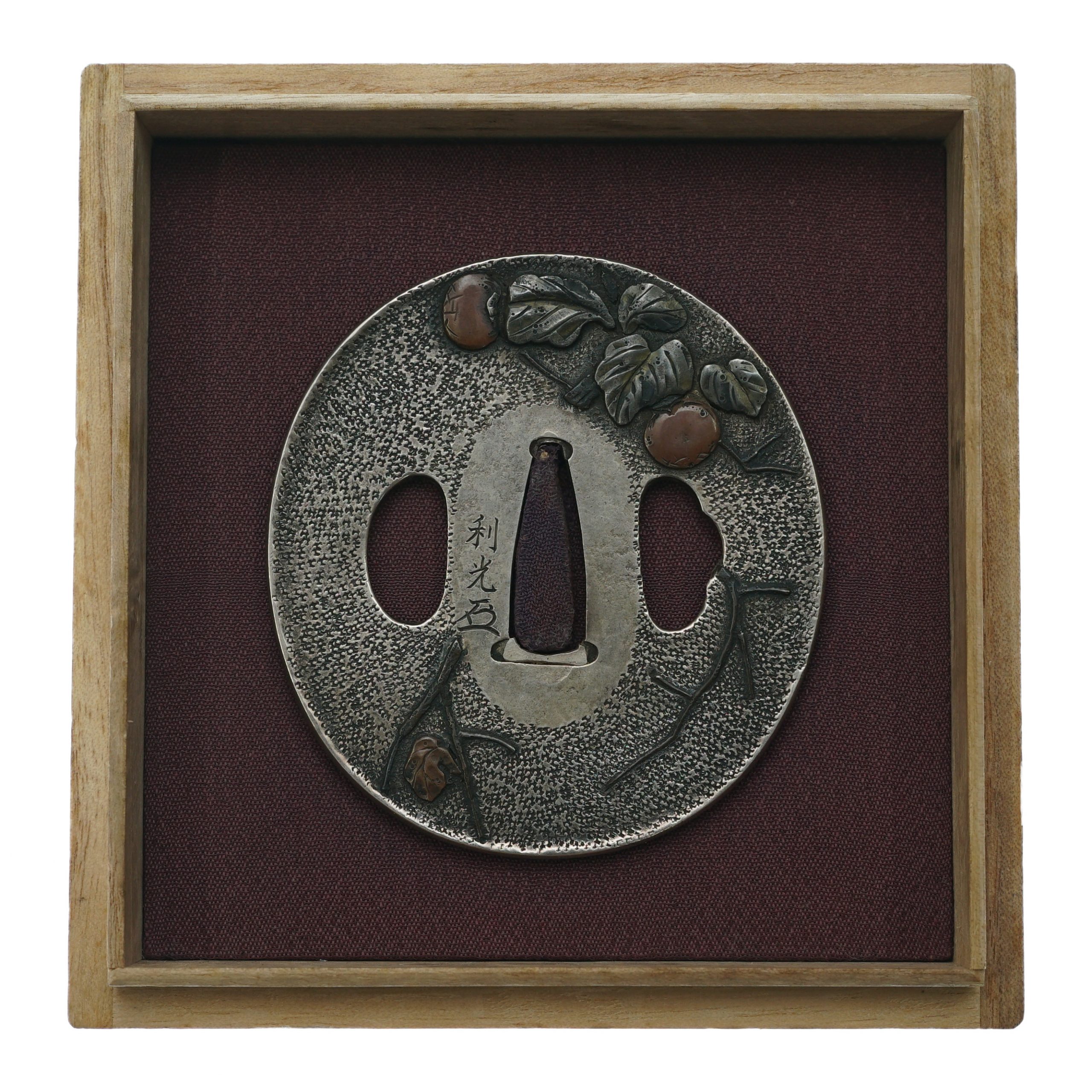
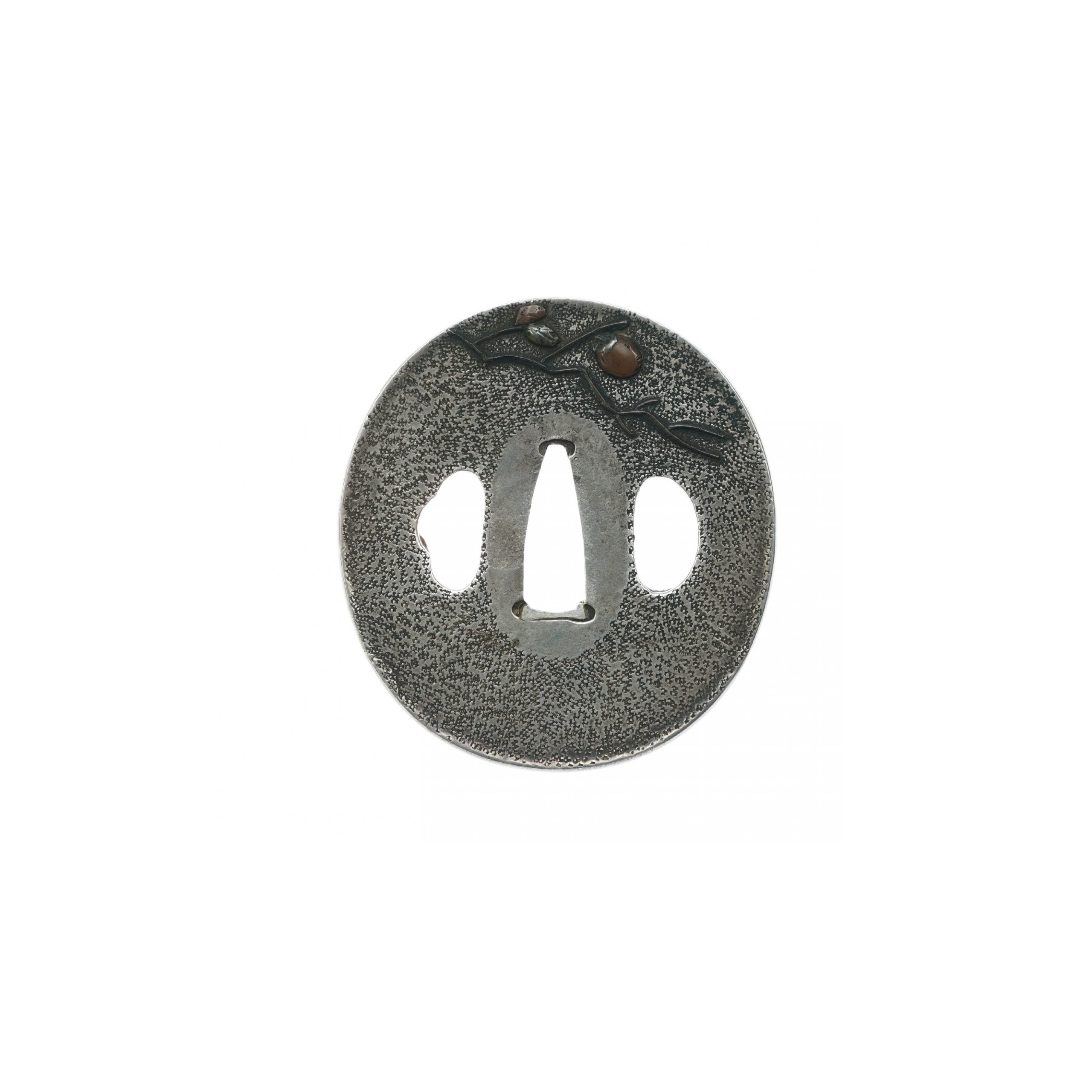
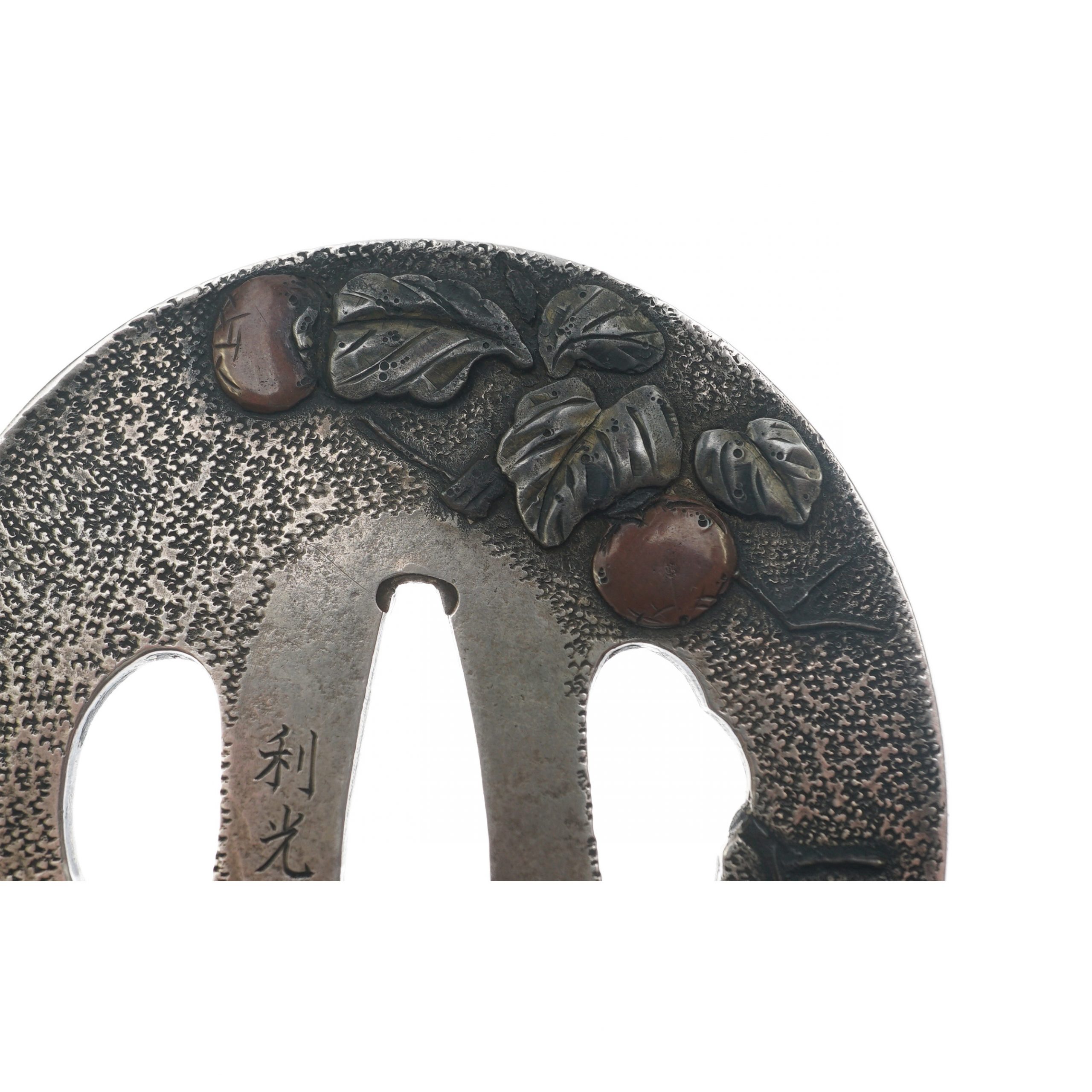
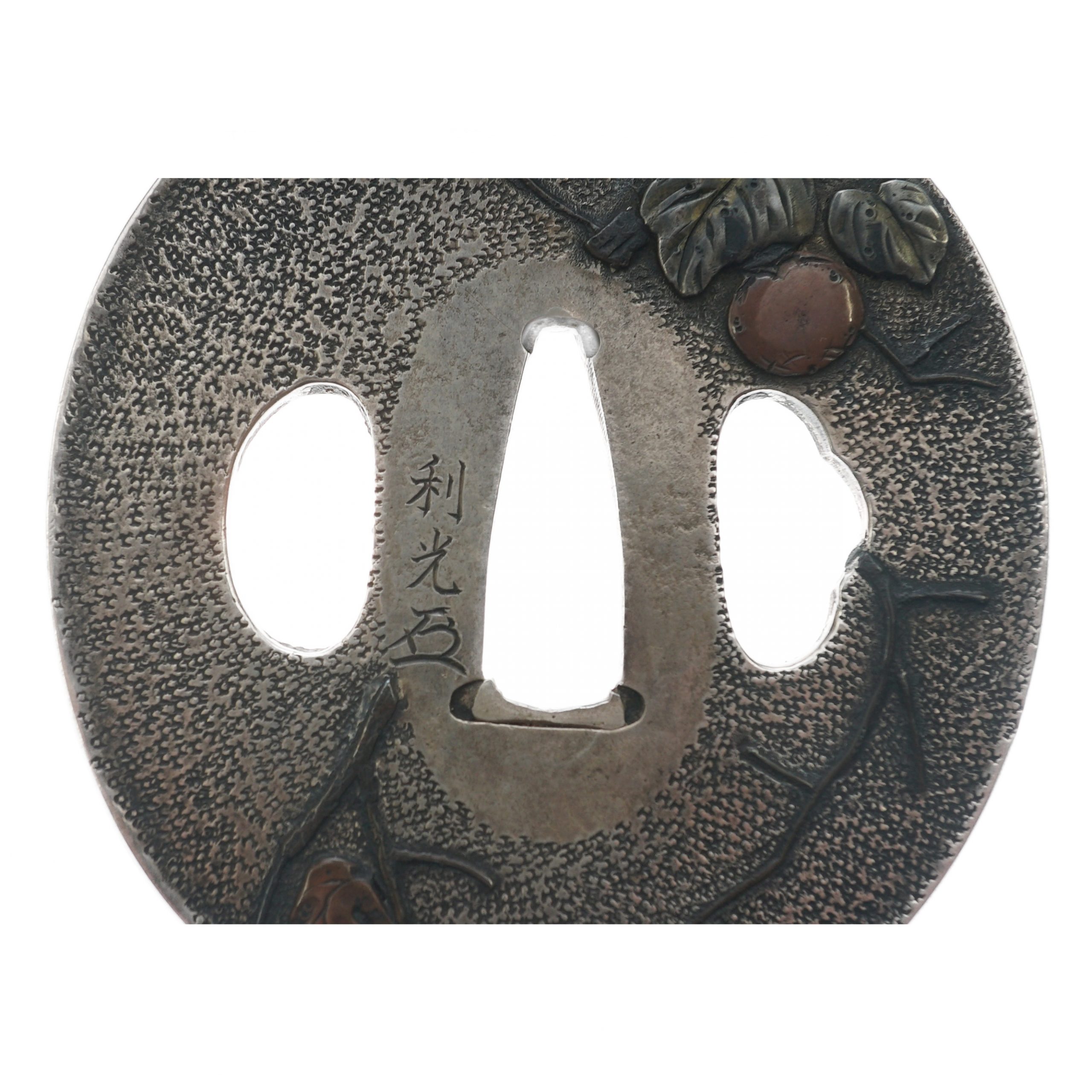
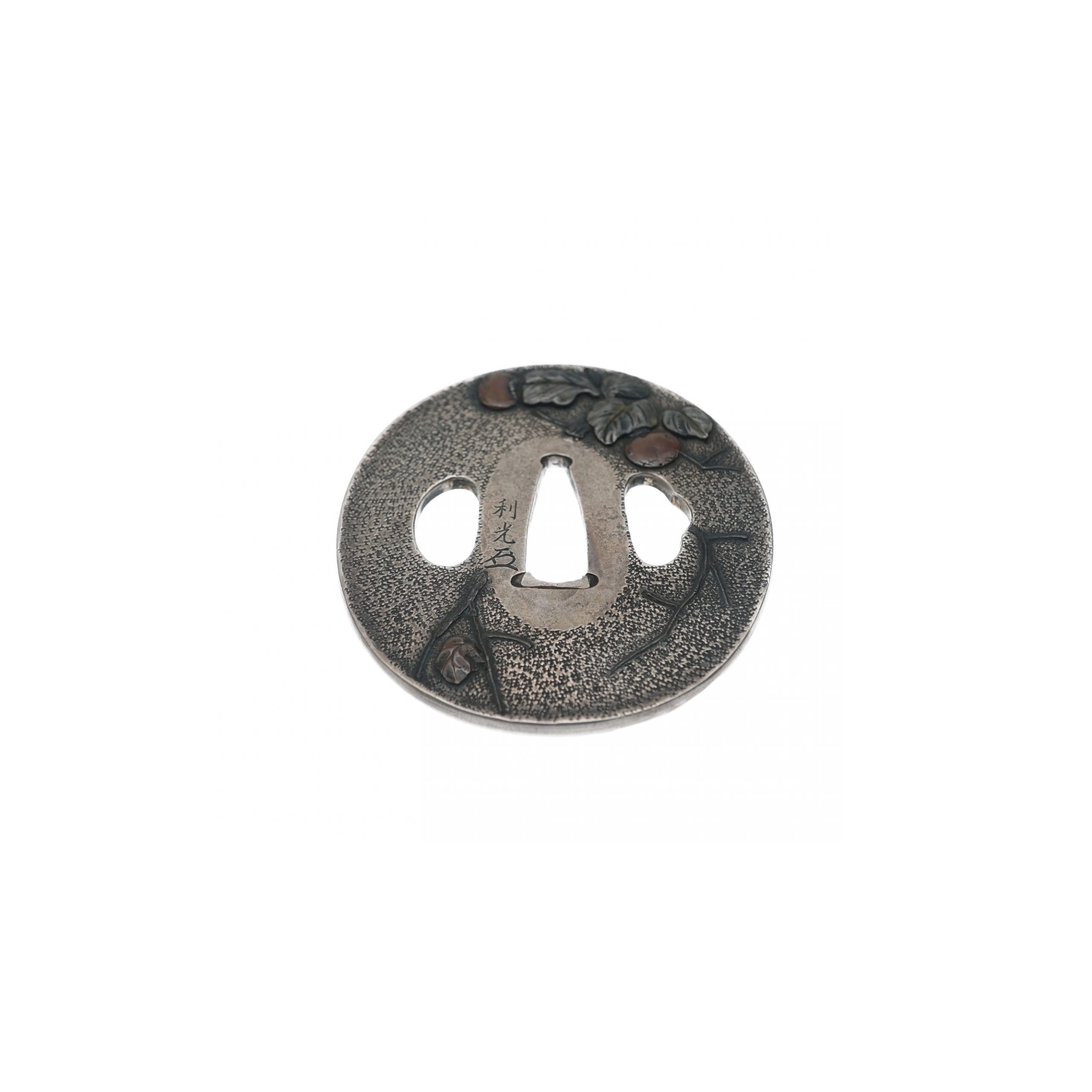
題名:柿図鐔 【作品解説】 小柄穴と笄穴を設けた、木瓜形(または楕円形)の鐔です。地鉄の表面には細かな凹凸が見られ、これは鏨(たがね)で叩いて質感を出す「石目地」のような細工が施されていると考えられます。小柄穴と中心穴(なかごあな)の間には銘が刻まれており、それによれば本作は「利光」の手によるものです。銘の最後には、作者固有の署名である「花押」も添えられています。 意匠については、秋に鮮やかな朱色の実を結ぶ「柿」を題材としています。本作では、実の部分に赤銅や色金を用いることで、熟した柿の質感を表現しています。柿の木は寿命が長いことから、日本では古来より「長寿」の象徴として尊ばれてきました。また、その名が「かき集める」に通じることから、「福をかき集める」という商売繁盛や幸運を招く縁起物としても親しまれています。本作も、こうした吉祥の願いを込めて制作されたのでしょう。 ※本品はアンティーク品のため、状態については写真をよくご確認の上、ご検討ください。 【鐔(つば)とは】 鐔は日本刀の拳を守るための護具(ハンドガード)です。身分の高い武士は、刀本体だけでなく、鐔をはじめとする美しい刀装具で刀を飾り立てました。特に鐔の表側(装着時に外側を向く面)は、街を歩く際などに他者の目に触れる機会が多いため、より装飾性の高い意匠が施される傾向にあります。 【武士にとって刀装具が重要だった理由】 日本刀には、鐔、目貫、縁頭など、多種多様な装飾金具が備わっています。これらは武器としての機能だけでなく、持ち主の個性や信念、あるいは格式を示す役割も果たしていました。現代で例えるなら、スマートフォンのケースやアクセサリーのような自己表現の手段とも言えるでしょう。 ぜひ、写真を拡大して細部までご覧ください。鉄や銅を主材とし、金・銀・四分一(しぶいち)などの色金を象嵌する日本の高度な彫金技術が見て取れます。鐔一枚をとっても、その造形や重量感は千差万別です。刀と共に時代を生き抜いてきたこれらの金具は、刀剣本体に匹敵する美術的価値を有しています。刀装具という細部にまでこだわりを持つことこそ、真の「侍の目利き」への第一歩と言えるでしょう。 ※本品は当初「鐔時計」として掲載しておりましたが、この度、鐔単体での販売に変更いたしました。お届けの際は、専用の木箱に収めて発送いたします。 【運営元について】 サムライミュージアム(東京)は、侍の歴史に関する古美術品を展示しています。当オンラインショップでは、日本文化や職人技に興味をお持ちの方へ向けて、刀剣・甲冑、伝統工芸品などを取り扱っております。 【お支払い方法】 Stripe(クレジットカード)、PayPal、Apple Pay、Google Payをご利用いただけます。いずれも安全な決済方法です。Stripeでの決済にアカウント作成は不要です。その他の決済方法をご希望の場合はお問い合わせください。日本円(JPY)のほか、米ドル、豪ドル、加ドル、ユーロ、スイスフラン、英ポンドでの決済が可能です。価格は日本円を基準とし、最新のレートで自動換算されます。 【配送について】 通常、日本郵便のEMS(国際スピード郵便)にて発送いたします。ご注文からお届けまで、通常5〜14日ほどかかります。配送日数は目安であり、天候や繁忙期、税関の状況により前後する場合がございます。 ※現在、カナダへはEMSが一時停止しているため、DHLにてお届けします。EMSまたはDHLでの発送が可能な地域へは、送料無料で承ります。その他の配送業者をご希望の場合はご相談ください。 発送後、追跡番号をメールにてお知らせいたします。有効なメールアドレスを正しくご入力ください。
 NihontoWatch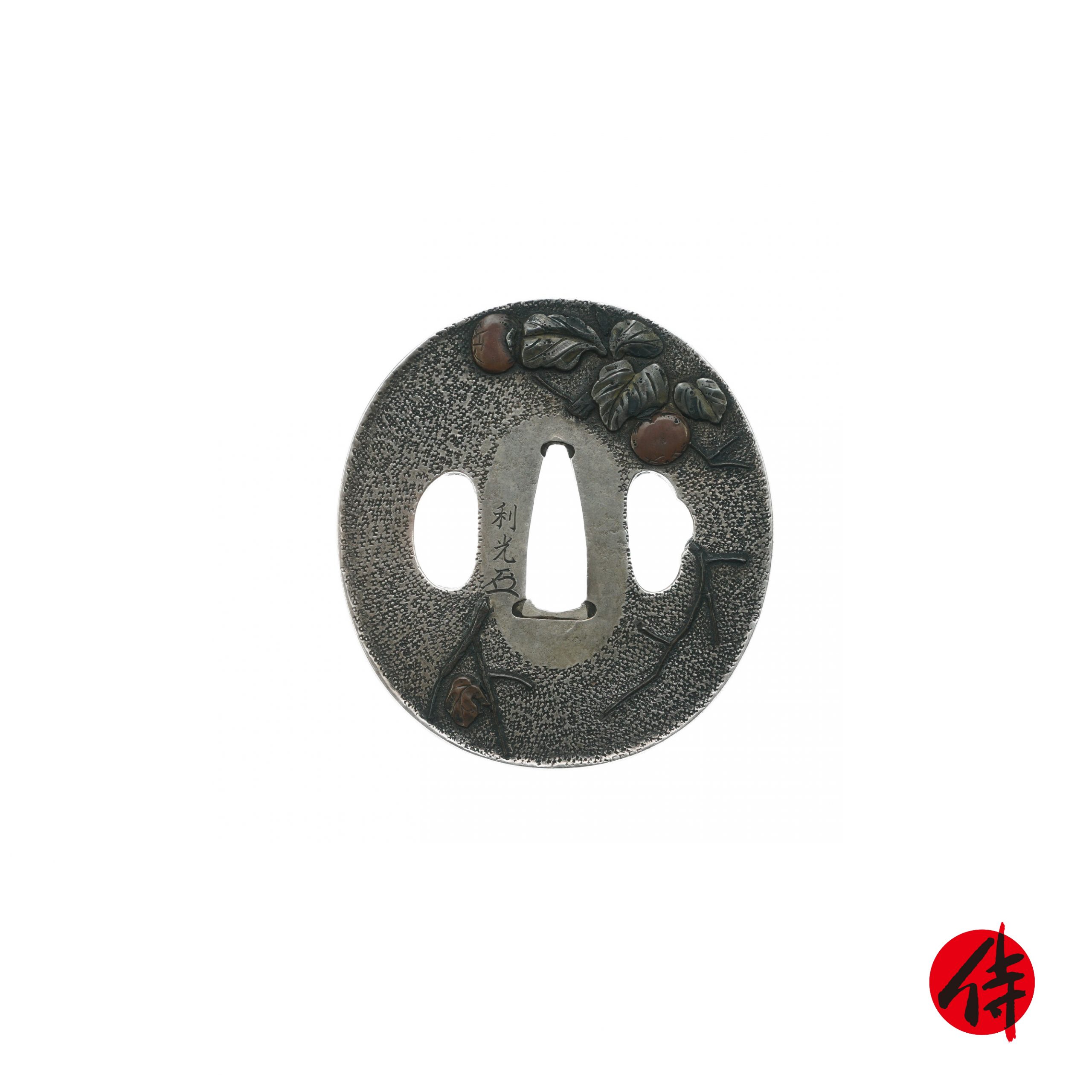
町彫
現在3点販売中
町彫 · Edo
現在82点販売中
奈良派は、江戸時代中期に隆盛を見た刀装金工の一流派である。後藤家の格式に拠らず、独立した町彫の伝統として発展し、奈良一門の歴代の手を経てその名跡を伝えた。流派の声価を不動のものとしたのは、奈良利寿・土屋安親・杉浦乗意のいわゆる「奈良三作」である。三作の筆頭たる利寿は寛文七年に生まれ、安親はこれに次ぎ、乗意は元禄十四年の生まれにして三人の中では最も若い。安親は出羽国庄内藩士の子として生まれ、若くして正阿弥珍久に学んだ後、元禄十六年江戸へ出て奈良辰政に師事し、天性の才を開花させた。乗意は信州松本の人で、江戸に出て奈良利治門の寿永に学んだと伝えられる。かくして各地より集う才人を糾合し、奈良派は江戸金工の独立した諸流の中にあって最高峰の一角を占めるに至った。 作風においては、流派の標識として彫技と素材の幅広さが挙げられる。地鉄は赤銅・鉄・真鍮・朧銀・四分一・素銅など多様であり、これに石目地・槌目地・磨地などの地荒らしを施す。彫技は鋤出彫・高彫・毛彫・片切彫を基調とし、金・銀・赤銅・四分一・素銅といった色金を象嵌・色絵として的確に配して画題を生かす。三作はこの共通の語彙のうちに各々独自の境地を拓いた。利寿は人物図を得意とし、縁頭の製作に抜群の技を示し、鋤出高彫を基調として隅々にまで力の漲る重厚な彫口を見せる。安親は構図の取り方、色金の配し方、空間の表現において追随を許さぬ均衡を示し、人物・動物・山水・故事と多岐にわたる題材に詩情と物語性を込めた。乗意は朧銀磨地を地金とし、僅かな高低差を活かして対象の表情を豊かに表出する肉合彫の新技を編み出し、象嵌や色絵をあまり用いず鏨の力量のみで意匠を彫り上げた点に独壇場を示す。 評価と伝承においては、奈良派の諸工が刀装具という限られた画面のうちに装飾の域を超えた真の芸術的表現を達成した点が、その名声の根幹を成す。利寿の作は豪壮の気が自然に溢れる品格を備え、僅かな空間を最大限に活用して躍動感を与える技量に特色がある。安親の作には「安親ならでは」「安親の世界」といった文言が繰り返し用いられ、その独創性と芸術性の高さが讃えられ、晩年には古銭を意匠に取り入れた枯淡の作風も見られる。乗意の児落獅子図小柄は、肉合彫を駆使して千尋の谷に我が子を投げ込む獅子を彫り上げた会心の作として重要刀装具に指定され、落下する児獅子の力強さと崖上に見守る親獅子の表情に臨場感が溢れる。これら三作を頂点とする奈良派は、構図の卓抜、全幅にわたる技量の冴え、そして優品を芸術の高みへと昇華させる表現の深さによって、江戸金工の世界に確固たる地位を築き、後世に多大な影響を与えた名門である。 詳しく見る →
販売店の出品ページで鑑定書を確認できませんでした。日本刀および刀装具は通常、NBTHK(または NTHK)の鑑定を受けます。鑑定書がない場合、極めは販売店の見解にとどまり、第三者による確認は行われていません。ご購入前に販売店へ鑑定書の有無をお問い合わせのうえ、慎重にご判断ください。
Returns/exchanges limited to defects caused by shipping (except willful misconduct or gross negligence by the company); customers must contact within 72 hours of receiving the product.
題名:柿図鐔 【作品解説】 小柄穴と笄穴を設けた、木瓜形(または楕円形)の鐔です。地鉄の表面には細かな凹凸が見られ、これは鏨(たがね)で叩いて質感を出す「石目地」のような細工が施されていると考えられます。小柄穴と中心穴(なかごあな)の間には銘が刻まれており、それによれば本作は「利光」の手によるものです。銘の最後には、作者固有の署名である「花押」も添えられています。 意匠については、秋に鮮やかな朱色の実を結ぶ「柿」を題材としています。本作では、実の部分に赤銅や色金を用いることで、熟した柿の質感を表現しています。柿の木は寿命が長いことから、日本では古来より「長寿」の象徴として尊ばれてきました。また、その名が「かき集める」に通じることから、「福をかき集める」という商売繁盛や幸運を招く縁起物としても親しまれています。本作も、こうした吉祥の願いを込めて制作されたのでしょう。 ※本品はアンティーク品のため、状態については写真をよくご確認の上、ご検討ください。 【鐔(つば)とは】 鐔は日本刀の拳を守るための護具(ハンドガード)です。身分の高い武士は、刀本体だけでなく、鐔をはじめとする美しい刀装具で刀を飾り立てました。特に鐔の表側(装着時に外側を向く面)は、街を歩く際などに他者の目に触れる機会が多いため、より装飾性の高い意匠が施される傾向にあります。 【武士にとって刀装具が重要だった理由】 日本刀には、鐔、目貫、縁頭など、多種多様な装飾金具が備わっています。これらは武器としての機能だけでなく、持ち主の個性や信念、あるいは格式を示す役割も果たしていました。現代で例えるなら、スマートフォンのケースやアクセサリーのような自己表現の手段とも言えるでしょう。 ぜひ、写真を拡大して細部までご覧ください。鉄や銅を主材とし、金・銀・四分一(しぶいち)などの色金を象嵌する日本の高度な彫金技術が見て取れます。鐔一枚をとっても、その造形や重量感は千差万別です。刀と共に時代を生き抜いてきたこれらの金具は、刀剣本体に匹敵する美術的価値を有しています。刀装具という細部にまでこだわりを持つことこそ、真の「侍の目利き」への第一歩と言えるでしょう。 ※本品は当初「鐔時計」として掲載しておりましたが、この度、鐔単体での販売に変更いたしました。お届けの際は、専用の木箱に収めて発送いたします。 【運営元について】 サムライミュージアム(東京)は、侍の歴史に関する古美術品を展示しています。当オンラインショップでは、日本文化や職人技に興味をお持ちの方へ向けて、刀剣・甲冑、伝統工芸品などを取り扱っております。 【お支払い方法】 Stripe(クレジットカード)、PayPal、Apple Pay、Google Payをご利用いただけます。いずれも安全な決済方法です。Stripeでの決済にアカウント作成は不要です。その他の決済方法をご希望の場合はお問い合わせください。日本円(JPY)のほか、米ドル、豪ドル、加ドル、ユーロ、スイスフラン、英ポンドでの決済が可能です。価格は日本円を基準とし、最新のレートで自動換算されます。 【配送について】 通常、日本郵便のEMS(国際スピード郵便)にて発送いたします。ご注文からお届けまで、通常5〜14日ほどかかります。配送日数は目安であり、天候や繁忙期、税関の状況により前後する場合がございます。 ※現在、カナダへはEMSが一時停止しているため、DHLにてお届けします。EMSまたはDHLでの発送が可能な地域へは、送料無料で承ります。その他の配送業者をご希望の場合はご相談ください。 発送後、追跡番号をメールにてお知らせいたします。有効なメールアドレスを正しくご入力ください。
NihontoWatch町彫
現在3点販売中
町彫 · Edo
現在82点販売中
奈良派は、江戸時代中期に隆盛を見た刀装金工の一流派である。後藤家の格式に拠らず、独立した町彫の伝統として発展し、奈良一門の歴代の手を経てその名跡を伝えた。流派の声価を不動のものとしたのは、奈良利寿・土屋安親・杉浦乗意のいわゆる「奈良三作」である。三作の筆頭たる利寿は寛文七年に生まれ、安親はこれに次ぎ、乗意は元禄十四年の生まれにして三人の中では最も若い。安親は出羽国庄内藩士の子として生まれ、若くして正阿弥珍久に学んだ後、元禄十六年江戸へ出て奈良辰政に師事し、天性の才を開花させた。乗意は信州松本の人で、江戸に出て奈良利治門の寿永に学んだと伝えられる。かくして各地より集う才人を糾合し、奈良派は江戸金工の独立した諸流の中にあって最高峰の一角を占めるに至った。 作風においては、流派の標識として彫技と素材の幅広さが挙げられる。地鉄は赤銅・鉄・真鍮・朧銀・四分一・素銅など多様であり、これに石目地・槌目地・磨地などの地荒らしを施す。彫技は鋤出彫・高彫・毛彫・片切彫を基調とし、金・銀・赤銅・四分一・素銅といった色金を象嵌・色絵として的確に配して画題を生かす。三作はこの共通の語彙のうちに各々独自の境地を拓いた。利寿は人物図を得意とし、縁頭の製作に抜群の技を示し、鋤出高彫を基調として隅々にまで力の漲る重厚な彫口を見せる。安親は構図の取り方、色金の配し方、空間の表現において追随を許さぬ均衡を示し、人物・動物・山水・故事と多岐にわたる題材に詩情と物語性を込めた。乗意は朧銀磨地を地金とし、僅かな高低差を活かして対象の表情を豊かに表出する肉合彫の新技を編み出し、象嵌や色絵をあまり用いず鏨の力量のみで意匠を彫り上げた点に独壇場を示す。 評価と伝承においては、奈良派の諸工が刀装具という限られた画面のうちに装飾の域を超えた真の芸術的表現を達成した点が、その名声の根幹を成す。利寿の作は豪壮の気が自然に溢れる品格を備え、僅かな空間を最大限に活用して躍動感を与える技量に特色がある。安親の作には「安親ならでは」「安親の世界」といった文言が繰り返し用いられ、その独創性と芸術性の高さが讃えられ、晩年には古銭を意匠に取り入れた枯淡の作風も見られる。乗意の児落獅子図小柄は、肉合彫を駆使して千尋の谷に我が子を投げ込む獅子を彫り上げた会心の作として重要刀装具に指定され、落下する児獅子の力強さと崖上に見守る親獅子の表情に臨場感が溢れる。これら三作を頂点とする奈良派は、構図の卓抜、全幅にわたる技量の冴え、そして優品を芸術の高みへと昇華させる表現の深さによって、江戸金工の世界に確固たる地位を築き、後世に多大な影響を与えた名門である。 詳しく見る →
販売店の出品ページで鑑定書を確認できませんでした。日本刀および刀装具は通常、NBTHK(または NTHK)の鑑定を受けます。鑑定書がない場合、極めは販売店の見解にとどまり、第三者による確認は行われていません。ご購入前に販売店へ鑑定書の有無をお問い合わせのうえ、慎重にご判断ください。
Returns/exchanges limited to defects caused by shipping (except willful misconduct or gross negligence by the company); customers must contact within 72 hours of receiving the product.