NihontoWatch MonNihontoWatchBETA
MarketEncyclopedia
NihontoWatch Mon

NihontoWatchBETA

Market
Encyclopedia
Overview·Kantei·Designations·Provenance·Work Types·Signatures·Lineage·School
OverviewKanteiDesignationsProvenanceWork TypesSignaturesLineageSchool
  1. Schools
  2. Nara
  3. Yasuchika

Nara Yasuchika

安親

Tokujū
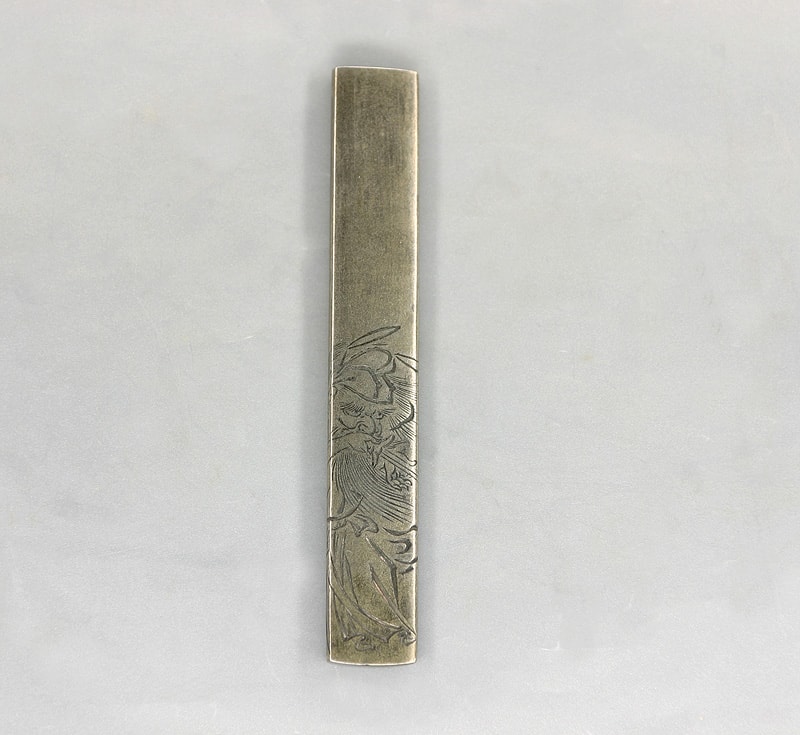
Vol. 25, No. 76 · Kozuka

Nara Yasuchika

安親

88 ranked works

ProvinceEdoEraKanbun-Enkyo (1670–1744)SchoolNaraTraditionMachiboriGeneration1st generation (founder)TeacherTatsumasaSpecialtiestsuba, fuchi-kashira, menuki, kozukaTypeTosogu MakerCodeTSU001
5Jūyō Bunkazai
14Jūyō Bijutsuhin
9Tokubetsu Jūyō60Jūyō Tōken

Overview

Tsuchiya Yasuchika (土屋安親), also known as , was born in 10 (1670) as the son of Tsuchiya Chuzaemon, a retainer of the Shonai domain in Dewa Province. While still young he entered the school of Shoami Chinku, married his teacher's daughter, and in Genroku 16 (1703), at the age of thirty-four, went to , where he undertook further training under Nara Tatsumasa — at which point, as the consistently observe, "his innate talent fully blossomed." Around the Shotoku era he entered the service of Matsudaira Daigaku-no-kami, a nephew of Tokugawa Mitsukuni and lord of the twenty-thousand- Moriyama fief in Oshu. In Kyoho 16 (1731), at the age of sixty-one, he took the tonsure and adopted the art name Tou (東雨). He left numerous masterpieces to the world and was later celebrated — together with Nara Toshihisa and Sugiura Joi — as one of the "Three Masters of Nara" (Nara sansaku), recognized as an artist of the very highest ability.

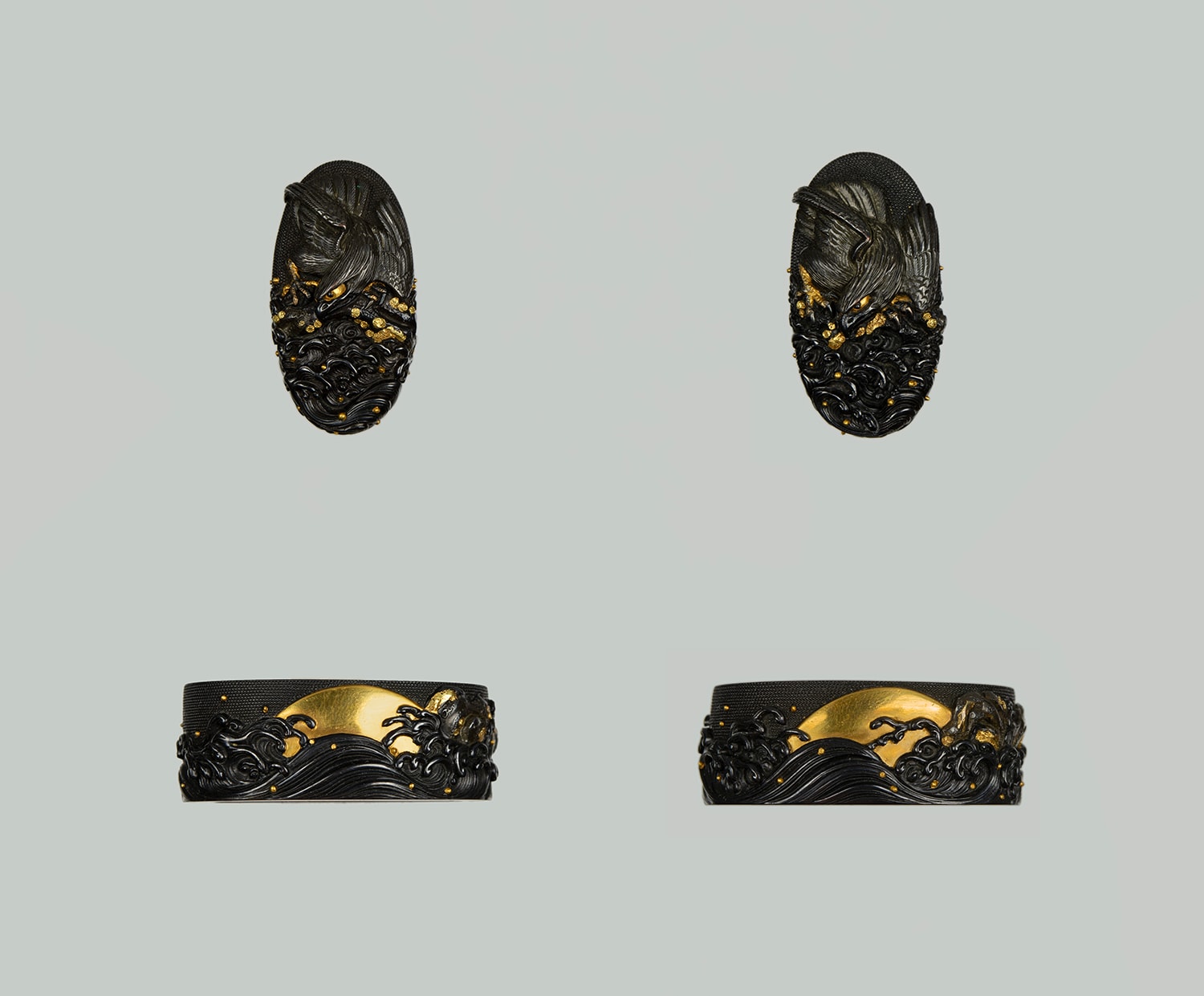
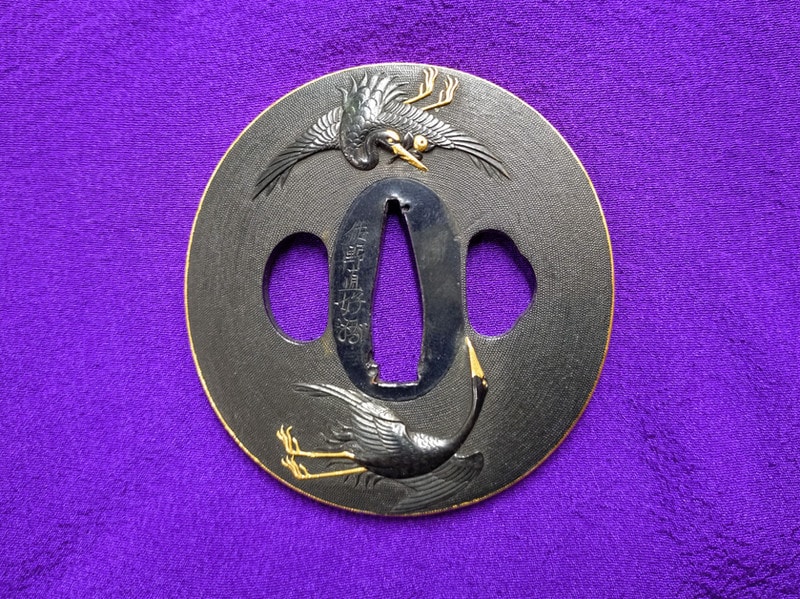
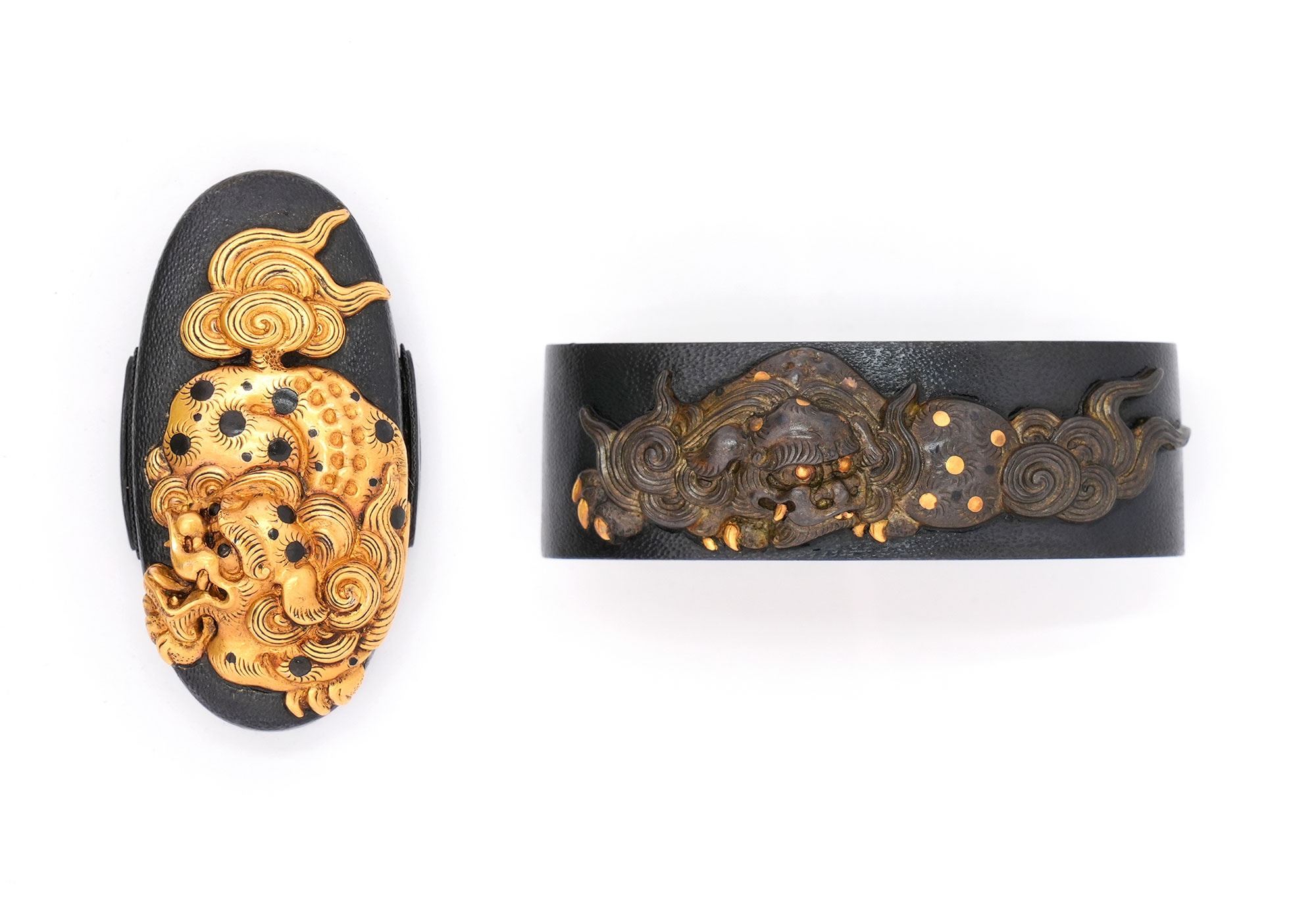
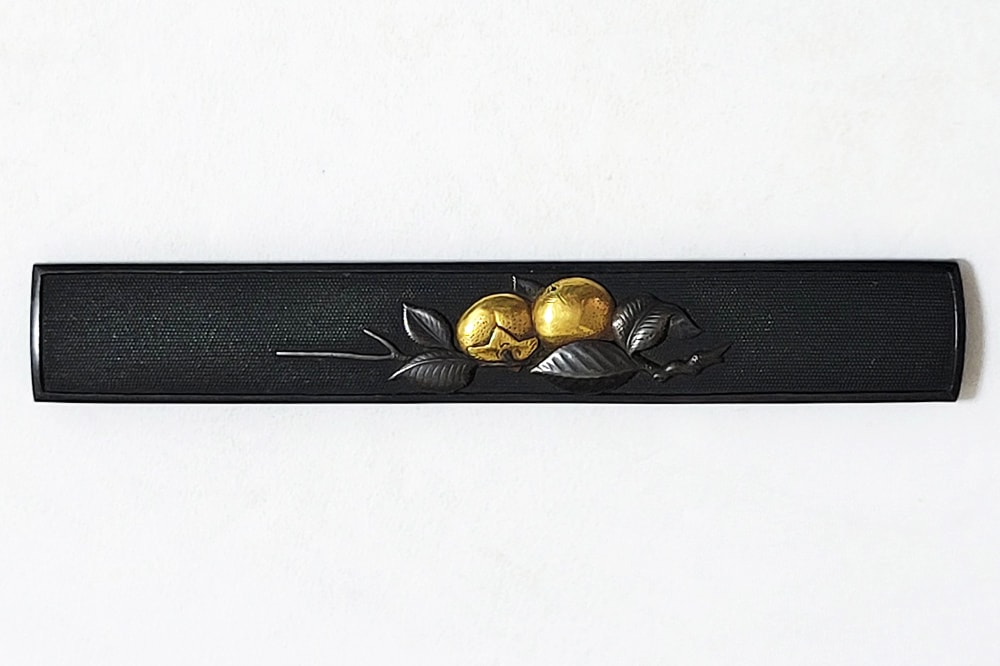
Yasuchika's technical range is exceptional. His oeuvre encompasses work in iron, , , brass (shinchu), and refined copper (), with surfaces treated as polished grounds (), hammered textures (), and stone-grain finishes (). His signature carving methods include modeled relief, high relief, the thread-fine line work of , and — more rarely — the single-stroke incision. Polychrome metal inlay () in gold, silver, , and is deployed with what the describes as "an unrivaled equilibrium in compositional planning and in the exquisitely balanced placement of colored metals." His iron frequently employ the distinctive daigaku-gata form conceived for his patron, while his demonstrate the capacity to "draw forth a small universe" within a confined surface. In later works signed Tou, examiners identify an austere, detached realm () — a shift from the vigorous pictorialism of his -period maturity toward something "profoundly rich in nuance."

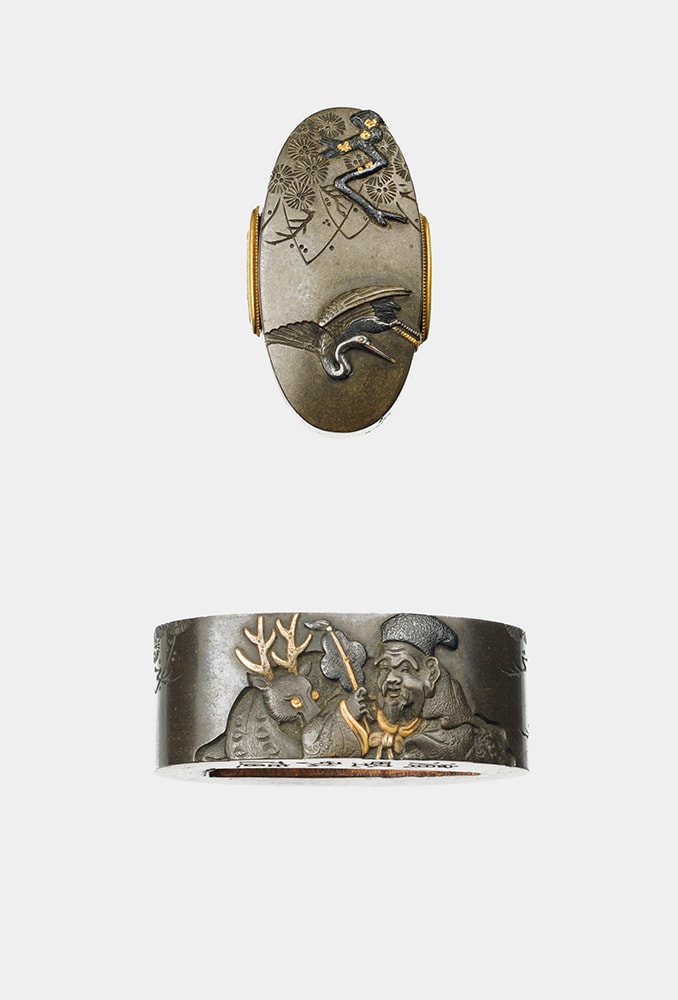
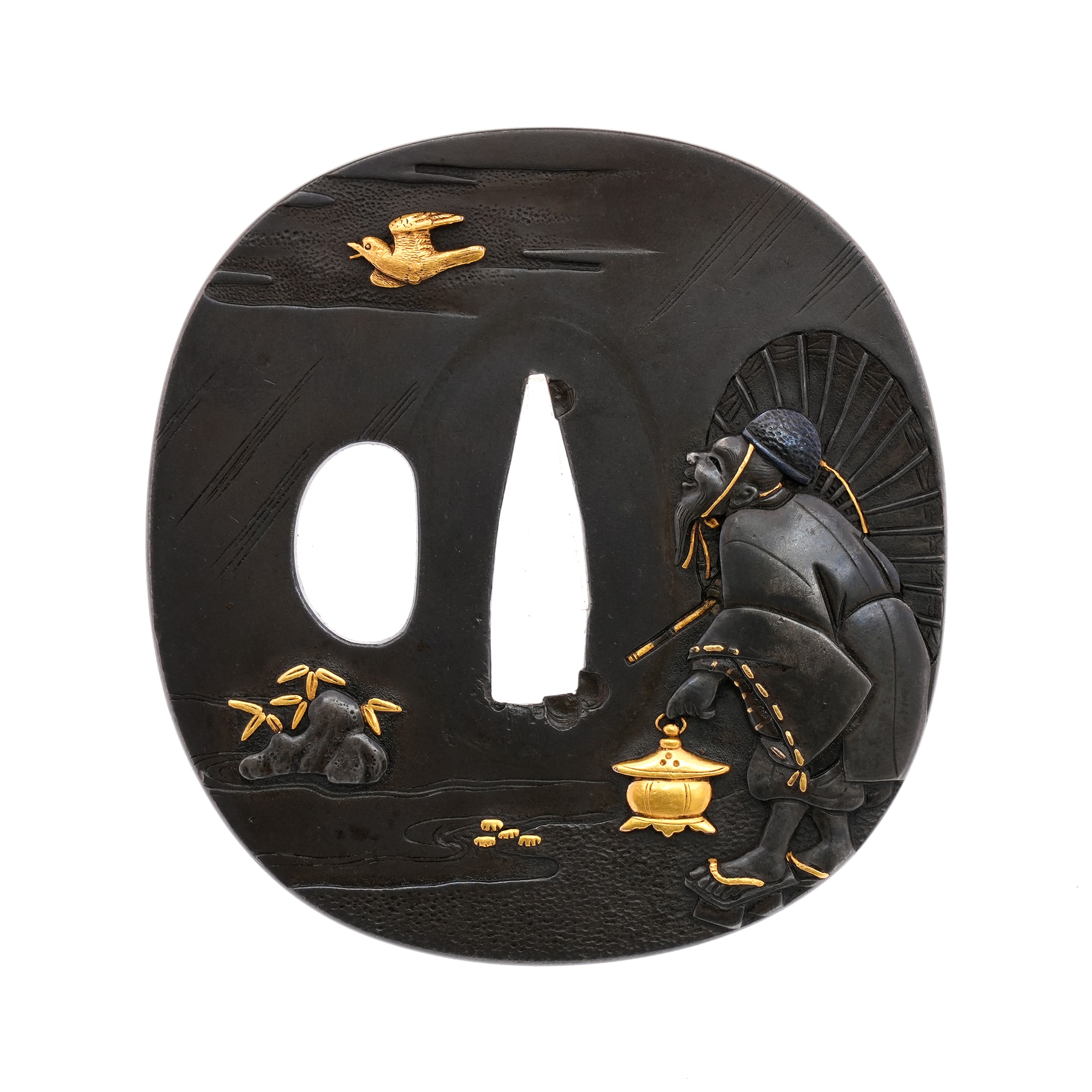
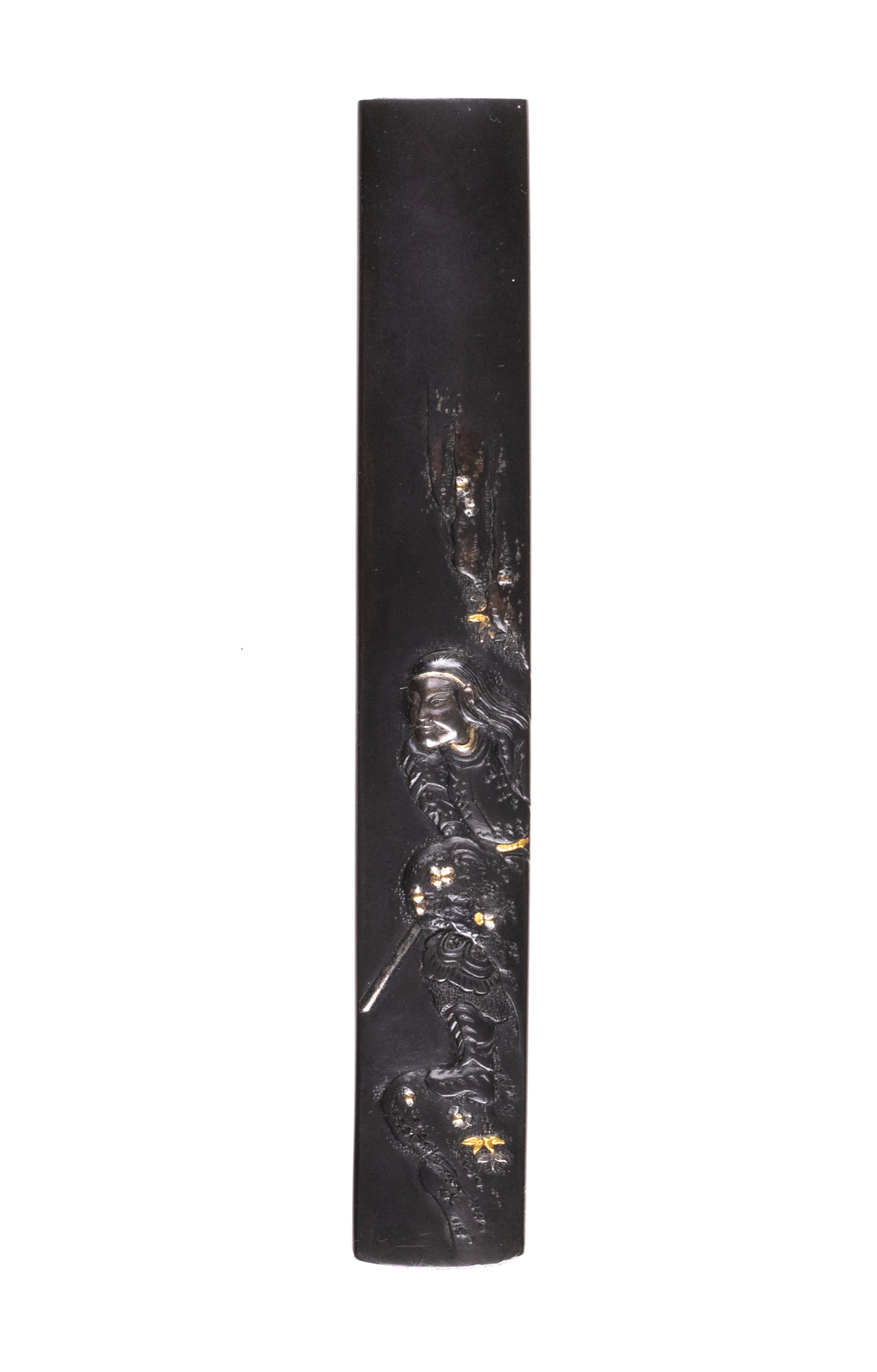
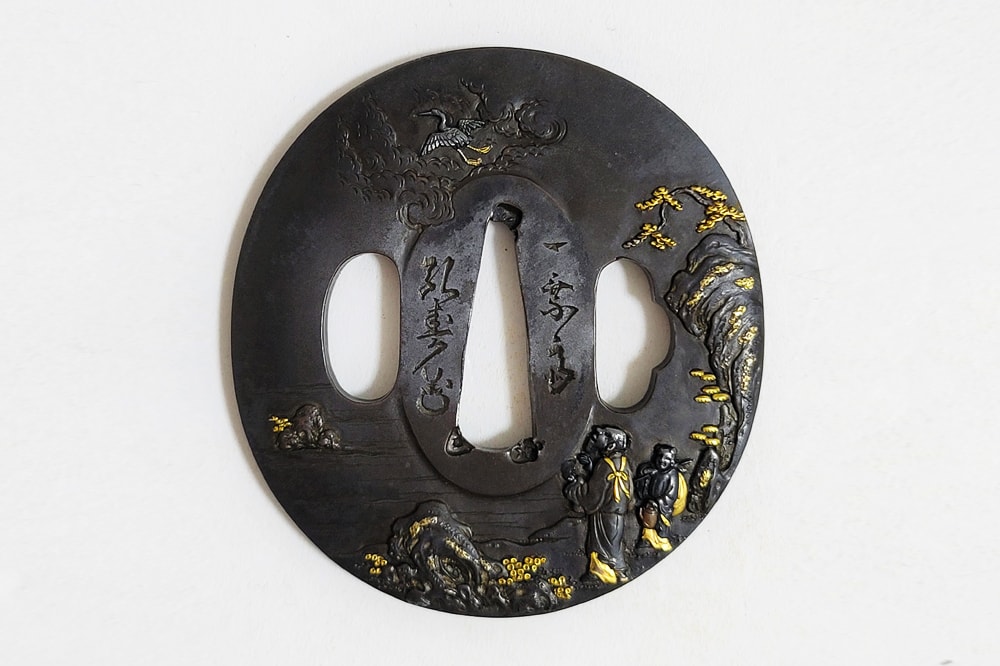
Across the designation records, certain evaluative themes recur with striking consistency. The praises Yasuchika's "warm, humane sentiment" and "gentle humanism," visible in his treatment of figures such as Jurojin, Daruma, and the creatures that populate his compositions — faces rendered with "an unmistakable mildness," animals depicted so as to seem "almost alive." His narrative scenes are likened to hanging paintings (ichifuku no e), unfolding atmospheric effects "akin to watercolor." Whether rendering a carp amid turbulent waves, wild geese descending in rain, or Li Bai gazing at a waterfall, Yasuchika's compositions are praised for their "outstanding" interlinked design across front and back, their "free and untrammeled manner, calm and unforced," and a compositional intelligence in which "tension and relaxed release coexist." In subject, technique, and the sustained refinement of his carving, the affirm that his is an art in which, as one examiner concludes, "the sharpness of Yasuchika's skill is scattered throughout."
Kantei

3 descriptive axes: material (his unusually wide ground palette, brass and suaka among them) x technique (the painterly sukidashi-takabori with high/low-relief contrast) x themes (the painterly vs design split). The art-name change Yasuchika to Tou is the key dating axis: Tou marks the late period after 1731.

Tsuchiya Yasuchika is one of the Nara Sansaku (the three Nara-school masters, with Toshinaga and Joi), born in Shonai in 1670 and trained in under Nara Tatsumasa. His defining hand is a bold, painterly played against low relief, worked with equal command across iron, brass, , and . He originated the Daigaku-gata, the and stylising the character 'dai' for his patron Matsudaira Daigaku-no-kami; his subjects divide into a dominant painterly mode and a design mode, suffused with a warm humanism. In 1731, aged 61, he took the tonsure and the art-name Tou, which marks his late work.

Diagnostic discriminators

unique vs all other kinko artists

his bold sukidashi-takabori with high-and-low relief contrast is the NBTHK's recurring 'midokoro' for him, worked alike on iron and soft-metal

東雨

he took the tonsure and the name Tou in 1731 at 61; a piece signed Tou is therefore datable to his late period

Material (grounds)

Yasuchika commands an unusually wide ground palette: and , but also brass (a Nara-school speciality), refined copper (, singled out for its richness), and iron for many of his masterworks, often textured as ishime or roughened ground.

Technique

His defining hand is , contrasting high relief with thin low relief and sunk carving; over it he plays gold, silver, and inlay and iro-e, with fine and applied . The credit him with the full arsenal of the carver's techniques.

Themes

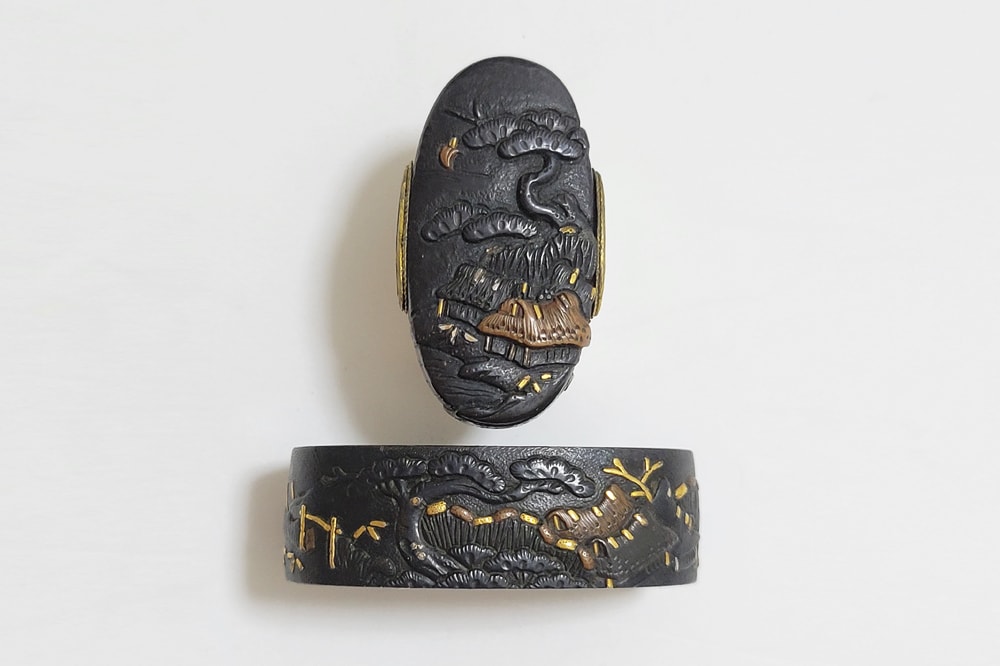
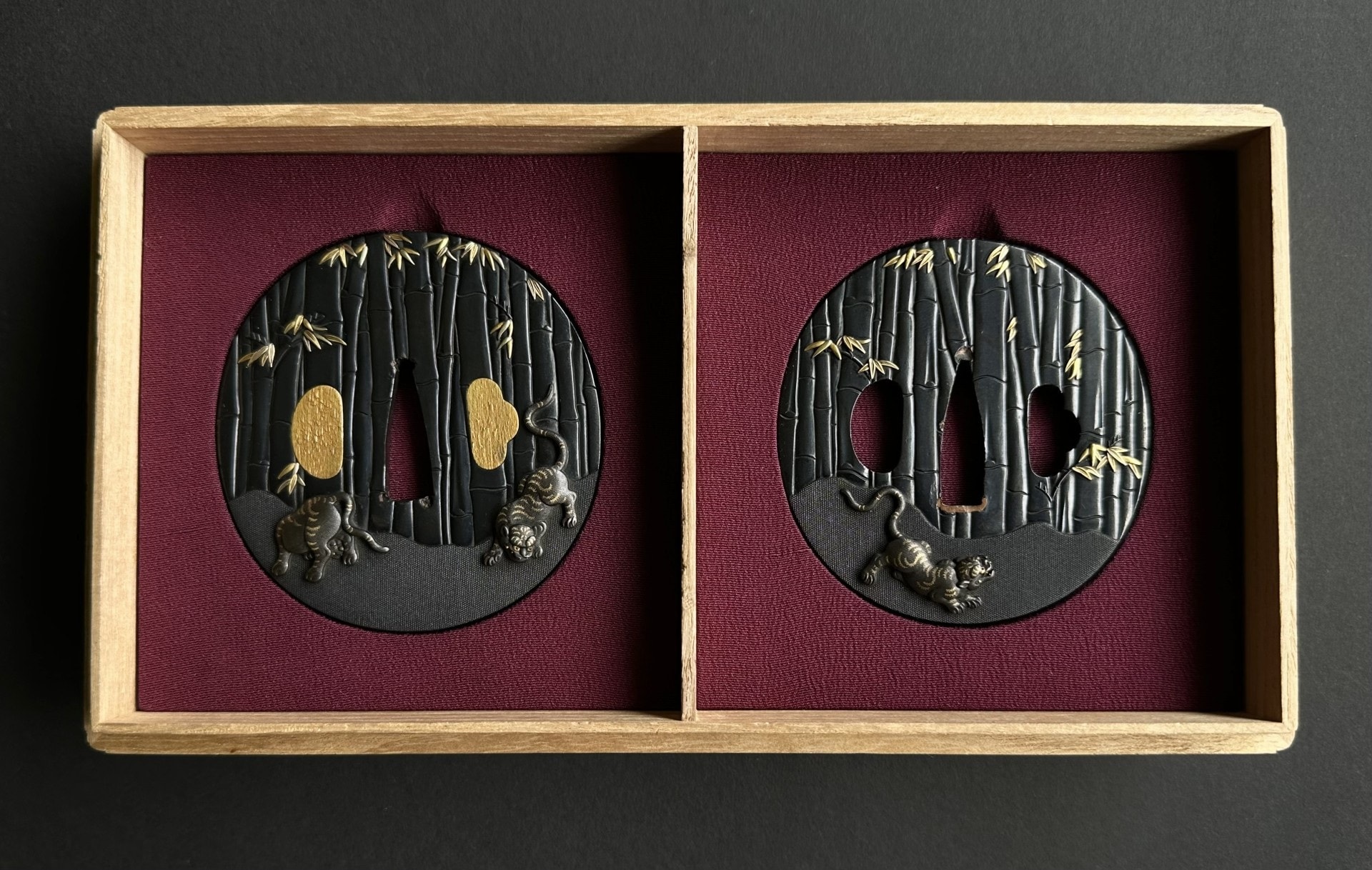
His subjects divide into a dominant painterly (e-) mode and a design (zuan-) mode. Across both runs a warm humanism the names as his own: dragons and tigers, carp in flowing water with crabs, landscape and pine, and figure subjects from Chinese and Japanese classics.

Painterly (e-fu) subjects

Flowing water with carp and crab, dragons and tigers, landscape and pine, and humane figure subjects (Jurojin, the reed-cutter), rendered with painterly relief.

Full iconography

Signature chronology

Placement
Recorded signatures

Documentary note

He is a single artist, not a generation line; the early-to-late change is his own go-change from Yasuchika to Tou (the tonsure is dated by his own 1730 letter, cited in the ). The corpus contests his -migration year (Genroku 10 versus 16; age 34 is constant), so only 'Genroku era, age 34' should be asserted; a minority of texts miswrite the birth era (Kanei for ).

Scholarship

He was a same-year peer of Yokoya Somin; where Somin keeps a strain of the Goto ie-bori, Yasuchika is pure machibori.

Designations

Kokuhō—
Jūyō Bunkazai5
Jūyō Bijutsuhin14
Gyobutsu—
Tokubetsu Jūyō9
Jūyō Tōken60

Elite Standing

0.74 across 88 designated works

Top 1% among makers

Provenance

18 documented provenances across certified works by Yasuchika

Provenance Standing

0 works held in elite collections across 18 documented provenances

Top 20% among makers

Raw score: 2.01 / 10

Work Types

Distribution across 88 ranked works

Tsuba
3649%
Other
1926%
Kozuka
1014%
Fuchi-Kashira
912%

Signatures

Signature types across 88 ranked works

Currently Available

Lineage

TeacherTatsumasa
Yasuchika
Students (2)
  1. 1.Yasunobu安信
  2. 2.Yasuchika安親

Nara School

Other artisans of the Nara school

  1. 1.Joi乗意1 for sale12designated
  2. 2.Toshinaga利寿28designated
  3. 3.Masahiro政弘1designated
  4. 4.Tou東雨1designated
  5. 5.Nara奈良1 for sale2designated
  6. 6.Minzan谺珉山1designated
  7. 7.Toshinaga利永1designated