 NihontoWatchNihontoWatch
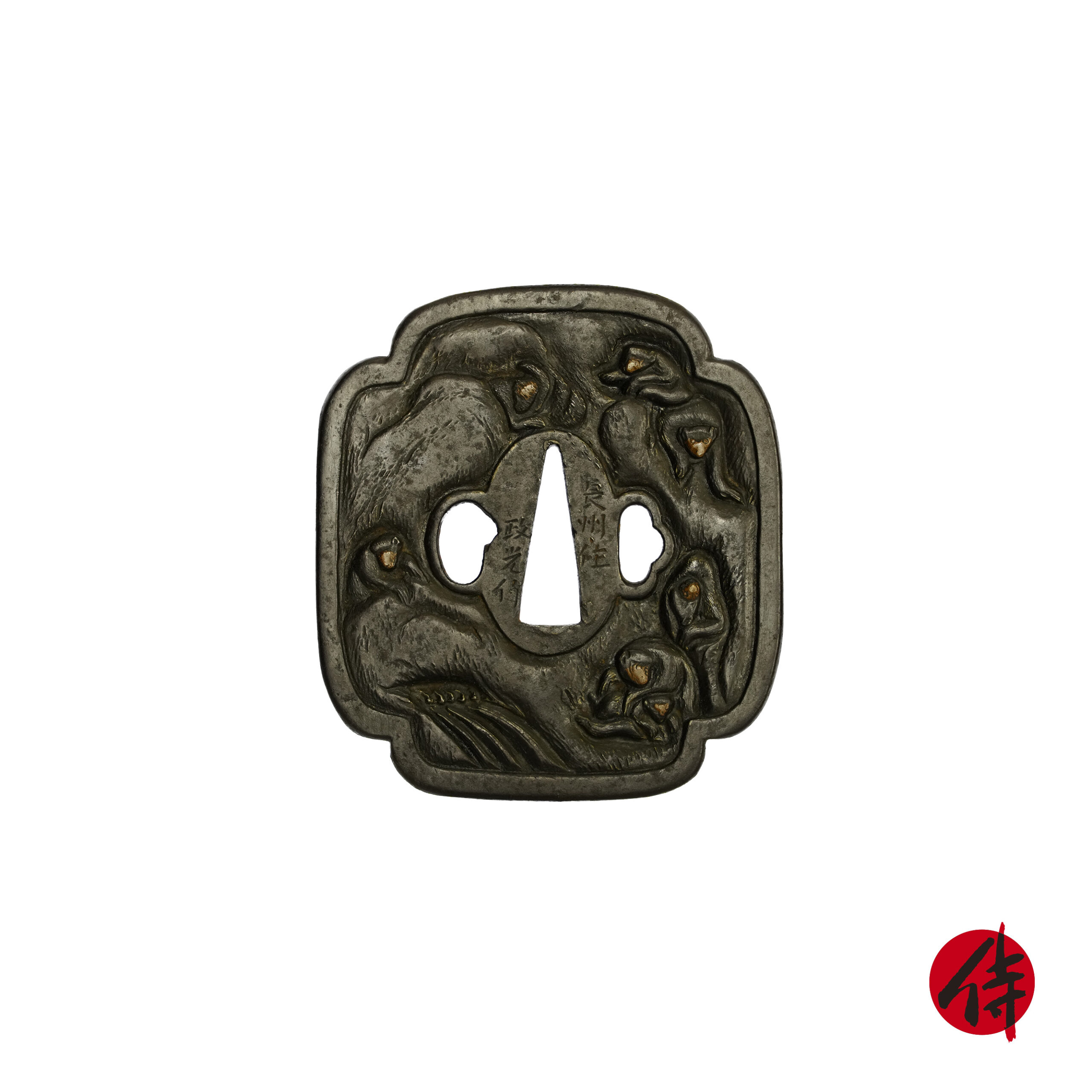
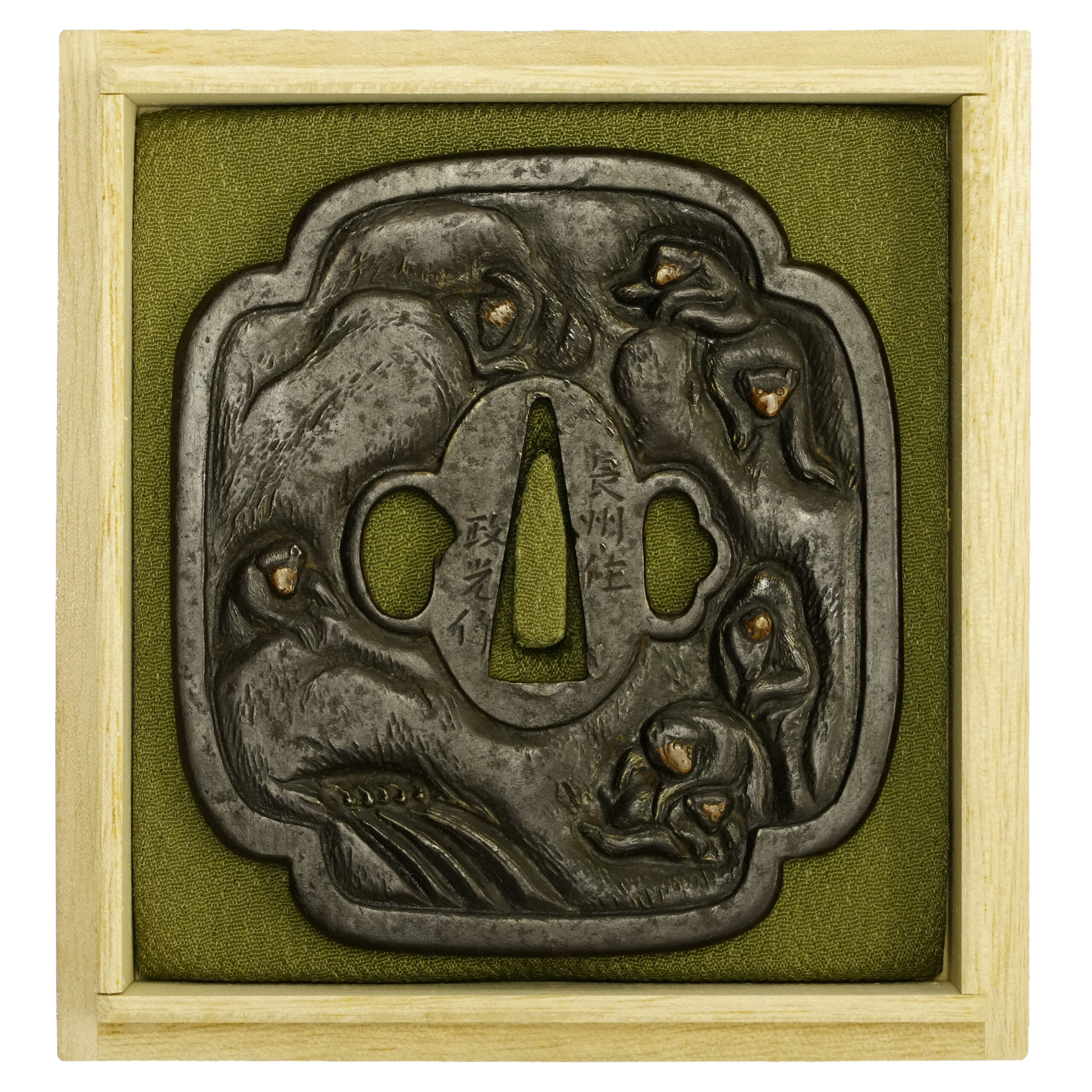
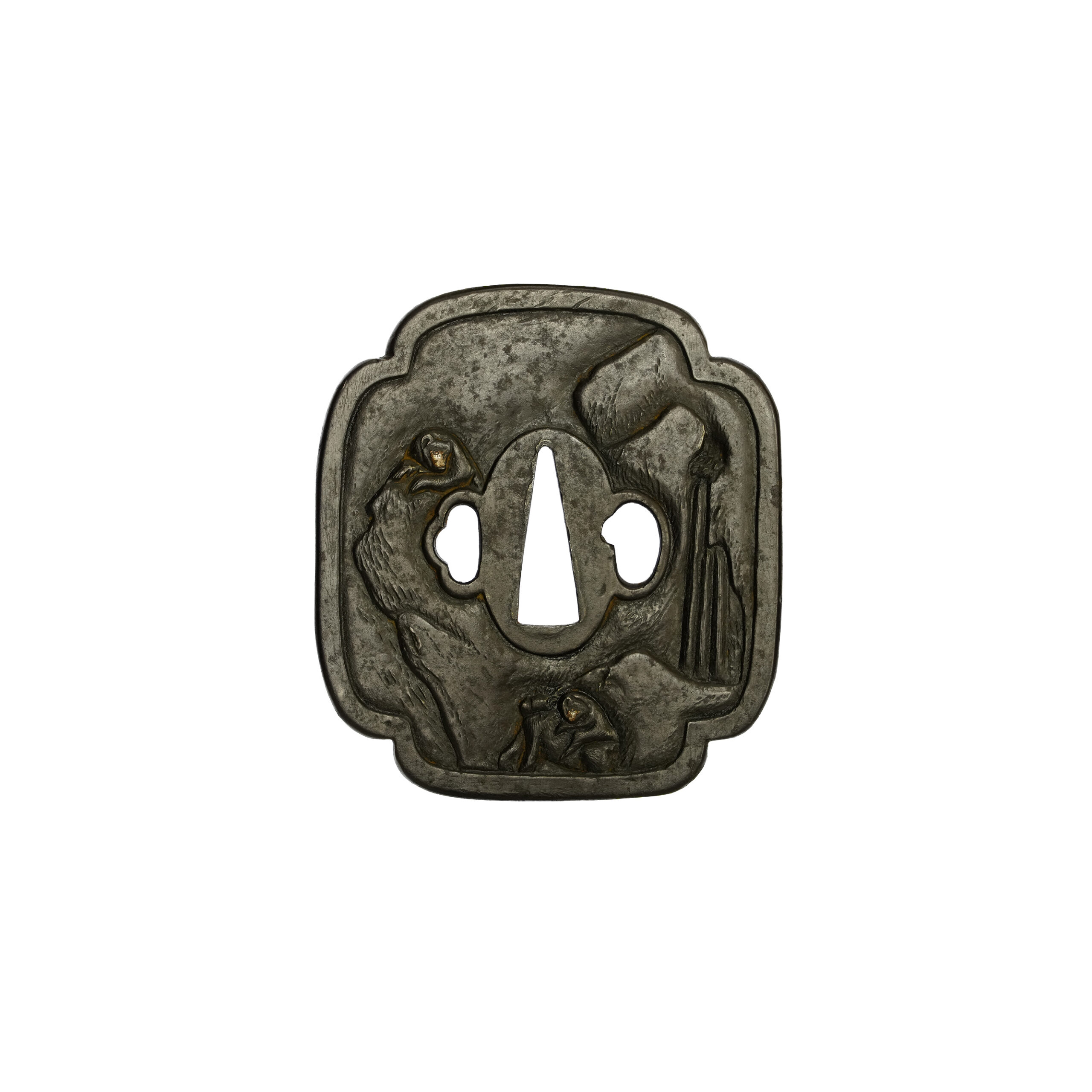
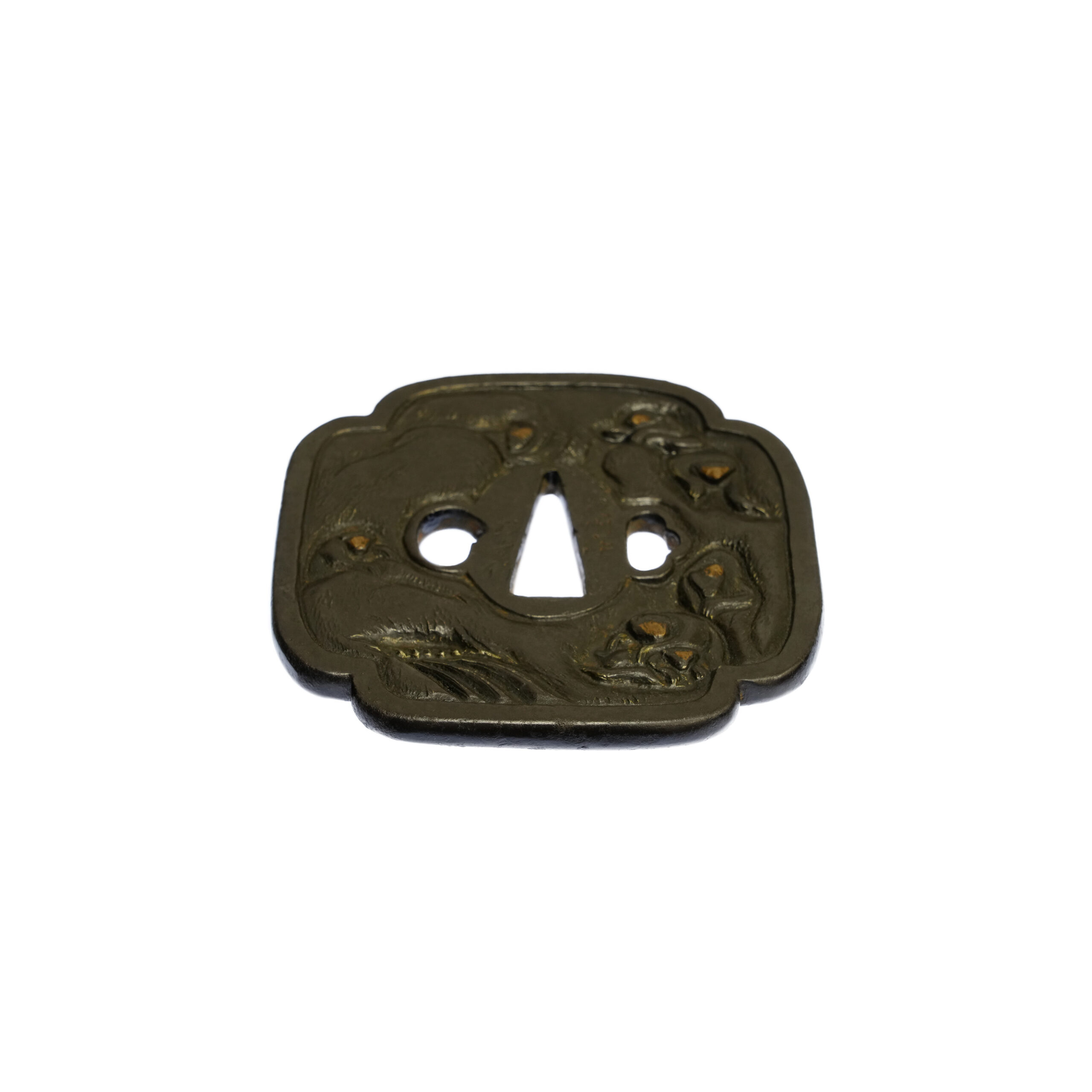
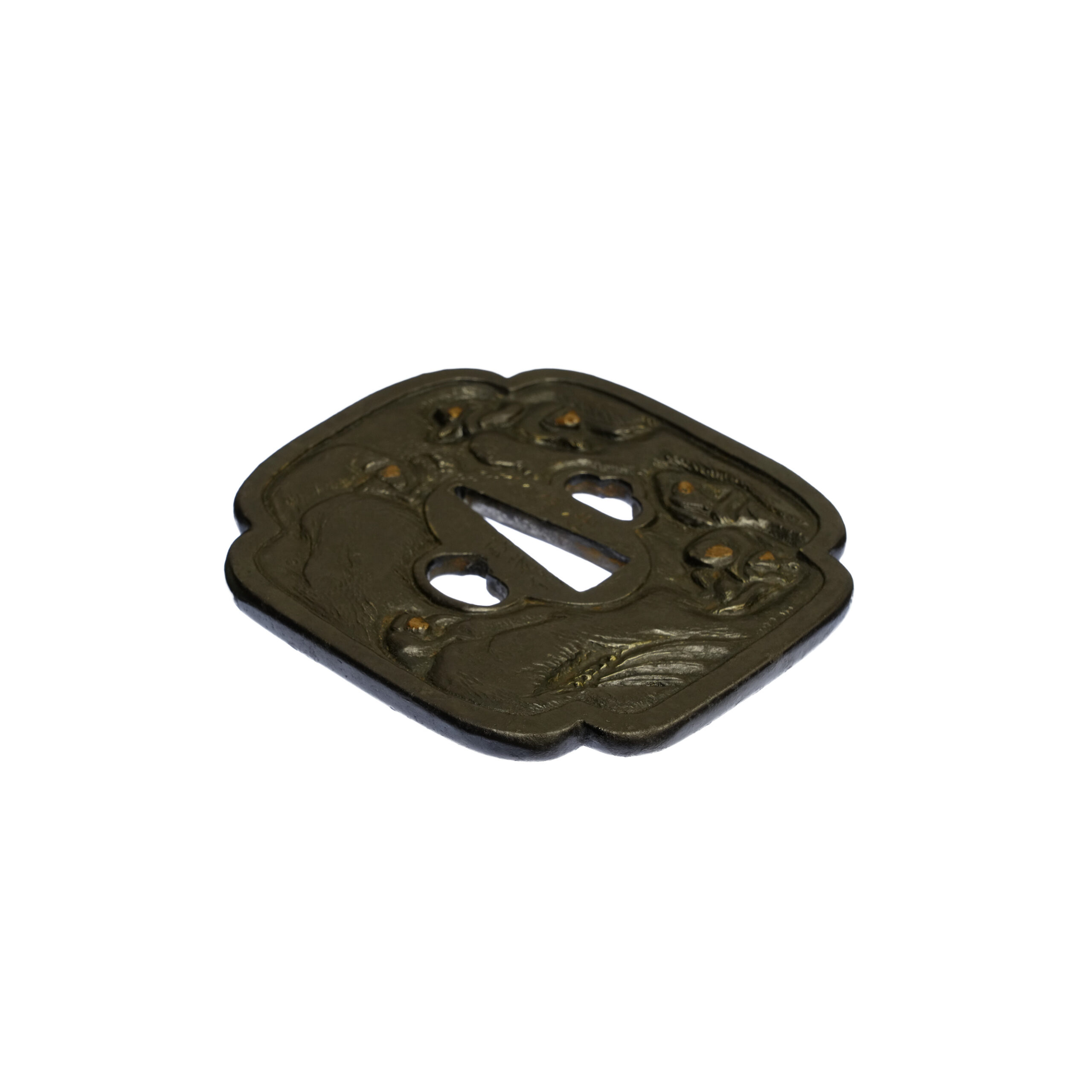
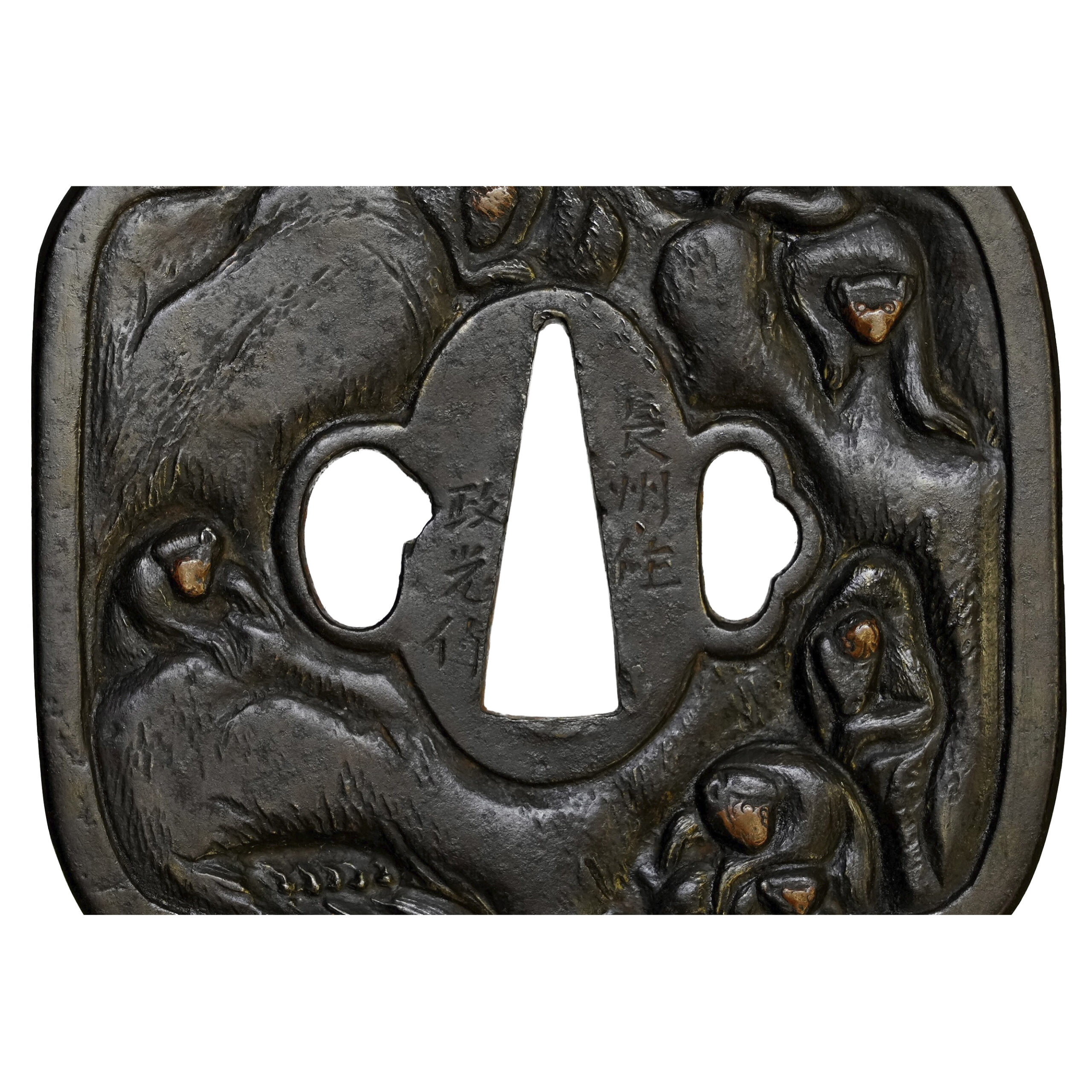
This Tsuba depicts a group of the Saru (猿, monkey) living in the mountains. The monkeys take their place in their own way; some are relaxing, and others seem to be parent and child, these parents loving their children. The faces of the monkeys are probably painted with copper, making their expressions more visible. Generally speaking, as we know, monkeys belong to the same primates as humans. Therefore, it is considered to be the closest animal to humans. It is probably why monkeys have often been personified in pictures and stories since ancient times. According to a theory, the monkey has been regarded as a messenger of god in the continent. People believed that monkeys would protect horses, so they kept monkeys as stable guardians. People worshiped the monkey’s sacred power, and this animal was considered an auspicious existence. This idea was introduced from the continent to Japan. We imagine that Samurai also treated this animal motif as unique. According to the Mei (銘, engraved inscription), this Tsuba’s maker lived in Choshu (長州) area. This domain has concentrated energy for Tsuba production. Since the Choshu clan’s encouragement to export Choshu Tsubas and earn financial resources, we could find Choshu Tsubas everywhere today. Based on such a background, many Tsuba creators were in this region, and many Tsubas were produced there. However, it is therefore not easy to identify detailed information about the maker from the inscription. For example, this Tsuba’s maker is Masamitsu (政光) from the engraved inscription. Only his name is the information we could know. A theory says that the Choshu school makers have actively interacted with the Edo Itou (江戸伊東) school since the middle of the Edo period. Therefore, it is said that the Itou school’s style influenced their works. Understandably, some Choshu-style Tsubas have similarities with the Itou-style Tsubas. Please note that there is NO provenance or certificate that proves its signature’s authenticity.
NihontoWatch
販売店の記載のまま
家彫 · 陸奥 · 1670頃
現在3点販売中
正光の位置づけを、日本刀全体および伝法・時代・時期ごとに示します。各区分(随一・屈指・有数・著名)は、NBTHK および文化庁による指定に加え、三作や名物帳などの歴史的栄誉を加味したものです。
各項目を選ぶと評価方法が表示されます。
家彫 · 山城
現在317点販売中
後藤派は、室町時代中期に初代祐乗が将軍足利義政に仕えて創始した彫金の宗家であり、「日本彫物の元祖」と仰がれ、「古今独歩の鏨師」と賞賛される祐乗を祖として十五代にわたり嫡流の技を継承した。祐乗の作品は東山御物として数多く取り上げられ、後世に名を残した名工は挙って後藤家の祐乗に範をとっている。四代光乗・五代徳乗は織田信長、次いで豊臣秀吉に仕え、大判・分銅・彫物の三役を担い、桃山時代の豪華美を格調高く表示した。幕末には一乗が「後藤家の掉尾を飾る名工」として家風を大成し、門下の荒木東明・中川一勝らが一派の技を継承した。 後藤派の作域は三所物・縁頭・鐔・揃金具と多岐にわたり、赤銅魚子地を基調とした高彫金色絵を家風の根幹とする。金紋裏哺金仕立の小柄笄、金無垢地容彫の目貫など、素材と技法の選択に一貫した格式が認められる。三代乗真は「大振りで力強く、量感の豊かな彫技」[[c:1]]を特徴とし、紋の肉取りが豊かで鏨使いが手強く、赤銅の色相も漆黒で麗わしい。桃山期の作には鋤出高彫に金・銀・素銅の象嵌色絵を駆使した豪華絢爛の大名道具が見られ、近世には四分一磨地や朧銀地に甲鋤毛彫・平象嵌を組み合わせた多彩な表現も展開された。龍・獅子・鶏・犀・鯰といった動物意匠から、松竹梅・桐紋・粟穂・四季草花に至るまで画題は広範であり、各代が武家好みの吉祥意匠を格調高く仕上げている。 後藤派に帰せられる作品には「気品があって格調が高く」[[c:2]]「力漲る」と評される一貫した品格が通底する。歴代の折紙制度によって初代祐乗以来の作が厳格に鑑定・伝承され、「家彫の誇りは確実に後代に伝わっている」[[c:3]]と繰り返し認められる。後藤流に熟達した門弟の作が「後藤家御家彫と見紛うまでの出来」[[c:4]]と称されることからも、その規範性の高さが窺える。日本金工史において、後藤派は赤銅魚子地高彫金色絵という技法体系を確立し、室町から明治に至る四百余年の間、彫金の最高規範として君臨した一門である。 詳しく見る →
Returns/exchanges limited to defects caused by shipping (except willful misconduct or gross negligence by the company); customers must contact within 72 hours of receiving the product.