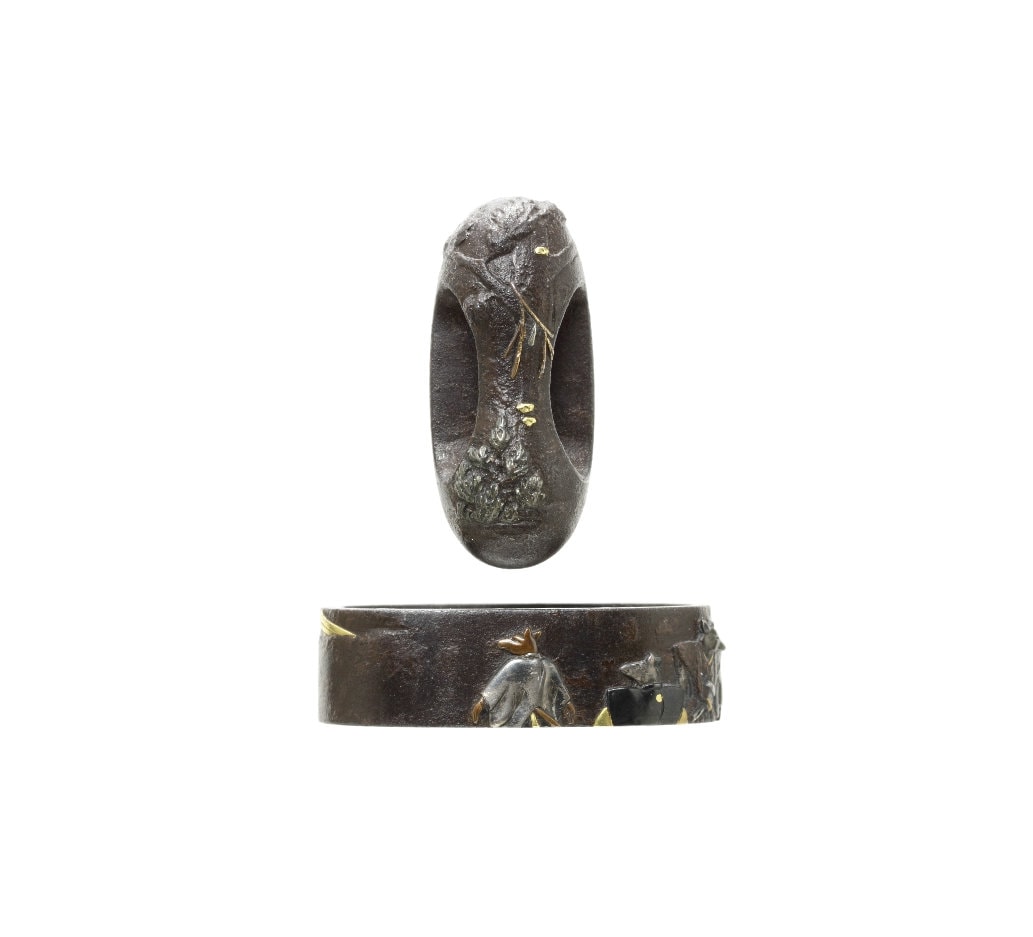
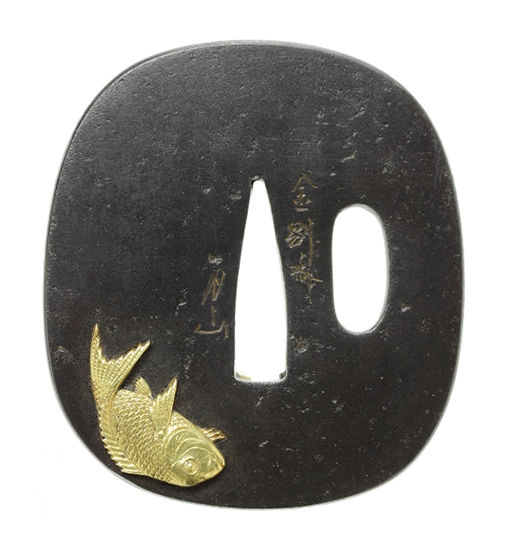
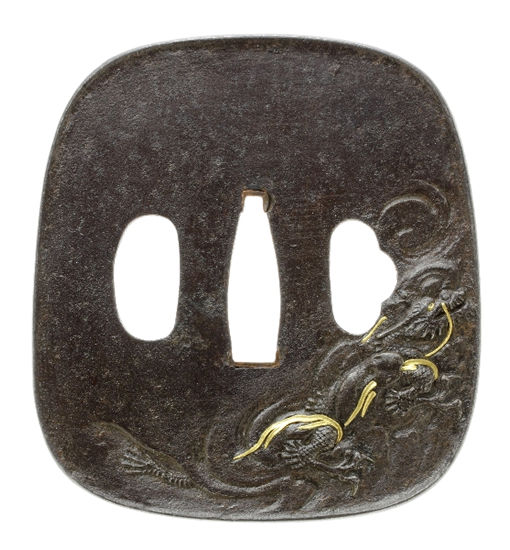
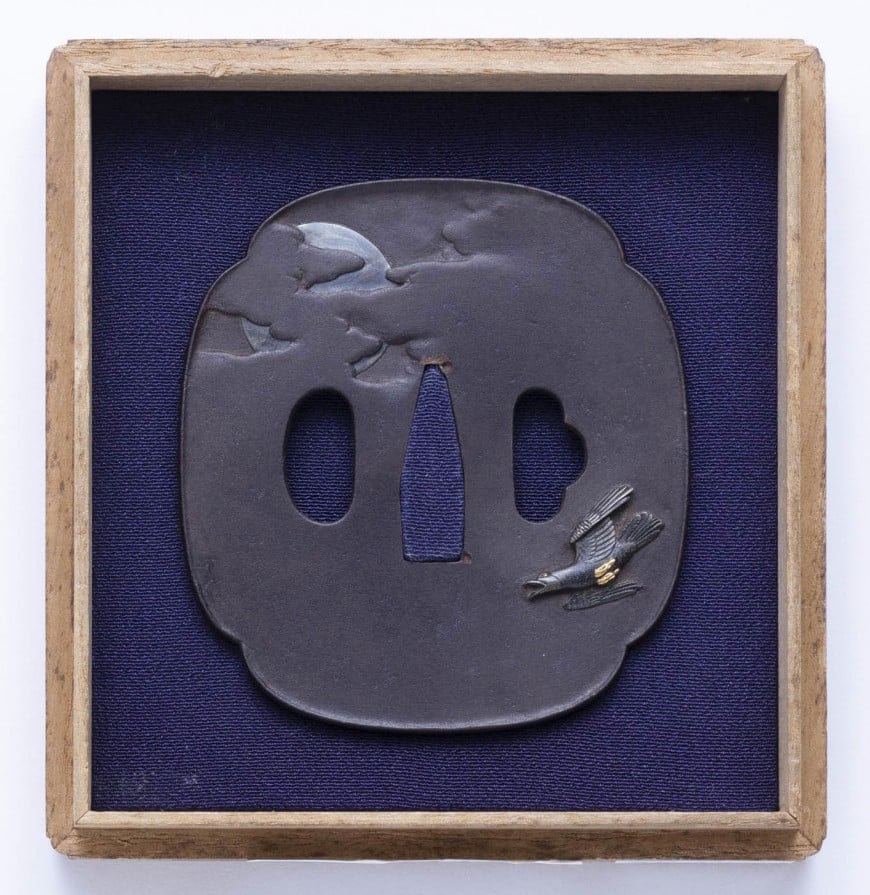
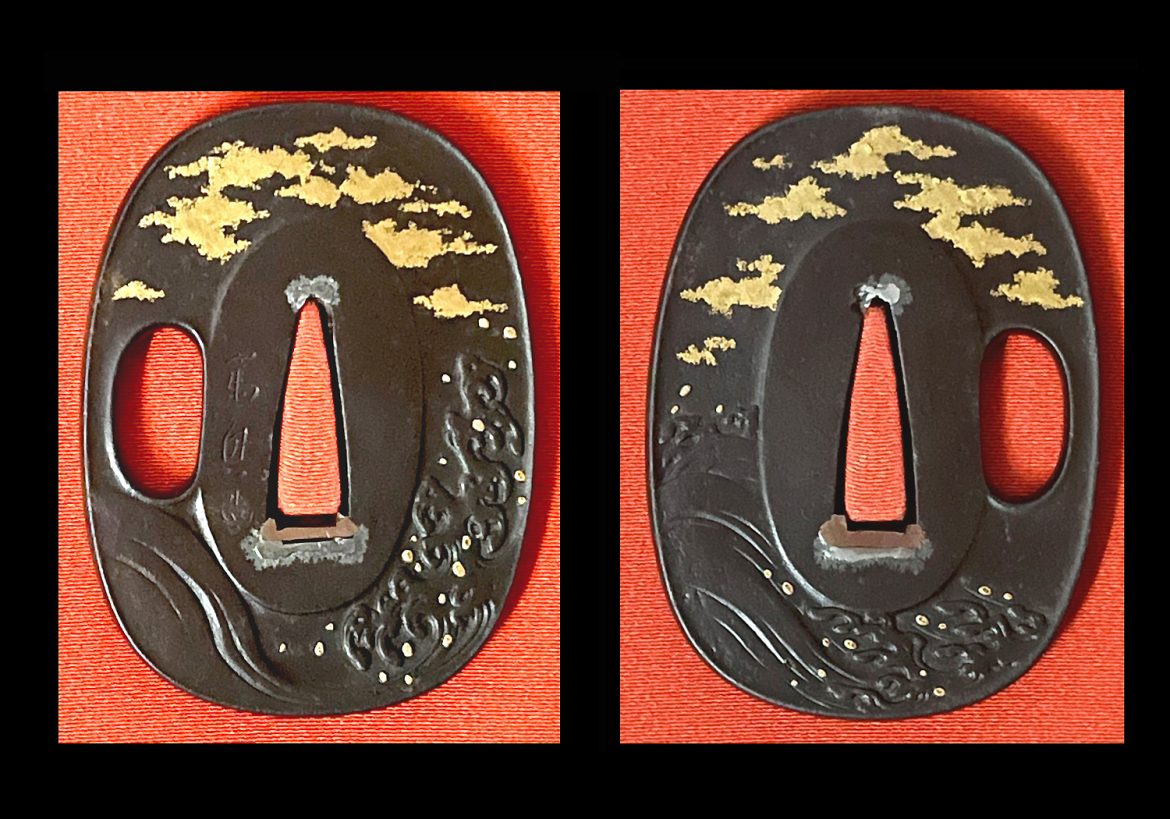
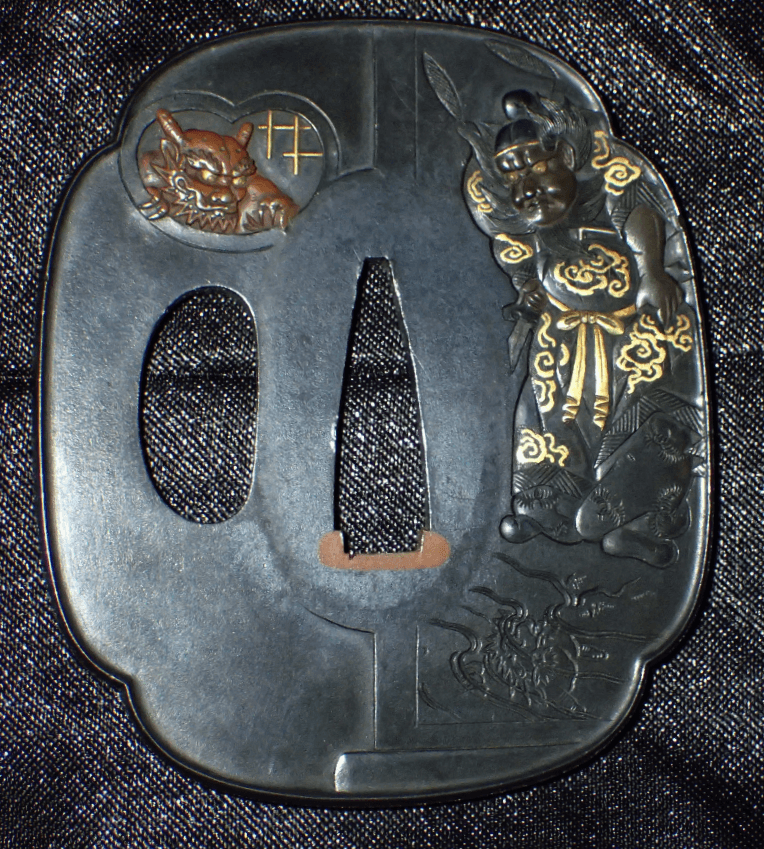
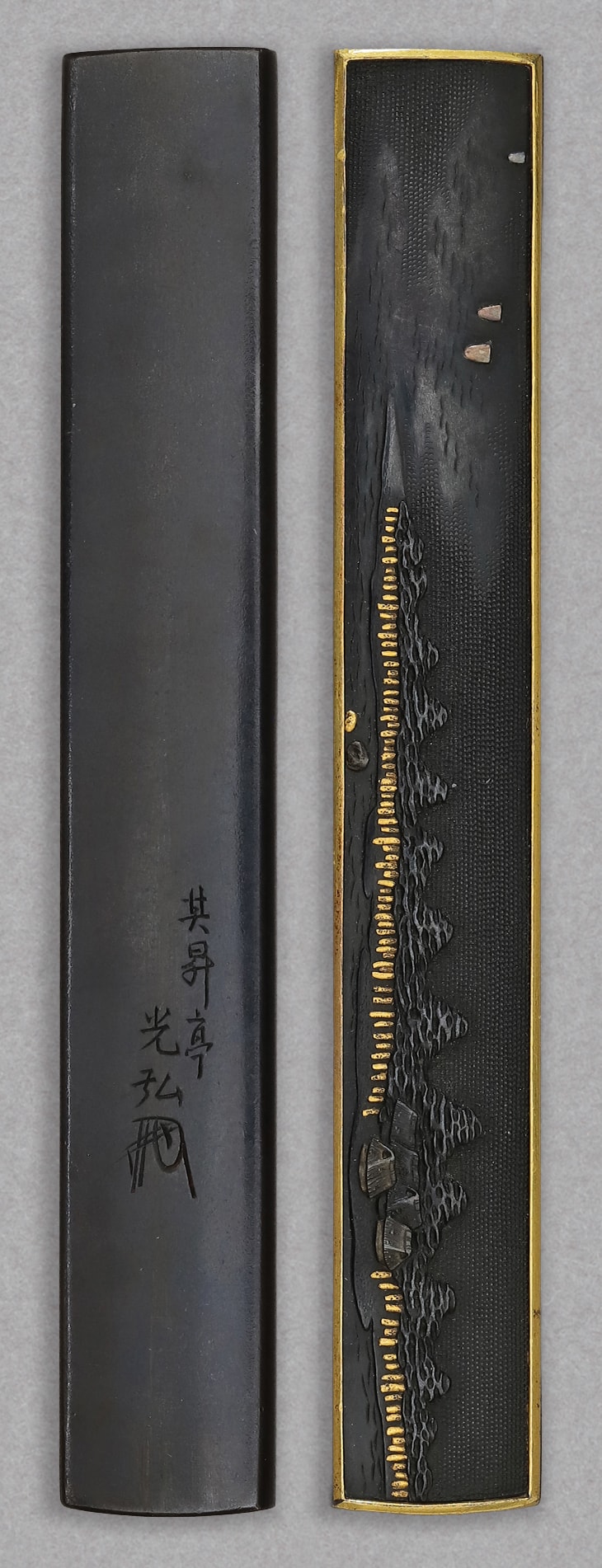
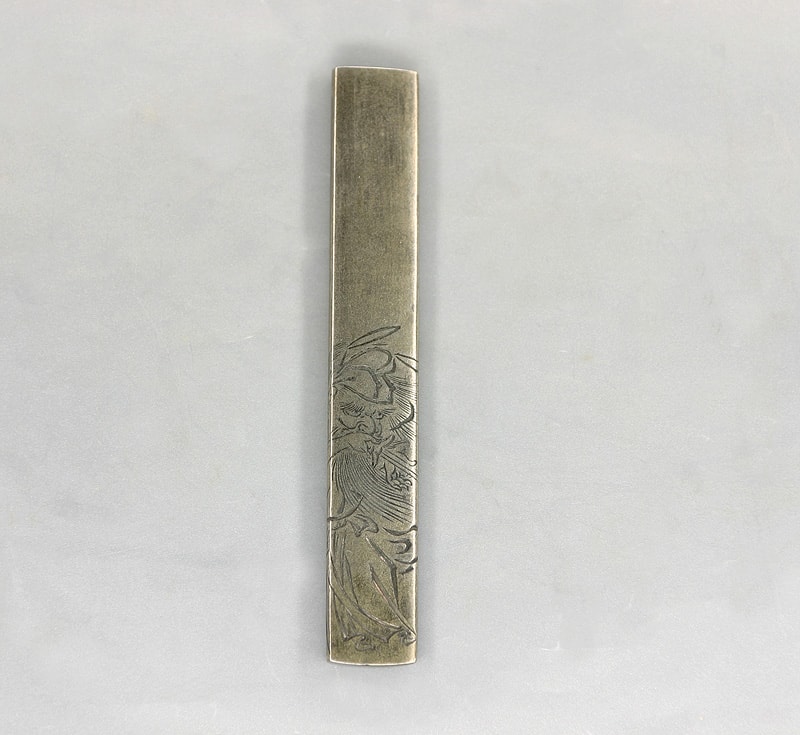
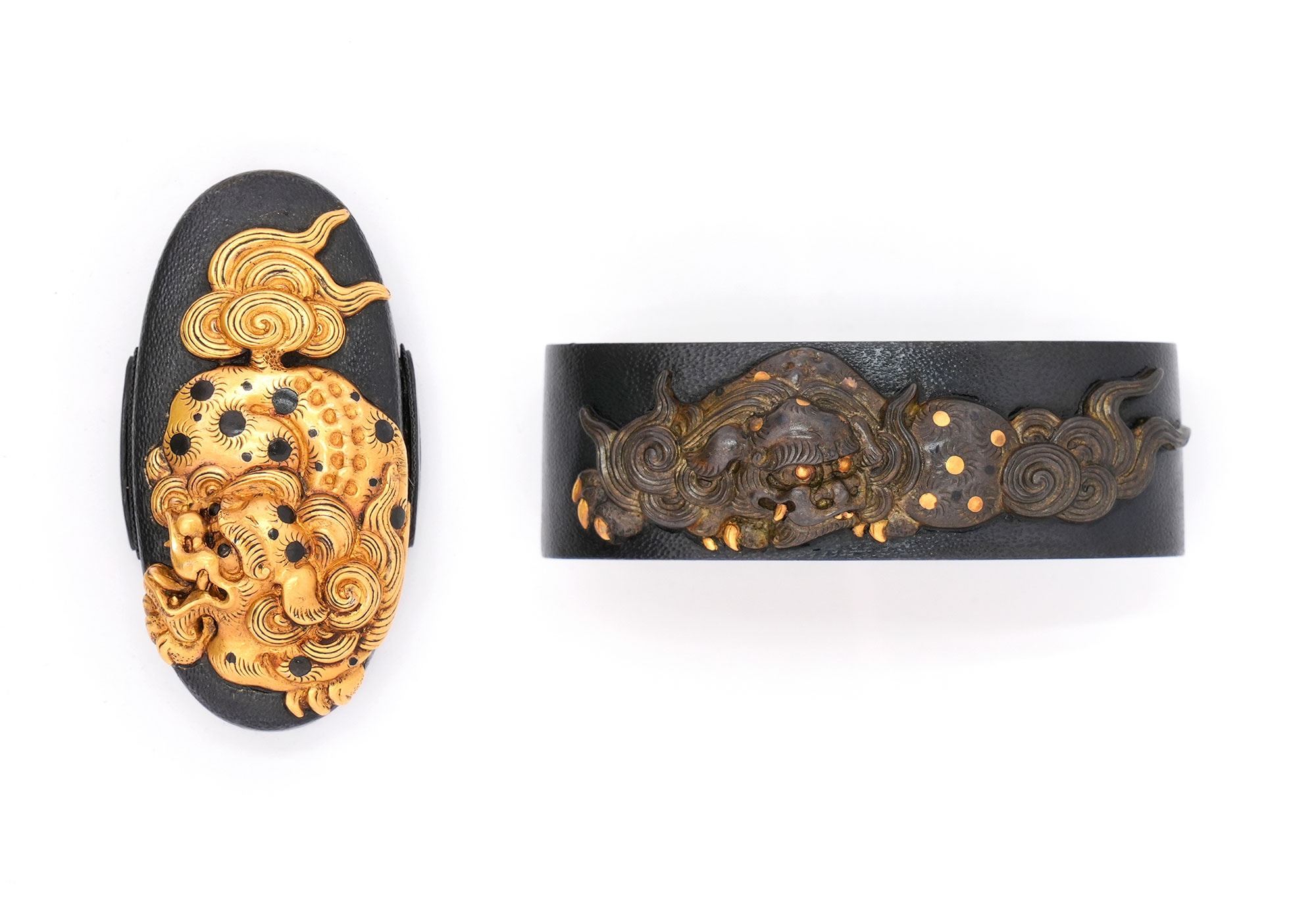
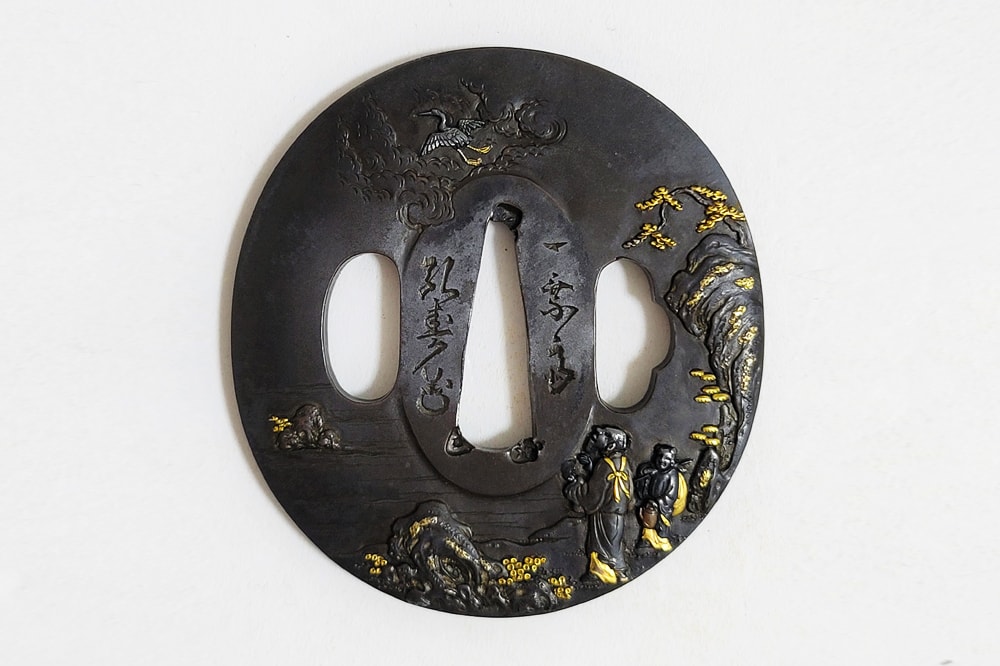
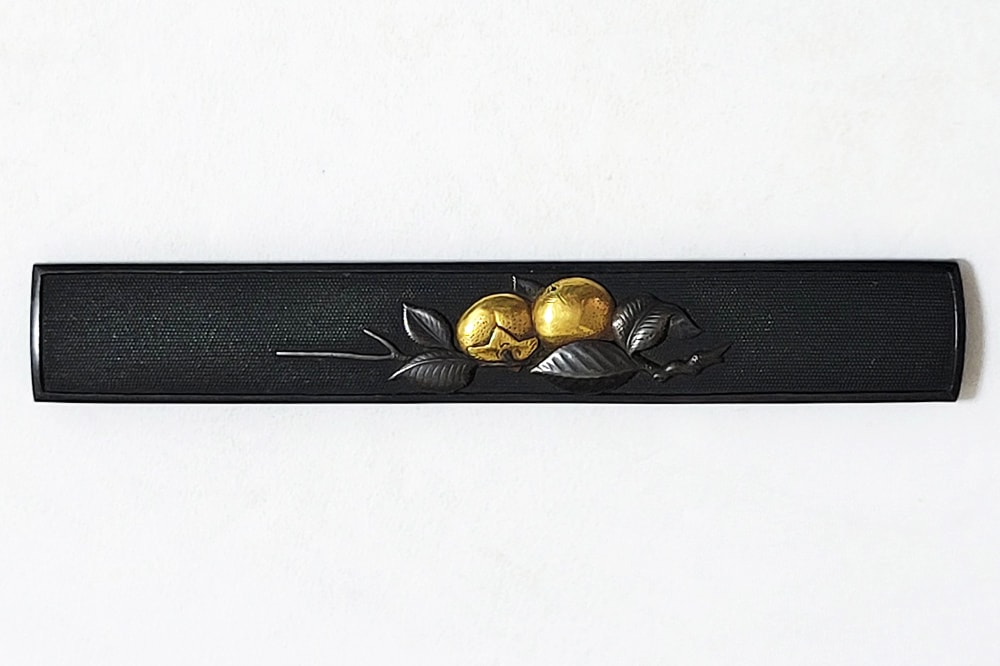
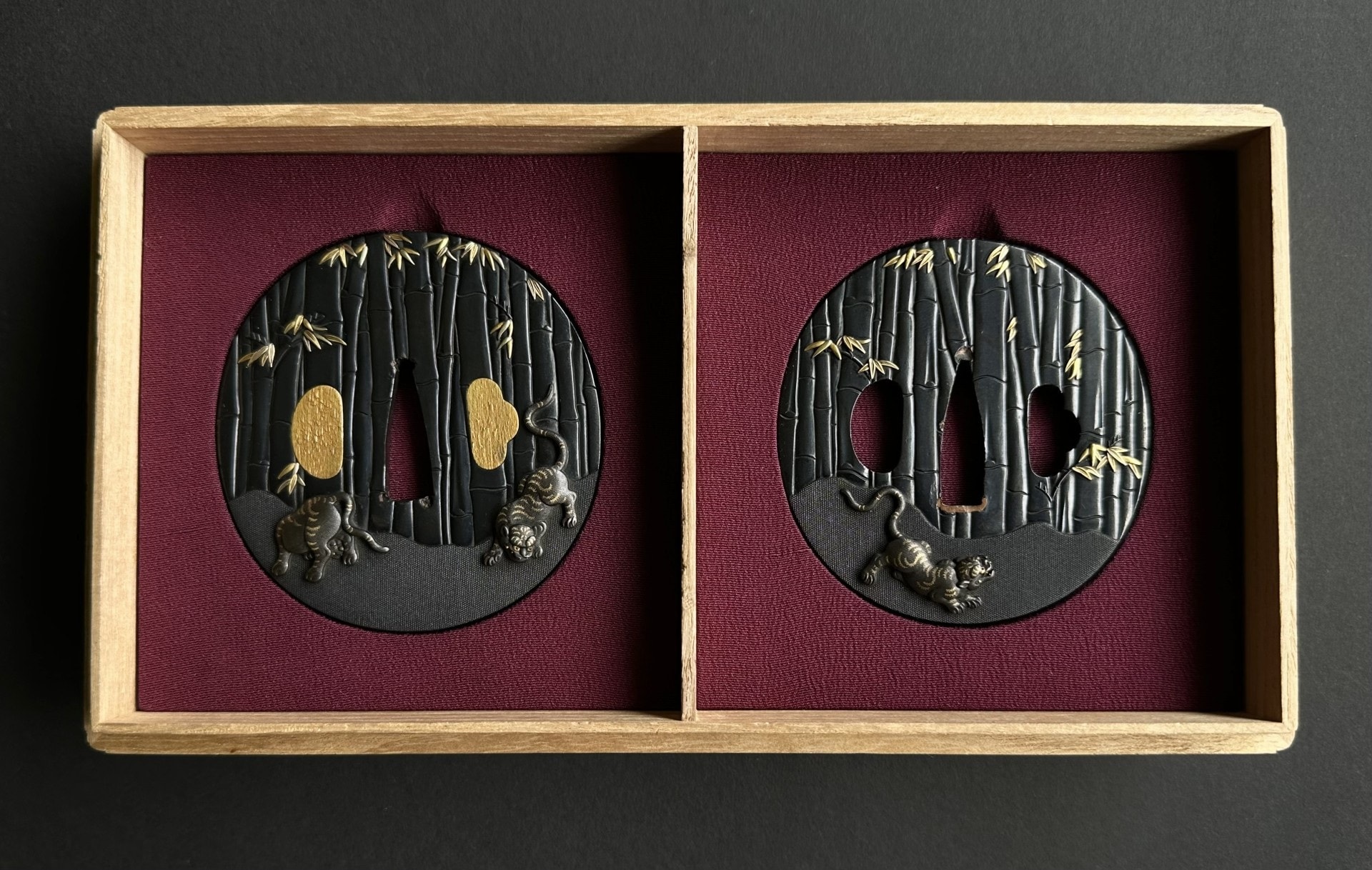
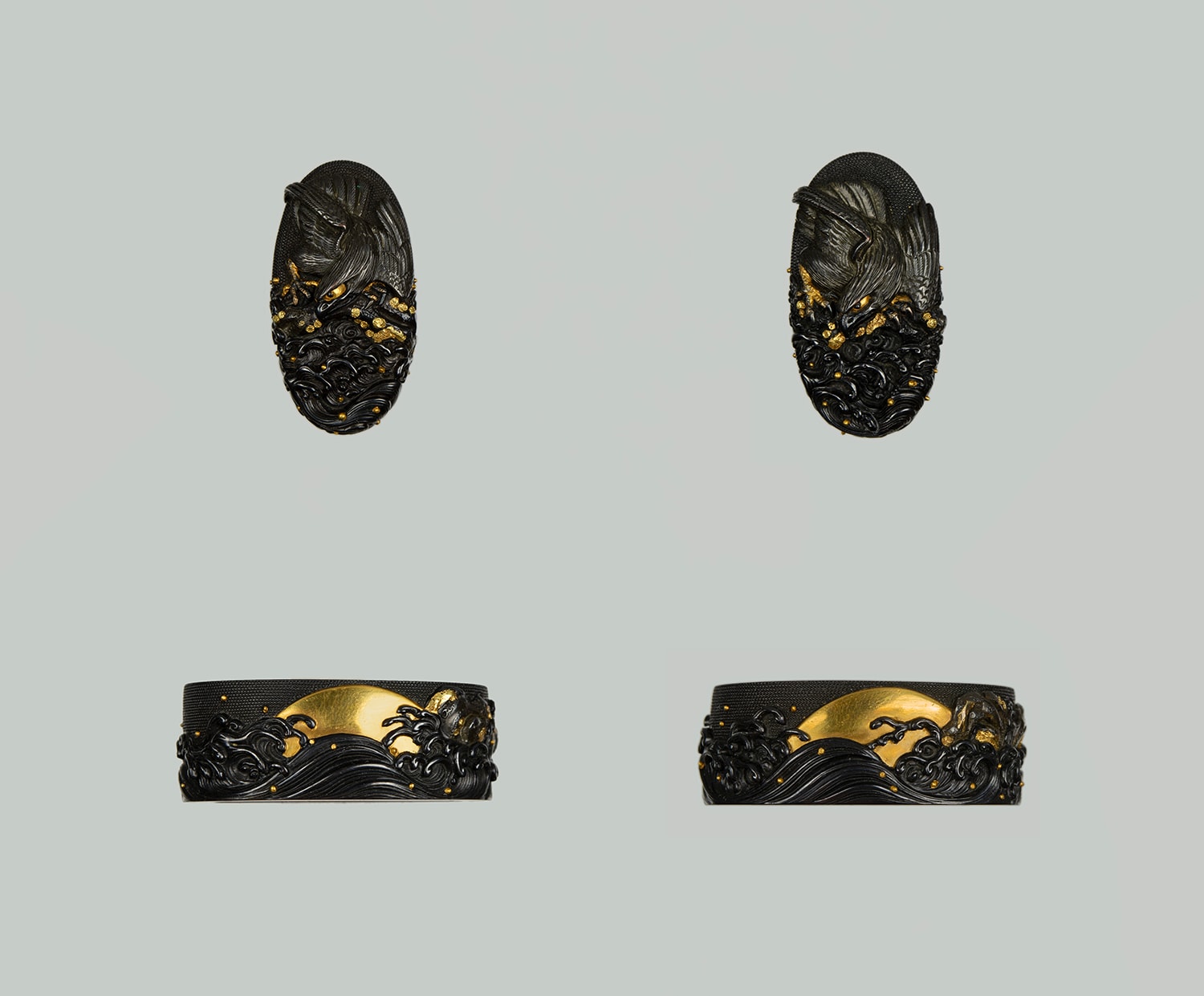
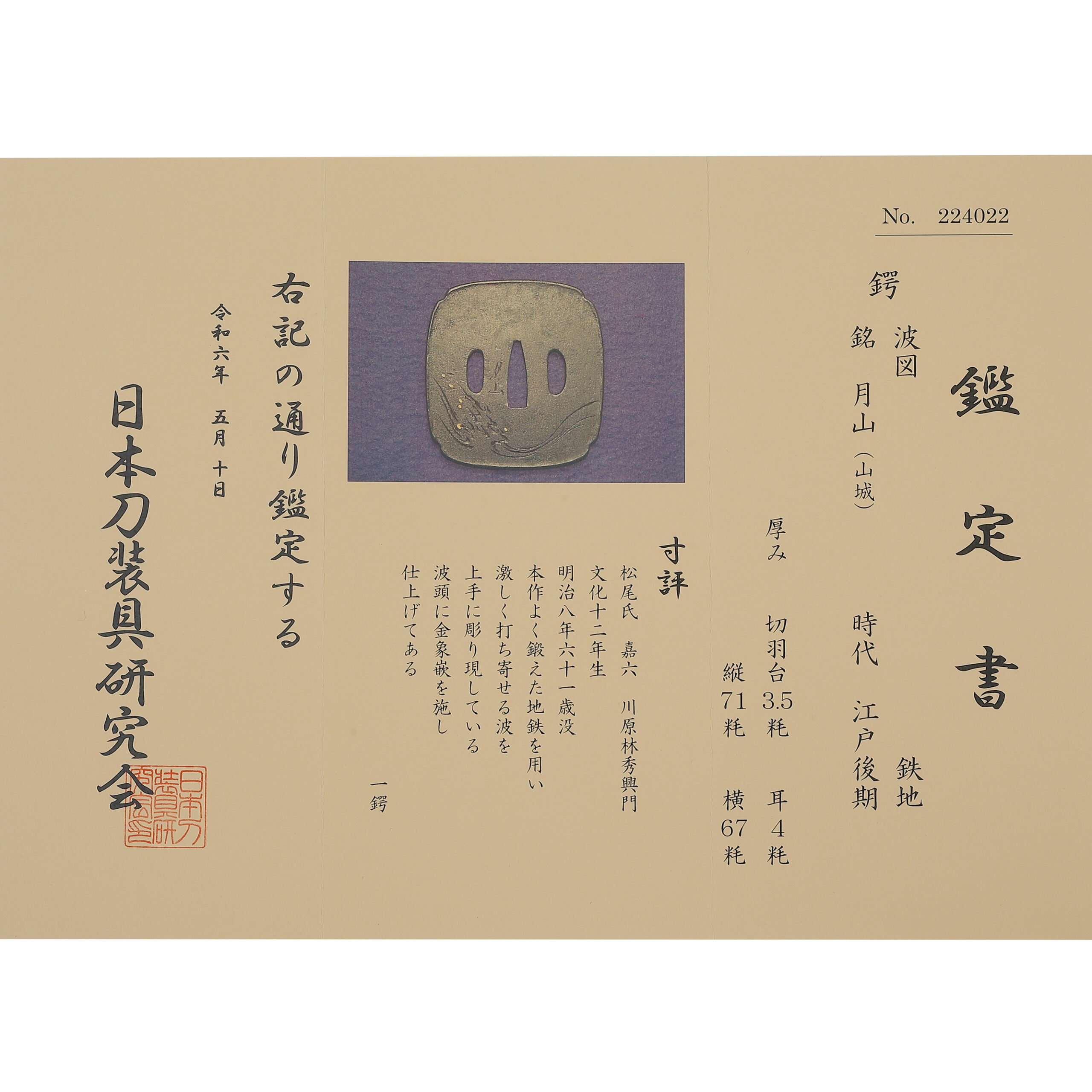
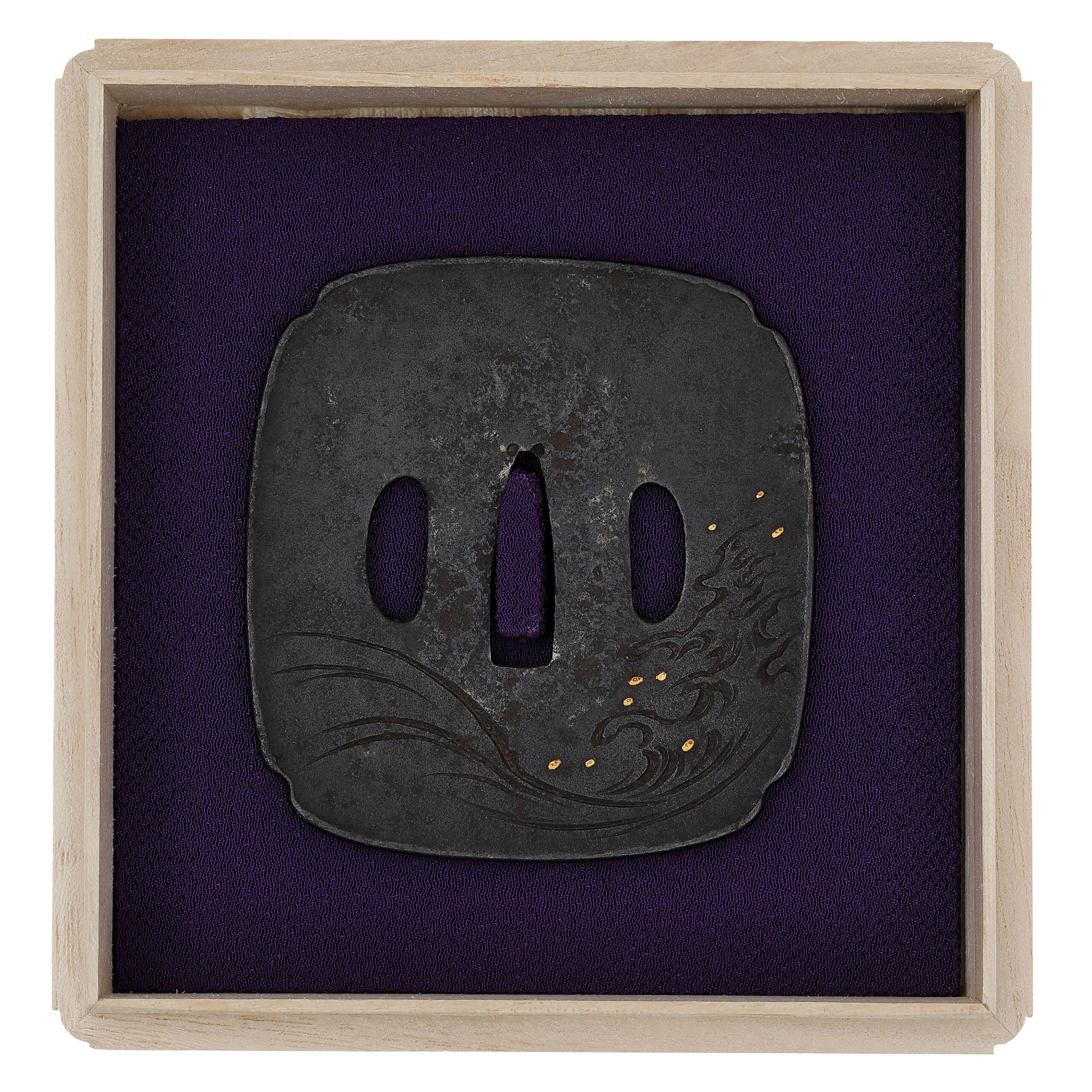
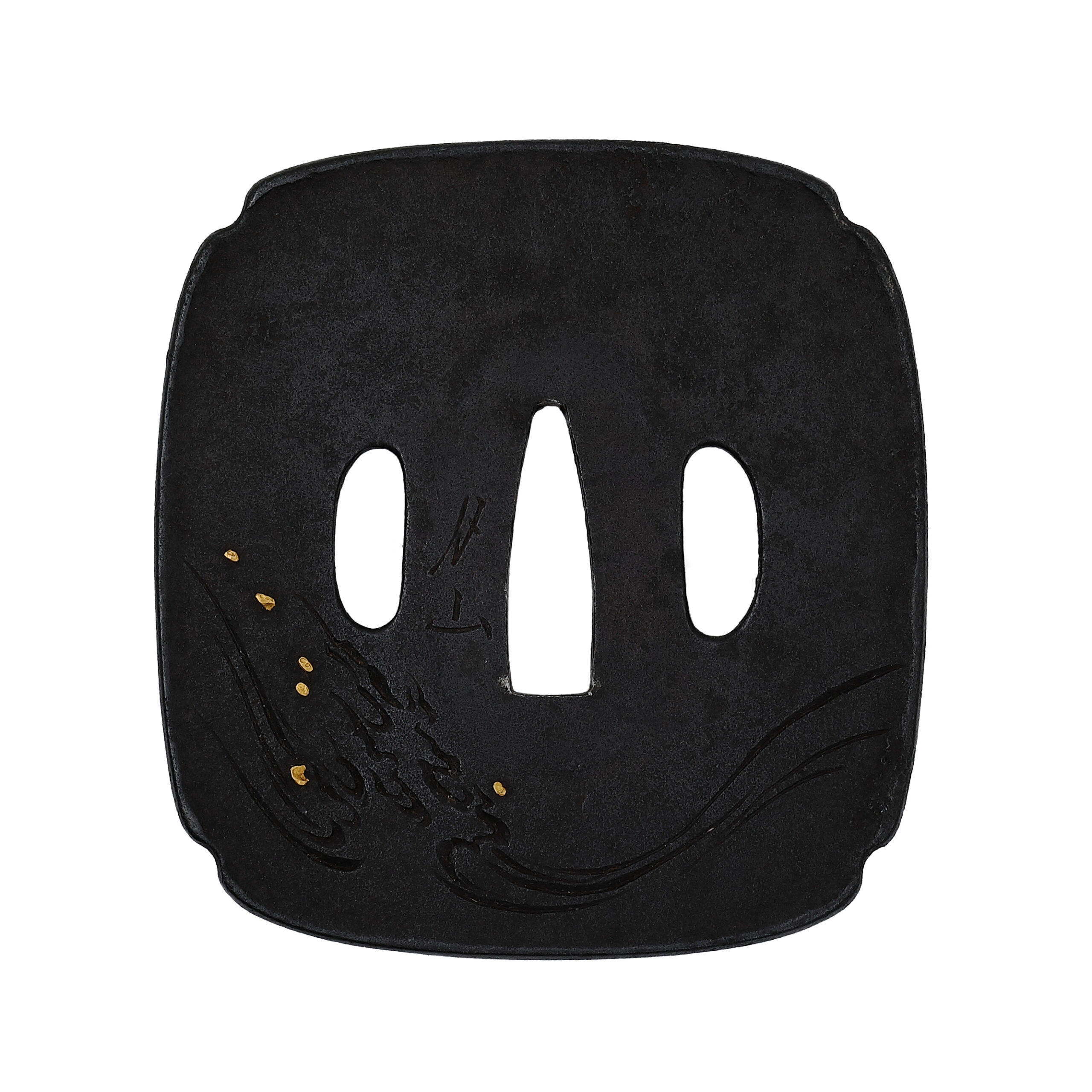
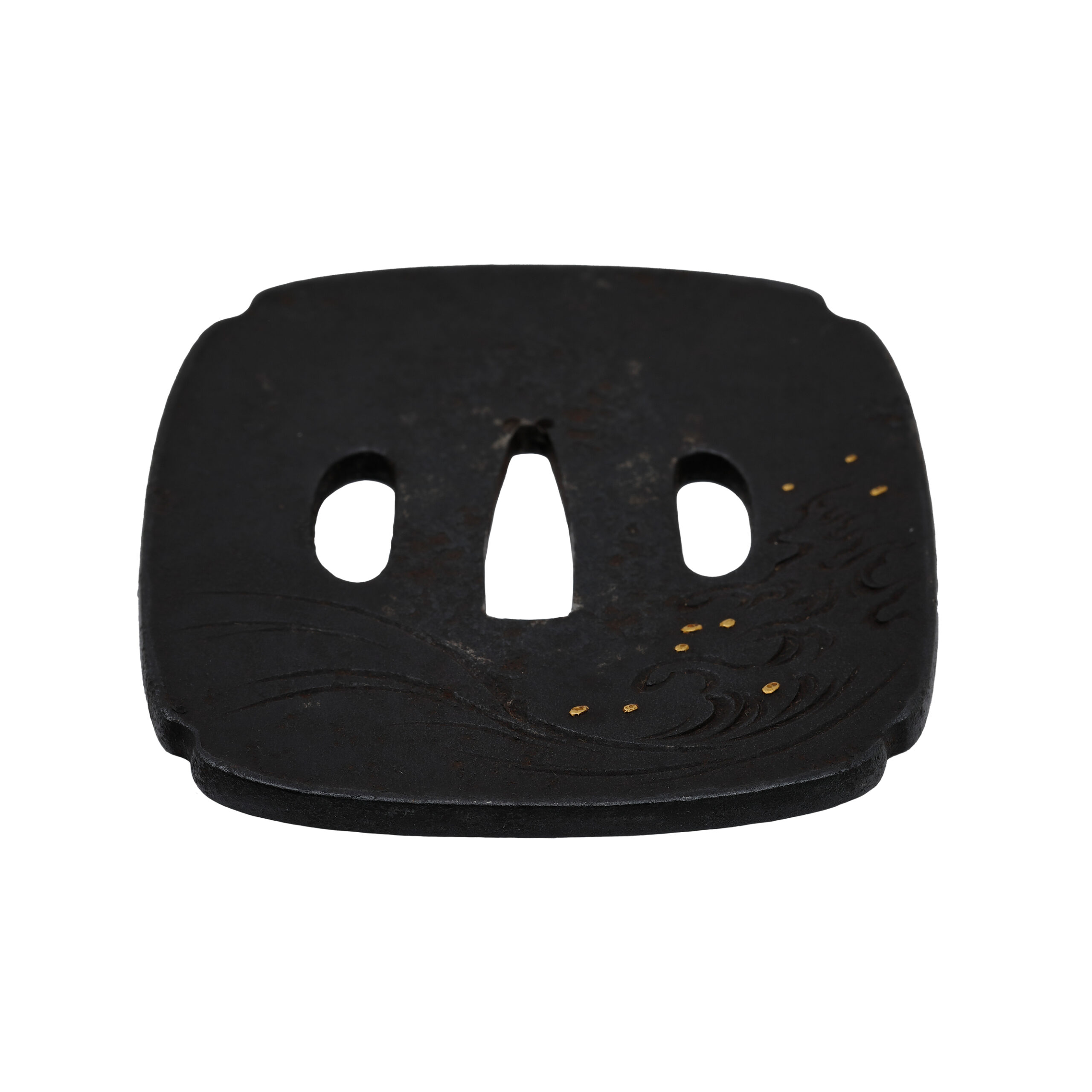
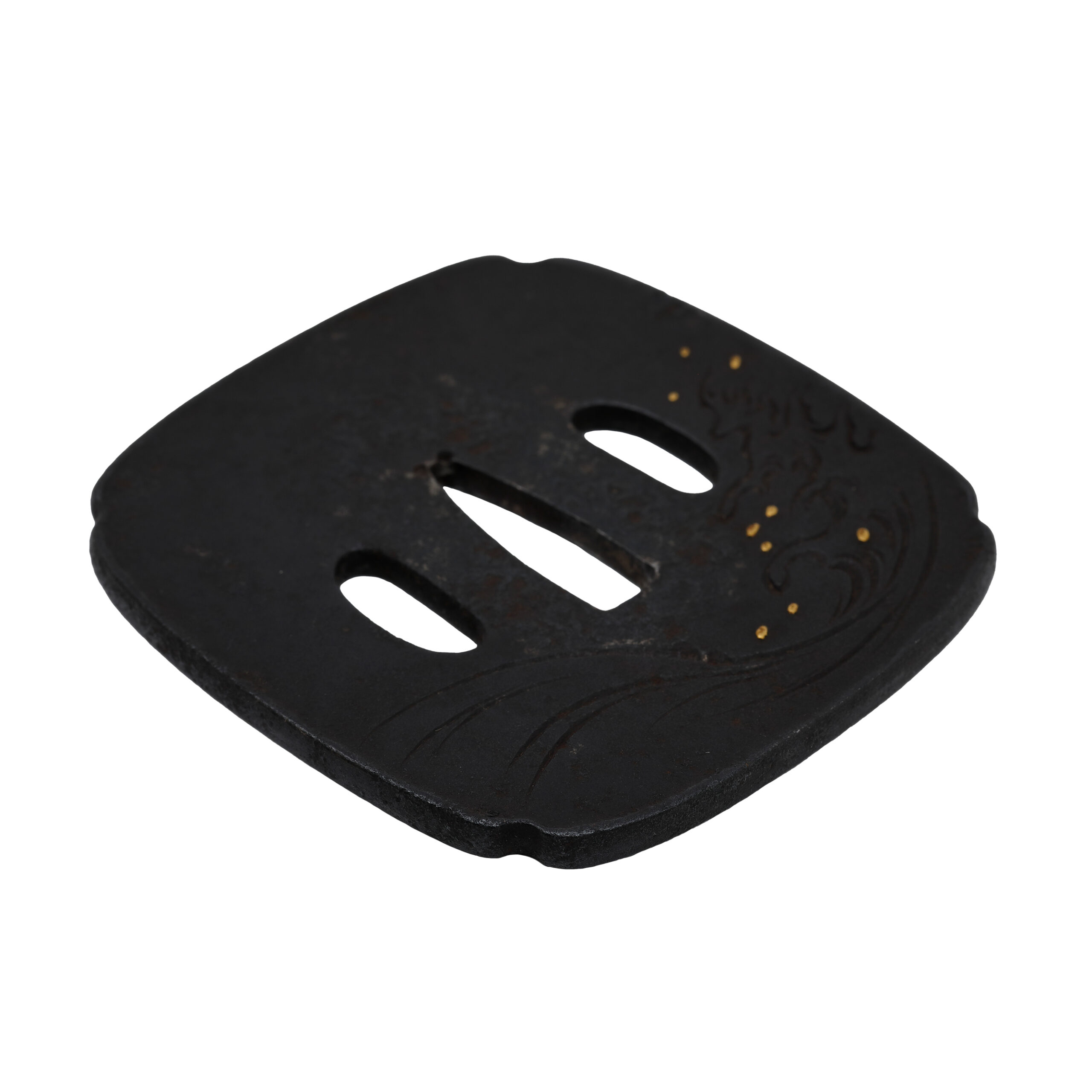
波図鐔 【作品解説】 鑑定書によれば、本作の制作者は月山(松尾月山、通称・嘉六)です。月山は文化12年(1815年)に生まれ、幕末期の山城国(現在の京都府)で活躍した名工です。 12歳で京都の名流・大月派の重鎮である川原林秀興の門に入り、その卓越した彫金技術のみならず、優れた意匠構成においても高く評価されました。本作は緻密に鍛え上げられた地鉄(じがね)を用いており、月山の真作は現存数が少なく、非常に稀少価値が高いことで知られています。 意匠については、力強く寄せる波が彫り込まれ、波頭には日本の伝統技法である金象嵌(ぞうがん)が美しく施されています。絶え間なく繰り返される波の動きは「永遠」「不老長寿」「誕生」などを象徴する吉祥文様です。また、波が岩の形をも変える力を持つことから、不撓不屈の精神や、何度でも立ち上がる強い意志の象徴としても武士に好まれました。その躍動感あふれるデザインは、古来より男性の装束においても愛されてきたモチーフです。 幕末の名工による力作を、ぜひお手元でご鑑賞ください。 ※アンティーク品のため、状態については写真にて詳細をご確認ください。 【鐔(つば)とは】 鐔は日本刀の拳を守る護具です。格式高い武士は、刀本体のみならず鐔などの刀装具にも意匠を凝らしました。特に鐔の表側は、登城の際などに他者の目に触れる機会が多いため、より装飾性の高い細工が施される傾向にあります。 【刀装具の重要性について】 日本刀には鐔のほか、目貫(めぬき)、縁頭(ふちがしら)といった様々な装飾具が備わっています。これらは単なる武器の部品ではなく、持ち主の個性や信念、美意識を映し出すものでした。現代で例えるなら、スマートフォンの装飾に近い感覚かもしれません。 ぜひ細部まで拡大してご覧ください。鉄や銅、赤銅、四分一などの地金に、金・銀・素銅などを象嵌する日本の高度な彫金技術が見て取れます。鐔一枚をとっても、その造形や重量感は千差万別です。刀本体と共に時代を生き抜いてきたこれらの装具は、美術品として刀剣に劣らぬ価値を有しています。一見控えめな部品ではありますが、こうした細部にまでこだわることこそが、真の愛刀家への第一歩と言えるでしょう。 【鑑定書について】 鑑定:日本刀装具研究会 鑑定書 本作には日本刀装具研究会による鑑定書が付属しています。 ※本組織は、日本美術刀剣保存協会(NBTHK)や日本刀剣保存会(NTHK)とは別の団体です。 鑑定日は令和6年(2024年)5月10日です。ご購入者様にはこちらの原本をお渡しいたします。ご希望があれば、記載内容の英訳PDFを作成することも可能です。 【運営元について】 サムライミュージアムは東京に所在し、侍の歴史に関する古美術品を展示しています。オンラインショップでは、日本文化や職人技に興味をお持ちの方へ向けて、刀剣・甲冑などのアンティーク品や伝統工芸品をご紹介しております。 【お支払い方法について】 Stripe(クレジットカード)、PayPal、Apple Pay、Google Payなど、各種安全な決済方法をご利用いただけます。Stripeでの決済にはアカウント作成は不要です。その他のお支払い方法をご希望の場合はお問い合わせください。日本円(JPY)のほか、米ドル(USD)、豪ドル(AUD)、カナダドル(CAD)、ユーロ(EUR)、スイスフラン(CHF)、英ポンド(GBP)での決済が可能です。価格は日本円を基準としております。
 NihontoWatch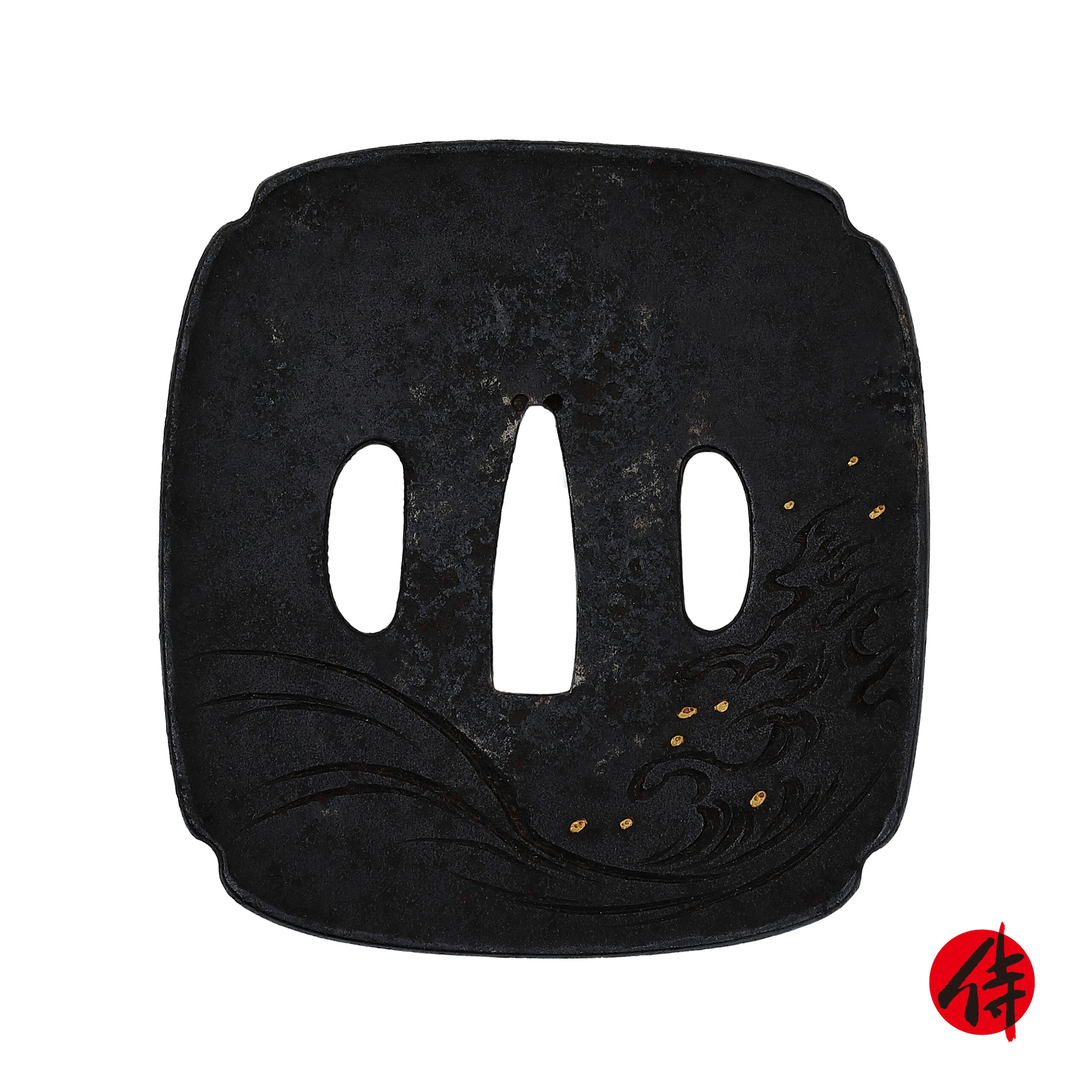
町彫 · 山城 · 1815-1875頃
現在1点販売中
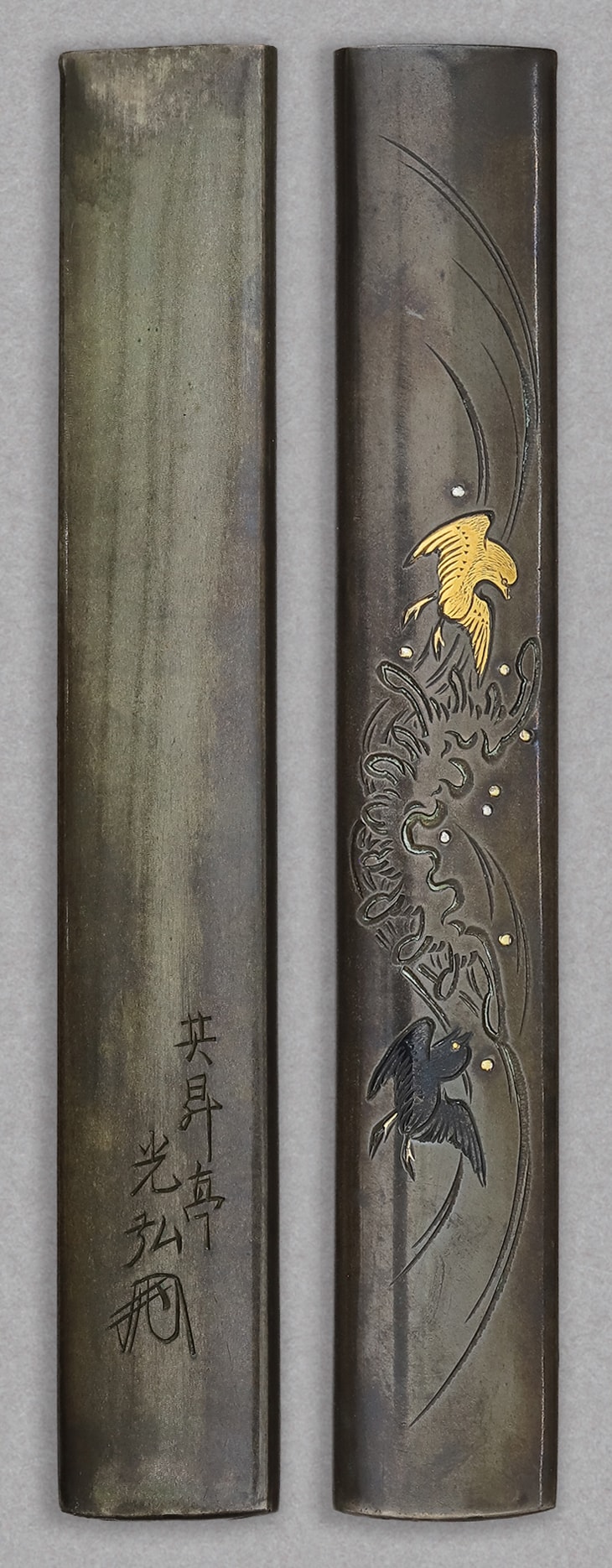
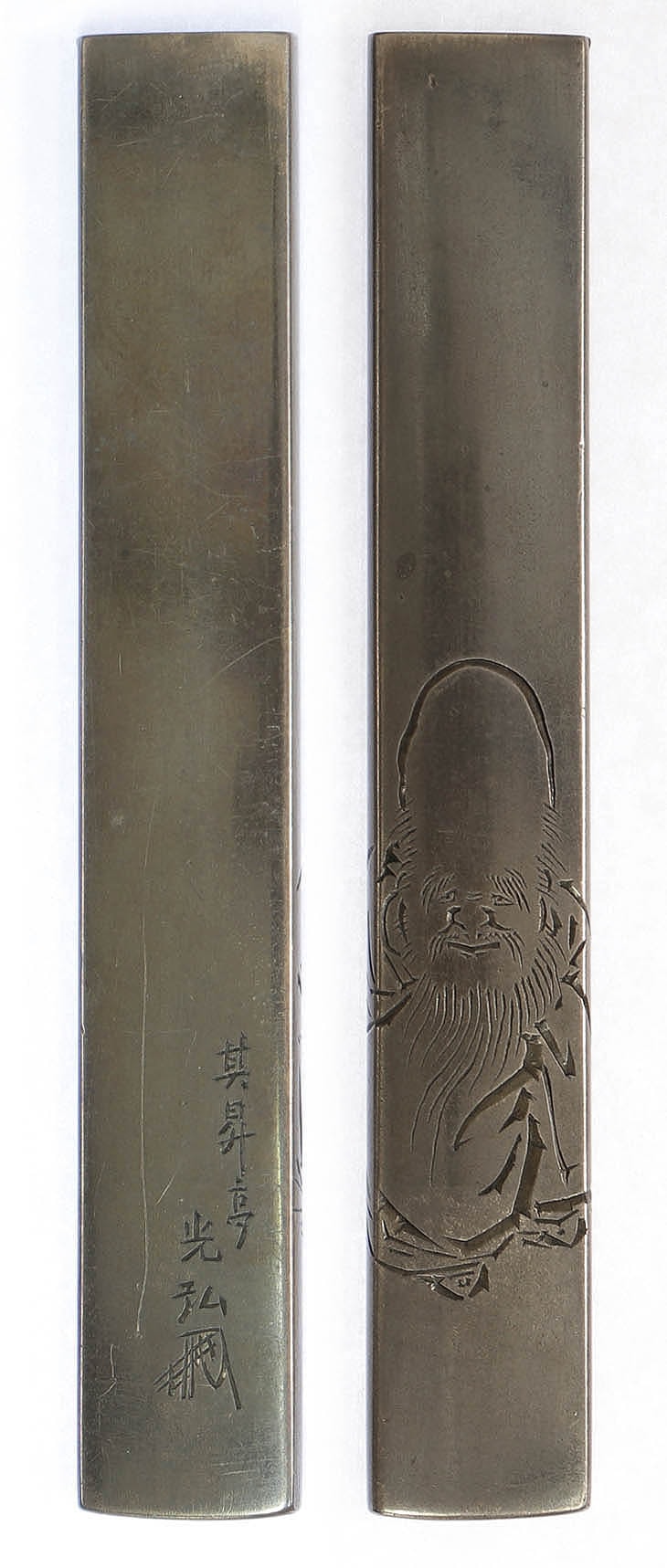
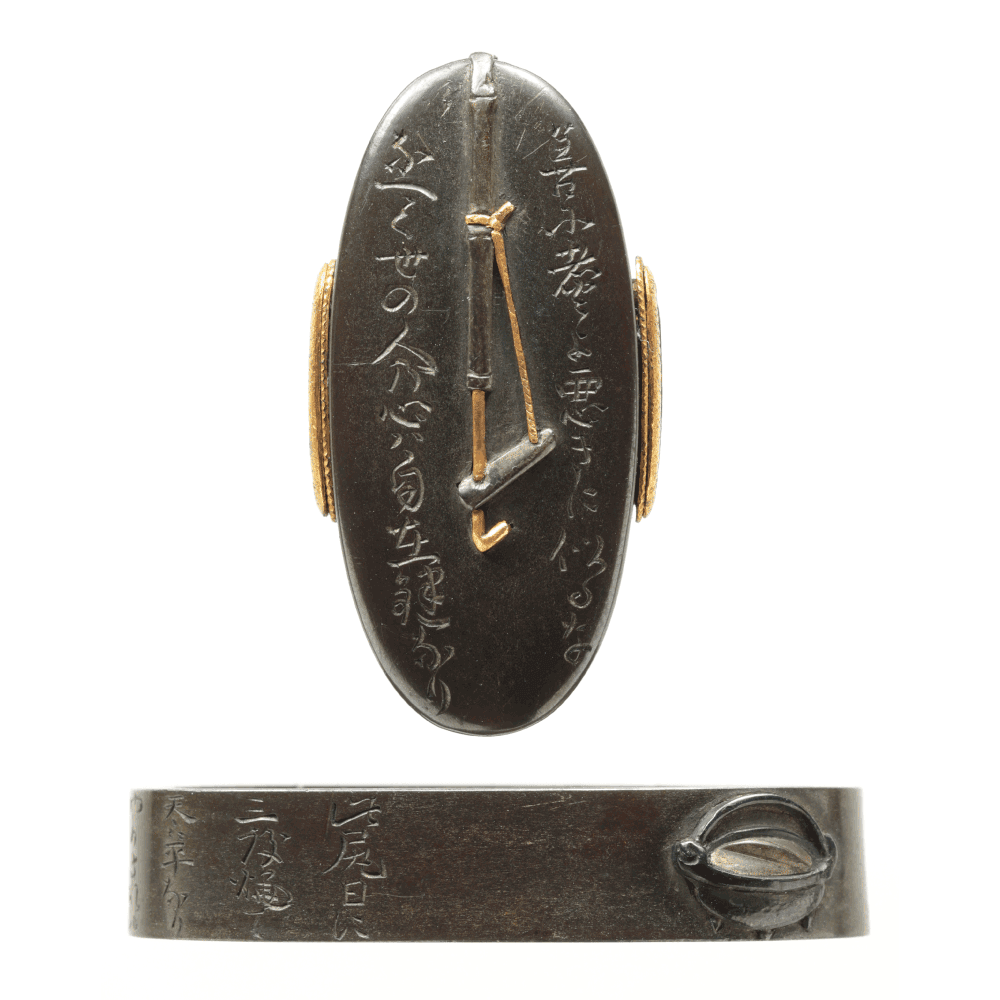
松尾月山は幕末の京都大月派の金工である。説明はその身元を詳しく記す。本名は松尾嘉六といい、文化十二年(一八一五)に京都で生まれ、明治八年(一八七五)に六十一歳で歿し、金剛斎・東窓亭と号して銘を切った。説明は彼を大月派の川原林秀興の門人(篠山篤興と同門)とし、一記録は同門の篠山篤興・天光堂秀国らと切磋琢磨した上手とする。地と彫口は大月派の家風で、赤銅・真鍮・鉄・四分一等の地がねに高彫色絵を施し、図に応じて片切彫も見せ、説明は本作に大月一派の作柄を素直に読み取る。説明が彼の個人の特色として明示するのは二点で、鐔の製作が多いこと(後藤の小道具ではなく)と、武者絵をはじめ人物画を得意とし、鳥類・動物や獅子をも汎く手懸けたことである。最も名高い作は前九年・後三年合戦の一場面を画題とした「衣川館」図鐔で、彼の代表作の一枚と称せられる。本群には大津絵の画題で全体を統一した拵が一点あり、各金具がまじないの意を負う。本群は四点と極めて薄く、いずれも重要(重要刀装具)であり、町彫一般から彼を画する真の分離点はごく限定的・低頻度である。本稿は彼の身元・略伝・銘の変遷を、説明(カタログ記録)のみから読む。(補:月山の号は刀工の名跡としても名高いが、この月山は京都大月派の軟質金工の装具作者で、その刀工の系とは別である。)
松尾月山の位置づけを、日本刀全体および伝統・時代・時期ごとに示します。各位(随一・屈指・有数・著名)は、NBTHK および文化庁による指定に加え、三作や名物帳などの歴史的栄誉を加味したものです。
各項目を選ぶと評価方法が表示されます。
町彫 · 山城
現在23点販売中
大月派は江戸時代後期京都を中心に活躍した装剣金工の一派である。開祖大月光興は元禄期に京都に出て、横谷宗珉の高彫色絵の技法を学び、独自の作風を確立した。門人には川原林秀興、篠山篤興、天光堂秀国らがおり、特に秀興は師の技法を継承しながら大月派を隆盛に導いた。文化文政期には秀興の門下から松尾月山嘉六(金剛斎)が輩出され、大月派の伝統を幕末まで維持した。同派は赤銅・真鍮・鉄・四分一など多様な地金を用い、高彫色絵を駆使した華麗な作風で知られる。 大月派の技法的特徴は、精緻な魚子地に高肉彫と据紋を併用し、金や素銅による色絵を施す点にある。高肉彫には立体感豊かな鏨使いが見られ、特に動物の羽毛や龍の鱗など細部の表現に優れる。構図は大胆であり、広い鉄地空間と高彫部分の分量が絶妙な均衡を保つ。片切彫も併用し、人物・動植物・故事など幅広い画題を手掛ける。鐔の造形は竪丸形・葵形・撫角形など多様であり、打返耳に仕立てられるものが多い。地金の微妙な起伏により動静を表現し、彫刻と空間の対比によって主題を際立たせる手法は同派の真骨頂である。 大月派の作品は幕末京都の装剣金工を代表するものとして高く評価される。月山の「孔雀図鐔・縁頭」は魚子を微細に蒔き、据紋を一際高く据え、鏨使いの巧緻さと重厚な面持ちで孔雀の華麗さを極めている。「潜り龍図鐔」は蕩々と飛翔する金龍を生命力豊かに表し、鉄地の起伏と高肉彫の均衡が絶妙である。「衣川館図鐔」は前九年・後三年合戦の一場面を画題とし、両武者の微妙な状態の描写と館の細密な彫技が見事である。これら重要刀装指定作に見る通り、大月派は師流を忠実に継承しながら独自の境地を開き、京都金工の伝統を後世に伝えた。 詳しく見る →
販売店の出品ページで鑑定書を確認できませんでした。日本刀および刀装具は通常、NBTHK(または NTHK)の鑑定を受けます。鑑定書がない場合、極めは販売店の見解にとどまり、第三者による確認は行われていません。ご購入前に販売店へ鑑定書の有無をお問い合わせのうえ、慎重にご判断ください。
Returns/exchanges limited to defects caused by shipping (except willful misconduct or gross negligence by the company); customers must contact within 72 hours of receiving the product.
波図鐔 【作品解説】 鑑定書によれば、本作の制作者は月山(松尾月山、通称・嘉六)です。月山は文化12年(1815年)に生まれ、幕末期の山城国(現在の京都府)で活躍した名工です。 12歳で京都の名流・大月派の重鎮である川原林秀興の門に入り、その卓越した彫金技術のみならず、優れた意匠構成においても高く評価されました。本作は緻密に鍛え上げられた地鉄(じがね)を用いており、月山の真作は現存数が少なく、非常に稀少価値が高いことで知られています。 意匠については、力強く寄せる波が彫り込まれ、波頭には日本の伝統技法である金象嵌(ぞうがん)が美しく施されています。絶え間なく繰り返される波の動きは「永遠」「不老長寿」「誕生」などを象徴する吉祥文様です。また、波が岩の形をも変える力を持つことから、不撓不屈の精神や、何度でも立ち上がる強い意志の象徴としても武士に好まれました。その躍動感あふれるデザインは、古来より男性の装束においても愛されてきたモチーフです。 幕末の名工による力作を、ぜひお手元でご鑑賞ください。 ※アンティーク品のため、状態については写真にて詳細をご確認ください。 【鐔(つば)とは】 鐔は日本刀の拳を守る護具です。格式高い武士は、刀本体のみならず鐔などの刀装具にも意匠を凝らしました。特に鐔の表側は、登城の際などに他者の目に触れる機会が多いため、より装飾性の高い細工が施される傾向にあります。 【刀装具の重要性について】 日本刀には鐔のほか、目貫(めぬき)、縁頭(ふちがしら)といった様々な装飾具が備わっています。これらは単なる武器の部品ではなく、持ち主の個性や信念、美意識を映し出すものでした。現代で例えるなら、スマートフォンの装飾に近い感覚かもしれません。 ぜひ細部まで拡大してご覧ください。鉄や銅、赤銅、四分一などの地金に、金・銀・素銅などを象嵌する日本の高度な彫金技術が見て取れます。鐔一枚をとっても、その造形や重量感は千差万別です。刀本体と共に時代を生き抜いてきたこれらの装具は、美術品として刀剣に劣らぬ価値を有しています。一見控えめな部品ではありますが、こうした細部にまでこだわることこそが、真の愛刀家への第一歩と言えるでしょう。 【鑑定書について】 鑑定:日本刀装具研究会 鑑定書 本作には日本刀装具研究会による鑑定書が付属しています。 ※本組織は、日本美術刀剣保存協会(NBTHK)や日本刀剣保存会(NTHK)とは別の団体です。 鑑定日は令和6年(2024年)5月10日です。ご購入者様にはこちらの原本をお渡しいたします。ご希望があれば、記載内容の英訳PDFを作成することも可能です。 【運営元について】 サムライミュージアムは東京に所在し、侍の歴史に関する古美術品を展示しています。オンラインショップでは、日本文化や職人技に興味をお持ちの方へ向けて、刀剣・甲冑などのアンティーク品や伝統工芸品をご紹介しております。 【お支払い方法について】 Stripe(クレジットカード)、PayPal、Apple Pay、Google Payなど、各種安全な決済方法をご利用いただけます。Stripeでの決済にはアカウント作成は不要です。その他のお支払い方法をご希望の場合はお問い合わせください。日本円(JPY)のほか、米ドル(USD)、豪ドル(AUD)、カナダドル(CAD)、ユーロ(EUR)、スイスフラン(CHF)、英ポンド(GBP)での決済が可能です。価格は日本円を基準としております。
NihontoWatch町彫 · 山城 · 1815-1875頃
現在1点販売中
松尾月山は幕末の京都大月派の金工である。説明はその身元を詳しく記す。本名は松尾嘉六といい、文化十二年(一八一五)に京都で生まれ、明治八年(一八七五)に六十一歳で歿し、金剛斎・東窓亭と号して銘を切った。説明は彼を大月派の川原林秀興の門人(篠山篤興と同門)とし、一記録は同門の篠山篤興・天光堂秀国らと切磋琢磨した上手とする。地と彫口は大月派の家風で、赤銅・真鍮・鉄・四分一等の地がねに高彫色絵を施し、図に応じて片切彫も見せ、説明は本作に大月一派の作柄を素直に読み取る。説明が彼の個人の特色として明示するのは二点で、鐔の製作が多いこと(後藤の小道具ではなく)と、武者絵をはじめ人物画を得意とし、鳥類・動物や獅子をも汎く手懸けたことである。最も名高い作は前九年・後三年合戦の一場面を画題とした「衣川館」図鐔で、彼の代表作の一枚と称せられる。本群には大津絵の画題で全体を統一した拵が一点あり、各金具がまじないの意を負う。本群は四点と極めて薄く、いずれも重要(重要刀装具)であり、町彫一般から彼を画する真の分離点はごく限定的・低頻度である。本稿は彼の身元・略伝・銘の変遷を、説明(カタログ記録)のみから読む。(補:月山の号は刀工の名跡としても名高いが、この月山は京都大月派の軟質金工の装具作者で、その刀工の系とは別である。)
松尾月山の位置づけを、日本刀全体および伝統・時代・時期ごとに示します。各位(随一・屈指・有数・著名)は、NBTHK および文化庁による指定に加え、三作や名物帳などの歴史的栄誉を加味したものです。
各項目を選ぶと評価方法が表示されます。
町彫 · 山城
現在23点販売中
大月派は江戸時代後期京都を中心に活躍した装剣金工の一派である。開祖大月光興は元禄期に京都に出て、横谷宗珉の高彫色絵の技法を学び、独自の作風を確立した。門人には川原林秀興、篠山篤興、天光堂秀国らがおり、特に秀興は師の技法を継承しながら大月派を隆盛に導いた。文化文政期には秀興の門下から松尾月山嘉六(金剛斎)が輩出され、大月派の伝統を幕末まで維持した。同派は赤銅・真鍮・鉄・四分一など多様な地金を用い、高彫色絵を駆使した華麗な作風で知られる。 大月派の技法的特徴は、精緻な魚子地に高肉彫と据紋を併用し、金や素銅による色絵を施す点にある。高肉彫には立体感豊かな鏨使いが見られ、特に動物の羽毛や龍の鱗など細部の表現に優れる。構図は大胆であり、広い鉄地空間と高彫部分の分量が絶妙な均衡を保つ。片切彫も併用し、人物・動植物・故事など幅広い画題を手掛ける。鐔の造形は竪丸形・葵形・撫角形など多様であり、打返耳に仕立てられるものが多い。地金の微妙な起伏により動静を表現し、彫刻と空間の対比によって主題を際立たせる手法は同派の真骨頂である。 大月派の作品は幕末京都の装剣金工を代表するものとして高く評価される。月山の「孔雀図鐔・縁頭」は魚子を微細に蒔き、据紋を一際高く据え、鏨使いの巧緻さと重厚な面持ちで孔雀の華麗さを極めている。「潜り龍図鐔」は蕩々と飛翔する金龍を生命力豊かに表し、鉄地の起伏と高肉彫の均衡が絶妙である。「衣川館図鐔」は前九年・後三年合戦の一場面を画題とし、両武者の微妙な状態の描写と館の細密な彫技が見事である。これら重要刀装指定作に見る通り、大月派は師流を忠実に継承しながら独自の境地を開き、京都金工の伝統を後世に伝えた。 詳しく見る →
販売店の出品ページで鑑定書を確認できませんでした。日本刀および刀装具は通常、NBTHK(または NTHK)の鑑定を受けます。鑑定書がない場合、極めは販売店の見解にとどまり、第三者による確認は行われていません。ご購入前に販売店へ鑑定書の有無をお問い合わせのうえ、慎重にご判断ください。
Returns/exchanges limited to defects caused by shipping (except willful misconduct or gross negligence by the company); customers must contact within 72 hours of receiving the product.