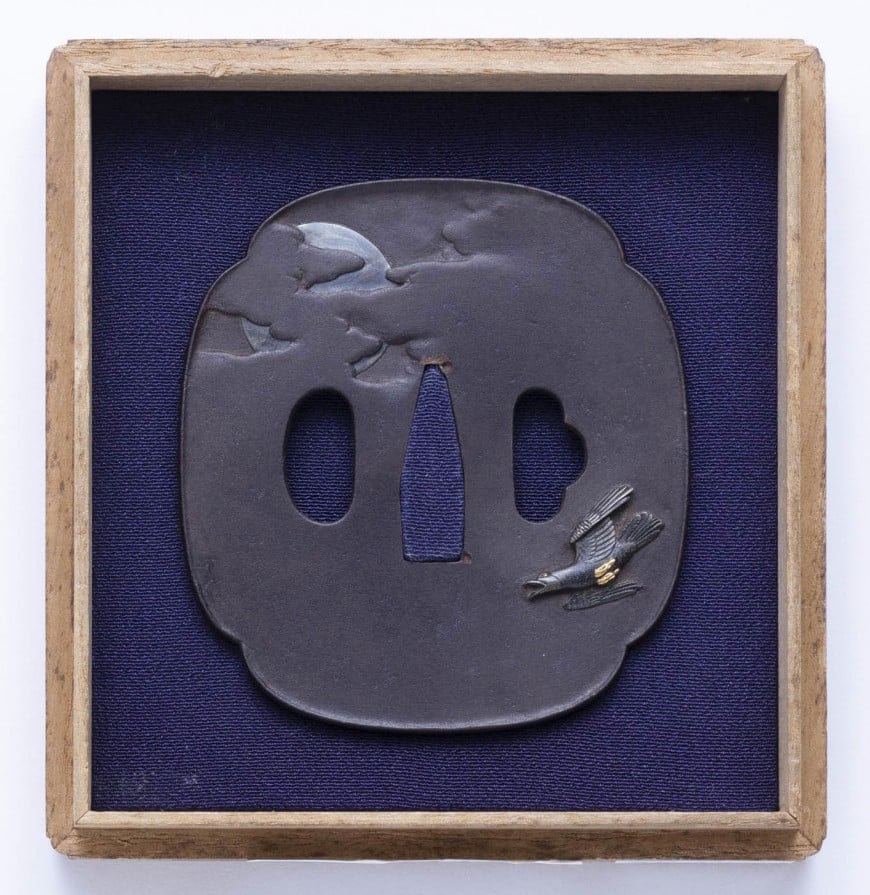
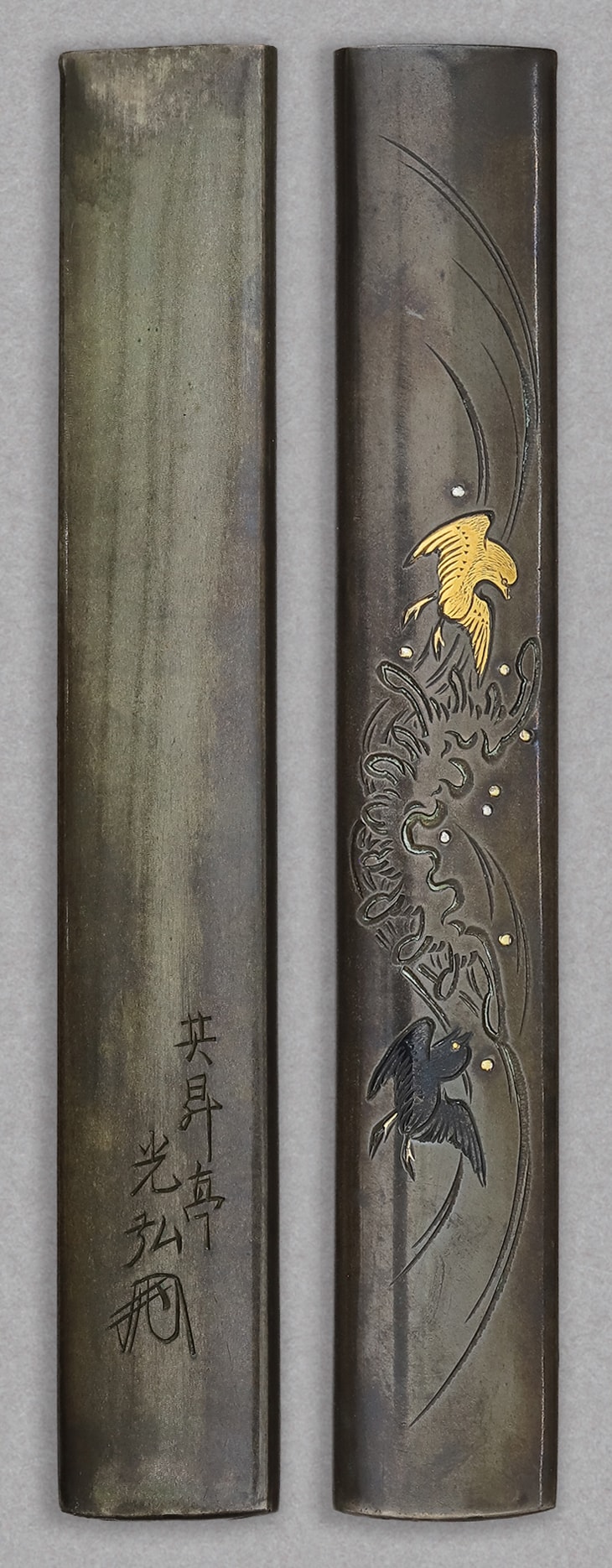
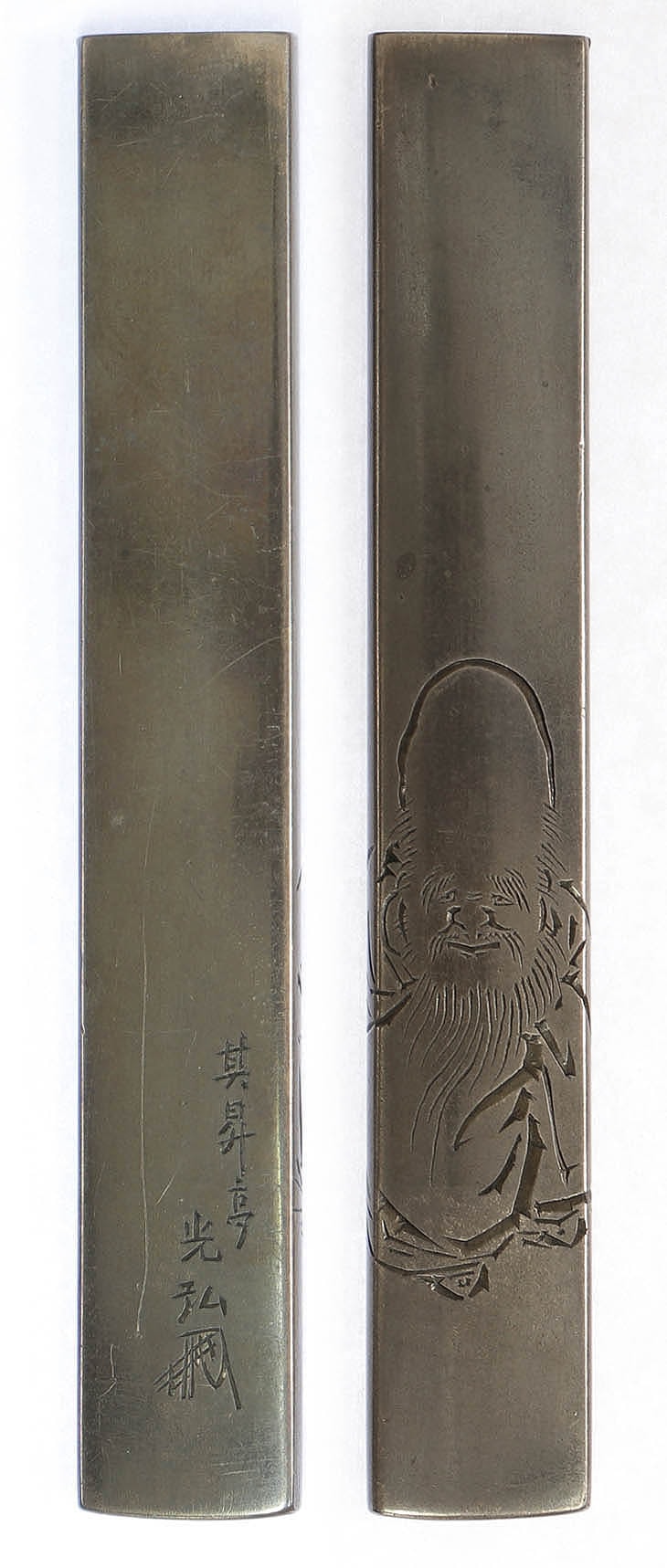
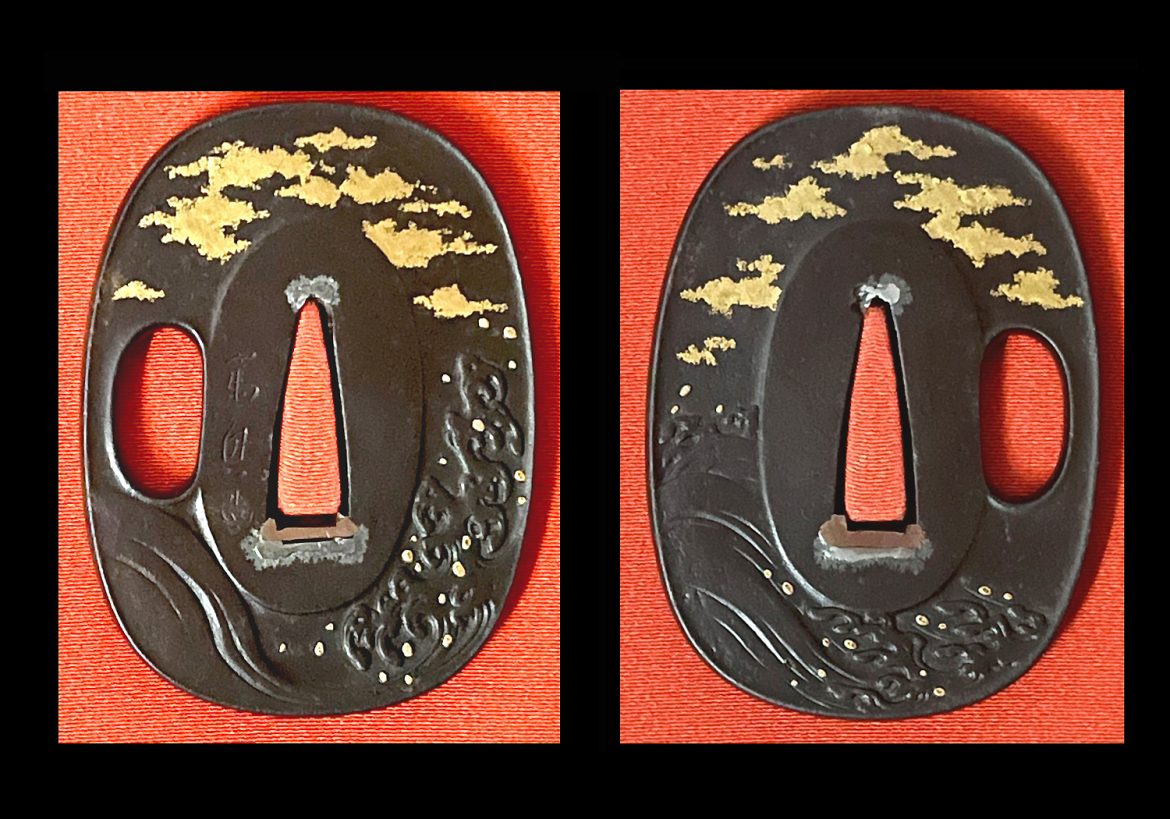
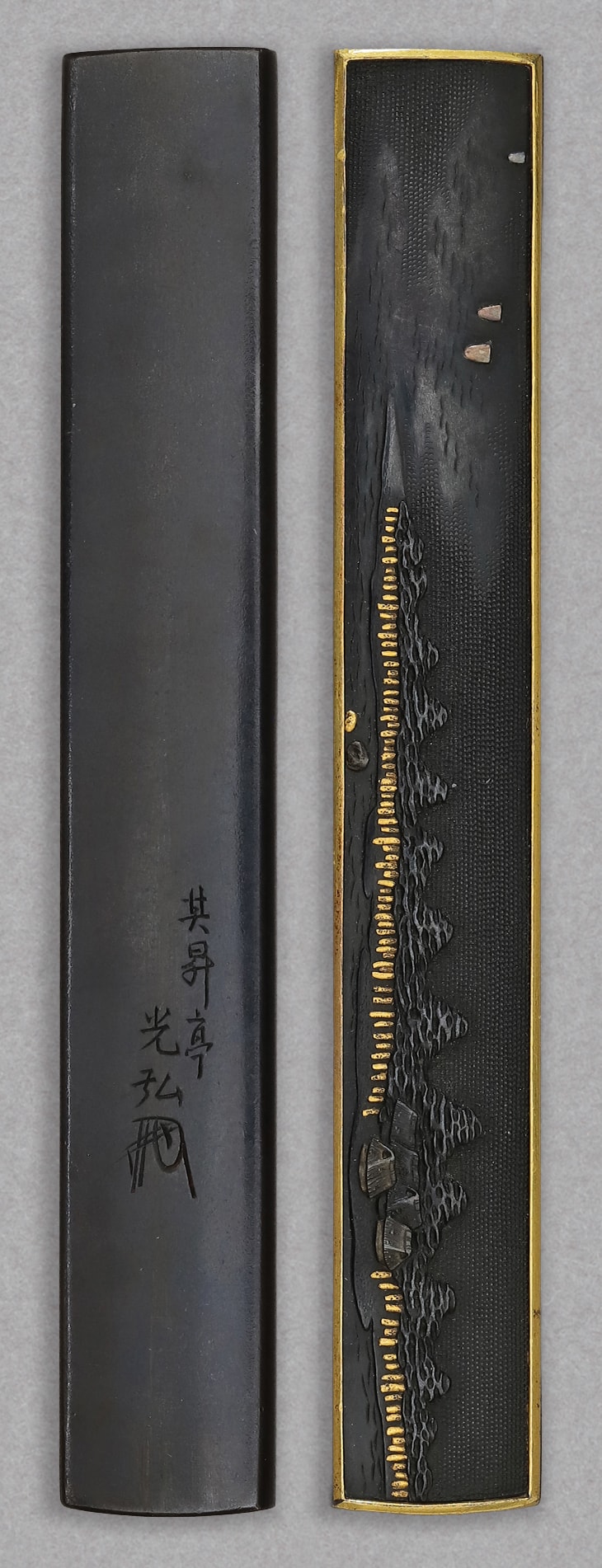
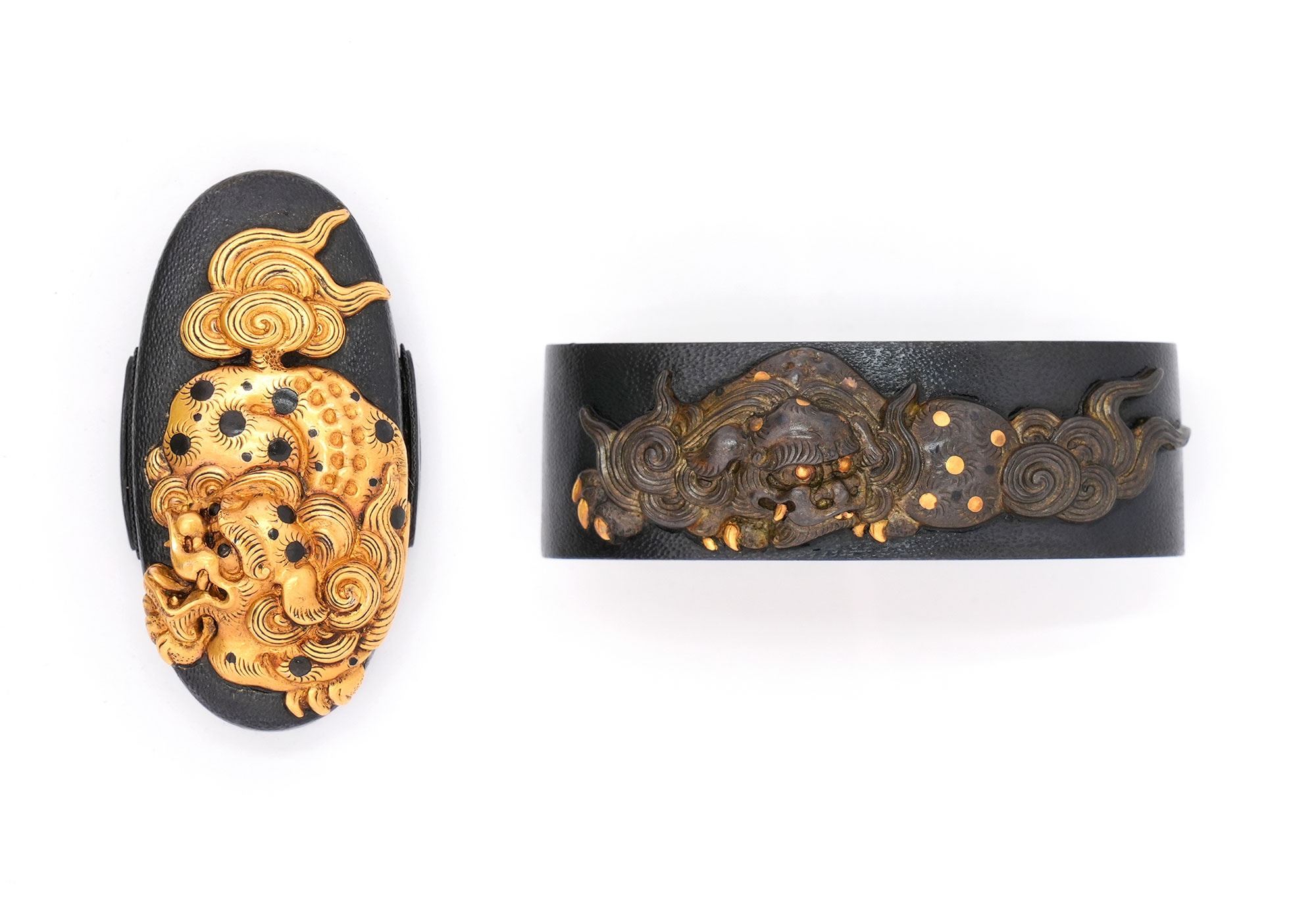
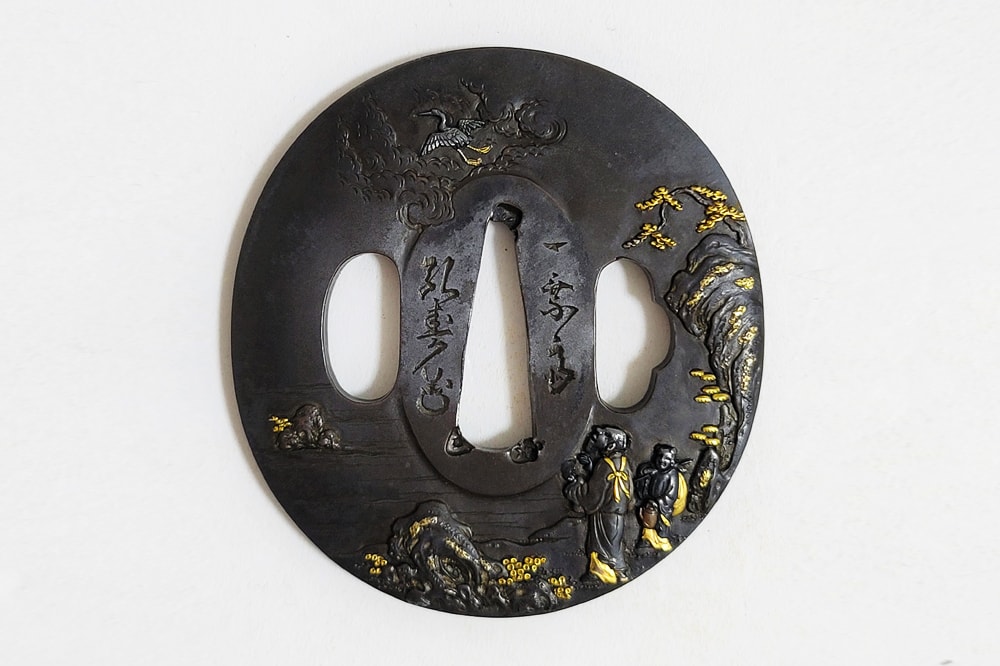
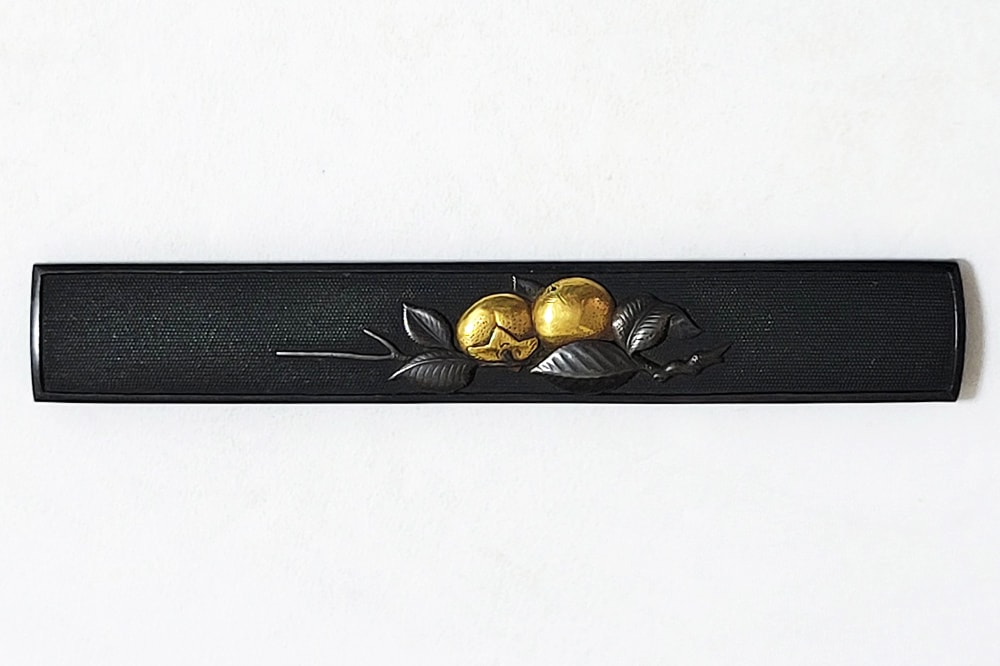
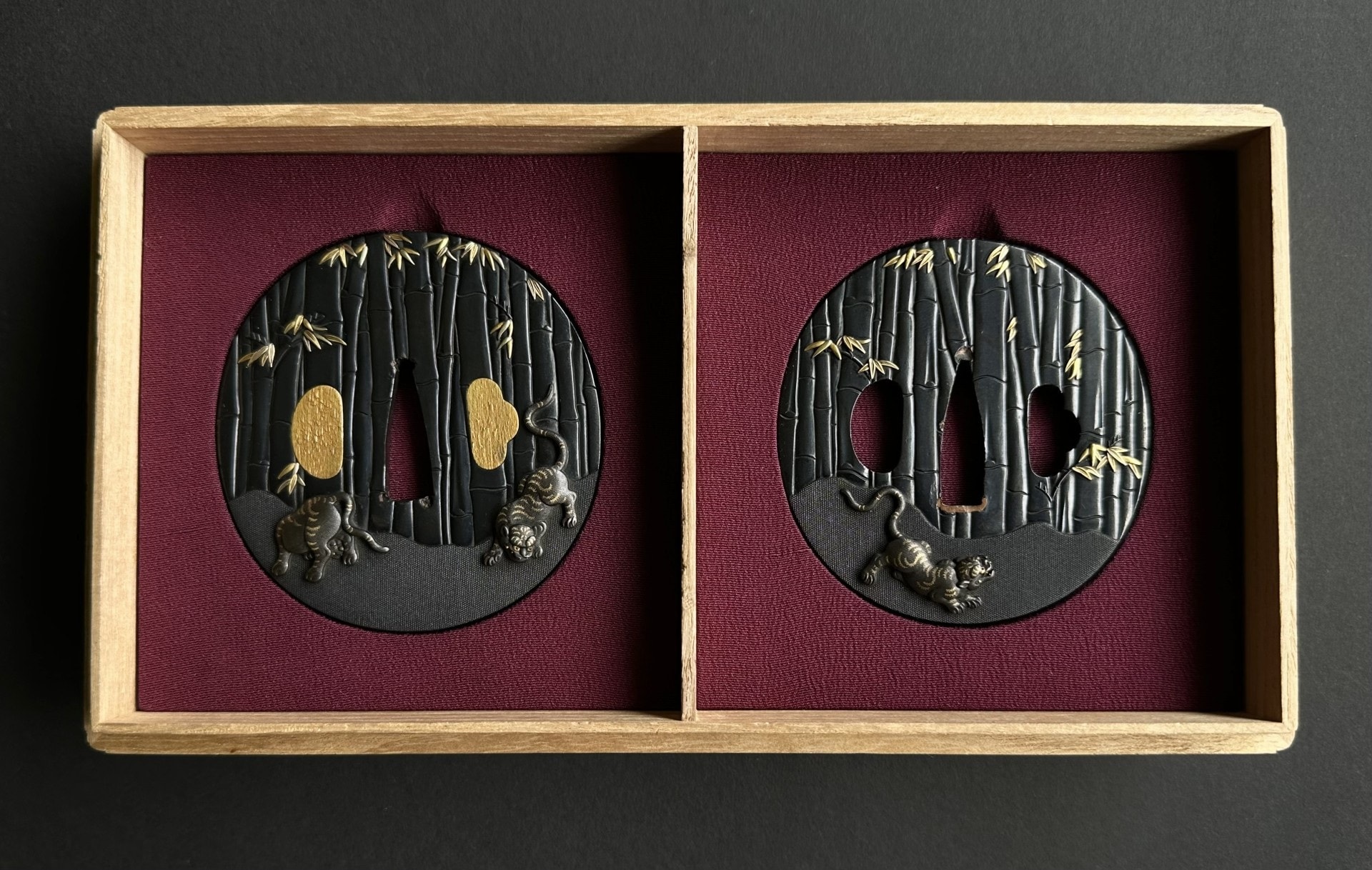
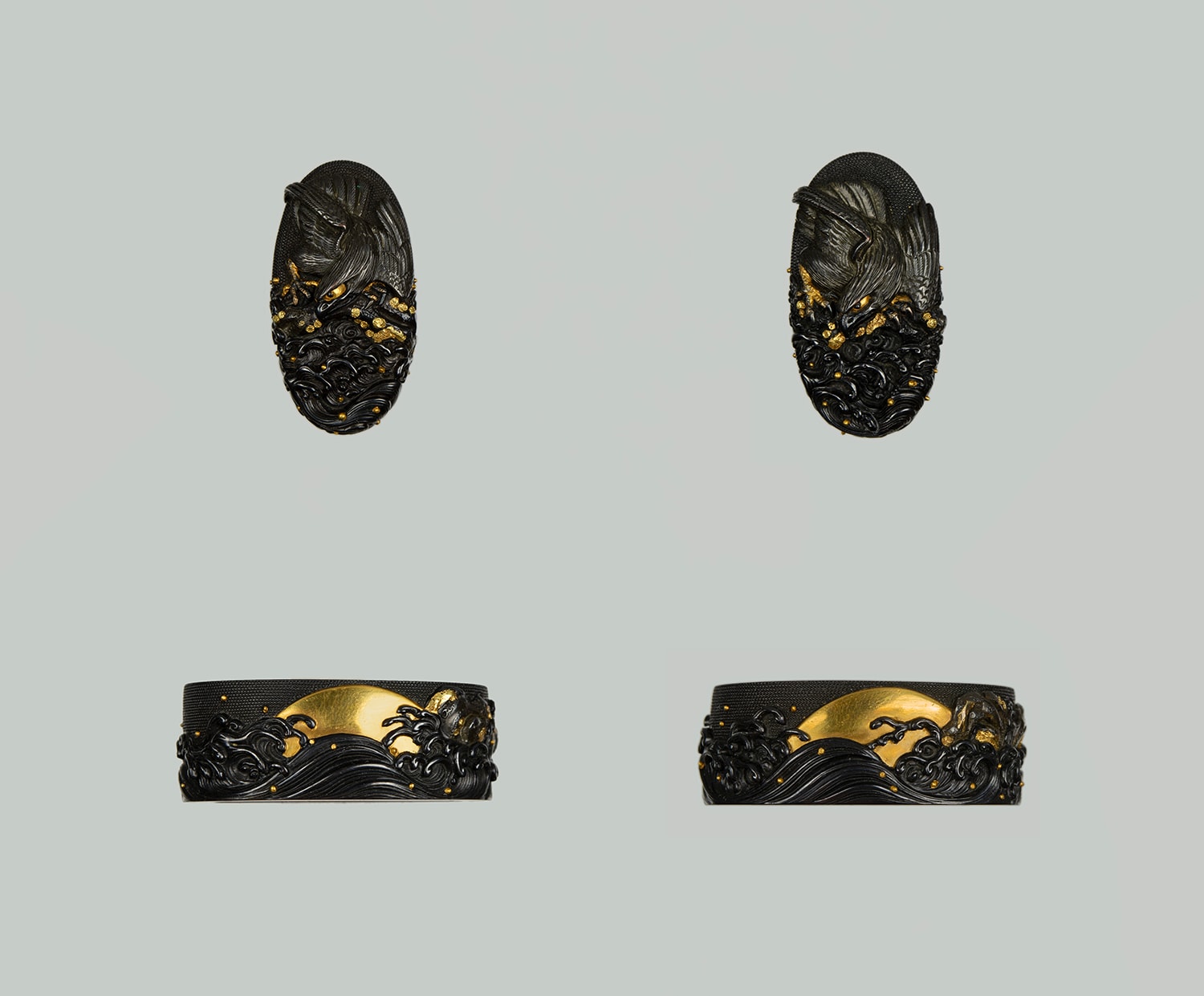
Aoki Shunkan, personal name Jinkichi, was born in Kyoto in Bunka 2 (1805). He first studied metalworking under his father Jinsuke; later traditions variously state that he apprenticed to Kawasaki Kagaharu of the Otsuki lineage, or that he received instruction from Uesugi Kazunuki and from Goto Ichijo, "though none of these accounts is definitively established." He was celebrated in his day as a specialist urashi (back-engraver) for and , earning renown under the name "Yamajin-urashi." He signed his works in a distinctive reisho (clerical-script) hand, using such signatures as Shunkan, Aoshunkan, and Seiryuken Shunkan. Among his pupils was Masanuki. He died at fifty-four in Ansei 5 (1858).
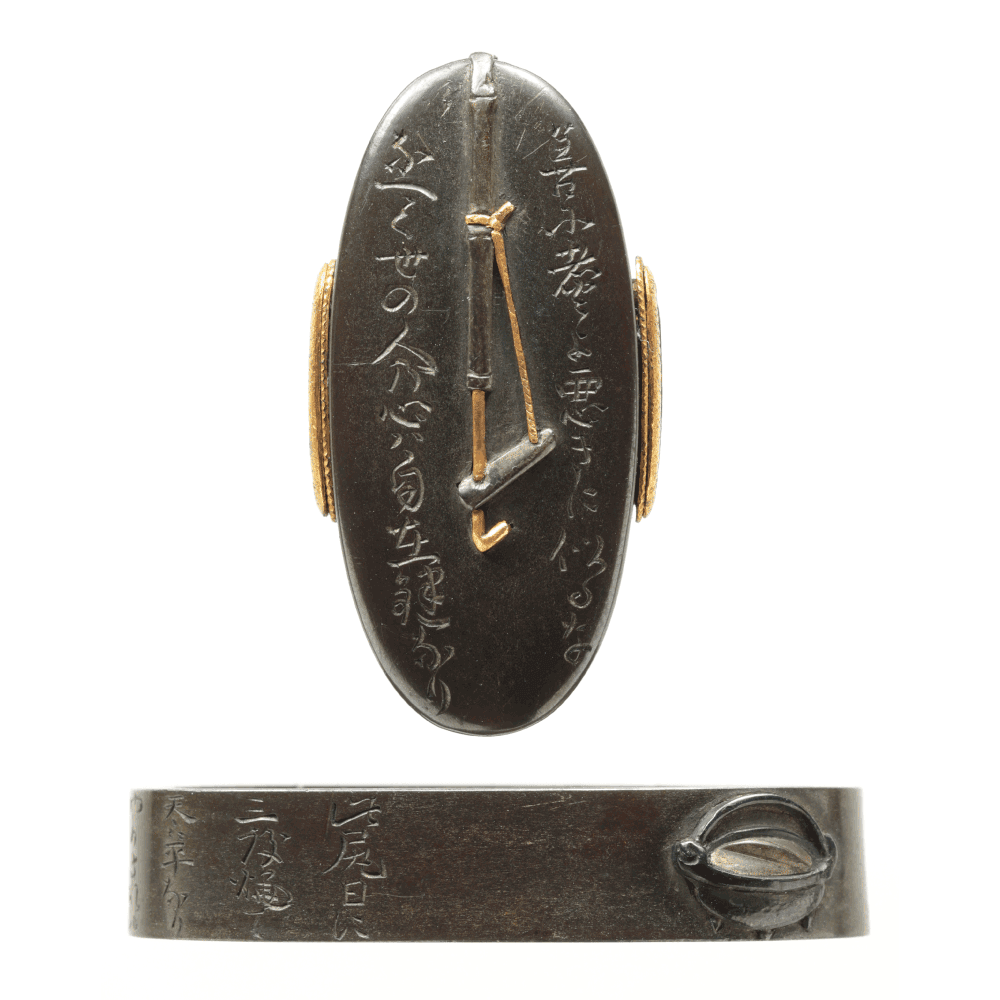
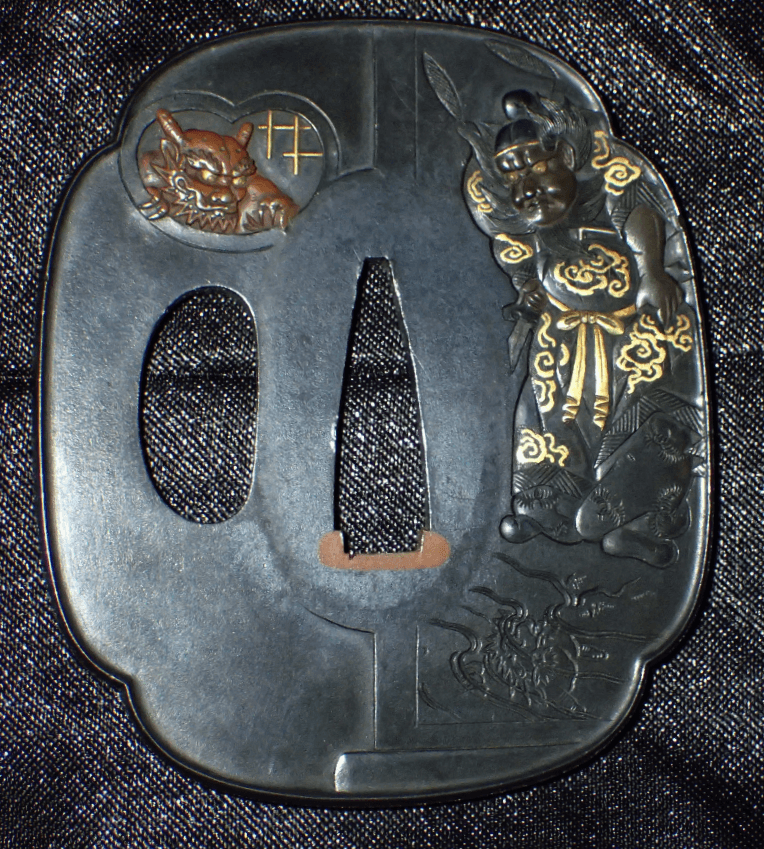
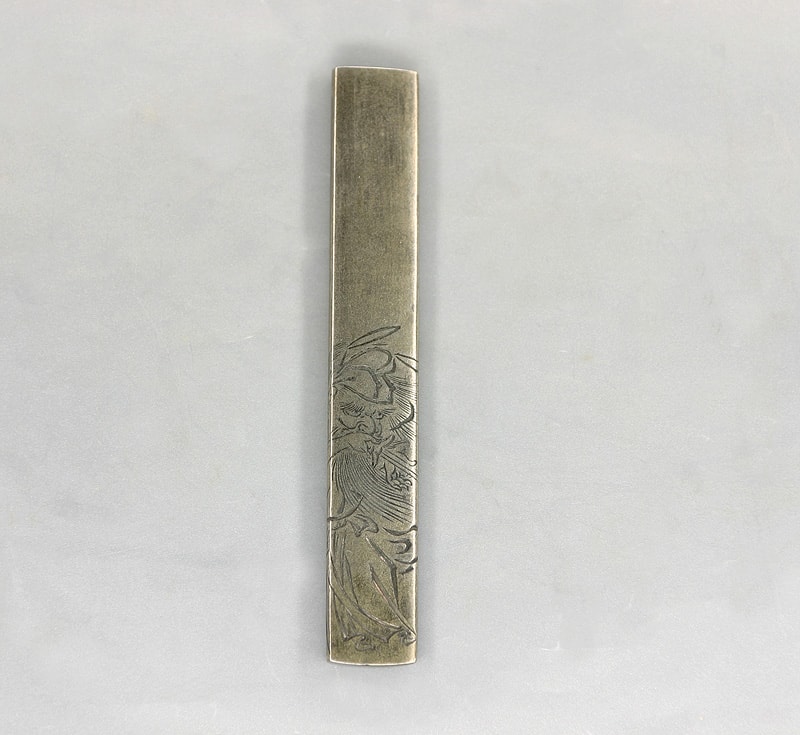
Shunkan's characteristic method employs or grounds finished with exquisitely precise high-relief carving and polychrome metal inlay. His is "minutely and evenly executed," and his water patterns and cloud designs "show no stagnation or dullness." His figural carving is distinguished by meticulous attention to the smallest details — scales, hair, and facial expressions are rendered with "rich expression" and "an air of dignity." The singles out his - (flat inlay) technique as "outstanding," and notes that his use of gold , though "restrained to the minimum," serves to "tighten and clarify the overall tone." His treatment of subjects drawn from Chinese and Japanese history, such as the Kanshin mata-kuguri episode and the Genpei War, demonstrates a compositional intelligence that balances narrative force with decorative refinement.
The record consistently characterizes Shunkan's works as achieving "a lofty, well-composed grandeur" and praises his "high level of technical accomplishment." His pieces are described as possessing "elevated tone and dignity," with compositions so tightly controlled that figures appear charged with imminent motion. The designates representative works among his oeuvre as masterpieces that convey "what is most characteristic of Shunkan's art," placing him among the foremost Kyoto metalworkers of the Bakumatsu era.