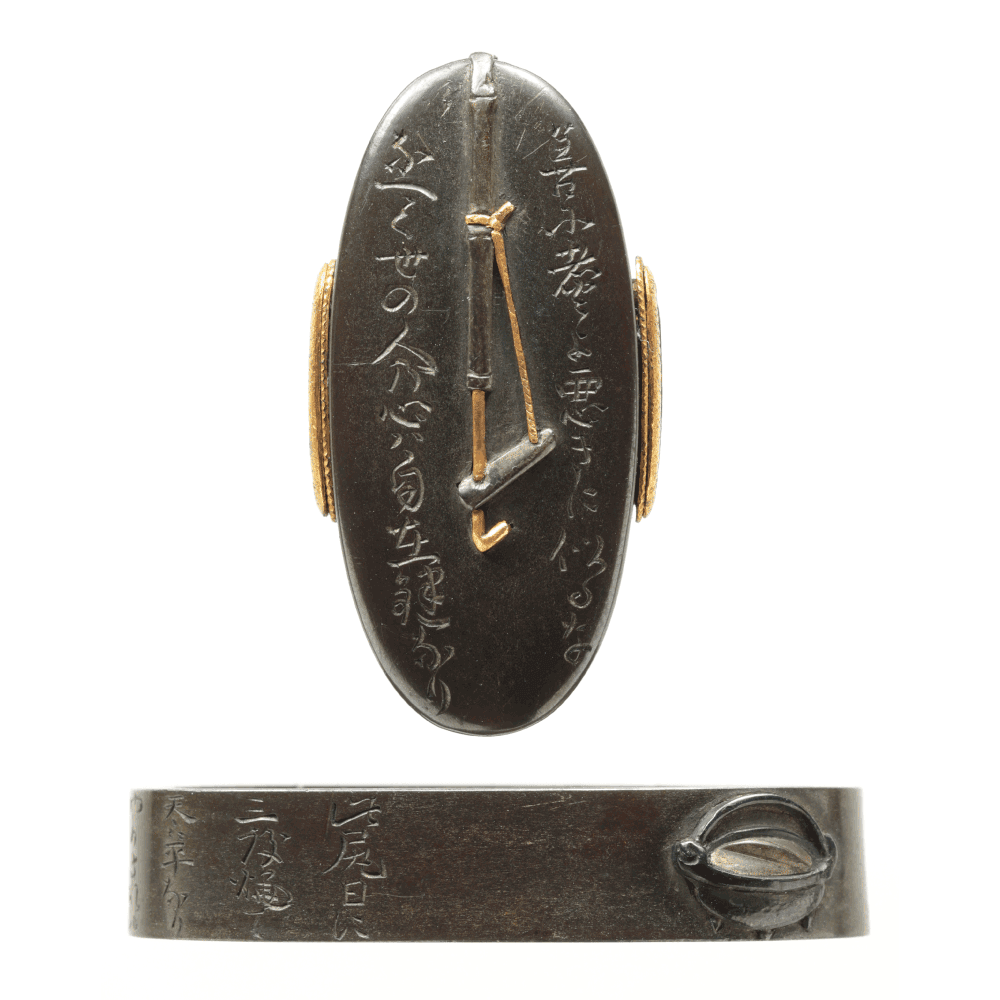
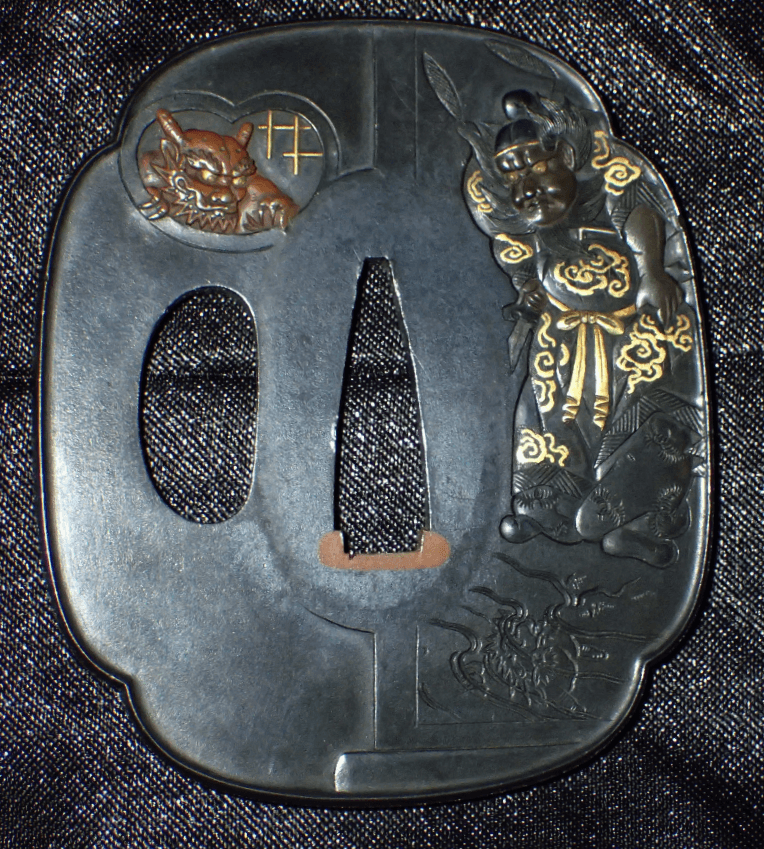
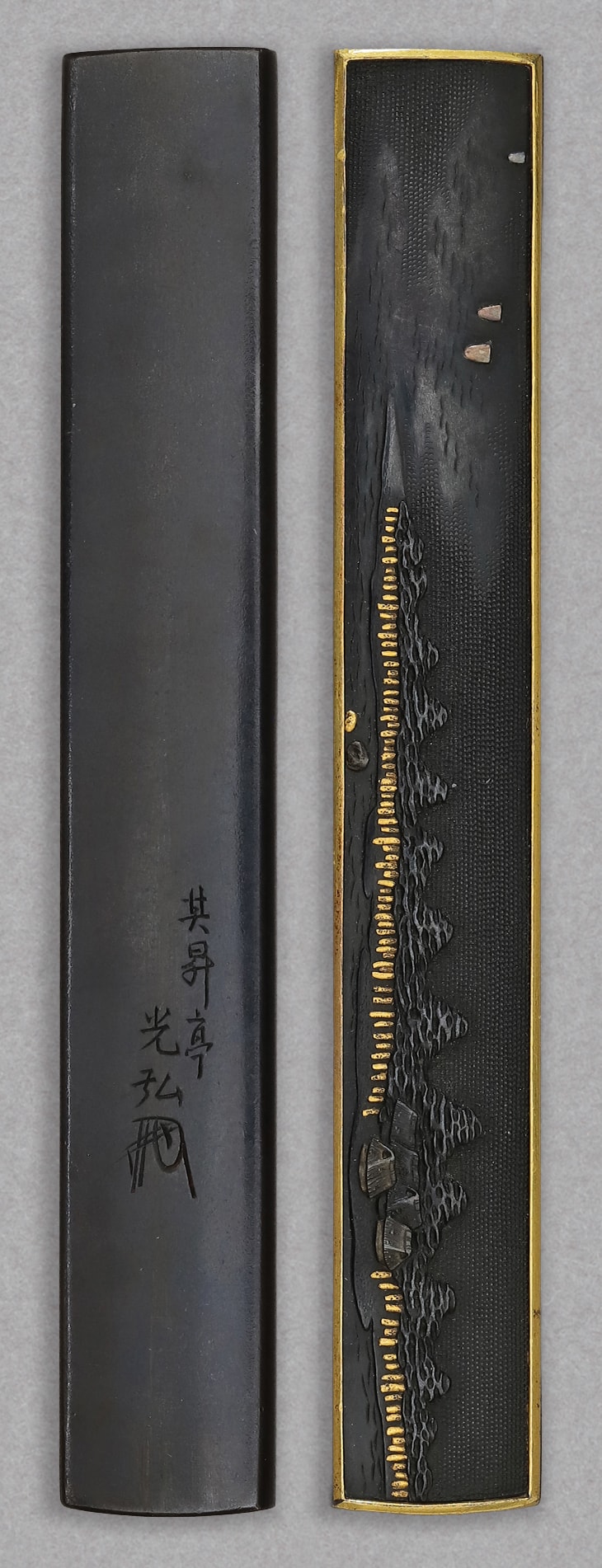
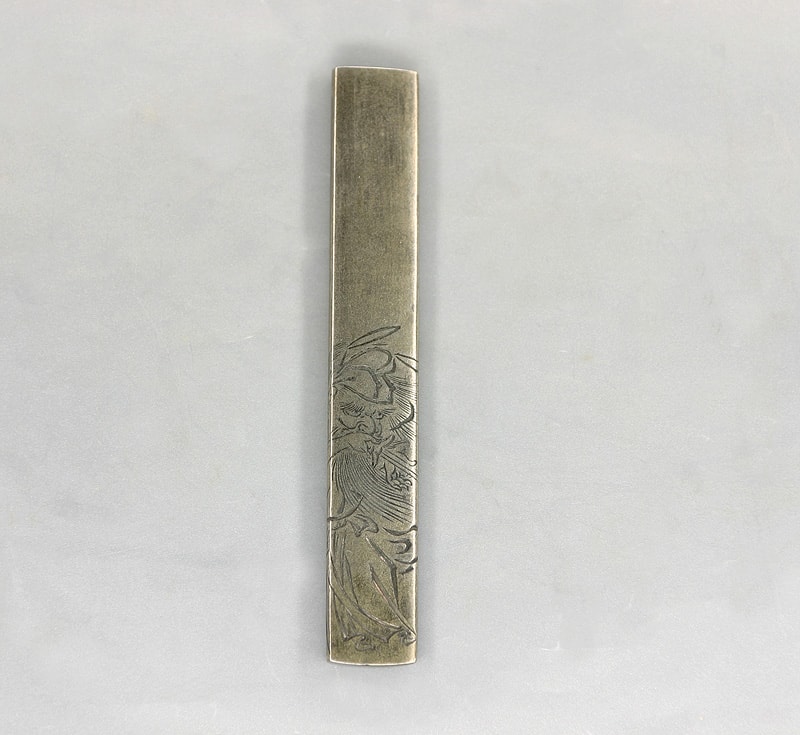
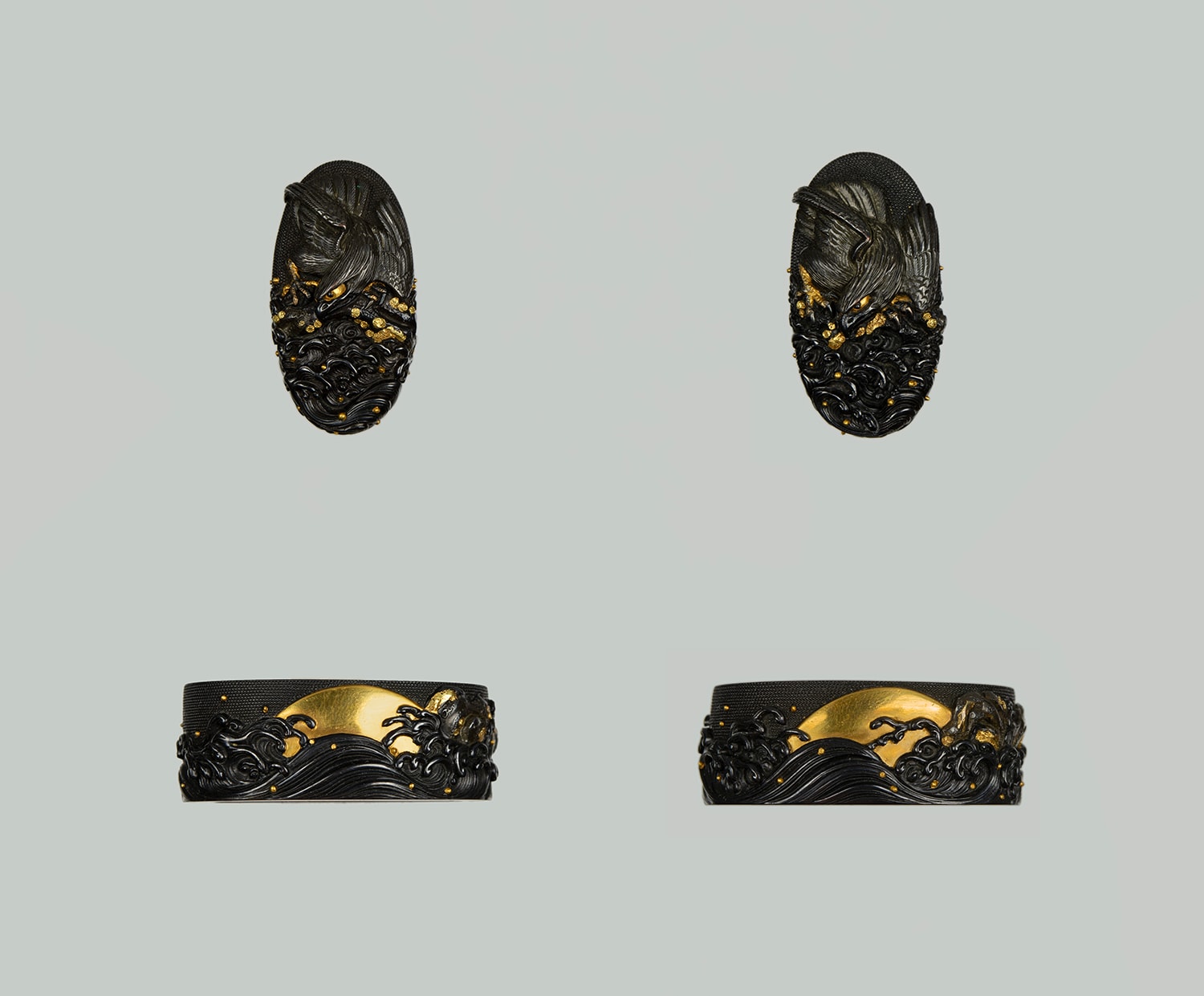
Kawarabayashi Hidekuni, former family name Nakagawa, common name Daizo, was born in Bunsei 8 (1825) in Yonago, Hoki Province. At the age of eighteen he traveled to Kyoto and entered the school of Kawarabayashi Hideoki, the foremost disciple of Otsuki Mitsuoki. He later married Hideoki's second daughter and succeeded the house as its second-generation head. He used the art names Tenkodo and Kinryusai. The consistently identifies him as the metalworker who brought the Otsuki school to its culmination --- "the last notable metalsmith of the Otsuki line" and "the final distinguished master metalworker of the Otsuki line" --- a figure who stood at the terminus of a long and celebrated Kyoto tradition.
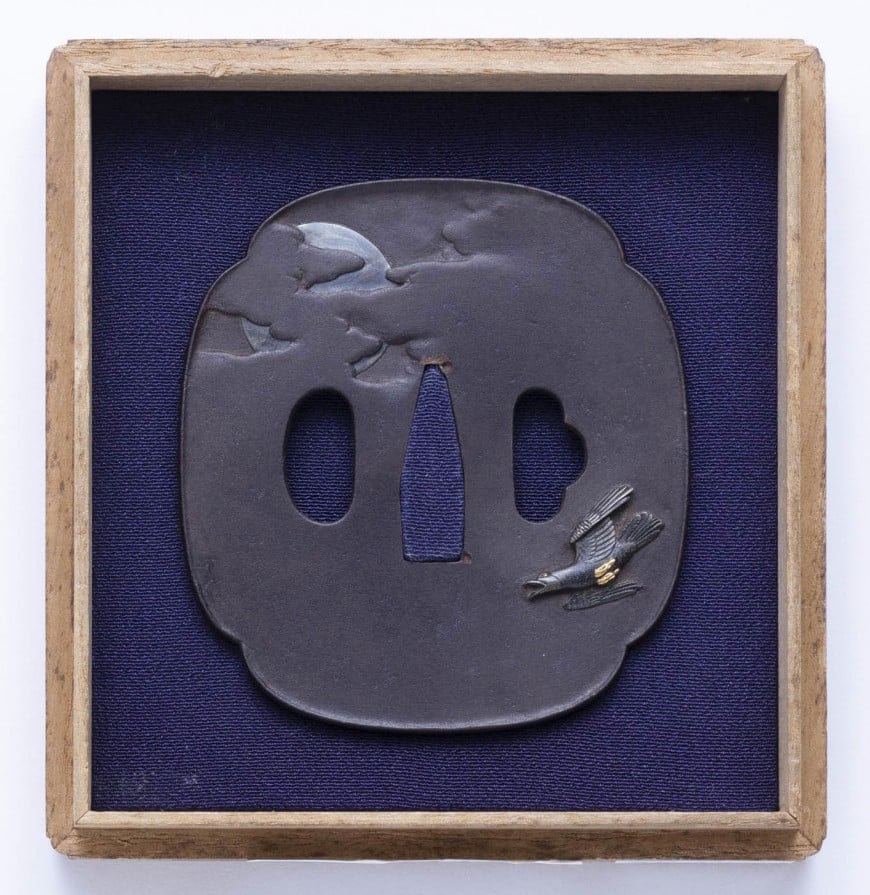
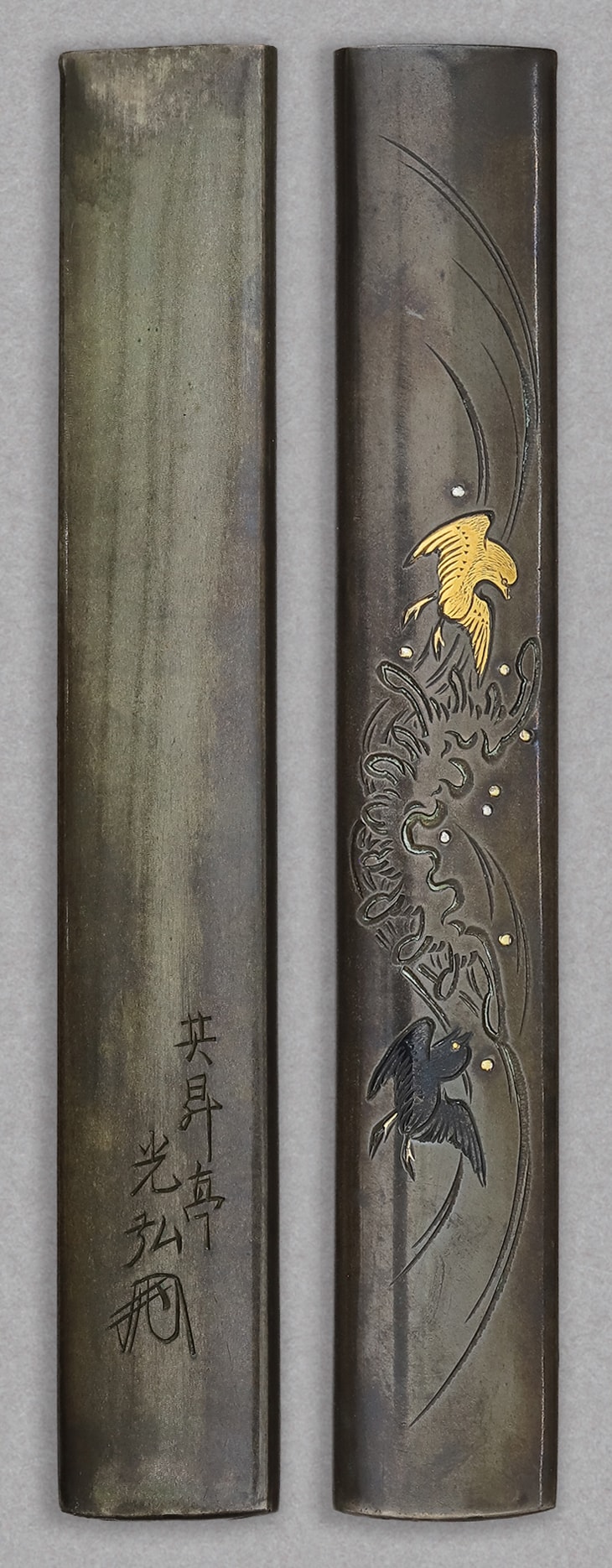
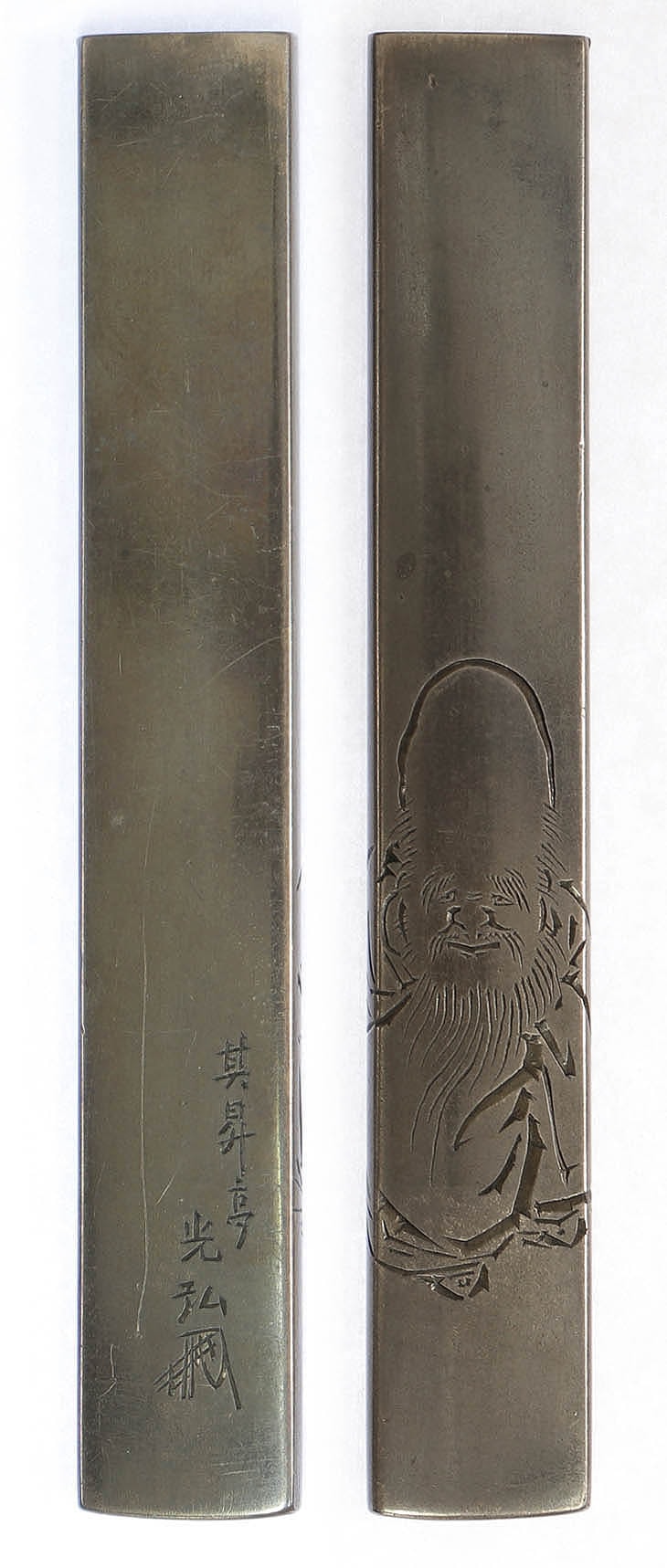
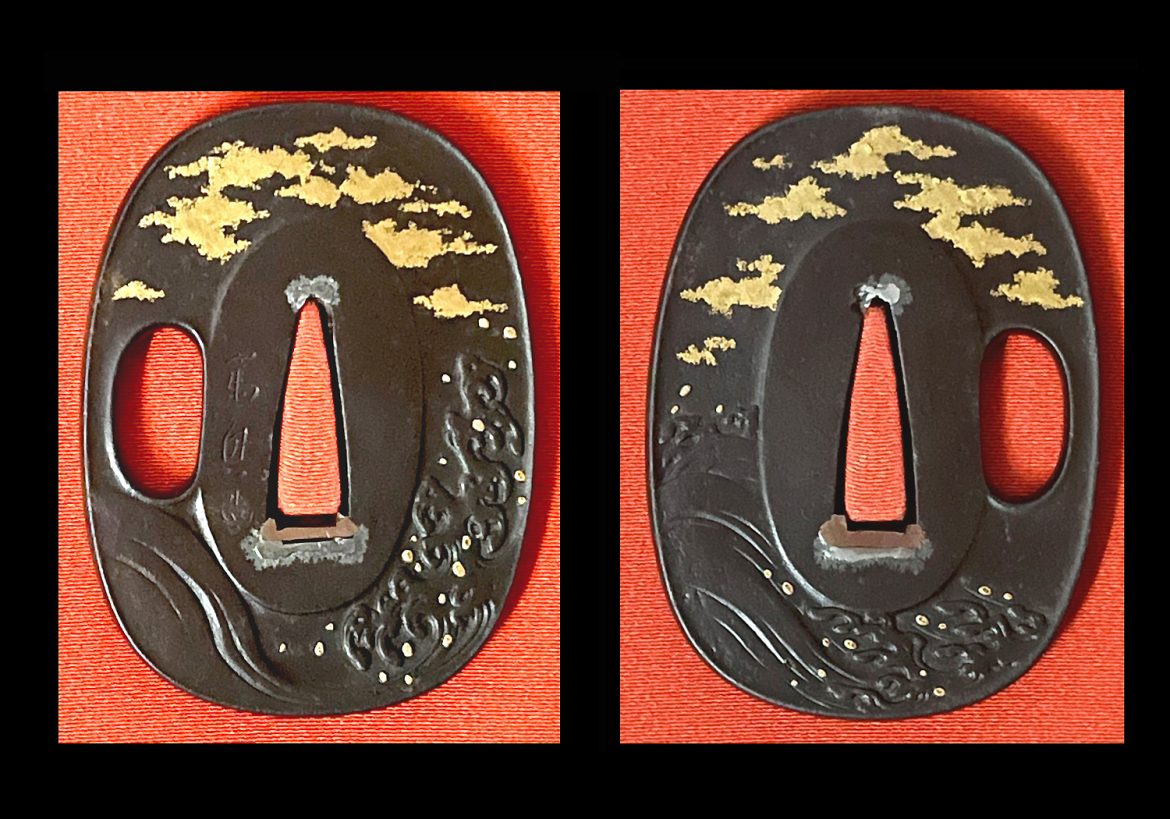
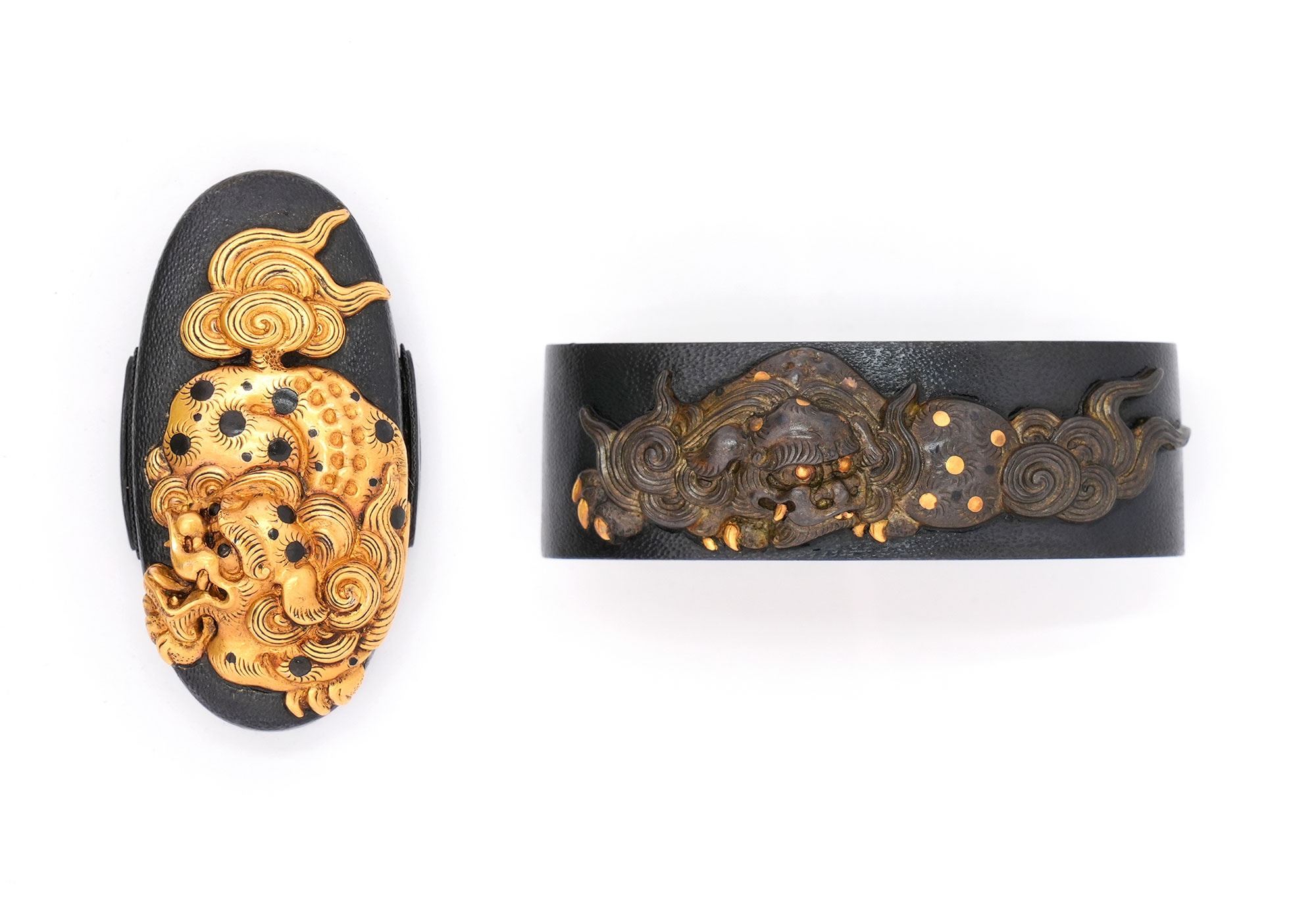
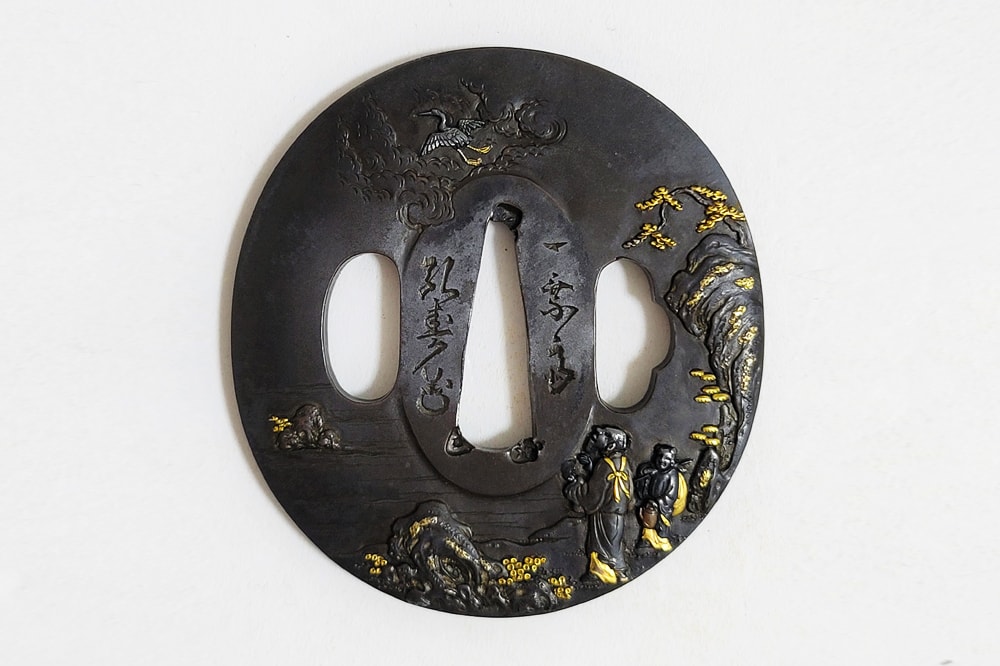
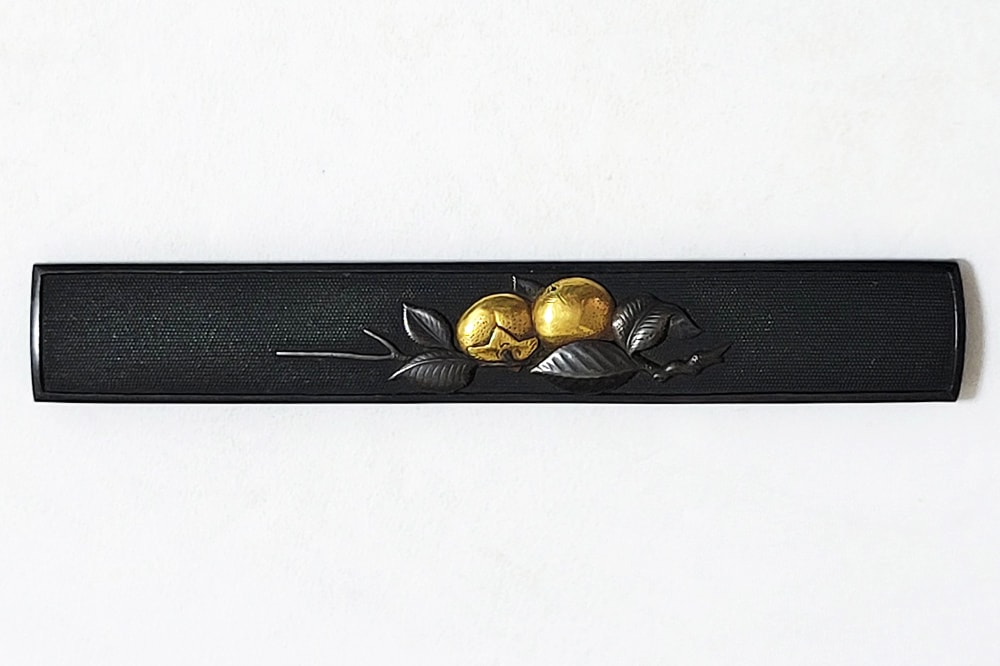
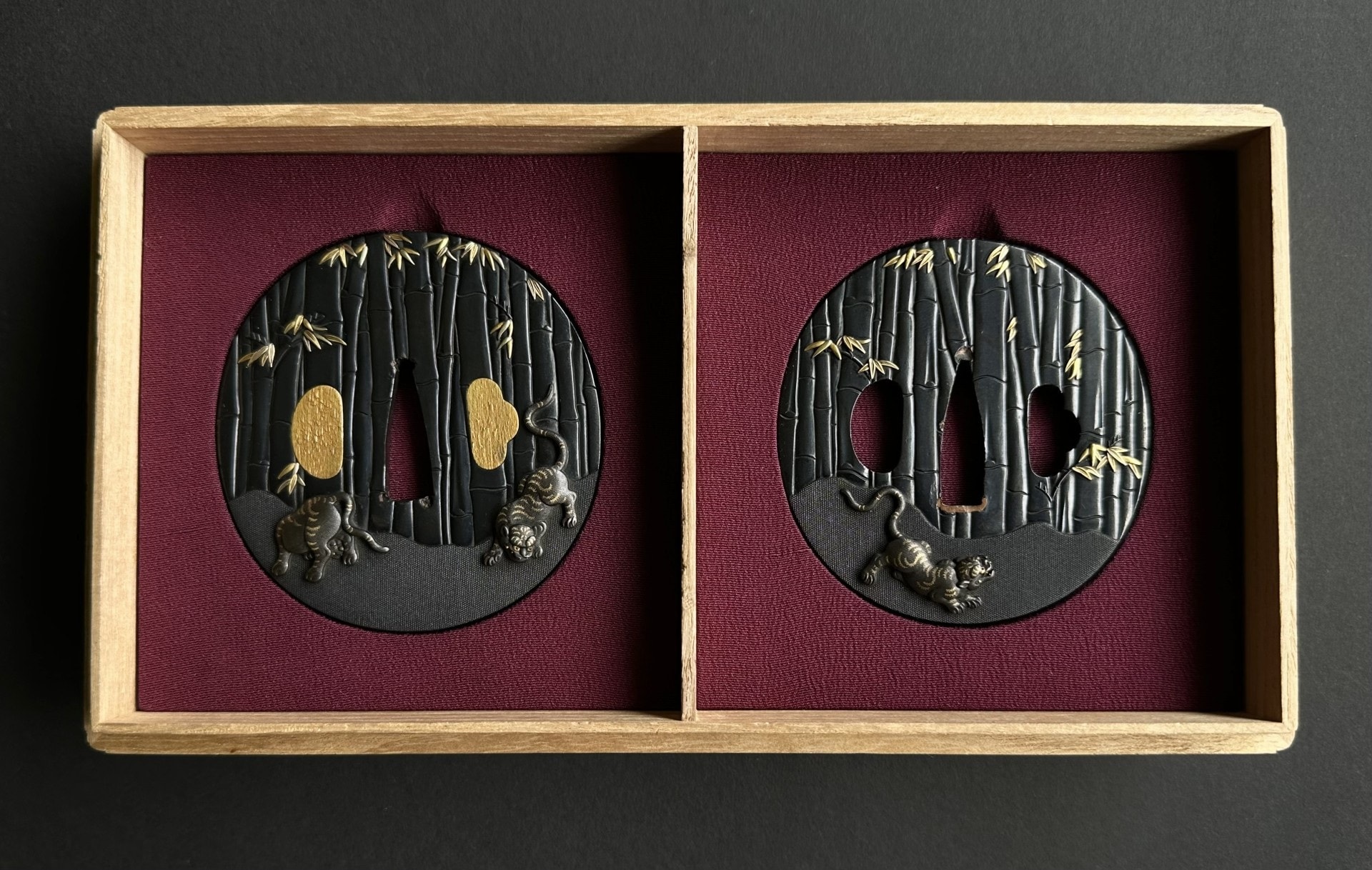
Hidekuni particularly excelled in (high-relief carving) executed with skillful deployment of various alloys, and he was also highly proficient in (fine line engraving) and (single-bevel line carving). His subjects range from animals and plants rendered with a strong devotion to direct observation to figures and landscapes, all conveyed with the tasteful charm characteristic of the Otsuki manner. His technical command is evident in unified suites where he freely varies depth and shallowness in smooth high relief across iron, polished , and solid gold grounds, deploying , , and in gold, silver, , and to achieve meticulous polychrome effects --- from the venerable faces of arhats down to each plant, animal, and implement.
The observes that his later works exhibit "an airy and unconventional spirit" emblematic of Mitsuoki's own late production, suggesting an artistic maturation beyond mere technical mastery. His naturalistic rendering of animal subjects is singled out for particular praise: the untamed character captured in the expressions of the eyes and the accomplished fine line-carving of body hair attest to a commitment to sketching from life. Whether composing a Thunder God whose carving conveys "a vivid immediacy that could be called unprecedented" or an elegantly lyrical moonlit shore, Hidekuni's works are recognized as masterpieces in which his technical abilities are fully displayed --- fitting culminations of the Otsuki school's artistic legacy.