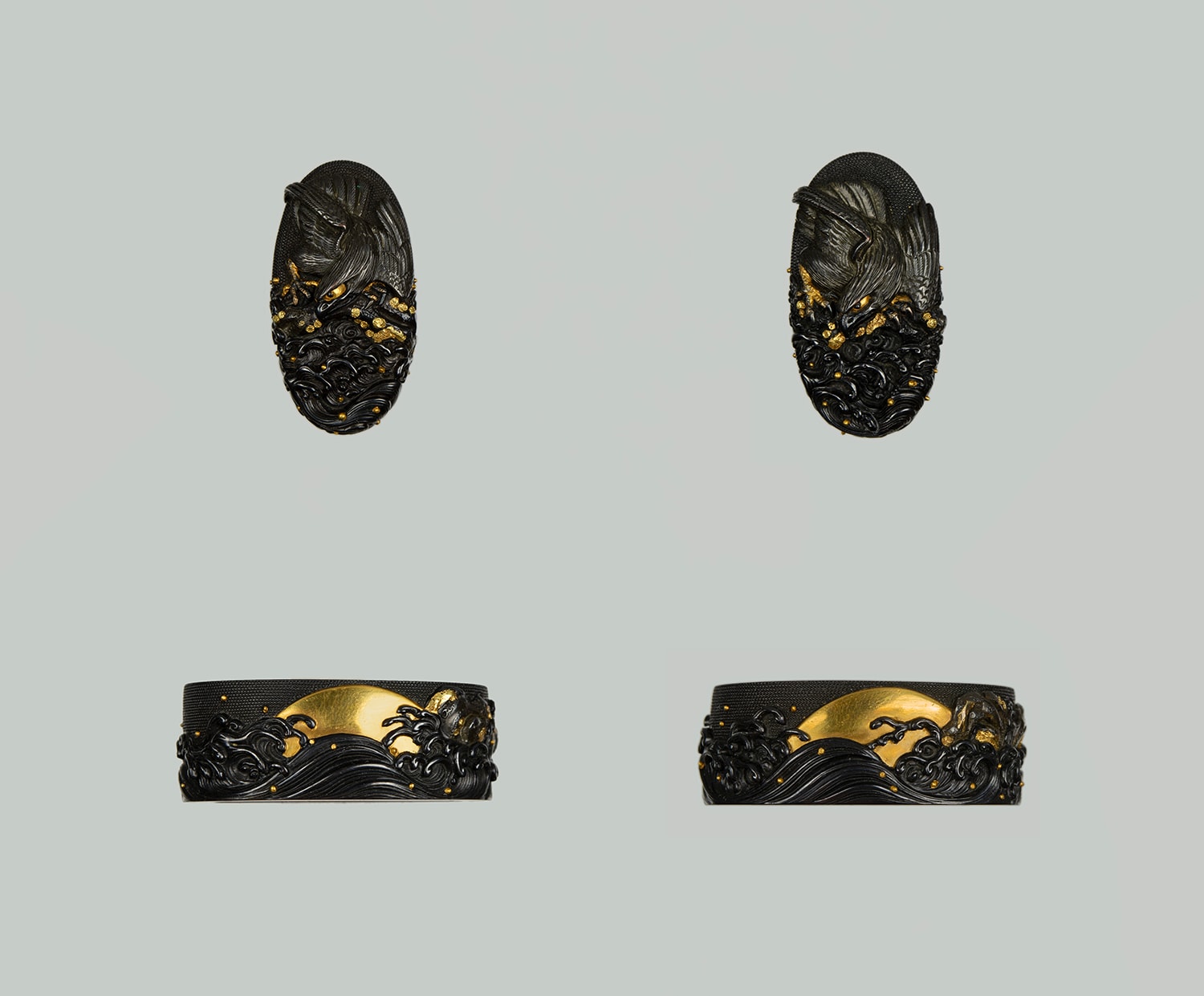
Sasayama Atsuoki (篠山篤興, 1813–1891), commonly known as Masaichirō, was born in Bunka 10 as the eldest son of Sasayama Motokichi, the haikai poetry master known as Yahanatei Gogai. At the age of fifteen he entered apprenticeship under Kawarabayashi Hideoki, the leading disciple of Ōtsuki Mitsuoki, and devoted himself to training in the Kyoto kinkō tradition of the Ōtsuki school. In Tenpō 9 (1838), at the age of twenty-five, he married his master's eldest daughter and established himself independently. In Bunkyū 2 (1862) he was commissioned by the Tokugawa shogunal house to carve fittings for the wearing sword of the fourteenth shōgun, Tokugawa Iemochi, and in recognition of his service he received the court title Ōsumi Daijō. The following year, Bunkyū 3 (1863), he was further honored with the commission to produce fittings for Emperor , upon which he adopted the art name Ichigyōsai. He also used the studio names Sensai and Shōkatei, and remained active from the Bakumatsu period through the Meiji era until his death in Meiji 24 (1891) at the age of seventy-nine. In his time the Ōtsuki school was flourishing, with such skilled artists as Ōtsuki Mitsuhiro, Kaizan Ōki, Tenkōdō Hidekuni, and Matsuo Gassan active in the circle; among them, Atsuoki enjoyed an especially high reputation as a master craftsman.
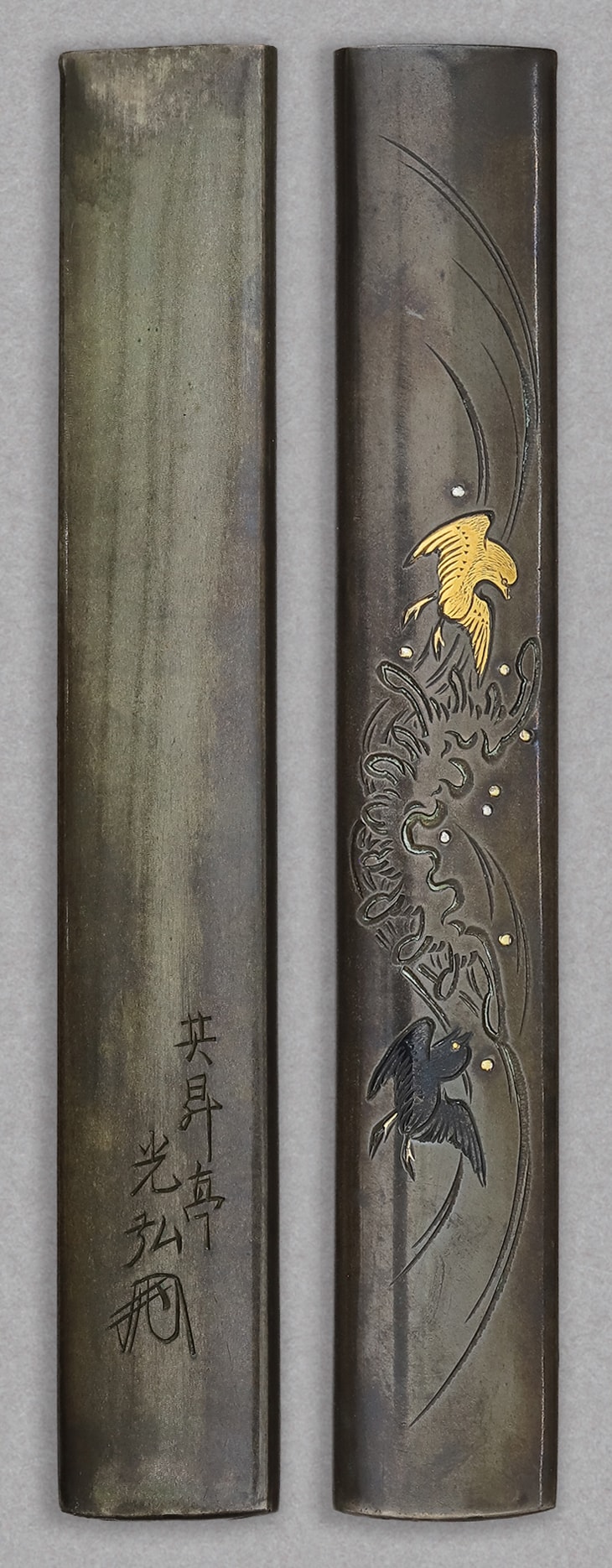
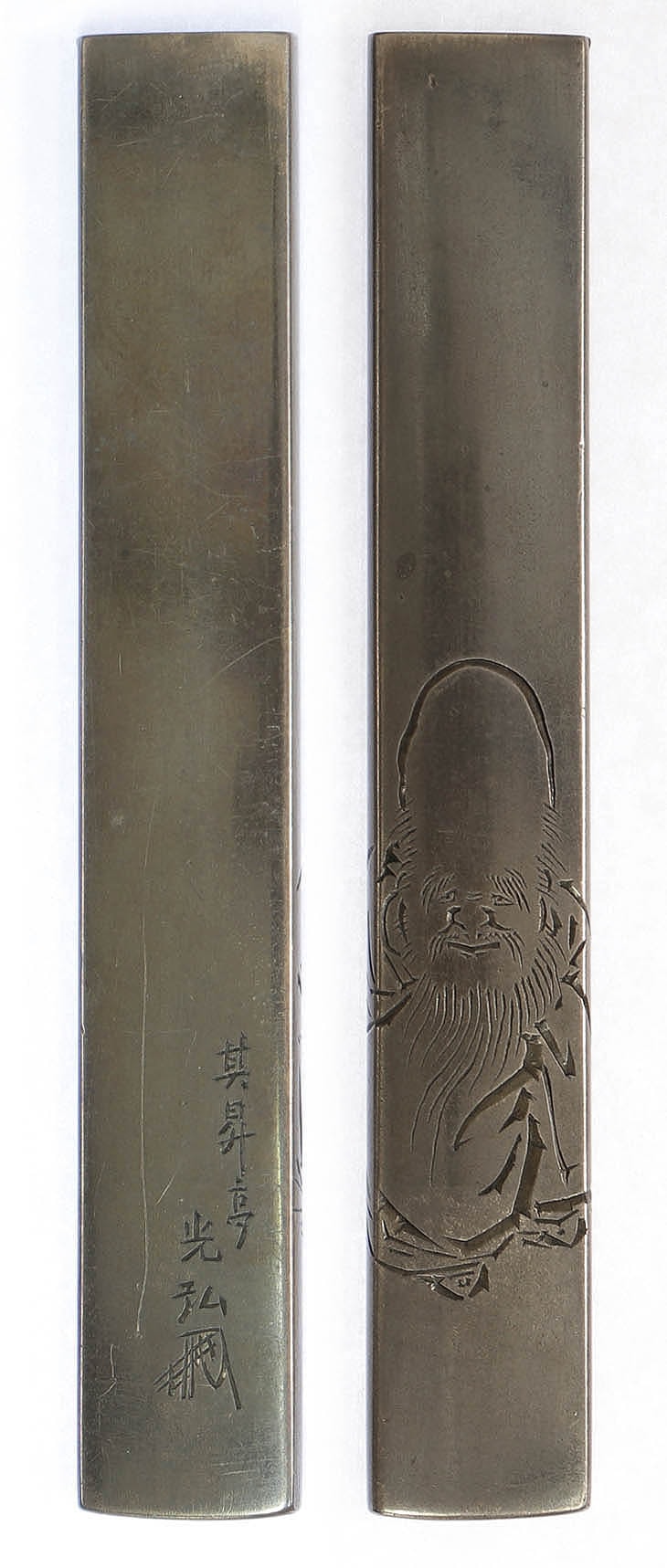
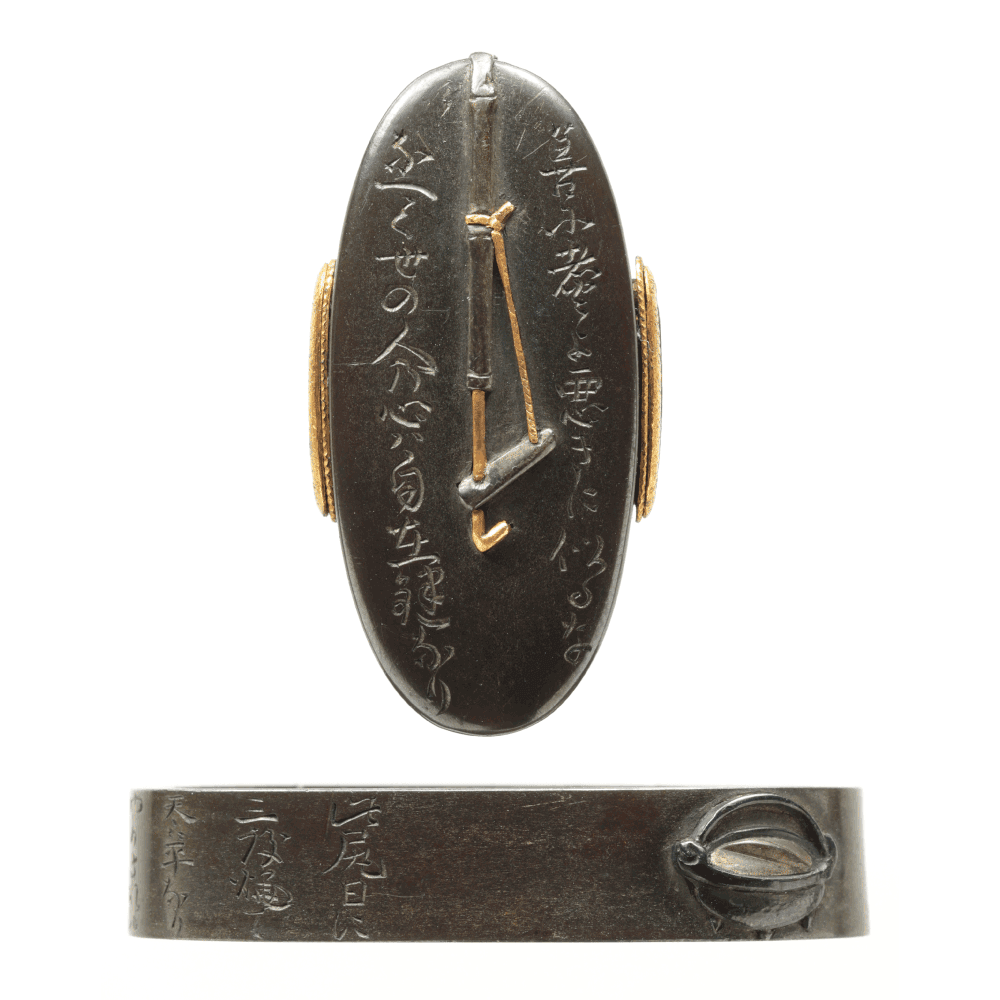
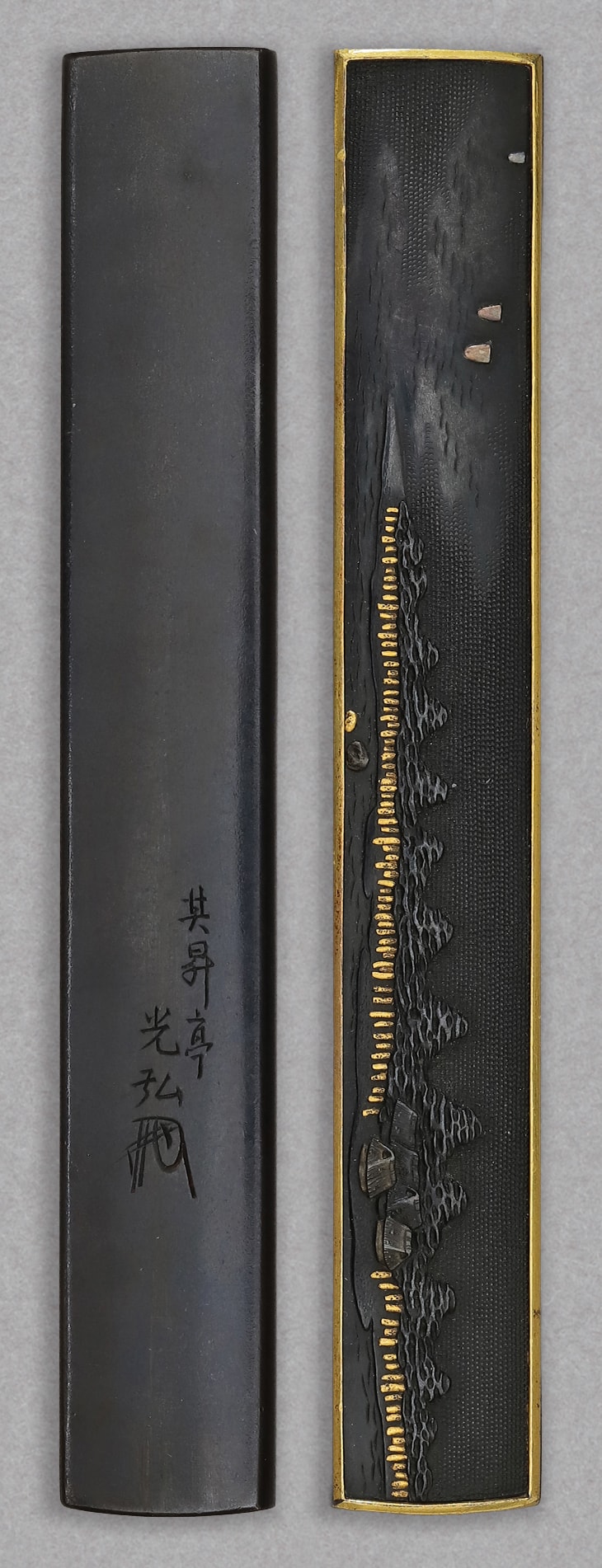
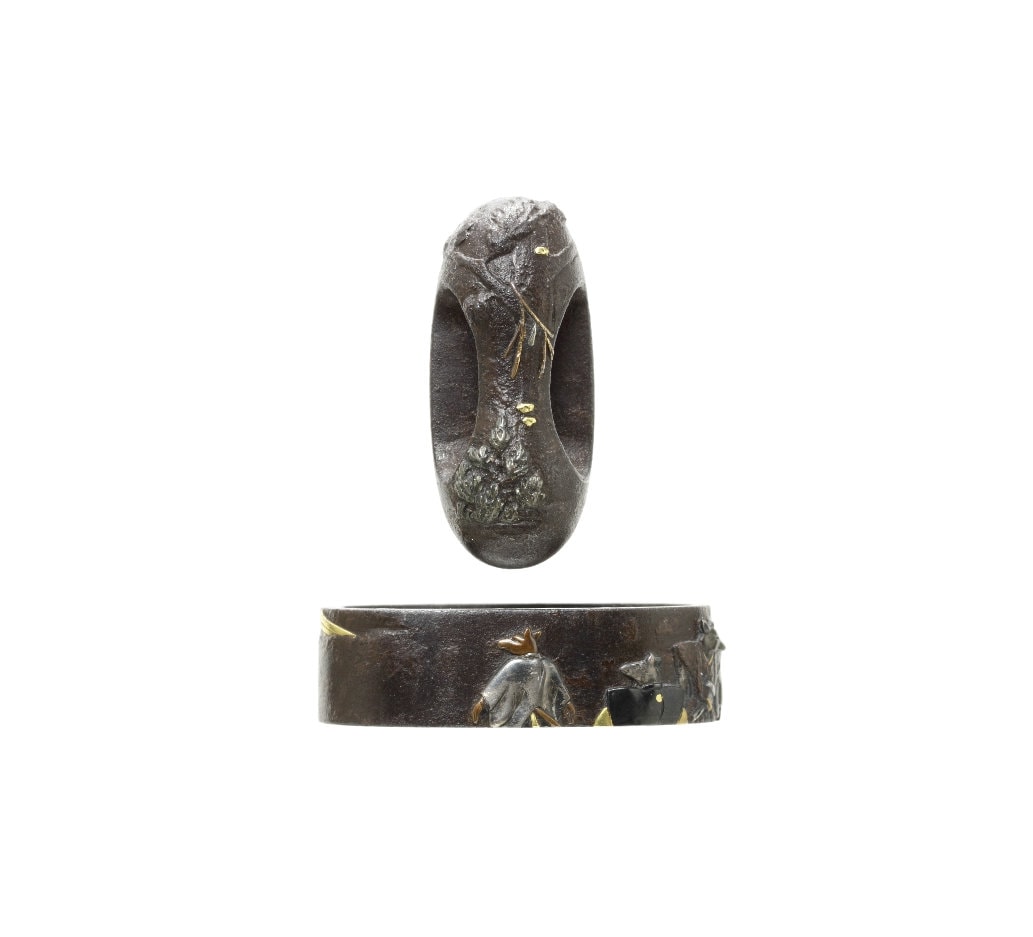
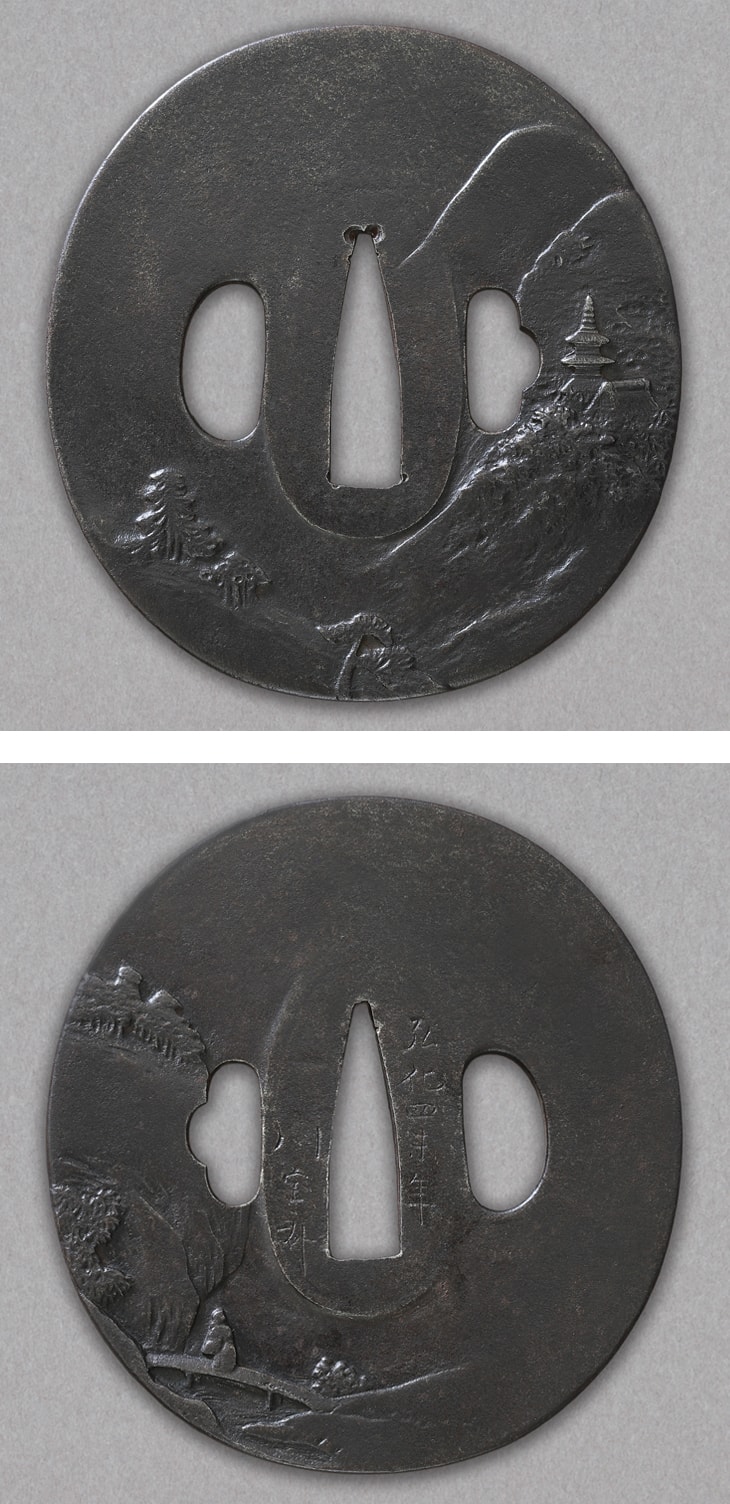
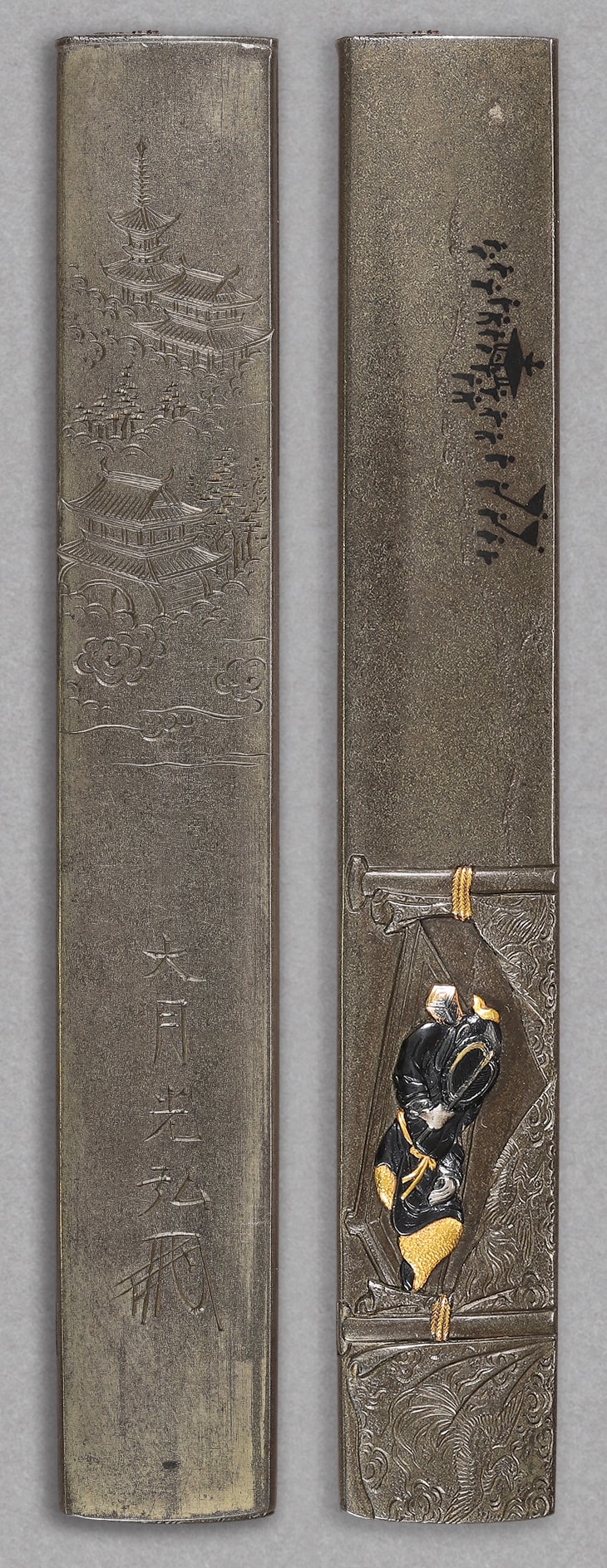
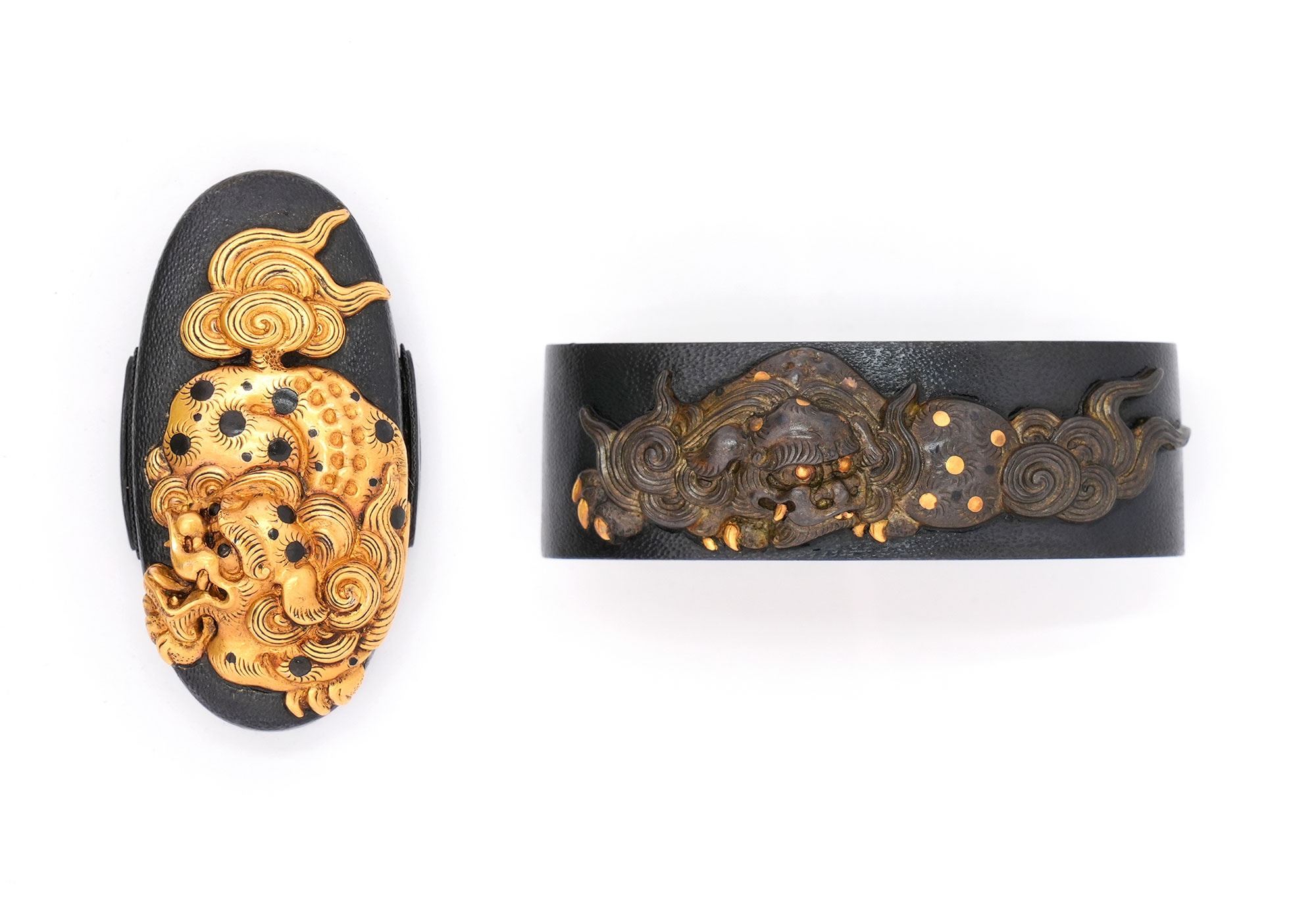
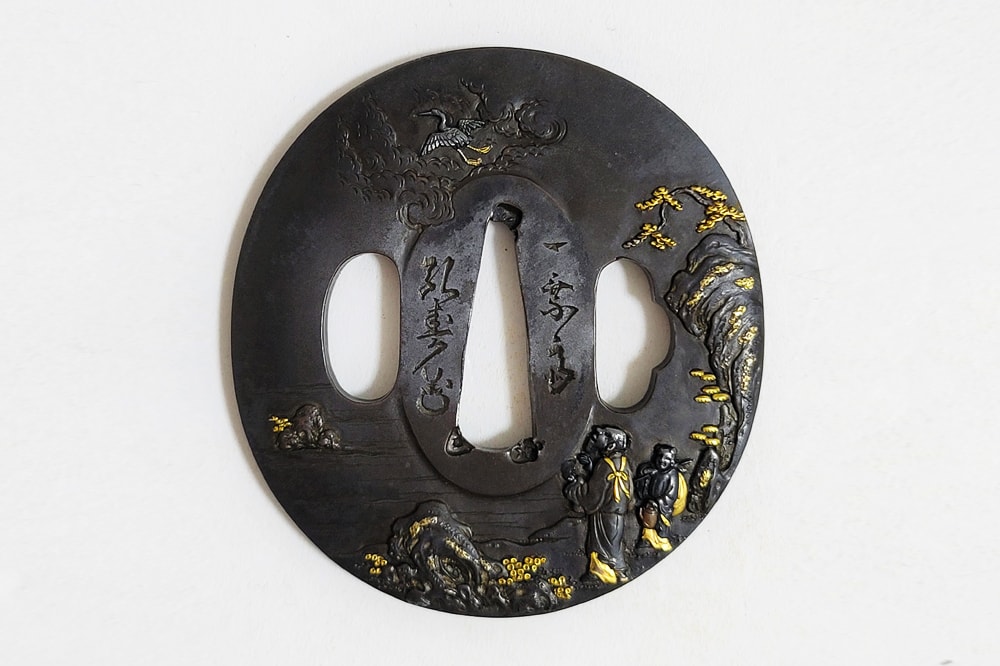
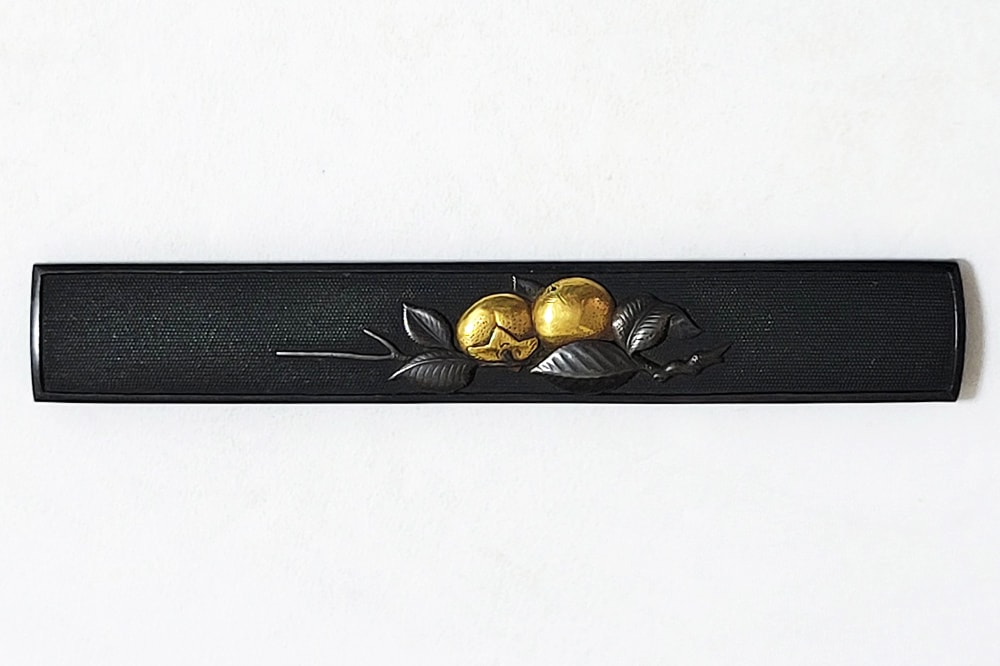
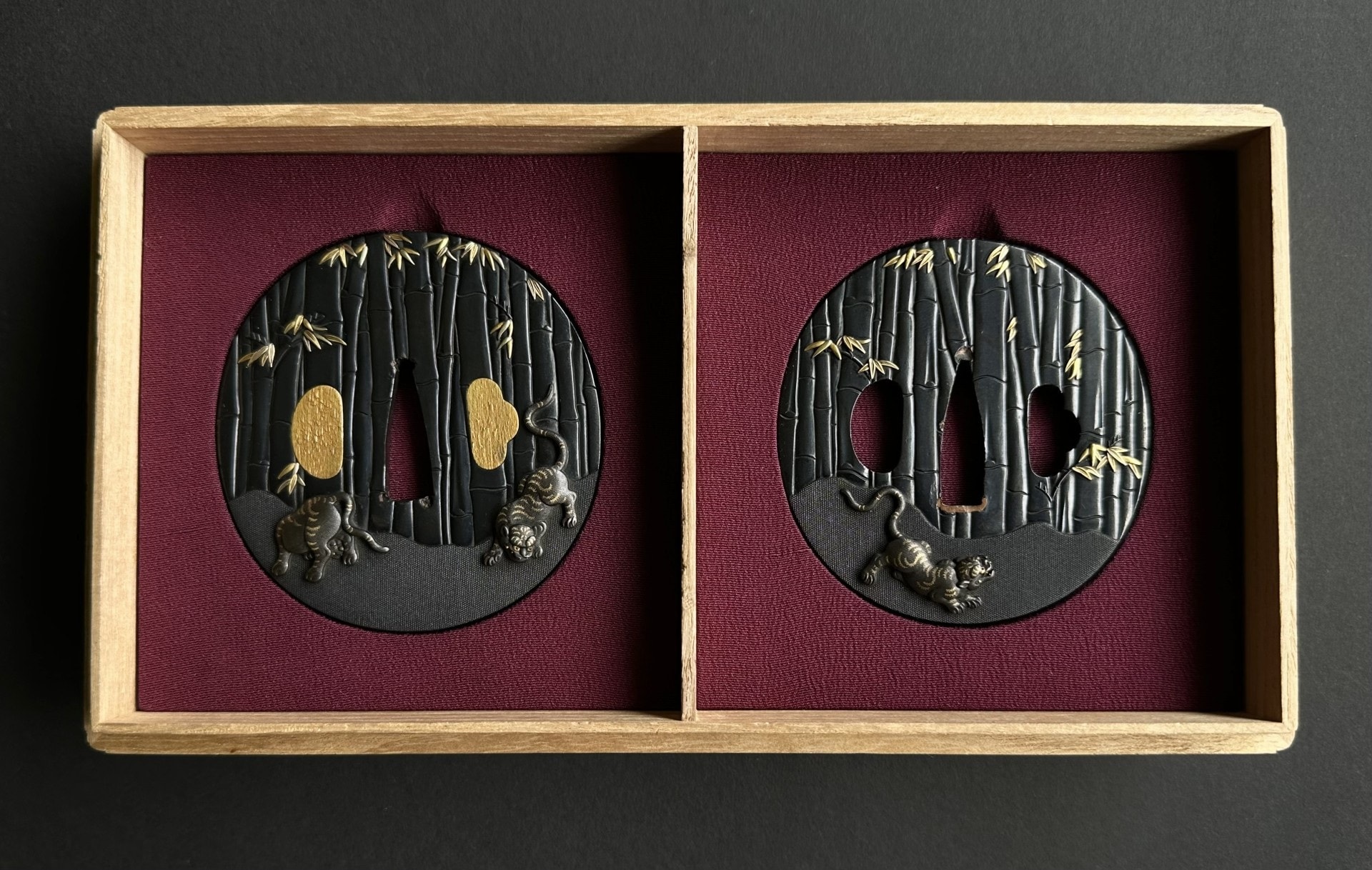
Atsuoki's style frequently renders the Ōtsuki school's characteristic pictorial, painting-like designs through (high-relief carving) with (polychrome metalwork). He skillfully employs techniques such as hira-zōgan (flat inlay), (single-chisel engraving), suemon-zōgan (applied relief inlay), and fine (hairline engraving), achieving bold compositional arrangements while maintaining an unmistakably Kyoto elegance — refined and sophisticated. His iron-plate demonstrate an especially fluent and unrestrained cutting manner: dragons rendered in high relief with gold rise amid clouds expressed in , while surging waves break apart with spray scattering outward in the sculptural, dynamic style for which the Ōtsuki school is particularly renowned. In his work, Atsuoki displays an unconventional and daring design sense, as seen in unified ensembles of solid-gold fittings (kanemuku) with grounds and fully sculpted , yielding a richly sumptuous conception distinctive to Kyoto workmanship. His figure subjects and naturalistic compositions — from the warmth of frolicking puppies rendered with living detail down to the finest fur textures, to the quiet dignity of a Sumiyoshi seascape — demonstrate his versatility across both vigorous martial themes and subjects of refined, poetic sensibility. The consistently note that his carving method displays the distinctive character of the Ōtsuki school, and that his works are outstanding in sense of color.
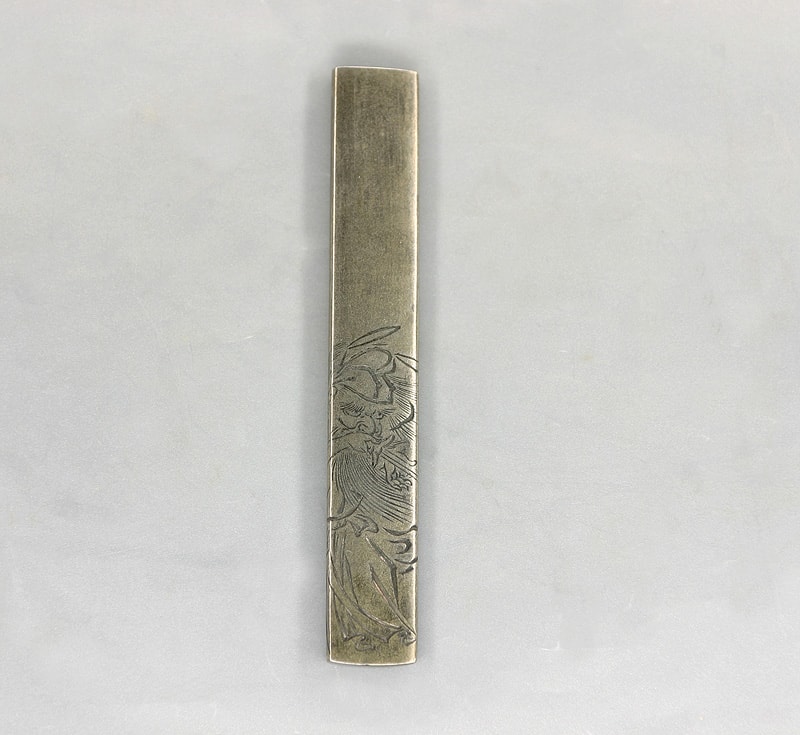
Atsuoki's oeuvre spans , , , , , and complete ensembles, constituting one of the most comprehensive bodies of work among late- Kyoto kinkō artists. His dual formation — the poetic sensibility inherited from his father's literary world and the rigorous metalworking discipline of the Ōtsuki lineage — produced works of a character at once bold and subtly graceful, combining daring pictorial compositions with a polished elegance rarely achieved by his contemporaries. His commissions for both the Tokugawa shogunate and the imperial household attest to the esteem in which he was held at the highest levels of patronage, and his consistent presence across decades of designation sessions confirms his enduring recognition as one of the foremost masters of the Ōtsuki school.