NihontoWatch Mon

NihontoWatchBETA

マーケットオークション
事典
NihontoWatch Mon

NihontoWatchBETA

マーケットオークション
事典

説明

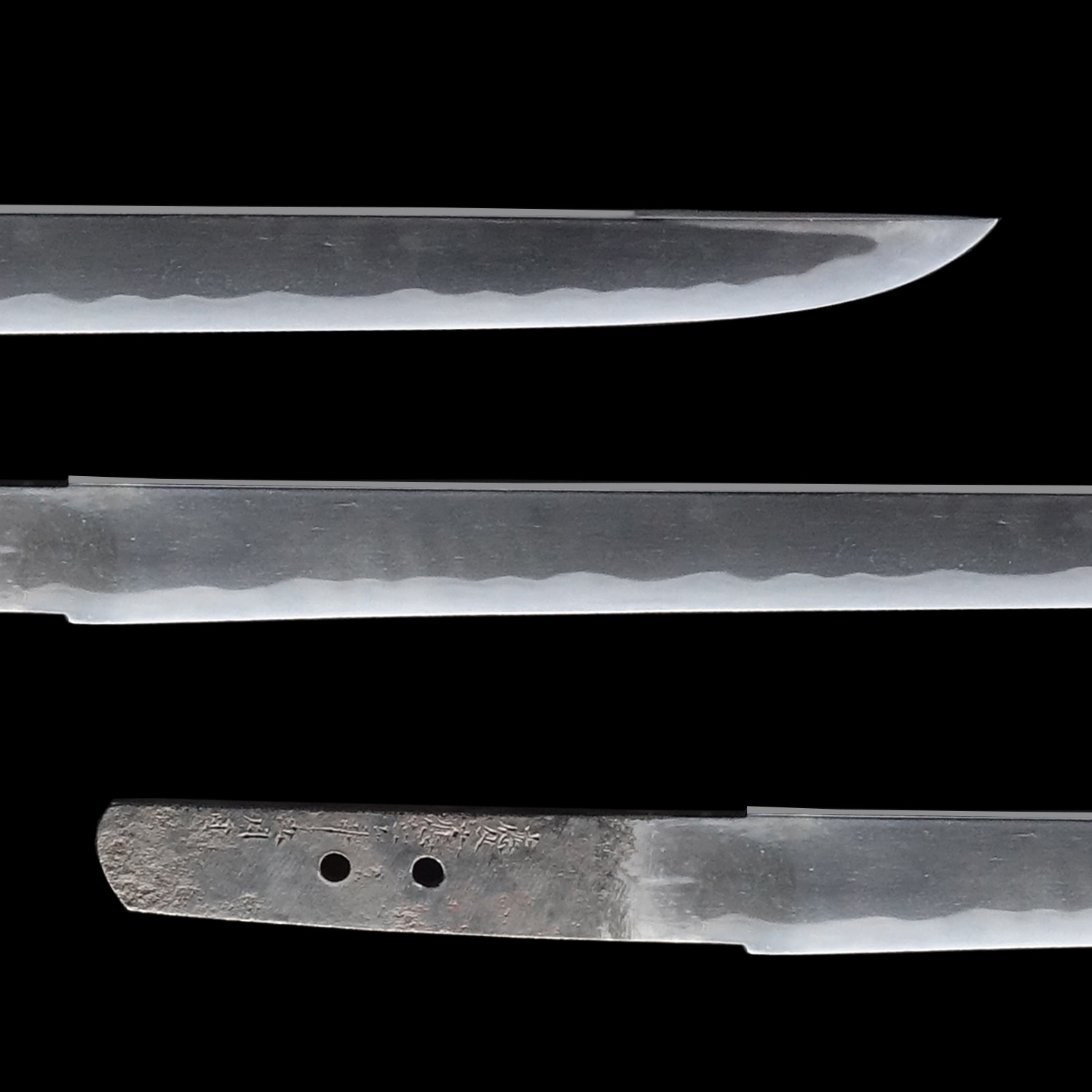
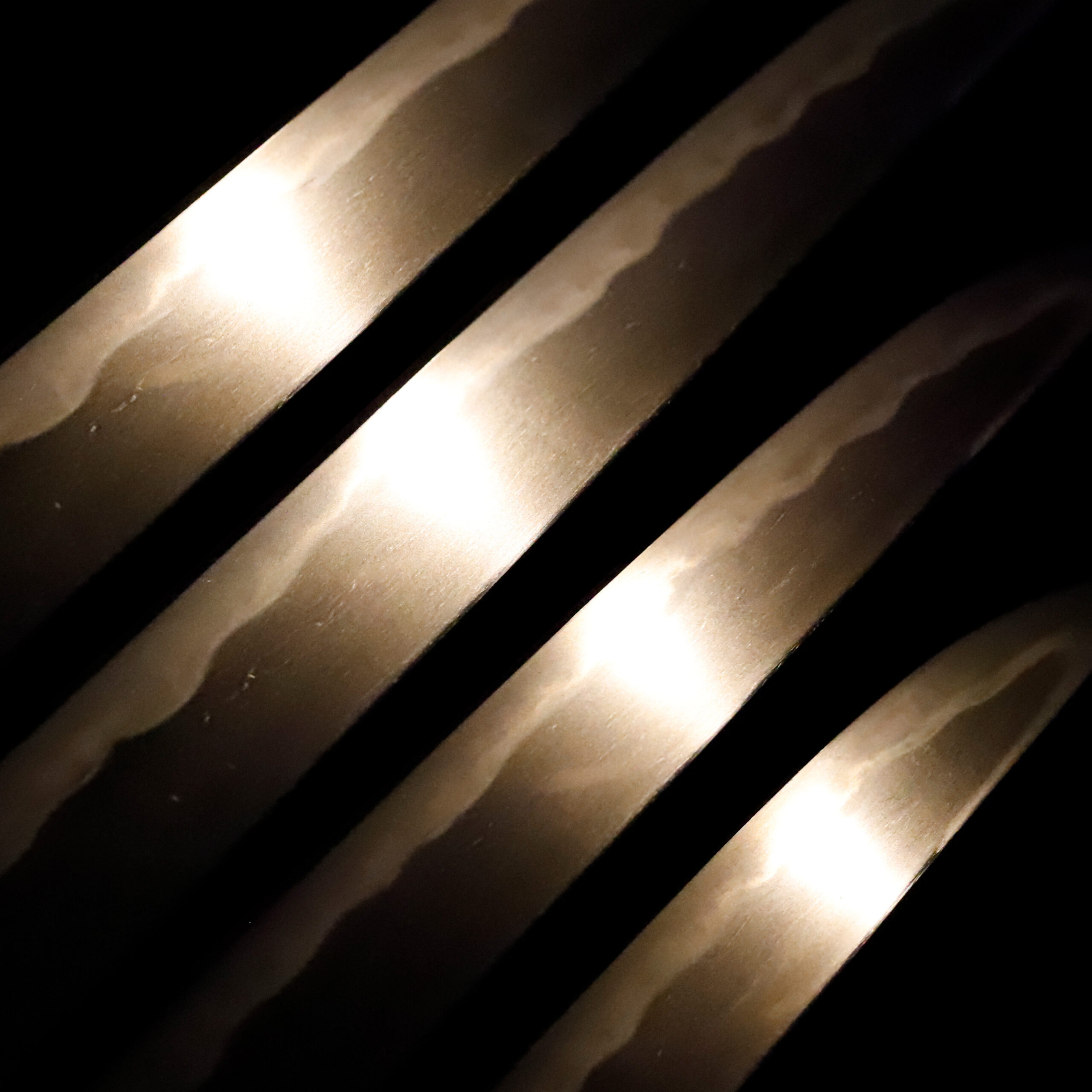
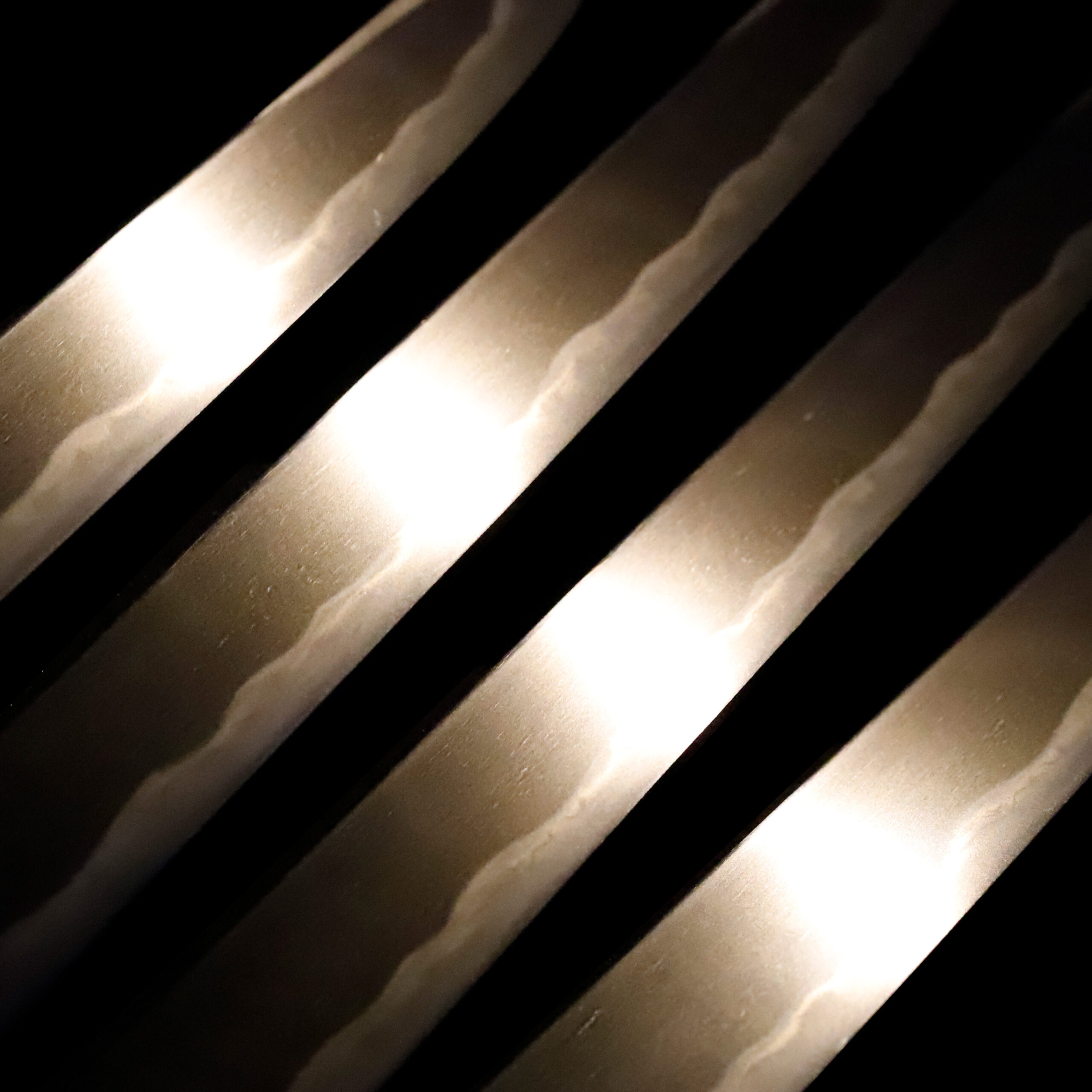
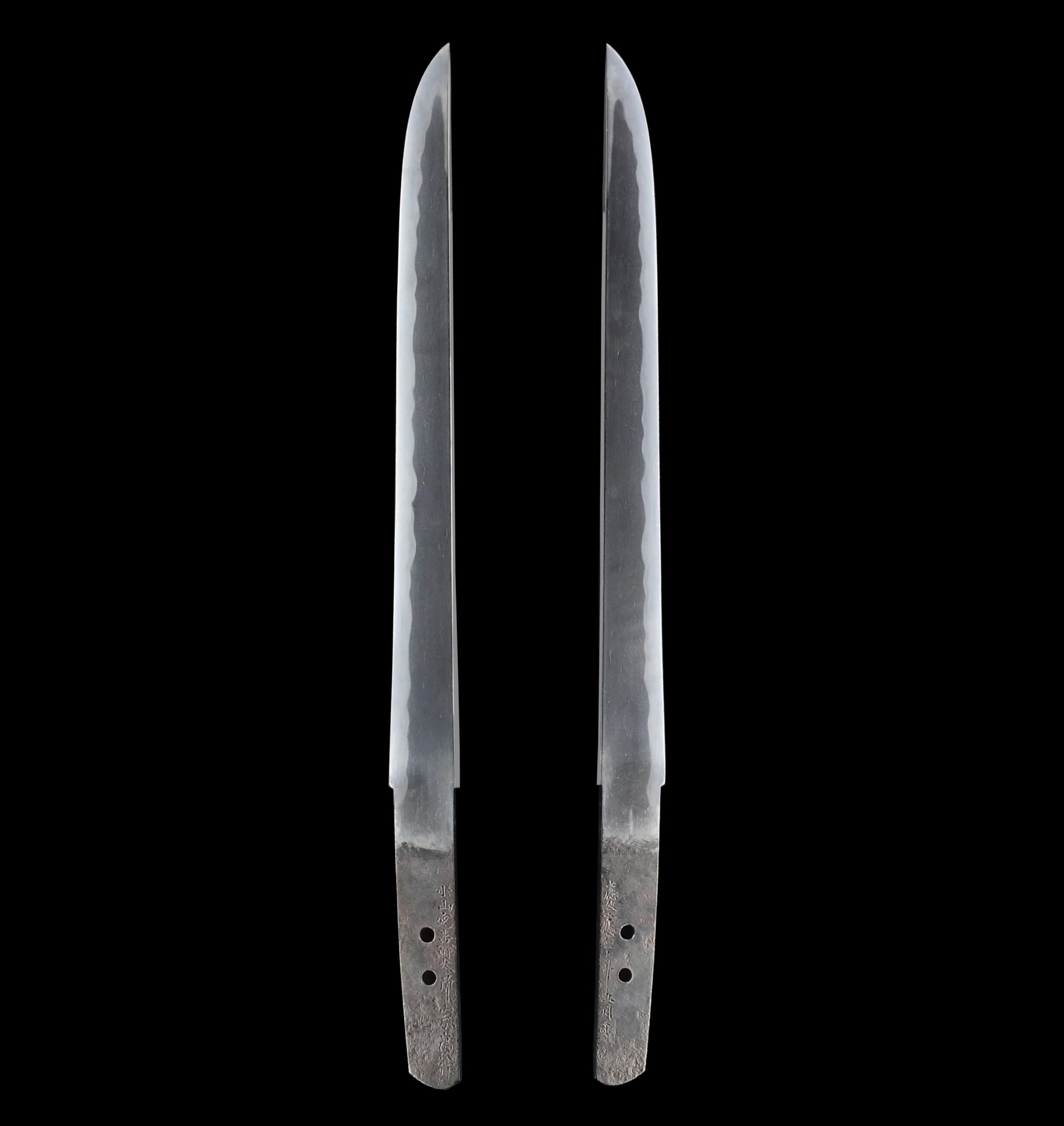
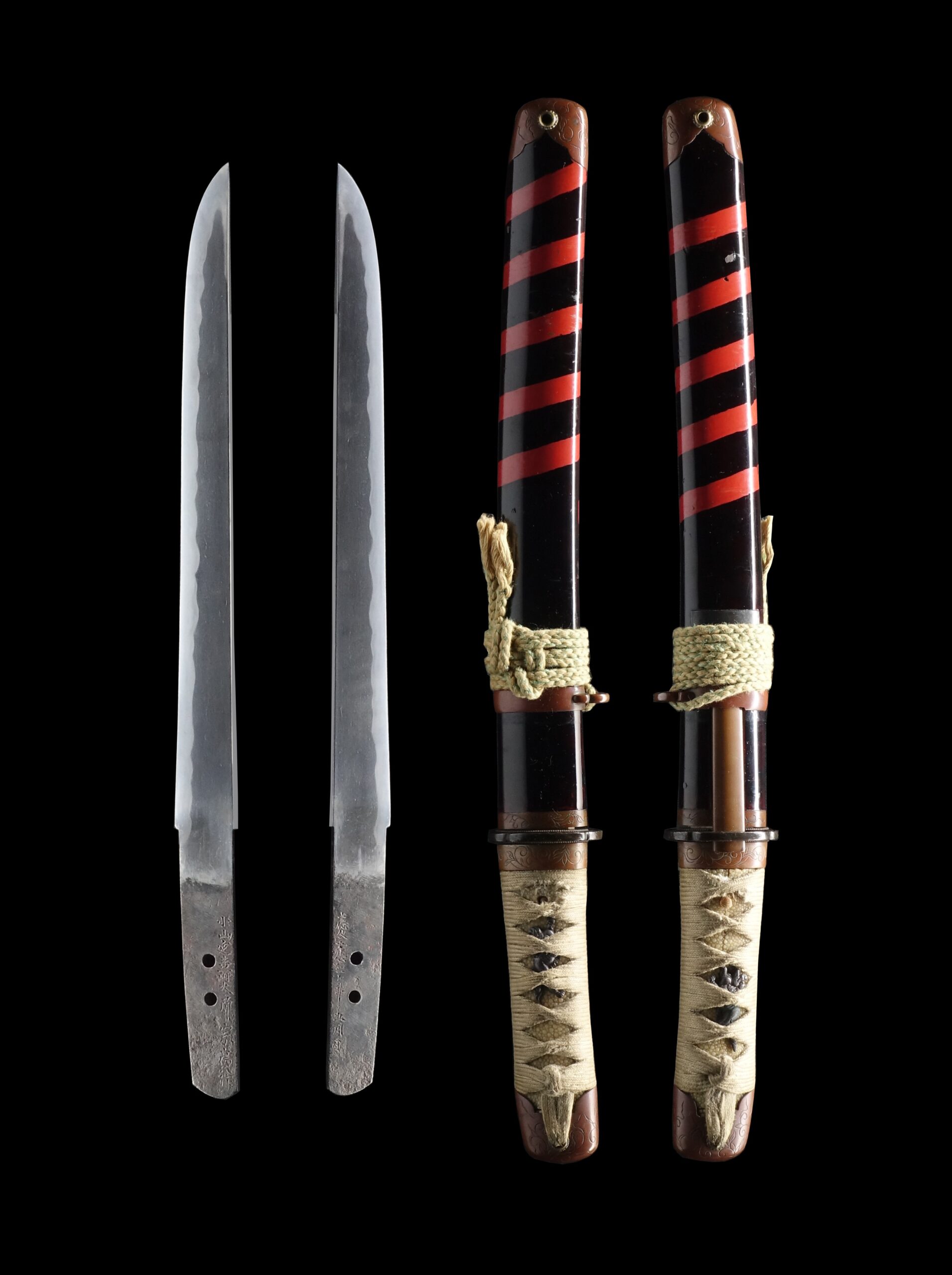
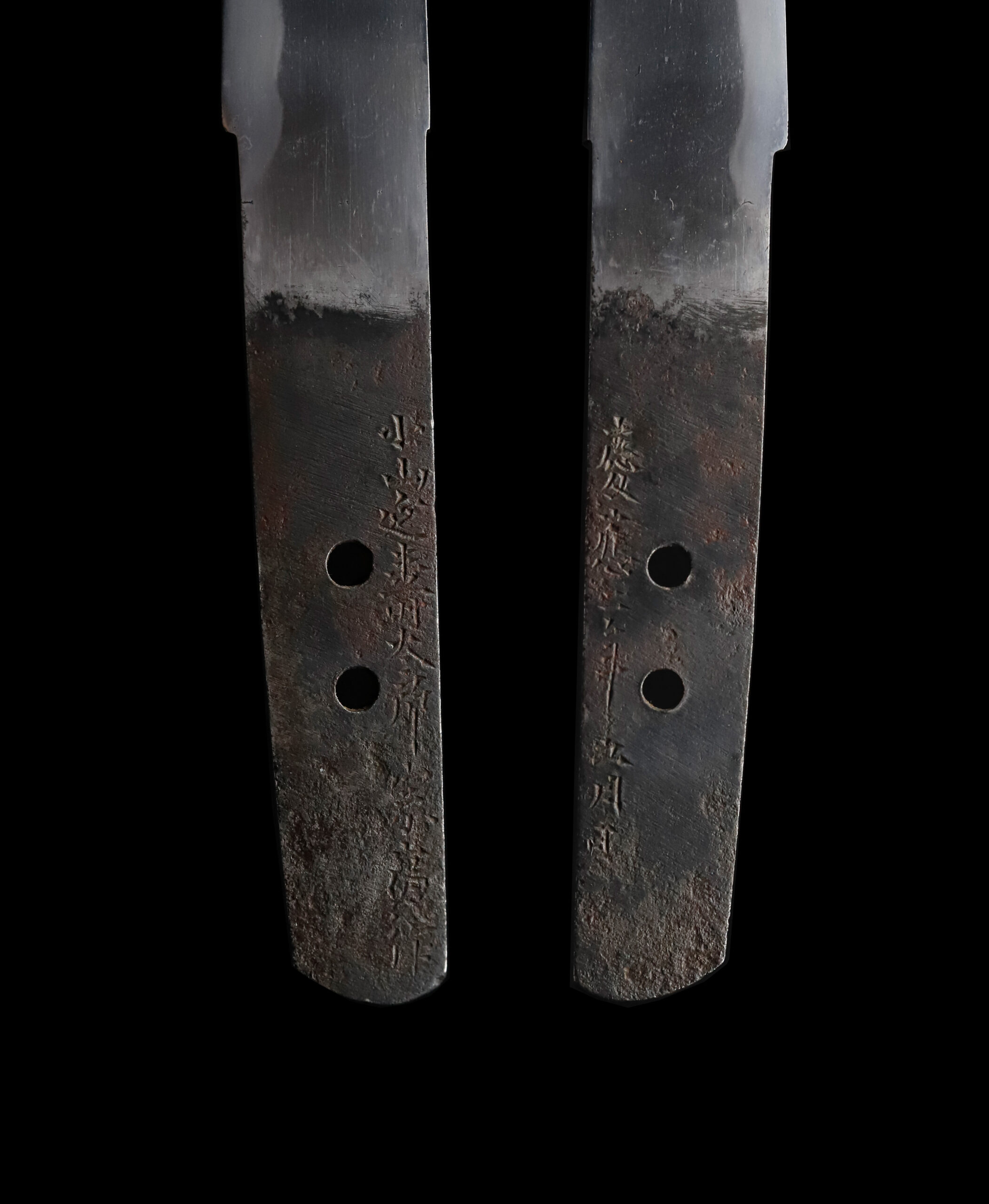
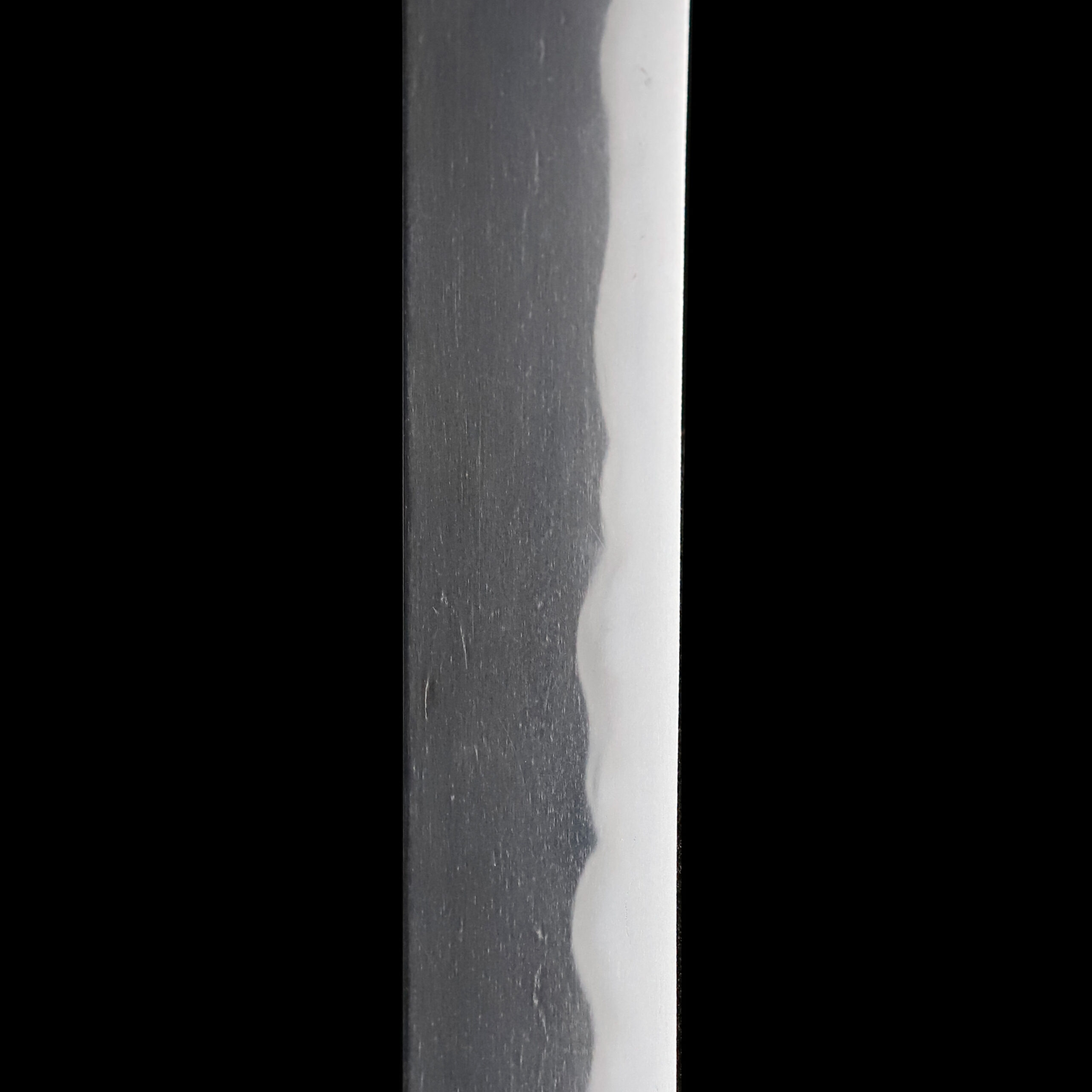
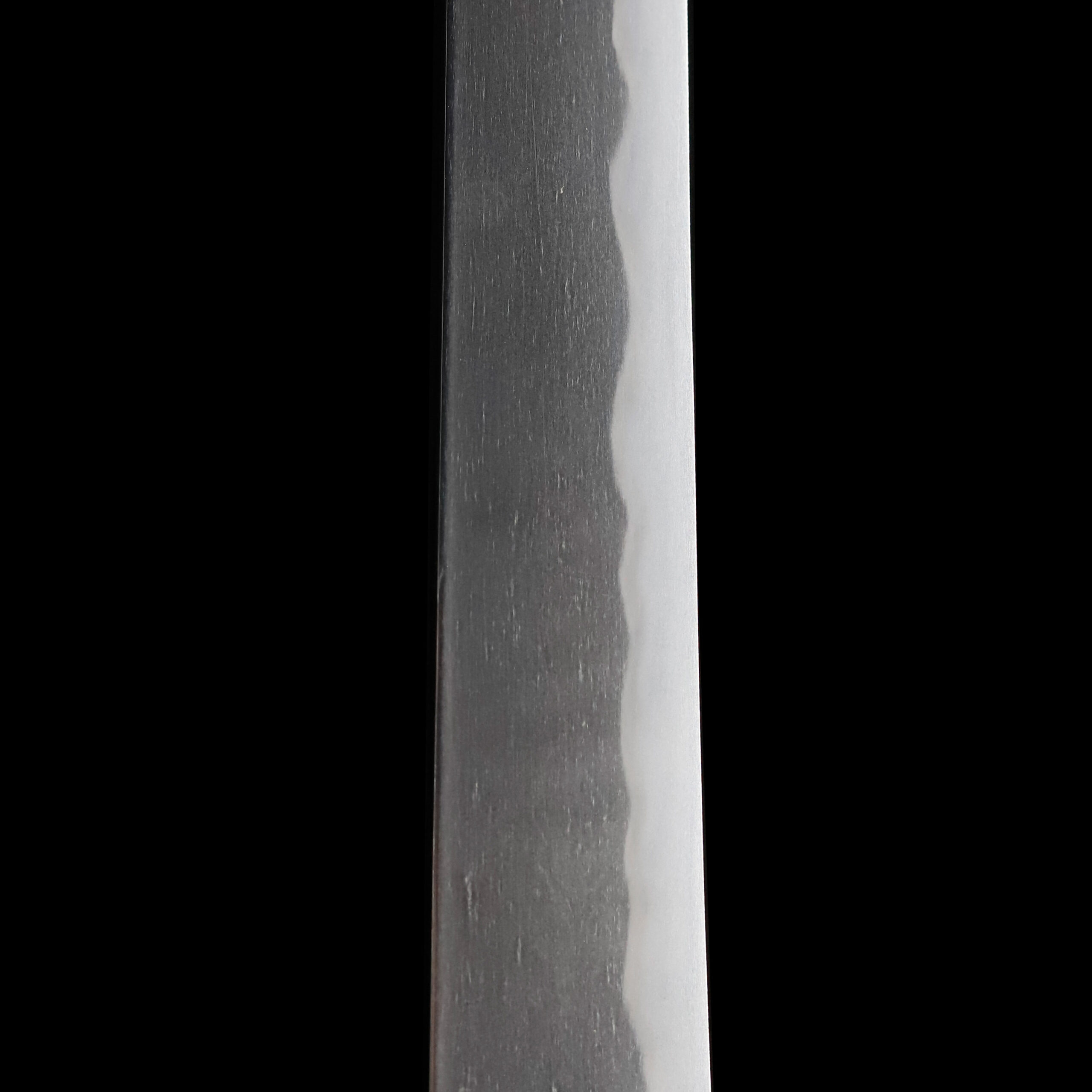
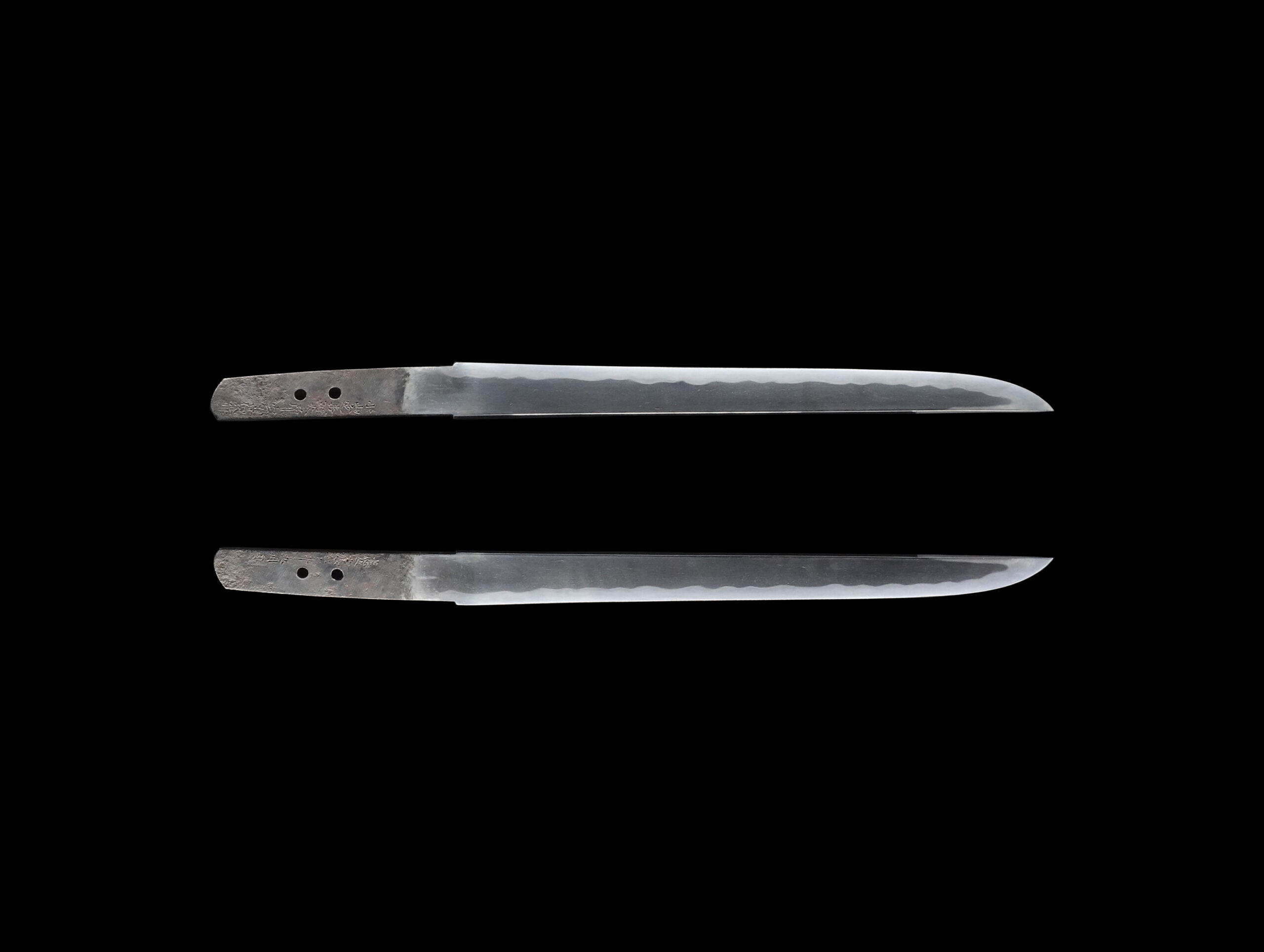
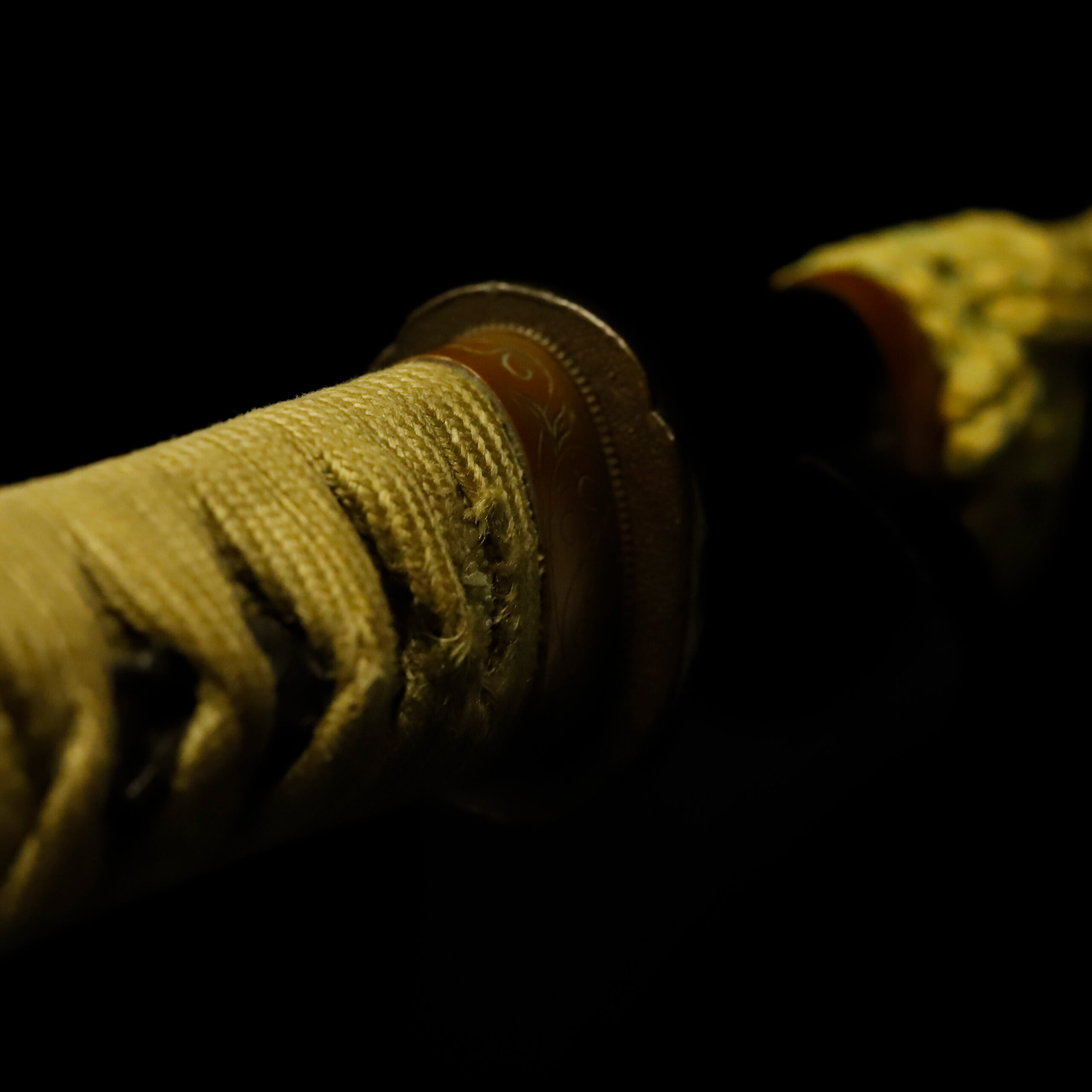
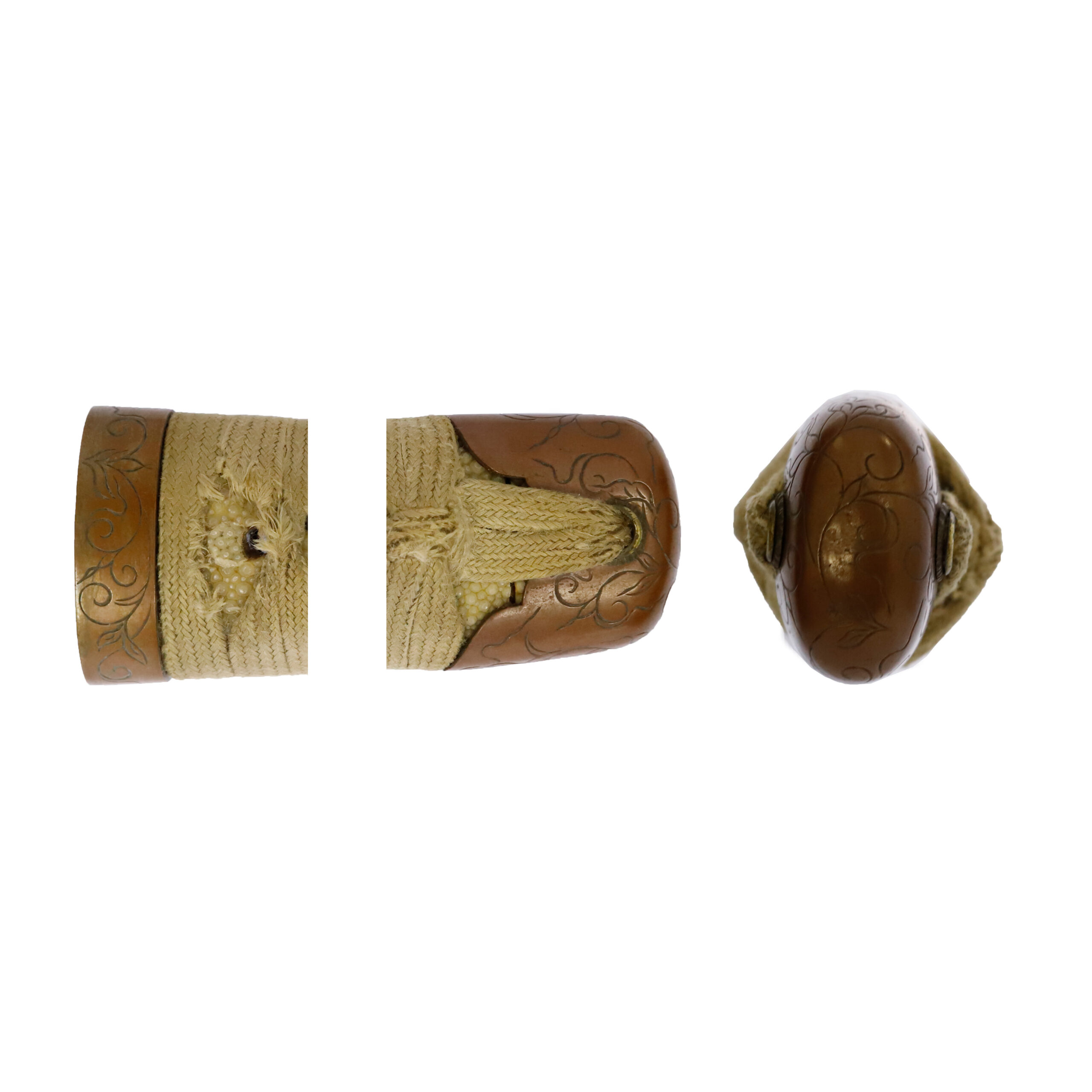
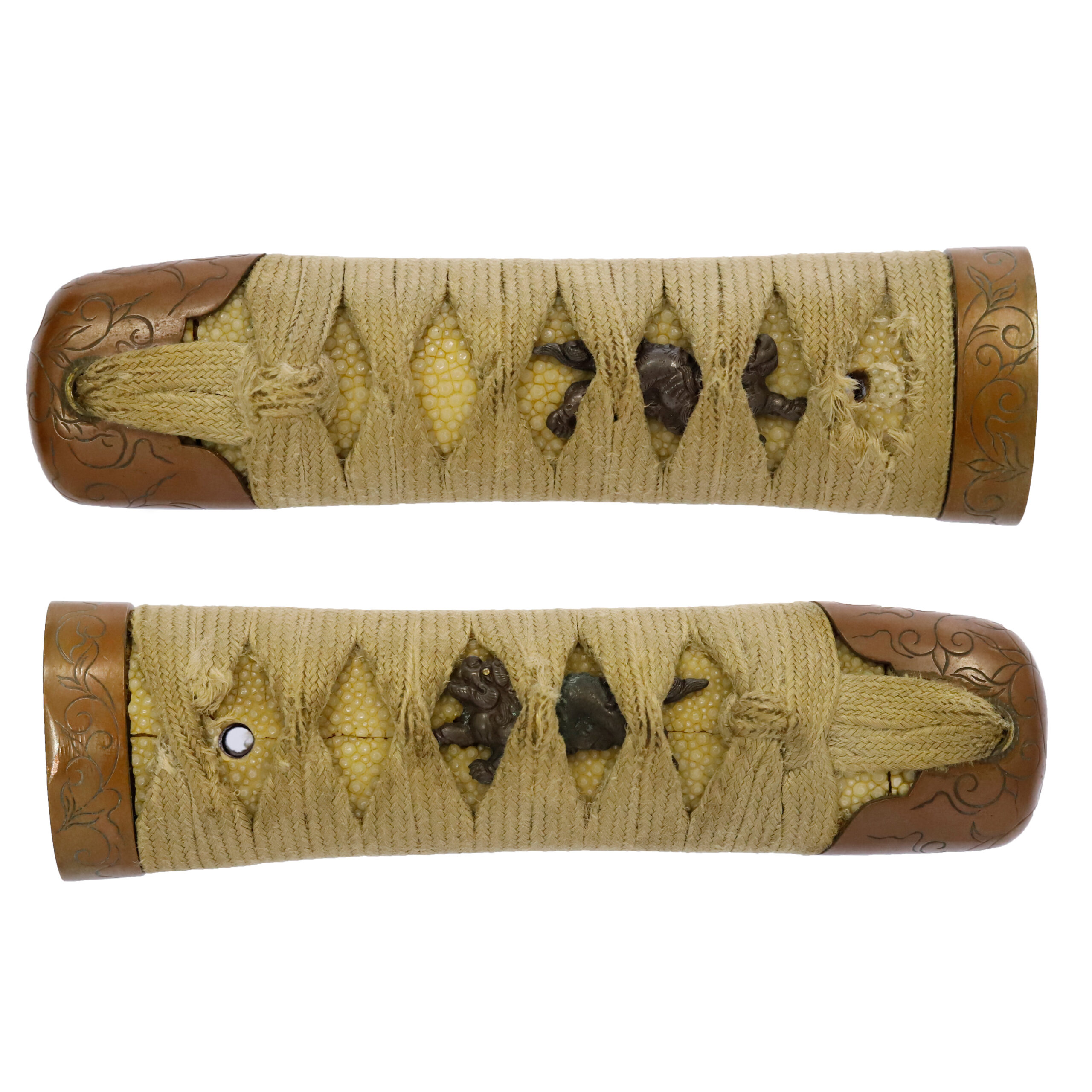
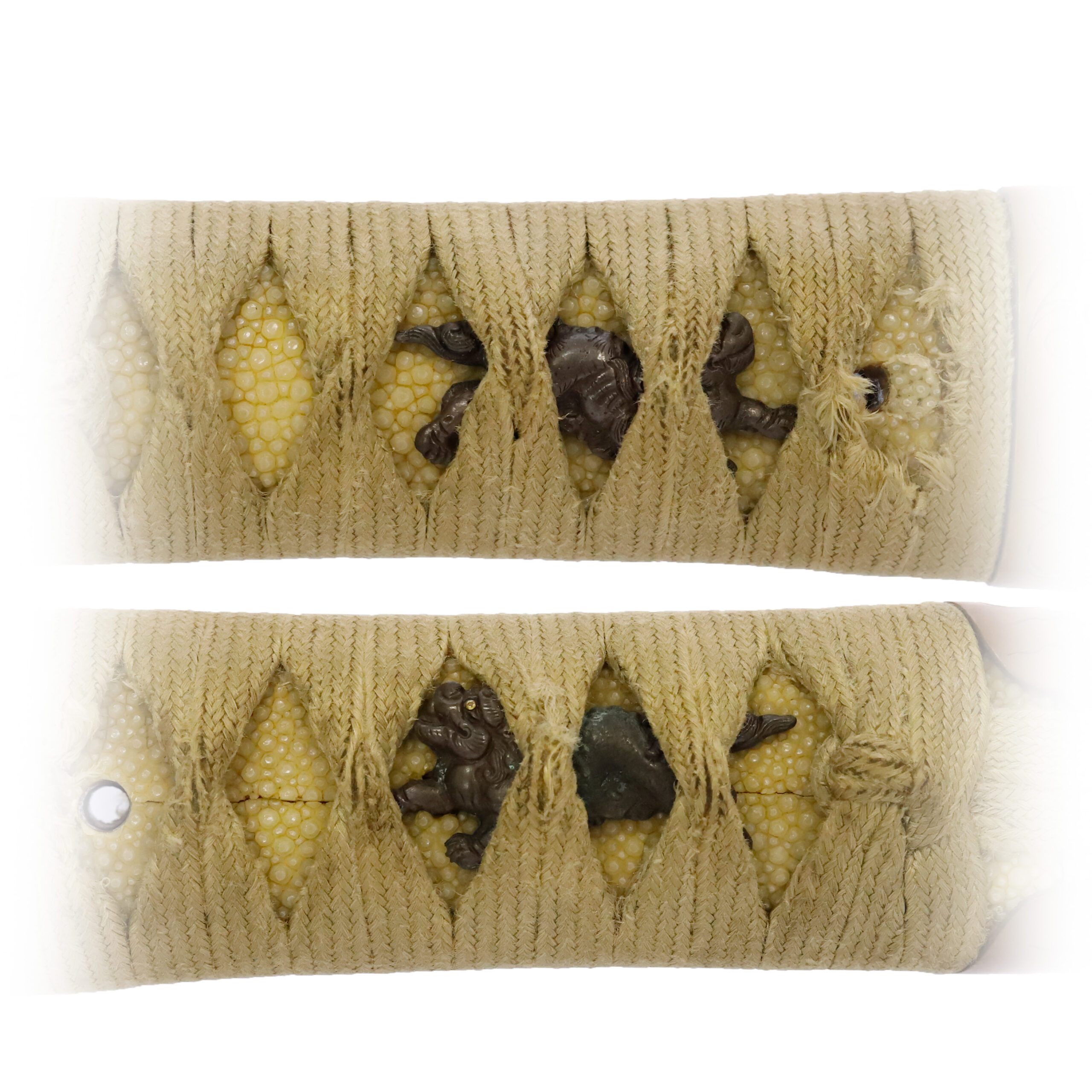
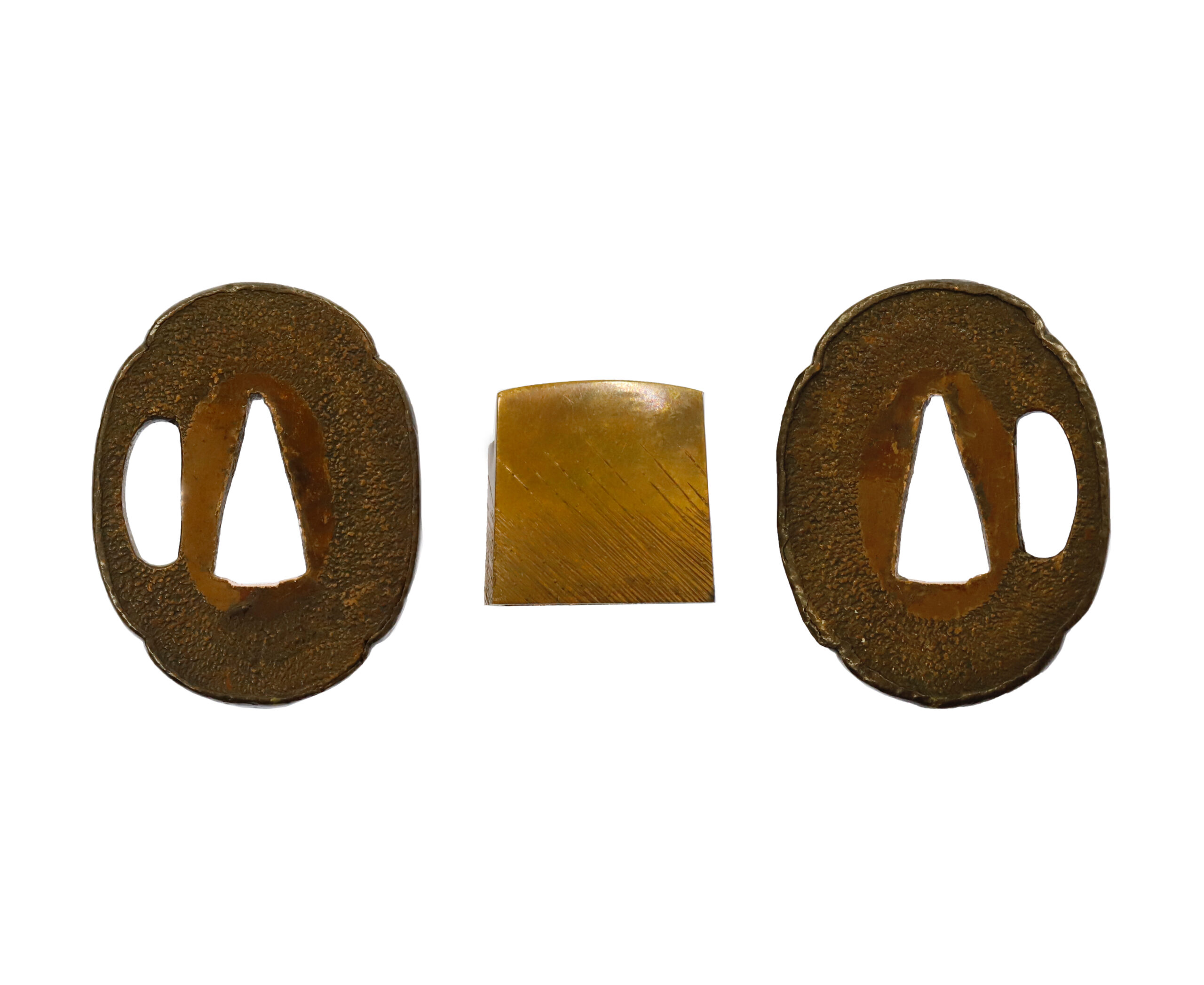
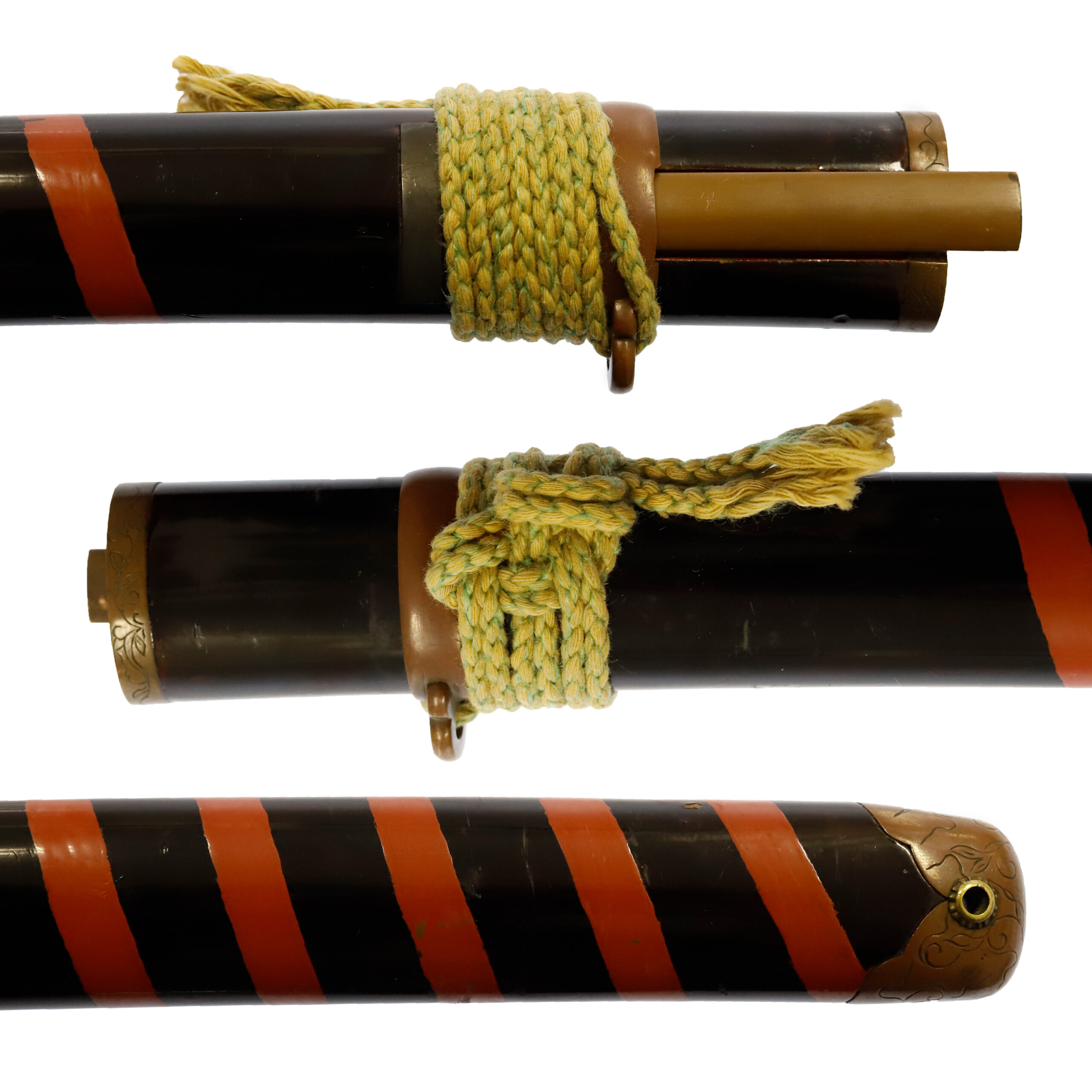
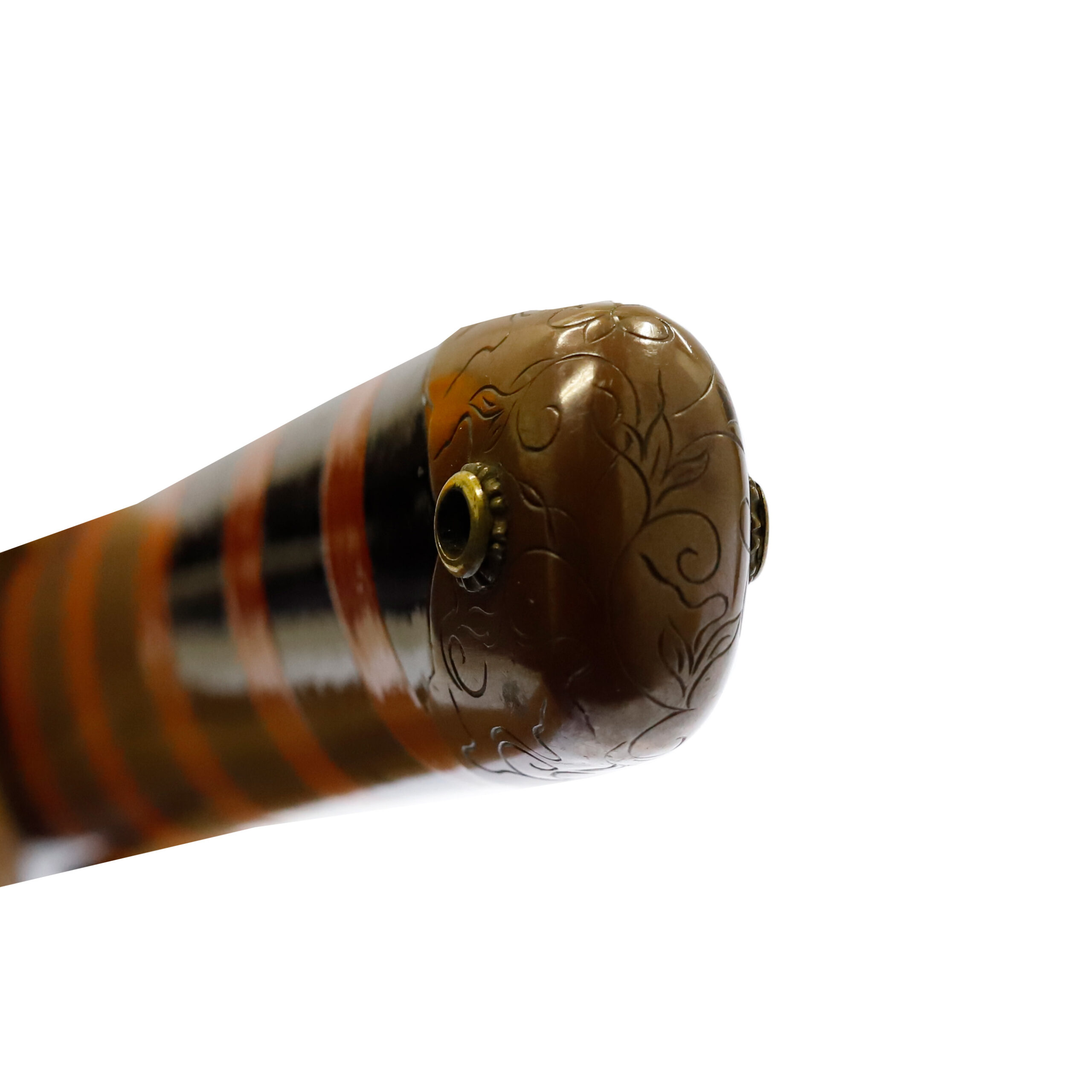
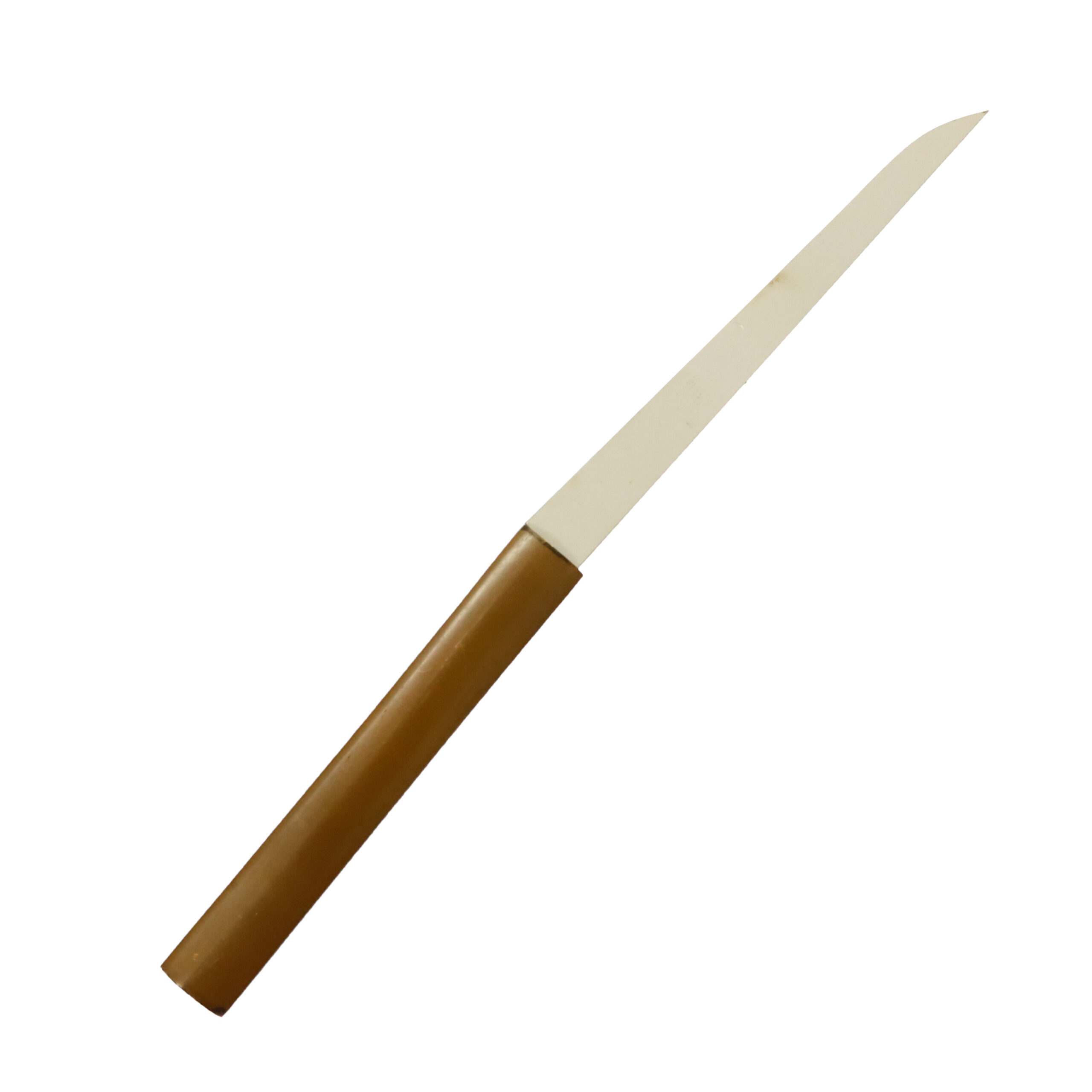
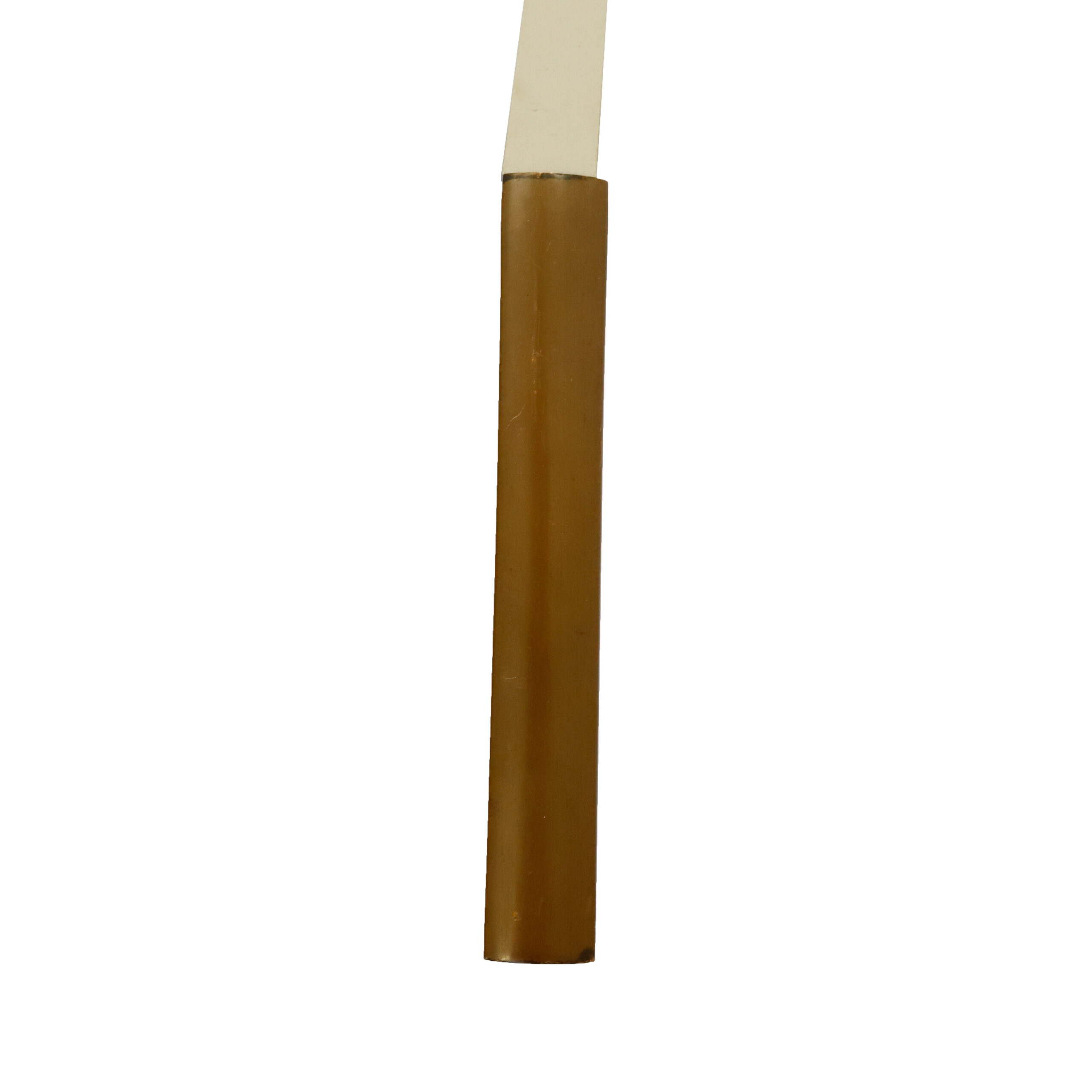
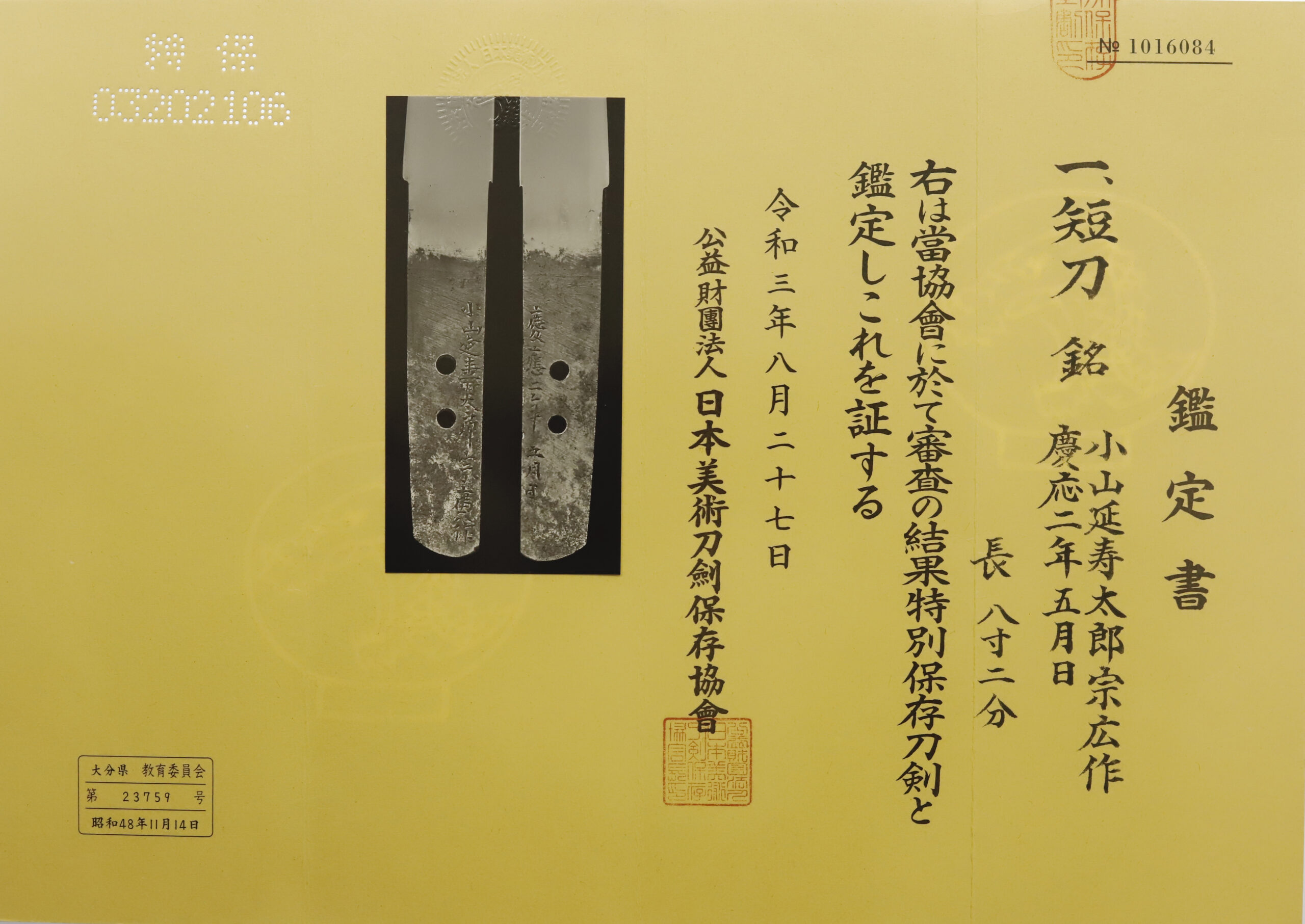
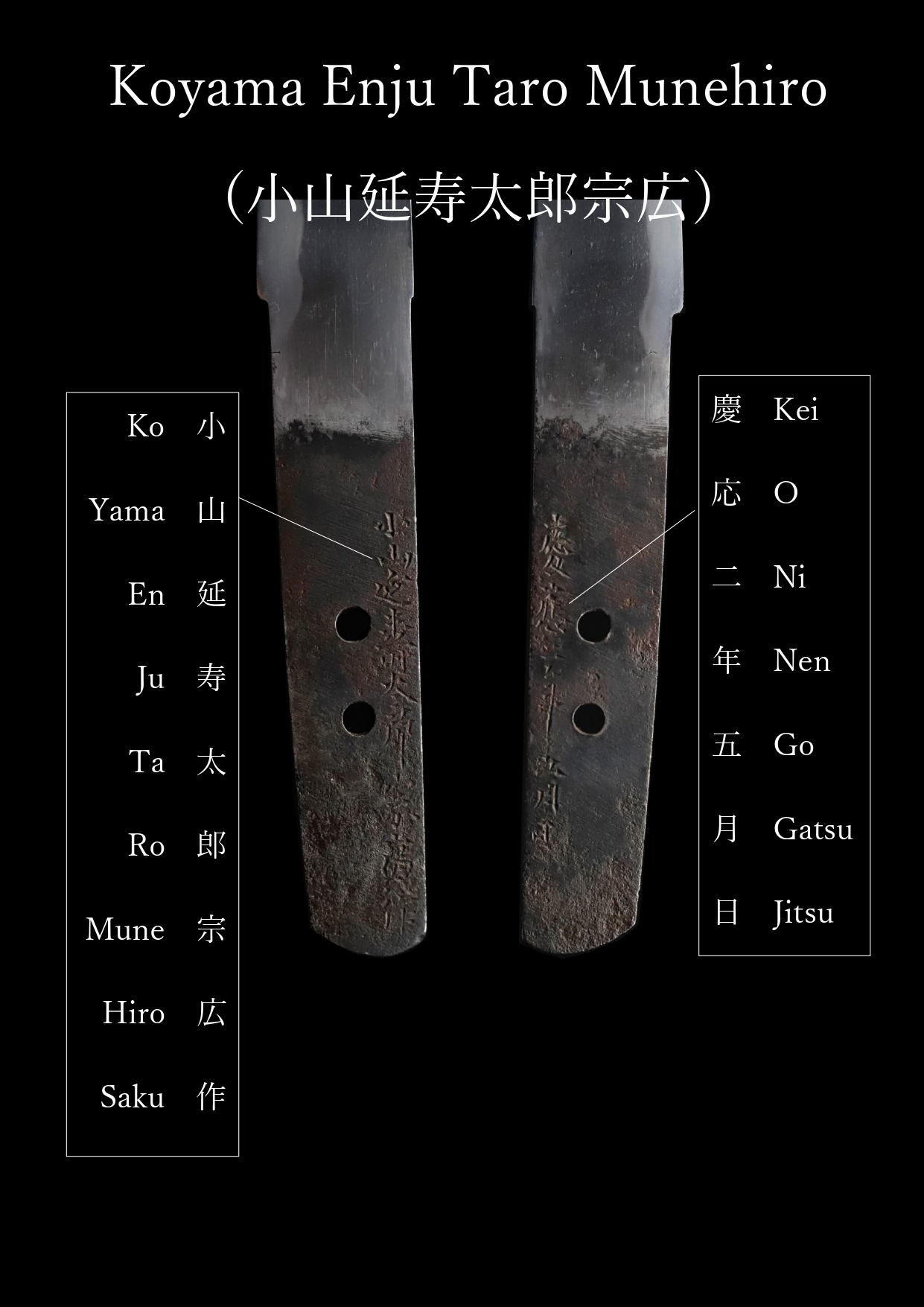
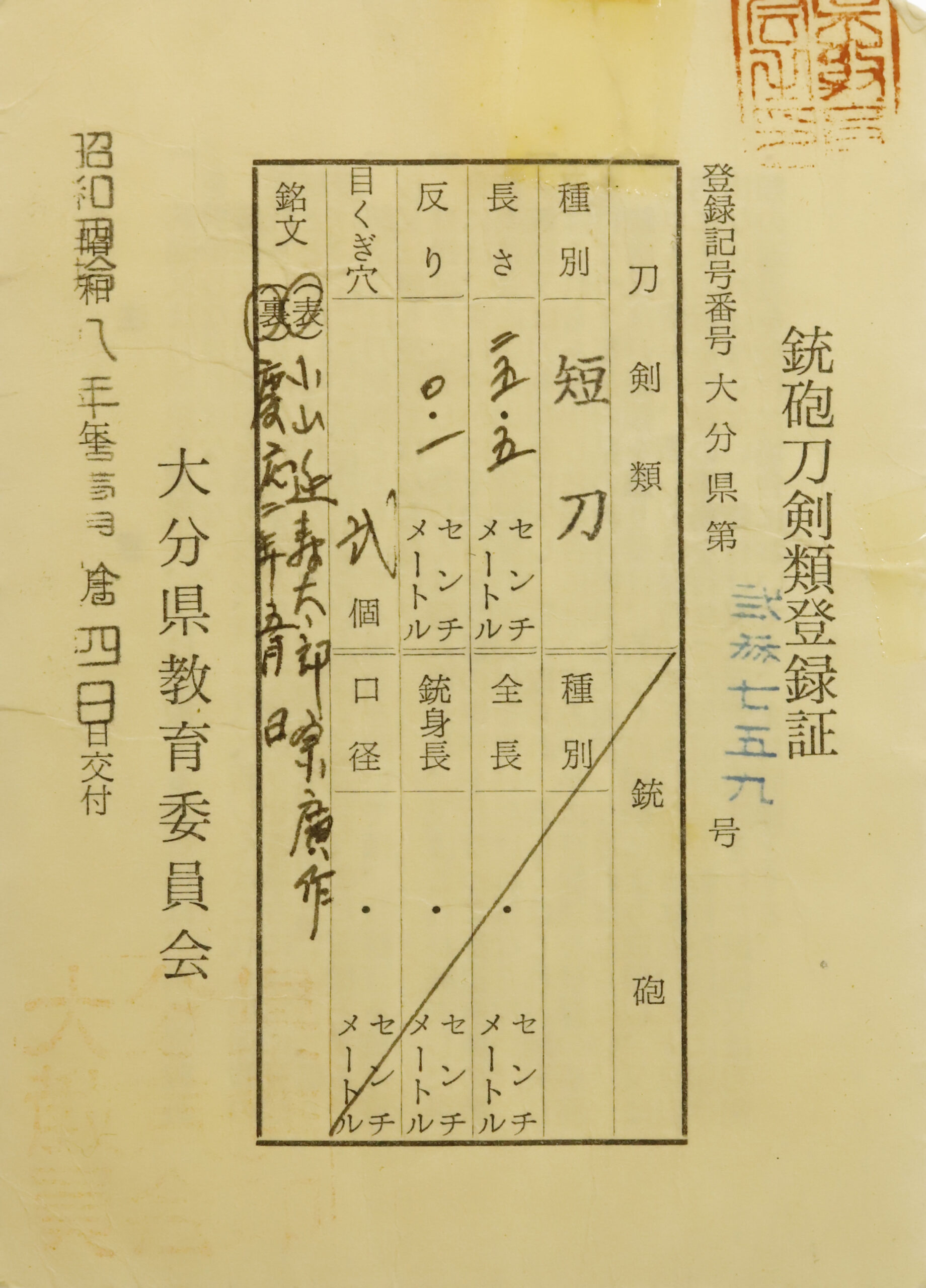
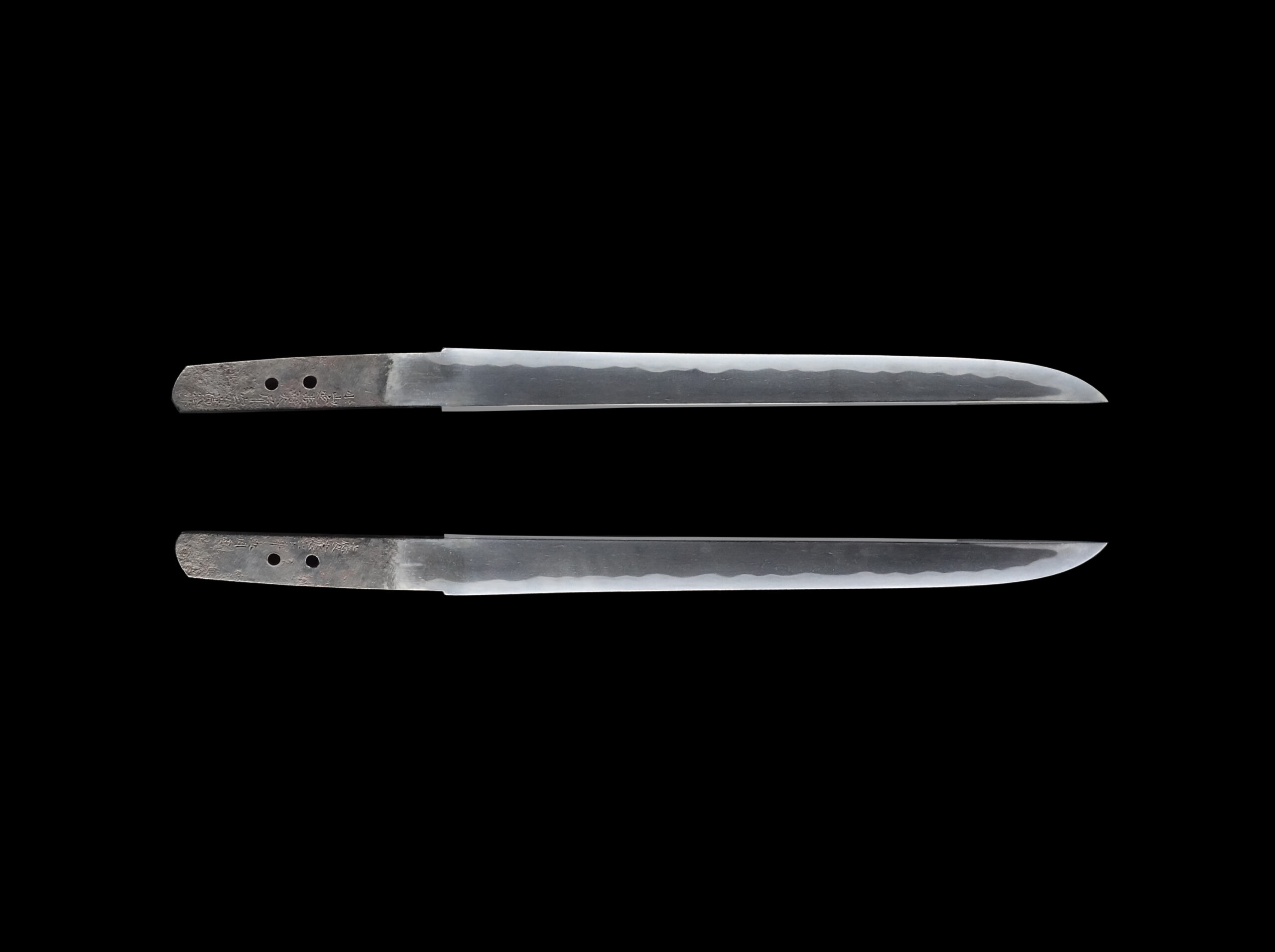
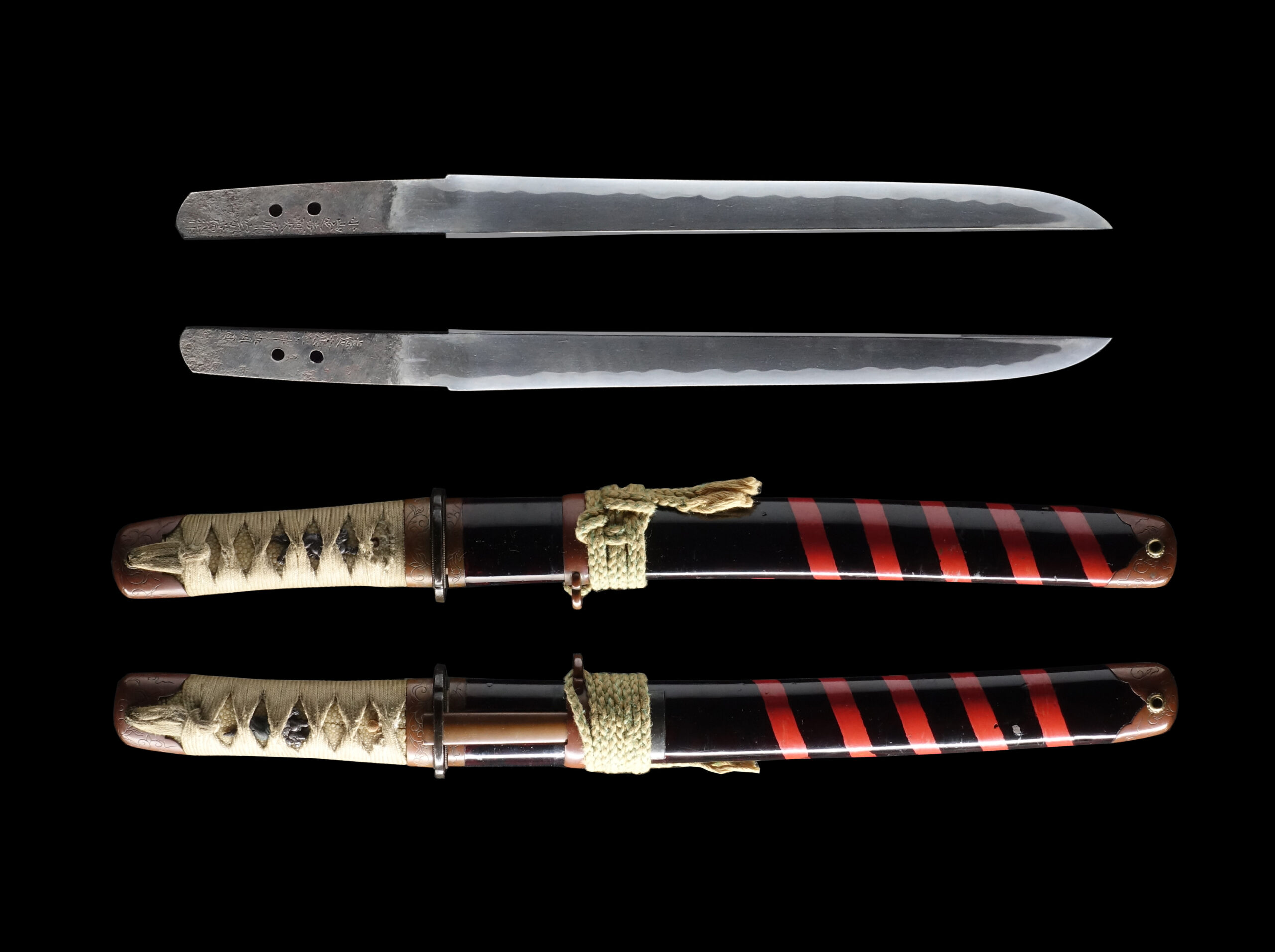
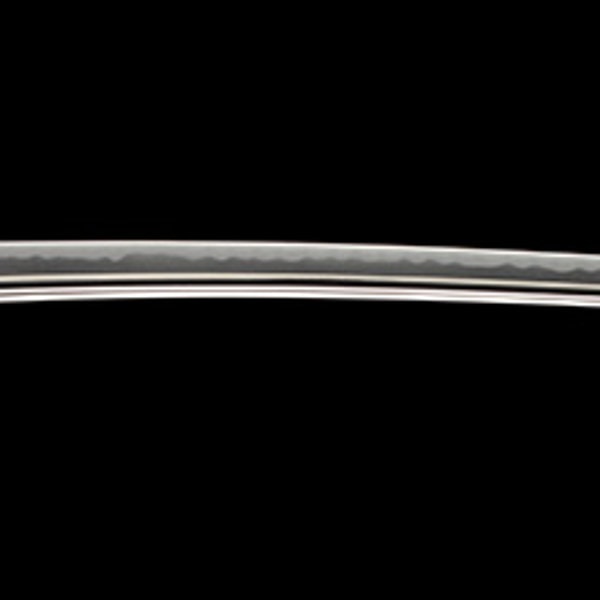
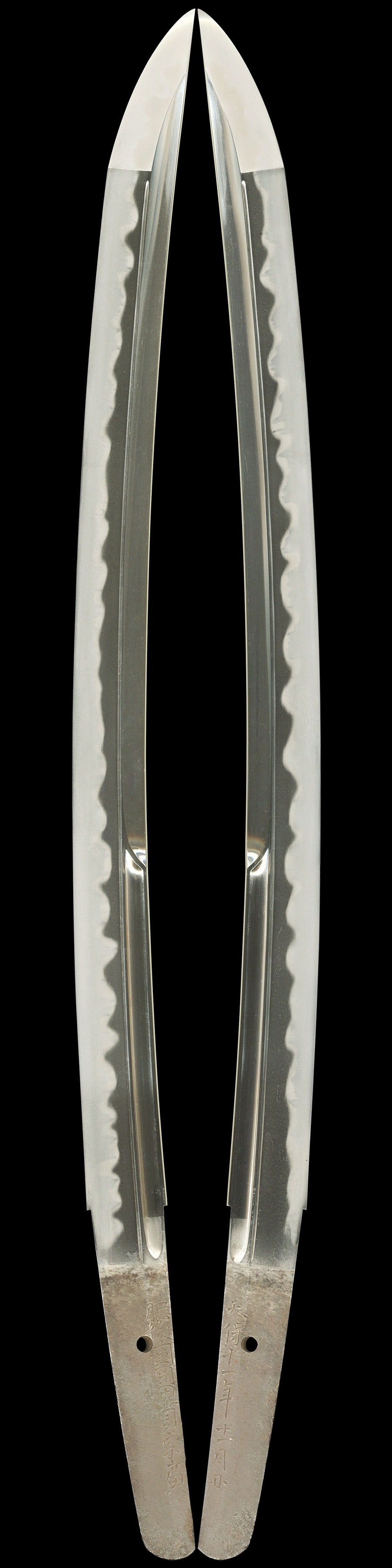
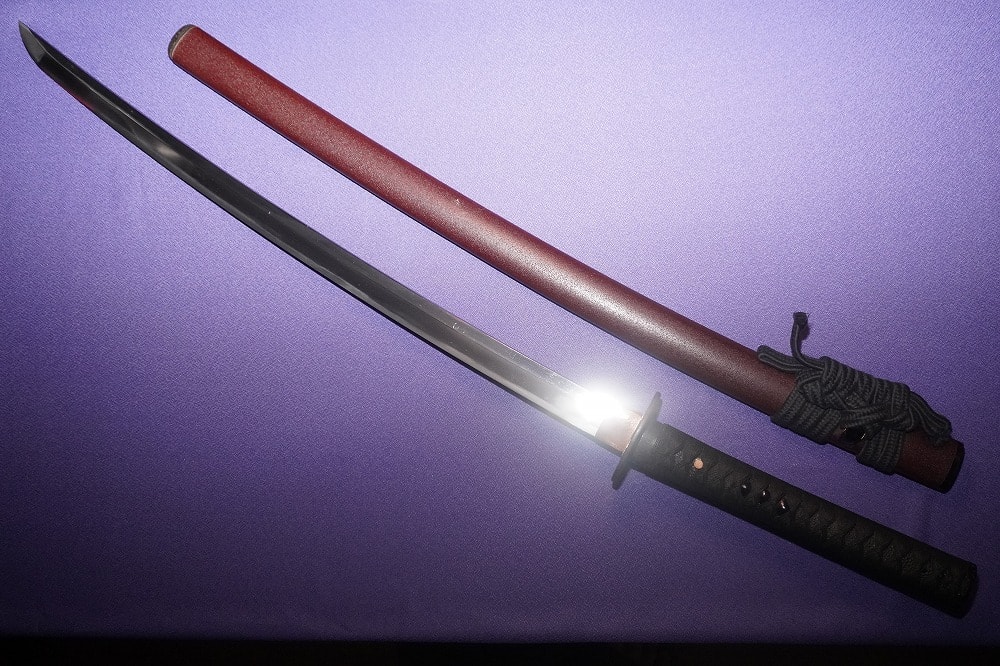
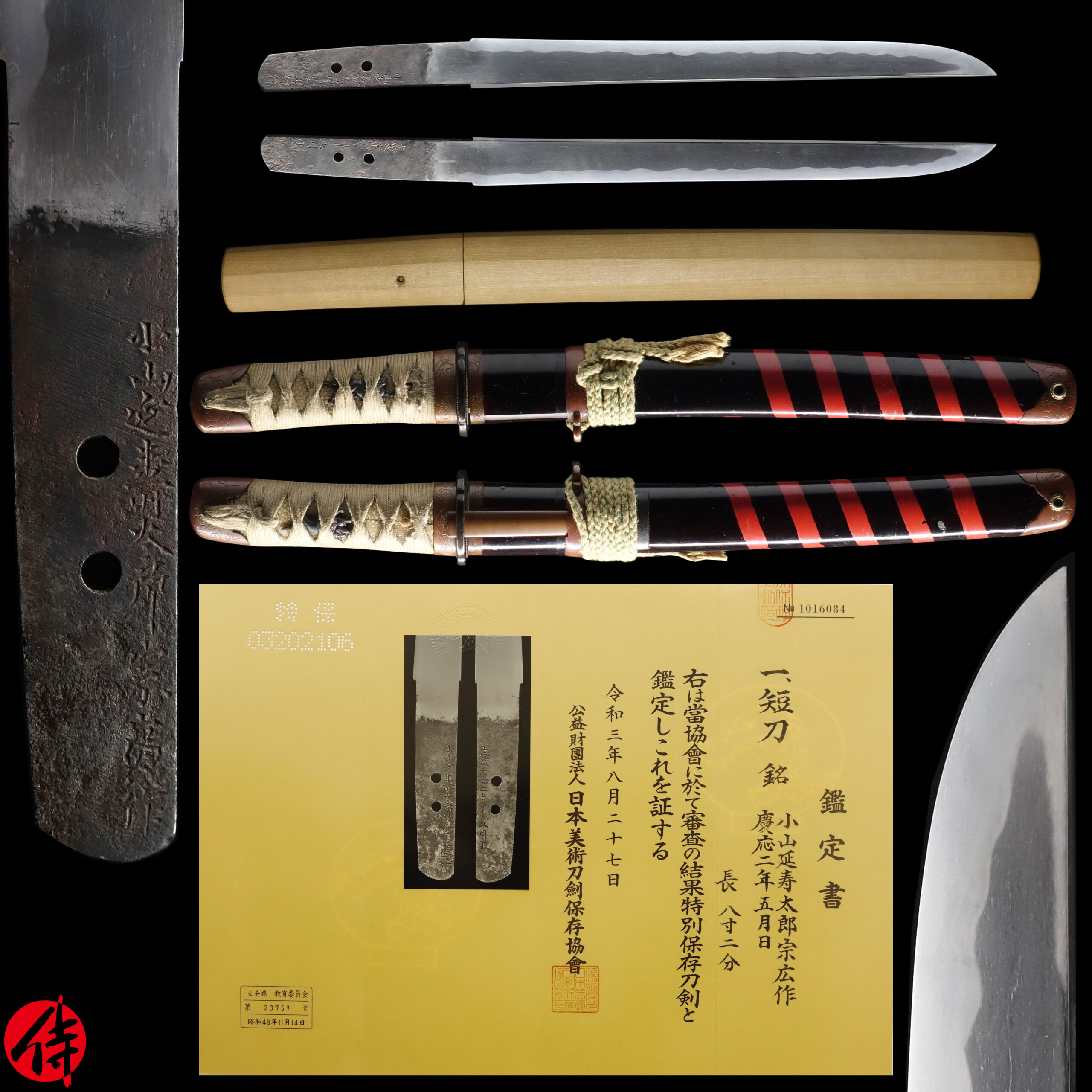
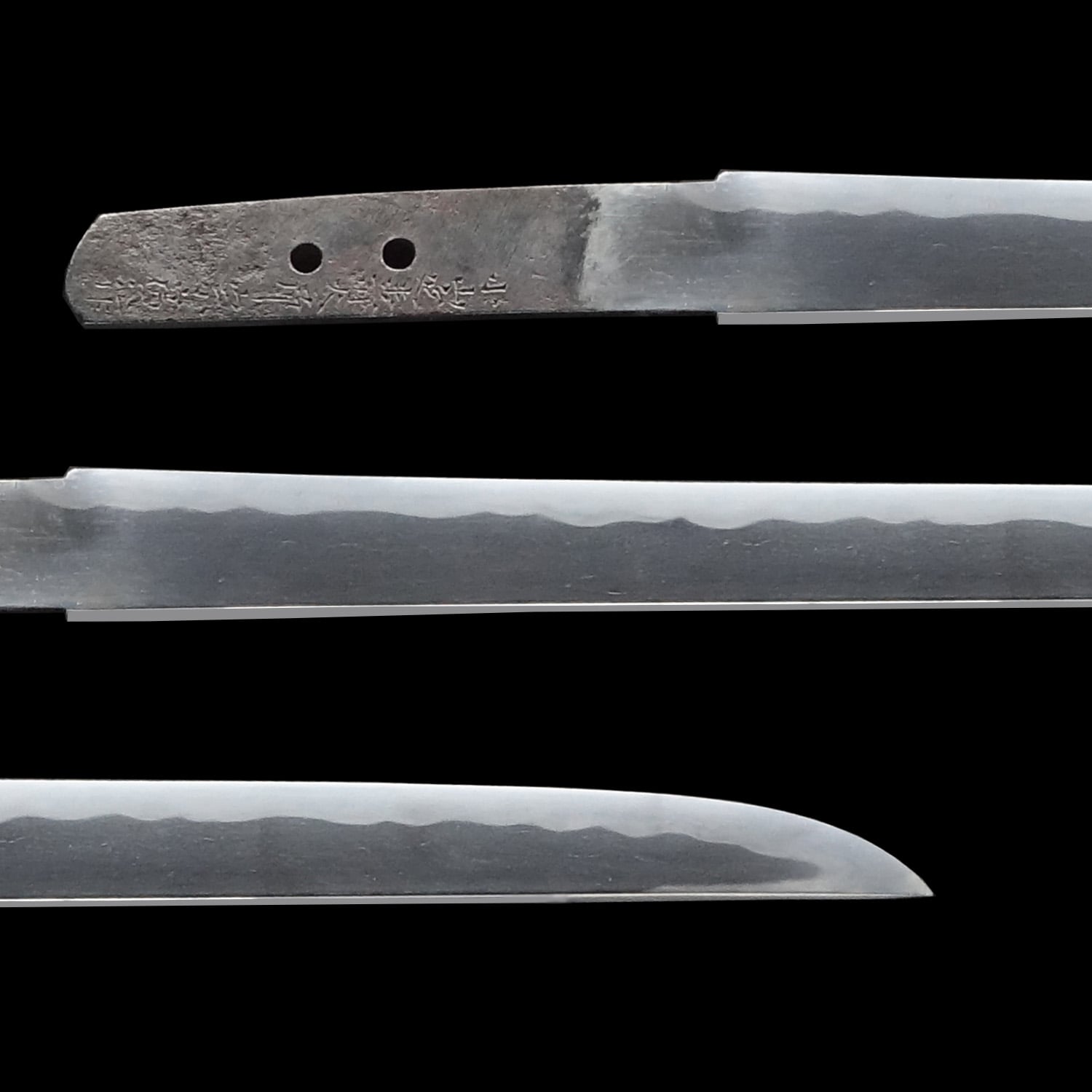
Antique Japanese Sword Tanto Signed by Munehiro with Tokubetsu Hozon Certificate 【Description】 Summary This blade was signed by Koyama Enju Taro Munehiro (小山延寿太郎宗広) in the second year of the Keio era ( 1866 : The end of the Edo period). He was the first son of Yamato no Kami Masakatsu, the 9th head of the Dotanuki school, one of the most prestigious schools in Higo province (Today’s Kumamoto prefecture), during the Edo period. His birth name was Koyama Taro. He was especially active during the Tenpo-Keio era (1830-1868). That means this blade was forged at the end of his career when he mastered excellent craftsmanship. Munehiro was an offspring of a member of Enju school. He also lived in Edo city, invited by Numata Arimune, a chief vassal of Hosokawa clan, the head of Kumamoto domain. Munehiro also learned sword-forging techniques from Suishinshi Masahide, one of the most famous swordsmiths at the end of the Edo period in Edo city. This fact indicates that Munehiro was a recognized swordsmith in the domain. Enju School and Its Founder (Enju Kunimura) Enju(延寿) is the prestigious school name that especially flourished during the late Kamakura period-Nanbokucho period(Early-Late 14th century). Enju school was founded by Kunimura(国村), who is said to have been the grandson of Rai Kuniyuki, one of the most famous swordsmiths from Yamashiro province(Today’s Kyoto prefecture). Kunimura and his apprentices moved from Kyoto to Higo province(Today’s Kumamoto prefecture on Kyushu island) after being invited by the Kikuchi clan, who had an influential power in that region. It is said that the 10th head of the Kikuchi clan, Kikuchi Takefusa(菊池武房), had to find skilled swordsmiths who could forge strong swords to combat the Mongolian army. Back then, Japan was targeted by the Mongolian emperor, and Kyushu island was where the battle occurred twice(1274 and 1281). Kikuchi Takefusa brought Kunimura and his apprentices from Kyoto to prepare for the second attack from the Mongols. Since then, Kunimura and his sons served as Okakaekaji for this clan, exclusively forging swords for the Kikuchi clan, which ruled the Higo province back then. All the swordsmiths from the Enju school used the letter “国” (Kuni) for their maker’s name, such as Kadokuni. The descendant of this school founded the famous sword school named Dotanuki(同田貫) from the Eiroku era (1558-1570: Late Muromachi period). And there are descendants of the Enju school’s swordsmiths throughout the Edo period. That means Enjyu school has over 600 years of its history. Munehiro is one of the most prominent figures who belonged to Dotanuki school at the end of the Edo period. This blade is appraised as a Tokubetsu Hozon Token(特別保存刀剣) issued by NBTHK(Nihon Bijutsu Touken Hozon Kyokai:日本美術刀剣保存協会). This authentication paper was only given to authentic Japanese swords, especially well preserved and high quality with artistic value. 【 Blade】 Cutting Edge Length(Nagasa) : 25.5 cm (10.0 inches) Curvature(Sori) : 0.1 cm (0.03 inches) Hamon : The crystalline structure which forms along the cutting edge of a blade as a result of the hardening process Jimon(Jihada) : visible steel surface pattern created by folding and hammering during forging process Nakago : Nakago is the tang of the Japanese sword. Japanese swordsmiths left the black rust on the tang because it prevents red rust while the tang is in its handle. And the discoloration of the tang was created over time, and it is a great indicator for a Japanese sword specialist to estimate when the sword was forged. Koshirae: Koshirae is the mounting of the Japanese sword. There are several parts that consist of Koshirae such as Saya(Scabbard), Tsuka( Handle), Tsuba(Handguard). Fuchi-Kashira : A pair of matching sword fittings that cover the upper and bottom parts of its sword hilt. A type of Karakusa (唐草, arabesque) pattern is engraved on this Fuchi Kashira. The same design is seen on the metal fitting that is put at the end of the scabbard. The combi

NihontoWatch MonNihontoWatchBETA
MarketAuctionsEncyclopedia
刀剣›備前伝›同田貫›宗廣›Antique Japanese Sword Tanto Signed by Munehiro NBTHK Tokubetsu Hozon Certificate
短刀特別保存
宗廣

Antique Japanese Sword Tanto Signed by Munehiro NBTHK Tokubetsu Hozon Certificate

在銘 · Dotanuki · 天保 · 長さ 25.5cm · 反り 0.1cm
売却済
宗廣 — 1 of 25
宗廣 — 2 of 25
宗廣 — 3 of 25
宗廣 — 4 of 25
宗廣 — 5 of 25
宗廣 — 6 of 25
宗廣 — 7 of 25
宗廣 — 8 of 25
宗廣 — 9 of 25
宗廣 — 10 of 25
宗廣 — 11 of 25
宗廣 — 12 of 25
宗廣 — 13 of 25
宗廣 — 14 of 25
宗廣 — 15 of 25
宗廣 — 16 of 25
宗廣 — 17 of 25
宗廣 — 18 of 25
宗廣 — 19 of 25
宗廣 — 20 of 25
宗廣 — 21 of 25
宗廣 — 22 of 25
宗廣 — 23 of 25
宗廣 — 24 of 25
宗廣 — 25 of 25
1 / 25
1 / 25
宗廣 — 1 of 25宗廣 — 2 of 25宗廣 — 3 of 25宗廣 — 4 of 25宗廣 — 5 of 25宗廣 — 6 of 25宗廣 — 7 of 25宗廣 — 8 of 25宗廣 — 9 of 25宗廣 — 10 of 25宗廣 — 11 of 25宗廣 — 12 of 25宗廣 — 13 of 25宗廣 — 14 of 25宗廣 — 15 of 25宗廣 — 16 of 25宗廣 — 17 of 25宗廣 — 18 of 25宗廣 — 19 of 25宗廣 — 20 of 25宗廣 — 21 of 25宗廣 — 22 of 25宗廣 — 23 of 25宗廣 — 24 of 25宗廣 — 25 of 25
法量・詳細
刀工
宗廣
種別
短刀
流派
Dotanuki
活動期
1830–1868年頃(Tenpo-Keio)
国
肥後
銘
在銘
法量
長さ 25.5cm反り 0.1cm
説明

Antique Japanese Sword Tanto Signed by Munehiro with Tokubetsu Hozon Certificate 【Description】 Summary This blade was signed by Koyama Enju Taro Munehiro (小山延寿太郎宗広) in the second year of the Keio era ( 1866 : The end of the Edo period). He was the first son of Yamato no Kami Masakatsu, the 9th head of the Dotanuki school, one of the most prestigious schools in Higo province (Today’s Kumamoto prefecture), during the Edo period. His birth name was Koyama Taro. He was especially active during the Tenpo-Keio era (1830-1868). That means this blade was forged at the end of his career when he mastered excellent craftsmanship. Munehiro was an offspring of a member of Enju school. He also lived in Edo city, invited by Numata Arimune, a chief vassal of Hosokawa clan, the head of Kumamoto domain. Munehiro also learned sword-forging techniques from Suishinshi Masahide, one of the most famous swordsmiths at the end of the Edo period in Edo city. This fact indicates that Munehiro was a recognized swordsmith in the domain. Enju School and Its Founder (Enju Kunimura) Enju(延寿) is the prestigious school name that especially flourished during the late Kamakura period-Nanbokucho period(Early-Late 14th century). Enju school was founded by Kunimura(国村), who is said to have been the grandson of Rai Kuniyuki, one of the most famous swordsmiths from Yamashiro province(Today’s Kyoto prefecture). Kunimura and his apprentices moved from Kyoto to Higo province(Today’s Kumamoto prefecture on Kyushu island) after being invited by the Kikuchi clan, who had an influential power in that region. It is said that the 10th head of the Kikuchi clan, Kikuchi Takefusa(菊池武房), had to find skilled swordsmiths who could forge strong swords to combat the Mongolian army. Back then, Japan was targeted by the Mongolian emperor, and Kyushu island was where the battle occurred twice(1274 and 1281). Kikuchi Takefusa brought Kunimura and his apprentices from Kyoto to prepare for the second attack from the Mongols. Since then, Kunimura and his sons served as Okakaekaji for this clan, exclusively forging swords for the Kikuchi clan, which ruled the Higo province back then. All the swordsmiths from the Enju school used the letter “国” (Kuni) for their maker’s name, such as Kadokuni. The descendant of this school founded the famous sword school named Dotanuki(同田貫) from the Eiroku era (1558-1570: Late Muromachi period). And there are descendants of the Enju school’s swordsmiths throughout the Edo period. That means Enjyu school has over 600 years of its history. Munehiro is one of the most prominent figures who belonged to Dotanuki school at the end of the Edo period. This blade is appraised as a Tokubetsu Hozon Token(特別保存刀剣) issued by NBTHK(Nihon Bijutsu Touken Hozon Kyokai:日本美術刀剣保存協会). This authentication paper was only given to authentic Japanese swords, especially well preserved and high quality with artistic value. 【 Blade】 Cutting Edge Length(Nagasa) : 25.5 cm (10.0 inches) Curvature(Sori) : 0.1 cm (0.03 inches) Hamon : The crystalline structure which forms along the cutting edge of a blade as a result of the hardening process Jimon(Jihada) : visible steel surface pattern created by folding and hammering during forging process Nakago : Nakago is the tang of the Japanese sword. Japanese swordsmiths left the black rust on the tang because it prevents red rust while the tang is in its handle. And the discoloration of the tang was created over time, and it is a great indicator for a Japanese sword specialist to estimate when the sword was forged. Koshirae: Koshirae is the mounting of the Japanese sword. There are several parts that consist of Koshirae such as Saya(Scabbard), Tsuka( Handle), Tsuba(Handguard). Fuchi-Kashira : A pair of matching sword fittings that cover the upper and bottom parts of its sword hilt. A type of Karakusa (唐草, arabesque) pattern is engraved on this Fuchi Kashira. The same design is seen on the metal fitting that is put at the end of the scabbard. The combi

作者について

宗廣

備前伝 · 肥後 · 1830-1868頃

刀剣大鑑 上位87%

現在1点販売中

›
宗廣の作 1点が現在販売中→
宗廣 — 詳細備前伝派
流派について

同田貫

備前伝 · 肥後

現在12点販売中

›

同田貫は肥後国の菊池に室町末期から興り、新刀期に及んで活躍した一派である。説示は本派を九州肥後を代表する流派として位置づけ、その一門に正国・上野介・又八(又八左衛門)・正広・兵部・左馬介・国勝らの工があったことを伝える。年紀を備えた遺例には天正から慶長に跨がる作が見られ、上野介には慶長九年・慶長十六年八月吉日の銘があって、新古を跨ぐ形でこの工が活躍したことが知られる。正国の薙刀は桃山時代の製作と鑑せられ、刀身とほぼ同時期に誂えられた拵を伴う例もある。説示の伝える工と年紀からは、戦国末から江戸初頭にかけての肥後にあって、実用の需に応えた工房の姿がうかがえる。 作風は、身幅広く重ね厚く平肉の豊かな豪壮な造込みを基調とする。説示はこれを武骨な姿とも記し、鎬造の刀のほかに大身槍や大振りの薙刀の作例も数多く経眼されると述べる。鍛えは板目肌で、処々に流れ肌や杢目を交え、やや肌立ちごころとなり、地沸がつく。刃文はのたれを基調に小互の目・小丁子・小尖り刃などが交じり、足・葉がよく入り、匂口は締りがちで叢沸となり、飛焼や棟焼を見せ、金筋・砂流しの細かにかかる作がある。互の目乱れを主とする例や、正広の薙刀のように直刃を焼いて匂口の沈む作も伝えられ、一派のうちに振幅のあることが説示から読み取れる。見分けに当たっては、頑健な姿態と、匂口の締まった乱刃に叢沸・飛焼・棟焼の交じる地刃の様相が手がかりとなる。 伝承の面では、説示はこの派の刀の鋭利さが古くから賞讃され、実用刀として知られてきたことを繰り返し記す。代表工とされる上野介には、常に見る同派の作域よりも変化に富み野趣の感じられる作があり、沈みごころの地刃に渋い味わいの醸される一口が同工および同派を代表する出来として挙げられている。正国の薙刀は、地沸の微塵に厚くついた鍛えと、同派の常以上に明るく沸づいて刃中の頻りに働く刃文をもって秀作と評され、黒漆金蒔絵柄鞘薙刀拵を附帯する。又八の薙刀には匂口の締まった作に沸のつく一派の特色がよく示され、黒塗薙刀拵を伴う。資料は僅少ながら、これらの遺例は、肥後にあって頑健と切れ味を旨とした同田貫の性格を、刀・薙刀の双方に即して伝えるものといえる。

4名の刀工指定5口
主要刀工
刀工時代指定
宗春1865-18680
國勝1558-15700
景和1596-16150
宗廣1830-18680
上野介1596-16150
同田貫流派を見る →
NBTHK鑑定書
Tokubetsu Hozon Tōken特別保存刀剣
Sword Especially Worthy of Preservation
›

保存刀剣のうち、出来が一層優れ、保存状態も良好と認められたものです。再刃や、室町・江戸期の多くの無銘作は対象外となり、保存刀剣より高い基準が課されます。

NBTHKについて›

日本美術刀剣保存協会(NBTHK)は、1948年に設立され、文化庁の監督を受ける公益財団法人で、東京・刀剣博物館に本部を置きます。専門の審査員が出品作を直接審査し、美術的・歴史的価値に応じた鑑定書を発行します。NBTHKの鑑定書は、日本刀および刀装具の真正性を示す最も広く認知された基準です。

NBTHK公式サイト→
販売店
サ
サムライミュージアム
🇯🇵日本から発送
›
✓認証販売店samuraimuseum.jp
✓海外発送可✓英語対応PayPalクレジットカード
返品ポリシー

Returns/exchanges limited to defects caused by shipping (except willful misconduct or gross negligence by the company); customers must contact within 72 hours of receiving the product.

サムライミュージアムの出品一覧を見る→販売店サイトでこの商品を見る→

宗廣の他の作

すべて見る →
刀心
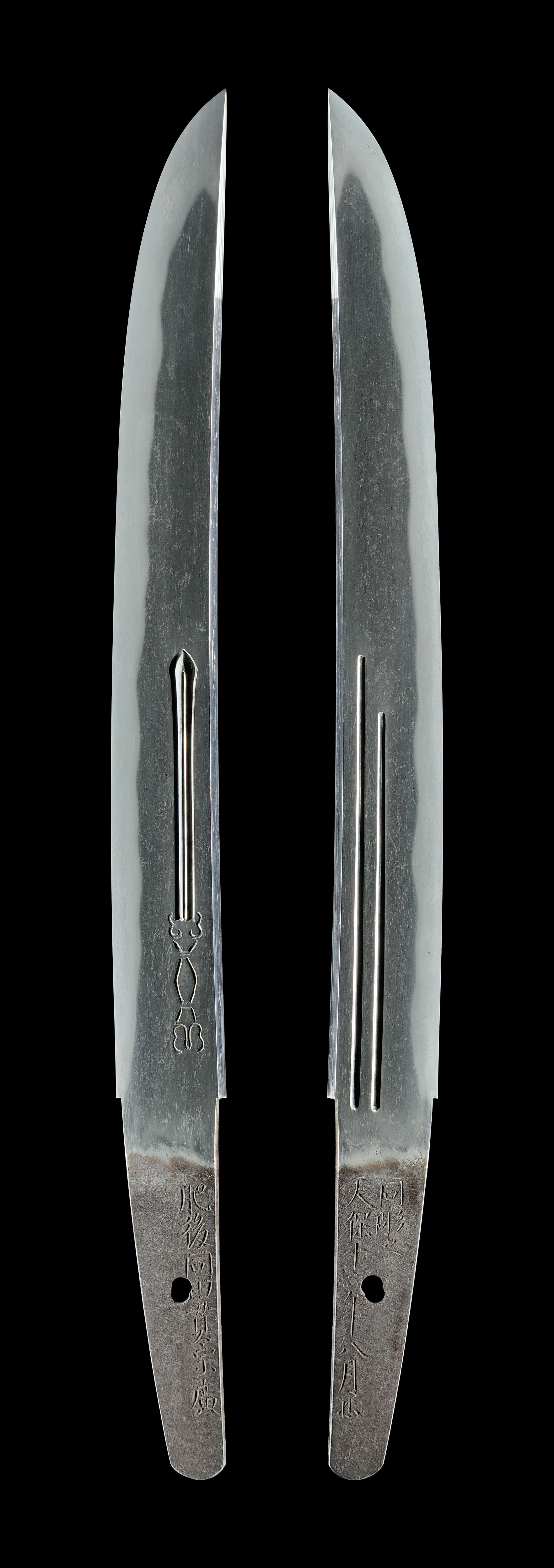
Tanto - by Dotanuki Munehiro - 肥後同田貫宗廣 天保十二年八月日 同彫之 - Higo Dotanuki Munehiro - 4-336Tanto - by Dotanuki Munehiro - 肥後同田貫宗廣 天保十二年八月日 同彫之 - Higo Dotanuki Munehiro - 4-336

短刀

作宗廣
29.4cm·Tenpo-Keio (1830-1868)
¥440,000

宗廣の売約済み

明倫産業
特別保存
Katana - Tokuho - by Dotanuki Munehiro - 肥後同田貫宗廣 明治三年十一月日 Higo Doudanuki MunehiroKatana - Tokuho - by Dotanuki Munehiro - 肥後同田貫宗廣 明治三年十一月日 Higo Doudanuki Munehiro
売切れ

刀

作宗廣
65.8cm·明治
売却済
銀座長州屋
Katana - by Dotanuki Munehiro - 銘 肥後同田貫宗広作 文久三年五月日Katana - by Dotanuki Munehiro - 銘 肥後同田貫宗広作 文久三年五月日
売切れ

刀

作宗廣
Tenpo (1830-1844)
売却済
十拳
保存
Wakizashi - Hozon - by Dotanuki Munehiro - 脇差/肥後同田貫宗広/文久二年閏八月日Wakizashi - Hozon - by Dotanuki Munehiro - 脇差/肥後同田貫宗広/文久二年閏八月日
売切れ

脇差

作宗廣
50.3cm·Tenpo (1830-1844)
売却済
儀平屋
特別保存
Katana - Tokuho - by Dotanuki Munehiro - 特別保存刀剣 肥後同田貫延寿盛廣 二尺三寸強 肥後拵、白鞘付Katana - Tokuho - by Dotanuki Munehiro - 特別保存刀剣 肥後同田貫延寿盛廣 二尺三寸強 肥後拵、白鞘付
売切れ

刀

作宗廣
70cm·Tenpo (1830-1844)
売却済
池田美術
Katana - by Dotanuki Munehiro - 【同田貫の末尾を飾る名工】「同田貫宗廣」66.35cm 、鑑賞に・居合刀として!!!Katana - by Dotanuki Munehiro - 【同田貫の末尾を飾る名工】「同田貫宗廣」66.35cm 、鑑賞に・居合刀として!!!
売切れ

刀

作宗廣
66.35cm·Tenpo (1830-1844)
売却済
飯田高遠堂
保存
Katana - Hozon - by Dotanuki Munehiro - 新刀 肥後同田貫宗広 天保十年九月日Katana - Hozon - by Dotanuki Munehiro - 新刀 肥後同田貫宗広 天保十年九月日
売切れ

刀

作宗廣
63cm·新々刀
売却済
銀座誠友堂
特別保存
Katana - Tokuho - by Dotanuki Munehiro - 刀 [肥後同田貫宗廣][日本美術刀剣保存協会]特別保存刀剣Katana - Tokuho - by Dotanuki Munehiro - 刀 [肥後同田貫宗廣][日本美術刀剣保存協会]特別保存刀剣
売切れ

刀

作宗廣
70.2cm·Tenpo (1830-1844)
売却済

同田貫派の作

すべて見る →
サムライミュージアム
保存
Katana - Hozon - by Dotanuki School - 日本刀 刀 無銘 同田貫正国 日本美術刀剣保存協会 報告書付Katana - Hozon - by Dotanuki School - 日本刀 刀 無銘 同田貫正国 日本美術刀剣保存協会 報告書付

刀

作同田貫派
72.5cm·桃山
¥7,022
葵美術
特別保存
Katana - Tokuho - by Dotanuki Kozukenosuke - 刀:九州肥後同田貫上野介(日本美術刀剣保存協会 特別保存刀剣)Katana - Tokuho - by Dotanuki Kozukenosuke - 刀:九州肥後同田貫上野介(日本美術刀剣保存協会 特別保存刀剣)

刀

作上野介
69.7cm·室町
¥1,900,000
Toyuukai
保存
Katana - Hozon - by Dotanuki - 無銘(同田貫)保存刀剣鑑定書Katana - Hozon - by Dotanuki - 無銘(同田貫)保存刀剣鑑定書

刀

作同田貫
¥500,000
あやかし堂
Naginata - by Dotanuki School - 小烏丸造薙刀 肥後国荻次右衛門宗景Naginata - by Dotanuki School - 小烏丸造薙刀 肥後国荻次右衛門宗景

薙刀

作同田貫派
51.2cm·新々刀
¥1,450,000
銀座長州屋
Wakizashi - by Dotanuki - 一分刻黒蝋色塗鞘大小拵 刀 大磨上無銘 同田貫 脇差 銘 近江大掾藤原忠吉(良業物) 波濤図総金具 銘 孔龍軒政行Wakizashi - by Dotanuki - 一分刻黒蝋色塗鞘大小拵 刀 大磨上無銘 同田貫 脇差 銘 近江大掾藤原忠吉(良業物) 波濤図総金具 銘 孔龍軒政行

脇差

作同田貫
Tensho (1573-1592)
¥2,800,000
サムライ商会
保存
Wakizashi - Hozon - by Dotanuki School - 脇差 無銘(同田貫)Wakizashi - Hozon - by Dotanuki School - 脇差 無銘(同田貫)

脇差

作同田貫派
40.4cm·室町
¥480,000
明倫産業
保存
Tanto - Hozon - by Dotanuki School - 延寿宗春造(肥後同田貫宗春) Enju Muneharu(Dodanuki)Tanto - Hozon - by Dotanuki School - 延寿宗春造(肥後同田貫宗春) Enju Muneharu(Dodanuki)

短刀

作同田貫派
19.1cm·鎌倉
¥360,000
銀座誠友堂
重要
Katana - Jūyō - by Dotanuki - 刀 [肥後同田貫上野介][日本美術刀剣保存協会] 重要刀剣Katana - Jūyō - by Dotanuki - 刀 [肥後同田貫上野介][日本美術刀剣保存協会] 重要刀剣

刀

作同田貫
68.8cm·新刀
お問い合わせ

備前の伝統

すべて見る →
葵美術
重要美術品
Daisho - Jubi - by Osafune Nagamitsu - 大小:刀(重要美術品)無銘(伝長光)/脇差:無銘(伝長光)/無銘(石州直綱)(日本美術刀剣保存協会 特別保存刀剣)Daisho - Jubi - by Osafune Nagamitsu - 大小:刀(重要美術品)無銘(伝長光)/脇差:無銘(伝長光)/無銘(石州直綱)(日本美術刀剣保存協会 特別保存刀剣)

大小

作長光
Kencho (1249-1256)
お問い合わせ
永楽堂
特別保存
Tachi - Tokuho - by Osafune Sanenaga - 真長 太刀 特別保存刀剣Tachi - Tokuho - by Osafune Sanenaga - 真長 太刀 特別保存刀剣

太刀

作眞長
71.2cm·Shoan (1299-1302)
¥7,500,000
永楽堂
重要
Tachi - Jūyō - by Fukuoka Ichimonji School - 福岡一文字 太刀 重要刀剣Tachi - Jūyō - by Fukuoka Ichimonji School - 福岡一文字 太刀 重要刀剣

太刀

作福岡一文字派
74.8cm·鎌倉
お問い合わせ
つるぎの屋
重要
Katana - Jūyō - by Fukuoka Ichimonji School - 刀 無銘 福岡一文字Katana - Jūyō - by Fukuoka Ichimonji School - 刀 無銘 福岡一文字

刀

作福岡一文字派
70cm·鎌倉
¥10,000,000
飯田高遠堂
重要
Tachi - Jūyō - by Osafune Shigezane - 備州長船住重真 延文三年一二月日Tachi - Jūyō - by Osafune Shigezane - 備州長船住重真 延文三年一二月日

太刀

作重眞
81cm·南北朝
¥33,000,000
葵美術
特別保存
Katana - Tokuho - by Osafune Motomitsu - 刀:無銘(伝長船元光)(日本美術刀剣保存協会 特別保存刀剣)Katana - Tokuho - by Osafune Motomitsu - 刀:無銘(伝長船元光)(日本美術刀剣保存協会 特別保存刀剣)

刀

作基光
71.51cm·Koei (1342-1345) ND
開始価格¥1,200,000
Nihonto.com
重要
Tanto - Jūyō - by Osafune Kagemitsu - 重要刀剣 備前景光 短刀 #110112Tanto - Jūyō - by Osafune Kagemitsu - 重要刀剣 備前景光 短刀 #110112

短刀

作景光
25.3cm·Geno (1319-1321)
¥89,500
飯田高遠堂
重要
Tachi - Jūyō - by Osafune Nagamitsu - 備前国長船住左近将監長光造 永仁元年十二月日Tachi - Jūyō - by Osafune Nagamitsu - 備前国長船住左近将監長光造 永仁元年十二月日

太刀

作長光
63.4cm·Kencho (1249-1256)
¥55,000,000

刀剣

  • 刀
  • 脇差
  • 短刀
  • 太刀
  • 薙刀
  • 槍

刀装具

  • 鍔
  • 縁頭
  • 小柄
  • 目貫

鑑定別

  • 特重
  • 重要
  • 特別保存
  • 保存

リソース

  • 刀剣商一覧
  • 刀工一覧
  • すべて見る
Nihontowatch© 2026
利用規約プライバシーCookie運営者情報

説明

Antique Japanese Sword Tanto Signed by Munehiro with Tokubetsu Hozon Certificate 【Description】 Summary This blade was signed by Koyama Enju Taro Munehiro (小山延寿太郎宗広) in the second year of the Keio era ( 1866 : The end of the Edo period). He was the first son of Yamato no Kami Masakatsu, the 9th head of the Dotanuki school, one of the most prestigious schools in Higo province (Today’s Kumamoto prefecture), during the Edo period. His birth name was Koyama Taro. He was especially active during the Tenpo-Keio era (1830-1868). That means this blade was forged at the end of his career when he mastered excellent craftsmanship. Munehiro was an offspring of a member of Enju school. He also lived in Edo city, invited by Numata Arimune, a chief vassal of Hosokawa clan, the head of Kumamoto domain. Munehiro also learned sword-forging techniques from Suishinshi Masahide, one of the most famous swordsmiths at the end of the Edo period in Edo city. This fact indicates that Munehiro was a recognized swordsmith in the domain. Enju School and Its Founder (Enju Kunimura) Enju(延寿) is the prestigious school name that especially flourished during the late Kamakura period-Nanbokucho period(Early-Late 14th century). Enju school was founded by Kunimura(国村), who is said to have been the grandson of Rai Kuniyuki, one of the most famous swordsmiths from Yamashiro province(Today’s Kyoto prefecture). Kunimura and his apprentices moved from Kyoto to Higo province(Today’s Kumamoto prefecture on Kyushu island) after being invited by the Kikuchi clan, who had an influential power in that region. It is said that the 10th head of the Kikuchi clan, Kikuchi Takefusa(菊池武房), had to find skilled swordsmiths who could forge strong swords to combat the Mongolian army. Back then, Japan was targeted by the Mongolian emperor, and Kyushu island was where the battle occurred twice(1274 and 1281). Kikuchi Takefusa brought Kunimura and his apprentices from Kyoto to prepare for the second attack from the Mongols. Since then, Kunimura and his sons served as Okakaekaji for this clan, exclusively forging swords for the Kikuchi clan, which ruled the Higo province back then. All the swordsmiths from the Enju school used the letter “国” (Kuni) for their maker’s name, such as Kadokuni. The descendant of this school founded the famous sword school named Dotanuki(同田貫) from the Eiroku era (1558-1570: Late Muromachi period). And there are descendants of the Enju school’s swordsmiths throughout the Edo period. That means Enjyu school has over 600 years of its history. Munehiro is one of the most prominent figures who belonged to Dotanuki school at the end of the Edo period. This blade is appraised as a Tokubetsu Hozon Token(特別保存刀剣) issued by NBTHK(Nihon Bijutsu Touken Hozon Kyokai:日本美術刀剣保存協会). This authentication paper was only given to authentic Japanese swords, especially well preserved and high quality with artistic value. 【 Blade】 Cutting Edge Length(Nagasa) : 25.5 cm (10.0 inches) Curvature(Sori) : 0.1 cm (0.03 inches) Hamon : The crystalline structure which forms along the cutting edge of a blade as a result of the hardening process Jimon(Jihada) : visible steel surface pattern created by folding and hammering during forging process Nakago : Nakago is the tang of the Japanese sword. Japanese swordsmiths left the black rust on the tang because it prevents red rust while the tang is in its handle. And the discoloration of the tang was created over time, and it is a great indicator for a Japanese sword specialist to estimate when the sword was forged. Koshirae: Koshirae is the mounting of the Japanese sword. There are several parts that consist of Koshirae such as Saya(Scabbard), Tsuka( Handle), Tsuba(Handguard). Fuchi-Kashira : A pair of matching sword fittings that cover the upper and bottom parts of its sword hilt. A type of Karakusa (唐草, arabesque) pattern is engraved on this Fuchi Kashira. The same design is seen on the metal fitting that is put at the end of the scabbard. The combi

NihontoWatch MonNihontoWatchBETA
MarketAuctionsEncyclopedia
刀剣›備前伝›同田貫›宗廣›Antique Japanese Sword Tanto Signed by Munehiro NBTHK Tokubetsu Hozon Certificate
短刀特別保存
宗廣

Antique Japanese Sword Tanto Signed by Munehiro NBTHK Tokubetsu Hozon Certificate

在銘 · Dotanuki · 天保 · 長さ 25.5cm · 反り 0.1cm
売却済
宗廣 — 1 of 25
宗廣 — 2 of 25
宗廣 — 3 of 25
宗廣 — 4 of 25
宗廣 — 5 of 25
宗廣 — 6 of 25
宗廣 — 7 of 25
宗廣 — 8 of 25
宗廣 — 9 of 25
宗廣 — 10 of 25
宗廣 — 11 of 25
宗廣 — 12 of 25
宗廣 — 13 of 25
宗廣 — 14 of 25
宗廣 — 15 of 25
宗廣 — 16 of 25
宗廣 — 17 of 25
宗廣 — 18 of 25
宗廣 — 19 of 25
宗廣 — 20 of 25
宗廣 — 21 of 25
宗廣 — 22 of 25
宗廣 — 23 of 25
宗廣 — 24 of 25
宗廣 — 25 of 25
1 / 25
1 / 25
宗廣 — 1 of 25宗廣 — 2 of 25宗廣 — 3 of 25宗廣 — 4 of 25宗廣 — 5 of 25宗廣 — 6 of 25宗廣 — 7 of 25宗廣 — 8 of 25宗廣 — 9 of 25宗廣 — 10 of 25宗廣 — 11 of 25宗廣 — 12 of 25宗廣 — 13 of 25宗廣 — 14 of 25宗廣 — 15 of 25宗廣 — 16 of 25宗廣 — 17 of 25宗廣 — 18 of 25宗廣 — 19 of 25宗廣 — 20 of 25宗廣 — 21 of 25宗廣 — 22 of 25宗廣 — 23 of 25宗廣 — 24 of 25宗廣 — 25 of 25
法量・詳細
刀工
宗廣
種別
短刀
流派
Dotanuki
活動期
1830–1868年頃(Tenpo-Keio)
国
肥後
銘
在銘
法量
長さ 25.5cm反り 0.1cm
説明

Antique Japanese Sword Tanto Signed by Munehiro with Tokubetsu Hozon Certificate 【Description】 Summary This blade was signed by Koyama Enju Taro Munehiro (小山延寿太郎宗広) in the second year of the Keio era ( 1866 : The end of the Edo period). He was the first son of Yamato no Kami Masakatsu, the 9th head of the Dotanuki school, one of the most prestigious schools in Higo province (Today’s Kumamoto prefecture), during the Edo period. His birth name was Koyama Taro. He was especially active during the Tenpo-Keio era (1830-1868). That means this blade was forged at the end of his career when he mastered excellent craftsmanship. Munehiro was an offspring of a member of Enju school. He also lived in Edo city, invited by Numata Arimune, a chief vassal of Hosokawa clan, the head of Kumamoto domain. Munehiro also learned sword-forging techniques from Suishinshi Masahide, one of the most famous swordsmiths at the end of the Edo period in Edo city. This fact indicates that Munehiro was a recognized swordsmith in the domain. Enju School and Its Founder (Enju Kunimura) Enju(延寿) is the prestigious school name that especially flourished during the late Kamakura period-Nanbokucho period(Early-Late 14th century). Enju school was founded by Kunimura(国村), who is said to have been the grandson of Rai Kuniyuki, one of the most famous swordsmiths from Yamashiro province(Today’s Kyoto prefecture). Kunimura and his apprentices moved from Kyoto to Higo province(Today’s Kumamoto prefecture on Kyushu island) after being invited by the Kikuchi clan, who had an influential power in that region. It is said that the 10th head of the Kikuchi clan, Kikuchi Takefusa(菊池武房), had to find skilled swordsmiths who could forge strong swords to combat the Mongolian army. Back then, Japan was targeted by the Mongolian emperor, and Kyushu island was where the battle occurred twice(1274 and 1281). Kikuchi Takefusa brought Kunimura and his apprentices from Kyoto to prepare for the second attack from the Mongols. Since then, Kunimura and his sons served as Okakaekaji for this clan, exclusively forging swords for the Kikuchi clan, which ruled the Higo province back then. All the swordsmiths from the Enju school used the letter “国” (Kuni) for their maker’s name, such as Kadokuni. The descendant of this school founded the famous sword school named Dotanuki(同田貫) from the Eiroku era (1558-1570: Late Muromachi period). And there are descendants of the Enju school’s swordsmiths throughout the Edo period. That means Enjyu school has over 600 years of its history. Munehiro is one of the most prominent figures who belonged to Dotanuki school at the end of the Edo period. This blade is appraised as a Tokubetsu Hozon Token(特別保存刀剣) issued by NBTHK(Nihon Bijutsu Touken Hozon Kyokai:日本美術刀剣保存協会). This authentication paper was only given to authentic Japanese swords, especially well preserved and high quality with artistic value. 【 Blade】 Cutting Edge Length(Nagasa) : 25.5 cm (10.0 inches) Curvature(Sori) : 0.1 cm (0.03 inches) Hamon : The crystalline structure which forms along the cutting edge of a blade as a result of the hardening process Jimon(Jihada) : visible steel surface pattern created by folding and hammering during forging process Nakago : Nakago is the tang of the Japanese sword. Japanese swordsmiths left the black rust on the tang because it prevents red rust while the tang is in its handle. And the discoloration of the tang was created over time, and it is a great indicator for a Japanese sword specialist to estimate when the sword was forged. Koshirae: Koshirae is the mounting of the Japanese sword. There are several parts that consist of Koshirae such as Saya(Scabbard), Tsuka( Handle), Tsuba(Handguard). Fuchi-Kashira : A pair of matching sword fittings that cover the upper and bottom parts of its sword hilt. A type of Karakusa (唐草, arabesque) pattern is engraved on this Fuchi Kashira. The same design is seen on the metal fitting that is put at the end of the scabbard. The combi

作者について

宗廣

備前伝 · 肥後 · 1830-1868頃

刀剣大鑑 上位87%

現在1点販売中

›
宗廣の作 1点が現在販売中→
宗廣 — 詳細備前伝派
流派について

同田貫

備前伝 · 肥後

現在12点販売中

›

同田貫は肥後国の菊池に室町末期から興り、新刀期に及んで活躍した一派である。説示は本派を九州肥後を代表する流派として位置づけ、その一門に正国・上野介・又八(又八左衛門)・正広・兵部・左馬介・国勝らの工があったことを伝える。年紀を備えた遺例には天正から慶長に跨がる作が見られ、上野介には慶長九年・慶長十六年八月吉日の銘があって、新古を跨ぐ形でこの工が活躍したことが知られる。正国の薙刀は桃山時代の製作と鑑せられ、刀身とほぼ同時期に誂えられた拵を伴う例もある。説示の伝える工と年紀からは、戦国末から江戸初頭にかけての肥後にあって、実用の需に応えた工房の姿がうかがえる。 作風は、身幅広く重ね厚く平肉の豊かな豪壮な造込みを基調とする。説示はこれを武骨な姿とも記し、鎬造の刀のほかに大身槍や大振りの薙刀の作例も数多く経眼されると述べる。鍛えは板目肌で、処々に流れ肌や杢目を交え、やや肌立ちごころとなり、地沸がつく。刃文はのたれを基調に小互の目・小丁子・小尖り刃などが交じり、足・葉がよく入り、匂口は締りがちで叢沸となり、飛焼や棟焼を見せ、金筋・砂流しの細かにかかる作がある。互の目乱れを主とする例や、正広の薙刀のように直刃を焼いて匂口の沈む作も伝えられ、一派のうちに振幅のあることが説示から読み取れる。見分けに当たっては、頑健な姿態と、匂口の締まった乱刃に叢沸・飛焼・棟焼の交じる地刃の様相が手がかりとなる。 伝承の面では、説示はこの派の刀の鋭利さが古くから賞讃され、実用刀として知られてきたことを繰り返し記す。代表工とされる上野介には、常に見る同派の作域よりも変化に富み野趣の感じられる作があり、沈みごころの地刃に渋い味わいの醸される一口が同工および同派を代表する出来として挙げられている。正国の薙刀は、地沸の微塵に厚くついた鍛えと、同派の常以上に明るく沸づいて刃中の頻りに働く刃文をもって秀作と評され、黒漆金蒔絵柄鞘薙刀拵を附帯する。又八の薙刀には匂口の締まった作に沸のつく一派の特色がよく示され、黒塗薙刀拵を伴う。資料は僅少ながら、これらの遺例は、肥後にあって頑健と切れ味を旨とした同田貫の性格を、刀・薙刀の双方に即して伝えるものといえる。

4名の刀工指定5口
主要刀工
刀工時代指定
宗春1865-18680
國勝1558-15700
景和1596-16150
宗廣1830-18680
上野介1596-16150
同田貫流派を見る →
NBTHK鑑定書
Tokubetsu Hozon Tōken特別保存刀剣
Sword Especially Worthy of Preservation
›

保存刀剣のうち、出来が一層優れ、保存状態も良好と認められたものです。再刃や、室町・江戸期の多くの無銘作は対象外となり、保存刀剣より高い基準が課されます。

NBTHKについて›

日本美術刀剣保存協会(NBTHK)は、1948年に設立され、文化庁の監督を受ける公益財団法人で、東京・刀剣博物館に本部を置きます。専門の審査員が出品作を直接審査し、美術的・歴史的価値に応じた鑑定書を発行します。NBTHKの鑑定書は、日本刀および刀装具の真正性を示す最も広く認知された基準です。

NBTHK公式サイト→
販売店
サ
サムライミュージアム
🇯🇵日本から発送
›
✓認証販売店samuraimuseum.jp
✓海外発送可✓英語対応PayPalクレジットカード
返品ポリシー

Returns/exchanges limited to defects caused by shipping (except willful misconduct or gross negligence by the company); customers must contact within 72 hours of receiving the product.

サムライミュージアムの出品一覧を見る→販売店サイトでこの商品を見る→

宗廣の他の作

すべて見る →
刀心
Tanto - by Dotanuki Munehiro - 肥後同田貫宗廣 天保十二年八月日 同彫之 - Higo Dotanuki Munehiro - 4-336Tanto - by Dotanuki Munehiro - 肥後同田貫宗廣 天保十二年八月日 同彫之 - Higo Dotanuki Munehiro - 4-336

短刀

作宗廣
29.4cm·Tenpo-Keio (1830-1868)
¥440,000

宗廣の売約済み

明倫産業
特別保存
Katana - Tokuho - by Dotanuki Munehiro - 肥後同田貫宗廣 明治三年十一月日 Higo Doudanuki MunehiroKatana - Tokuho - by Dotanuki Munehiro - 肥後同田貫宗廣 明治三年十一月日 Higo Doudanuki Munehiro
売切れ

刀

作宗廣
65.8cm·明治
売却済
銀座長州屋
Katana - by Dotanuki Munehiro - 銘 肥後同田貫宗広作 文久三年五月日Katana - by Dotanuki Munehiro - 銘 肥後同田貫宗広作 文久三年五月日
売切れ

刀

作宗廣
Tenpo (1830-1844)
売却済
十拳
保存
Wakizashi - Hozon - by Dotanuki Munehiro - 脇差/肥後同田貫宗広/文久二年閏八月日Wakizashi - Hozon - by Dotanuki Munehiro - 脇差/肥後同田貫宗広/文久二年閏八月日
売切れ

脇差

作宗廣
50.3cm·Tenpo (1830-1844)
売却済
儀平屋
特別保存
Katana - Tokuho - by Dotanuki Munehiro - 特別保存刀剣 肥後同田貫延寿盛廣 二尺三寸強 肥後拵、白鞘付Katana - Tokuho - by Dotanuki Munehiro - 特別保存刀剣 肥後同田貫延寿盛廣 二尺三寸強 肥後拵、白鞘付
売切れ

刀

作宗廣
70cm·Tenpo (1830-1844)
売却済
池田美術
Katana - by Dotanuki Munehiro - 【同田貫の末尾を飾る名工】「同田貫宗廣」66.35cm 、鑑賞に・居合刀として!!!Katana - by Dotanuki Munehiro - 【同田貫の末尾を飾る名工】「同田貫宗廣」66.35cm 、鑑賞に・居合刀として!!!
売切れ

刀

作宗廣
66.35cm·Tenpo (1830-1844)
売却済
飯田高遠堂
保存
Katana - Hozon - by Dotanuki Munehiro - 新刀 肥後同田貫宗広 天保十年九月日Katana - Hozon - by Dotanuki Munehiro - 新刀 肥後同田貫宗広 天保十年九月日
売切れ

刀

作宗廣
63cm·新々刀
売却済
銀座誠友堂
特別保存
Katana - Tokuho - by Dotanuki Munehiro - 刀 [肥後同田貫宗廣][日本美術刀剣保存協会]特別保存刀剣Katana - Tokuho - by Dotanuki Munehiro - 刀 [肥後同田貫宗廣][日本美術刀剣保存協会]特別保存刀剣
売切れ

刀

作宗廣
70.2cm·Tenpo (1830-1844)
売却済

同田貫派の作

すべて見る →
サムライミュージアム
保存
Katana - Hozon - by Dotanuki School - 日本刀 刀 無銘 同田貫正国 日本美術刀剣保存協会 報告書付Katana - Hozon - by Dotanuki School - 日本刀 刀 無銘 同田貫正国 日本美術刀剣保存協会 報告書付

刀

作同田貫派
72.5cm·桃山
¥7,022
葵美術
特別保存
Katana - Tokuho - by Dotanuki Kozukenosuke - 刀:九州肥後同田貫上野介(日本美術刀剣保存協会 特別保存刀剣)Katana - Tokuho - by Dotanuki Kozukenosuke - 刀:九州肥後同田貫上野介(日本美術刀剣保存協会 特別保存刀剣)

刀

作上野介
69.7cm·室町
¥1,900,000
Toyuukai
保存
Katana - Hozon - by Dotanuki - 無銘(同田貫)保存刀剣鑑定書Katana - Hozon - by Dotanuki - 無銘(同田貫)保存刀剣鑑定書

刀

作同田貫
¥500,000
あやかし堂
Naginata - by Dotanuki School - 小烏丸造薙刀 肥後国荻次右衛門宗景Naginata - by Dotanuki School - 小烏丸造薙刀 肥後国荻次右衛門宗景

薙刀

作同田貫派
51.2cm·新々刀
¥1,450,000
銀座長州屋
Wakizashi - by Dotanuki - 一分刻黒蝋色塗鞘大小拵 刀 大磨上無銘 同田貫 脇差 銘 近江大掾藤原忠吉(良業物) 波濤図総金具 銘 孔龍軒政行Wakizashi - by Dotanuki - 一分刻黒蝋色塗鞘大小拵 刀 大磨上無銘 同田貫 脇差 銘 近江大掾藤原忠吉(良業物) 波濤図総金具 銘 孔龍軒政行

脇差

作同田貫
Tensho (1573-1592)
¥2,800,000
サムライ商会
保存
Wakizashi - Hozon - by Dotanuki School - 脇差 無銘(同田貫)Wakizashi - Hozon - by Dotanuki School - 脇差 無銘(同田貫)

脇差

作同田貫派
40.4cm·室町
¥480,000
明倫産業
保存
Tanto - Hozon - by Dotanuki School - 延寿宗春造(肥後同田貫宗春) Enju Muneharu(Dodanuki)Tanto - Hozon - by Dotanuki School - 延寿宗春造(肥後同田貫宗春) Enju Muneharu(Dodanuki)

短刀

作同田貫派
19.1cm·鎌倉
¥360,000
銀座誠友堂
重要
Katana - Jūyō - by Dotanuki - 刀 [肥後同田貫上野介][日本美術刀剣保存協会] 重要刀剣Katana - Jūyō - by Dotanuki - 刀 [肥後同田貫上野介][日本美術刀剣保存協会] 重要刀剣

刀

作同田貫
68.8cm·新刀
お問い合わせ

備前の伝統

すべて見る →
葵美術
重要美術品
Daisho - Jubi - by Osafune Nagamitsu - 大小:刀(重要美術品)無銘(伝長光)/脇差:無銘(伝長光)/無銘(石州直綱)(日本美術刀剣保存協会 特別保存刀剣)Daisho - Jubi - by Osafune Nagamitsu - 大小:刀(重要美術品)無銘(伝長光)/脇差:無銘(伝長光)/無銘(石州直綱)(日本美術刀剣保存協会 特別保存刀剣)

大小

作長光
Kencho (1249-1256)
お問い合わせ
永楽堂
特別保存
Tachi - Tokuho - by Osafune Sanenaga - 真長 太刀 特別保存刀剣Tachi - Tokuho - by Osafune Sanenaga - 真長 太刀 特別保存刀剣

太刀

作眞長
71.2cm·Shoan (1299-1302)
¥7,500,000
永楽堂
重要
Tachi - Jūyō - by Fukuoka Ichimonji School - 福岡一文字 太刀 重要刀剣Tachi - Jūyō - by Fukuoka Ichimonji School - 福岡一文字 太刀 重要刀剣

太刀

作福岡一文字派
74.8cm·鎌倉
お問い合わせ
つるぎの屋
重要
Katana - Jūyō - by Fukuoka Ichimonji School - 刀 無銘 福岡一文字Katana - Jūyō - by Fukuoka Ichimonji School - 刀 無銘 福岡一文字

刀

作福岡一文字派
70cm·鎌倉
¥10,000,000
飯田高遠堂
重要
Tachi - Jūyō - by Osafune Shigezane - 備州長船住重真 延文三年一二月日Tachi - Jūyō - by Osafune Shigezane - 備州長船住重真 延文三年一二月日

太刀

作重眞
81cm·南北朝
¥33,000,000
葵美術
特別保存
Katana - Tokuho - by Osafune Motomitsu - 刀:無銘(伝長船元光)(日本美術刀剣保存協会 特別保存刀剣)Katana - Tokuho - by Osafune Motomitsu - 刀:無銘(伝長船元光)(日本美術刀剣保存協会 特別保存刀剣)

刀

作基光
71.51cm·Koei (1342-1345) ND
開始価格¥1,200,000
Nihonto.com
重要
Tanto - Jūyō - by Osafune Kagemitsu - 重要刀剣 備前景光 短刀 #110112Tanto - Jūyō - by Osafune Kagemitsu - 重要刀剣 備前景光 短刀 #110112

短刀

作景光
25.3cm·Geno (1319-1321)
¥89,500
飯田高遠堂
重要
Tachi - Jūyō - by Osafune Nagamitsu - 備前国長船住左近将監長光造 永仁元年十二月日Tachi - Jūyō - by Osafune Nagamitsu - 備前国長船住左近将監長光造 永仁元年十二月日

太刀

作長光
63.4cm·Kencho (1249-1256)
¥55,000,000

刀剣

  • 刀
  • 脇差
  • 短刀
  • 太刀
  • 薙刀
  • 槍

刀装具

  • 鍔
  • 縁頭
  • 小柄
  • 目貫

鑑定別

  • 特重
  • 重要
  • 特別保存
  • 保存

リソース

  • 刀剣商一覧
  • 刀工一覧
  • すべて見る
Nihontowatch© 2026
利用規約プライバシーCookie運営者情報
NihontoWatch Mon

NihontoWatchBETA

マーケットオークション
事典
NihontoWatch Mon

NihontoWatchBETA

マーケットオークション
事典