NihontoWatch Mon

NihontoWatch

マーケット
事典
鑑定
NihontoWatch Mon

NihontoWatch

マーケット
事典
鑑定

説明

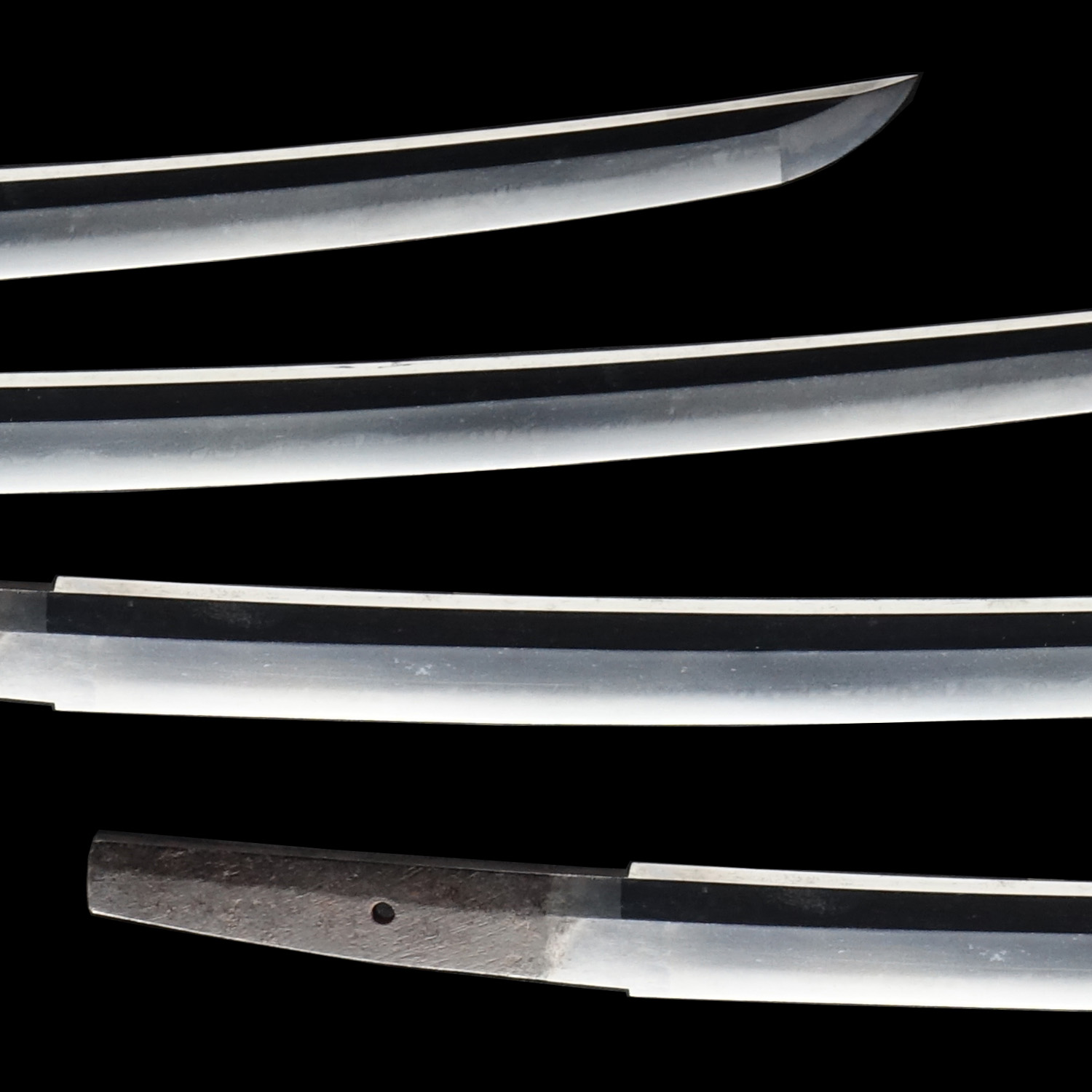
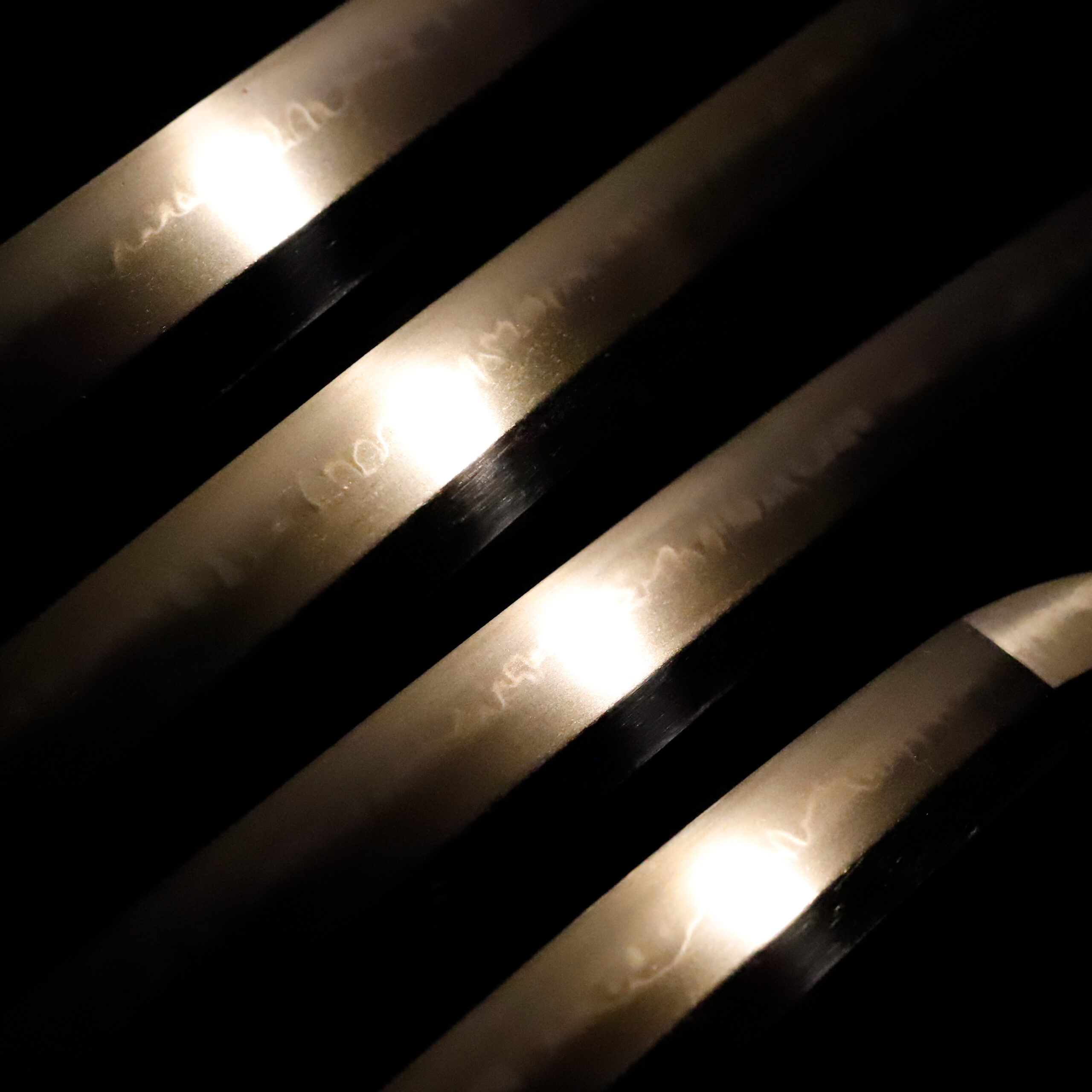
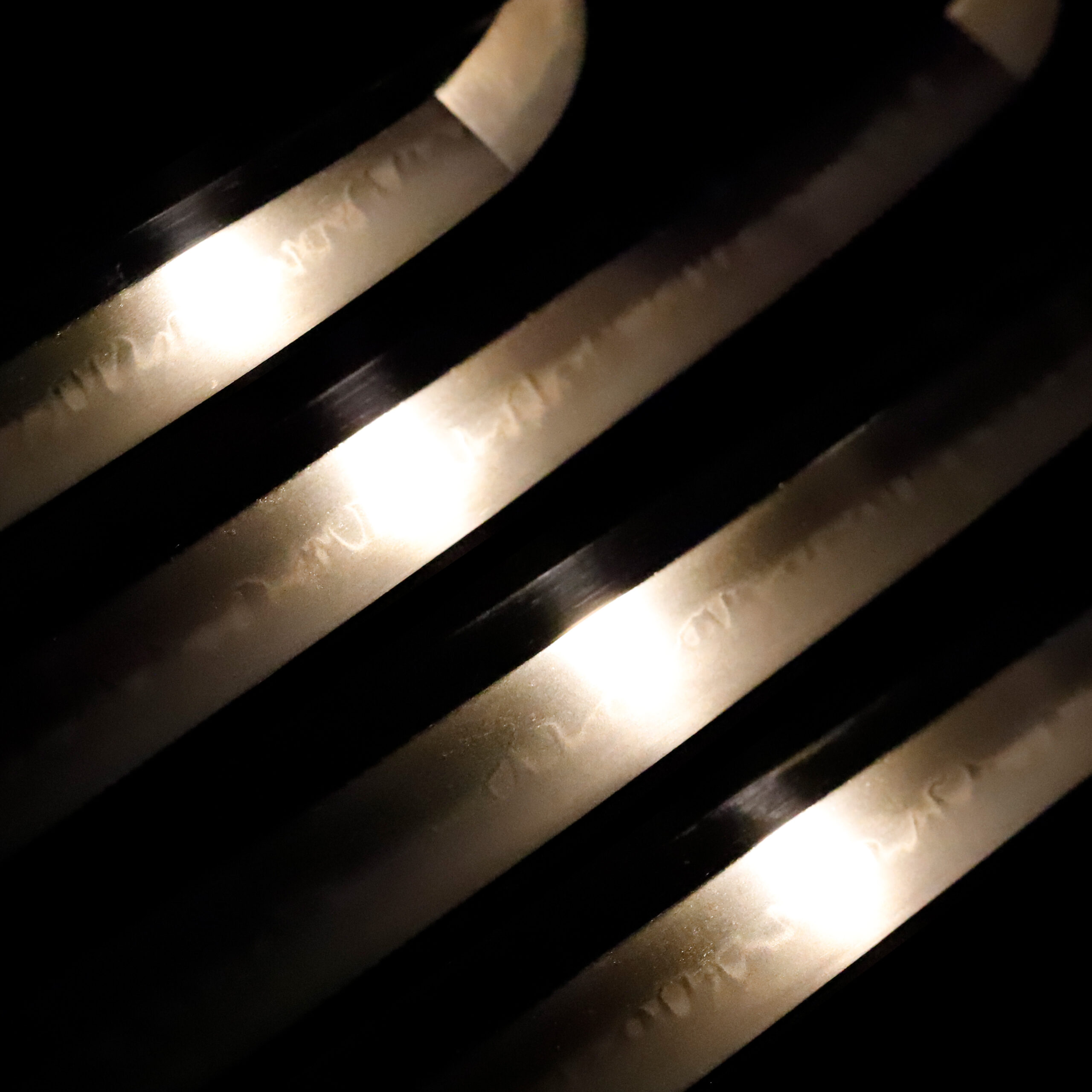
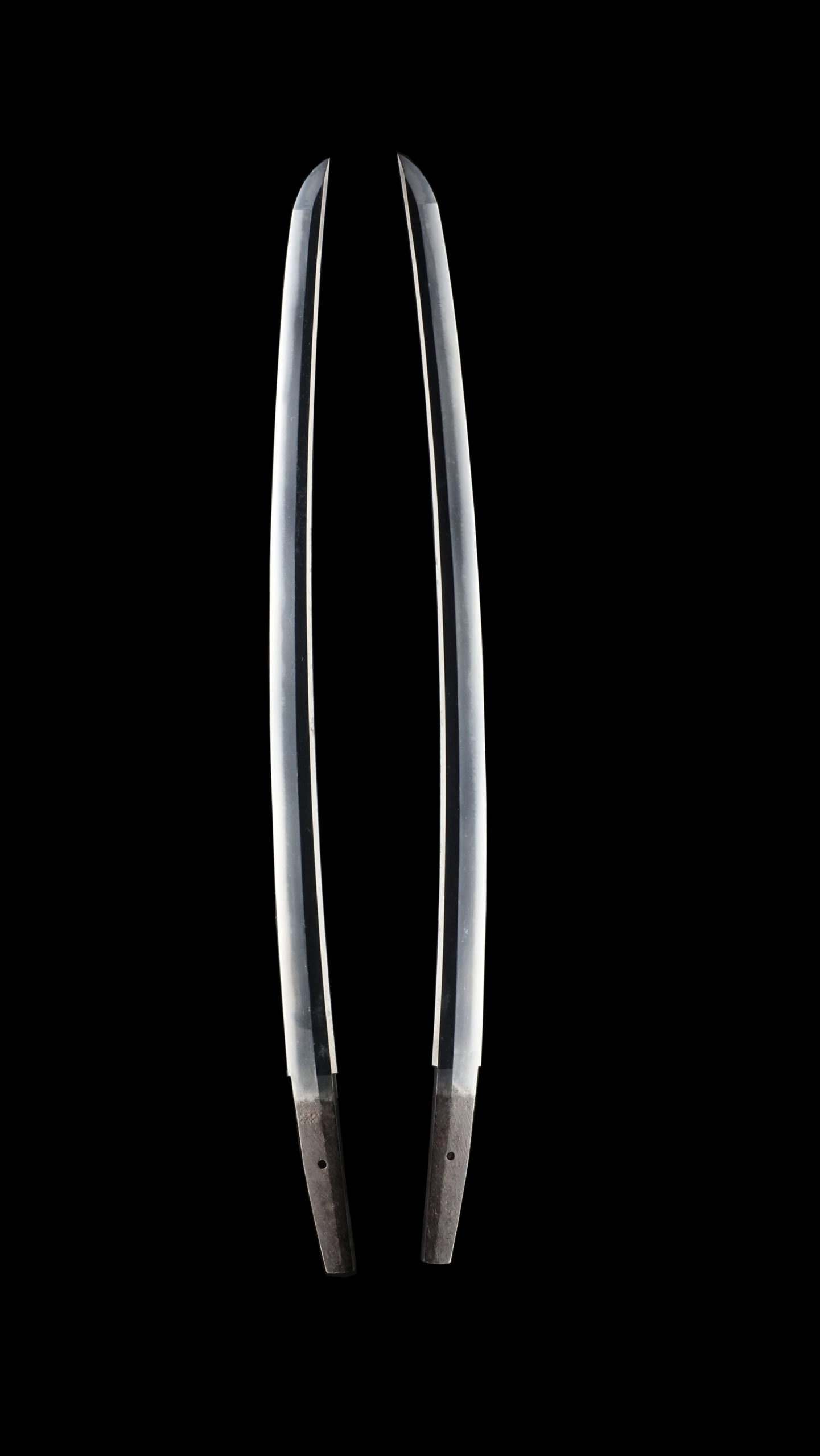
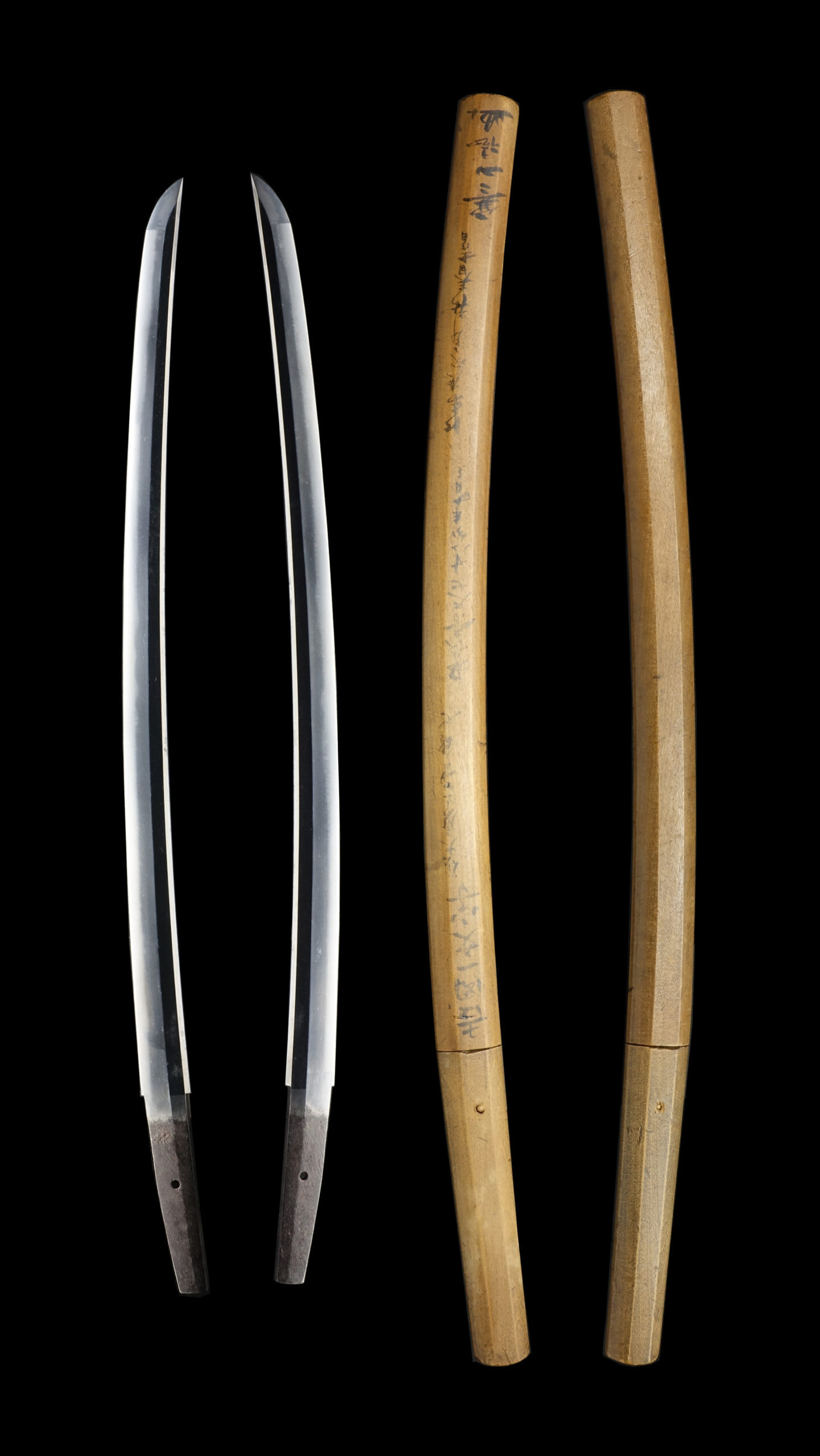
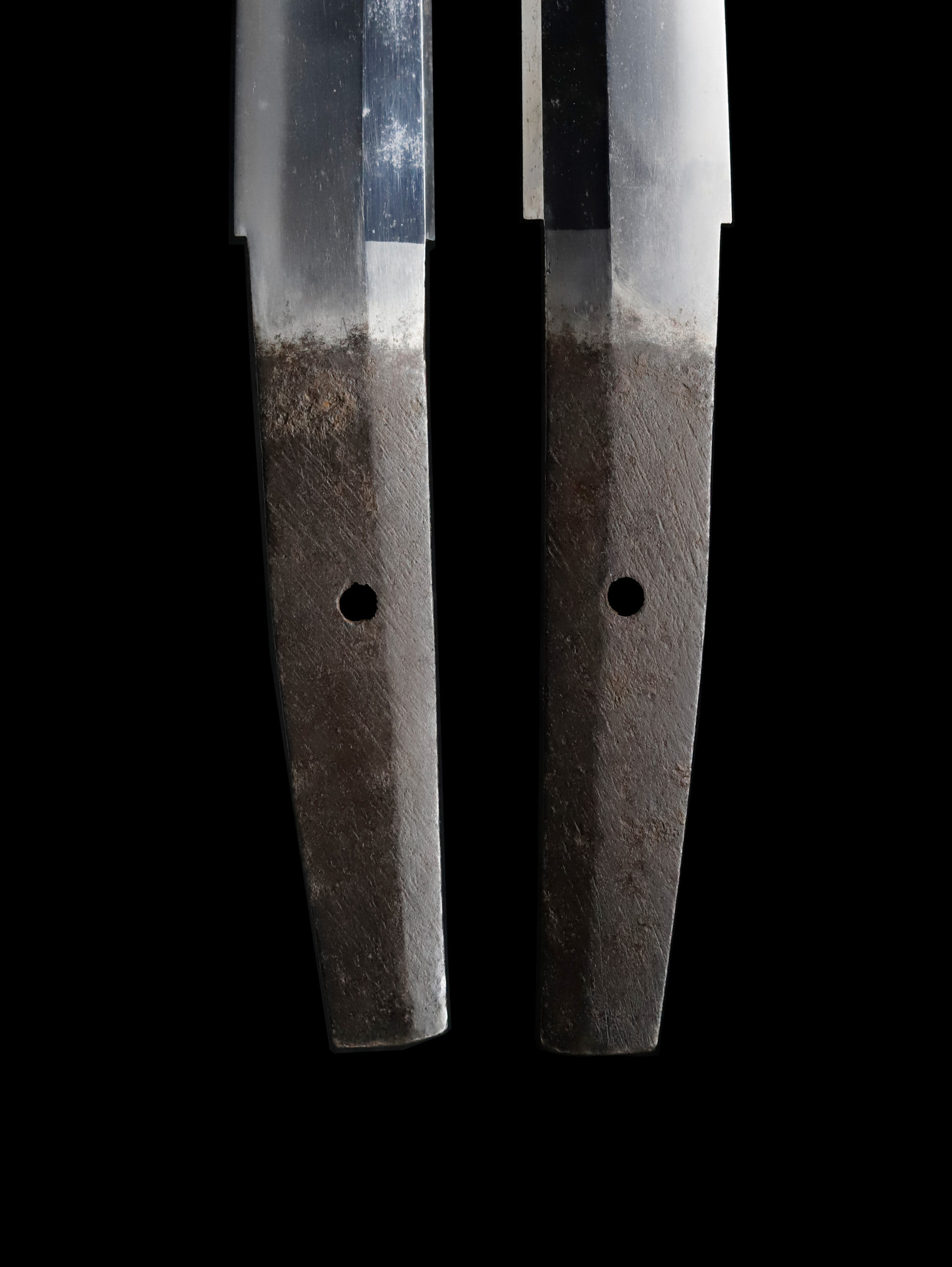
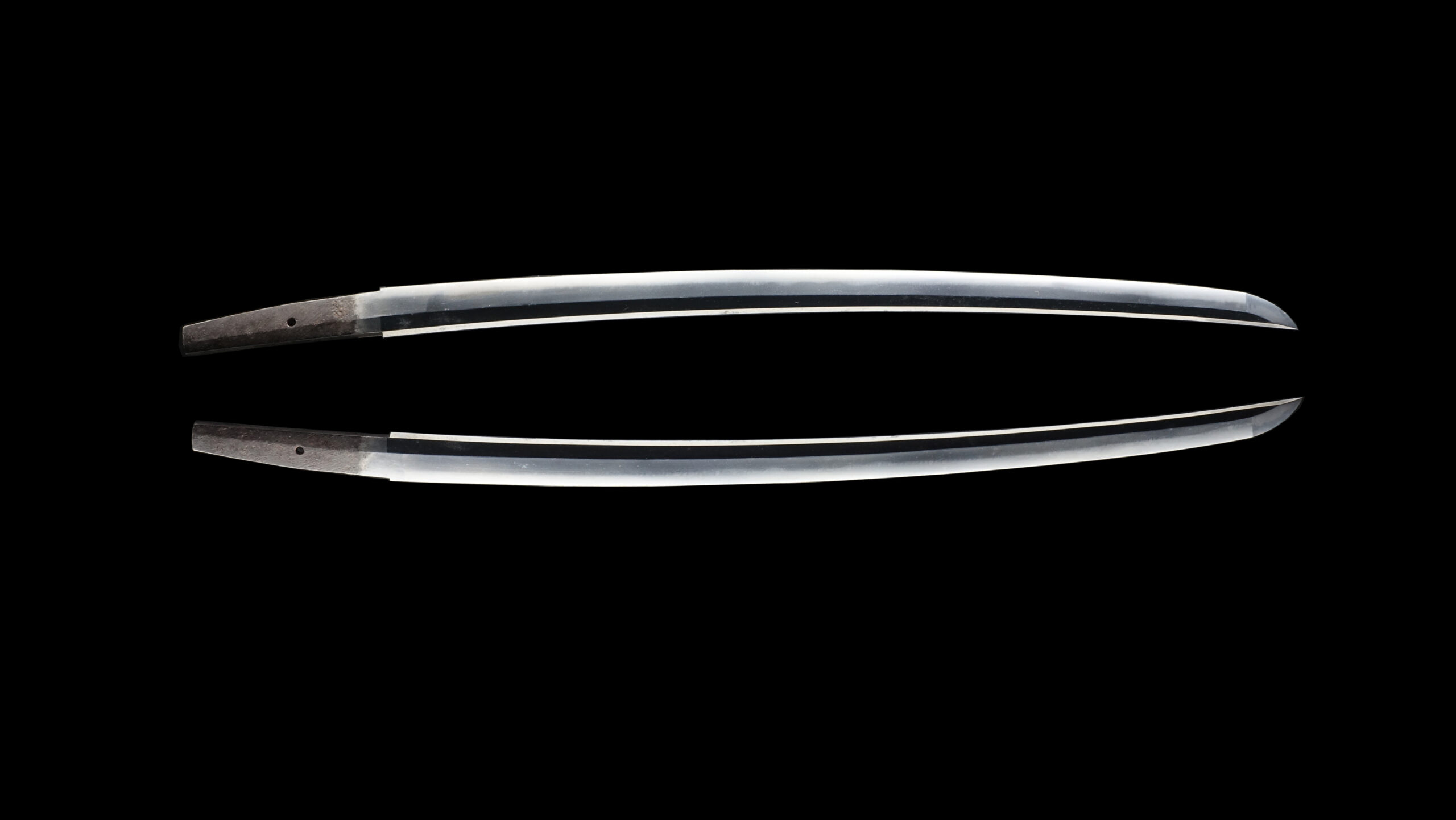
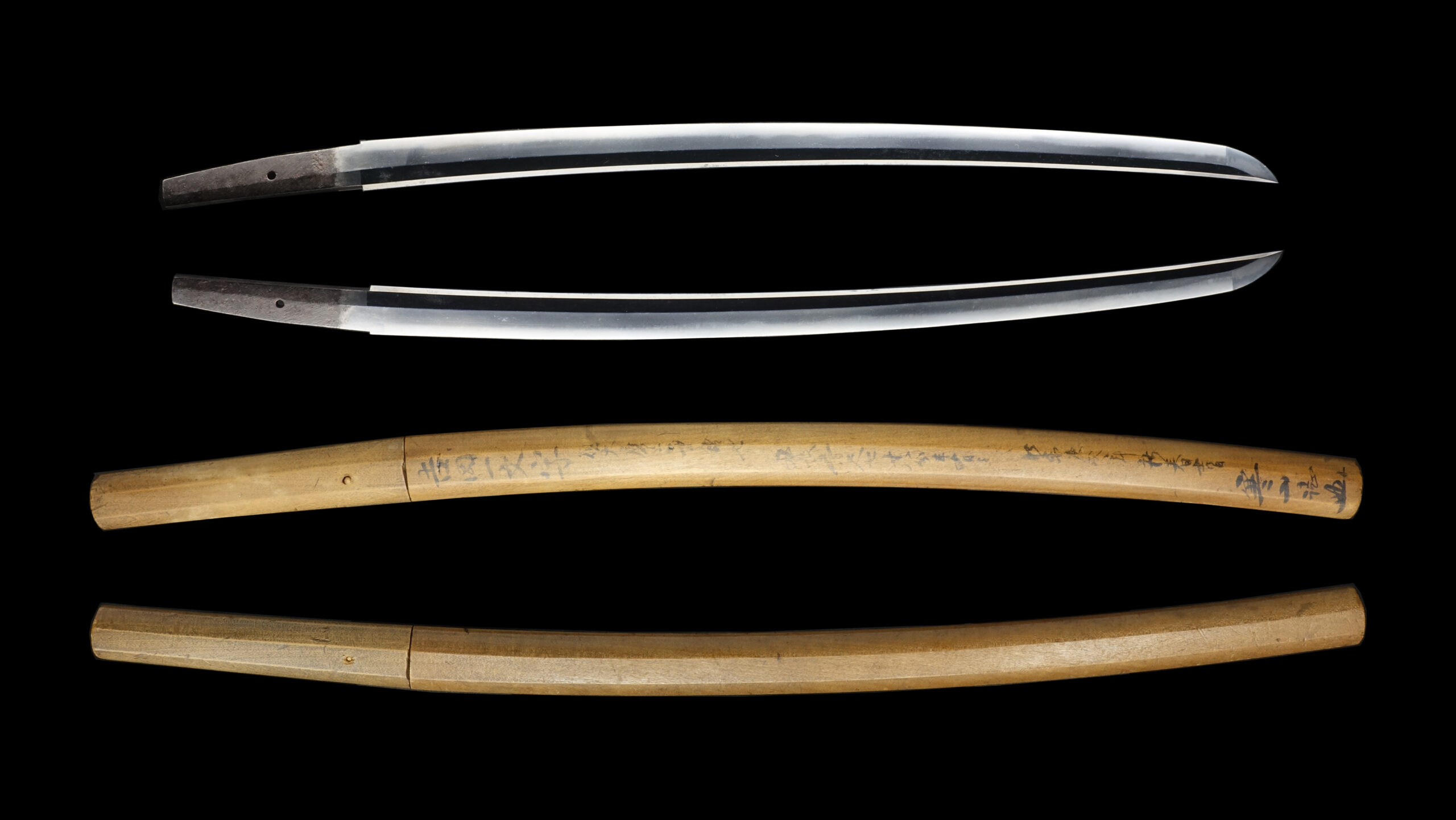
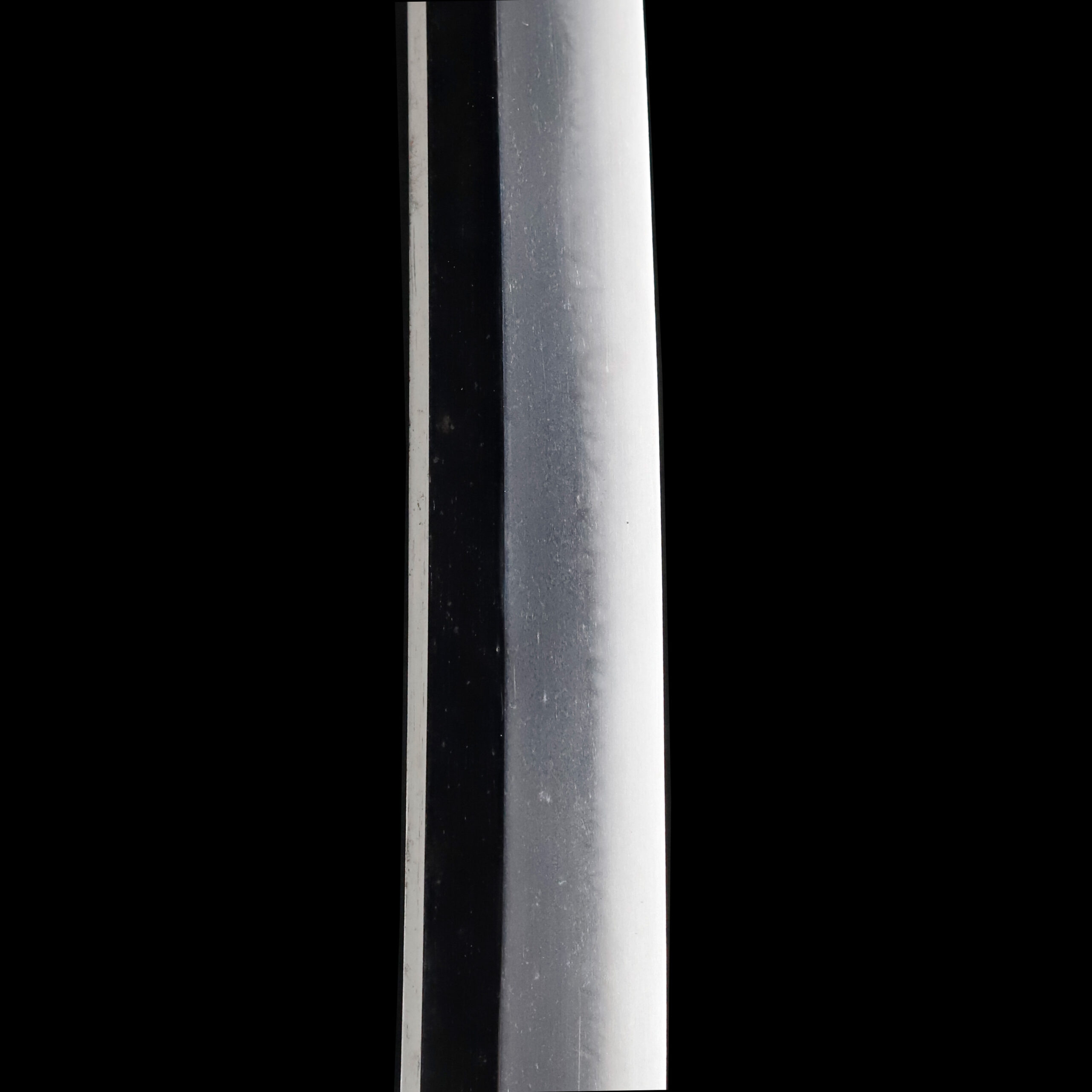
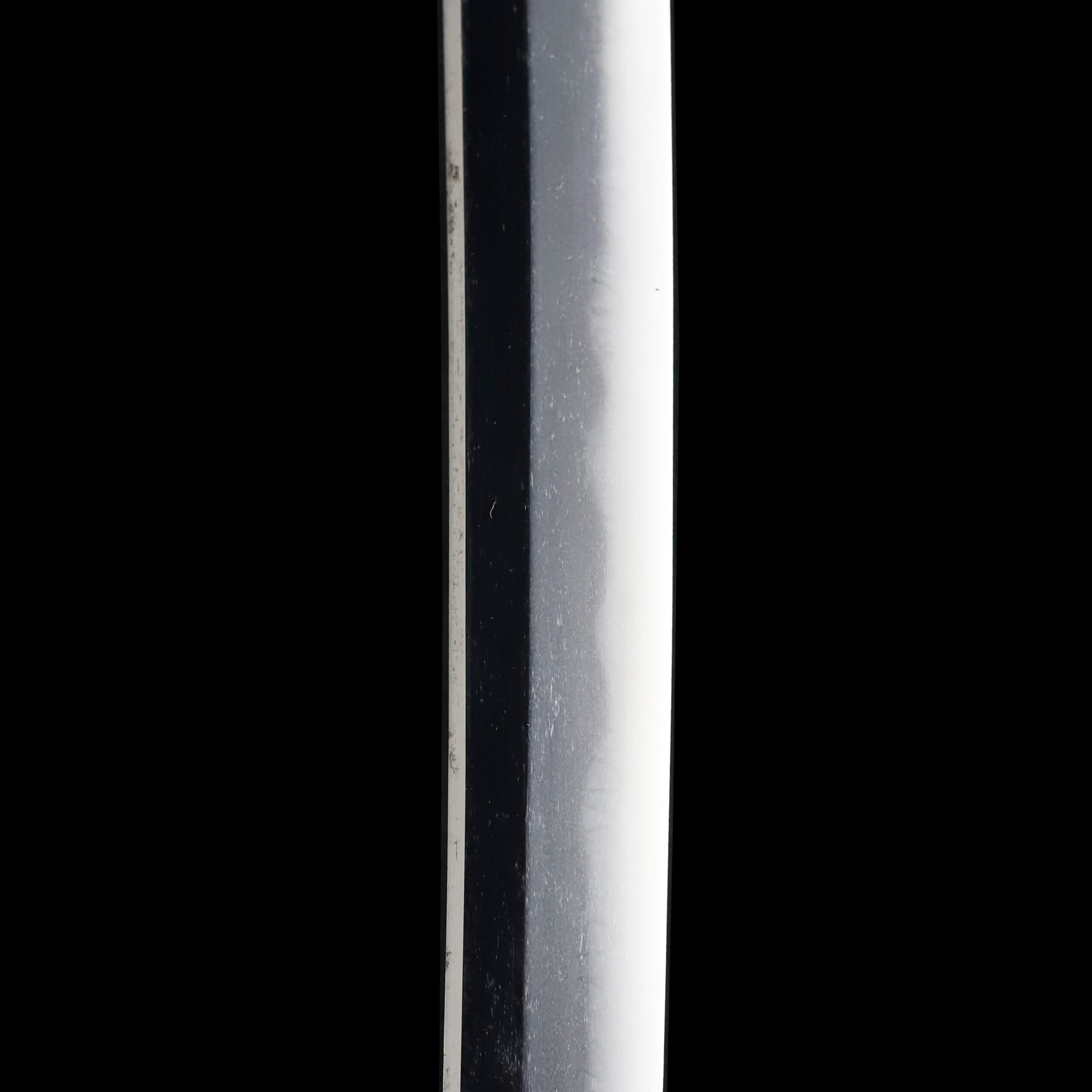
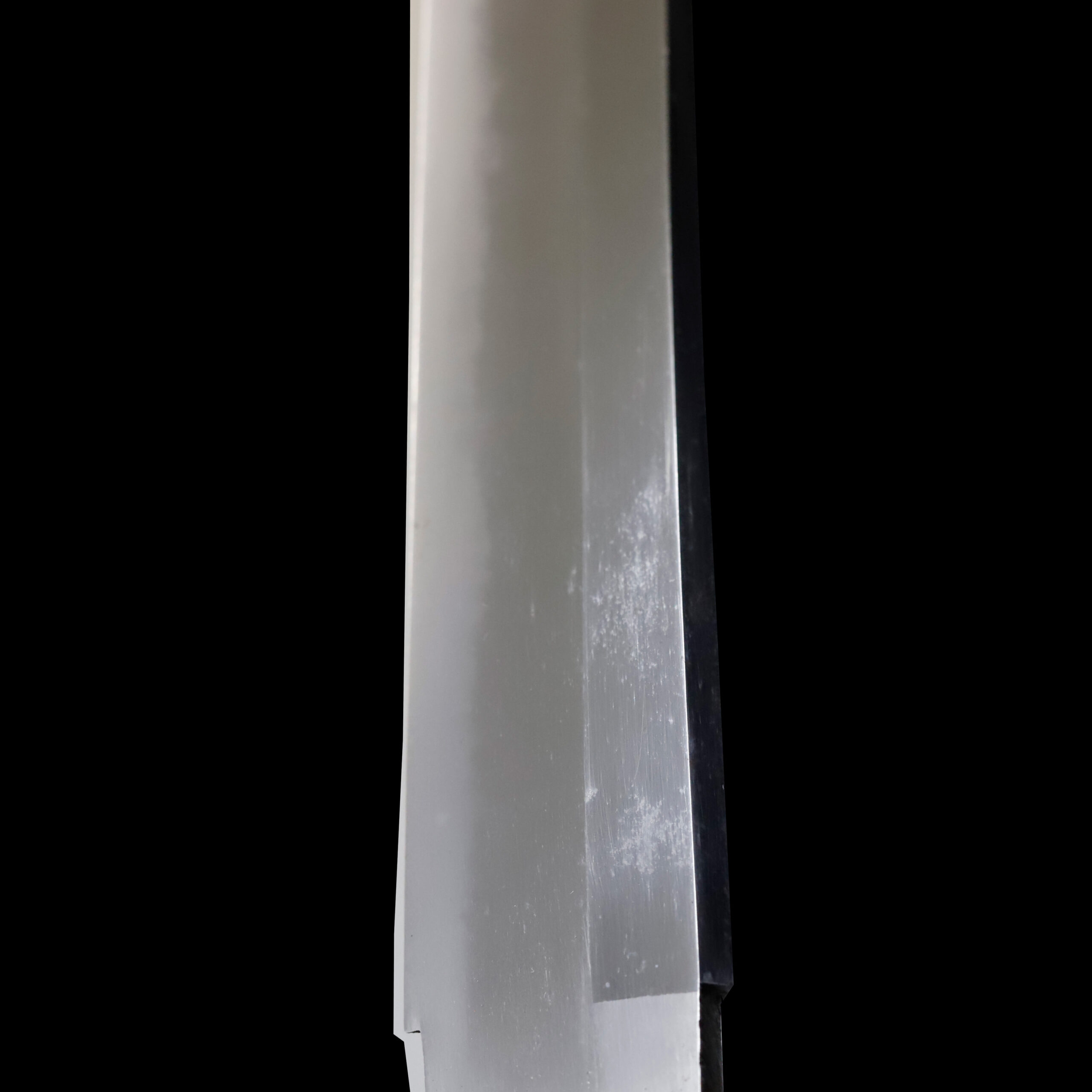
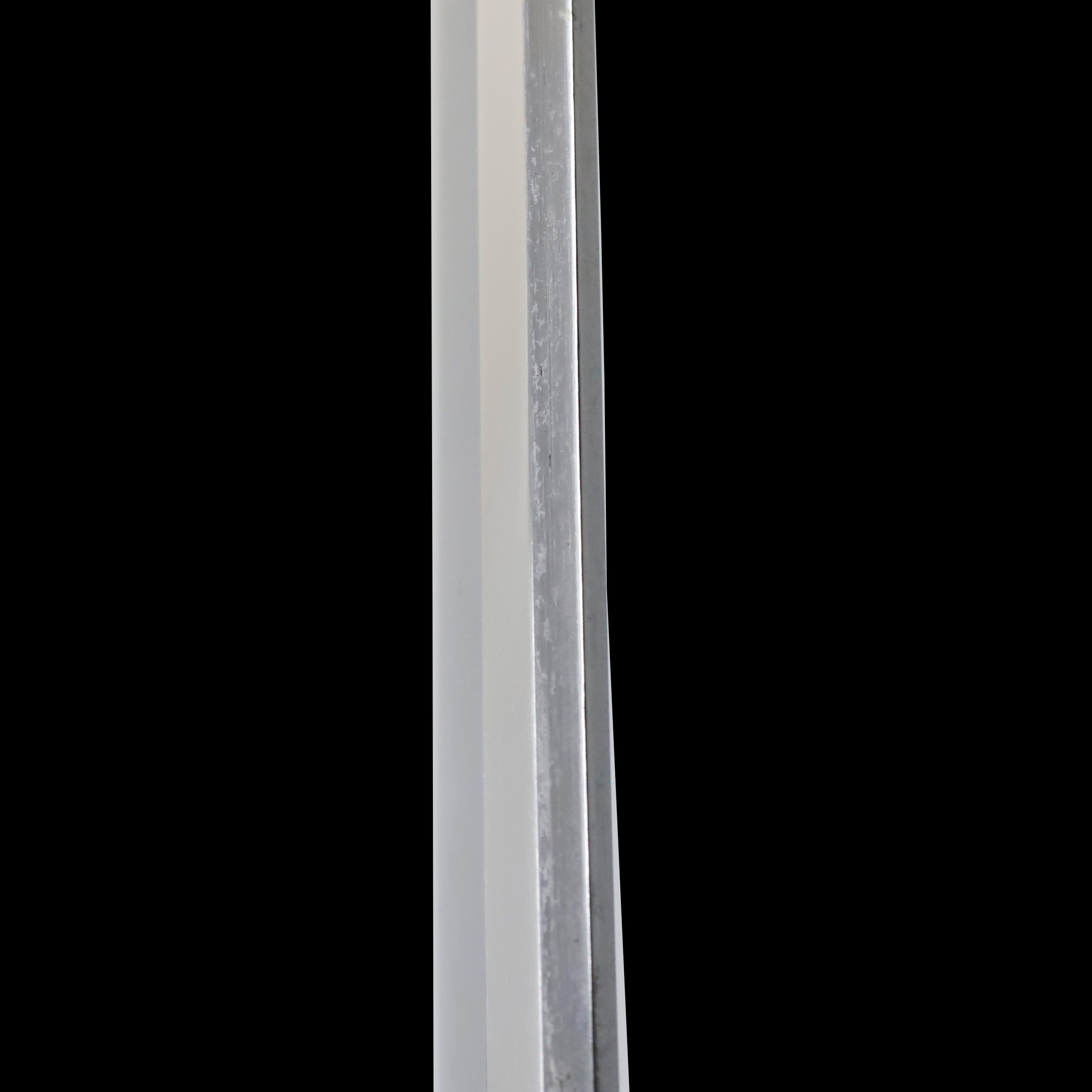
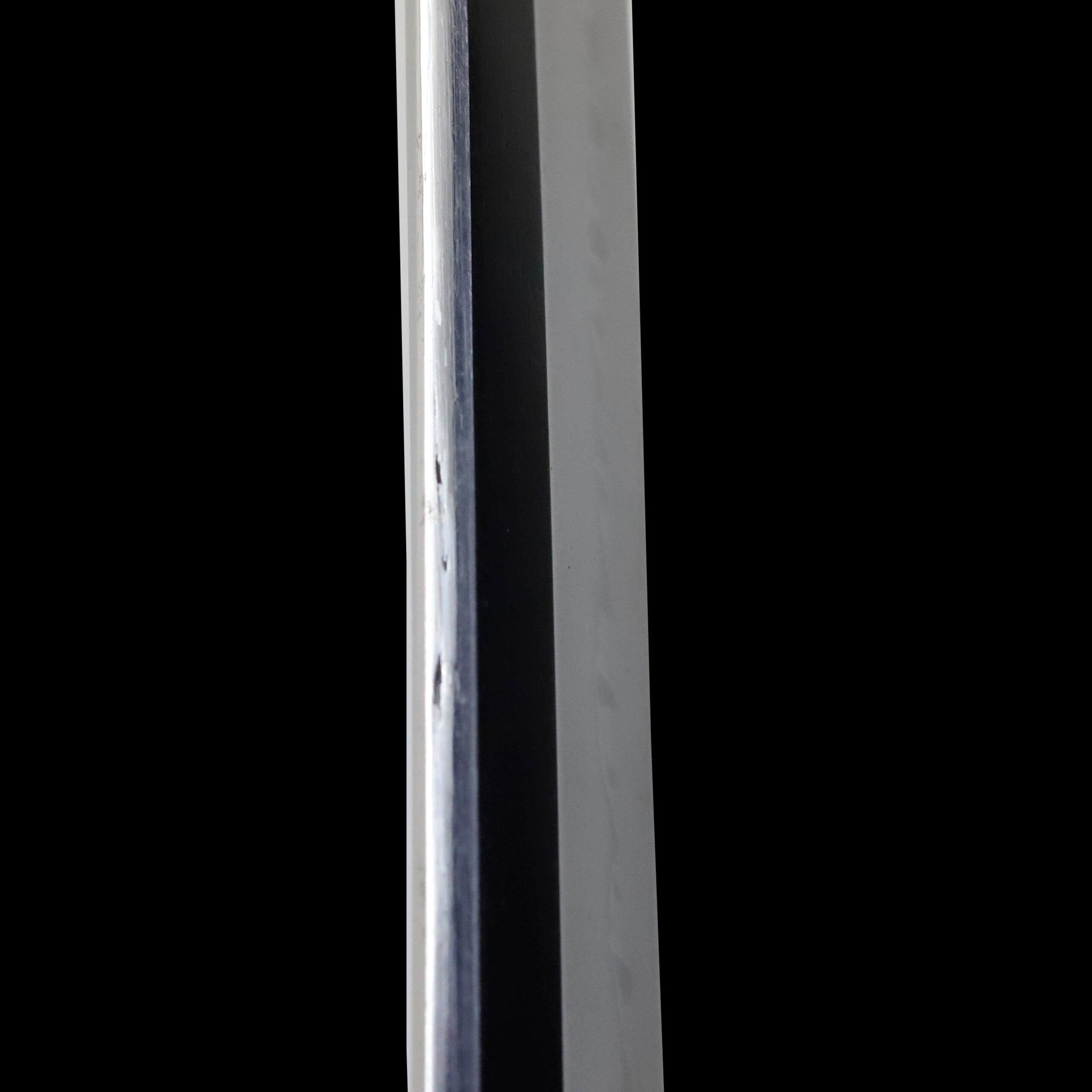
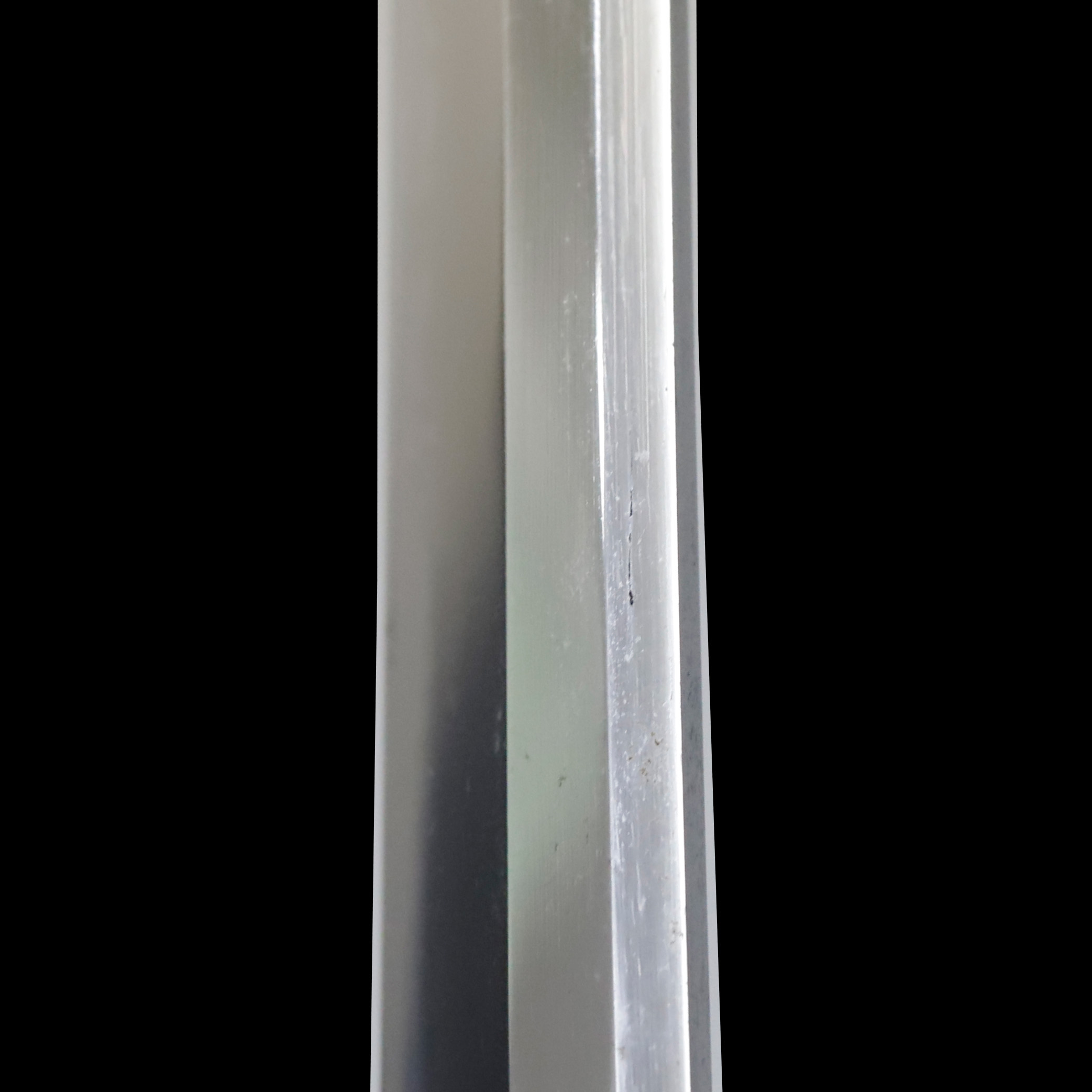
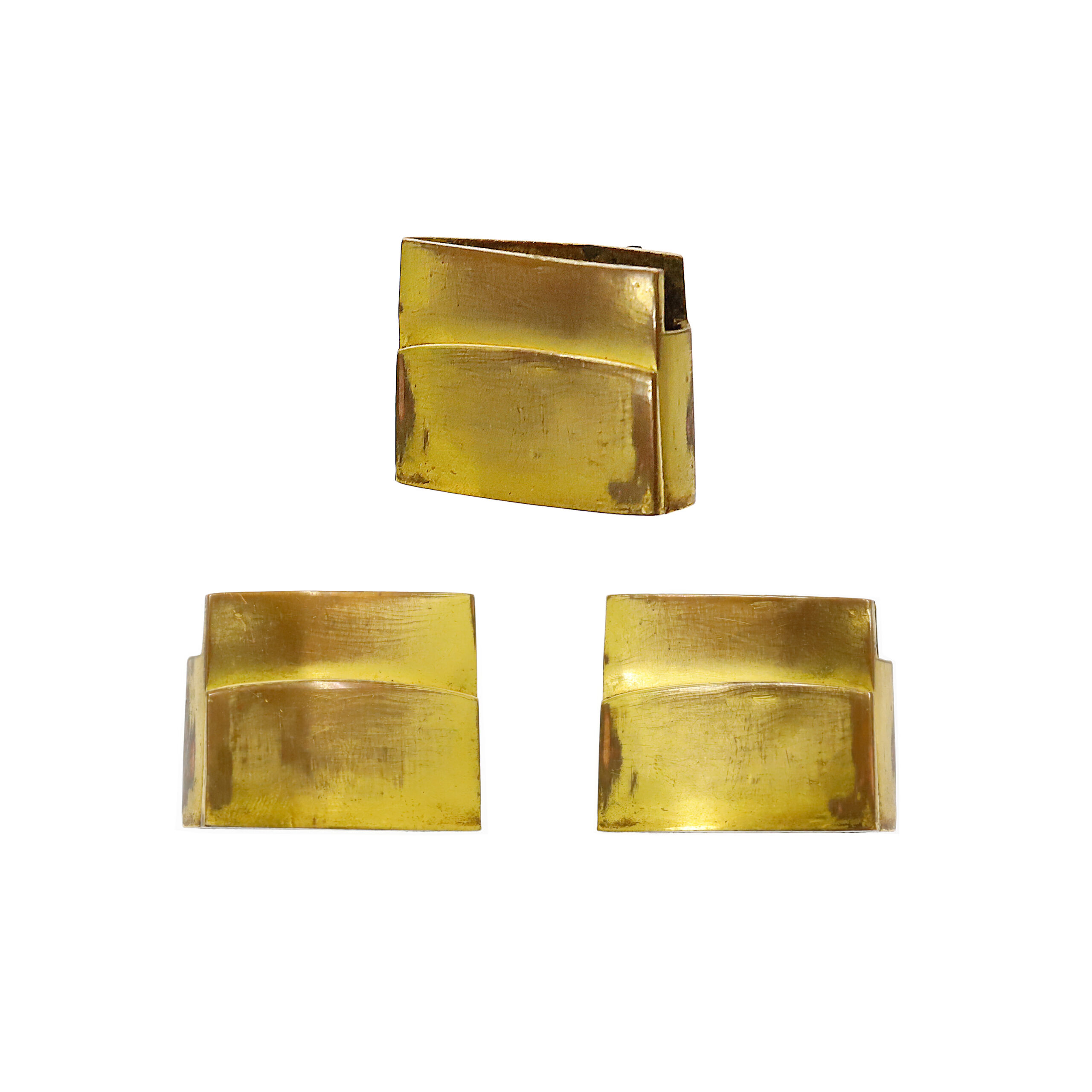
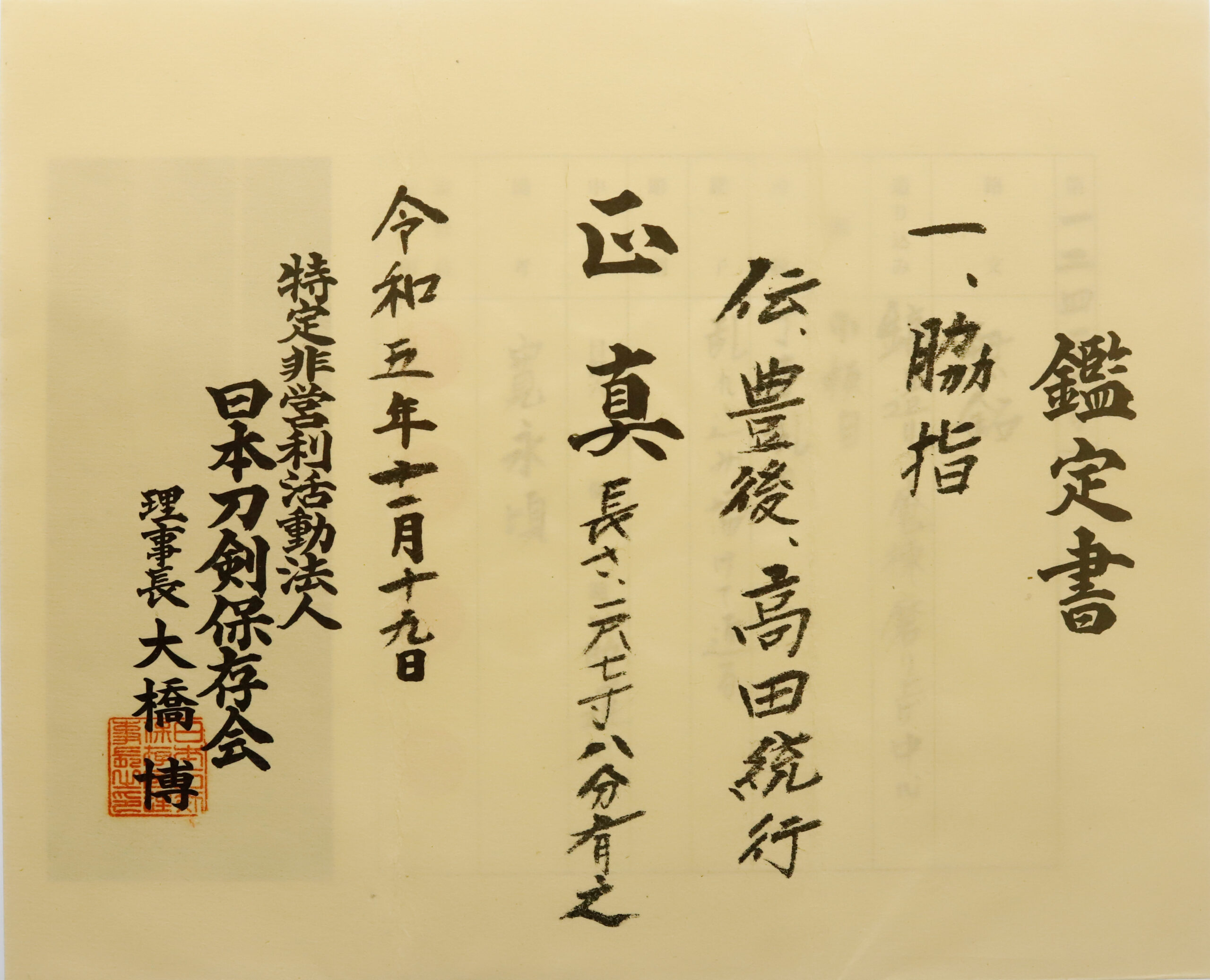
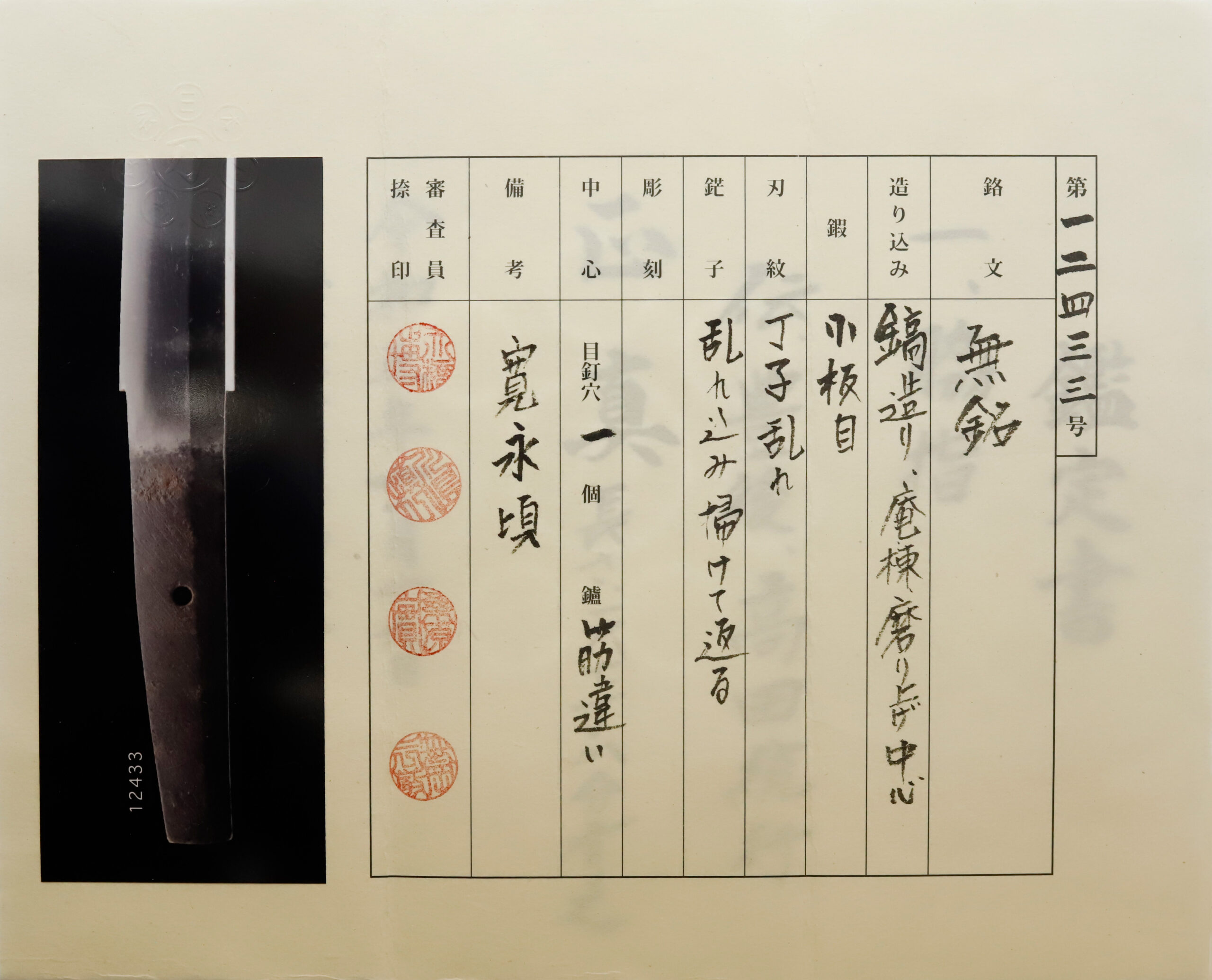
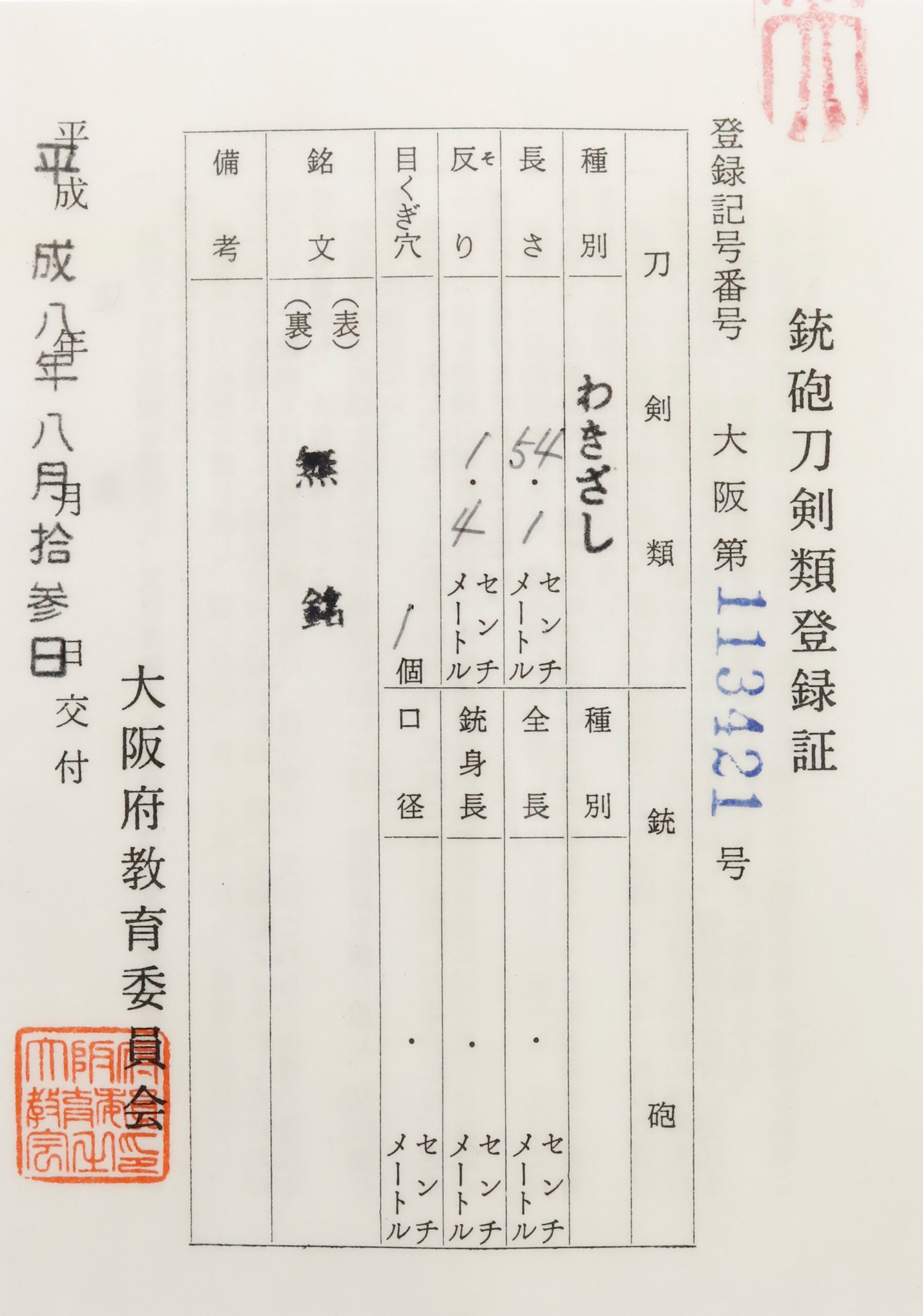
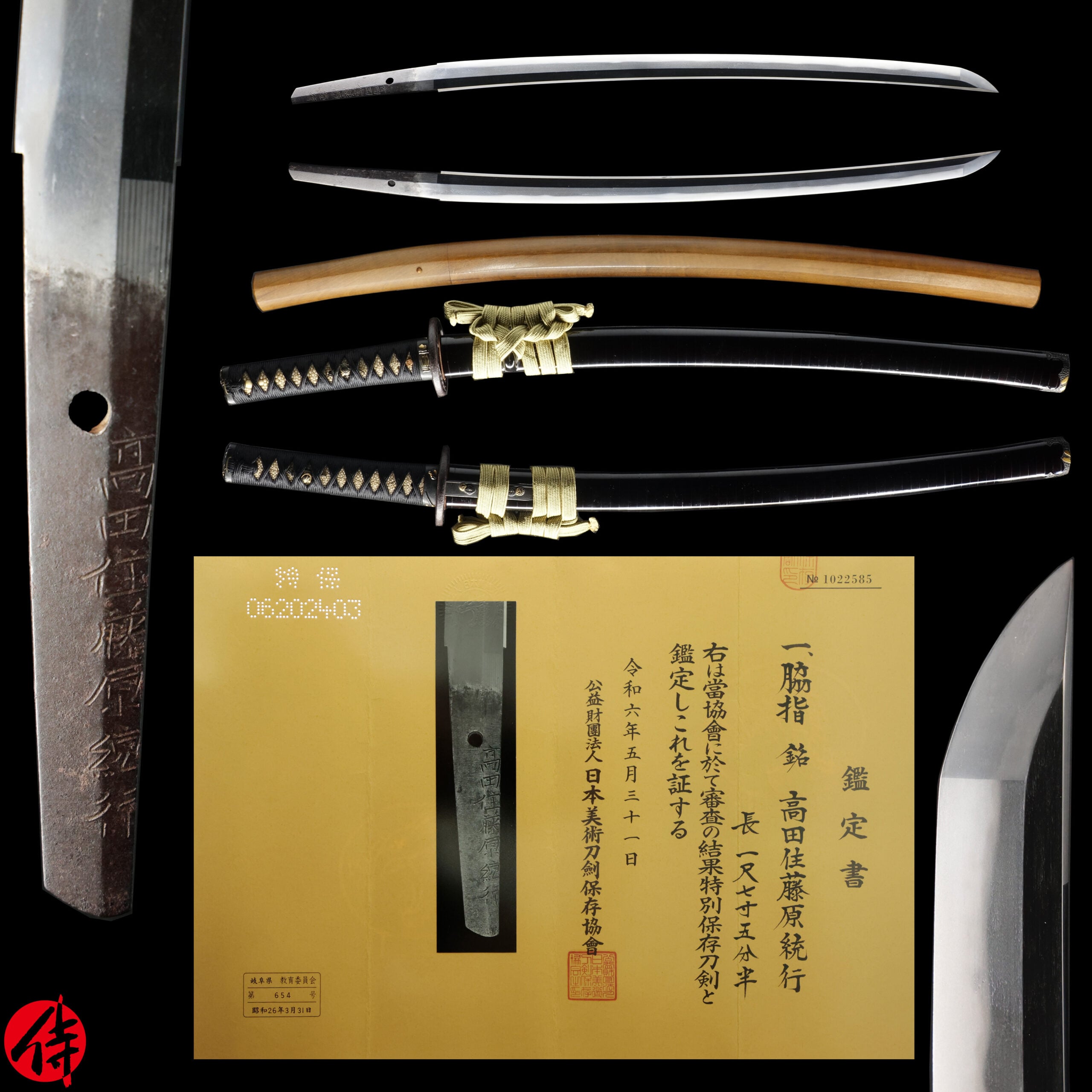
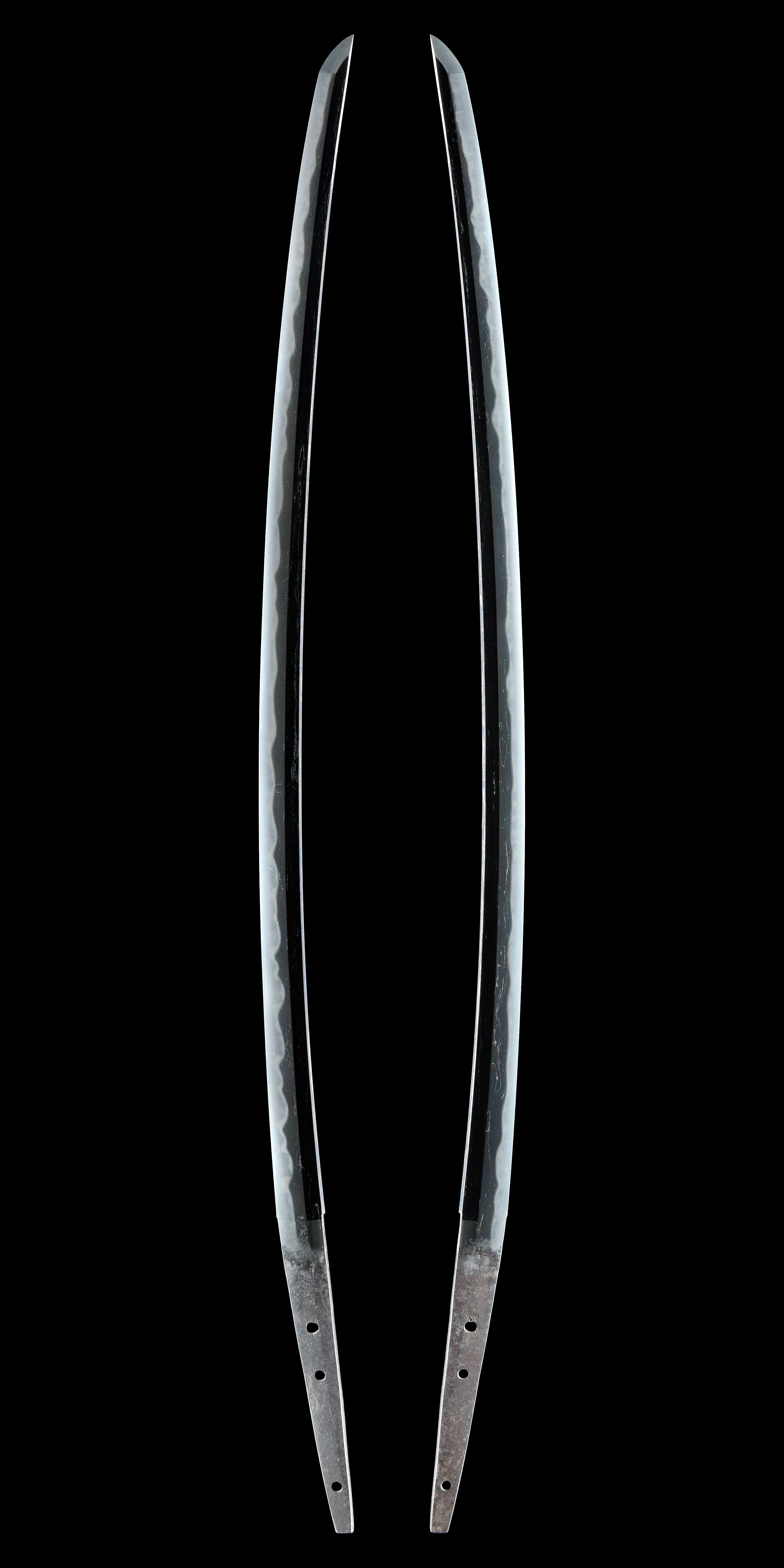
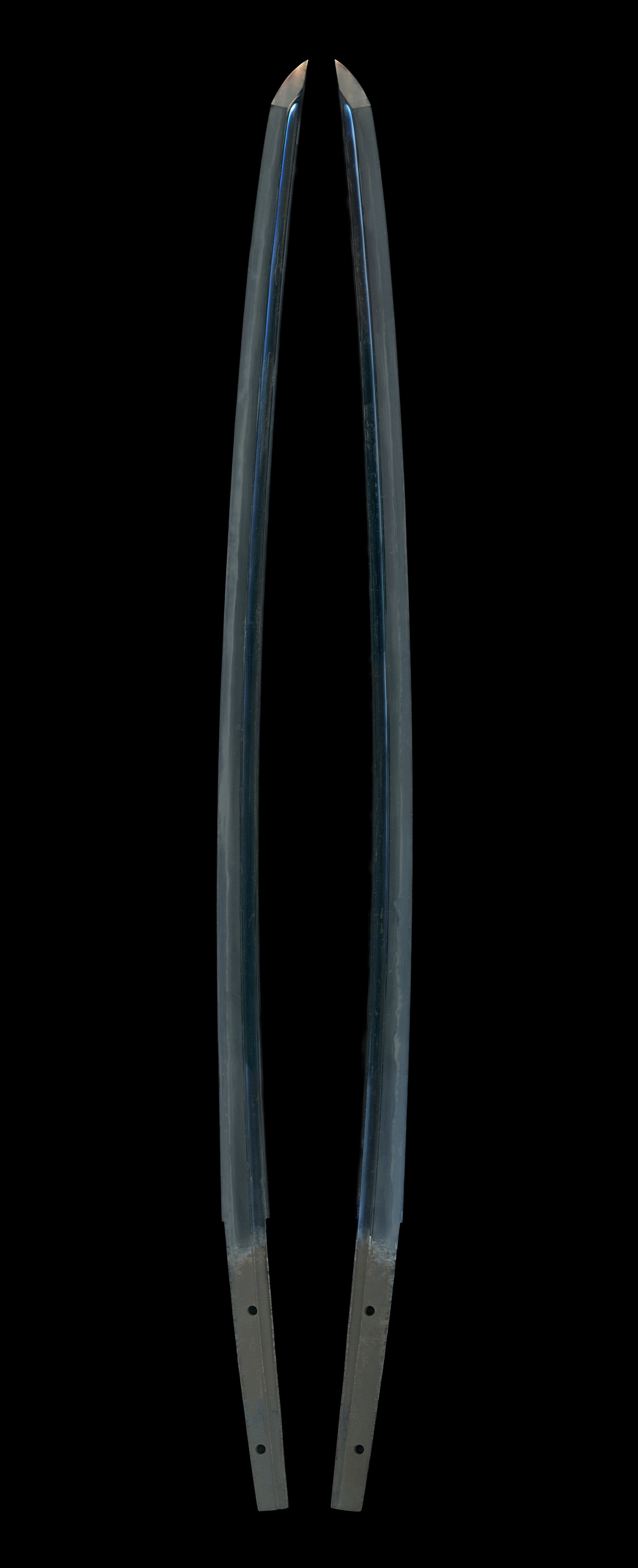
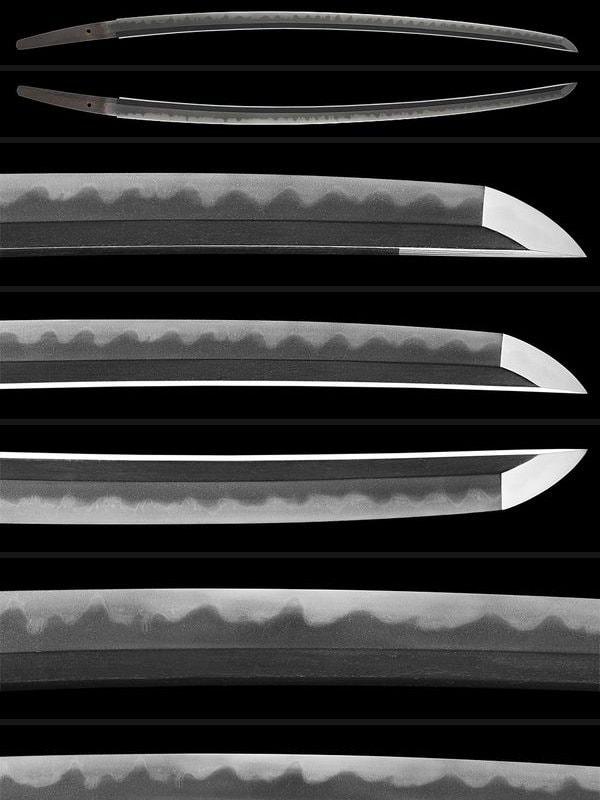
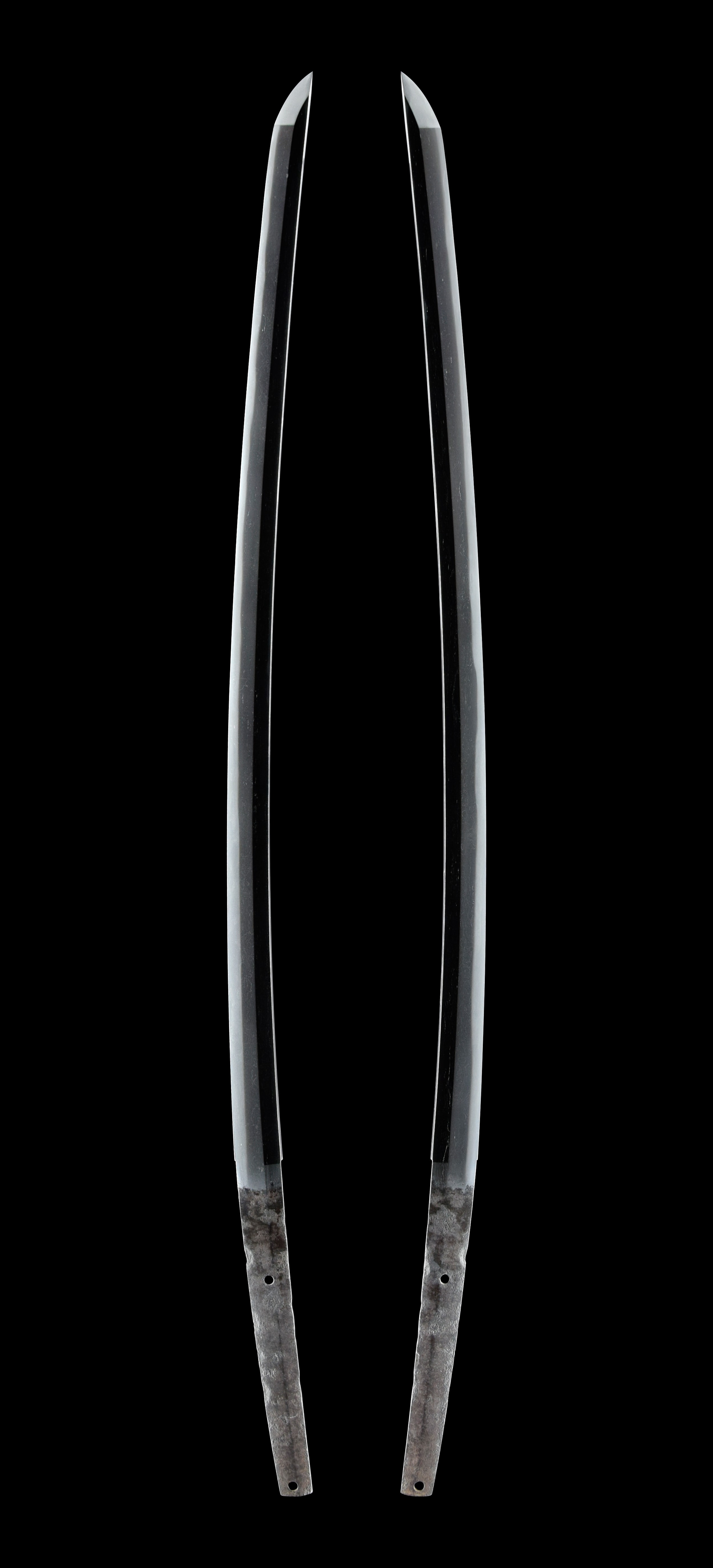
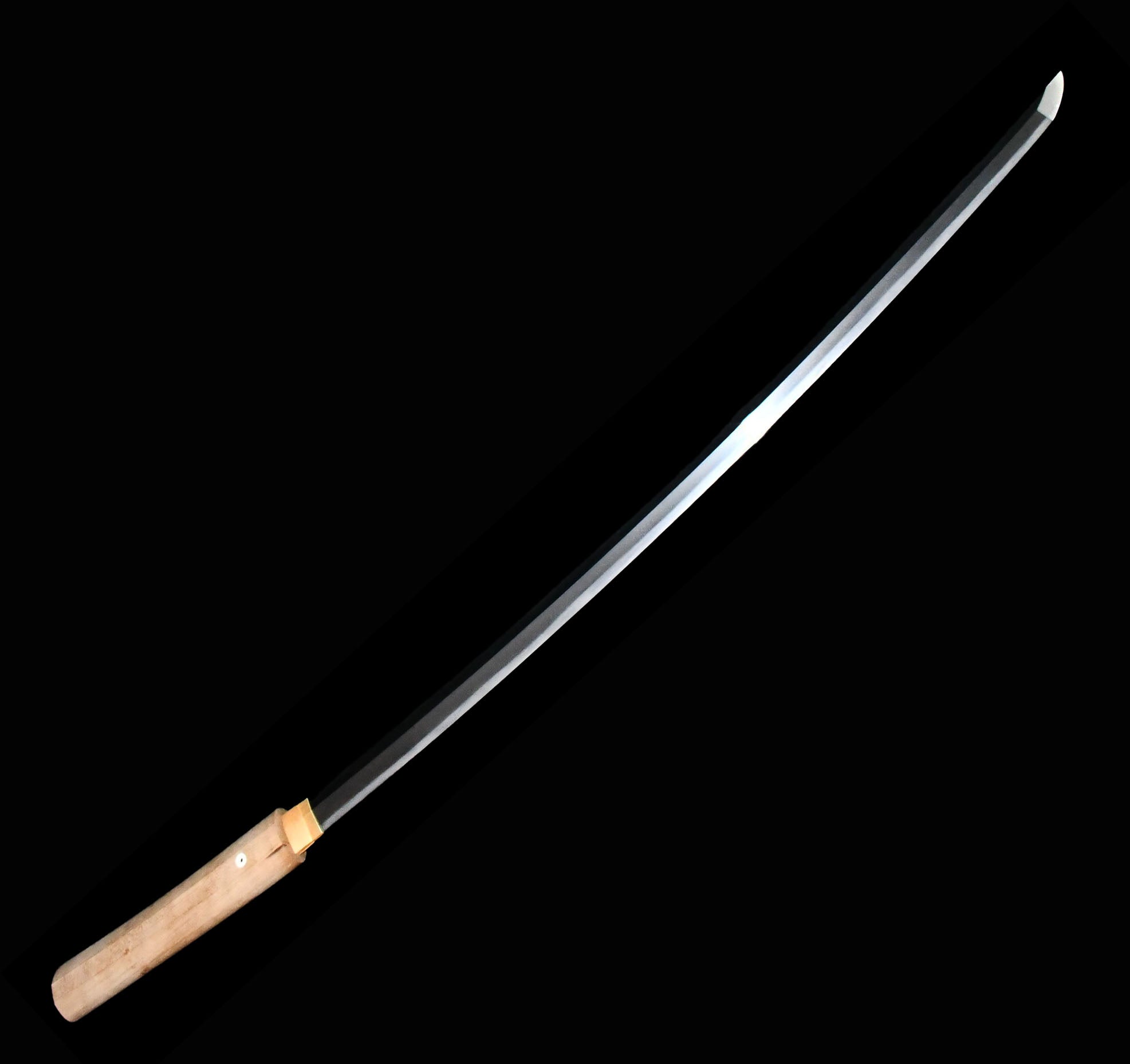
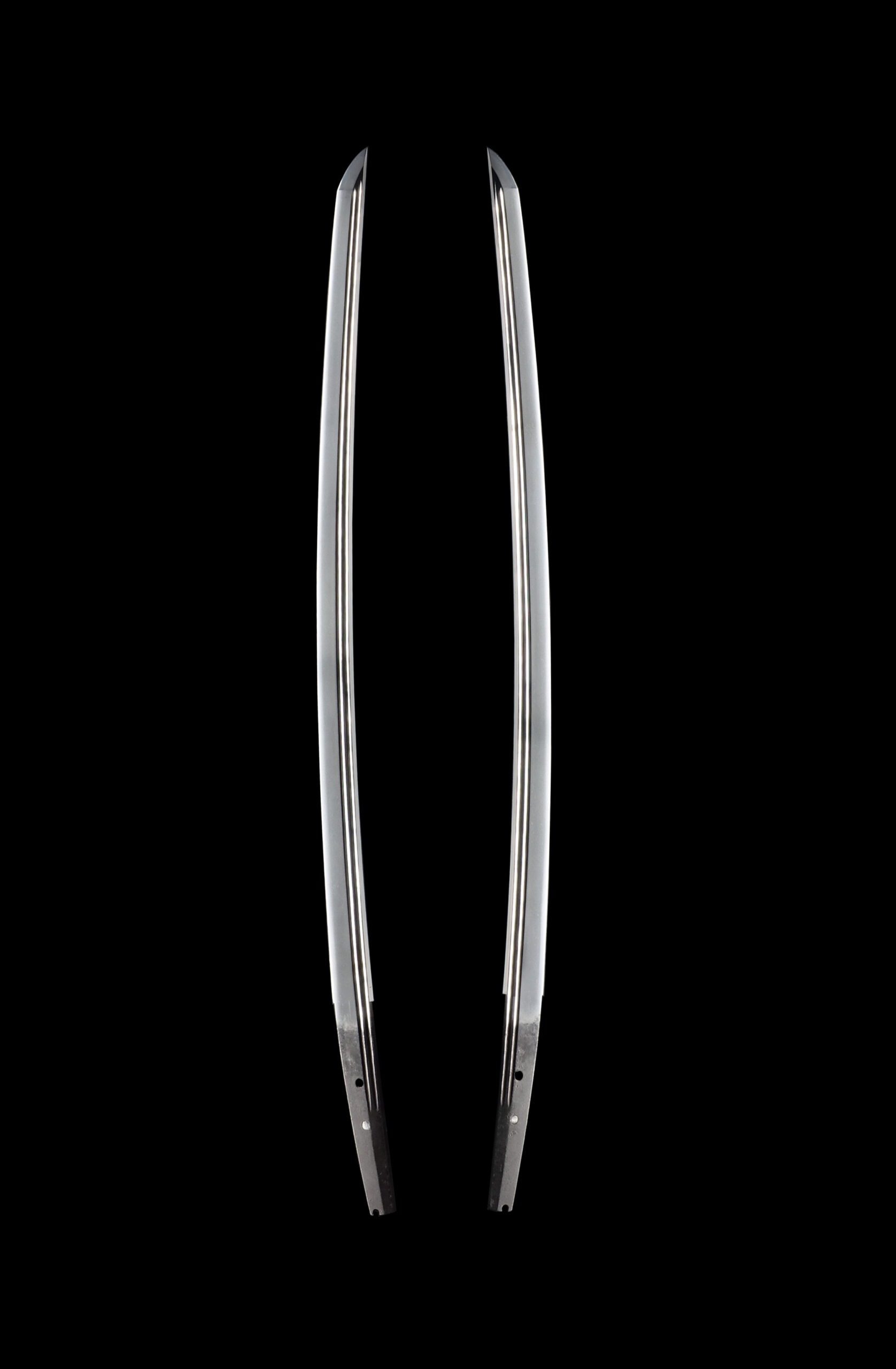
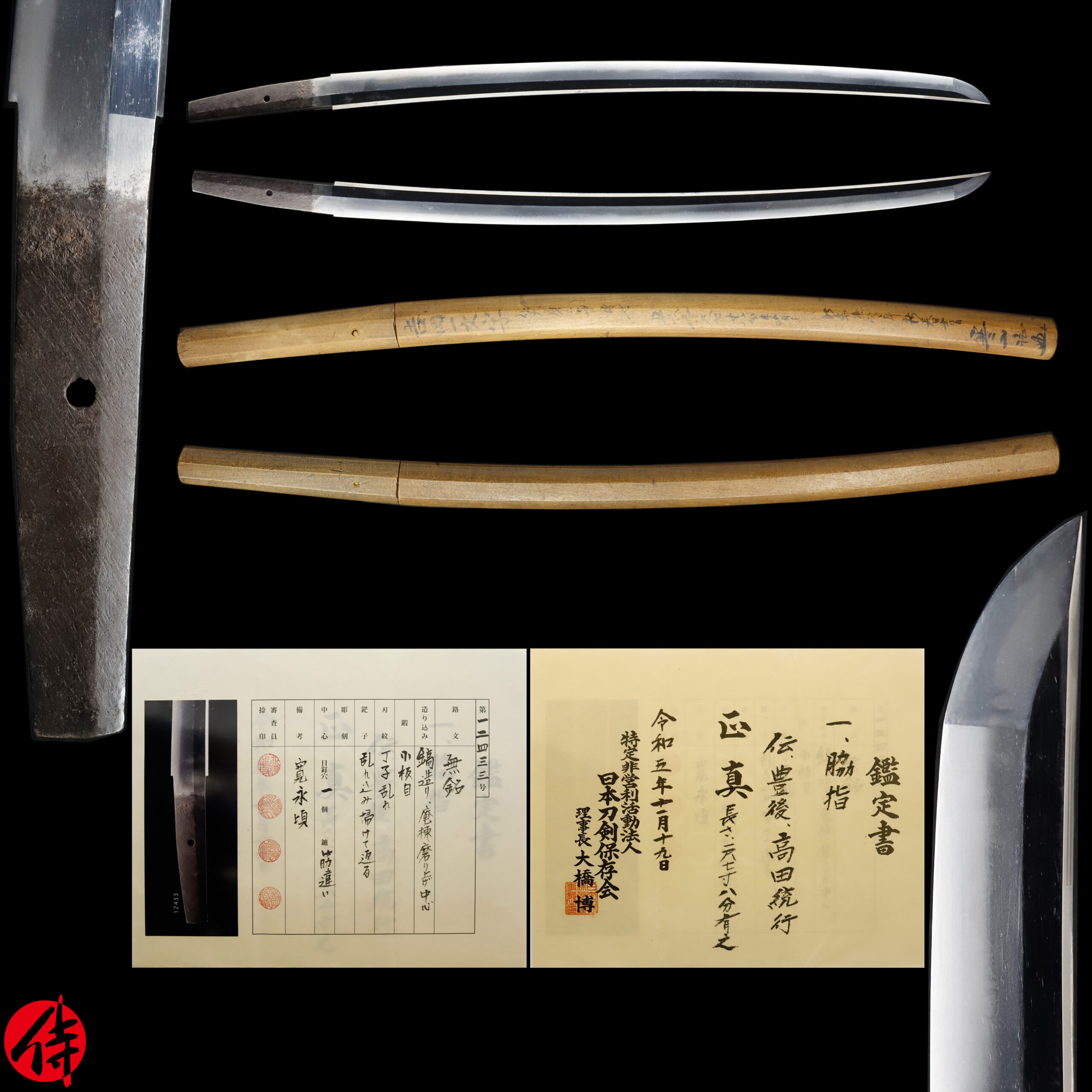
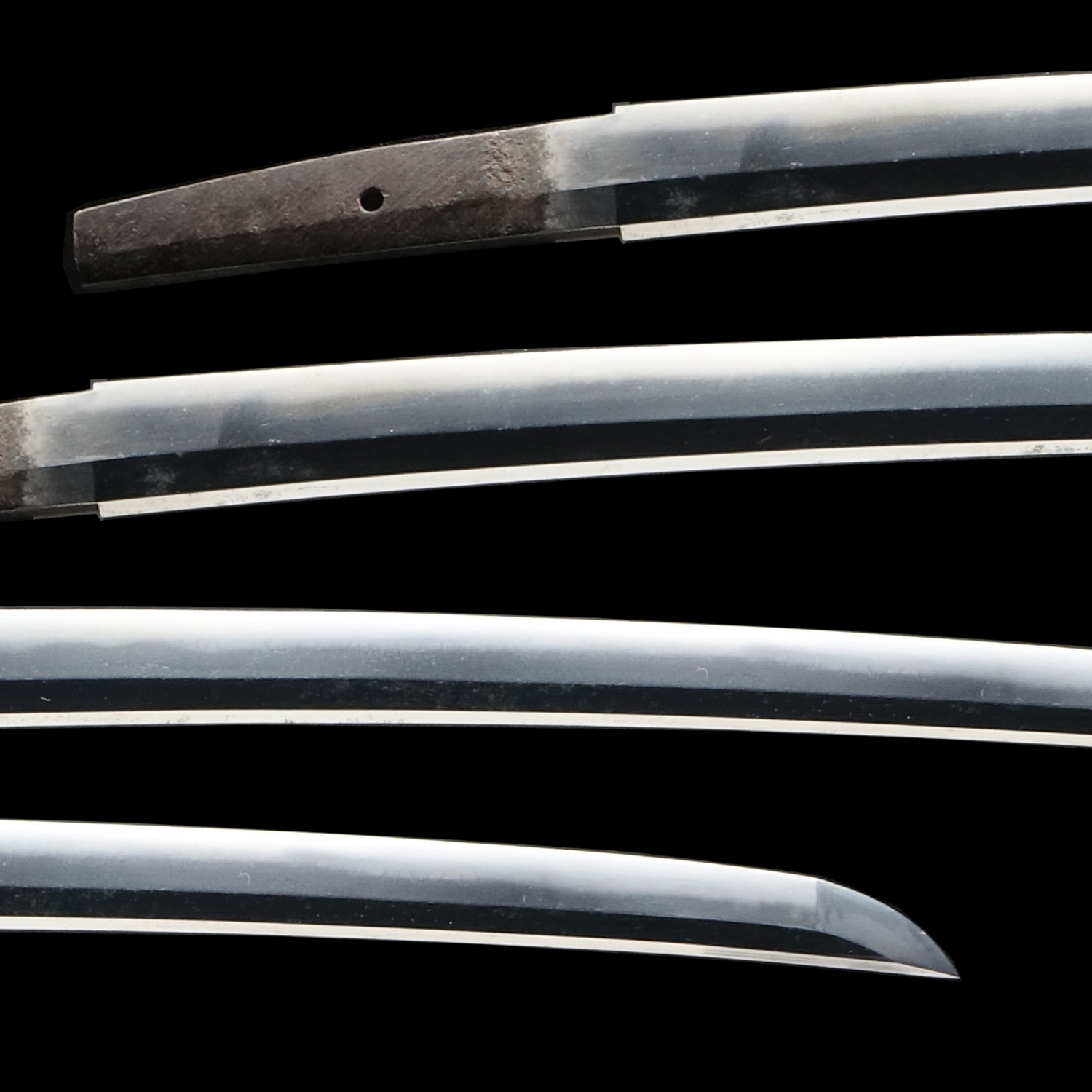
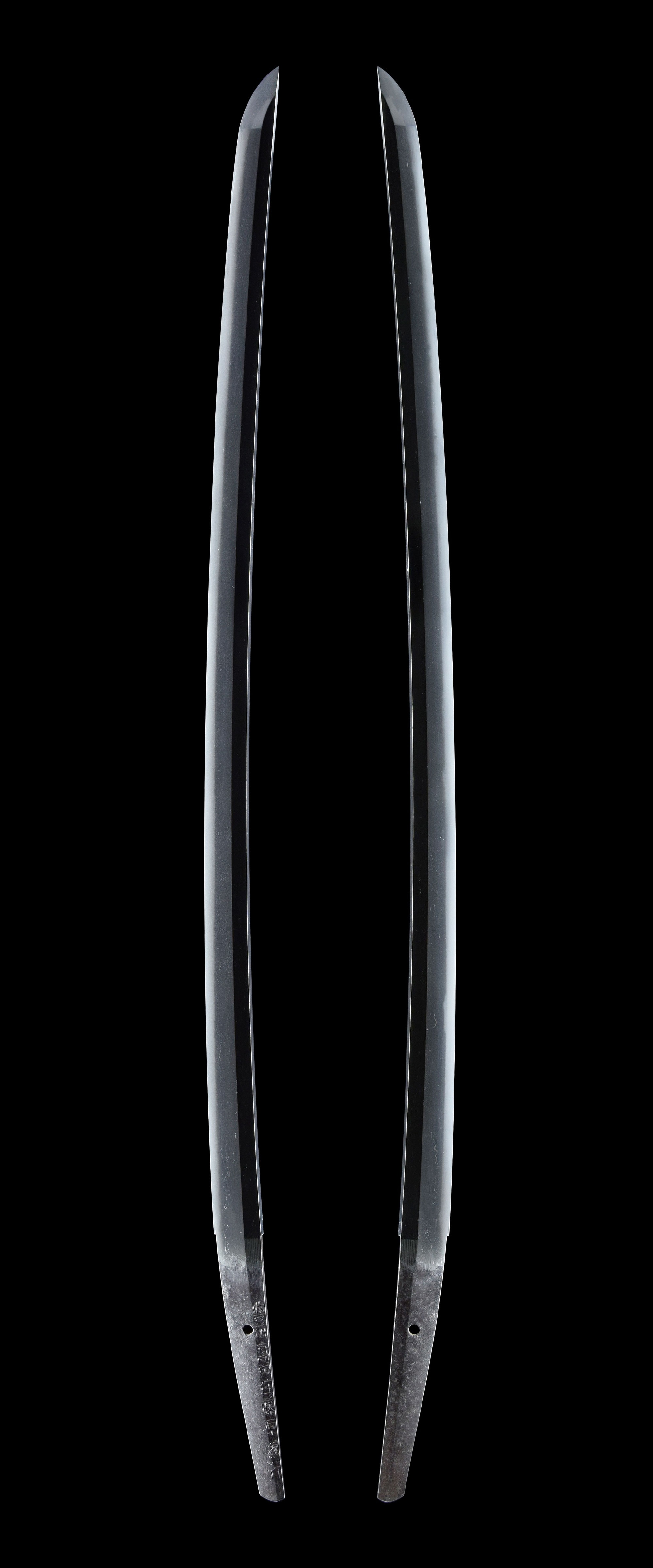
Antique Japanese Sword Wakizashi attributed to Takada Muneyuki with NTHK Kanteisho 【Description】 This blade is attributed to Takada Muneyuki (高田統行), who belonged to a prestigious school named Takada(高田). The maker’s name Tokiyuki lasted three generations from the Tensho to Meireki era (1573-1658). And, based on the NBTHK authentication paper, the attribution is given to either the second-gen or third-gen Muneyuki during the Kan-Ei era (1624-1644). Takada school was founded by Takada Tomoyuki in Takada village, Bungo domain (Ohita prefecture), during the Nanbokucho period. (1334-1338 A.D). Takada Tomoyuki went to Bizen province(today’s Okayama prefecture) to master the sword-forging techniques of BIZEN and returned to the village and trained his apprentices. That is how Takada school started. During Sengoku Period (the warring state period: from late 15 C to late 16 C), the Takada school forged many swords for many Samurais in Kyushu island. It is said that the reputation of the blades forged by Takada school was close to MINO or BIZEN swords, two of which are the most famous sword forging places. The Bungo domain was ruled by Otomo Yoshishige (Sorin) during the Sengoku period. Yoshishige and his domain built a strong military and political base there. Yoshishige was known as one of the most famous warlords on Kyushu island. It is said that Takada swordsmiths forged swords for those who served the Otomo clan and the first-gen Muneyuki received 統 letter, one of his maker’s name from Otomo family. And, Muneyuki played an important role to make Takada school prosperous during the Edo period. Generally speaking, Kyushu island was prosperous in sword-making because of its long trading history with Asian countries. Many feudal lords on this island fought against each other to gain an advantage in trading. Takada school received many orders as the demand increased among those lords. The material of Japanese swords(high-quality iron sand and charcoal) was abundant in mount Sobo Katamuki, located near Takada village. We believe Takada school prospered because of its geographic location and natural resources. *Please keep in mind that there are some noticeable Kitae Kizu and black rust on this blade. If you like to know the detailed condition, please feel free to contact us. 【Blade】 Cutting Edge Length (Nagasa) : 54.1 cm (21.3 inches) Curvature (Sori) : 1.4 cm (0.55 inches) Hamon : The crystalline structure which forms along the cutting edge of a blade as a result of the hardening process. Jimon(Jihada) : visible steel surface pattern created by folding and hammering during forging process Nakago : Nakago is the tang of the Japanese sword. Japanese swordsmiths left the black rust on the tang because it prevents red rust while the tang is in its handle. And the discoloration of the tang was created over time, and it is a great indicator for a Japanese sword specialist to estimate when the sword was forged. Habaki : Habaki is the equipment to make the blade not touch its scabbard inside. It prevents the blade from getting rusty and chipped. Authentication Paper : NTHK Kanteisho Certificate for the blade NTHK , also known as NPO Nihon Touken Hozon Kai, is the oldest organization for sword authentication of Japanese swords in modern times. It was established in 1889 during the post-Samurai era. They authenticated the blade on November 19th in the 5th year of Reiwa (2023). The purchaser will receive this original certificate as well. We can also translate what is written into English and make a PDF file for your record if you request. Registration Number : Osaka 113421 The Board of Education in Osaka prefecture issued a registration paper for this sword. It is called Jyu Ho Token Rui Torokusho (銃砲刀剣類登録証). Bunkacho (The Agency for Cultural Affairs) acknowledges a Japanese sword with this paper as a work of art. The sword needs to be traditionally hand-forged and made of Tamahagane carbon steel to be registered in the system. With this paper,

NihontoWatch MonNihontoWatch
MarketEncyclopediaKantei
刀剣›備前伝›高田›統行›Edo Wakizashi attributed to Takada Muneyuki | Samurai Museum Shop E-mail FB Messenger Skip to content Menu Close Samurai Museum Shop Products Antique Japanese Sword Wakizashi attributed to Takada Muneyuki NTHK Kanteisho
脇差
統行

Edo Wakizashi attributed to Takada Muneyuki | Samurai Museum Shop E-mail FB Messenger Skip to content Menu Close Samurai Museum Shop Products Antique Japanese Sword Wakizashi attributed to Takada Muneyuki NTHK Kanteisho

無銘 · Takada · 江戸 · 長さ 54.1cm · 反り 1.4cm
売却済
統行 — 1 of 20
統行 — 2 of 20
統行 — 3 of 20
統行 — 4 of 20
統行 — 5 of 20
統行 — 6 of 20
統行 — 7 of 20
統行 — 8 of 20
統行 — 9 of 20
統行 — 10 of 20
統行 — 11 of 20
統行 — 12 of 20
統行 — 13 of 20
統行 — 14 of 20
統行 — 15 of 20
統行 — 16 of 20
統行 — 17 of 20
統行 — 18 of 20
統行 — 19 of 20
統行 — 20 of 20
1 / 20
1 / 20
統行 — 1 of 20統行 — 2 of 20統行 — 3 of 20統行 — 4 of 20統行 — 5 of 20統行 — 6 of 20統行 — 7 of 20統行 — 8 of 20統行 — 9 of 20統行 — 10 of 20統行 — 11 of 20統行 — 12 of 20統行 — 13 of 20統行 — 14 of 20統行 — 15 of 20統行 — 16 of 20統行 — 17 of 20統行 — 18 of 20統行 — 19 of 20統行 — 20 of 20
法量・詳細
刀工
統行
種別
脇差
流派
Takada
活動期
1596–1615年頃(Keicho)
国
豊後
銘
無銘
法量
長さ 54.1cm反り 1.4cm
説明

Antique Japanese Sword Wakizashi attributed to Takada Muneyuki with NTHK Kanteisho 【Description】 This blade is attributed to Takada Muneyuki (高田統行), who belonged to a prestigious school named Takada(高田). The maker’s name Tokiyuki lasted three generations from the Tensho to Meireki era (1573-1658). And, based on the NBTHK authentication paper, the attribution is given to either the second-gen or third-gen Muneyuki during the Kan-Ei era (1624-1644). Takada school was founded by Takada Tomoyuki in Takada village, Bungo domain (Ohita prefecture), during the Nanbokucho period. (1334-1338 A.D). Takada Tomoyuki went to Bizen province(today’s Okayama prefecture) to master the sword-forging techniques of BIZEN and returned to the village and trained his apprentices. That is how Takada school started. During Sengoku Period (the warring state period: from late 15 C to late 16 C), the Takada school forged many swords for many Samurais in Kyushu island. It is said that the reputation of the blades forged by Takada school was close to MINO or BIZEN swords, two of which are the most famous sword forging places. The Bungo domain was ruled by Otomo Yoshishige (Sorin) during the Sengoku period. Yoshishige and his domain built a strong military and political base there. Yoshishige was known as one of the most famous warlords on Kyushu island. It is said that Takada swordsmiths forged swords for those who served the Otomo clan and the first-gen Muneyuki received 統 letter, one of his maker’s name from Otomo family. And, Muneyuki played an important role to make Takada school prosperous during the Edo period. Generally speaking, Kyushu island was prosperous in sword-making because of its long trading history with Asian countries. Many feudal lords on this island fought against each other to gain an advantage in trading. Takada school received many orders as the demand increased among those lords. The material of Japanese swords(high-quality iron sand and charcoal) was abundant in mount Sobo Katamuki, located near Takada village. We believe Takada school prospered because of its geographic location and natural resources. *Please keep in mind that there are some noticeable Kitae Kizu and black rust on this blade. If you like to know the detailed condition, please feel free to contact us. 【Blade】 Cutting Edge Length (Nagasa) : 54.1 cm (21.3 inches) Curvature (Sori) : 1.4 cm (0.55 inches) Hamon : The crystalline structure which forms along the cutting edge of a blade as a result of the hardening process. Jimon(Jihada) : visible steel surface pattern created by folding and hammering during forging process Nakago : Nakago is the tang of the Japanese sword. Japanese swordsmiths left the black rust on the tang because it prevents red rust while the tang is in its handle. And the discoloration of the tang was created over time, and it is a great indicator for a Japanese sword specialist to estimate when the sword was forged. Habaki : Habaki is the equipment to make the blade not touch its scabbard inside. It prevents the blade from getting rusty and chipped. Authentication Paper : NTHK Kanteisho Certificate for the blade NTHK , also known as NPO Nihon Touken Hozon Kai, is the oldest organization for sword authentication of Japanese swords in modern times. It was established in 1889 during the post-Samurai era. They authenticated the blade on November 19th in the 5th year of Reiwa (2023). The purchaser will receive this original certificate as well. We can also translate what is written into English and make a PDF file for your record if you request. Registration Number : Osaka 113421 The Board of Education in Osaka prefecture issued a registration paper for this sword. It is called Jyu Ho Token Rui Torokusho (銃砲刀剣類登録証). Bunkacho (The Agency for Cultural Affairs) acknowledges a Japanese sword with this paper as a work of art. The sword needs to be traditionally hand-forged and made of Tamahagane carbon steel to be registered in the system. With this paper,

作者について

統行

備前伝 · 豊後 · 1596-1615頃

刀剣大鑑 上位76%

現在1点販売中

›
統行の作 1点が現在販売中→
統行 — 詳細備前伝派
流派について

高田

備前伝 · 豊後

現在44点販売中

›

豊後国の高田派は、同国高田荘の地名を負う一門で、鎌倉初期に定秀・行平らの名工を出した九州刀の伝統が一時跡絶えた後、南北朝時代に友行が同地に現れて再興した鍛冶集団である。説示は友行をもって高田鍛冶の祖とし、現存する年紀作に貞治・正平の年号を伝える点を挙げる。友行のほか、その子あるいは門人と伝える時行が著名で、別系と思われる行政には建徳二年紀の短刀がある。南北朝期の作には「藤原」を冠し、室町期以降は「平」を銘じて「盛」「守」「鎮」「統」などを通字とし、これらを総じて平高田と汎称する。さらに末期に至って再び「藤原」を冠するようになり、江戸期以降もこれを踏襲して藤原高田と呼び習わされ区分される。この間に長盛・竪守・鎮教・鎮清・鎮正らを輩出し、鎮正の門からは伊予宇和島に移った国房が出て新刀期へと繋がるなど、室町後期から江戸期に及ぶ長い系譜を形づくった。 作風は説示の記すところ多彩で、一様には括れない。鍛えは板目に杢を交え、総じて肌立ちごころとなり、柾に流れる態を見せて、地沸つき地景入り、白気映りや乱れ映りが立つものが多い。刃文は直刃を基調とするものから、小互の目や角ばる互の目を交えて乱れるもの、腰の開いた複式風で末備前を彷彿とさせるもの、さらに皆焼に及ぶものまで幅がある。祖の友行は同時代の左文字一類に近似するが、刃中に角ばる互の目が間遠に連れ、地に白けが強く地斑を交える点が見どころとされる。室町期の作の多くに共通する要所として、刃中に針の先で突いたような固い葉が入ることが従来指摘されており、系統と時代の判別に資する。姿形は室町中期頃までは反りが深くついて反らせたものが多く、末期は身幅広めで反りが幾分浅く、中鋒が延びて時代を映した頑健な造込みとなる。行政の作のように、鍛えが大きく流れて古典色が濃く、櫃中に行平を踏襲した倶利迦羅の浮彫を施す例もみられる。 伝承の上では、高田物は実用刀として広く行き渡った一方、斯界の評価は決して高くないとされてきた。説示はその傾向を踏まえつつ、地刃に破綻なく締まりごころとなり、来国行を参考にしたとも言えるほどの出来を示す鎮教や、地鉄精良で匂口冴える鎮清の作をもって面目を挽回する出色の一口と評し、平高田中で最も技倆に優れ直刃を得意とした長盛を一派の代表として挙げる。伝来を備える品も少なくなく、行政の短刀は庄内酒井家に伝わって本阿弥光忠の折紙を添え、鎮教には黒田家の重宝となり享保名物追記に載る権藤鎮教の長刀があり、長盛の脇指には島津継豊から本田親章へ拝領された切付銘を持つものがある。中世豊後刀工の作域を今に伝える資料として、また実用に堪える堅牢さと九州古典派の余韻を併せ持つ一門として位置づけられる。 詳しく見る →

11名の刀工指定31口
主要刀工
刀工時代指定
友行1350-136715
國房1615-16245
則重1558-15700
及行1661-16730
鑑行1532-15550
高田流派を見る →

歴史的背景

徳川の泰平のもと、大小は法度の定める身分の制服となり、需要は城下町、とりわけ江戸に集まった。工芸は二つに分かれる。目利きのための華やかな鑑賞の作と、截断の結果を金象嵌に刻む実証の刀である。

江戸時代 →

NTHK(日本刀剣保存会)鑑定
Kanteishō鑑定書
NTHK Appraisal Certificate
›

NTHKの中心的な鑑定書で、相応の出来を備えた作に発行されます。在銘作は銘の正真を、無銘作は審査員による刀工・流派の極めを示します。点数を記す詳細な審査表が付されます。

NTHKについて›

NTHK(日本刀剣保存会)は、NBTHK(1948年設立)に先立つ1910年に創立された、日本で最も古い刀剣鑑定団体です。長く会を率いた会長の没後、NTHKとNTHK-NPOの二つに分かれ、いずれも審査を続けています。NTHKの鑑定書は、点数と審査員の所見を併記する詳細な審査表が特徴で、特に無銘作の極めに定評があります。

販売店
サ
サムライミュージアム
🇯🇵日本から発送
›
✓認証販売店samuraimuseum.jp
✓海外発送可✓英語対応PayPalクレジットカード
返品ポリシー

Returns/exchanges limited to defects caused by shipping (except willful misconduct or gross negligence by the company); customers must contact within 72 hours of receiving the product.

サムライミュージアムの出品一覧を見る→販売店サイトでこの商品を見る→

統行の他の作

すべて見る →
刀心
特別保存
Katana - Tokuho - by Takada Muneyuki - 豊州高田住藤原統行 -Hoshu Takada ju Muneyuki- 2-1345Katana - Tokuho - by Takada Muneyuki - 豊州高田住藤原統行 -Hoshu Takada ju Muneyuki- 2-1345

刀

作統行
69.9cm·新刀
¥899,800

統行の売約済み

Tokyo Nihonto
保存
Katana - Hozon - by Takada Muneyuki - 日本刀 刀 銘 高田住藤原統行(保存刀剣鑑定書付)Katana - Hozon - by Takada Muneyuki - 日本刀 刀 銘 高田住藤原統行(保存刀剣鑑定書付)
売切れ

刀

作統行
69.4cm·新刀
売却済
Katana Sword
保存
Katana - Hozon - by Takada Muneyuki - 日本刀 刀 銘 高田住藤原統行(保存刀剣鑑定書付)Katana - Hozon - by Takada Muneyuki - 日本刀 刀 銘 高田住藤原統行(保存刀剣鑑定書付)
売切れ

刀

作統行
69.4cm·Keicho (1596-1615)
売却済
Nihonto Antiques
保存
Katana - Hozon - by Takada Muneyuki - 武田宗幸 (FSS-906)Katana - Hozon - by Takada Muneyuki - 武田宗幸 (FSS-906)
売切れ

刀

作統行
67.9cm·Keicho (1596-1615)
売却済
サムライミュージアム
特別保存
Wakizashi - Tokuho - by Takada Muneyuki - 日本刀 脇差 銘 宗幸 日本美術刀剣保存協会 特別保存刀剣鑑定書付Wakizashi - Tokuho - by Takada Muneyuki - 日本刀 脇差 銘 宗幸 日本美術刀剣保存協会 特別保存刀剣鑑定書付
売切れ

脇差

作統行
53.2cm·江戸
売却済

高田派の作

すべて見る →
刀心
保存
Katana - Hozon - by Takada School - 無銘(平高田) 2-1381Katana - Hozon - by Takada School - 無銘(平高田) 2-1381

刀

作高田派
69.32cm·室町
¥462,000
Tokyo Nihonto
保存
Katana - Hozon - by Takada School - 平高田 互の目刃文 南蛮鉄鍔 金色絵唐獅子目貫 刀(保存刀剣鑑定書付)Katana - Hozon - by Takada School - 平高田 互の目刃文 南蛮鉄鍔 金色絵唐獅子目貫 刀(保存刀剣鑑定書付)

刀

作高田派
65cm·室町
¥4,500
Katana Yamadaiya
保存
Katana - Hozon - by Takada School - 保存刀剣 無銘(平高田)Katana - Hozon - by Takada School - 保存刀剣 無銘(平高田)

刀

作高田派
68.2cm·室町
¥380,000
宝刀堂
保存
Katana - Hozon - by Takada School - 無銘 平高田 刀Katana - Hozon - by Takada School - 無銘 平高田 刀

刀

作高田派
67.9cm·室町
¥370,000
宝刀堂
保存
Naginata - Hozon - by Takada School - 無銘 伝高田統景 薙刀Naginata - Hozon - by Takada School - 無銘 伝高田統景 薙刀

薙刀

作高田派
66.8cm·Bunroku (1592-1596)
¥1,100,000
刀剣杉田
重要
Katana - Jūyō - by Takada Shigeaki - 隅州之住重鑑作(大隅) 天文十四年十一月吉日 (第31回重要刀剣)Katana - Jūyō - by Takada Shigeaki - 隅州之住重鑑作(大隅) 天文十四年十一月吉日 (第31回重要刀剣)

刀

作重鑑
68.2cm·Tenmon (1532-1555)
¥5,300,000
刀心
保存
Katana - Hozon - by Takada School - 無銘(高田) 2-1733Katana - Hozon - by Takada School - 無銘(高田) 2-1733

刀

作高田派
69.1cm·室町
¥385,000
濃州堂
NTHK
Katana - NTHK - by Takada Munekage - 無銘(伝豊後 高田統景)Katana - NTHK - by Takada Munekage - 無銘(伝豊後 高田統景)

刀

作統景
70.3cm·Bunroku (1592-1596)
¥440,000

備前の伝統

すべて見る →
葵美術
重要
Jūyō - by Ichimonji School - 長刀直 katana 無銘(一文字)(第62回NBTHK重要刀剣)(附:黒漆塗鞘打刀拵 NBTHK保存刀装具)Jūyō - by Ichimonji School - 長刀直 katana 無銘(一文字)(第62回NBTHK重要刀剣)(附:黒漆塗鞘打刀拵 NBTHK保存刀装具)

長刀直 katana 無銘(一文字)(第62回NBTHK重要刀剣)(附:黒漆塗鞘打刀拵 NBTHK保存刀装具)

作一文字派
68.2cm·Late Heian (c. 1180)
開始価格¥9,500,000
葵美術
重要美術品
Daisho - Jubi - by Osafune Nagamitsu - 大小:刀(重要美術品)無銘(伝長光)/脇差:無銘(伝長光)/無銘(石州直綱)(日本美術刀剣保存協会 特別保存刀剣)Daisho - Jubi - by Osafune Nagamitsu - 大小:刀(重要美術品)無銘(伝長光)/脇差:無銘(伝長光)/無銘(石州直綱)(日本美術刀剣保存協会 特別保存刀剣)

大小

作長光
Kencho (1249-1256)
お問い合わせ
Nihonto.com
重要
Tanto - Jūyō - by Osafune Kagemitsu - 重要刀剣 備前景光 短刀 #110112Tanto - Jūyō - by Osafune Kagemitsu - 重要刀剣 備前景光 短刀 #110112

短刀

作景光
25.3cm·Geno (1319-1321)
¥89,500
つるぎの屋
重要
Katana - Jūyō - by Fukuoka Ichimonji School - 刀 無銘 福岡一文字Katana - Jūyō - by Fukuoka Ichimonji School - 刀 無銘 福岡一文字

刀

作福岡一文字派
70cm·鎌倉
お問い合わせ
永楽堂
保存
Katana - Hozon - by Sukesada - 与三 刀 保存刀剣Katana - Hozon - by Sukesada - 与三 刀 保存刀剣

刀

作祐定
68.8cm·Eisho-Tenmon (1504-1542)
¥3,800,000
永楽堂
重要美術品
Katana - Jubi - by Chu-Aoe School - 青江 貞次 刀 重要美術品Katana - Jubi - by Chu-Aoe School - 青江 貞次 刀 重要美術品

刀

作中青江派
69.3cm·Late Kamakura (c. 1288)
お問い合わせ
Toyuukai
重要
Katana - Jūyō - by Aoe School - 刀 無銘(青江)第51回重要刀剣Katana - Jūyō - by Aoe School - 刀 無銘(青江)第51回重要刀剣

刀

作青江派
71.8cm·南北朝
¥5,500,000
サムライミュージアム
特別保存
Wakizashi - Tokuho - by Osafune Kagemitsu - 日本刀 脇差 伝長船景光 NBTHK 特別保存刀剣鑑定書付Wakizashi - Tokuho - by Osafune Kagemitsu - 日本刀 脇差 伝長船景光 NBTHK 特別保存刀剣鑑定書付

脇差

作景光
54.7cm·Kagen-Kenmu (1303-1336)
¥20,748

刀剣

  • 刀
  • 脇差
  • 短刀
  • 太刀
  • 薙刀
  • 槍

刀装具

  • 鍔
  • 縁頭
  • 小柄
  • 目貫

甲冑武具

  • 兜
  • 甲冑

鑑定別

  • 特重
  • 重要
  • 特別保存
  • 保存

リソース

  • 刀剣商一覧
  • 刀工一覧
  • 誌上鑑定
  • すべて見る
Nihontowatch© 2026
利用規約プライバシーCookie運営者情報

説明

Antique Japanese Sword Wakizashi attributed to Takada Muneyuki with NTHK Kanteisho 【Description】 This blade is attributed to Takada Muneyuki (高田統行), who belonged to a prestigious school named Takada(高田). The maker’s name Tokiyuki lasted three generations from the Tensho to Meireki era (1573-1658). And, based on the NBTHK authentication paper, the attribution is given to either the second-gen or third-gen Muneyuki during the Kan-Ei era (1624-1644). Takada school was founded by Takada Tomoyuki in Takada village, Bungo domain (Ohita prefecture), during the Nanbokucho period. (1334-1338 A.D). Takada Tomoyuki went to Bizen province(today’s Okayama prefecture) to master the sword-forging techniques of BIZEN and returned to the village and trained his apprentices. That is how Takada school started. During Sengoku Period (the warring state period: from late 15 C to late 16 C), the Takada school forged many swords for many Samurais in Kyushu island. It is said that the reputation of the blades forged by Takada school was close to MINO or BIZEN swords, two of which are the most famous sword forging places. The Bungo domain was ruled by Otomo Yoshishige (Sorin) during the Sengoku period. Yoshishige and his domain built a strong military and political base there. Yoshishige was known as one of the most famous warlords on Kyushu island. It is said that Takada swordsmiths forged swords for those who served the Otomo clan and the first-gen Muneyuki received 統 letter, one of his maker’s name from Otomo family. And, Muneyuki played an important role to make Takada school prosperous during the Edo period. Generally speaking, Kyushu island was prosperous in sword-making because of its long trading history with Asian countries. Many feudal lords on this island fought against each other to gain an advantage in trading. Takada school received many orders as the demand increased among those lords. The material of Japanese swords(high-quality iron sand and charcoal) was abundant in mount Sobo Katamuki, located near Takada village. We believe Takada school prospered because of its geographic location and natural resources. *Please keep in mind that there are some noticeable Kitae Kizu and black rust on this blade. If you like to know the detailed condition, please feel free to contact us. 【Blade】 Cutting Edge Length (Nagasa) : 54.1 cm (21.3 inches) Curvature (Sori) : 1.4 cm (0.55 inches) Hamon : The crystalline structure which forms along the cutting edge of a blade as a result of the hardening process. Jimon(Jihada) : visible steel surface pattern created by folding and hammering during forging process Nakago : Nakago is the tang of the Japanese sword. Japanese swordsmiths left the black rust on the tang because it prevents red rust while the tang is in its handle. And the discoloration of the tang was created over time, and it is a great indicator for a Japanese sword specialist to estimate when the sword was forged. Habaki : Habaki is the equipment to make the blade not touch its scabbard inside. It prevents the blade from getting rusty and chipped. Authentication Paper : NTHK Kanteisho Certificate for the blade NTHK , also known as NPO Nihon Touken Hozon Kai, is the oldest organization for sword authentication of Japanese swords in modern times. It was established in 1889 during the post-Samurai era. They authenticated the blade on November 19th in the 5th year of Reiwa (2023). The purchaser will receive this original certificate as well. We can also translate what is written into English and make a PDF file for your record if you request. Registration Number : Osaka 113421 The Board of Education in Osaka prefecture issued a registration paper for this sword. It is called Jyu Ho Token Rui Torokusho (銃砲刀剣類登録証). Bunkacho (The Agency for Cultural Affairs) acknowledges a Japanese sword with this paper as a work of art. The sword needs to be traditionally hand-forged and made of Tamahagane carbon steel to be registered in the system. With this paper,

NihontoWatch MonNihontoWatch
MarketEncyclopediaKantei
刀剣›備前伝›高田›統行›Edo Wakizashi attributed to Takada Muneyuki | Samurai Museum Shop E-mail FB Messenger Skip to content Menu Close Samurai Museum Shop Products Antique Japanese Sword Wakizashi attributed to Takada Muneyuki NTHK Kanteisho
脇差
統行

Edo Wakizashi attributed to Takada Muneyuki | Samurai Museum Shop E-mail FB Messenger Skip to content Menu Close Samurai Museum Shop Products Antique Japanese Sword Wakizashi attributed to Takada Muneyuki NTHK Kanteisho

無銘 · Takada · 江戸 · 長さ 54.1cm · 反り 1.4cm
売却済
統行 — 1 of 20
統行 — 2 of 20
統行 — 3 of 20
統行 — 4 of 20
統行 — 5 of 20
統行 — 6 of 20
統行 — 7 of 20
統行 — 8 of 20
統行 — 9 of 20
統行 — 10 of 20
統行 — 11 of 20
統行 — 12 of 20
統行 — 13 of 20
統行 — 14 of 20
統行 — 15 of 20
統行 — 16 of 20
統行 — 17 of 20
統行 — 18 of 20
統行 — 19 of 20
統行 — 20 of 20
1 / 20
1 / 20
統行 — 1 of 20統行 — 2 of 20統行 — 3 of 20統行 — 4 of 20統行 — 5 of 20統行 — 6 of 20統行 — 7 of 20統行 — 8 of 20統行 — 9 of 20統行 — 10 of 20統行 — 11 of 20統行 — 12 of 20統行 — 13 of 20統行 — 14 of 20統行 — 15 of 20統行 — 16 of 20統行 — 17 of 20統行 — 18 of 20統行 — 19 of 20統行 — 20 of 20
法量・詳細
刀工
統行
種別
脇差
流派
Takada
活動期
1596–1615年頃(Keicho)
国
豊後
銘
無銘
法量
長さ 54.1cm反り 1.4cm
説明

Antique Japanese Sword Wakizashi attributed to Takada Muneyuki with NTHK Kanteisho 【Description】 This blade is attributed to Takada Muneyuki (高田統行), who belonged to a prestigious school named Takada(高田). The maker’s name Tokiyuki lasted three generations from the Tensho to Meireki era (1573-1658). And, based on the NBTHK authentication paper, the attribution is given to either the second-gen or third-gen Muneyuki during the Kan-Ei era (1624-1644). Takada school was founded by Takada Tomoyuki in Takada village, Bungo domain (Ohita prefecture), during the Nanbokucho period. (1334-1338 A.D). Takada Tomoyuki went to Bizen province(today’s Okayama prefecture) to master the sword-forging techniques of BIZEN and returned to the village and trained his apprentices. That is how Takada school started. During Sengoku Period (the warring state period: from late 15 C to late 16 C), the Takada school forged many swords for many Samurais in Kyushu island. It is said that the reputation of the blades forged by Takada school was close to MINO or BIZEN swords, two of which are the most famous sword forging places. The Bungo domain was ruled by Otomo Yoshishige (Sorin) during the Sengoku period. Yoshishige and his domain built a strong military and political base there. Yoshishige was known as one of the most famous warlords on Kyushu island. It is said that Takada swordsmiths forged swords for those who served the Otomo clan and the first-gen Muneyuki received 統 letter, one of his maker’s name from Otomo family. And, Muneyuki played an important role to make Takada school prosperous during the Edo period. Generally speaking, Kyushu island was prosperous in sword-making because of its long trading history with Asian countries. Many feudal lords on this island fought against each other to gain an advantage in trading. Takada school received many orders as the demand increased among those lords. The material of Japanese swords(high-quality iron sand and charcoal) was abundant in mount Sobo Katamuki, located near Takada village. We believe Takada school prospered because of its geographic location and natural resources. *Please keep in mind that there are some noticeable Kitae Kizu and black rust on this blade. If you like to know the detailed condition, please feel free to contact us. 【Blade】 Cutting Edge Length (Nagasa) : 54.1 cm (21.3 inches) Curvature (Sori) : 1.4 cm (0.55 inches) Hamon : The crystalline structure which forms along the cutting edge of a blade as a result of the hardening process. Jimon(Jihada) : visible steel surface pattern created by folding and hammering during forging process Nakago : Nakago is the tang of the Japanese sword. Japanese swordsmiths left the black rust on the tang because it prevents red rust while the tang is in its handle. And the discoloration of the tang was created over time, and it is a great indicator for a Japanese sword specialist to estimate when the sword was forged. Habaki : Habaki is the equipment to make the blade not touch its scabbard inside. It prevents the blade from getting rusty and chipped. Authentication Paper : NTHK Kanteisho Certificate for the blade NTHK , also known as NPO Nihon Touken Hozon Kai, is the oldest organization for sword authentication of Japanese swords in modern times. It was established in 1889 during the post-Samurai era. They authenticated the blade on November 19th in the 5th year of Reiwa (2023). The purchaser will receive this original certificate as well. We can also translate what is written into English and make a PDF file for your record if you request. Registration Number : Osaka 113421 The Board of Education in Osaka prefecture issued a registration paper for this sword. It is called Jyu Ho Token Rui Torokusho (銃砲刀剣類登録証). Bunkacho (The Agency for Cultural Affairs) acknowledges a Japanese sword with this paper as a work of art. The sword needs to be traditionally hand-forged and made of Tamahagane carbon steel to be registered in the system. With this paper,

作者について

統行

備前伝 · 豊後 · 1596-1615頃

刀剣大鑑 上位76%

現在1点販売中

›
統行の作 1点が現在販売中→
統行 — 詳細備前伝派
流派について

高田

備前伝 · 豊後

現在44点販売中

›

豊後国の高田派は、同国高田荘の地名を負う一門で、鎌倉初期に定秀・行平らの名工を出した九州刀の伝統が一時跡絶えた後、南北朝時代に友行が同地に現れて再興した鍛冶集団である。説示は友行をもって高田鍛冶の祖とし、現存する年紀作に貞治・正平の年号を伝える点を挙げる。友行のほか、その子あるいは門人と伝える時行が著名で、別系と思われる行政には建徳二年紀の短刀がある。南北朝期の作には「藤原」を冠し、室町期以降は「平」を銘じて「盛」「守」「鎮」「統」などを通字とし、これらを総じて平高田と汎称する。さらに末期に至って再び「藤原」を冠するようになり、江戸期以降もこれを踏襲して藤原高田と呼び習わされ区分される。この間に長盛・竪守・鎮教・鎮清・鎮正らを輩出し、鎮正の門からは伊予宇和島に移った国房が出て新刀期へと繋がるなど、室町後期から江戸期に及ぶ長い系譜を形づくった。 作風は説示の記すところ多彩で、一様には括れない。鍛えは板目に杢を交え、総じて肌立ちごころとなり、柾に流れる態を見せて、地沸つき地景入り、白気映りや乱れ映りが立つものが多い。刃文は直刃を基調とするものから、小互の目や角ばる互の目を交えて乱れるもの、腰の開いた複式風で末備前を彷彿とさせるもの、さらに皆焼に及ぶものまで幅がある。祖の友行は同時代の左文字一類に近似するが、刃中に角ばる互の目が間遠に連れ、地に白けが強く地斑を交える点が見どころとされる。室町期の作の多くに共通する要所として、刃中に針の先で突いたような固い葉が入ることが従来指摘されており、系統と時代の判別に資する。姿形は室町中期頃までは反りが深くついて反らせたものが多く、末期は身幅広めで反りが幾分浅く、中鋒が延びて時代を映した頑健な造込みとなる。行政の作のように、鍛えが大きく流れて古典色が濃く、櫃中に行平を踏襲した倶利迦羅の浮彫を施す例もみられる。 伝承の上では、高田物は実用刀として広く行き渡った一方、斯界の評価は決して高くないとされてきた。説示はその傾向を踏まえつつ、地刃に破綻なく締まりごころとなり、来国行を参考にしたとも言えるほどの出来を示す鎮教や、地鉄精良で匂口冴える鎮清の作をもって面目を挽回する出色の一口と評し、平高田中で最も技倆に優れ直刃を得意とした長盛を一派の代表として挙げる。伝来を備える品も少なくなく、行政の短刀は庄内酒井家に伝わって本阿弥光忠の折紙を添え、鎮教には黒田家の重宝となり享保名物追記に載る権藤鎮教の長刀があり、長盛の脇指には島津継豊から本田親章へ拝領された切付銘を持つものがある。中世豊後刀工の作域を今に伝える資料として、また実用に堪える堅牢さと九州古典派の余韻を併せ持つ一門として位置づけられる。 詳しく見る →

11名の刀工指定31口
主要刀工
刀工時代指定
友行1350-136715
國房1615-16245
則重1558-15700
及行1661-16730
鑑行1532-15550
高田流派を見る →

歴史的背景

徳川の泰平のもと、大小は法度の定める身分の制服となり、需要は城下町、とりわけ江戸に集まった。工芸は二つに分かれる。目利きのための華やかな鑑賞の作と、截断の結果を金象嵌に刻む実証の刀である。

江戸時代 →

NTHK(日本刀剣保存会)鑑定
Kanteishō鑑定書
NTHK Appraisal Certificate
›

NTHKの中心的な鑑定書で、相応の出来を備えた作に発行されます。在銘作は銘の正真を、無銘作は審査員による刀工・流派の極めを示します。点数を記す詳細な審査表が付されます。

NTHKについて›

NTHK(日本刀剣保存会)は、NBTHK(1948年設立)に先立つ1910年に創立された、日本で最も古い刀剣鑑定団体です。長く会を率いた会長の没後、NTHKとNTHK-NPOの二つに分かれ、いずれも審査を続けています。NTHKの鑑定書は、点数と審査員の所見を併記する詳細な審査表が特徴で、特に無銘作の極めに定評があります。

販売店
サ
サムライミュージアム
🇯🇵日本から発送
›
✓認証販売店samuraimuseum.jp
✓海外発送可✓英語対応PayPalクレジットカード
返品ポリシー

Returns/exchanges limited to defects caused by shipping (except willful misconduct or gross negligence by the company); customers must contact within 72 hours of receiving the product.
サムライミュージアムの出品一覧を見る→販売店サイトでこの商品を見る→

統行の他の作

すべて見る →
刀心
特別保存
Katana - Tokuho - by Takada Muneyuki - 豊州高田住藤原統行 -Hoshu Takada ju Muneyuki- 2-1345Katana - Tokuho - by Takada Muneyuki - 豊州高田住藤原統行 -Hoshu Takada ju Muneyuki- 2-1345

刀

作統行
69.9cm·新刀
¥899,800

統行の売約済み

Tokyo Nihonto
保存
Katana - Hozon - by Takada Muneyuki - 日本刀 刀 銘 高田住藤原統行(保存刀剣鑑定書付)Katana - Hozon - by Takada Muneyuki - 日本刀 刀 銘 高田住藤原統行(保存刀剣鑑定書付)
売切れ

刀

作統行
69.4cm·新刀
売却済
Katana Sword
保存
Katana - Hozon - by Takada Muneyuki - 日本刀 刀 銘 高田住藤原統行(保存刀剣鑑定書付)Katana - Hozon - by Takada Muneyuki - 日本刀 刀 銘 高田住藤原統行(保存刀剣鑑定書付)
売切れ

刀

作統行
69.4cm·Keicho (1596-1615)
売却済
Nihonto Antiques
保存
Katana - Hozon - by Takada Muneyuki - 武田宗幸 (FSS-906)Katana - Hozon - by Takada Muneyuki - 武田宗幸 (FSS-906)
売切れ

刀

作統行
67.9cm·Keicho (1596-1615)
売却済
サムライミュージアム
特別保存
Wakizashi - Tokuho - by Takada Muneyuki - 日本刀 脇差 銘 宗幸 日本美術刀剣保存協会 特別保存刀剣鑑定書付Wakizashi - Tokuho - by Takada Muneyuki - 日本刀 脇差 銘 宗幸 日本美術刀剣保存協会 特別保存刀剣鑑定書付
売切れ

脇差

作統行
53.2cm·江戸
売却済

高田派の作

すべて見る →
刀心
保存
Katana - Hozon - by Takada School - 無銘(平高田) 2-1381Katana - Hozon - by Takada School - 無銘(平高田) 2-1381

刀

作高田派
69.32cm·室町
¥462,000
Tokyo Nihonto
保存
Katana - Hozon - by Takada School - 平高田 互の目刃文 南蛮鉄鍔 金色絵唐獅子目貫 刀(保存刀剣鑑定書付)Katana - Hozon - by Takada School - 平高田 互の目刃文 南蛮鉄鍔 金色絵唐獅子目貫 刀(保存刀剣鑑定書付)

刀

作高田派
65cm·室町
¥4,500
Katana Yamadaiya
保存
Katana - Hozon - by Takada School - 保存刀剣 無銘(平高田)Katana - Hozon - by Takada School - 保存刀剣 無銘(平高田)

刀

作高田派
68.2cm·室町
¥380,000
宝刀堂
保存
Katana - Hozon - by Takada School - 無銘 平高田 刀Katana - Hozon - by Takada School - 無銘 平高田 刀

刀

作高田派
67.9cm·室町
¥370,000
宝刀堂
保存
Naginata - Hozon - by Takada School - 無銘 伝高田統景 薙刀Naginata - Hozon - by Takada School - 無銘 伝高田統景 薙刀

薙刀

作高田派
66.8cm·Bunroku (1592-1596)
¥1,100,000
刀剣杉田
重要
Katana - Jūyō - by Takada Shigeaki - 隅州之住重鑑作(大隅) 天文十四年十一月吉日 (第31回重要刀剣)Katana - Jūyō - by Takada Shigeaki - 隅州之住重鑑作(大隅) 天文十四年十一月吉日 (第31回重要刀剣)

刀

作重鑑
68.2cm·Tenmon (1532-1555)
¥5,300,000
刀心
保存
Katana - Hozon - by Takada School - 無銘(高田) 2-1733Katana - Hozon - by Takada School - 無銘(高田) 2-1733

刀

作高田派
69.1cm·室町
¥385,000
濃州堂
NTHK
Katana - NTHK - by Takada Munekage - 無銘(伝豊後 高田統景)Katana - NTHK - by Takada Munekage - 無銘(伝豊後 高田統景)

刀

作統景
70.3cm·Bunroku (1592-1596)
¥440,000

備前の伝統

すべて見る →
葵美術
重要
Jūyō - by Ichimonji School - 長刀直 katana 無銘(一文字)(第62回NBTHK重要刀剣)(附:黒漆塗鞘打刀拵 NBTHK保存刀装具)Jūyō - by Ichimonji School - 長刀直 katana 無銘(一文字)(第62回NBTHK重要刀剣)(附:黒漆塗鞘打刀拵 NBTHK保存刀装具)

長刀直 katana 無銘(一文字)(第62回NBTHK重要刀剣)(附:黒漆塗鞘打刀拵 NBTHK保存刀装具)

作一文字派
68.2cm·Late Heian (c. 1180)
開始価格¥9,500,000
葵美術
重要美術品
Daisho - Jubi - by Osafune Nagamitsu - 大小:刀(重要美術品)無銘(伝長光)/脇差:無銘(伝長光)/無銘(石州直綱)(日本美術刀剣保存協会 特別保存刀剣)Daisho - Jubi - by Osafune Nagamitsu - 大小:刀(重要美術品)無銘(伝長光)/脇差:無銘(伝長光)/無銘(石州直綱)(日本美術刀剣保存協会 特別保存刀剣)

大小

作長光
Kencho (1249-1256)
お問い合わせ
Nihonto.com
重要
Tanto - Jūyō - by Osafune Kagemitsu - 重要刀剣 備前景光 短刀 #110112Tanto - Jūyō - by Osafune Kagemitsu - 重要刀剣 備前景光 短刀 #110112

短刀

作景光
25.3cm·Geno (1319-1321)
¥89,500
つるぎの屋
重要
Katana - Jūyō - by Fukuoka Ichimonji School - 刀 無銘 福岡一文字Katana - Jūyō - by Fukuoka Ichimonji School - 刀 無銘 福岡一文字

刀

作福岡一文字派
70cm·鎌倉
お問い合わせ
永楽堂
保存
Katana - Hozon - by Sukesada - 与三 刀 保存刀剣Katana - Hozon - by Sukesada - 与三 刀 保存刀剣

刀

作祐定
68.8cm·Eisho-Tenmon (1504-1542)
¥3,800,000
永楽堂
重要美術品
Katana - Jubi - by Chu-Aoe School - 青江 貞次 刀 重要美術品Katana - Jubi - by Chu-Aoe School - 青江 貞次 刀 重要美術品

刀

作中青江派
69.3cm·Late Kamakura (c. 1288)
お問い合わせ
Toyuukai
重要
Katana - Jūyō - by Aoe School - 刀 無銘(青江)第51回重要刀剣Katana - Jūyō - by Aoe School - 刀 無銘(青江)第51回重要刀剣

刀

作青江派
71.8cm·南北朝
¥5,500,000
サムライミュージアム
特別保存
Wakizashi - Tokuho - by Osafune Kagemitsu - 日本刀 脇差 伝長船景光 NBTHK 特別保存刀剣鑑定書付Wakizashi - Tokuho - by Osafune Kagemitsu - 日本刀 脇差 伝長船景光 NBTHK 特別保存刀剣鑑定書付

脇差

作景光
54.7cm·Kagen-Kenmu (1303-1336)
¥20,748

刀剣

  • 刀
  • 脇差
  • 短刀
  • 太刀
  • 薙刀
  • 槍

刀装具

  • 鍔
  • 縁頭
  • 小柄
  • 目貫

甲冑武具

  • 兜
  • 甲冑

鑑定別

  • 特重
  • 重要
  • 特別保存
  • 保存

リソース

  • 刀剣商一覧
  • 刀工一覧
  • 誌上鑑定
  • すべて見る
Nihontowatch© 2026
利用規約プライバシーCookie運営者情報
NihontoWatch Mon

NihontoWatch

マーケット
事典
鑑定
NihontoWatch Mon

NihontoWatch

マーケット
事典
鑑定