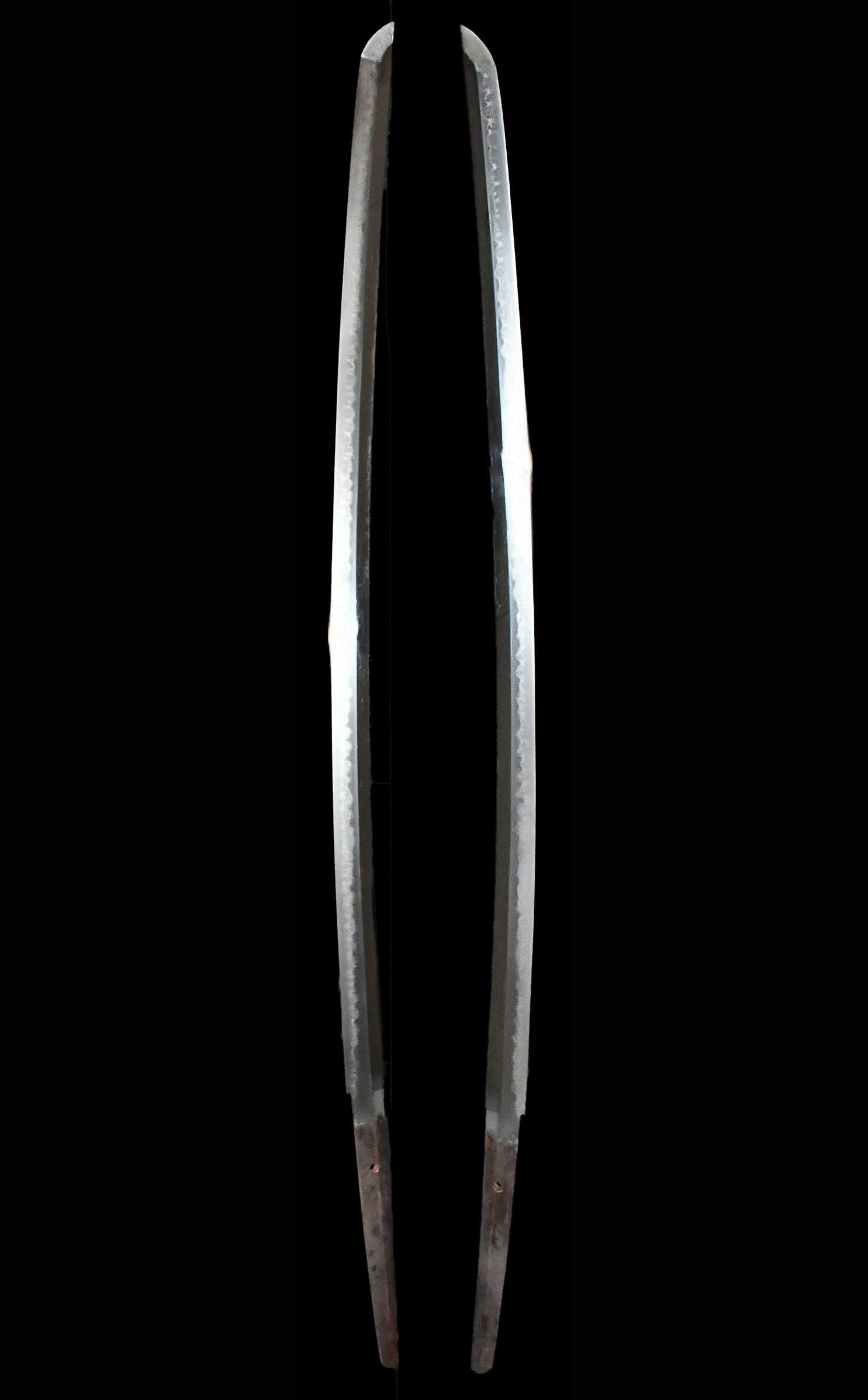
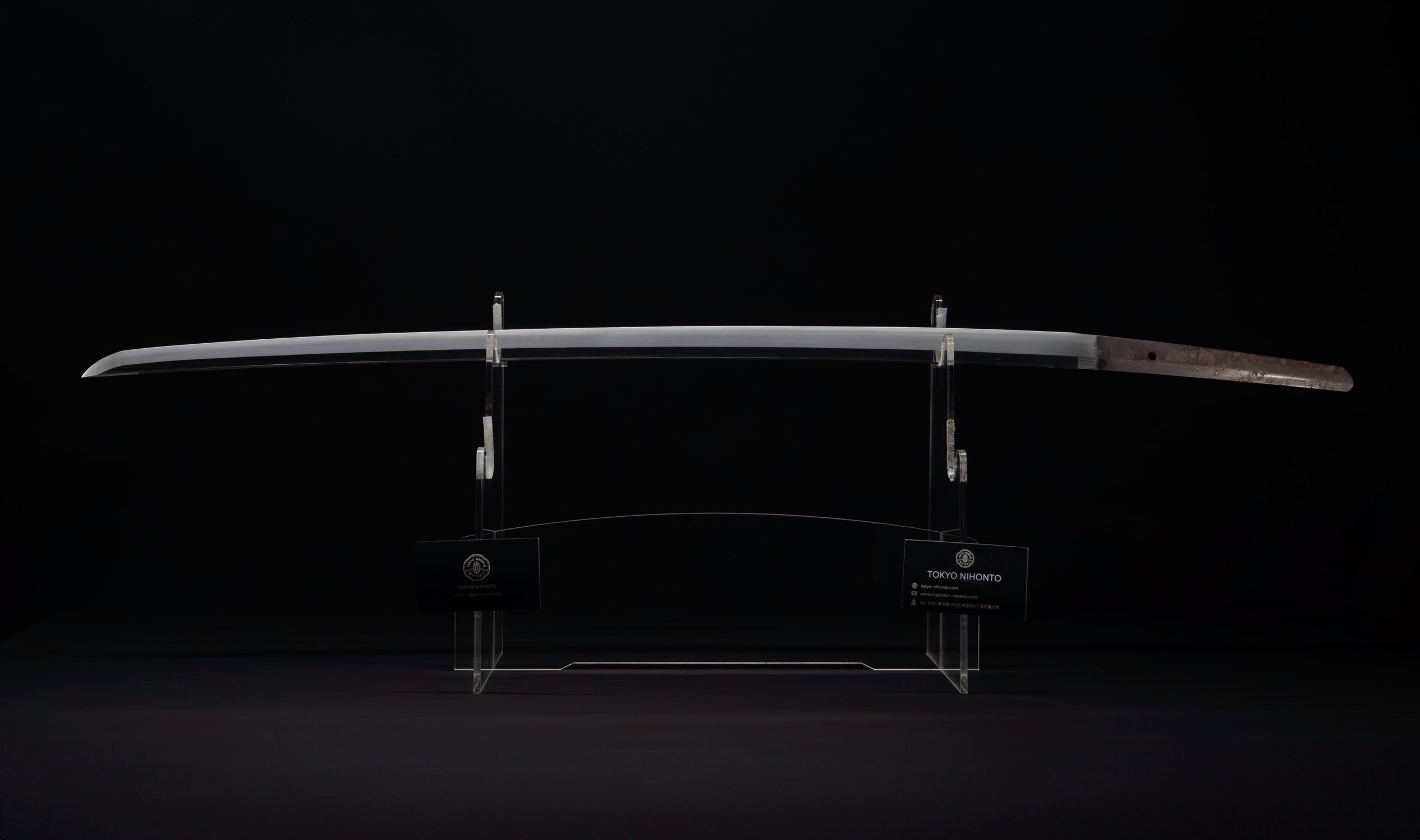
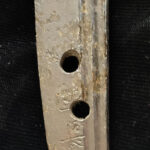
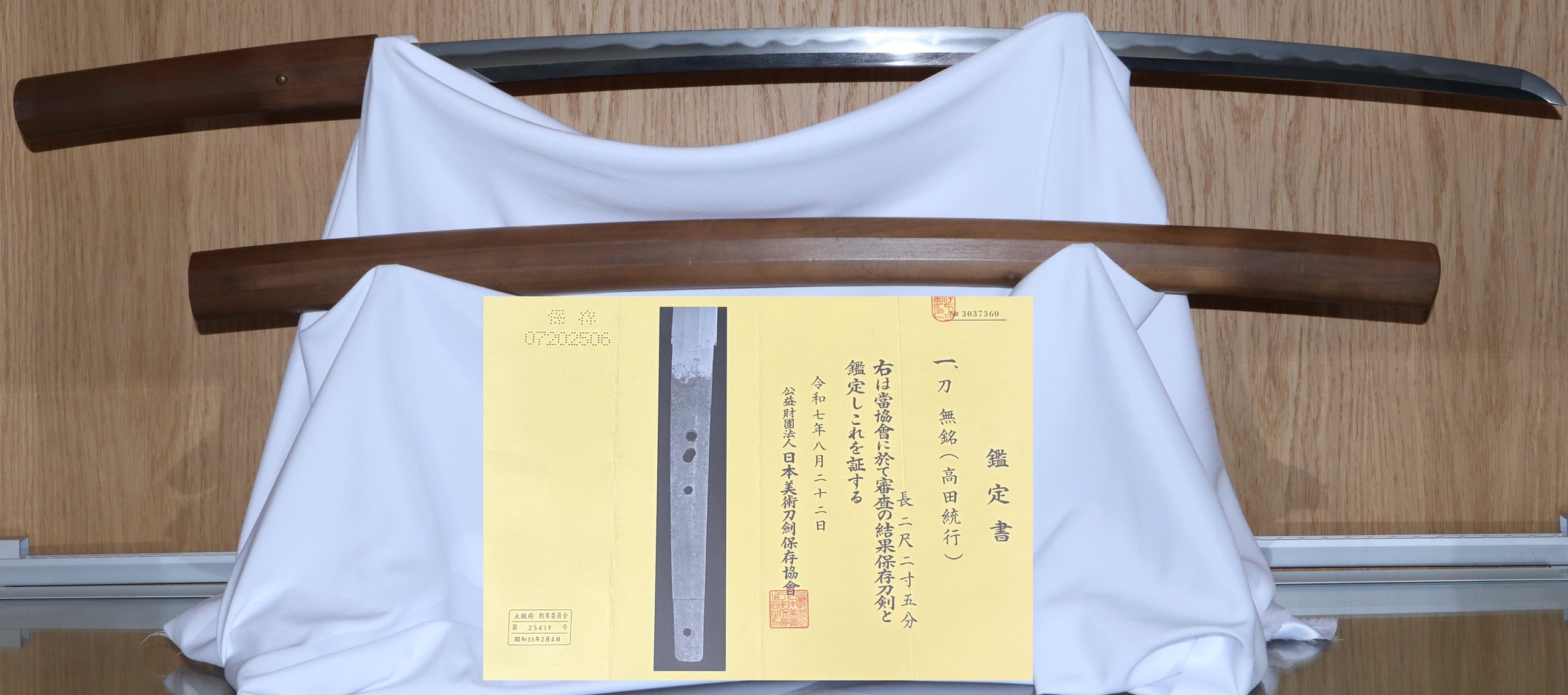
A dated Genna 2 (1616), second month, on an auspicious day, signed Fujiwara Kunifusa in four bold characters, is the fixed point of this smith's record. From it the published sources read the rest of his work, for a sword by the hand carrying that date survives and its manner of signing accords with the other blades, so that they can be appraised against it as the work of the first generation. Kunifusa was a man of Uwajima in Iyo Province, common name Ono Koichi, and the published commentary states plainly that he studied under Shigemasa of Takada in Bungo, Kunifusa wa Ono Koichi to ii Bungo Takada Shigemasa no deshi de Iyo no Uwajima no junin. In the third month of Genna 1 (1615) he was taken into the service of Date Hidemune and settled at Uwajima, where his line afterward flourished and the name continued through the period and on into the era. He is the Yoshu Kunifusa, a Takada-trained smith working at the very opening of the period, whose blades the has recognized five times at the level.
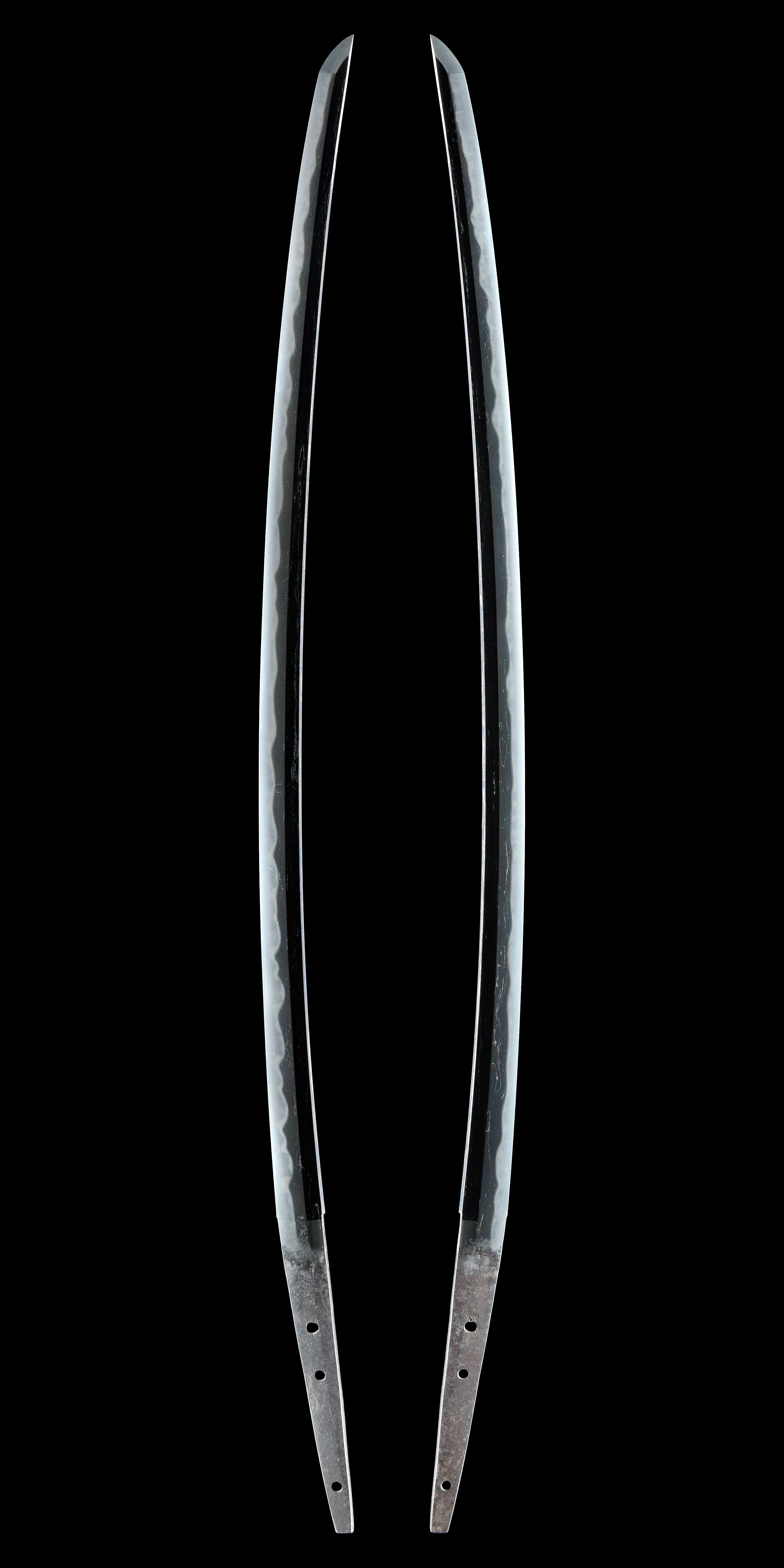
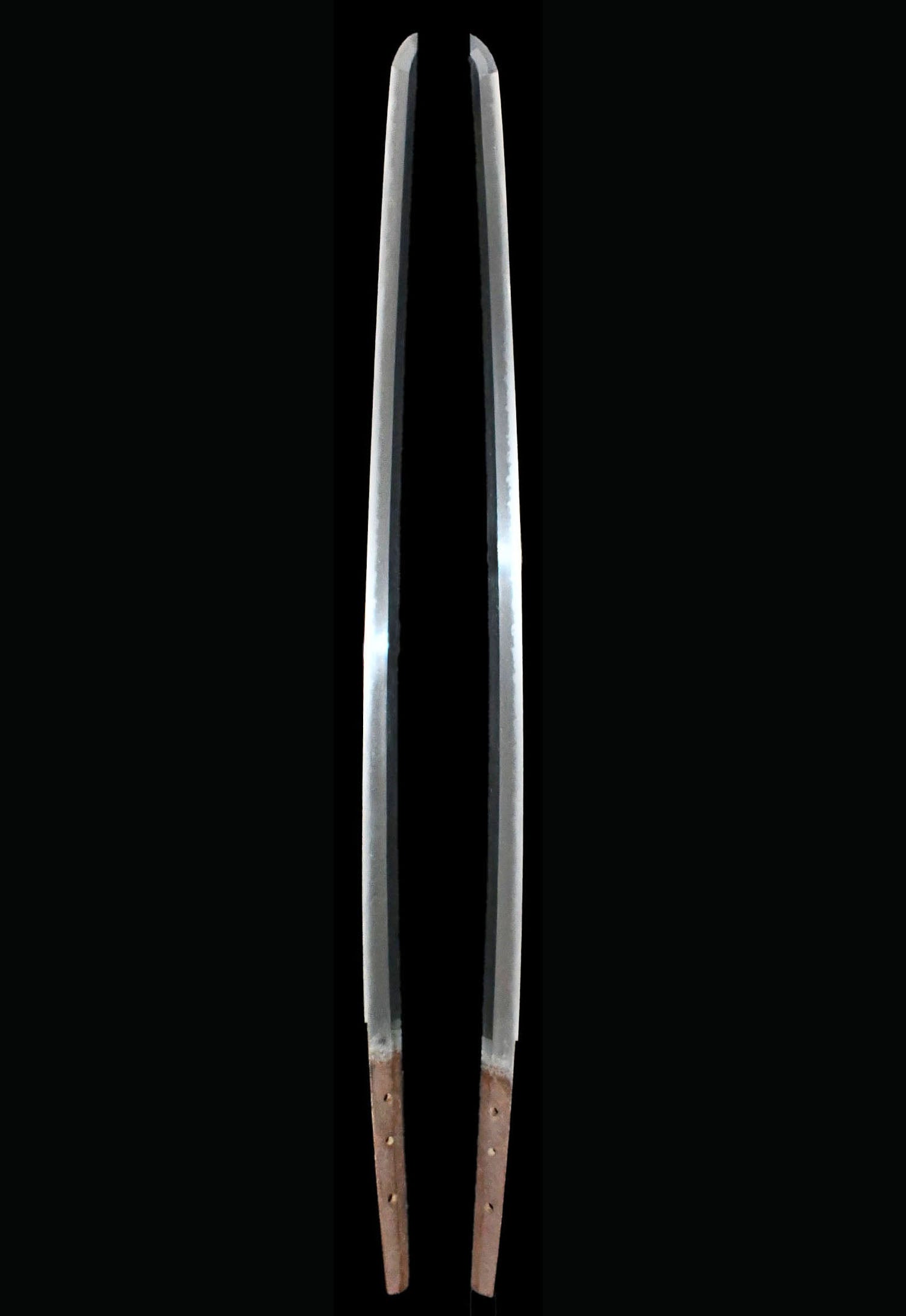
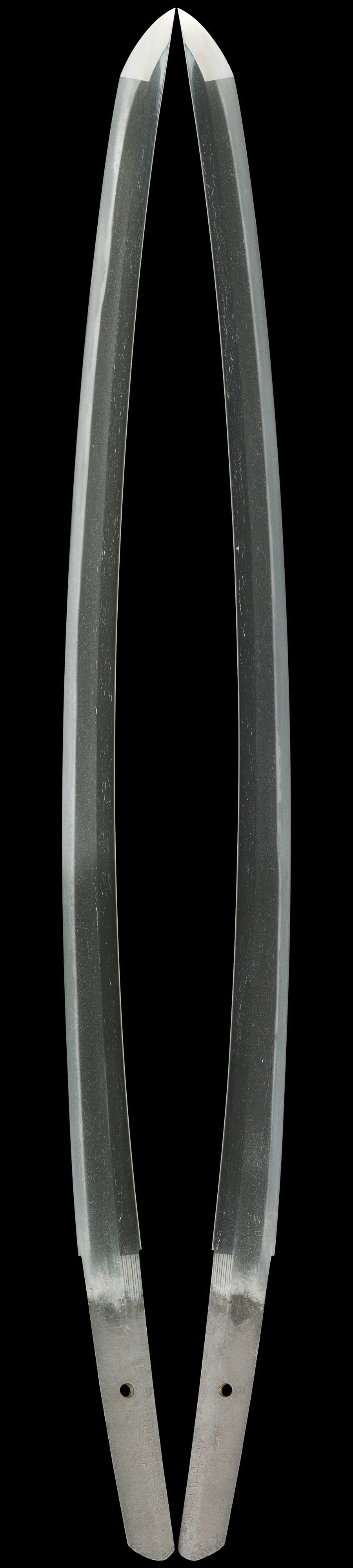
The hand that runs through those blades is a Keicho- one carried in a flavor. Over a wide- body ending in a chu- to he forges an mixed with that stands somewhat, the grain rising rather than sinking, with gathering well across it and entering. Against that he tempers a base into which are mixed, with - and playing in the band, the deep and the clear, the drawn bright. The runs straight into a and sweeps into at the tip, at times rising in before it turns back. His signature is part of the recognition as much as the steel: a large two-character Kunifusa cut in thick chisel strokes below the on an tang, with the file marks bold , while four-character Fujiwara Kunifusa and a long residence signature also occur. The published sources call a blade in this manner well shown and of good workmanship, Kunifusa tokui no sakufu wo shimeshite, the favored manner of the smith.
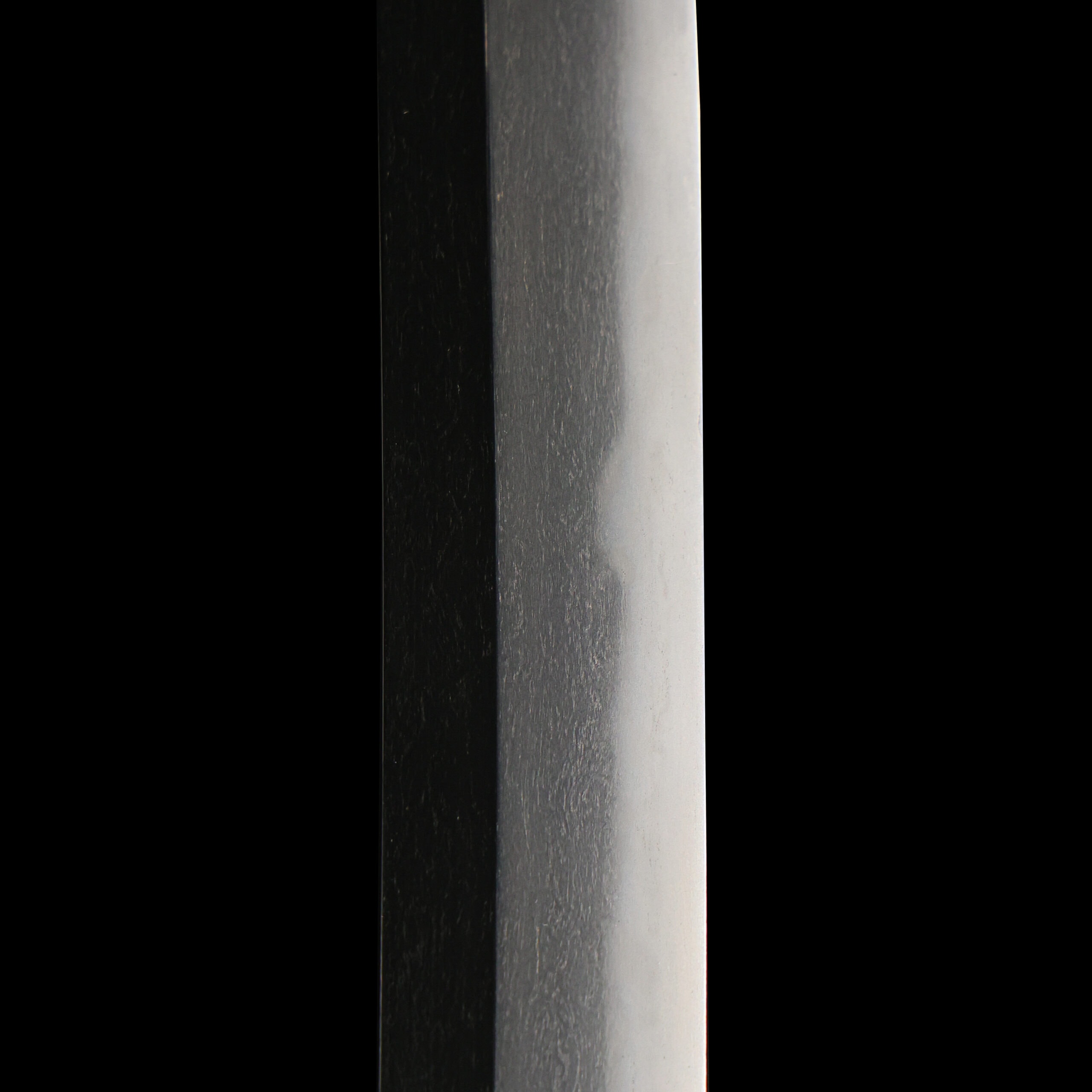
The is where his lean is read first. It is an that tends to , the standing, -mixed grain catching thickly and threaded with , on one early described as somewhat rough, , the open, lively surface of a Keicho- forge rather than the tight of a or Yamashiro hand. The temper above it is restrained rather than flamboyant: a shallow base carrying , with and , and well adhering, the band kept bright and clear where his finest work is reached. The published sources name the result a typical Keicho- , tenkeiteki na Keicho- no , both and judged well made, and on his best blade they reach for a stronger word. His is a quiet feature, with , occasionally pointed in feeling on the reverse, never a dramatic turnback, and it follows the temper beneath it rather than asserting a manner of its own.
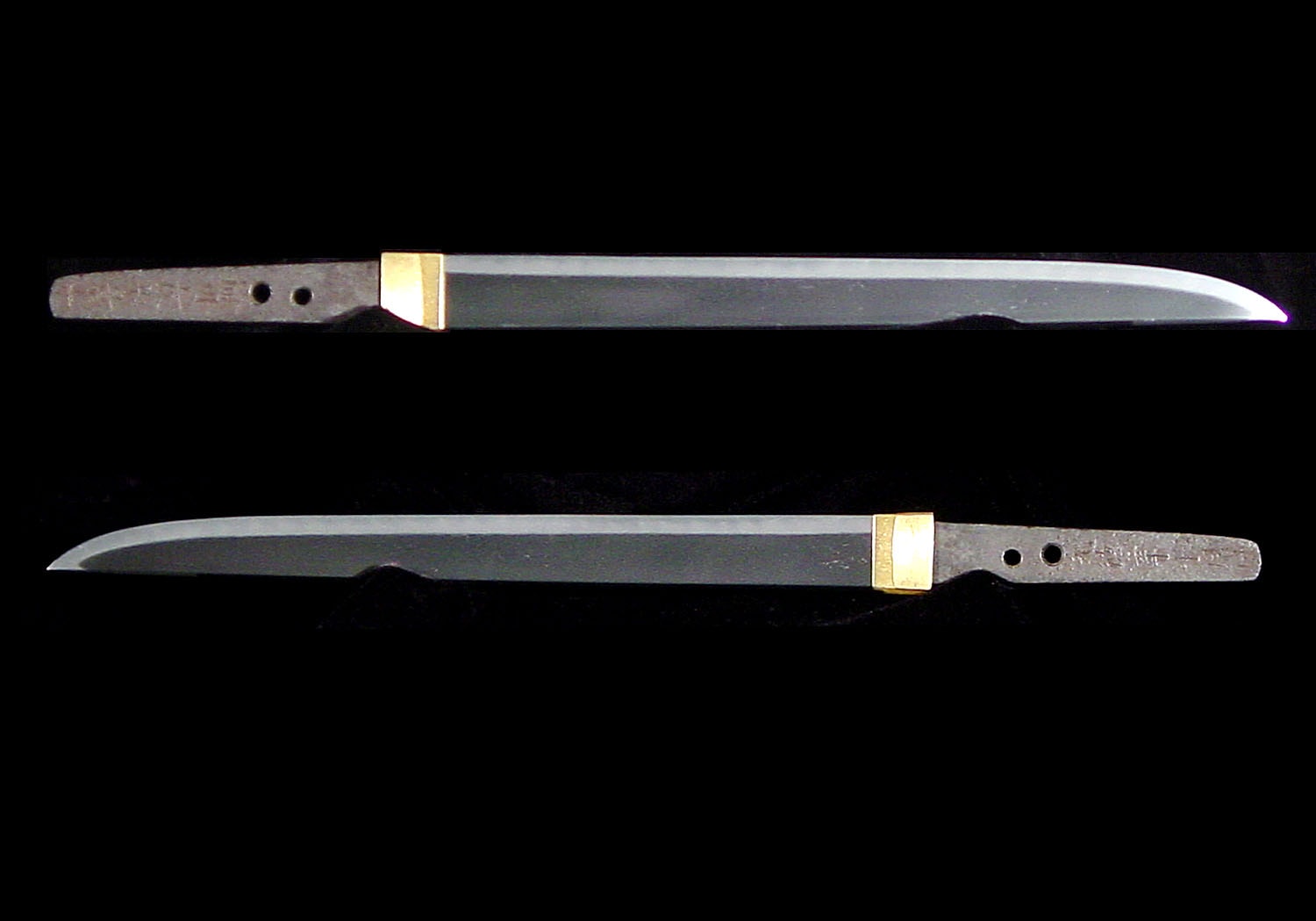
The five designated blades fall into registers that show the one manner across different shapes. Three are , broad and deeply curved, that present his prime hand most fully, the standing and temper running straight and bright. One is a , wide and with deep , on which the stands and flows into toward the , the temper a tending in places toward with the here sunken rather than bright, the hand worked in the - format. The fifth, and the one the published sources single out, is a , on the and on the , bearing a long residence signature, Yoshu Uwajima Fujiwara Kunifusa. On it the is forged tight, the minute and thick with fine mixed in, and the temper opens with a long -like in the lower half before rising into a with large above, deep along the , the well adhering, bright and clear.
What the published commentary returns to, blade after blade, is the question of his lineage rather than any borrowed comparison of his steel. His forging, the finish of his and the manner of his signature all show features in the style, and because Kunitoku and Kuninori of the Kunihiro line are recorded forging in the province of Iyo, the sources suppose that Kunifusa had a deep connection with the group, and judge that a theory can be sustained, setsu mo naritatsu. He is thus a doubly placed smith: trained by descent in the Bungo Takada school, whose and the older texts note often resemble other traditions, yet working in a manner the reads as closer to Kunihiro's pupils than to the Bungo hand. What sets his own blades apart within that crossing is grounded in their own description, the standing with its and bright , not in any feature asserted of the schools he stands between.
The connoisseurship around Kunifusa is that of a capable provincial master rather than a celebrated one. The reference texts place him at three hundred points in the Toko Taikan, the assessment of a collectible smith well below the first rank of the age, and he holds no National Treasures, no Important Cultural Properties and no . His designated record is five blades, all at the level, and none of the five carries a recorded , so no provenance attaches to his name in this corpus and no museum or shrine is recorded among the holders. The blades that survive are the kind a patient collector may realistically encounter from time to time rather than a thing locked permanently out of reach, a healthy and capably made Keicho- work by the founder of the Iyo Uwajima Kunifusa line. The published sources call his good blades rare and sound in both and , chinpin demo aru, and on the long-signed they go further, naming it an outstanding piece among his works, dosaku-chu no kesshutsu shita dekibae, the high mark of a Takada-trained smith who carried a -flavored hand into Iyo at the dawn of the age.