1800年前後、水心子正秀は著述をもって、鍛刀は古作の法に立ち返るべしと説いた。復古刀の運動である。最大の後継者直胤は、数百年絶えていた備前伝と相州伝を確信をもって再現した。
 NihontoWatchNihontoWatch
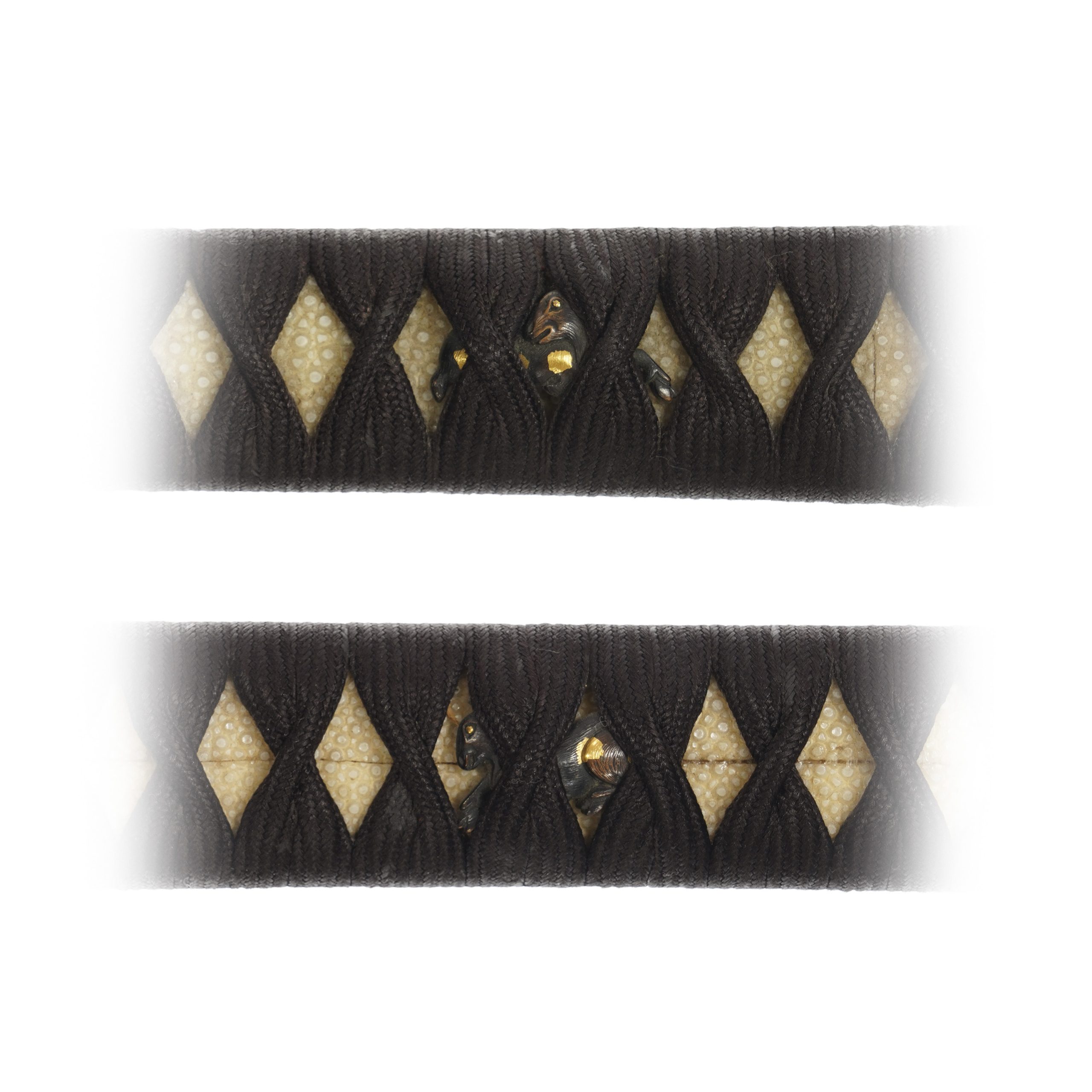
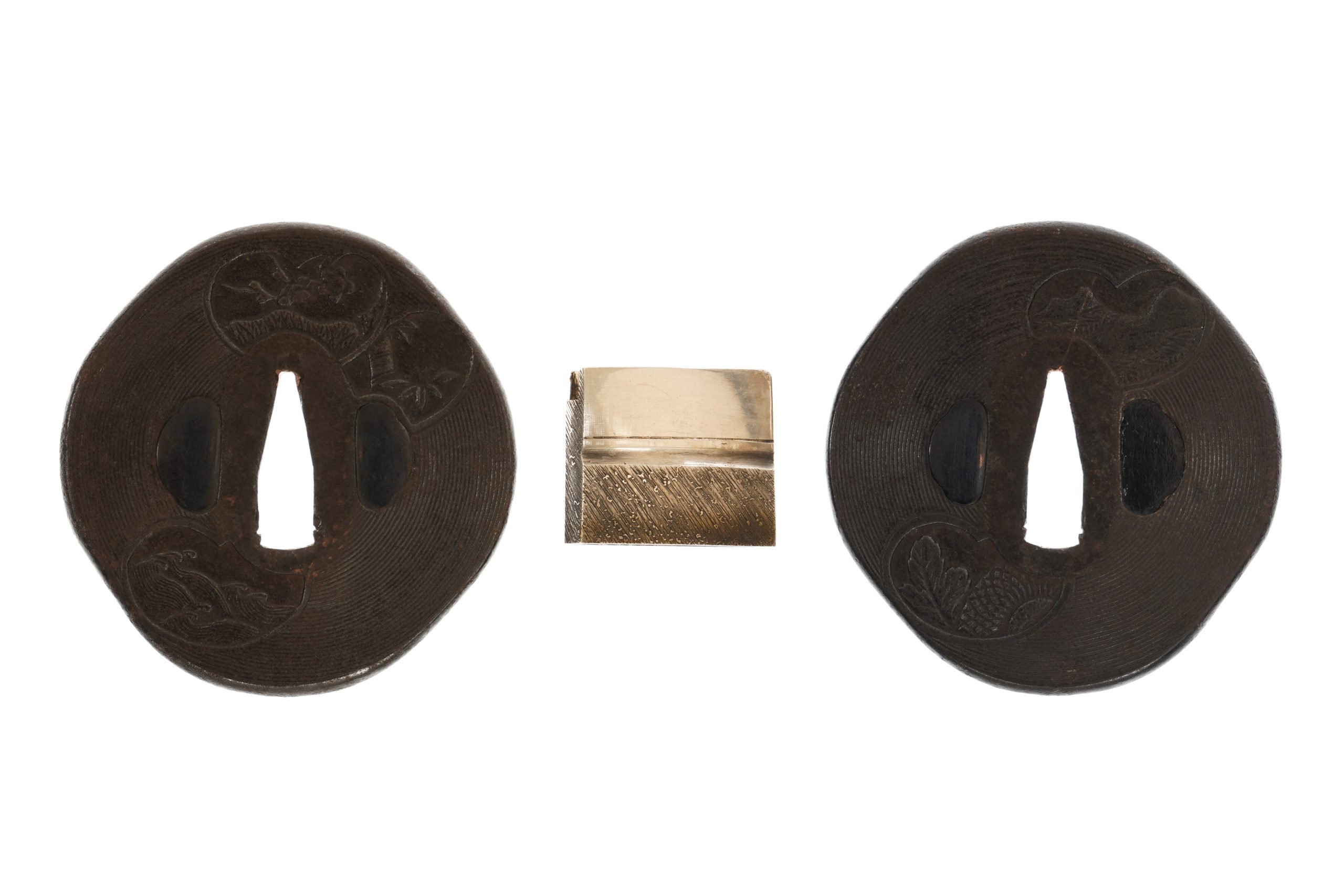
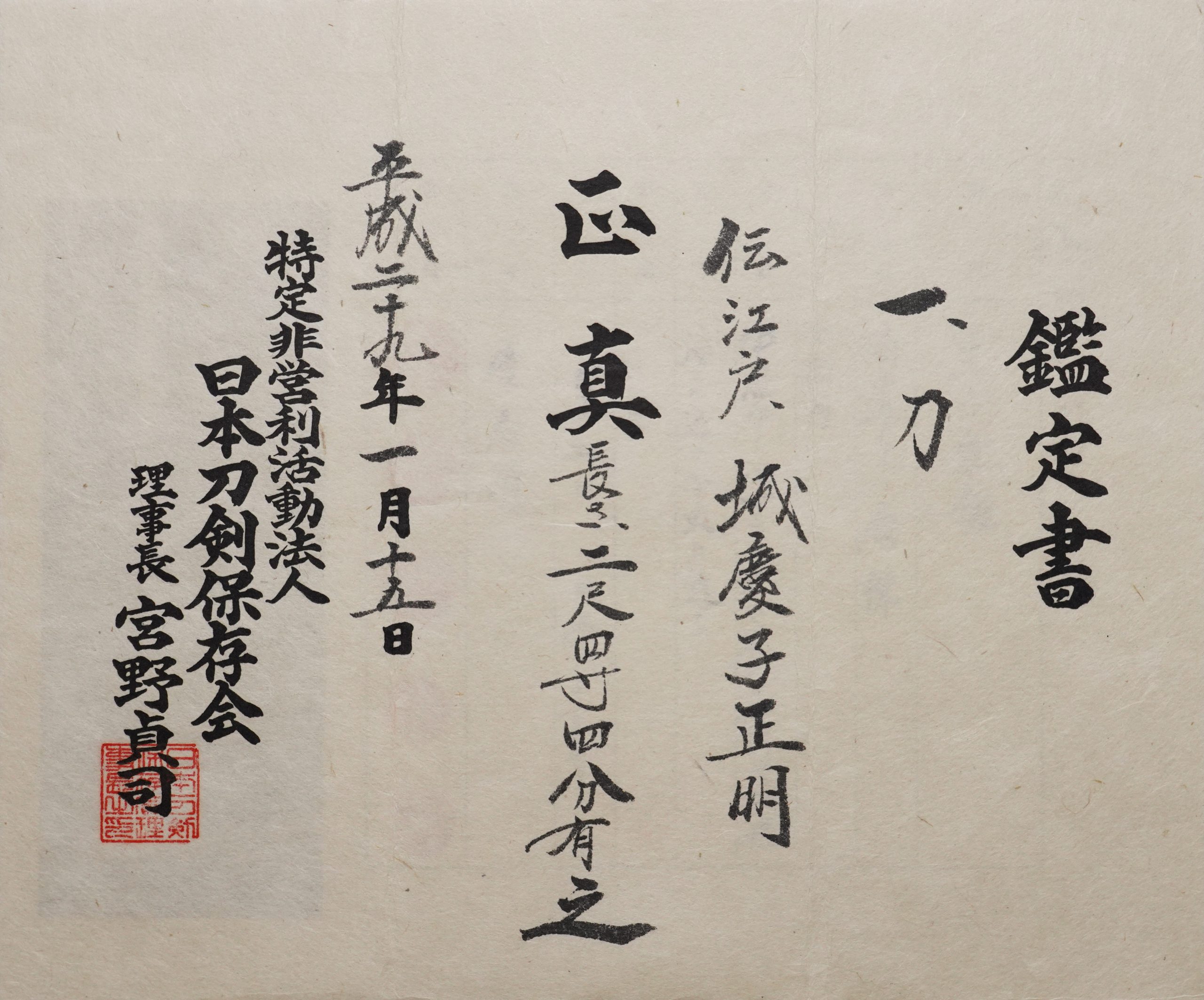
Swordsmith This blade is attributed to the work of Jyokeshi Masa-Aki(城慶子正明) according to NTHK-NPO that appraised this blade. The certificate mentioned it was approximately forged during the Keio era(1865-1868: Bakumatsu era) in Edo. Masa-Aki was active in sword-forging during the Kaei-early-Meiji era(1848-1870). Masa-Aki was born in Tsuyama city in Okayama prefecture in the 11th year of the Bunka era(1814). His real name was Takemura Tsunejiro(竹村恒次郎). It was often the case that a swordsmith’s maker’s name and his birth name were completely different. Masa-Aki moved to Edo city to become an apprentice of Hosokawa Masayoshi(細川正義), a renowned swordsmith at the end of the Edo period. Hosokawa Masayoshi had learned sword-forging techniques under the master, Suishinshi Masahide(水心子正秀), one of the most skilled swordsmiths in Samurai history. Masayoshi(Masa-Aki’s master) was extremely a skilled swordsmith and was good at forging blades with Choji Midare Hamon, which is the characteristic of Bizen sword-forging style(BIZEN DEN). Masa-Aki also mastered this excellent sword-forging technique from his master. Choji Midare Hamon is an Irregular wavy tempering line, and you can see it in this blade as well. Hosokawa Masayoshi served the Matsudaira clan in the Sakushu Tsuyama domain(today’s Okayama prefecture) while working in Edo city. And Masa-Aki took over his master’s position later in his career and served the clan, although he mainly lived in Edo city. The Background History Japan enjoyed a relatively peaceful time from the early Edo period to the mid-Edo period(the 1600s-1760s) because of the stable economy and the powerful government run by Tokugawa Shogun. Samurai didn’t have many opportunities to utilize his Katana sword in public or on battlefields during this time. Thus, they carried their swords more as a symbol of their social status. The demand for weapons decreased accordingly compared to the previous Warring state period called Sengoku Jidai. (1467-1600) However, toward the end of the Edo period(1764-1876), the Japanese sword’s role changed dramatically. With the poverty spreading in Japan, there were so many riots initiated by the civilians. Japanese sword started to play an essential role in maintaining public safety. Pressure from foreign countries to open Japanese borders also forced Samurai to order strong-looking swords to survive this tumultuous time. We believe many swordsmiths, including Masa-Aki, made great efforts to forged high-quality, practical blades for their masters to prepare for battles. This blade has a strong looking and must have been practical to use in that demanding time. There was a civil war between Tokugawa’s shogunate government and the new Meiji imperical government at the end of the Edo period. That means the original owner of this Katana might have seen the moment when Samurai’s life changed forever. After this battle, Tokugawa shogunate was ousted and the imperial government gained the control. Fuchi-Kashira The house and its surroundings are designed for this Fuchi Kashira. The ground is hit by the Nanako-Ji Tagane (魚子地鏨, chisel used for this technique). It makes delicate fish egg-shaped protrusions on the entire surface of the Fuchi Kashira and shows us the maker’s expert skill. An old type house is depicted for the Kashira part, and under the eaves is expressed at the Fuchi part. Some parts are colored with golden metal. Tsuka and Menuki Seeing from the gaps of the Tsukamiki thread, this Menuki’s motif might be a kind of animal. It is possibly the deer. The gold-colored metal is applied to the deer’s eyes. You would see that there are golden spot patterns on the body surface of these deers. The deer was thought a vehicle of the gods and regarded as a sacred animal. It is said that the deer pattern represents longevity and has been designed in paintings since ancient times. The combination of deers and autumn plants (for example, maple leaves) is often seen. Tsuba and Habaki This is an antique Tsuba made from iron. Thin lines are engraved on the surface. Several frames are arranged, and different motifs are depicted in each frame. On the front side, you would find the Ume (梅, Japanese apricot blossom), the Take (竹, bamboo), and the Nami (波, wave) patterns. Japanese apricot blossoms begin to bloom in winter that snow still covers its tree so that people thought this flower tells the arrival of spring. As it comes out in the cold season, it symbolizes the power of perseverance and vitality. Bamboos grow neatly towards the sky, and it has remarkable vitality so that this motif represents nobility and strength. Besides, the bamboo breaks straight, but its content is hollow; people thought it shows innocence. According to a Chinese legend, Houhou (鳳凰, Fenghuang) eats bamboo fruits; therefore, bamboo has been considered a sacred plant. Also, as it keeps its green color even in cold winter, people thought the bamboo pattern shows eternity and longevity. As waves’ movements continue endlessly, the wave pattern represents eternity, immortality, longevity, birth, etcetera. Also, since tides repeatedly change the shape and terrain of rocks, some people hoped for a strong will by using this motif. People used this pattern wishing for an indomitable spirit to rechallenge time and time without giving up. On the backside, the landscape and a kind of flower motifs are designed. By seeing this plant’s leaf shape, this flower might be a chrysanthemum. A long time ago, the chrysanthemum was used as a medicine for obtaining a long life, and it was brought to Japan from the Continent with this thought in the Nara period (648-781). Chrysanthemum is one of the flowers which symbolizes fall, and people appreciate it very much since ancient times. As its petals form radially, the chrysanthemum has been likened to the sun. That is why this flower pattern is treated as the symbol of perpetual youth and longevity or good health. Authentication Paper NTHK, also known as NPO Nihon Touken Hozon Kai, is the oldest organization for sword authentication of Japanese swords in modern times. It was established in 1889 during the post-Samurai era. They authenticated the blade on Jan 15th in the 29th year of Heisei (2017).

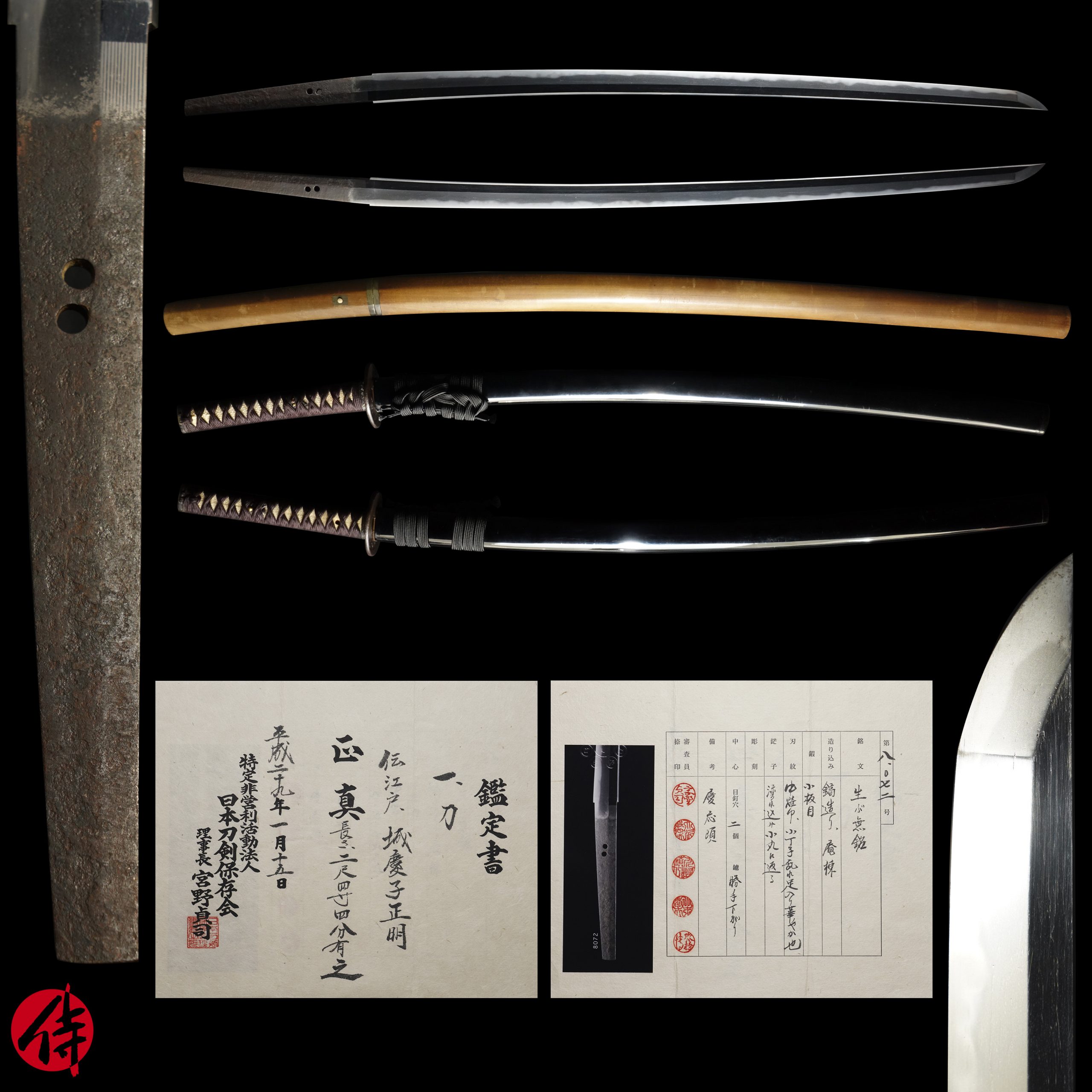
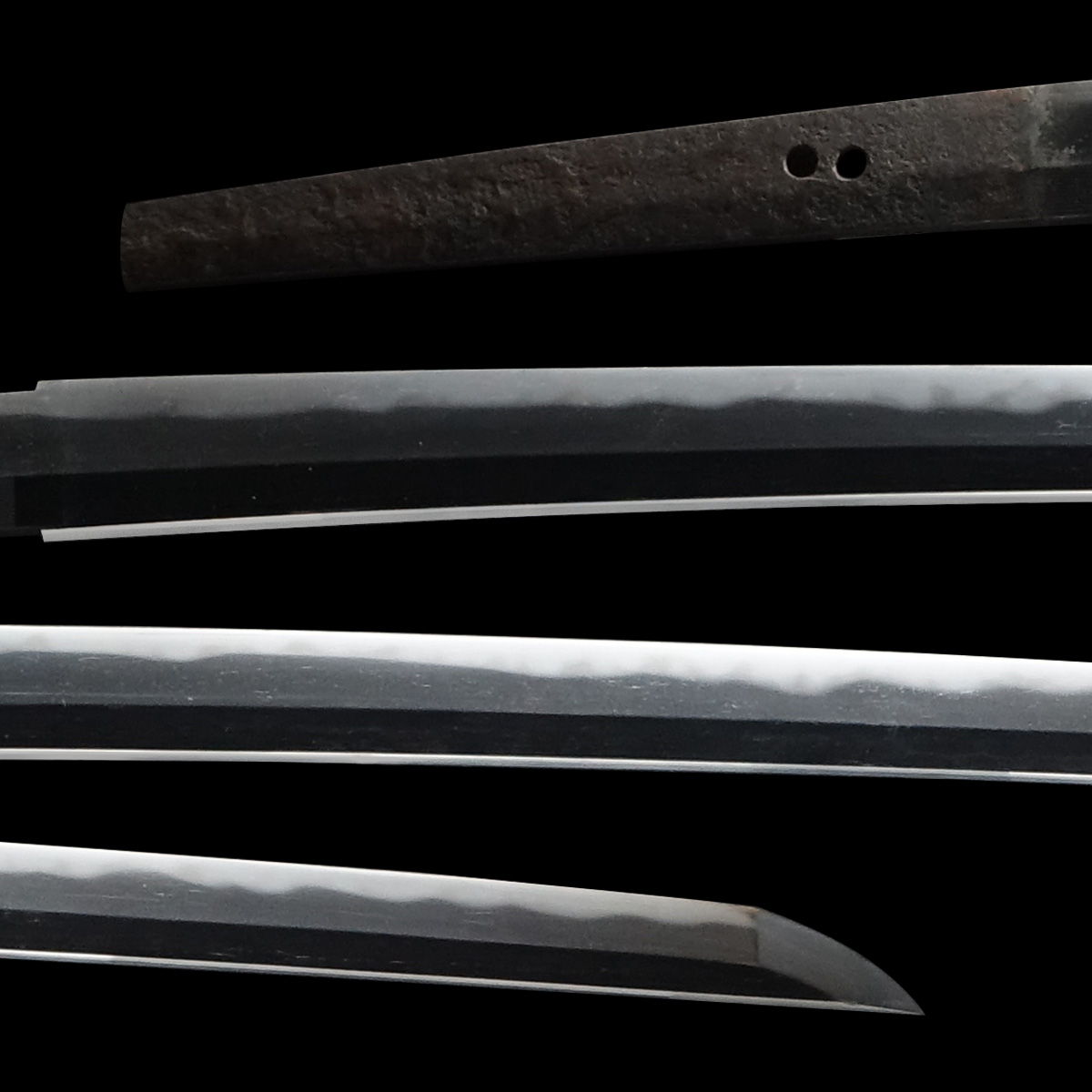
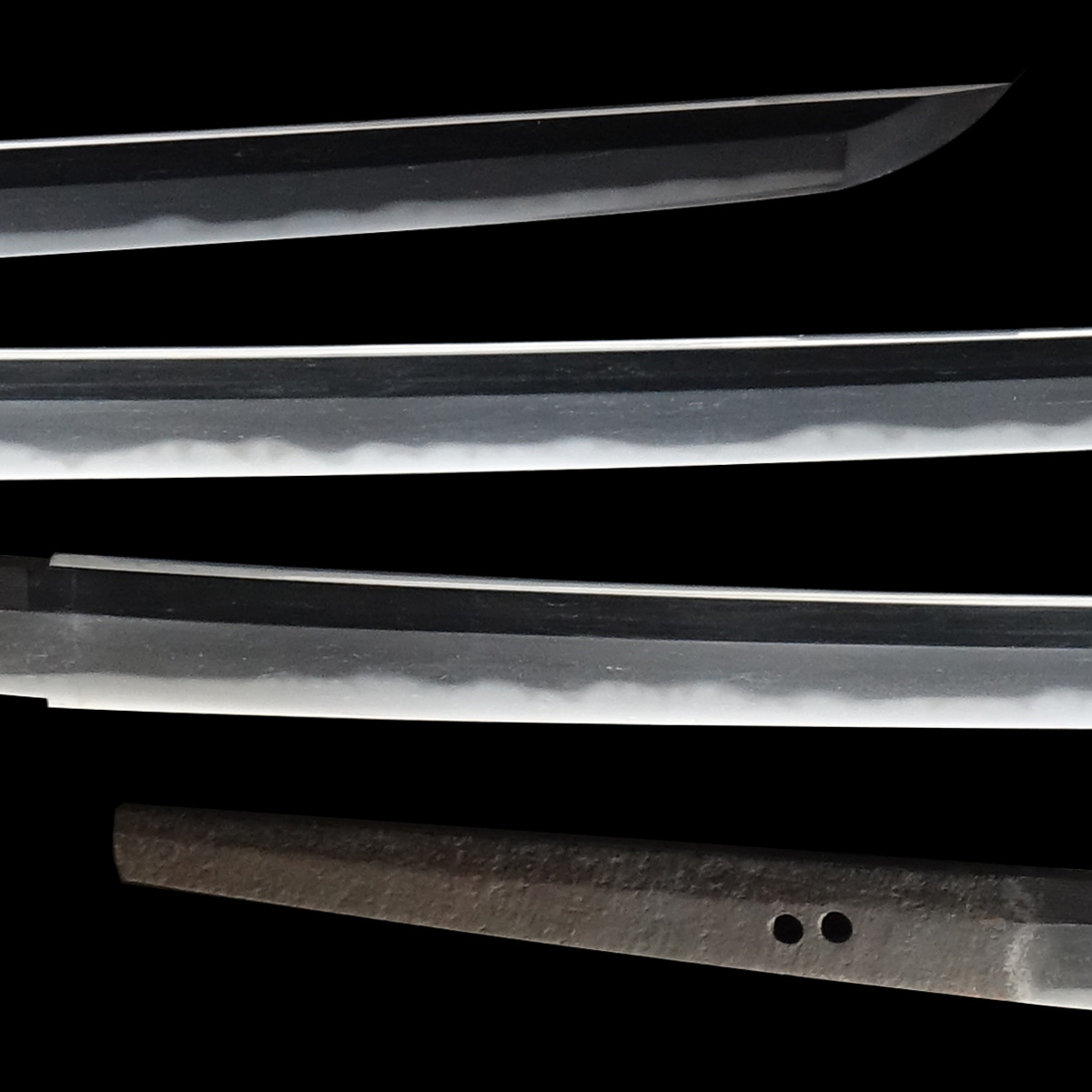
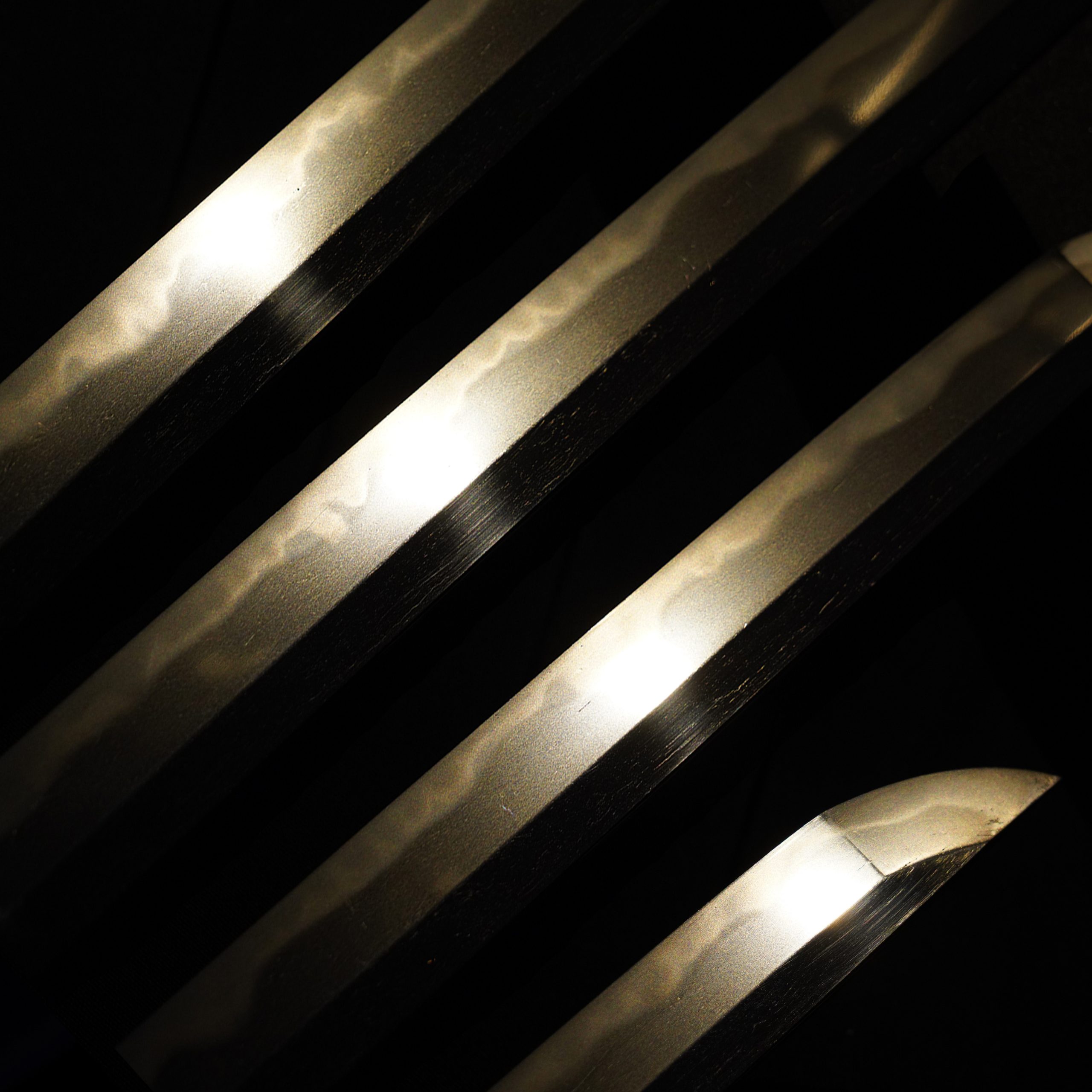
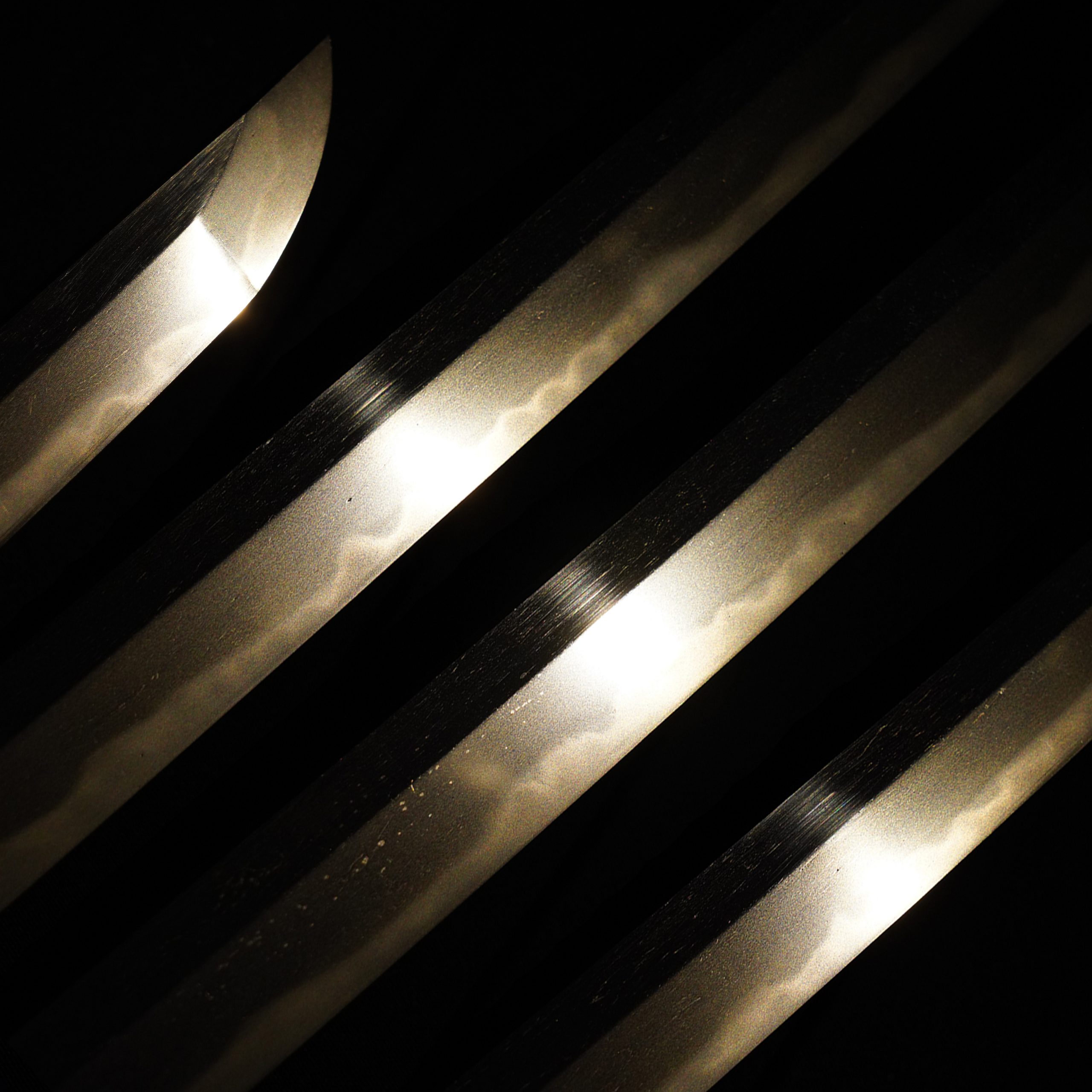
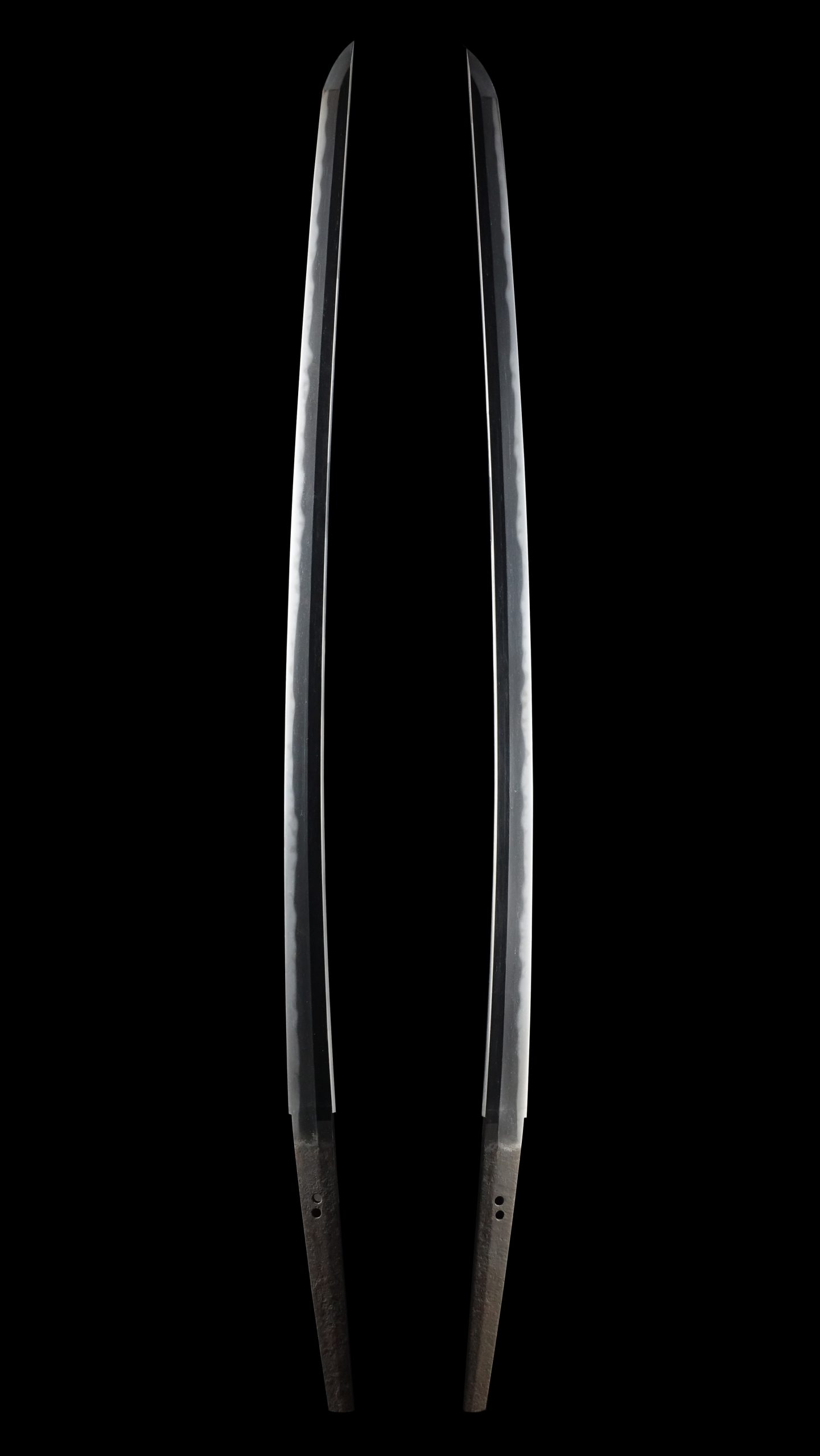
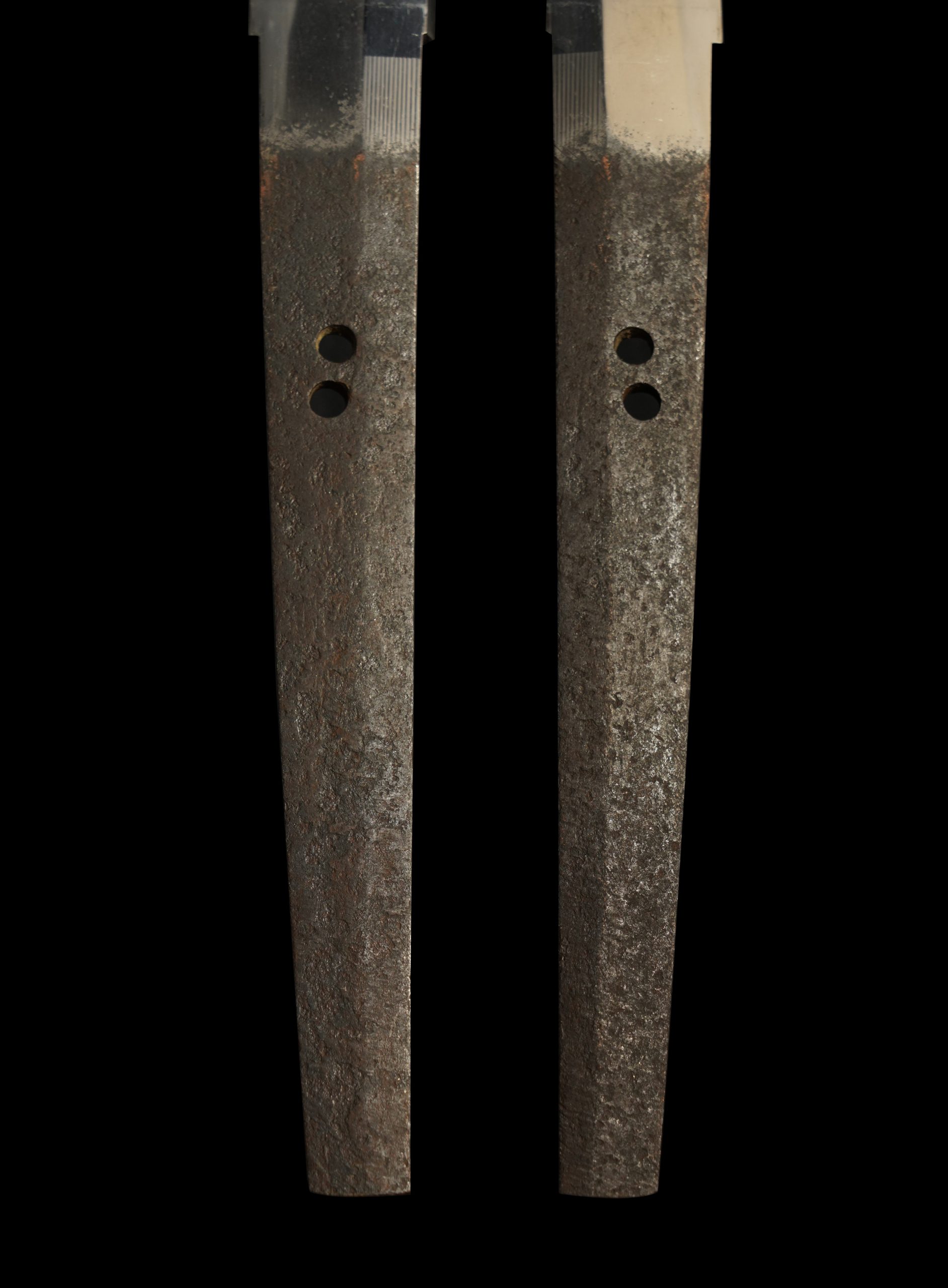
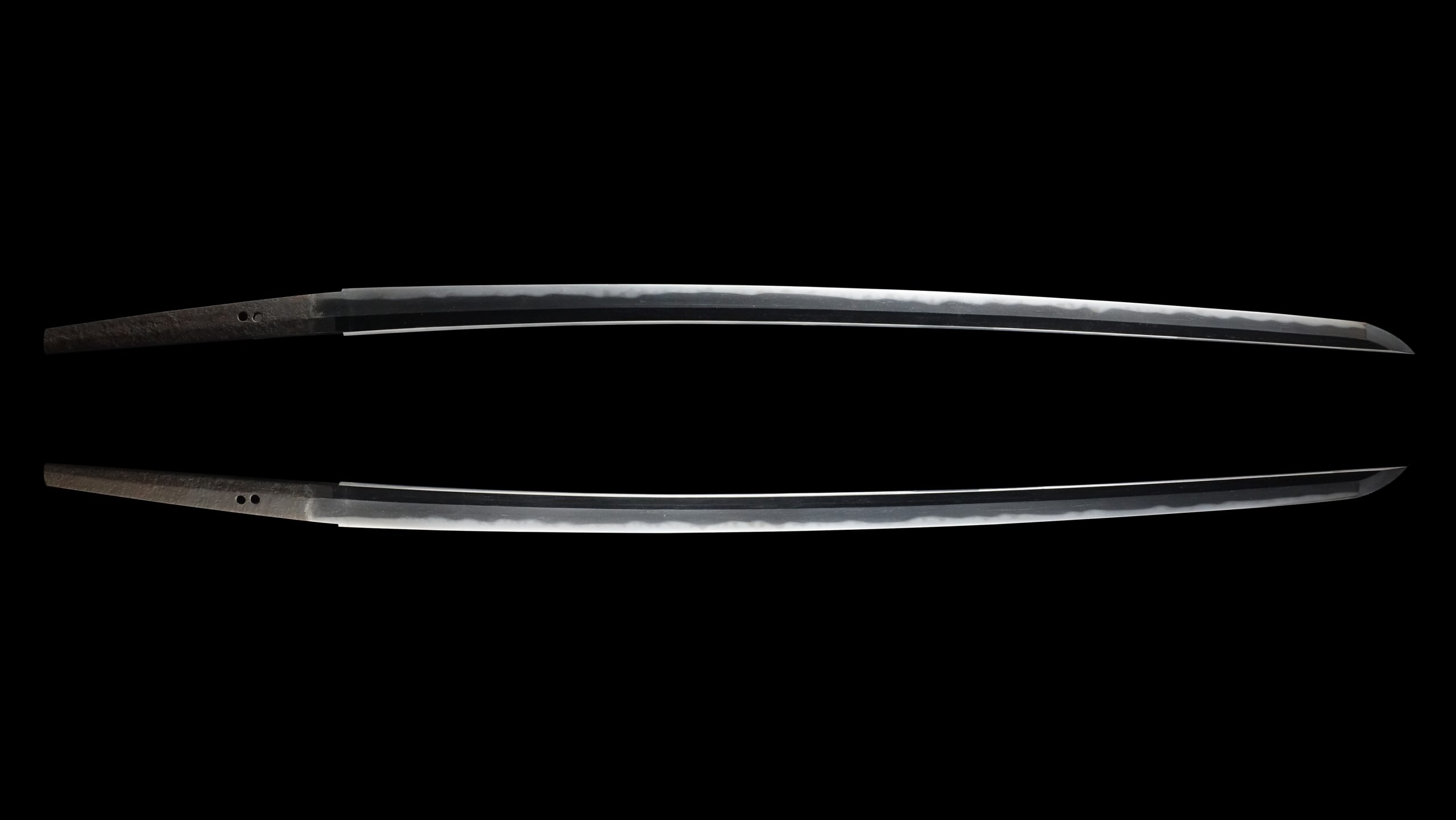
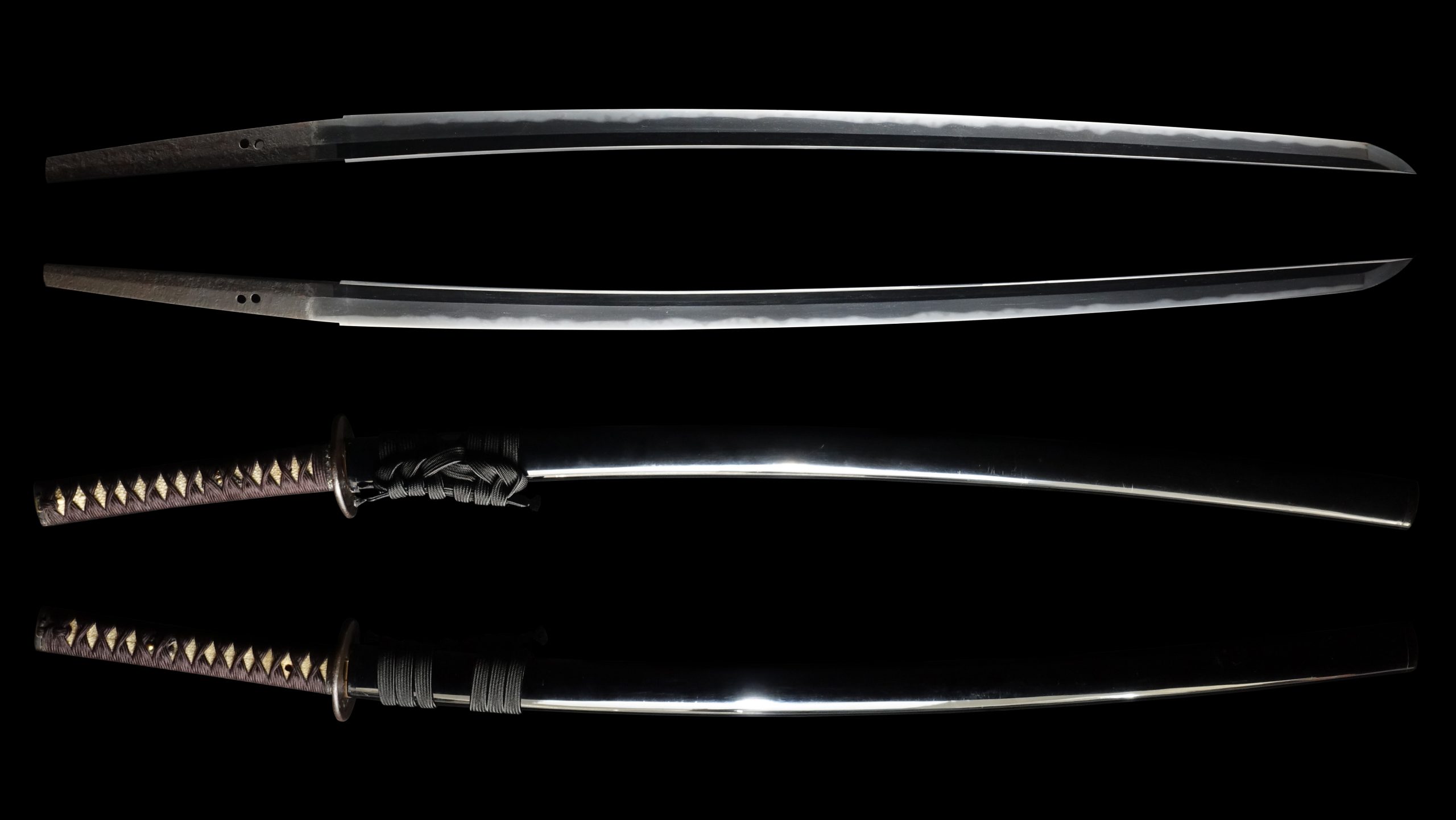
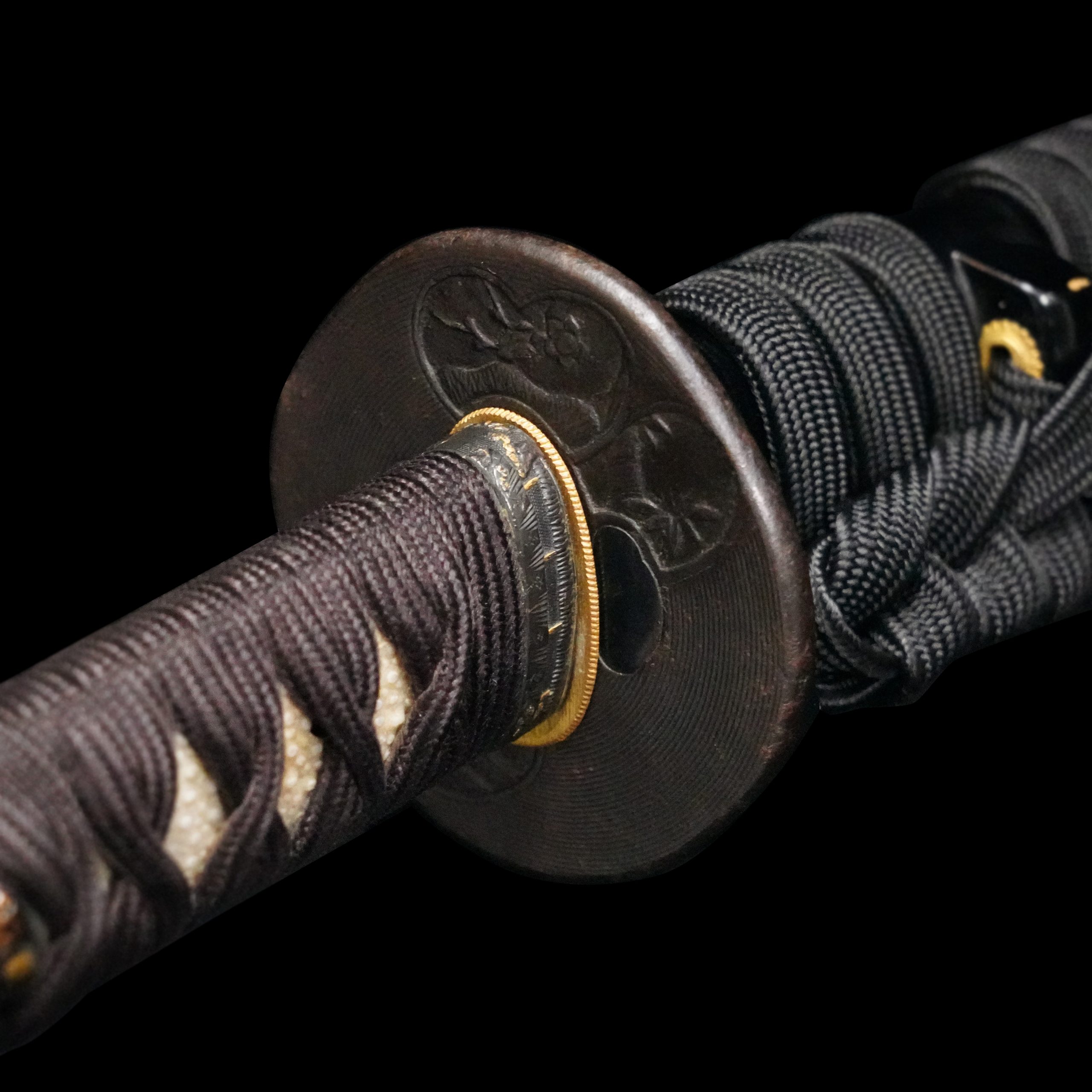
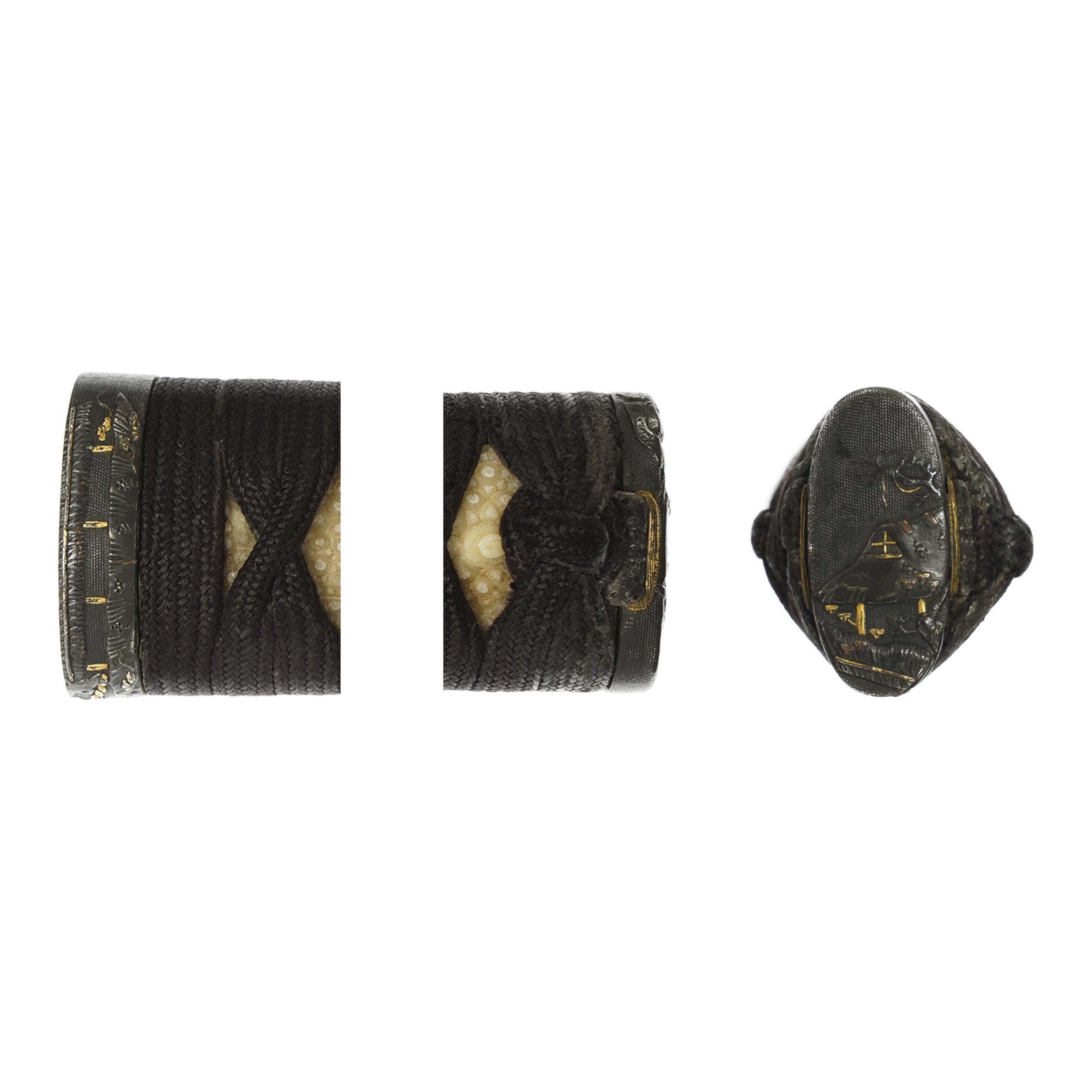
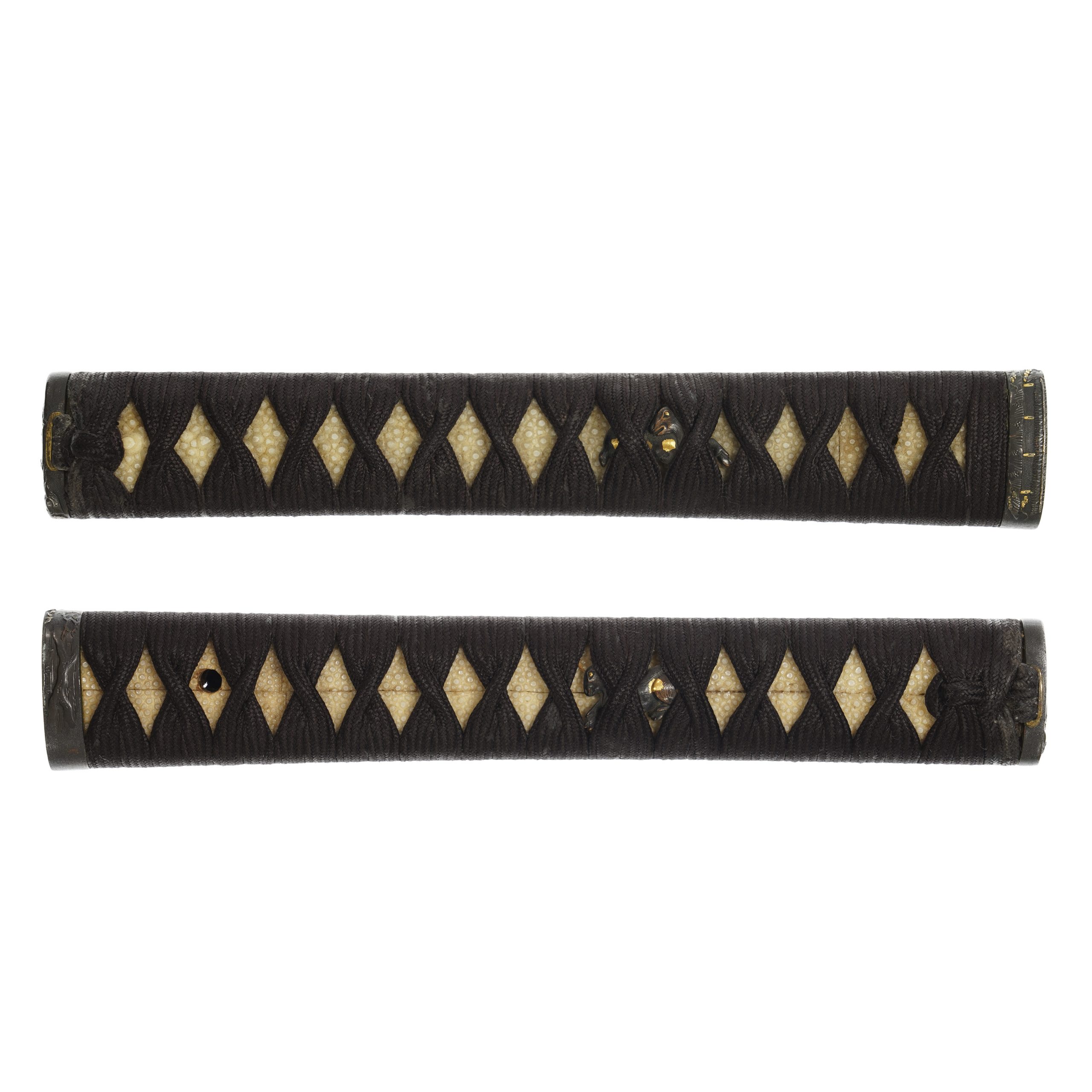
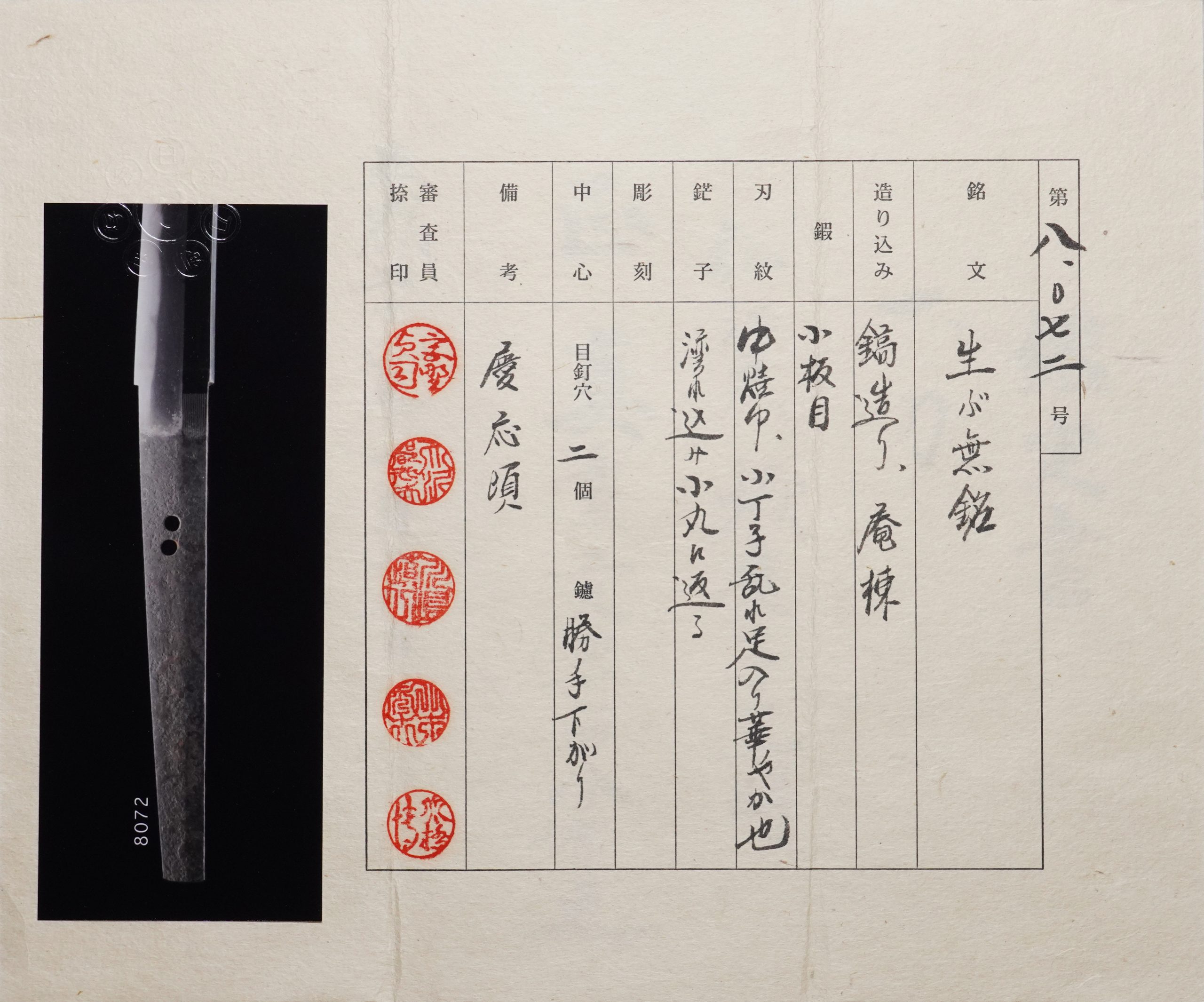
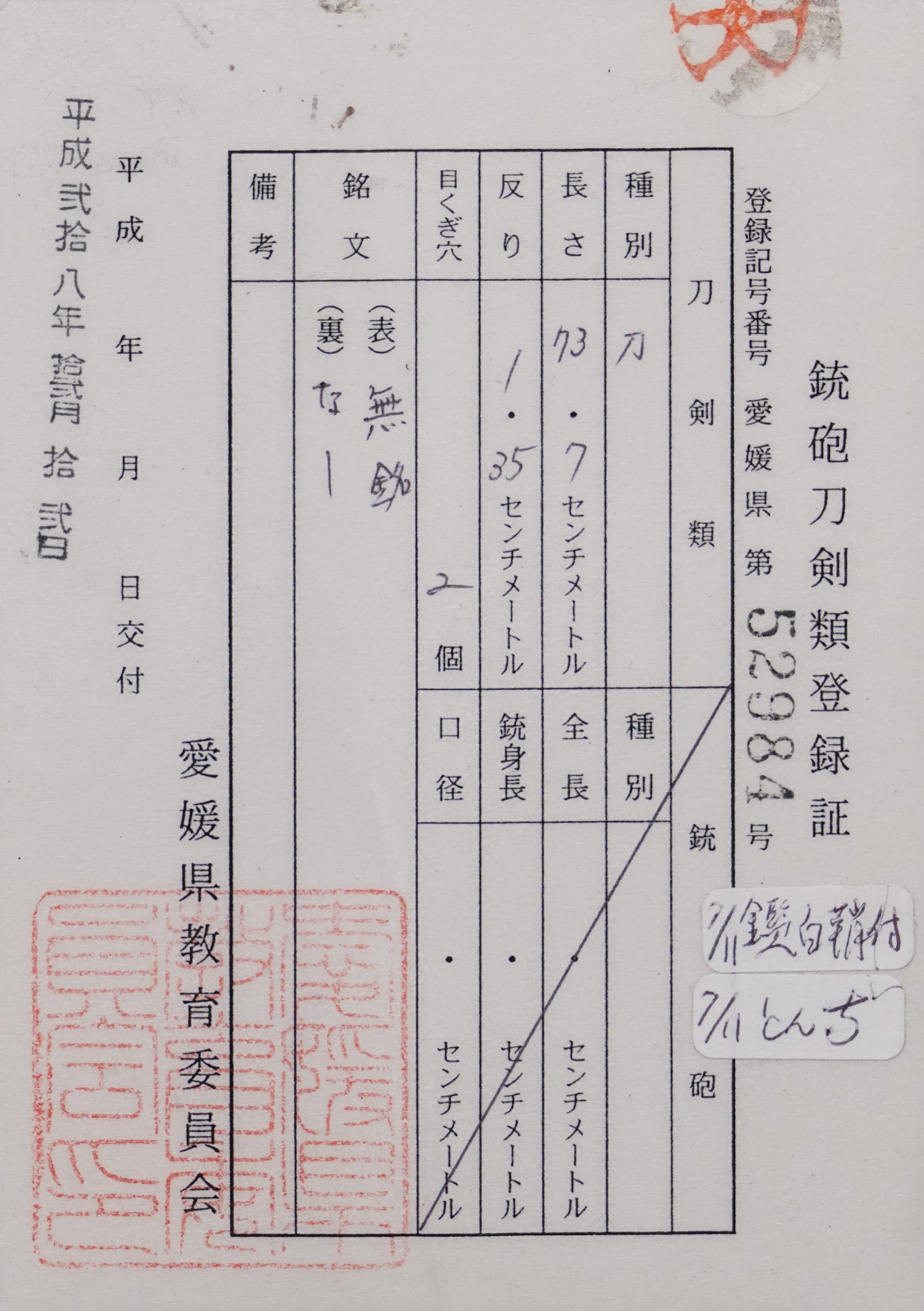
販売店の記載のまま
(翻訳なし) 店主の原文のまま表示しています。正確さの確認を通った翻訳のみを表示します。
新々刀 · 武蔵 · 1848-1861頃
藤代 上作 · 刀剣大鑑 上位60%
現在3点販売中
正明の位置づけを、日本刀全体および伝法・時代・時期ごとに示します。各区分(随一・屈指・有数・著名)は、日刀保および文化庁による指定に加え、三作や名物帳などの歴史的栄誉を加味したものです。
各項目を選ぶと評価方法が表示されます。
新々刀 · 武蔵
現在67点販売中
水心子正秀派は、十八世紀末から十九世紀初頭の江戸に興り、刀はすべて鎌倉の昔に復すべしとする復古刀運動を中核に据えた新々刀の一門である。開祖水心子正秀は、寛延三年に出羽国赤湯に川部儀八郎として生まれ[[c:1]]、武州下原の鍛冶吉英に学んだのち山形秋元家に仕え、のちに江戸浜町に移って約五十年に及ぶ作刀生活を送り、文政八年に七十六歳で歿した。彼は新々刀の祖と称され、古作の伝法を意図して甦らせることを唱えてその理論を世に広めたが、説明書は正秀自身の才のありかをむしろ壮年までの大坂写しに見いだす。この一門の物語で最も重きをなすのは、彼が江戸に糾合し育てた門人たちであろう。復古刀論を実地に示した第一の門人大慶直胤、二代正義細川守秀がその直下に立ち、さらに直胤の門から養子となった次郎太郎直勝、直胤の女婿と伝える水心子正次、正義の嫡子正守、米沢上杉家に仕えた長運斎綱俊、水戸藩工直江助政が連なって、出羽・江戸を中心に各藩へと広がった。 この一門を貫く共通の語法は、古刀各伝の意図的な復興にある。よく約んだ無地風に近い小板目に地沸を厚くつけ、その地の上に相州伝ののたれ・互の目、あるいは備前伝の丁子・互の目を焼くのが基調で、技術論的かつ教導的な性格がこれを支える。正秀の典型は津田助広に私淑した大坂写しの濤瀾乱れと井上真改風の広直刃にあり、地へこぼれる黒味がちの荒い沸が終始の手癖をなした。これに対して門人たちは古備前への遡りをいっそう深め、新々刀には本来失われた映りを意図して甦らせた。直胤はよくつんだ小板目に乱れ映りを鮮明に立て、後期長船の逆がかりを示す丁子乱れを焼いてこれを得意とし、説明書はその丁子乱れの巧みさを新々刀第一と評する。直勝は兼光に範をとった片落ち互の目を主体に、直胤よりも豪壮な姿と低く静かな焼きで古調を醸し、正次と正守はともに直胤・正義の二伝を忠実に承けて相州伝と備前伝を均しく再現し、綱俊は丁子に互の目を交えた備前伝を主調とした。一方で正秀みずからの備前伝・相州伝は終始焼刃が浅く荒い沸を交え、説明書はその技が門人直胤に及ばないと明記する。差異は資料の支持する範囲で明瞭で、直胤の備前・相州の両伝、直勝の長船写しに見る逆がかりと大杢目、助政の真改風直刃に偏した作域がそれぞれを分かつ。 鑑定の勘所は、まずこの意図的な映りと逆がかりに置かれる。明るい乱れ映りと角互の目を伴う逆がかりの丁子は、映りも逆がかりも持たぬ一般の新々刀から備前伝を分かち、相州伝は独特の渦巻肌と叢づき縞がかる沸の働きによって示される。位列としては正秀を上々作、直胤を最上作の在銘の大名跡とし、正義に次ぐ正守、綱俊、助政らがこれに続く。この一門は在銘・有年紀の作を数多く遺したため、その鑑定の問題は極めの難ではなくむしろ系統内の位置にあり、年ごとに変化する銘がその発展を正確に辿らせる。伝来は真田家伝来の大小や本間による御物台帳に所載の御太刀の副作、各藩工としての藩命作にうかがわれ、正秀が向き直らせた江戸の作刀は直胤を介して直勝・正次らへ受け継がれ、兼光・景光をねらった長船復古として幕末の十九世紀作刀に広く及んだ。 詳しく見る →
新々刀 復古の運動
1800年前後、水心子正秀は著述をもって、鍛刀は古作の法に立ち返るべしと説いた。復古刀の運動である。最大の後継者直胤は、数百年絶えていた備前伝と相州伝を確信をもって再現した。
日本刀剣保存会の中心的な鑑定書で、相応の出来を備えた刀剣に発行されます。在銘作は銘の正真を、無銘作は審査員による刀工・流派の極めを示します。点数を記す詳細な審査表が付されます。
日本刀剣保存会は、日本美術刀剣保存協会(1948年設立)に先立つ1910年に創立された、日本で最も古い刀剣鑑定団体です。長く会を率いた会長の没後、日本刀剣保存会と特定非営利活動法人日本刀剣保存会の二つに分かれ、いずれも審査を続けています。刀剣に対する日本刀剣保存会の鑑定書は、点数と審査員の所見を併記する詳細な審査表が特徴です(刀装具の鑑定書に点数は付されません)。特に無銘作の極めに定評があります。
Returns/exchanges limited to defects caused by shipping (except willful misconduct or gross negligence by the company); customers must contact within 72 hours of receiving the product.