1800年前後、水心子正秀は著述をもって、鍛刀は古作の法に立ち返るべしと説いた。復古刀の運動である。最大の後継者直胤は、数百年絶えていた備前伝と相州伝を確信をもって再現した。
 NihontoWatchNihontoWatch
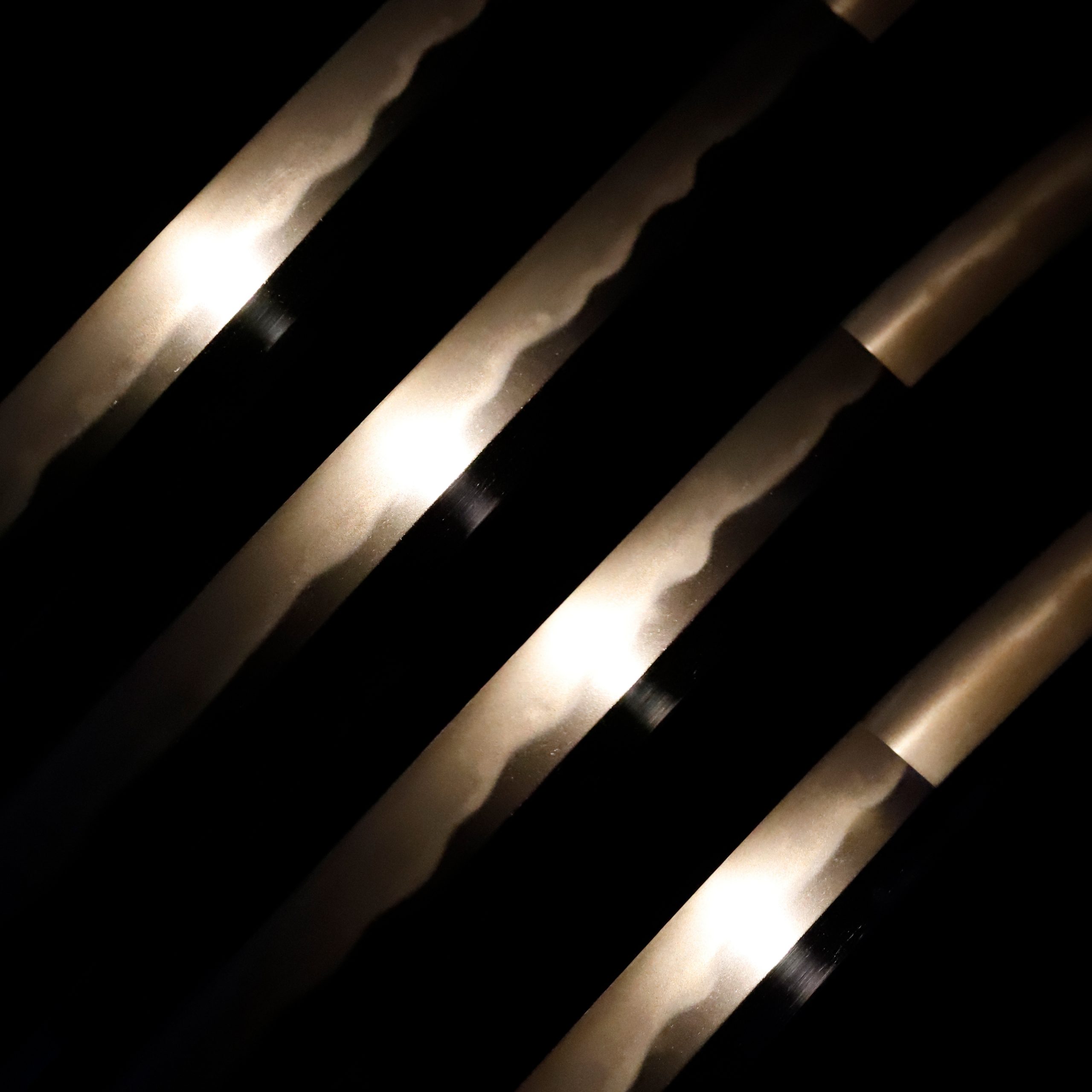
This blade was signed by Jyokeshi Masa-Aki(城慶子正明) in the first year of the Bunkyu era(1861: the end of the Edo period). He was active in sword forging during the Kaei-early Meiji era(1848-1870). Jyokeshi Masa-Aki also signed as Takemura Tsuneemon Minamoto Masa-Aki (竹村恒右衛門源正明). It is the case with this blade. Masa-Aki was born in Tsuyama city in Okayama prefecture in the 11th year of the Bunka era(1814). His real name was Takemura Tsunejiro(竹村恒次郎). It was often the case that a swordsmith’s maker’s name and his birth name were completely different. From a childhood, Masa-Aki got sword-forging training from Hosokawa Masayoshi, being his apprentice. Hosokawa Masayoshi(細川正義) is a renowned swordsmith at the end of the Edo period. Hosokawa Masayoshi had learned sword-forging techniques under the master, Suishinshi Masahide(水心子正秀), one of the most skilled swordsmiths in Samurai history. Masayoshi(Masa-Aki’s master) was extremely a skilled swordsmith, and he was good at forging blades with Choji Midare Hamon, which is the characteristic of the Bizen sword-forging style(BIZEN DEN). Masa-Aki also mastered this excellent sword-forging technique from his master. Choji Midare Hamon is an Irregular wavy tempering line, and you can see it in this blade as well. Most of Masa-Aki’s work reflects Bizen Den (One of the Five Japanese sword-forging traditions). Hosokawa Masayoshi(his master) and his son Mamori served the Matsudaira clan in the Sakushu Tsuyama domain(today’s Okayama prefecture). And Masa-Aki took over the position after they retired. He served the clan as a Hanko(藩工), who exclusively forged swords for a specific clan. He was also a Hanshi(藩士), who was a Samurai who worked under one clan or domain. Later on, Masa-Aki became an independent swordsmith in Edo city, being popular among high-class Samurai for his excellent craftsmanship. The signature also indicates that this blade was ordered by a Samurai. And, based on the fact that Masa-Aki was categorized as a top tier swordsmith, the person who ordered this blade must have been high-class. We believe Masa-Aki was inspired by the Nanbokucho style Okisaki blades when he created this work. Nanbokucho is the name of the period that lasted during 1337-1392. During this time, the Japanese imperial court was divided into north and south, fighting against each other. One of the most popular trends in Japanese swords back then was the Okisaki style, the strong-looking blade with a very long tip. Based on the look of this blade, Masa-Aki might have been inspired by this old style of swords. Many Japanese swordsmiths tried to recreate old-style swords from the previous era to improve their craftsmanship during the late Edo period. Masa-Aki is one of them. This blade is appraised as a Tokubetsu Hozon Token(特別保存刀剣) issued by NBTHK(Nihon Bijutsu Touken Hozon Kyokai:日本美術刀剣保存協会). Fuchi-Kashira Wild boars running in the bamboo groove are designed for this Fuchi Kashira. These motifs are colored with gold paint, and it remains in good condition. You could see tiny granular protrusions dots on the surface of this Fuchi Kashira. These dots were made by a type of chisel, and this decorative technique is called as the Nanako-Ji (魚子地) technique. In Japanese, there are expressions about wild boar. For example, the Inoshishi Musha (猪武者, Inoshisi is a Japanese name for the wild boar) means a Samurai who rushes without considering the circumstances of before and after. Or, the idiom Chototsu Moushin (猪突猛進) describes the figure of a reckless person who makes rapid progress toward the goal. When you hear it like this, you might get a strong impression that wild boar is a madcap animal. However, we can also interpret that this type of person could work hard on what he (or she) is aiming for. Also, in the war, it was necessary for Samurais to have the courage to get into the enemy’s land without regard for danger. So, the wild boars might have been applied to this Fuchi Kashira because its owner wanted to emulate the courage of wild boars. Tsuka and Menuki We believe it is the same motif of the Fuchi Kashira. That is, the wild boar. Their bodies have finished in glossy metal color (the color of its material), and their eyes are colored in gold. The former owner of this sword might have deeply cherished this brave animal motif. Tsuba and Habaki Oval-shaped Tsuba that has Kozuka and Kougai holes. On the front, you see a kind of fish-liked creature is designed. And it seems it bites roofing tiles. Seeing its figure, we think it is the Shachihoko (しゃちほこ). It is a decoration used for the roofs of castle towers and watchtowers. The Shachi (鯱) is an imaginary creature, and it is said it has a dragon or tiger’s head, and its body is a fish. Its tail bends toward the sky, and people associated its figure with the Hoko (鉾, an ancient form of Japanese long weapon). That is why this animal was named the Shachihoko. According to a theory, the Shachihoko would spit water out of its mouth when a building catches fire. Therefore, it has been put on the roof in many castles and temples in Japan. Since the fire was a big worry for wooden buildings, this Tsuba’s maker prayed for safety by applying such a design. Also, as we could find the mountain that looks like Mt. Fuji, there was probably an aim to give auspicious design for this work. Authentication Paper NBTHK TOKUBETSU Hozon Certificate for the blade (NO. 1013951) They authenticated the blade on August 28th in the second year of Reiwa (2020). They appraised it as Tokubetsu Hozon Touken, the blade especially worth preserving for Japanese society.

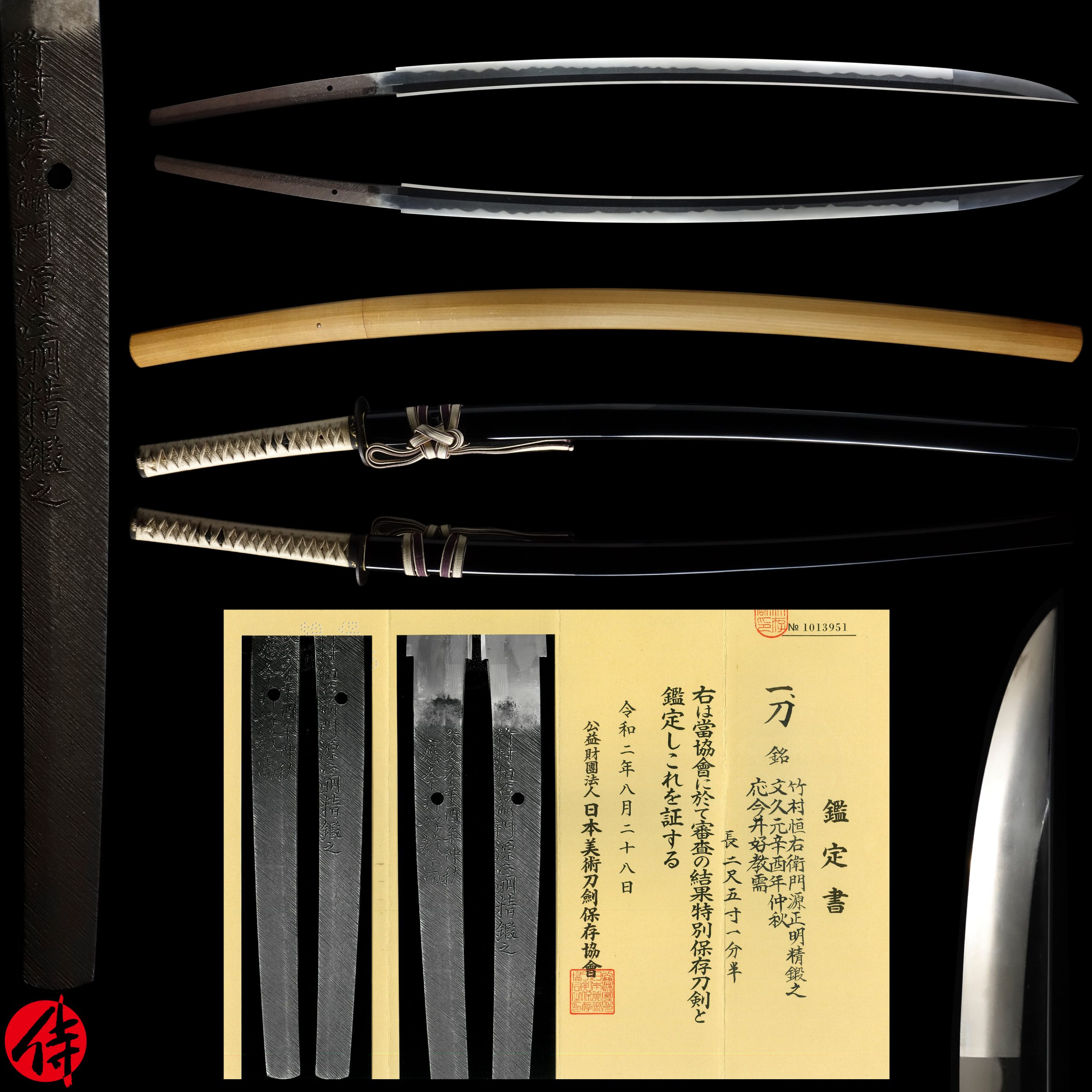
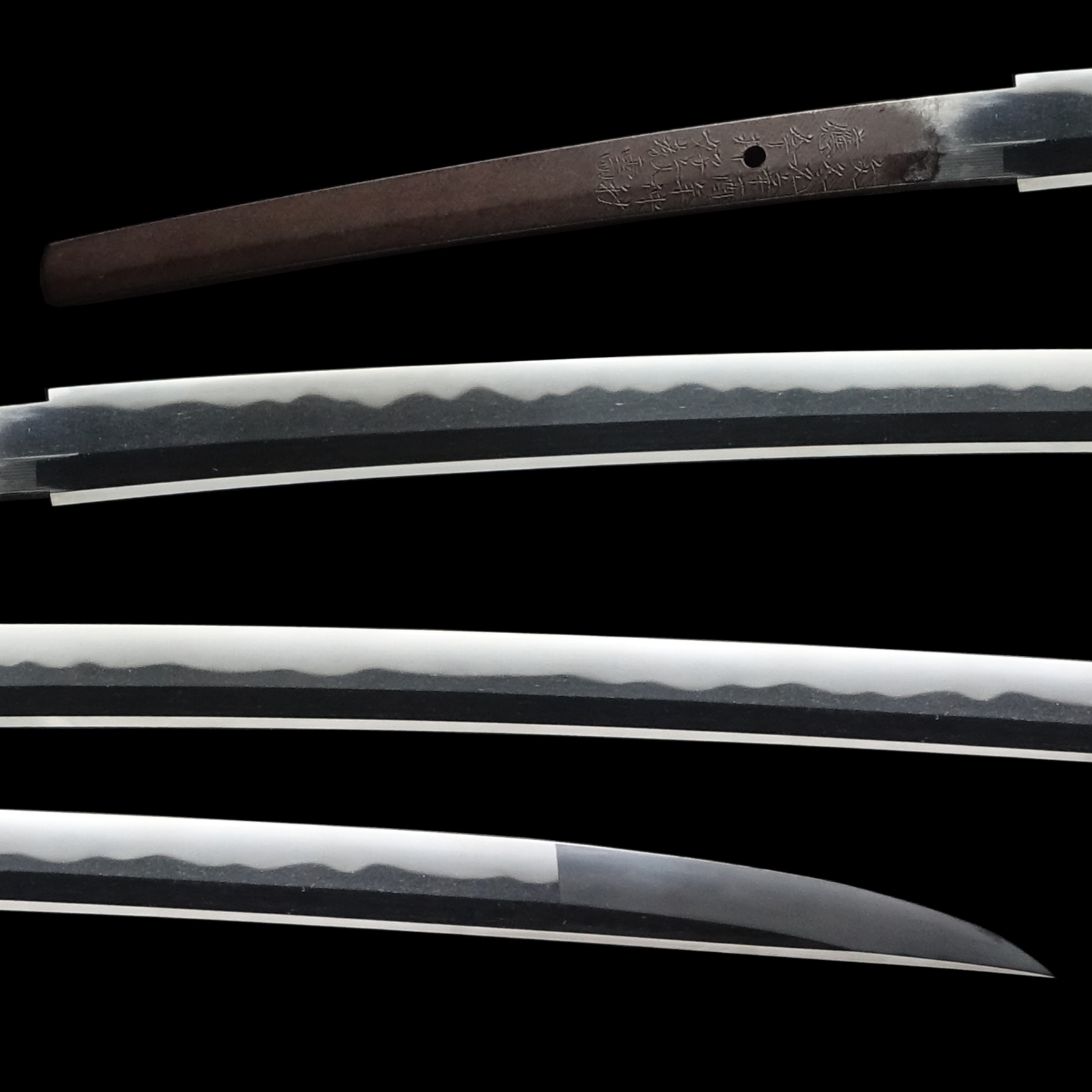
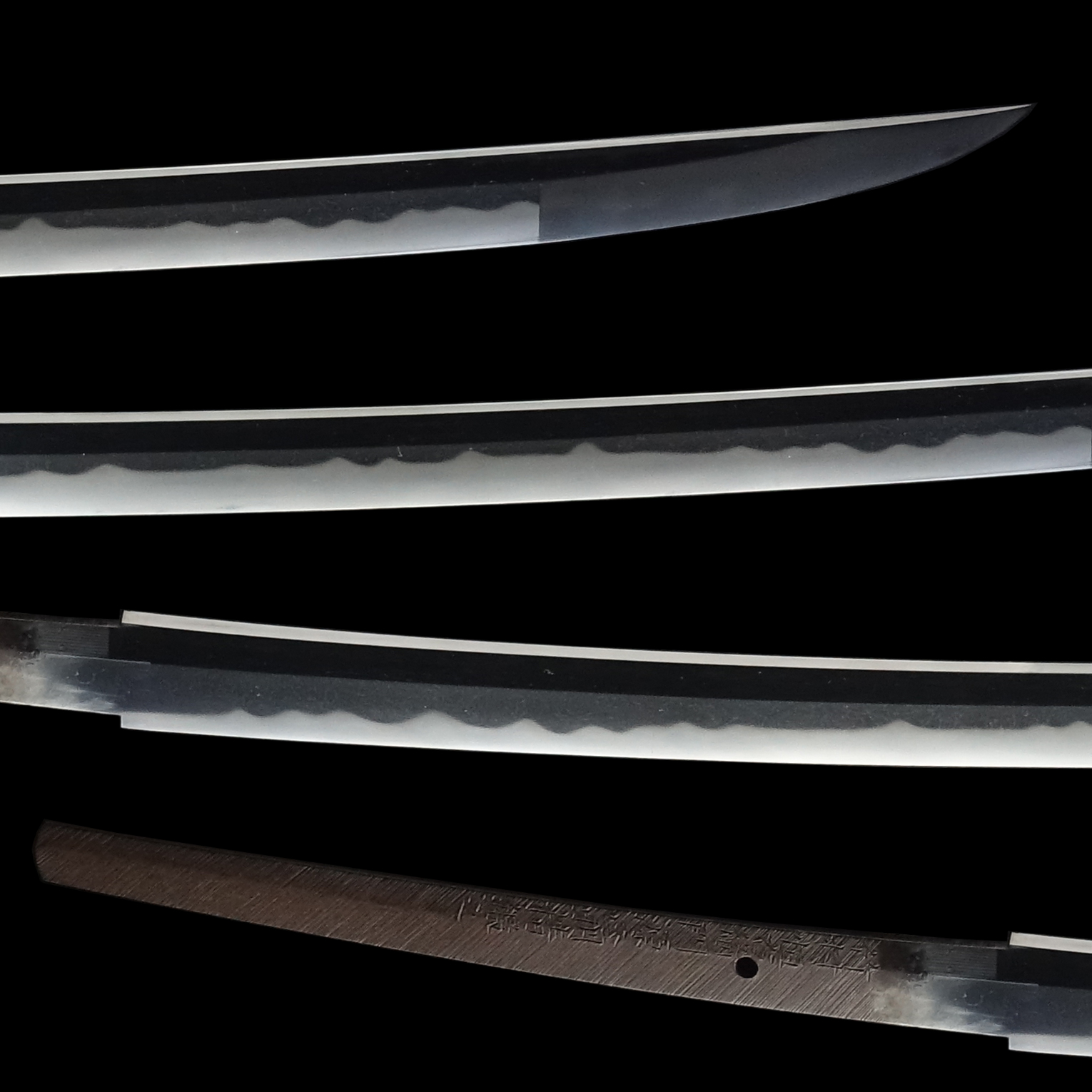
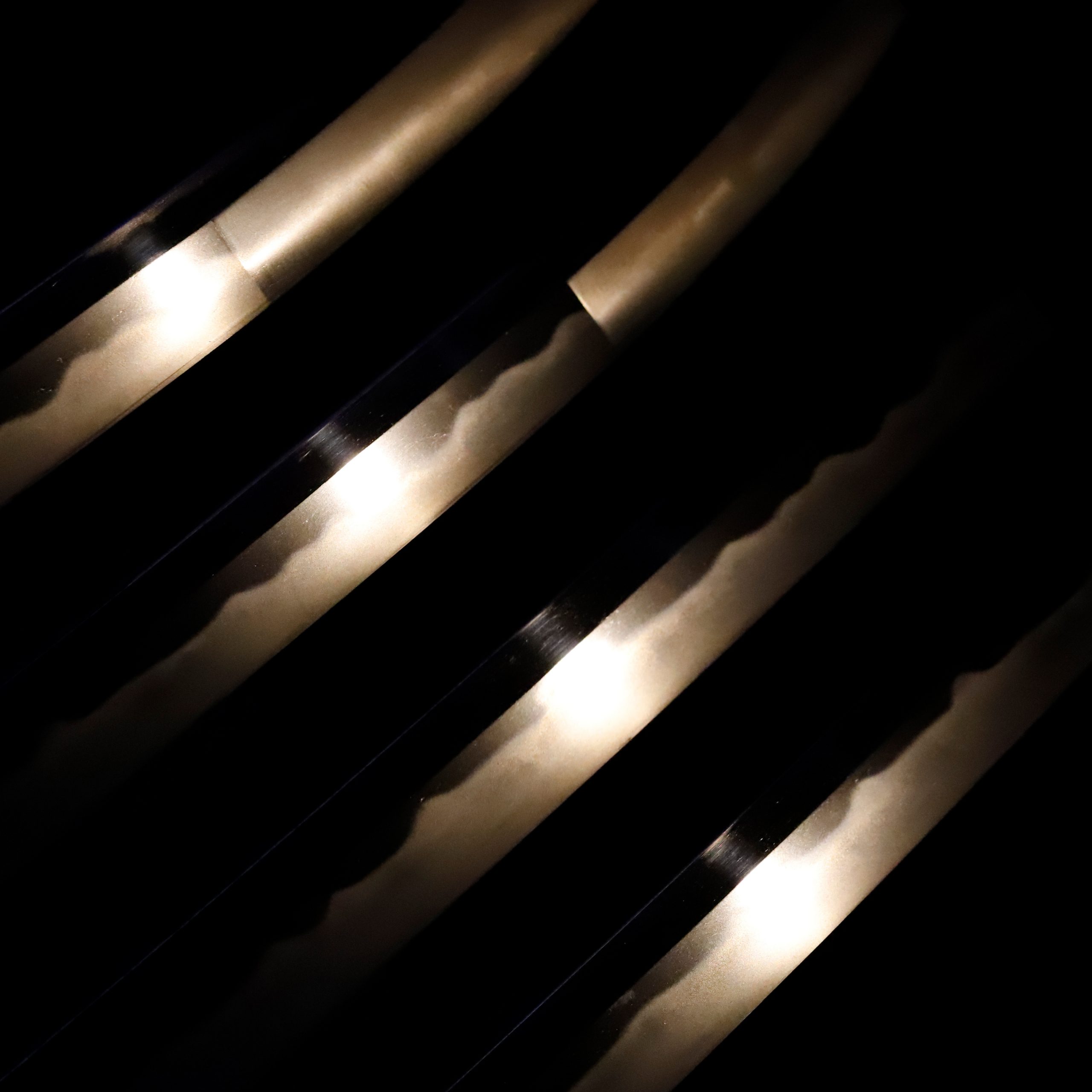
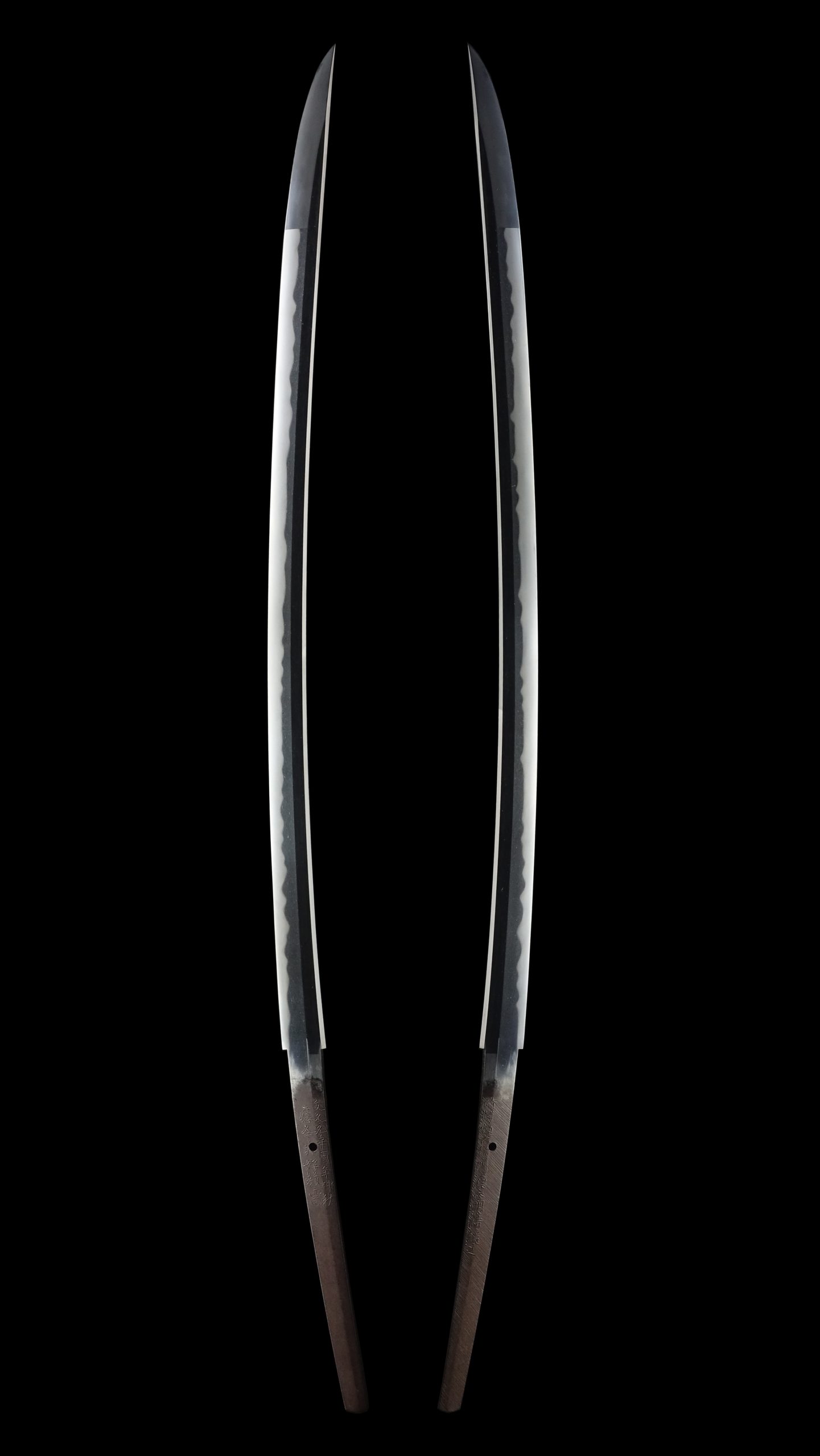
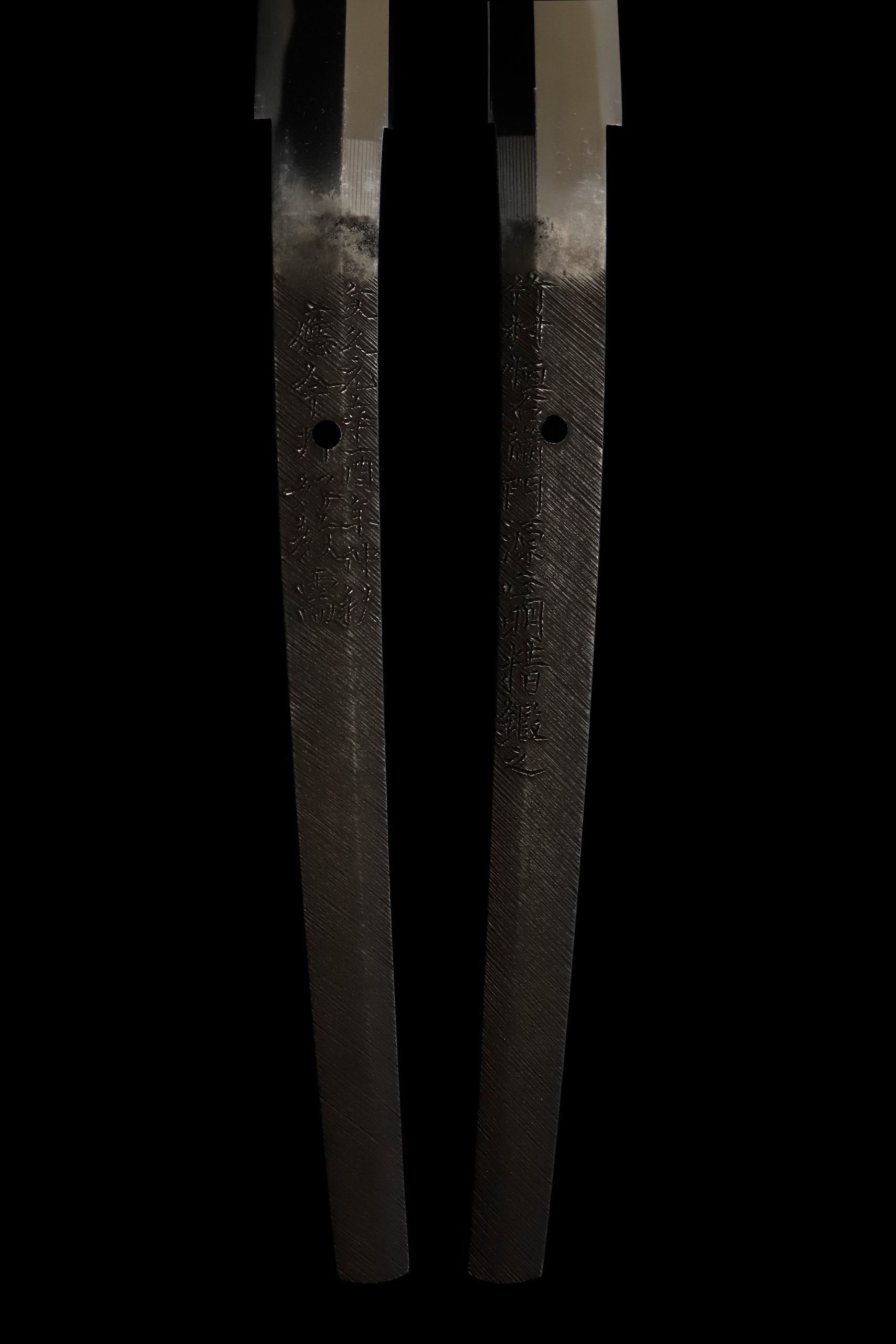
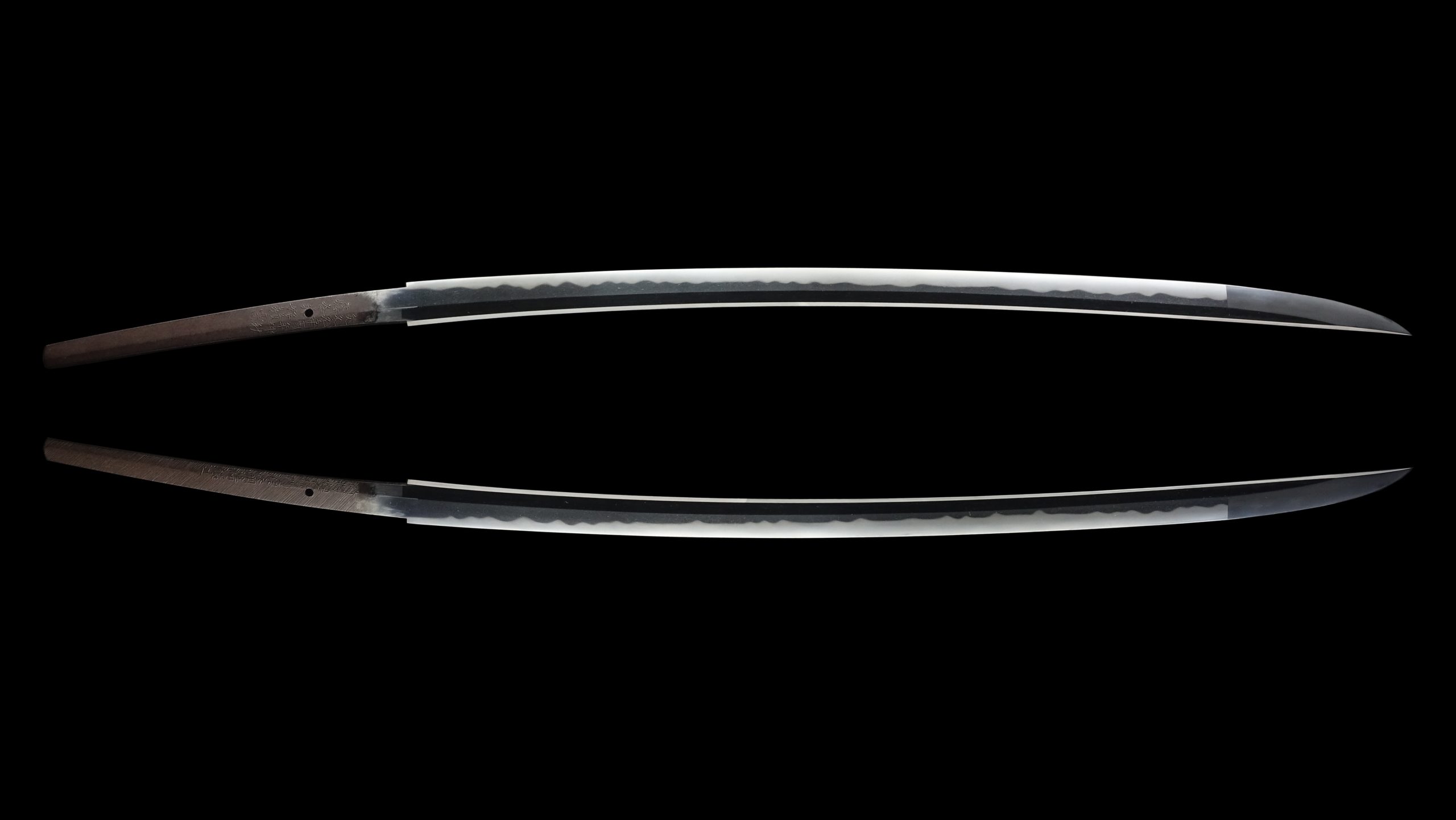
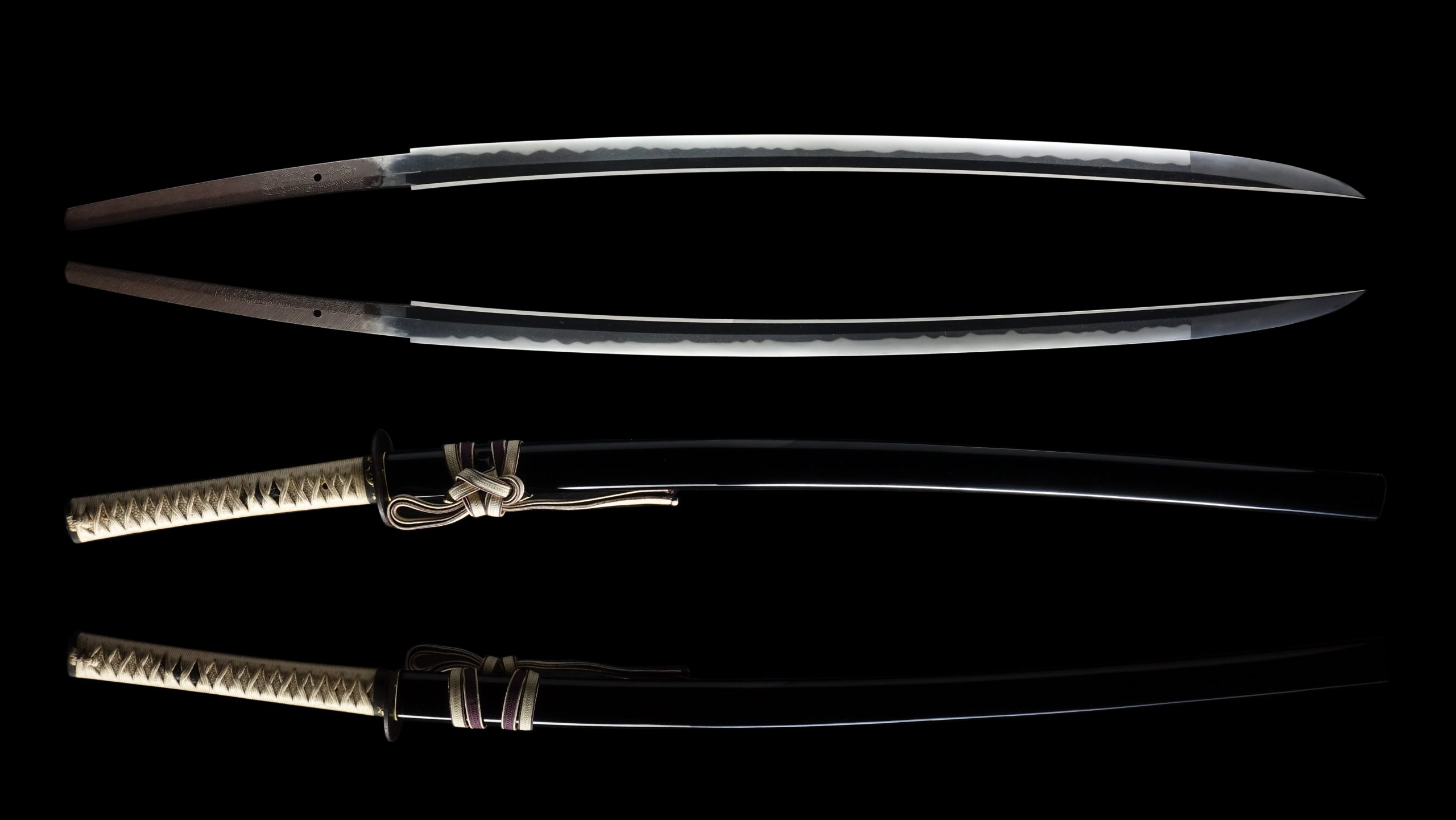
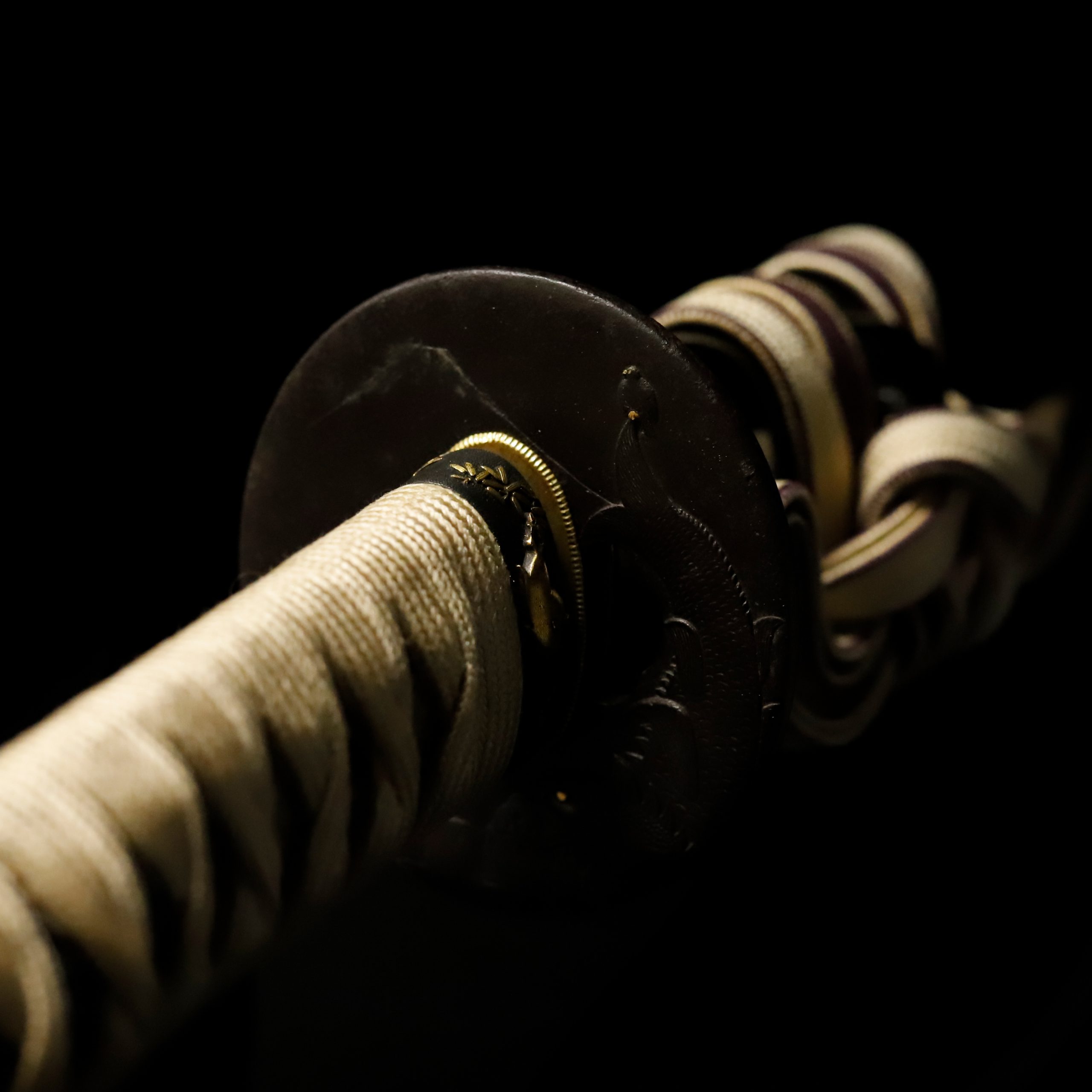
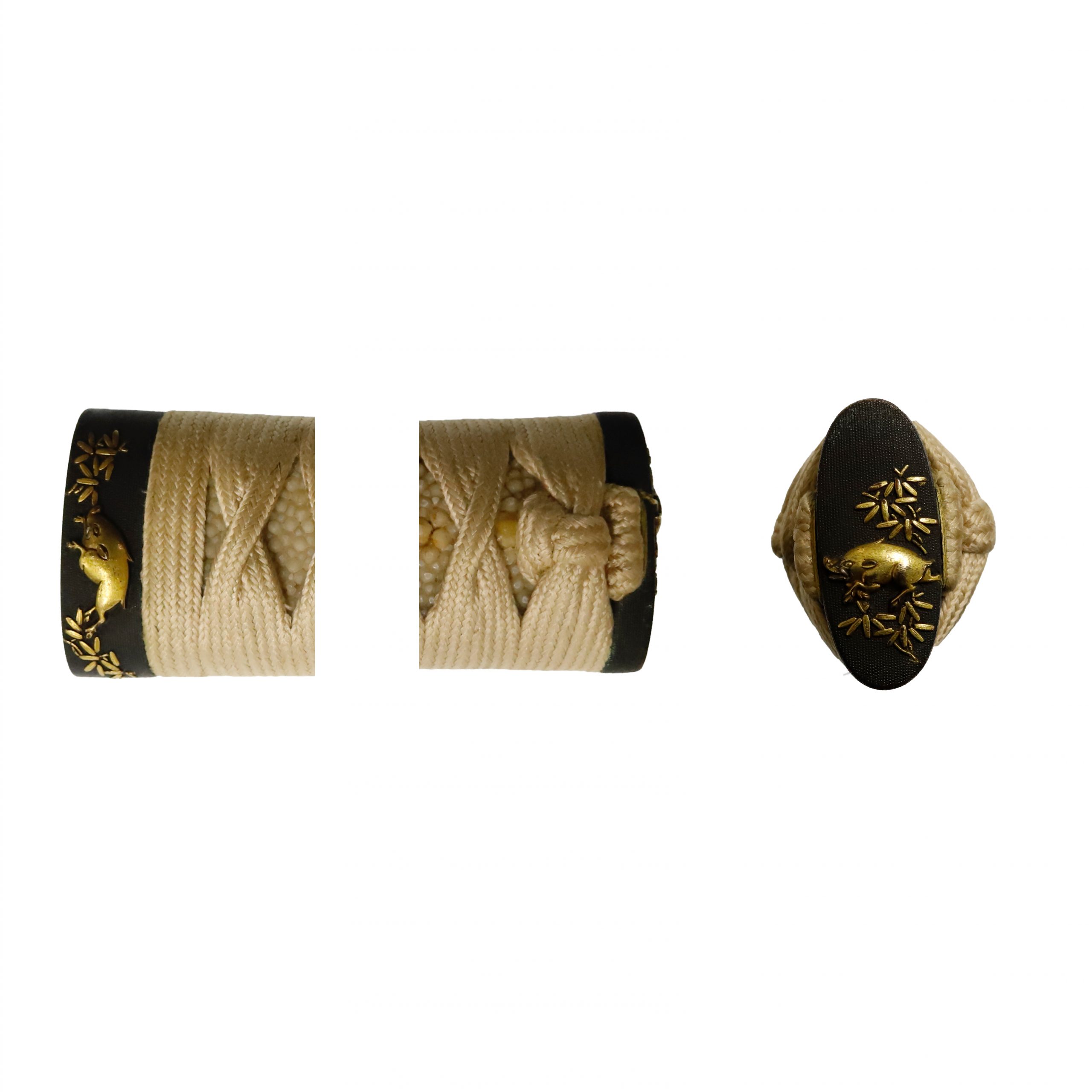
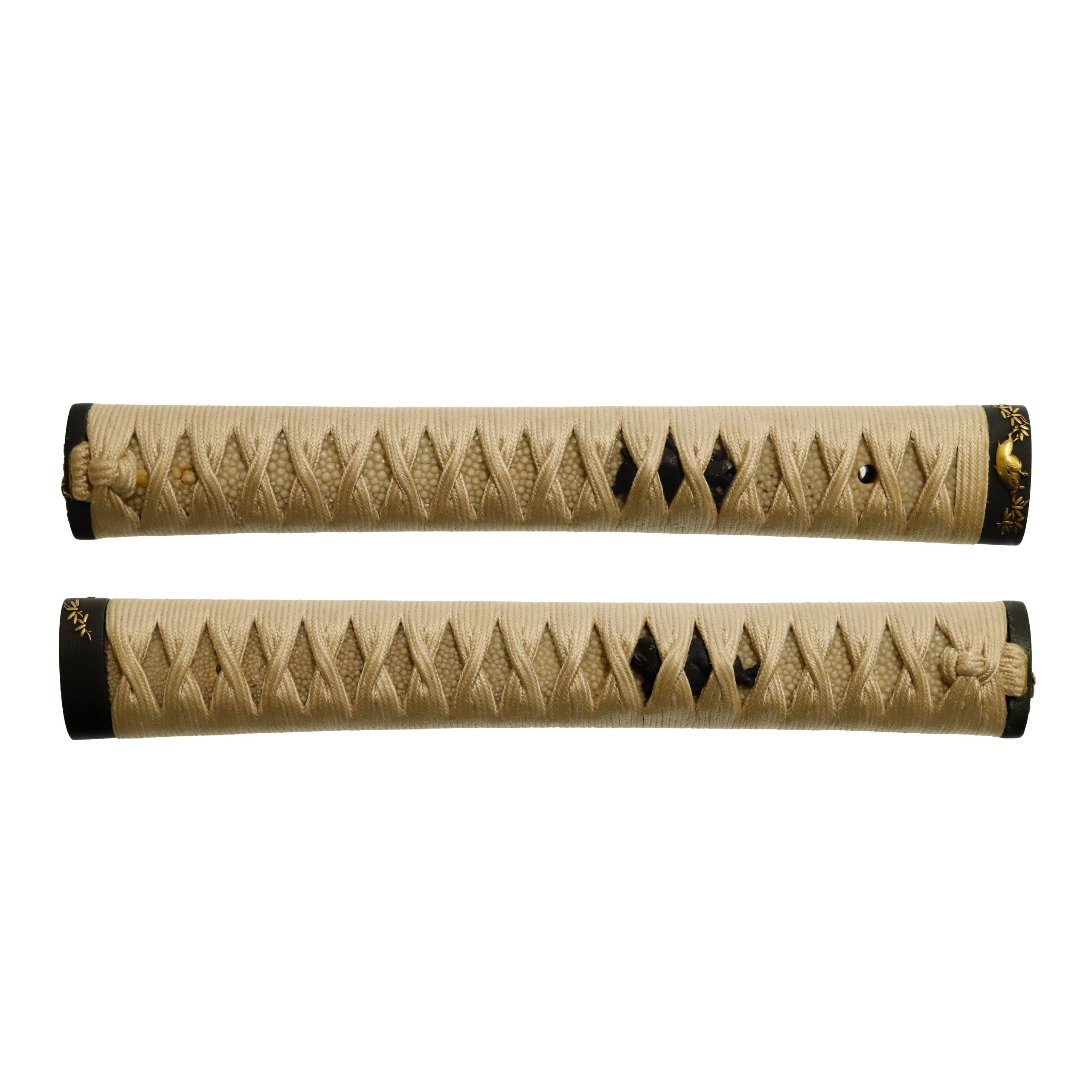
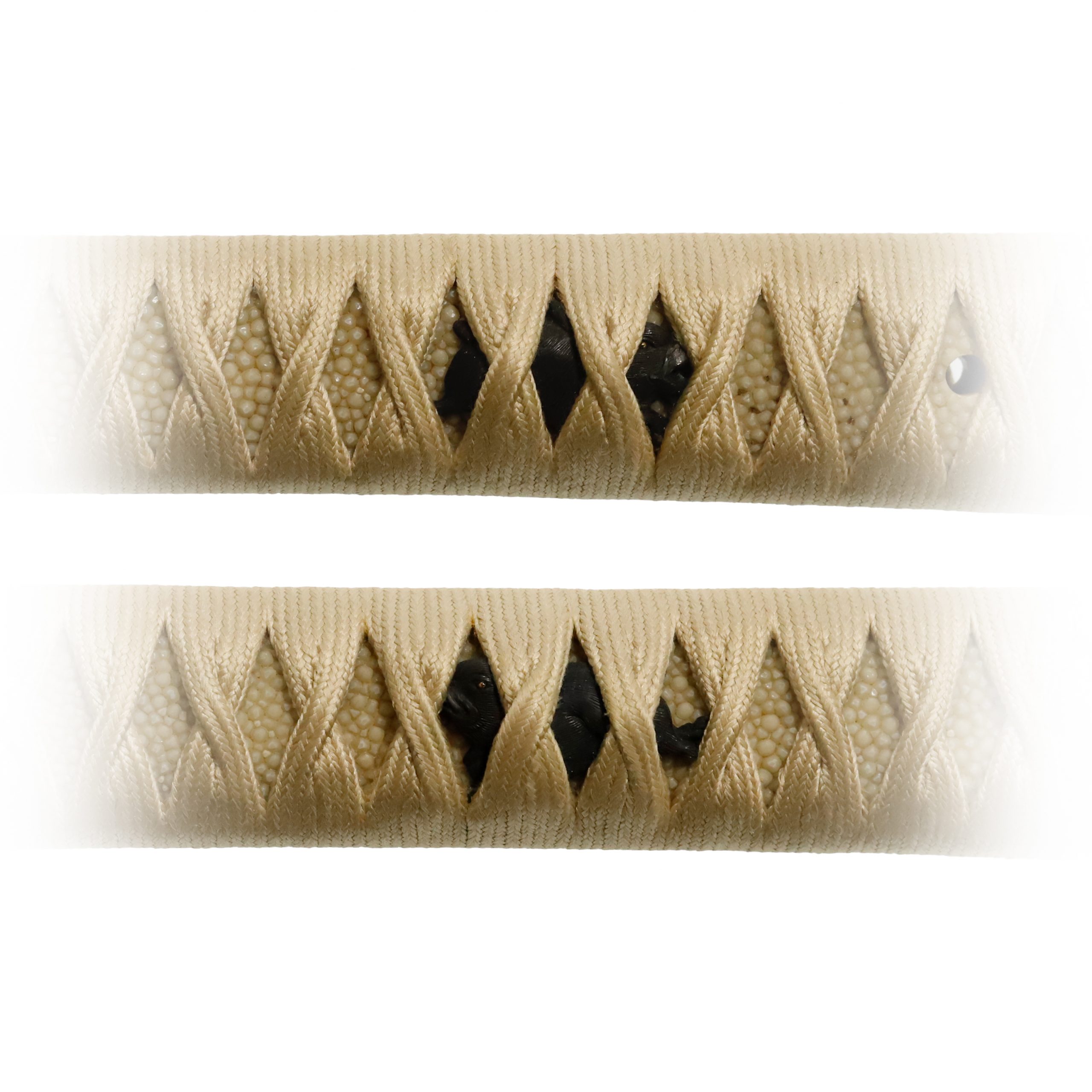
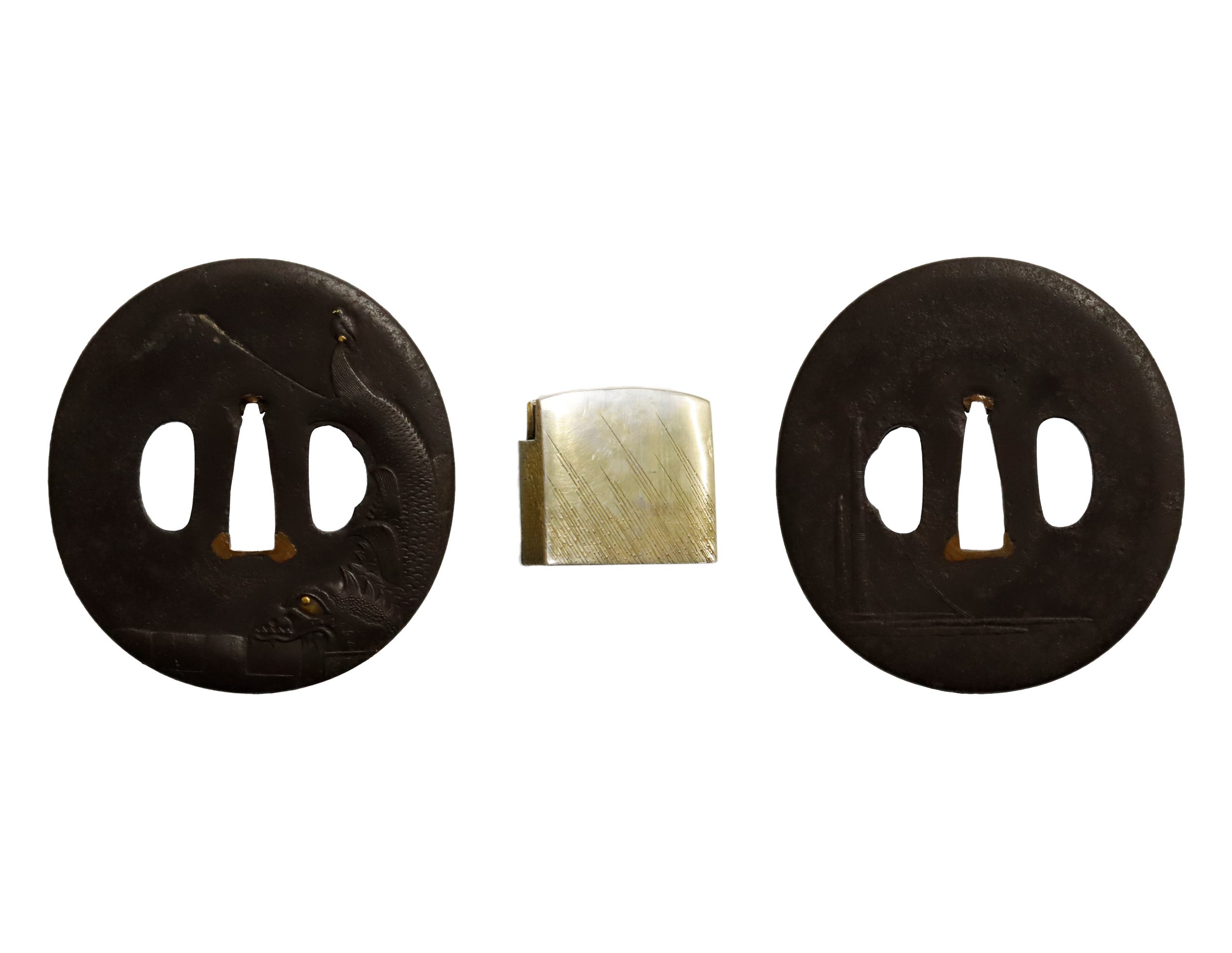
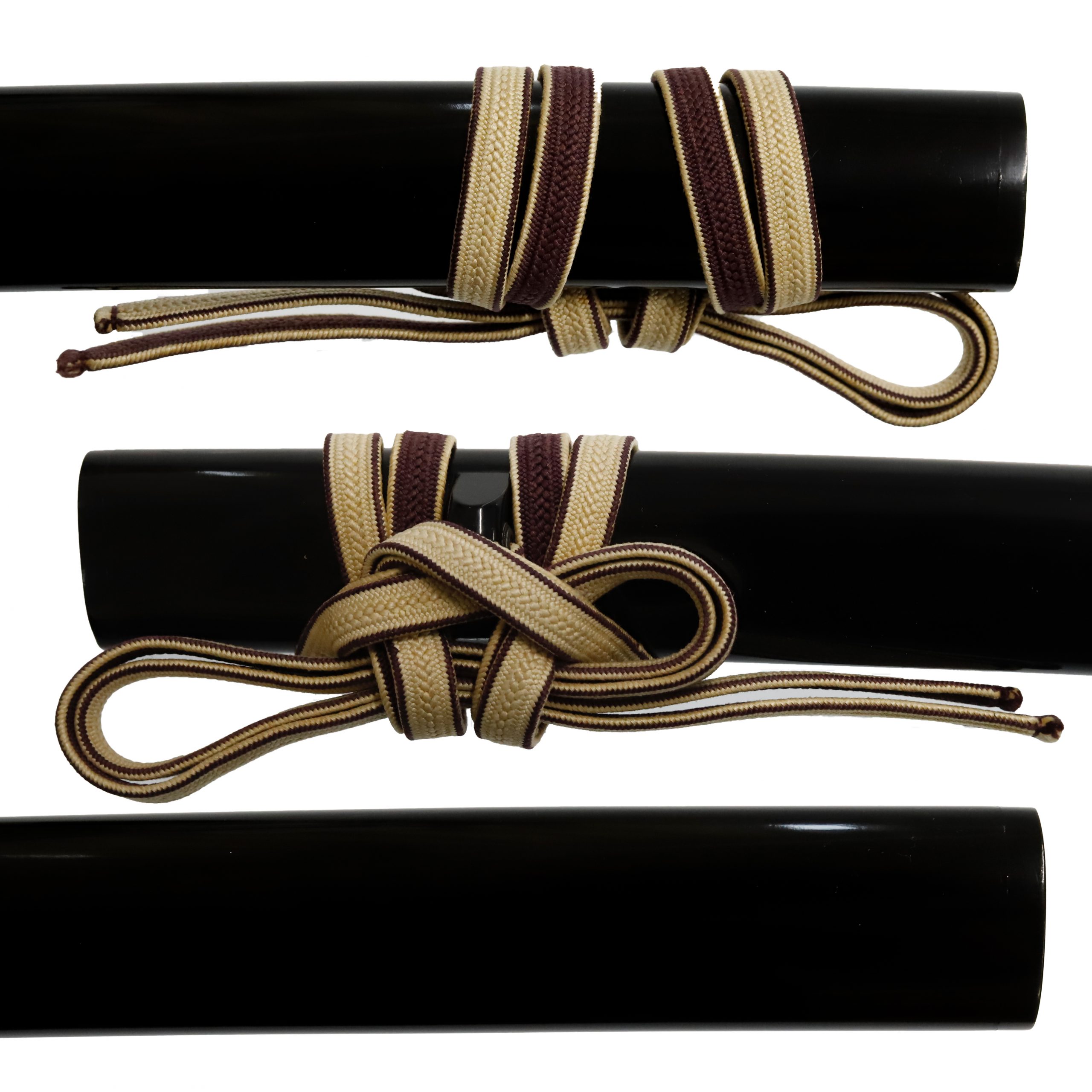
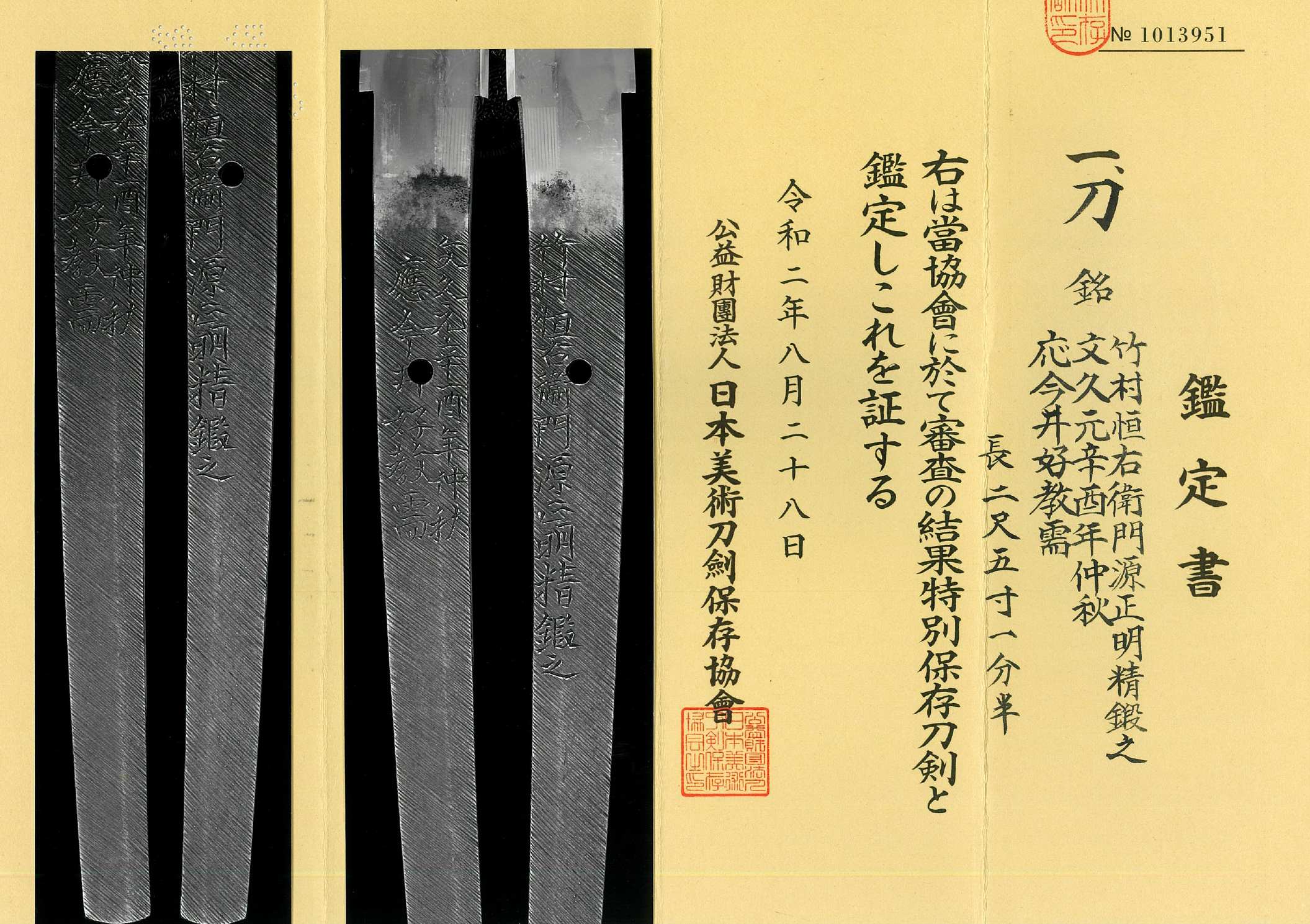
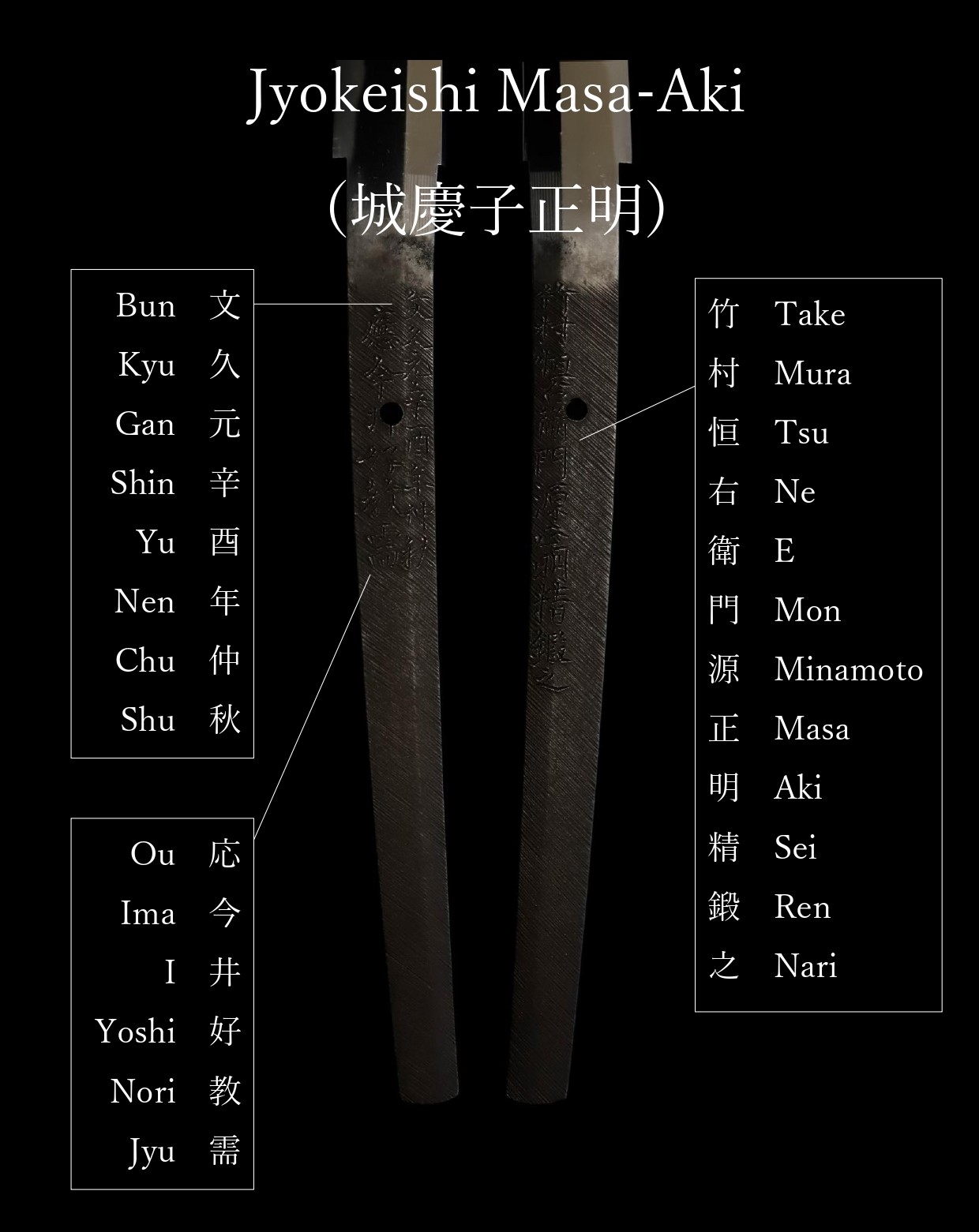
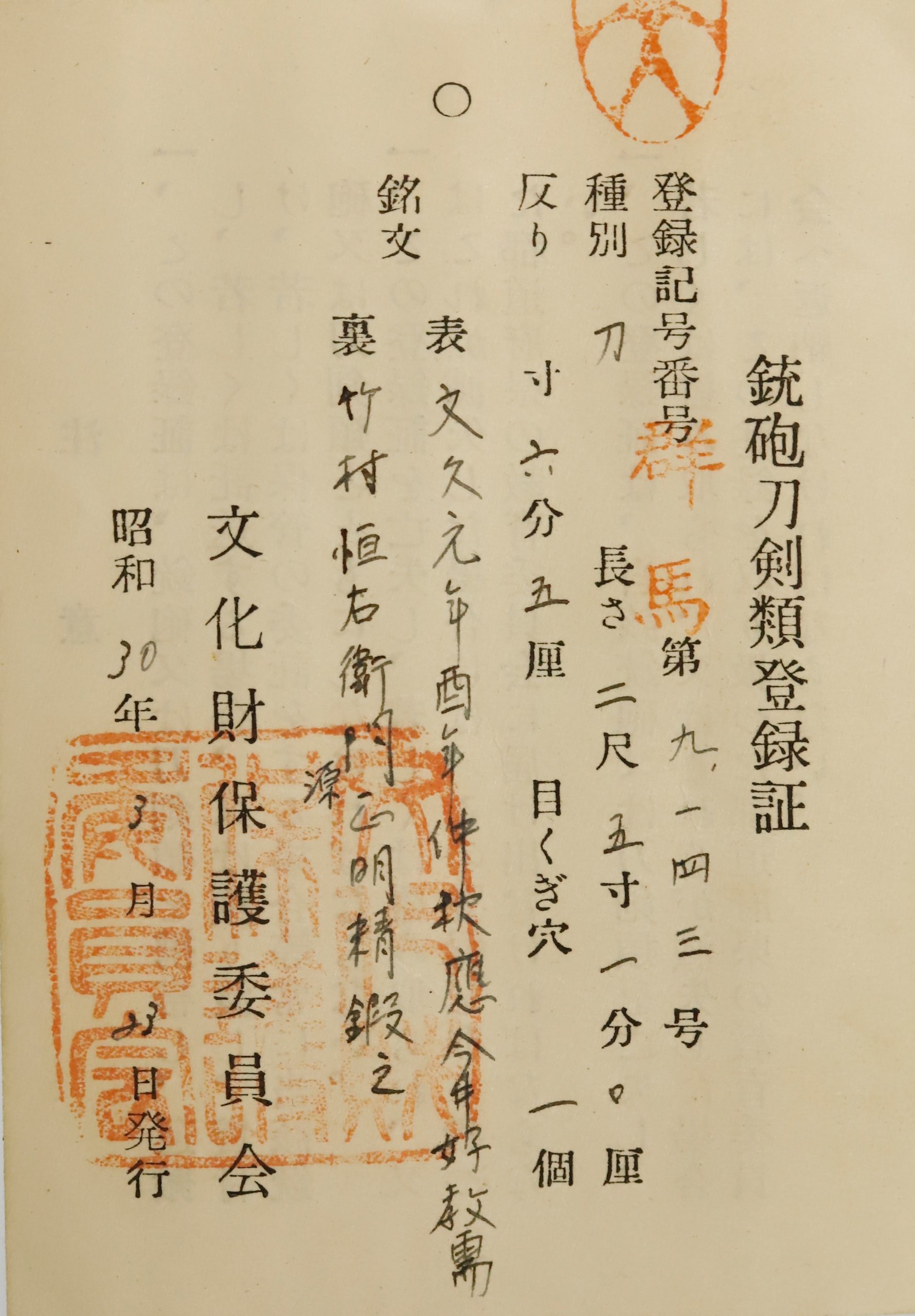
販売店の記載のまま
(翻訳なし) 店主の原文のまま表示しています。正確さの確認を通った翻訳のみを表示します。
新々刀 · 武蔵 · 1848-1861頃
藤代 上作 · 刀剣大鑑 上位60%
現在3点販売中
正明の位置づけを、日本刀全体および伝法・時代・時期ごとに示します。各区分(随一・屈指・有数・著名)は、日刀保および文化庁による指定に加え、三作や名物帳などの歴史的栄誉を加味したものです。
各項目を選ぶと評価方法が表示されます。
新々刀 · 武蔵
現在67点販売中
水心子正秀派は、十八世紀末から十九世紀初頭の江戸に興り、刀はすべて鎌倉の昔に復すべしとする復古刀運動を中核に据えた新々刀の一門である。開祖水心子正秀は、寛延三年に出羽国赤湯に川部儀八郎として生まれ[[c:1]]、武州下原の鍛冶吉英に学んだのち山形秋元家に仕え、のちに江戸浜町に移って約五十年に及ぶ作刀生活を送り、文政八年に七十六歳で歿した。彼は新々刀の祖と称され、古作の伝法を意図して甦らせることを唱えてその理論を世に広めたが、説明書は正秀自身の才のありかをむしろ壮年までの大坂写しに見いだす。この一門の物語で最も重きをなすのは、彼が江戸に糾合し育てた門人たちであろう。復古刀論を実地に示した第一の門人大慶直胤、二代正義細川守秀がその直下に立ち、さらに直胤の門から養子となった次郎太郎直勝、直胤の女婿と伝える水心子正次、正義の嫡子正守、米沢上杉家に仕えた長運斎綱俊、水戸藩工直江助政が連なって、出羽・江戸を中心に各藩へと広がった。 この一門を貫く共通の語法は、古刀各伝の意図的な復興にある。よく約んだ無地風に近い小板目に地沸を厚くつけ、その地の上に相州伝ののたれ・互の目、あるいは備前伝の丁子・互の目を焼くのが基調で、技術論的かつ教導的な性格がこれを支える。正秀の典型は津田助広に私淑した大坂写しの濤瀾乱れと井上真改風の広直刃にあり、地へこぼれる黒味がちの荒い沸が終始の手癖をなした。これに対して門人たちは古備前への遡りをいっそう深め、新々刀には本来失われた映りを意図して甦らせた。直胤はよくつんだ小板目に乱れ映りを鮮明に立て、後期長船の逆がかりを示す丁子乱れを焼いてこれを得意とし、説明書はその丁子乱れの巧みさを新々刀第一と評する。直勝は兼光に範をとった片落ち互の目を主体に、直胤よりも豪壮な姿と低く静かな焼きで古調を醸し、正次と正守はともに直胤・正義の二伝を忠実に承けて相州伝と備前伝を均しく再現し、綱俊は丁子に互の目を交えた備前伝を主調とした。一方で正秀みずからの備前伝・相州伝は終始焼刃が浅く荒い沸を交え、説明書はその技が門人直胤に及ばないと明記する。差異は資料の支持する範囲で明瞭で、直胤の備前・相州の両伝、直勝の長船写しに見る逆がかりと大杢目、助政の真改風直刃に偏した作域がそれぞれを分かつ。 鑑定の勘所は、まずこの意図的な映りと逆がかりに置かれる。明るい乱れ映りと角互の目を伴う逆がかりの丁子は、映りも逆がかりも持たぬ一般の新々刀から備前伝を分かち、相州伝は独特の渦巻肌と叢づき縞がかる沸の働きによって示される。位列としては正秀を上々作、直胤を最上作の在銘の大名跡とし、正義に次ぐ正守、綱俊、助政らがこれに続く。この一門は在銘・有年紀の作を数多く遺したため、その鑑定の問題は極めの難ではなくむしろ系統内の位置にあり、年ごとに変化する銘がその発展を正確に辿らせる。伝来は真田家伝来の大小や本間による御物台帳に所載の御太刀の副作、各藩工としての藩命作にうかがわれ、正秀が向き直らせた江戸の作刀は直胤を介して直勝・正次らへ受け継がれ、兼光・景光をねらった長船復古として幕末の十九世紀作刀に広く及んだ。 詳しく見る →
新々刀 復古の運動
1800年前後、水心子正秀は著述をもって、鍛刀は古作の法に立ち返るべしと説いた。復古刀の運動である。最大の後継者直胤は、数百年絶えていた備前伝と相州伝を確信をもって再現した。
保存刀剣のうち、出来が一層優れ、保存状態も良好と認められたものです。再刃や、室町・江戸期の多くの無銘作は対象外となり、保存刀剣より高い基準が課されます。
日本美術刀剣保存協会(日刀保)は、1948年に設立され、文化庁の監督を受ける公益財団法人で、東京・刀剣博物館に本部を置きます。専門の審査員が出品作を直接審査し、美術的・歴史的価値に応じた鑑定書を発行します。日刀保の鑑定書は、日本刀および刀装具の真正性を示す最も広く認知された基準です。
日刀保公式サイトReturns/exchanges limited to defects caused by shipping (except willful misconduct or gross negligence by the company); customers must contact within 72 hours of receiving the product.