売切れ
Tokuho売切れ
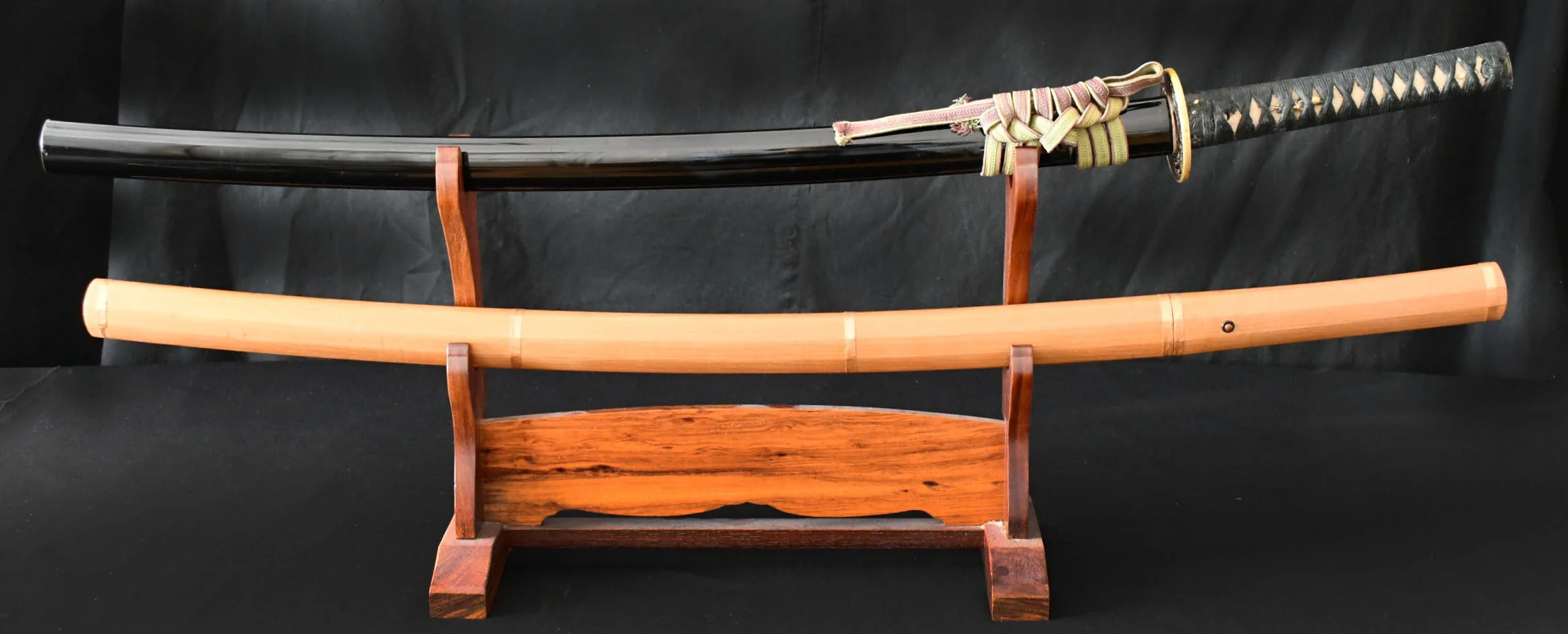
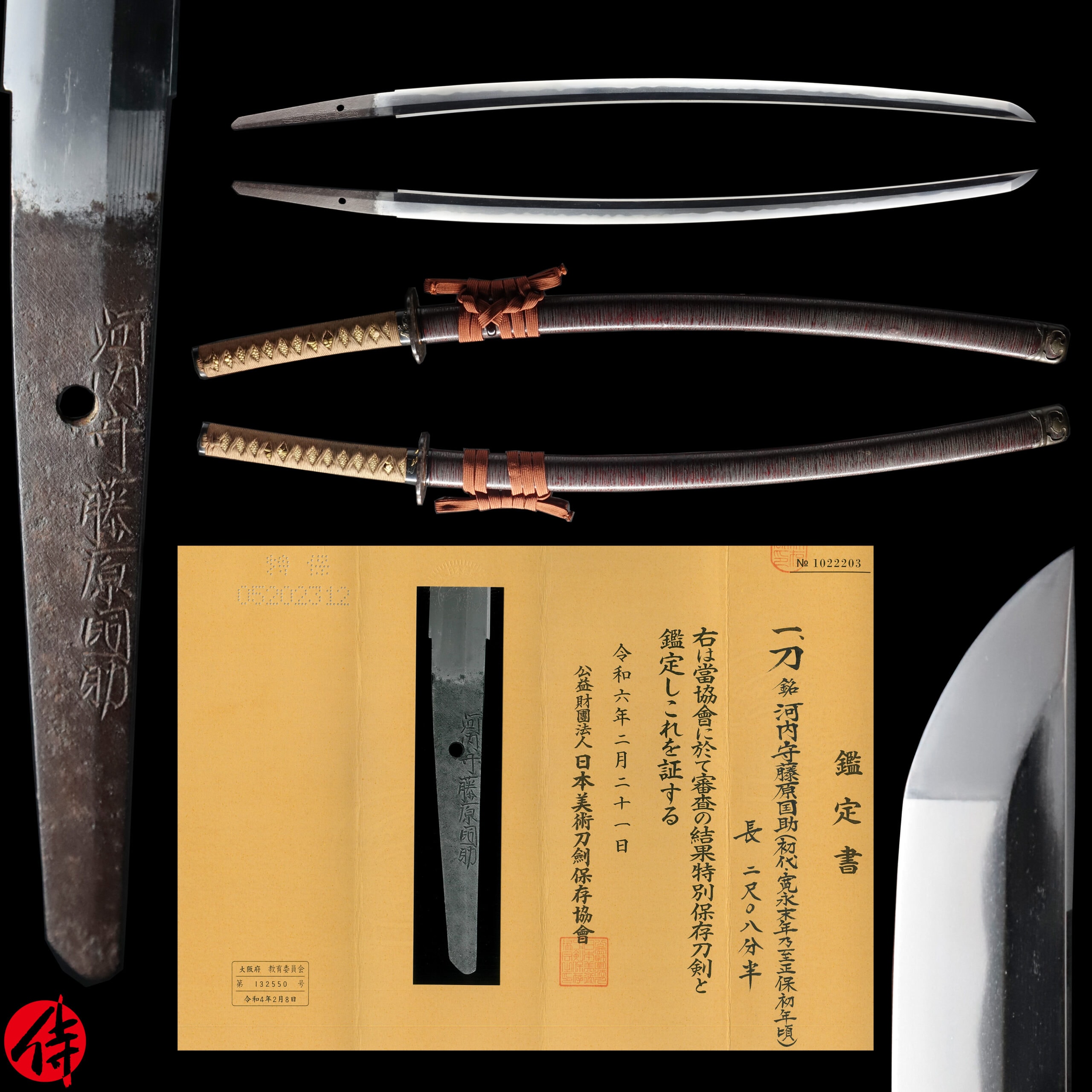
Antique Japanese Sword Katana Signed by Kawachi No Kami Fujiwara Kunisuke NBTHK Tokubetsu Hozon Certificate
売却済
世界81社の刀剣商を横断追跡 · 価格履歴 · 売却アーカイブ
時代
Bakumatsu (c. 1850-1868)
仕様
長さ
63.2 cm
反り
2 cm
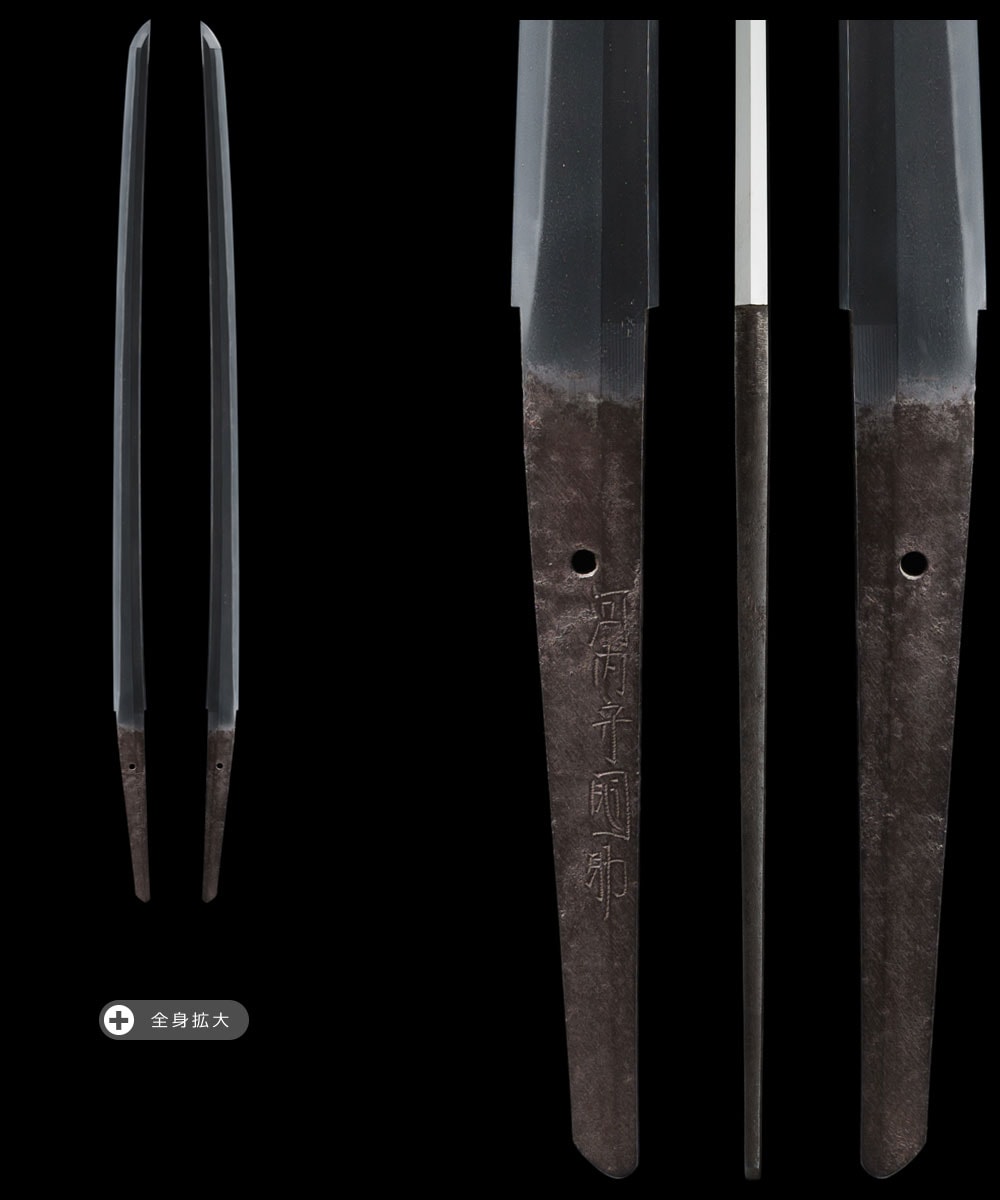
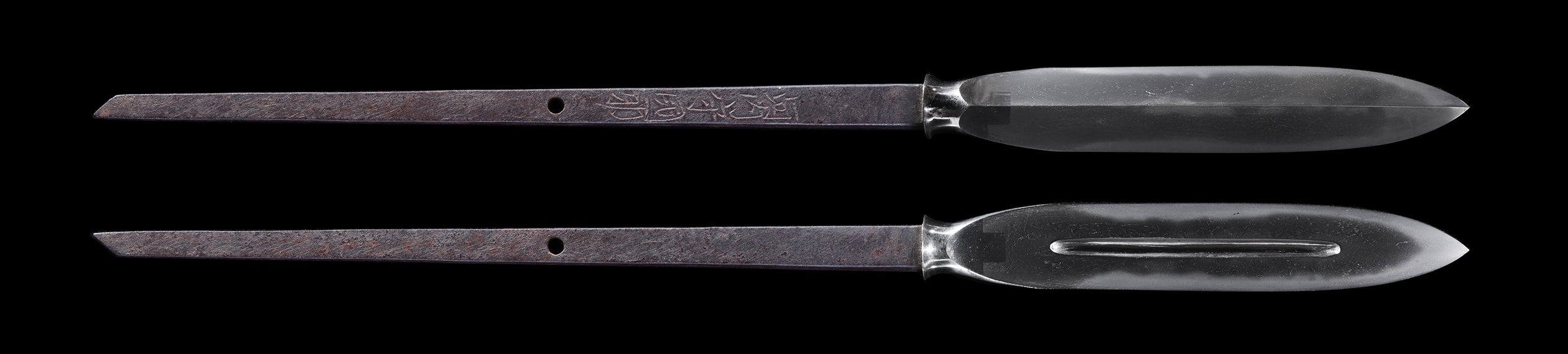
Antique Japanese Sword Katana Signed by Kawachi no Kami Kunisuke with Tokubetsu Hozon Certificate 【Description】 This blade was signed by Kawachi no Kami Fujiwara Kunisuke (河内守藤原国助). Kunisuke was one of the most well-known swordsmiths in Osaka during the early Edo period. There were three generations of Kunisuke in total. And, NBTHK Tokubetsu Hozon paper mentions that it was signed by the first-gen Kunisuke. They estimate it was forged during the Kan-Ei~The beginning of the Shoho era ( 1640s ). The first-gen Kunisuke was born in Ise province(today’s Mie province) and served Seki Kazumasa, the head of Kameyama castle. However, after the Seki clan was destroyed, he moved to Kyoto. He became an apprentice of Horikawa Kunihiro, one of the most famous swordsmiths during the early Edo period. After Kunihiro deceased, Kunisuke learned the sword-forging technique from Echigo no Kami Kunitomo. Eventually, he moved to Osaka with Izumi no Kami Kunisada to become an independent sword maker in the seventh year of Kaenei(1630). It is said that he played an essential role in making Osaka Shinto movement. the superb craftsmanship of the first-gen was passed down to the next two generations. Osaka Shinto The blades forged by Kunisuke are categorized as Osaka Shinto. Shinto is Japanese Sword terminology that refers to the swords forged during 1596-1781. The blades made in the Osaka area during this period are called Osaka Shinto. There are many famous swordsmiths in this Osaka Shinto era. After Hideyoshi Toyotomi built Osaka castle, Osaka city flourished as a castle town and became the business center. Many swordsmiths moved to Osaka to look for better opportunities. They not only forged swords for those Samurai who lived in Osaka but also for feudal lords nationwide. Ikanshi Tadatsuna(Awataguchi Omi no Kami Tadatsuna), Inoue Shinkai, and Tsuda Sukehiro are the most famous among many swordsmiths. One of the most notable characteristics of Osaka Shinto is its beauty in Jigane. Jigane is a visible steel surface pattern created by folding and hammering during the forging process), which made it possible by the location of Osaka. Osaka had close access to the Tamahagane(special carbon steel to make Japanese swords) production sites. The swordsmiths residing in Osaka were able to get high-quality carbon steel from these sites. It is appraised as a Tokubetsu Hozon Token (特別保存刀剣) issued by NBTHK(Nihon Bijutsu Touken Hozon Kyokai:日本美術刀剣保存協会). This authentication paper was only given to authentic Japanese swords, especially well preserved and high quality with artistic value. *Please keep in mind that there are a couple of visible Kitae Kizu on this blade. If you like to see more detailed condition, please feel free to contact us. 【 Blade】 Cutting Edge Length(Nagasa) : 63.2 cm (24.9 inches) Curvature(Sori) : 2.0 cm (0.79 inches) Hamon : The crystalline structure which forms along the cutting edge of a blade as a result of the hardening process Jimon(Jihada) : visible steel surface pattern created by folding and hammering during forging process Kissaki : Kissaki is the tip of the Japanese sword. Nakago : Nakago is the tang of the Japanese sword. Japanese swordsmiths left the black rust on the tang because it prevents red rust while the tang is in its handle. And the discoloration of the tang was created over time, and it is a great indicator for a Japanese sword specialist to estimate when the sword was forged. Koshirae: Koshirae is the mounting of the Japanese sword. There are several parts that consist of Koshirae such as Saya(Scabbard), Tsuka(Handle), Tsuba(Handguard). Fuchi-Kashira : A pair of matching sword fittings that cover the upper and bottom parts of its sword hilt. Tsuka and Menuki : Tsuka is the handle of the Japanese sword and Menuki is its decoration. Dragonflies have been inhabited in Japan for a long time. Since they prey quickly, their heroic figure was sometimes the object of belief. The dragonfly was called the Kachimushi (勝ち虫, winnin
 NihontoWatchBETA
売却済
世界81社の刀剣商を横断追跡 · 価格履歴 · 売却アーカイブ
Bakumatsu (c. 1850-1868)
63.2 cm
2 cm
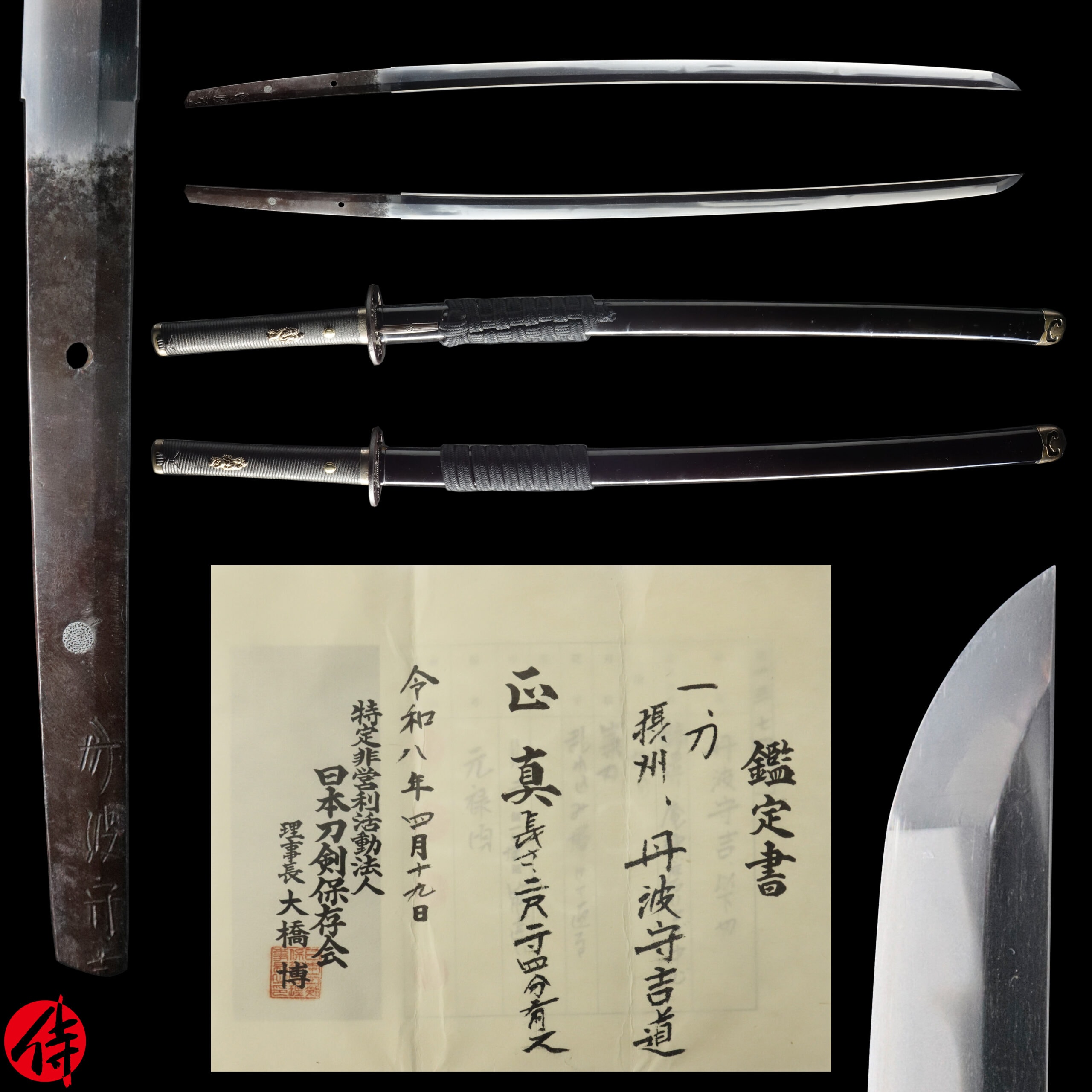
Mid Edo Katana signed by Tanba no Kami Yoshimichi for sale| Samurai Museum Shop E-mail FB Messenger Skip to content Menu Close Samurai Museum Shop Products Antique Japanese Sword Katana signed by Tanba no Kami Yoshimichi NTHK Kanteisho Certificate Updated: 22 Jun 2026 Antique Japanese Sword Katana signed by Tanba no Kami Yoshimichi NTHK Kanteisho Certificate
$7,441
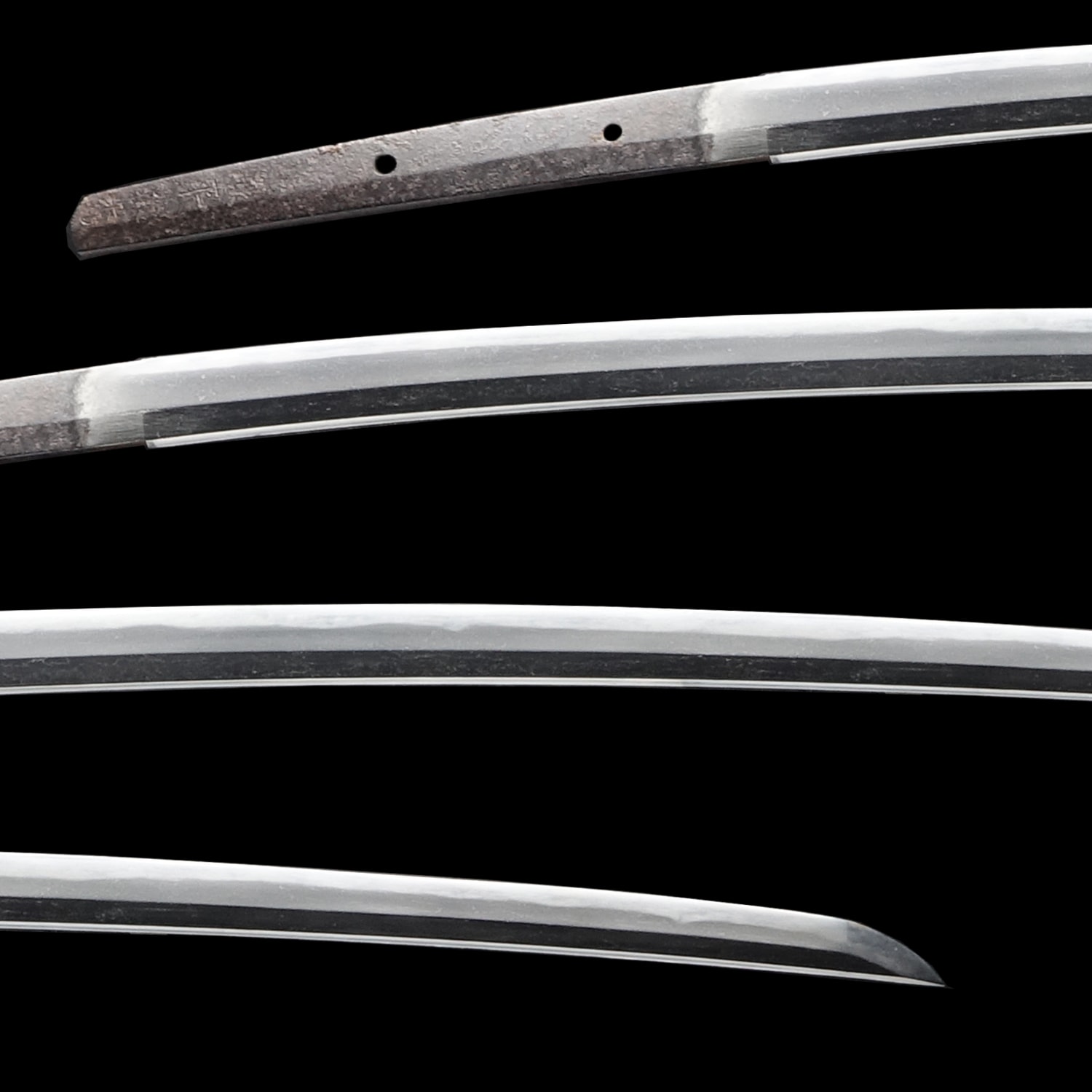
Muromachi Katana signed by Naminohira Yasuhide for sale
$7,751
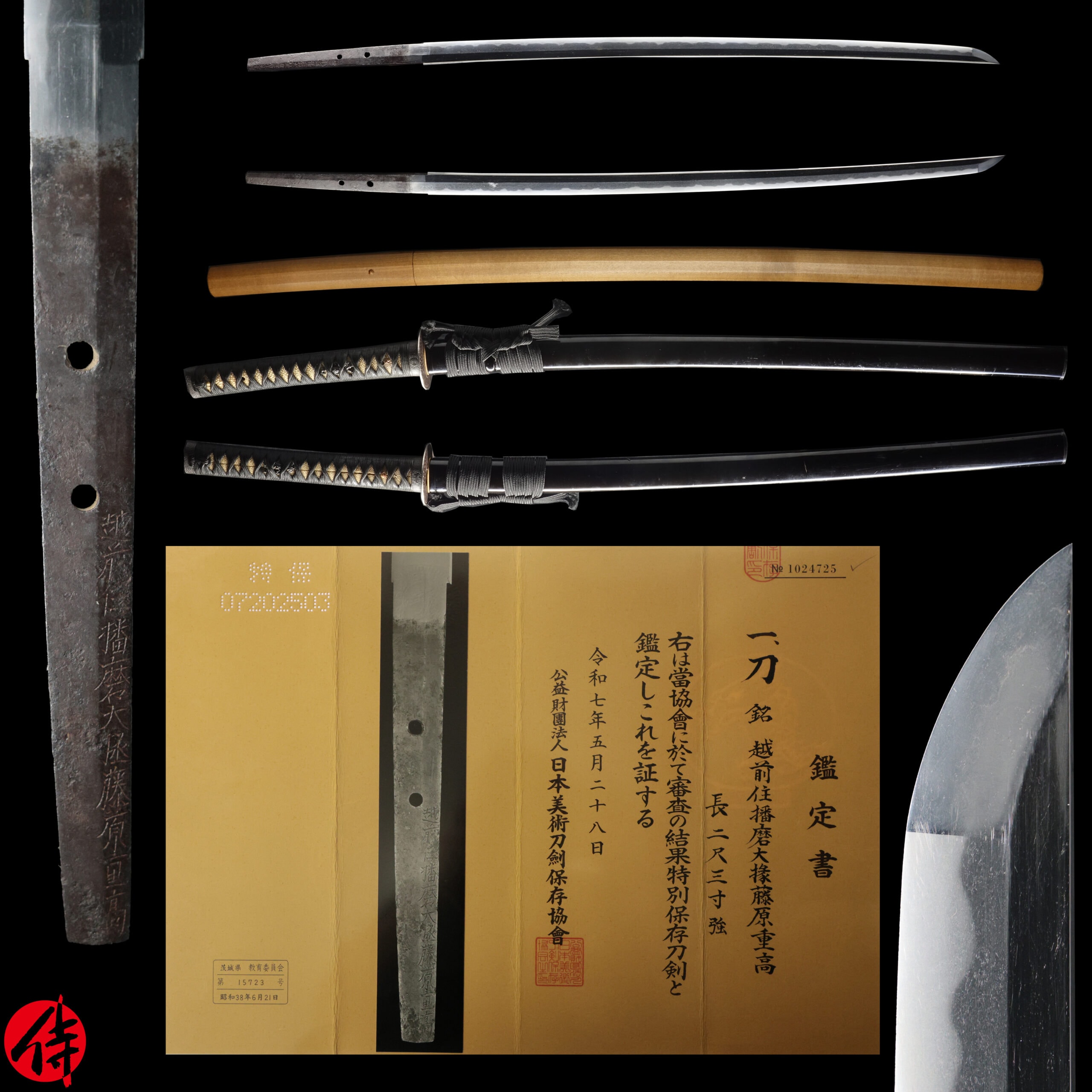
Early Edo Nihonto signed by Shigetaka for sale
$7,131
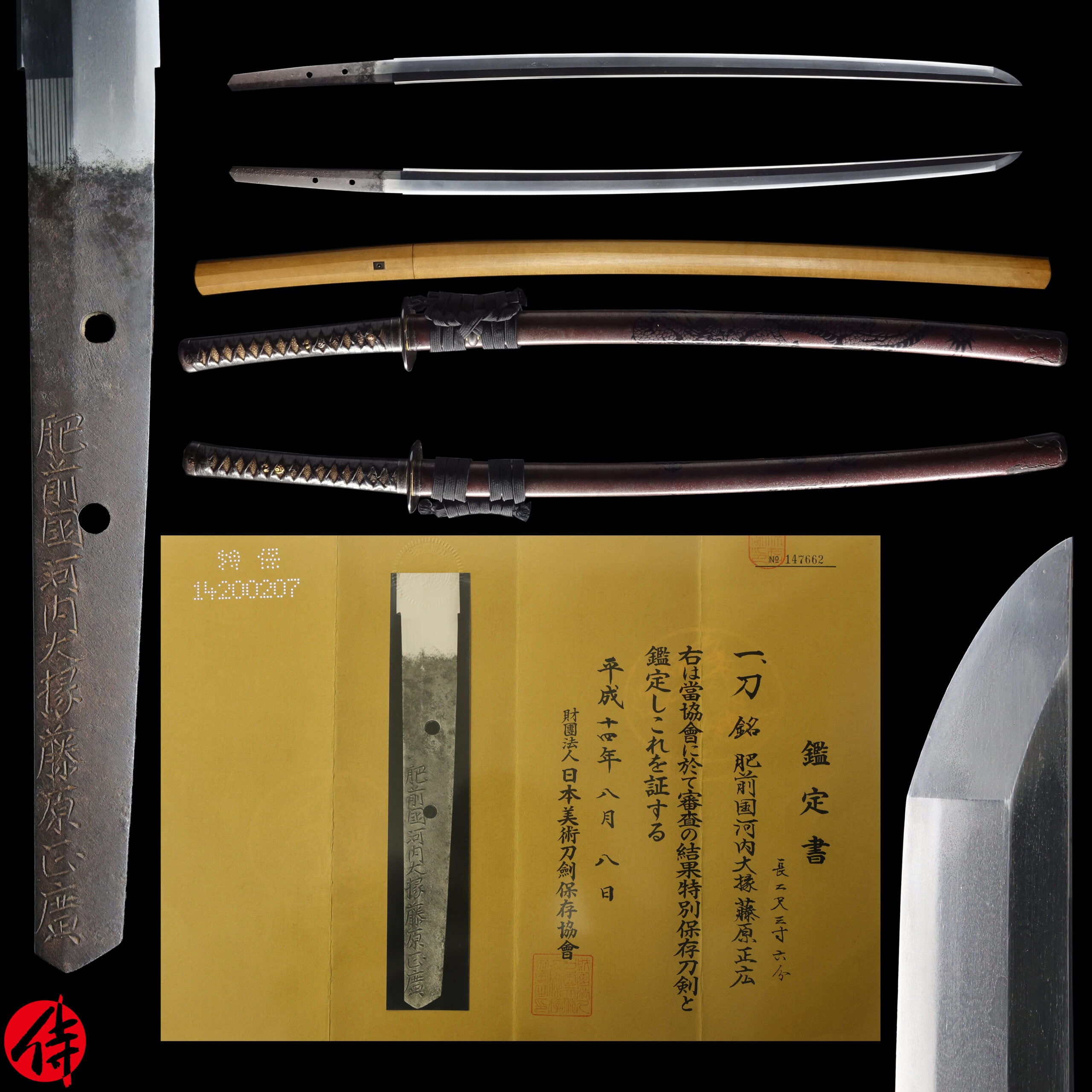
Antique Japanese Sword Katana Signed by Masahiro NBTHK Tokubetsu Hozon Certificate
$7,751
Antique Japanese Sword Katana Signed by Kawachi no Kami Kunisuke with Tokubetsu Hozon Certificate 【Description】 This blade was signed by Kawachi no Kami Fujiwara Kunisuke (河内守藤原国助). Kunisuke was one of the most well-known swordsmiths in Osaka during the early Edo period. There were three generations of Kunisuke in total. And, NBTHK Tokubetsu Hozon paper mentions that it was signed by the first-gen Kunisuke. They estimate it was forged during the Kan-Ei~The beginning of the Shoho era ( 1640s ). The first-gen Kunisuke was born in Ise province(today’s Mie province) and served Seki Kazumasa, the head of Kameyama castle. However, after the Seki clan was destroyed, he moved to Kyoto. He became an apprentice of Horikawa Kunihiro, one of the most famous swordsmiths during the early Edo period. After Kunihiro deceased, Kunisuke learned the sword-forging technique from Echigo no Kami Kunitomo. Eventually, he moved to Osaka with Izumi no Kami Kunisada to become an independent sword maker in the seventh year of Kaenei(1630). It is said that he played an essential role in making Osaka Shinto movement. the superb craftsmanship of the first-gen was passed down to the next two generations. Osaka Shinto The blades forged by Kunisuke are categorized as Osaka Shinto. Shinto is Japanese Sword terminology that refers to the swords forged during 1596-1781. The blades made in the Osaka area during this period are called Osaka Shinto. There are many famous swordsmiths in this Osaka Shinto era. After Hideyoshi Toyotomi built Osaka castle, Osaka city flourished as a castle town and became the business center. Many swordsmiths moved to Osaka to look for better opportunities. They not only forged swords for those Samurai who lived in Osaka but also for feudal lords nationwide. Ikanshi Tadatsuna(Awataguchi Omi no Kami Tadatsuna), Inoue Shinkai, and Tsuda Sukehiro are the most famous among many swordsmiths. One of the most notable characteristics of Osaka Shinto is its beauty in Jigane. Jigane is a visible steel surface pattern created by folding and hammering during the forging process), which made it possible by the location of Osaka. Osaka had close access to the Tamahagane(special carbon steel to make Japanese swords) production sites. The swordsmiths residing in Osaka were able to get high-quality carbon steel from these sites. It is appraised as a Tokubetsu Hozon Token (特別保存刀剣) issued by NBTHK(Nihon Bijutsu Touken Hozon Kyokai:日本美術刀剣保存協会). This authentication paper was only given to authentic Japanese swords, especially well preserved and high quality with artistic value. *Please keep in mind that there are a couple of visible Kitae Kizu on this blade. If you like to see more detailed condition, please feel free to contact us. 【 Blade】 Cutting Edge Length(Nagasa) : 63.2 cm (24.9 inches) Curvature(Sori) : 2.0 cm (0.79 inches) Hamon : The crystalline structure which forms along the cutting edge of a blade as a result of the hardening process Jimon(Jihada) : visible steel surface pattern created by folding and hammering during forging process Kissaki : Kissaki is the tip of the Japanese sword. Nakago : Nakago is the tang of the Japanese sword. Japanese swordsmiths left the black rust on the tang because it prevents red rust while the tang is in its handle. And the discoloration of the tang was created over time, and it is a great indicator for a Japanese sword specialist to estimate when the sword was forged. Koshirae: Koshirae is the mounting of the Japanese sword. There are several parts that consist of Koshirae such as Saya(Scabbard), Tsuka(Handle), Tsuba(Handguard). Fuchi-Kashira : A pair of matching sword fittings that cover the upper and bottom parts of its sword hilt. Tsuka and Menuki : Tsuka is the handle of the Japanese sword and Menuki is its decoration. Dragonflies have been inhabited in Japan for a long time. Since they prey quickly, their heroic figure was sometimes the object of belief. The dragonfly was called the Kachimushi (勝ち虫, winnin
NihontoWatchBETA売却済
世界81社の刀剣商を横断追跡 · 価格履歴 · 売却アーカイブ
Bakumatsu (c. 1850-1868)
63.2 cm
2 cm
Mid Edo Katana signed by Tanba no Kami Yoshimichi for sale| Samurai Museum Shop E-mail FB Messenger Skip to content Menu Close Samurai Museum Shop Products Antique Japanese Sword Katana signed by Tanba no Kami Yoshimichi NTHK Kanteisho Certificate Updated: 22 Jun 2026 Antique Japanese Sword Katana signed by Tanba no Kami Yoshimichi NTHK Kanteisho Certificate
$7,441
Muromachi Katana signed by Naminohira Yasuhide for sale
$7,751
Early Edo Nihonto signed by Shigetaka for sale
$7,131
Antique Japanese Sword Katana Signed by Masahiro NBTHK Tokubetsu Hozon Certificate
$7,751