参勤交代が集めた日本最大の帯刀人口が江戸にあった。御用鍛冶康継は茎に葵紋を許され、虎徹の刀は截断銘の金象嵌を帯びる。この町では、証こそが物を言った。
 NihontoWatchNihontoWatch
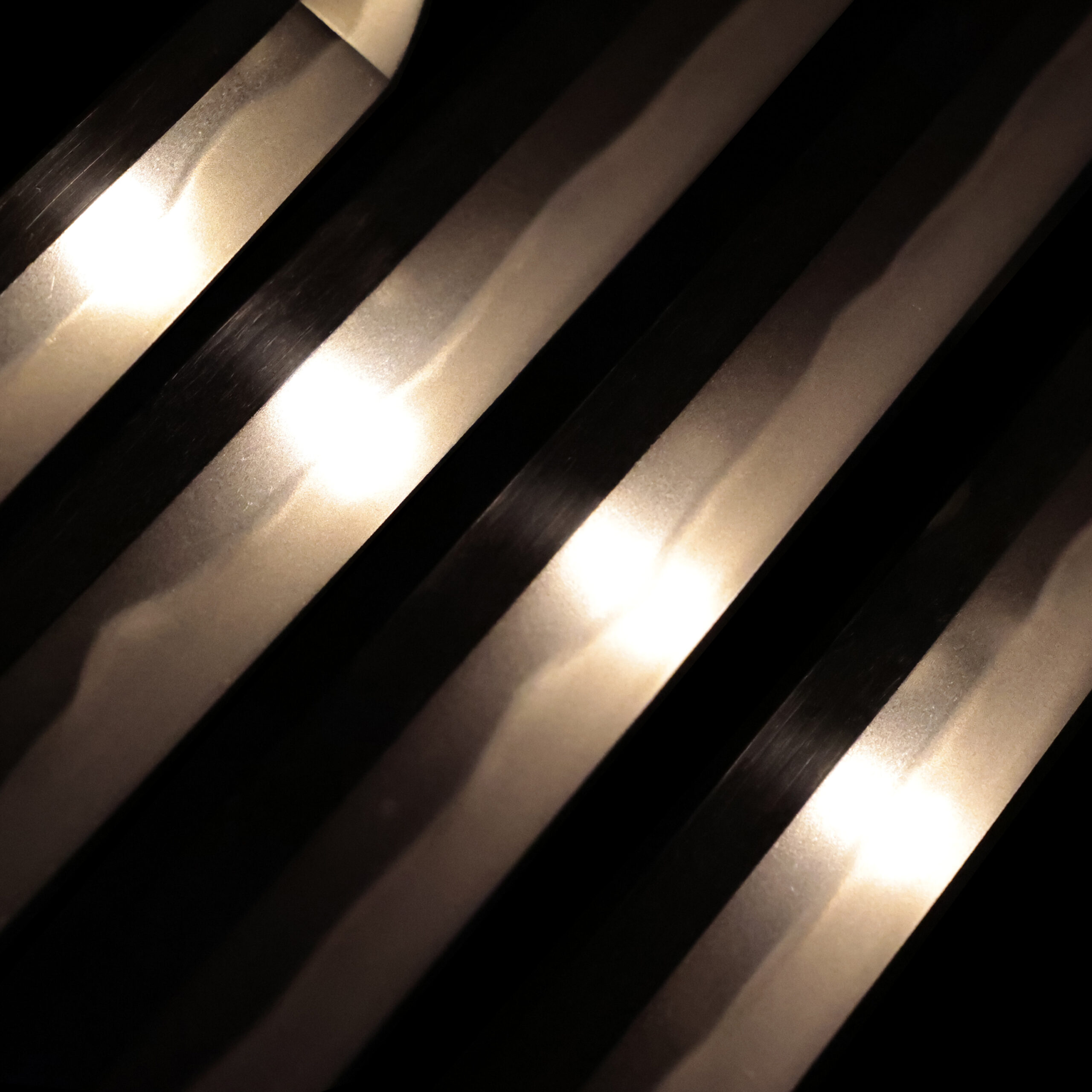
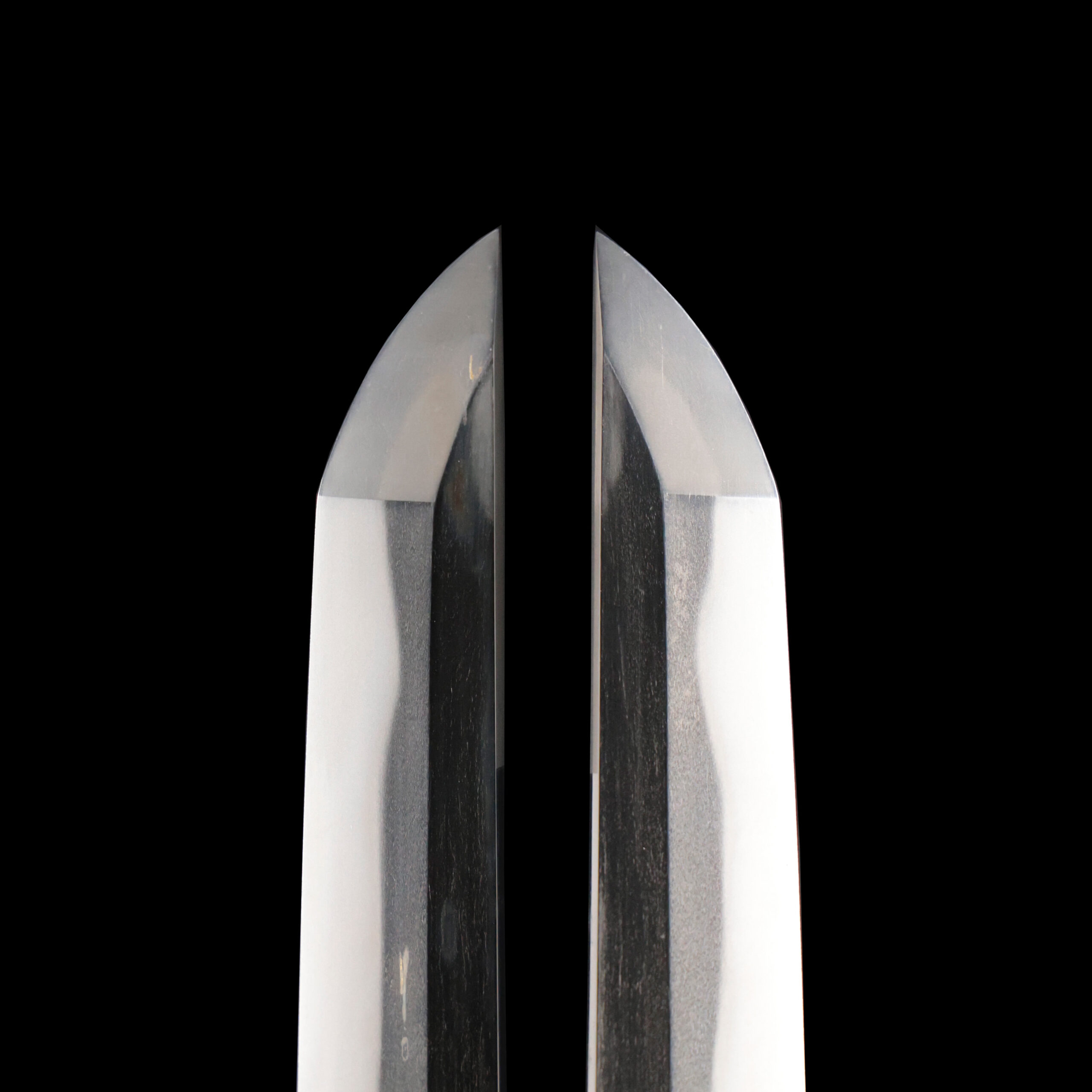
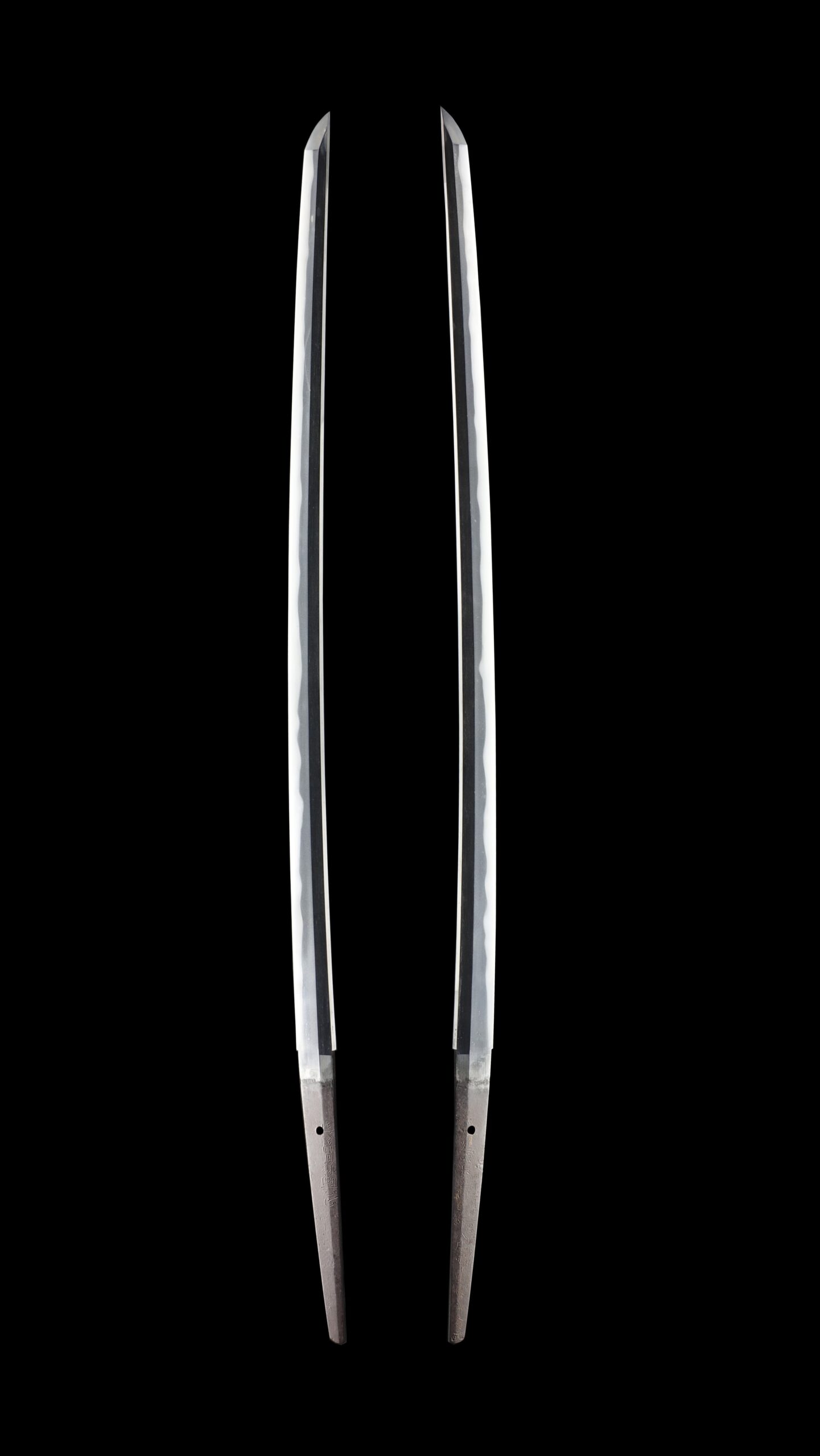
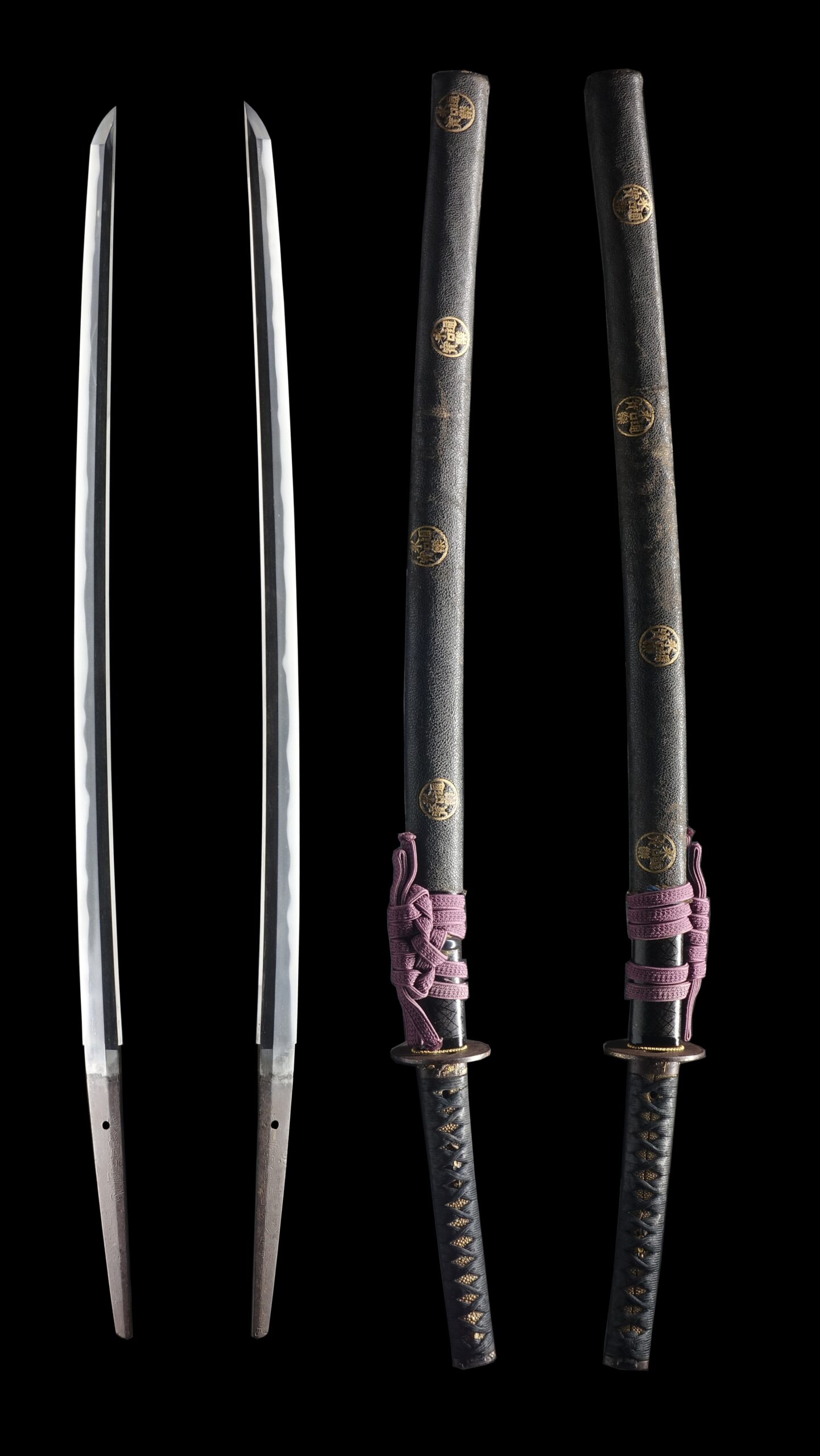
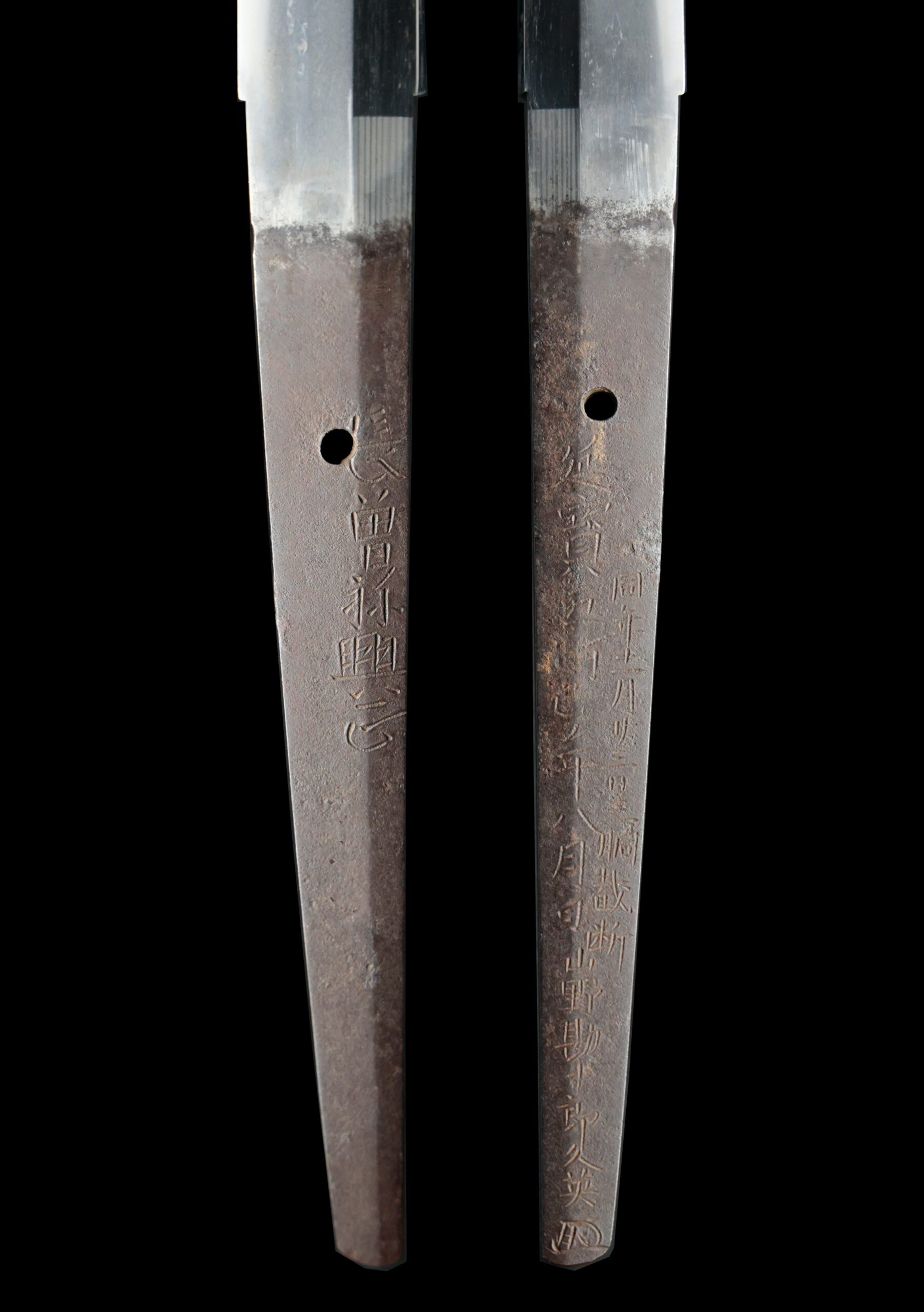
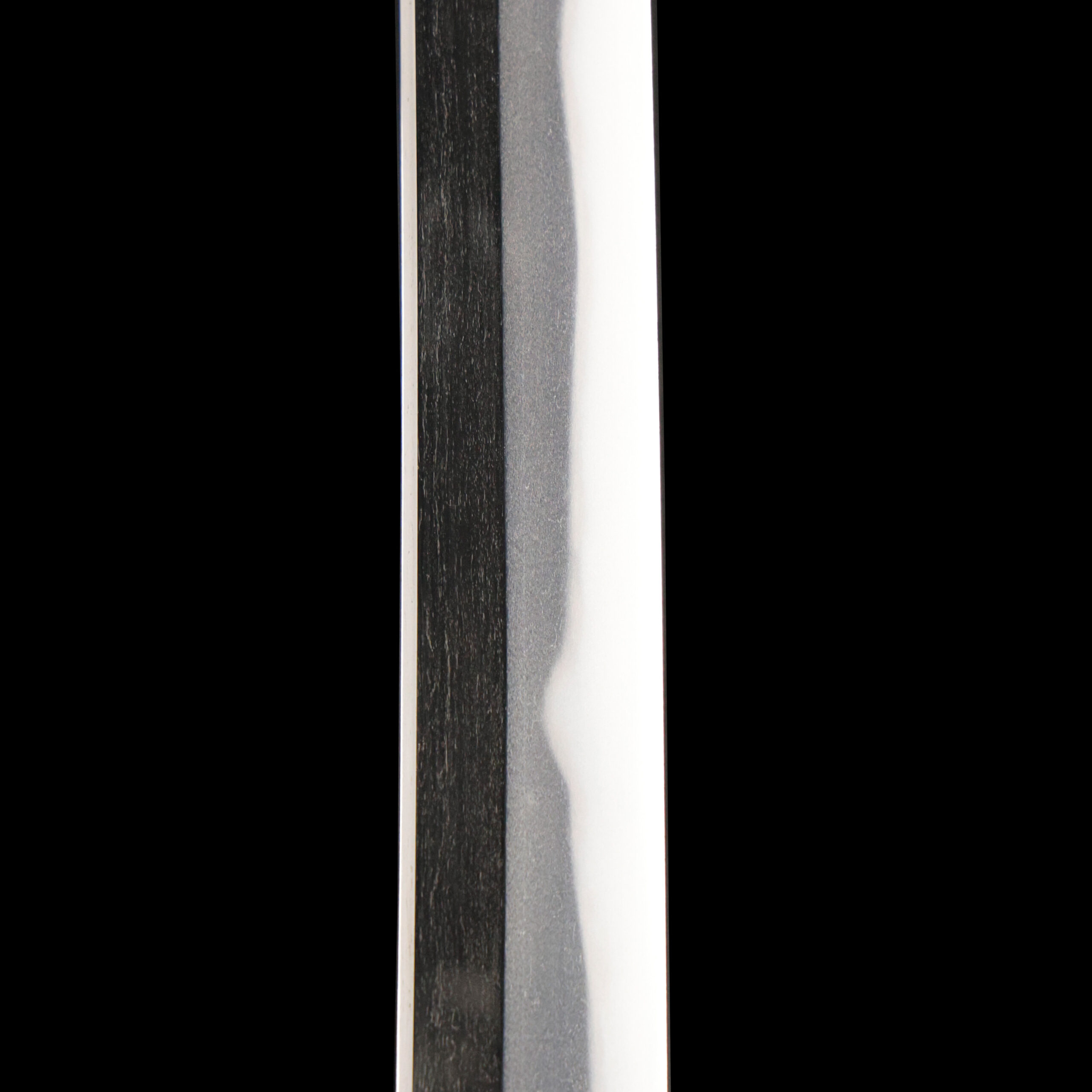
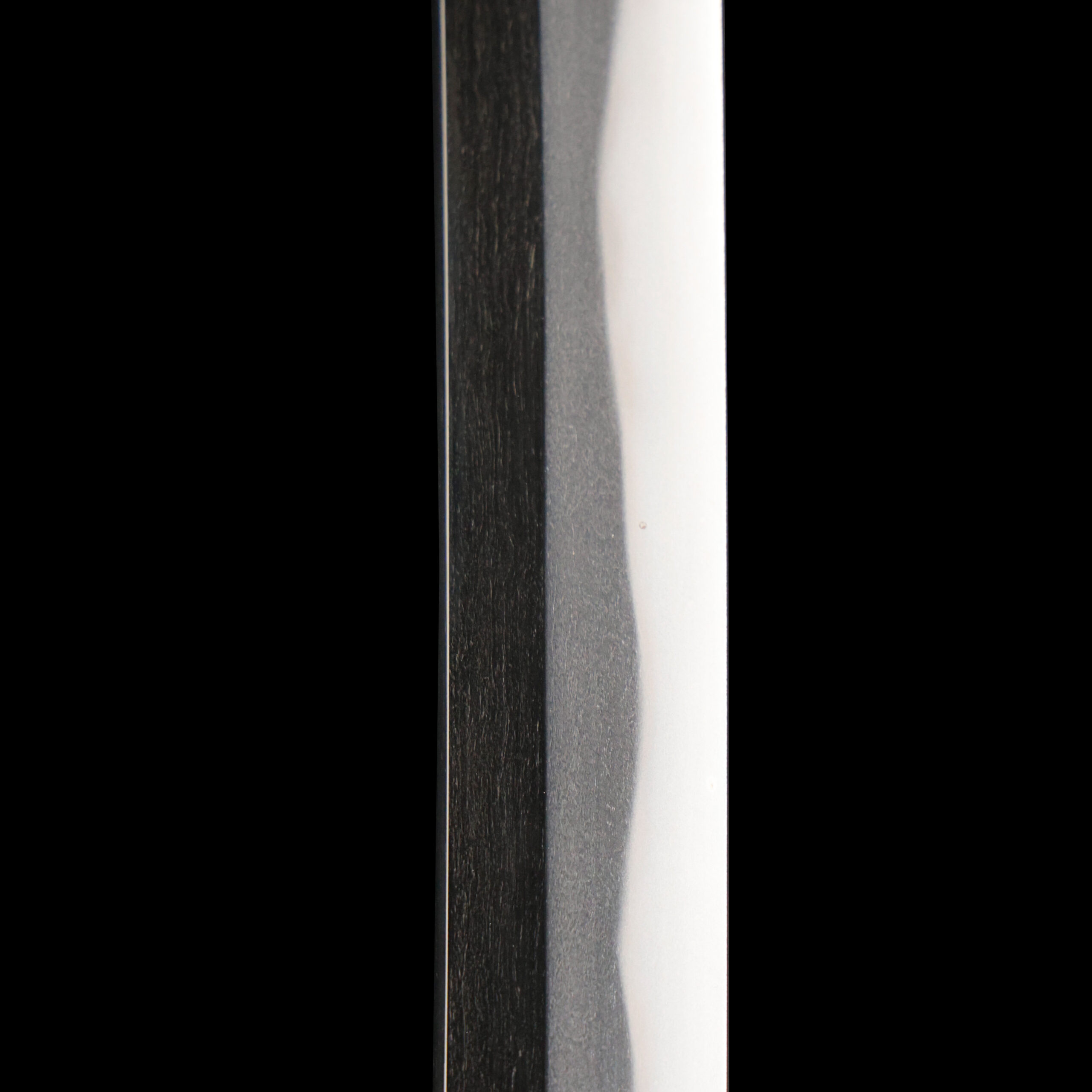
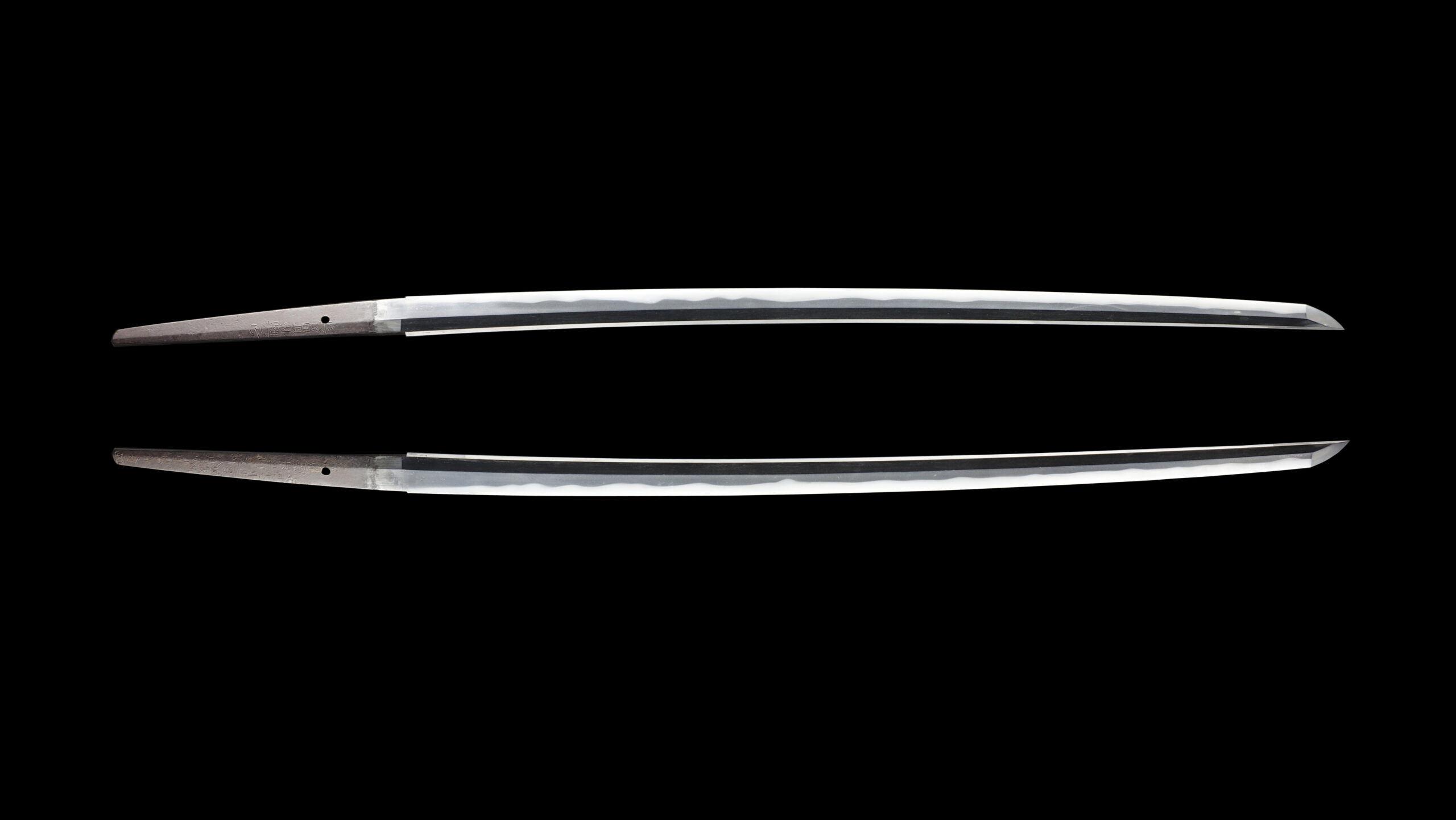
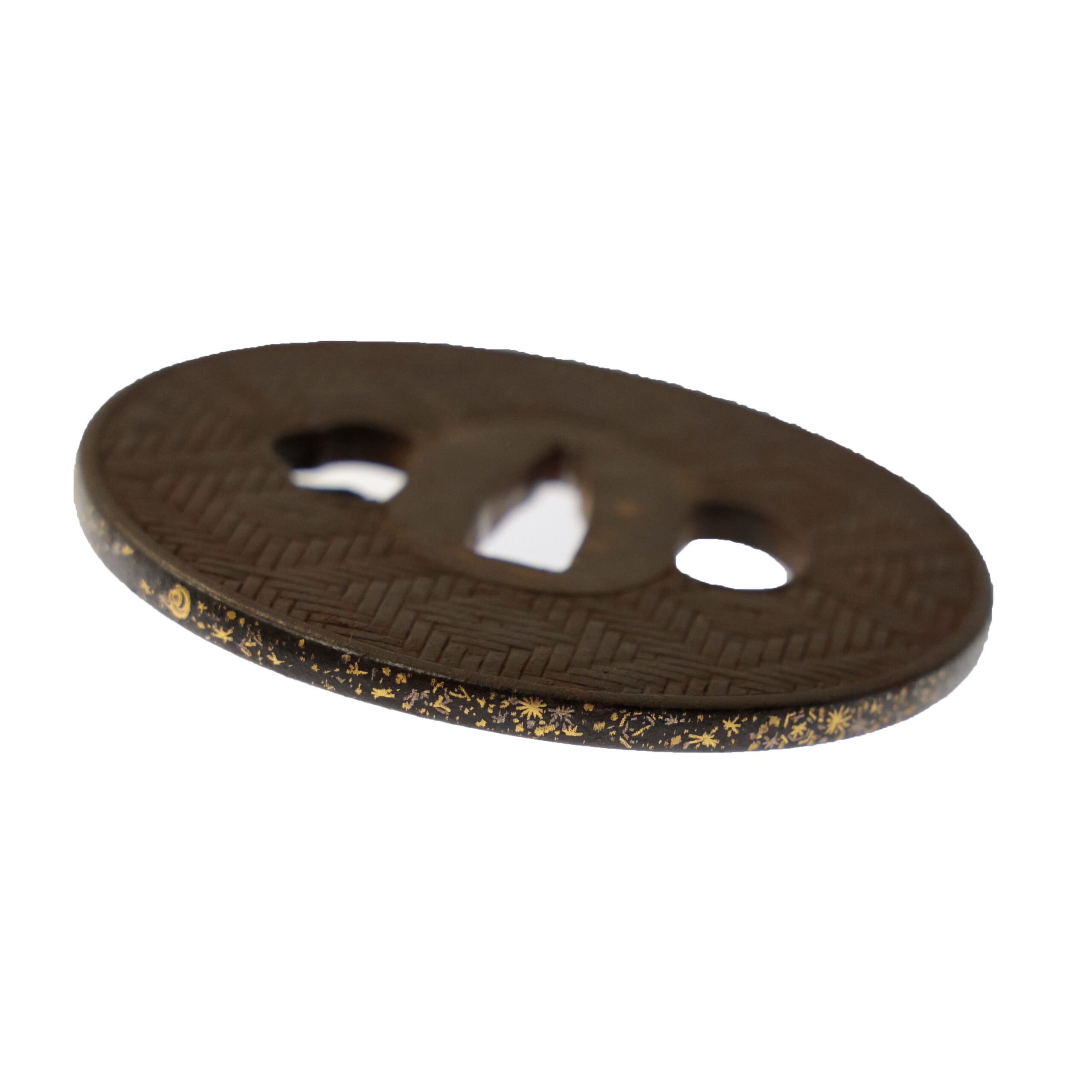
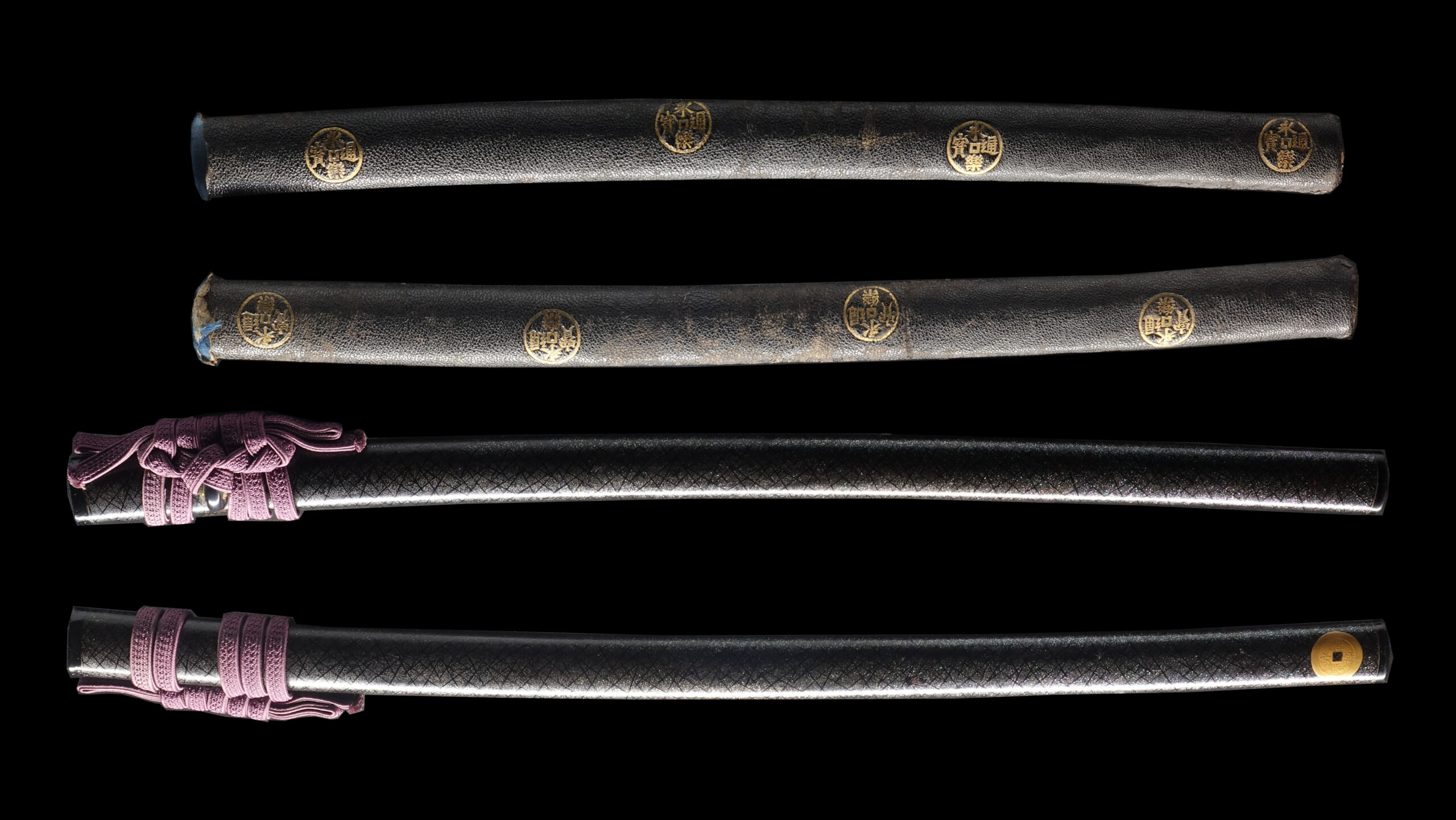
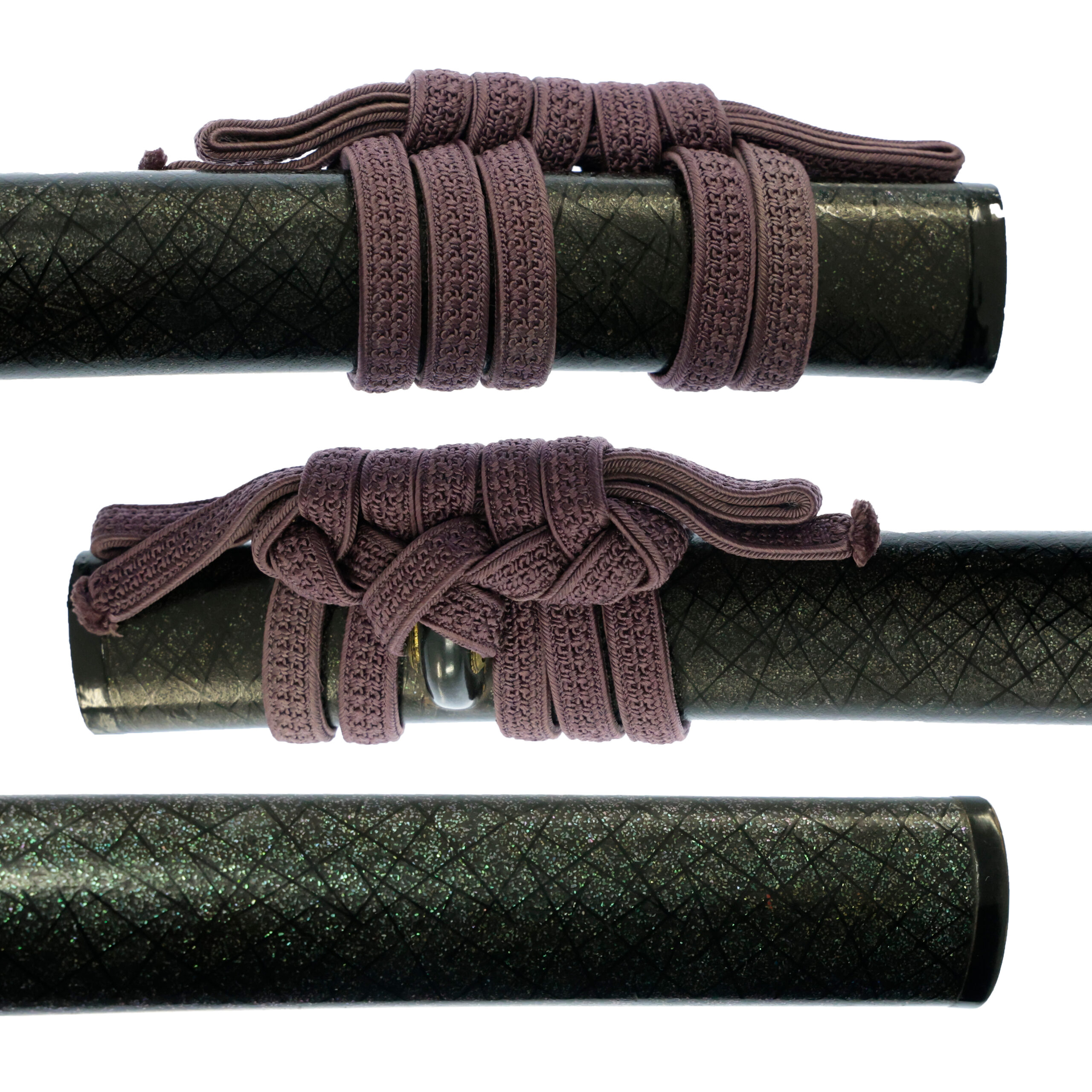
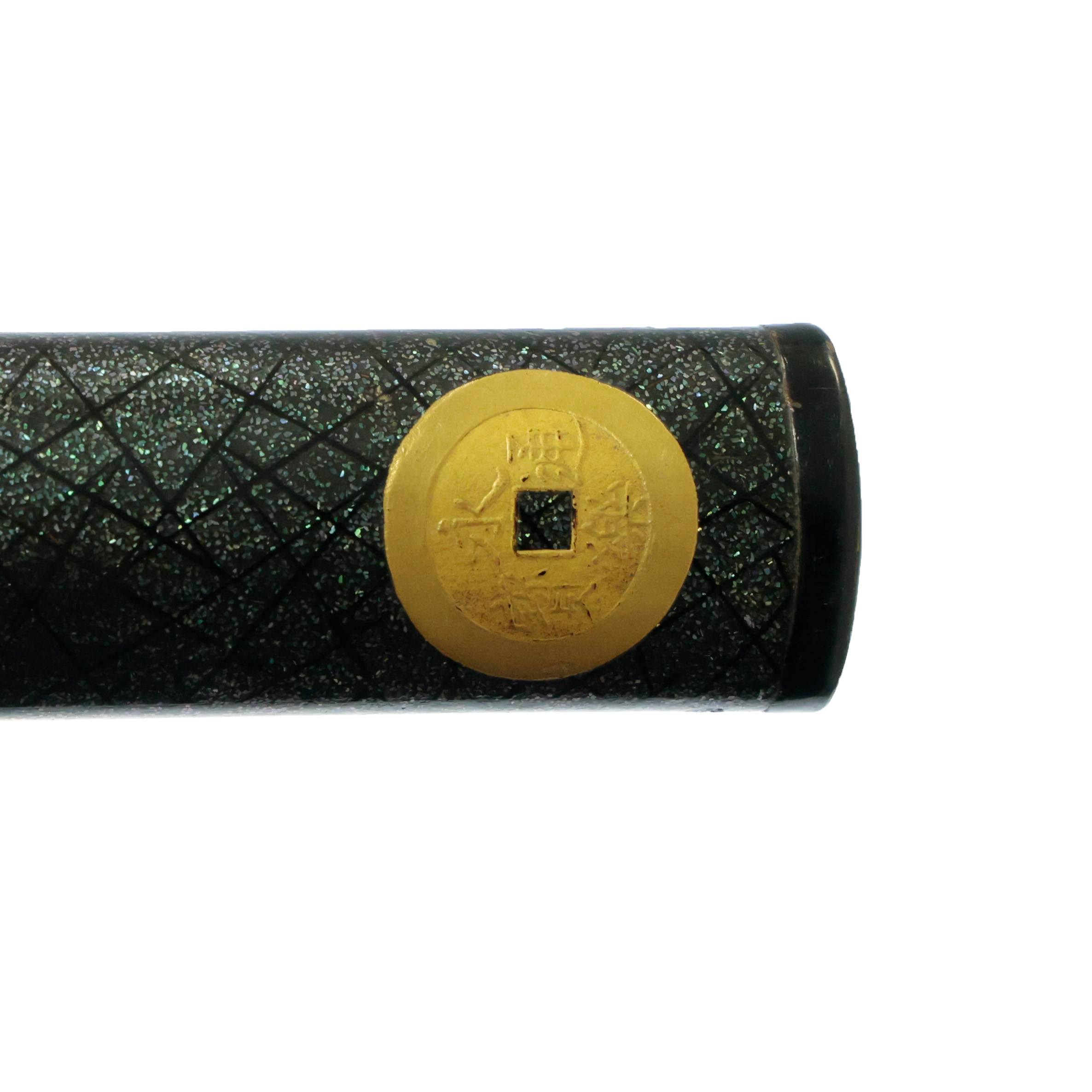
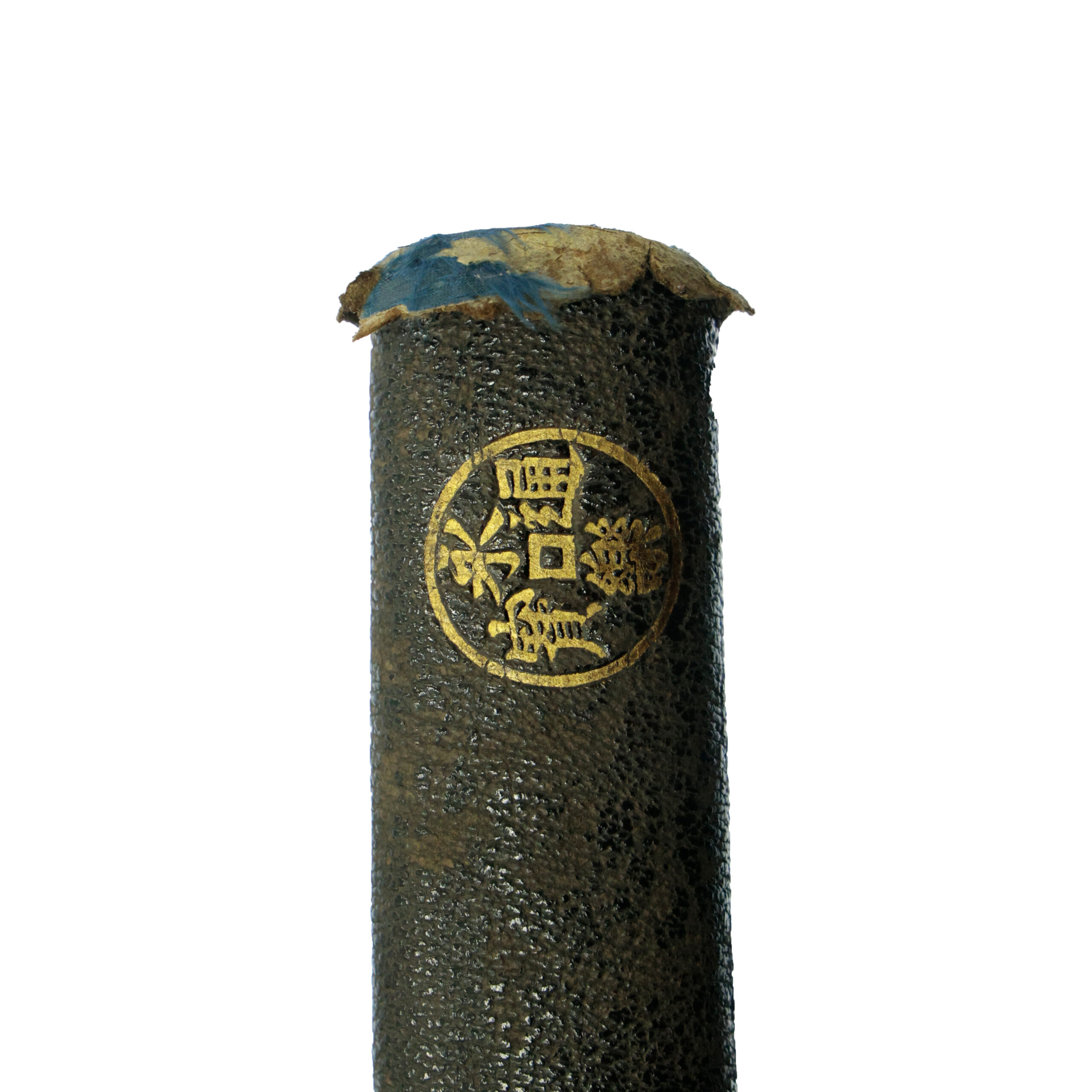
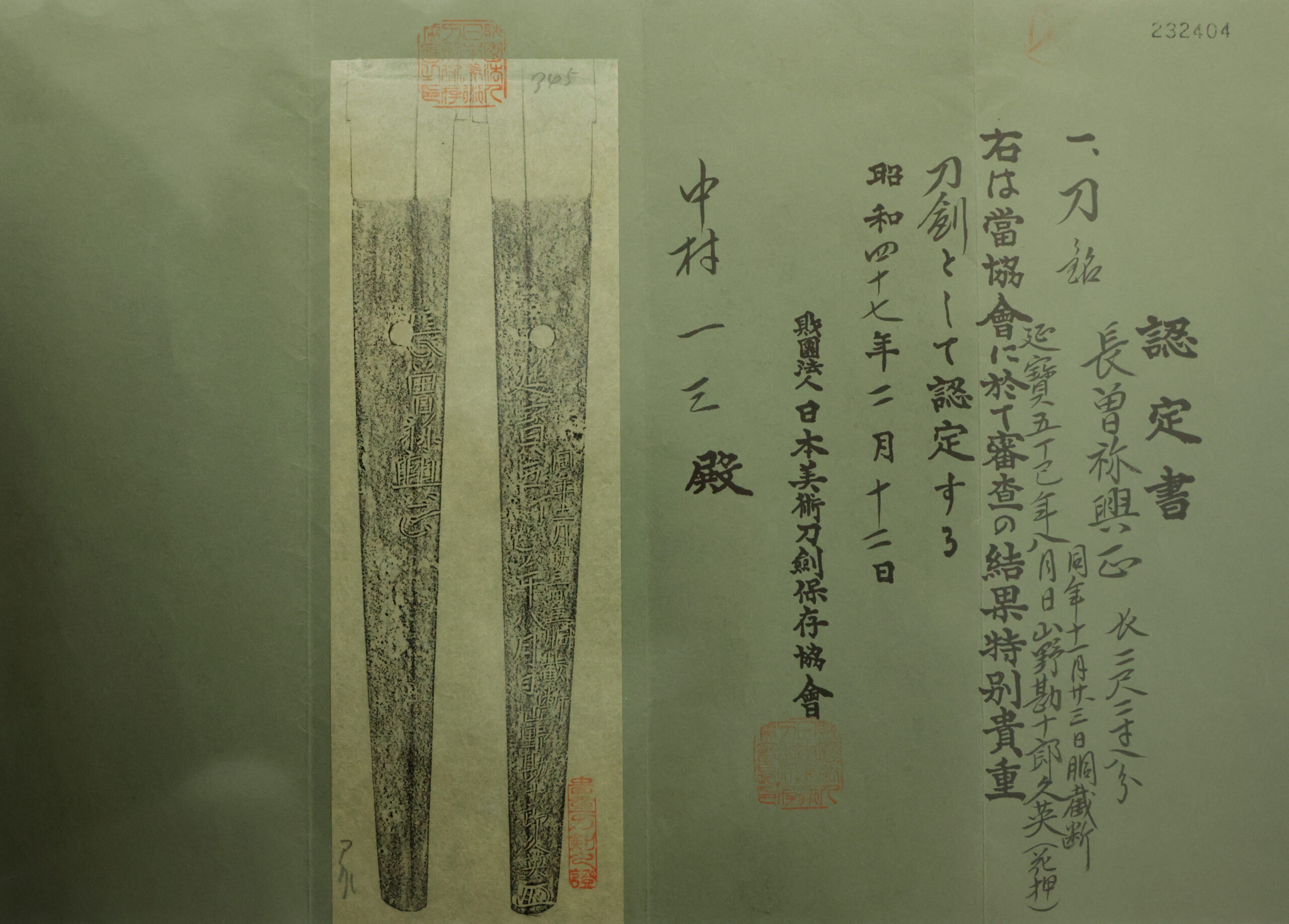
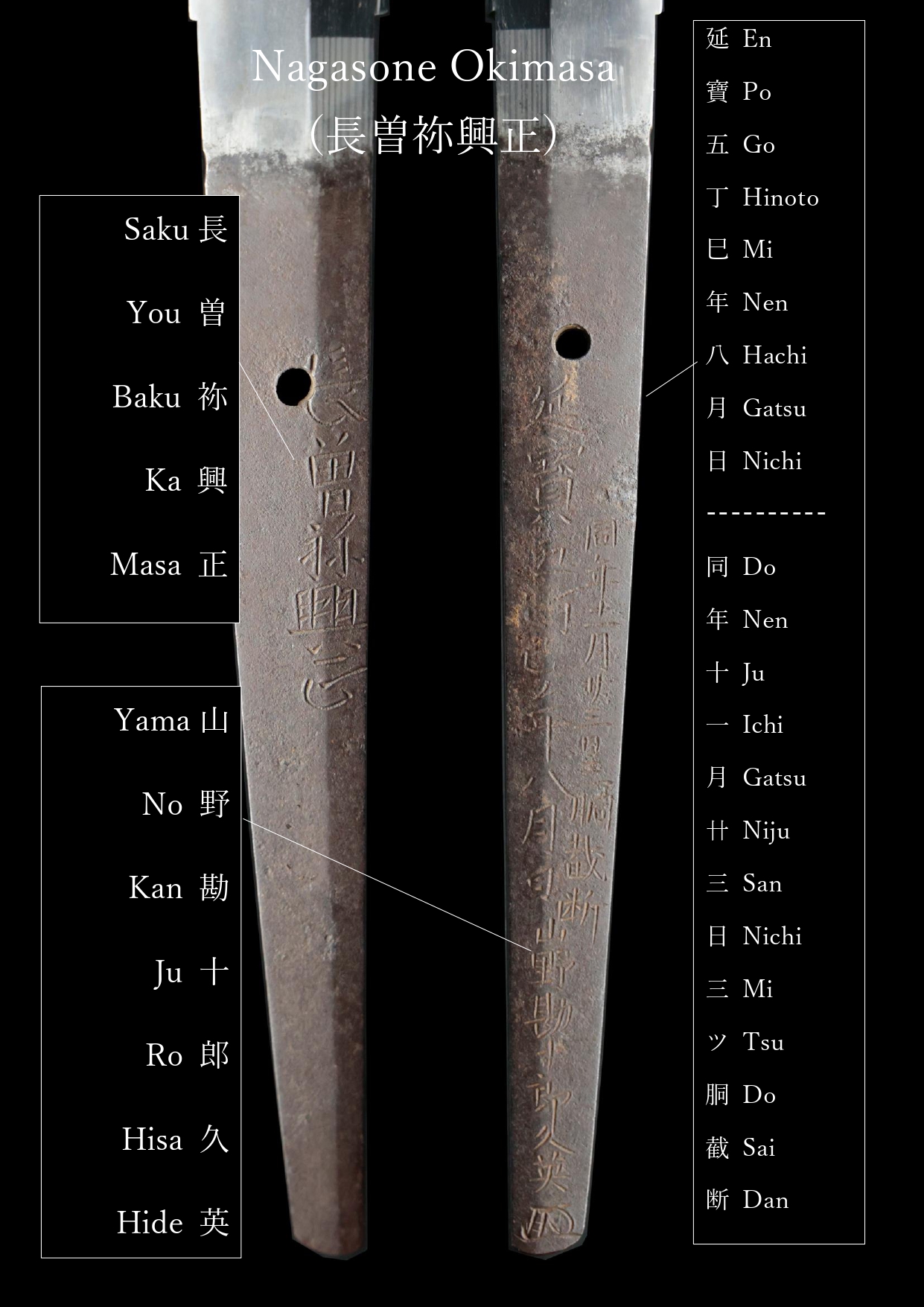
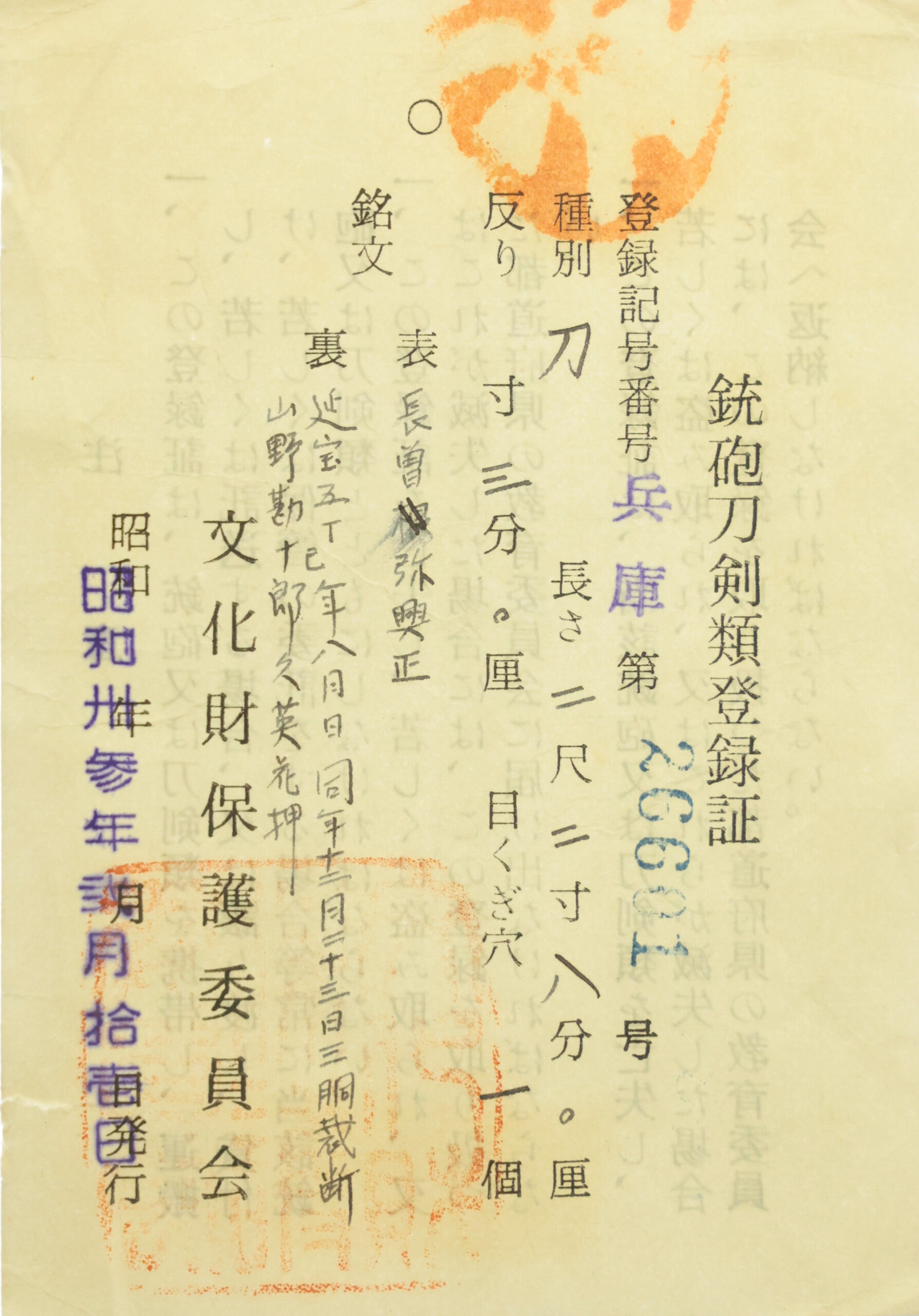
This blade was signed by Nagasone Okimasa (長曽祢興正) in the 5th year of the Enpo era (1677). Okimasa, also known as Shobei (庄兵衛), was active during the early Edo period (the mid – late 17th century) and he is one of the most renowned swordsmiths in the early Edo period. This blade also has an inscription called Saidan Mei (截断銘), which refers to the practice of inscribing the results of a test cutting called Tameshigiri and the name of the swordsman on the tang (Nakago) of the sword. That means that this sword has been proven its sharpness by test cutting. Okimasa learned sword-forging techniques from Nagasone Okisato (長曽祢興里), also known as Nagasone Kotetsu (長曽祢虎徹), who was a very successful swordsmith in the early Edo period. Okisato, the first-gen Kotetsu, was born in Omi province (today’s Shiga prefecture), which was ruled by Ishida Mitsunari (石田三成), a famous warrior. When Ishida Mitsunari defeated in the Sekigahara-no Tatakai (関ヶ原の戦い, Battle of Sekigahara), the first-gen Kotestsu moved to Echizen province (today’s Fukui prefecture). Then, he was active as a famous armorer there. Later, he became a swordsmith around the age of 50 and moved to Edo (today’s Tokyo). It is said that his masters were Ise Daijo Tsunahiro (伊勢大掾綱廣) and Izumi no Kami Kaneshige (和泉守兼重), both of whom were also renowned swordsmiths in the early Edo period. Okisato also became a renowned swordsmith in Edo. Okisato first signed Nagasone Okisato (長曽祢興里) on his blades, but after entering Buddhism, he began to use the inscription Kotetsu. The sharpness of his blades and his sword-forging technique were considered so excellent that he was called the Yokozuna of SHINTO: Yokozuna originally refers to the highest rank wrestler in the sport of Sumo, and SHINTO refers to swords made during the late Azuchi Momoyama – mid Edo period (1596-1793). It is said that his swords were very popular and expensive at that time. In addition, his swords are recognized as Saijo O Wazamono, which is a term for a sword with the highest rated cutting ability. Okimasa, the second-gen Kotestu, is said to have been Okisato’s assistant as an armorer in Echizen province, and they are considered to have moved to Edo together. Then he was adopted and succeeded to the second-gen Kotesu. It is said that the second-gen Kotestu forged swords as a substitute for the first-gen Kotesu due to his high level of skills. The sharpness of his blades is also excellent, and like the first-gen Kotesu, they are recognized as Saijo O Wazamono. Tamashigiri Sword Based on the signature on the tang, Yamano Kanjuro Hisahide (山野勘十郎久英) did Tamashigiri (test cutting) by using this blade forged by Okimasa, the second-gen Kotestu. Yamano Kanjuro Hisahide was in the position of officials who served the Shogunate and tested swords for sharpness. The signature mentions that the sword was forged in August in the 5th year of the Enpo era (1677), and Tameshigiri (test cutting) was done on November 23rd in the same year. After the signature, there is a Kao (花押: stylized signature). Dead bodies of inmates on death row were often subjected to Tameshigiri. According to the tang statement, Mitsudo Saidan (三ツ胴截断), this blade cut through three bodies in a single strike. This statement proves this blade’s sharpness. *Please keep in mind that there are a couple of Kitae Kizu on this blade. Fuchi-Kashira The motif of this Fuchi Kashira is Ume (梅, Japanese apricot blossoms). Its flowers and buds are painted gold beautifully. Japanese apricot blossoms begin to bloom in winter that snow still covers its tree so that people thought this flower tells the arrival of spring. Same as cherry blossom, it has been appreciated for a long time in Japan. People enjoy its adorable petal shape and scent, gracefully branched tree, and compose many poems. As it comes out in the cold season, it symbolizes the power of perseverance and vitality. Tsuka and Menuki The Menuki has the same motif, Ume (梅, Japanese apricot blossoms), as the Fuchi Kashira. Tsuba and Habaki The pattern depicted on this Tsuba is called the Ajiro (網代). Ajiro is a net-like tool made of woven wood or bamboo used to catch fish in rivers. The pattern created when it is woven is called Ajiro pattern. Also, this type of Ajiro pattern is especially called the San kuzushi Ajiro (三崩し網代) pattern. San means three, and Kuzushi means breaking. It is a pattern that looks like the Sanki Mon (算木文), a tool used in Japanese arithmetic, is broken down. Its name comes from the fact that it looks as if the Sanki Mon was broken up into three pieces horizontally and vertically, one at a time. Regarding the design of the Habaki, we estimate Susuki (薄/芒, Japanese pampas grass) is depicted. This plant has been used as an offering to Gods. And some people have used it as an amulet to protect people from evil spirits. Also, in Japan, there is a group of plants that represent the autumn season that is called the Aki-no Nanakusa (秋の七草, the seven flowers of autumn). The Susuki is included in this group, and it shows how long this plant has been familiar to Japanese people. Also, the outer circumference of this Tsuba is decorated with a fine decorative pattern created by Kin Nunome Zougan (金布目象嵌, gold inlay) technique. The Nunome Zougan (布目象嵌) is a technique in which vertical and horizontal stripes are attached to the surface that seems to be a texture of a fabric, and gold or silver foil is pasted on the surface to make it bite in and prevent it from peeling off. Although the golden color is partly faded, this inlay makes this Tsuba look decorative. Saya This Saya is decorated with traditional Japanese craft method, the Raden (螺鈿: Raden). The Raden is a decorative technique that is often used for traditional craftwork. It uses the pearl part of seashells and puts it into the engraved surface of lacquer or wood. Thanks to its iridescent luster, it gives a luxurious look to works. Also, on the head of this Saya and its scabbard bag, coin-like motifs are depicted. It is called the Eirakutsuho (永楽通宝). It is a copper coin which began to be minted in the 9th year of Eiraku (1411) by the 3rd Emperor of the Ming Dynasty in China. In Japan, they were imported in large quantities during the Muromachi period (1333-1573), and circulated until the early Edo period (1603-1868). They were also called the Eiraku coins and Ei coins. The Eiraku coin crest was used as a family crest because it was regarded as an auspicious sign. The Eiraku coin crest is also famous for being used on the banner of Oda Nobunaga (織田信長), one of the most famous warlords in history. Authentication Paper They authenticated the blade on Feb 12th in the 47th year of Showa (1972). They appraised it as a Tokubetsu Kiho Touken, an old form of the certificate. The purchaser will receive the original certificate as well.

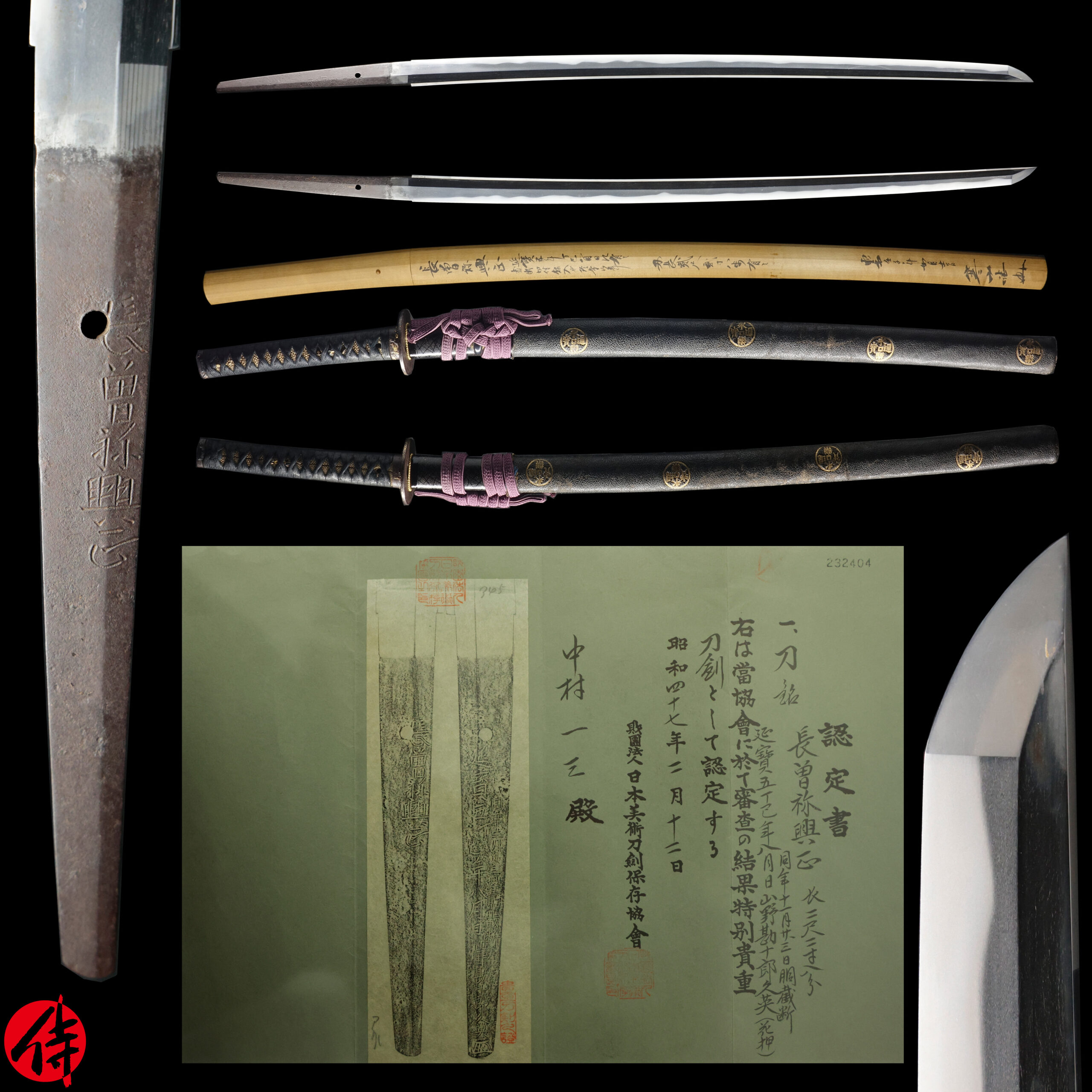
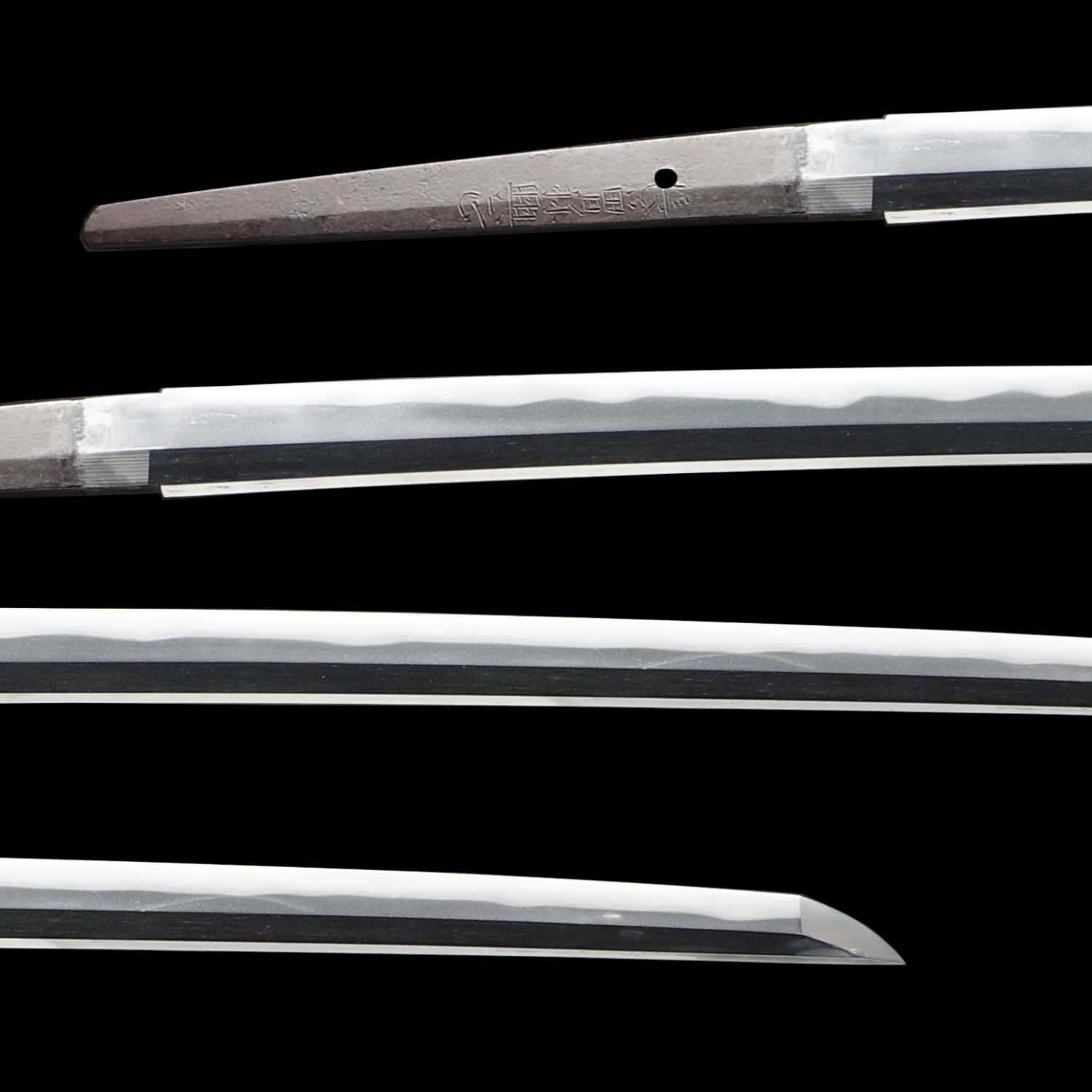
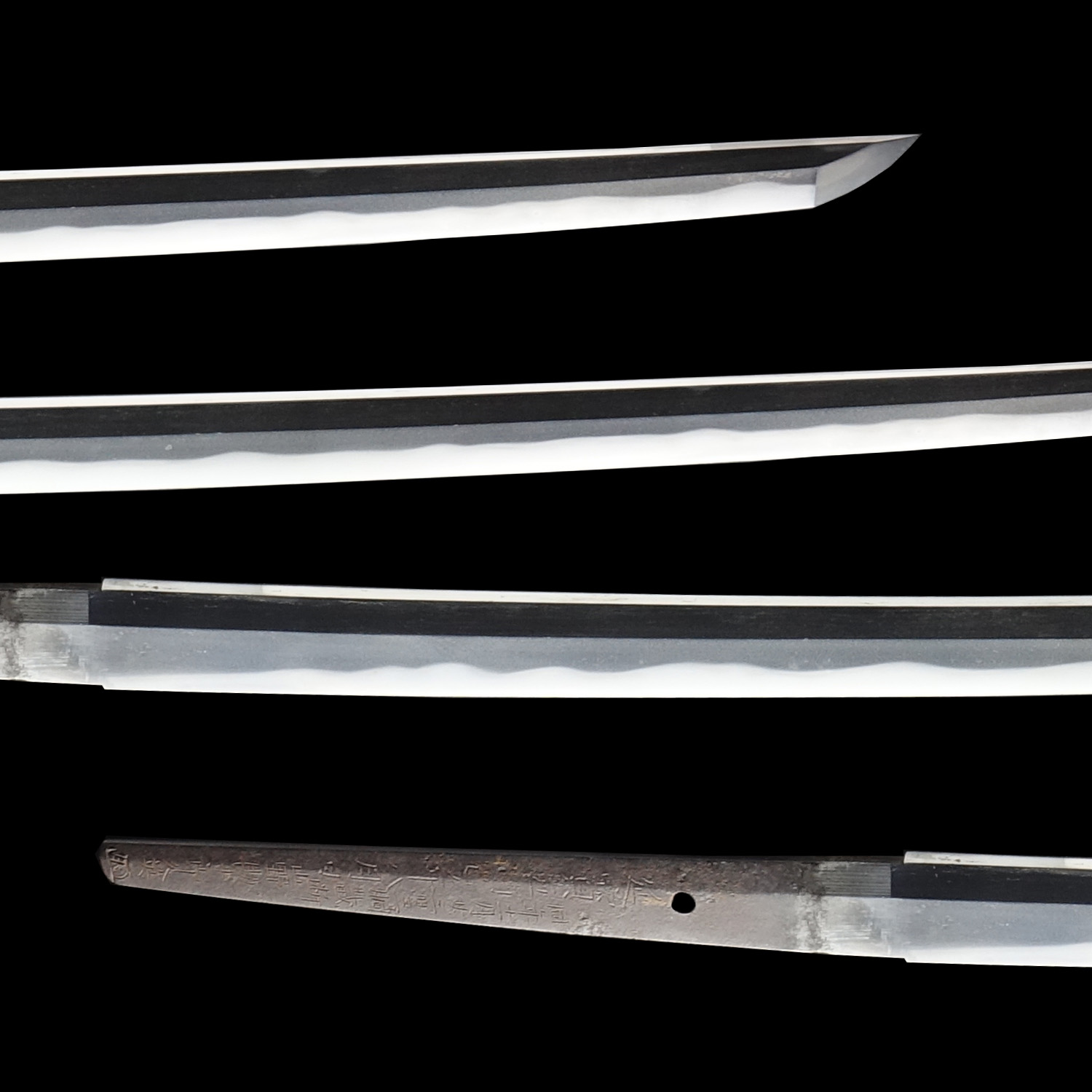
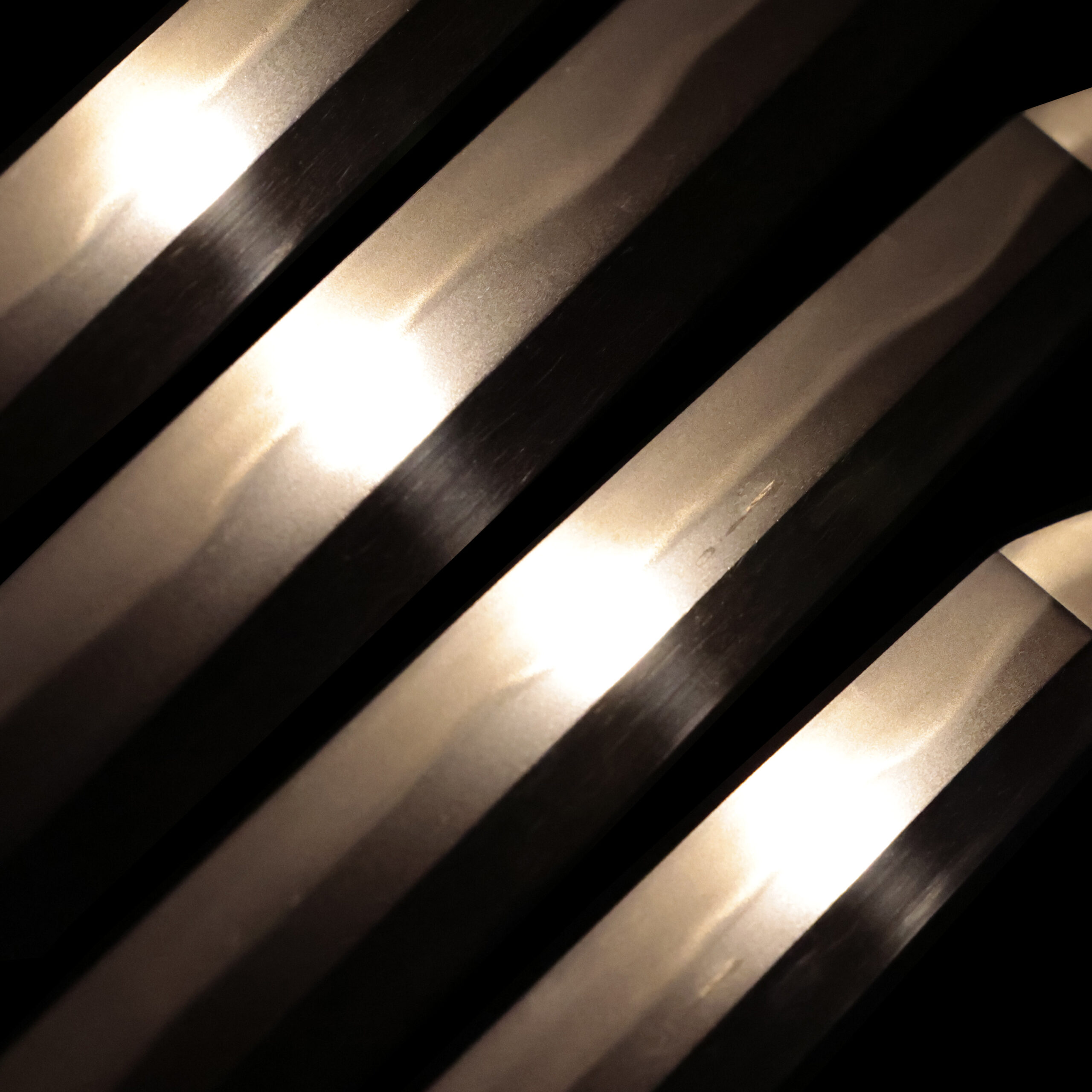
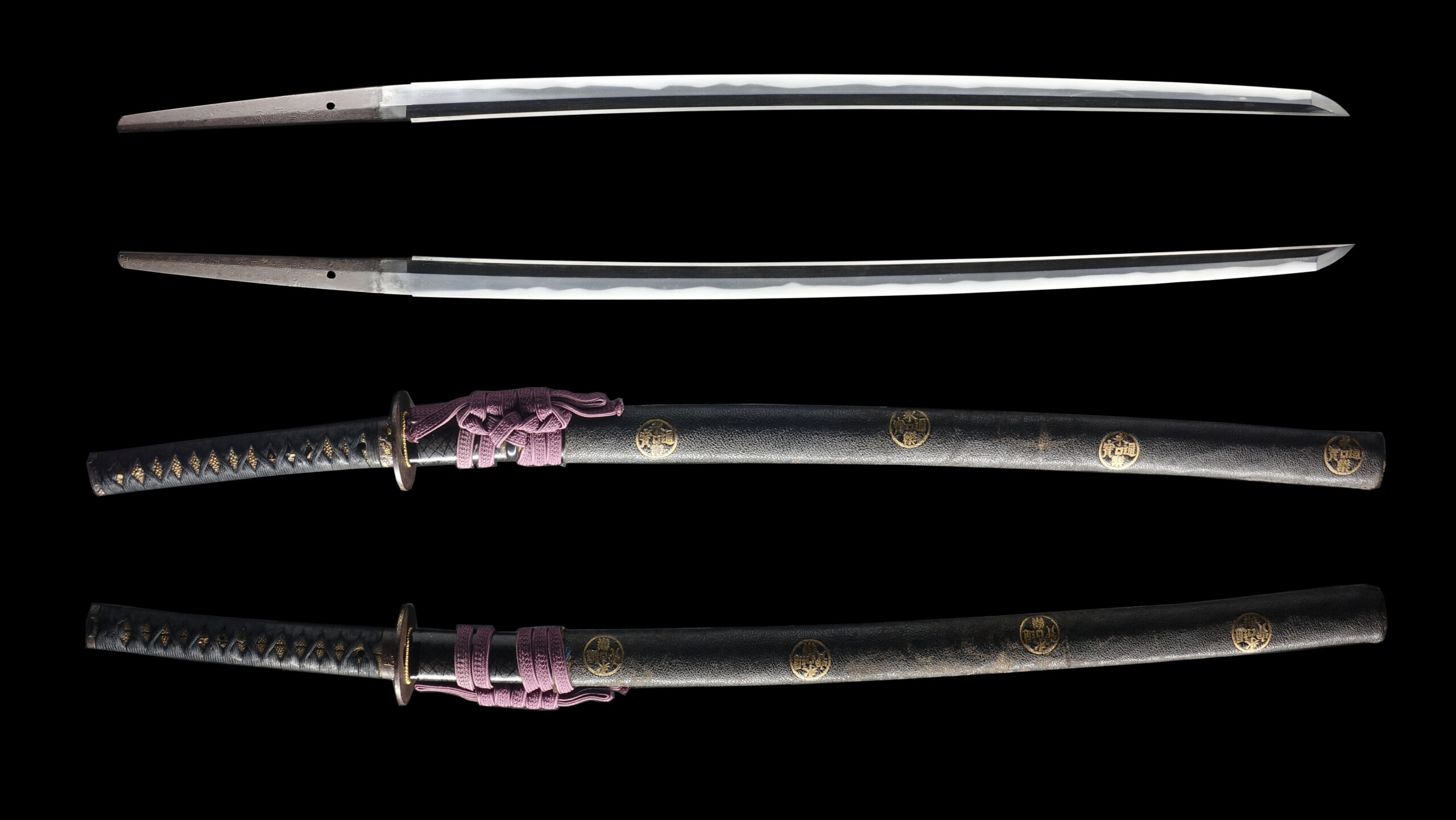
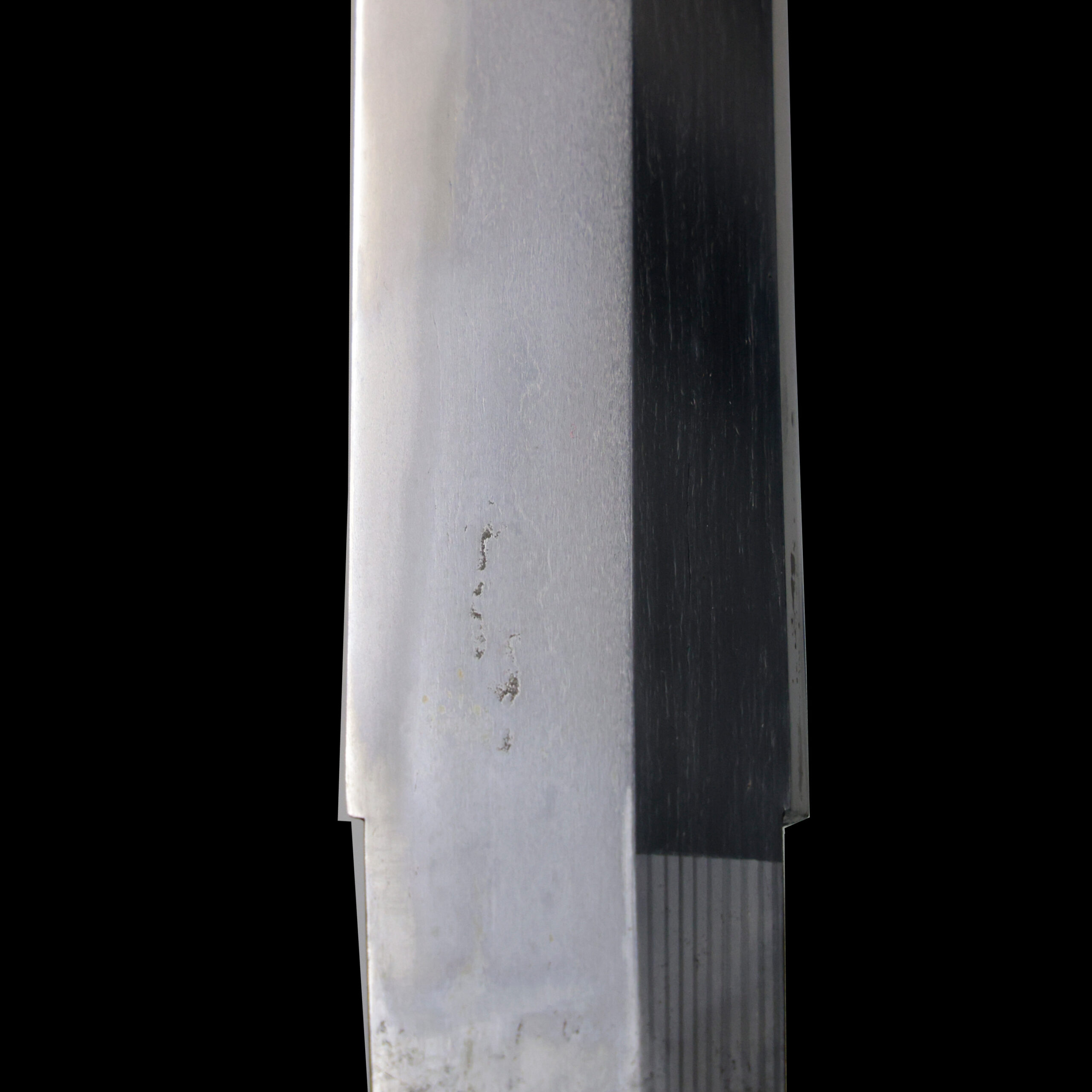
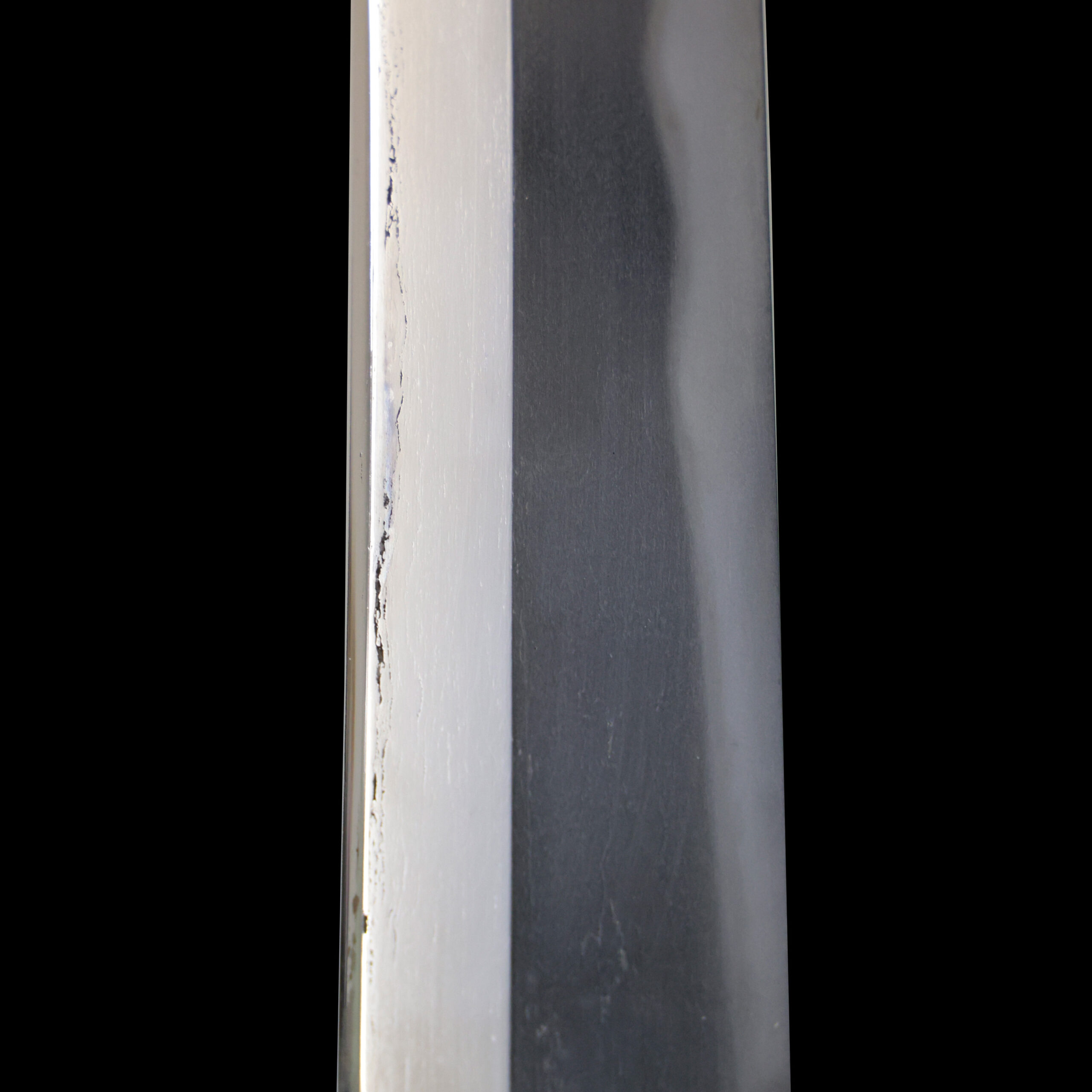
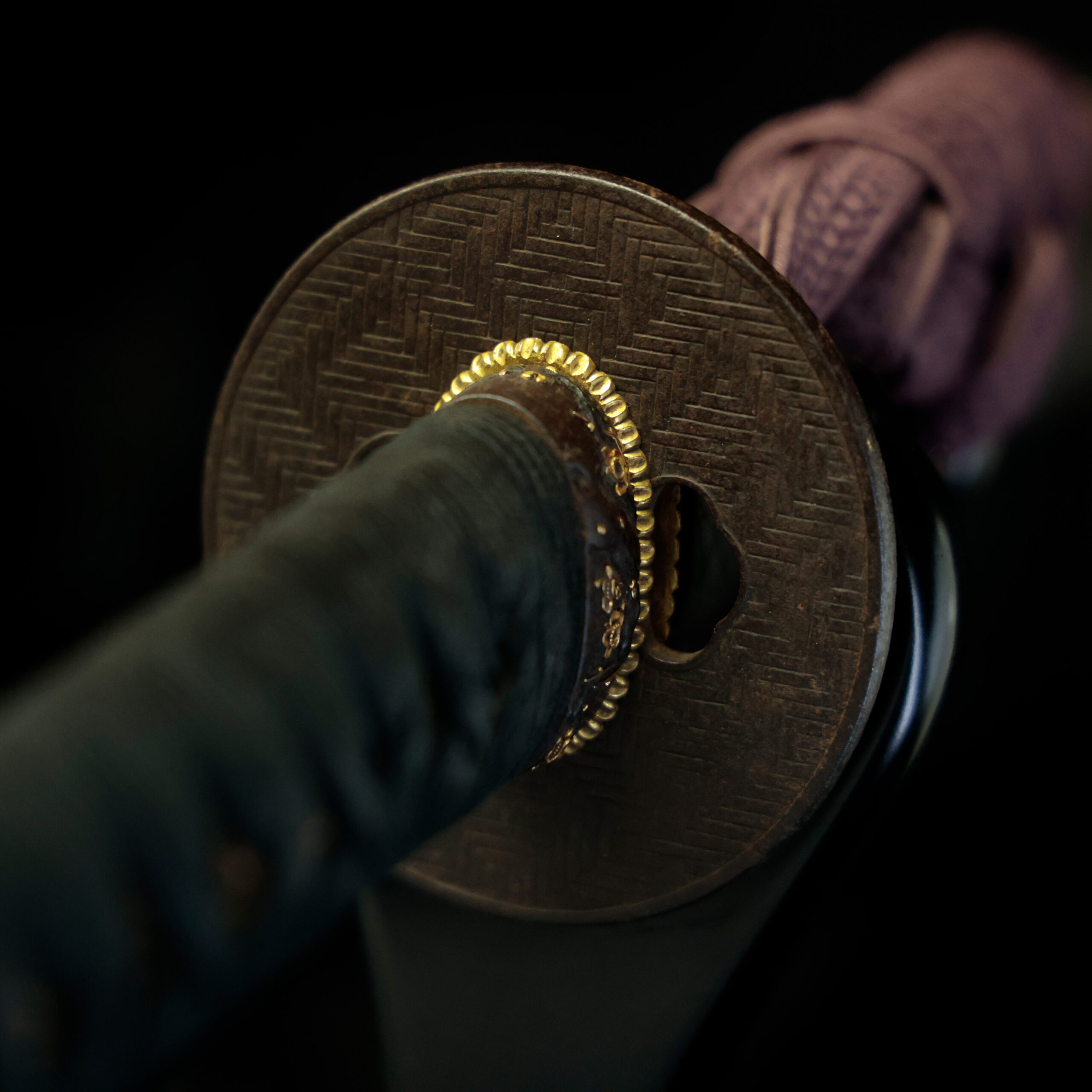
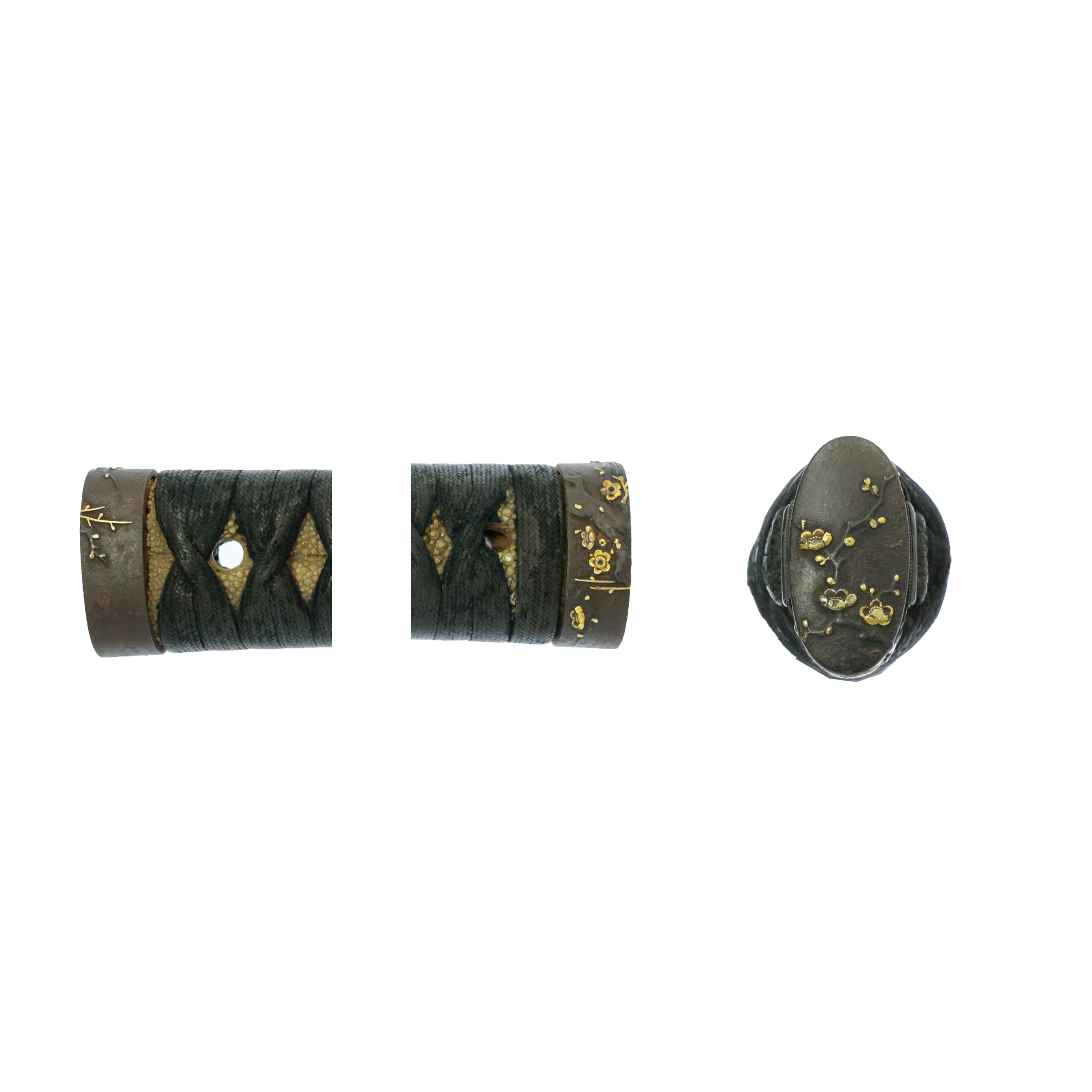
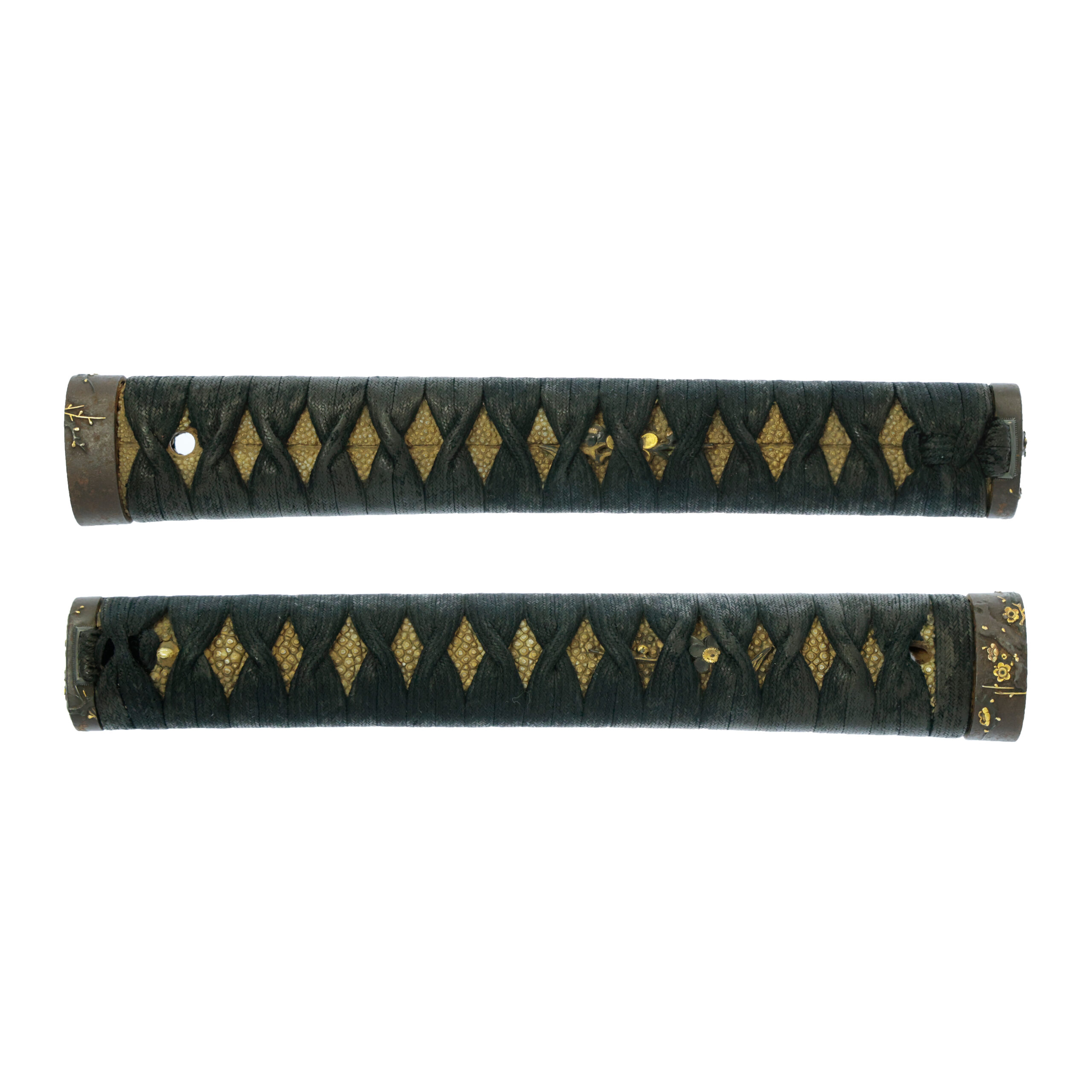
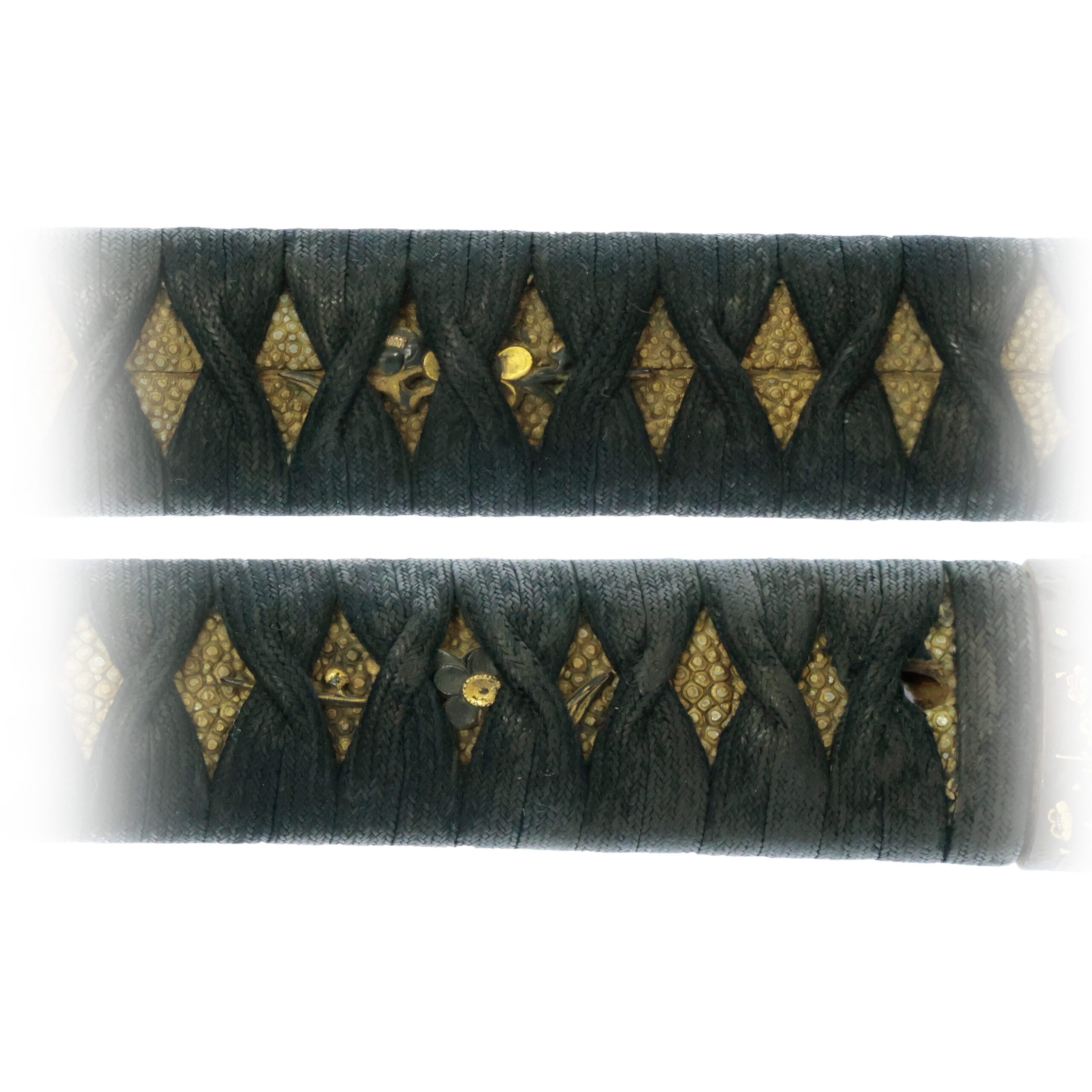
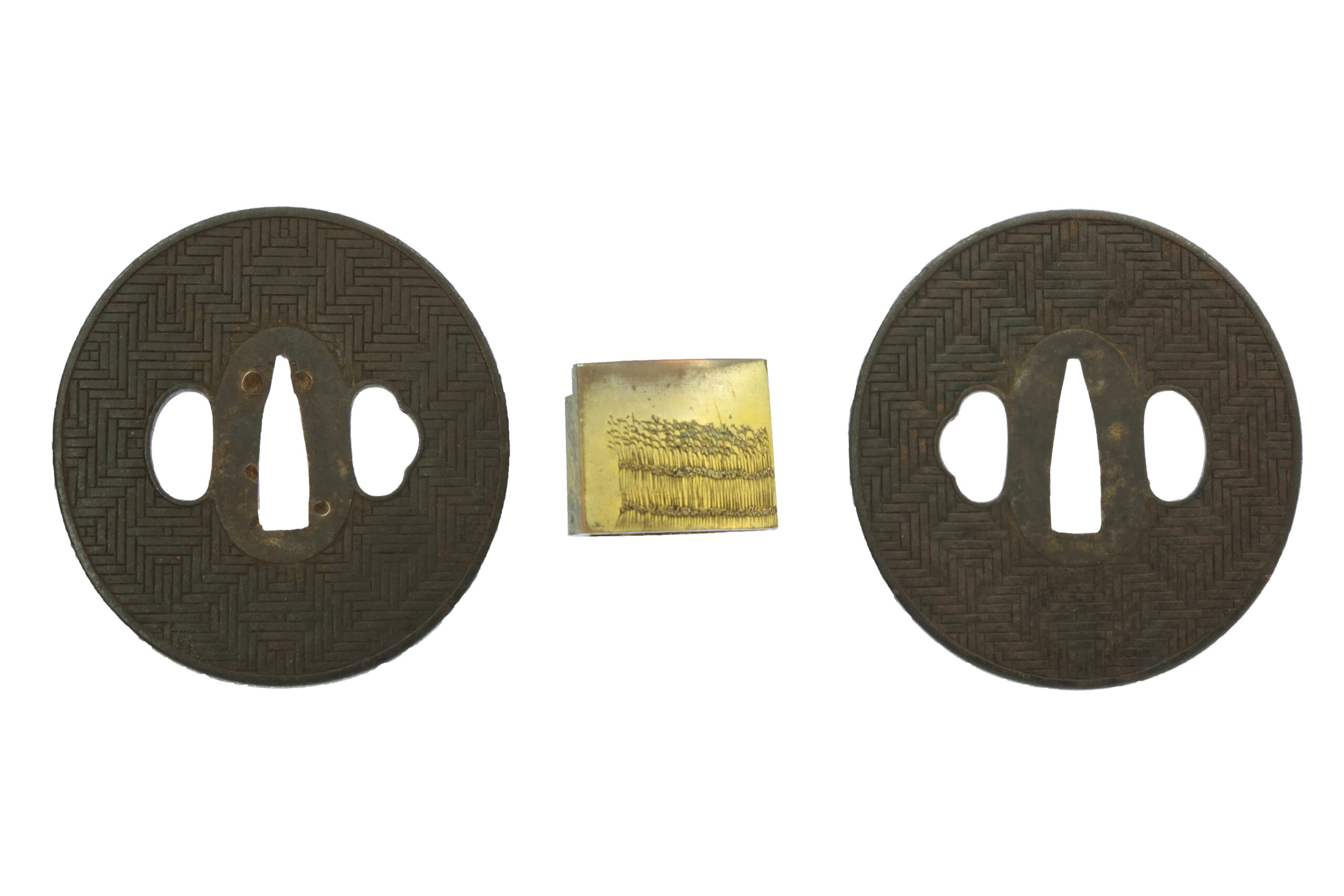
販売店の記載のまま
Nagasone Kotetsu school (Edo, Shinto) · 武蔵 · 1661-1690頃
藤代 上々作 · 刀剣大鑑 上位14%
現在1点販売中
本間が経眼した長曽祢興正の作のうち、ある元禄の刀は同作中の第一とされ、説明書はその刀を「経眼した同作中の第一というべきもので虎徹の佳作に迫る程である」[[c:1]]と評する。興正は虎徹一門の継承者である。説明書は、彼が長曽祢虎徹興里に学び、後に養子となって二代目虎徹を継承し、その技量は師についで上手であったと記す。さらに進んで、虎徹銘の刀の中にもおそらく興正の代作、すなわち師に代わって作った作が含まれていようとし、両者の手は必ずしも分かちがたいとする。経眼する年紀は寛文十三年から元禄三年に亘り、姿は終始、身幅広く反り浅く中鋒に結ぶ寛文新刀体配である。江戸にあって、亡き師の名が市中で最も求められた頃に活躍した工である。
その典型は虎徹ゆずりの数珠刃、すなわち頭の丸い互の目が珠数を連ねたように刃縁に連なる作柄である。説明書はこれを本工の本領とし、師より受けた手と読む。これを写しでなく本工自身のものとするのは二点で、説明書もともに挙げる。第一は互の目が二つずつ連れる刃取りで、刃中に繰り返し現れる。第二は沸の質で、虎徹よりやや荒めにつき、ばさけごころにむらづく。説明書はこれを疵とせず、「技術は師についで上手であり」[[c:2]]と評しつつ、まさに興正と看取される見どころとする。ある脇指について説明書は「沸がやや荒目につき、砂流しがさかんにかかっているところなどに興正の特色がよく表示されている」[[c:3]]と記す。
地鉄はこの刃を載せる地である。よくつんだ小板目に杢を交え、時に肌立って板目となり、地沸を微塵に厚く敷き、地景を入れて、かねは明るく冴える。その上に刃文は元に直刃調の焼出しを見せ、のたれを基調に数珠刃へと立ち上がる。足太く葉入り、匂深く、小沸つき、金筋と長い砂流しがかかり、匂口は明るい。帽子は直ぐに小丸となり先掃きかける。数口は棒樋を掻き通し、また多くは裏に金象嵌の截断銘を帯びて、その截断の利を伝える。
説明書は興正を年代別に分けがたいと率直に記す。銘振りは多様で、年紀を刻したものは少なく、正の字の楷書体は延宝四年紀の作にのみ見られるという。その作のうちに説明書は二つの作域を引く。一つは右の数珠刃の本領で、最上の作では会心の出来に達し、覇気がある。いま一つはやや離れて立つ。焼幅を広げて浅い大のたれとし、荒めの沸が強くむらに走り、湯走り風と飛焼を交え、幅広・重ね厚く反りの深い頑健な姿に仕上げる。ある刀について説明書はこれを「野趣に溢れた作柄」[[c:4]]と称し豪壮とし、なお明るい匂口と二つずつ連れる互の目に同じ手が窺えるとする。この一脈を説明書は和泉守兼重の作柄に通じるものとし、兼重と長曽祢一門との関係を察知させるとする。
興正を分かつものは、師に対して、また一門の内にあって測られる。説明書は彼の刀をまさに虎徹宛らの出来としつつ、焼幅の広さ、二つずつ連れる互の目、荒めでばさけがちな沸を、虎徹の穏やかで冴えた刃と分かつところとして繰り返し挙げる。彼は一門の開かれた表の顔である。二代目虎徹として銘を切り表に立ち、米国より戻ったある合作の刀は、興久・興直が陰で彼を支えた様子を銘文に留める。虎徹興正と切る銘は継承を茎の上に明示し、ある長銘の刀を説明書は、師風を継ぎながら独自性を追った一口として挙げる。
収集の観点では、最上の在銘刀が師虎徹に迫るとされる新刀屈指の名である。藤代の極めは上々作。国宝はなく、重要文化財もない。その記録は重要刀剣の級を通じ、同級に二十五口、加えて昭和十七年に認定された重要美術品の刀が一口あり、これが本間の「経眼した同作中の第一というべきもの」[[c:5]]とした作である。来歴の記録は乏しく、伊藤家の刀と、かつて和田虎雄が蔵した一口が知られるのみで、現存の館蔵者は記録にない。されば在銘の興正は、世に出るよりも蔵されることが多く、数珠刃の作域の刀で、体配健全に刃明るい一口が私蔵の収集家のもとに現れるのは折にふれてのことであり、虎徹一門の二代目がこれを継いだ時を語る一証である。
興正の位置づけを、日本刀全体および伝法・時代・時期ごとに示します。各区分(随一・屈指・有数・著名)は、NBTHK および文化庁による指定に加え、三作や名物帳などの歴史的栄誉を加味したものです。
各項目を選ぶと評価方法が表示されます。
在銘年紀作が示す、確実に活動していた年代
新刀 · 武蔵
現在4点販売中
長曽祢虎徹興里は元々越前の甲冑師であり、明暦二年頃、五十歳ばかりの頃に江戸へ出て刀鍛冶へ転じたと伝える。通称を三之丞と称し、興里と名乗ったが、入道して「こてつ入道」といい、初めは「古鉄」の字を用い、後に「虎徹」、さらに寛文四年八月からは「乕徹」「馬徹」の字を使用している。年紀のある作では明暦二年が最初期、延宝五年がその下限とされ、武蔵国江戸の東叡山忍岡辺に住したことが住居地銘にうかがえる。その系では、通説に虎徹の門に学んで後に養子となり二代目を継承したと伝える長曽祢興正があり、経眼される年紀は寛文十三年から元禄三年に及ぶ。興正の技倆は師に次いで巧みで、虎徹晩年の作のうちには興正の代作が含まれていると考えられている。江戸中期、寛文を中心とする新刀の只中に立ち、甲冑師の出という異色の経歴から鍛刀の名門が興った。 作風は地鉄が強く、地刃の匂口が明るく冴えるのを特色とし、作刀の多くに焼出しを伴う。鍛えは小板目肌がよくつんで杢を交え、地沸が微塵に厚くつき、地景が細かによく入り、腰元には梃子鉄と称する大肌や地斑状の肌合を交えることがあり、かねが冴える。刃文は前期には瓢箪刃と称される大小の互の目が繋がって出入りのある乱れを焼き、後期には焼の出入りに変化の少ない、頭の丸い互の目の連れた、いわゆる数珠刃と呼ばれる独特の互の目乱れを焼く。これに伴い銘も前期の「はね虎」から寛文四年に「はこ虎」へ改まり、作域の推移と対応する。足が太く頻りに入り、匂深く小沸が厚くつき、金筋・砂流しのかかるものが多い。帽子は直ぐに小丸とし、横手を互の目で跨ぐいわゆる乕徹帽子を見せるのが見分けの要となる。姿は元先の幅差がつき反り浅く中鋒のつまる寛文新刀の体配で、手持ちの重い頑健なものが多く、梵字・三鈷剣・倶利迦羅などの彫物を自身彫として添えた作も知られる。興正は師ゆずりの数珠刃を継ぎつつ、匂深く沸の覇気ある刃を焼き、互の目丁子を交えるなど独自を追った持ち味を示す。 虎徹が収集家に重んじられるのは、地刃の冴えと数珠刃の見どころに加え、記録された截断の評による。寛文五年三月の貳ツ胴切落、同年十一月の両車切落、寛文元年の三ツ胴截断など、山野勘十郎久英・山野加右衛門永久らによる金象嵌截断銘が遺り、その切れ味の高さを今に伝える。截断は必ずしも直ちに象嵌されたものではなく、後日まとめて施された例もこれらの銘から知られる。伝来の確かな作も尊ばれ、肥前国鍋島家に伝わって佐藤寒山博士の鞘書に鍋島虎徹の異名を記すものがある。鑑定の要点は、明るく冴える地刃、前期の瓢箪刃と後期の数珠刃という時期による作域の違い、乕徹帽子の所作、銘振りの推移にあり、年紀を欠く作でも銘と作域から制作期を推し量ることができる。短刀は作例が極めて少なく、相州伝の趣を強く感じさせるものが知られる。甲冑師から転じて一代で名を成し、後継の興正へと技を伝えたこの系は、江戸新刀を代表する一門として確固たる位置を占めている。 詳しく見る →
江戸 将軍の御膝元
参勤交代が集めた日本最大の帯刀人口が江戸にあった。御用鍛冶康継は茎に葵紋を許され、虎徹の刀は截断銘の金象嵌を帯びる。この町では、証こそが物を言った。
本作はNBTHKの旧鑑定書(貴重・特別貴重)を有しますが、これらは現在発行されておらず、現在の日刀保ではほとんど認められていません。極めを確認するには、公的な鑑定機関(NBTHK・NTHKなど)に再提出し、現行の鑑定を受けることもご検討ください。
Returns/exchanges limited to defects caused by shipping (except willful misconduct or gross negligence by the company); customers must contact within 72 hours of receiving the product.