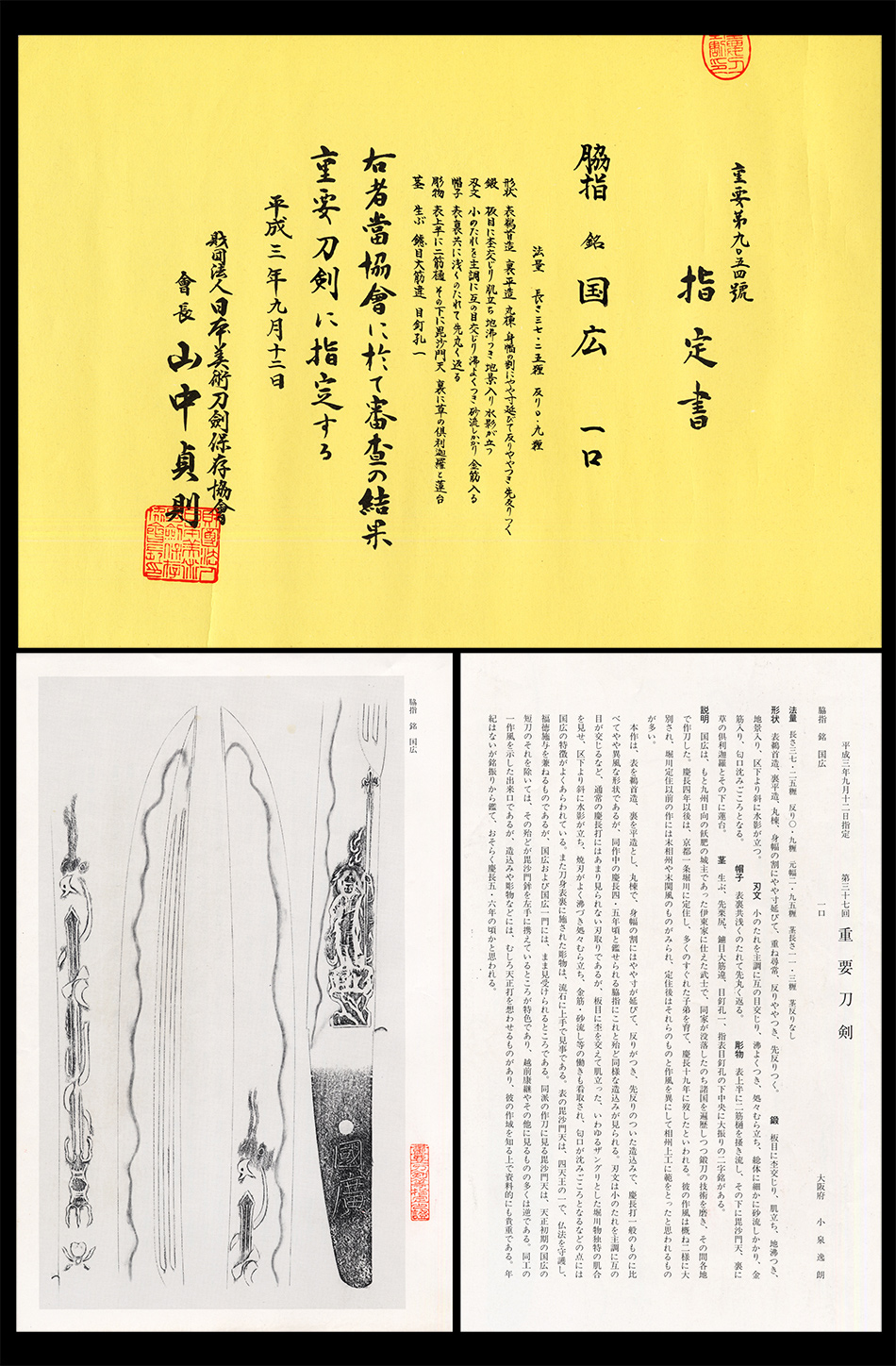
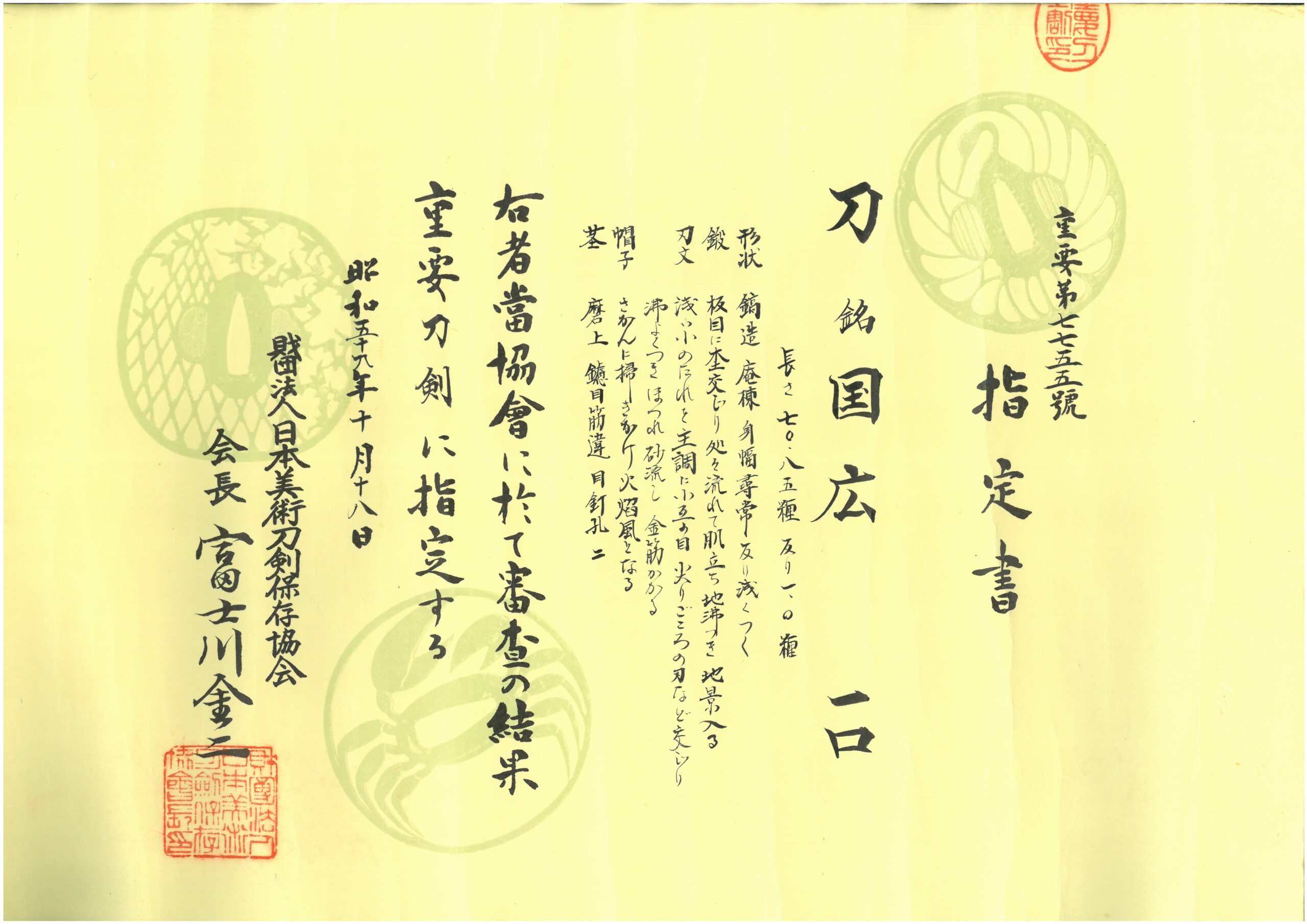
Juyo-Token, 37th Session — Designated September 12, 1991
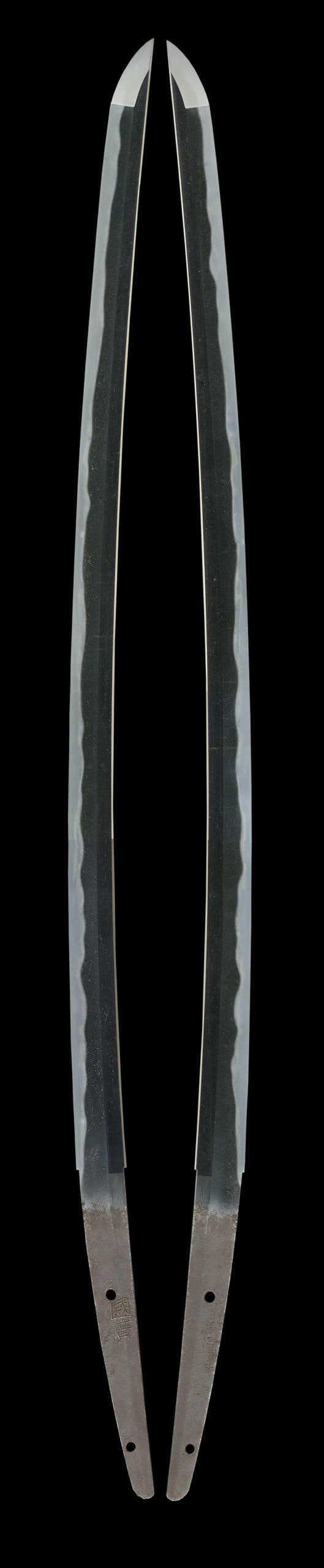
Wakizashi, mei: Kunihiro (国広)
Measurements Nagasa 37.2 cm, sori 0.9 cm, motohaba 2.95 cm, sakihaba 1.13 cm, kissaki-nagasa not stated, nakago-nagasa not stated
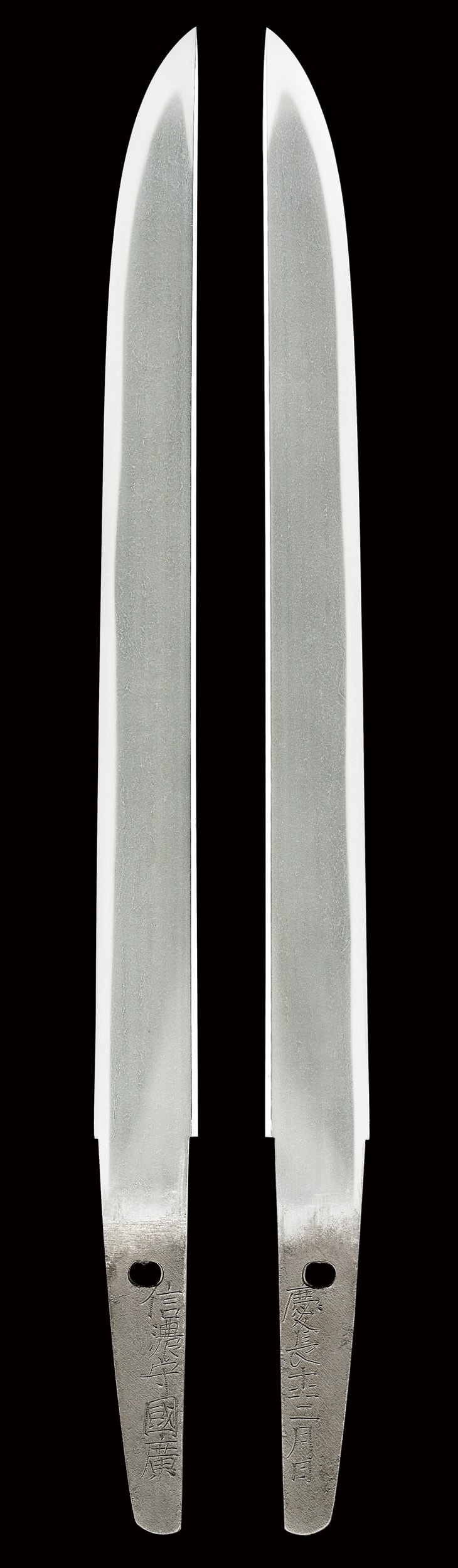
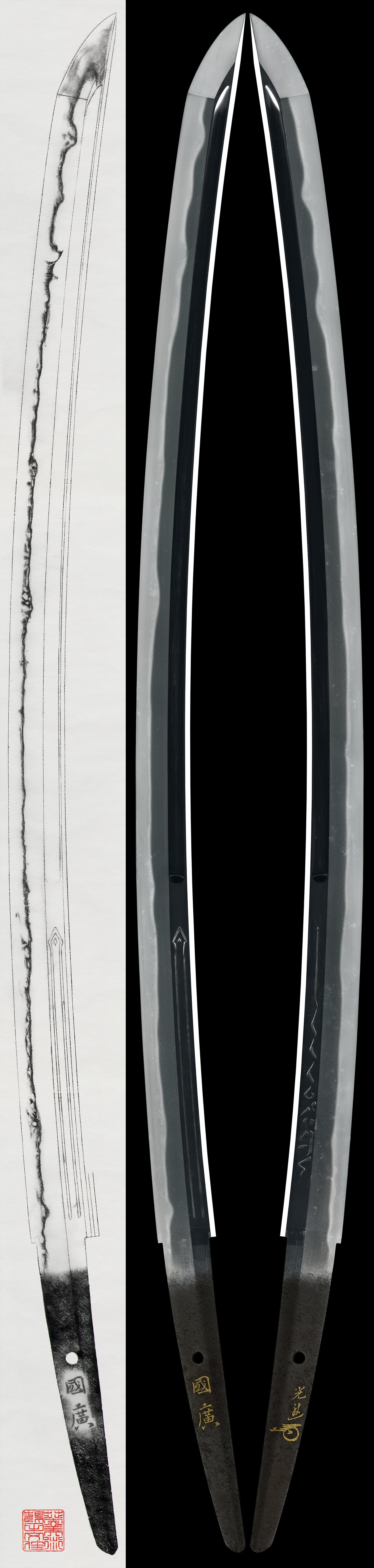
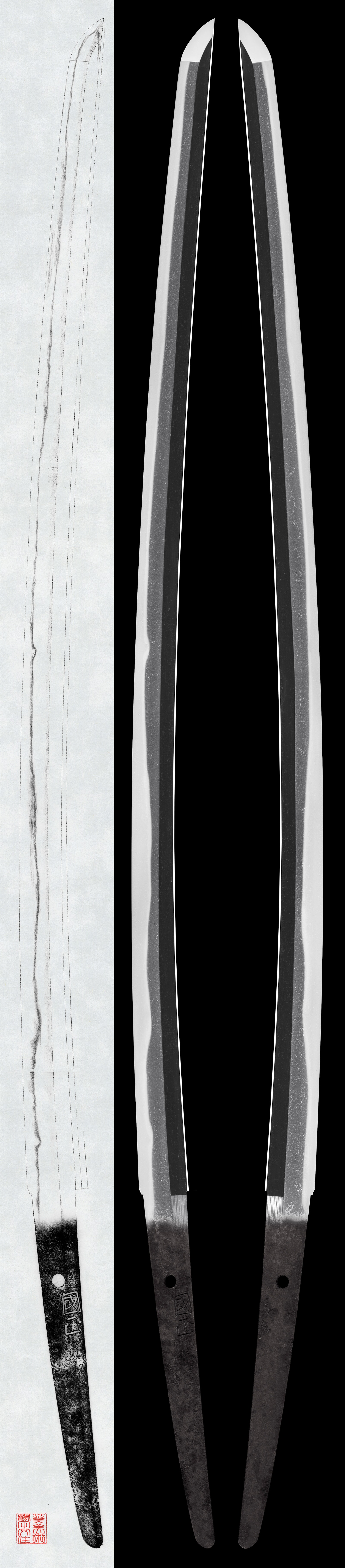
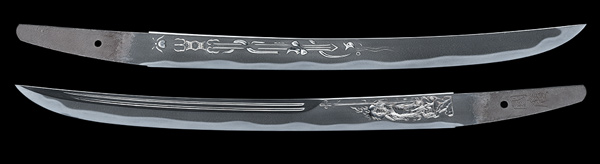
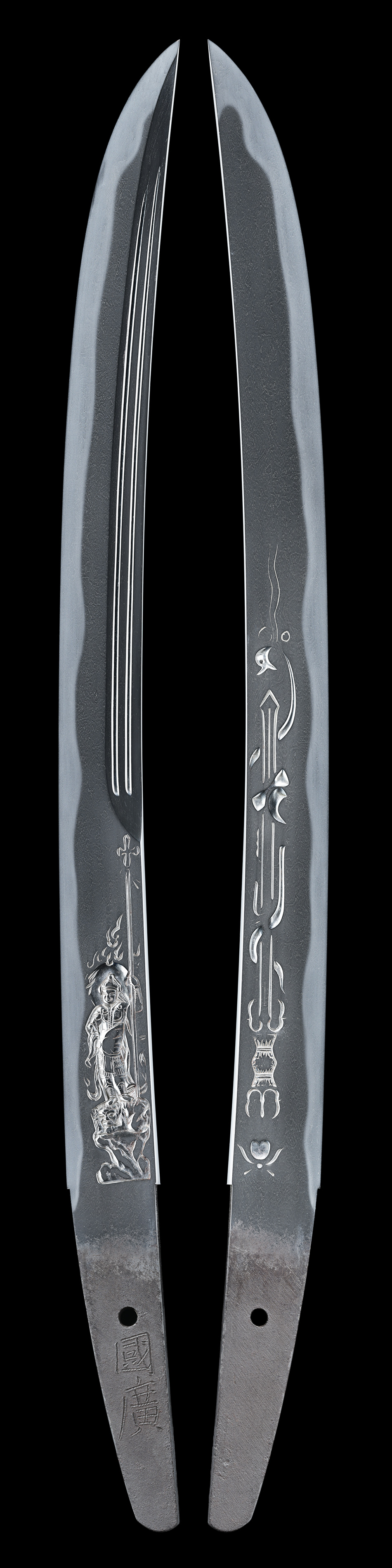
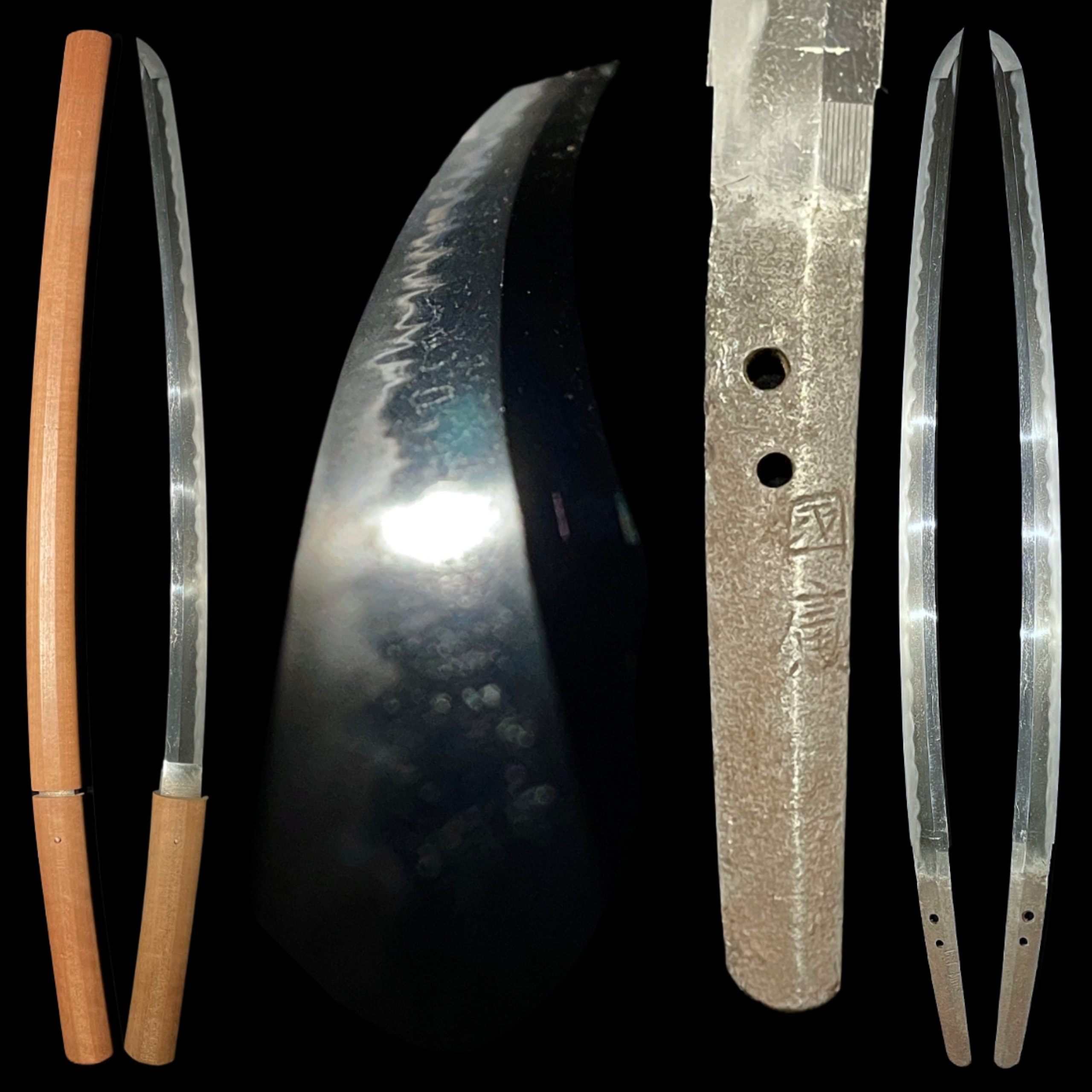
Description Keijo: hira-zukuri on both sides, maru-mune; somewhat long in proportion to its width; normal thickness; with slightly developed sori and sakizori. Kitae: itame-hada mixed with masame, with standing grain; ji-nie and chikei appear; from below the machi, diagonal mizukage rises. Hamon: chiefly ko-notare mixed with gunome; nie adheres well; in places it becomes uneven (mura-dachi); fine sunagashi and kinsuji are seen. Boshi: on both sides, shallow notare and a rounded turn-back. Horimono: on the omote upper half, futasuji-hi, and below it Bishamonten; on the ura, a grass-style kurikara with a rendai below. Nakago: ubu; kurijiri; o-sujikai yasurime; one mekugi-ana; on the omote, below the mekugi-ana at center, a large two-character signature.
Artisan Horikawa Kunihiro
Era Keichō era (ca. Keichō 5–6, 1600–1601), Momoyama to early Edo period
Explanation Kunihiro was originally a warrior in the service of the Itō family, lords of Obi Castle in Hyūga Province (Kyūshū). After that house fell, he traveled through various provinces, refining his swordmaking skills and producing blades in multiple regions. From Keichō 4 (1599) onward he settled in Kyoto at Ichijō Horikawa, where he trained many outstanding disciples; he is said to have died in Keichō 19 (1614). His workmanship can broadly be divided into two modes: among works made before his settlement at Horikawa, examples influenced by late (sue) Sōshū manner are seen, while after settling there are many works whose style differs from these and which appear to adopt the approach of the higher-ranking Sōshū masters.
This piece is made hira-zukuri on both sides with a maru-mune; despite its width it is slightly elongated, with noticeable sori and an emphasized sakizori. Compared with typical Keichō-period blades, this construction is somewhat unconventional; however, a wakizashi appraised as bearing a Keichō 5 date is known with an almost identical construction. The hamon—principally ko-notare mixed with gunome—is likewise a treatment not often encountered among ordinary Keichō works. The jihada shows standing itame mixed with masame, presenting the distinctive, somewhat coarse and vigorous texture often termed zanguri; from below the machi mizukage rises; the hardened edge is well covered in nie and becomes uneven in places; and activities such as kinsuji and sunagashi are observable. Points such as the boshi having a shizumi-gokoro (a subdued tendency) also clearly express Kunihiro’s characteristics.
Moreover, the carvings executed on the blade are, as one would expect, skillful and splendid. Bishamonten on the omote—one of the Four Heavenly Kings, a guardian of the Buddhist Law who also bestows good fortune—appears with some frequency in works by Kunihiro and his school. With the exception of a Bishamonten carving on a Kunihiro tantō from the early Tenshō era, nearly all Bishamonten figures seen on swords characteristically hold the Bishamon spear in the left hand; by contrast, many examples seen on works by Echizen Yasutsugu and others are the reverse.
While this is a work that shows one aspect of the smith’s style, elements such as its construction and carvings rather recall his Tenshō-period work. Accordingly, it is also valuable as documentary material for understanding the breadth of his working range. Although there is no date inscription, judging from the manner of the signature it is thought most likely to be from around Keichō 5–6 (1600–1601).



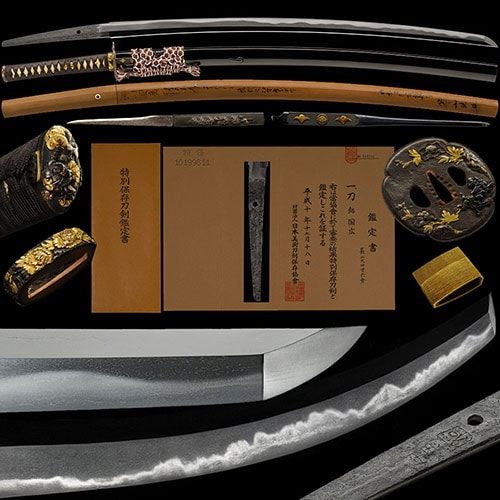
![Wakizashi - Tokuho - 作 國廣 - 脇差[国広(堀川国広)・大往物][日本美術刀剣保存協会]特別保存刀剣](/_next/image?url=https%3A%2F%2Fitbhfhyptogxcjbjfzwx.supabase.co%2Fstorage%2Fv1%2Fobject%2Fpublic%2Flisting-images%2Fworld-seiyudo%2FL31640%2F00.jpg&w=2560&q=90)
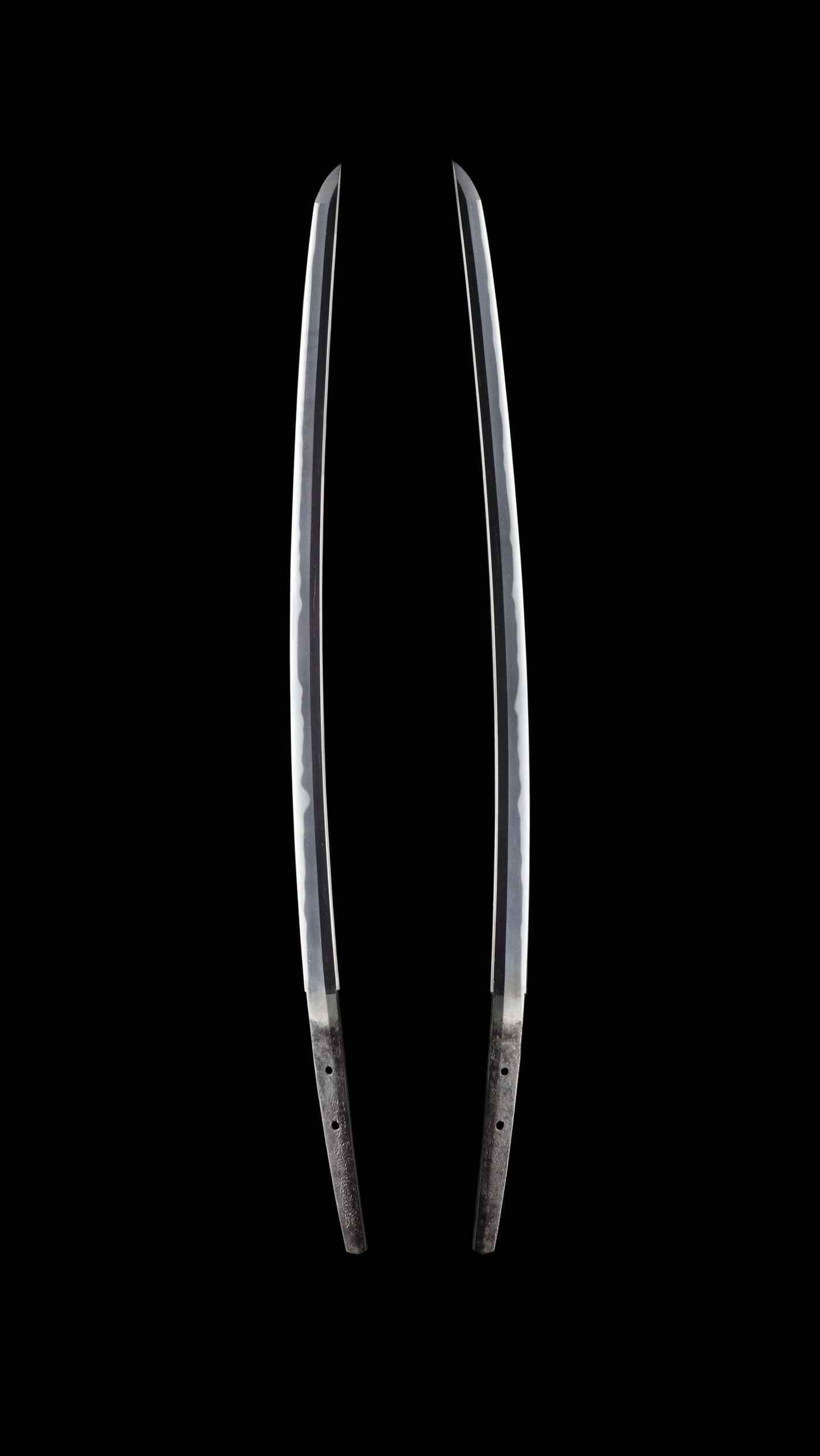
![Wakizashi - Jūyō - 作 國廣 - 新刀 鑑定書内容:財)日本美術刀剣保存協会 重要刀剣[N.B.T.H.K] Jyuyo Token No.53 No.A870 銘文:国広 Sign:Kunihiro 種別:白鞘脇差 Wakizashi and Shirasaya](/_next/image?url=https%3A%2F%2Fitbhfhyptogxcjbjfzwx.supabase.co%2Fstorage%2Fv1%2Fobject%2Fpublic%2Flisting-images%2Fiida-koendo%2FL500148%2F00.jpg&w=2560&q=90)