国内の戦乱と海外への貿易が、室町の備前を国内随一の刀剣産地にした。応仁の乱以後は戦国の需要が一世紀続き、遣明船は数万振の単位で刀を運んでいる。
 NihontoWatchNihontoWatch
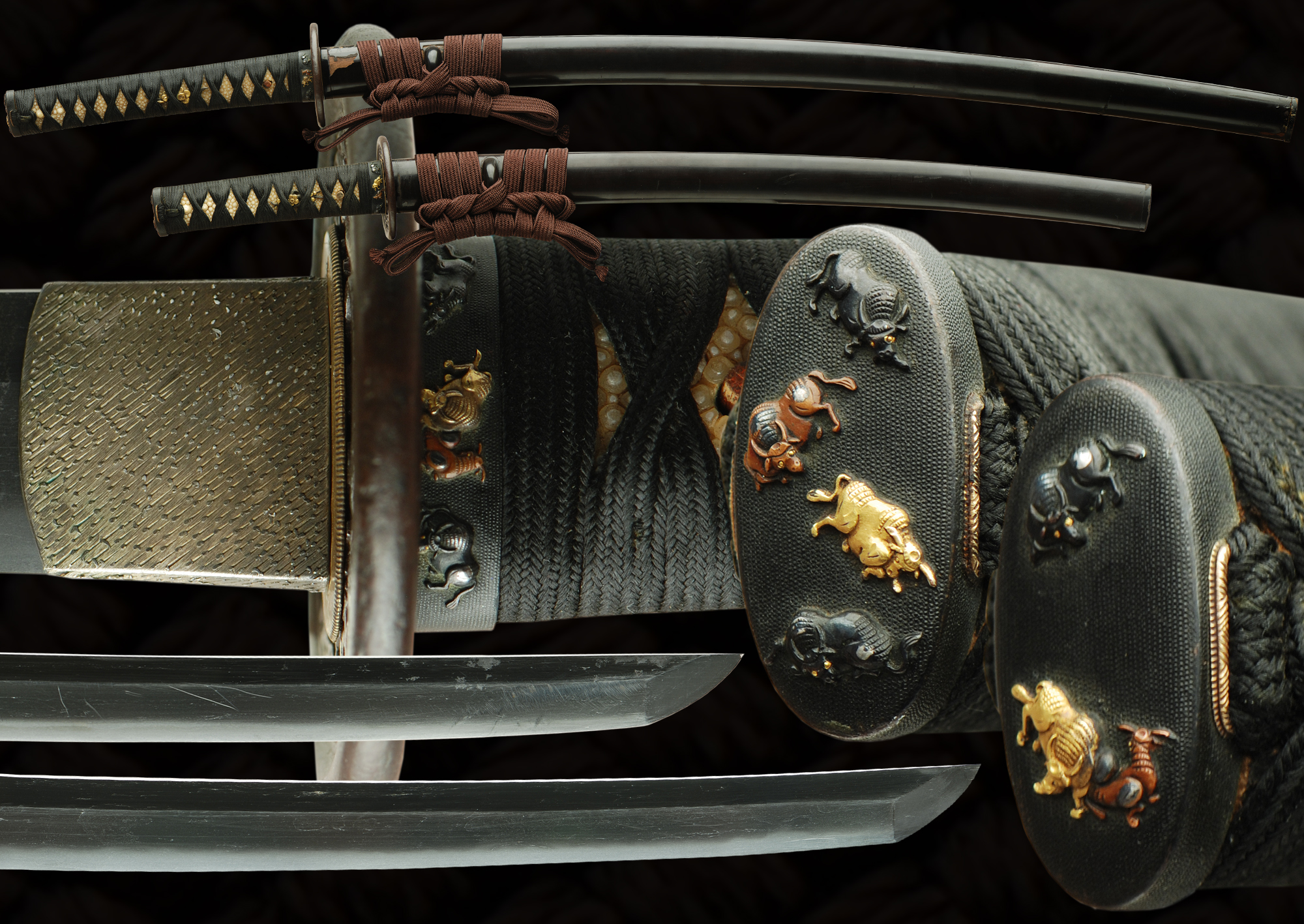
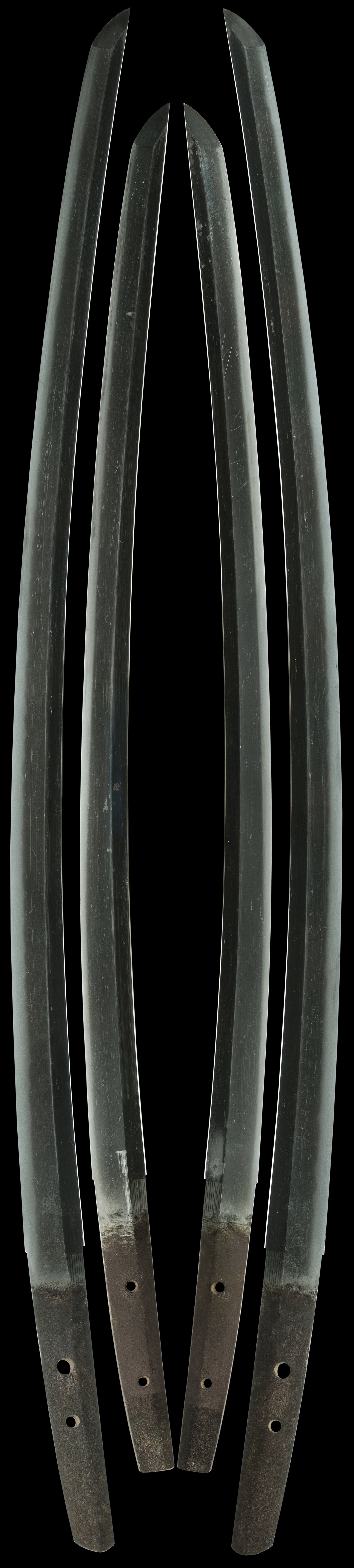
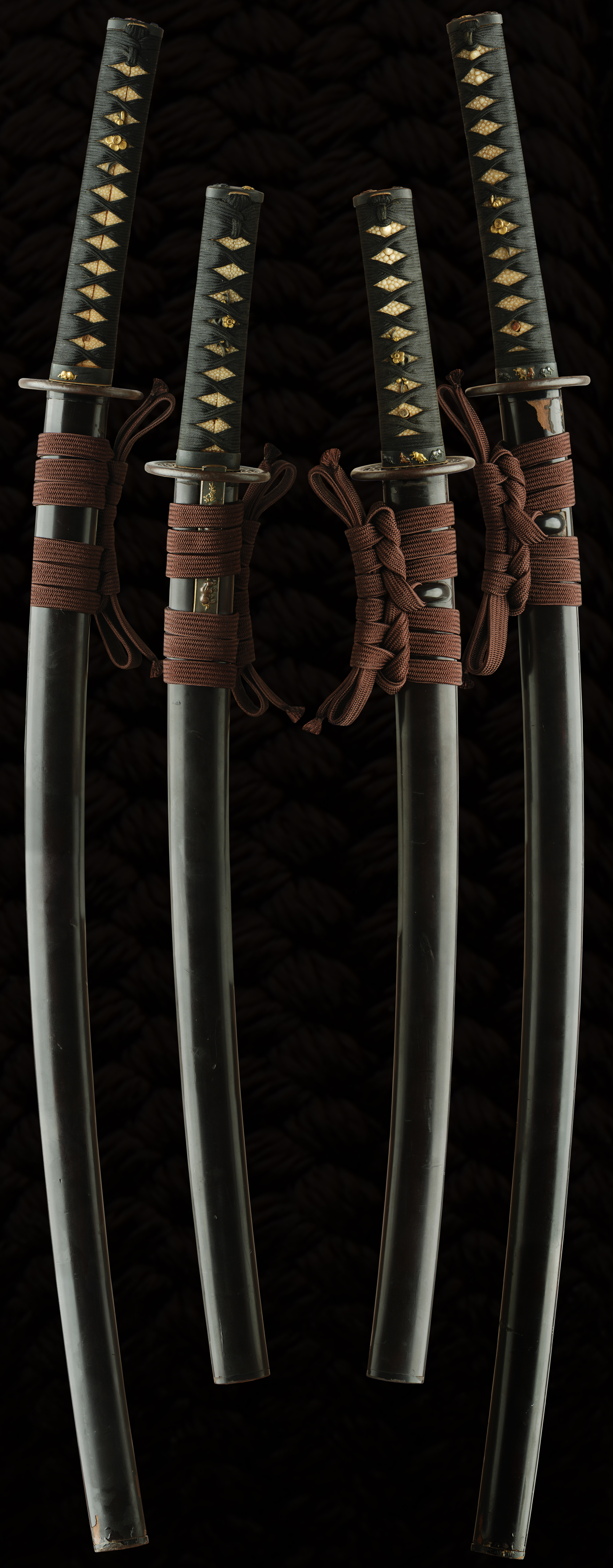
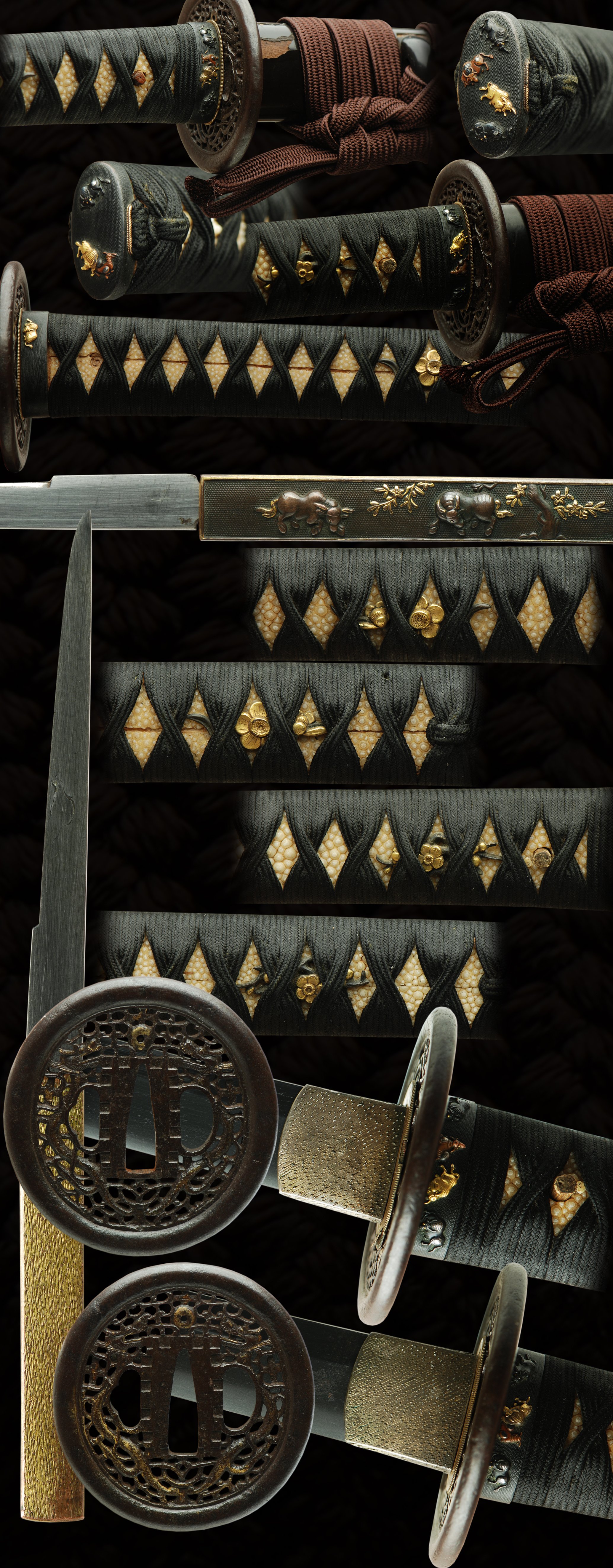
A True Samurai Daisho, These swords are mounted in an Oxen theme of very nice quality. The Motif is of oxen and are in pristine condition finished in shakudo, gold and copper with a fine nanako. The kodzuka is of oxen also with gold back finish. The saya are black with a brown sageo. The tsuba are nanban style but not your ordinary type. This daisho set are thick with a rounded rim that sings when tapped gently. There are dragons and a hidden Christian theme of crucifix’. The menuki appear to be Sakura of gold and shakudo finish. The ito is black and the same (rayskin have a beautiful patina). The habaki are an original matching silver foil with quite a patina finished in a rain storm pattern, just splendid. The katana is ubu, and loaded with activity. Within the Sugu-ha, gunome can be seen, there is hotsure, sunagahi and kinsugi. The hada is a dense and beautiful itame and mokume mix with some masame. It is signed katsumitsu and the signature looks good. The wakazashi an O-suriage piece, this sword has a hamon based in sugu-ha. The hada appears to be an itame nagare with ji-nie. The blades are both from the koto period. The wearing of daishō was limited to the samurai class, and became a symbol or badge of their rank. Daishō may have became popular around the end of the Muromachi(1336 to 1573)as several early examples date from the late sixteenth century an edict in 1629 defining the duties of a samurai required the wearing of a daishō when on official duty. During the meiji period, an edict was passed in 1871 abolishing the requirement of the wearing of daishō by samurai, and in 1876 the wearing of swords in public by most of Japan’s population was banned; this ended the use of the daishō as the symbol of the samurai, and the samurai class was abolished soon after the sword ban. DAI SHO This sword is on consignment.

販売店の記載のまま
備前伝 · 備前
現在10点販売中
勝光派は、室町時代後期に備前国長船の地に栄えた末備前の刀工系である。鎌倉以来の太刀の時代が閉じ、身幅広く先反りのつく片手打の打刀が戦国の手に渡る時代に入ると、勝光の名はその新しい需要を担う一群の総称となった。説明書は、室町中期以後にこの名を用いた工が十数を数えるとし、なかでも俗名を冠する者を著名とする。文明の年紀作を遺す右京亮勝光は宗光の兄にして子の先輩、その子たる次郎左衛門尉勝光は永正の年紀作を多く遺し、いずれも末備前のうち技倆すぐれた者に数えられる。本派は弟左京進宗光との合作の名手で、古く宗勝合作と珍重された連銘の刀・脇指を遺し、与三左衛門尉祐定・五郎左衛門尉清光と並ぶ末長船を代表する一系である。 作域には末備前が共有する語法がある。小板目のよくつんだ地に地沸つき地景細かに入り、古調の作にはこの地へ乱れ映りが淡く立つが、地沸の強い作では映りが目立たず鉄味が勝って見える。刃文は末備前を診断する腰の開いた互の目を基調とし、足・葉さかんに入り、匂本位に小沸つき、小さな飛焼を交えて匂口が明るい。皆焼を交える作や、棟を駆け上がる飛焼の作もある。表裏には倶利迦羅・梵字・素剣に八幡大菩薩や天照皇太神といった神号の彫物を施すが、説明書はこれを鍛冶自身ではなく協力する彫物師の手とする。一派のうちで勝光を分かつのは、その互の目に丁子を多く交えて一段と華やかな乱れとする点で、いわゆる蟹の爪と称する乱れが比較的少く、明るく変化に富む。これに対し一般の末備前物は作風相似て地刃の働きも浅い。 鑑定の勘所は、まず注文打の上手と数打物の別を見極めることにある。名工の入念な作は地鉄精良に匂口冴え、年紀を切り丁寧な彫物を伴い、所持者の銘を負うものもある。主要工のうち右京亮勝光は文明十六年紀の太刀に天下泰平の祈念文字を陰刻した出色の一口を遺し、次郎左衛門尉勝光は華やかな互の目のかたわら冴えた直刃をも能くした。合作にも見るべきものが多く、与三左衛門尉祐定とともに宇喜多能家の注文に応じて鍛えた豪壮な大薙刀は末備前の薙刀中の傑作とされ、子の次郎兵衛尉治光との連銘作や、彦兵衛忠光を加えた三人合作も遺る。藤代の極めは上々作で、本間による御物台帳に所載の作、大久保家や乃木神社に伝来する作、また松下昌俊の旧蔵にかかる重要美術品「朝嵐」が知られる。年紀を有し丁寧な彫物をもつ在銘の勝光は、長船がその末期にいかに華やかな乱れを鍛えたかを語る一証である。 詳しく見る →
室町時代の備前
国内の戦乱と海外への貿易が、室町の備前を国内随一の刀剣産地にした。応仁の乱以後は戦国の需要が一世紀続き、遣明船は数万振の単位で刀を運んでいる。
We offer a 48 hour inspection period for all Antique items shipped within the United States only. If the item is not to your satisfaction, we will gladly refund your money less any shipping and handling fees. All sales are final after the 48 hour inspection period. Please note that all discounted items are a final sale and not returnable.