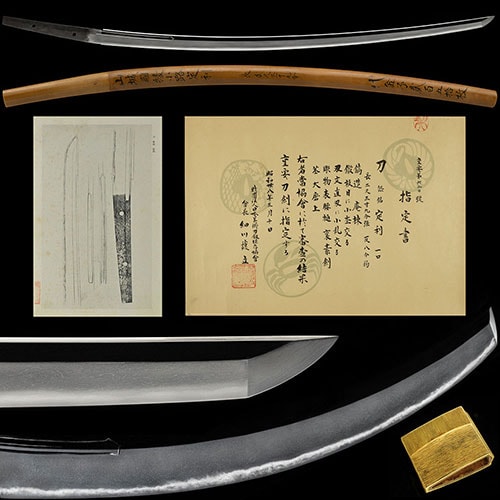
江戸は刀の目利きの時代である。本阿弥の鑑定、1719年の享保名物帳、盛んな刀剣書が、戦で抜かれることのなくなった刀を学問の対象へと変えていった。
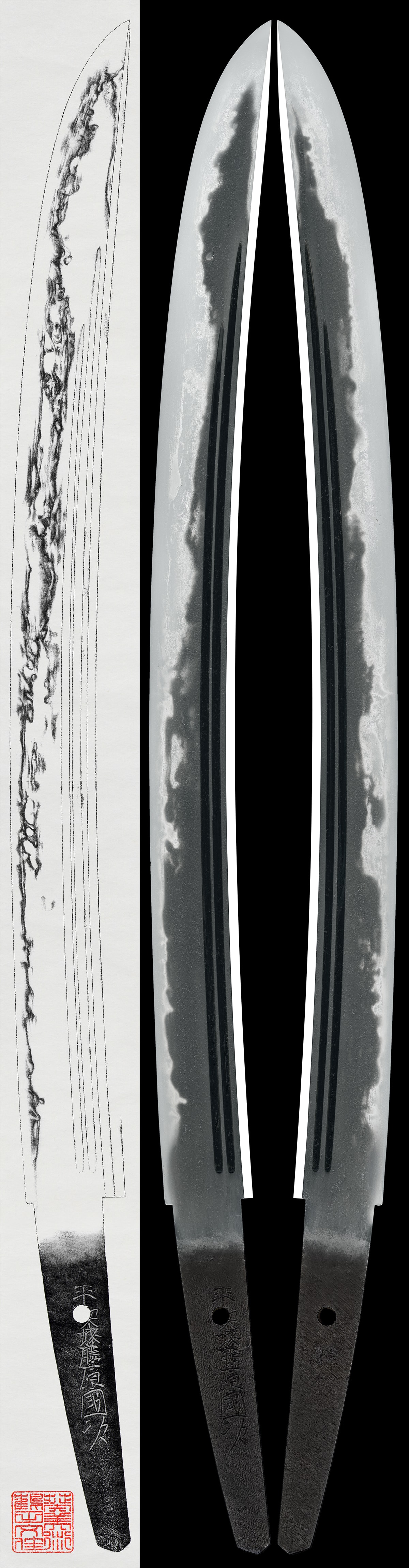
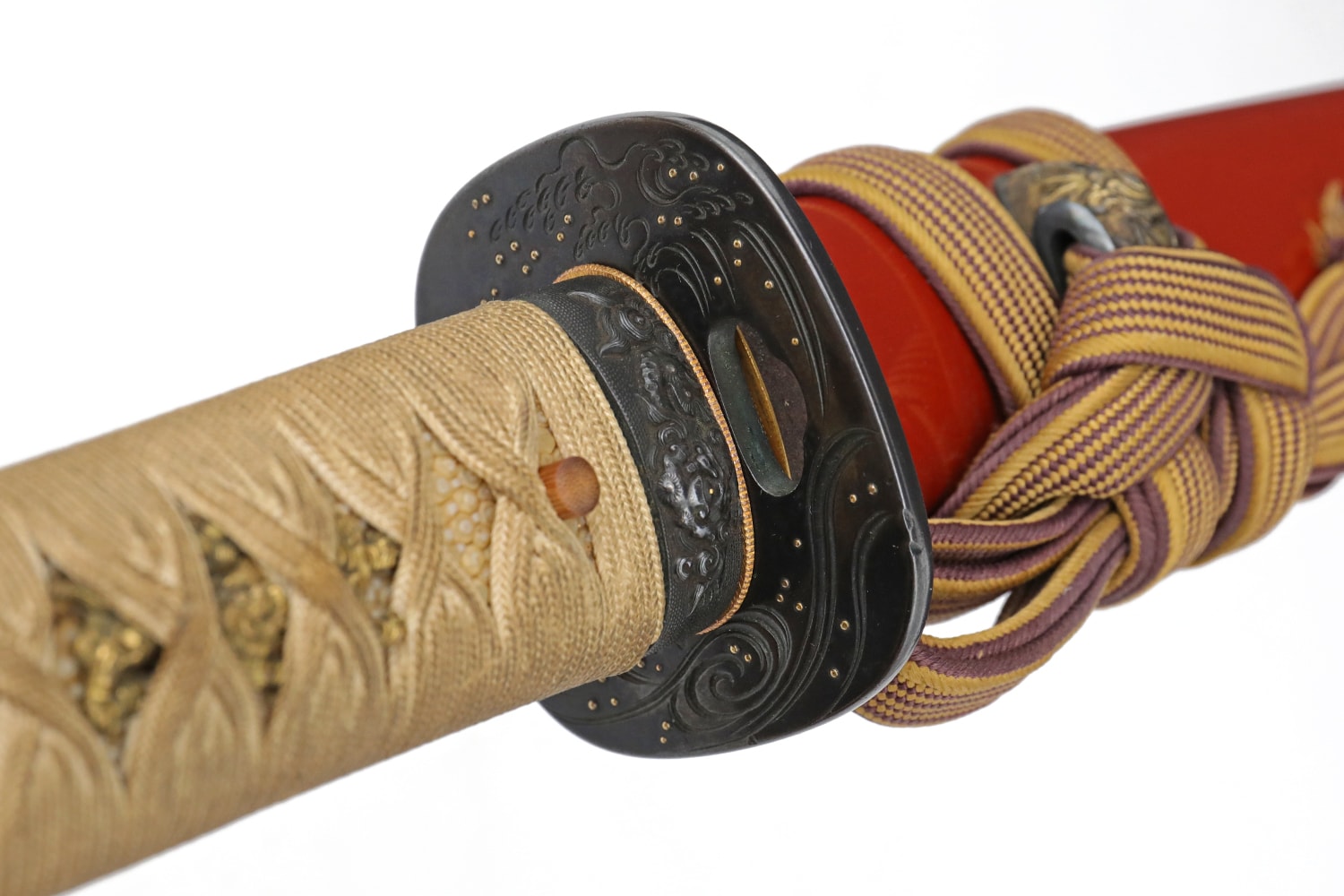
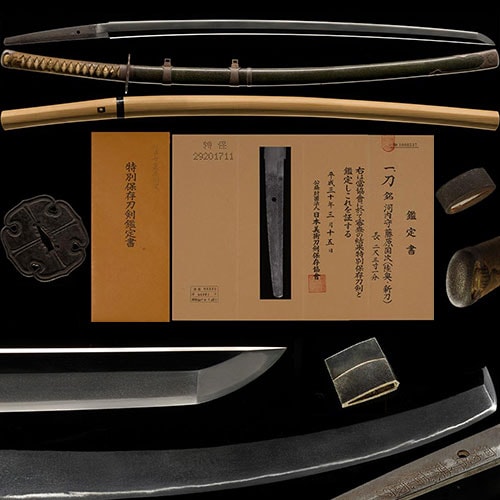
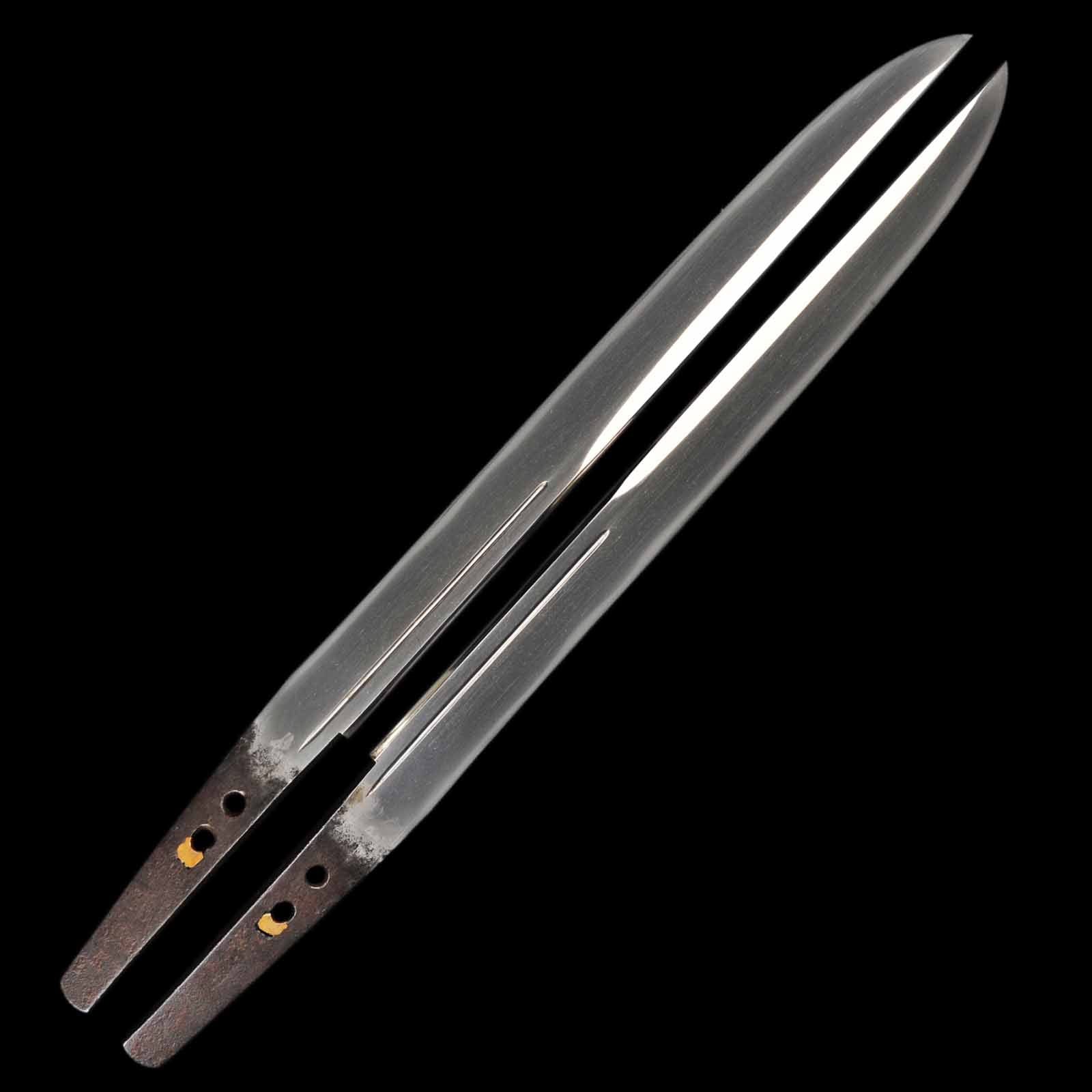
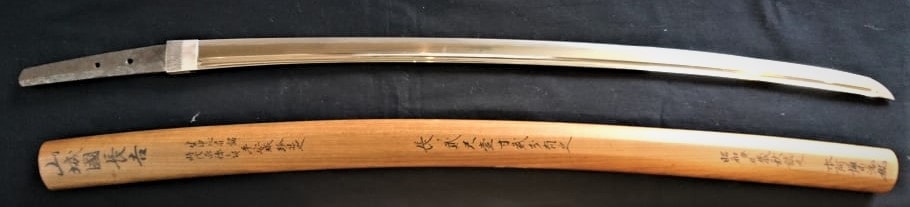
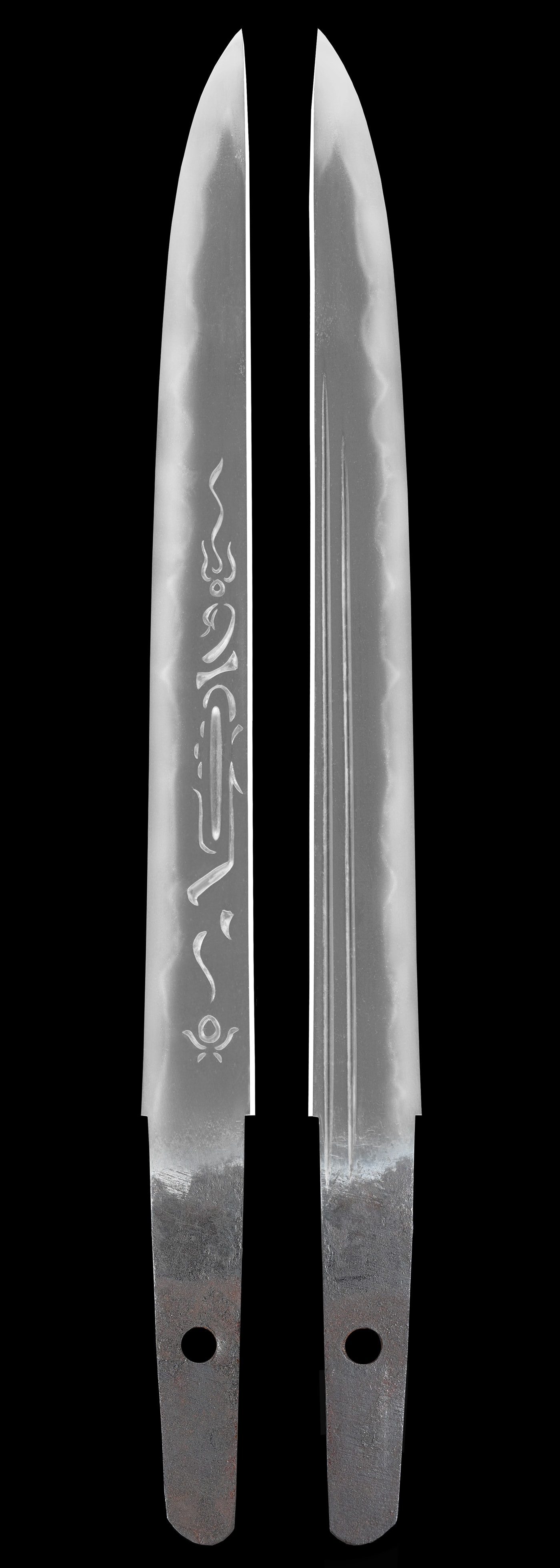
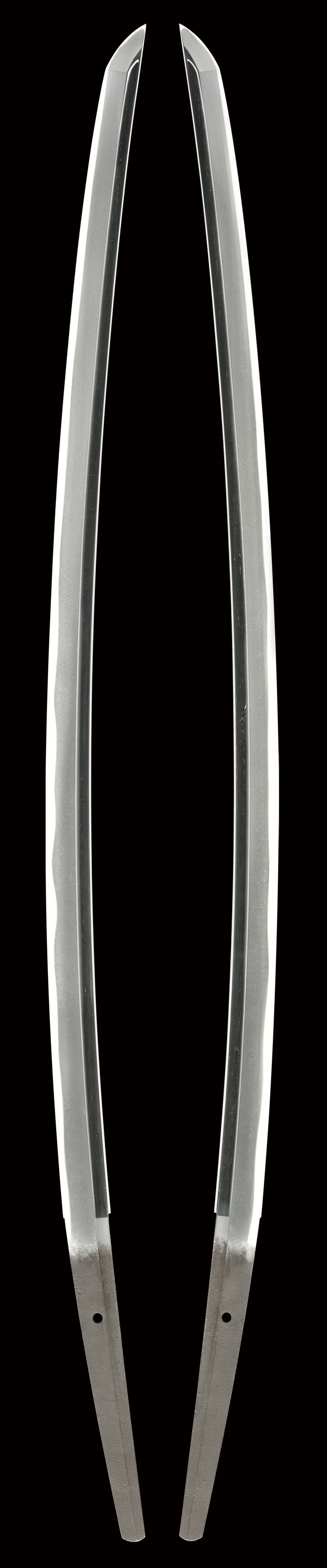
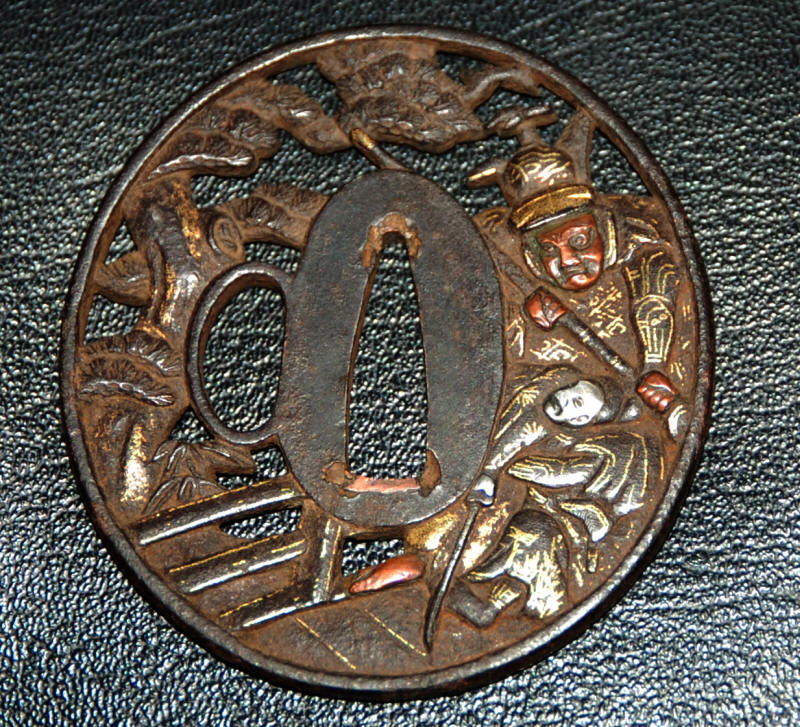
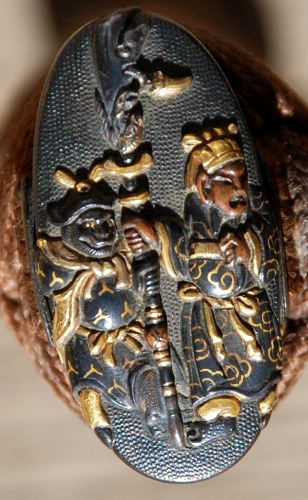
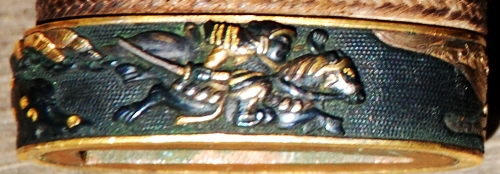
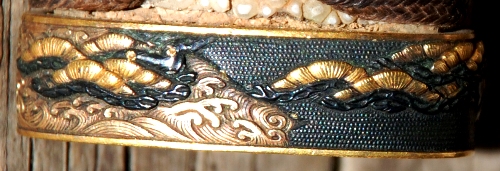
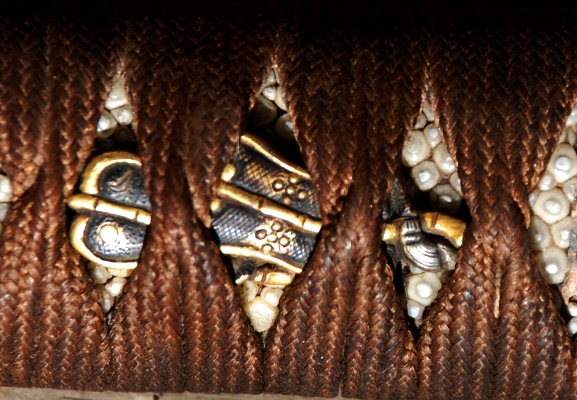
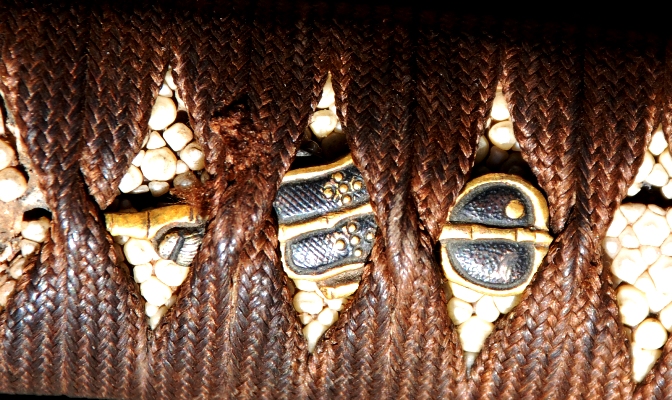
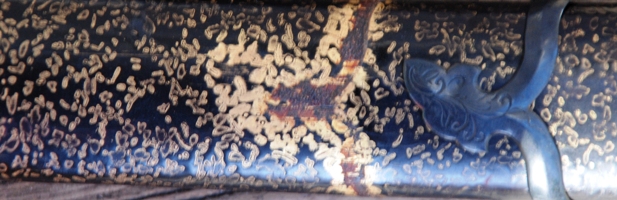
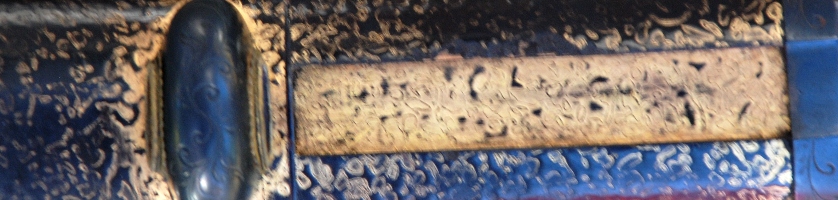
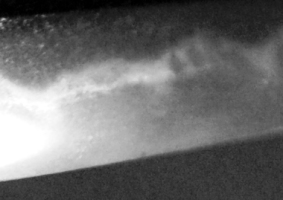
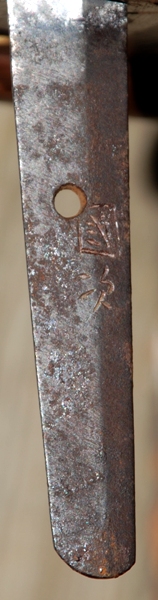
藻壁斎宗典風拵付 脇差 KK0430 【売約済】 江戸時代中期の半太刀拵に収まった脇差です。鞘はかつて金箔押しが施されていましたが、経年の使用によりその多くが剥落し、時代を経た味わいを見せています。 鐔は京都彫の宗典風で、五条大橋における義経と弁慶の図が描かれています。細部まで丁寧に彫り込まれており、人物の表情にも欠損はありません。赤銅地に銅・銀の象嵌、そして金布目金が施されています。赤銅魚子地の縁頭、および軍配図の目貫は平木屋の手によるものです。小柄と小刀が欠落しているのは惜しまれますが、おそらく当初は揃いの金具が備わっていたものと推察されます。 鞘は半太刀様式で、金具はすべて青味を帯びた赤銅地に繊細な彫りが入っています。鞘の細身な造りから見て、刀身と製作当初からの共拵である可能性が高いでしょう。 刀身は新刀の脇差で、「国次」と二字銘がありますが、恐らくは偽銘、あるいは当時の所持者による付銘と思われます。 造り込み:鎬造、庵棟、中切先。 刃長:1尺7寸7分(53.6cm) 元幅:2.62cm 先幅:1.61cm 重ね:5.3mm 刃文は小沸出来の互の目乱れに丁子を交え、浅く足入る。物打付近の刃文には互の目に二重刃がかかる箇所があります。刃沸明るく冴える。地鉄は板目肌に小地沸厚くつき、地景しきりに入る。帽子は小丸に返り、返りは中程度に長く止まります。刀身の状態は健全ですが、研ぎは古くなっています。 平木屋は京都から近江国彦根に移住した工集団です。この一派は銘を切ることが極めて稀ですが、その作風は後の宗典派の基礎となりました。後代の宗典作品と比較すると、一般に彫りが深く、人物が大きく表現され、金・銀・銅・赤銅の象嵌をより贅沢に用いるのが特徴です。(参考文献:『The Index of Japanese Sword Fittings and Associated Artists』H 01291.0) 宗典風縁頭・目貫 金箔が摩耗する前の、鞘の当初の色合いが所々に見て取れます。
 NihontoWatch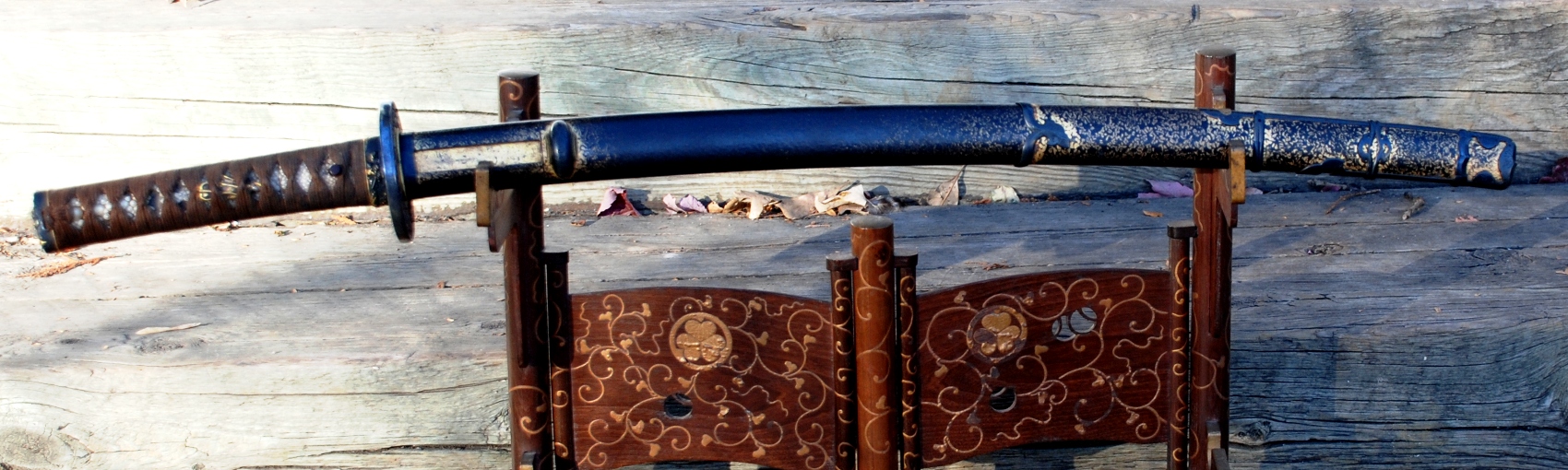





山城伝 · 山城 · 1648-1652頃
藤代 Jo saku · 刀剣大鑑 上位49%
現在1点販売中
國次の位置づけを、日本刀全体および伝統・時代・時期ごとに示します。各位(随一・屈指・有数・著名)は、NBTHK および文化庁による指定に加え、三作や名物帳などの歴史的栄誉を加味したものです。
各項目を選ぶと評価方法が表示されます。
山城伝 · Kyoto
現在13点販売中
平安城象嵌は応仁鐔の流れを汲む流派である。室町末期に京都において成立し、桃山時代から江戸時代初期にかけて繁栄を見た。有銘の作は知られず、無銘のままに「平安城象嵌」と称される一群として伝えられている。この派の古い作例は時代的にもほぼ応仁鐔に近く、真鍮据文象嵌を施して文様風の意匠を展開させている。 初期の作風は大振りで量感があり、鉄槌目地や鉄地に真鍮据文象嵌を施して花唐草文や網目文などの文様を表し、地透や小透を加えて雅びな京風の趣を示す。やがて時代が下るにつれて真鍮以外の金、銀、素銅、赤銅、山金などを併用するようになり、意匠も絵風のものが加わって、据文と平象嵌を混用したり鋤出高彫を施したものも見られる。技法は洗練味が高く、桶底耳や大切羽状に接着した共鉄などの造作が作品の力強い趣を増幅している。 この門からは小池与四郎が出て一派をおこし、また長吉、吉長、政重らの銘を名のる集団がある。上杉家伝来など大名家に伝来した作例も知られ、室町末期から桃山時代にかけての京都における装剣金工の展開を示す重要な流派として位置づけられている。 詳しく見る →
江戸時代
江戸は刀の目利きの時代である。本阿弥の鑑定、1719年の享保名物帳、盛んな刀剣書が、戦で抜かれることのなくなった刀を学問の対象へと変えていった。
販売店の出品ページで鑑定書を確認できませんでした。日本刀および刀装具は通常、NBTHK(または NTHK)の鑑定を受けます。鑑定書がない場合、極めは販売店の見解にとどまり、第三者による確認は行われていません。ご購入前に販売店へ鑑定書の有無をお問い合わせのうえ、慎重にご判断ください。
Three day, no penalty, inspection on every item. Returns must be in the same condition as shipped. Actual costs will be charged on returned items. No restocking fee. If you did not like the item is a good enough reason for return.
藻壁斎宗典風拵付 脇差 KK0430 【売約済】 江戸時代中期の半太刀拵に収まった脇差です。鞘はかつて金箔押しが施されていましたが、経年の使用によりその多くが剥落し、時代を経た味わいを見せています。 鐔は京都彫の宗典風で、五条大橋における義経と弁慶の図が描かれています。細部まで丁寧に彫り込まれており、人物の表情にも欠損はありません。赤銅地に銅・銀の象嵌、そして金布目金が施されています。赤銅魚子地の縁頭、および軍配図の目貫は平木屋の手によるものです。小柄と小刀が欠落しているのは惜しまれますが、おそらく当初は揃いの金具が備わっていたものと推察されます。 鞘は半太刀様式で、金具はすべて青味を帯びた赤銅地に繊細な彫りが入っています。鞘の細身な造りから見て、刀身と製作当初からの共拵である可能性が高いでしょう。 刀身は新刀の脇差で、「国次」と二字銘がありますが、恐らくは偽銘、あるいは当時の所持者による付銘と思われます。 造り込み:鎬造、庵棟、中切先。 刃長:1尺7寸7分(53.6cm) 元幅:2.62cm 先幅:1.61cm 重ね:5.3mm 刃文は小沸出来の互の目乱れに丁子を交え、浅く足入る。物打付近の刃文には互の目に二重刃がかかる箇所があります。刃沸明るく冴える。地鉄は板目肌に小地沸厚くつき、地景しきりに入る。帽子は小丸に返り、返りは中程度に長く止まります。刀身の状態は健全ですが、研ぎは古くなっています。 平木屋は京都から近江国彦根に移住した工集団です。この一派は銘を切ることが極めて稀ですが、その作風は後の宗典派の基礎となりました。後代の宗典作品と比較すると、一般に彫りが深く、人物が大きく表現され、金・銀・銅・赤銅の象嵌をより贅沢に用いるのが特徴です。(参考文献:『The Index of Japanese Sword Fittings and Associated Artists』H 01291.0) 宗典風縁頭・目貫 金箔が摩耗する前の、鞘の当初の色合いが所々に見て取れます。
NihontoWatch山城伝 · 山城 · 1648-1652頃
藤代 Jo saku · 刀剣大鑑 上位49%
現在1点販売中
國次の位置づけを、日本刀全体および伝統・時代・時期ごとに示します。各位(随一・屈指・有数・著名)は、NBTHK および文化庁による指定に加え、三作や名物帳などの歴史的栄誉を加味したものです。
各項目を選ぶと評価方法が表示されます。
山城伝 · Kyoto
現在13点販売中
平安城象嵌は応仁鐔の流れを汲む流派である。室町末期に京都において成立し、桃山時代から江戸時代初期にかけて繁栄を見た。有銘の作は知られず、無銘のままに「平安城象嵌」と称される一群として伝えられている。この派の古い作例は時代的にもほぼ応仁鐔に近く、真鍮据文象嵌を施して文様風の意匠を展開させている。 初期の作風は大振りで量感があり、鉄槌目地や鉄地に真鍮据文象嵌を施して花唐草文や網目文などの文様を表し、地透や小透を加えて雅びな京風の趣を示す。やがて時代が下るにつれて真鍮以外の金、銀、素銅、赤銅、山金などを併用するようになり、意匠も絵風のものが加わって、据文と平象嵌を混用したり鋤出高彫を施したものも見られる。技法は洗練味が高く、桶底耳や大切羽状に接着した共鉄などの造作が作品の力強い趣を増幅している。 この門からは小池与四郎が出て一派をおこし、また長吉、吉長、政重らの銘を名のる集団がある。上杉家伝来など大名家に伝来した作例も知られ、室町末期から桃山時代にかけての京都における装剣金工の展開を示す重要な流派として位置づけられている。 詳しく見る →
江戸時代
江戸は刀の目利きの時代である。本阿弥の鑑定、1719年の享保名物帳、盛んな刀剣書が、戦で抜かれることのなくなった刀を学問の対象へと変えていった。
販売店の出品ページで鑑定書を確認できませんでした。日本刀および刀装具は通常、NBTHK(または NTHK)の鑑定を受けます。鑑定書がない場合、極めは販売店の見解にとどまり、第三者による確認は行われていません。ご購入前に販売店へ鑑定書の有無をお問い合わせのうえ、慎重にご判断ください。
Three day, no penalty, inspection on every item. Returns must be in the same condition as shipped. Actual costs will be charged on returned items. No restocking fee. If you did not like the item is a good enough reason for return.